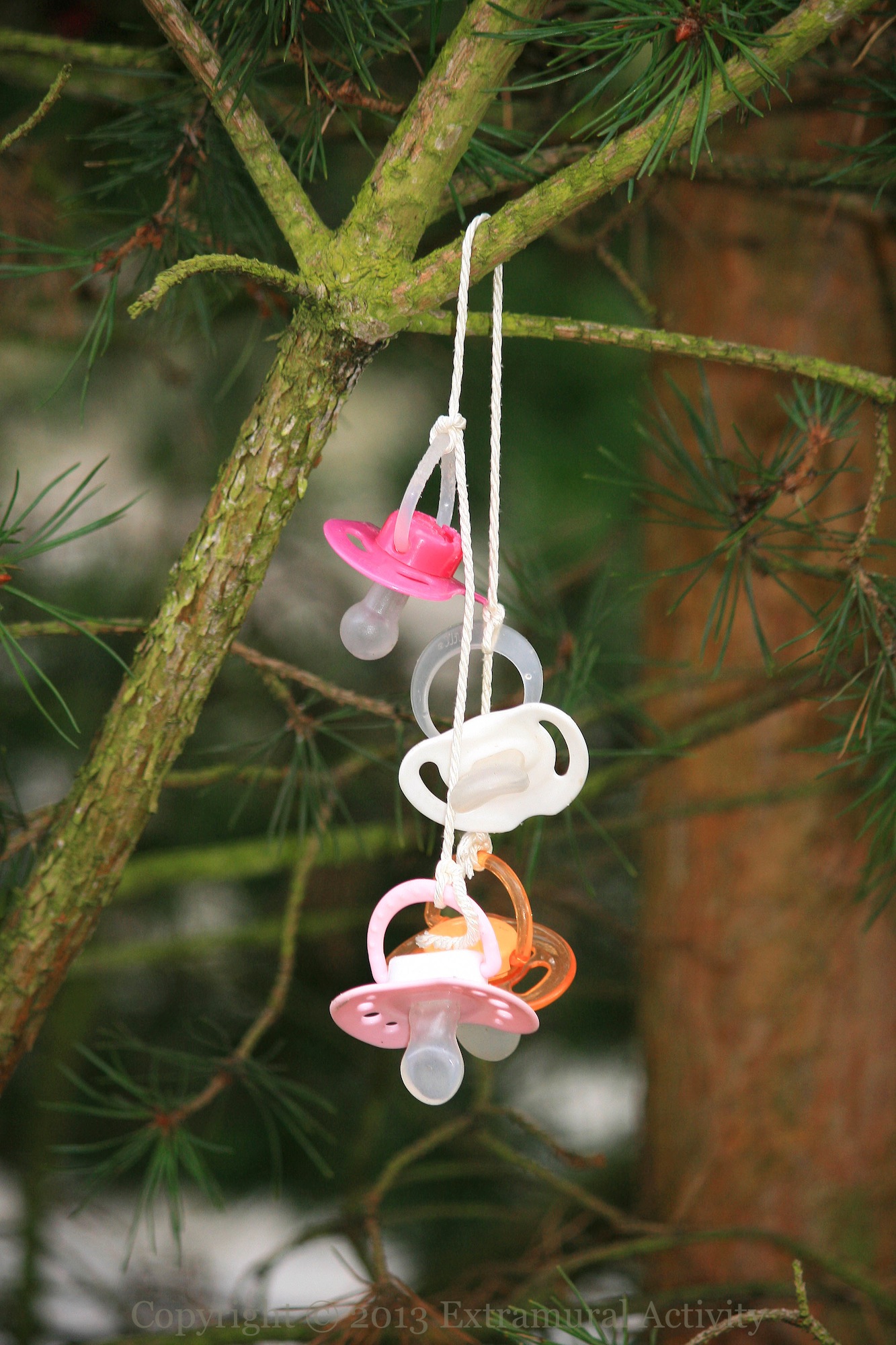
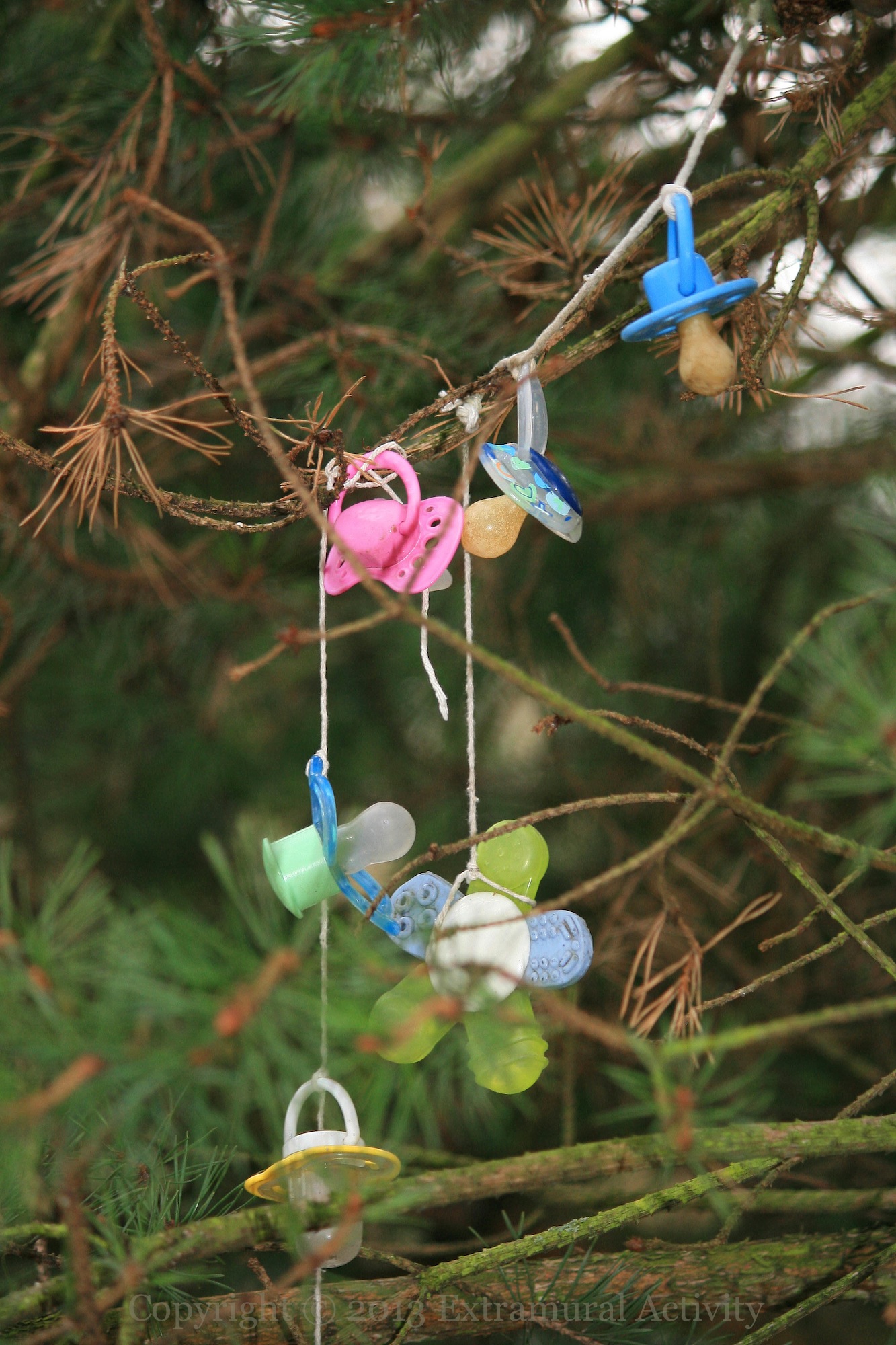
According to this page from Early Christian Sites In Ireland, trees next to wells were considered holy, and “rags were tied to trees, or objects left there, in the belief that, while they remained, the prayers were still effective”. These pacifiers (or dummies, as they are commonly known) were spotted hanging from trees in the Waterworks. Are these the holy trees of our Late Christian period? Or just a sign that drugs can be procured?
Two small pieces side by side on the Ballysillan Road in north Belfast. First a “Mural done by Carly and the boys …” showing the IFA’s crest over a banner reading “our wee country”. (Previously: Our Wee Country 1 | 2 )
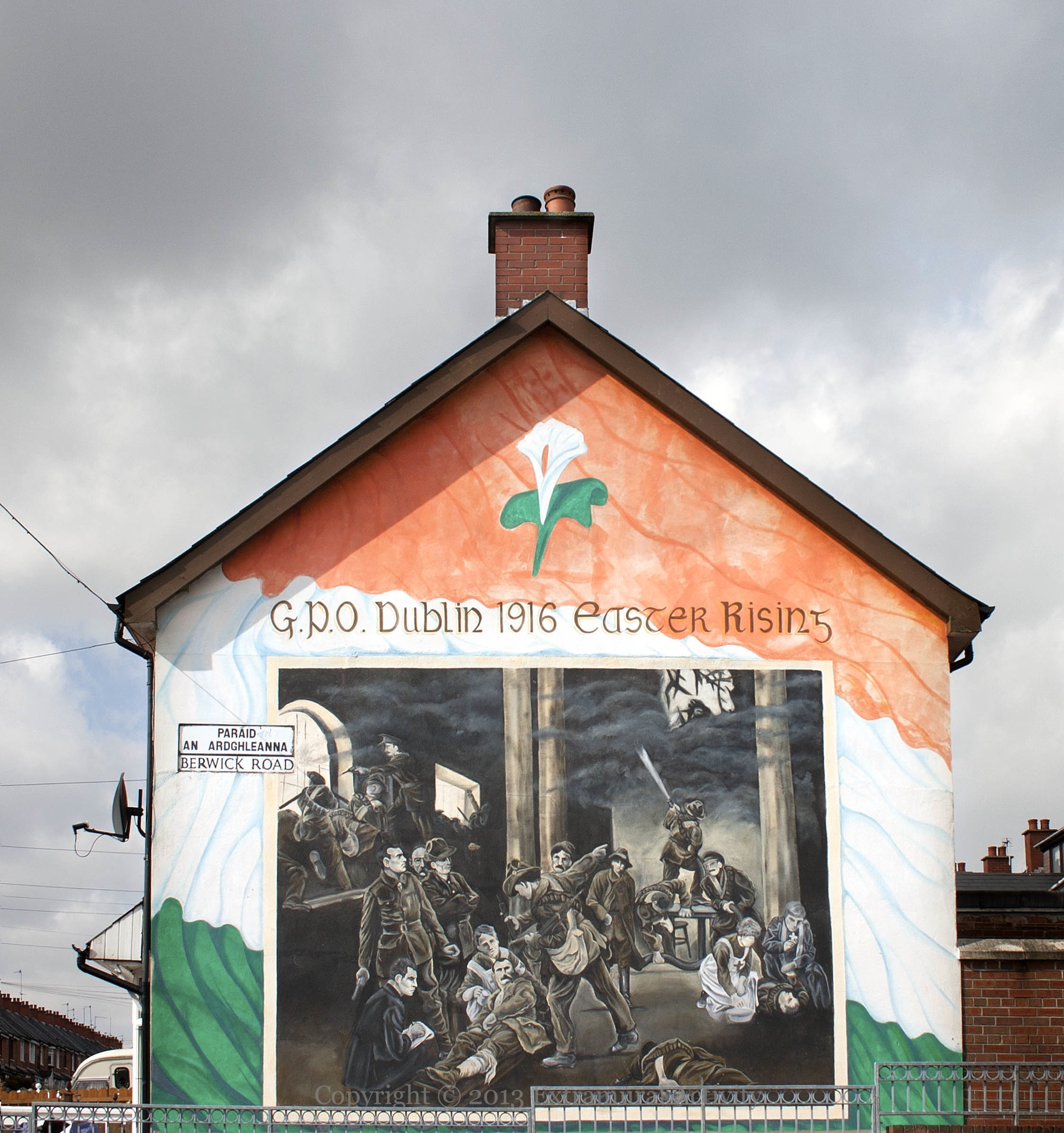
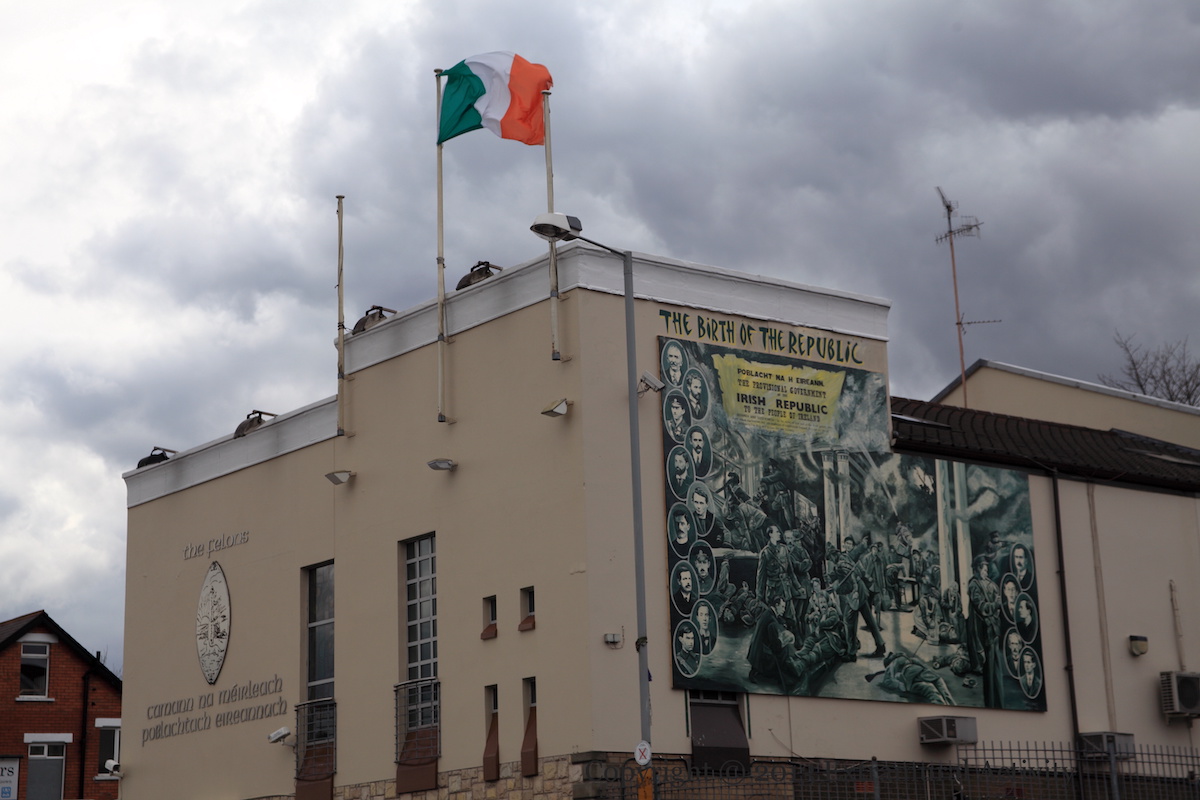
Walter Paget’s Birth Of The Irish Republic shows James Connolly lying injured on a stretcher, being tended to by Elizabeth O’Farrell (? WP), while Pearse, Clarke, and Plunkett (and Ceannt?) stand by. Detail (taken in 2004) just below …
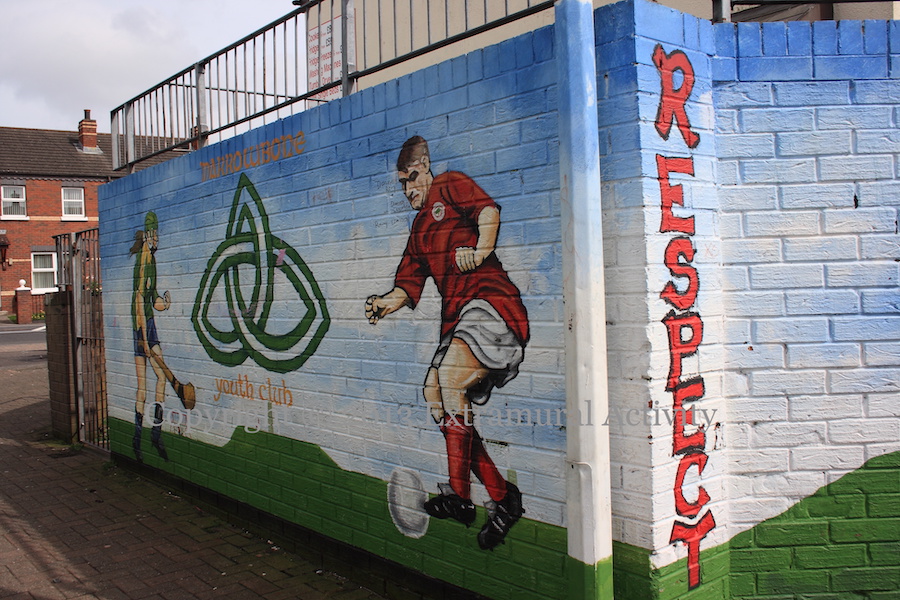
“Machaıre Botháın” [Bothain] (Marrowbone) Youth Club mural just off Oldpark Road, celebrating Gaelic games, Cliftonville soccer, Antrim, and the four provinces of Ireland.
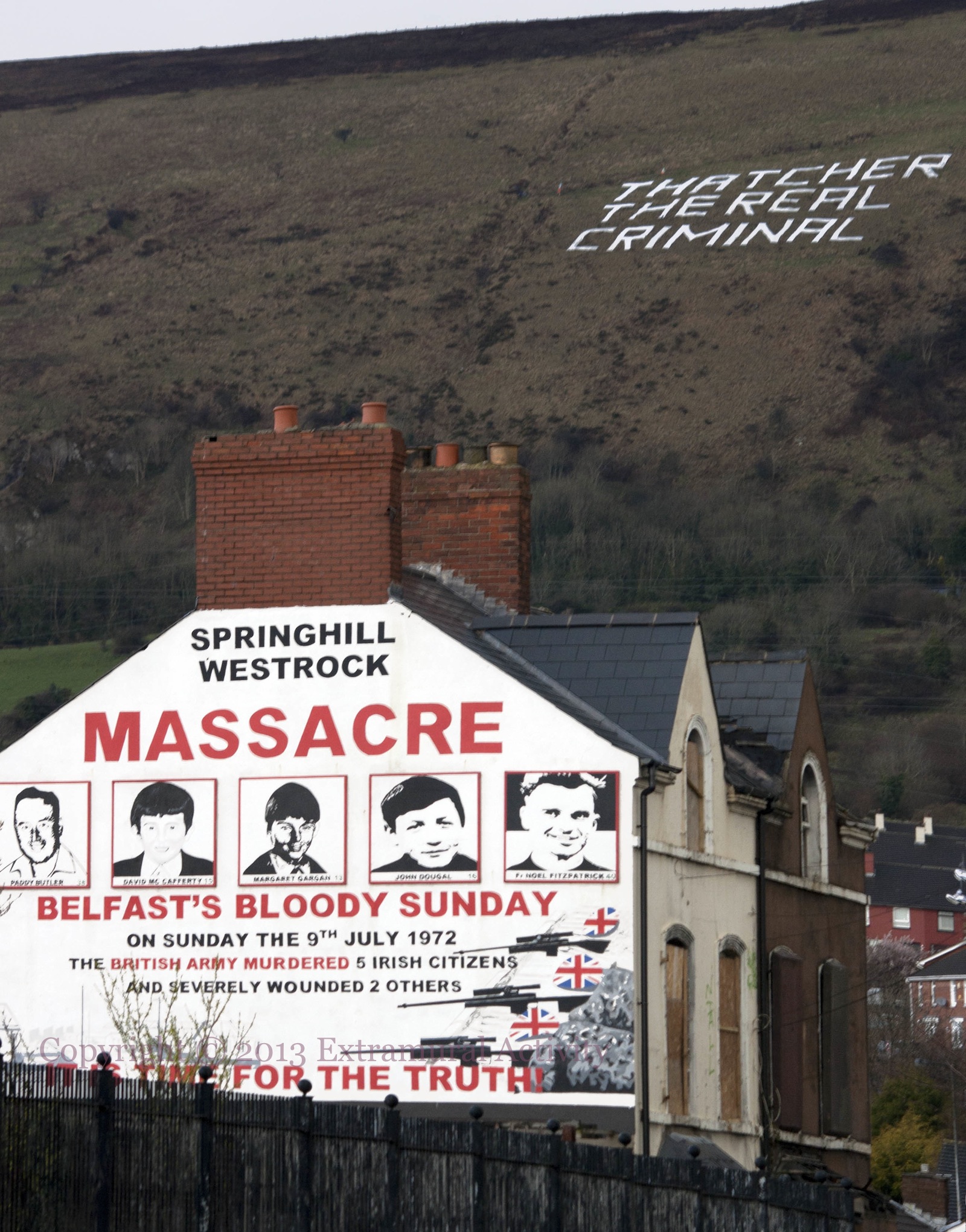
“Thatcher The Real Criminal” on Black Mountain, overlooking the Springfield Road, with a Mo Chara Kelly mural in the foreground, commemorating the deaths of five people shot by British army snipers in 1972.
This picture was taken on April 18th; on April 19th the lettering on the hillside had been removed.
In addition to the seven signatories of the Proclamation of an Irish Republic, 9 other leaders of the Easter Rising were executed in the wake of the rebellion. The portraits of all 16 are part of this new mural (on boards) of Walter Paget’s painting The Birth Of The Irish Republic. (For Paget’s painting, see the painting’s Visual History page.) In order of appearance, the 16 (with links to their WP pages) are …
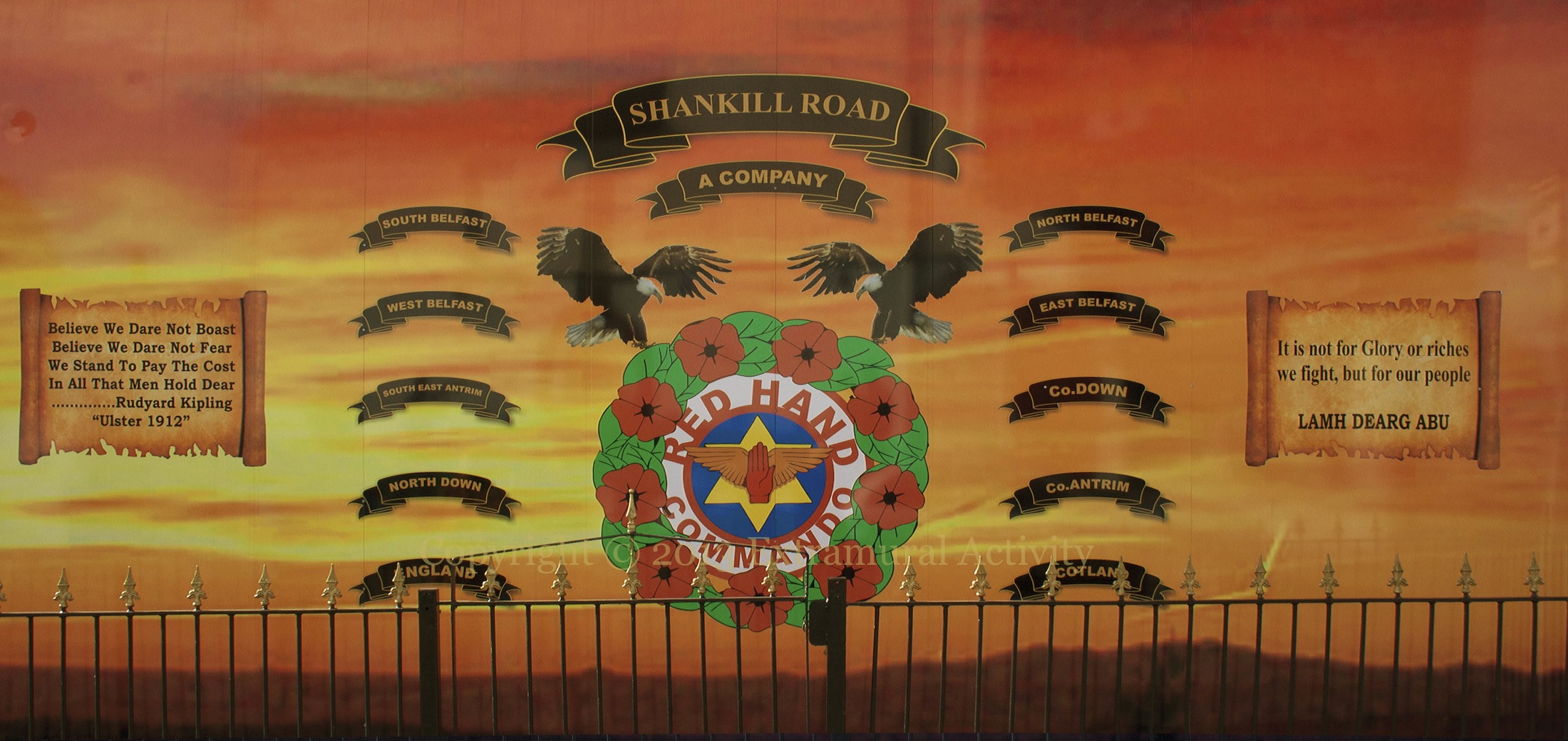
A few words of Irish – “Lamh Dearg Abu” – in a loyalist mural in Glenwood Street, just off the Shankill Road, through strictly it should be “Lámh Dhearg Abú”. “Lámh dhearg” means “red hand”, and this is a Red Hand Commando mural.
The same motto was on the mural that this one replaced, which can be seen at M02433.
The title of the post is the headline of a recent article in the Irish Times, giving an account of Irish language classes in (loyalist) east Belfast. “Tá” is Irish for “yes”.
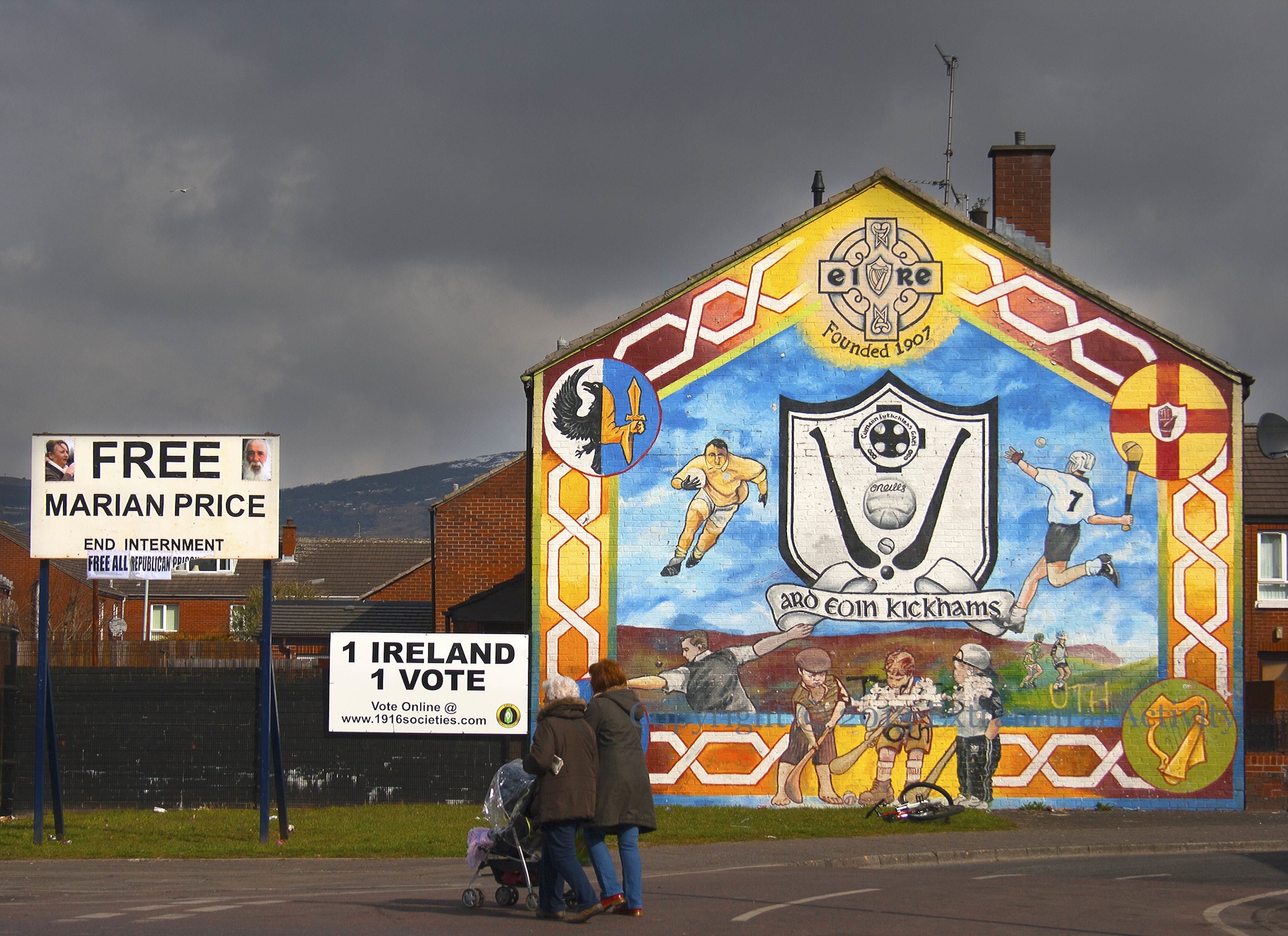
The scene at the top of Bealach Havana/Havana Way in Ard Eoın/Ardoyne. From left to right: a “Free Marian Price – End Internment” board, a “1 Ireland, 1 Vote” board (calling for a 32 county referendum), and a Gaelic games mural featuring hurling, football and handball – seen previously in 2008.







 Extramural Activity