Ulster-Scots heritage became a theme in PUL muraling in the years after the Belfast (or “Good Friday”) Agreement. (See Visual History 08.)
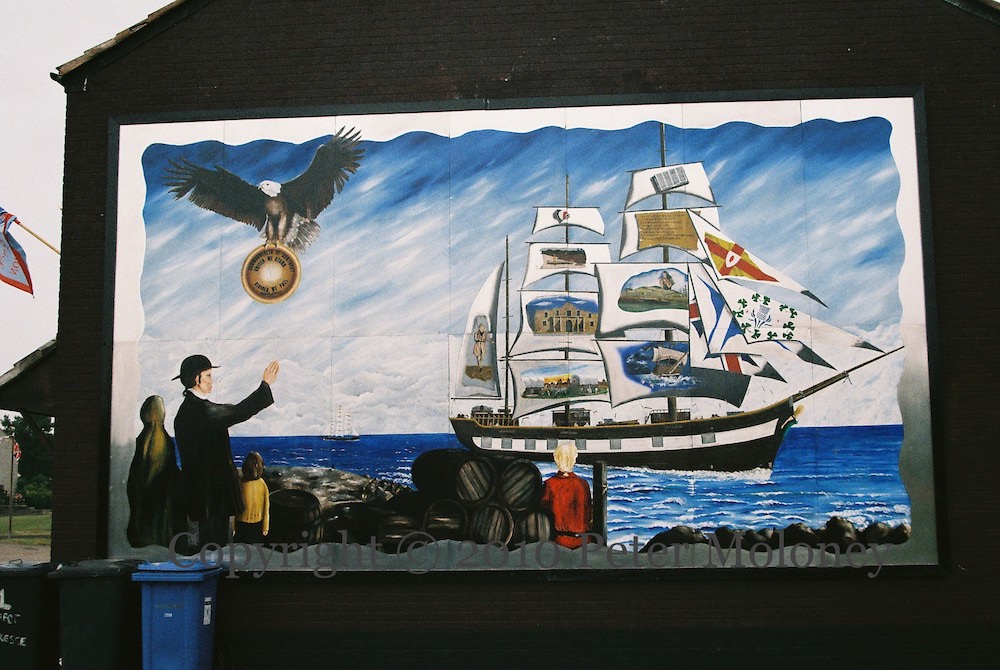
The Ulster-Scots were Scots (and English borderers) who emigrated first to Ireland and then to America. They are also called the “Scots-Irish” or “Scotch-Irish”, but as the depiction of Ireland in the lower left of the image below shows, they settled mainly in the north-east of Ireland, in what would later become Northern Ireland. (Templemore Ave, east Belfast)
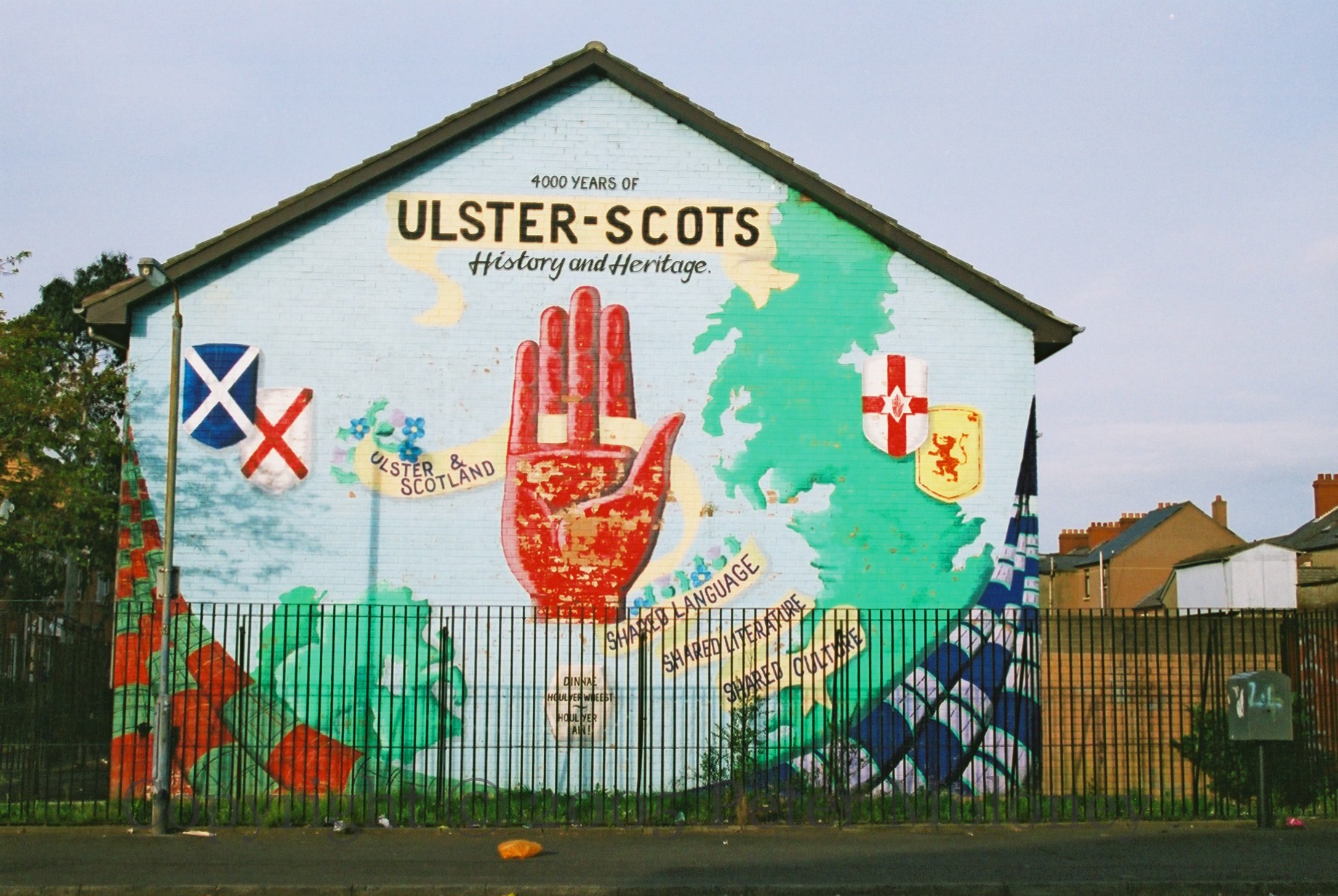
The east Belfast mural (above) does not concern the connection between the Ulster-Scots and the USA. The “Pioneers To Presidents” series extended the connection from Scotland to Ireland onward to the United States.
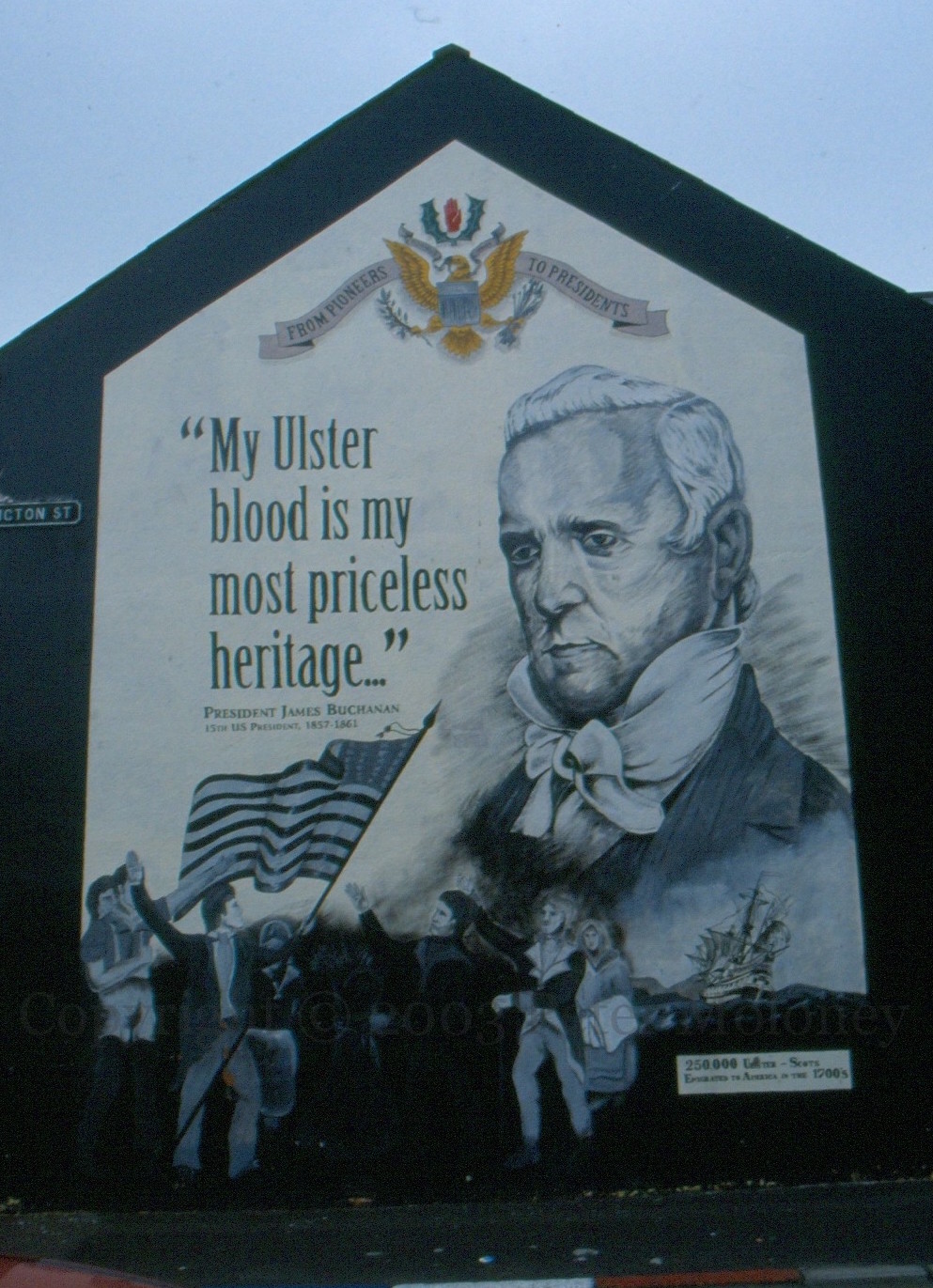
In Belfast, Buchanan was painted in the Shankill. This mural was sponsored by the Shankill Ulster-Scots Cultural Society and funded by Belfast City Council and Making Belfast Work, an initiative of the NI Department Of Environment, established in 1988 to promote skills development and small business development. In the Belfast/Good Friday Agreement the Ulster-Scots language was included as deserving respect under the principle of “linguistic diversity” and support for it (from both the UK and Ireland) was written into the Agreement’s implementation documents. The Ulster Scots Agency was established in December 1999, a month after this mural was launched.
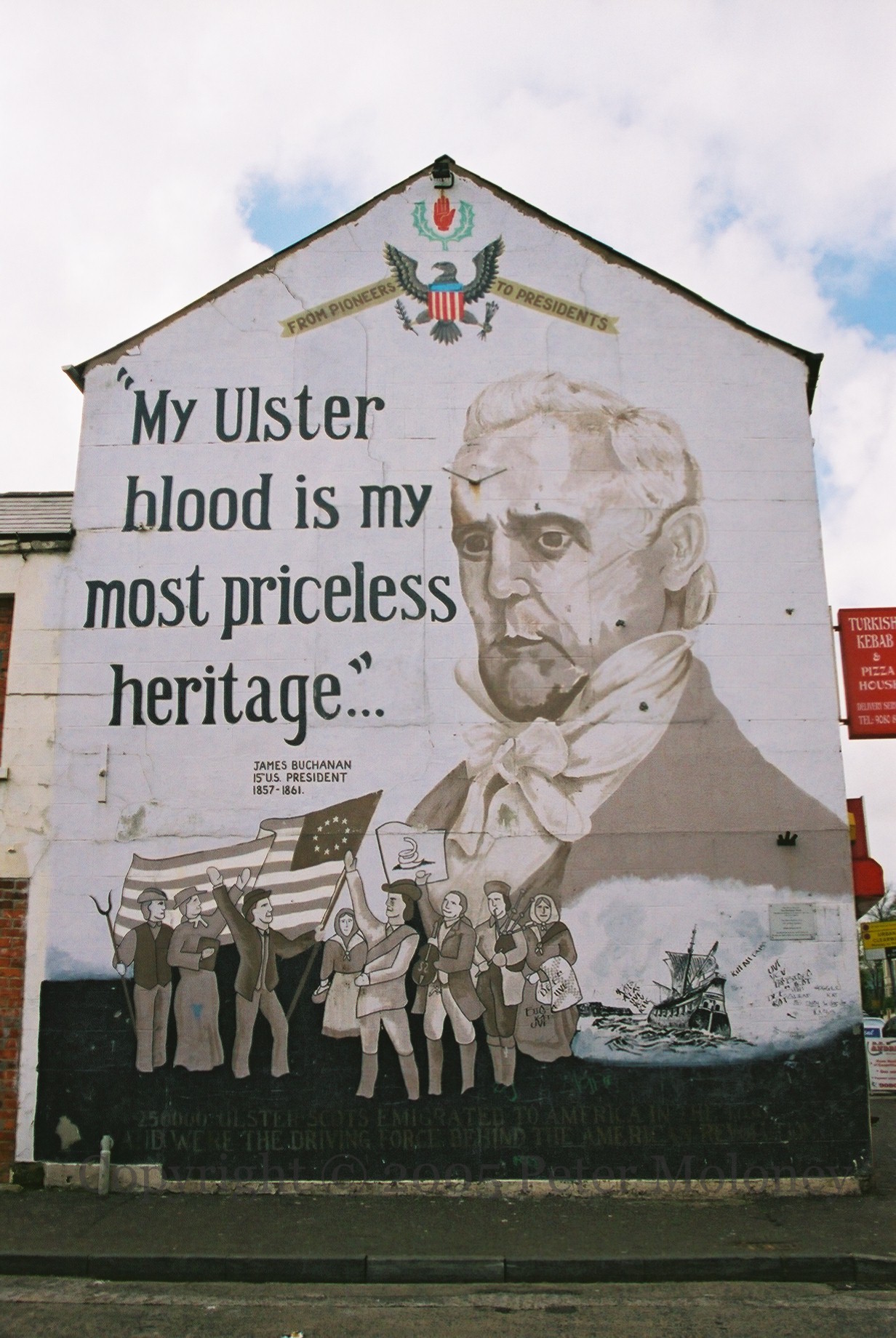
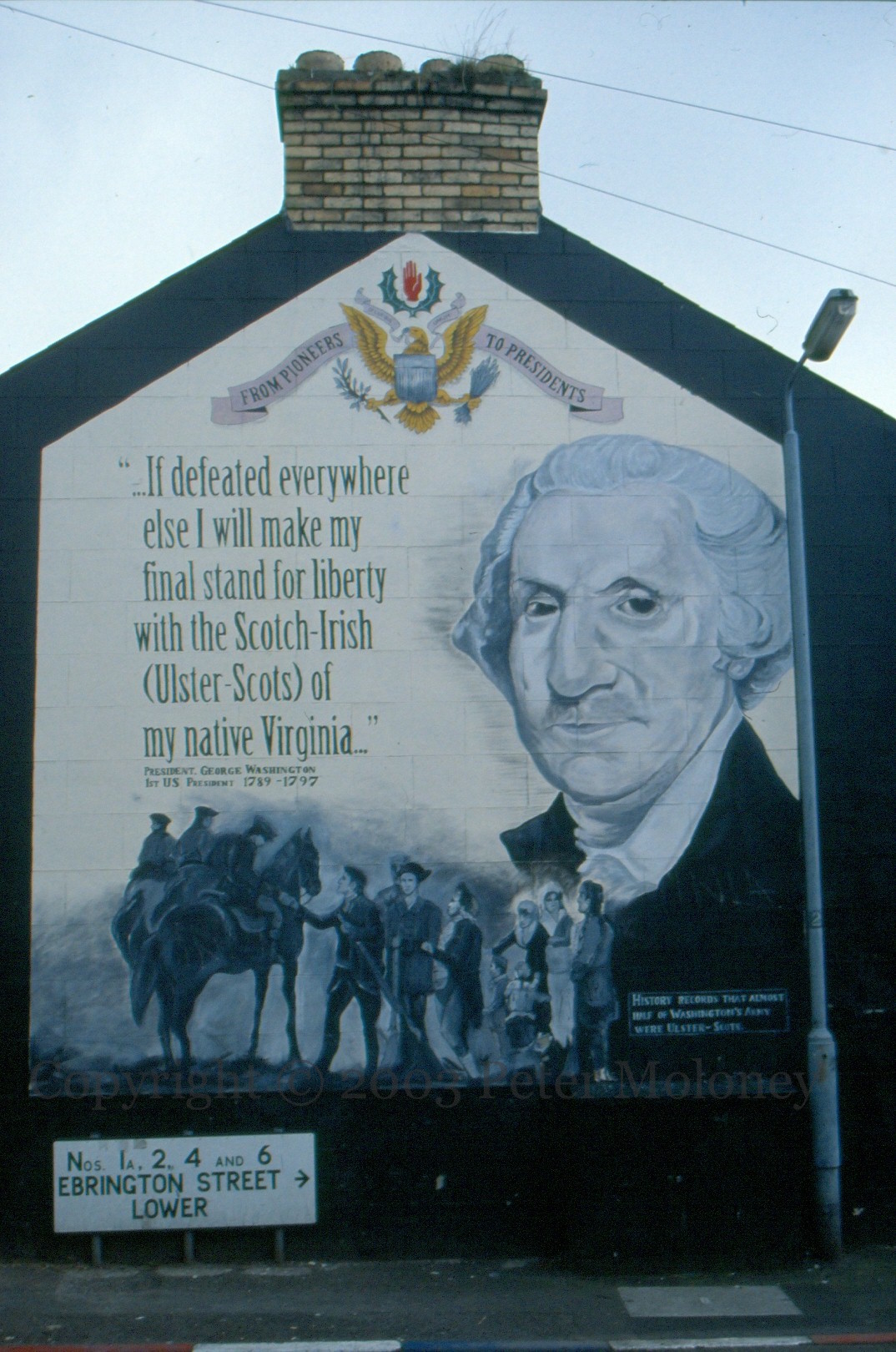
Three murals were painted in Londonderry. George Washington and James Buchanan were painted in the Waterside:
and Theodore Roosevelt was painted in the Fountain:
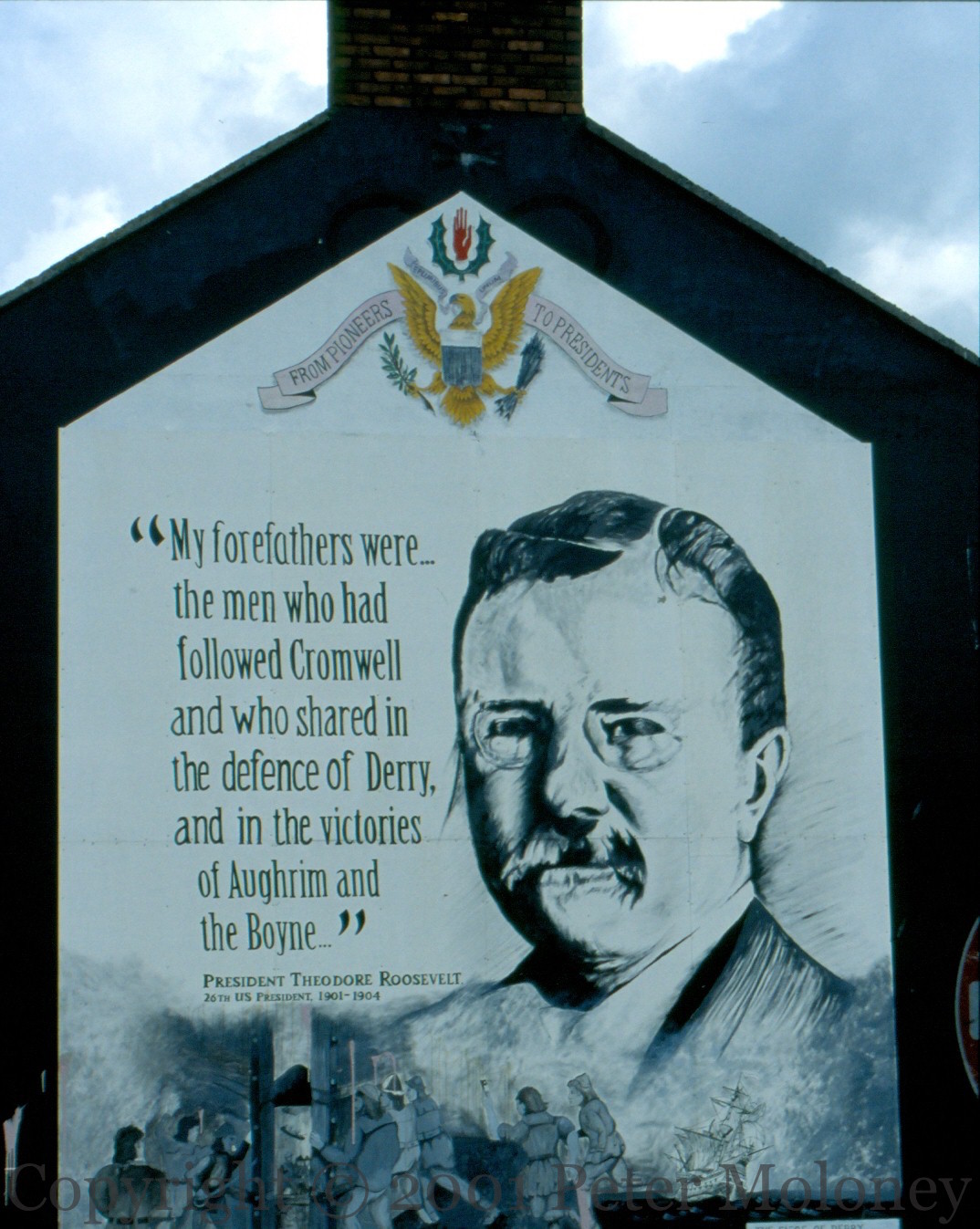
As the information at the link describes, Roosevelt’s Scotch-Irish heritage – to Gleno, near Larne – appears to be asserted rather than documented. (Andrew Jackson’s connection to the same area, around Larne, is well-attested, and Jackson murals would be painted c. 2007 and 2024.)
There were a few more murals in the “Pioneers To Presidents” series but many other Scotch-Irish murals besides:
2002? Hame Is Whaur Tha Hairt Is (New Mossley, Newtownabbey)
(See J1299)
2002 Roosevelt – Pioneers To Presidents (New Mossley, Newtownabbey)
(J1559 J1600 M09074)
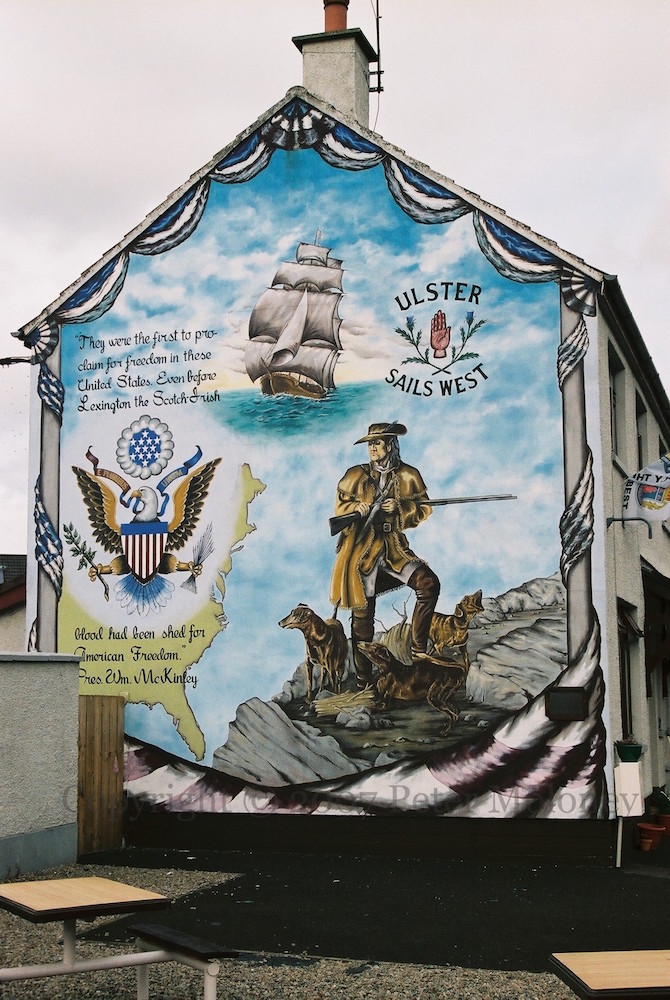
2003? Ulster Sails West (Ballymoney): emigration (sailing ship), revolution (McKinley quotation), expansion (frontiersman/Davy Crockett).
2004? Roosevelt – Pioneers To Presidents (Seymour Hill, Dunmurry)
(See Street View J2132)
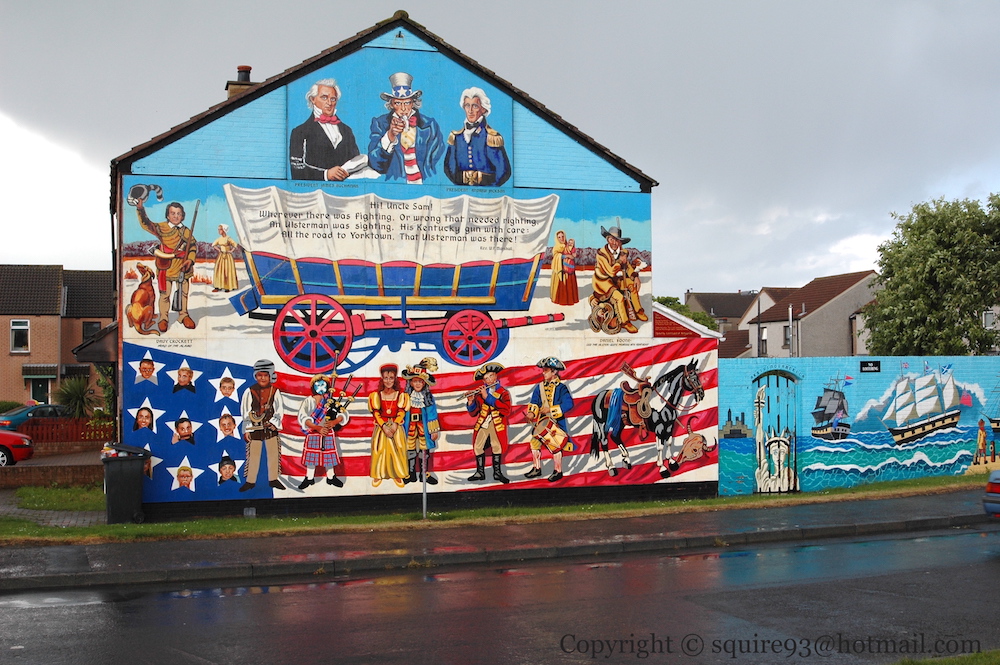
2005 USA (Bowtown, Newtownards) – the wagon is flanked by Davy Crockett and Daniel Boone.
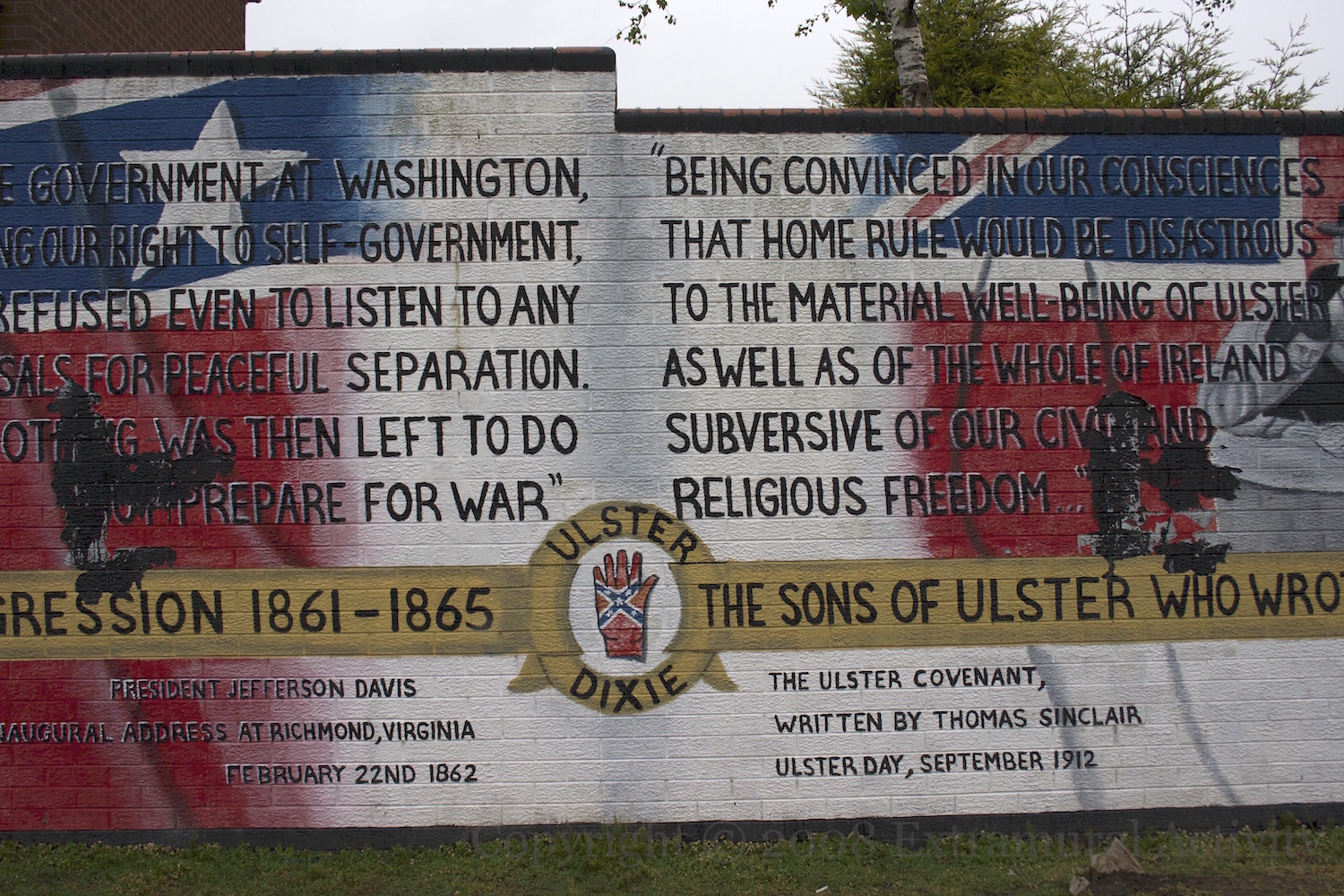
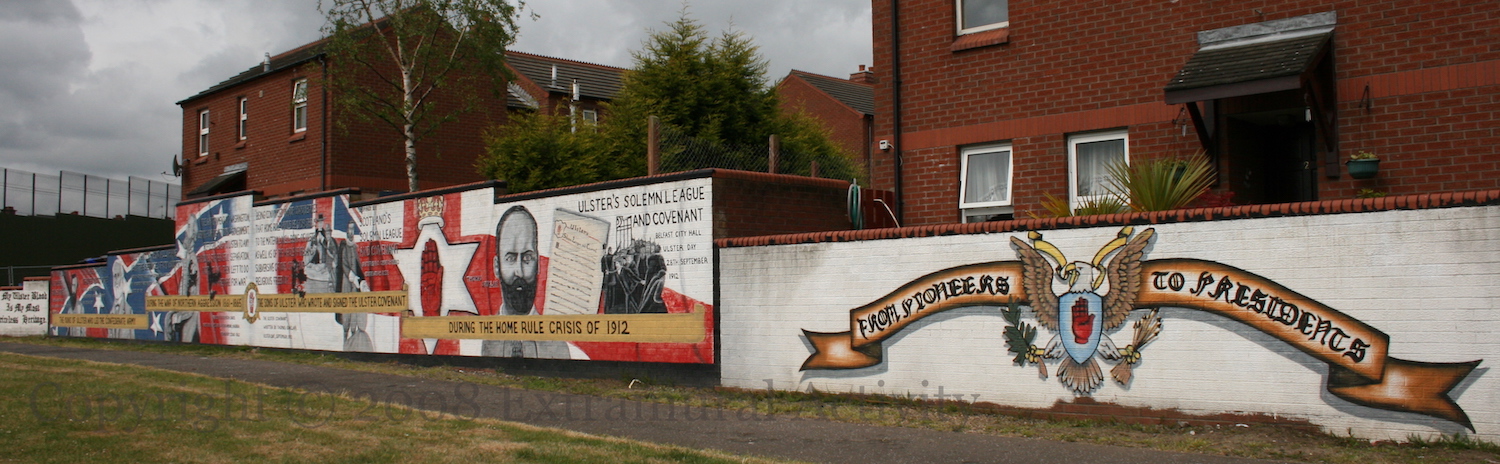
2005 Confederate Leaders & Ulster Covenant (Glenbryn, north Belfast). This is marked with “Pioneers To Presidents” but is very different from the others in the series.

The Confederate mural in Glenbryn is the most unusual of the Ulster-Scots murals. It does not concern emigration, or the Revolutionary war, or westward expansion, or the Ulster-Scots heritage of various presidents (though it does have a “From pioneers to presidents” panel), but instead the Civil War of 1861-1865, and more specifically the Confederate forces.
The revolutionary-war component of Ulster Goes West (above) provides an unhappy parallel for Irish unionism in that the Scotch-Irish (as they were called in North America) of the revolutionary period were Presbyterians who, like many Presbyterians in Ireland, were unhappy with the way the English powers administered the colonies. This desire for separation from Britain and American independence doesn’t fit well with the unionist desire to remain part of the United Kingdom.
However, putting the so-called “war of northern aggression” – the attempt of the Confederate south to secede from the Union over the right to expand slavery into the west – in parallel with the Ulster Covenant of 1912 is not a whole lot better.
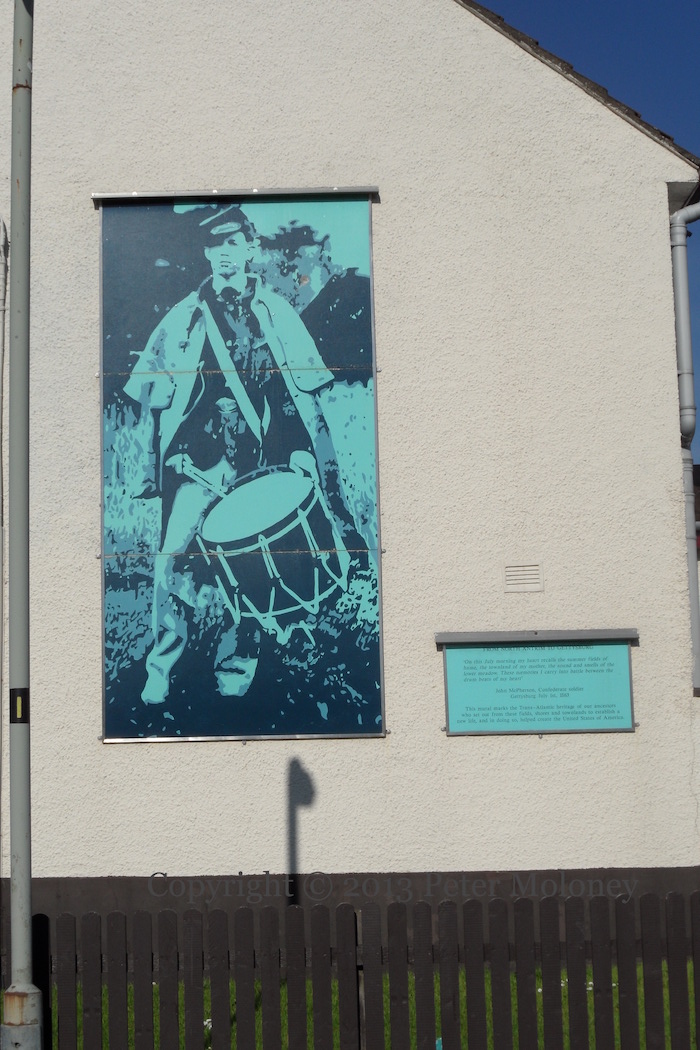
The Mosside drummer-boy (see 2009, below) is also from the Confederate army, but the mural presents a soldier, who is about to take part in the battle of Gettysburg on July 1st, 1863, reminiscing about his homeland – there is no attempt to put the battle or the wider war in parallel with Unionism in Ireland, which the Glenbryn mural attempts to do.
The analogous points seem to be quite minimal: just as those hardy Scotch-Irish Confederate Americans Stuart and Lee and Jackson had to “prepare for war” against a force that would coerce them to comply with the Union’s policies, so those hardy Scotch-Irish Irishmen Carson and Craig and Sinclair had to prepare for a war against to resist the force that would coerce them to comply with the Union’s policies. (Click the link below any of the three images for the quotes and other verbiage included in the mural.)
It’s true that the “aggressor” in both cases was the larger entity containing the part but we have to put aside that the Confederate South wanted to secede from their Union while the (Irish) North wanted to remain in theirs. We also have to put aside those with Ulster-Scots heritage on the Union side, first and foremost Ulysses S. Grant – here he is being celebrated in a pamphlet from the Ulster-Scots Agency. A subsequent disanalogy is that Lee and Jackson were unsuccessful while Carson and Craig were successful. And These are merely the formal problems, of trying to put the two events in parallel; we haven’t yet got to the question of why unionism would want to align itself with the Confederate cause of expanding slavery. In sum, the message simply seems to be: don’t mess with Ulster-Scots people, as they’ll fight you for their “civil and religious freedoms” (to violate the freedoms of others?). (If you can provide a more extensive interpretation, please get in touch.)
See also: a Confederate battle flag in Cluan Place, east Belfast | a Confederate battle flag in Ballymacarrett, east Belfast | a Confederate battle flag in Skegoneill, north Belfast.
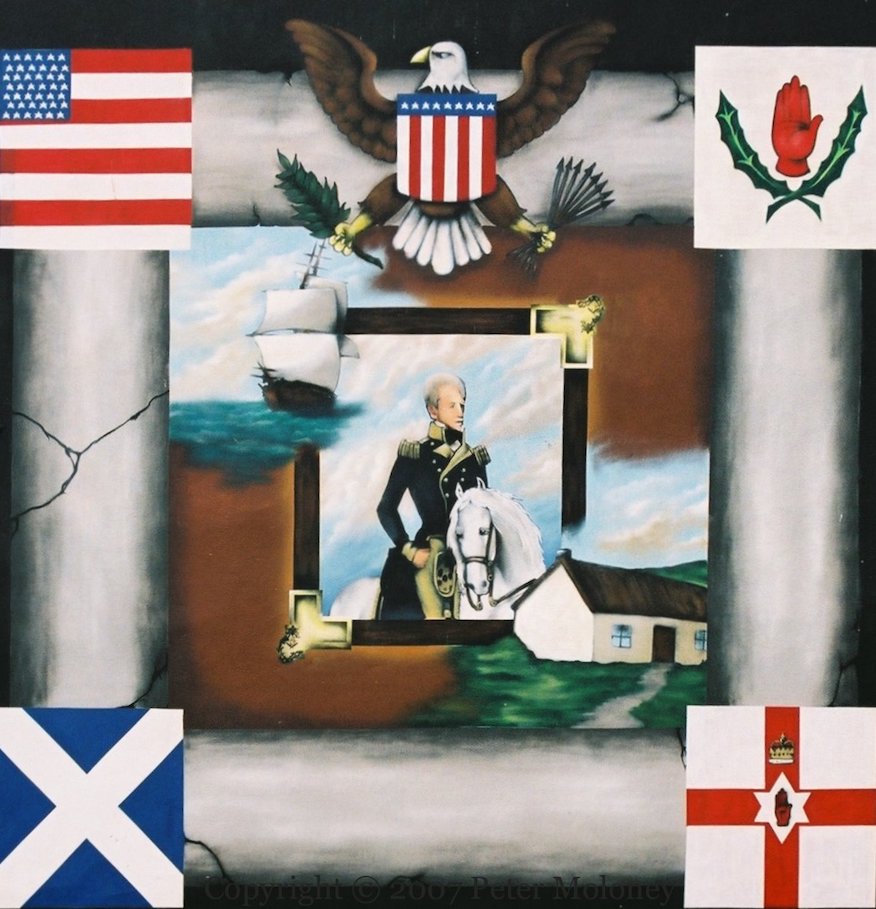
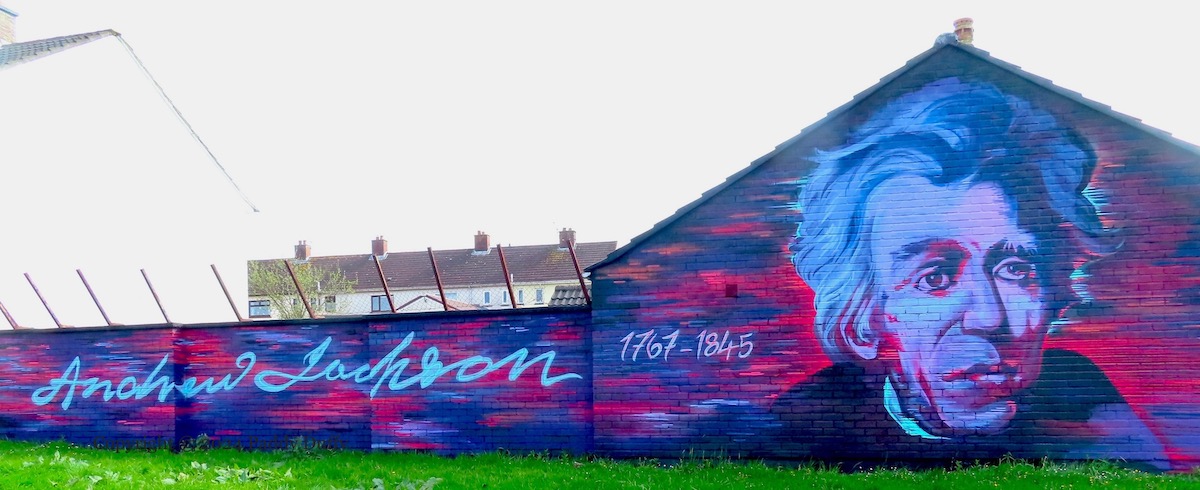
2007? Andrew Jackson (Shankill, west Belfast)
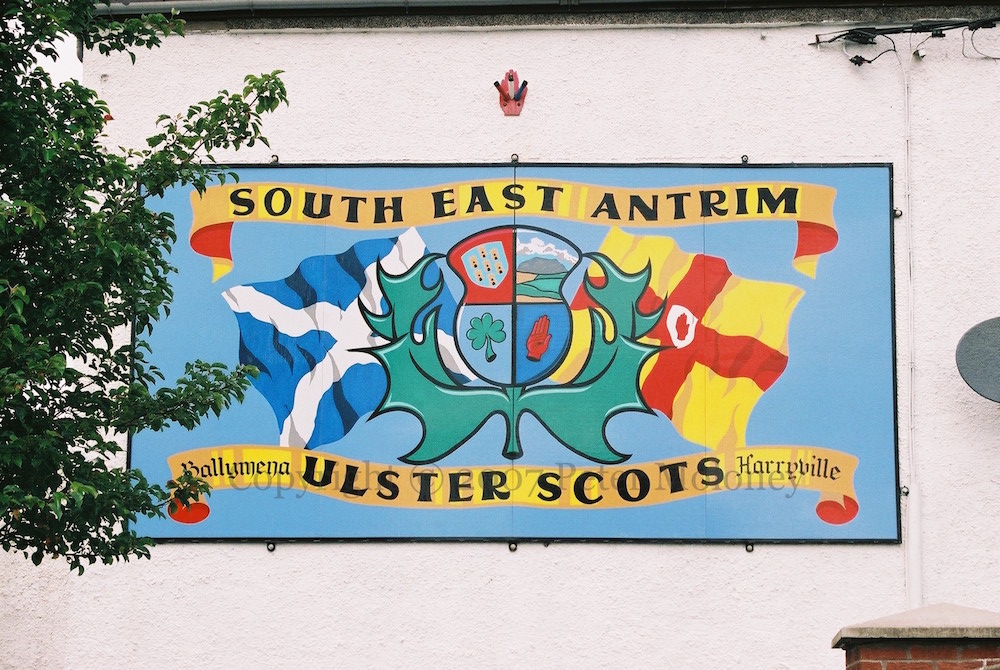
2007? Ulster Scots (Harryville, Ballymena)
2009? Drummer with Confederate soldier quote
2009 Emigration (Bowtown, Newtownards)
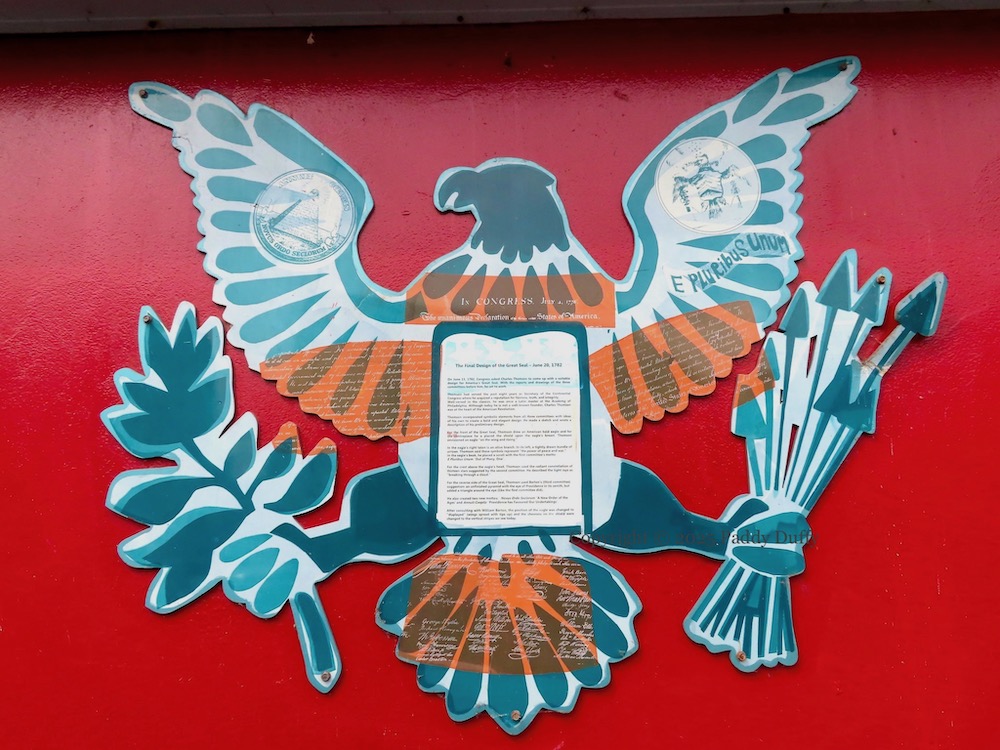
c. 2015, Charles Thomson was honoured with a decal of the Great Seal – of which he was the co-designer – in his home town of Maghera.
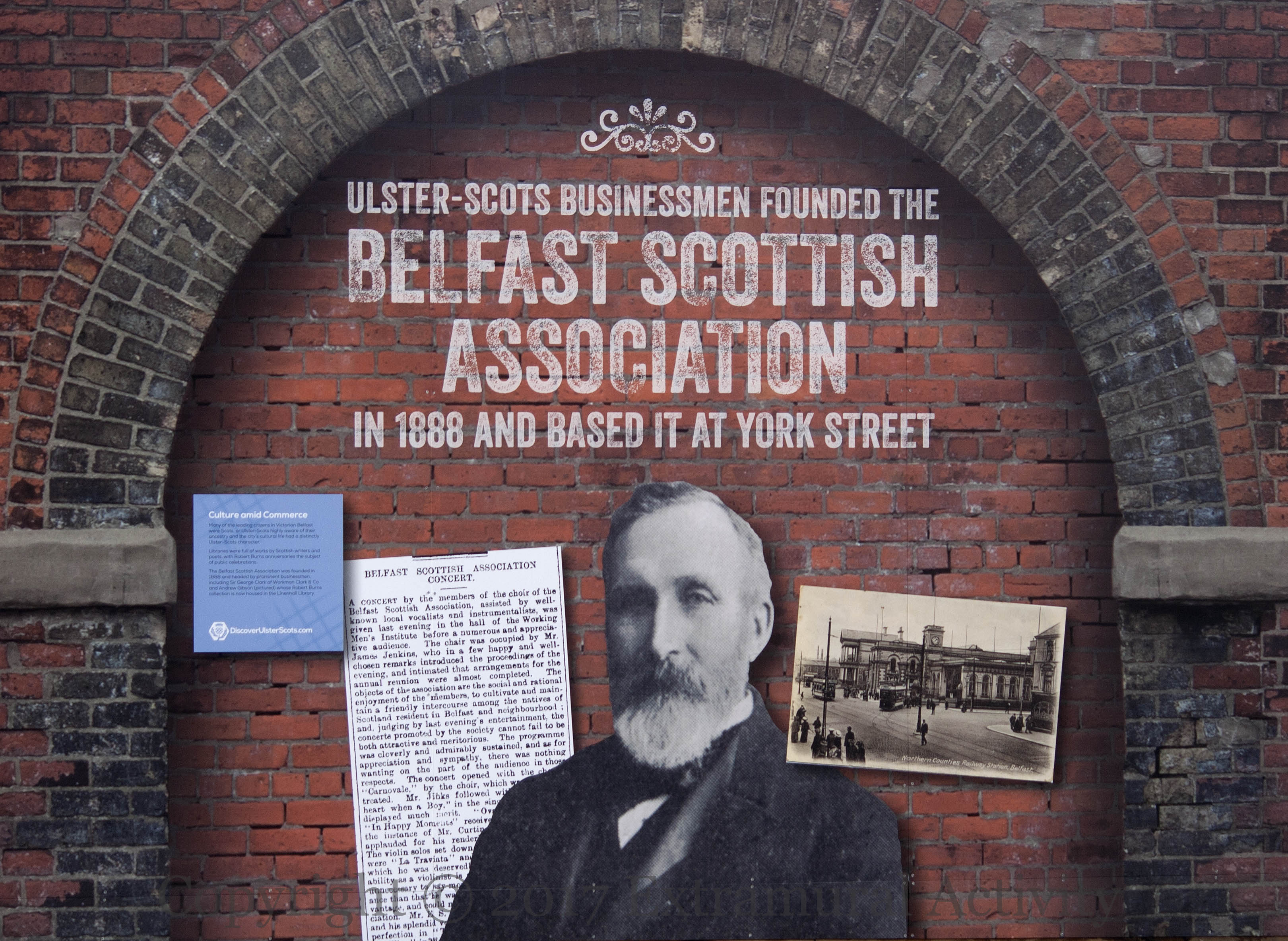
After the Andrew Jackson mural, there were no more Ulster-Scots murals in Belfast until a 2016 series of boards — “Discover Ulster Scots” in York Street, Belfast — that focused on industrialists in Belfast, rather than the Scots-Irish in America.
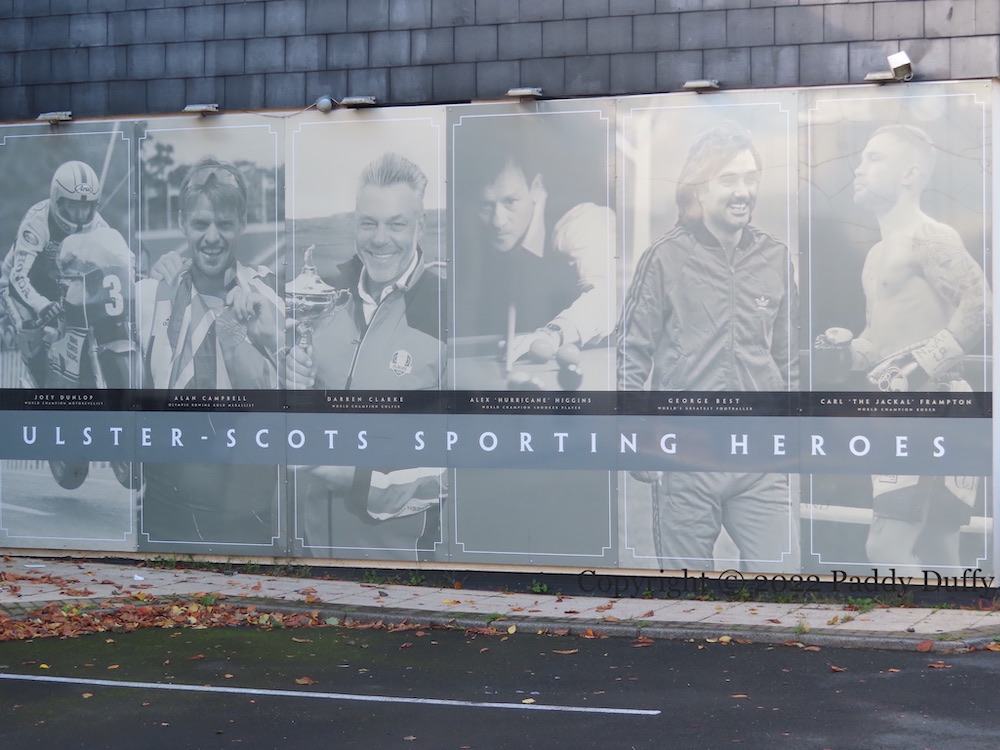
In 2022, this display of “Ulster-Scots” athletes was mounted at the north Belfast Orange hall: Joey Dunlop, Alan Campbell, Darren Clarke, Alex Higgins, George Best, and Carl Frampton.
Kragfargus Cultural Corner, in Carrickfergus (this is one of a number of panels)
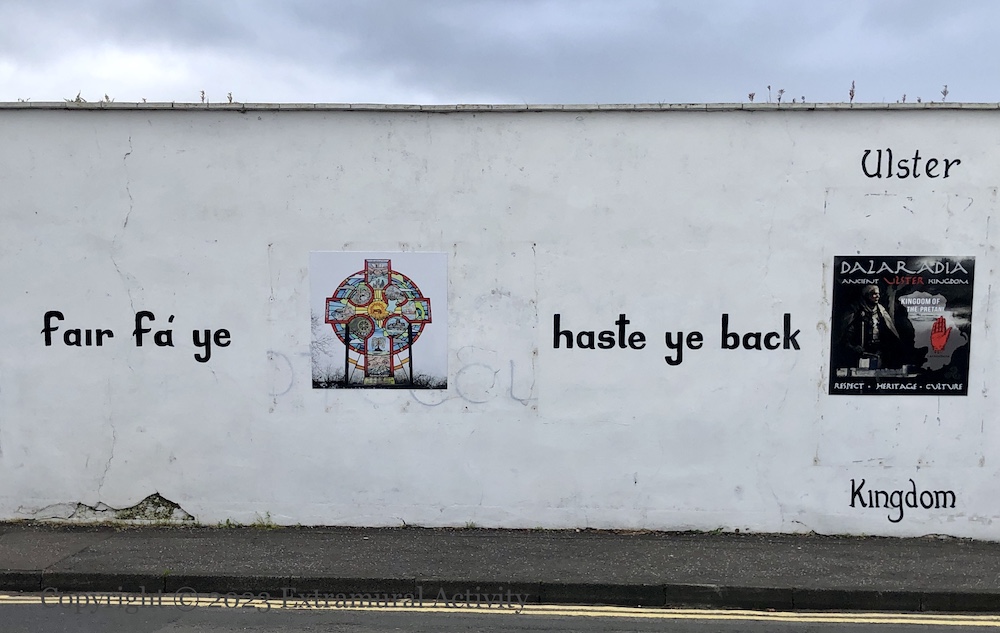
In 2023, this gallery of 20th century figures from Northern Ireland was mounted on a fence about 200 yards from the gallery of industrialists.

McKinley (who was quoted in the Ulster Sails West mural in Ballymoney) was celebrated in Dervock with a Great Seal and three info panels in Riverside Park (From Scotland, To Ulster, To America) and a portrait and info panel in Castlecat Road (International Dervock).
In 2024, Andrew Jackson was painted in Sunnylands, Carrickfergus.
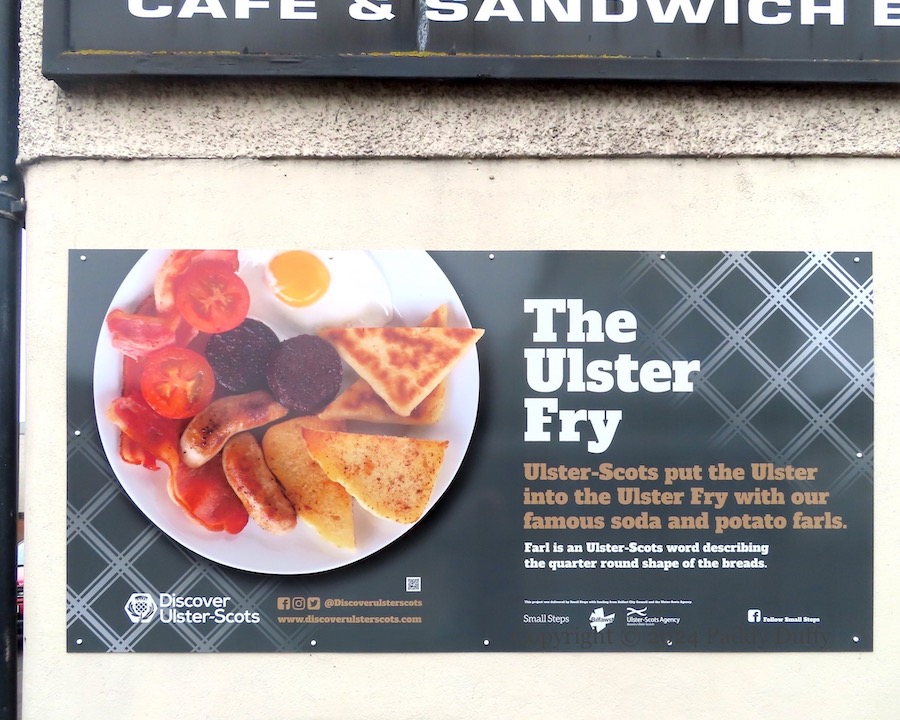
More information boards were added in north Belfast in the late spring of 2024, one on soda farls and potato bread, another on whiskey and ginger ale, and a third on charitable and educational institutions.
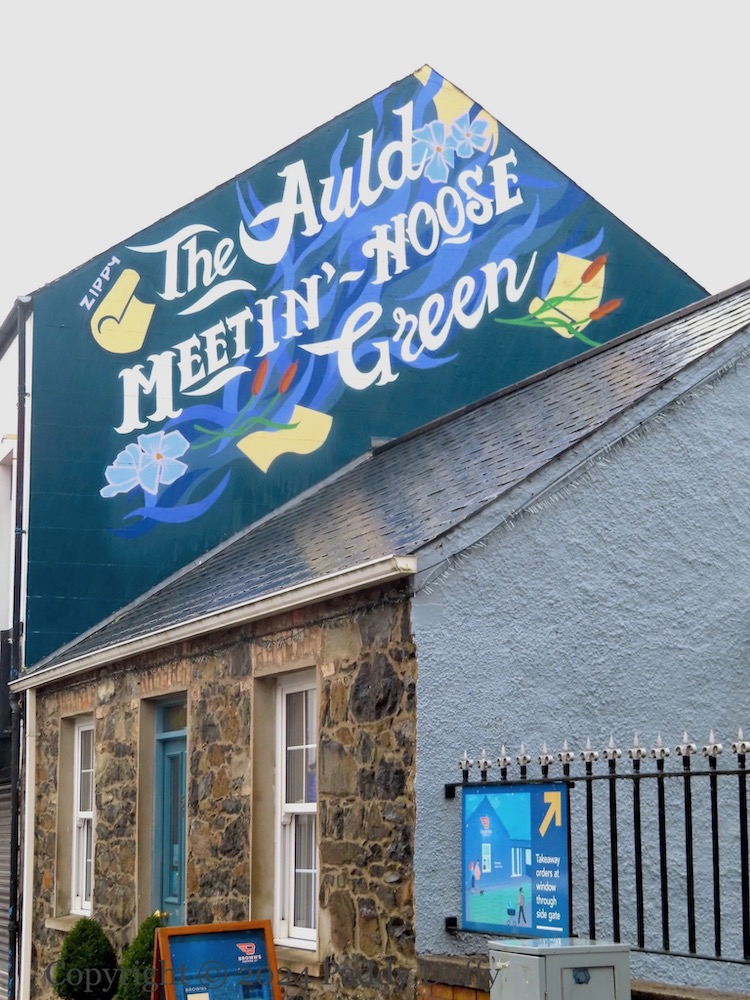
The Auld Meetin’-Hoose Green was an 1898 collection of tales from Ballyclare and surroundings as retold by by Archibald McIlroy, who grew up in the area.
References in parentheses to mural collections:
A = Alain Miossec Collection
J = Jonathan McCormick Collection
M = Peter Moloney Collection – Murals
T = Paddy Duffy Collection
X = Seosamh Mac Coılle Collection
Written material copyright © 2017-2026 Extramural Activity. Images are copyright of their respective photographers.
Back to the index of Visual History pages.
 Extramural Activity