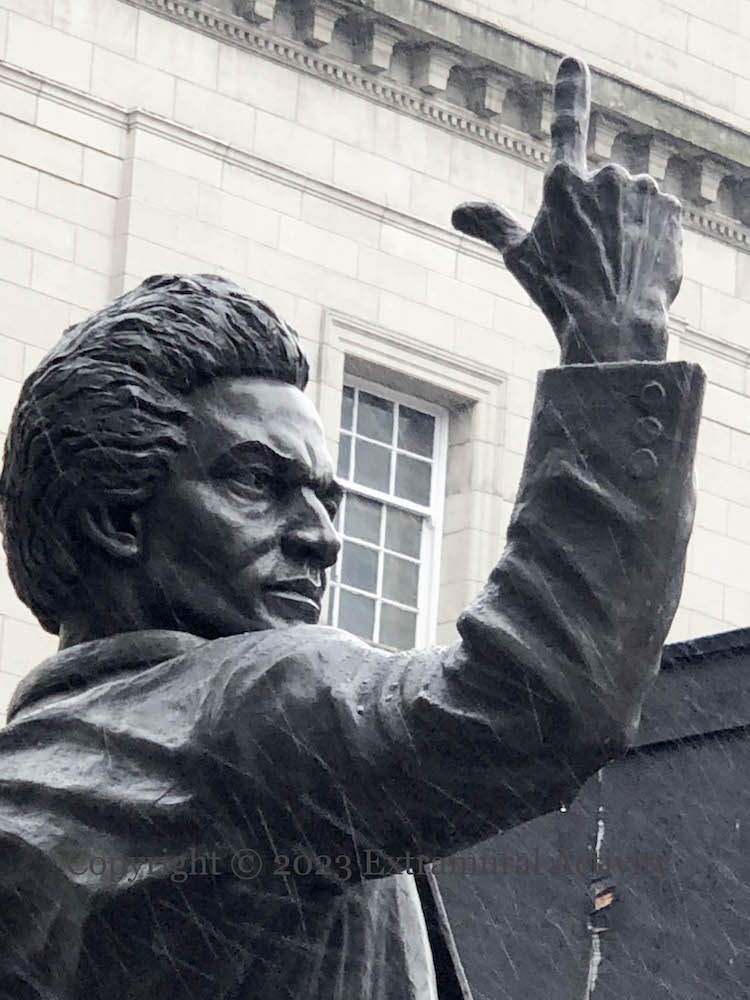
On this day in 1834, the Slavery Abolition Act came into effect (except territories managed by the East India Company), marking the beginning of the end for slavery in the British empire. Enslaved children below the age of six were freed; while enslave adults were designated as apprentices for a period of four or six years; 5% of British GDP went towards reimbursing owners (Independent | WP).
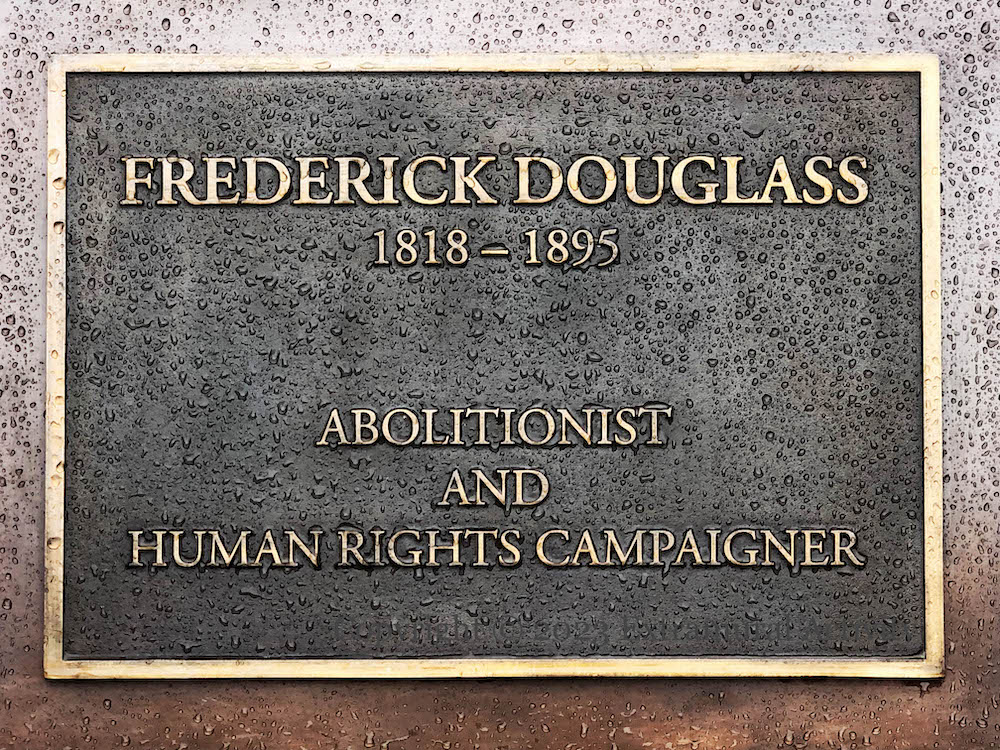
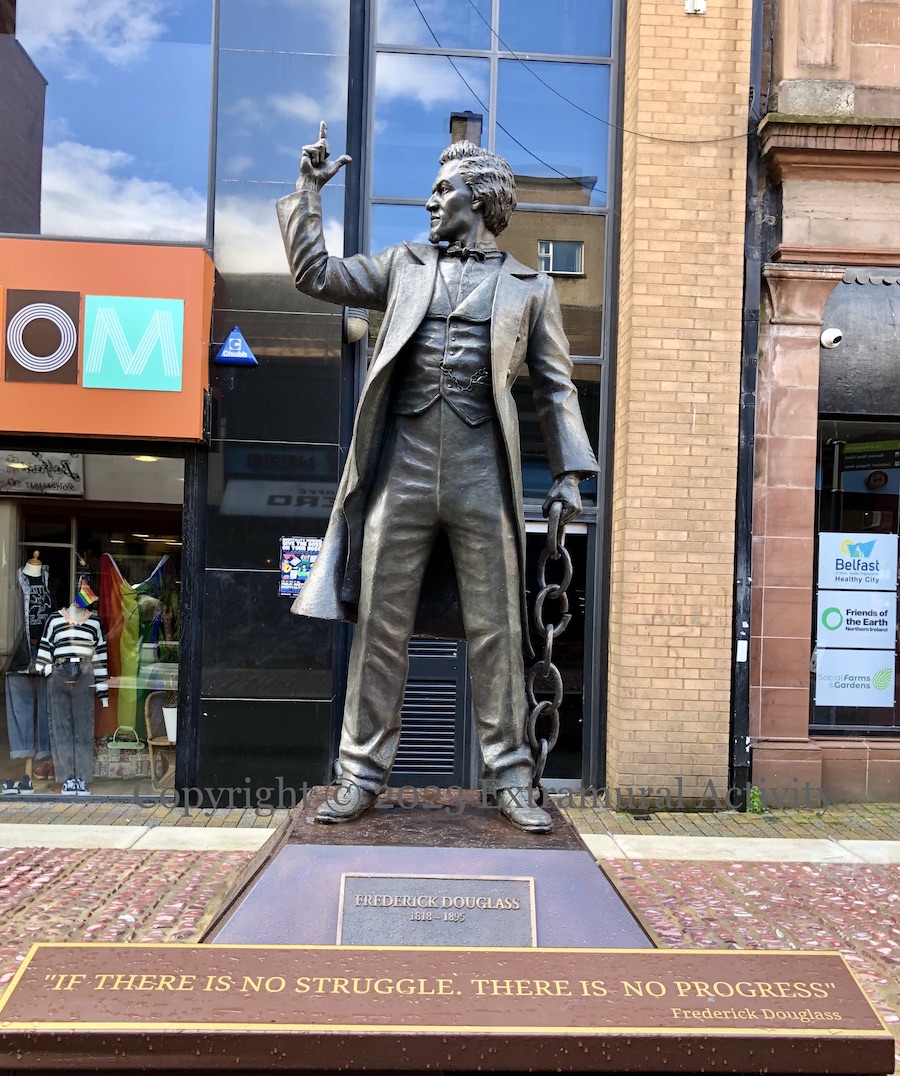
This made it safe for Frederick Douglass – “1818-1895, abolitionist and human rights campaigner” – to tour in Ireland and Britain when the success of his (first) auto-biography, Narrative Of The Life Of Frederick Douglass, might have allowed and encouraged his owner to re-capture him. Douglass had “illegally” escaped slavery in September, 1838, become a preacher in 1839, and by 1843, had joined a six-months-long speaking tour of the United States. (WP)
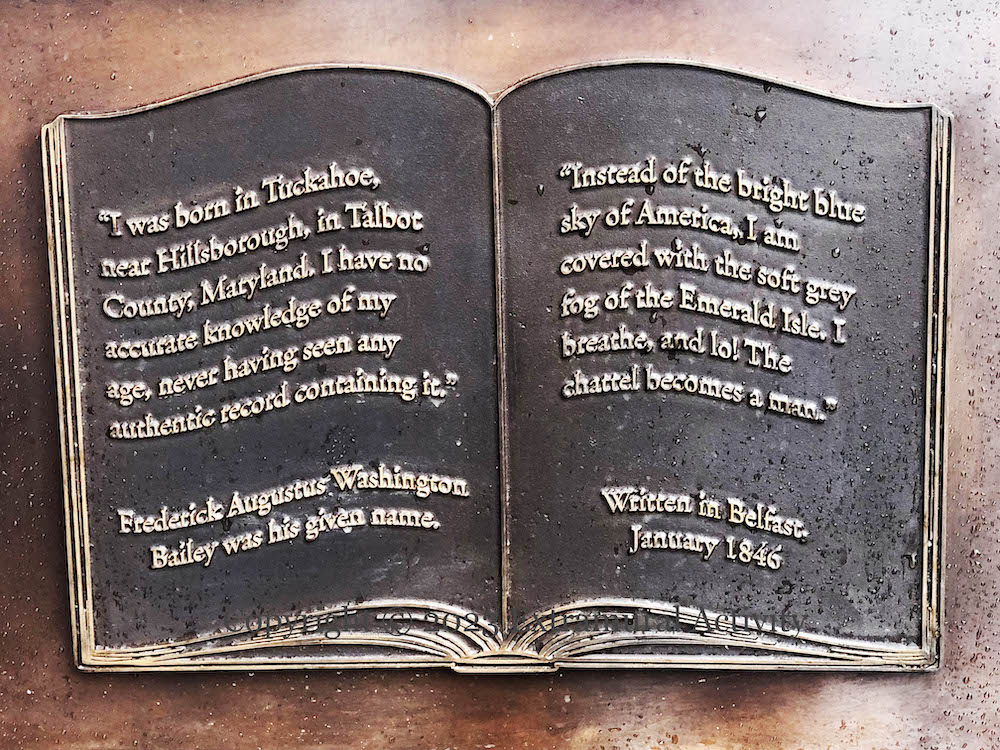
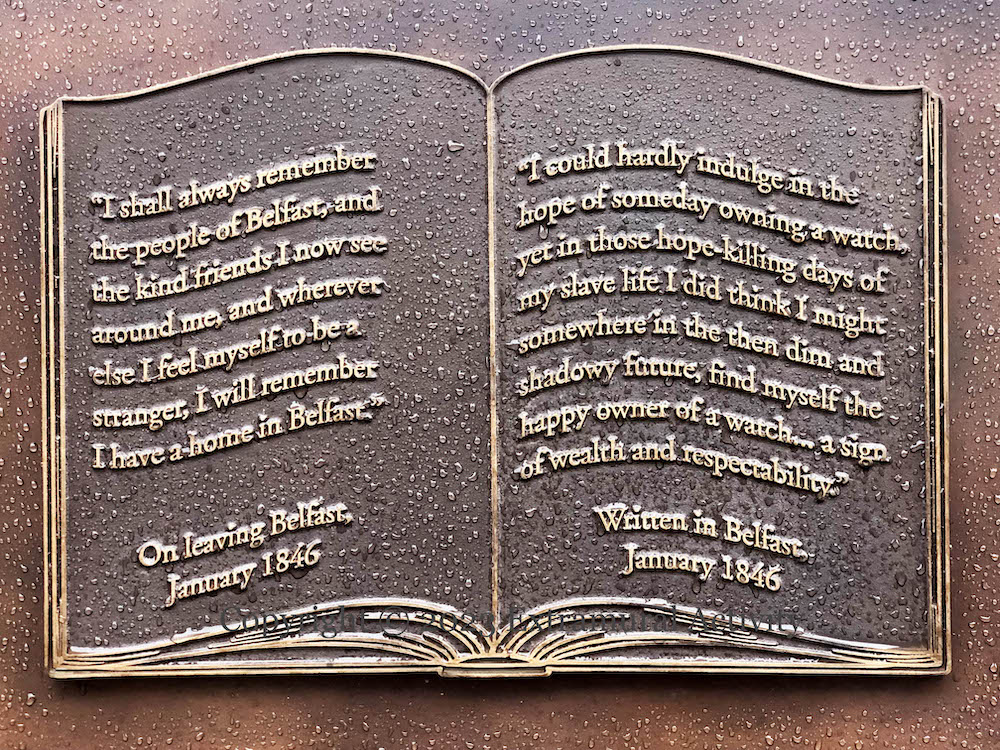
His tour of Ireland and Britain lasted two years and included speeches given in First Presbyterian Church in Rosemary Street and at the Assembly Rooms in Waring Street. In a letter to William Garrison he wrote, “Instead of the bright, blue sky of America, I am covered with the soft, grey fog of the Emerald Isle. I breathe, and lo! the chattel becomes a man.” And when leaving for Britain in January 1846 he wrote, “I shall always remember the people of Belfast, and the kind friends I now see around me, and wherever else I feel myself to be a stranger, I will remember I have a home in Belfast.”
Douglass returned to the US in 1847, where millions were still enslaved (until the 13th Amendment of 1865). In an 1857 address concerning Jamaica and the West Indies, Douglass said, “If there is no struggle, there is no progress. Those who profess to favor freedom and yet deprecate agitation are men who want crops without plowing the ground. They want rain without thunder and lightning. They want the ocean without the roar of its mighty waters. The struggle may be a moral one or it may be a physical one, or it may both moral and physical, but it must be a struggle. Power concedes nothing without a demand. It never has and it never will.” (CUNY)
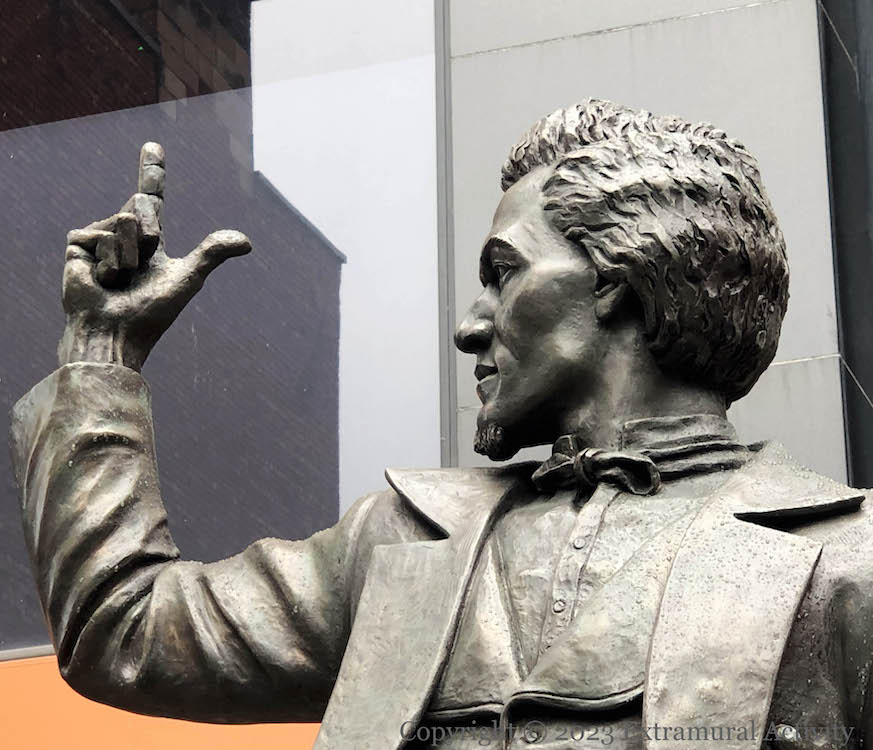
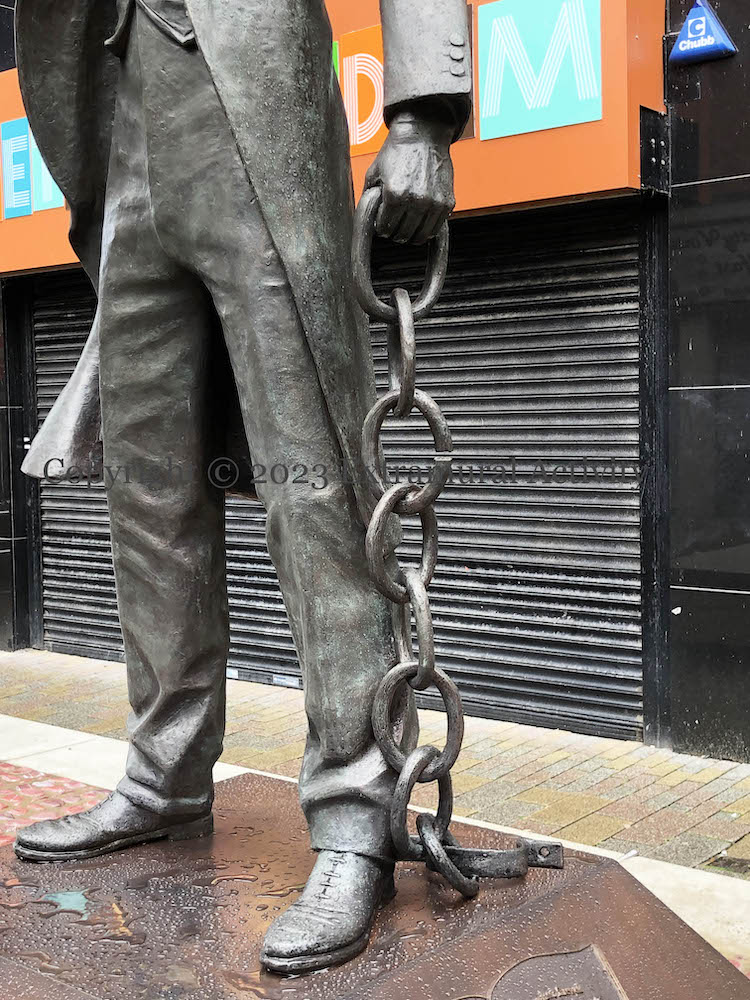
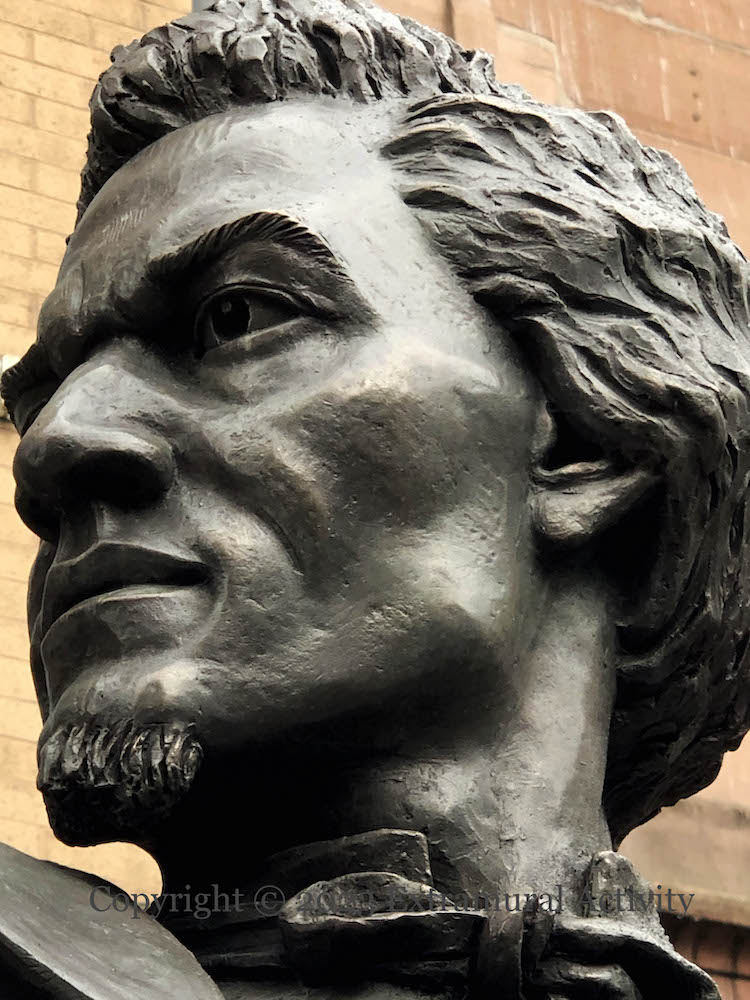
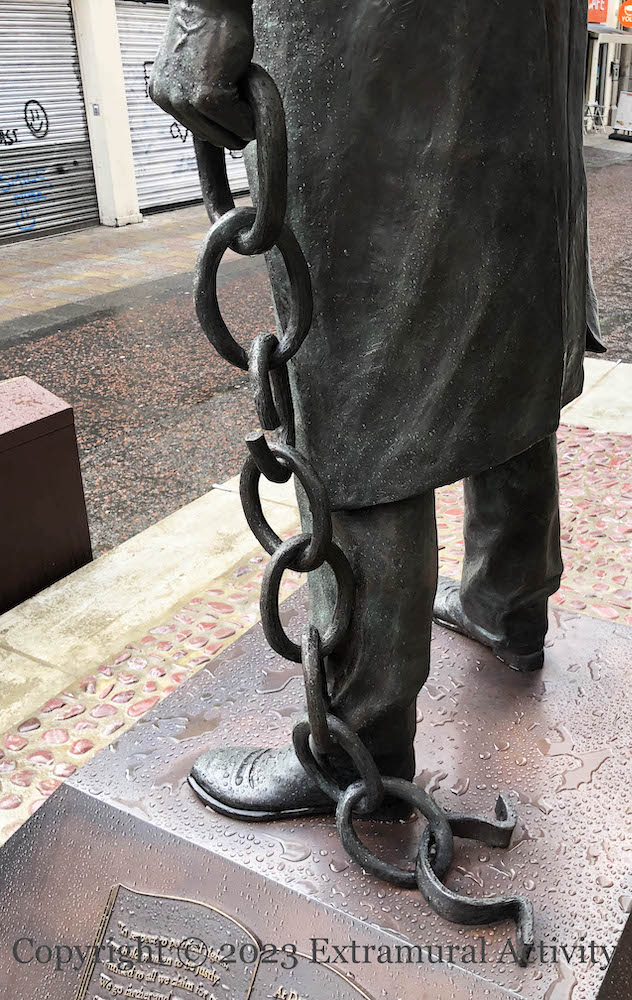
The piece was sculpted by Alan Beattie Herriot and Hector Guest (BBC) with funding from Belfast City Council and the Department For Communities (BelTel), and stands in Lombard Street. Douglass is presented as a 27-year-old; the old mural on Divis Street and the current mural on Northumberland Street portray him in later years.
Douglass carries a watch in his waistcoat pocket: “I could hardly indulge in the hope of someday owning a watch, yet in those hope-killing days of my slave life I did think I might somewhere in the dim and shadowy future, find myself the happy owner of a watch … a sign of wealth and respectability.”
See also: Olaudah Equiano, who toured in Ireland in 1791-1792, and, for Mary Ann McCracken, The World Affords No Enjoyment Equal To That Of Promoting The Happiness Of Others. “”In respect to political rights, we hold woman to be justly entitled to all we claim for man. We go farther and express our conviction that all political rights which it is expedient for man to exercise, it is equally so for women … Our doctrine is that ‘Right is of no sex’.” At Douglass’s farewell breakfast in January 1846, a Belfast Ladies Anti-Slavery Society was formed. Mary Ann McCracken was a founding member.”



Click image to enlarge
Copyright © 2023 Seosamh Mac Coılle
X12886
X12885 X12887 X12888 X12889 X12890
X12891 X12892 X12893 X12894
X12884
X14014
 Extramural Activity
One thought on “If There Is No Struggle, There Is No Progress”