Introduction
The heart of CNR muraling in Belfast is perhaps the middle Falls. Included in this stretch are the wall at Fallswater Street (next to what is now Cultúrlann), the two walls at Beechmount Avenue, and about eight walls in or near the Rock streets (for which see the Map).
For a long time the wall at the top of Fallswater Street was the most prominent wall on the Falls; it was the site of Smash H Block (1981); We Must Grow Tough (1981); Women In Armed Struggle (1983); Freedom-Justice-Peace (1987); Ballyseedy-Gibraltar (1988); Féıle An Phobaıl (19??); Foundation Stones (1994); An Gorta Mór along with There Was No Famine (1995); Llibertat-Saoırse along with Biko – Mandela (1997); Trimble The Waster (1999). The wall next to it (at the top of Iveagh Parade) was the site of Stop The Torture In H-Block (1981?-1986); 8531 Unemployed; Free The POWs; Beechmount POWs (1996-1997), Fáılte Á La West Belfast Fiesta (1997). Both walls were then obscured by new buildings and were no longer used for murals.
The other Falls-Beechmount corner, across the street from the one we focus on here, is a two-storey gable which, apart from the first mural in 1981 James Connolly, has always had impressively large murals that have changed only a few times over the decades – For A New Ireland (1983); Revolution (~1986); 1916-1990 Free Ireland (1990, repainted 1993); Éırí Amach na Cásca (2006, repainted 2009). These have been reproduced in countless photographs and easily catch the eye of tourists.
The smaller wall lacks the scale and the fame and the fixedness of its big brother but is all the more interesting for that. The art is crammed between a window and a side door; the art has often had to compete with election posters and commercial billboards; not all of the works have been murals – sometimes it has been the site of graffiti for memorial rallies and electoral candidates; the art has changed frequently to suit the topic of the moment or year. It thus presents a more detailed view of republican issues and anniversaries, with a more internal audience, namely the people of Beechmount and Iveagh.
The wall has been painted at least 22 times (between 1981 and 2019) and is the most frequently painted wall in Belfast and therefore probably in the world (putting aside Free Derry Corner‘s modifications).
Images
Three Flags
1981
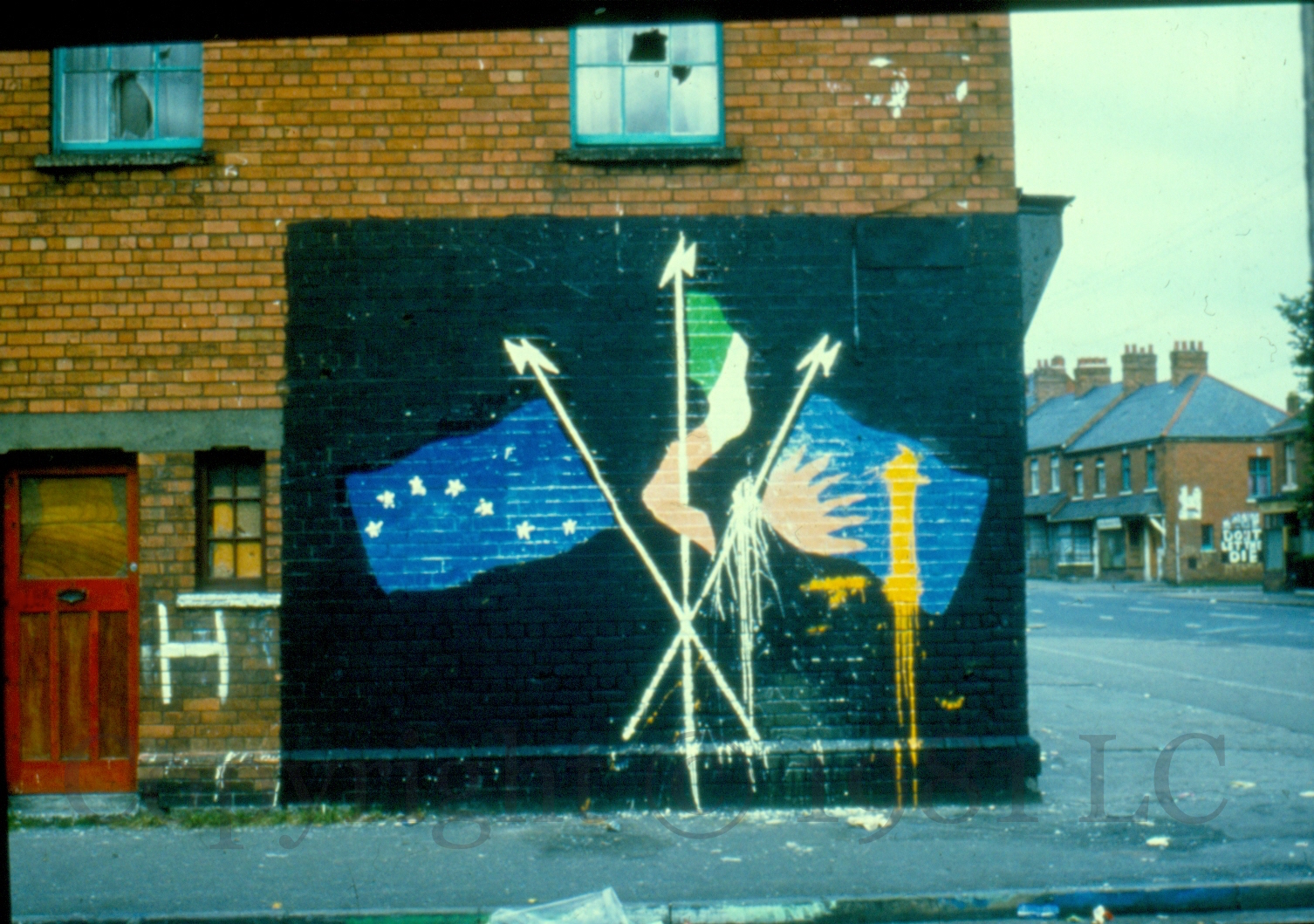
Cross & Flags
1981

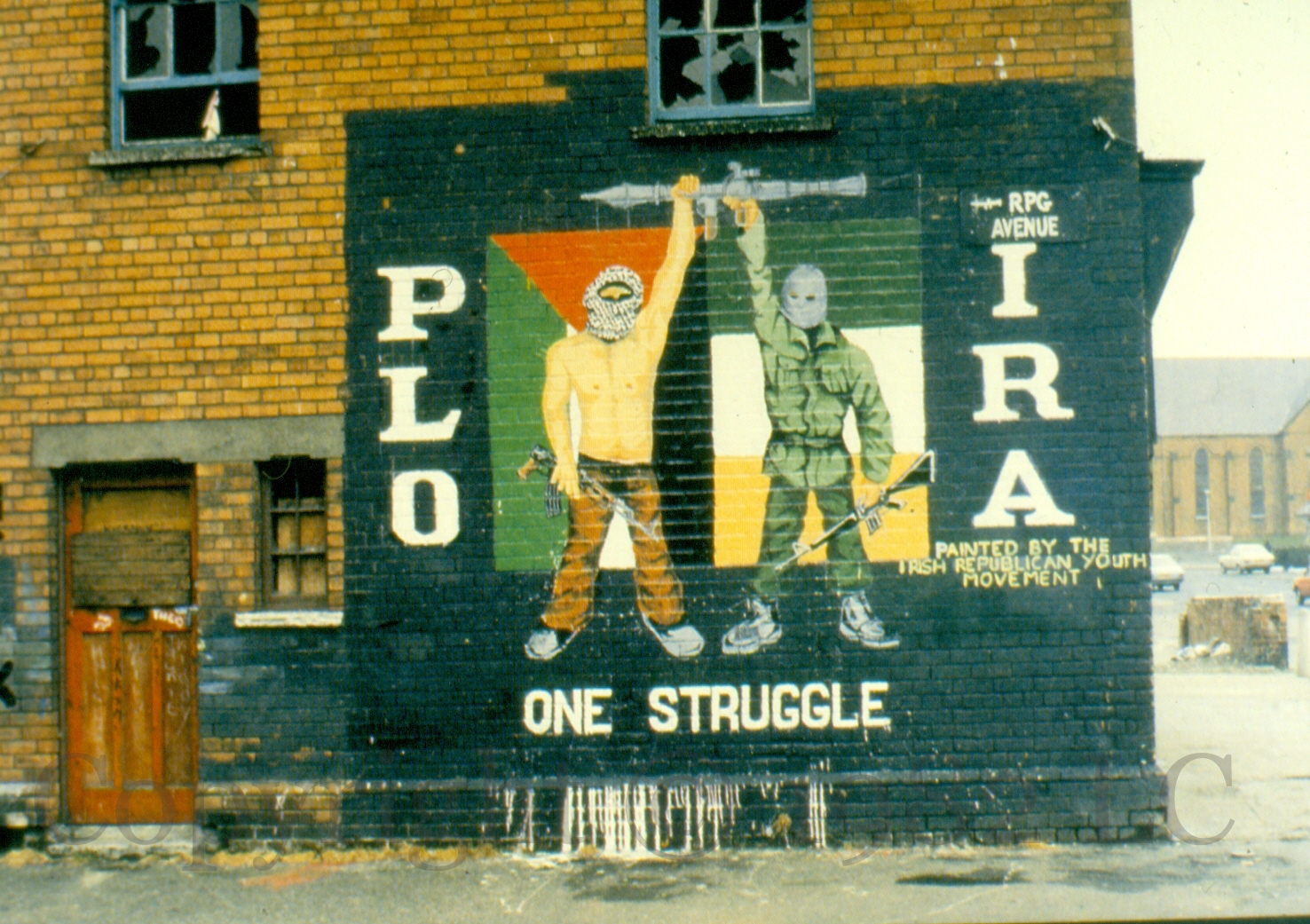
PLO-IRA
1982
Vote Maskey + “Parliament Is Political Wing of British Army”
1983
C00434
IRA Unit In Action, based on a poster “Guerilla Days In Ireland” by a Short Strand artist.
“Painted by Beechmount & Iveagh Sınn Féın Youth Dept”. “MASKEY” is visible beneath.
c. 1983.

“6th May Hunger Strike [Commemoration Assemble 2 PM Dunville Park]” in progress — the SDLP’s Joe Hendron walks by with European Parliament candidate John Hume.
1984
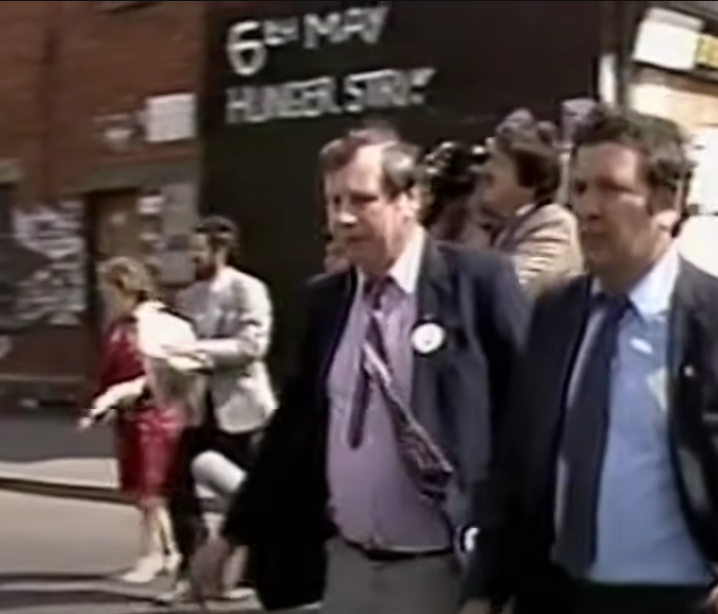
Vote Morrison (with “6th May Hunger strike commemoration” rally visible beneath)
1984
C00409 (who incorrectly gives 1989 as the date — Morrison (also) ran in the 1984 European Parliament elections, which took place on June 14th, 1984)
“Warning: Touting can seriously damage your health”
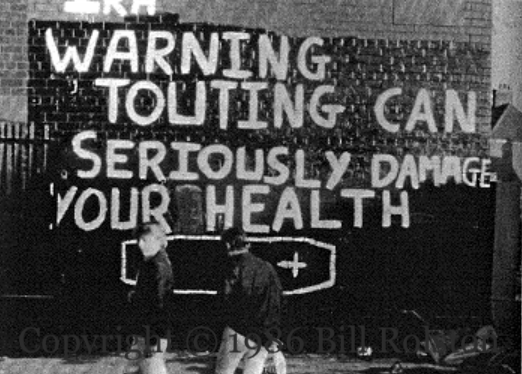
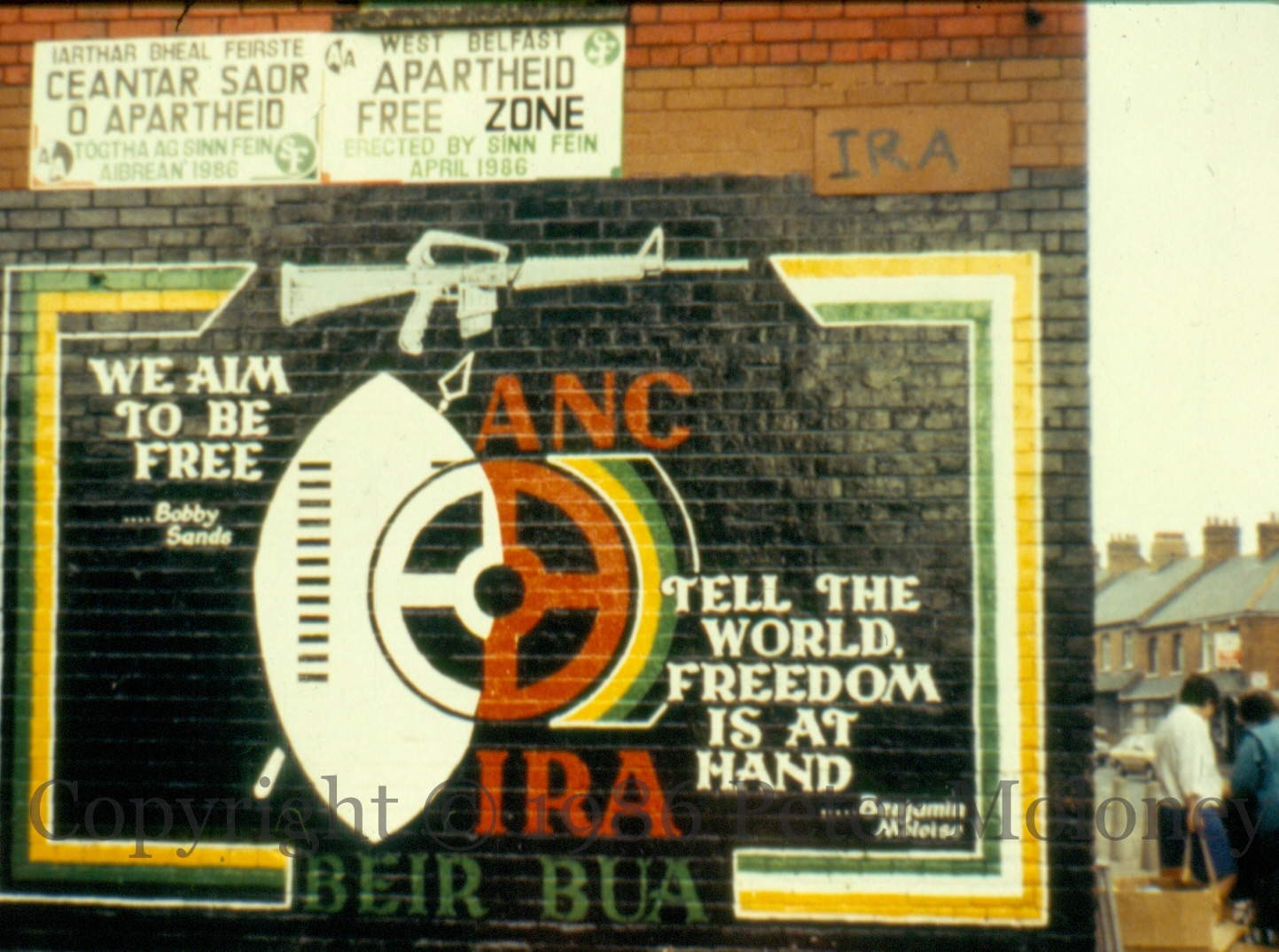
ANC (1986)
1986 1987 1988 (repainted twice?)
Head/Skull
1990

The Weaponry Has Changed
1991 1992 1993

Permanently
1994 1995

Beechmount POWs
1997 (was ?previously? across the Falls but moved for 1997 Féıle mural)

Disband The RUC
1999

Web Of Collusion (brown, blue)
2000
(The brown version – which was probably first – is shown in A910. The blue version is shown in C00242.)
Lark
2000

Collusion! Collusion!
2003

CIRA-2

2005 Shankill Road bomber Seán Kelly was returned to prison for a month on suspicion of rioting.

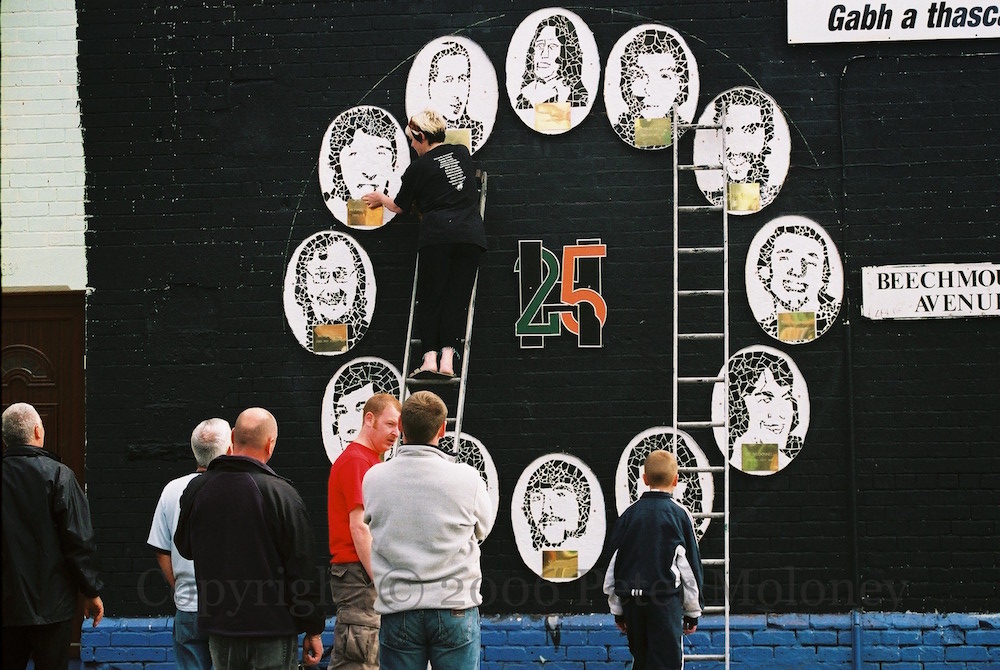
Light A Candle In Their Memory
2006

Hunger Strikers mosaics
2006 2007 2008
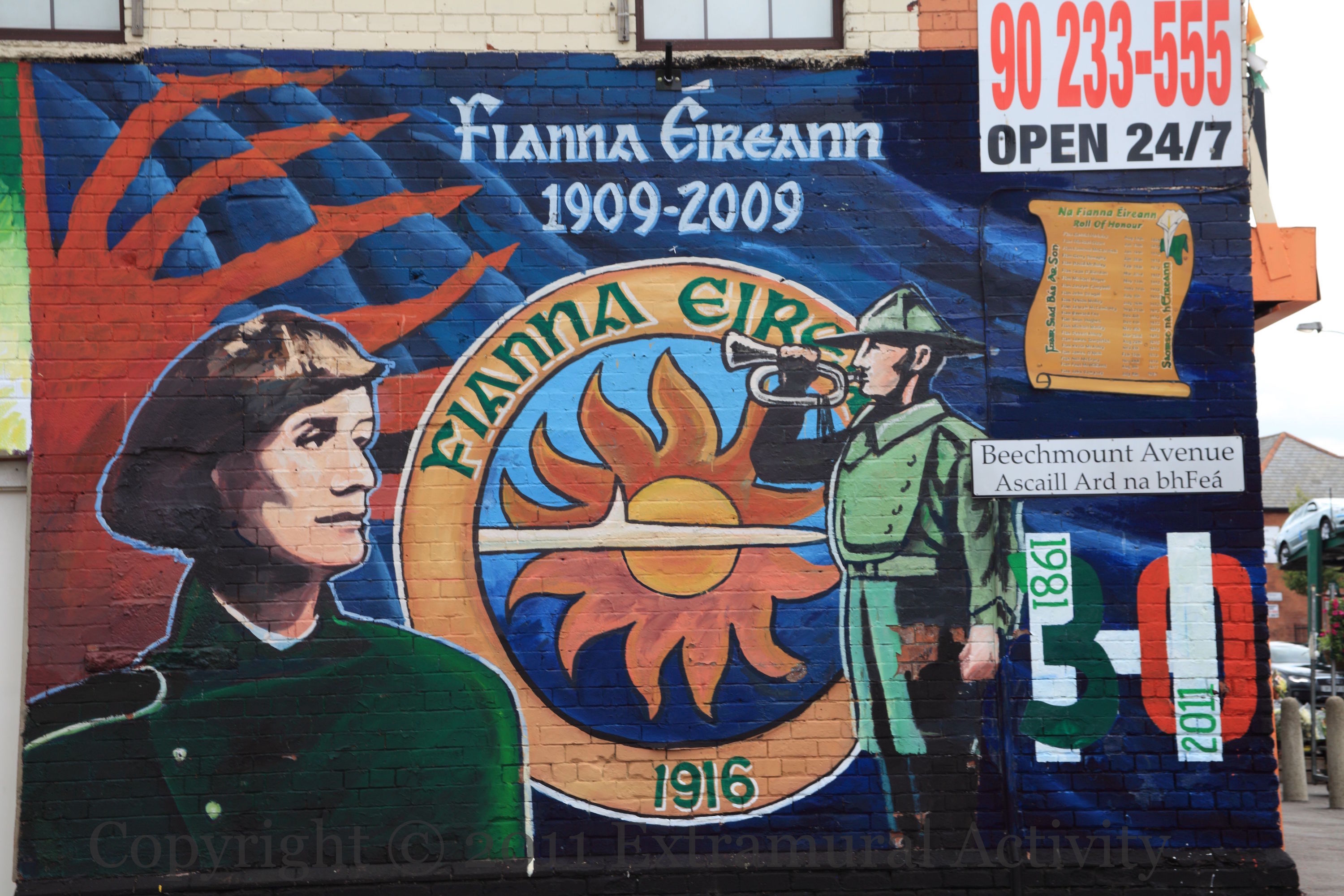
Fıanna Éıreann 100
2009-04 2010 2011 (‘H 30th’ added 2011; for the original, see M04950) 2012
Cumann Na mBan 100
2014-03 2015 2016

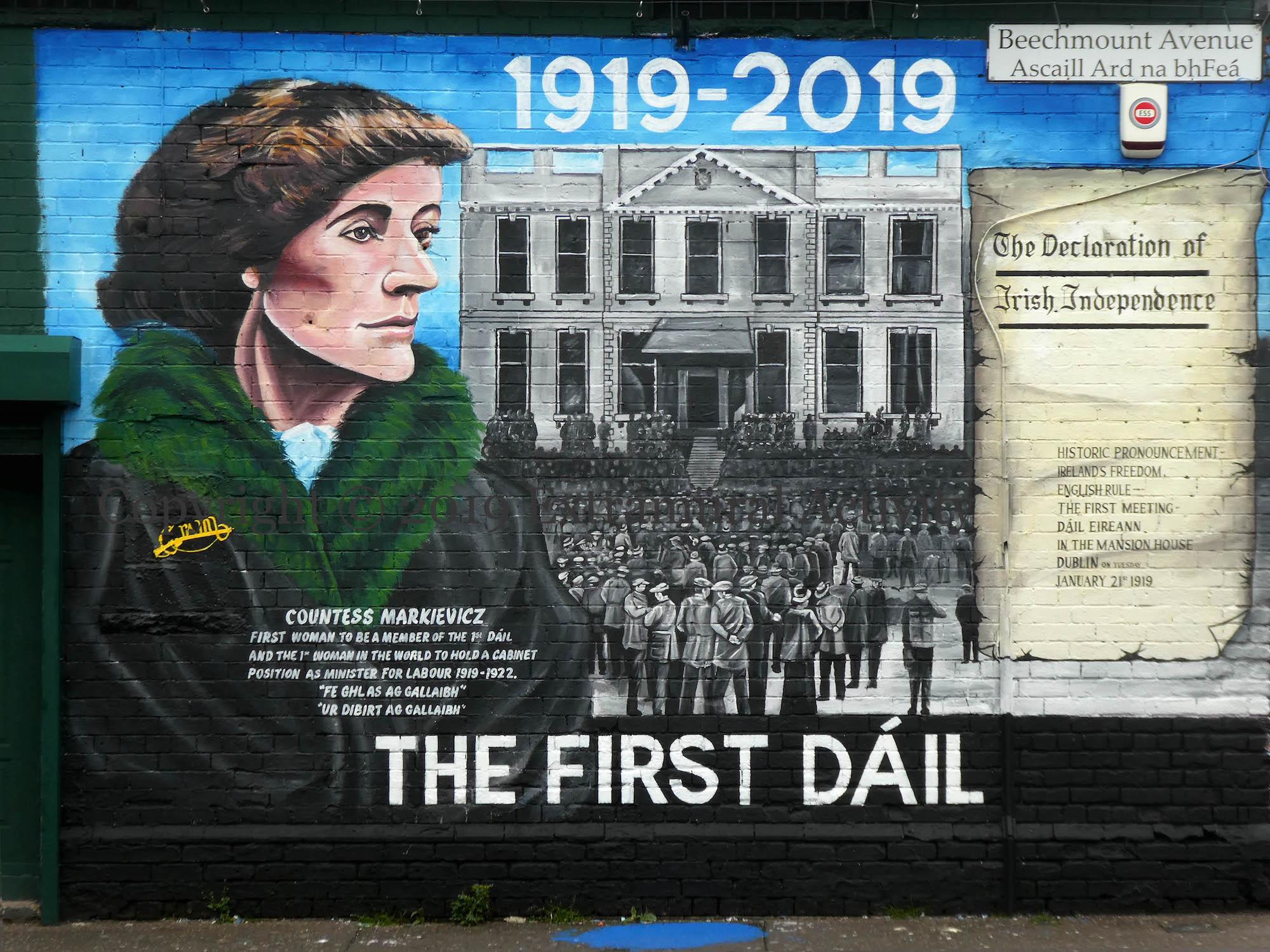
First Dáıl
2019
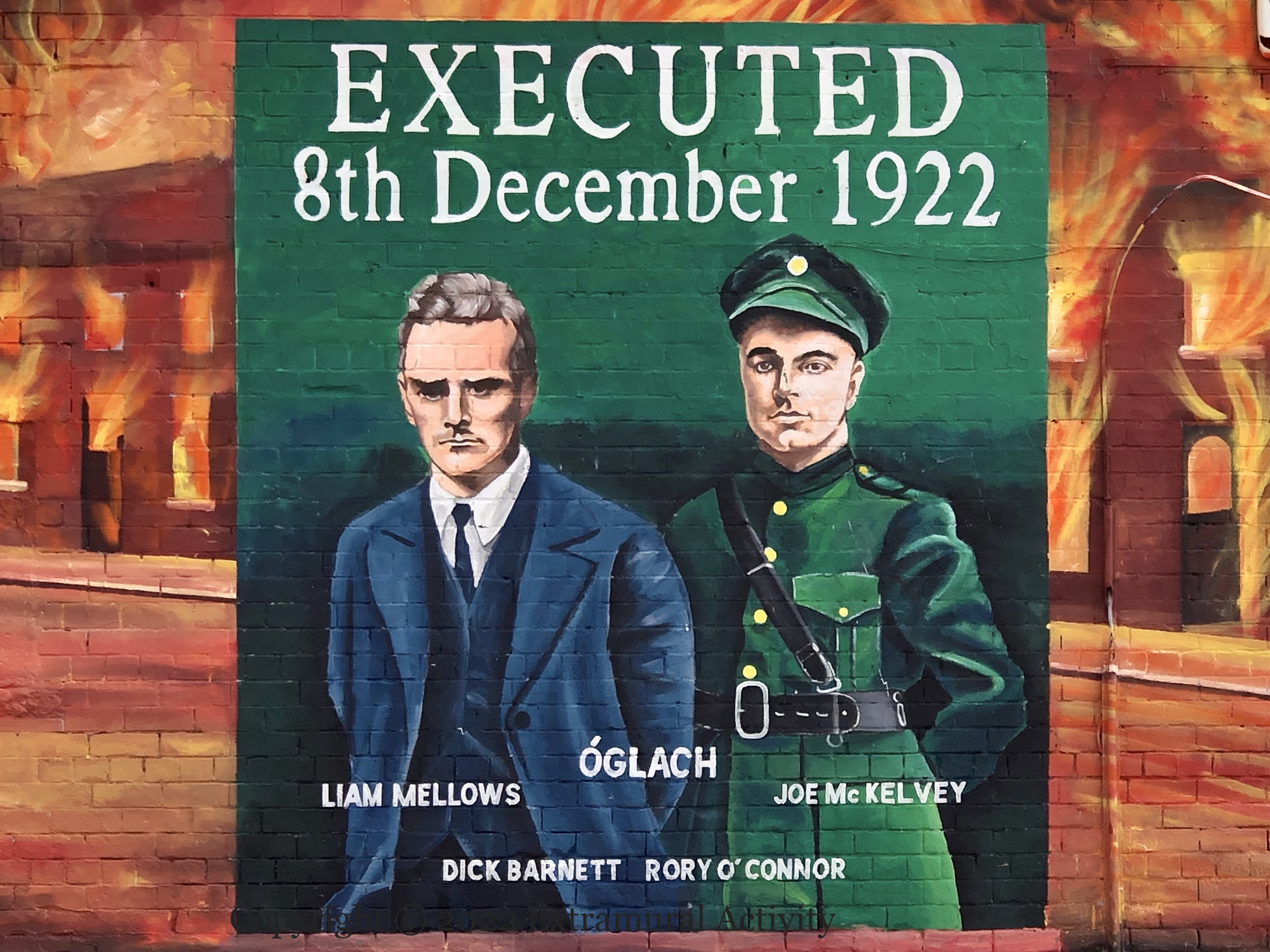
Executed
2022
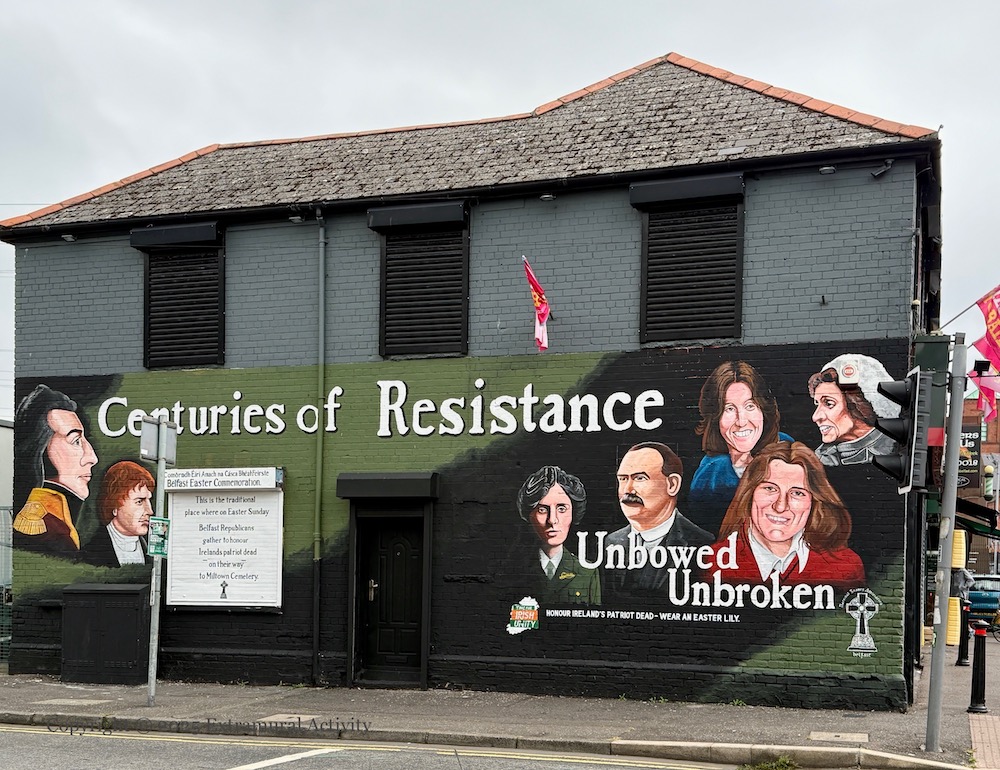
2025-08 Centuries Of Resistance
References in parentheses to mural collections:
M = Peter Moloney Collection – Murals
T = Paddy Duffy Collection
X = Seosamh Mac Coılle Collection
Written material copyright © 2017-2025 Extramural Activity. Images are copyright of their respective photographers.
Back to the index of Visual History pages.
 Extramural Activity