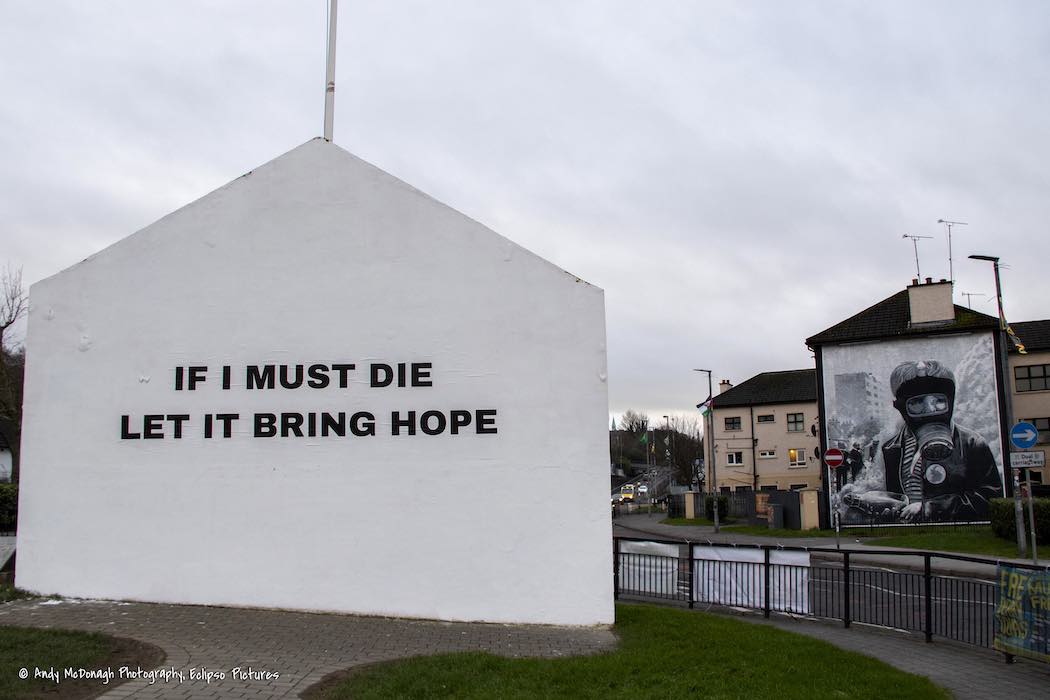
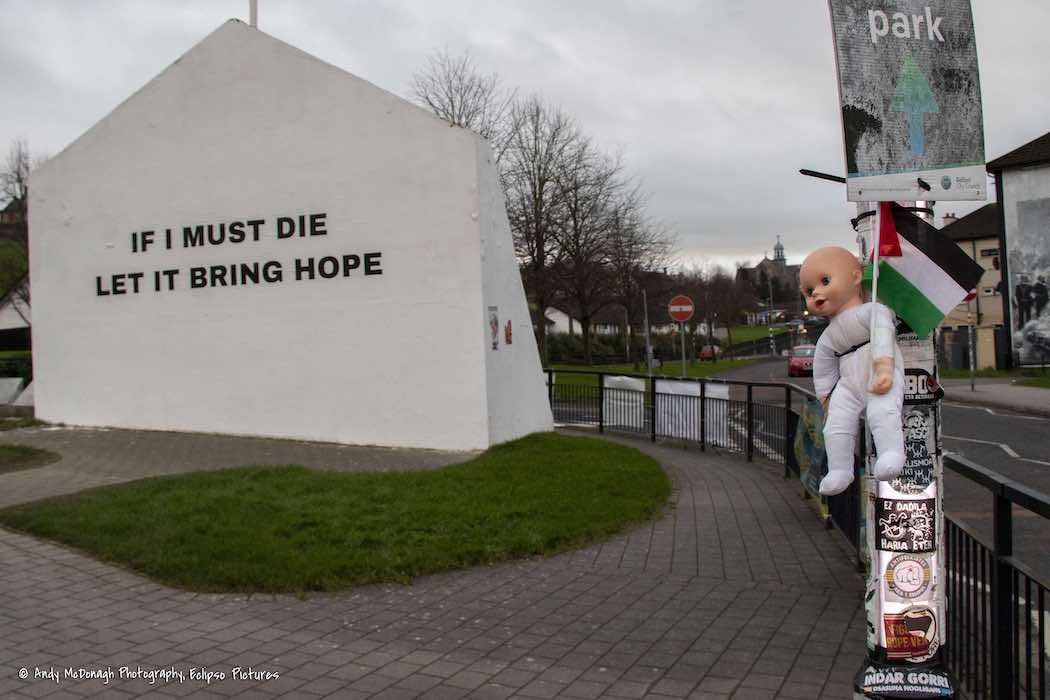
“If I must die/Let it bring hope.” The annual march in remembrance of the victims of Bloody Sunday, 1972, was this year dedicated to the victims of the on-going attack by Israel on the Gaza Strip (Irish News). For the occasion, Free Derry Corner was papered over (by Adam “Spicebag” Doyle – RN | Irish Times) with words from a poem (Xitter) of Palestinian writer Refaat Alareer, who was killed by Israeli forces on December 7th (Al Jazeera | WP).
On January 30th, 1972, the Parachute Regiment, 1st battalion (“1 Para”), opened fire on a civil rights march in Derry’s Bogside, hitting dozens of people of which fourteen ultimately died.
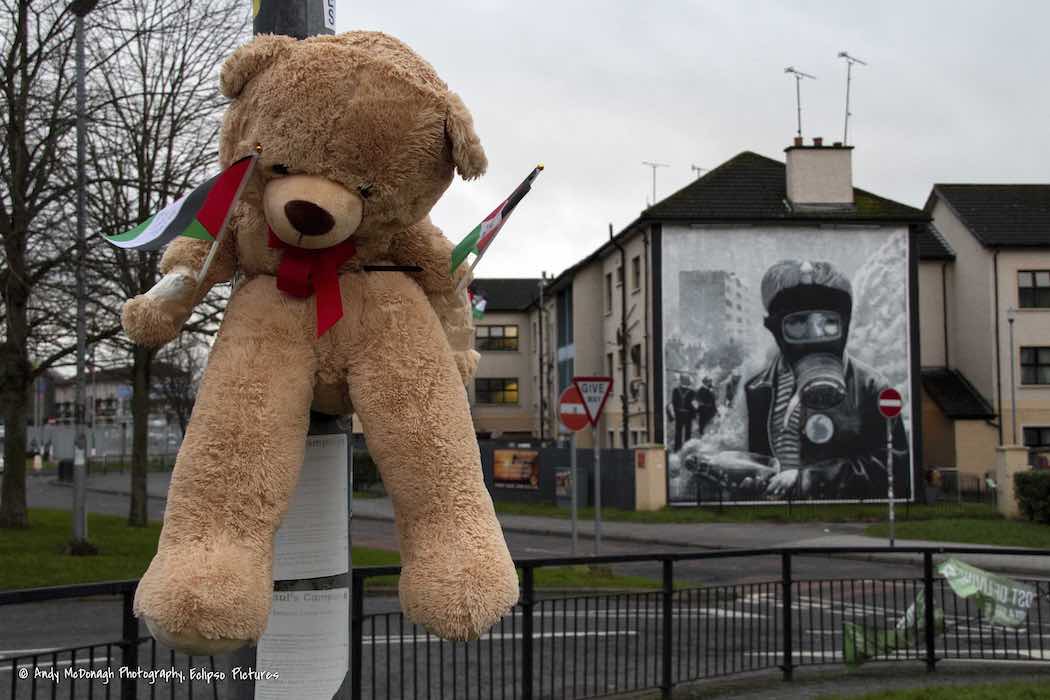
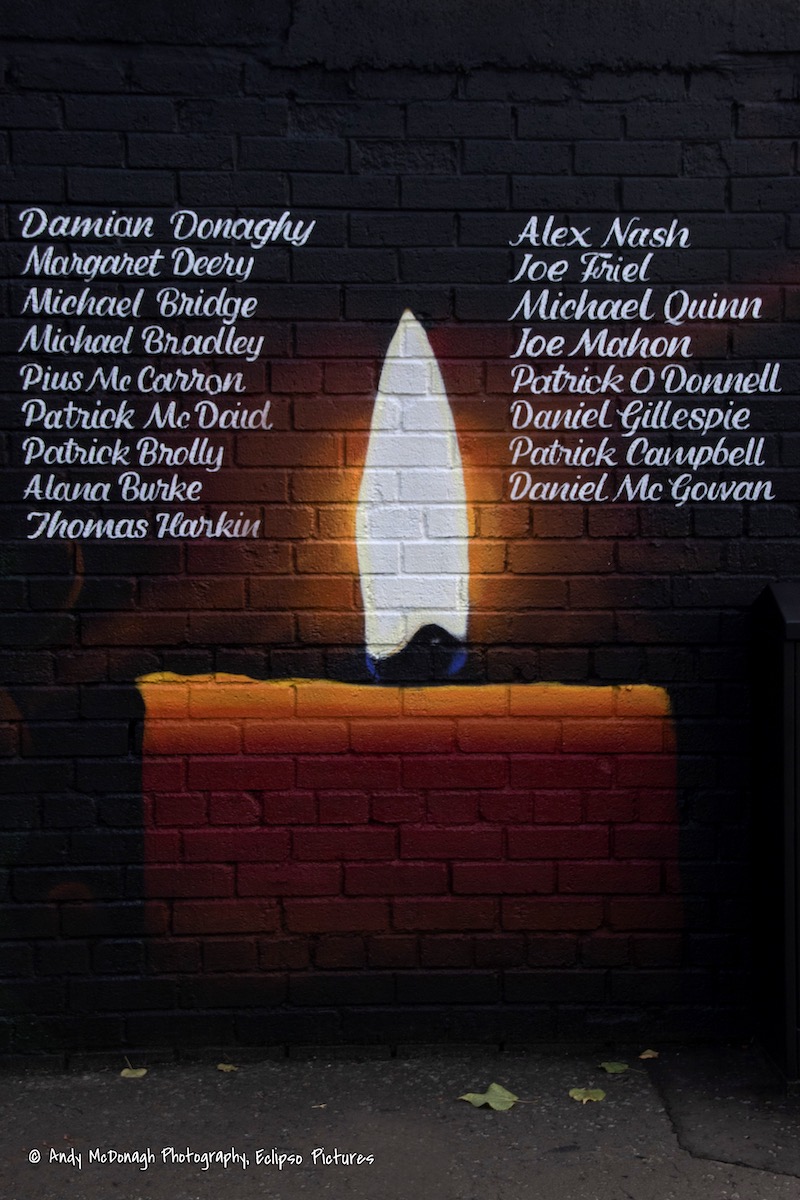
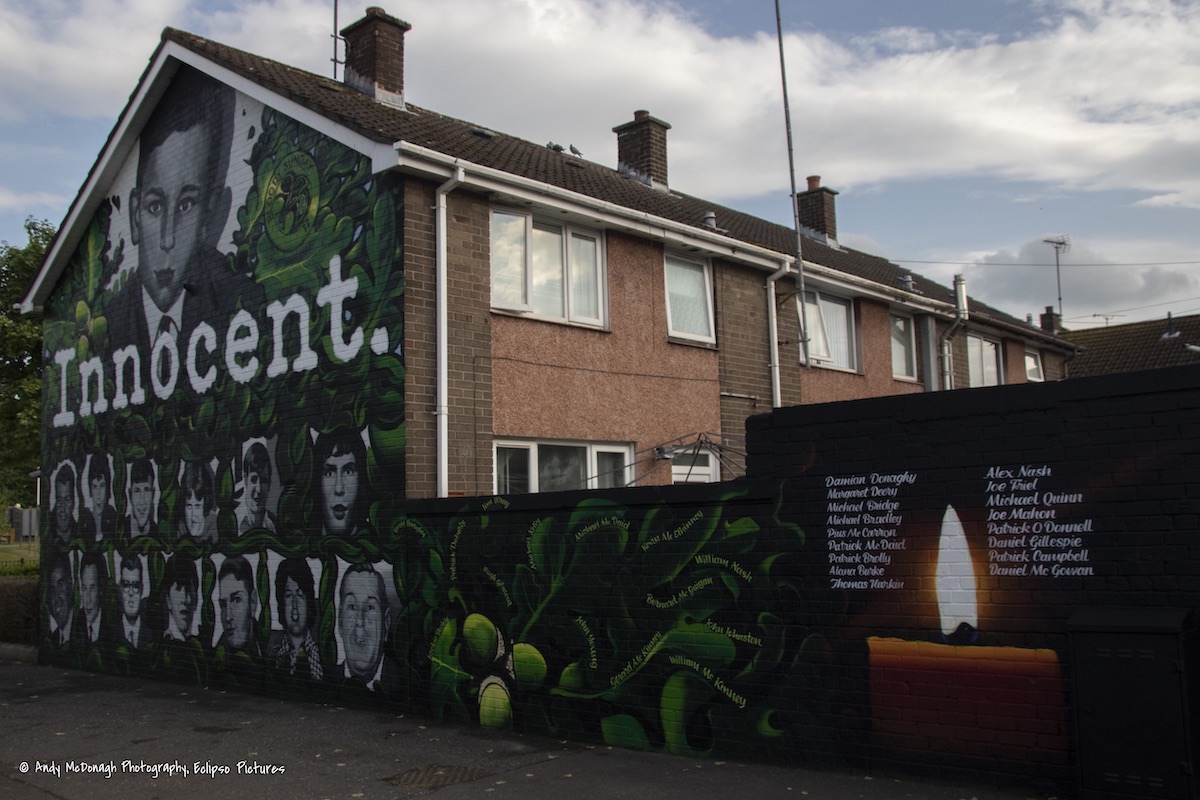
Seven of the dead were teenagers, including Gerald (“Gerard”) Donaghey/Donaghy, who is featured (in younger days) in the apex of this new mural commemorating the dead, none of whom were judged to be attacking Army soldiers when they were shot.
It was alleged, however, that Donaghey had nail bombs in his pockets. This judgment was upheld in the Saville Report, though most of the people who were with him and who handled his body – including the medical officer who pronounced him dead – did not see any bombs (WP | BelTel). The launch was on June 15th, the same date that the Saville Report was issued in 2010.
Painted by JMK (ig) in Fahan Street, Derry, (on the wall that was briefly home to the Mike Jackson “War Criminal” mural – see From The Top Down). The owner of the gable wall granted permission for the painting of the mural (see the video of the launch on the Museum Of Free Derry’s youtube channel).
As a fıan, there is a plaque to Donaghey at the spot where he was killed in Glenfada Park (M09537) and he was included in the roll of honour in Shantallow (X02870).
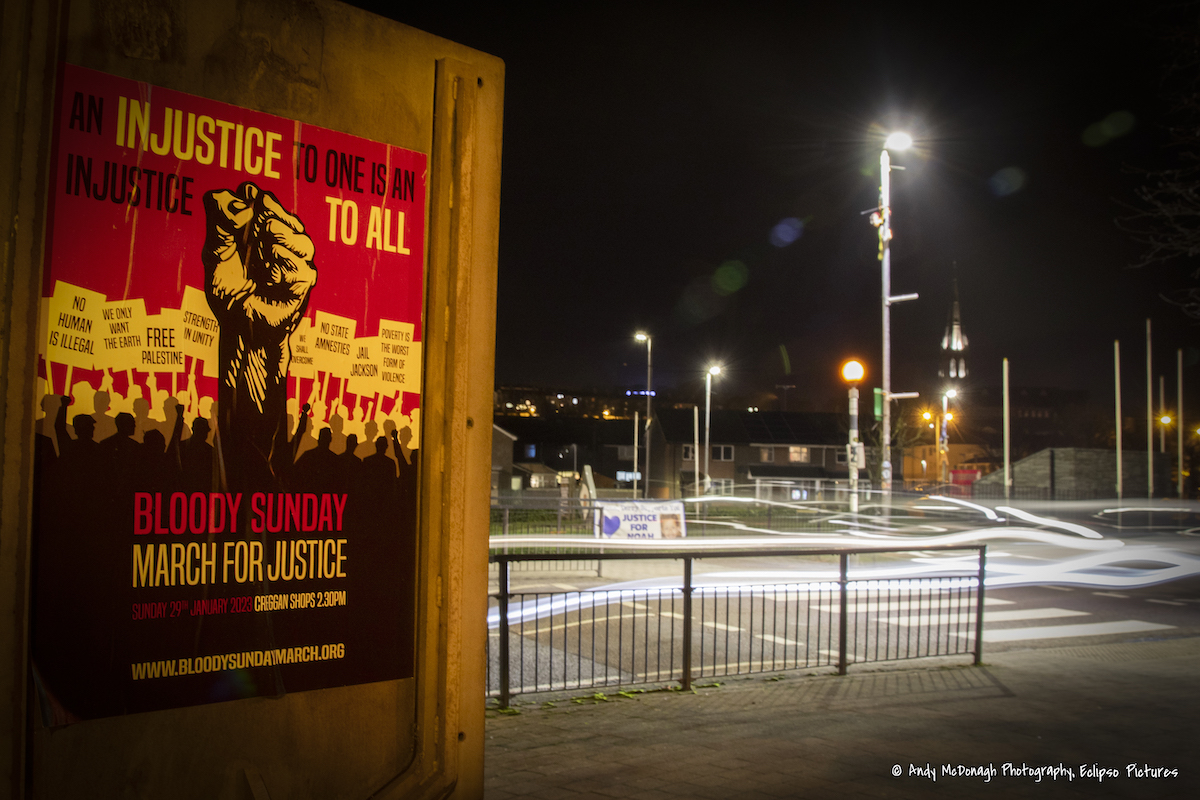
In his Letter From A Birmingham Jail, Martin Luther King Jr wrote, “I am cognizant of the interrelatedness of all communities and states. I cannot sit idly by in Atlanta and not be concerned about what happens in Birmingham. Injustice anywhere is a threat to justice everywhere.” The marchers portrayed in the poster above carry placards supporting immigrants (“No human is illegal”), the poor (“Poverty is the worst form of violence”) and Palestine. The poster calls for participants in the annual march, which retraces the route taken on the fateful day in 1972, beginning at Creggan shops and proceeding to Free Derry Corner. Yesterday’s march concluded a week of talks and other commemorative events. Today – January 30th – is the fifty-first anniversary of Bloody Sunday in Derry.
The phrase “your silence will not protect you” comes from the essay “The Transformation Of Silence Into Language And Action” (pdf), in which US feminist and civil rights activist Audrey Lorde describes the damage to the self wrought by silence in response to fear and encourages us to find a perspective on fear that gives us strength: “I am not only a casualty, I am also a warrior.”
A week of speaking out from the Museum Of Free Derry/bloodysunday50.com and ArtsEverywhere begins today (June 13th) at 6 p.m. with the launch of an art exhibition entitled ‘From Bloody Sunday To Brexit’.
A graffitist at Amelia’s on Foyle Road has also found their voice: “50 years, no justice”, as the wrangling over the prosecution of Soldier F (and others) continues (Guardian).
The Bloody Sunday march each year follows the same route as was taken on January 30th, 1972, from Creggan shops to the Bogside. For the 50th anniversary of the event, two marches took place, the earlier one ending at the NICRA memorial (unveiled in 1974) where Taoiseach Micheál Martin laid a wreath. For images see Derry Journal | Museum Of Free Derry’s Fb; for the speeches, see the MoFD youtube channel.
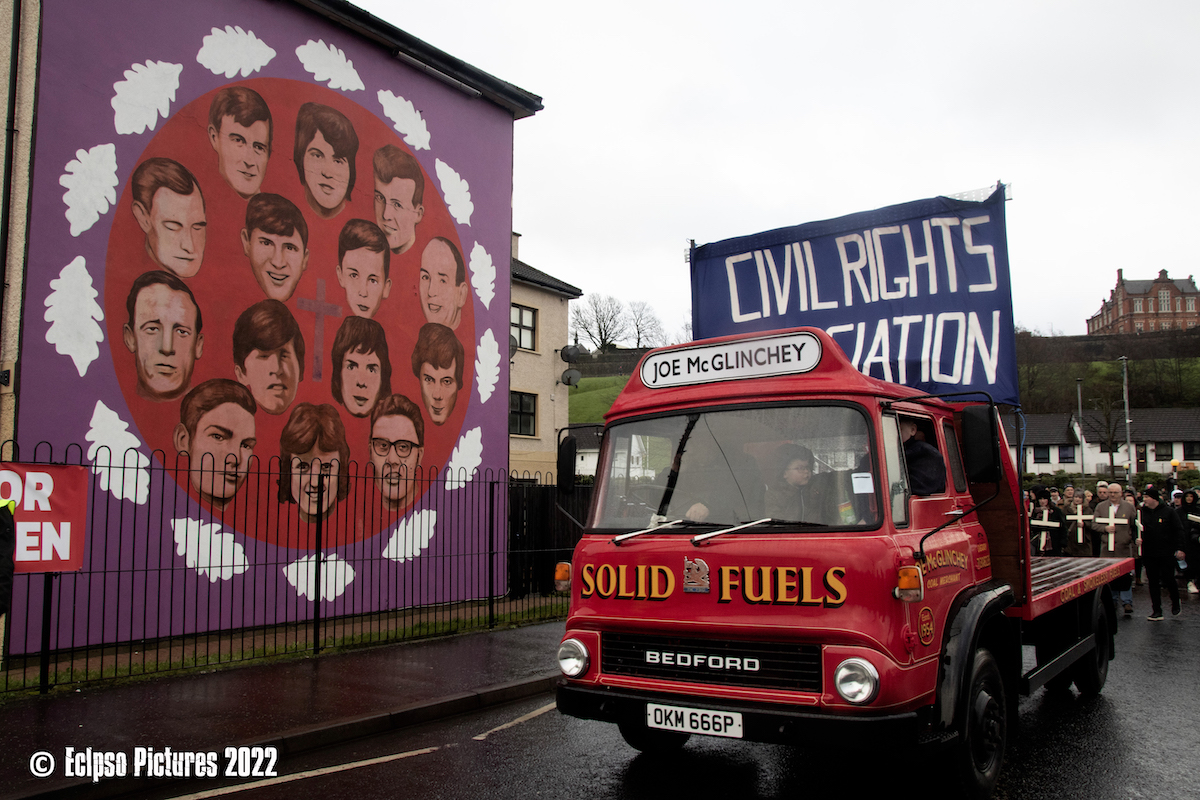
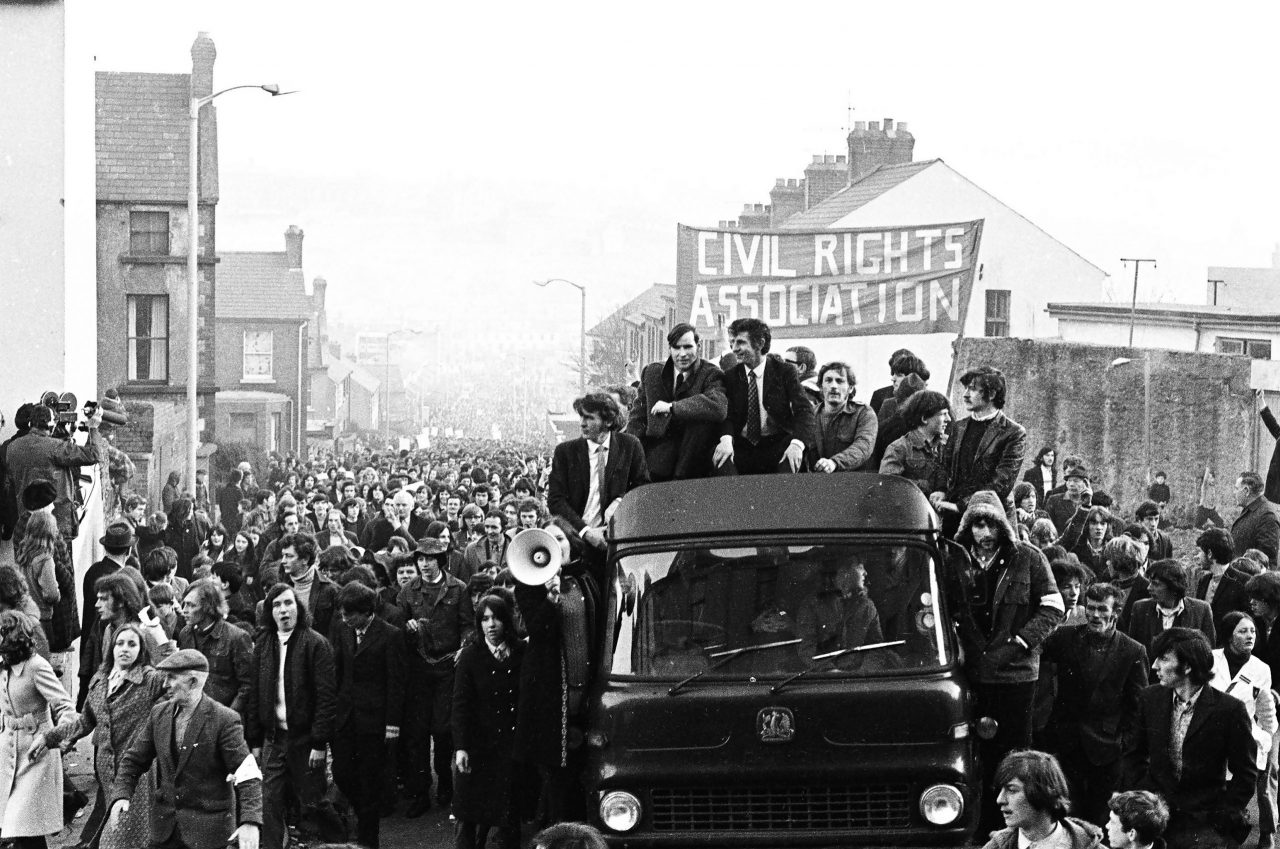
A later march ended with speeches at Free Derry Corner (Derry Journal | Derry Now). Today’s images show this march at the Bloody Sunday Commemoration mural by the Bogside Artists (originally painted in 1997 without a cross in the centre). The coal lorry in the image above is of a similar vintage to the one that led the march in 1972 (see final image); the Bedford TK was built from 1960 to 1992 but Springtown Fuels (ig) appears to have one in good condition.
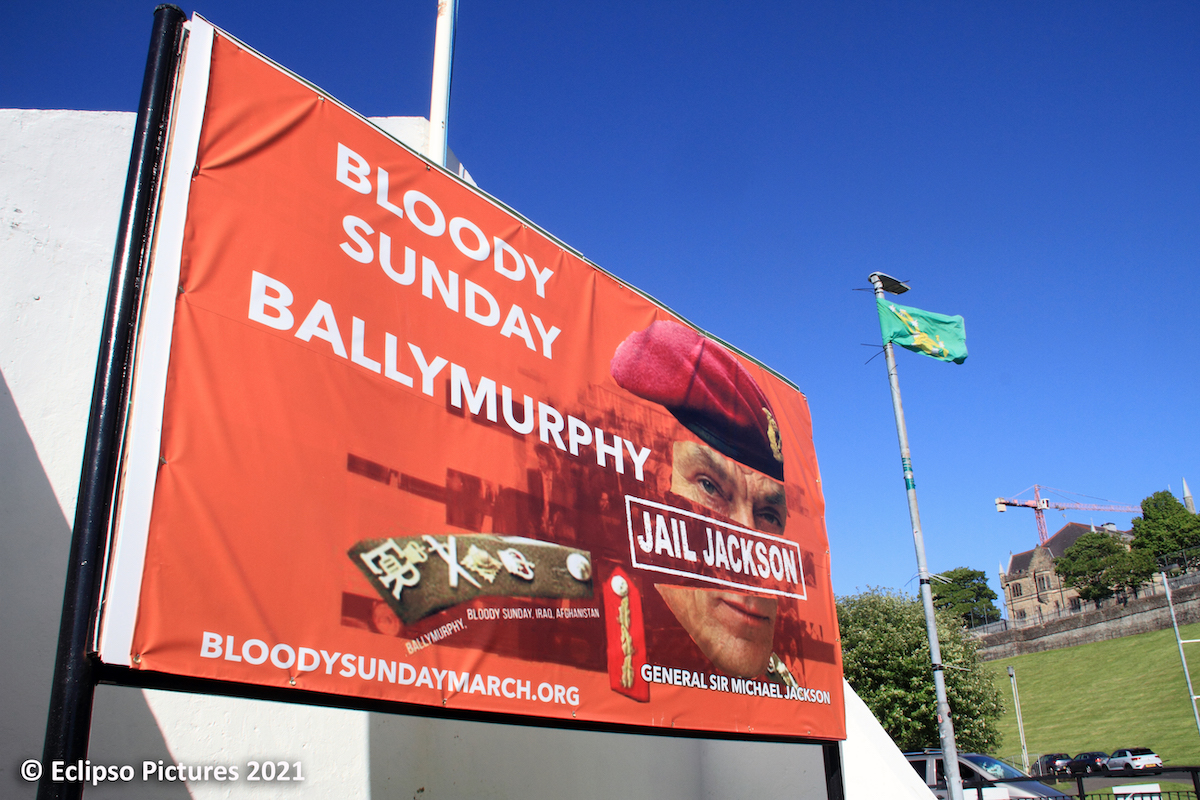
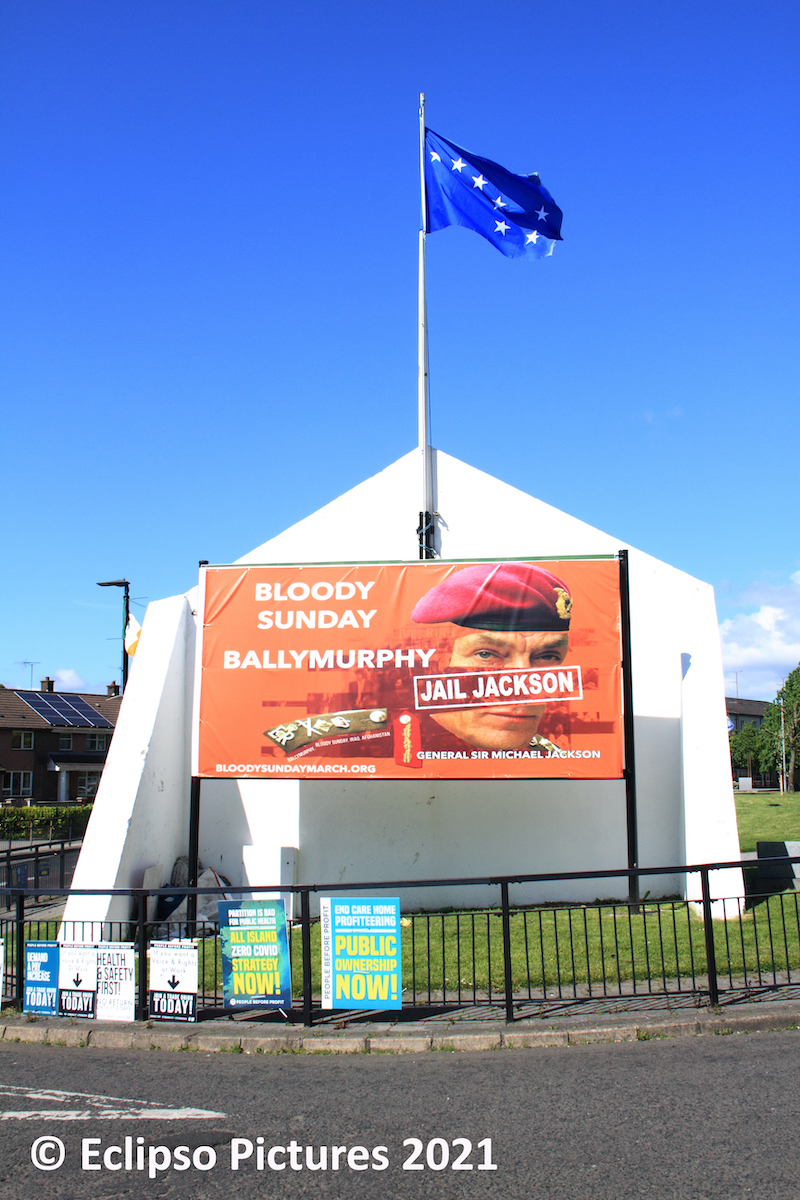
An coroner’s inquest found last month that the ten people killed in the Ballymurphy Massacre on August 9th and 10th, 1971, were innocent civilians and nine of them were killed by unjustified force on the part of the British Army (the cause of death of the tenth could not be known with sufficient certainty) (Guardian). Soldiers at the time claimed that they were being fired upon by some of those killed. The findings renewed calls for the prosecution of British Army soldiers and in particular General Sir Michael Jackson, adjutant to the 1st Parachute Regiment at both Ballymurphy and (five months later) Bloody Sunday (WP).
Six of the dead on Bloody Sunday (January 31st, 1972) were from Creggan, and the funeral service for all 13 immediate victims took place in St Mary’s Chapel, at the bottom of Bishop’s Field; the board of photographs shown in today’s post are at the top, on Creggan’s Cental Drive.
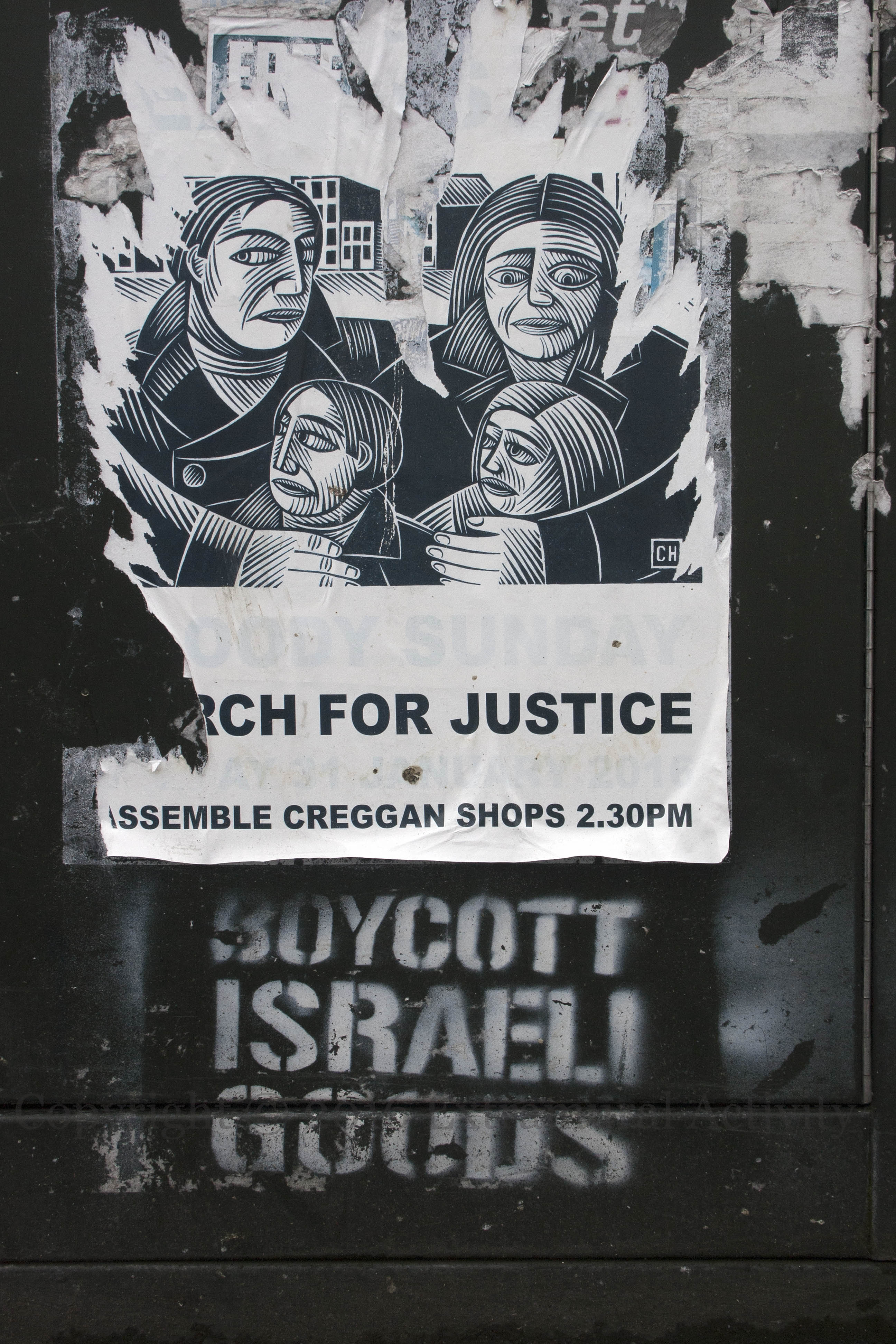
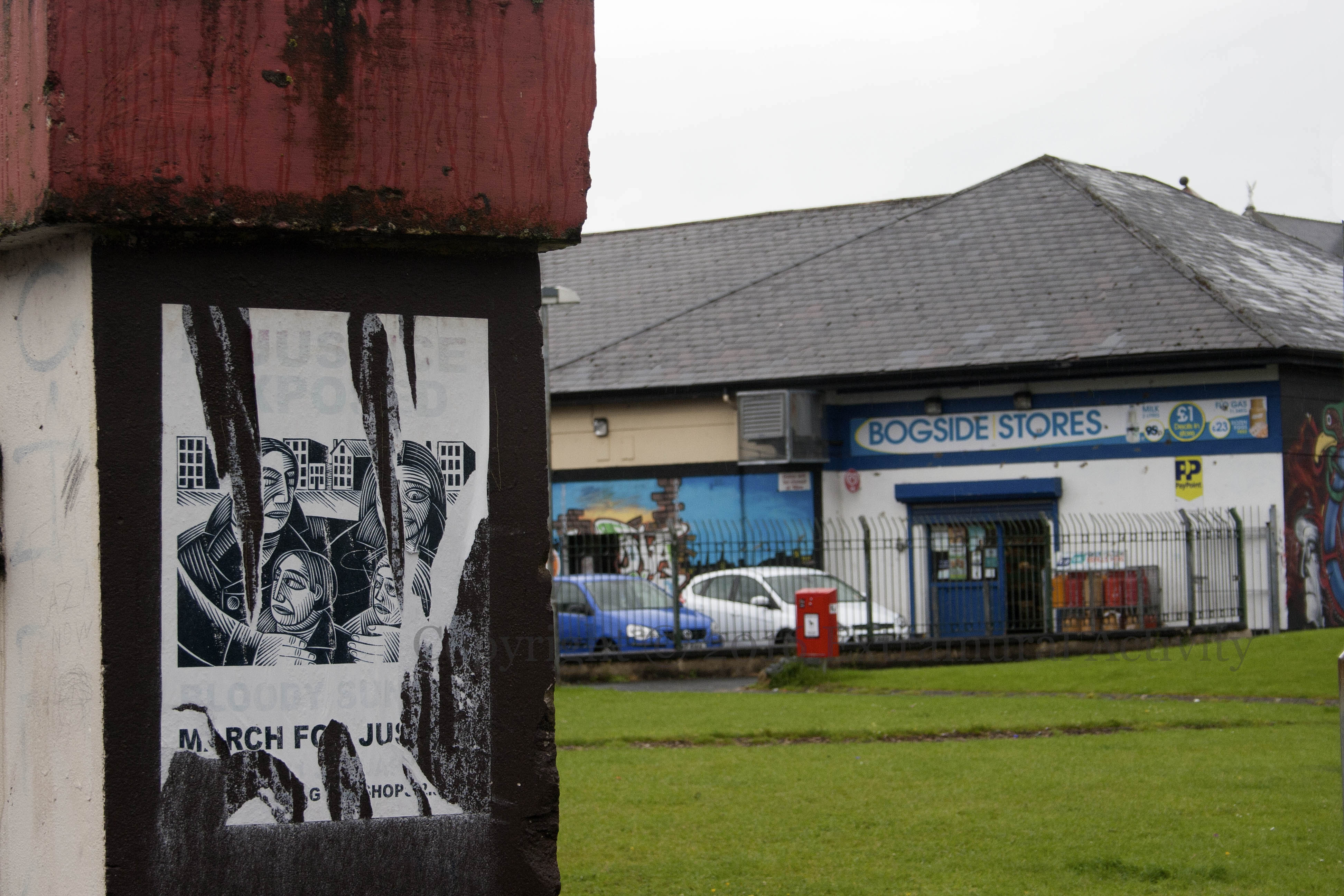
Here are two images of the remnants of a poster left over from January’s Bloody Sunday March, one from Creggan with a “Boycott Israeli goods” stencil, the second from the Bogside.
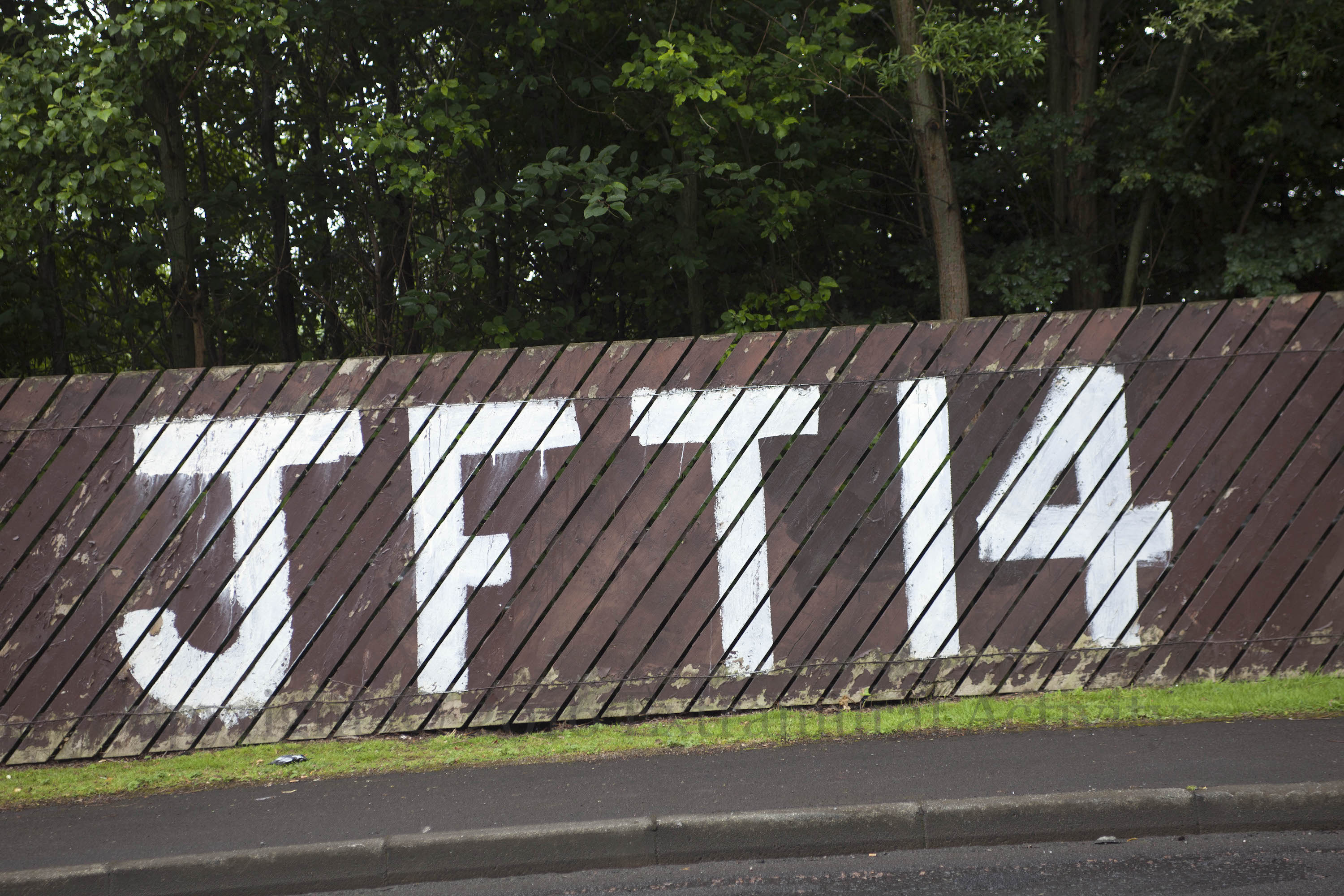
These republican slogans are on the fencing along Southway, Derry. “End internment”, “1916 – 2016 Unfinished business”, “IRA”, “JFT14” = “Justice for the 14 [Bloody Sunday victims]”, and “Brits out”.









 Extramural Activity