“VE Day” in large letters composed of images, portraits of servicemen, and newspaper front pages (“It’s Over In Europe”, “Germany Quits” and so on) from the period at the end of WWII in Europe, installed along the Shore Road, Belfast, for the 75th anniversary of the event.
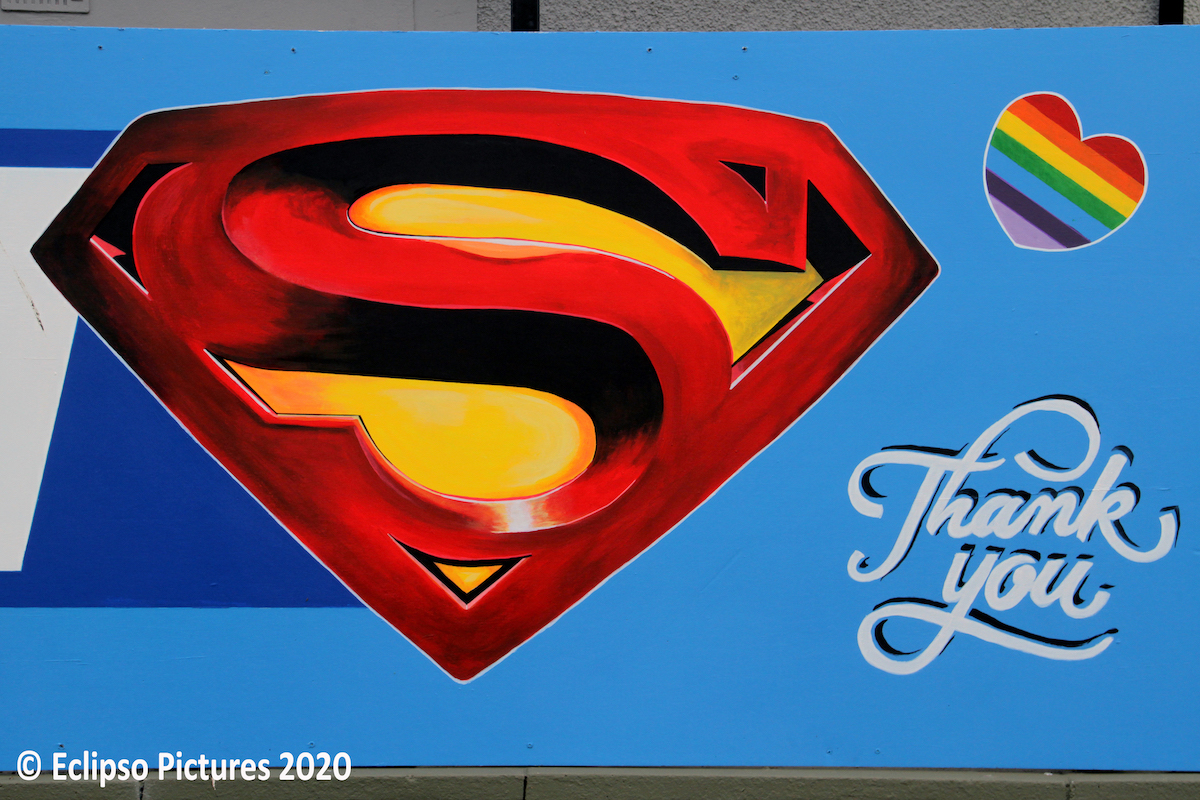
The garden of remembrance in Newbuildings was opened in November, 2018, and has grown to include several boards (second image), including “Newbuildings Victoria LOL 1087 remembers our murdered brethren.” (for “Orange Victims” day in September, 2019), troops going over the top at the Somme, and a Celtic Cross with Irish-based British Army regiments (and their battles): Royal Irish Rifles, Royal Irish Fusiliers, Royal Irish Rangers, and Royal Inniskilling Fusiliers. On the front railings are now tarps related to the pandemic (“Thank you to all our NHS staff and essential workers from the local Orange family. Together fighting Covid-19”) and the 75th anniversary of VE Day.
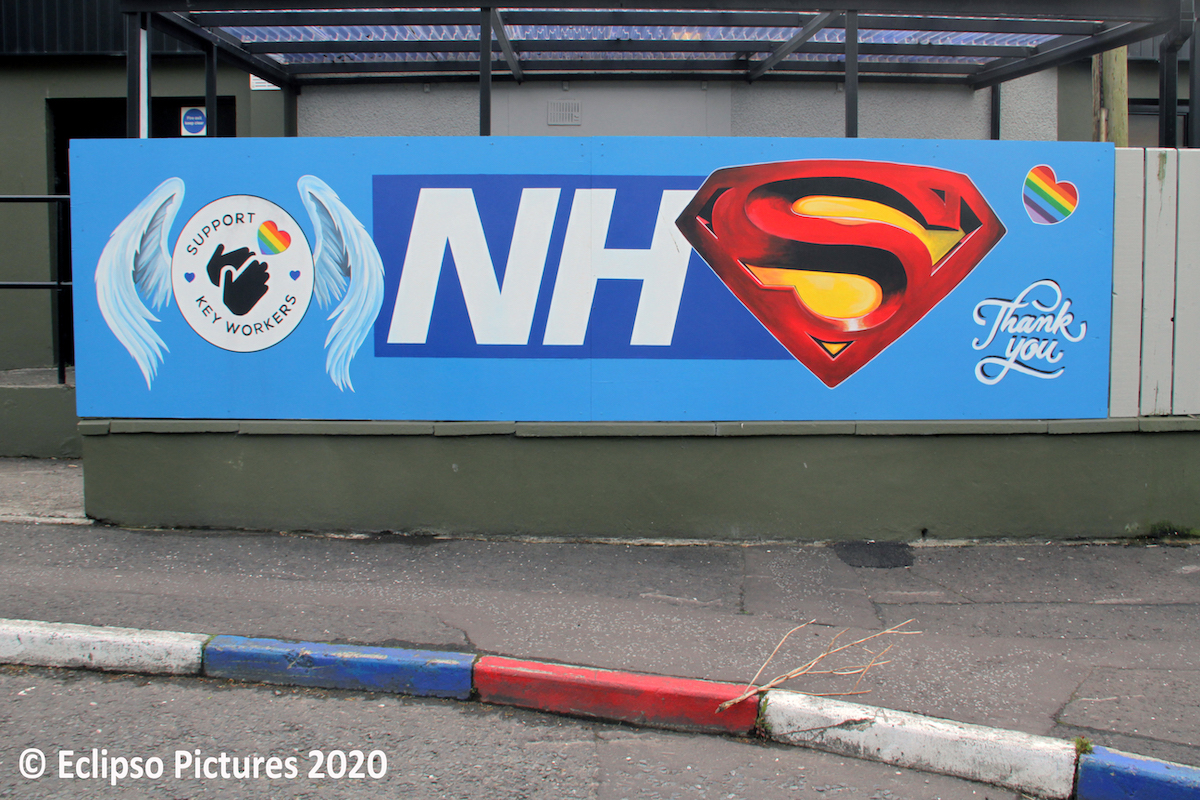
Murals and street art in support of the NHS have been painted on walls all over the province in neighbourhoods on both sides of the religious divide. The chalk drawing above (“NHS Forever”) is in Oceanic Avenue in CNR north Belfast, next to the United Irishmen mural.
Commentary on the coronavirus pandemic Great James Street, London-/Derry: “Lockdown is killing thousands. Covid = Flu”. The coronavirus ‘shelter in place’ orders in the UK and Ireland have various negative health consequences, including poverty from unemployment, an increase in alcohol consumption and domestic violence, and an unwillingness to seek medical attention for non-Covid-related ailments. But it’s far from clear that “thousands” have died. Nonetheless, the continued isolation and disruption to normal living is proving difficult to bear.
The Siege Of Derry began in June 1689 when King James II was rebuffed with cries of “No surrender!” It lasted 105 days, during which about half of the townspeople died. Part of the siege equipment was a boom placed across the River Foyle about halfway between Derry and Culmore. Five ships took part in ending the siege. Shown in this new Tullyally mural (by Glen Molloy) is the Dartmouth, which attacked the shoreline besiegers at Culmore so that three small ships could bring in provisions – the Mountjoy and Phoenix approaching the boom and the Jerusalem hanging back until success was assured. They were accompanied by a longboat from the Swallow, filled with sailors who with “hatchets and cutlasses” were “hewing and hacking away at the boom” (Witherow at Library Ireland) so that it could be broken by Mountjoy.