These two images are from outside the IRSP offices on the Falls Road at Donegall Road. The idea of painting electrical and other utility boxes (Visual History) started with street art on boxes in the city centre and has now spread into CNR areas. This one (above) appears to have been left incomplete, at least compared to the one around the corner in St James’s Park – see the Paddy Duffy Collection.
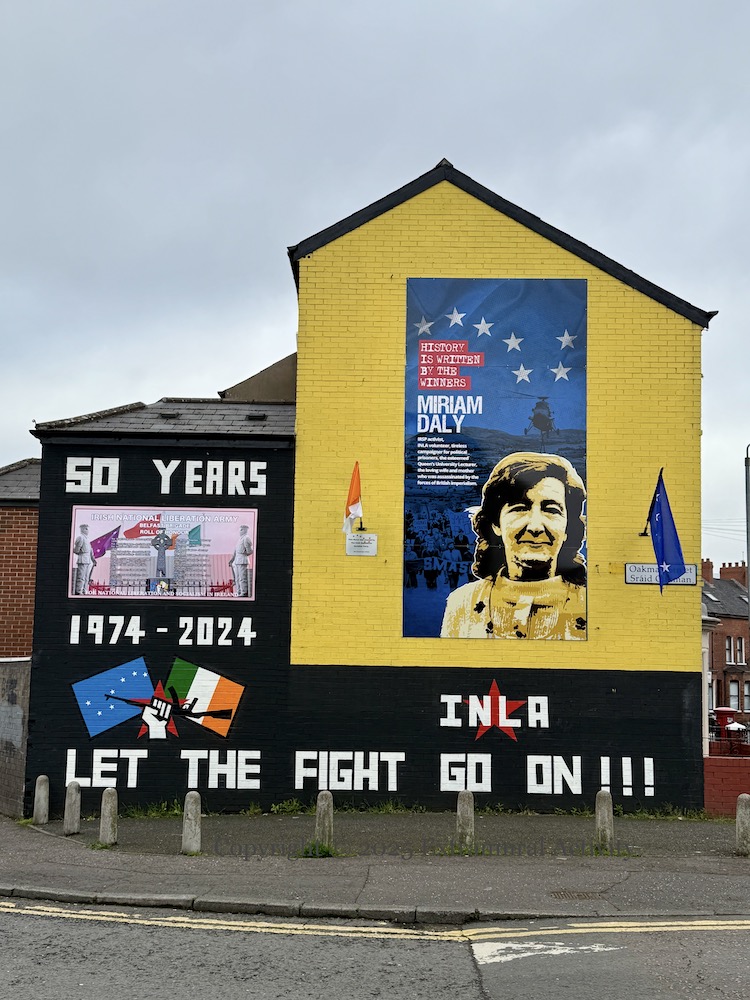
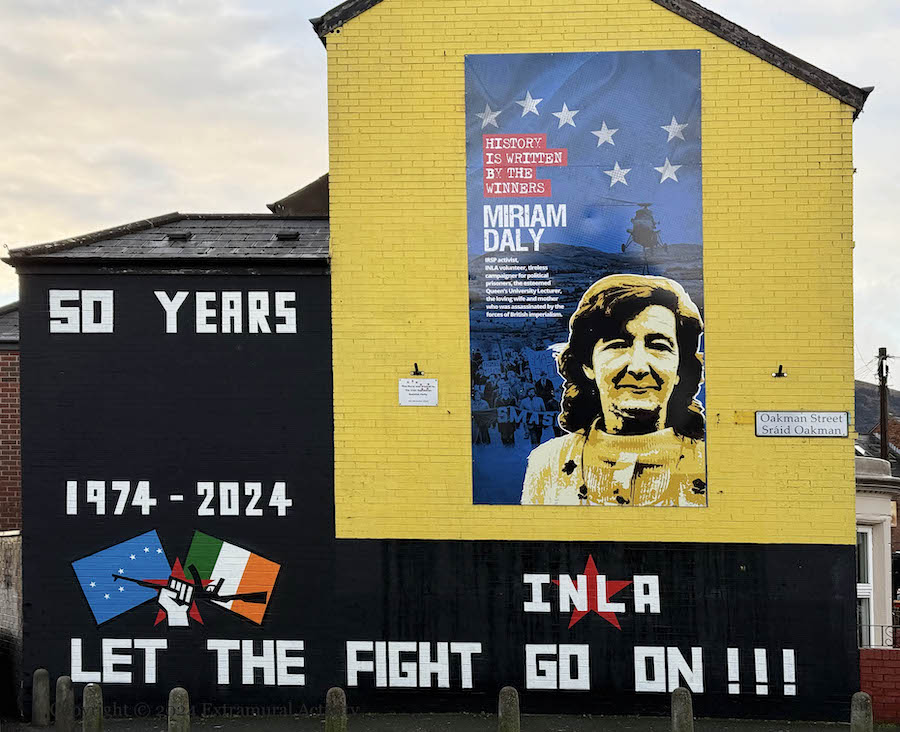
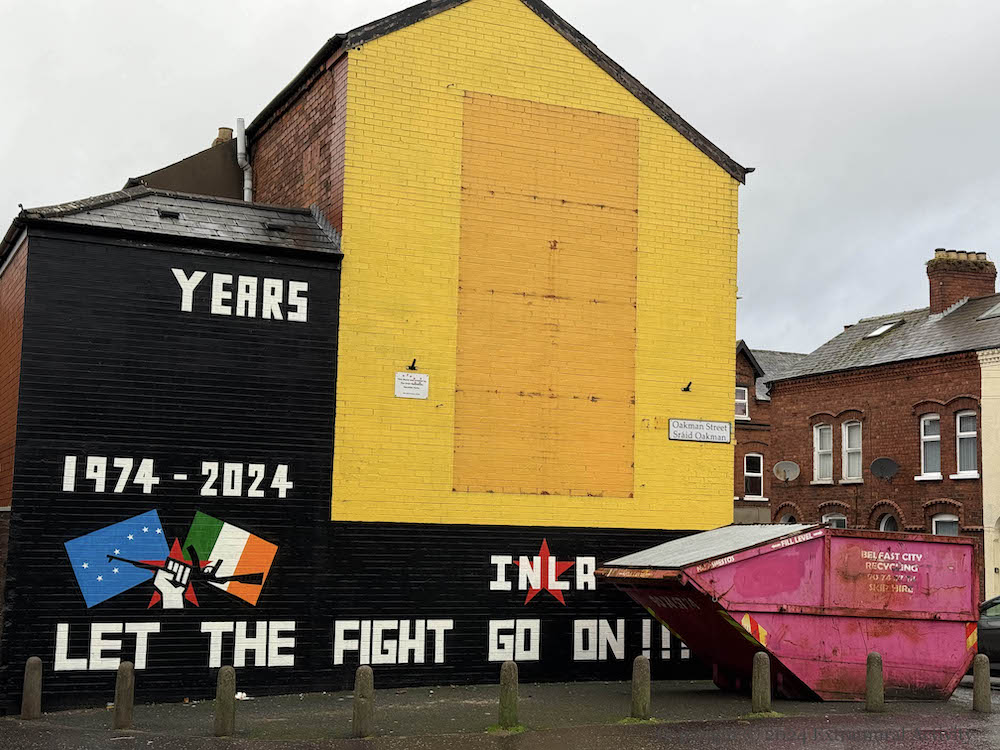
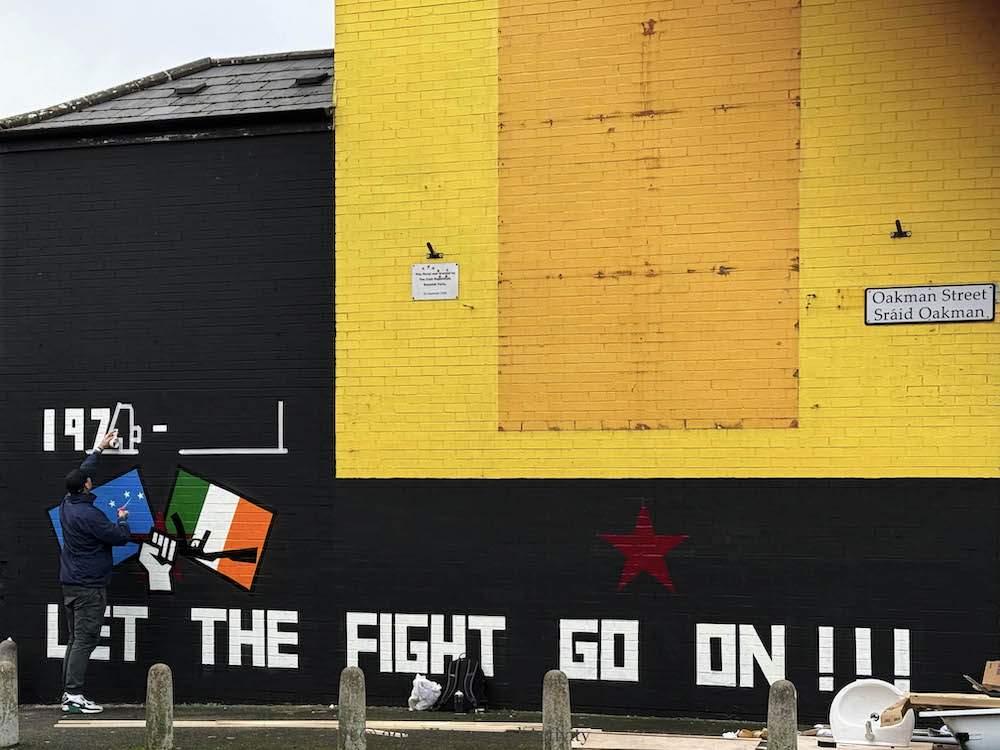
The large Miriam Daly board in Oakman Street was temporarily taken down while symbols and slogans to mark the fiftieth anniversary (“1974-2024”) of the creation of the INLA on December 8th, 1974 (WP) were mounted.
The wall was completed by early December, 2024, and the roll of honour added in the top-left corner by the end of the month. Those listed are: Hugh Ferguson, Danny Loughran, Brendan McNamee, Miriam Daly, Ronnie Bunting, Noel Little, Jim Power, Matt McLarnon, Joe Craven, Paul “Bonanza” McCann, Thomas “Ta” Power, John O’Reilly, Mickey Kearney, Emmanual Gargan, Gino Gallagher, John McColgan, Patrick Campbell, Christopher “Crip” McWilliams, Harry O’Hara, Barry “Bar” McMullan, Martin McElkerney, James McWilliams. The last five post-date the Agreement, starting with Patrick Campbell, who died in 1999 at the hands of drug-dealers in Dublin (Irish Times | Bel Tel).
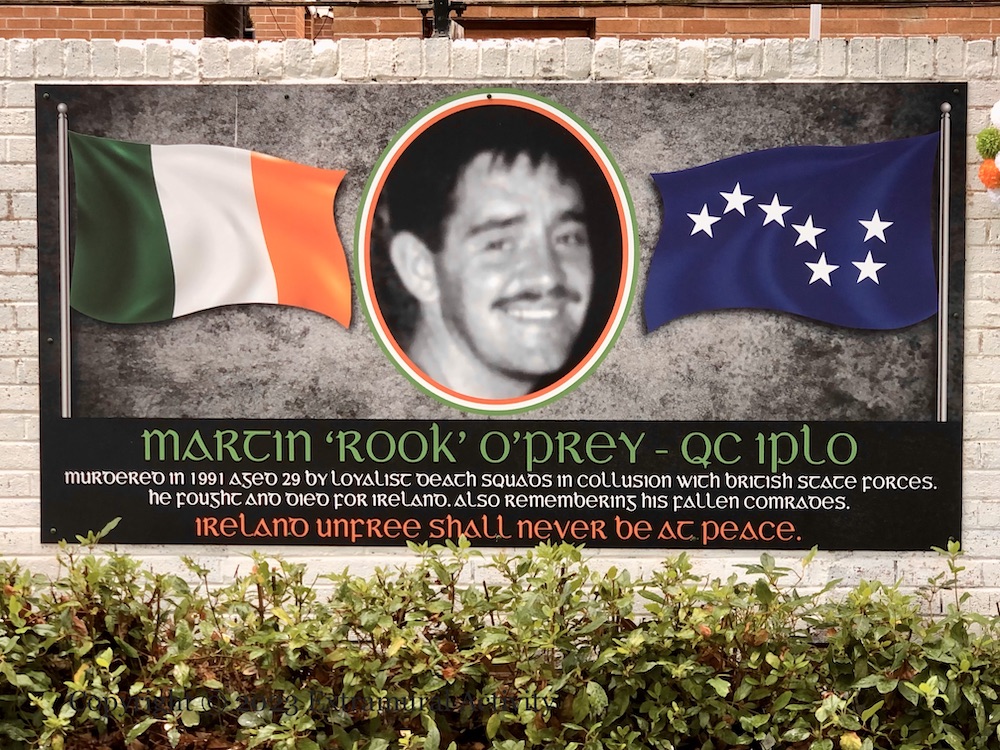
Martin “Rook” O’Prey was the Belfast brigade commander of the IPLO [Irish People’s Liberation Organisation], a breakaway INLA group responsible for killing George Seawright and attacking the Orange Cross social club (WP).
There is a plaque to O’Prey in Leeson Street (M07985).
The RNU has reserved the spot to the left; the edge of the Kieran Abram board is visible on the right.
“Martin ‘Rook’ O’Prey – OC IPLO. Murdered in 1991 aged 29 by loyalist death squads in collusion with British state forces. He fought and died for Ireland. Also remembering his fallen comrades. “Ireland unfree shall never be at peace.””
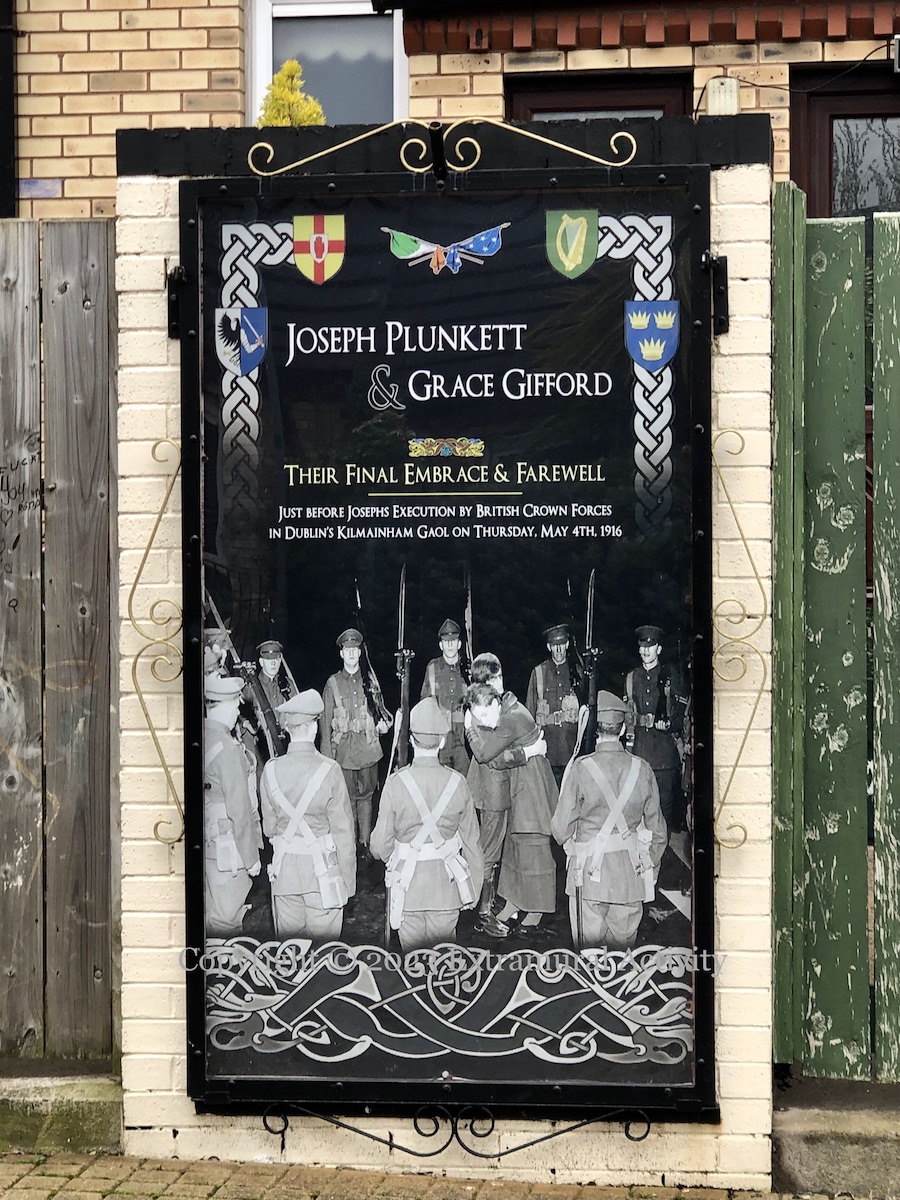
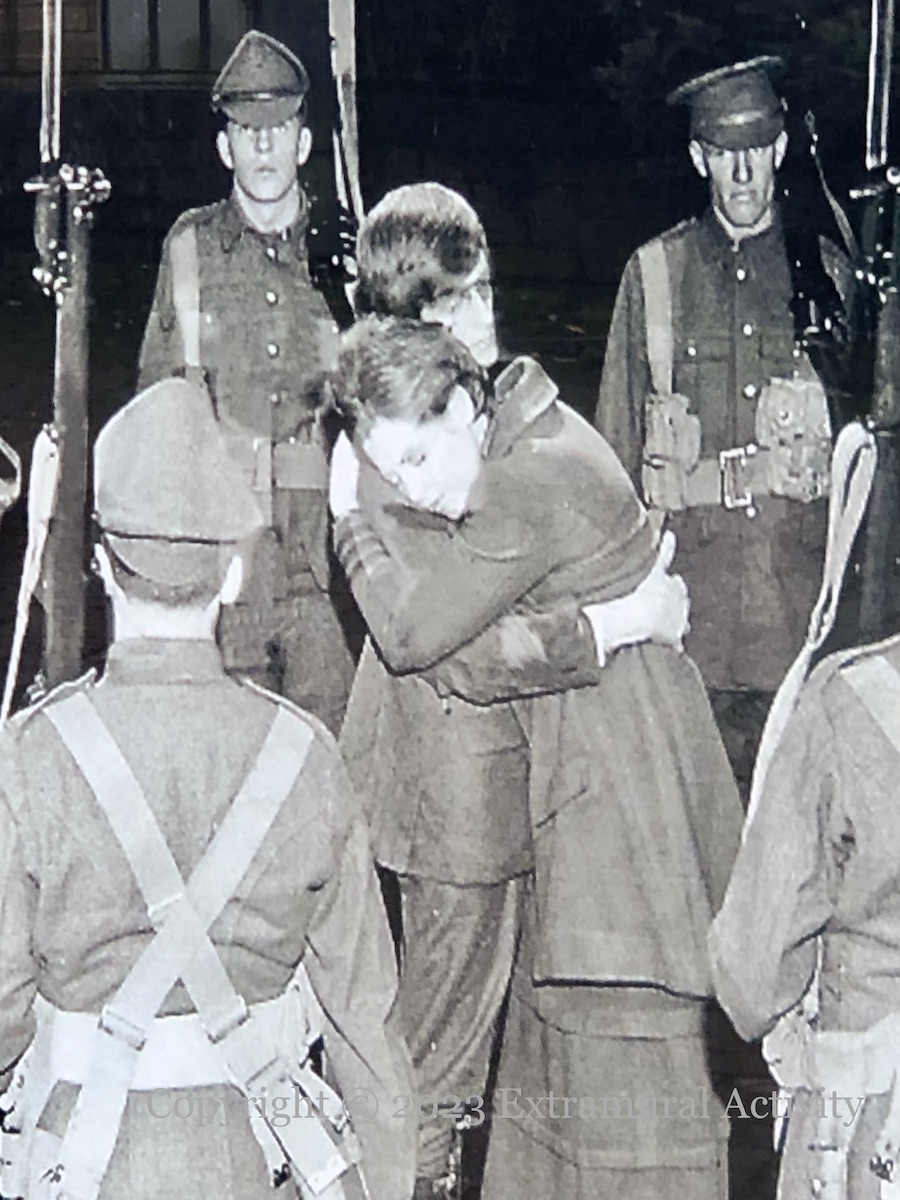
“Joseph Plunkett & Grace Gifford – their final embrace & farewell.” May 4th is the anniversary of the execution of Joseph Plunkett, one of the planners of the Easter Rising in 1916. Seven hours before he faced the firing squad, he married Grace Gifford. The photograph is from a re-enactment for a 1966 RTÉ programme Insurrection (RTÉ). The ballad Grace, written by Seán and Frank O’Meara in 1985, is now internationally known (here is Jim McCann’s 1985 performance).
This is one of various recent additions to the many memorials in Ard An Lao, Béal Feırste/Ardilea, Belfast. This replaces the board seen in Continuing Their Legacy.
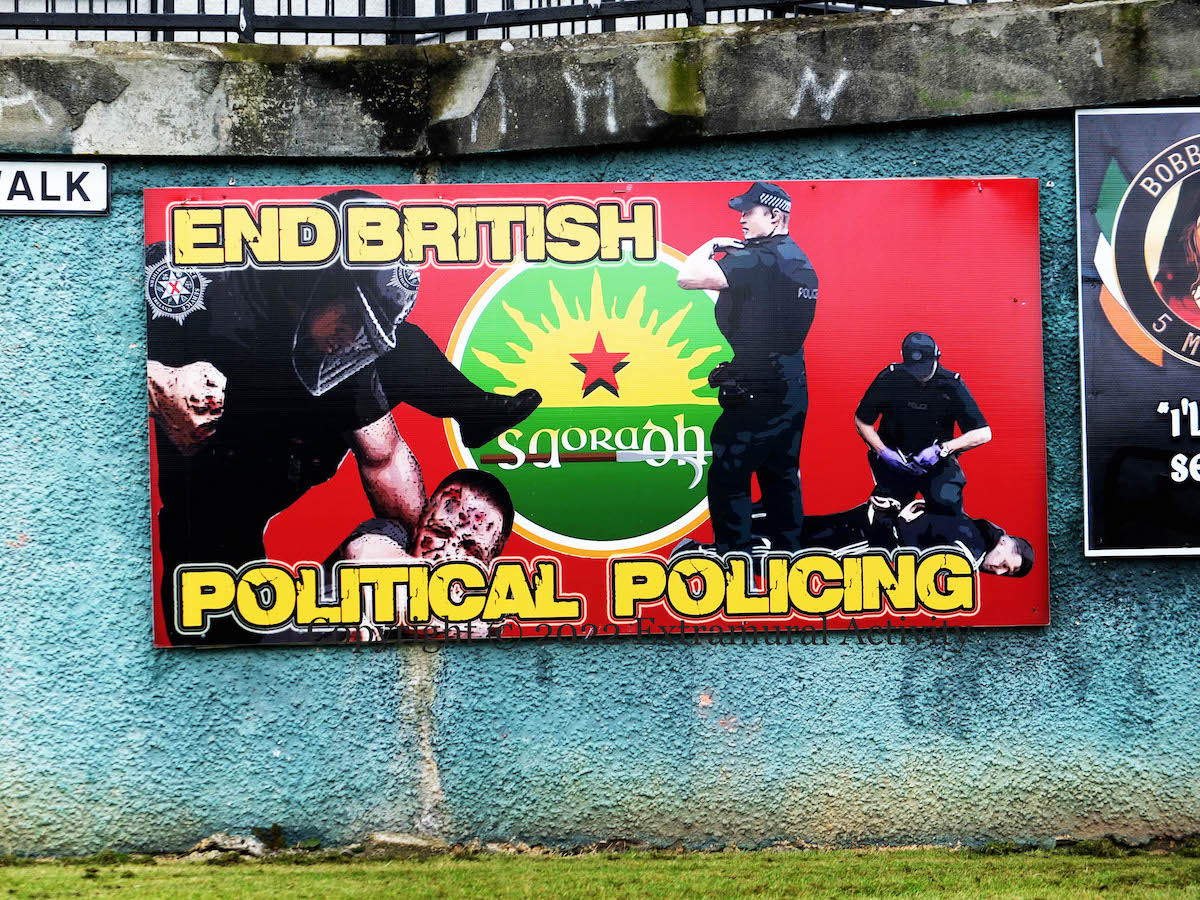
No Amnesty For British State Forces: “Democide is the murder of any person or people by a government, including genocide, politicide and mass murder. Democide is not necessarily the elimination of entire cultural groups but rather groups within the country that the government feels needs to be eradicated for political reasons and due to claimed future threats. – No amnesty for British state forces”
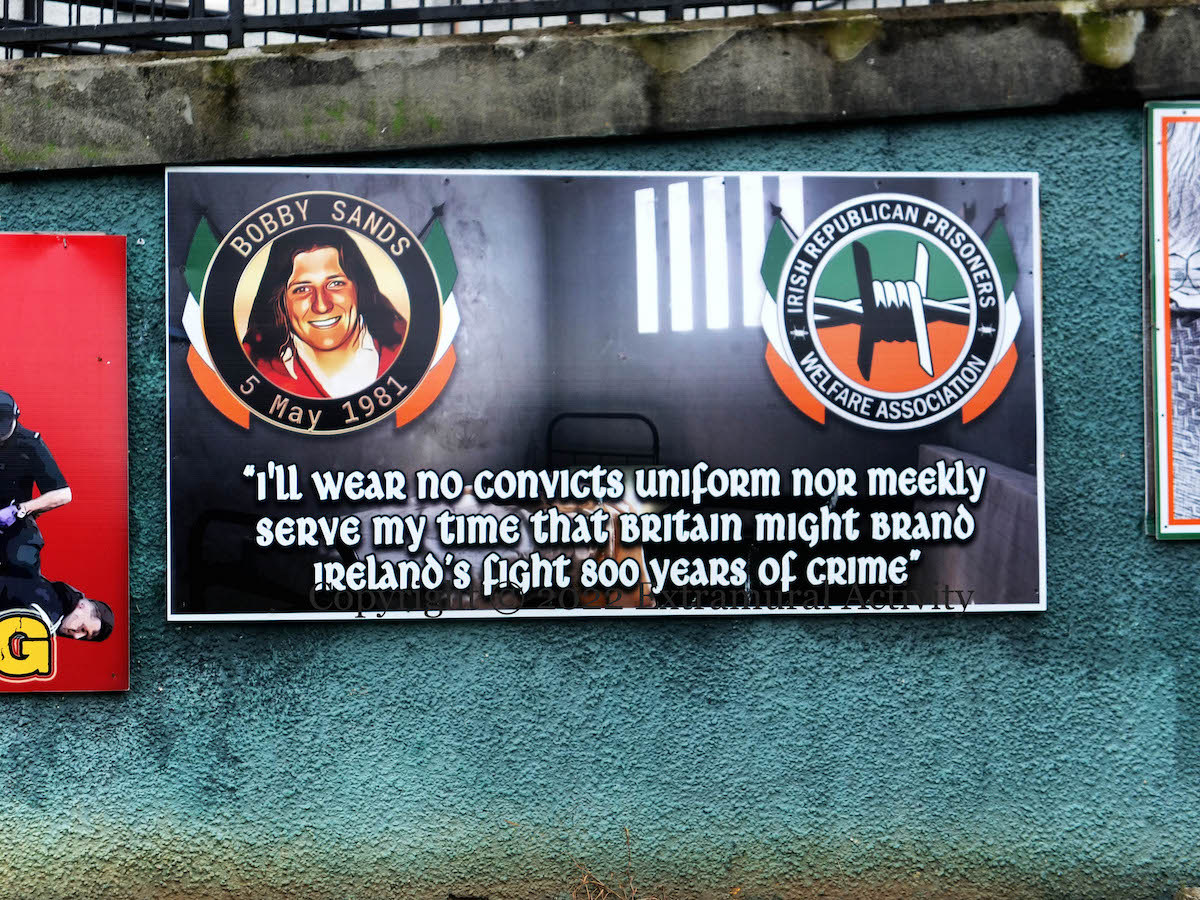
Bobby Sands/IRPWA: “I’ll wear no convict’s uniform/Nor meekly serve my time/That Britain might brand Ireland’s fight/800 years of crime” [Francie Brolly song] (IRPWA (web))
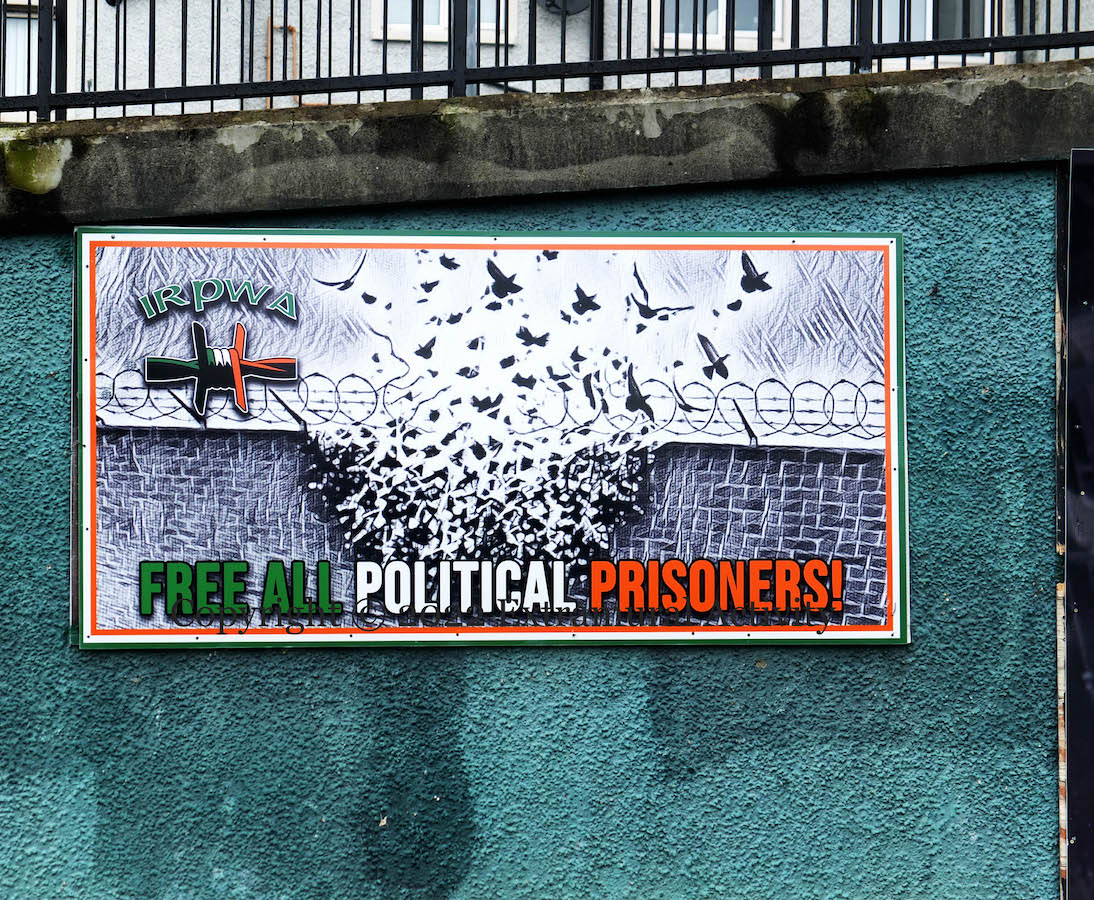
Free All Political Prisoners! (IRPWA)
1981: 1981: “I am a political prisoner. I am a political prisoner because I am a casualty of a perennial war that is being fought between the oppressed Irish people and an alien, oppressive, unwanted regime that refuses to withdraw from our land.” [Bobby Sands’s diary, day 1] (IRPWA)
Unity Referendum Now!: “British occupation has been a disaster for the people of Ireland. A united Ireland is the way forward for all the people of Ireland.” (IRSP.ie)
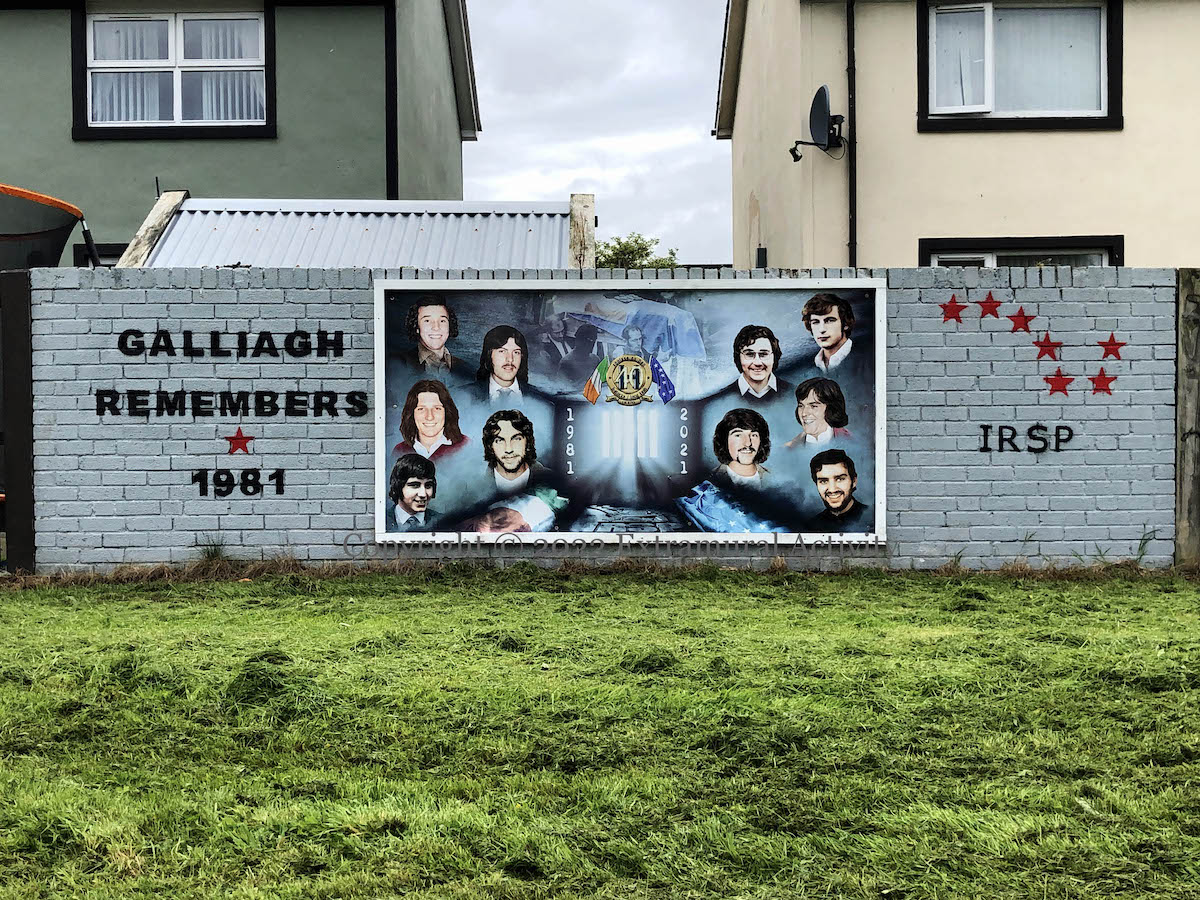
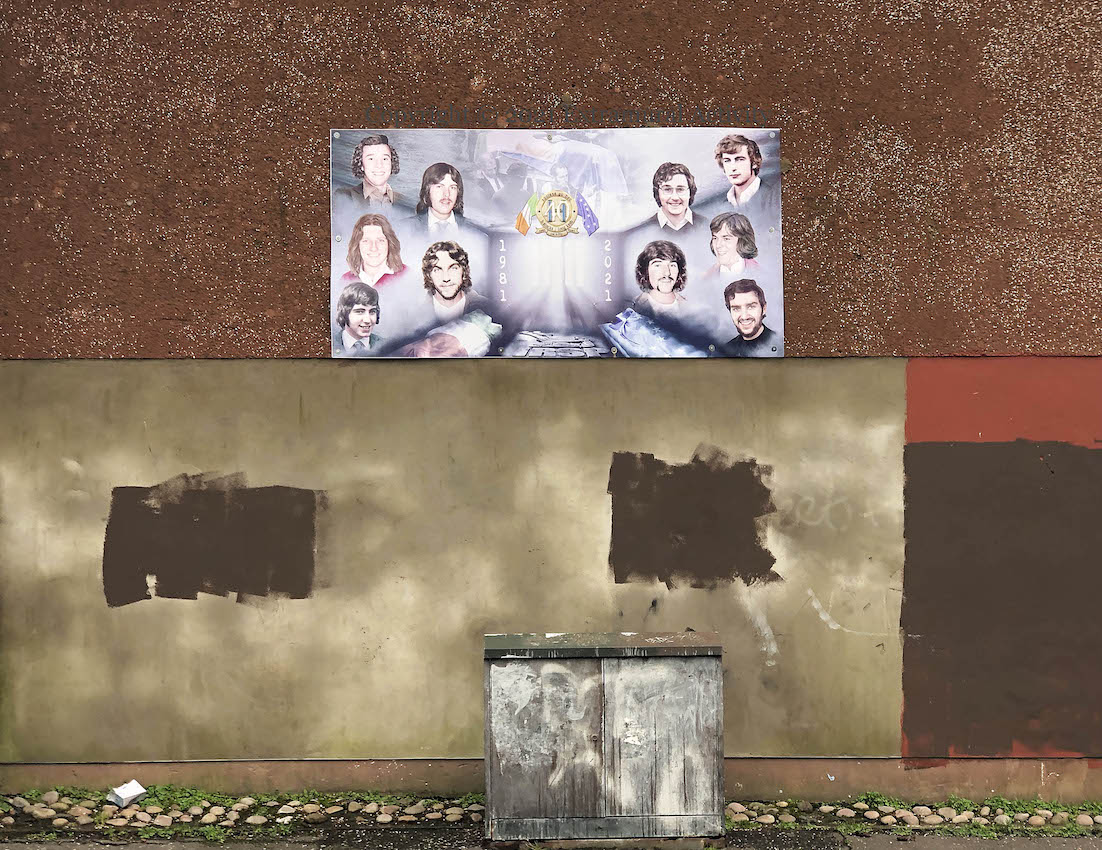
40th anniversary of the 1981 hunger strike: described previously in For A Socialist Republic (IRSM/IRSP)
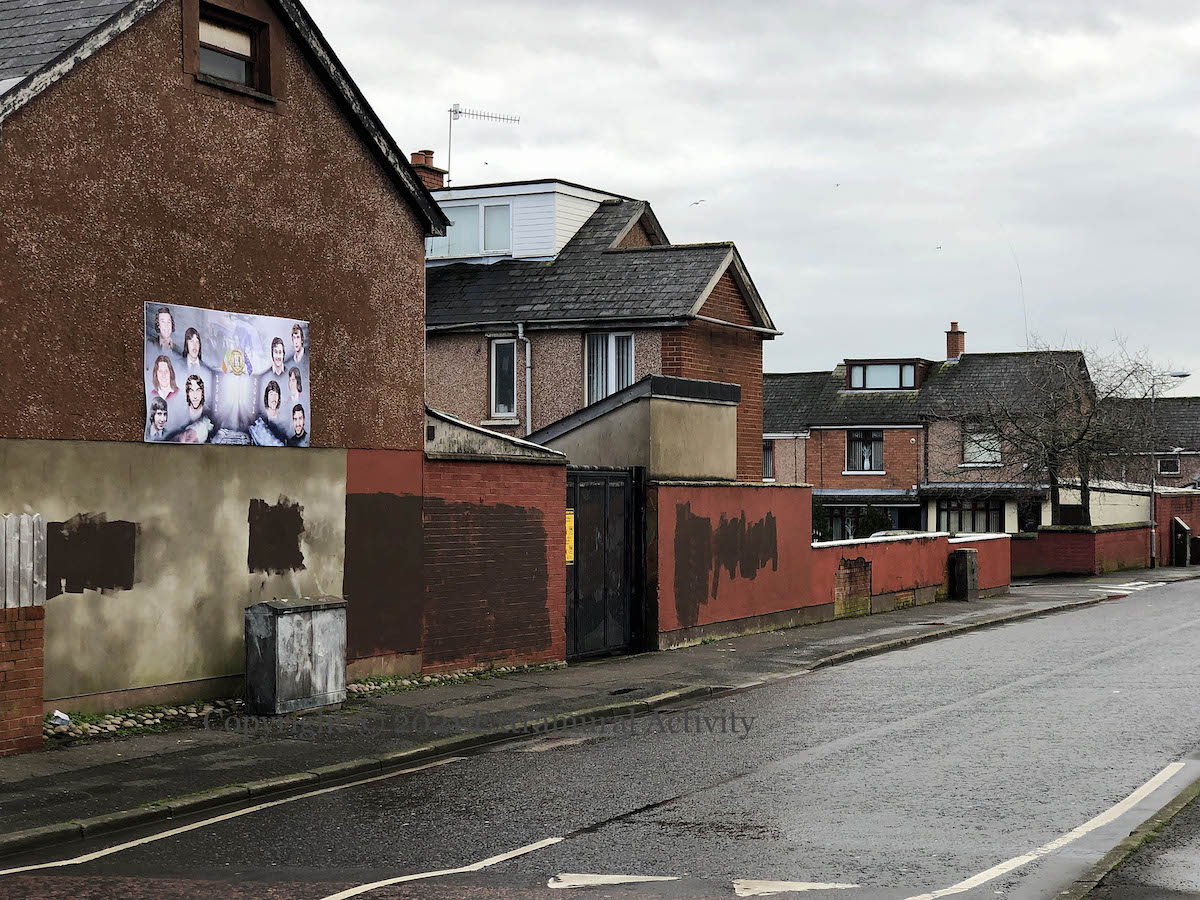
This installation in Galliagh, Derry, has a portrait of each of the ten deceased 1981 hunger strikers on a large “H” as well as the central board shown above – the coffin being carried is that of Kevin Lynch – see For A Socialist Republic.
“Murdered for their political beliefs: Tom Berry, Robert Elliman, Robert Millen, John Browne”. All four had a connection Markets or Ormeau area of south Belfast. Millen, from the Ormeau area, was shot in 1973 by the UVF; he played on the same soccer team (Bankmore Star) as Thomas Berry, who was shot in a Short Strand GAA club; Elliman was shot in a Markets pub; John Brown (without the “e”) was shot in his Cooke Street home in front of his family. The first three were all Protestants; the latter three were among 11 people who died in the 1975 feud between the Officials and the Provisionals. (Lost Lives)
“The war they wage is not a war of bigotry or greed, their struggle is a workers one, so everyone may lead a life with rights and liberty, in a land where they can say “Up the Army of the people, the Official IRA”.” “Erected by the Official Republican Movement.”
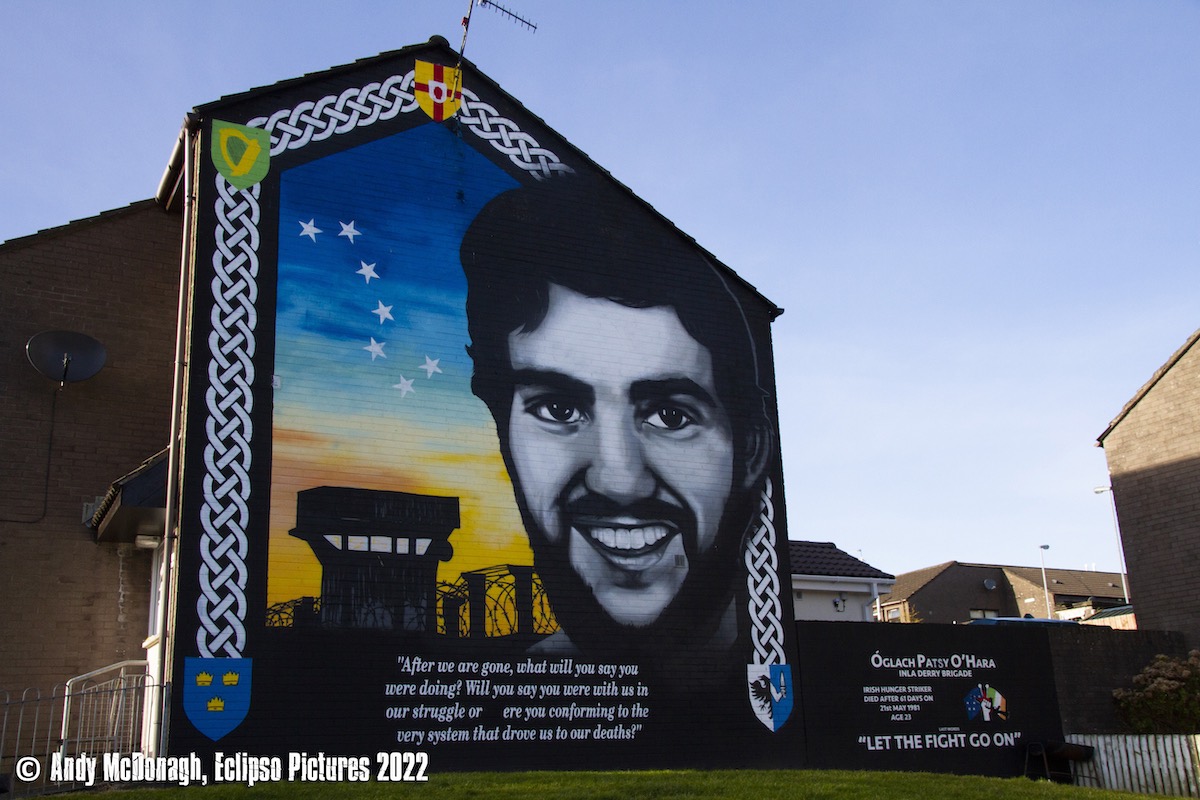
Patsy O’Hara was born in 1957 Bishop Street, Derry, and joined Na Fıanna in 1970 and the local Sınn Féın cumann in 1971 and, in August was shot in the leg by British soldiers. In 1972 he joined the Republican Clubs and in 1975 the IRSP. He was imprisoned multiple times, the final time being in January 1979 for possession of a hand grenade (Bobby Sands Trust). He went on hunger strike 41 years ago tomorrow (March 22nd) and was the first of the three INLA hunger strikers to die in 1981. The long-standing mural in Bishop Street was repainted for the 40th anniversary of his death. (For the previous version, see Let The Fight Go On.)
“Óglach Patsy O’Hara, INLA Derry Brigade, Irish hunger striker, who died after 61 days on 21st May 1981, age 23. Last words ‘Let the fight go on’.”
“After we are gone, what will you say you were doing? Will you say you were with us in our struggle or where you conforming to very system that drove us to our deaths?” – these words also appeared in the 2013 mural to O’Hara on Shaws Road, west Belfast.
Here are two IRSP pieces commemorating the 40th anniversary of the 1981 hunger strike. The first, above and immediately below, is from Ard Eoın/Ardoyne (Béal Feırste/Belfast) with colour (or at least, colour-ised) portraits of the ten who died on either side of an image from Keven Lynch’s funeral cortège. It is the same as the board seen on the lower Falls in For A Socialist Republic. At the bottom is a poster from Strabane calling people to gather in remembrance in Derry.
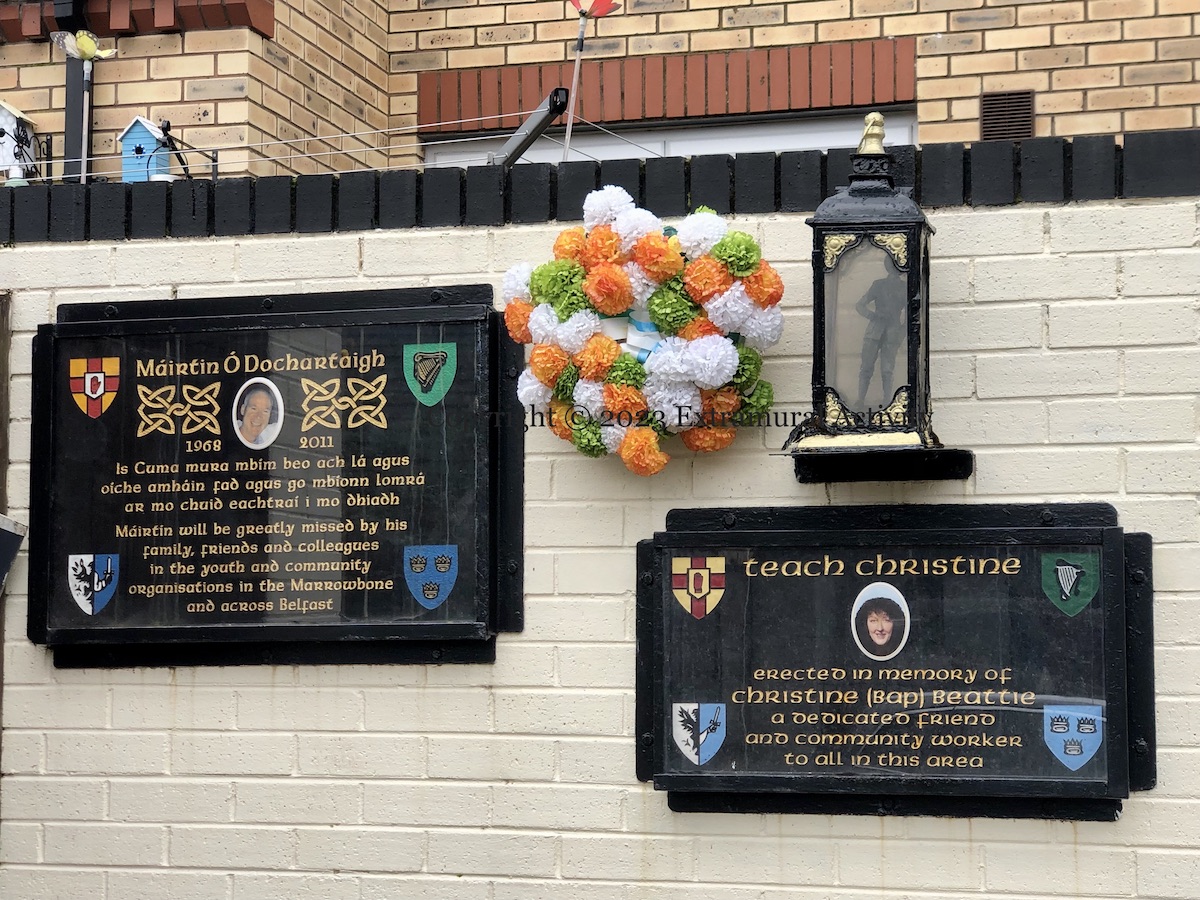
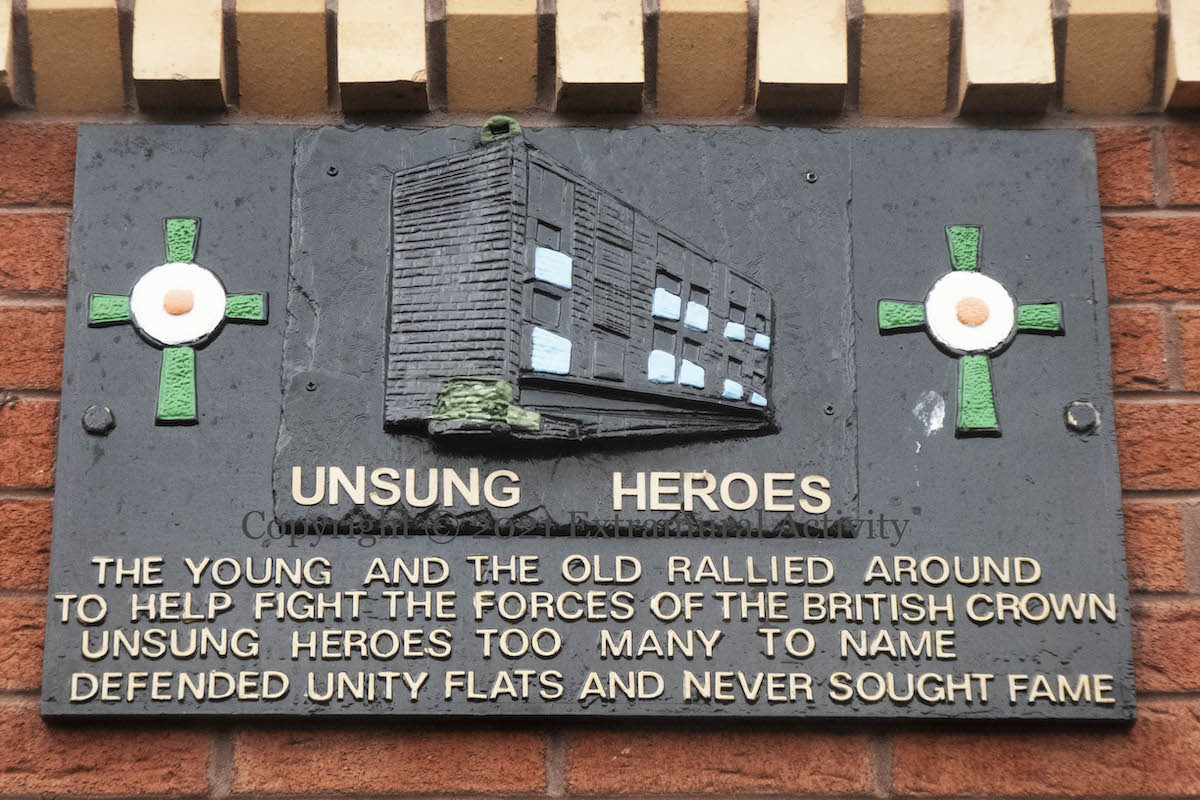
“The young and the old rallied around/To help fight the forces of the British crown/Unsung heroes too many to name/Defended Unity flats and never sought fame”. Unity flats were built in 1968 to replace the old Carrick Hill but immediately came under repeated attack by loyalists from the nearby Peter’s Hill and Shankill; by 1987 their demolition had been approved but because of difficulty in rehousing residents (Hansard), the new Carrick Hill was not completed until 2009 (BelTel). The flats have a Facebook page, Growing Up In Unity Flats. The plaques shown today are on the side of the newsagents in the new Carrick Hill.


















 Extramural Activity