Part of the long, multi-panel mural in Stroud St by Ed Reynolds – with help from the person pictured, William McKee Strong. For the whole thing, see Stroud St Entire.
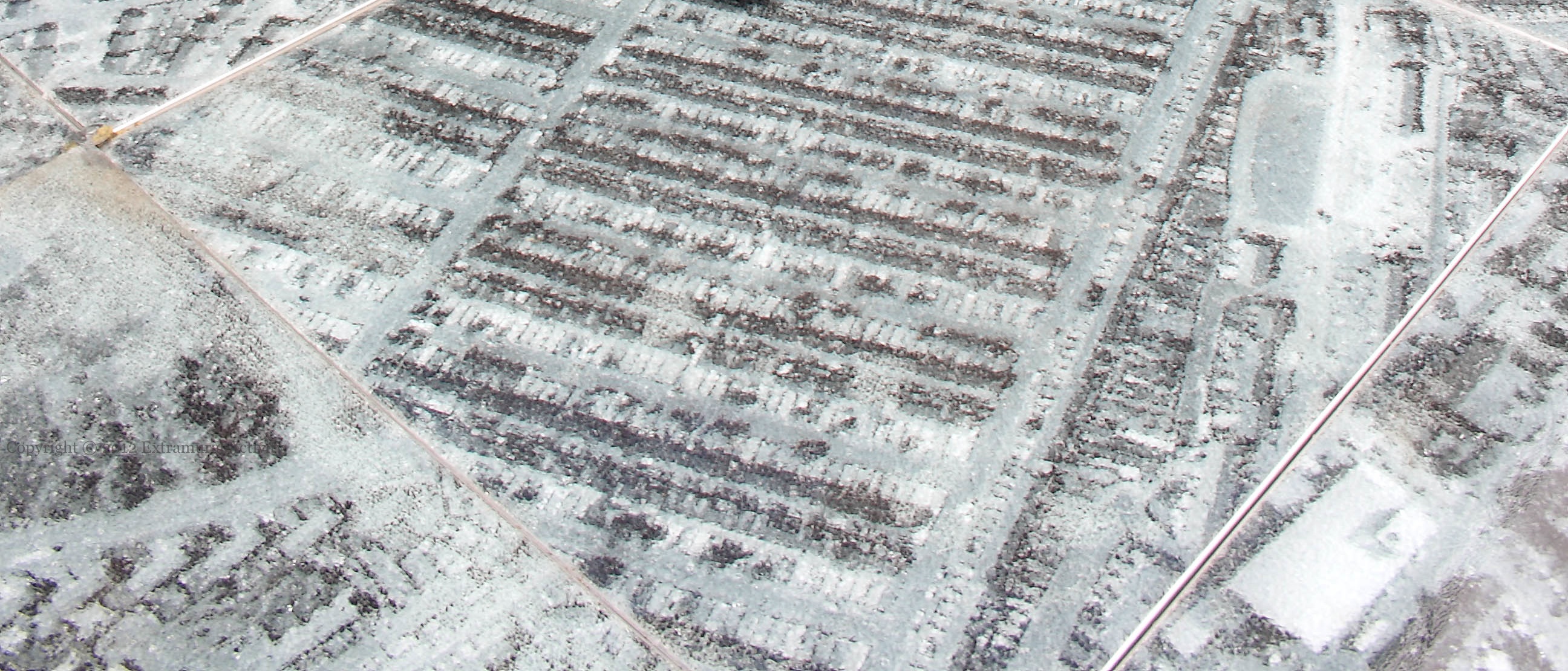
The big red sign usually says “Road Closed” but has been changed for the exhibition. On this day, however, the exhibition (which is a large satellite-image map of the area, on the ground) was not, in fact, open. The Flax St/Crumlin Road interface, Ardoyne, the day after the 2012 riot.
Below, taken later, detail of the exhibition … a very small portion
This is a companion piece to New Lodge 1900s. Life is now lived in colour, but suffers from underemployment, alcoholism, and suicide. The German bomber has been replaced by a British Army helicopter.
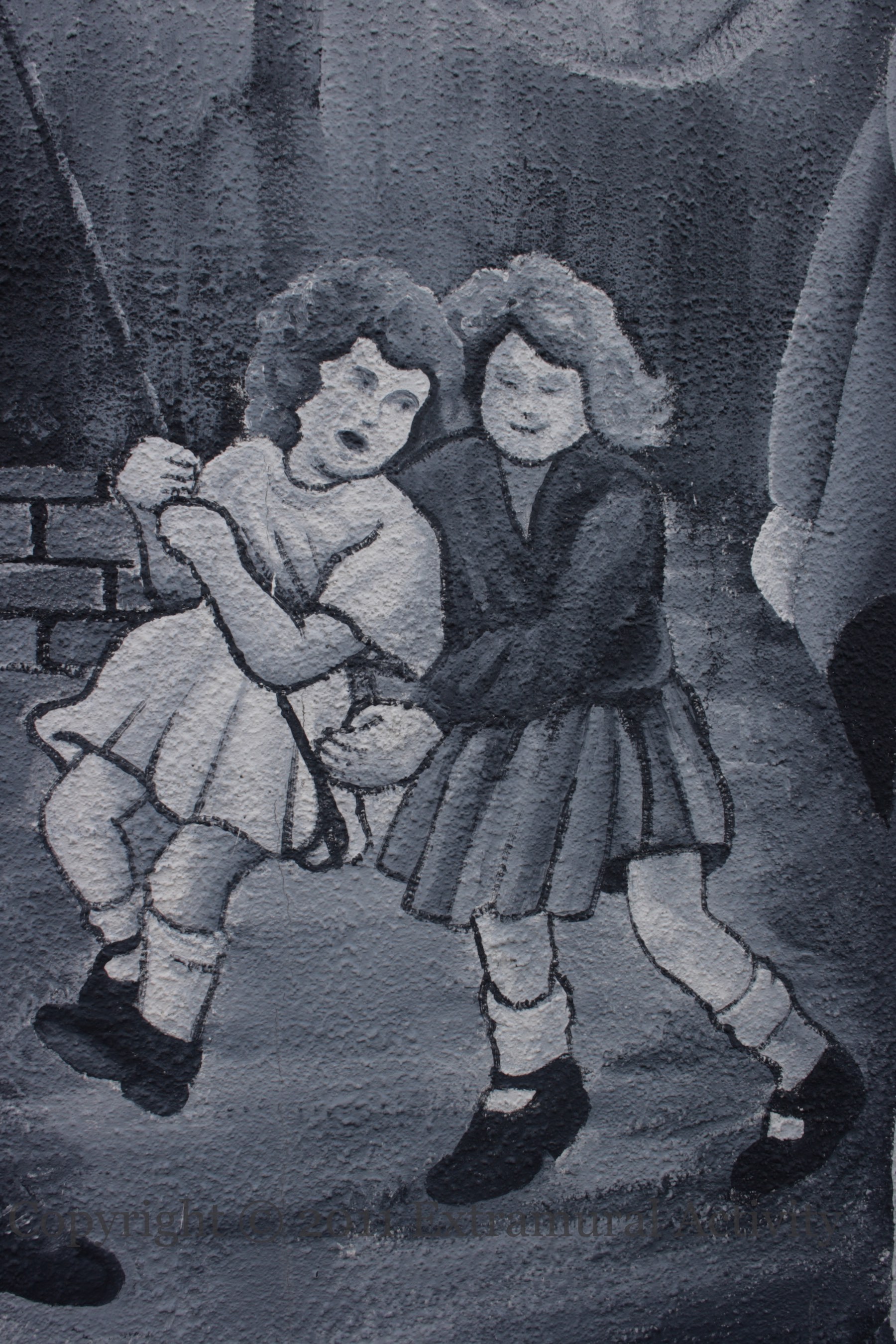
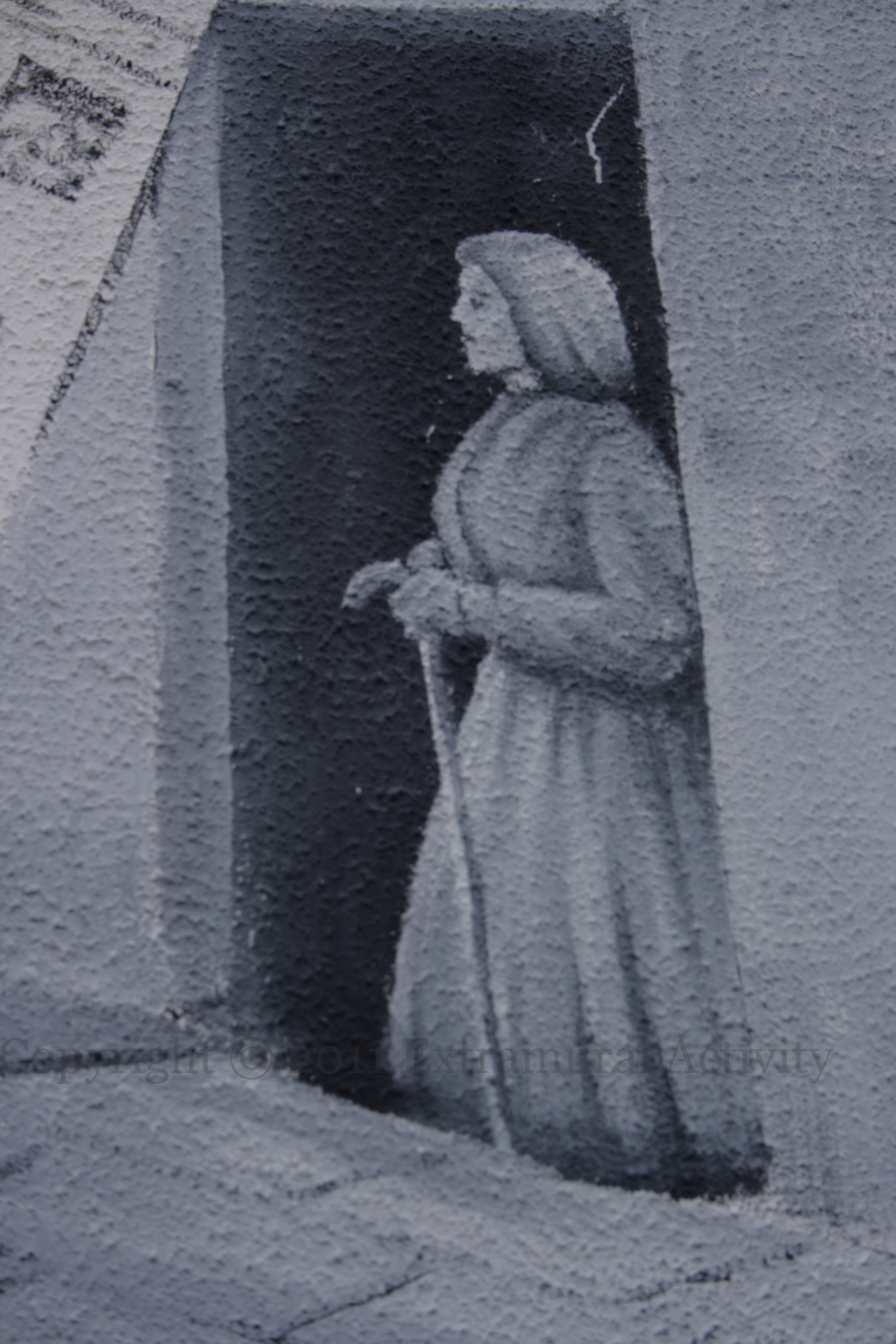
The trials of life in the 1900s are depicted in this New Lodge mural. People work and die in the mills. The Germans drop bombs. Children go barefoot. The black-and-white colouring adds to the depression. The ‘New Lodge 2000‘ mural further down the road is in full colour, though life is still beset with problems.
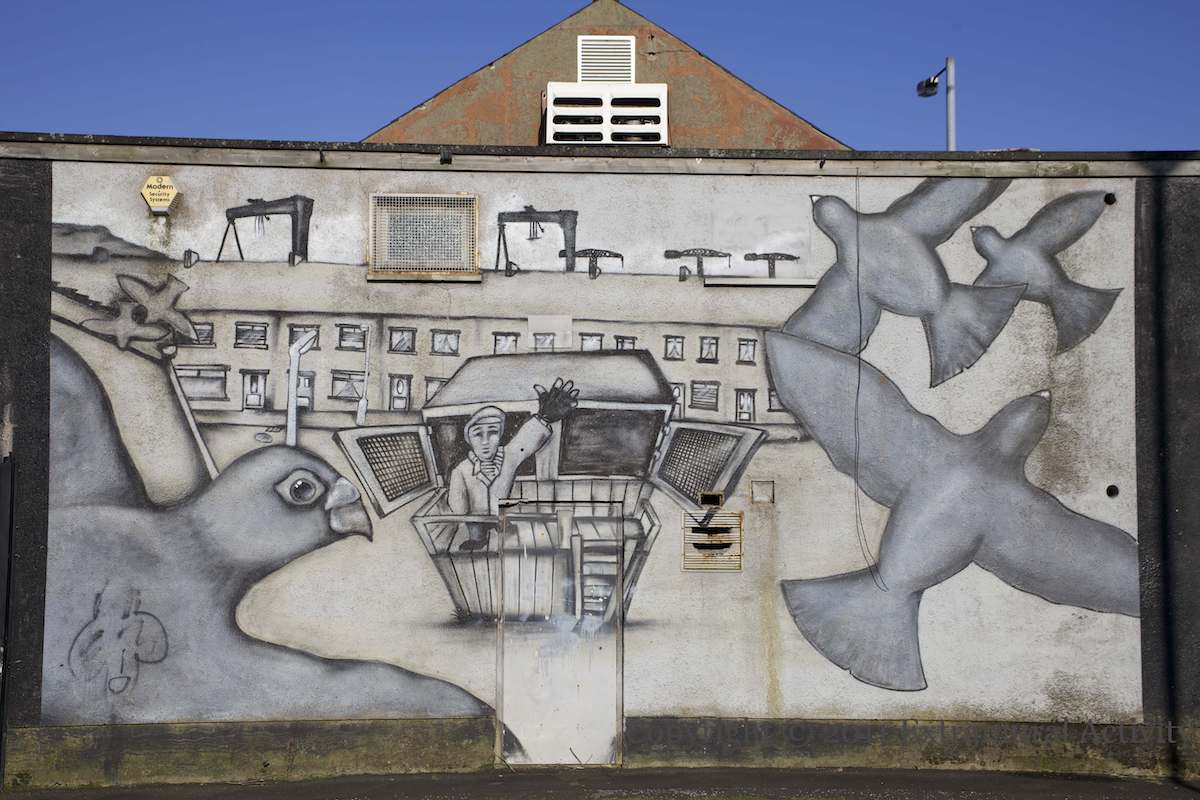
This mural is along the walkway between Tamar and Severn streets in east Belfast. The East End Homing Pigeon club was (is?) at 51 Severn Street (Belfast Forum).
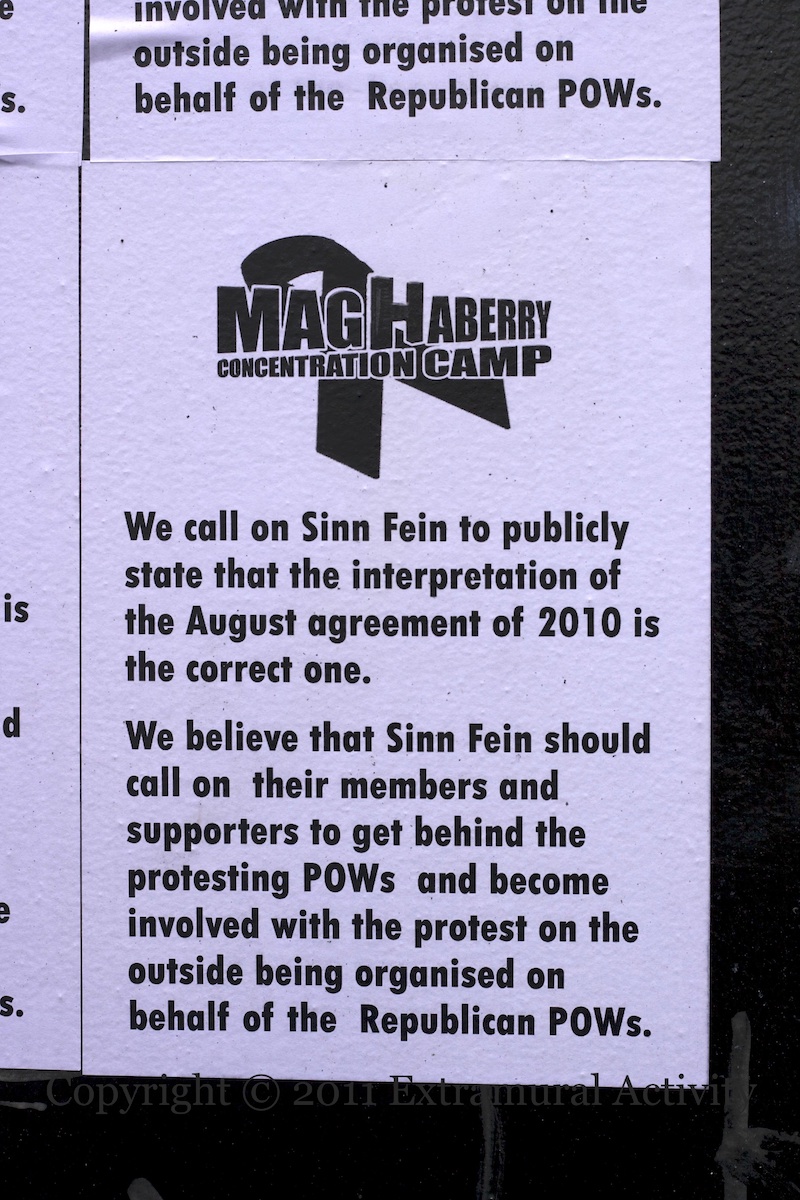
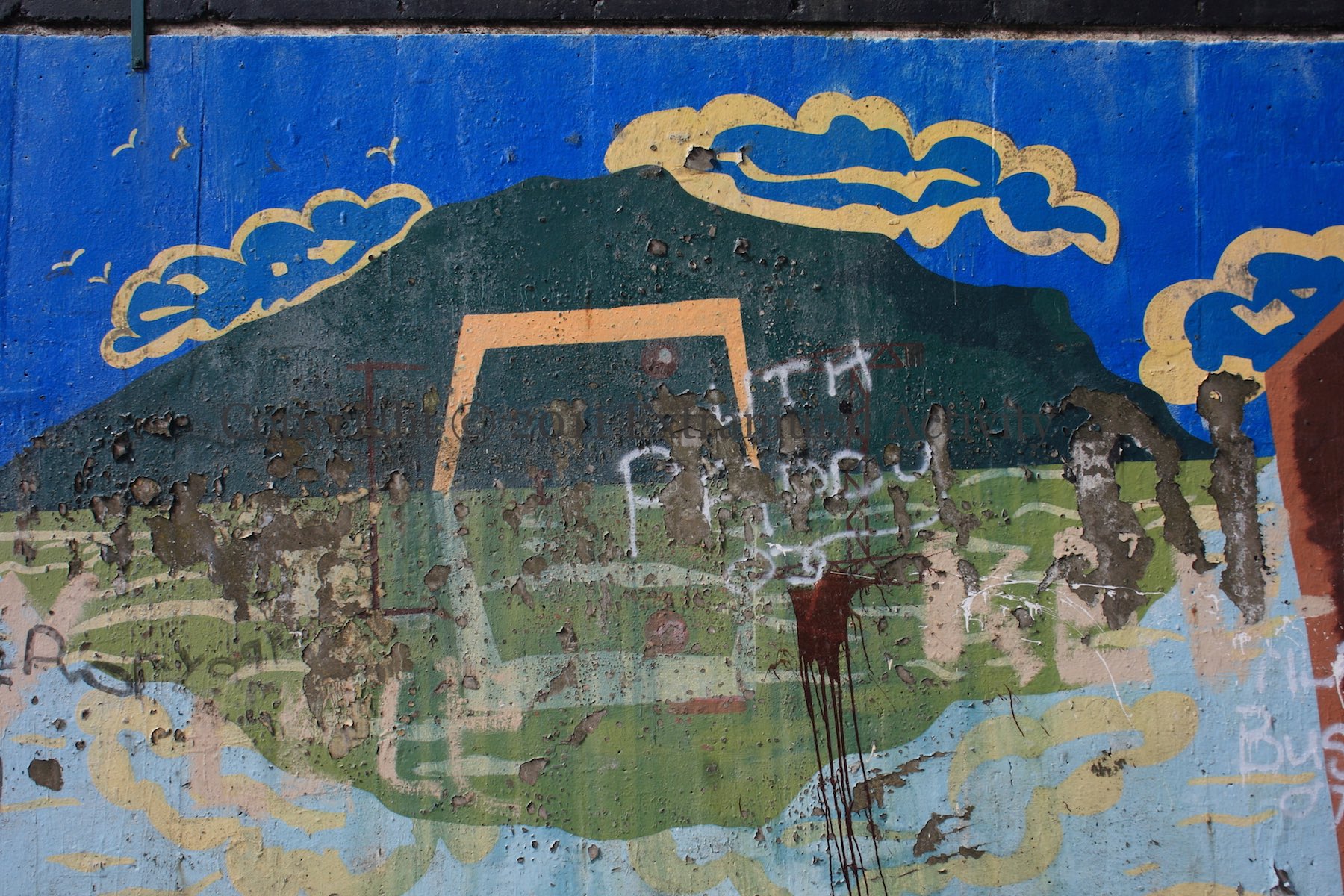
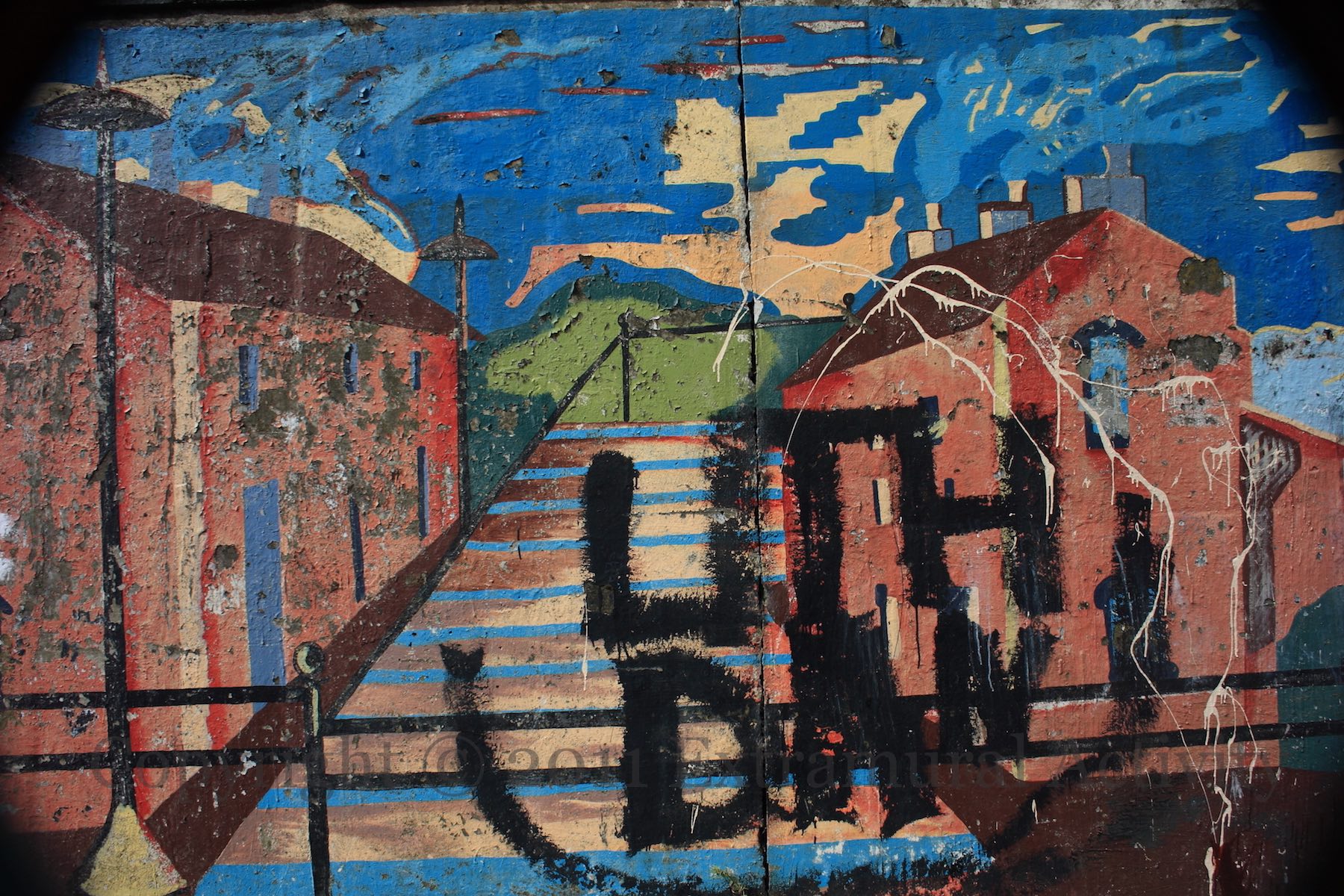
In the summer of 2011, both sides of the Flax St/Crumlin Rd interface were pasted with images of the view from the other side, a city scene on the Flax St side as though looking into Woodvale, a hilly scene on the Crumlin Rd as though looking up Flax Street. You can see the Crumlin Road side on Street View. What remains of the other side can be seen in the image above, along with IRPWA posters (see below) concerning “Maghaberry Concentration Camp”, calling “on Sinn Fein [sic] to publicly state that the interpretation of the August agreement of 2010 is the correct one … [and to] … call on their members and supporters to get behind the protesting POWs.”
Both the type of “MagHaberry” and the arrangement of the posters make the connection to the H Blocks of the 1970s and 80s.
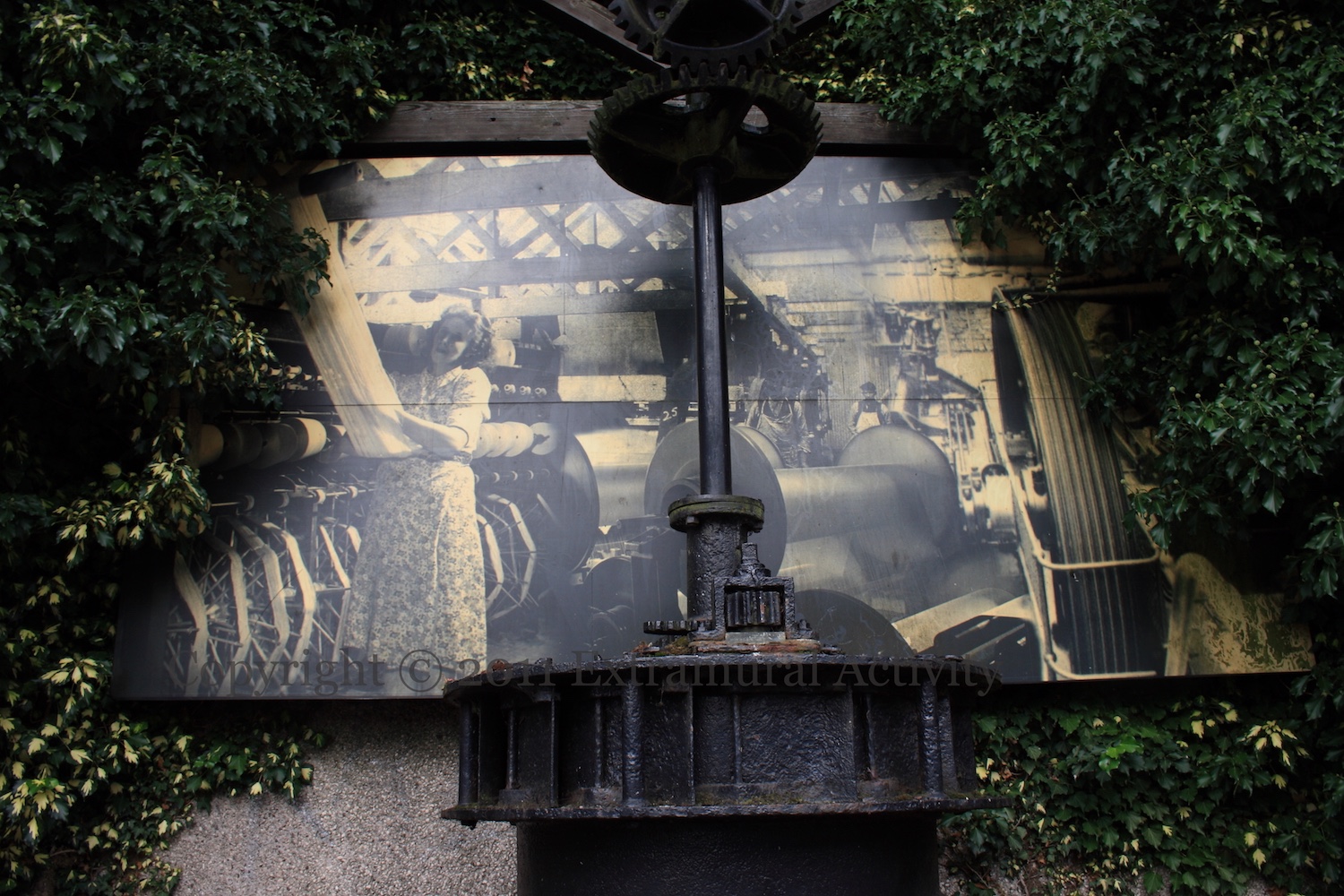
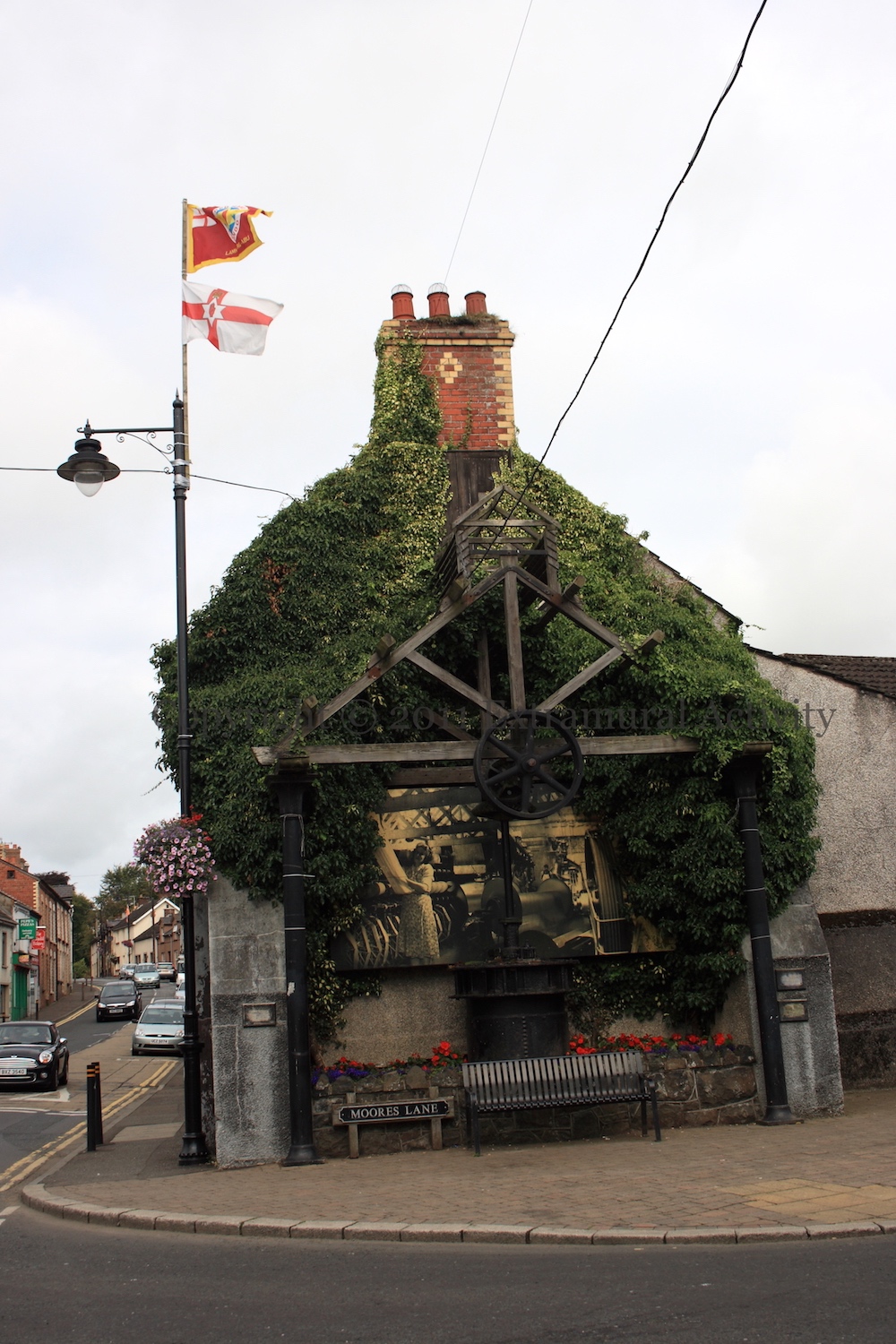
Randalstown remembers its history as an industrial town in the nineteenth and twentieth centuries, with a linen factory that employed a thousand people in the 1930s (BBC). The first Heritage board is in Moore’s Lane; the second is in New Street (at the Market House).












 Extramural Activity