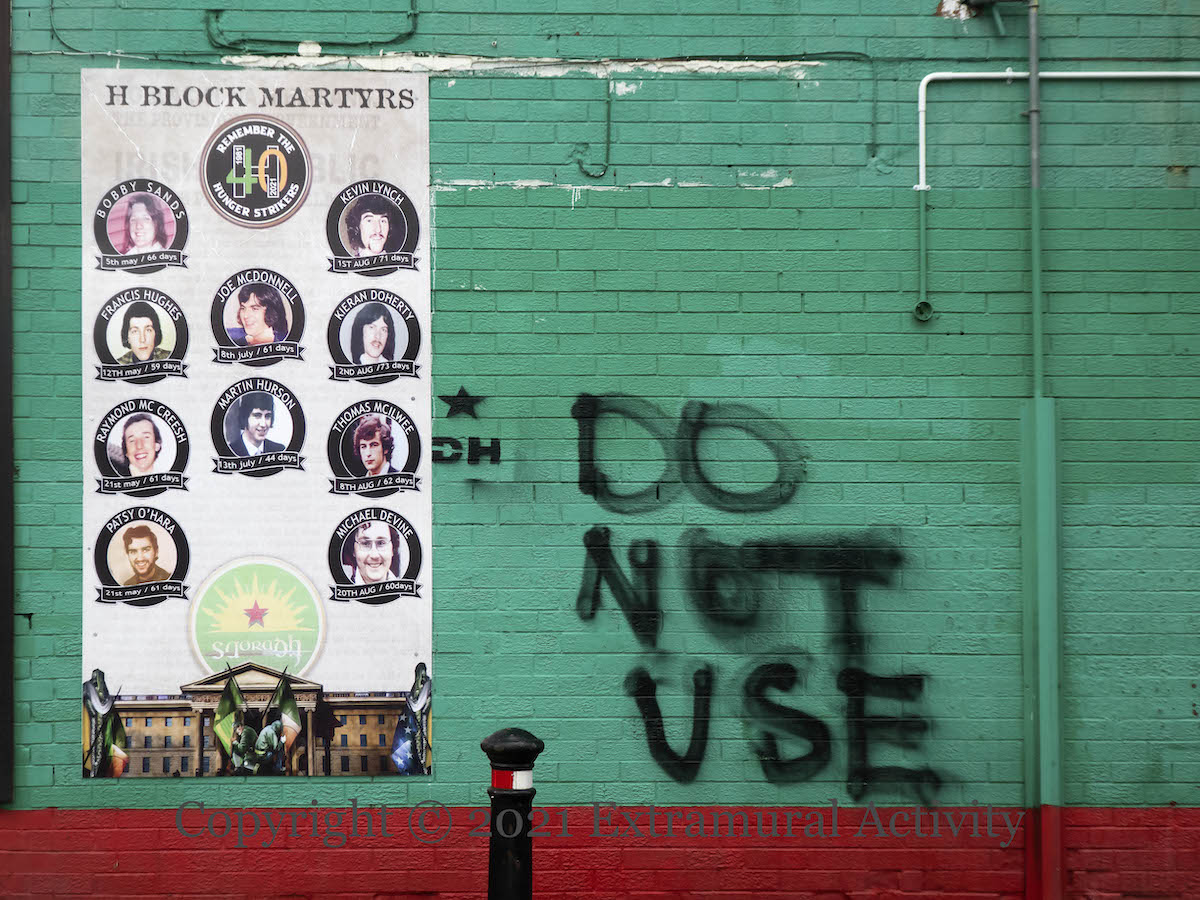
The “Do not use” sign – from last year – is Saoaradh (web) reserving a wall in Braemar St (on the Falls Road) that has never (to our knowledge) been used by anyone else. As the image above shows, the space is now being used – in part – by a hunger strike 40th anniversary board.
Both Clifton Street Orange Hall and the statue of King William pre-date the creation of Northern Ireland in 1921. The building opened in 1885 (ArchSeek | Belfast Media gives 1886) and the statue was unveiled before a crowd of 50,000 on November 11th, 1889 ((Melbourne) Advocate | (Sydney) Protestant Standard).
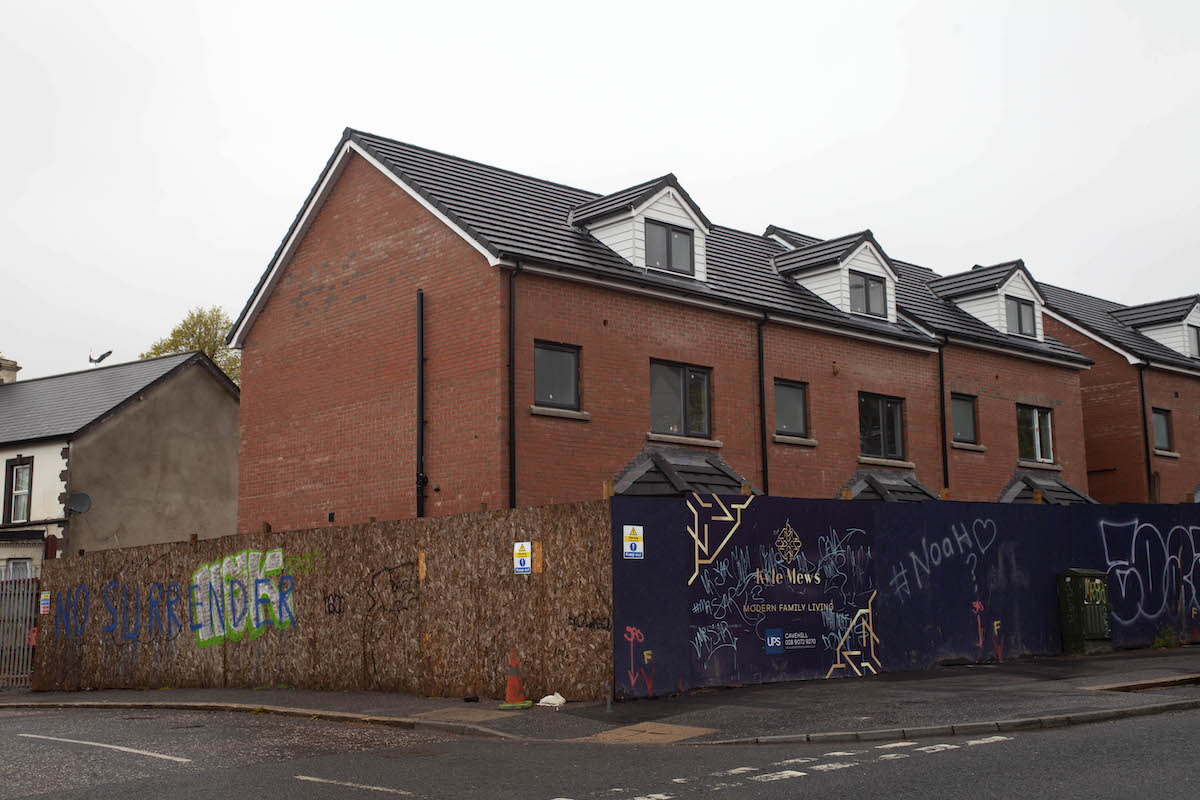
The first four units of these 3 bedroom semi-detached houses on the Cavehill Road, collectively called “Kyle Mews“, will be available in mid October, by which time the construction wall with its “No surrender” graffiti from the neighbouring Westlands should be gone.
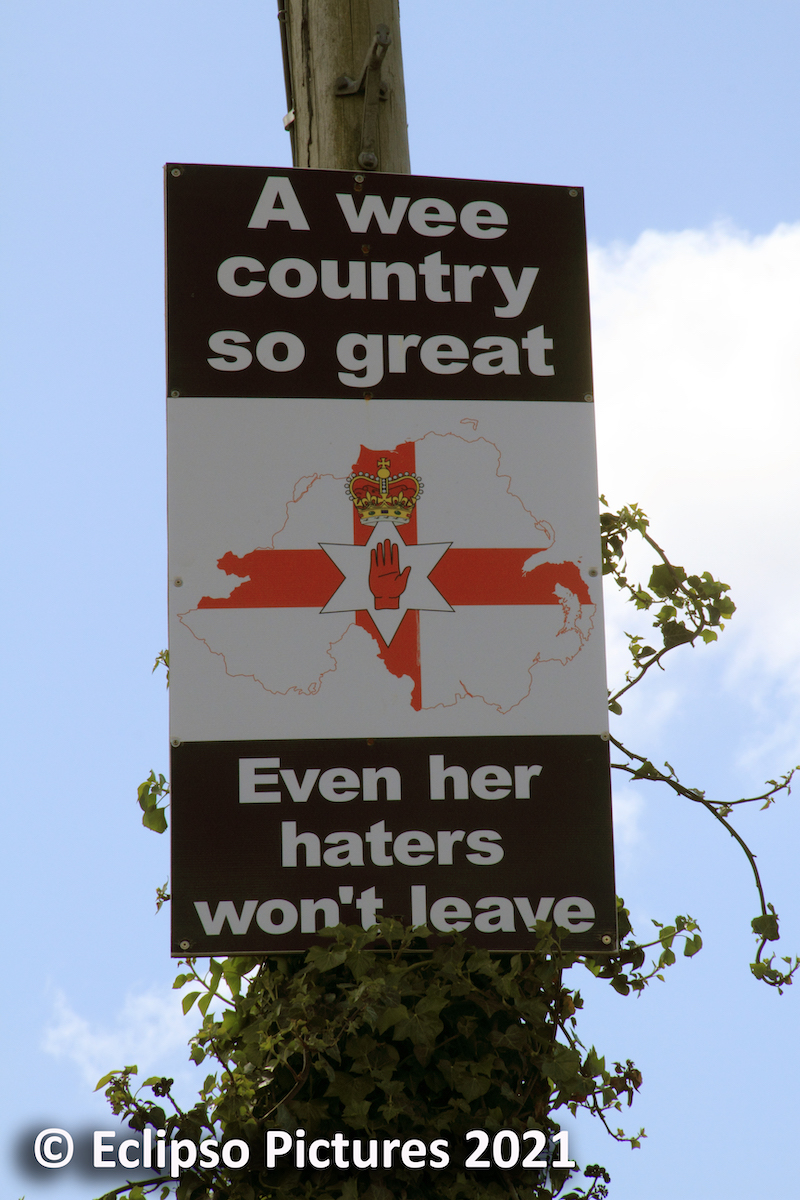
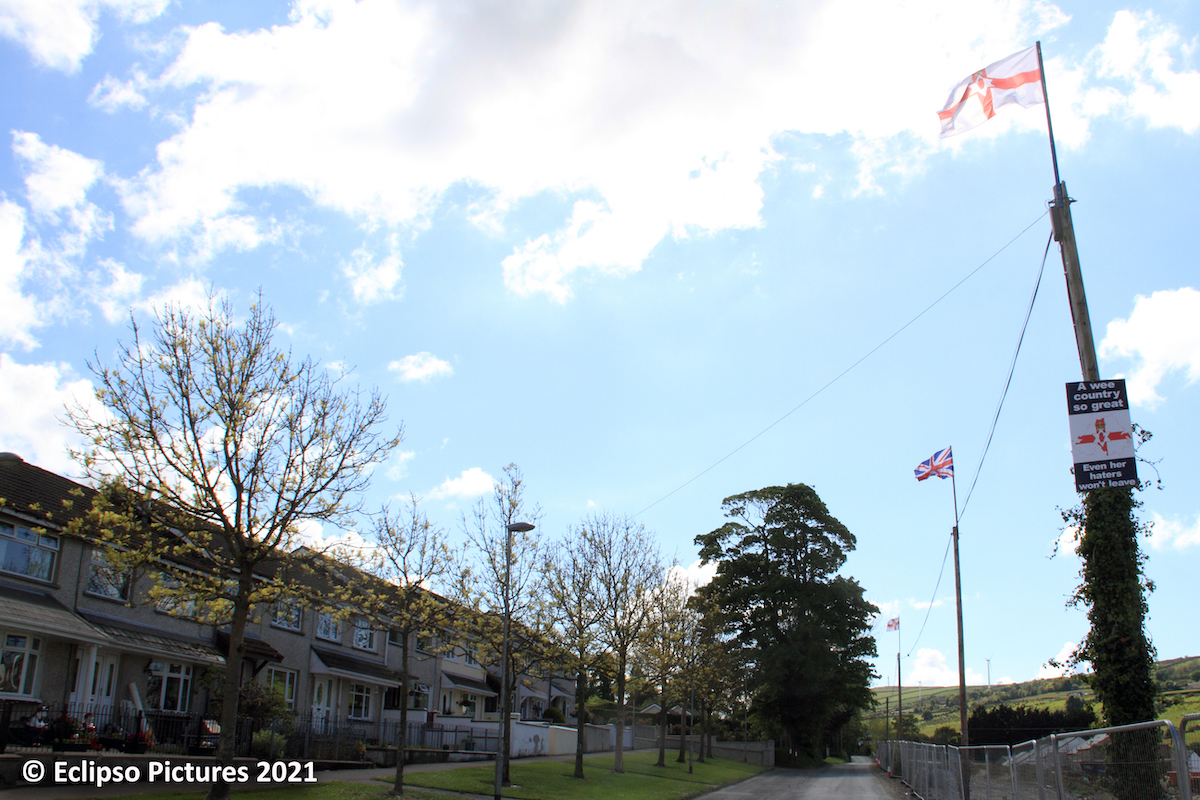
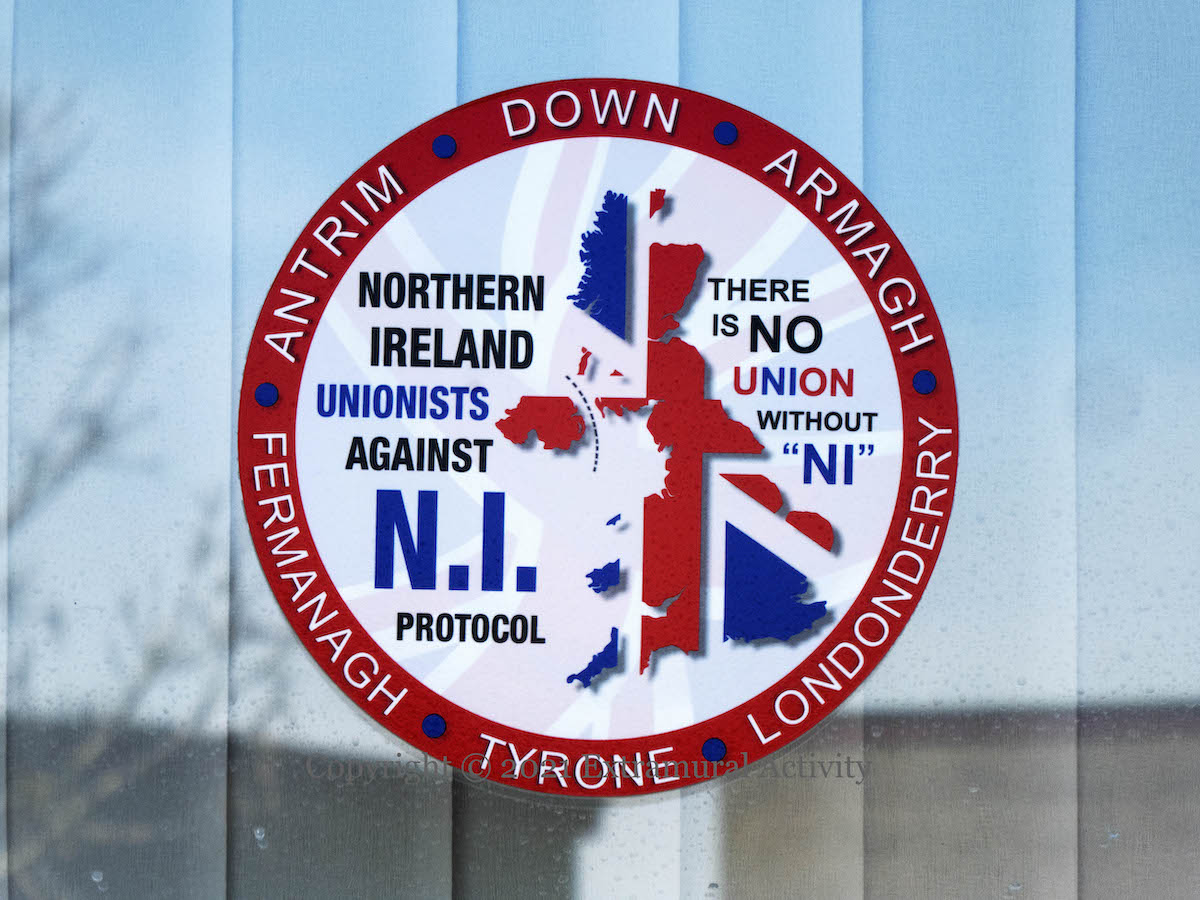
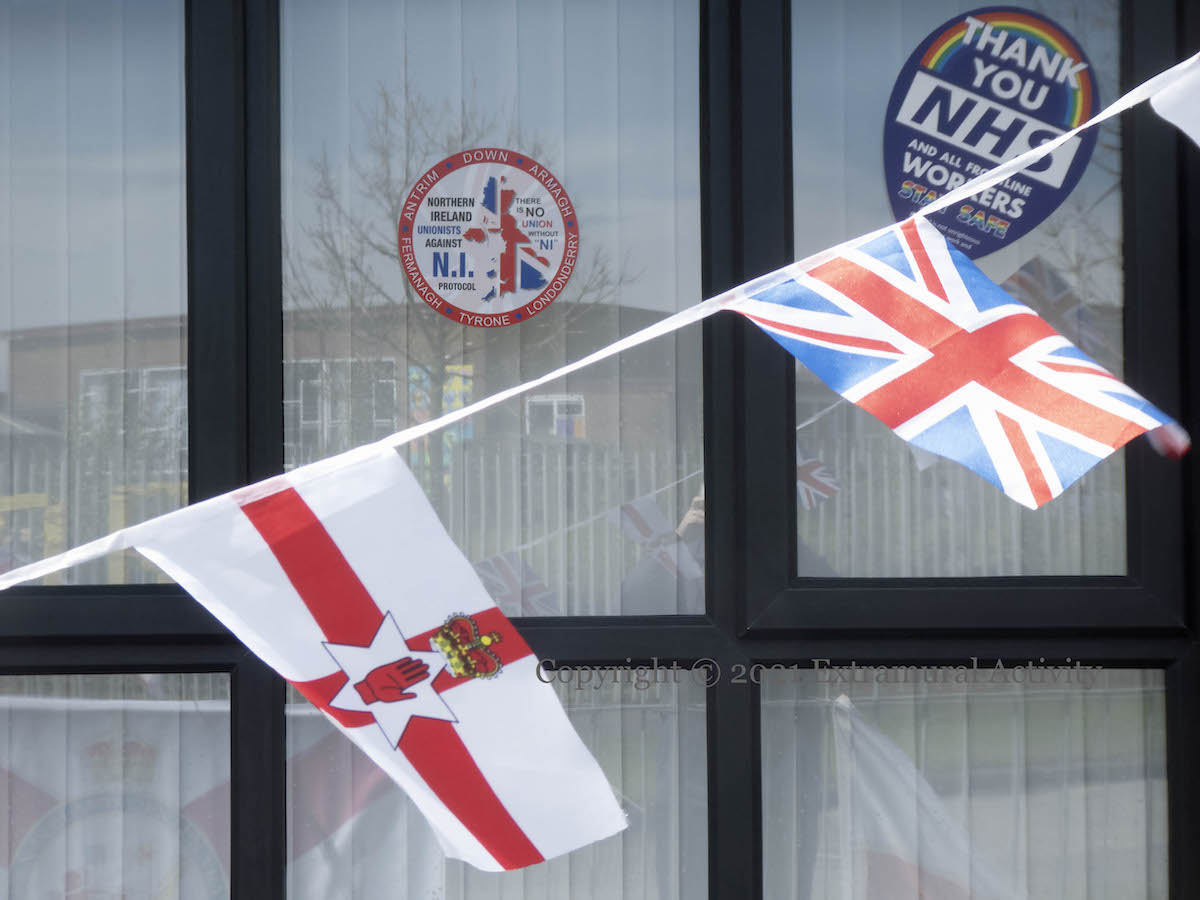
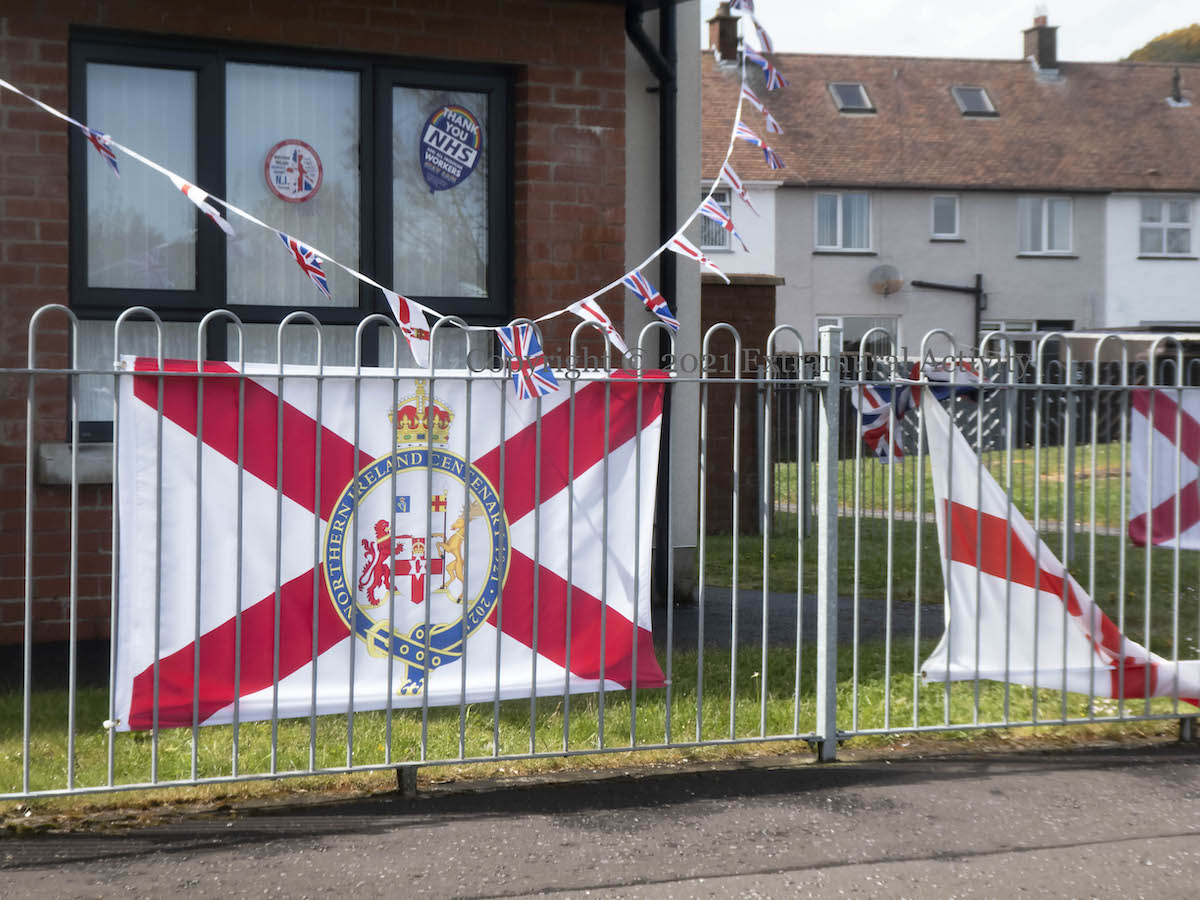
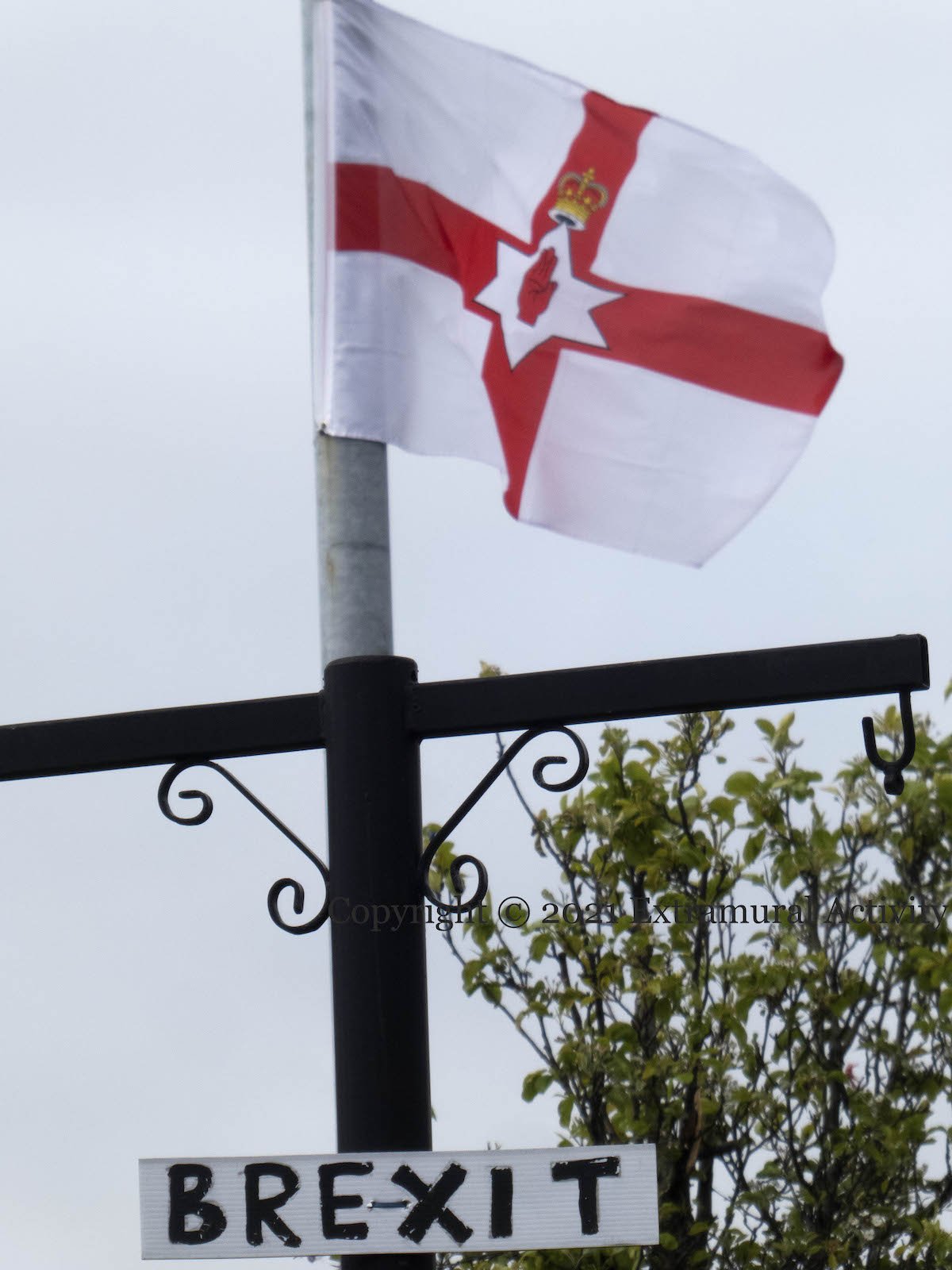
Celebrations of the centenary of the creation of Northern Ireland have been dampened by the fall-out from Brexit and the NI Protocol, the on-going coronavirus restrictions (and the leadership races in both the DUP and UUP). This Rathcoole house a flag to mark the centenary (the coat of arms of NI on a St Patrick’s Saltire) and stickers decrying the Protocol (“Northern Ireland unionists against NI Protocol”) and thanking the NHS.
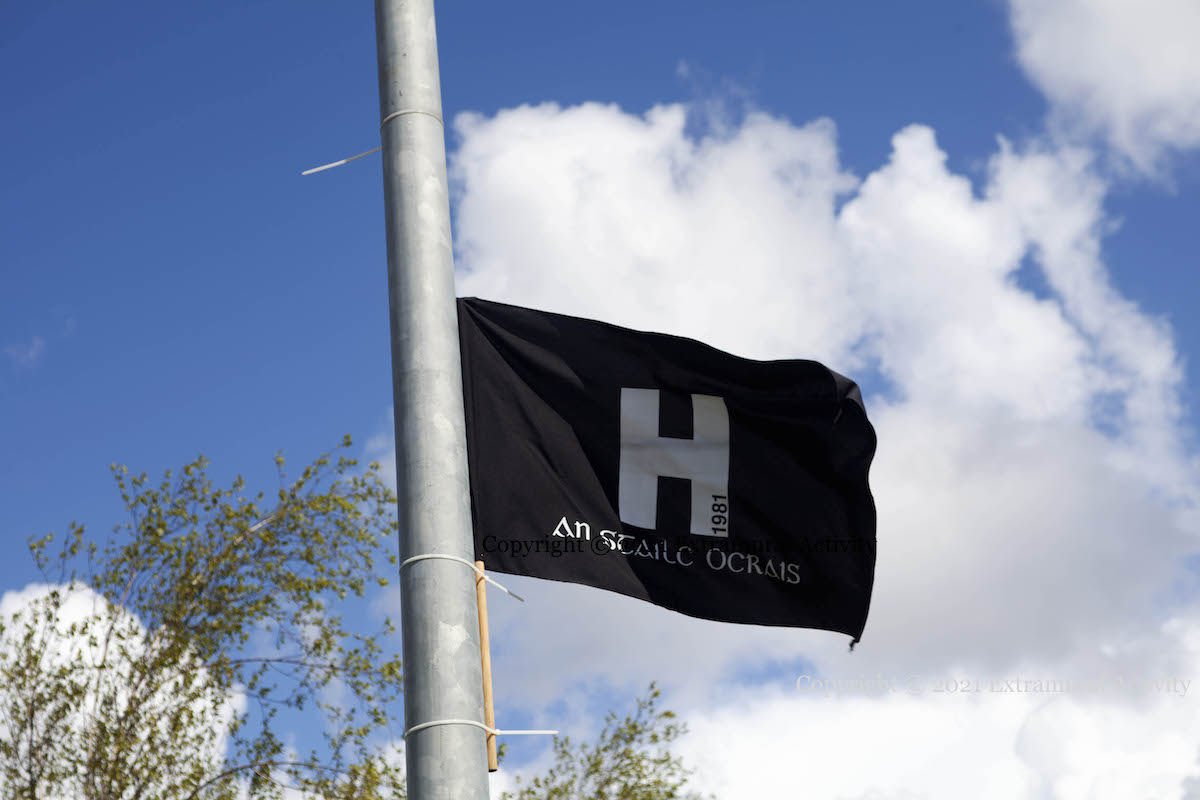
On this today 40 years ago, Francis Hughes, the second of the 1981 hunger strikers, died after 59 days without food. The flag is flying over Groves Reilly Corner in CNR west Belfast.
Faustina Kowalska was a Polish nun who, from age 19 onwards, claimed to have visions of a suffering Jesus, including one at age 26, of Jesus with red and white rays emanating from his heart and issuing instructions to have the vision painted – it appears here on the right. Kowalska died at age 33 in 1938, of tuberculosis, and was canonized in 2000 (WP). The “H Block Martyrs” pursued a vision of a United Ireland, and likewise died young, of starvation; this is the 40th anniversary of their deaths.
Both Kowalska placards are marked “This image is blessed. Please do not remove.” It is not clear if the hunger striker tarp on the left has also been anointed.
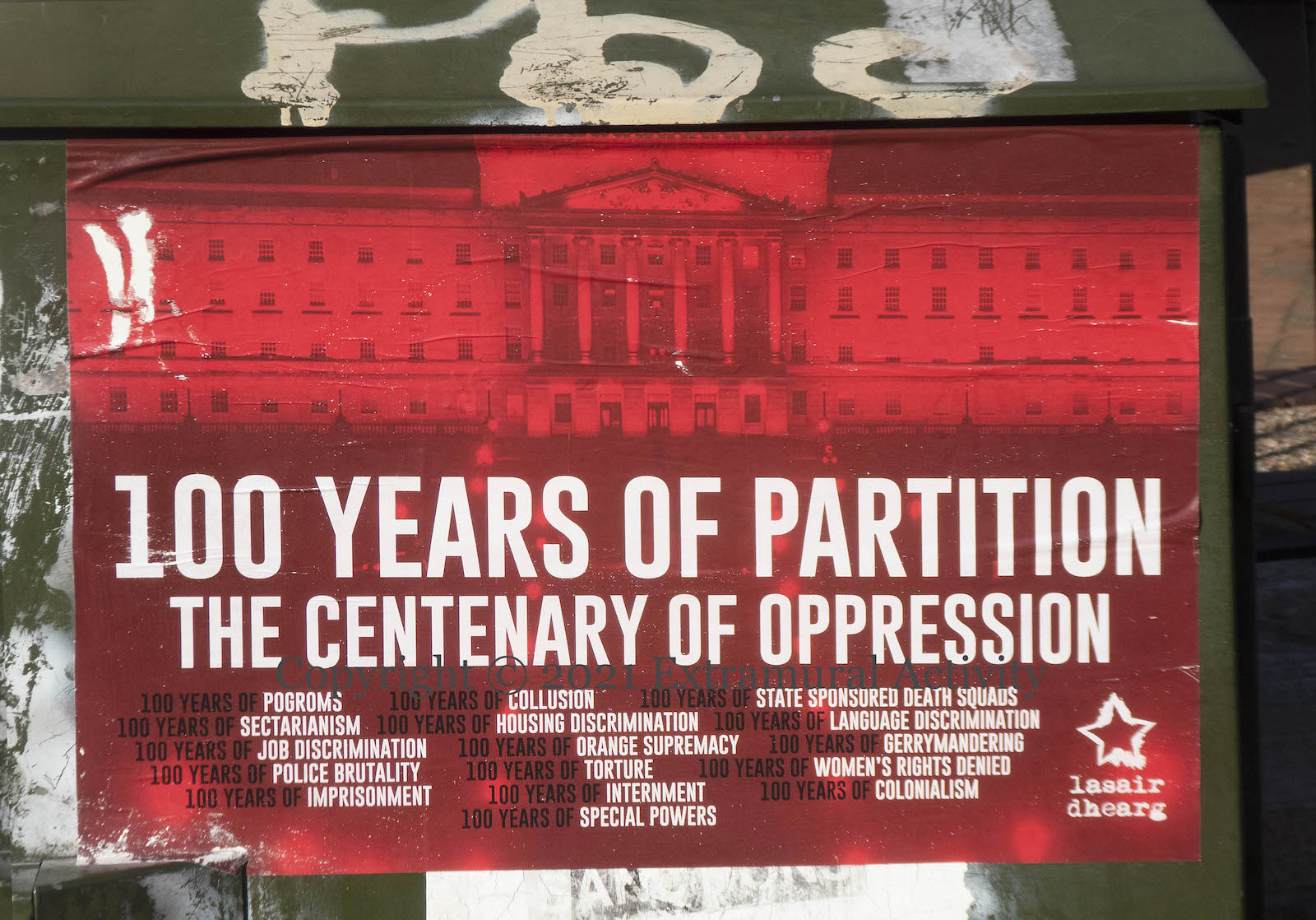
‘Parliament Buildings’ were not opened until 1932 – 102 years after Stormont Castle and eleven years after partition and the formation of Northern Ireland – but it has largely taken over the meaning of “Stormont” and has become synonymous with the Northern Ireland government in all its forms over the century, a century of – as this Lasaır Dhearg (web) poster in CNR west Belfast has it – “pogroms, sectarianism, job discrimination, police brutality, imprisonment, collusion, housing discrimination, Orange supremacy, torture, internment, special powers, state sponsored death squads, language discrimination, gerrymandering, women’s rights denied, colonialism.”
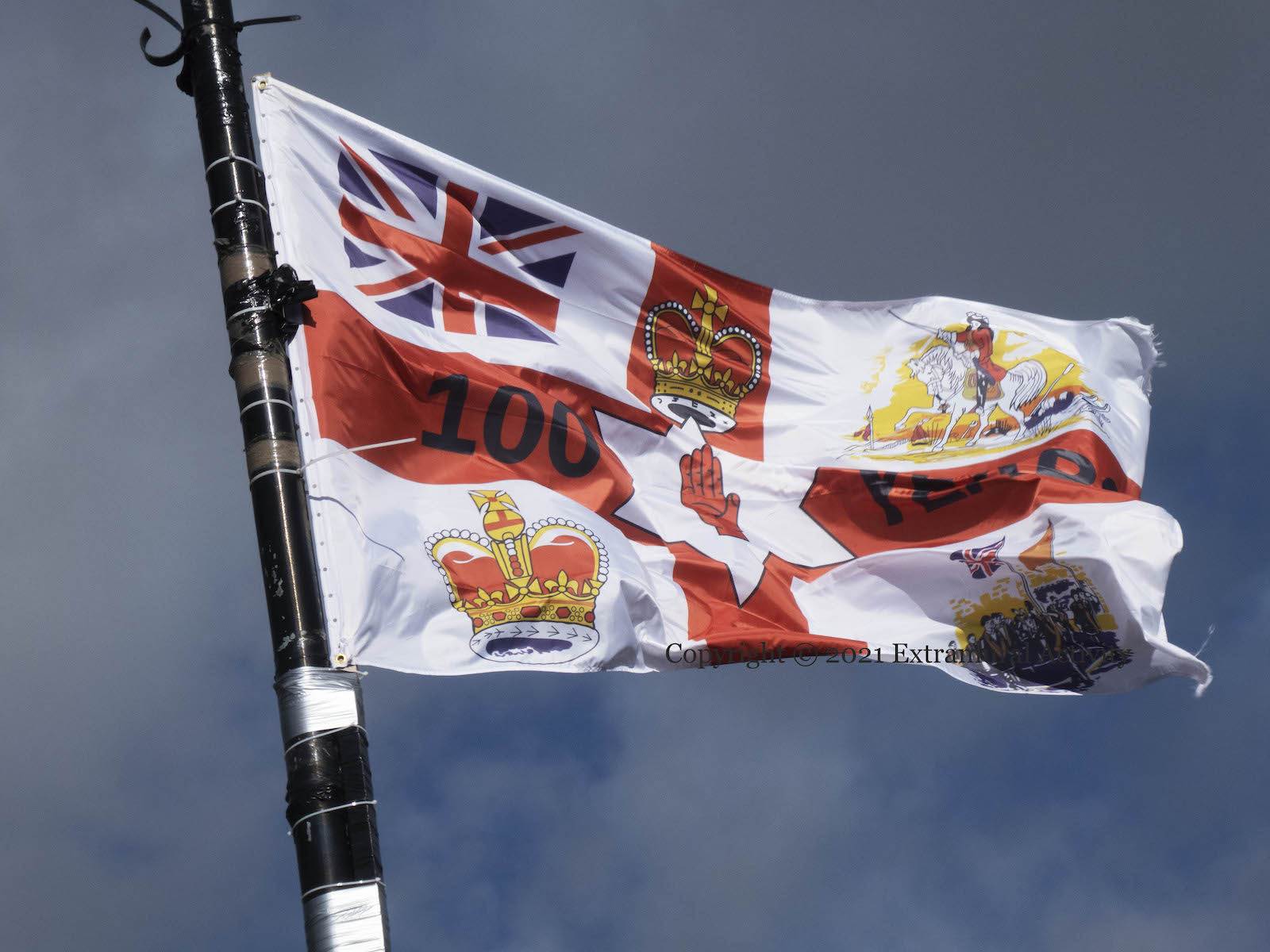
The fourth “Home Rule” bill, formerly known as the “Government of Ireland Act” was passed by the 11 November, 1920, and came into effect on May 3rd, 1921, partitioning Ireland into Southern Ireland and Northern Ireland (WP). There has been little to mark the centenary, perhaps due to distraction from Brexit and the DUP leadership change. The flag shown above celebrates the creation of the North, showing, clockwise from bottom left, the Crown, the Union Flag, King William at the Boyne, and Orangemen parading.



 Extramural Activity