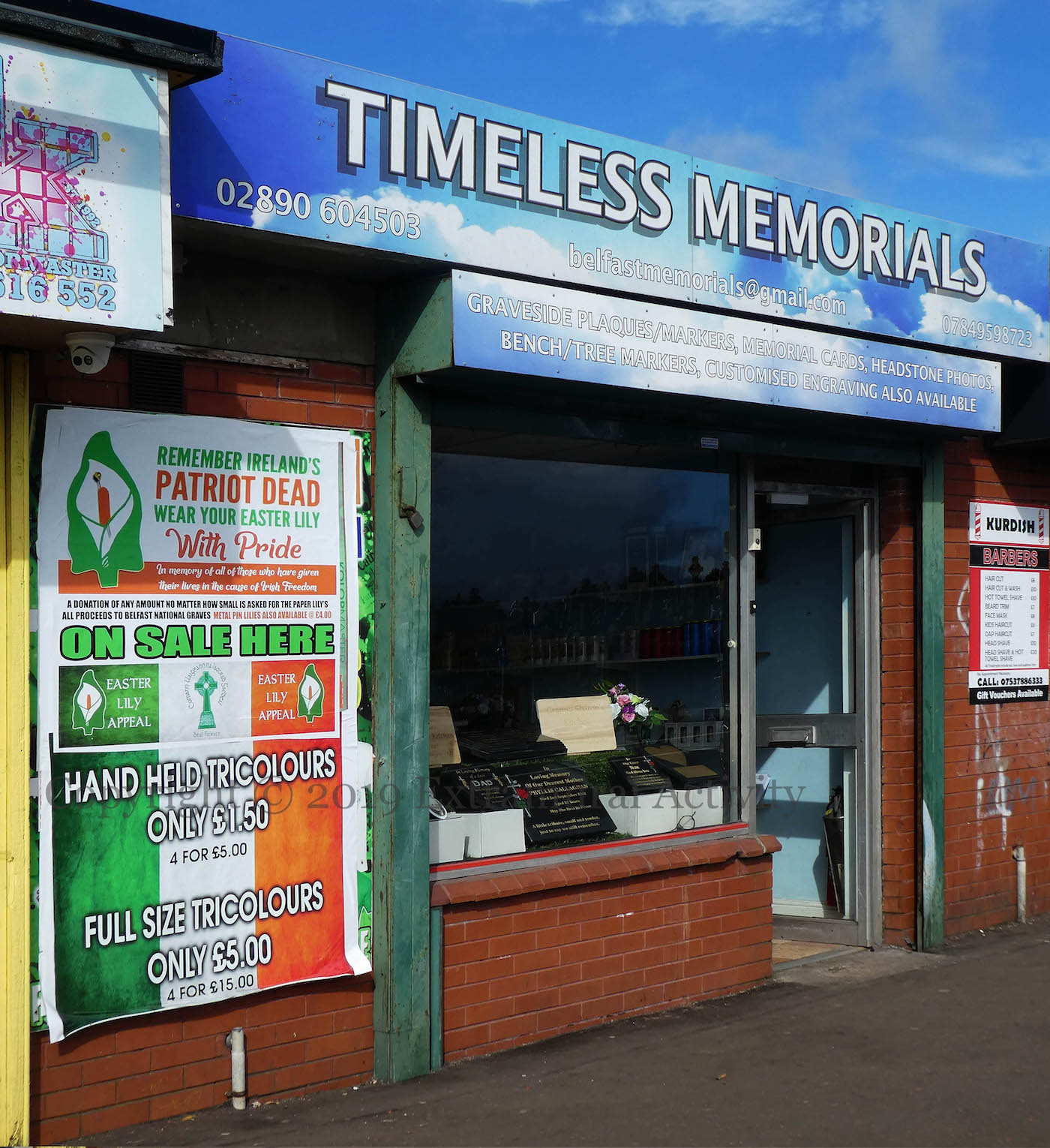
Discounts on hand-held and full-size Tricolours “in memory of all of those who have given their lives in the cause of Irish freedom” from the Milltown engravers – next to the Kurdish barbers – on the Falls Road.
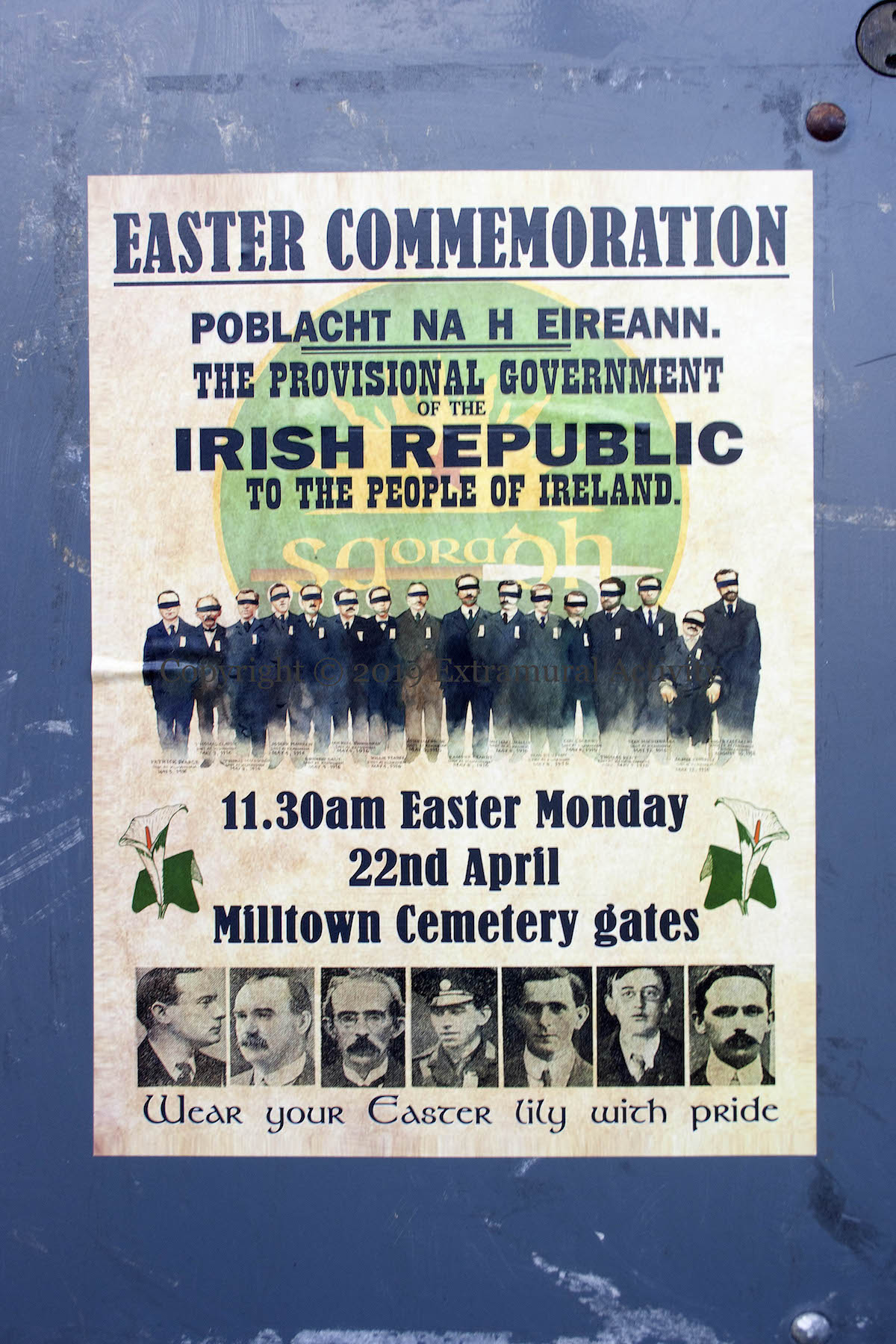
16 republicans, the seven signatories of the Proclamation among them, were executed in the wake of the Easter Rising, 14 of them in Dublin in a 10-day period from May 3rd to 12th. They are depicted in this Saoradh (web | tw) poster blindfolded and wearing suits: (from left to right) Patrick Pearse, Thomas Clarke, Thomas MacDonagh, Joseph Plunkett, Edward Daly, William Pearse, Michael O’Hanrahan, John MacBride, Éamonn Ceannt, Michael Mallin, Seán Heuston, Con Colbert, James Connolly, Seán MacDiarmada, Thomas Kent, and Roger Casement. Their deaths and the Rising are commemorated in Belfast each Easter with a parade
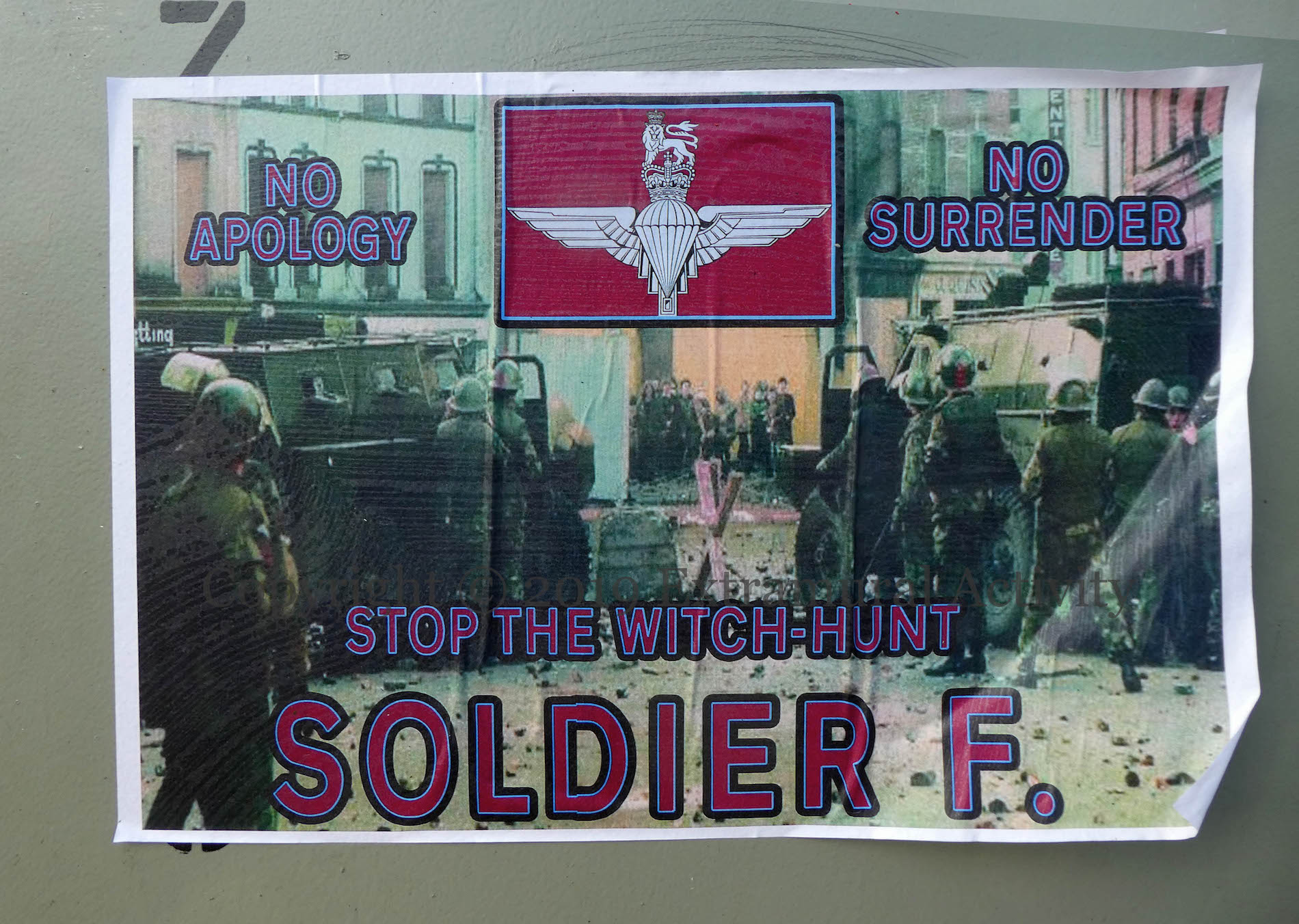
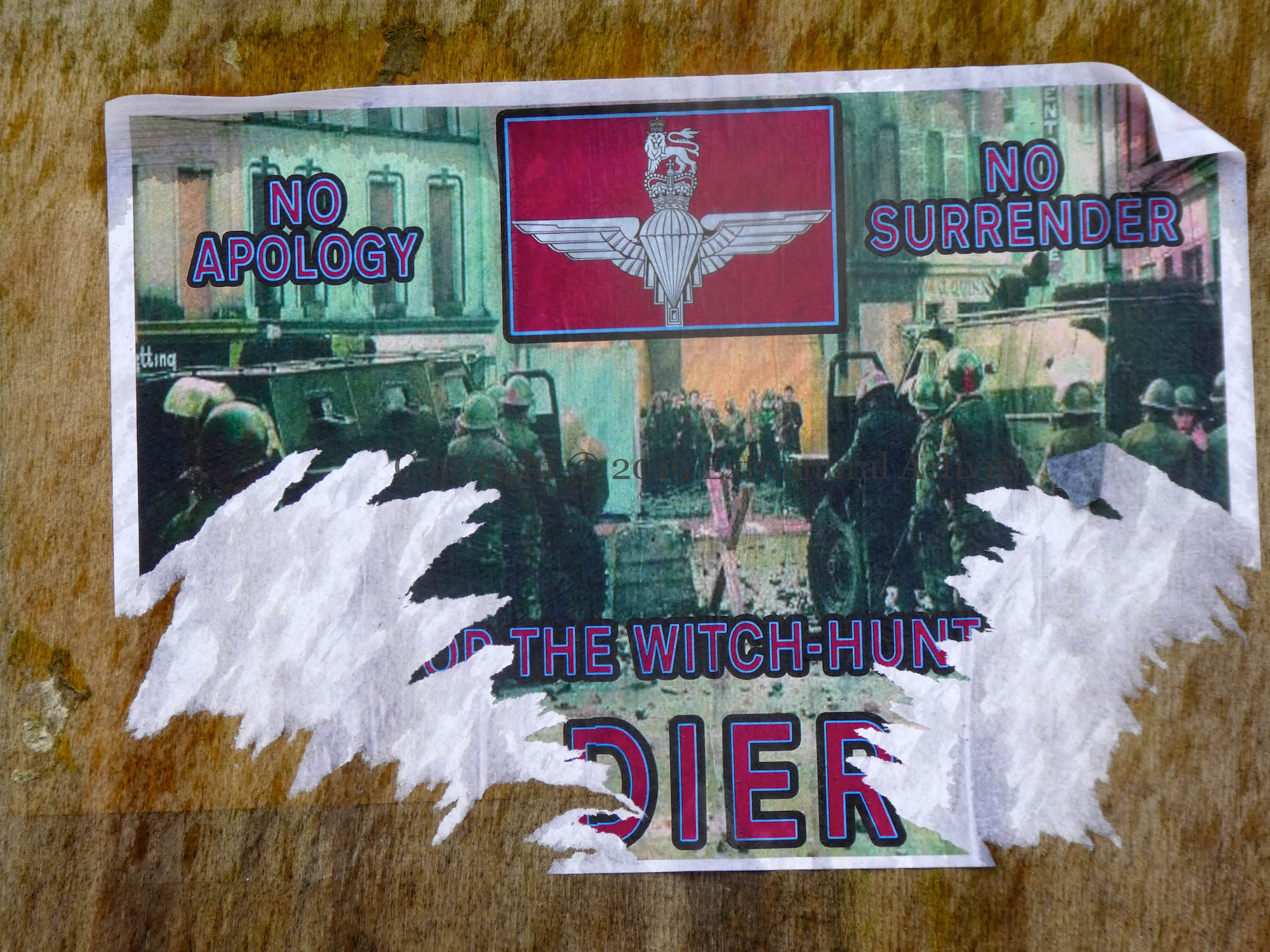
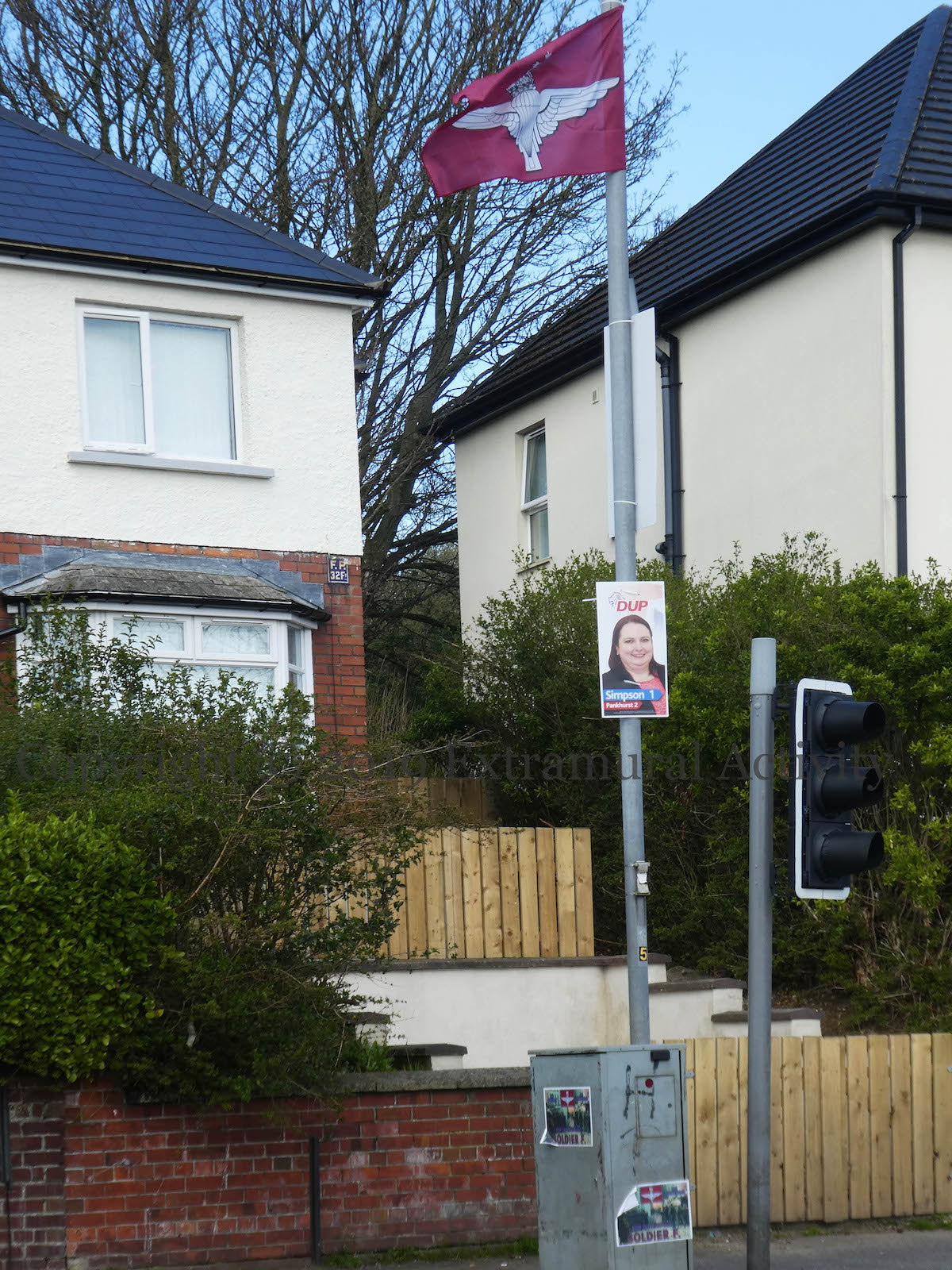
21 soldiers of the Parachute Regiment opened fire on marchers in Derry on January 30th, 1972, killing thirteen people (on the day; one more died later). One of them – codenamed “Soldier F” – was charged last month by the Public Prosecution Service in the deaths of James Wray and William McKinney and wounding of four others. Family members of the deceased reacted with disappointment (e.g. BBC-NI | Kate Nash on Twitter) while others, such as pressure group Justice For NI Veterans decried the PPS decision. The poster above in support of Soldier F is being pasted in north and west Belfast and perhaps beyond. The poster shows protesters facing off against British soldiers in William Street shortly before they opened fire. (See also And The Next Moment …) Posters on the Shankill, however, are being torn down (see second image, below) perhaps (confirmation: BelTel) in sympathy with two locals killed by the Army in 1972 (Irish News | AP video). The Paratroop flag is shown flying on the Ballysillan Road.
Ending The Harm is a Department Of Justice (Tackling Paramilitarism Programme) campaign of posters, radio ads, and hard-hitting videos (YouTube) aimed at combatting paramilitary-style violence. This hoarding is on Newtownards Road, in competition with the UVF mural in the Iceland car-park (see Please Pay Here).
In this grotesque image, a monk’s head serves as an instrument of the devil – a Reformation criticism of the Catholic church. The woodcut dates to c. 1530. The ogham script in the bottom pair of posters, which reads “Fucc [sic – there is no “k”] the DUP”, is not included in the original (British Museum). The modern reinterpretation is by TLO (ornamentalhermit.org). The ogham on the devil’s arm is unclear; it appears to read “cussfbelung” – comment if you can help.
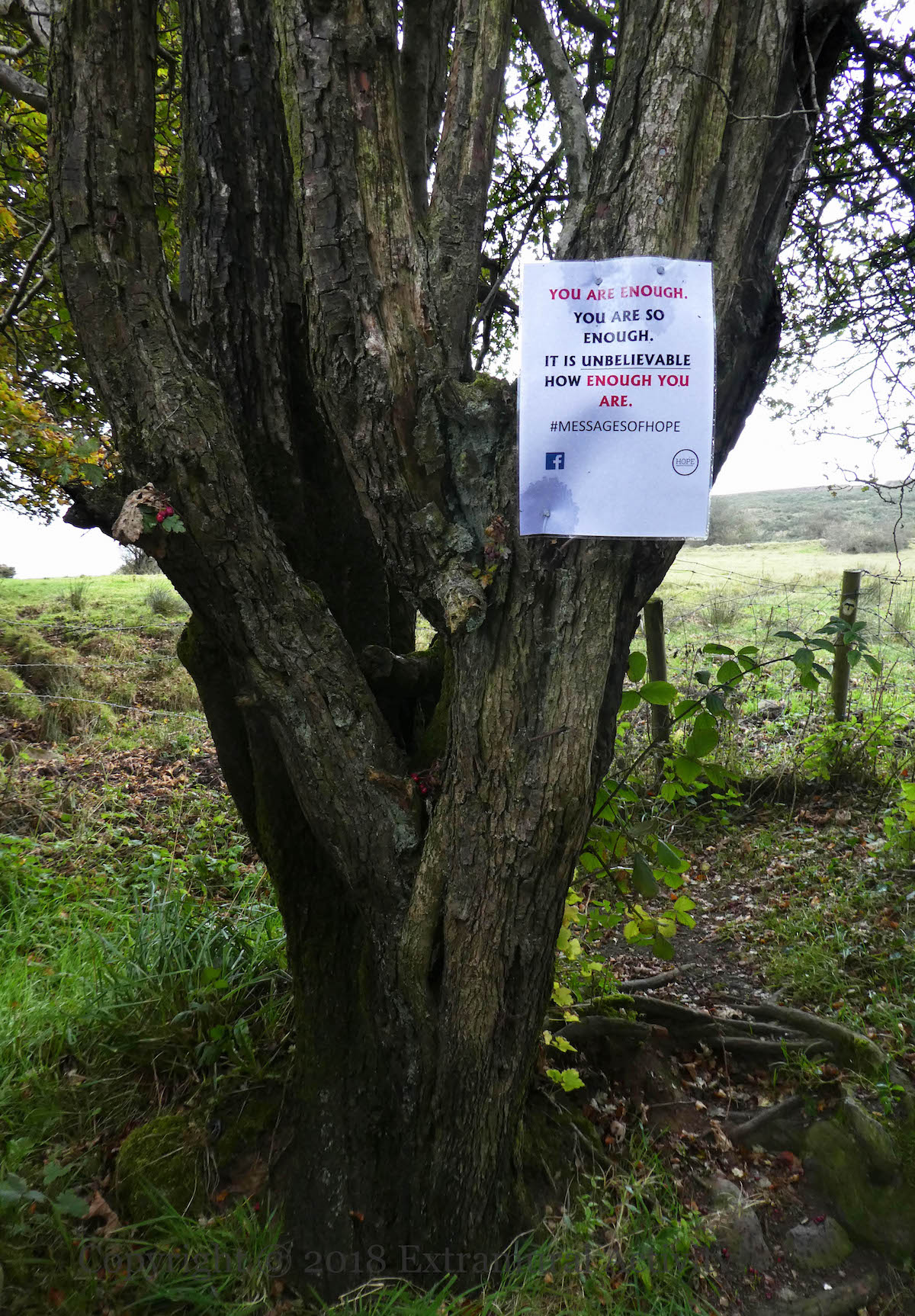
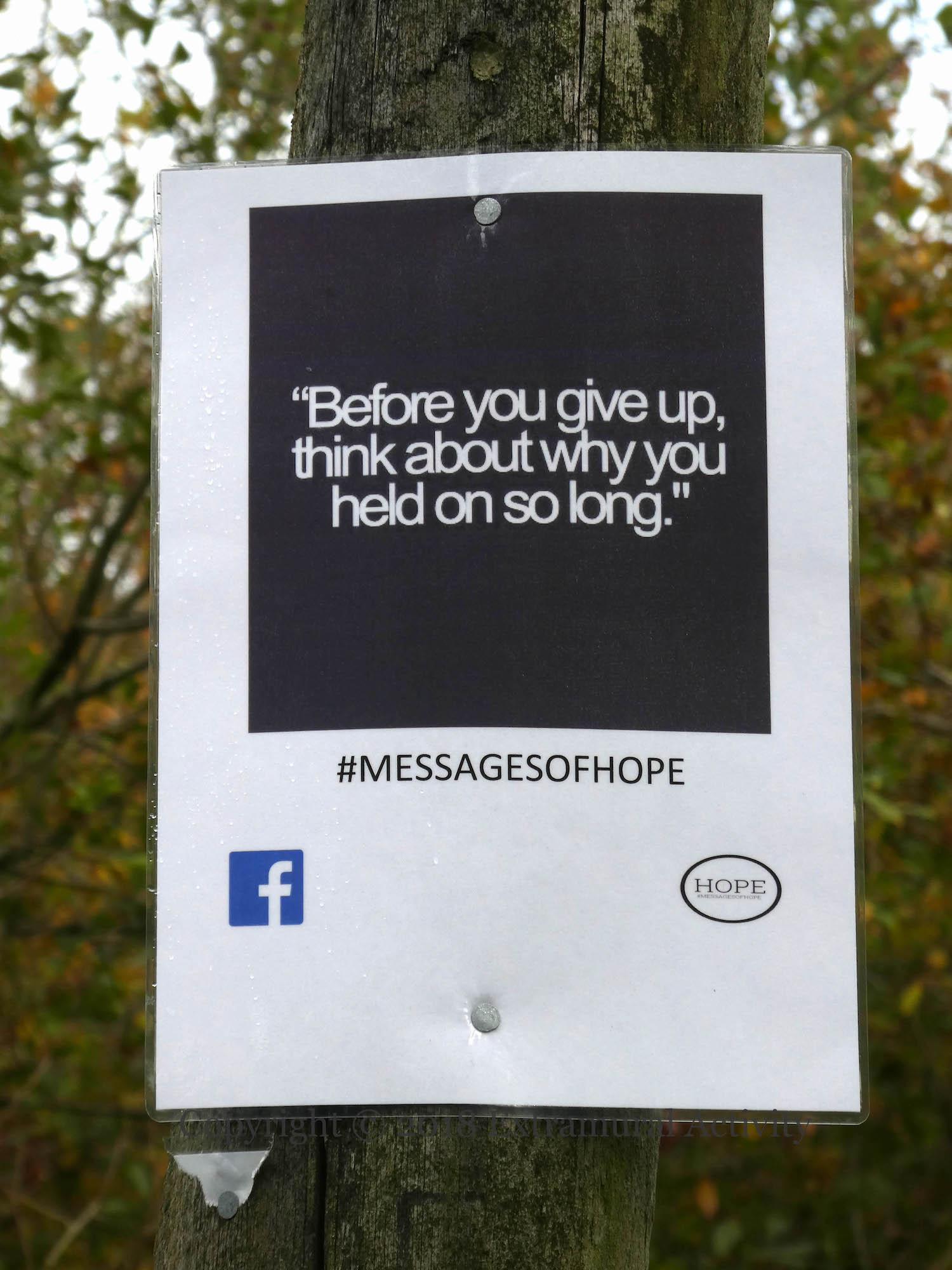
Anti-suicide “messages of hope” were originally posted around the Cavehill in August (ITV) but were removed in September (Belfast Live) before being replaced – as shown in these images. Similar posters on the Foyle Bridge in London-/Derry were last week slated for removal at the end of January, pending a 12-week “public consultation process” (BelTel).
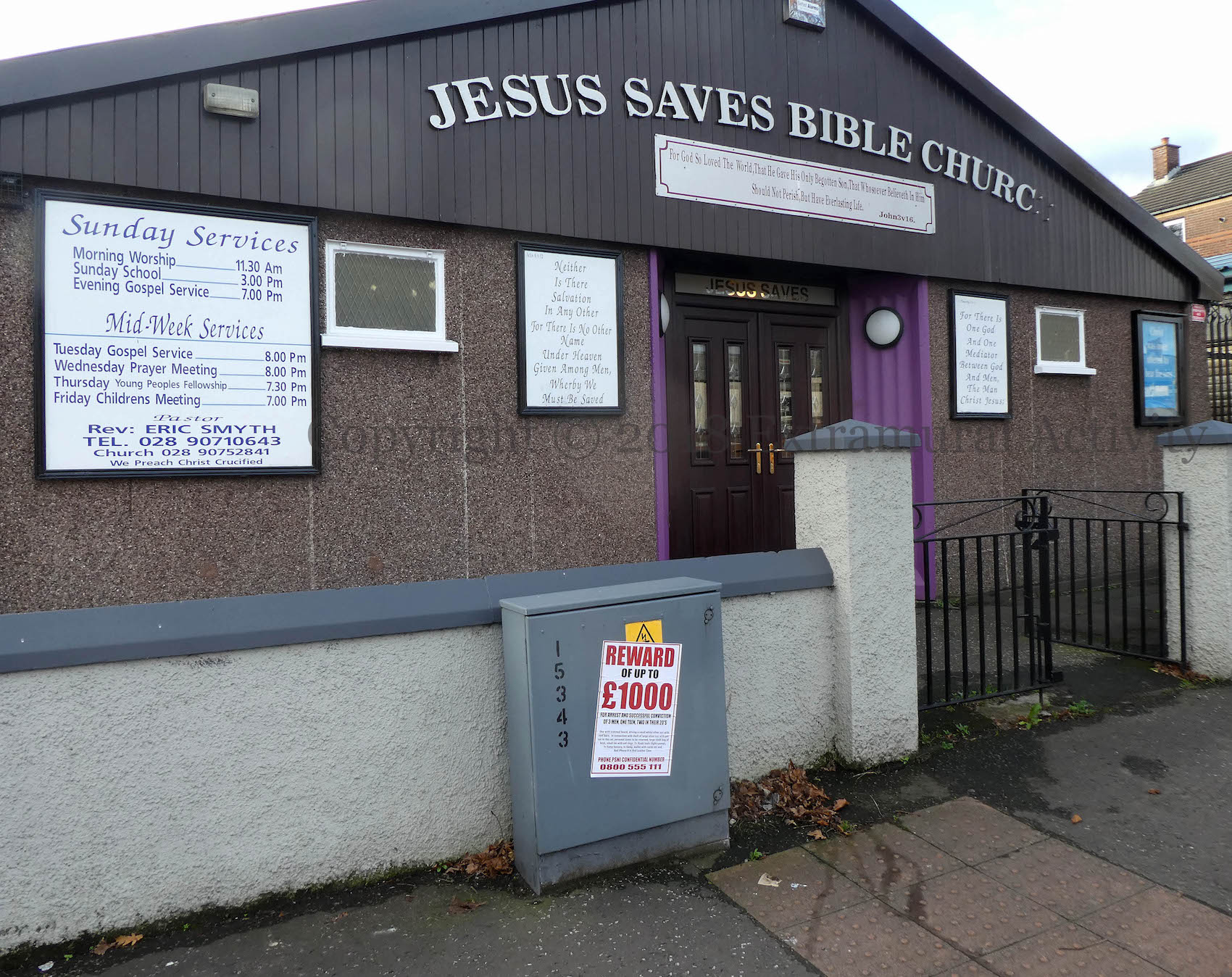
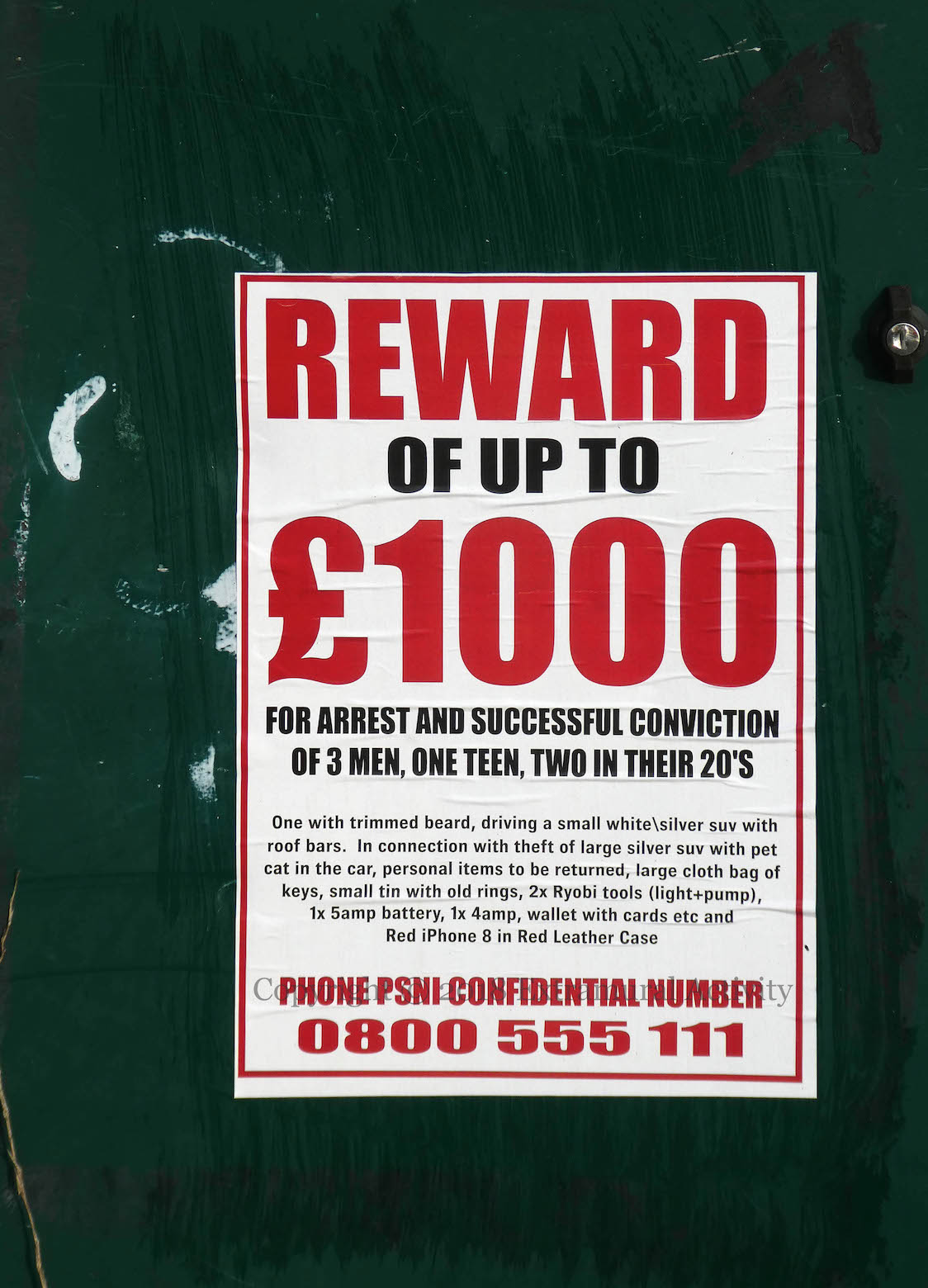
Owners of a silver SUV take their quest for justice to the north Belfast streets by plastering ‘reward’ posters all around seeking the return of wallet, iPhone, tools, and cat.
The female characters from the Hulu adaptation of The Handmaid’s Tale is used again (seen previously in She Is My Spy As I Am Hers) by Leo Boyd, this time to support the abortion referendum in the Republic (see Yes And No).
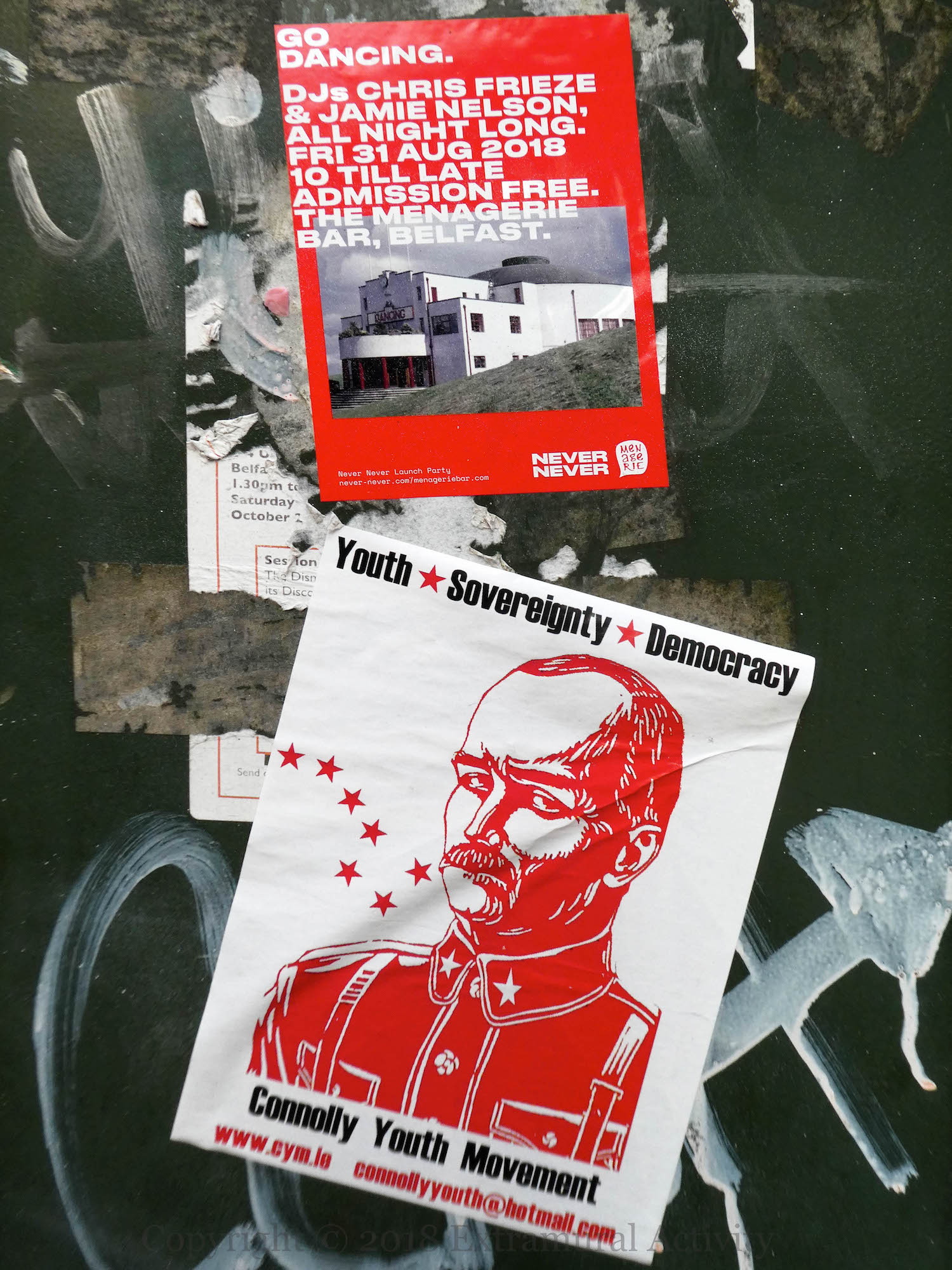
Communism and the Connolly Youth Movement (web | tw | Fb) compete with a Menagerie (front | side | car-park) flyer for the for the attention of young people in Divis Street, Belfast.
In her autobiography, Living My Life, Emma Goldman wrote, “At the dances I was one of the most untiring and gayest. One evening a cousin of Sasha, a young boy, took me aside. With a grave face … he whispered to me that it did not behoove an agitator to dance. Certainly not with such reckless abandon, anyway. It was undignified for one who was on the way to become a force in the anarchist movement. My frivolity would only hurt the Cause. I grew furious at the impudent interference of the boy. … I was tired of having the Cause constantly thrown into my face. I did not believe that a Cause which stood for a beautiful ideal, for anarchism, for release and freedom from convention and prejudice, should demand the denial of life and joy. … If it meant that, I did not want it.” (p. 56)



 Extramural Activity