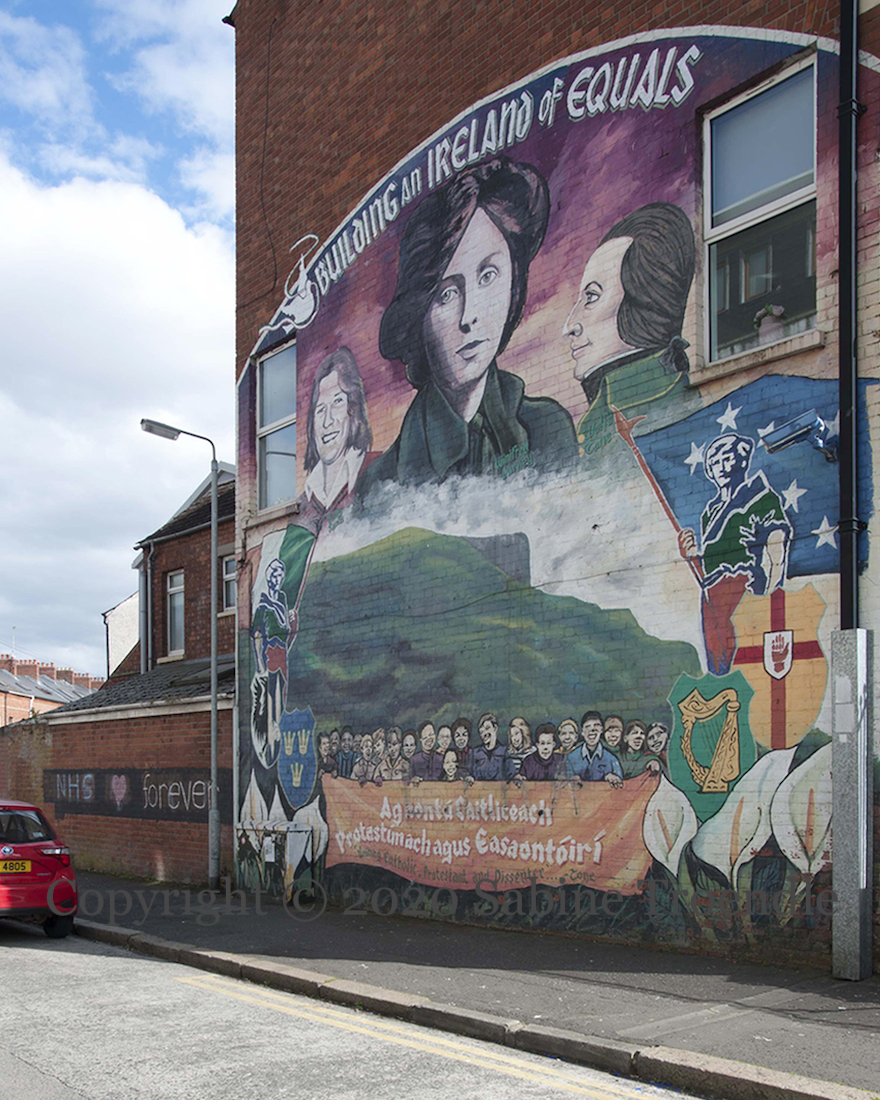
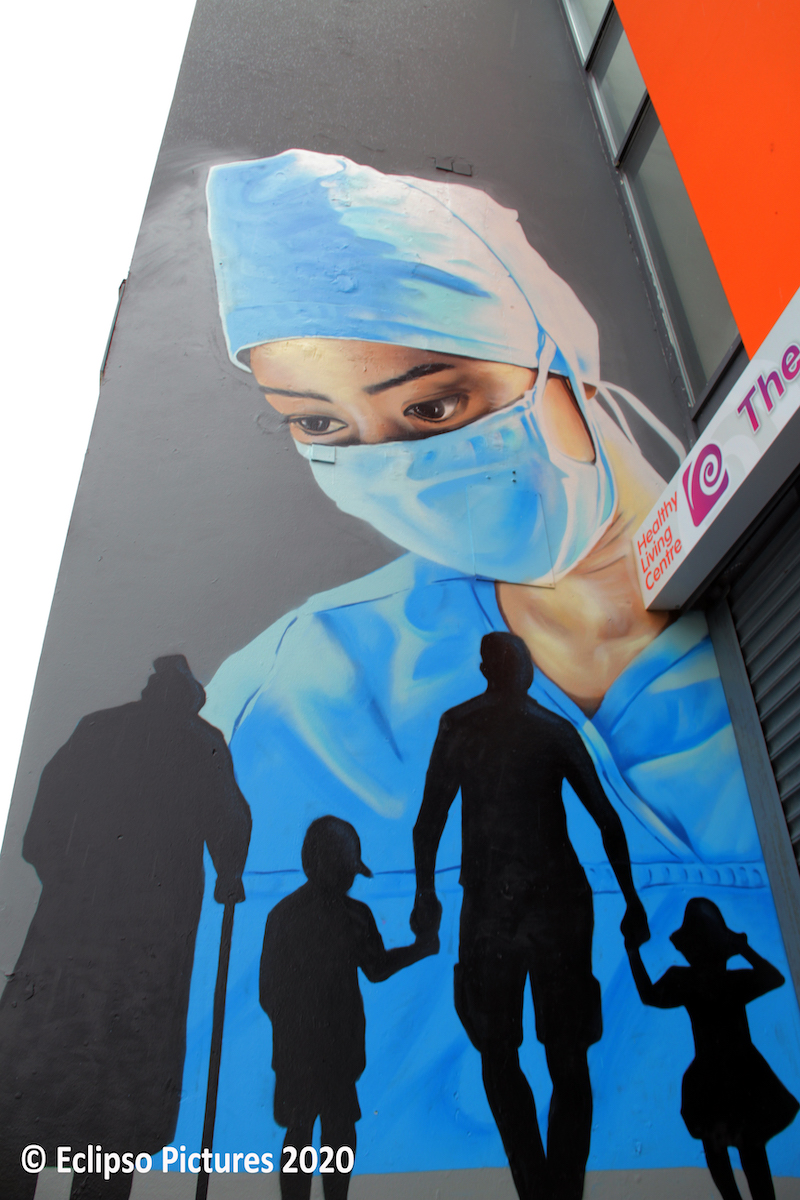
Murals and street art in support of the NHS have been painted on walls all over the province in neighbourhoods on both sides of the religious divide. The chalk drawing above (“NHS Forever”) is in Oceanic Avenue in CNR north Belfast, next to the United Irishmen mural.
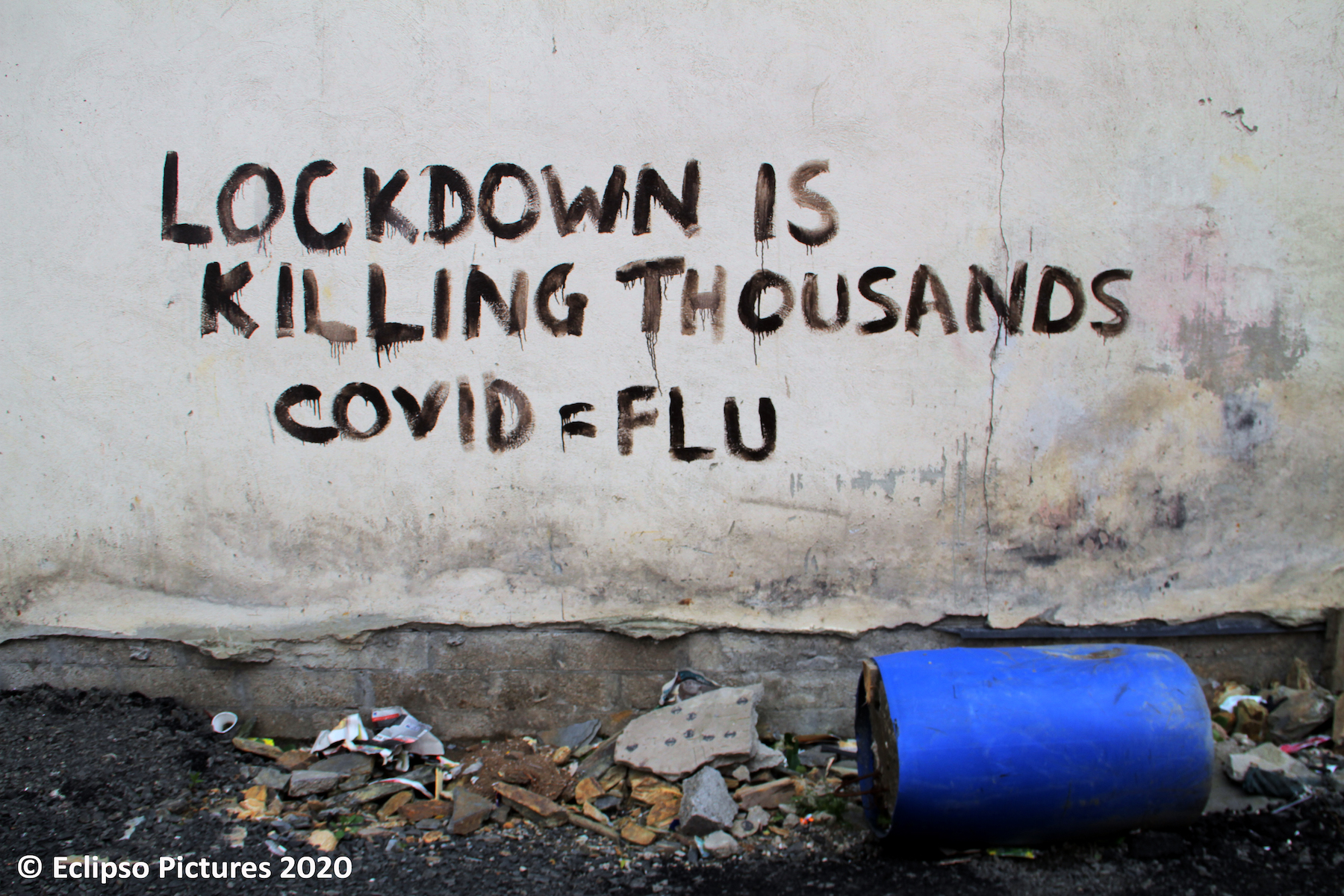
Commentary on the coronavirus pandemic Great James Street, London-/Derry: “Lockdown is killing thousands. Covid = Flu”. The coronavirus ‘shelter in place’ orders in the UK and Ireland have various negative health consequences, including poverty from unemployment, an increase in alcohol consumption and domestic violence, and an unwillingness to seek medical attention for non-Covid-related ailments. But it’s far from clear that “thousands” have died. Nonetheless, the continued isolation and disruption to normal living is proving difficult to bear.
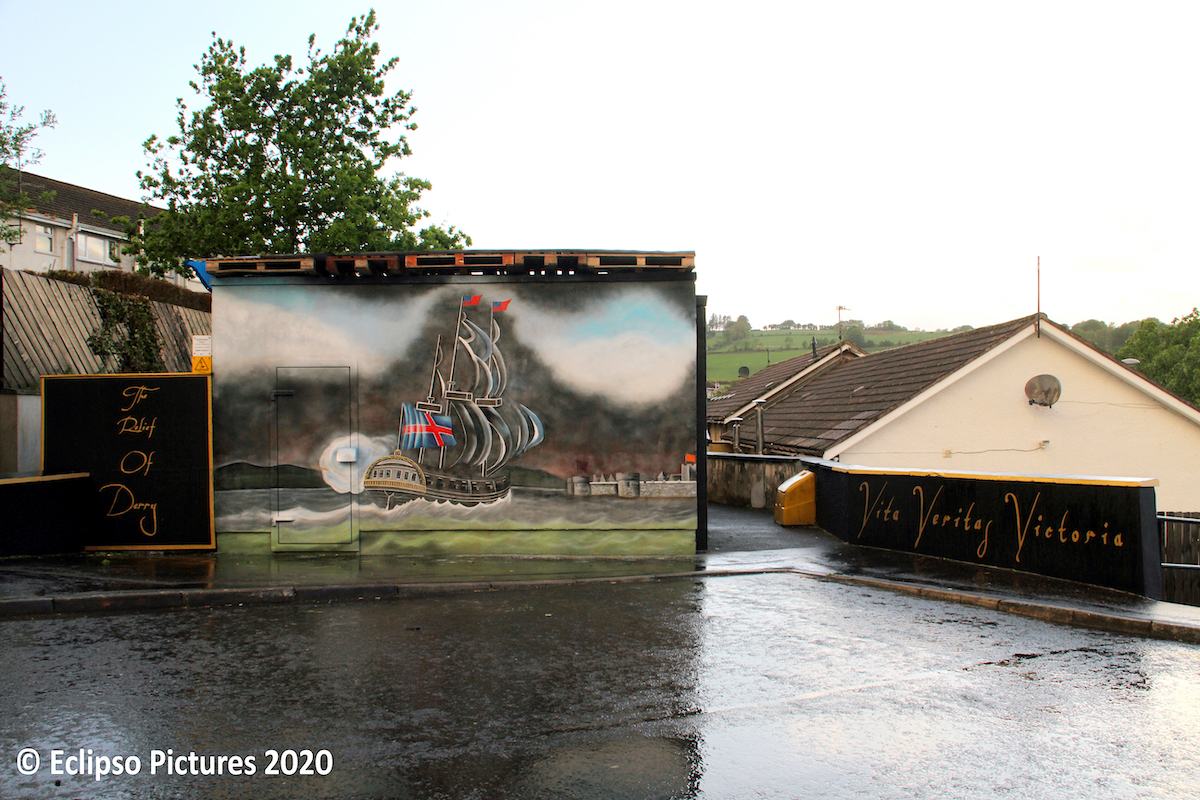
The Siege Of Derry began in June 1689 when King James II was rebuffed with cries of “No surrender!” It lasted 105 days, during which about half of the townspeople died. Part of the siege equipment was a boom placed across the River Foyle about halfway between Derry and Culmore. Five ships took part in ending the siege. Shown in this new Tullyally mural (by Glen Molloy) is the Dartmouth, which attacked the shoreline besiegers at Culmore so that three small ships could bring in provisions – the Mountjoy and Phoenix approaching the boom and the Jerusalem hanging back until success was assured. They were accompanied by a longboat from the Swallow, filled with sailors who with “hatchets and cutlasses” were “hewing and hacking away at the boom” (Witherow at Library Ireland) so that it could be broken by Mountjoy.
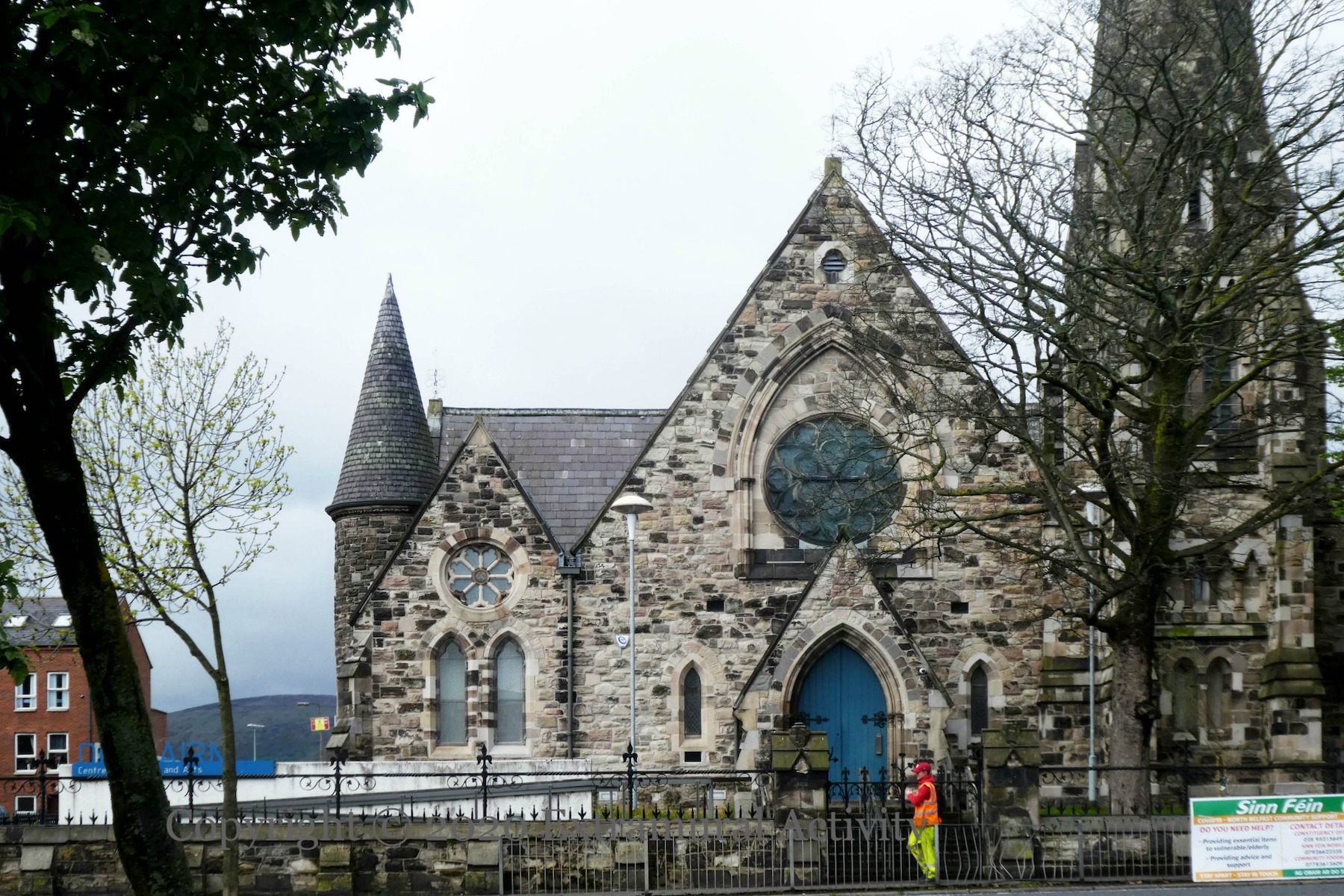
“Social distancing” during the coronavirus epidemic means maintaining a physical distance in social situations rather than not having any communication with society. On the contrary, communities are working together perhaps more closely than normal in order to assist those who are in need of support. The Sınn Féın board, above, on the railings of the Duncairn Centre (web | tw) (formerly Duncairn Presbyterian). Identical signs at the Waterworks and Cherryvale drew comment from Alliance as being party-political in shared spaces (BelTel).
The outside of Creggan community centre (managed by the Old Library Trust) has been decorated (by UVArts) with a big “thank you” to “all our workers” – particularly nurses, binmen, and postmen – who have continued providing public services during the coronavirus pandemic.
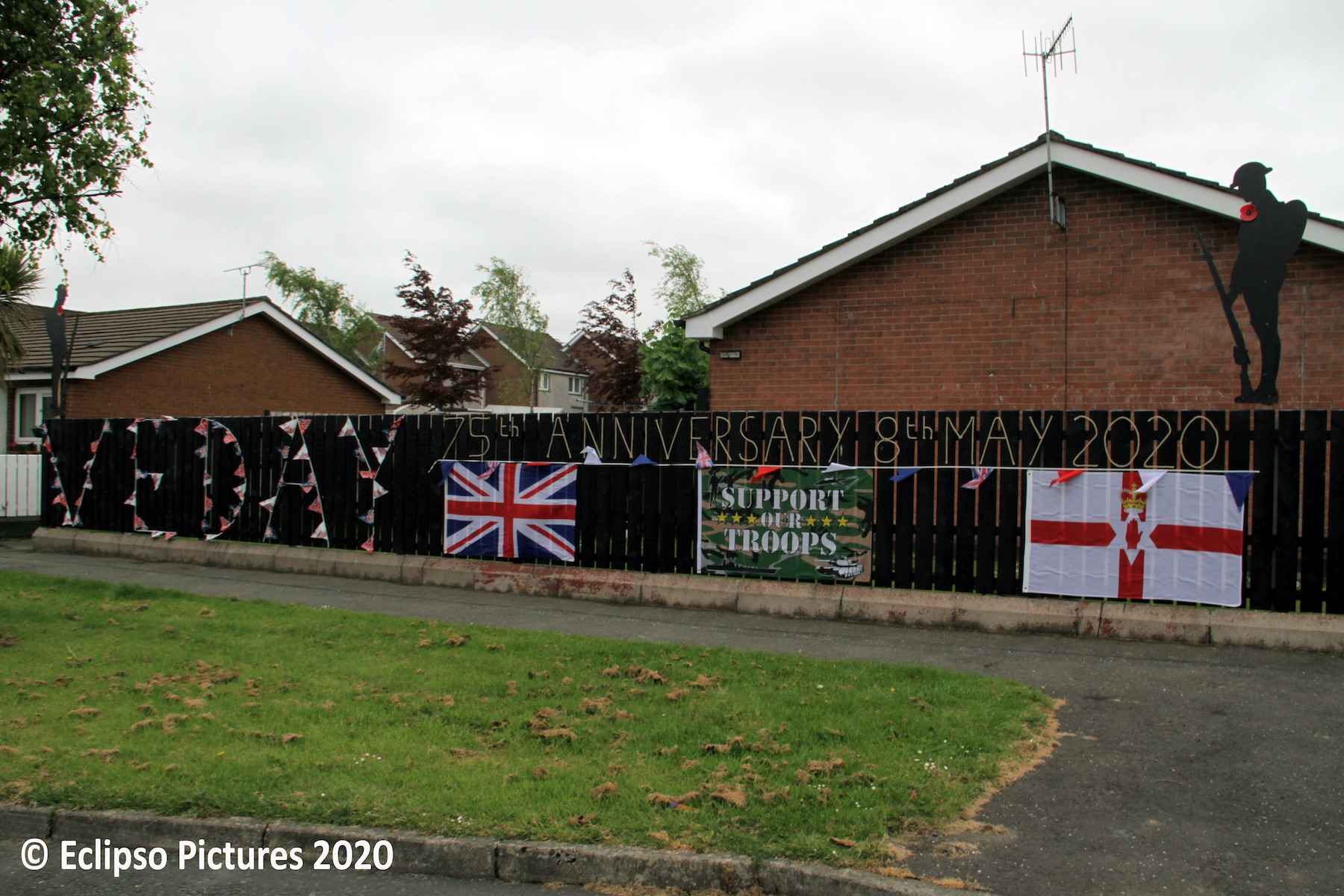
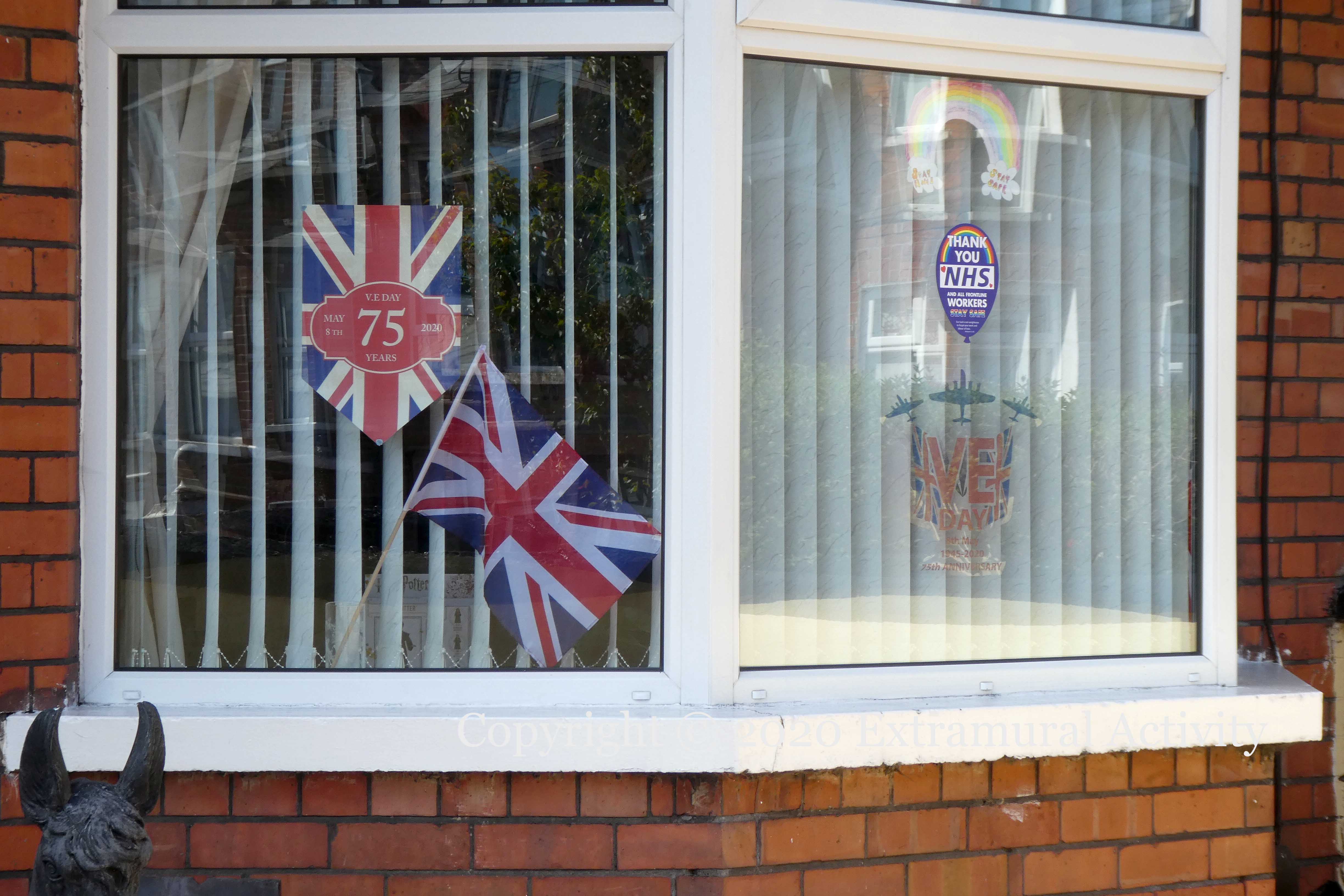
May 8th this year (2020) marks the 75th anniversary of victory over the Nazis in Europe, or VE Day. (The war against Japan would not end until August 1945.) Celebrations were muted, however, by the ongoing coronavirus pandemic, which meant that people dared not congregate in parades or services to mark the occasion. The bunting above is in Sperrin Park in Londonderry’s Caw, which took part in the socially-distanced street party; the window below, which gives dual attention to both VE Day and NHS workers, is in Alexandra Park Avenue in Belfast.
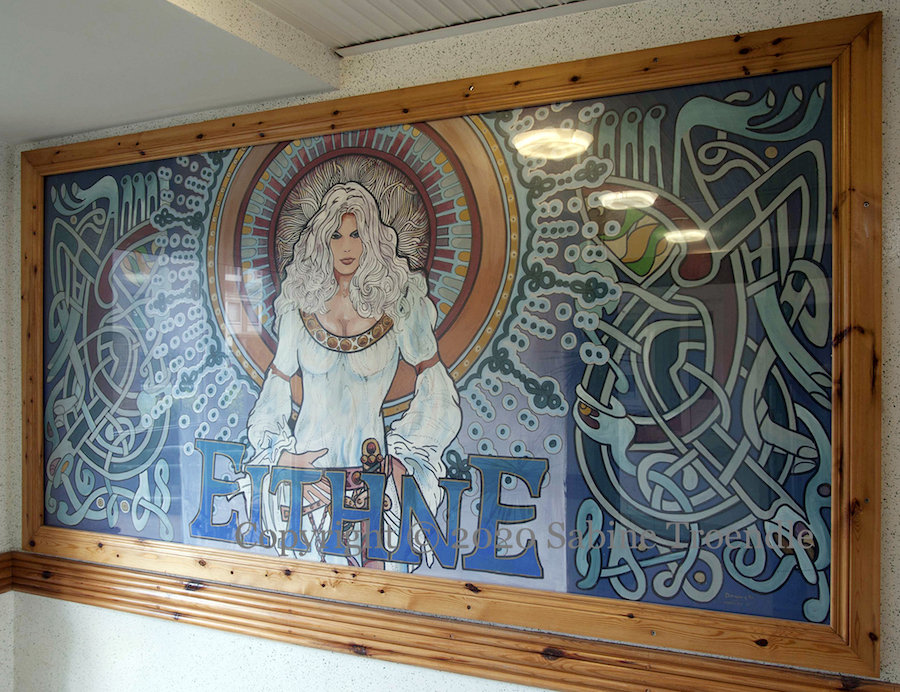
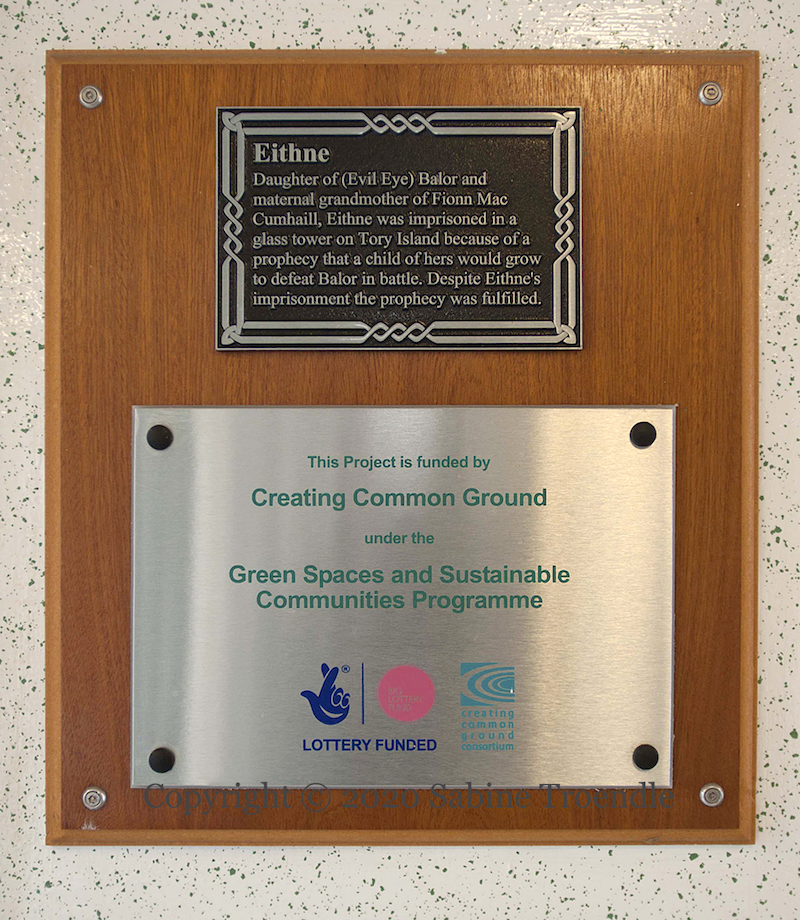
“Eıthne – daughter of (Evil Eye) Balor and maternal grandmother of Fıonn Mac Cumhaıll, Eıthne was imprisoned in a glass tower on Tory Island because of a prophecy that a child of hers would grow to defeat Balor in battle. Despite Eıthne’s imprisonment the prophecy was fulfilled.” This Eıthne is in the foyer of the “house” (tower block) that bears her name: Teach Eıthne in the New Lodge.
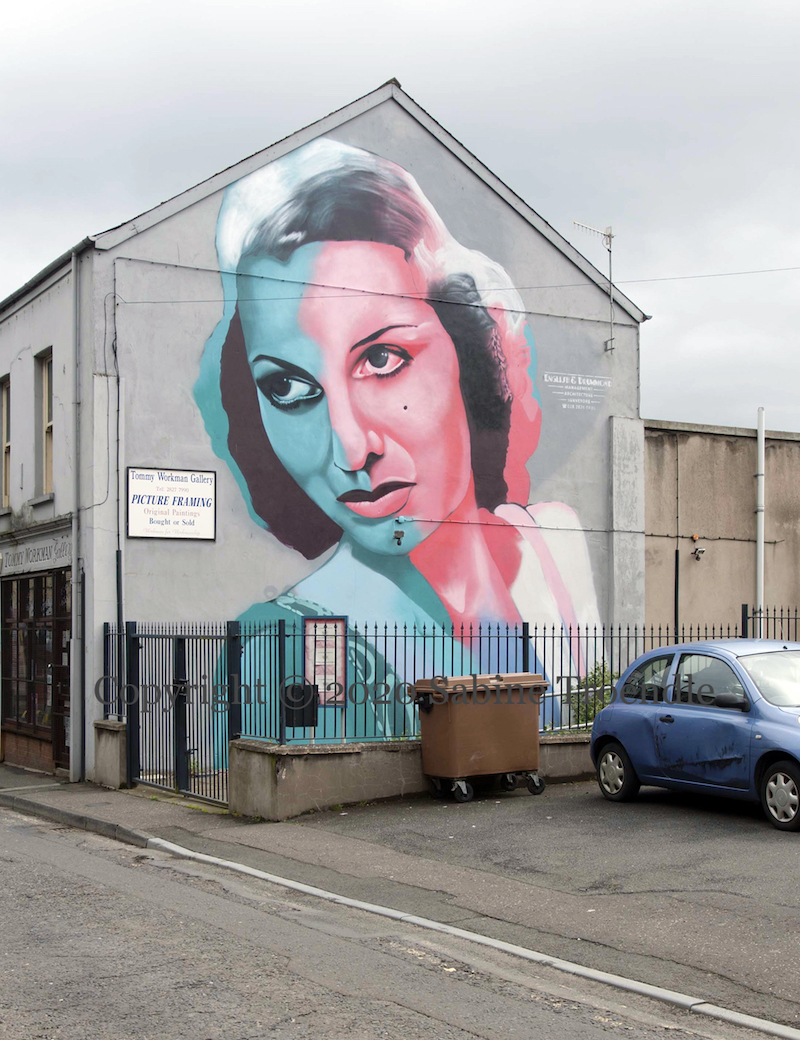
Valerie Hobson, star of movies, television, and theatre in the 1930s, 40s, and 50s, was born in Larne in 1917 but grew up in and around London. Here she is as (the adult) Estella in the 1946 adaptation of Great Expectations (youtube). Her second marriage was to John Profumo (he of the Profumo Affair) but chose to stay with him. She died in 1998 (Independent obit).
The mural of Hobson is in Point Street, Larne, by Visual Waste (tw | ig).





 Extramural Activity