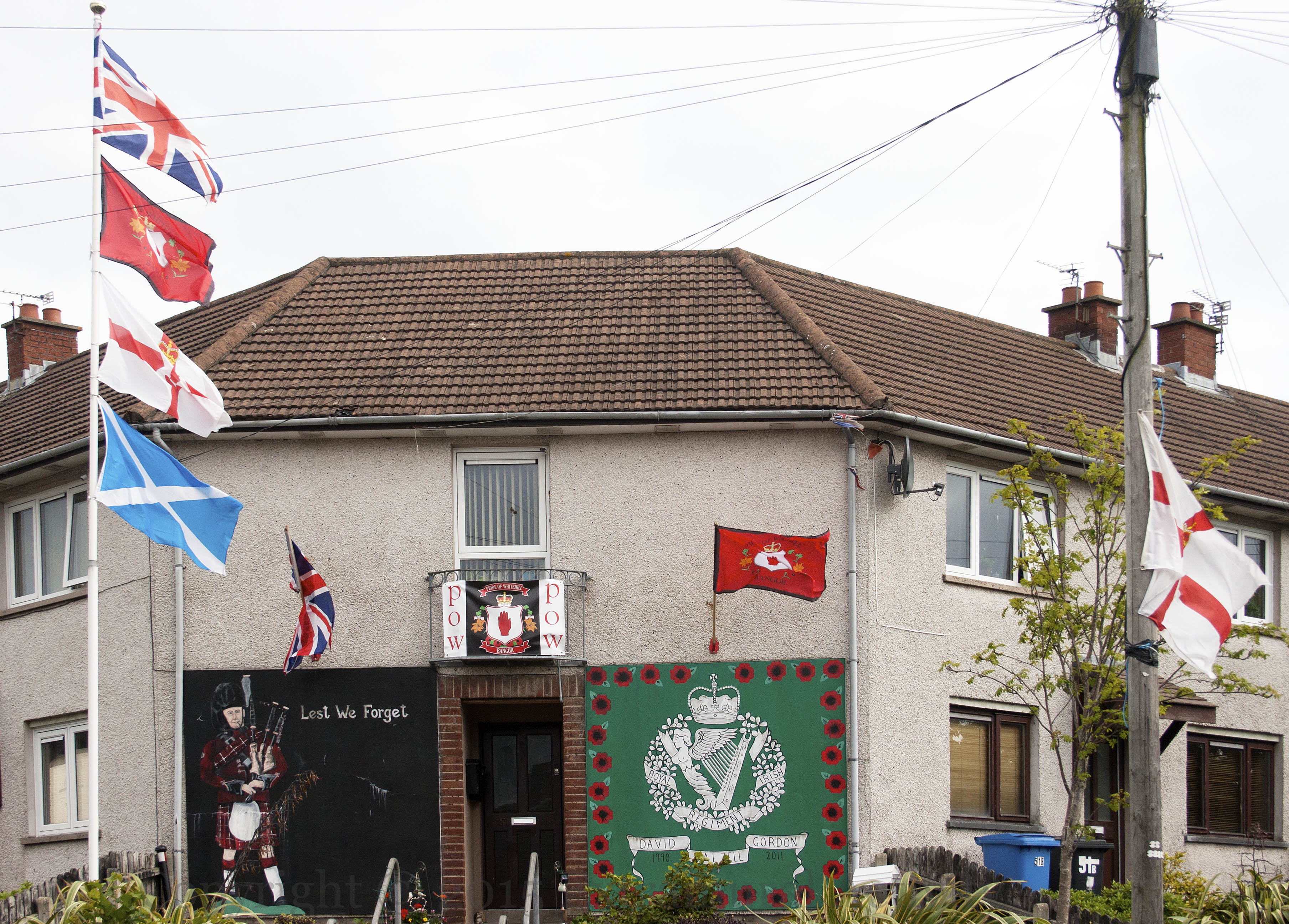
Bangor native David Gordon Dalzell was killed at age 20 in Helmland Province, Afghanistan, in 2011, shot accidentally by one of his comrades as he was cleaning his weapon. For an account of his death, see BBC-NI. Dalzell’s ‘fatality’ notice can be read at the MOD. In the image above (and detailed below), the front of this Whitehill house carries the emblem of Dalzell’s Royal Irish regiment and a funeral piper.
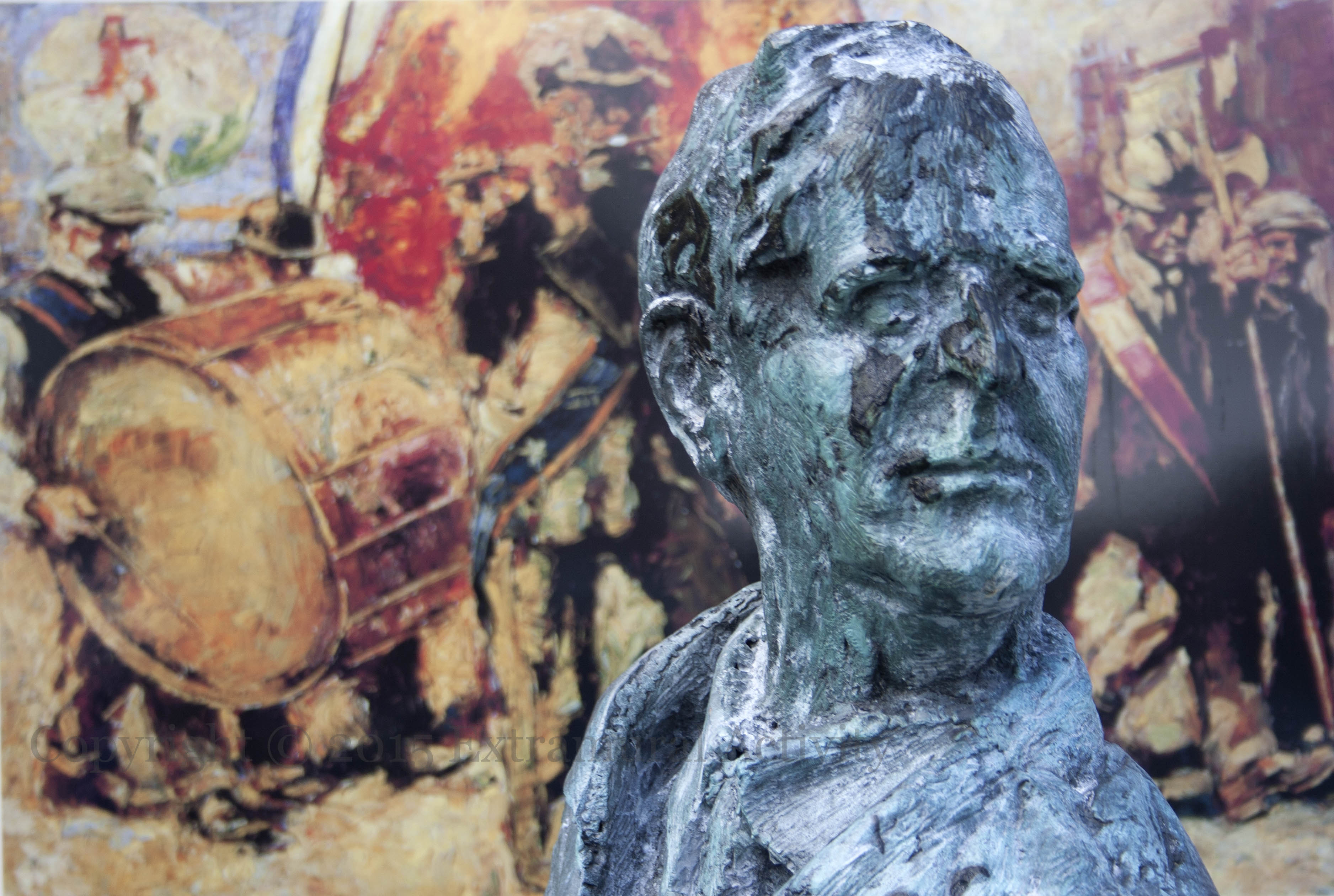
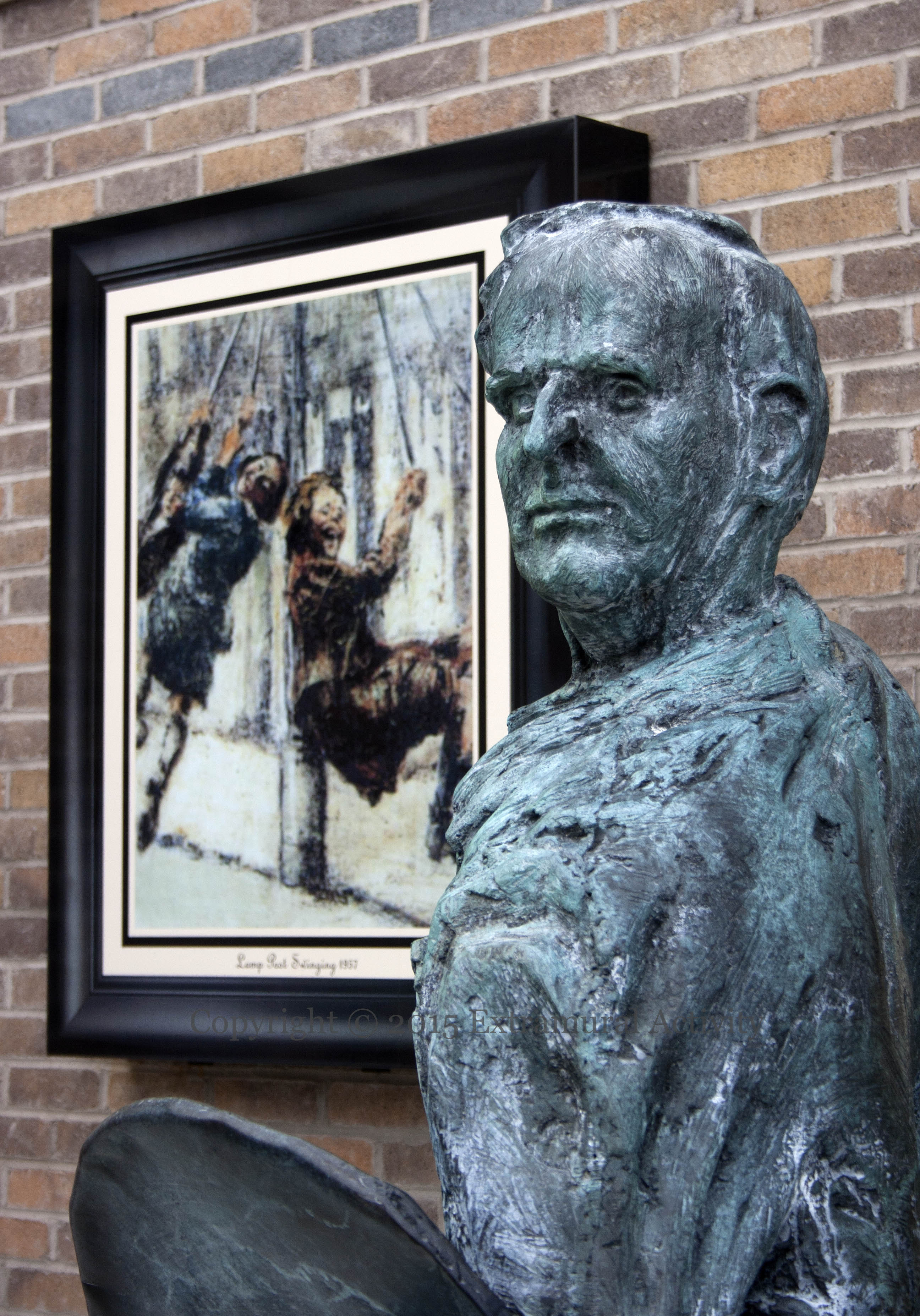
William Connor (later William Conor) was born in the Old Lodge area of Belfast (in 1881) close to the location of the new bronze statue shown in today’s images, which is at the corner of Northumberland Street and Shankill Road, replacing the UVF/Shankill Protestant Boys (see M02457). The info board (shown below) describes his methods in capturing the Belfast street scenes for which he is most famous: “Conor was developing a spontaneous drawing technique by recording quick impressions, and it soon became a habit for him to go out into the streets with a newspaper, which contained loose leaves from his sketchbook. When he saw anything of interest he leant against a lap post or wall, took out his newspaper as though he were simply reading the sports results and sketched away.”
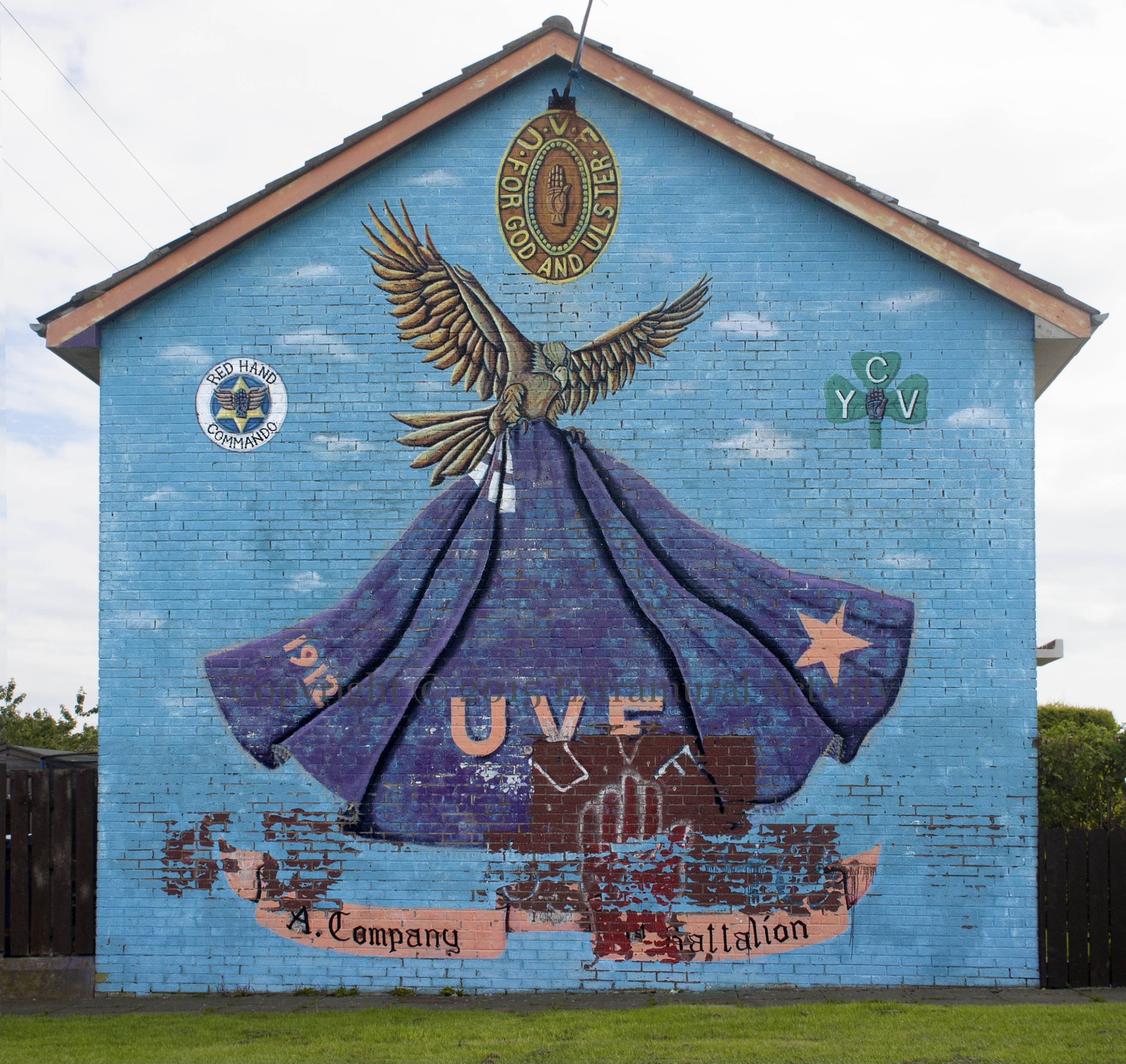
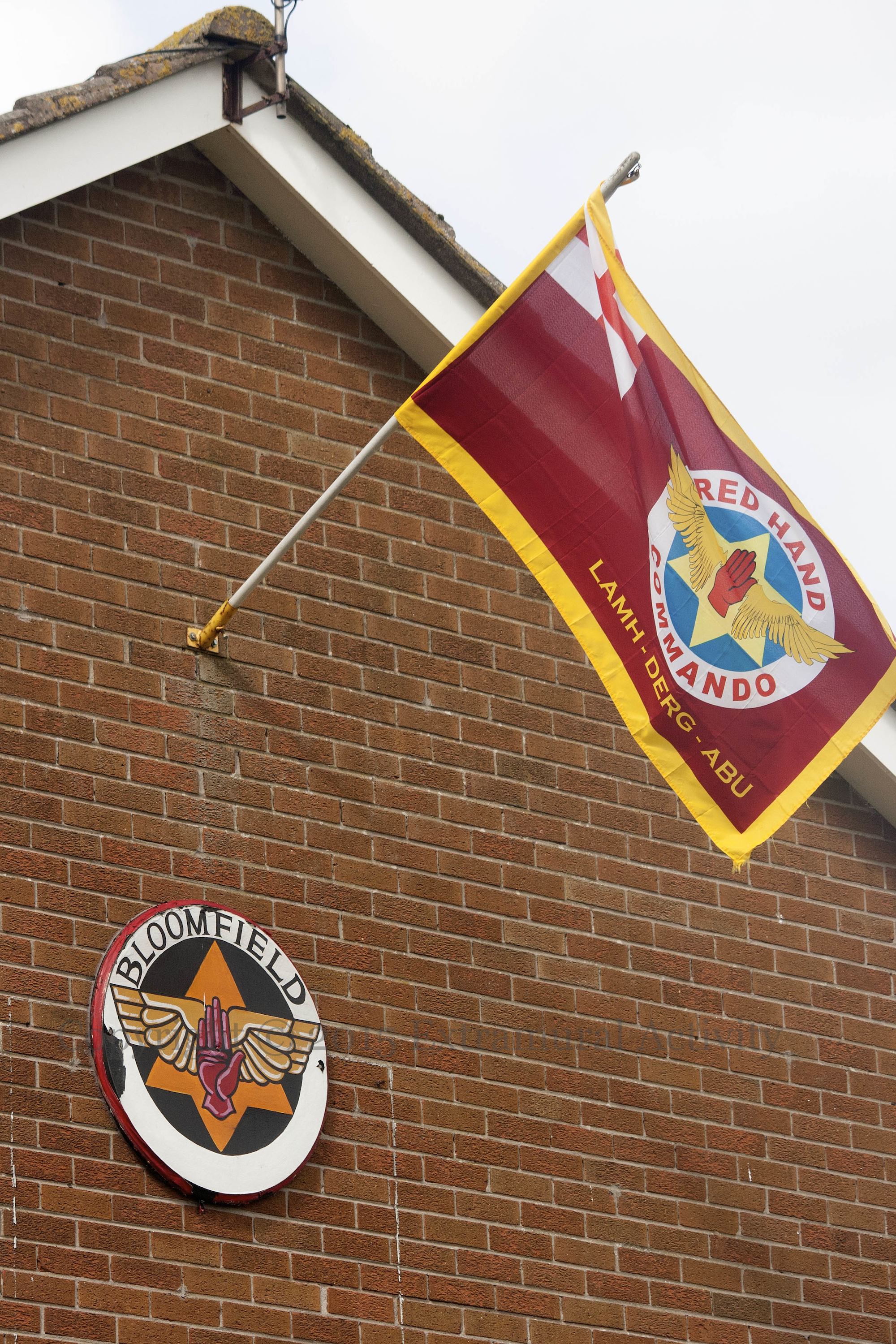
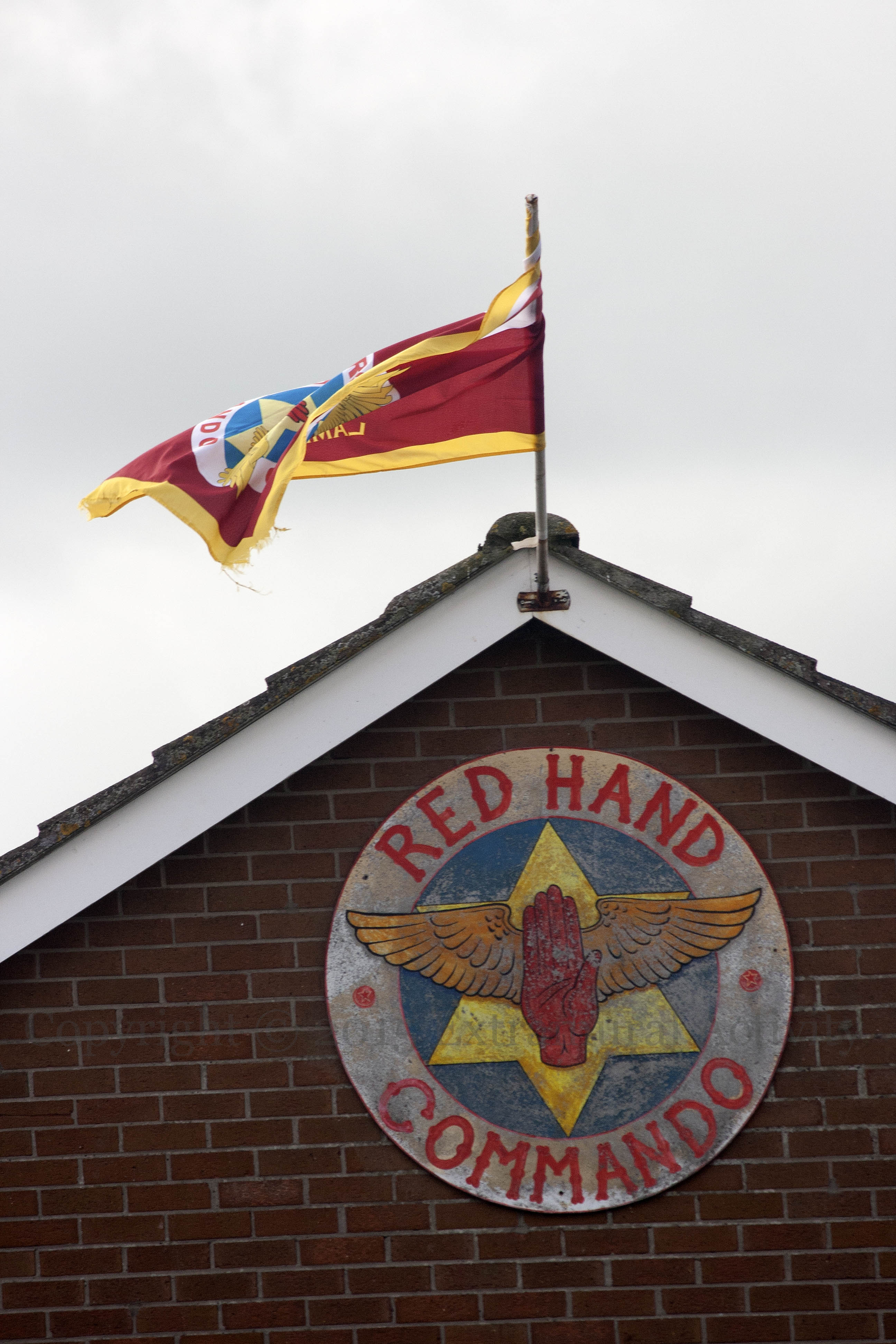
Here are three images of Red Hand Commando boards and flags in the Bloomfield estate. They both feature a red hand with eagle’s wings over a six-pointed star and on the flag, the motto (in crude Gaelic) “Lamh Derg Abu” – “Onward, Red Hand” or “Red Hand To Victory”. The loyalist paramilitary group declared an official end to activities in 2007 (BBC-NI) and decommissioned its weapons by 2009.
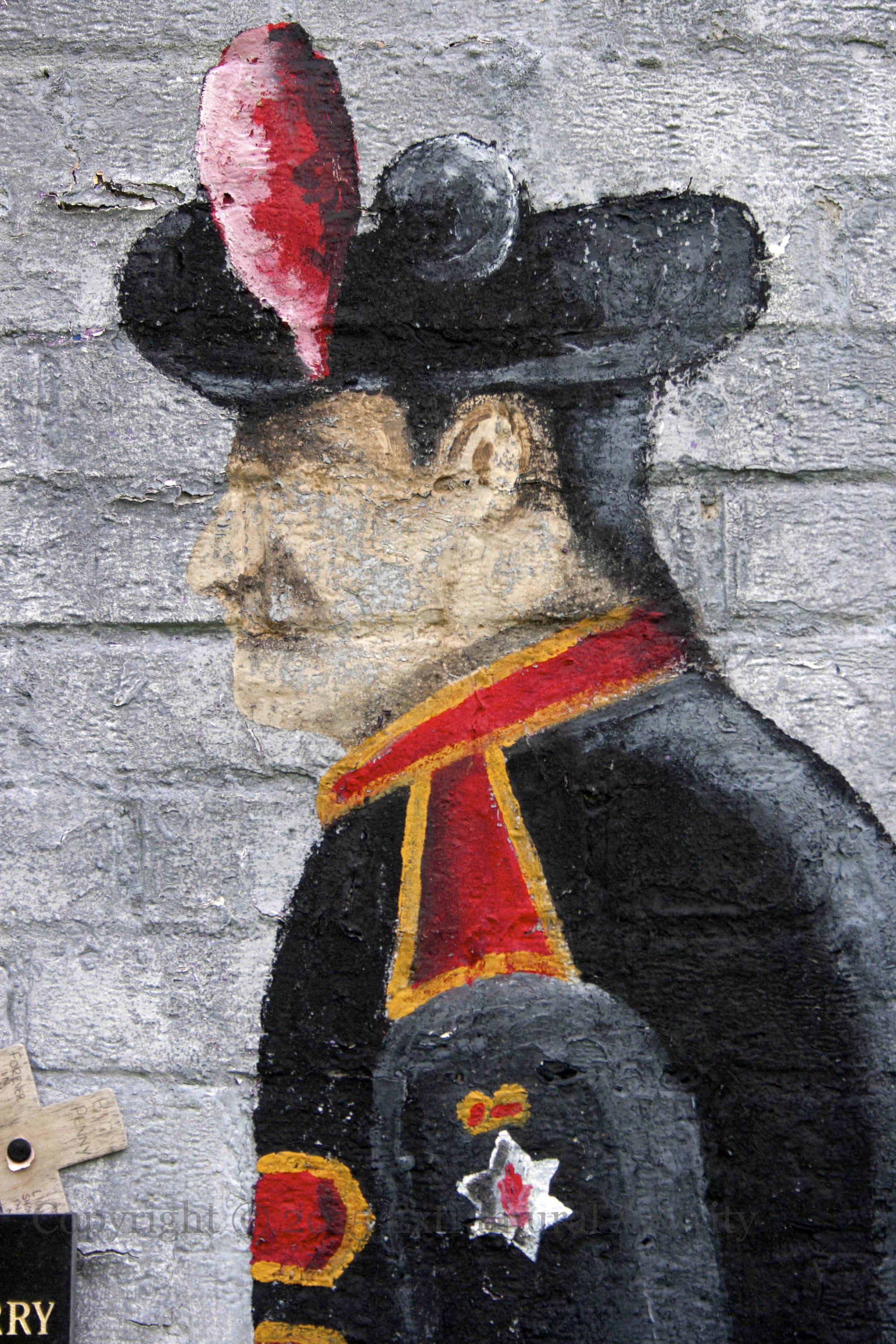
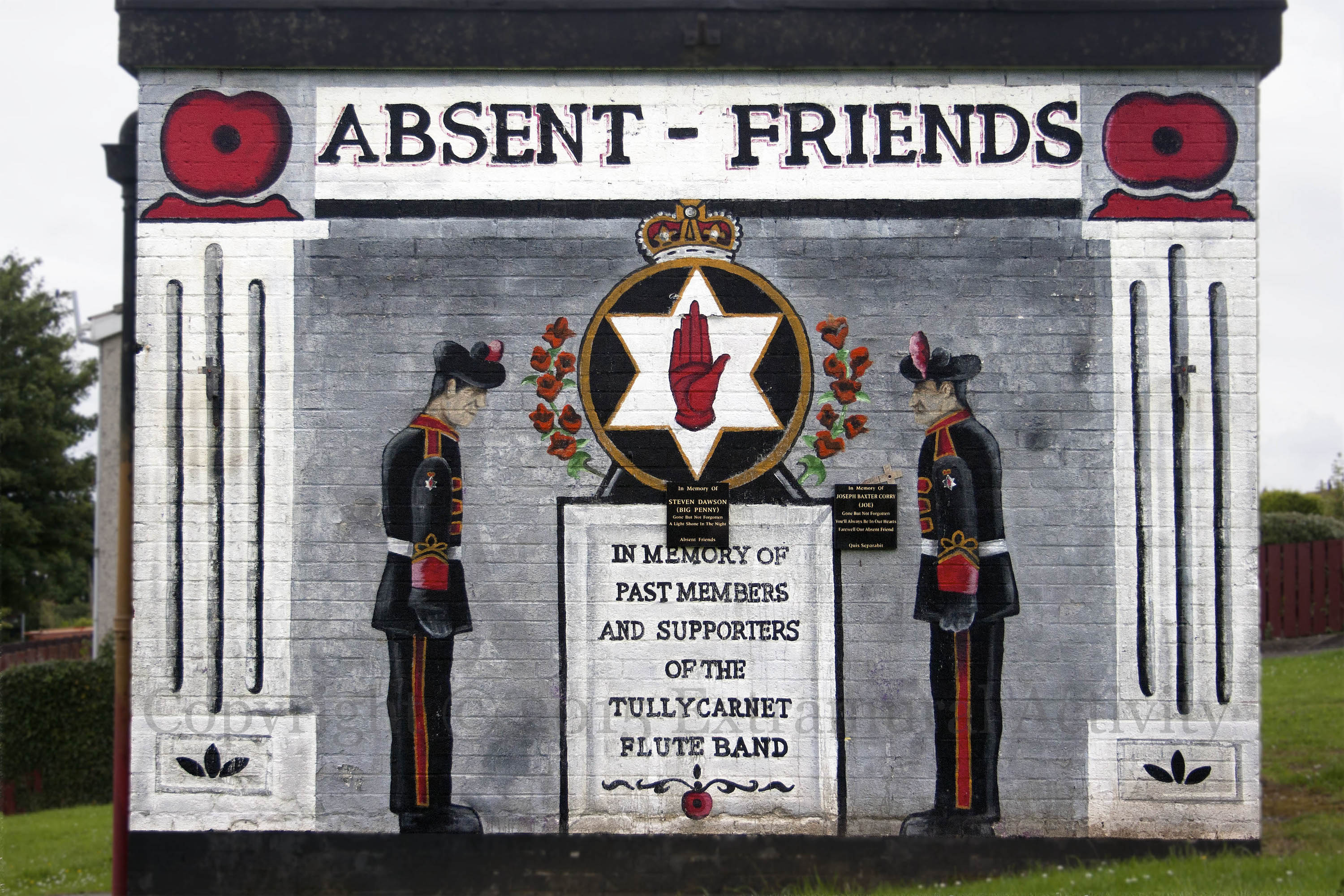
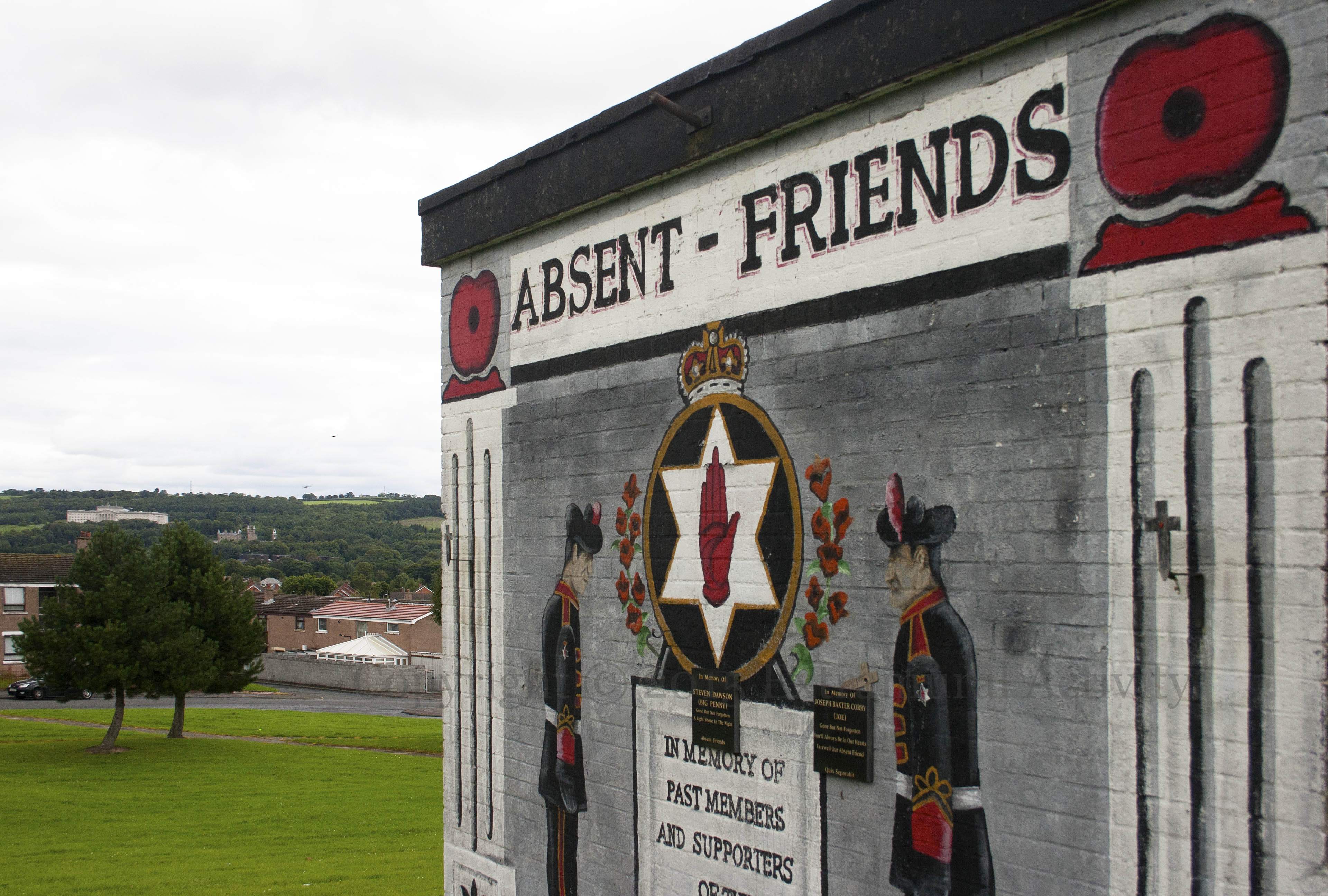
Three images from the Tullycarnet Flute Band’s (Tw | Fb) memorial mural for members who have died. The mural is in Lochinver Drive, due south of Stormont, as can be seen in the third image, below. The mural shows two band-members in uniform “In memory of past members and supporters of the Tullycarnet Flute Band. In memory of Steven Dawson (Big Penny). Gone by not forgotten. A light shone in the night. In memory of Joseph Baxter Corry (Joe). Gone but not forgotten. You’ll always be in our hearts. Farewell our absent friend.”
The Pride Of The Hill’s memorial mural was previously featured in a previous Absent Friends
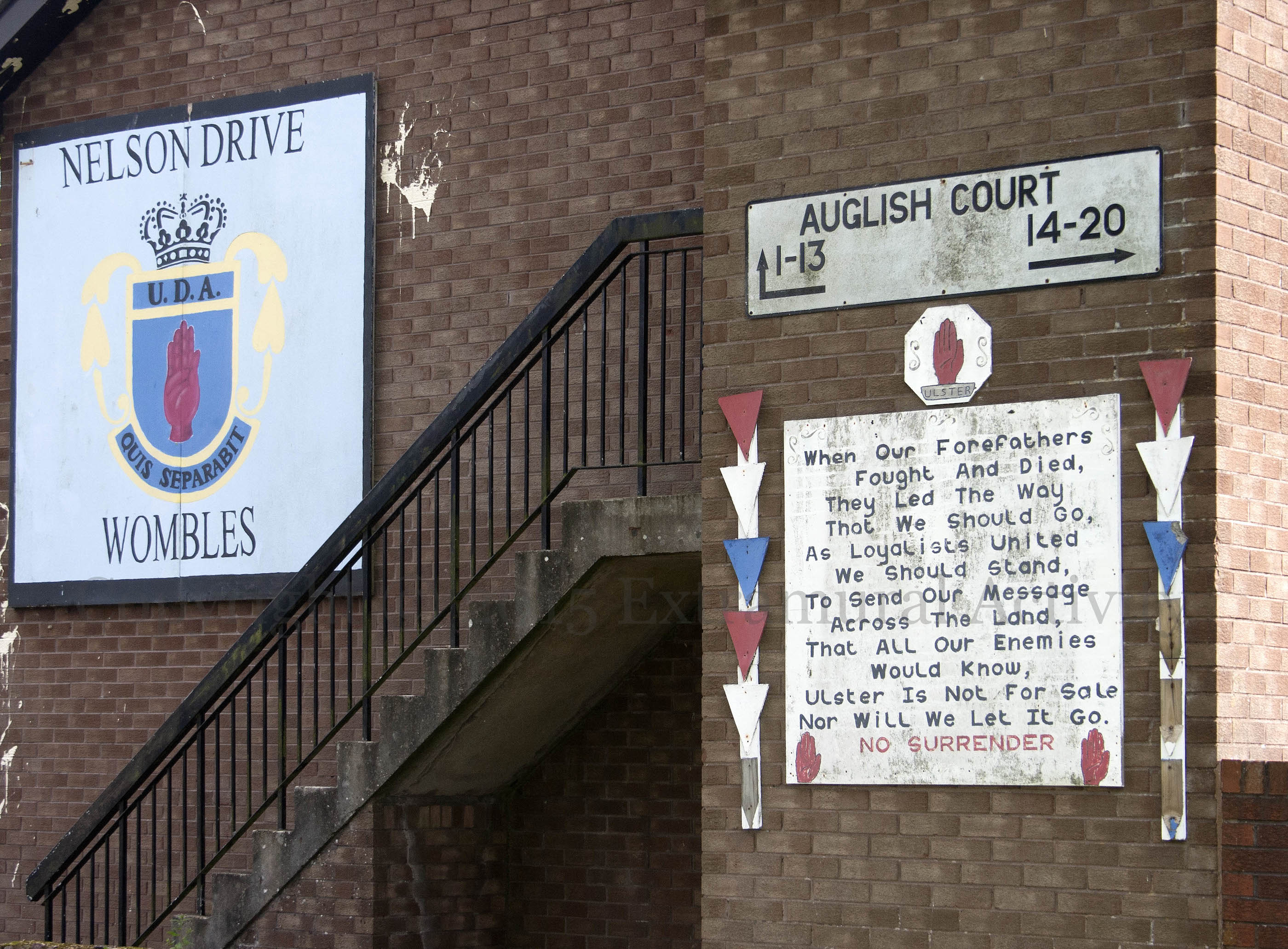
Quiz: The UDA are called “Wombles” because they resemble the stop-motion characters of the BBC children’s show in (a) their fur-lined parkas, (b) their parading, or (c) their ability to acquire anything? You can find all three explanations on-line. Originally the name seems to have been a derogatory one, used by their UVF rivals, but it was adopted by the group itself. A close-up of the text on the right is below.
The images above and below show a new UDA mural in memory of John Gregg, “The Reaper”, who waged a campaign of terror against Catholics in south-east Antrim and was reputedly associated with British neo-Nazi groups. Gregg was gunned down in 2003, while returning from a Rangers match, as part of the power struggle with Johnny Adair. Watta-Chip (from the previous mural) has been replaced by Turkish Kebabs (Fb).
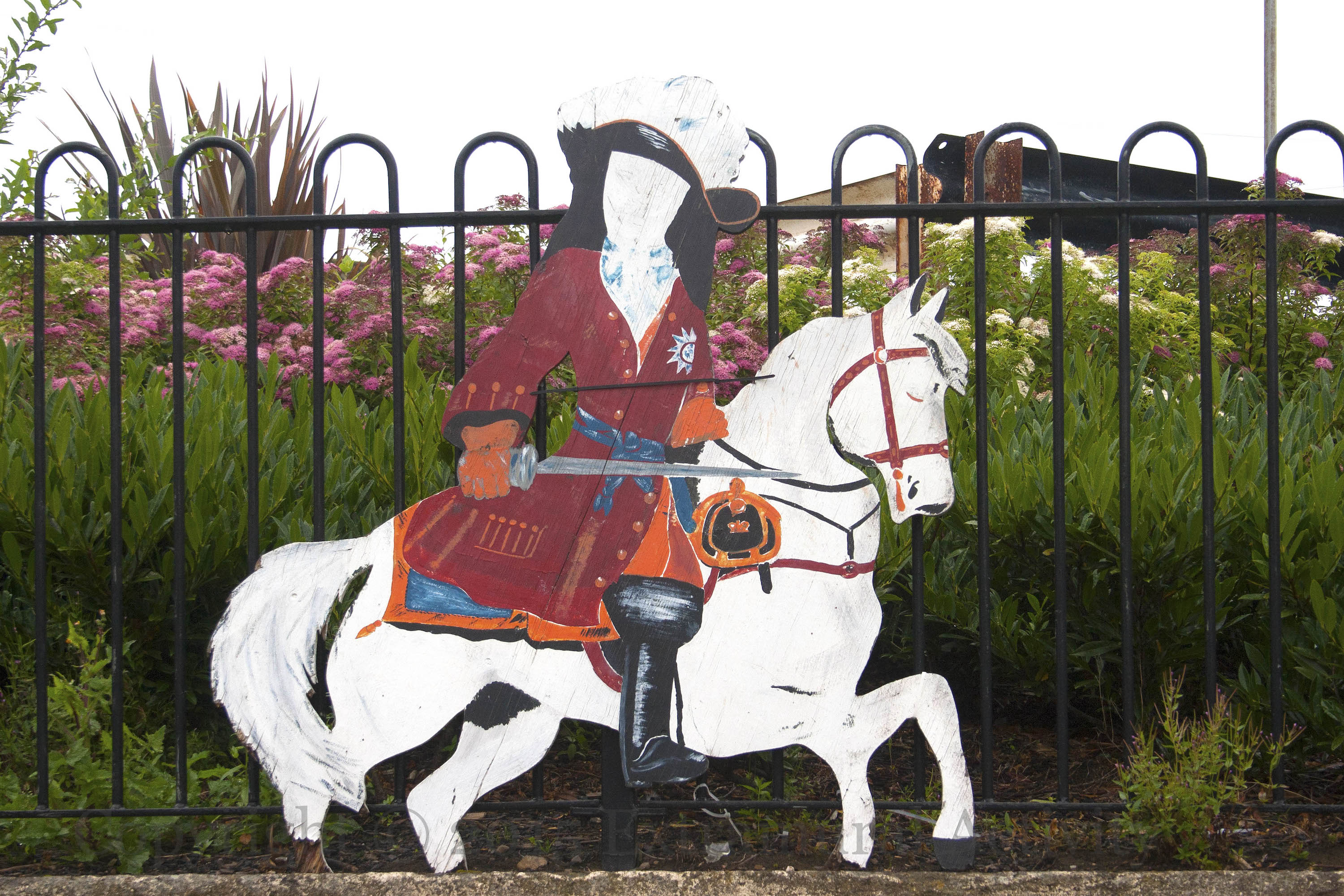
Cut-out boards in the shapes of the red hand of Ulster (both left and right hands!), the five-pointed orange star (usually purple) of the Williamites, the crown of the British monarch, and King Billy on his steed line the fence along Bute Park in Ballybeen.
The Ulster Workers Council (UWC), formed in 1974 with the backing of the UDA, organized a general strike in opposition to the December 1973 Sunningdale Agreement – signed by the British government – which would have shared power with Nationalists in the north and established a cross-border council involving the Dublin government. The strike went on for two weeks in May 1974 (during which the Dublin-Monaghan bombings took place, killing 33 people in the Republic) and concluded with the collapse of the Northern Ireland Executive and rule reverting to Westminster.
The mural was painted for the 30th anniversary of the strike and is now partially covered with ivy (see below). For the mural in better days see M02610. The photograph reproduced can be seen on the Bel Tel.









 Extramural Activity