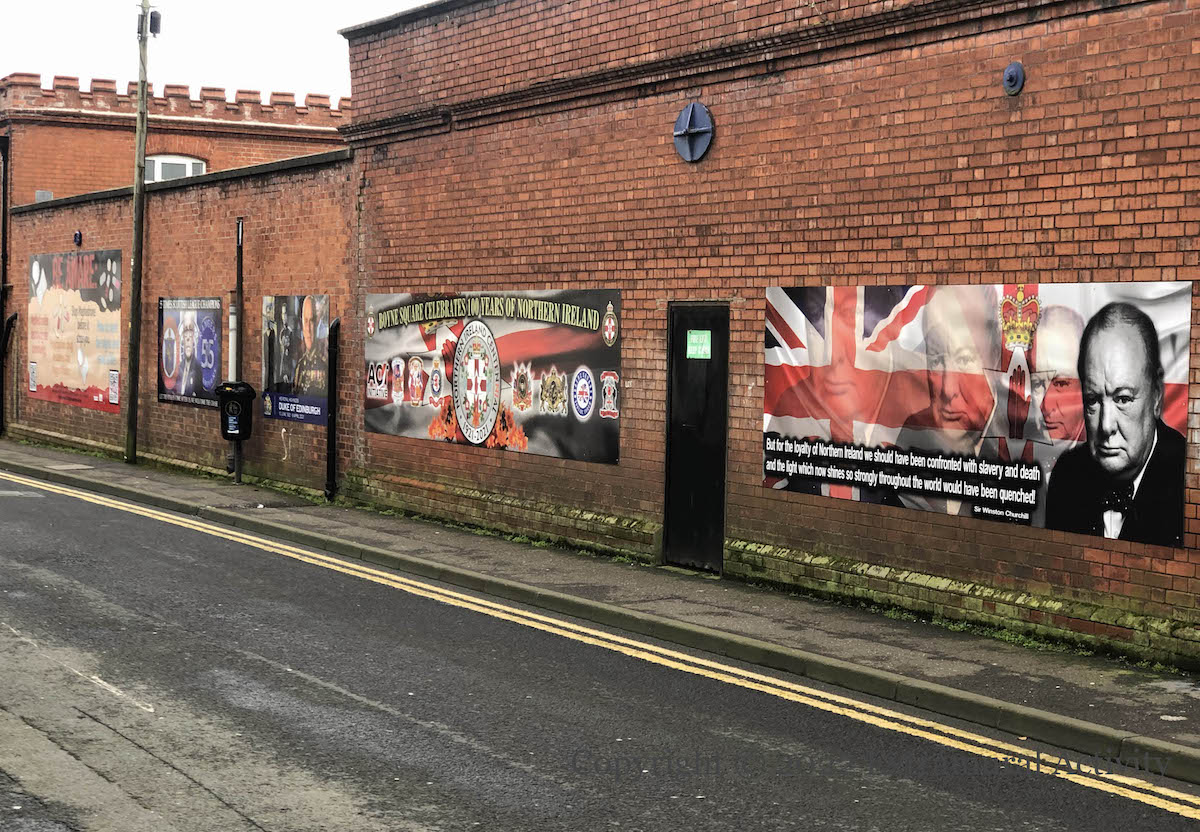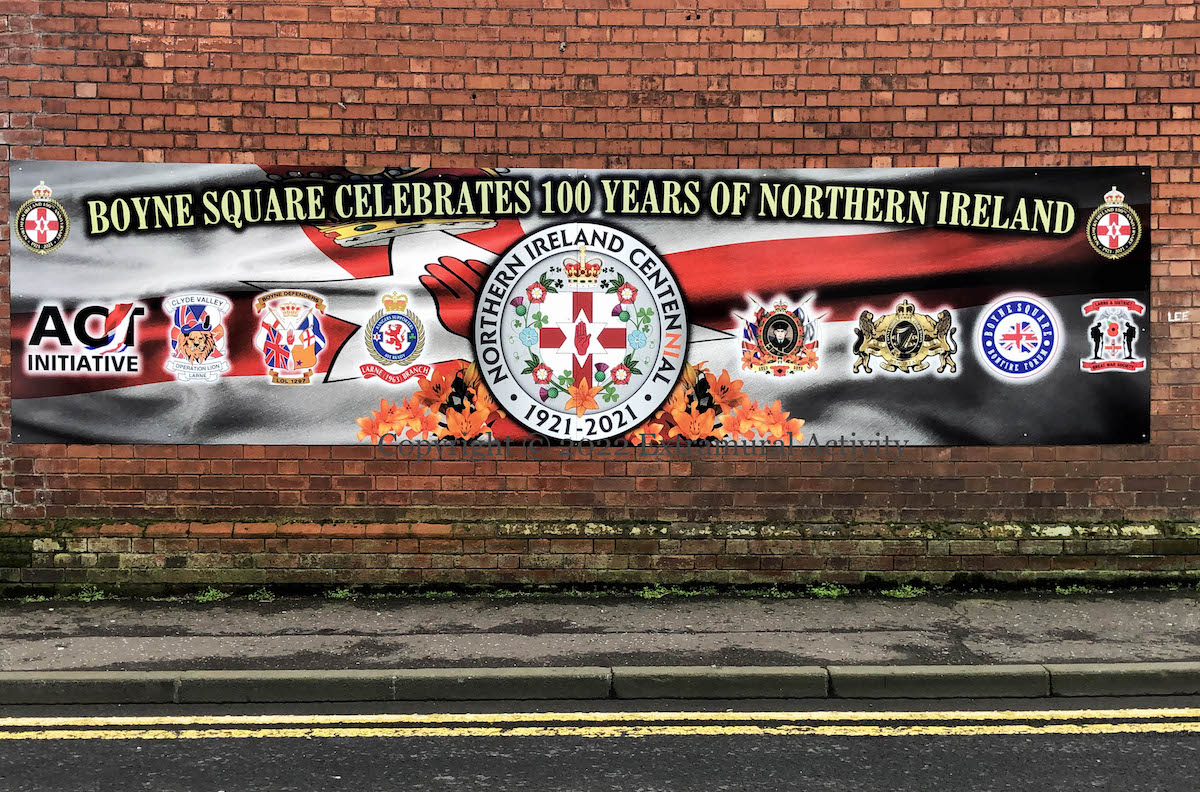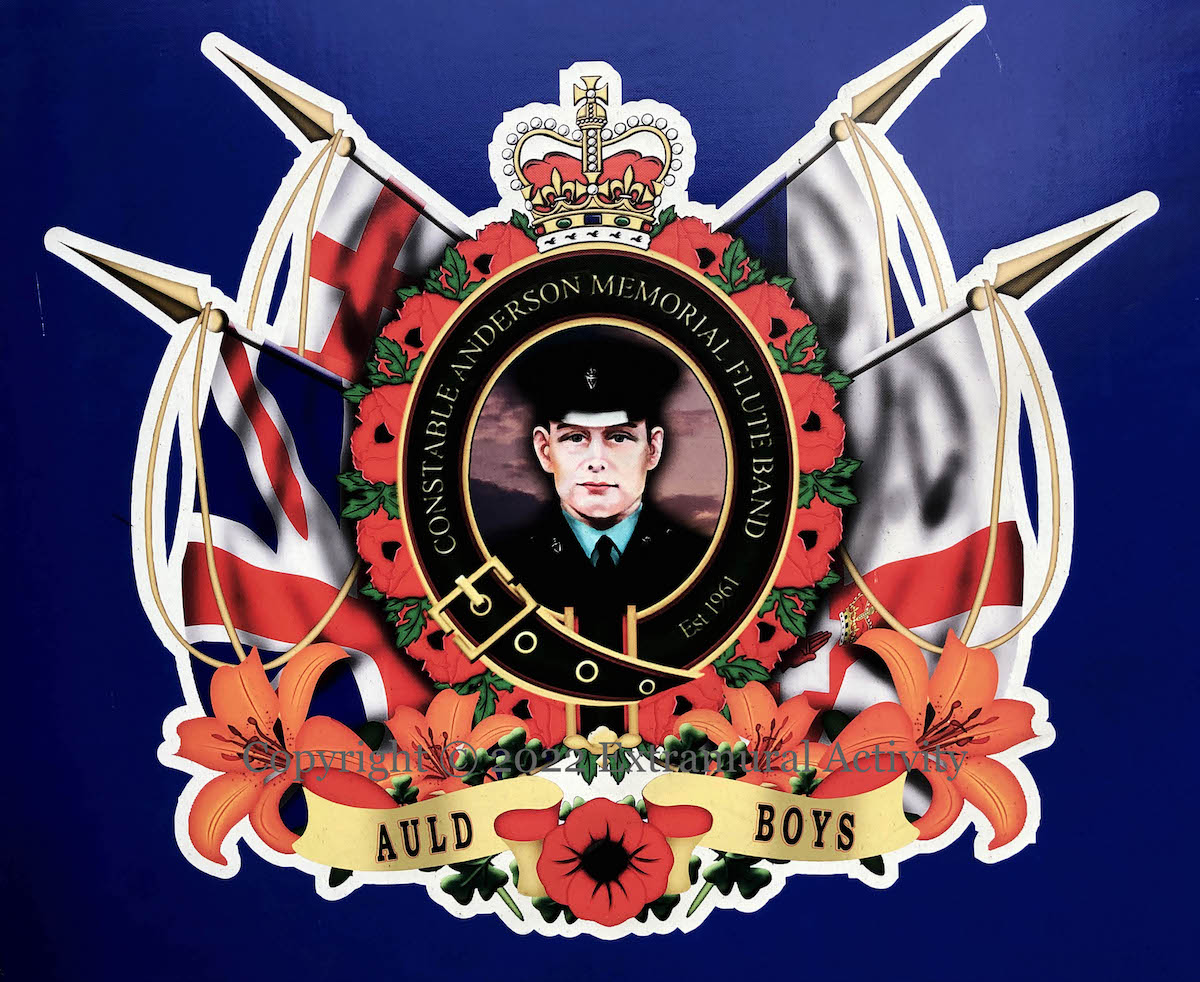
RUC Constable Norman Anderson was set upon and executed in 1961 by the IRA on the Fermanagh border as he returned from visiting his Co Monaghan girlfriend (SEFF) but he and his family hailed from Larne and he is remembered by the Constable Anderson Memorial flute band (emblem below), which was formed in the same year (Fb), and the Auld Boys (emblem above). These are two of three flute bands in the Factory area of Larne, along with the Clyde Valley flute band – see The Gunrunners.
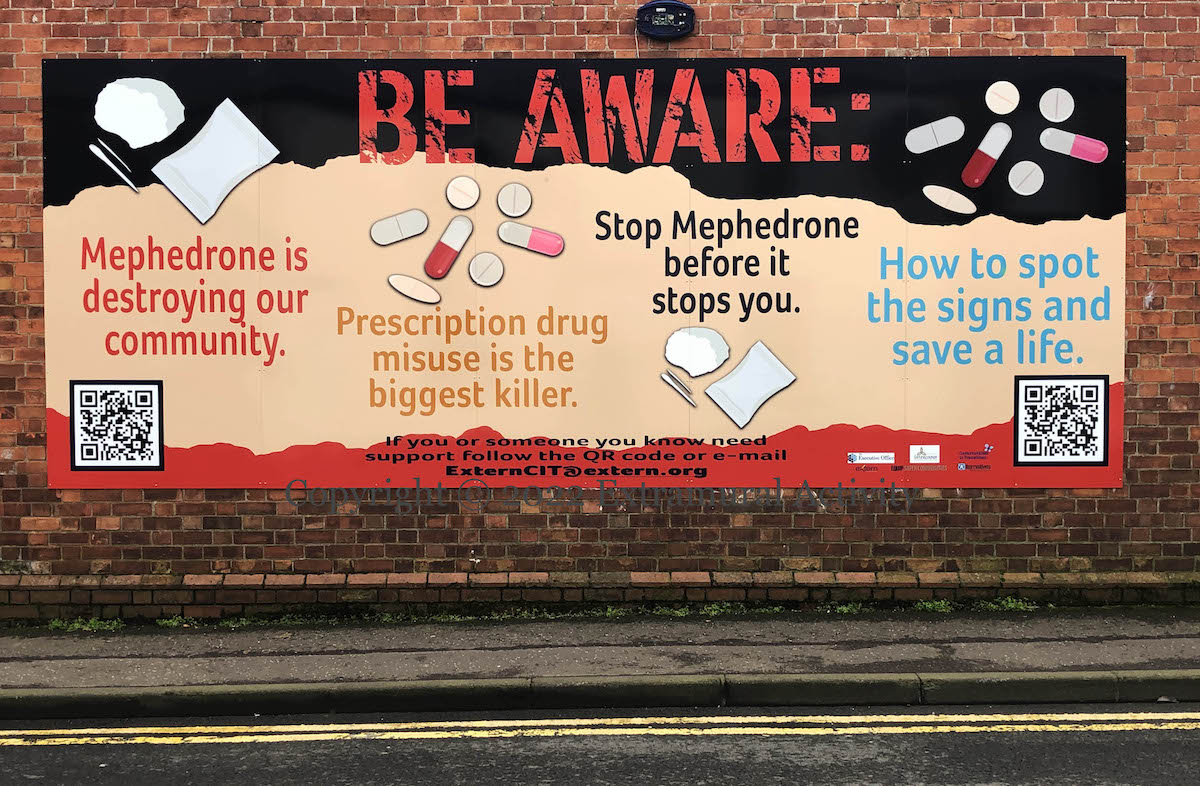
“Be aware: Mephedrone is destroying our community. Prescription drug misuse is the biggest killer. Stop mephedrone before it stops you. How to spot the signs and save a life.” Mephedrone has been classified as a Class B drug since 2010 but it and other (still-legal prescription) drugs continue to take a heavy toll. According to the 2020 NIAO report, a majority of drug-related deaths involved prescription drugs such as diazepam, tramadol, and pregabalin. The two boards shown in today’s post are in Larne (Lower Waterloo Road, above, and Drumahoe Gardens, below).
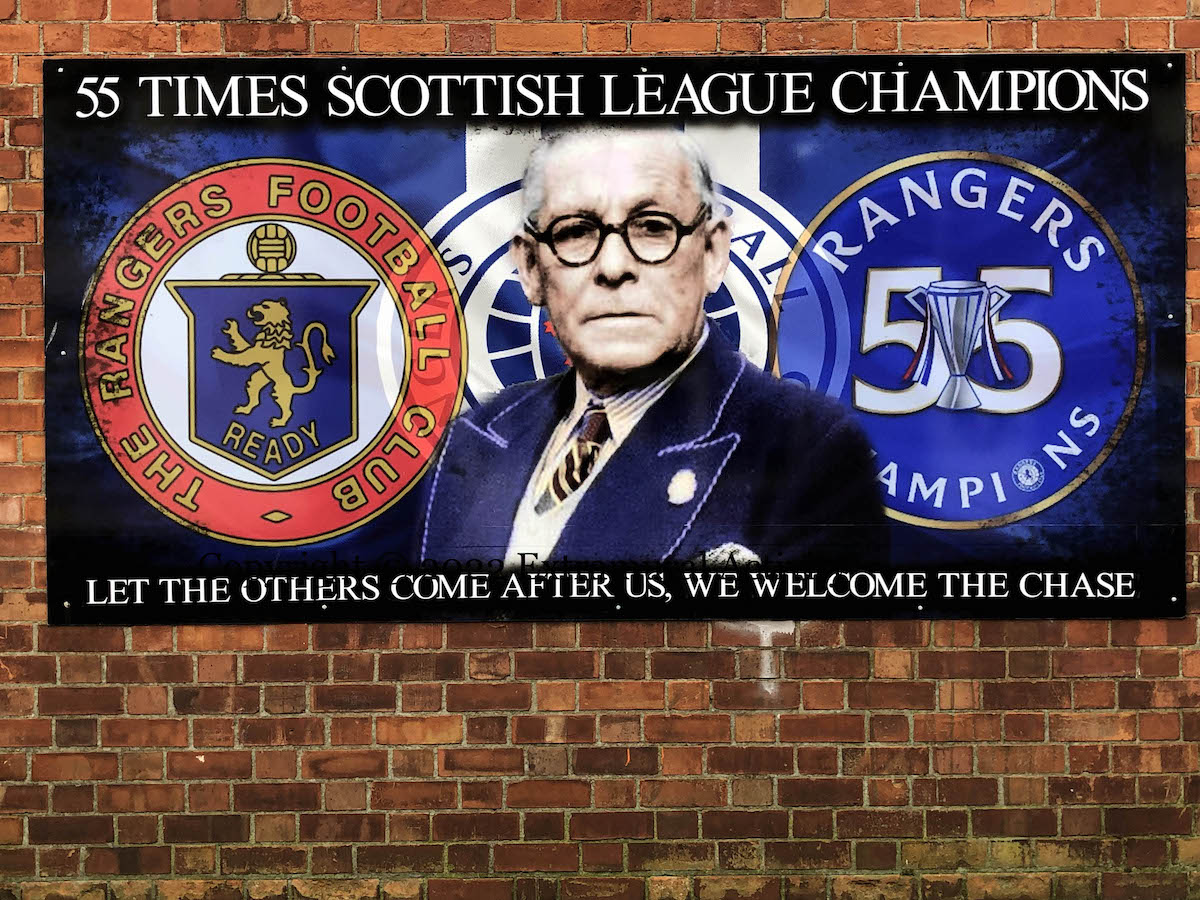
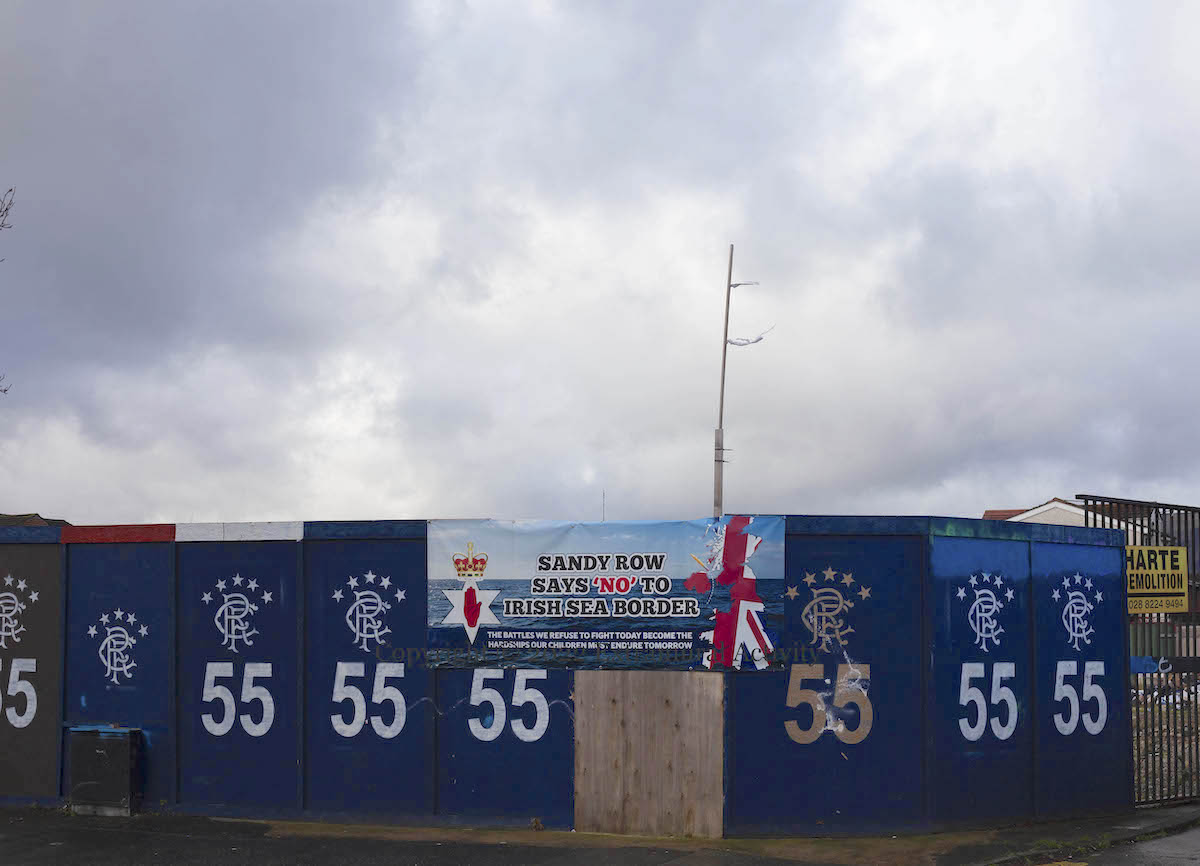
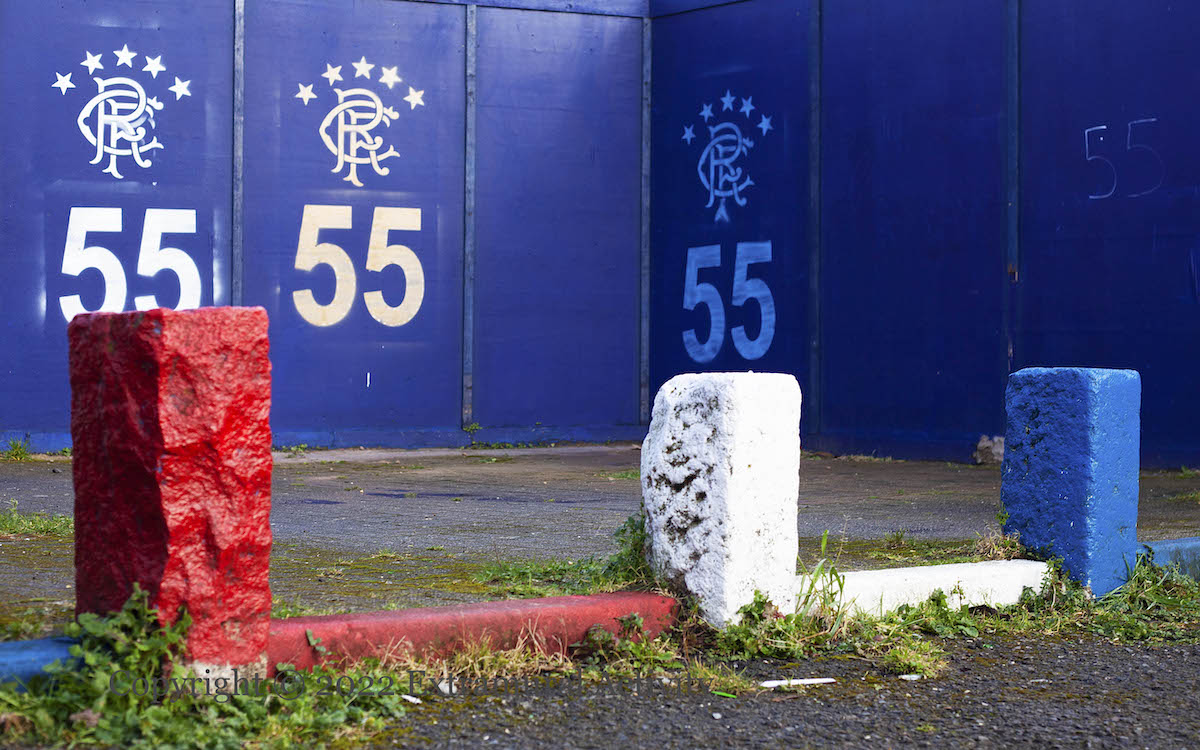
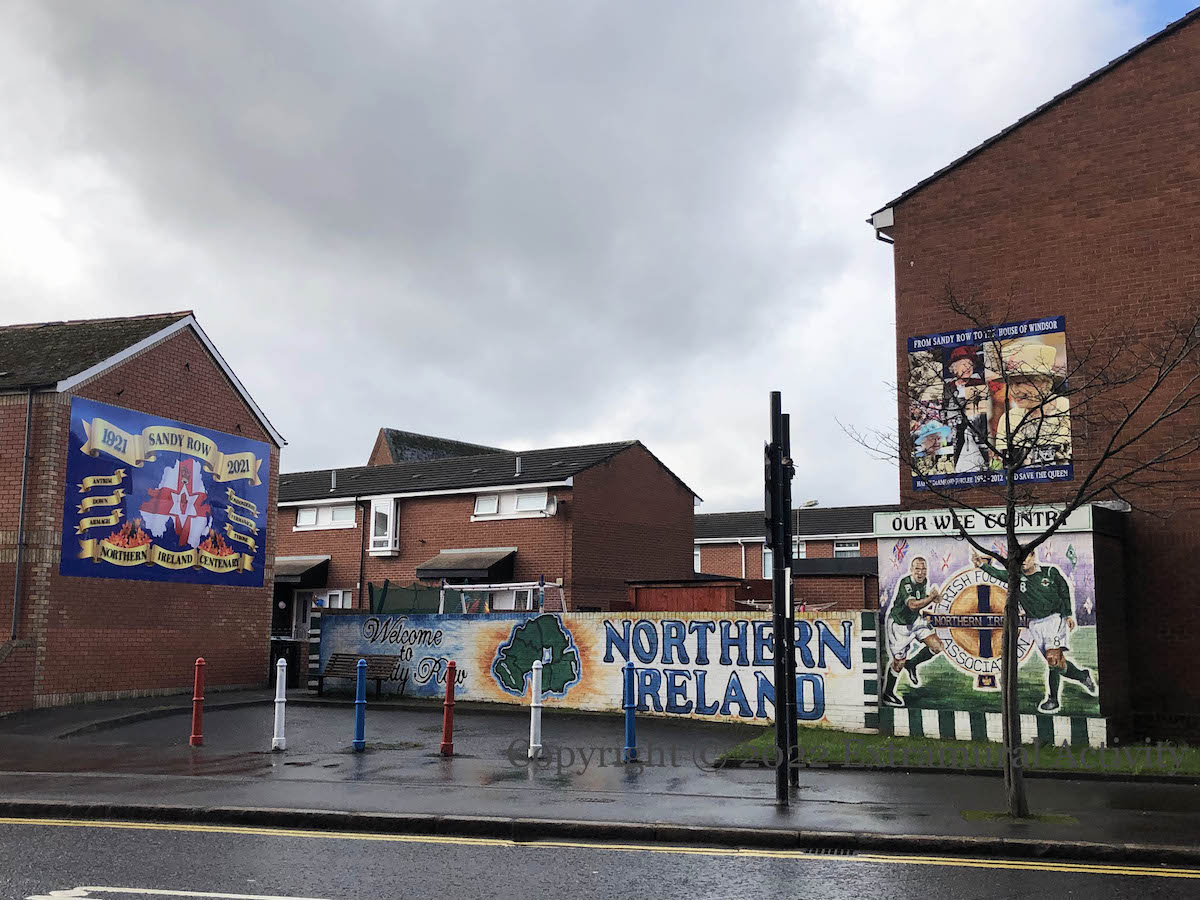
“O come, let us worship and bow down; let us kneel before the Lord our maker. For He is our God and we are the people of his pasture, the sheep under his care.” In Psalms 95, the current generation of Hebrews is exhorted to declare Yahweh as their god, or suffer the fate of the previous generation who did not believe and were left to die in the wilderness during the exodus: a wrathful Yahweh declares, “They shall not enter My rest” (Enduring Word). After ten years in the wilderness of the Scottish league minor divisions, Glasgow Rangers are again champions and the Rangers faithful are shouting joyfully – here is Sandy Row on the hoarding around the site of the old Gilpin’s shoe shop and the UFF funeral volley mural.
See previously Order Restored (which will link to even more posts).
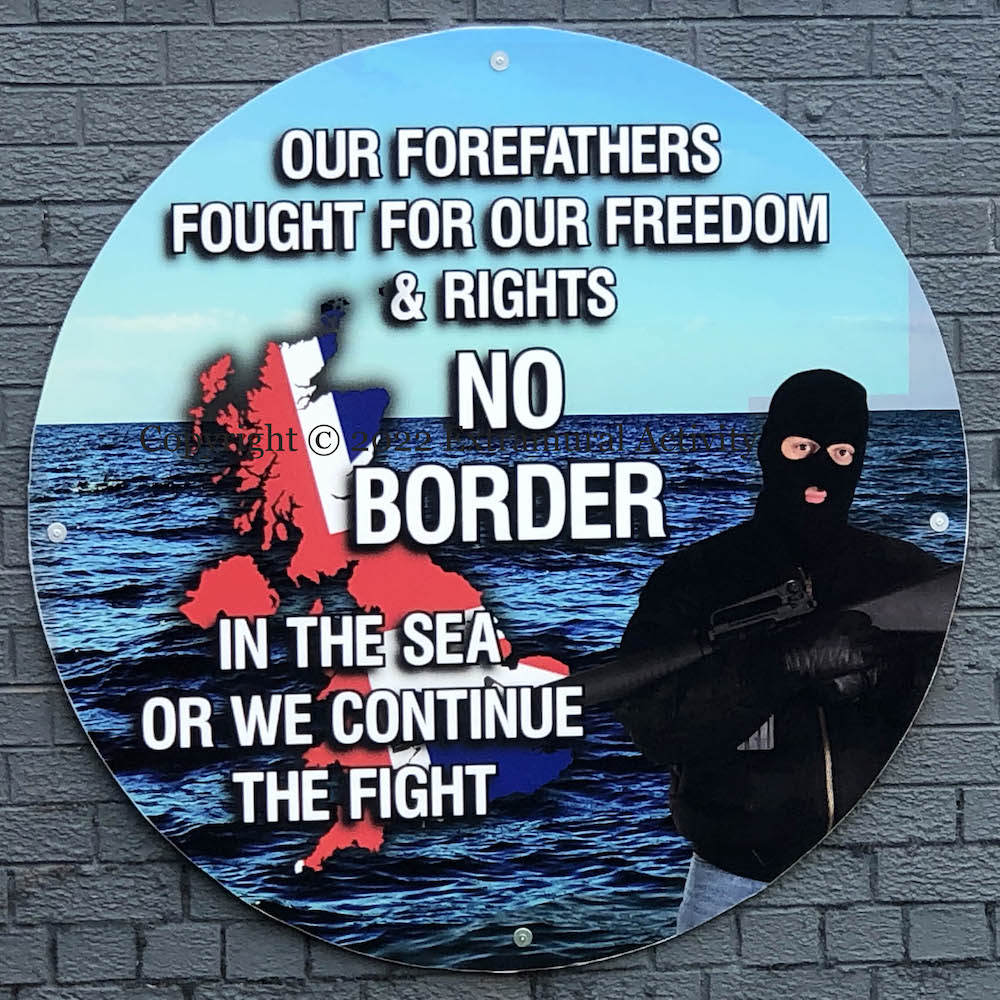
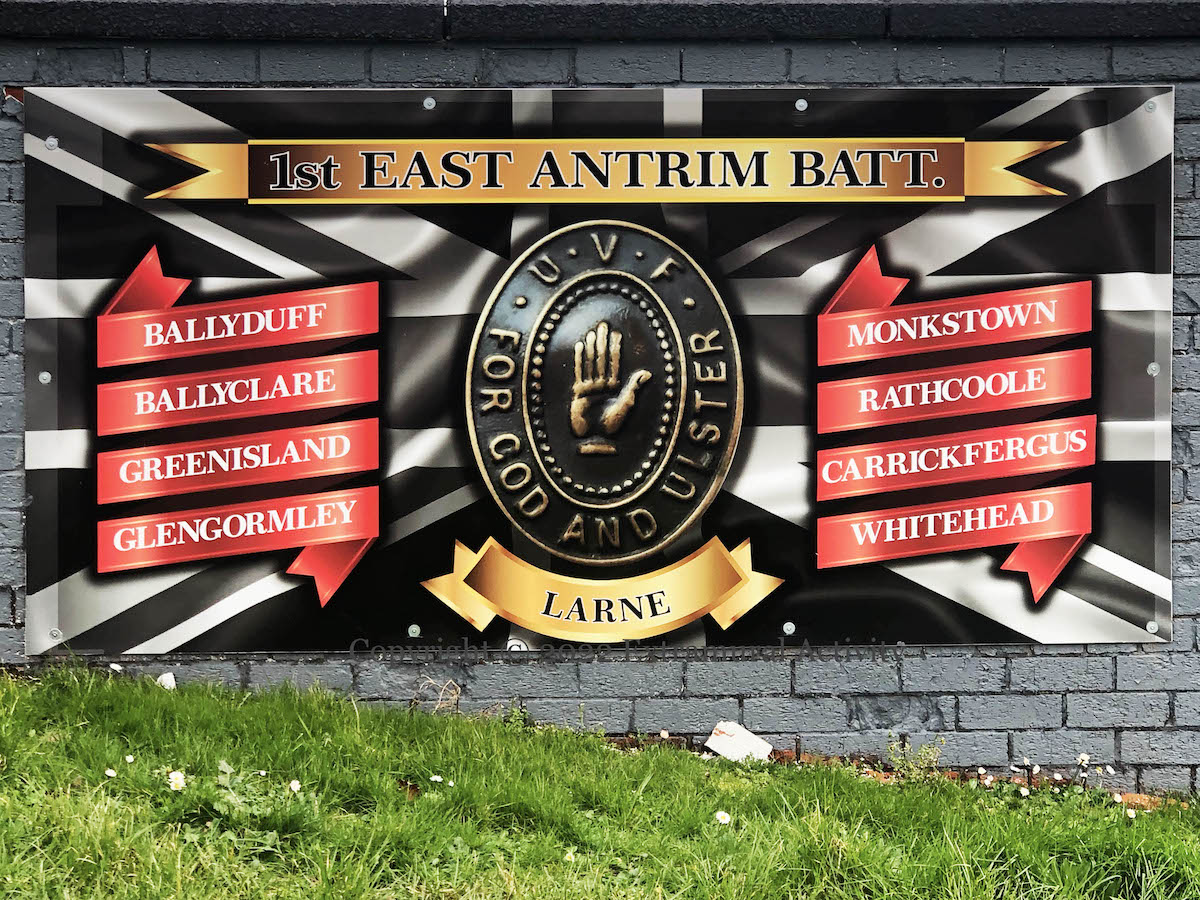
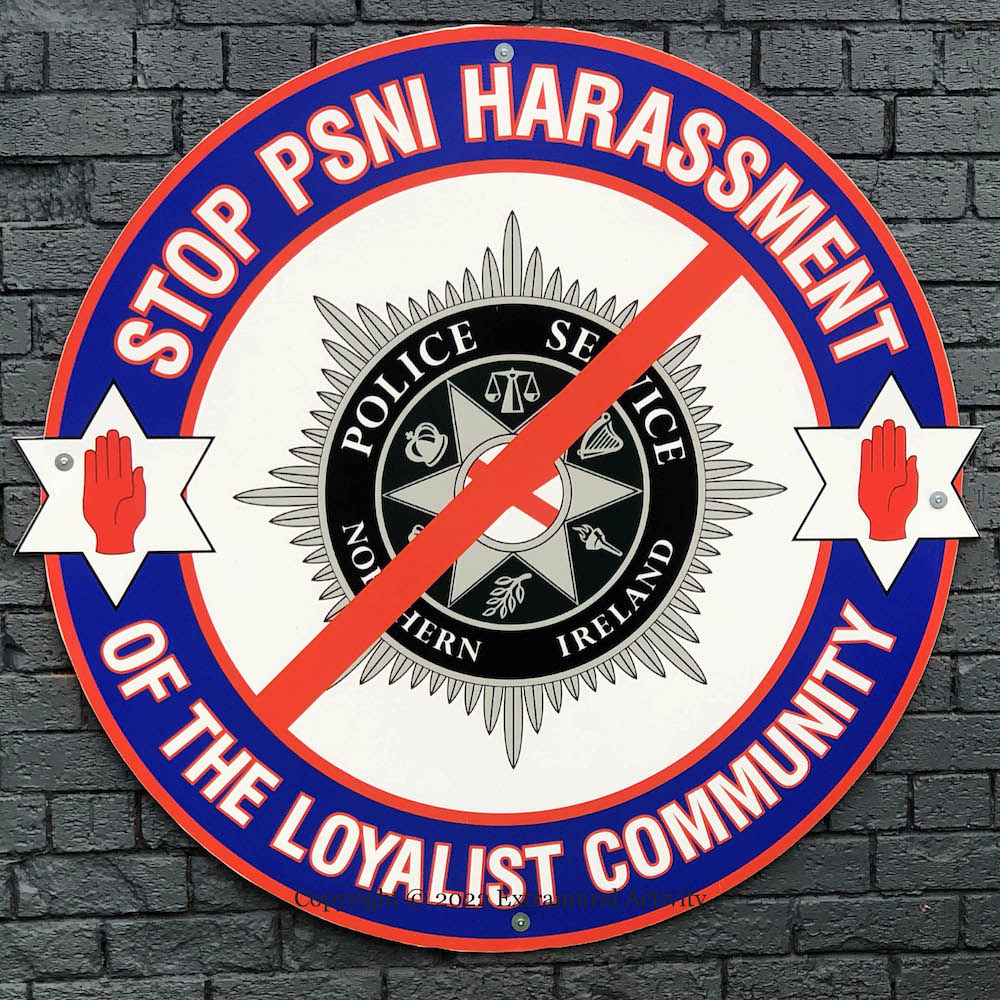
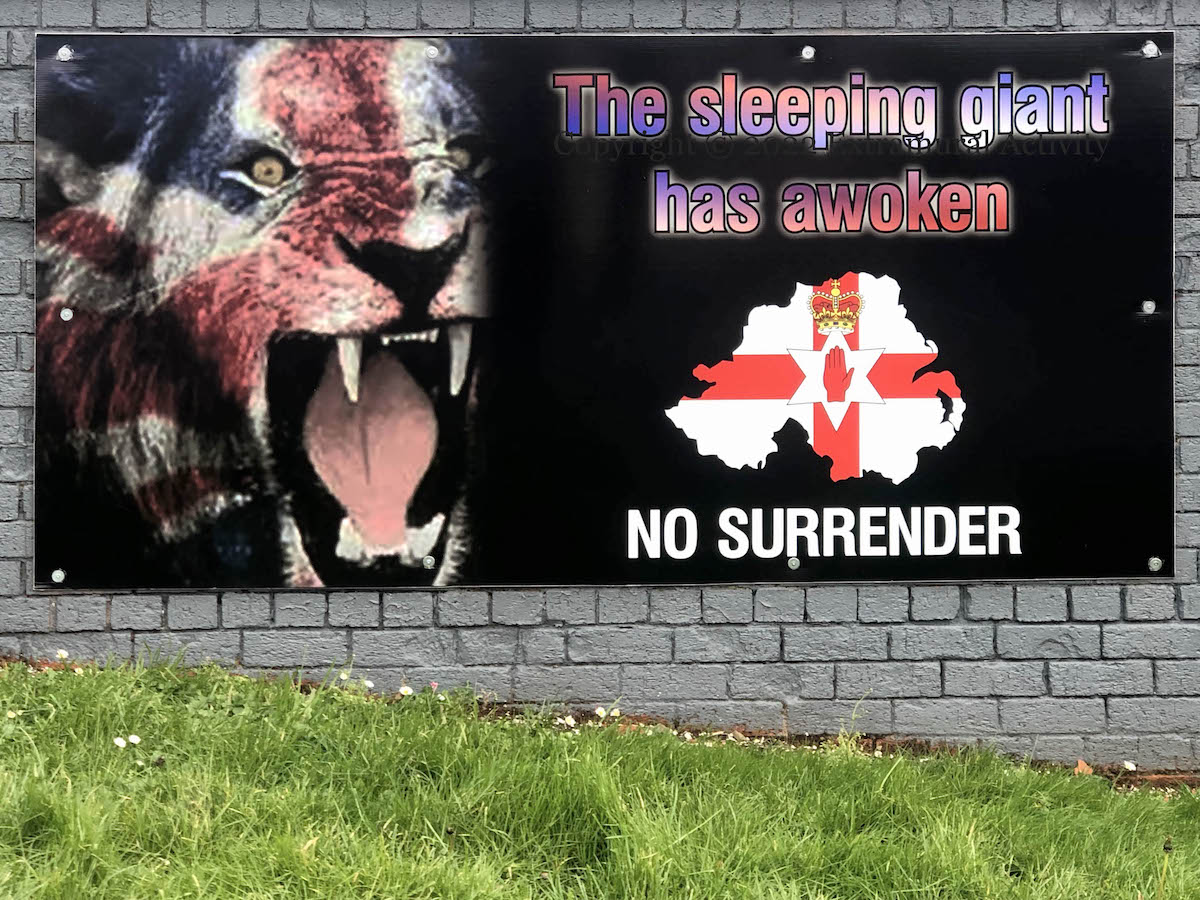
Japan attacked the US naval base at Pearl Harbor (near Honolulu, Hawaii) on December 7th, 1941. In the movie adaptations of the events, Tora! Tora! Tora! (1970) and Pearl Harbour (2001), the Japanese Admiral Isoruku Yamamoto wondered if the effect of the attack would be “to awaken the sleeping giant and to fill him with terrible resolve” (WP). In the case of today’s images, the sleeping giant is a lion, and the lion is the UVF 1st East Antrim, with units not just in Larne, Ballyduff, Ballyclare, Greenisland, Glengormley, Monkstown, Rathcoole, Carrickfergus, and Whitehead, but in Drumchapel (Glasgow, Scotland), Springburn (Glasgow, Scotland), Possilpark (Glasgow, Scotland), Paisley (Scotland), Falkirk (Scotland), Liverpool (England), Blackpool (England), Corby (England), and Blairgowrie (Scotland). Balaclava’d men with ArmaLites stand ready: “Our forefathers fought for our freedom & rights/No border in the sea or we continue the fight.”
The combination of a free-floating Northern Ireland with Britain (in the first image, above) is rare in muraling, but necessitated by Brexit and the Protocol.
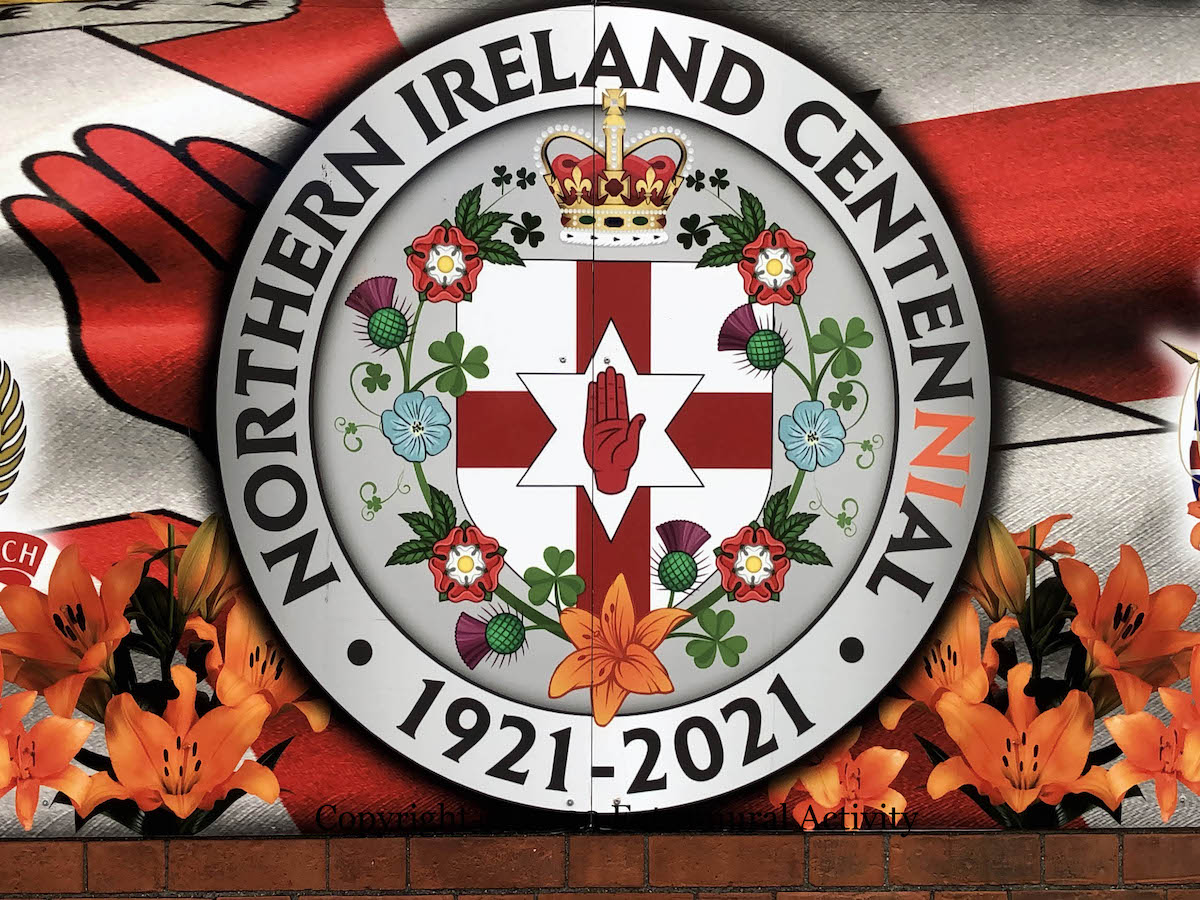
The orange lily began appearing in murals with some frequency in the mid-2000s (with one earlier appearance in Londonderry; compare this to posts with orange lilies at Peter Moloney – Murals and at Extramural Activity). It became part of the logo of the Orange Order in 2007 – see Design Research Group – and there was an attempt to re-brand the Twelfth as “Orangefest” (Irish Times). It is used in this centenary celebration board to make it clear that Northern Ireland was created as a Protestant and unionist state.
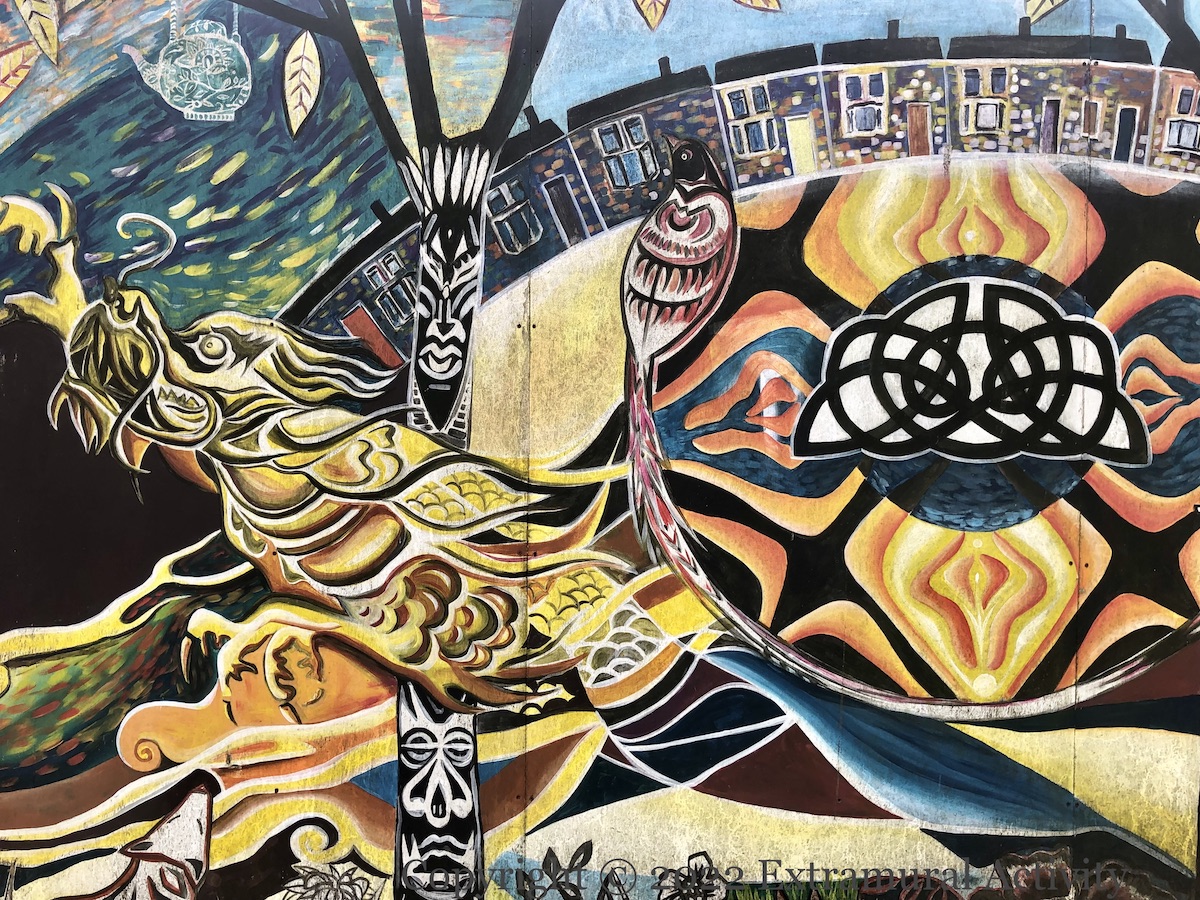
Ballynafeigh is the neighborhood just across Ormeau bridge, containing Annadale flats and surrounding streets – home to Ormeau Road UDA/UFF and Ballynafeigh Apprentice Boys flute band (Fb). The mural shown above was painted by Daniela Balmaverde (web) with help from local volunteers and presents imagery from non-Western cultures along with slogans on tree-trunks: “Cultural dialogue”, “Celebrate identities”, Shared neighbourhood”, “Community development”, “Tolerance”, and “Respect cultural diversity”. Welcome to Ballynafeigh.
The mural is at the southern Ormeau Road entrance to Ormeau park opposite Candahar Street. The Brigada Romona Para mural was previously in this spot.
The Ballyhackamore mural by Ed Hicks (ig) – painted along with murals by emic and Alana McDowell – is on the eastern side of Eastleigh Crescent, so that when looking at it the viewer is looking away from the city and towards the … hills – perhaps Scrabo country park.
Benjamin West painted The Battle Of The Boyne in 1778 and his composition – with William moving from left to right on a white horse and Marshal Schomberg dying in the bottom-right corner – has become the standard representation in loyalist culture, perhaps due to versions of it appearing on the covers of songbooks for the Orange Order and the Apprentice Boys soon after (Belinda Loftus 1982 Images In Conflict). It appears here on the wall of Whitehead Orange Hall, along with a board connecting service by Irish soldiers in British forces in WWI and Afghanistan (see previously: Time Changes in east Belfast).
Another mural on Upper Newtownards Road on the lamplighter theme: Ballyhack-Amore by Alana McDowell (ig | web). The name “Ballyhackamore” comes not from Italian but from Irish: Baile an Chacamair, town of the mud flat (PlaceNamesNI).
Episode 38 of the BBC’s “Year ’21” podcast considered the life (and diary) of a lamplighter in east Belfast who witnessed the violence that gripped the city in 1920-1922. The tribute on Newtowanards Road is by emic (web) with support from Daisy Chain (tw) and EastSide Partnership (tw).