Snug As A Gun

2015-06-02 Alexandra1+

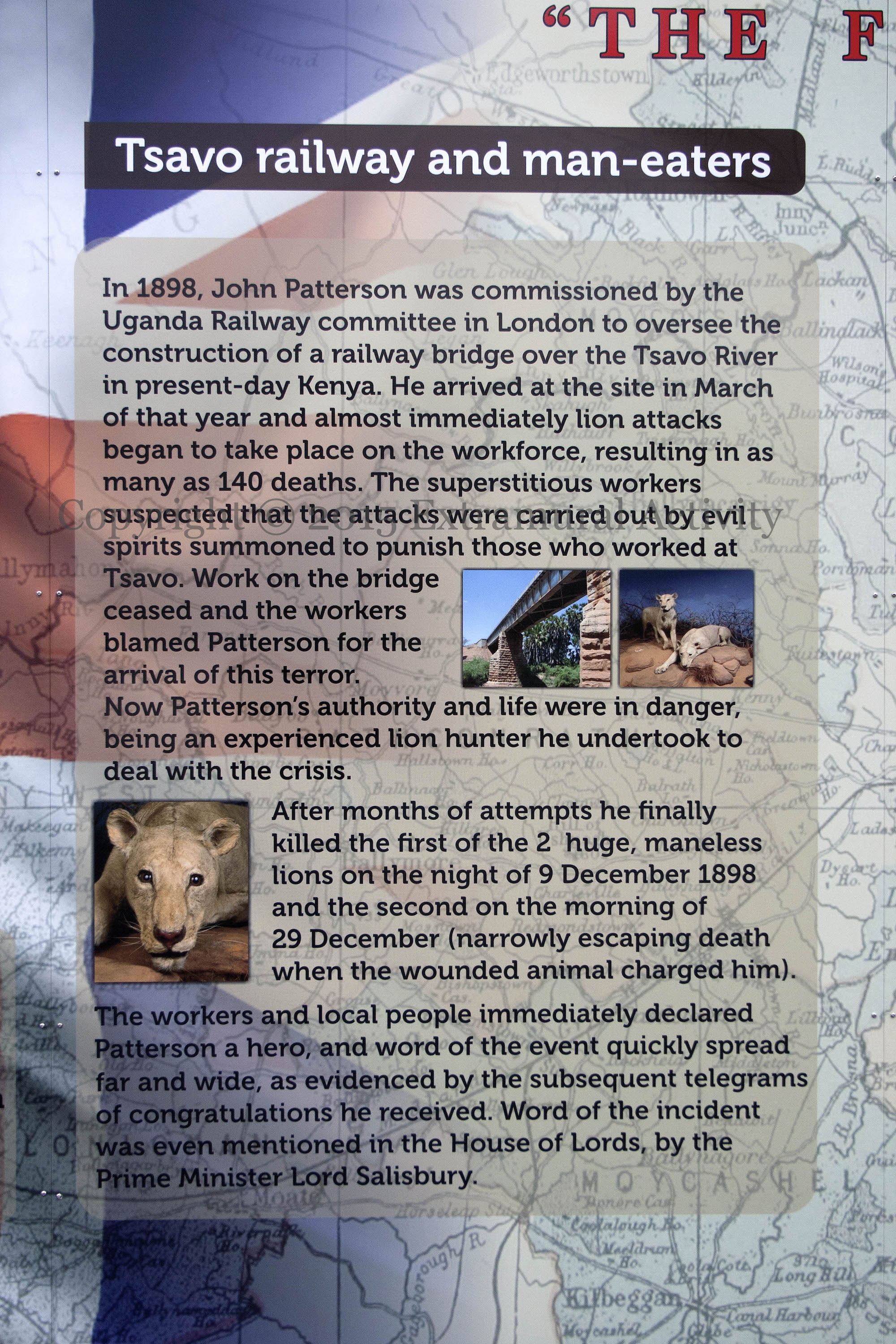
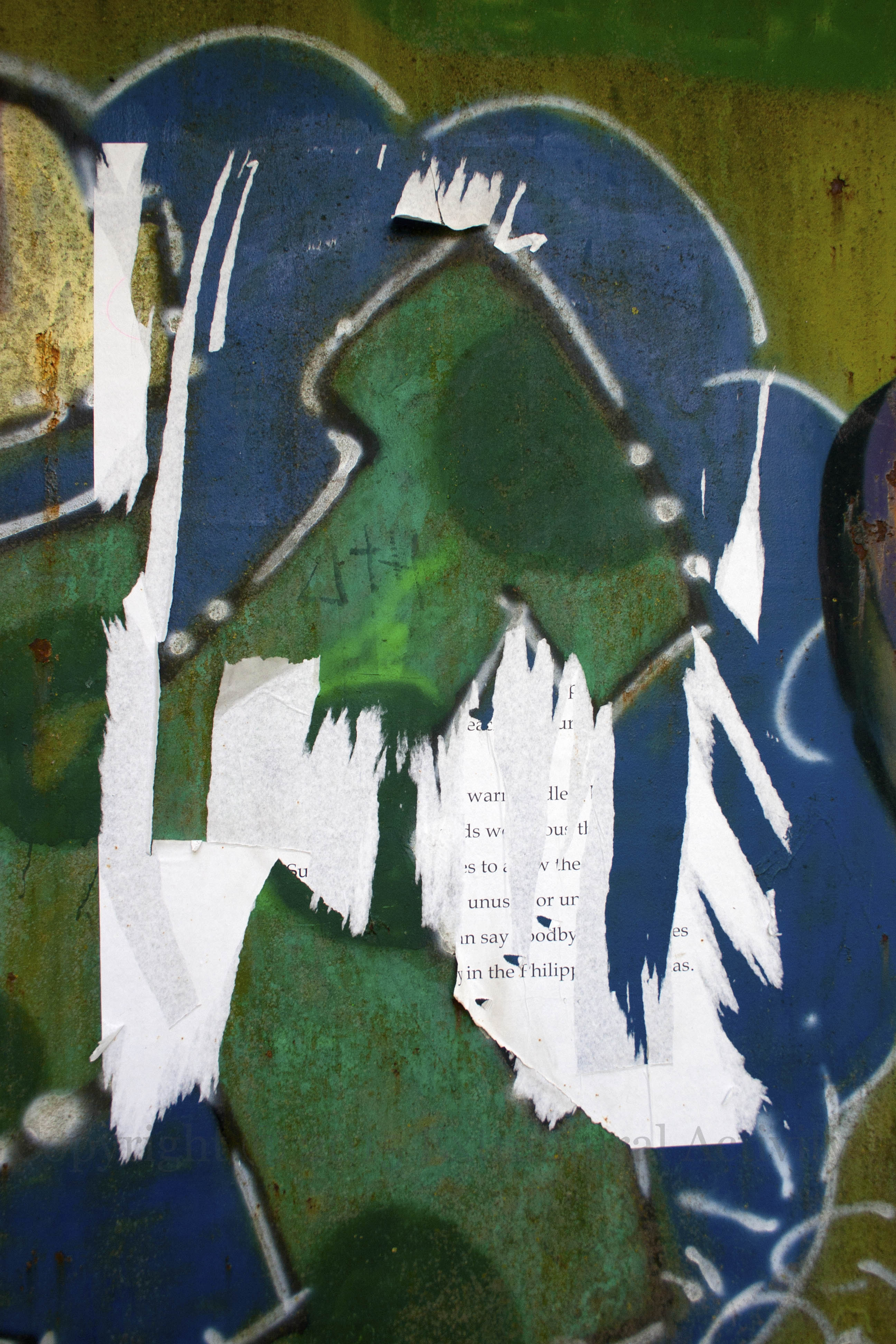
Seamus Heaney took up the pen where his father and grandfather had worked with the spade. A copy of his poem Digging was, along with others, placed on the Alexandra Park “peace” line but has been torn off in favor of the preferred mode of expression of the next generation: the spray can.

For more Heaney as public art, see The Hunting Heart.

2015-06-02 Alexandra2+

2015-06-02 Alexandra3+

2015-06-02 Alexandra4+

Click image to enlarge
Copyright © 2015 Seosamh Mac Coılle
X02643 X02644 X02645 X02646

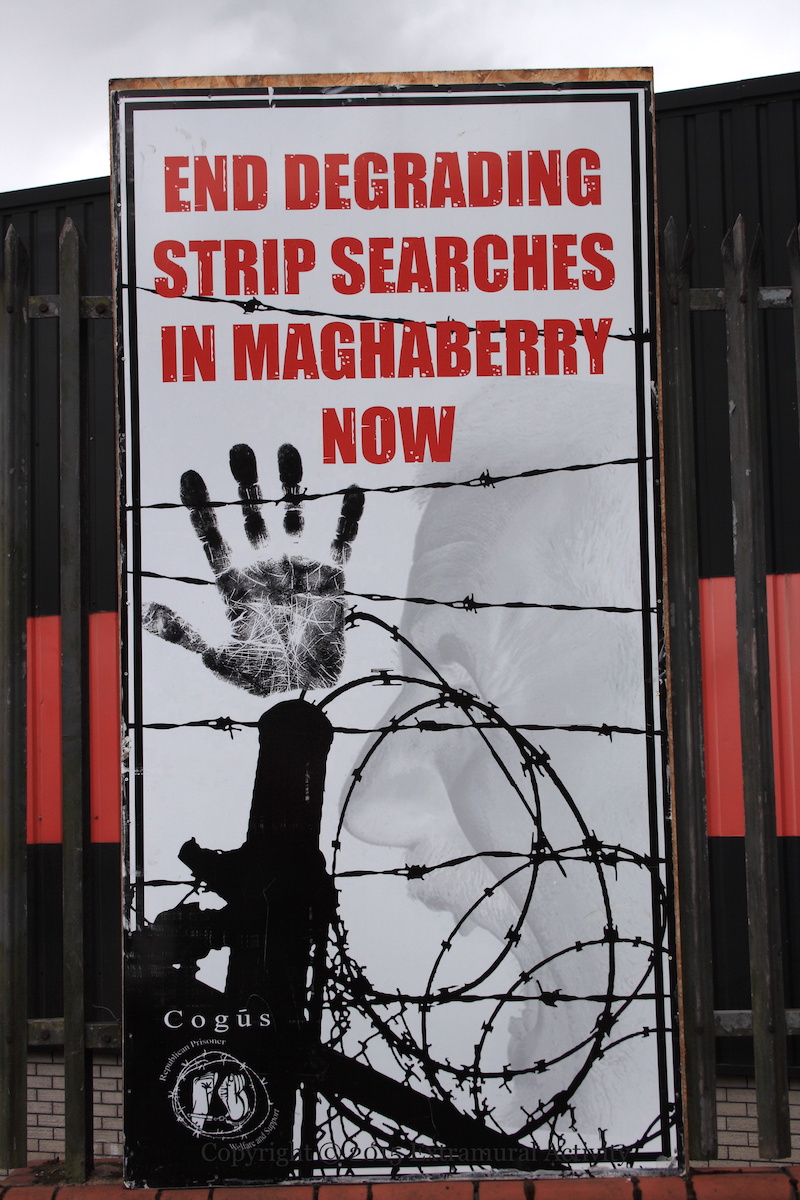
End Degrading Strip Searches

“End degrading strip searches in Maghaberry now”. Cogús (Fb) is the RNU’s ‘Republican Prisoner Welfare And Support’ association.

The board on the Oldpark Road, north Belfast.

Click image to enlarge
Copyright © 2015 Seosamh Mac Coılle
X02463

The Mass Graves Of Ireland

2015-05-18 MassGravesAbove+

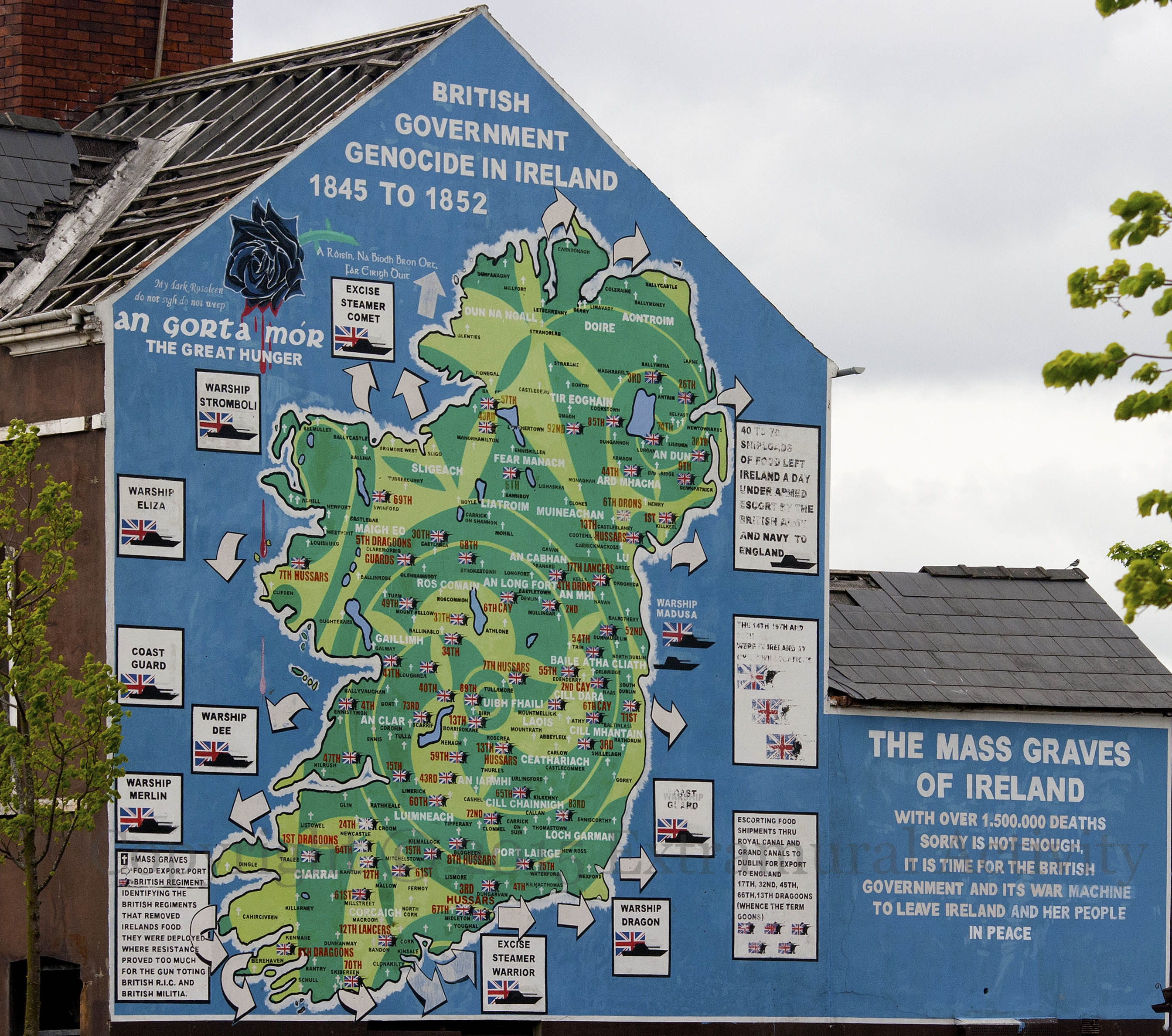
In 1997, then-Prime Minister Tony Blair’s office issued a statement acknowledging that the administration of the time of the Hunger failed to intervene (Guardian | Independent).

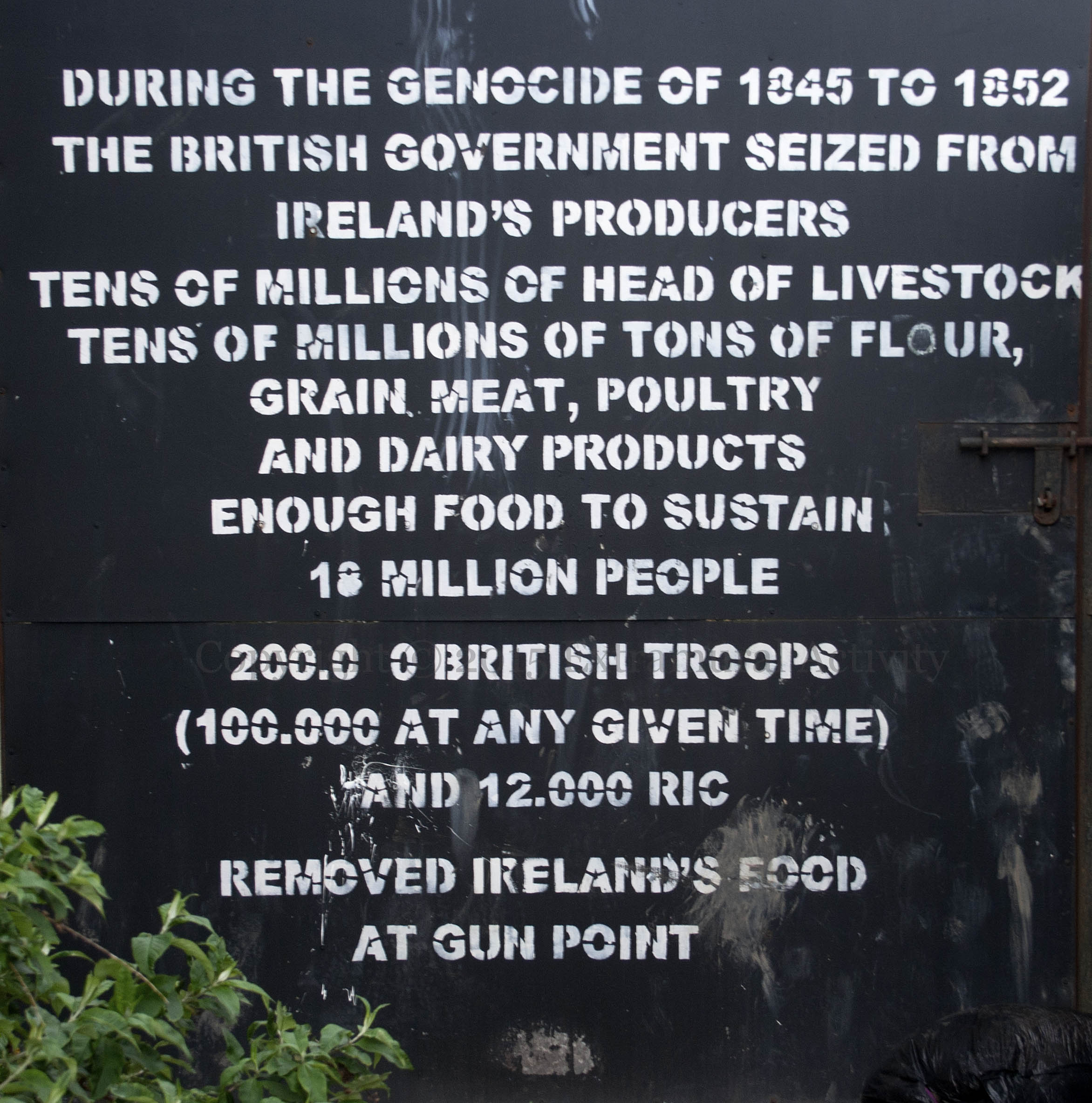
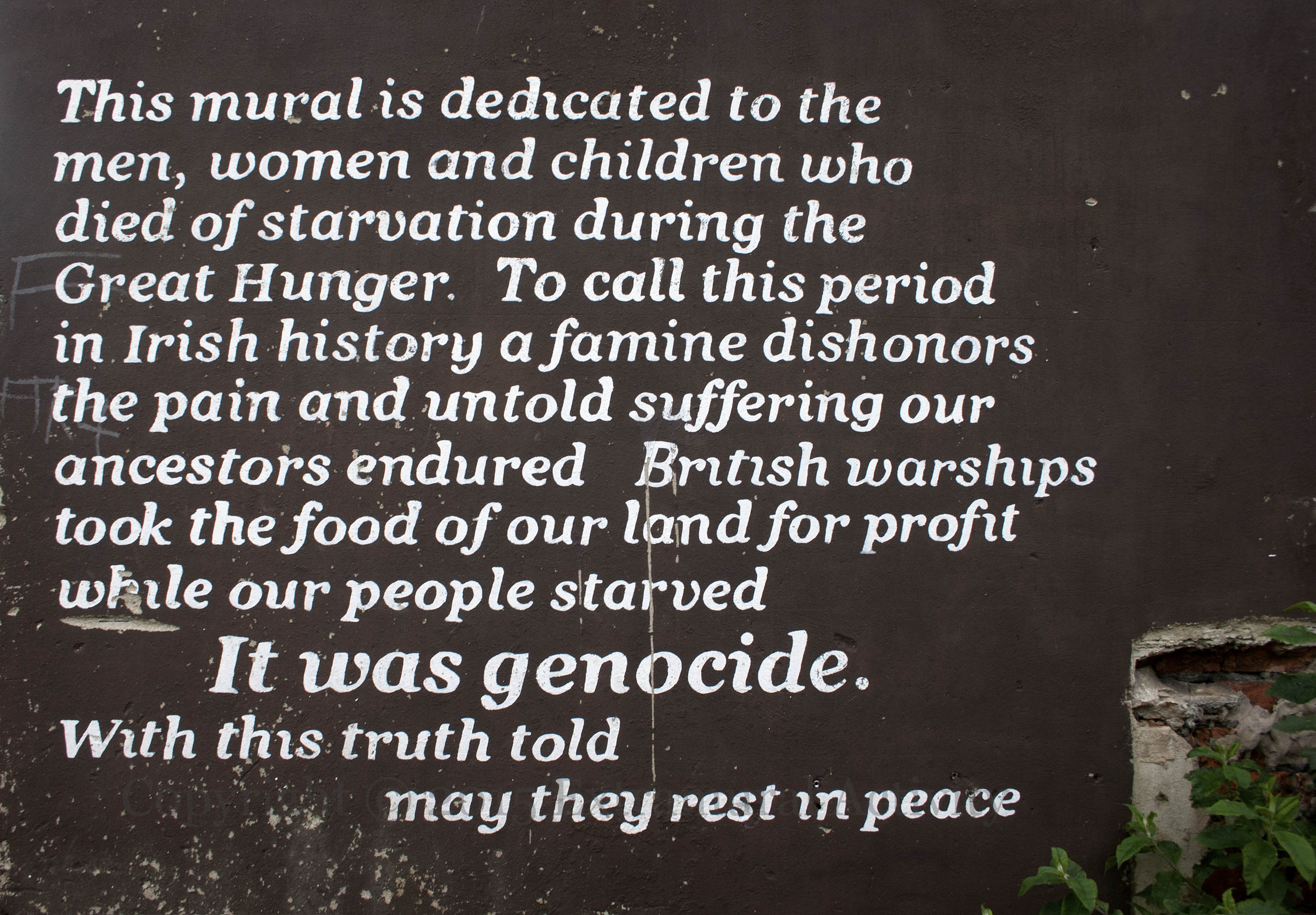
The mural above asserts that it was not merely a matter of negligence but of will: “With over 1,500,000 deaths “sorry” is not enough. It is time the British government and its war machine to leave Ireland and her people in peace. During the genocide or 1845 to 1852 the British government seized from Ireland’s producers tens of millions of head of livestock, tens of millions of tons of flour, grain, meat, poultry and dairy products, enough food to sustain 18 million people. 200,000 British troops (100,000 at any given time) and 12,000 RIC removed Ireland’s food at gun point. This mural is dedicated to the men, women and children who died of starvation during the Great Hunger. To call this period in Irish history a famine dishonors the pain and untold suffering our ancestors endured. British warships took the food of our land for profit while our people starved. It was genocide. With this truth told may they rest in peace.”

Each white cross on the map represents a mass grave. The map is originally from irishholocaust.org.

An in-progress shot from 2010 is included below.

2015-05-18 MassGravesBelow1+

2015-05-18 MassGravesBelow2+

Click image to enlarge
Copyright © 2010 Seosamh Mac Coılle
X02625 X02626 X02627 X00351 excise steamer comt stromboli eliza coast guard dee merlin warrior dragon madusa regiments where resistance proved too much for the gun toting militia escorting shipments thru royal canal and grand canal for export to england 17th 32nd 45th 66th 13th dragoons whence the term goons 40 to 70 shiploads of food a day escort army navy hussars lancers guards drons cay my Dark Rosaleen James Mangan do not sigh do not weep a Róisín Dubh na bíodh brón ort fé’r eirigh duit an gorta mór chris fogarty

See-Through Sectarianism

2015-05-31 SeeThroughGates+

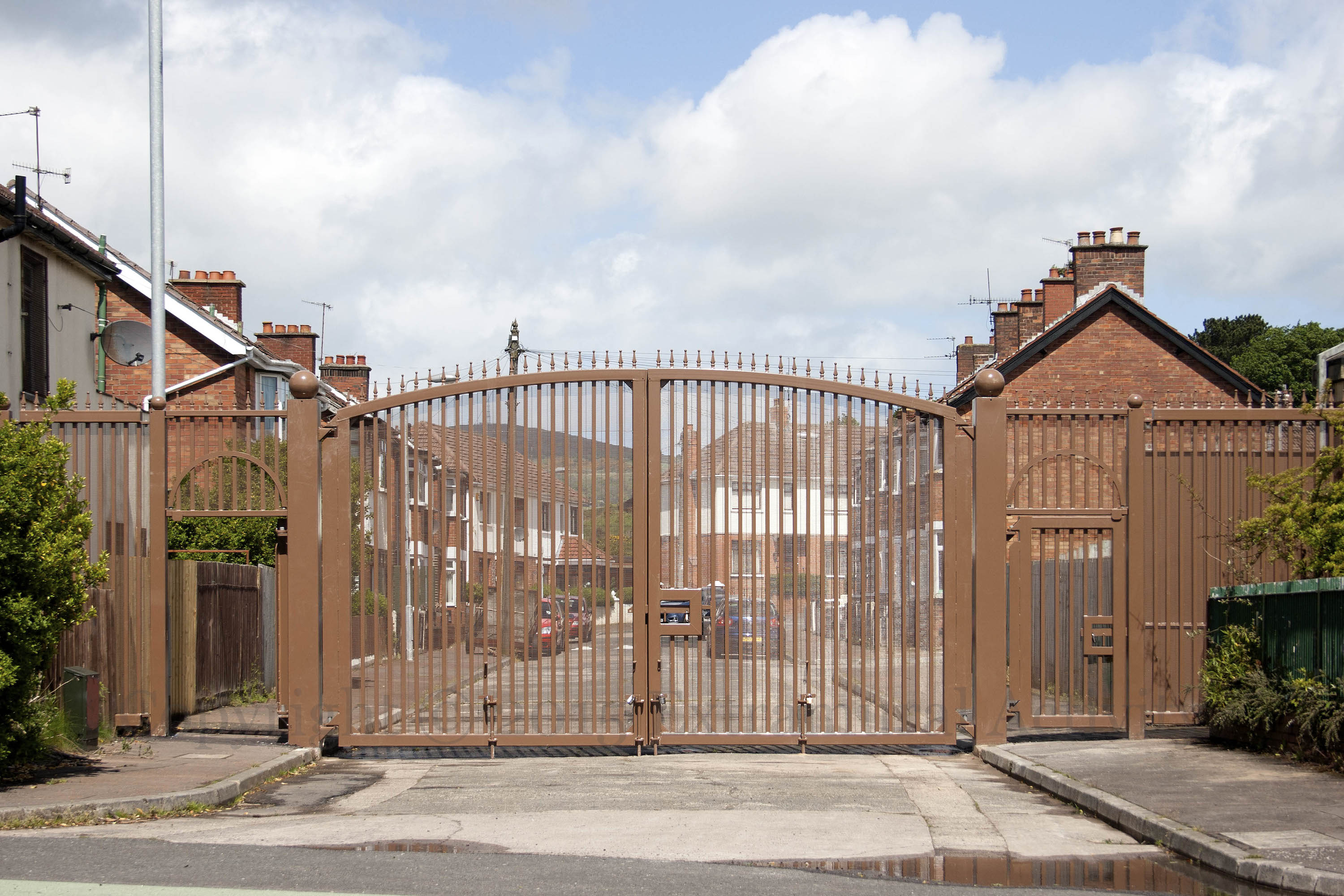
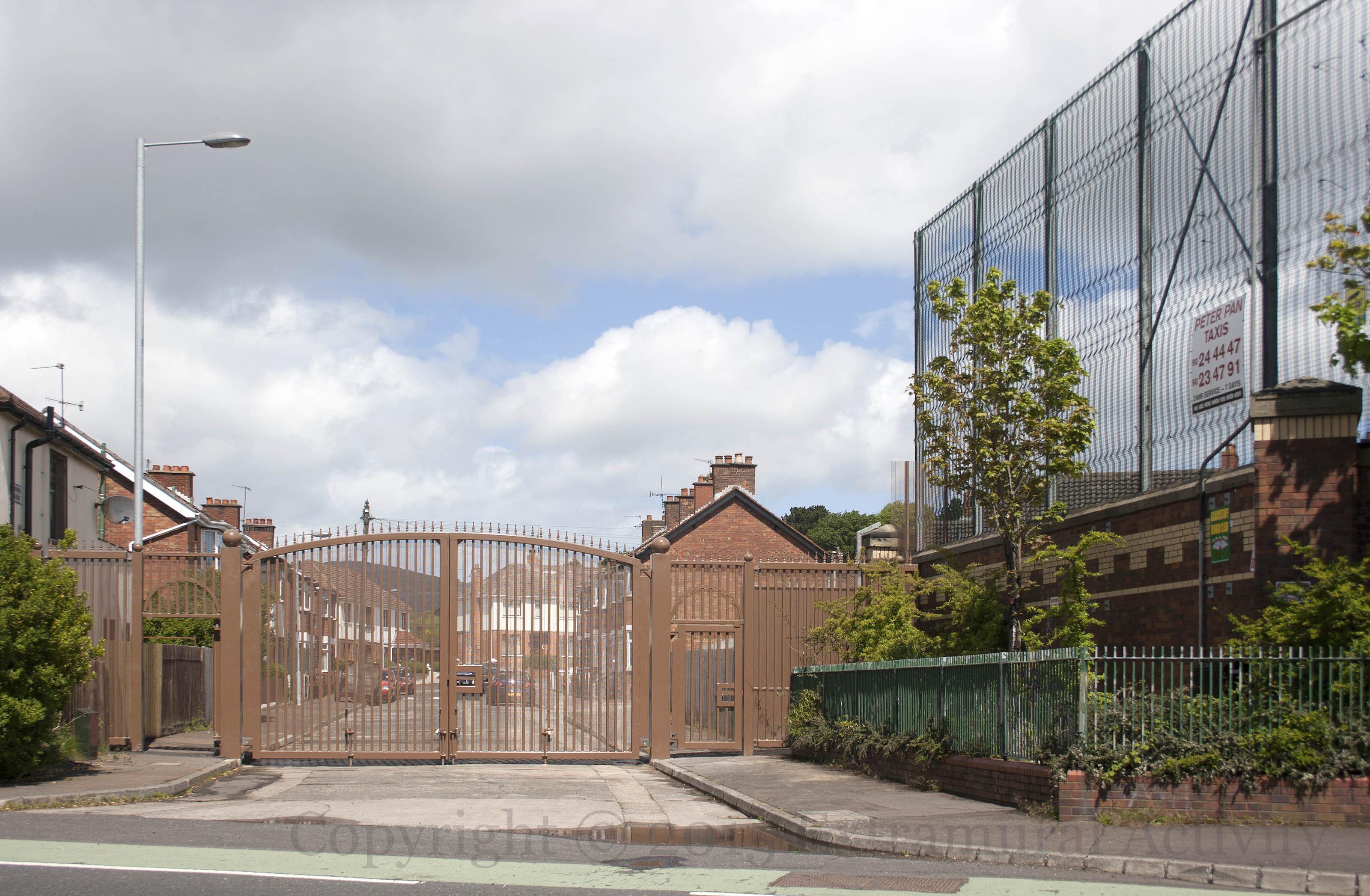
In May 2013 the Executive pledged to remove “peace” lines in ten years – by 2023 (Tele). One step in this process is see-through gates, such as those at Workman Avenue in the image above. There is no change, however, to the fence on the Springfield Road – see the image below. See previously: the new gates in Howard Street.

2015-05-31 SeeThroughGatesWide+

Click image to enlarge
Copyright © 2015 Seosamh Mac Coılle
X02641 X02642

Flush With Success

2015-05-28 WaterPoloColour+

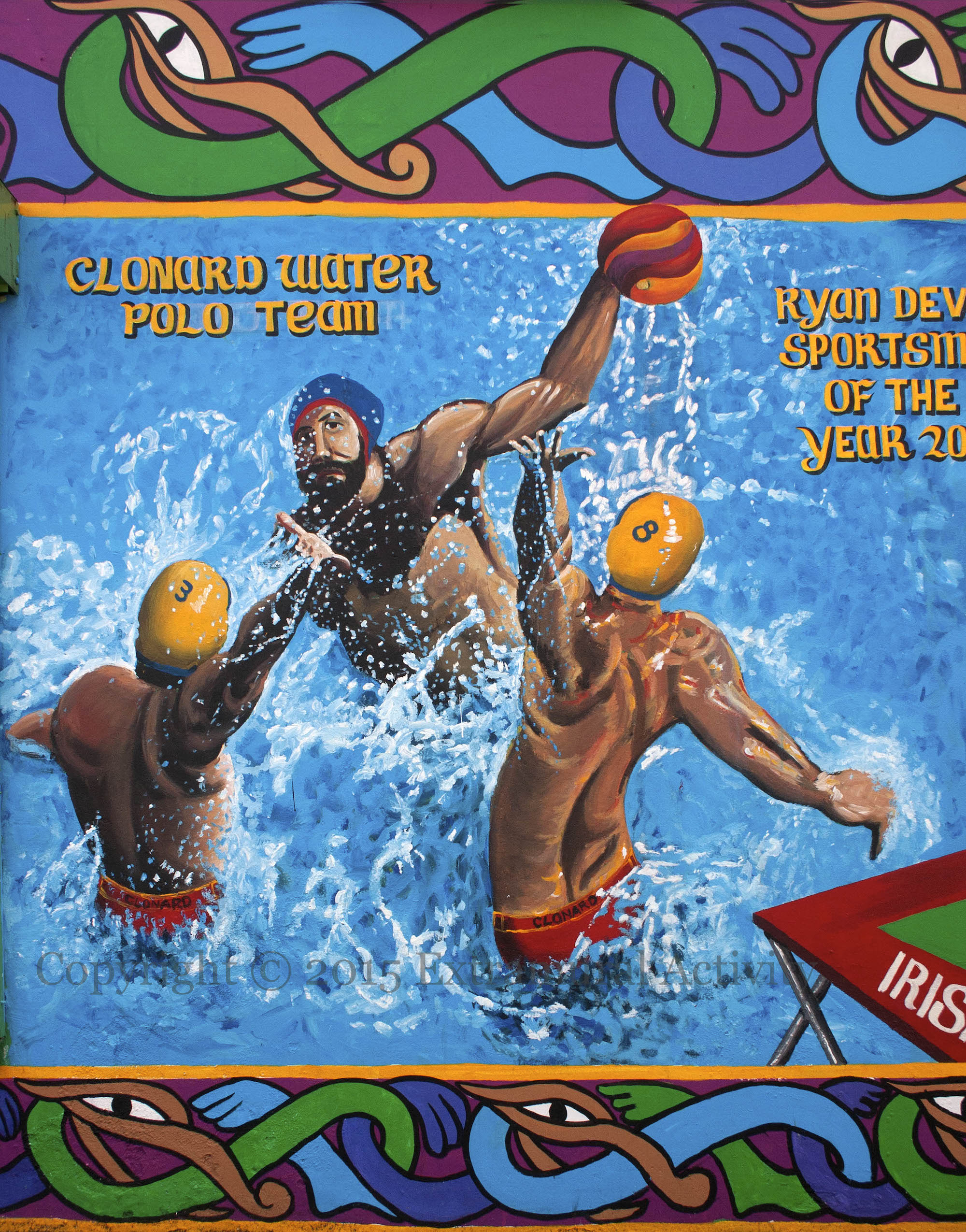
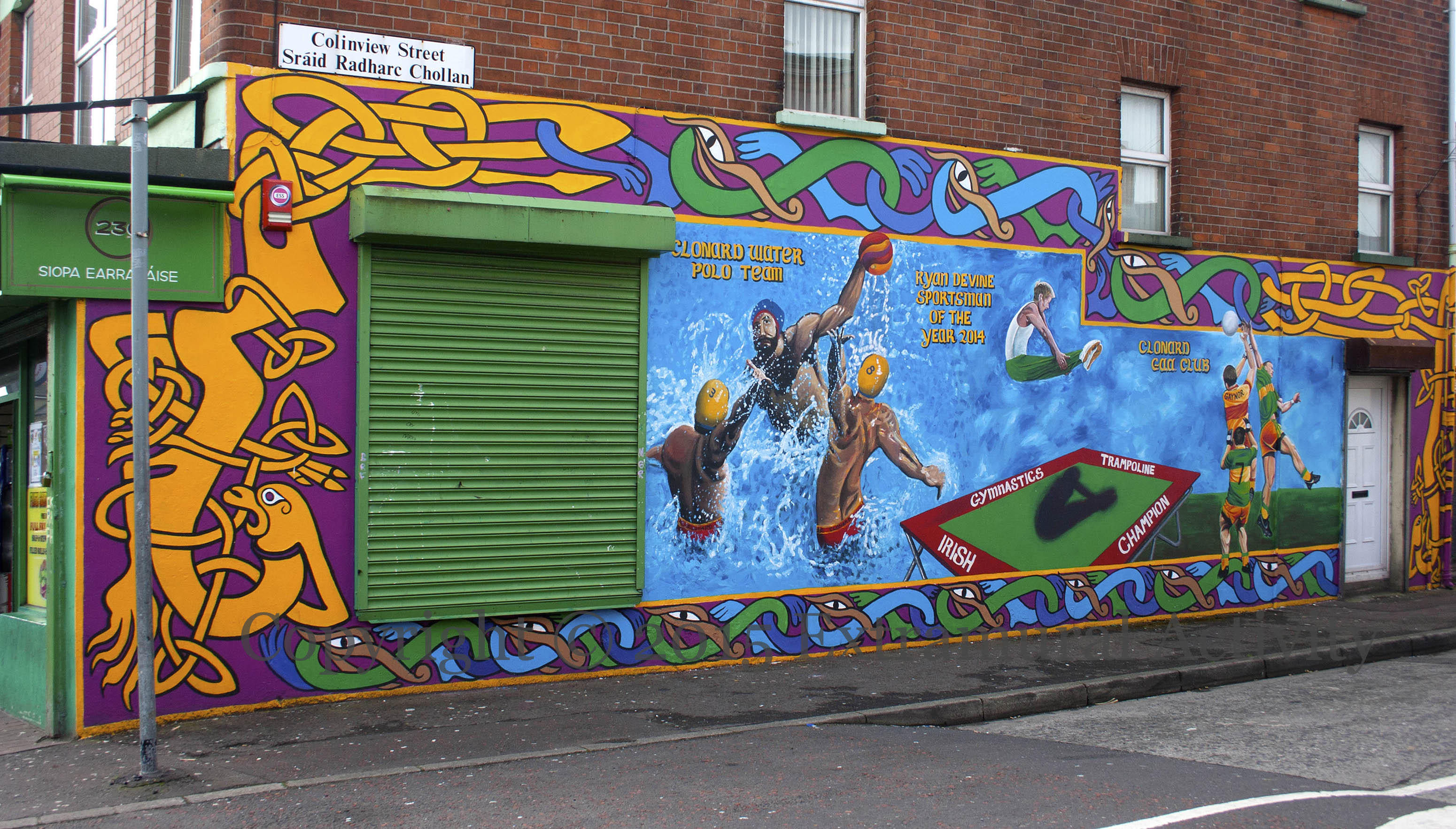
A new mural on Colinview Street/Sráıd Radharc Chollan celebrates local sports: first (shown above) is the Clonard water polo club (Fb), second (in the wide shot, below) is Ryan Devine of Anderstonstown Trampoline Club, junior sportsman of the year, 2014 (Fb), and third, Clonard GAA. The mural is on the side wall of The Flush newsagents, near the former location (above ground) of the Farset and Forth rivers, where dams and races were put in to supply a cotton mill and linen mill and, later, a laundry, a hat-makers, and a biscuit factory. The river, flowing south, then became the Blackie in Beechmount. (Information gleaned from the Belfast Forum).

The final image below is the cartoon for the water polo part of mural, which was begun back in February.

2015-05-28 WaterPoloFull+

2015-05-28 WaterPolo+

Click image to enlarge
Copyright © 2015 Seosamh Mac Coılle
X02639 X02640 X02638 lucas quigley

SOS

“SOS – Wall St rapes Ireland”. Conor Devine (at EamonnMallie.com) provides context. This message on the mountain (Slıabh Dubh) came and went in a matter of days, if not hours, because the television exposé it was designed to coincide with was not in fact broadcast; also perhaps because parents did not appreciate having to explain rape to their young children – the mountain can be seen from a large portion of west and central Belfast.

Click image to enlarge
Copyright © 2015 Seosamh Mac Coılle
X02914

Reflecting On The Past

2015-01-08 CIRAStencil+

CIRA stencil outside the offices of the West Belfast Partnership on the Falls Road, with the offices of Sınn Féın Poblachtach and a tricolour reflected in the window.

Click image to enlarge
Copyright © 2015 Seosamh Mac Coılle
X02469 continuity irish republican army

Scottish Invasion

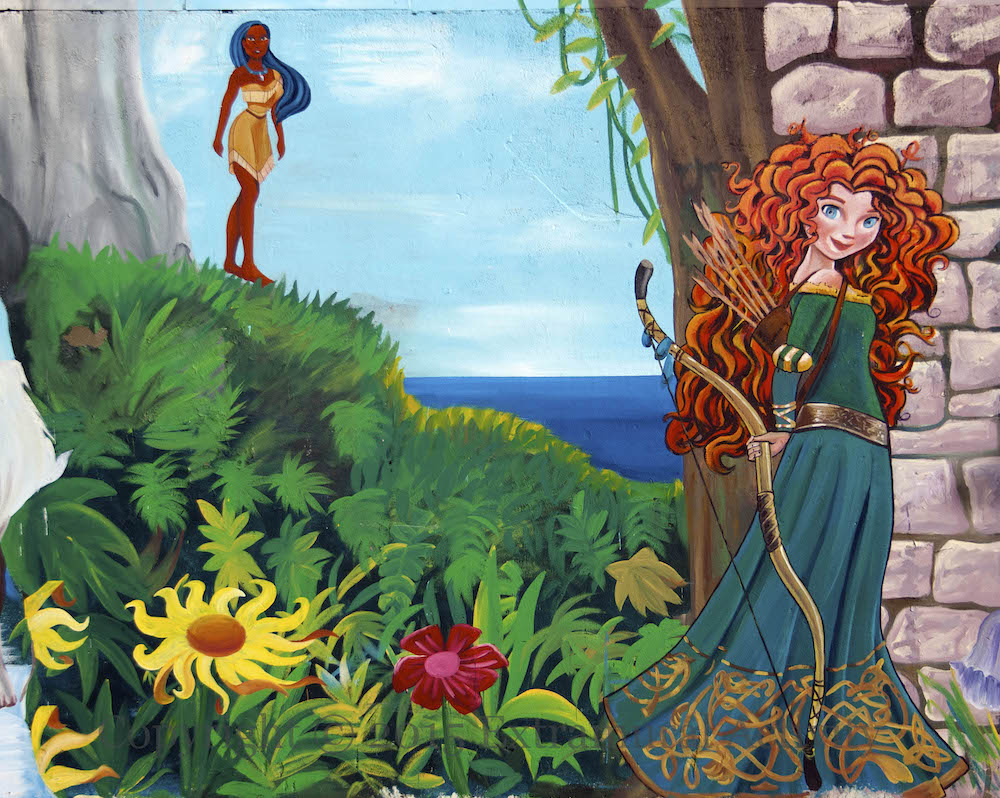
After a fraught experience with a colony of gold-digging Englishmen, native American princess Pocahontas keeps a wary on eye on the Scot Merida (from Disney’s Brave), who is armed with a bow and arrows.

For more Disney princesses: Look Behind You! | Magic Mountain | If The Shoe Fits | Bound & Determined

Click image to enlarge
Copyright © 2015 Seosamh Mac Coılle
X02537

Godfather Of The Israeli Army

2015-05-15 Patterson8+

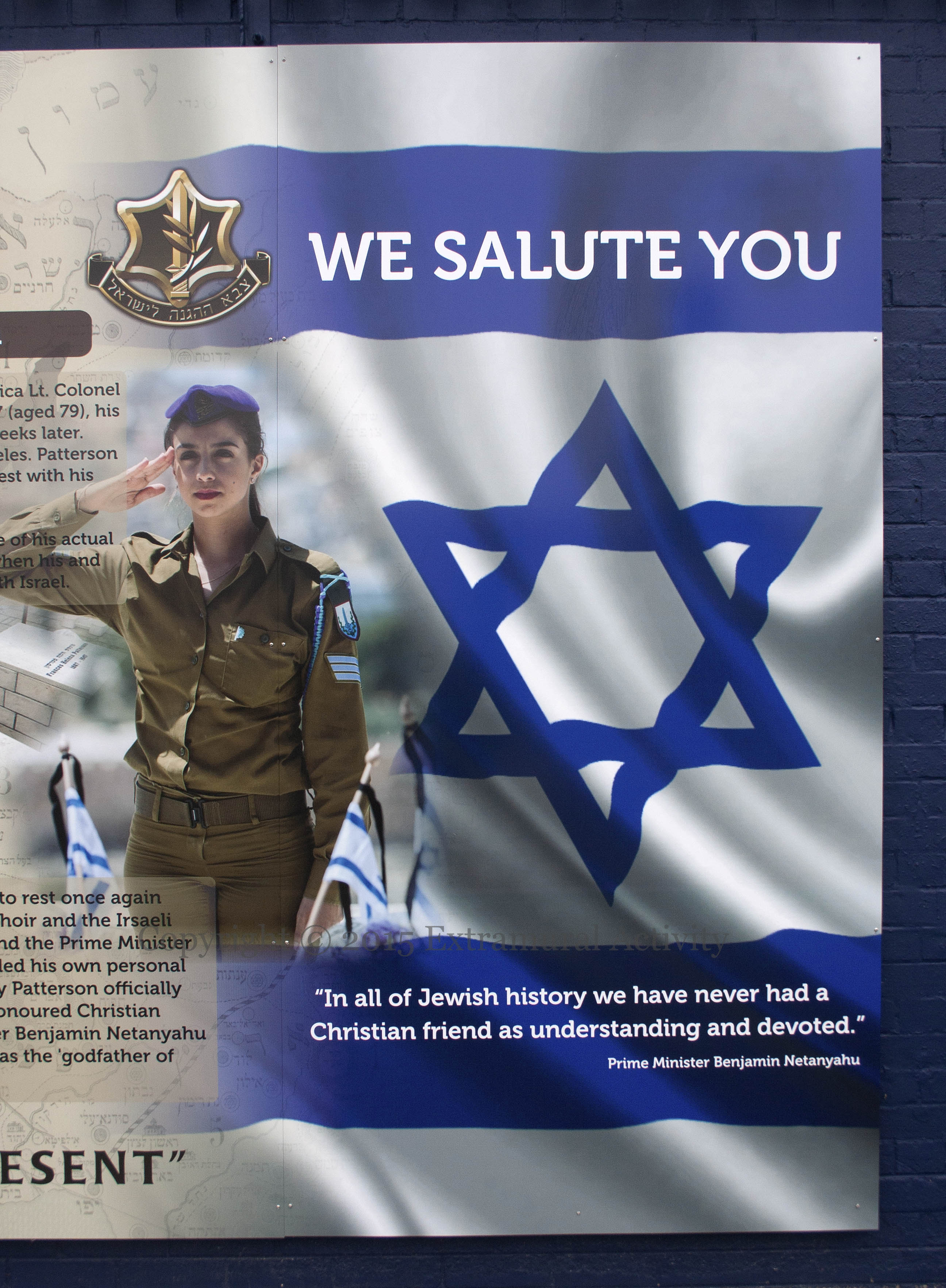
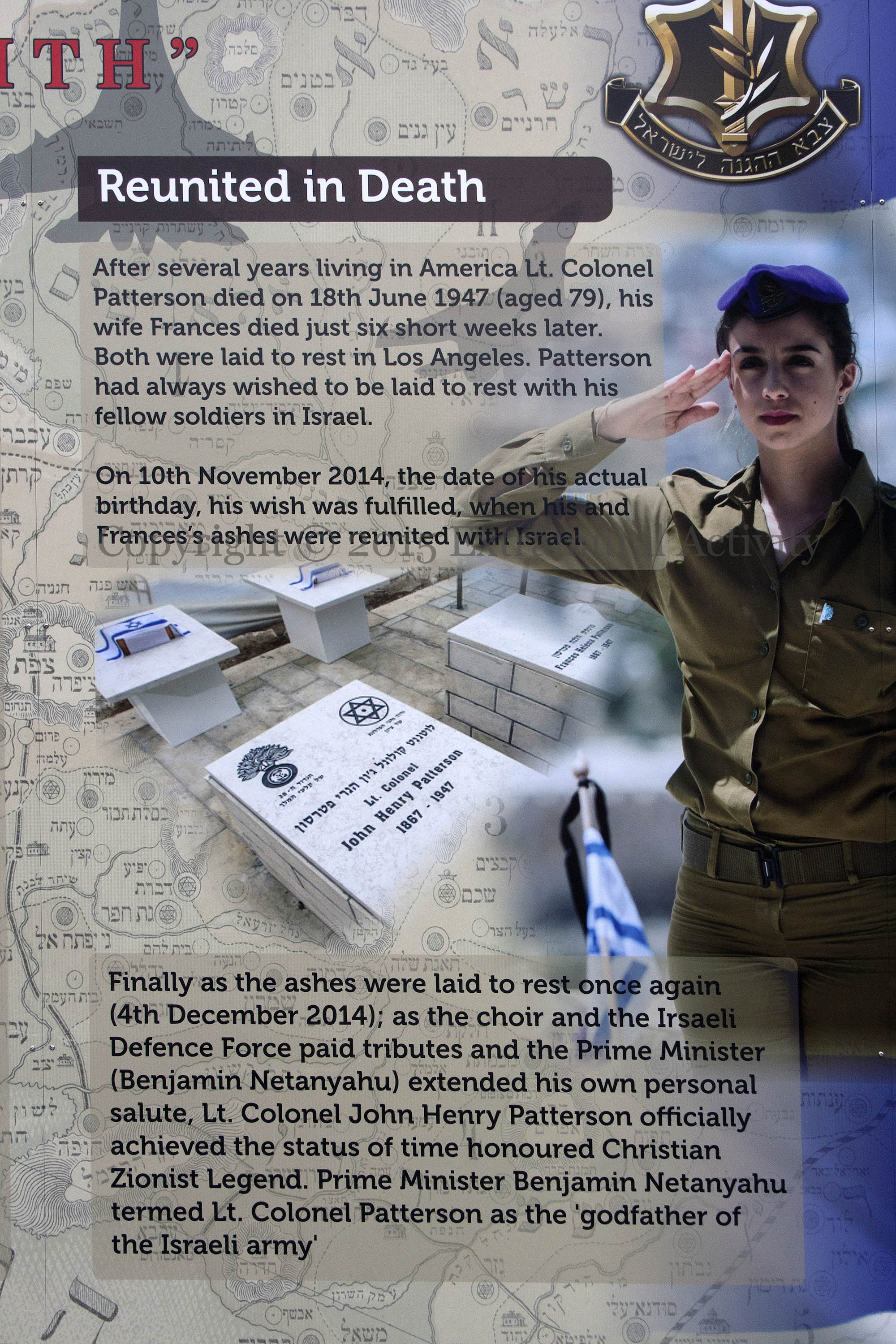
Here are panels 8, 5, 6, and 7 from the Patterson board featured yesterday. The final panel shows the star of David and a quote from Prime Minister Benjamin Netanyahu: “In all of Jewish history we have never had a Christian friend as understanding and devoted.” The interim panels described Patterson’s raising and leading of the Jewish battalions of the Royal Fusiliers in WWI. After dying in obscurity in Los Angeles in 1947, his remains were transported to Israel in December 2014 and reinterred (video). For more, including a recording of Patterson’s voice, see this BBC Magazine article.

Video of the launch:

The plaque to the right asks viewers to “please respect this artwork” but a fire was set below it in 2016; see Where Is The Reconciliation?

2015-05-15 Patterson5+

2015-05-15 Patterson6+

2015-05-15 Patterson7+

2015-05-15 PattersonFull+

X11329 2022-08-06 Patterson WBACS info+

Click image to enlarge
Copyright © 2015 Seosamh Mac Coılle
X02621 X02618 X02619 X02620 X02622
Copyright © 2022 Extramural Activity
X11329
“The Zion Mule Corps. Lt. Colonel Patterson rejoined the British Army in 1914, upon the outbreak of World War I, and saw service in Flander[s] before being sent to Egypt. In Alexandria he met Joseph Trumpeldor and Zeev Jabotinsky who were attempting to form a Jewish military force. By the end March 1915, Jewish volunteers from among deportees in Egypt had started training. The British military command opposed to participation of Jewish volunteers on the Palestinian front and suggested the volunteers serve as a detachment for mule transport. In 1915, Lt. Colonel Patterson was made commander of the approximately 750 man Zion Mule Corps, organized in Egypt in March, with a rank of “honorary Lieutenant Colonel.” Swearing in the new volunteers on March 31, 1915. Patterson wrote in his diary “never since the days of Judah Maccabee had such sights and sounds been seen and heard in a military camp – with the drilling of uniformed soldiers in the Hebrew language”. In April of 1915, after the Mule Corps had been in training for just 3 weeks, Lt. Colonel Patterson  landed with the corps at V Beach, Gallipoli. About half of the corps were seconded to the Anzacs, who treated them discourteously and had them shipped back to Alexandria, the rest under Lt. Colonel Patterson then landed at Cape Helles on April 27th where they saw action for the very first time, there the corps served with distinction out of the 300 men that landed, 14 were killed.” 
“The Mule Corps disbanded in early 1916, Lt. Colonel Patterson returned to Ireland where he commanded the 4th Royal Irish Fusiliers and 5th Royal Dublin Fusiliers. In 1917, after 3 years of lobbying by the British Jewish community, and the likes Jabotinsky the British government finally agreed to the raising of a specifically Jewish unit to fight in the British Army in World War One against the Turks in Palestine/Israel. The force was to be part of the Royal Fusiliers and were given the battalion numbers 38th-42nd. The whole force became known as the Jewish Legion or colloquially as “The First Judeans” The most famous photograph of the men on their march shows Lt. Colonel Patterson clearly and proudly at the head of his men on his horse with one of his offices mounted behind him though the image is blurred has the Lt. Colonel clearly with a broad smile on his face. Indeed every man was smiling as they were lionised by the crowds before embarking on their journey to the Jordan Valley. In June 1918 38th Battalion began engaging the Ottomans some twenty miles north of Jerusalem the Legion also participated in the Battle of Megiddo in mid-September  1918 widely considered to have been one of the final and decisive victories of the Ottoman front. The legion’s mission was to cross the Jordan river. Jabotinsky led the effort. Later he was decorated and Major General Chaytor told the Jewish troops “By forcing the Jordan fords, you helped in no small measure to win the great victory gained at Damascus. During his time in command Lt. Colonel Patterson faced ongoing anti-semitism from superiors, peers and subordinates. His reaction to this engendered much respect from his men, who believed he had sacrificed promotion and position in his quest to ensure fair treatment of them.”
“After several years living in American Lt Colonel Patterson died on 18th June 1947 (aged 79), his wife Frances died just six short weeks later. Both were laid to rest in Los Angeles. Patterson had always wished to be laid to rest with his with fellow soldiers in Israel. On 10th November 2014, the date of his actual birthday, his wish was fulfilled, when his and Frances’s ashes were reunited with Israel. Finally as the ashes were laid to rest once again (4th December 2014); as the choir and the Israeli Defence Force paid tributes and the Prime Minister (Benjamin Netanyahu) extended his own personal salute, Lt. Colonel John Henry Patterson officially achieved the status of time honoured Christian Zionist Legend. Prime Minister Benjamin Netanyahu termed Lt. Colonel Patterson as the ‘godfather of the Israeli army’. 
historic past in the present future is yours if you have the will faith david ben-gurion we salute you

Operation Lion

2015-05-15 Patterson1+

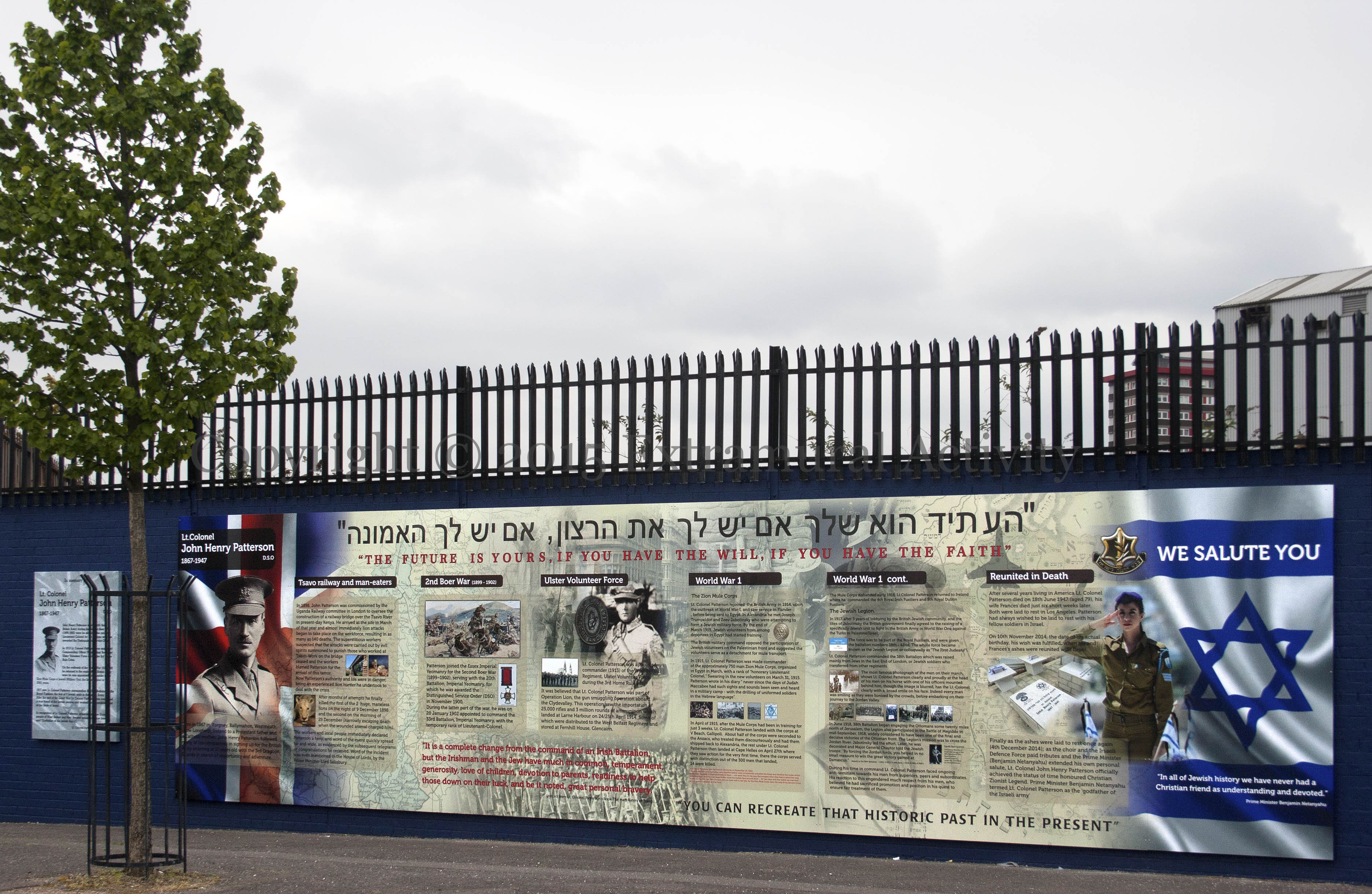
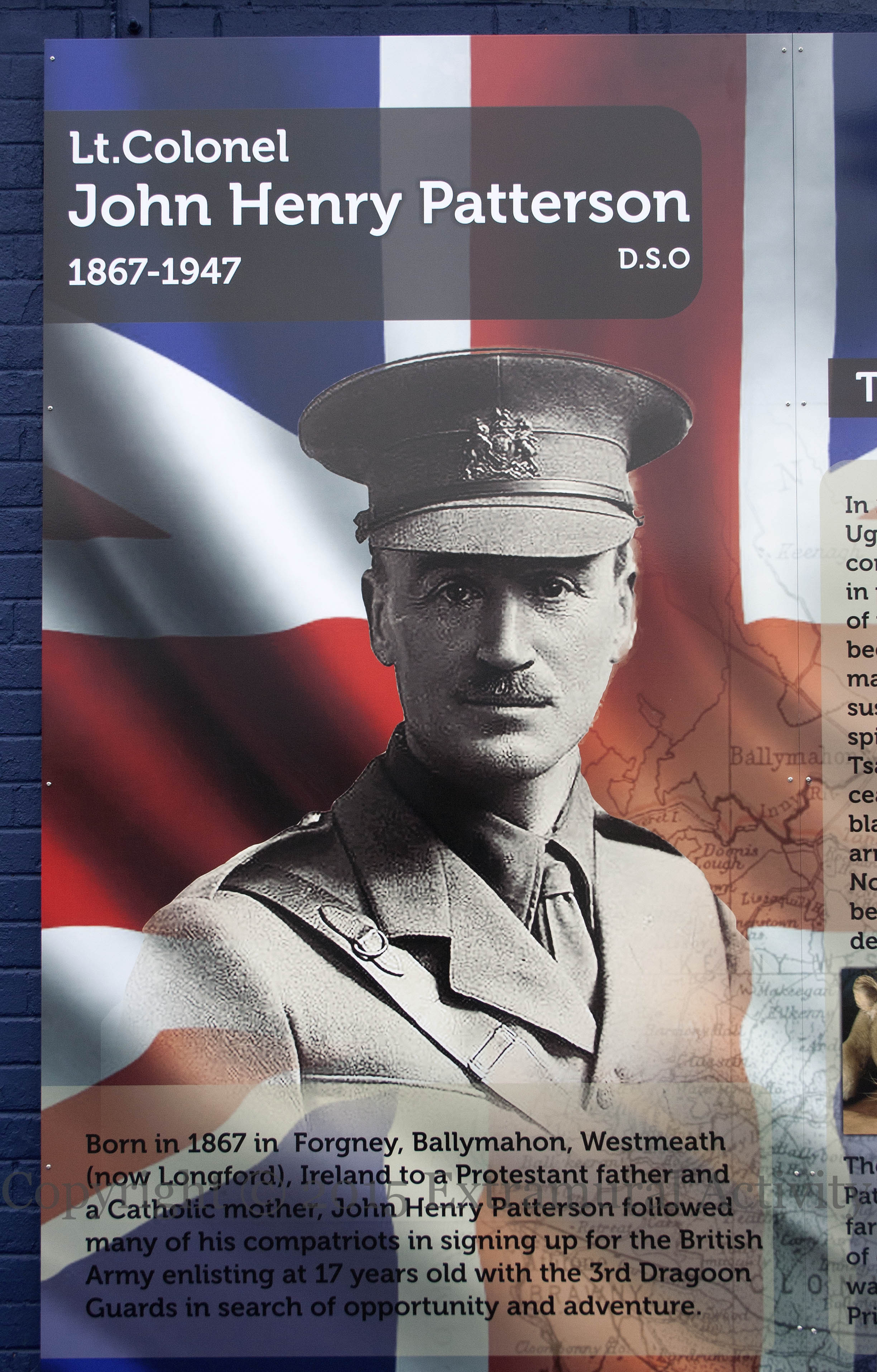
Here are the first four of eight images (plus one wide shot) of the new Patterson memorial at the junction of Northumberland and Beverly Streets. As the text on the board describes, Patterson went from Ireland to Kenya, where he killed several lions after months of hunting. He wrote an account of the hunt ‘The Man-Eaters of Tsavo’ which has inspired three movies; the lions, named The Ghost and The Darkness, were both over nine feet in length. Back in Ireland he commanded a battalion of the UVF and was involved in the Larne gun-running of 1914: Operation Lion.
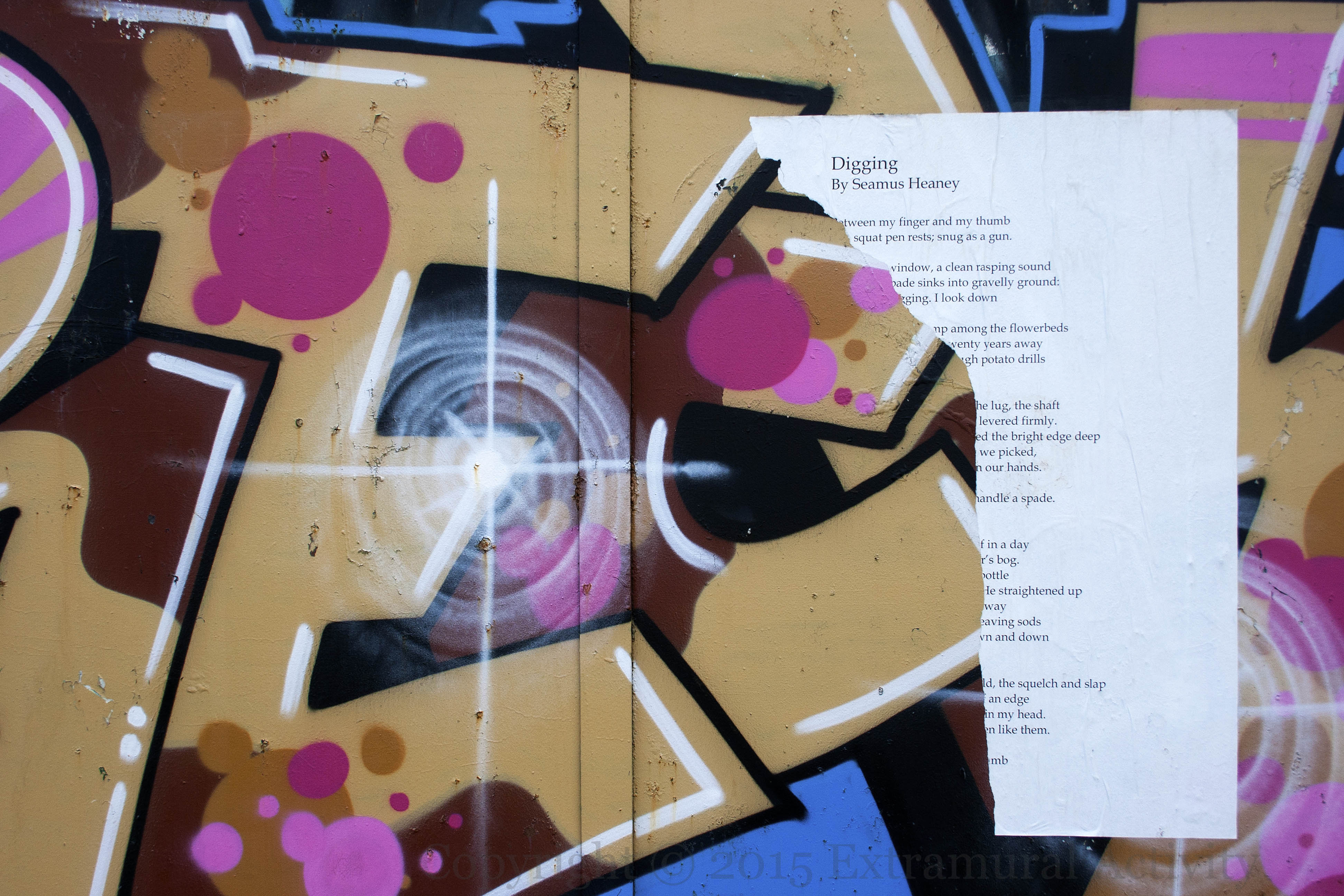
Updated with an image of the info board about the board, with Polish colours (see previously Dumnie Pamiętane I Nigdy Nie Zapomniane)

2015-05-15 Patterson2+

2015-05-15 Patterson3+

2015-05-15 Patterson4+

2015-05-15 PattersonWide+

X11330 2022-08-06 Patterson Polish+

Click image to enlarge
Copyright © 2015 Seosamh Mac Coılle
X02614 X02615 X02616 X02617 X02623
2022 X11330
“John Henry Patterson DSO 1867-1947. Born in 1867 in Forgney, Ballymahon, Westmeath (now Longford), Ireland to a Protestant father and a Catholic mother, John Henry Patterson followed many of his compatriots in signing up for the British Army enlisting at 17 years old with the 3rd Dragoon Guards in search of opportunity and adventure.” 
“In 1898, John Patterson was commissioned by the Uganda Railway committee in London to oversee the construction of a railway bridge of the Tsavo River in present-day Kenya. He arrived at the site in March of that year and almost immediately lion attacks began to take place on the workforce, resulting in as many as 140 deaths. The superstitious workers suspected that the attacks were carried out by evil spirits summoned to punish those who worked at Tsavo. Work on the bridge ceased and the workers blamed Patterson for the arrival of this terror. Now Patterson’s authority and life were in danger, being an experienced lion hunter he undertook to deal with the crisis. After months of attempts he finally killed the first of the 2 huge, maneless lions on the night of 9 December 1898 and the second on the morning of 29 December (narrowly escaping death when the wounded animal charged him). The workers and local people immediately declared Patterson a hero, and word of the event quickly spread far and wide, as evidenced by the subsequent telegrams of congratulations he received. Word of the incident was even mentioned in the House of Lords, by the Prime Minister Lord Salisbury.” 
“Patterson joined the Essex Imperial Yeomanry for the Second Boer War (1899-1902), serving with the 20th Battalion, Imperial Yeomanry, for which he was awarded the Distinguished Service Order (DSO) in November 1900. During the latter part of the war, he was on 20 January 1902 appointed to command the 33rd Battalion, Imperial Yeomanry, with the temporary rank of Lieutenant-Colonel. Lt. Colonel Patterson was appointed commander (1913) of the West Belfast Regiment, Ulster Volunteer Force during the 3rd Home Rule Bill. It was believed that Lt. Colonel Patterson was part of Operation Lion, the gun smuggling operation aboard the Clydevalley. This operation saw the importation of 25,000 rifles and 3 million rounds of ammunition which landed at Larne Harbour on 24/25th April 1914. Some of which were distributed to the West Belfast Regiment and stored at Fernhill House, Glencairn.”