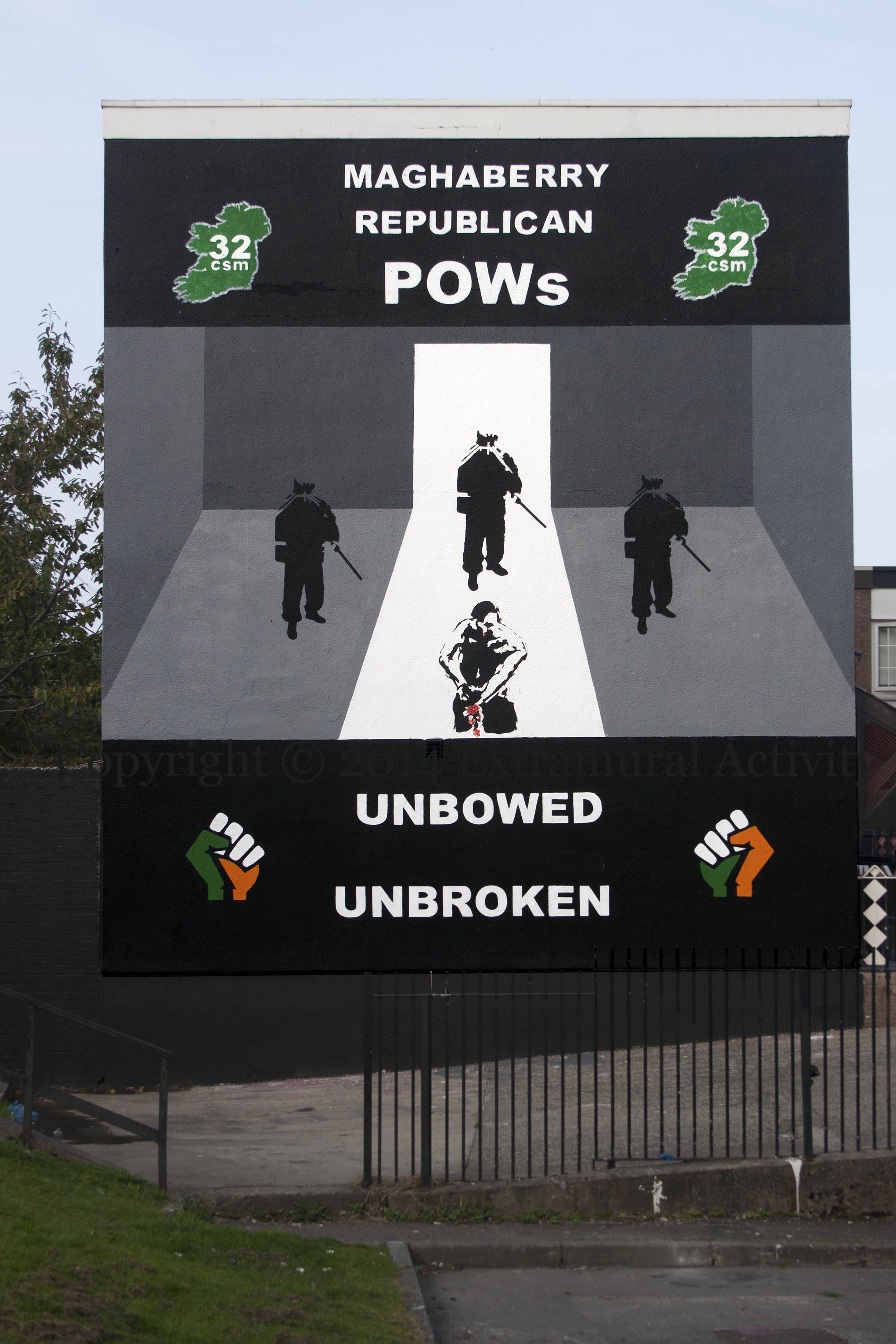
Above is a recent mural by Damian Walker in the New Lodge, in support of republican prisoners in Maghaberry, showing a single shirtless prisoner with a flower (? – see the close-up below) surrounded by three baton-wielding officers. Sponsored the 32-County Sovereignty Movement (web).
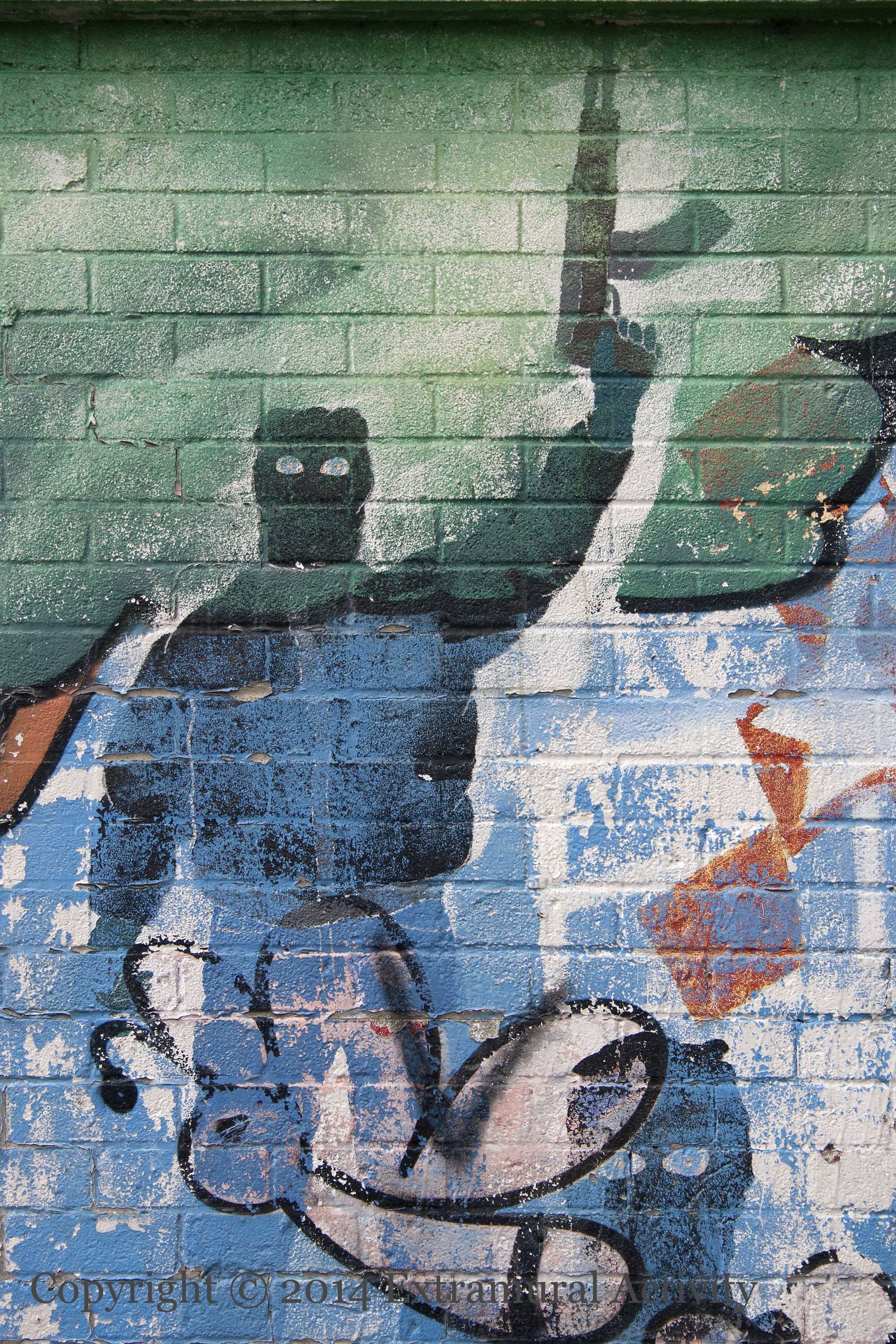
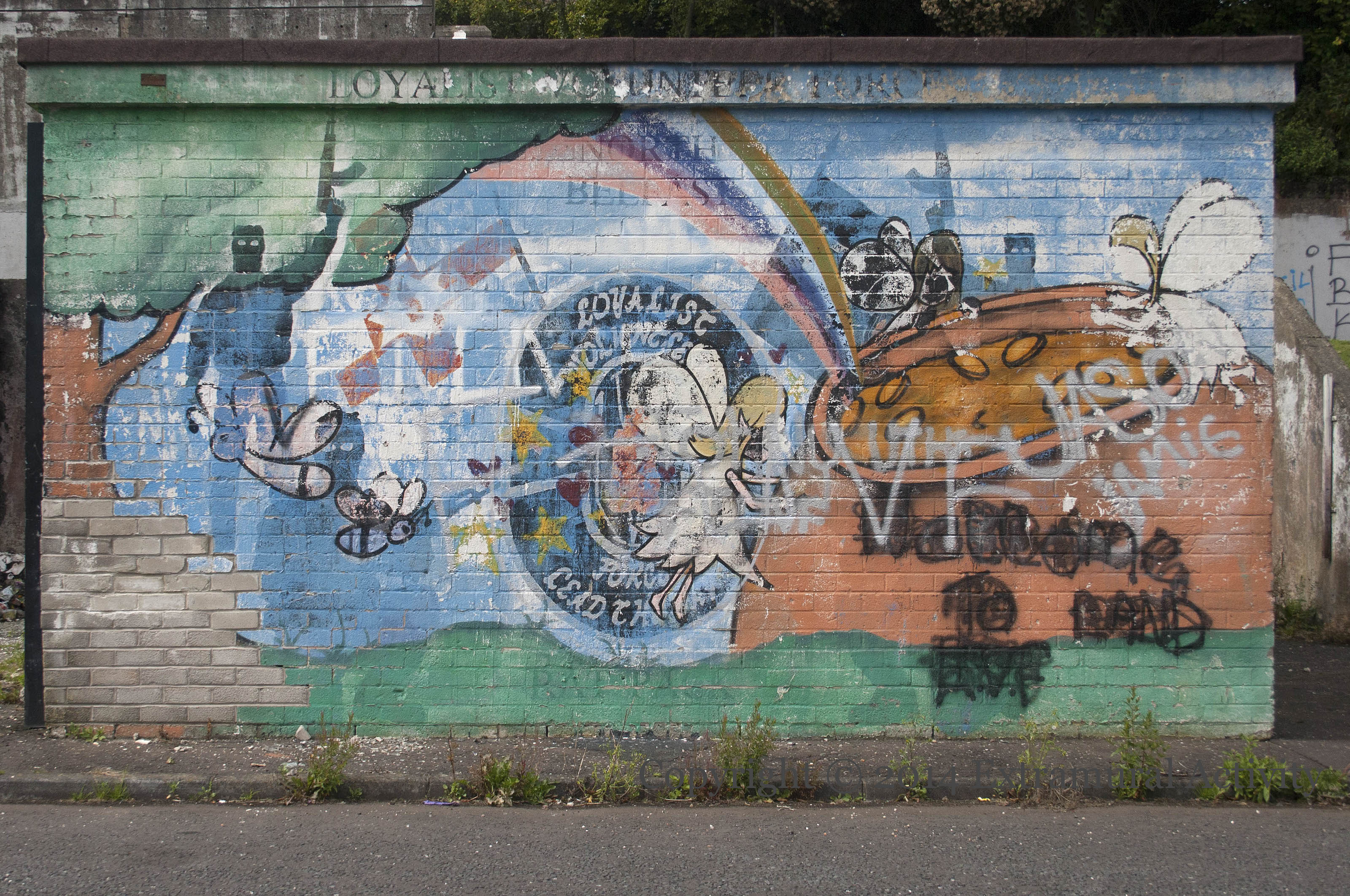
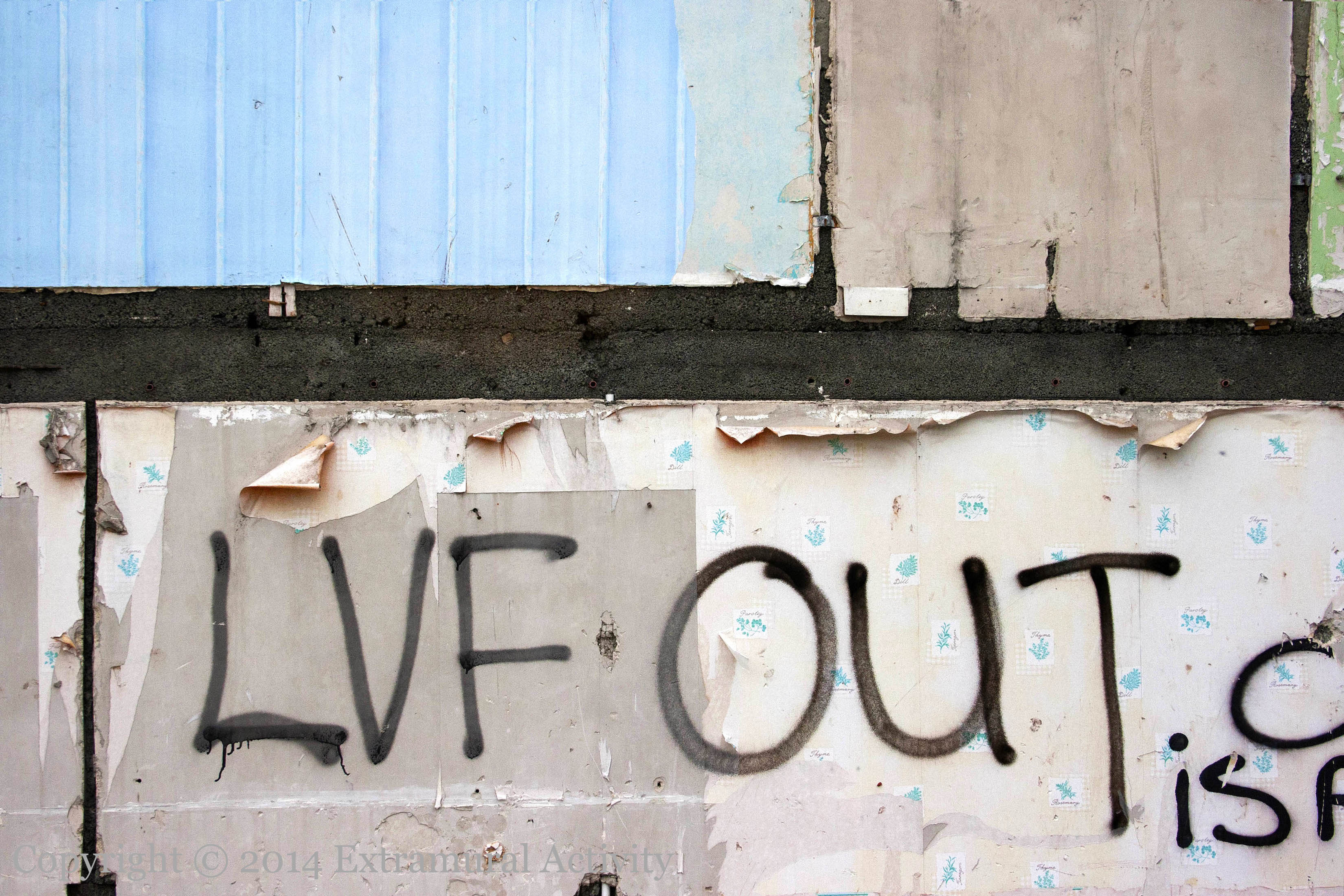
The fairy-tale covering painted over an LVF “North Belfast Rat Pack” mural is fading away to reveal the previous work. For the original LVF mural, see D01199.
The graffiti on the wall (see the third image, below, of the whole wall) – Welcome to LVF Land – has itself been scored out. There is also anti-LVF graffiti in the street.
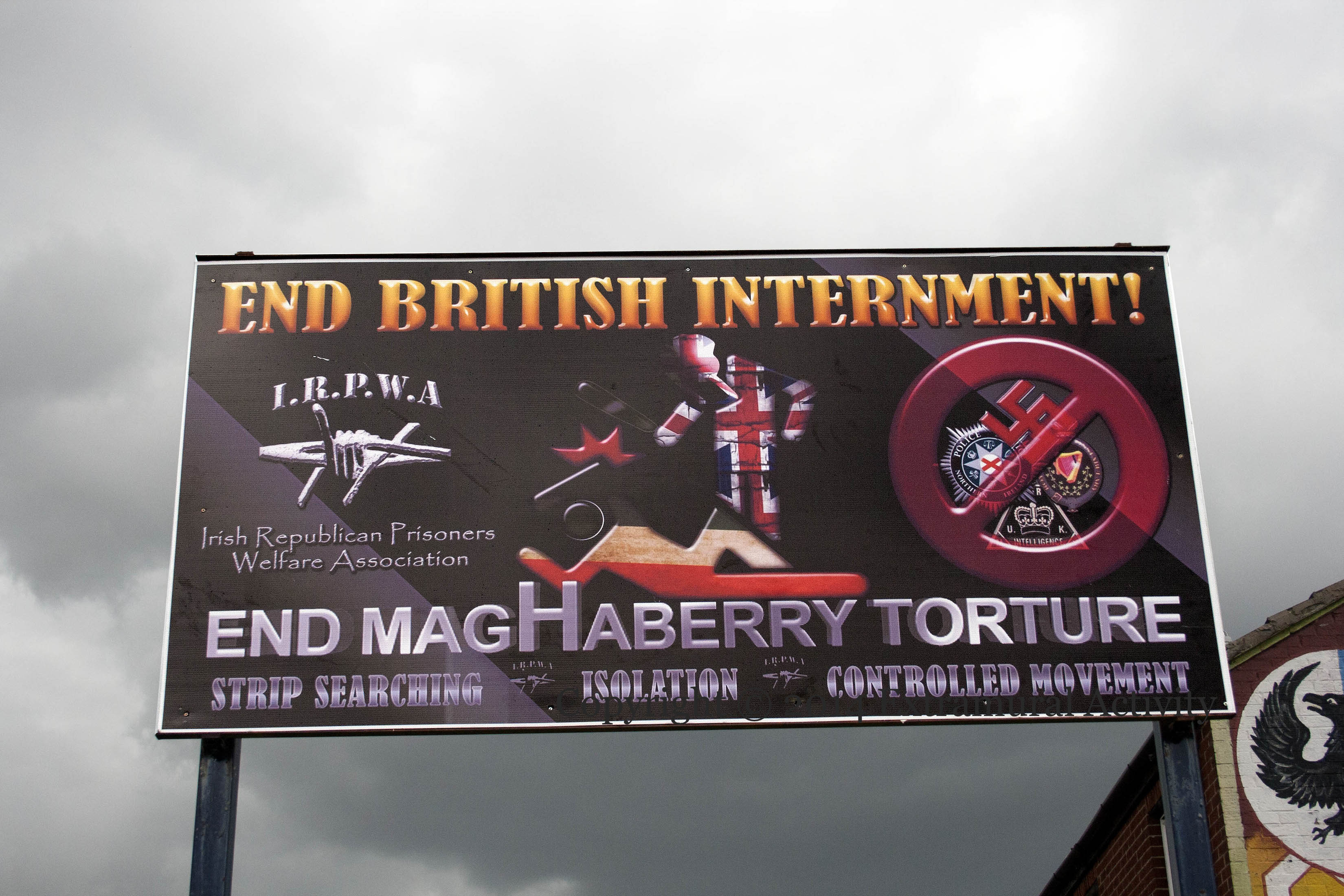
“End British Internment – End Maghaberry Torture – Strip searches, isolation, controlled movement”. The board above at the top of Havana Street, Ardoyne, shows a a prison guard in Union colours beating a prisoner in the Tricolour’s green, white, and orange. On the left is the barbed wire symbol of the Irish Republican Prisoners Welfare Association (IRPWA) and on the right the emblems of the PSNI, the RUC, and MI5 are crossed out under a swastika. A wide shot, showing the CLG/GAA mural in the background, is below.
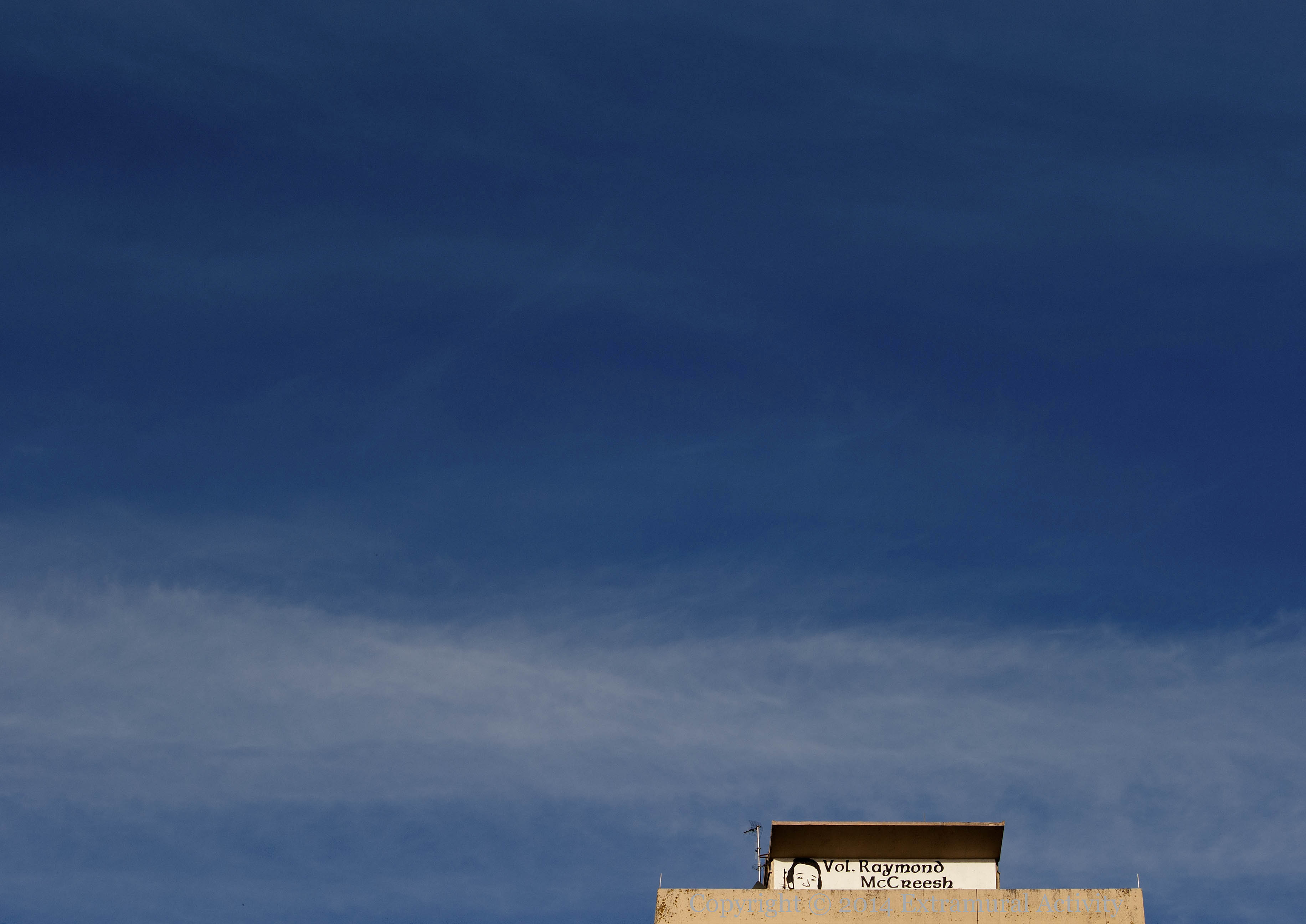
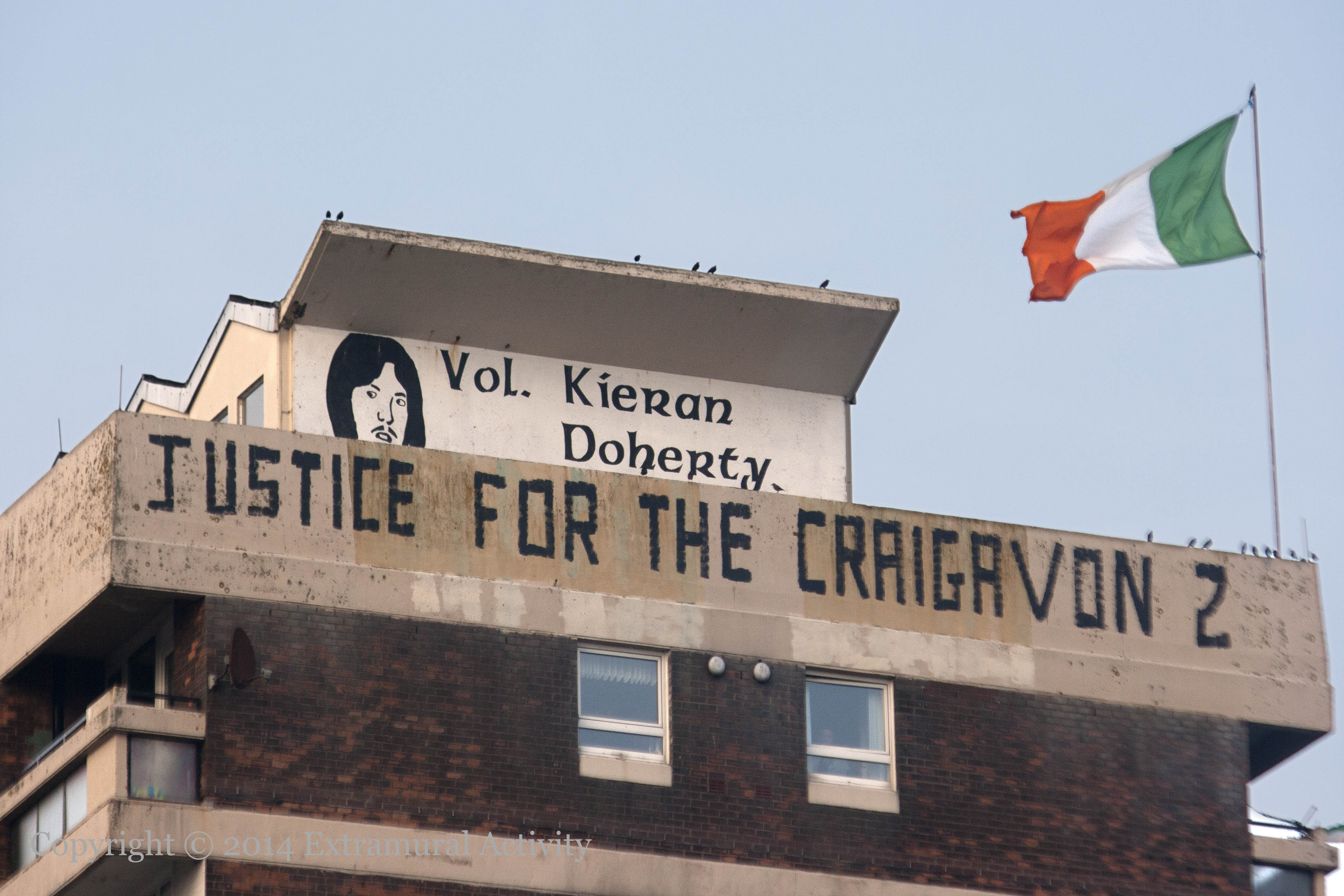
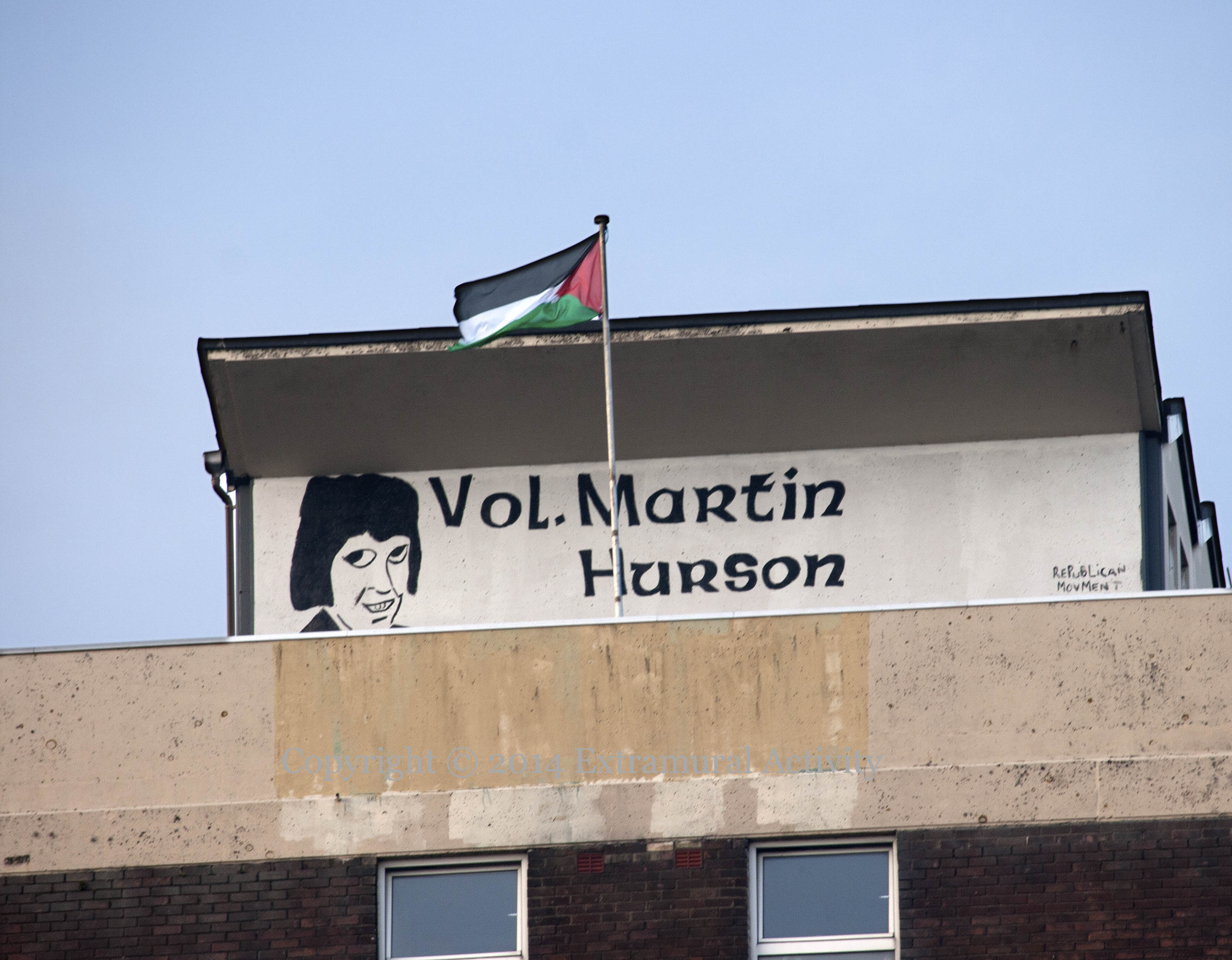
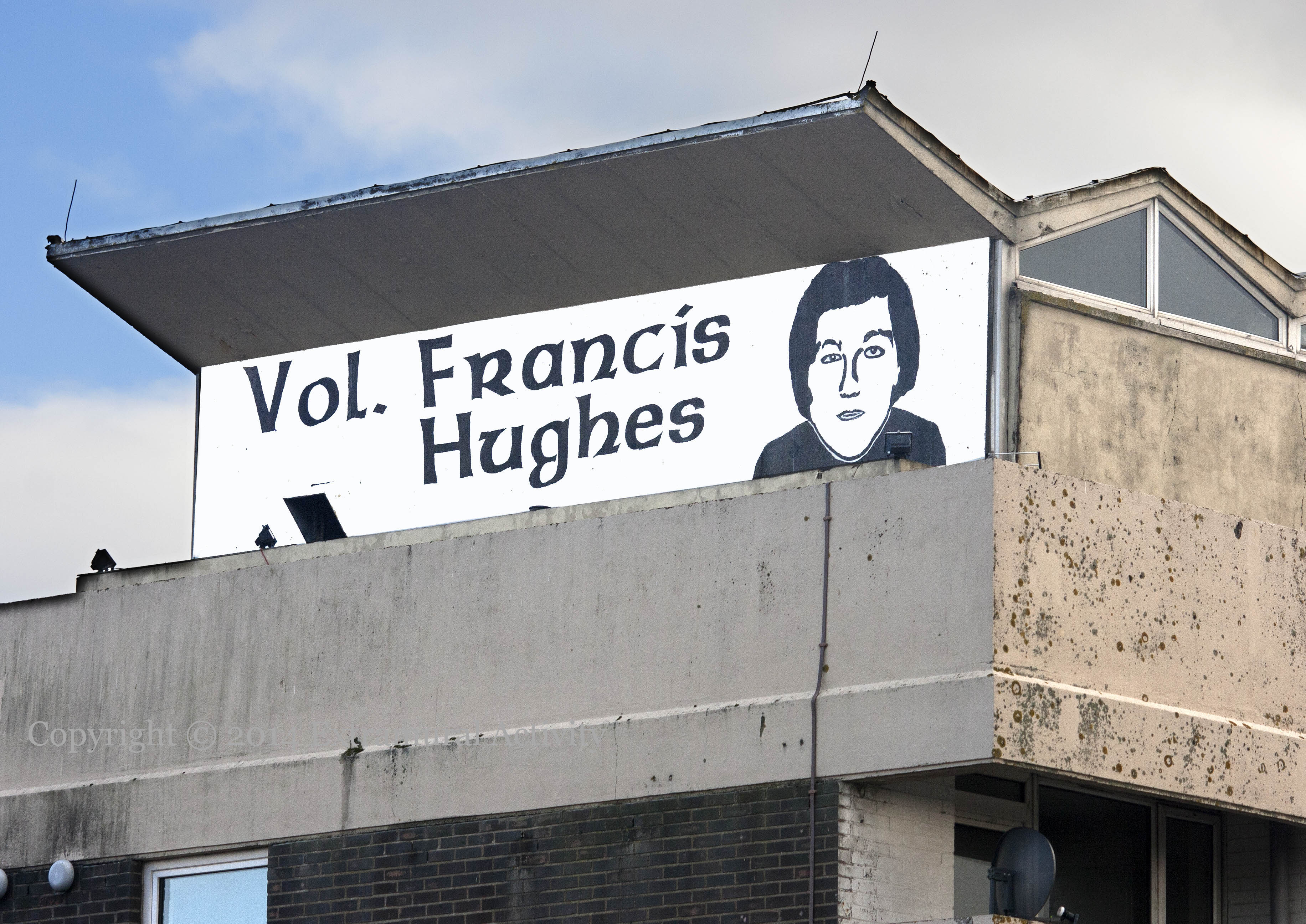
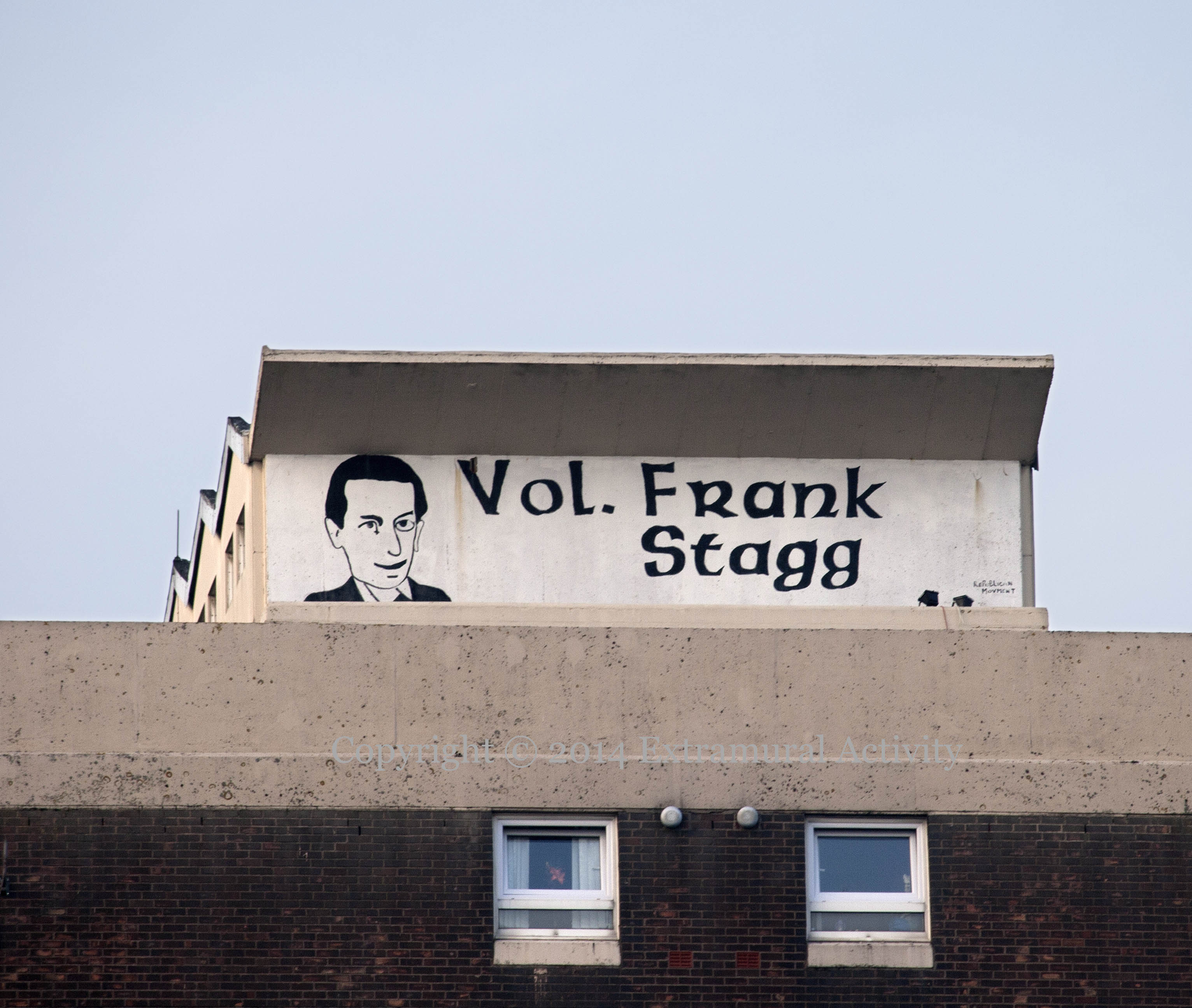
Six of the seven New Lodge tower blocks each feature two hunger strikers, on the narrow sides of the building. Those featured are the ten who died in 1981 along with Frank Stagg and Michael Gaughan. Here are images of five of them. Above is Raymond McCreesh, below is Kieran Doherty with a tricolour and ‘Justice for the Craigavon 2’, third is Martin Hurson and a Palestinian flag, fourth is Francis Hughes, and fifth is Frank Stagg.
An annotated Google map and a table give the Irish, English and former names of the flats (“houses”) as well as their locations and the hunger strikers on each.
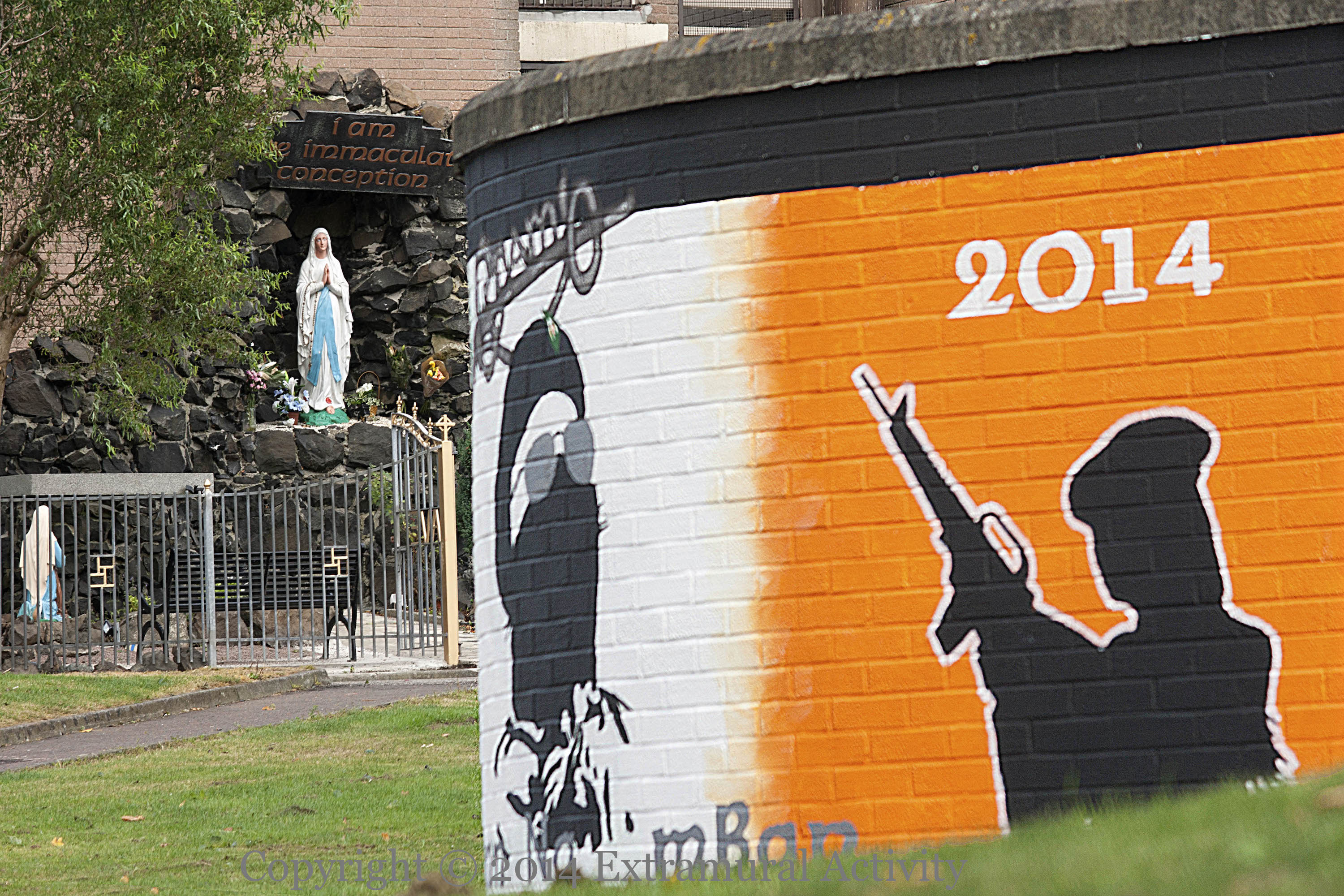
Religion and politics mix in this image of the Blessed Virgin Mary gazing at a recent mural at the bottom of Teach Na bhFıann/Fianna House (formerly Dill House) in the New Lodge. “Cumann Na mBan” in Irish is “the women’s organization/council/society” in English. The organization in question is the republican paramilitary group which was founded on April 2, 1914 and celebrates its 100th anniversary this year.
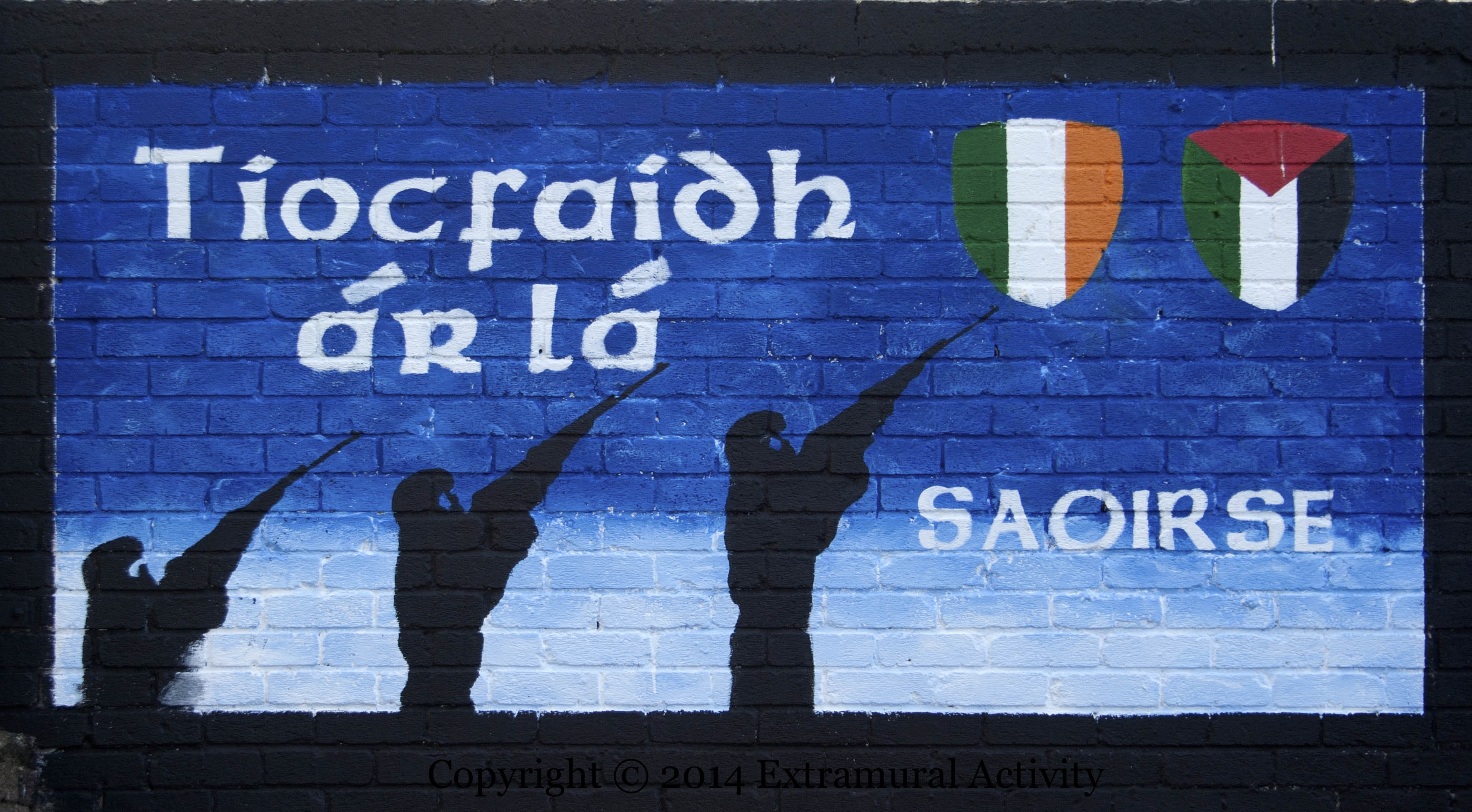
A Che Guevara quote – “I don’t care if I fall as long as someone else picks up my gun and keeps on shooting” – unifies two panels bearing masked men firing funeral volleys, Irish and Palestinian shields, and “Our day will come” in both Irish and Arabic.
Ligoniel (above) and New Lodge (below) copies of a JFTC2 (Justice for the Craigavon Two) stencil by Damian Walker of GaelForce. The Ligoniel location is proving controversial: Walker’s previous attempts have been painted over three times, according to an image in this 32 County Sovereignty post, which also alleges that Sınn Féın has been behind the removals. According to the Tele, a housing executive van was burnt out in response to one of the white-washings. There has been no such controversy in the New Lodge.
Previously: JFTC2 on the mountain | Justice in Hugo Street
The previous board in this location said “‘yes’ to a better future” beneath a tiger, a rainbow, and a DJ at his turntables (see an image at CCDL). That future, it seems, is to go back to a mural similar to the one prior to 2009 – You’re entering Loyalist Tiger’s Bay – though the explicit UDA/UFF insignia are gone, leaving only the clenched fist.
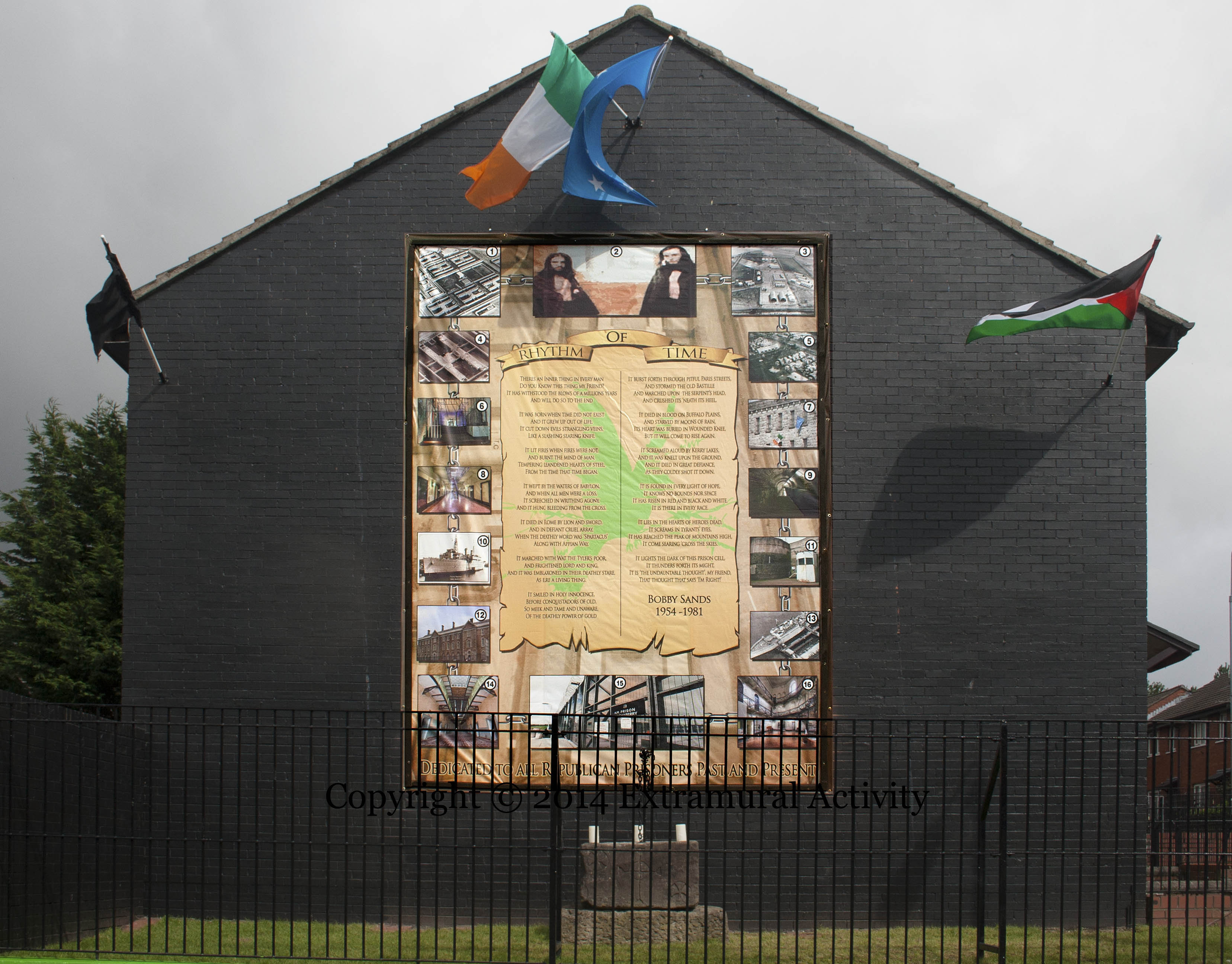
Bobby Sands’s poem The Rhythm Of Time, published in 1981 as part of Prison Poems, is printed in full along with images of Long Kesh and other prisons in which republican prisoners were held.
The work was launched 2014-08-10, to coincide with the anniversary of the introduction of interment in 1971 (see e.g. this BBC news report).







 Extramural Activity