It is a year since the new policy on bilingual street signs was made public; by September there had been 500 applications (Belfast Media) but by January of this year no new signs had been erected and 600 applications were awaiting decision (Belfast Live | Irish News from Feb). One new sign – shown here – was erected in February on Clifton Street (Belfast Media).
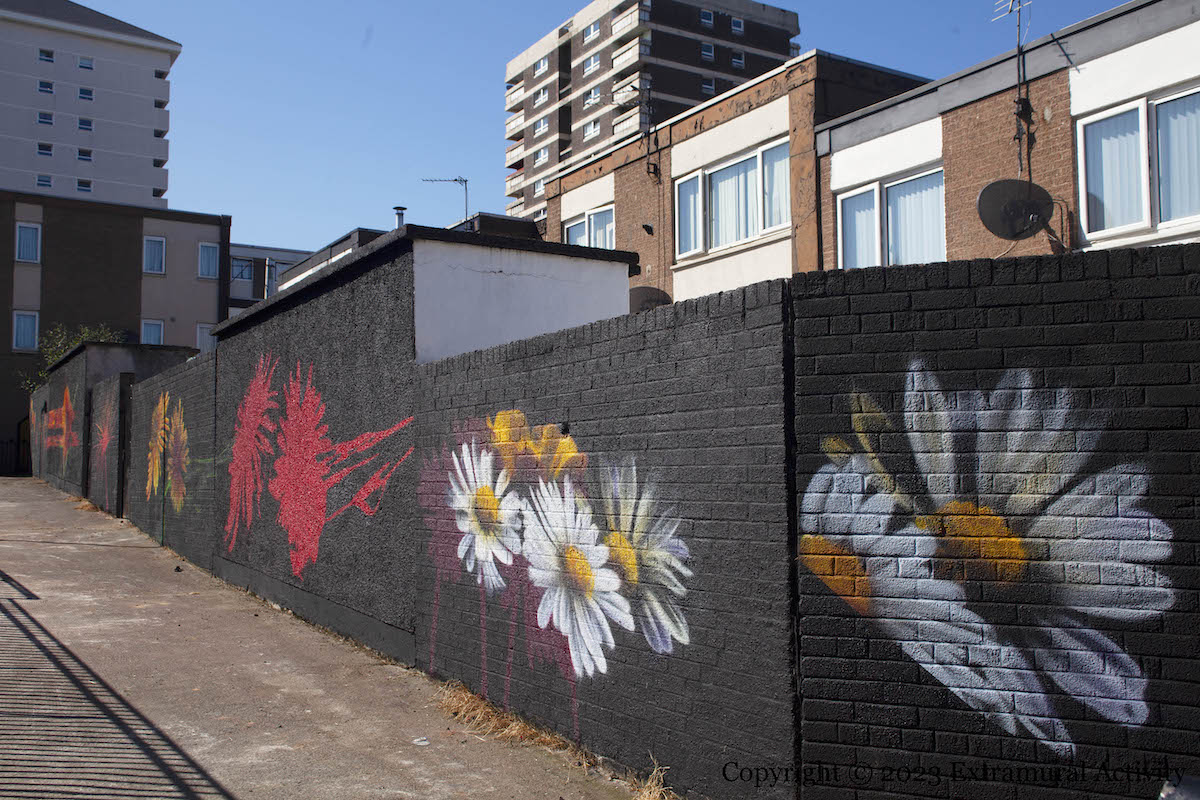
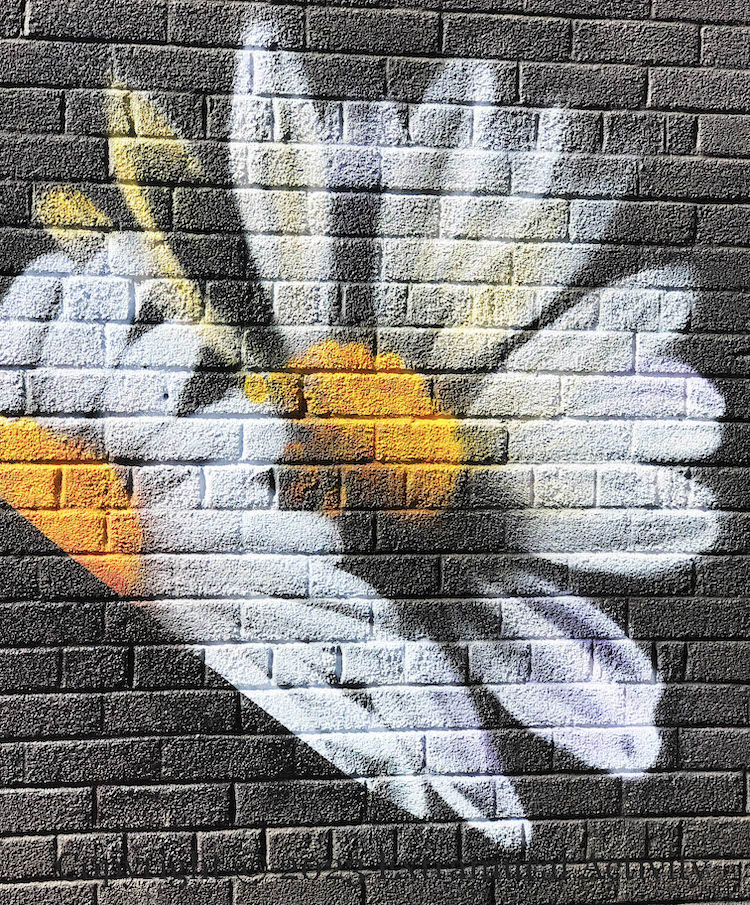
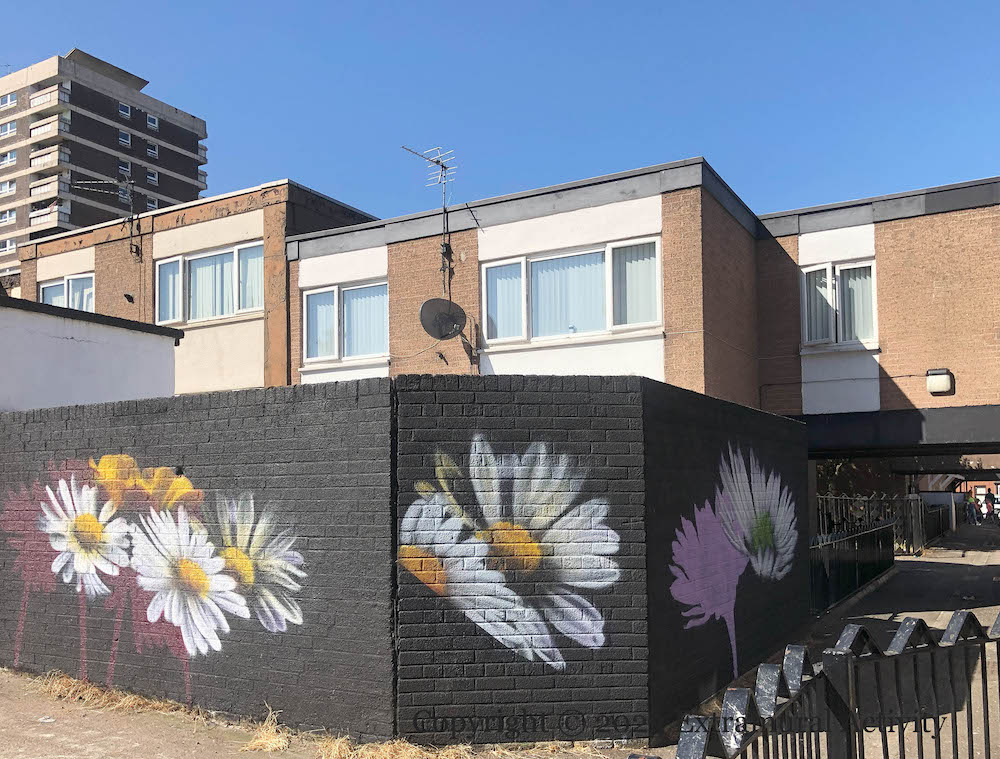
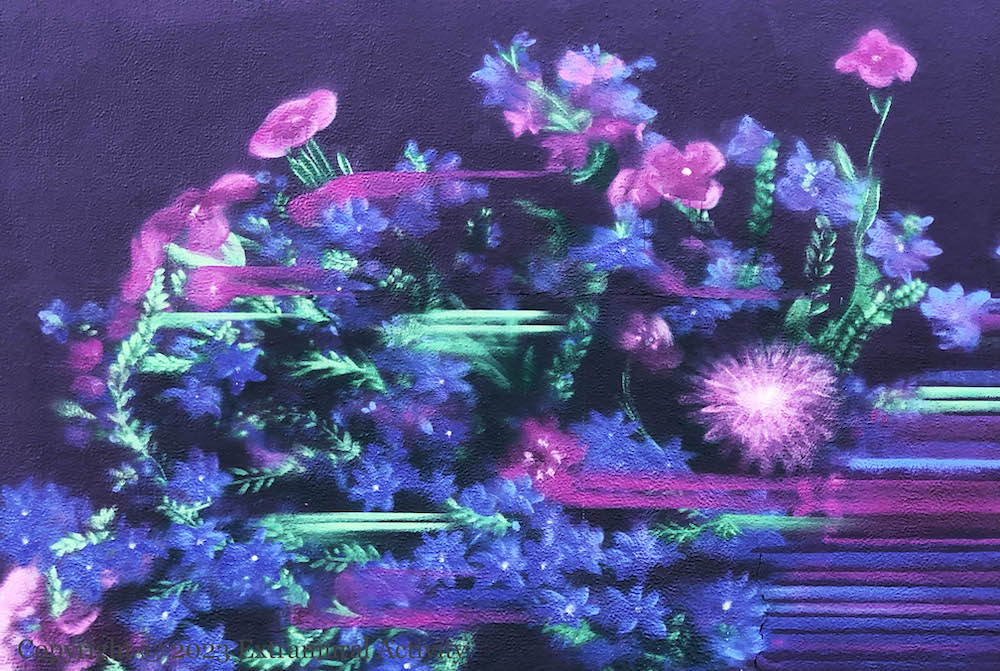
Here is a gallery of images from the new, multi-panel, floral mural in the middle of the New Lodge.
The mural was painted by emic (ig) with young people from the New Lodge Youth Centre, sponsored by Communities In Transition (a programme of the Executive Office) and organised by Community Restorative Justice Ireland (web).
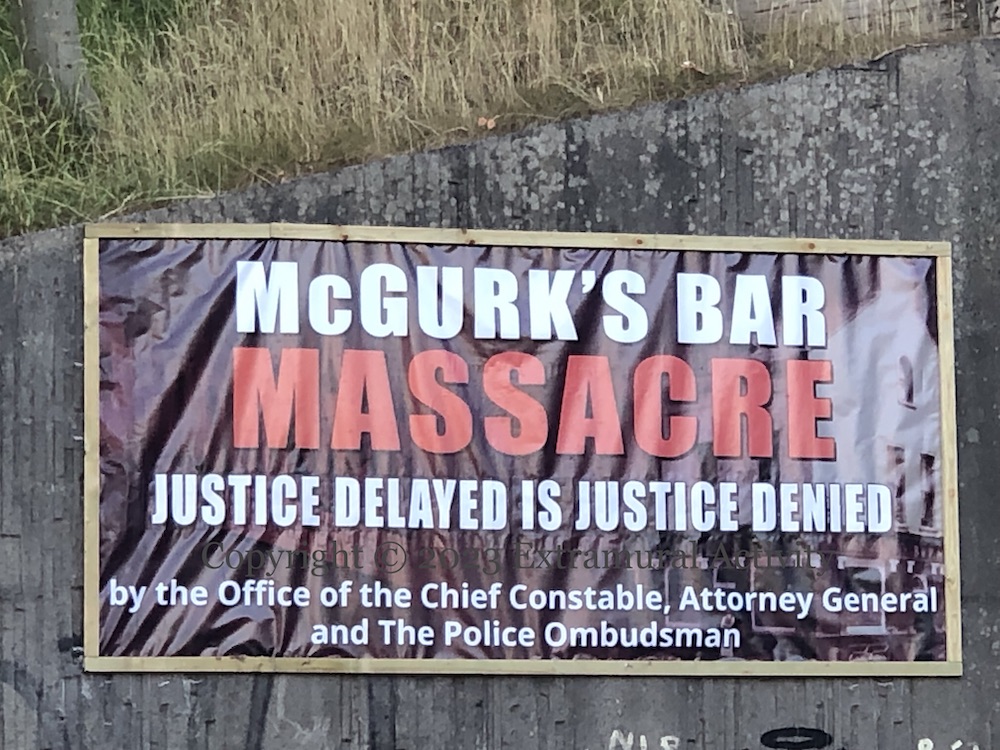
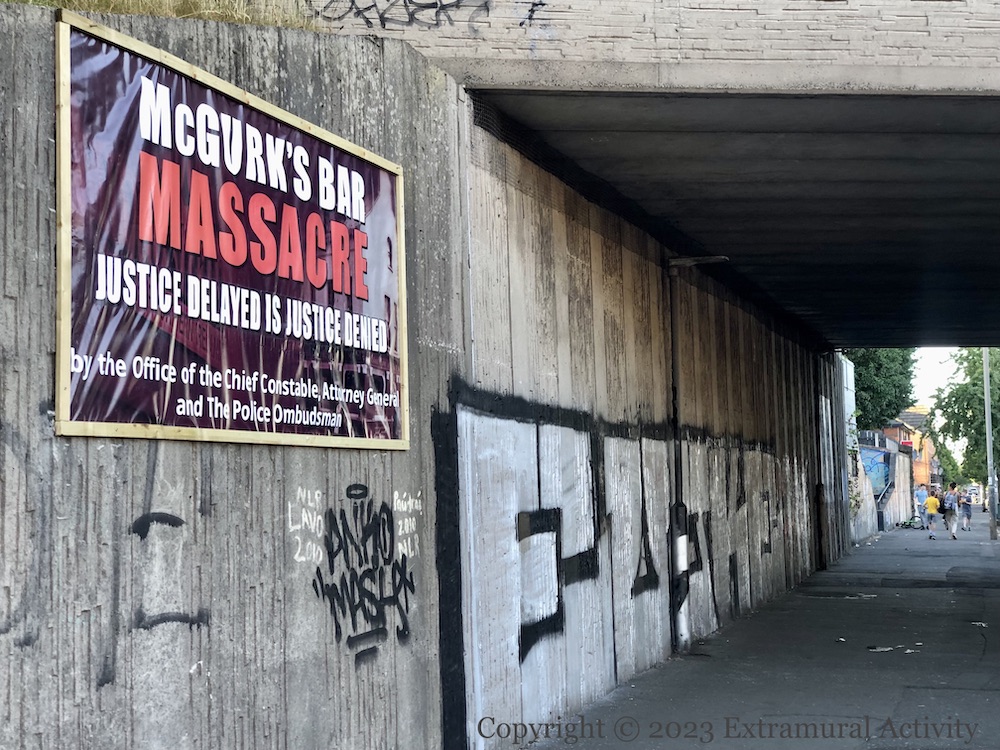
“Justice delayed is justice denied by the Office of the Chief Constable, Attorney General and The Police Ombudsman.” McGurk’s bar was bombed in December, 1971, causing the death of 15 people. At the time, the security forces maintained that the bomb was left by someone from the IRA for later collection and that the pub was affiliated with the IRA, despite the fact that a loyalist group claimed responsibility and a witness saw the bomb being planted a few moments before it went off. Among those repeating the “own goal” story was Brigadier Frank Kitson (McGurk’s Bar twitter | BelTel), who was recently named in a Derry mural in connection with Bloody Sunday – see From The Top Down.
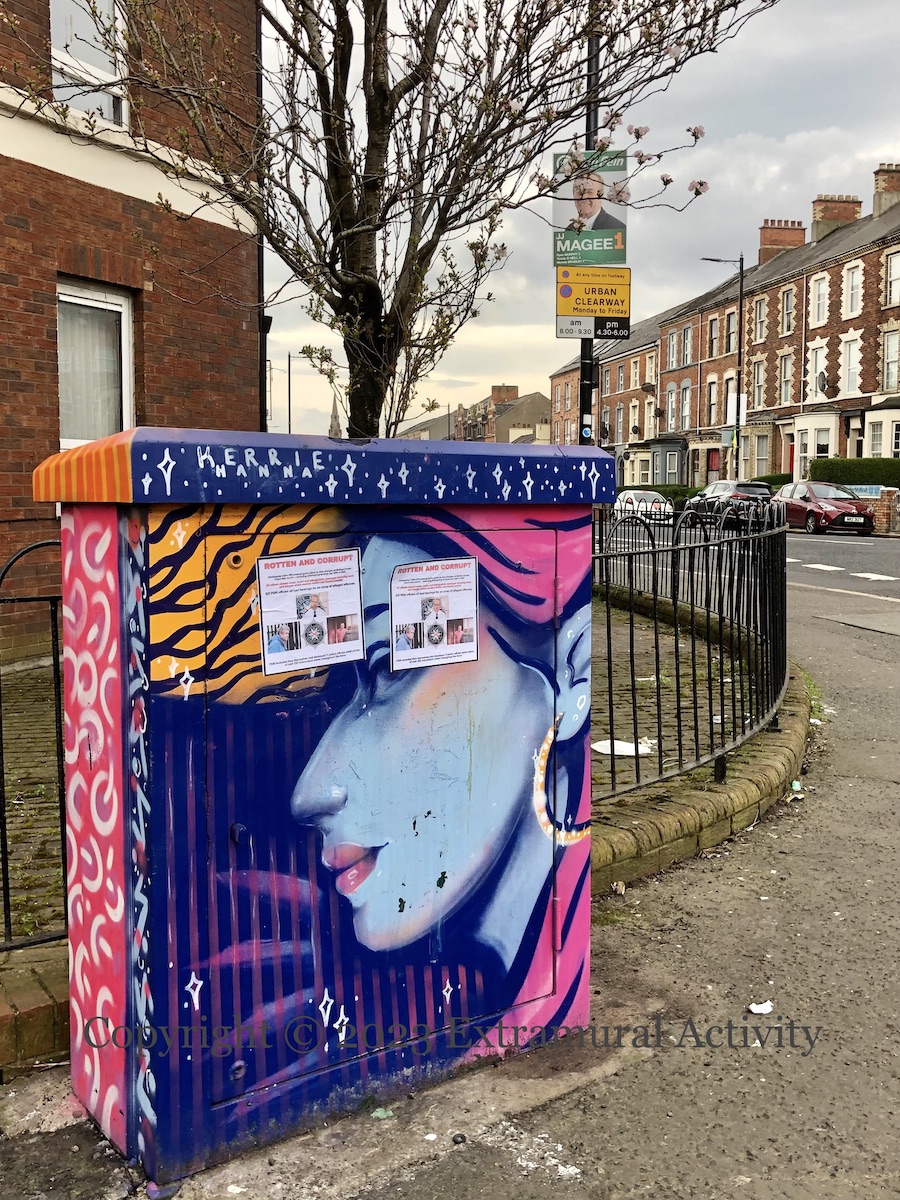
“Rotten And Corrupt: Christopher Little (39) entered guilty pleas to nine charges at Belfast Crown Court last month – including attempting to have sex with a child. [Irish Times] 20 officers shared racist, sexist and misogynistic messages including texts and images which mocked Arabic and Islamic people. [Spotlight programme] Six PSNI officers all had hearings for an array of alleged offences. PSNI revealed they themselves had dismissed 11 police officers amid claims of over 130 misconduct cases throughout the force. [Belfast Live]”
It’s not clear who is behind these flyers in north Belfast; the harpist on the electical box is by Kerrie Hanna (ig).
New Lodge Road, Belfast.
Update: the posters have been removed (by the end of July, 2023).
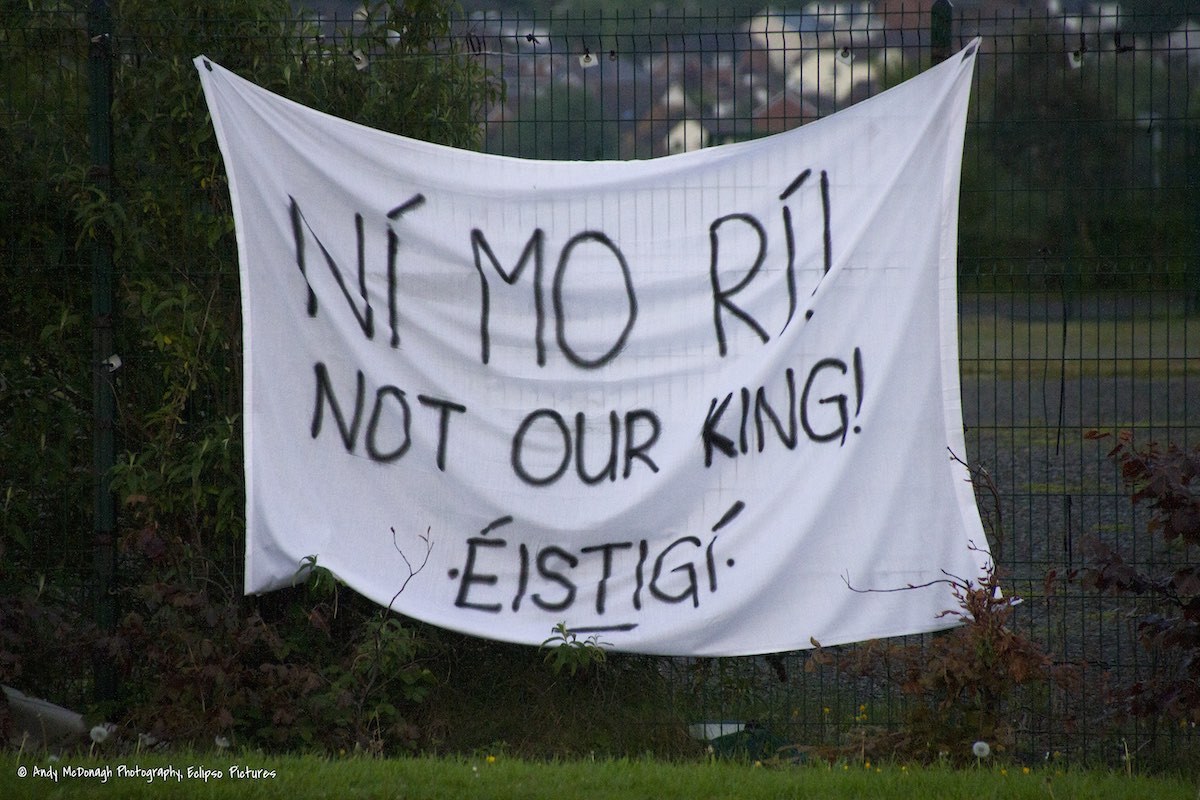
Here are two more responses to the coronation of King Charles last weekend: (above and last) a Lasaır Dhearg (web) tarp in north Belfast reading “Fuck King Charles”; immediately below, an Éıstıgí (web) sheet/flag reading “Ní Mo Rí [Ní hé mo rí é/[he is] not my king]. Not our king.” in Strand Road, Derry.
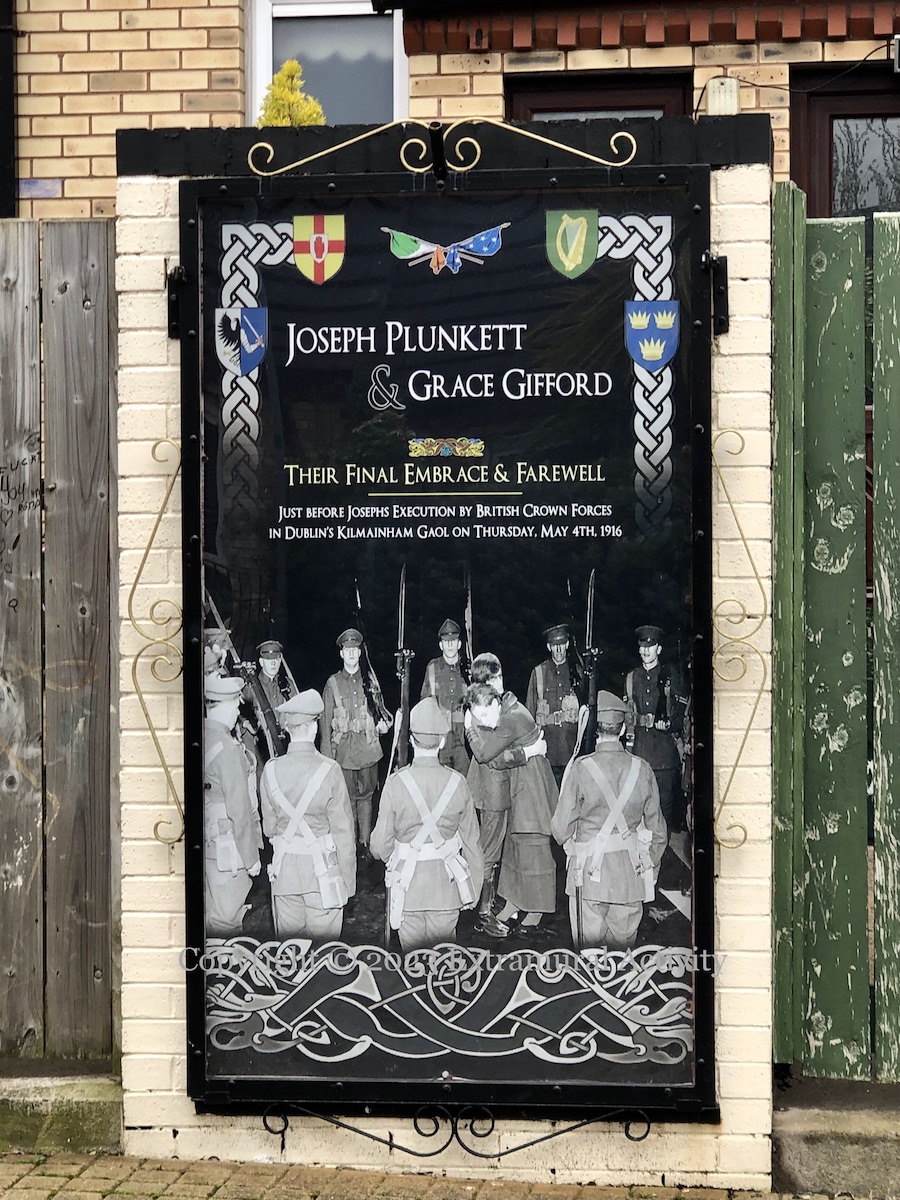
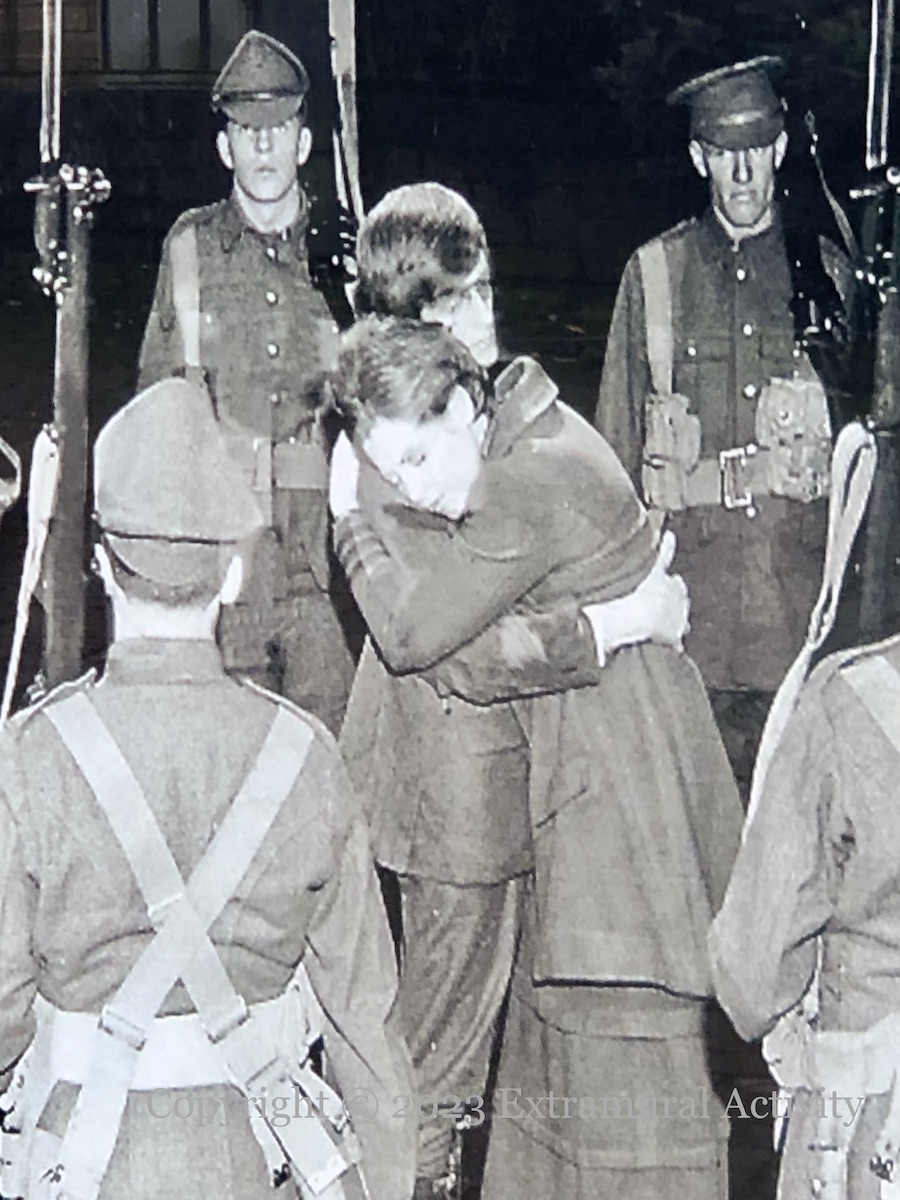
“Joseph Plunkett & Grace Gifford – their final embrace & farewell.” May 4th is the anniversary of the execution of Joseph Plunkett, one of the planners of the Easter Rising in 1916. Seven hours before he faced the firing squad, he married Grace Gifford. The photograph is from a re-enactment for a 1966 RTÉ programme Insurrection (RTÉ). The ballad Grace, written by Seán and Frank O’Meara in 1985, is now internationally known (here is Jim McCann’s 1985 performance).
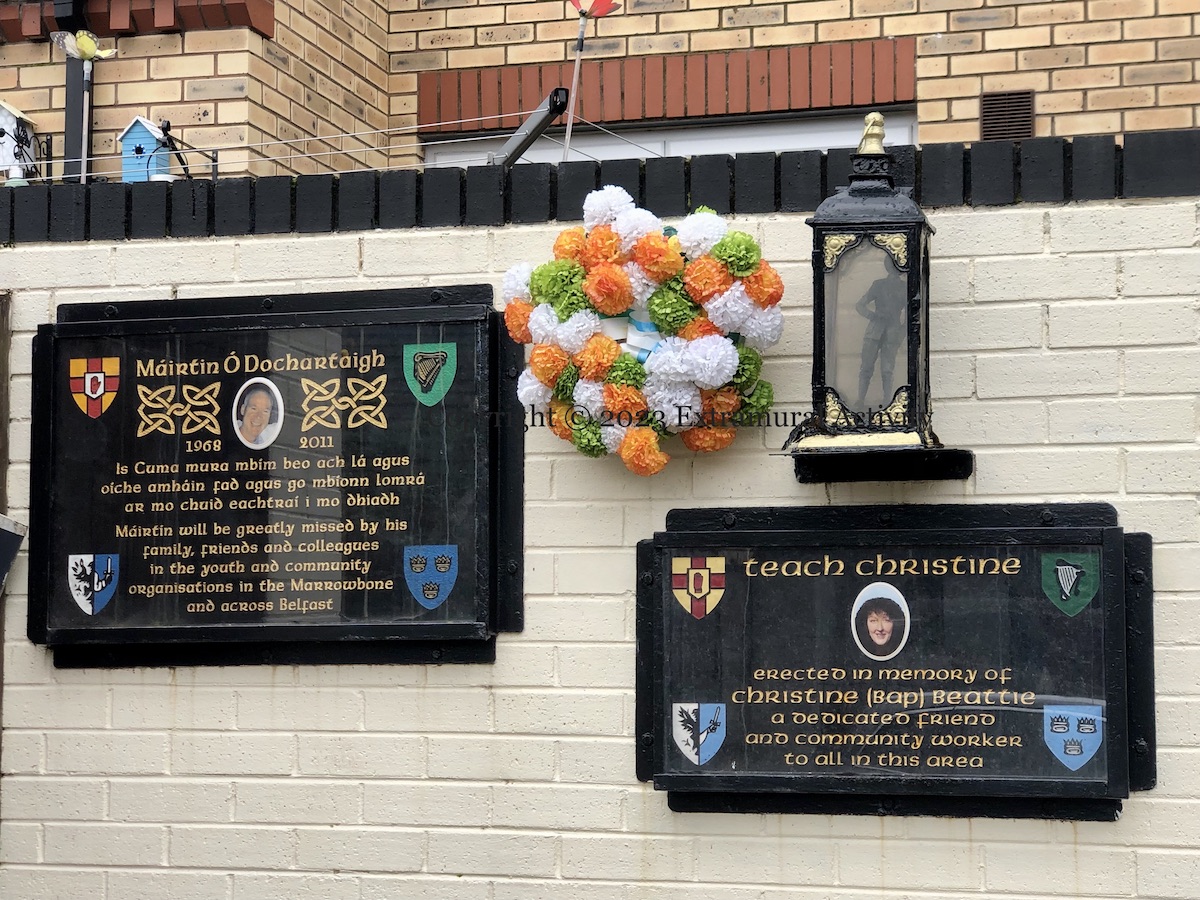
This is one of various recent additions to the many memorials in Ard An Lao, Béal Feırste/Ardilea, Belfast. This replaces the board seen in Continuing Their Legacy.
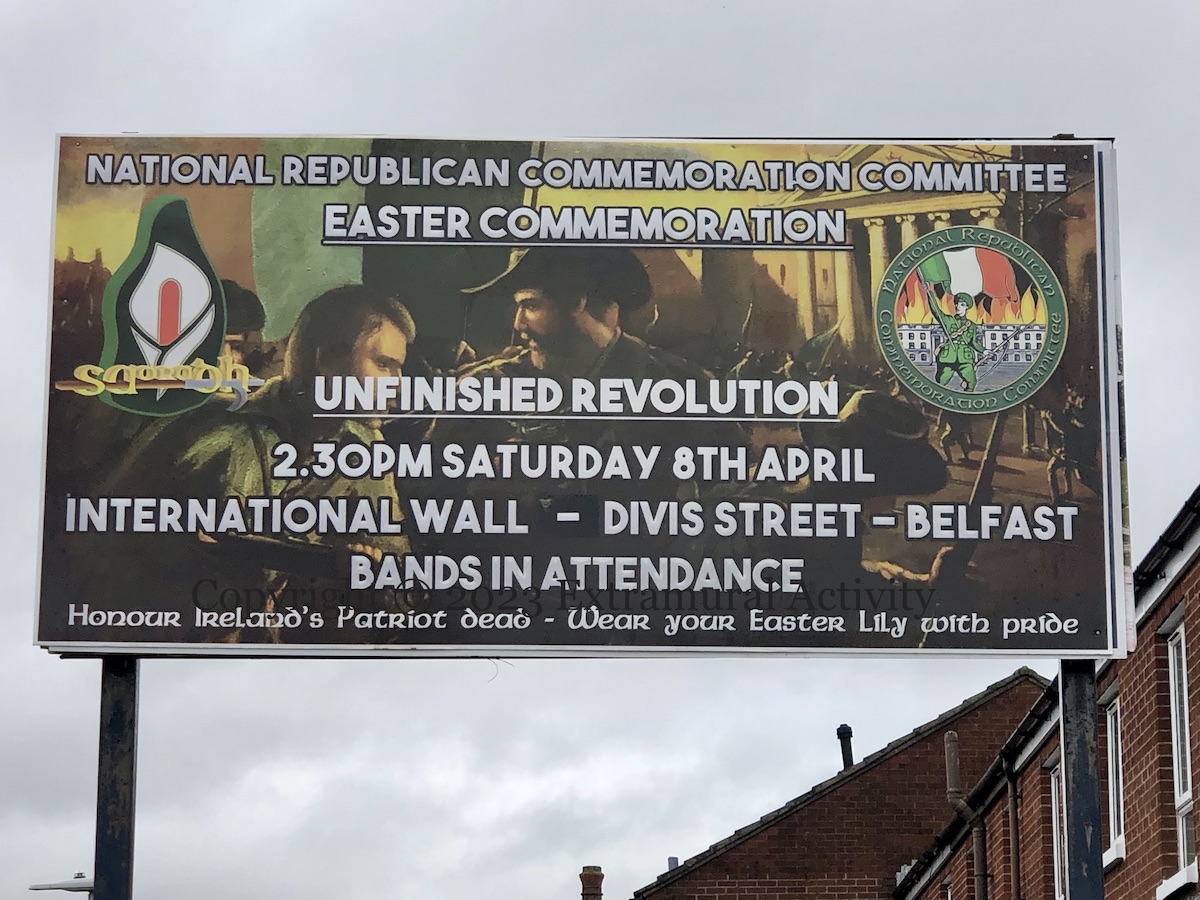
There are dozens of Easter Rising commemorations happening this weekend – see Belfast Media for a full calendar. Above is a board for Saoradh’s (web) Easter parade on Saturday 8th. Below is the Falls/D Company gathering.
“National Republican Commemoration Committee Easter commemoration. Unfinished revolution. 2.30 pm Saturday 8th April. International wall, Divis Street, Belfast. Bands in attendance. Honour Ireland’s patriot dead, wear your Easter lily with pride.”
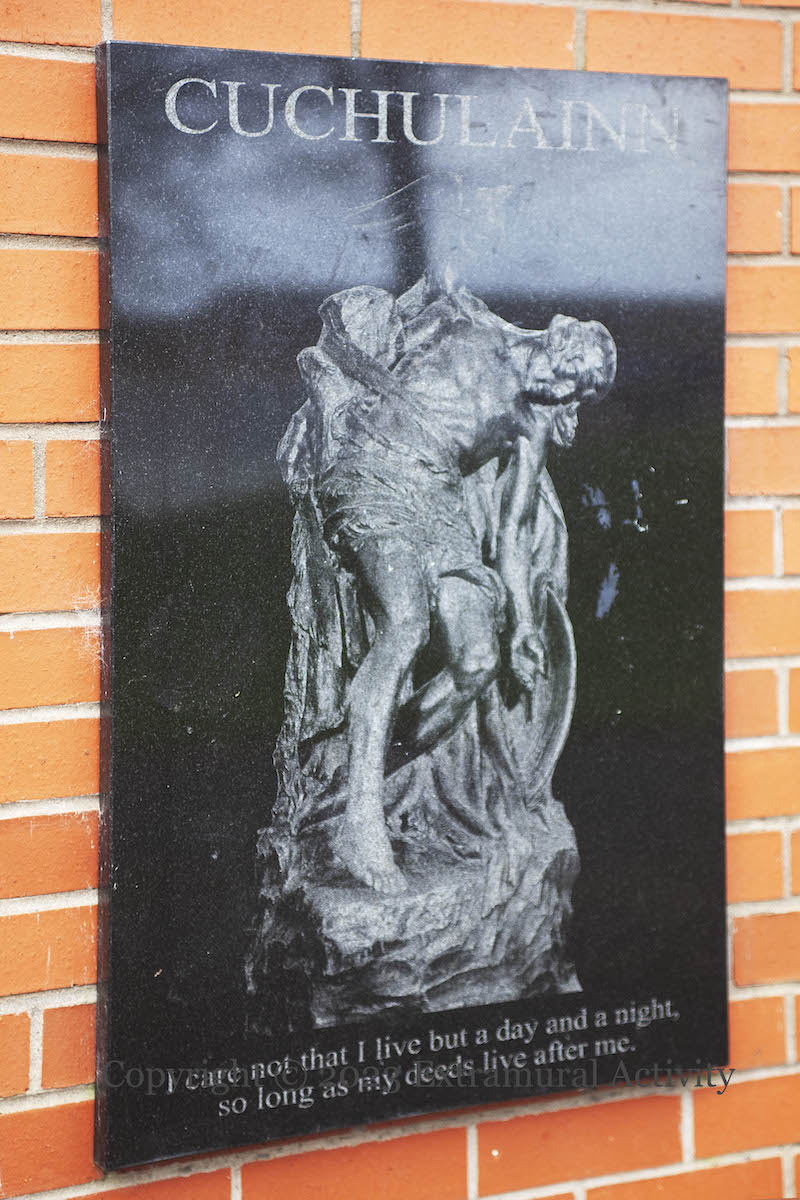
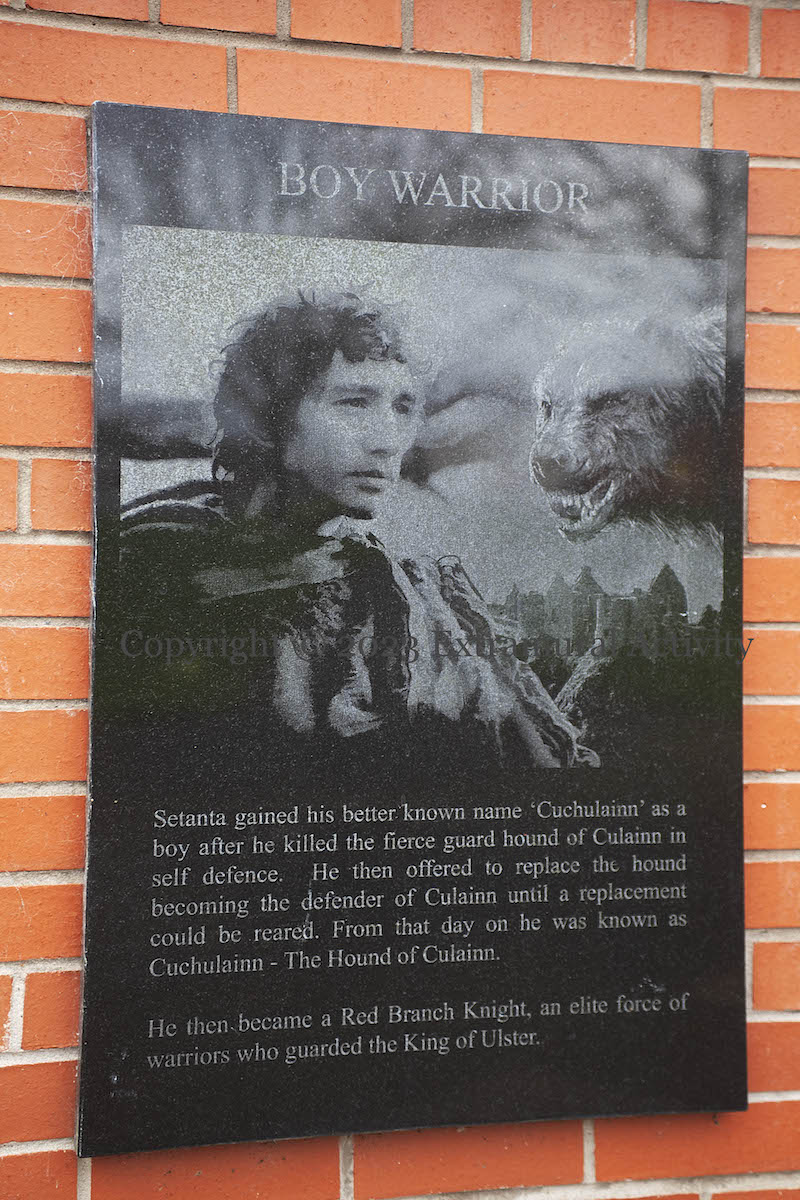
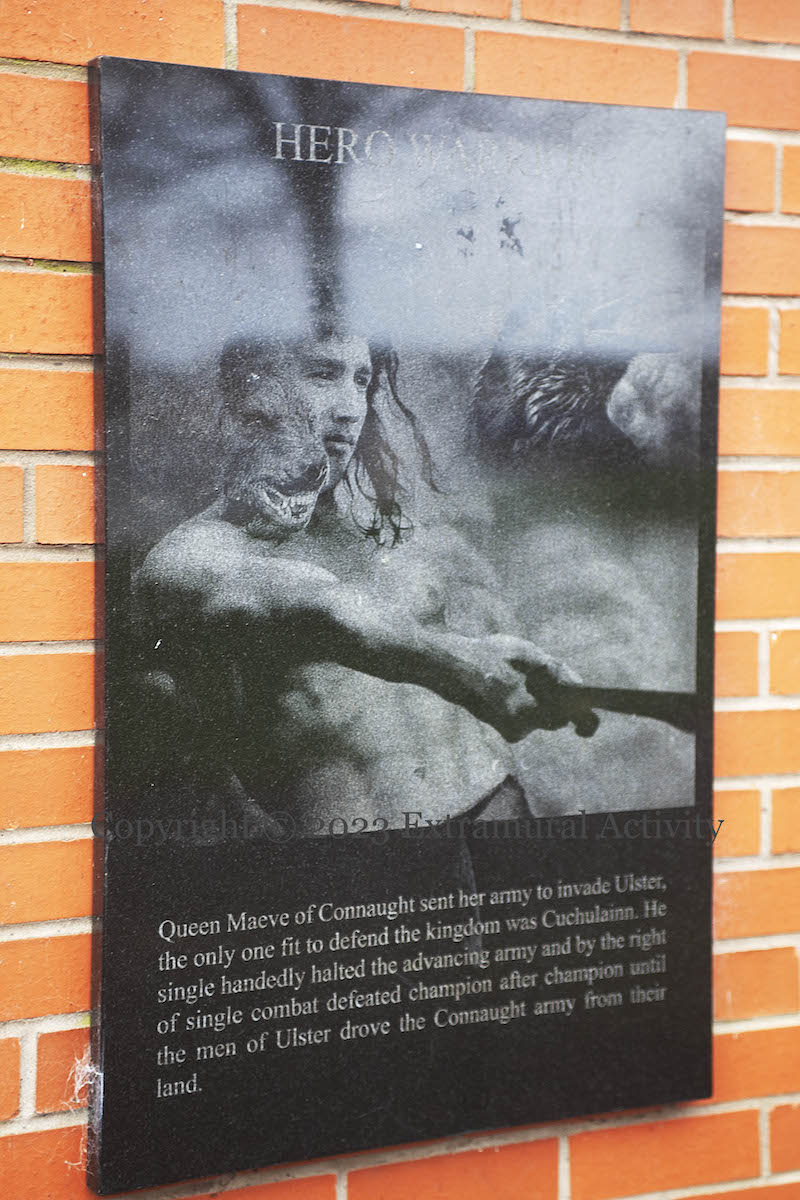
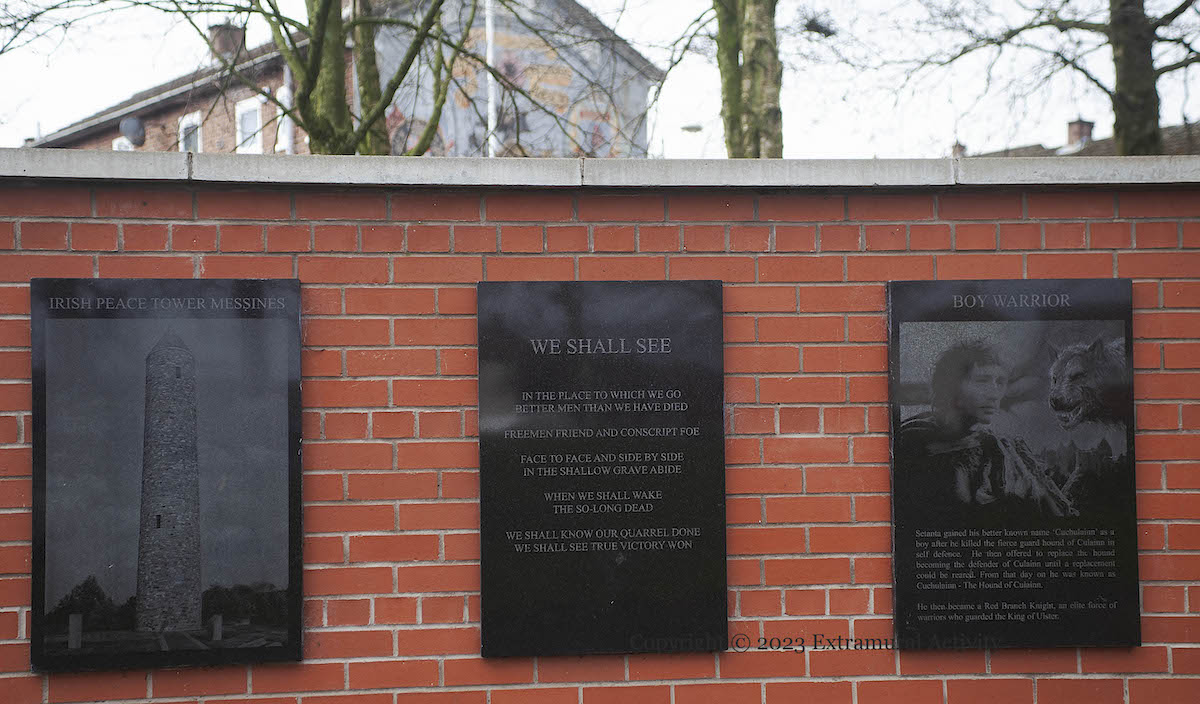
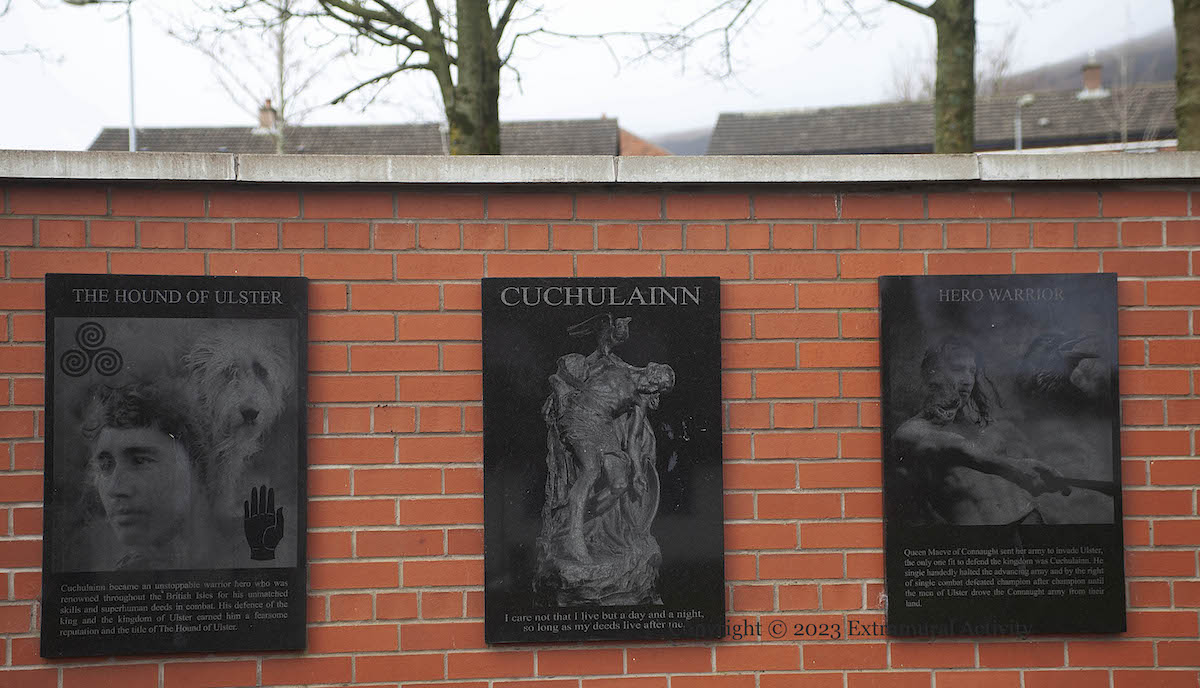
As the Visual History page on the role of Cú Chulaınn makes clear, in PUL muraling and iconography, Cú Chulainn serves as the “ancient defender of Ulster”, and the B Specials, UDR, and loyalist paramilitaries – primarily the UDA but also the UVF – then fit into that tradition. Using Cú Chulaınn as a precursor for service in the Ulster Division of WWI is unique to the panels on Highfield green, five of which are devoted to the hero Cú Chulaınn and four – two on each end – refer to the Great War.
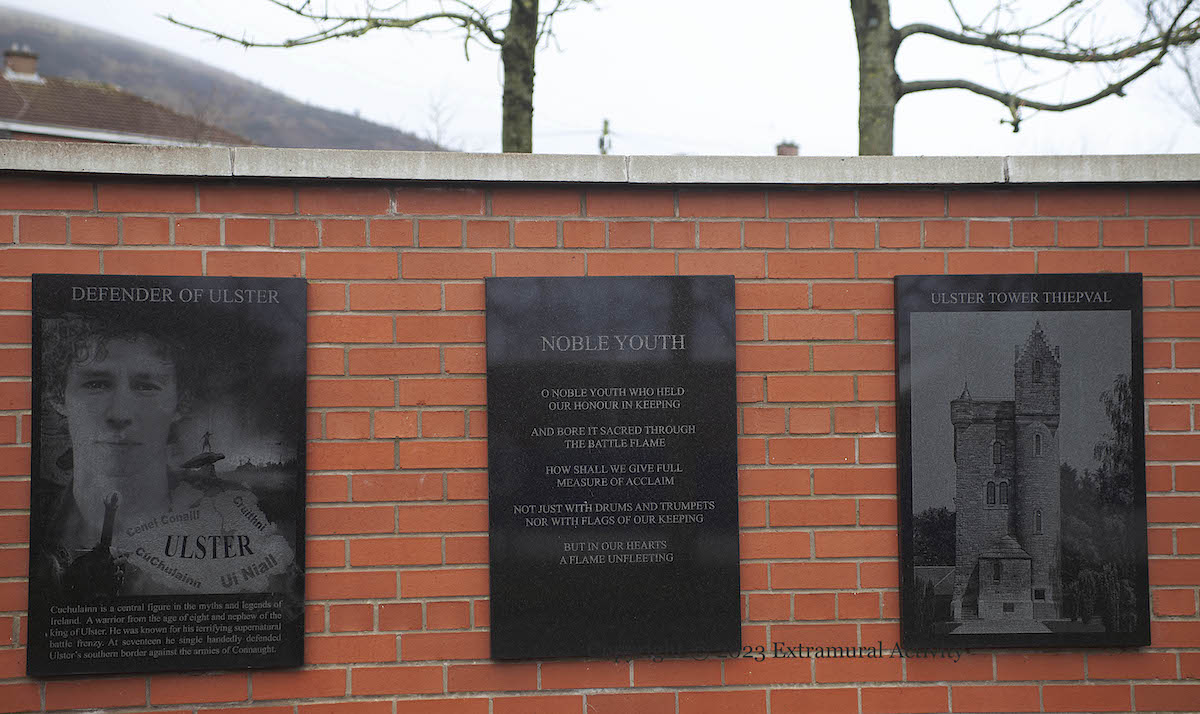
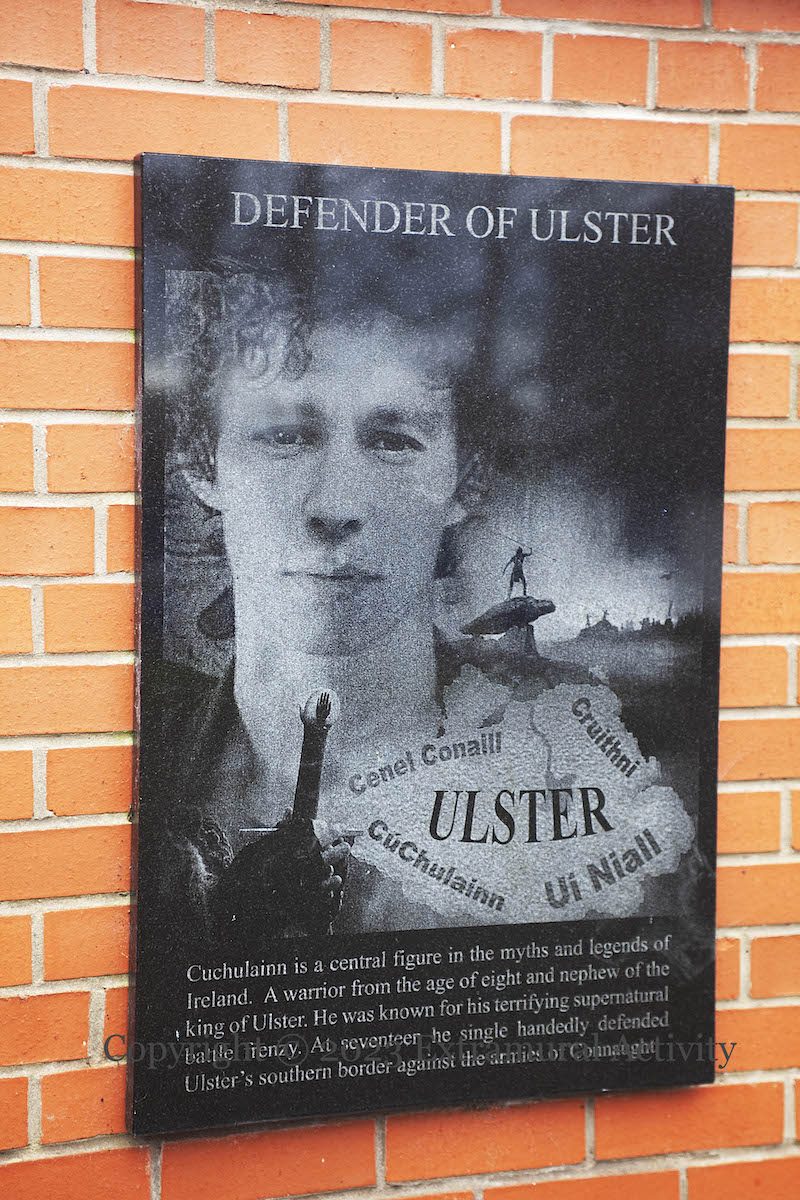
The five Cú Chulaınn panels are (from left to right) Boy Warrior, Hound Of Ulster, Sheppard’s statue, Hero Warrior, and Defender Of Ulster – all shown individually in this post.
On the far left, there are two panels showing Messines tower and a few lines from a Ronald Lewis Carton poem Réveillé (though given a more ‘victorious’ ending) and on the far right, a few lines from Duncan Campbell Scott’s To A Canadian Lad Killed In The War and Thiepval tower. The words to I Vow To Thee My Country (lyrics) are along the bottom (see the wide shot, final image below).
The biographical panels focus on Cú Chulaınn’s age – the sixth panel emphasises that Cú Chulaınn was only 17 when he held off Maeve’s forces – which is perhaps a similarity with those who joined the 36th Division, but how the “defender of Ulster” is connected to the defense of Europe is obscure.
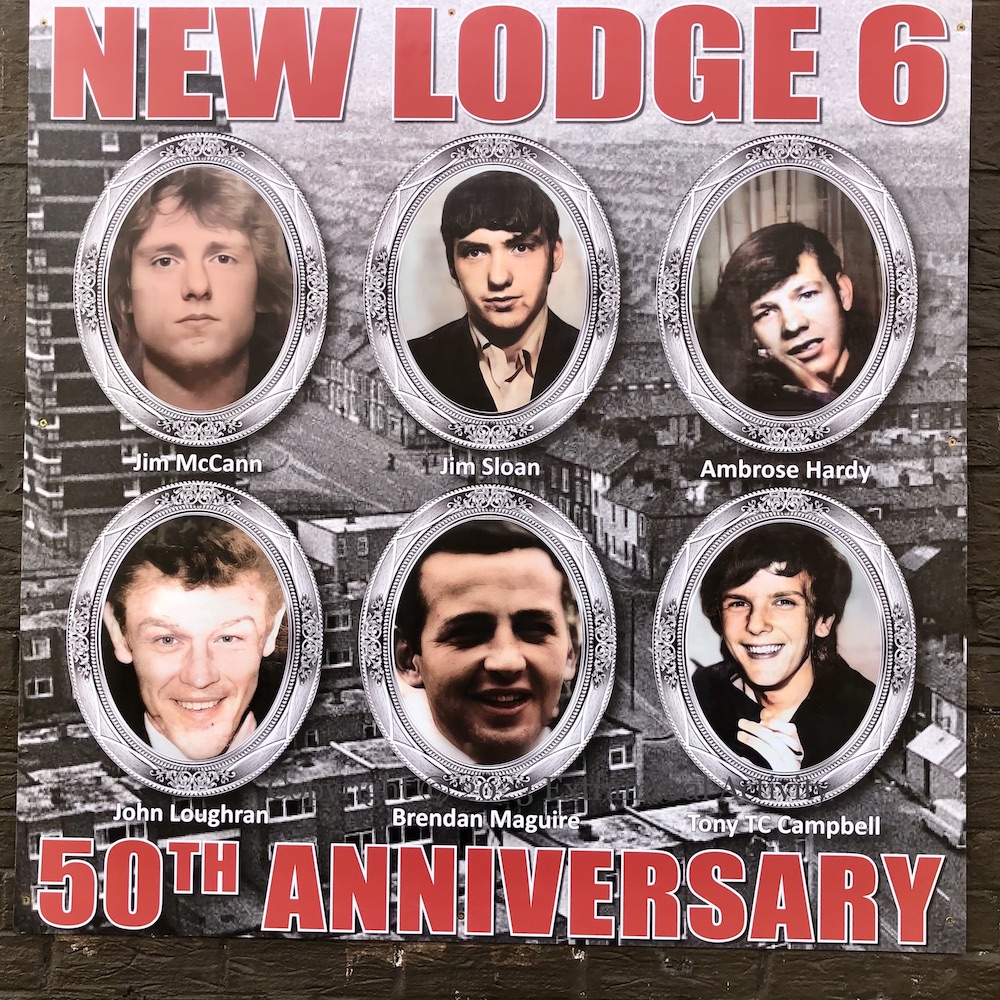
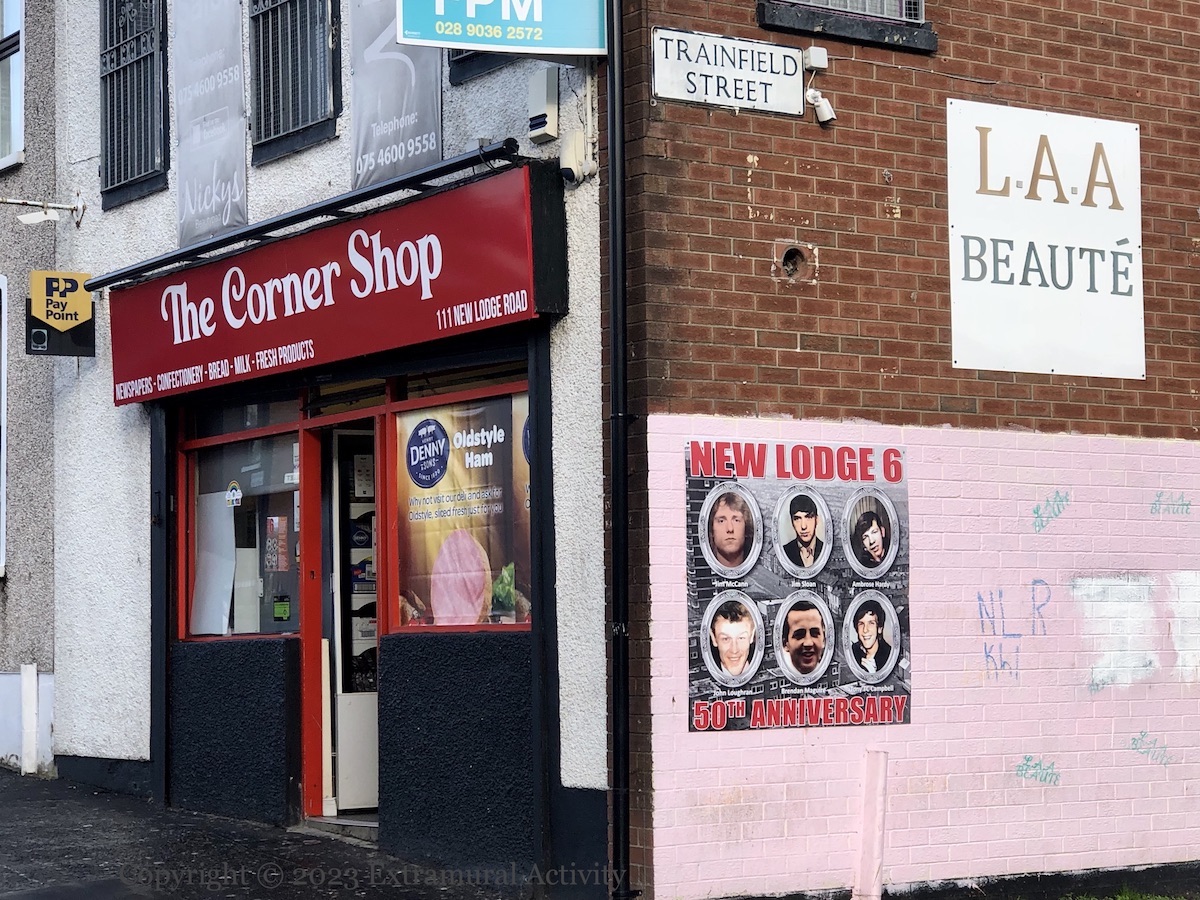
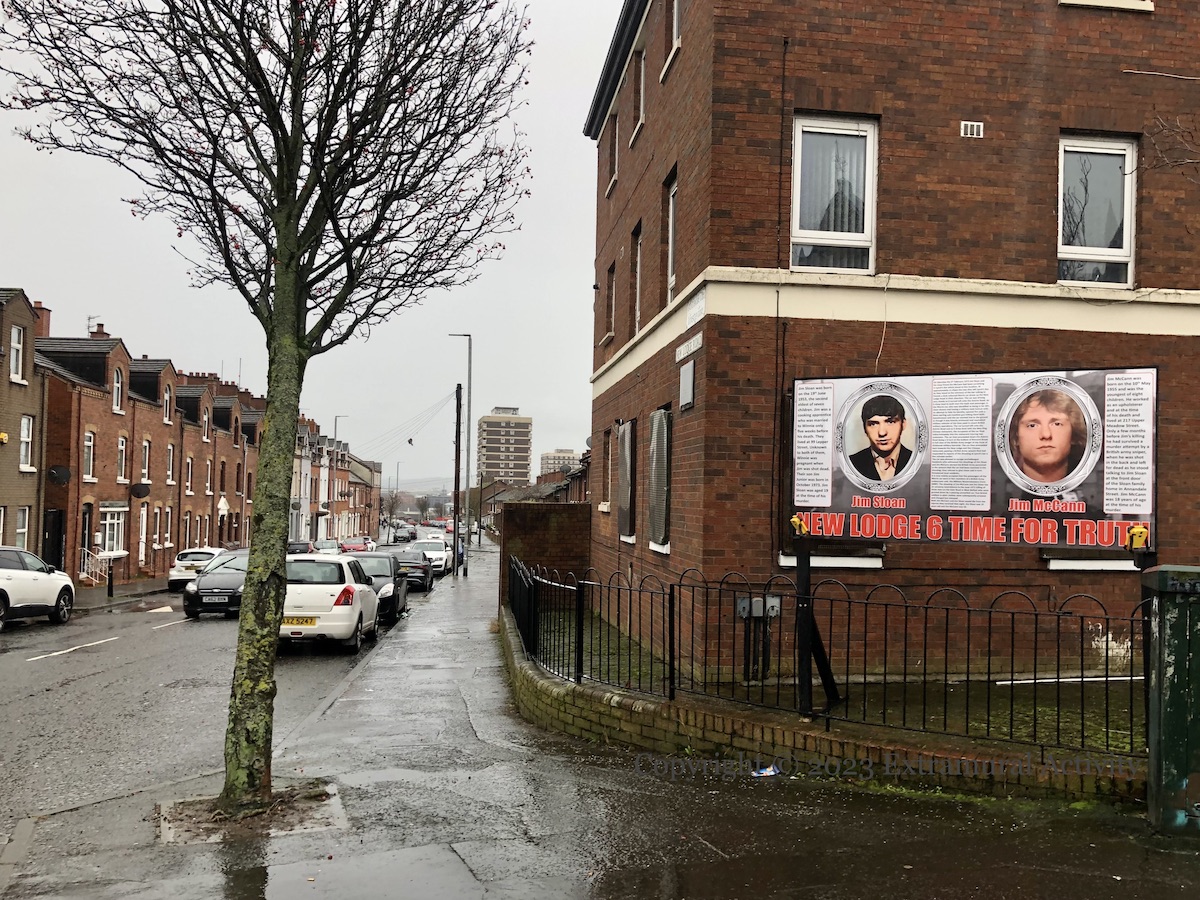
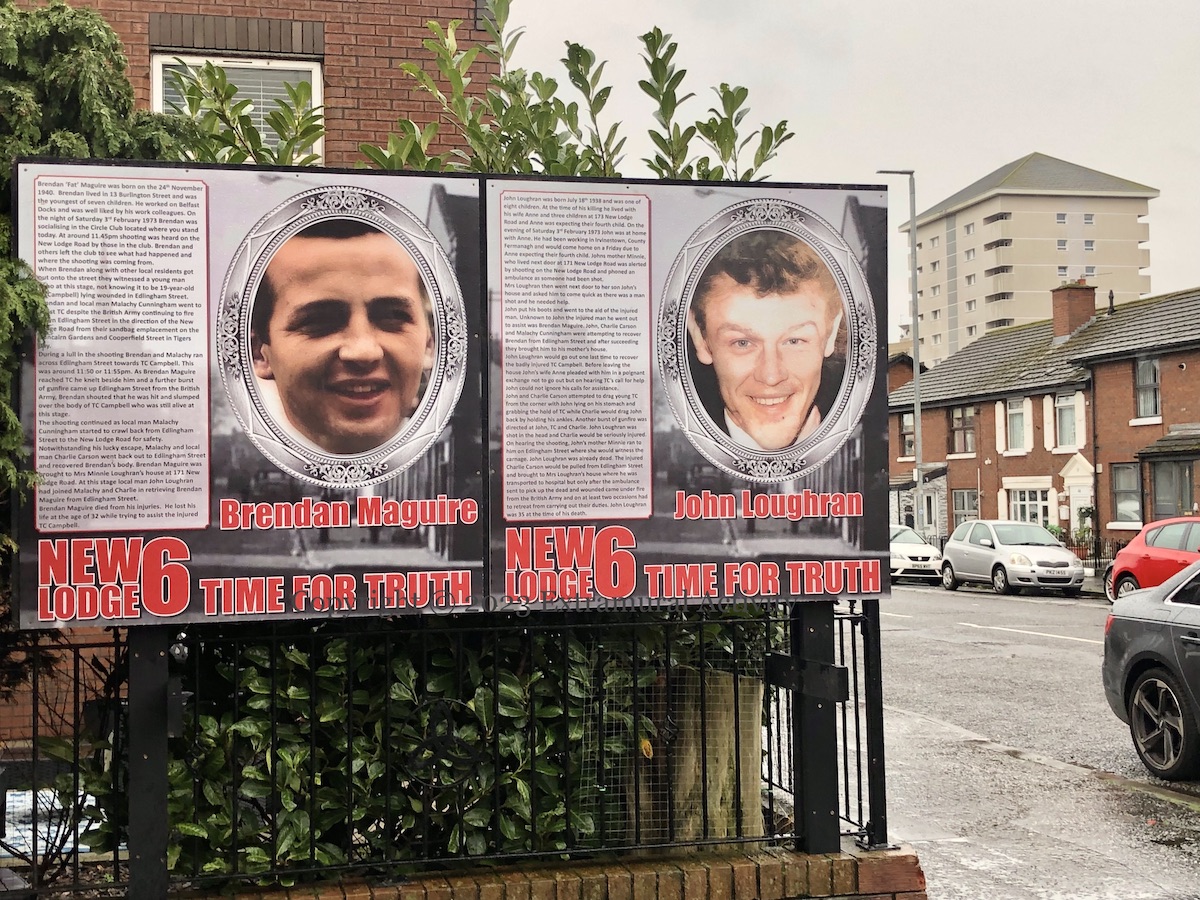
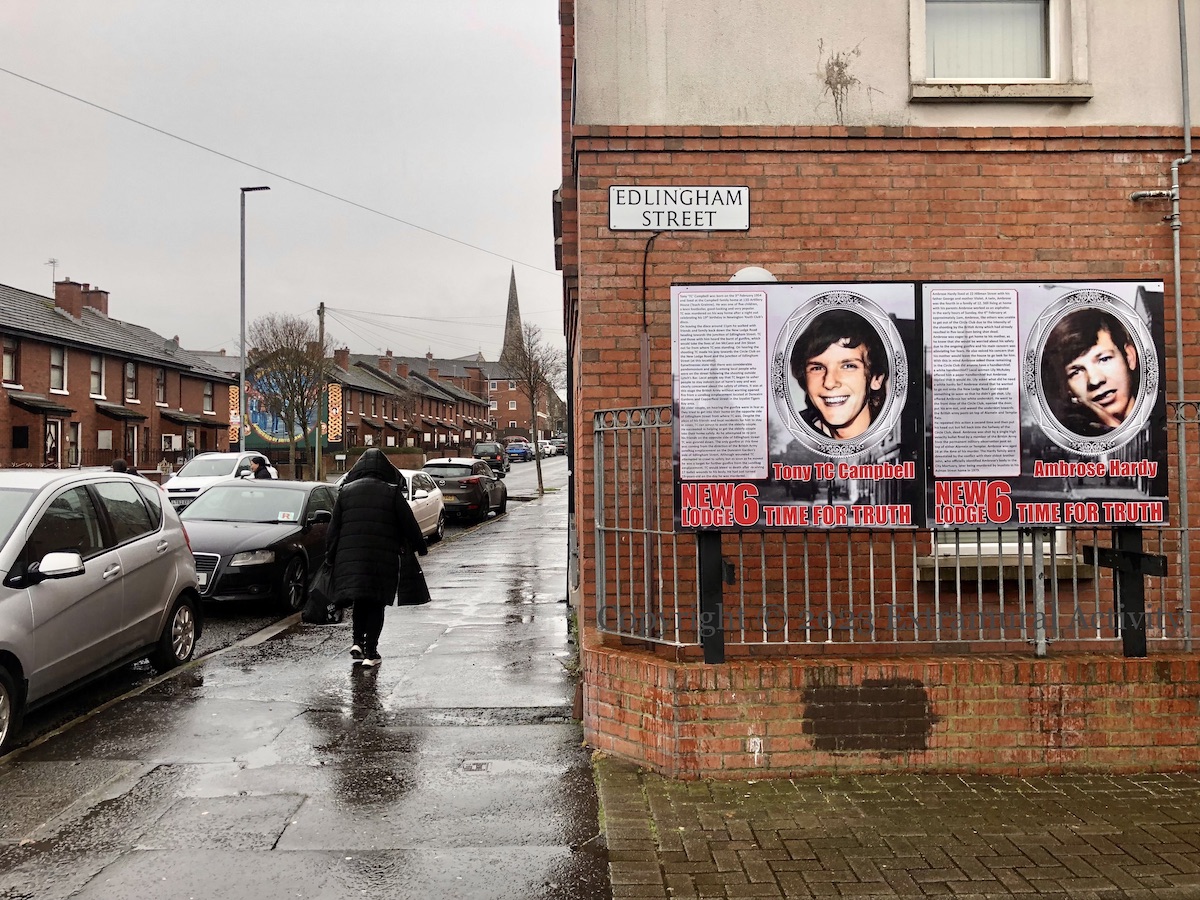
In addition to the repainted mural in Donore Court (featured yesterday in Time For The Truth) a number of information boards have been mounted along the New Lodge Road and on Teach Eithne, presenting photographs and profiles of the six youths who were killed, and a map and description of the events that took place on the night of February 3rd-4th, 1973.
The board concludes, “It is equally true that many others from the neighbouring Unionist and Protestant communities lost their lives during the conflict – these tragedies too bring a painful sense of loss that must be acknowledged. With over 100 lives lost by a combination of loyalist and British State forces – the Greater New Lodge community experience speaks to a story of State execution, collusion and naked sectarian killings over a 35 year period. … The New Lodge community has a narrative that remains to be told – this includes lives lost, imprisonment and discrimination. It is extremely difficult to accurately convey the enormity of the devastation and pain of lives lost in the conflict. … The New Lodge conflict narrative is not of passive victimhood, but of a community who survived the most difficult circumstances and who remain steadfast in their determination to pursue truth and justice for their loved ones.”
A candle-lit vigil (youtube | iTV) took place last Friday (February 3rd) to commemorate the 50th anniversary of the “New Lodge Six Massacre”. Shortly before midnight on the night of February 3rd-4th, 1973, Jim Sloan and James McCann were killed by the UDA outside a bar – or so the authorities alleged; the plaque shown below near the spot where they were shot reads “killed by British Forces”; full details of what is currently known about the killings can be found at Paper Trail.
Four more – Tony ‘TC’ Campbell, Ambrose Hardy, Brendan Maguire, John Loughran – were among those who came to the area of the initial shootings and were killed by British Army snipers from their positions on top of the flats, using night-vision sights.
The memorial mural in Donore Court was repainted for the event. From left to right, it shows Hardy, Maguire, Campbell, Loughran, Sloan, and McCann walking down New Lodge Road with (what was) Duncairn Presbyterian and (what was) the RUC station on the Antrim Road behind them. The previous (2011) version of the mural showed a body being carried whereas this new one shows them smiling as they walk, though still in the sights of a sniper’s rifle. Other changes were made: the six portraits in the medallions are now photographs rather than paintings; the background is green rather than pink.























 Extramural Activity