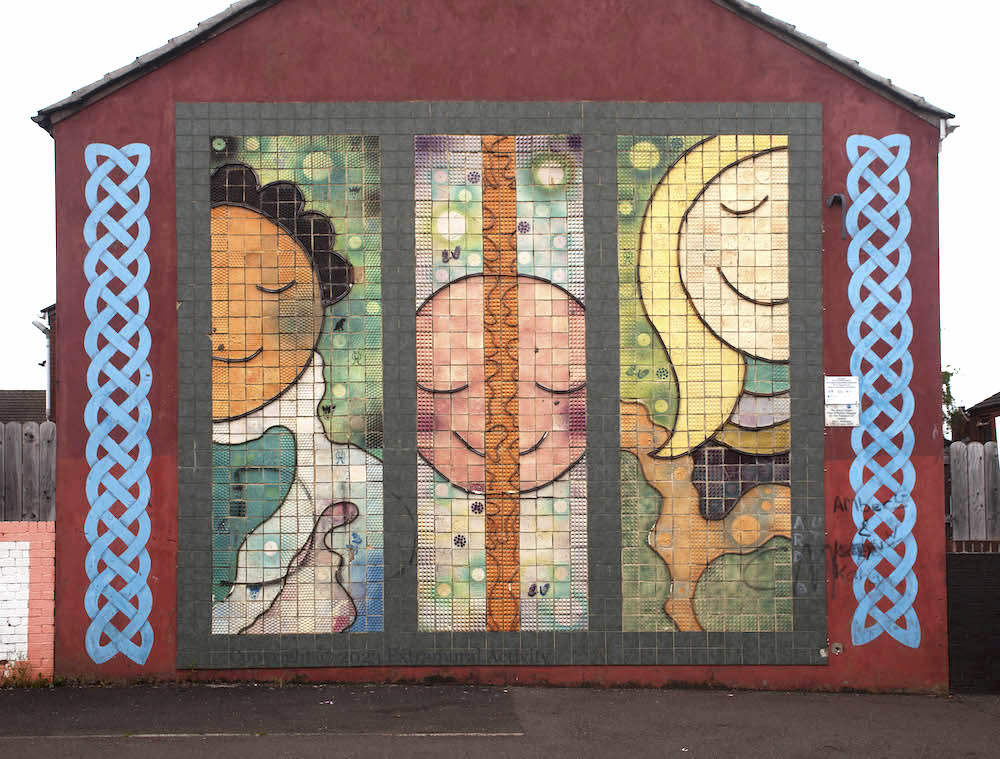
The faces of local children are rendered in ceramic tiles by Clare McComish (web), replacing a Sean McCaughey mural in Brompton Park, Ardoyne, as part of the 2009 Re-Imaging Communities project (see Visual History 10).
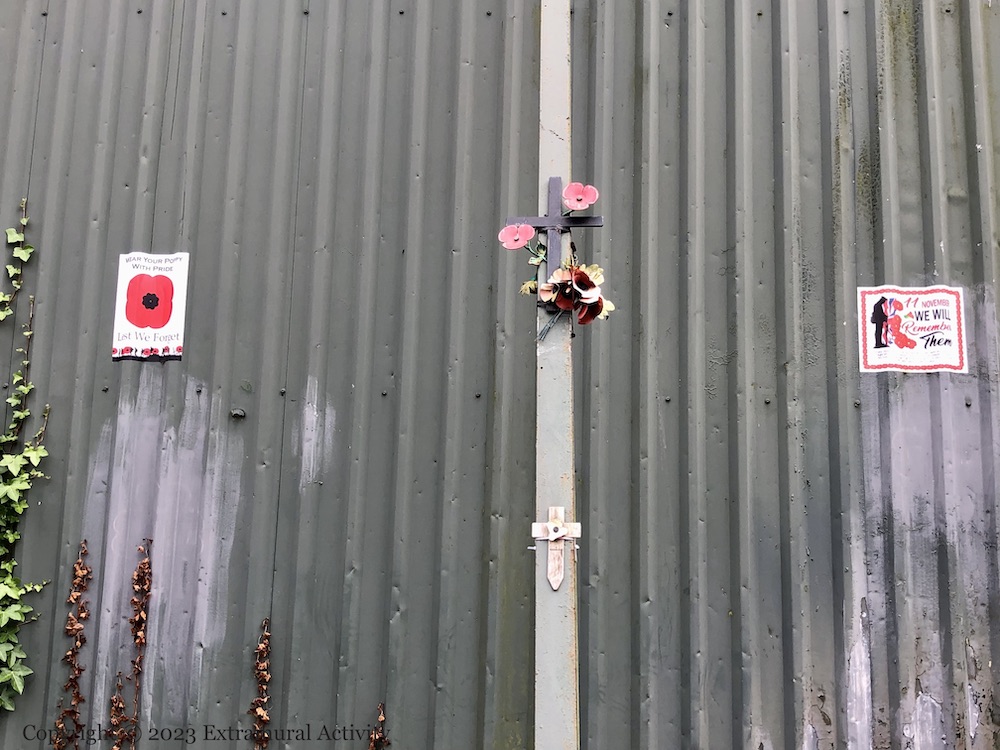
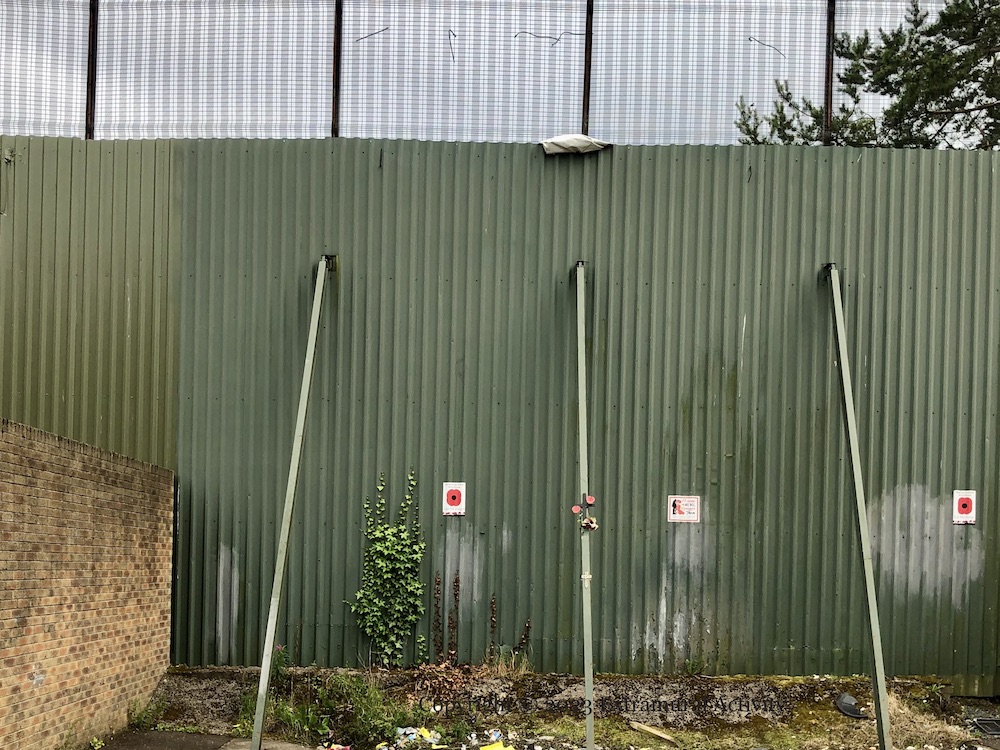
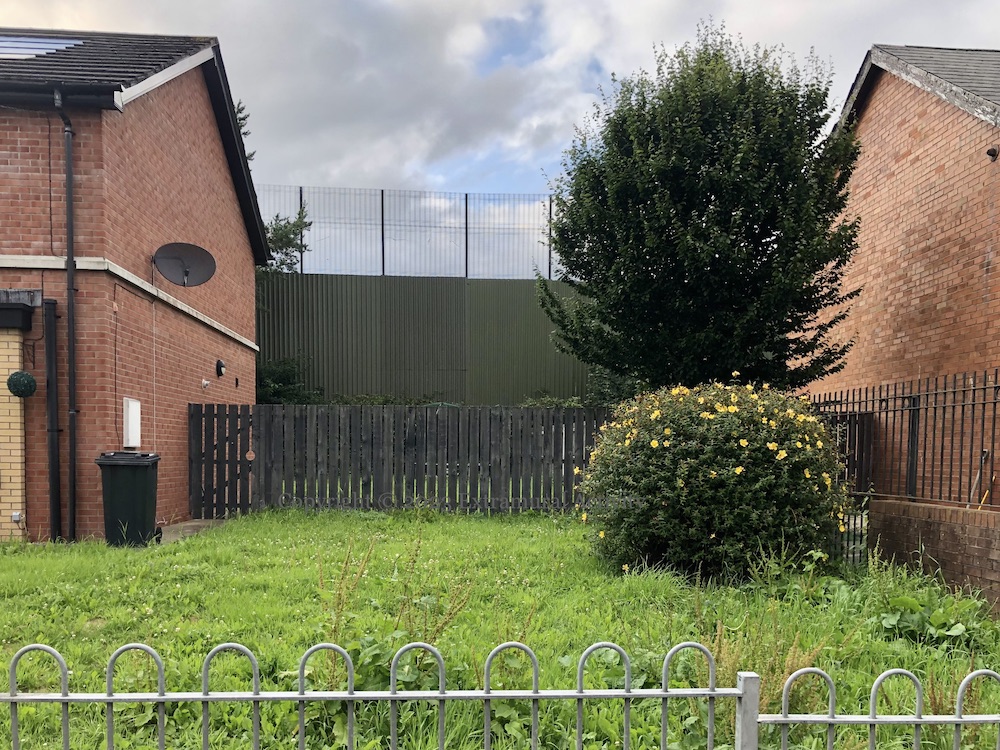
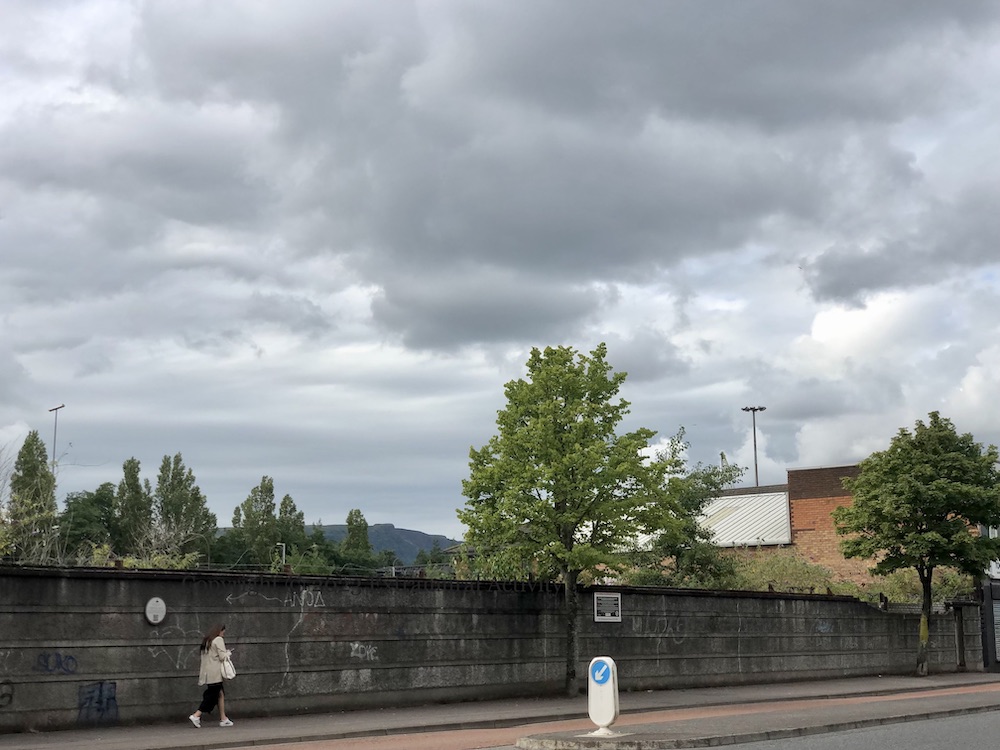
The first “peace” line along Alliance Avenue was a temporary barried constructed by the British Army in 1971 (Heatley at CAIN); parts of it today are nine metrers high (Belfast Interface Project). The central road in Ardoyne, Berwick Road/Paráıd An Ardghleanna was cut off by the line but in the recent redevelopment no house was built in front of the spot where the road ran through. Instead there are now support beams and a small cross in memory of WWI dead.
The final image is of the same spot on the Ardoyne side of the line.
Áras Uí Chonghaile has a “James Connolly Heritage Trail”, with a series of plaques and panels that interested parties can walk as members of a guided tour, or by themselves with the aid of an app (Android | Apple). One of the stops is in Corporation Street, site of the Belfast offices of the ITGWU from 1911-1941.
The nearby ITGWU board gives Connolly’s report from 1911: “The Branch has rented extensive premises at 122 Corporation Street and intend having a smoking and reading room in connection therewith; we are considering the organisation of a band and have in contemplation also the launching of many other schemes for the moral, social, and financial uplifting of the members. The Irish Transpost and General Workers’ Union is in the vanguard of that Irish branch of the Army of Labour, and we are honoured when we carry its banner.”
It then goes on to describe the arrest of Winnie Carney and the raiding of the Corporation Street offices in 1922.
“Fáılte go dtí Marrowbone youth club [club óıge Mhachaıre Bothaın (Fb)] – better our community by working together.” The verbiage is a mix of Irish and English and the imagery is a mix of youth activities and … a minion.
The previous mural – which included Cliftonville (soccer) and Antrim (GAA) emblems – was seen previously in 2013 and in 2021.
This is a new mural on the Ballysillan Road by MWAK/Pigment Space (ig) close to the Boys’ Model and featuring a student at the centre of symbols of learning – a film camera in the top left; Hokusai’s Great Wave in the top right, for art; Titanic (for engineering?) and a thermometer (for chemistry? or global warming?) on the right; musical notes in the bottom right; sports in the bottom left. The dates on the left are obscure. “1971” is perahps for the year the school won the Schools’ Cup in rugby (News Letter); there is a soccer ball next to “1996” but no similar victory can be found – get in touch if you can supply a meaning.
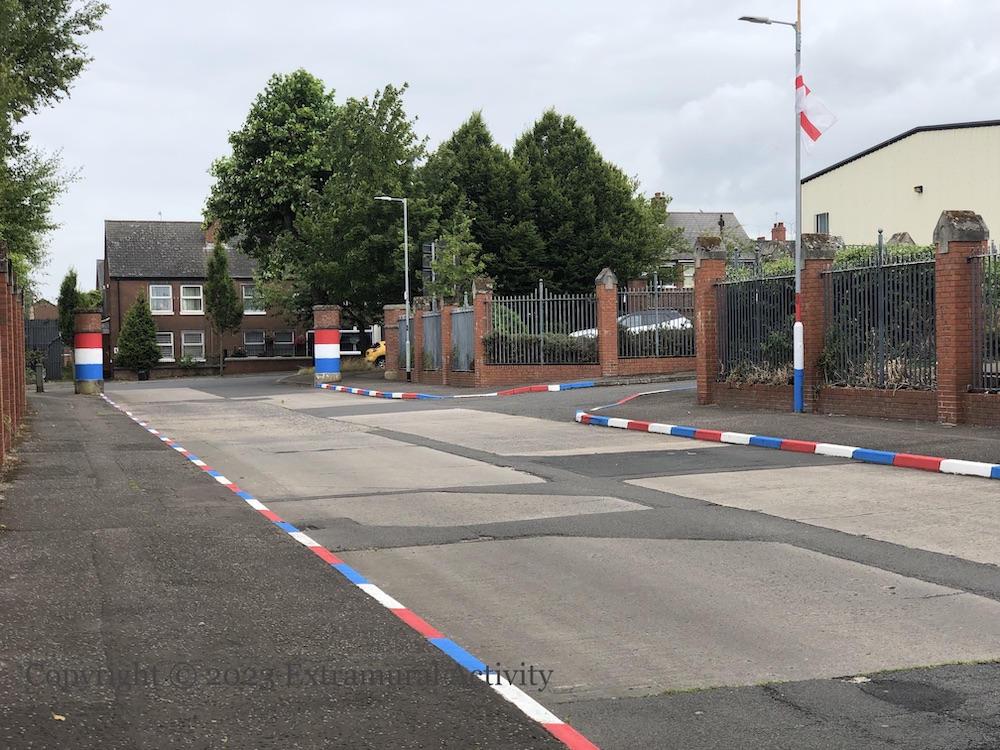
The kerb-stones along the Edlingham Street (Duncairn Avenue) entrance into Tiger’s Bay have been repainted in preparation for this year’s Twelfth and the two pillars given bands of red, white, and blue.
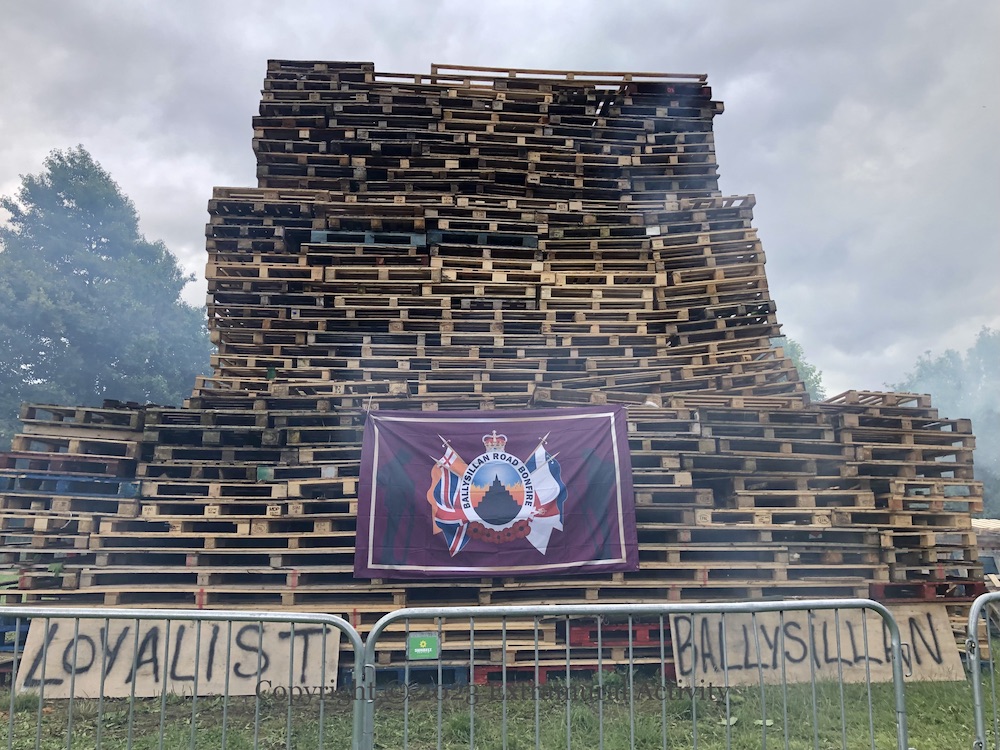
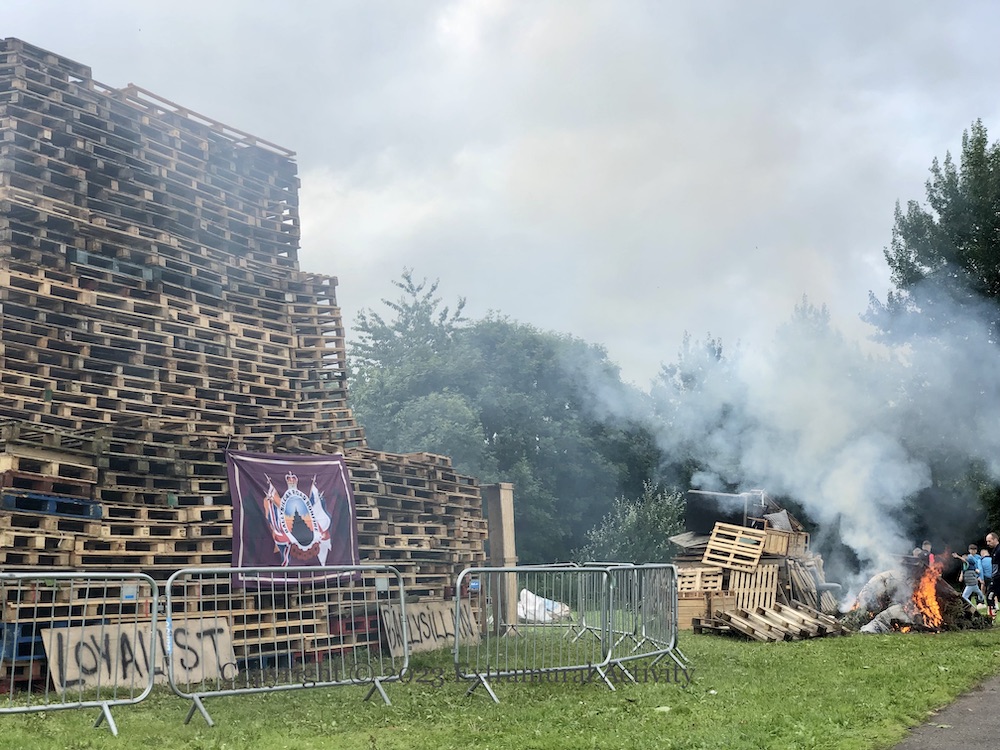
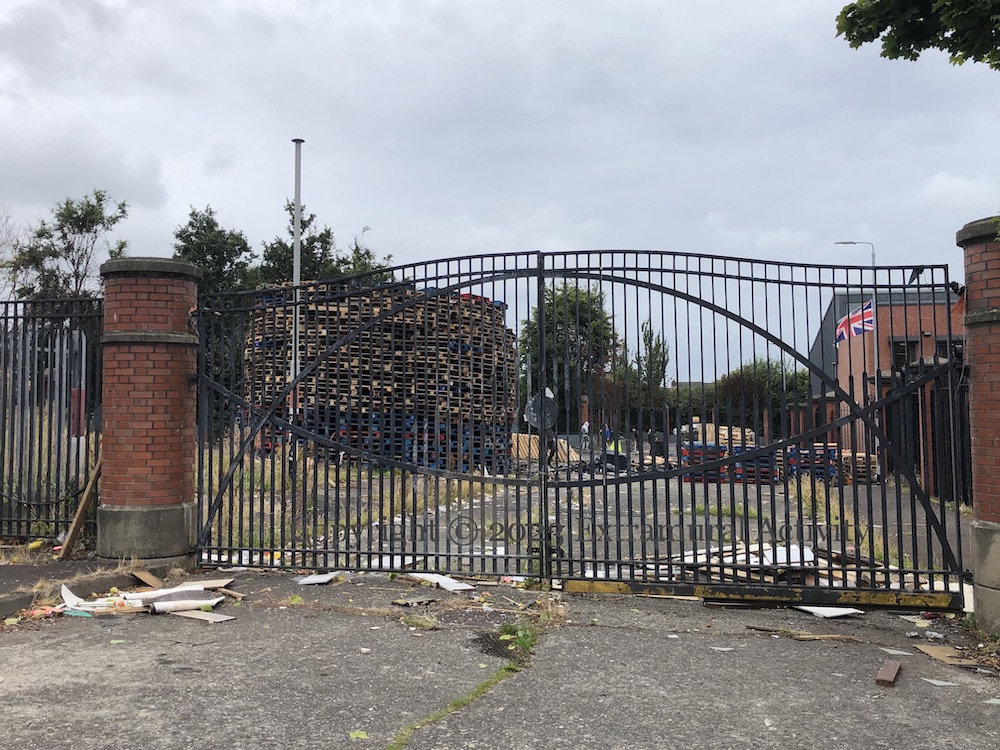
The bonfire is on the waste-ground at Adam Street. The fact that the land is owned by the Department Of Infrastructure made the bonfire controversial in 2021 (see Move At Your Own Risk).
For the mural in the community garden, which now appears defunct, see Seek And You Shall Find.
It is a year since the new policy on bilingual street signs was made public; by September there had been 500 applications (Belfast Media) but by January of this year no new signs had been erected and 600 applications were awaiting decision (Belfast Live | Irish News from Feb). One new sign – shown here – was erected in February on Clifton Street (Belfast Media).
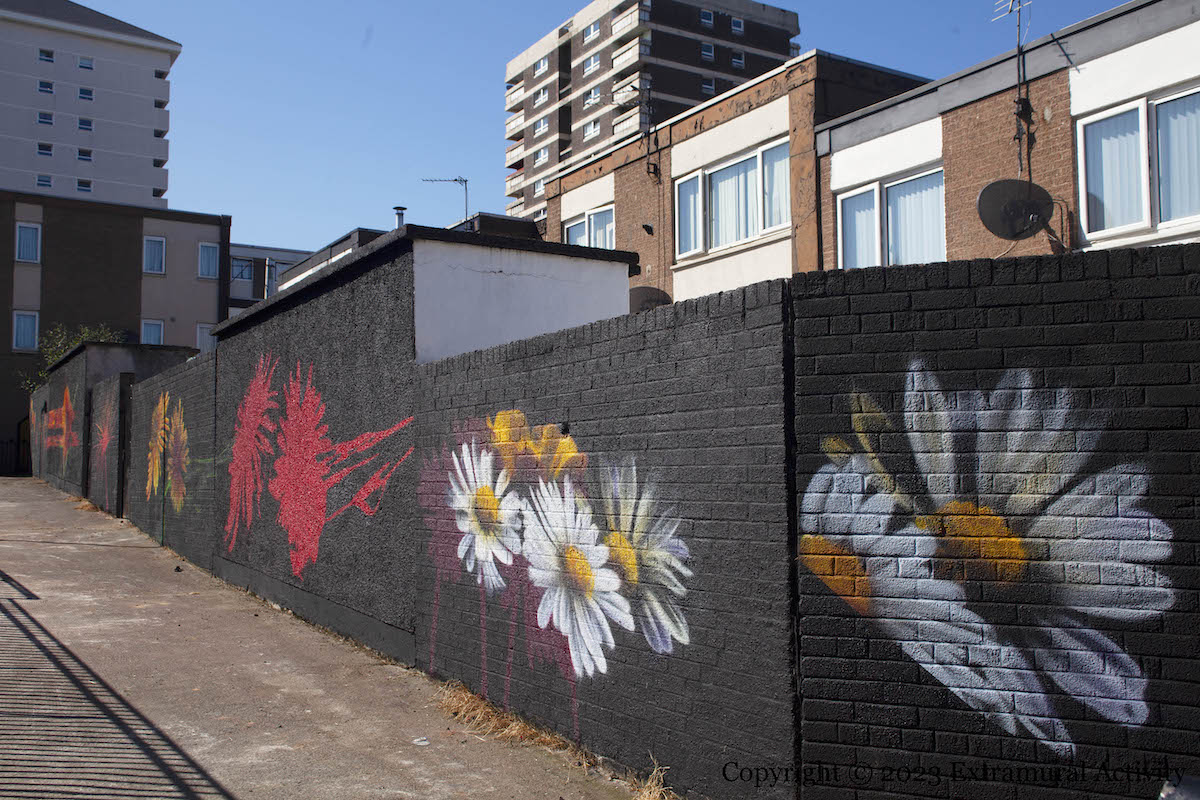
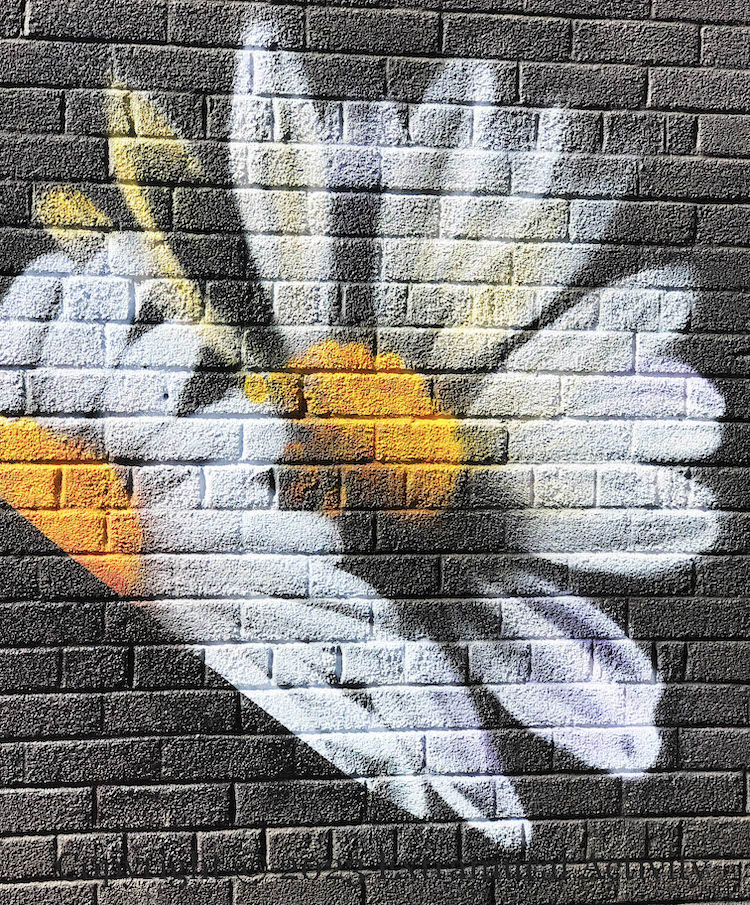
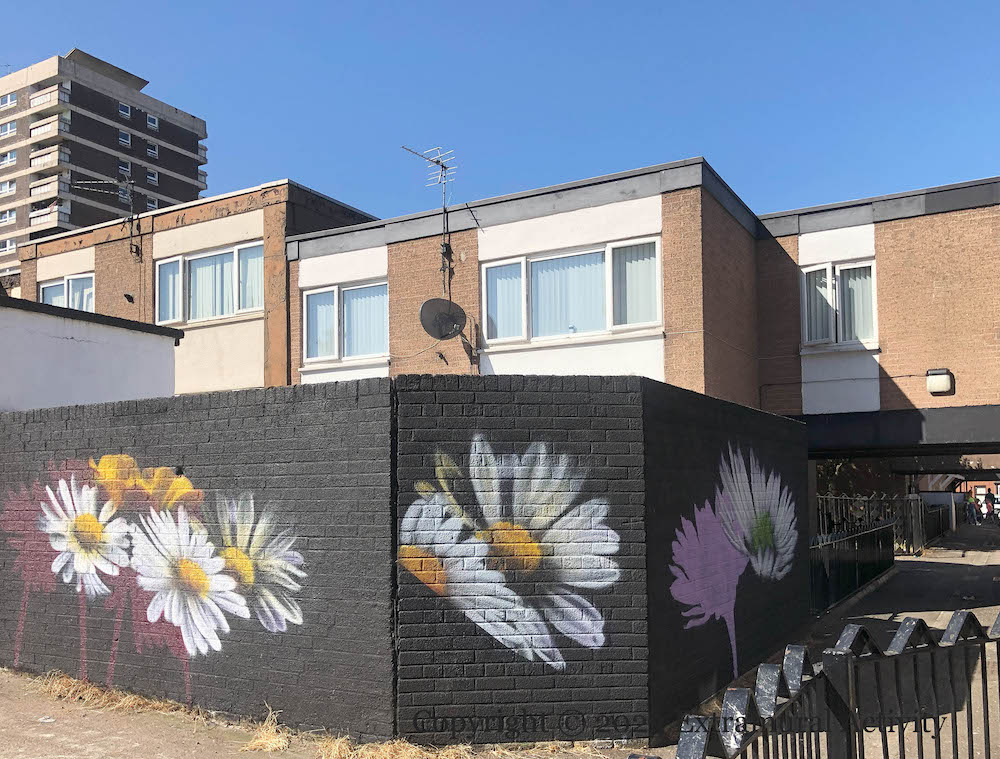
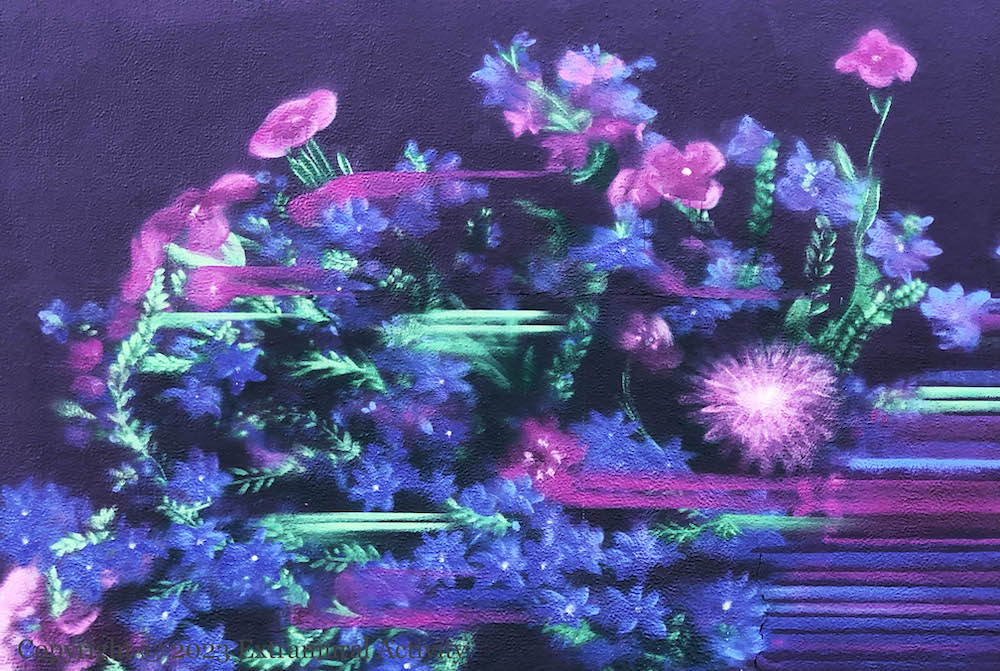
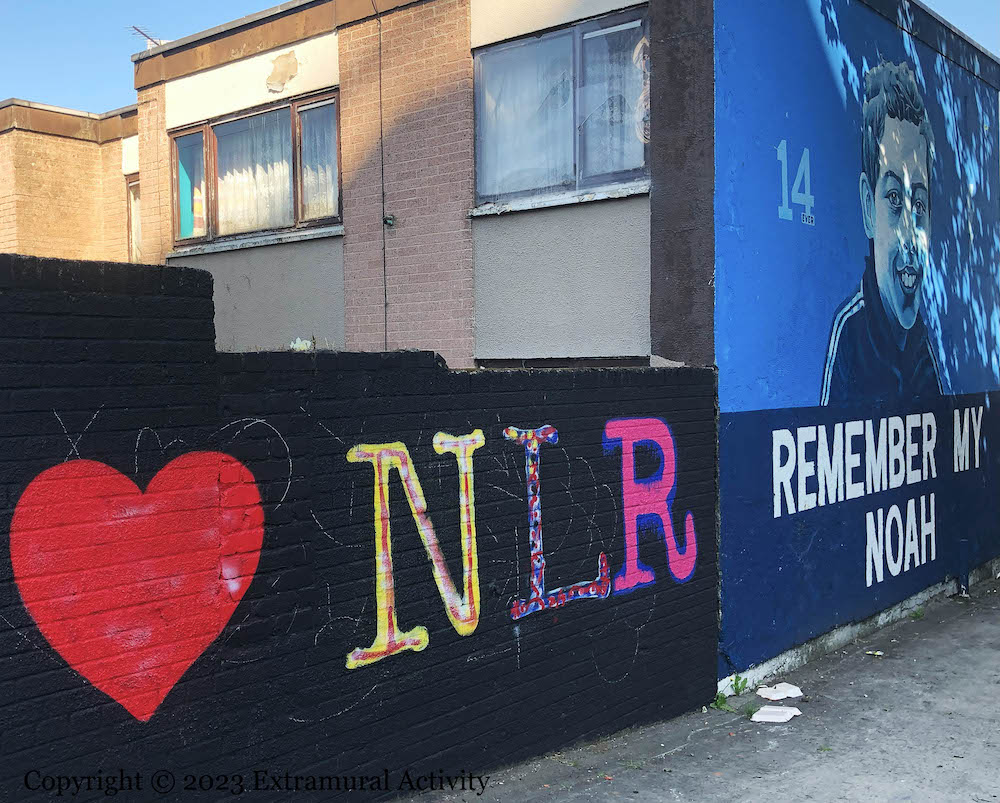
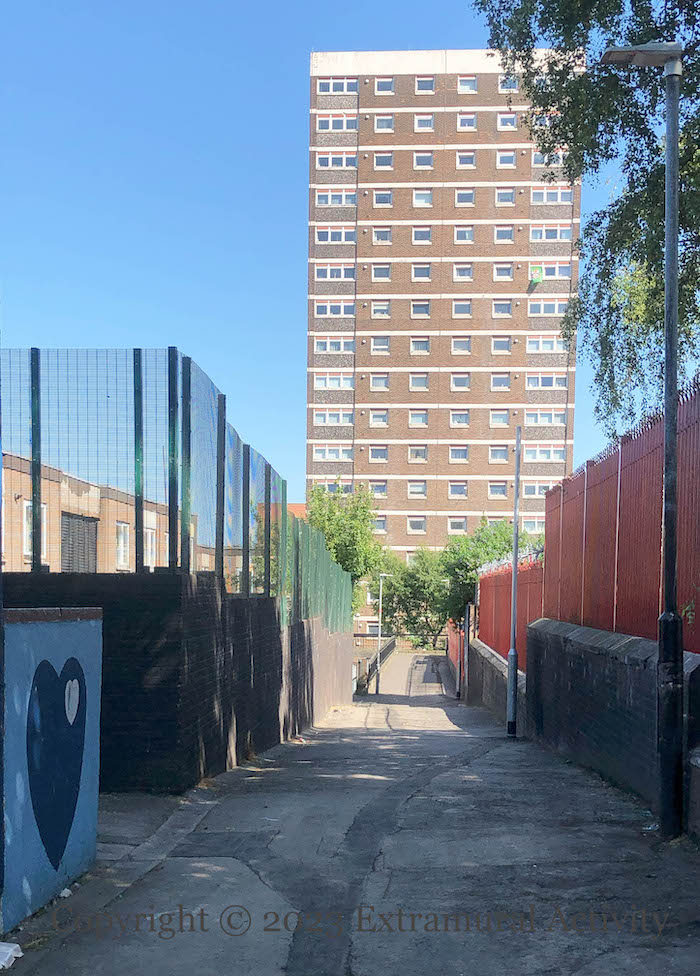
Here is a gallery of images from the new, multi-panel, floral mural in the middle of the New Lodge.
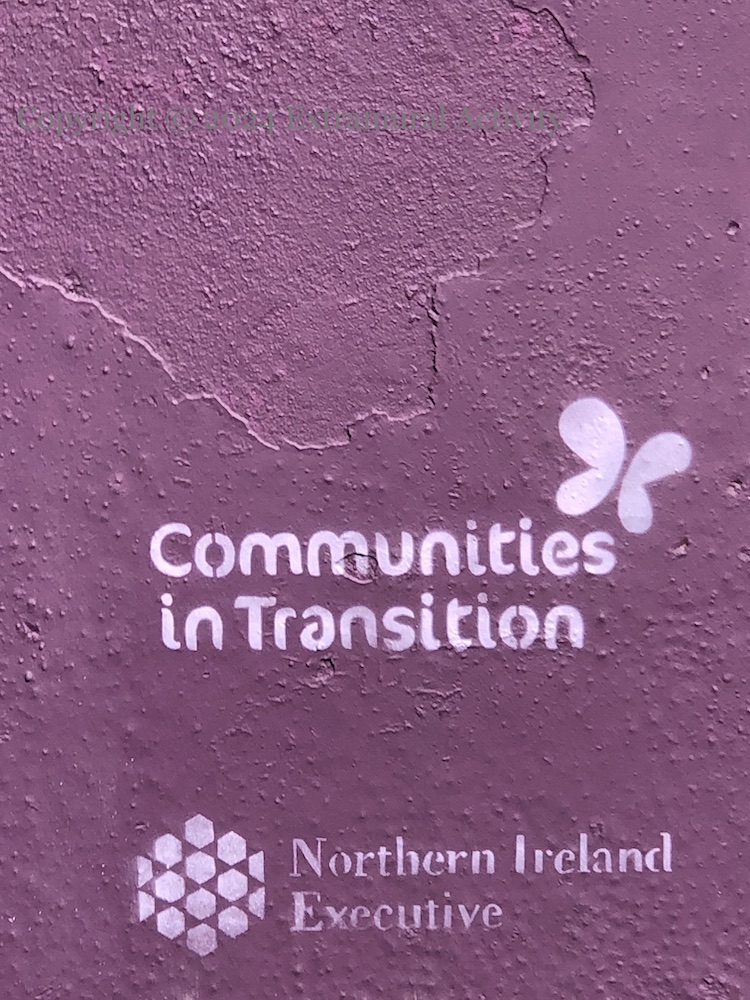
The mural was painted by emic (ig) with young people from the New Lodge Youth Centre, sponsored by Communities In Transition (a programme of the Executive Office) and organised by Community Restorative Justice Ireland (web).
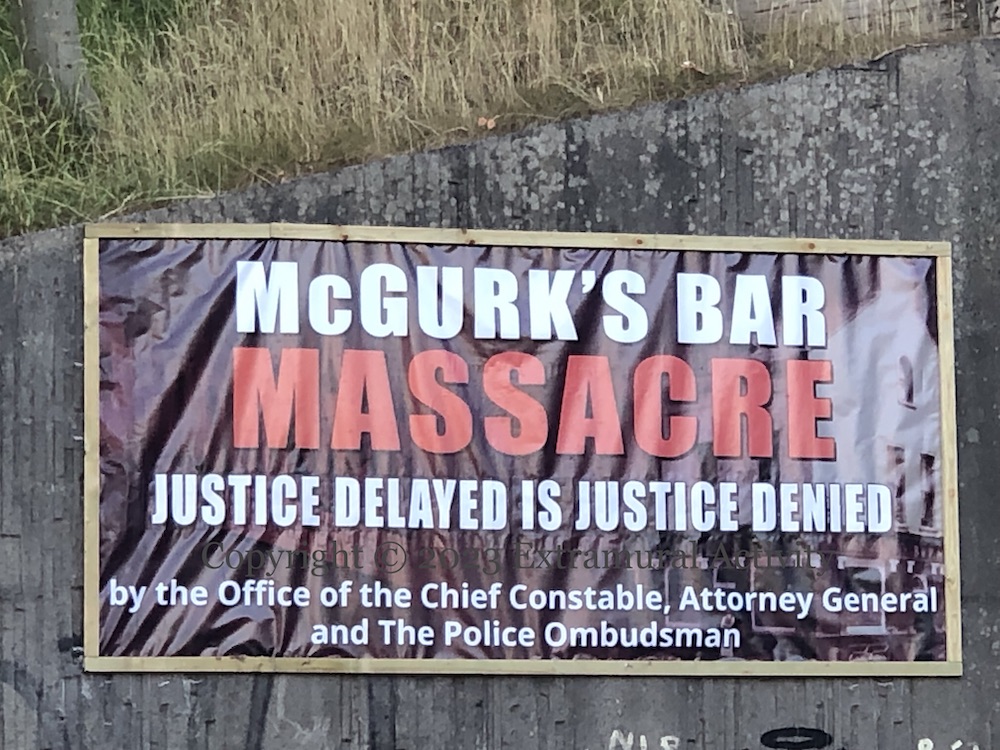
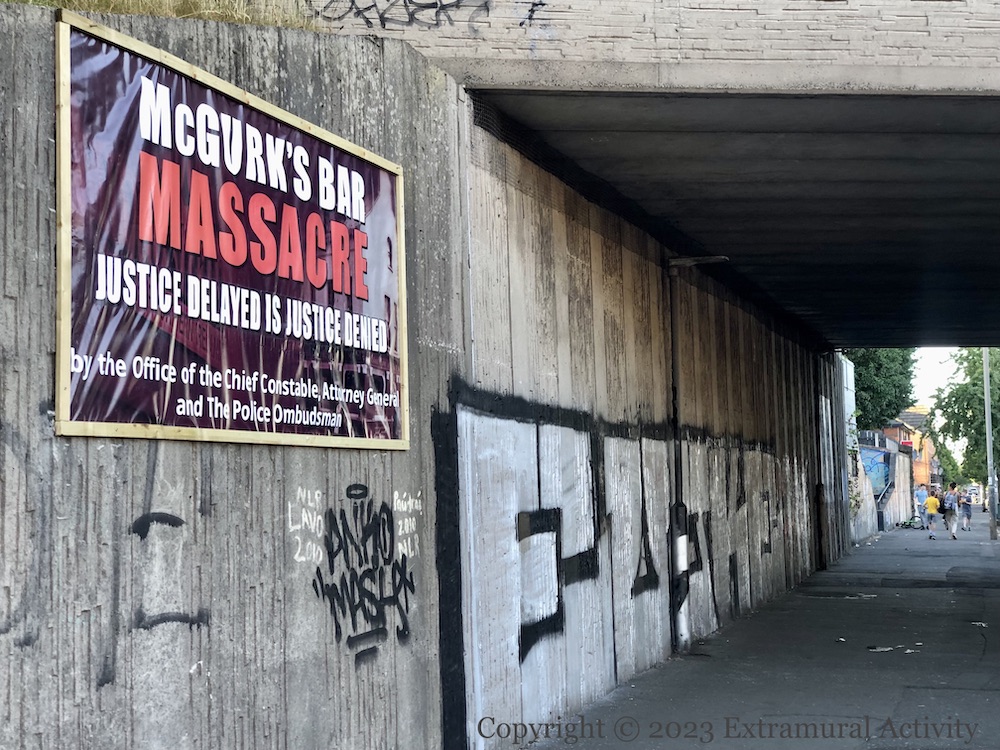
“Justice delayed is justice denied by the Office of the Chief Constable, Attorney General and The Police Ombudsman.” McGurk’s bar was bombed in December, 1971, causing the death of 15 people. At the time, the security forces maintained that the bomb was left by someone from the IRA for later collection and that the pub was affiliated with the IRA, despite the fact that a loyalist group claimed responsibility and a witness saw the bomb being planted a few moments before it went off. Among those repeating the “own goal” story was Brigadier Frank Kitson (McGurk’s Bar twitter | BelTel), who was recently named in a Derry mural in connection with Bloody Sunday – see From The Top Down.

















 Extramural Activity