
Another colourful piece of metalwork on the Cupar Way “peace” line, celebrating the construction of the Titanic at Harland & Wolff shipyard.
Click image to enlarge
Copyright © 2013 Seosamh Mac Coılle
X01289
Another colourful piece of metalwork on the Cupar Way “peace” line, celebrating the construction of the Titanic at Harland & Wolff shipyard.
Click image to enlarge
Copyright © 2013 Seosamh Mac Coılle
X01289

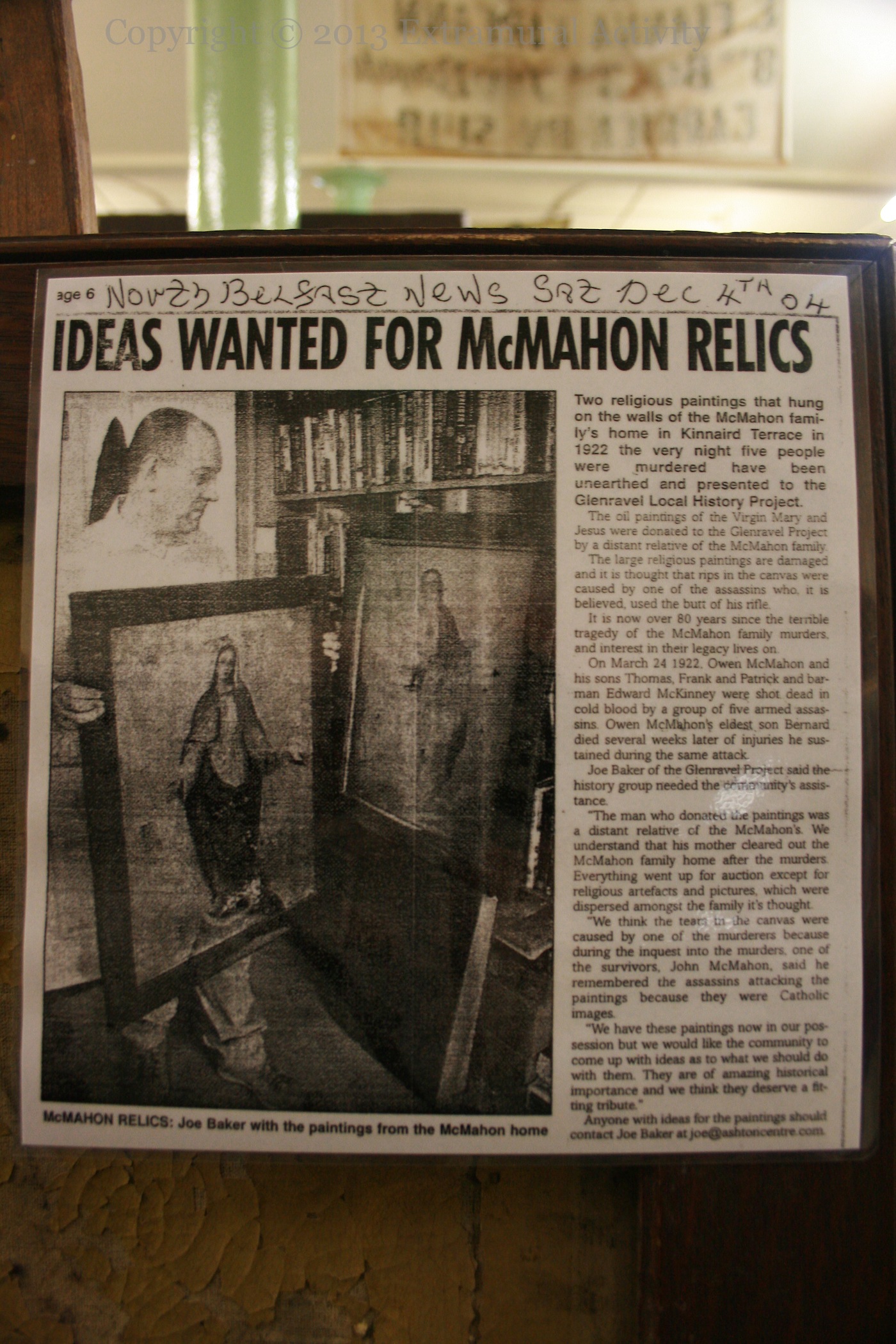
Above is an image of one of two surviving religious pictures from the McMahon household on Kinnaird Terrace, off the Antrim Road. The picture was in the house the night five members of the family and one other person were killed, in 1922, by members of the RIC or the Specials (milltowncemetery.com, WP). The holes on the left and at the bottom are thought to be bullet holes, while the article below claims the tear in the upper centre is from the butt of a rifle. The picture is at present on display in the Republican Museum on Conway Street.
Click image to enlarge
Copyright © 2013 Seosamh Mac Coılle
X01242 X01244
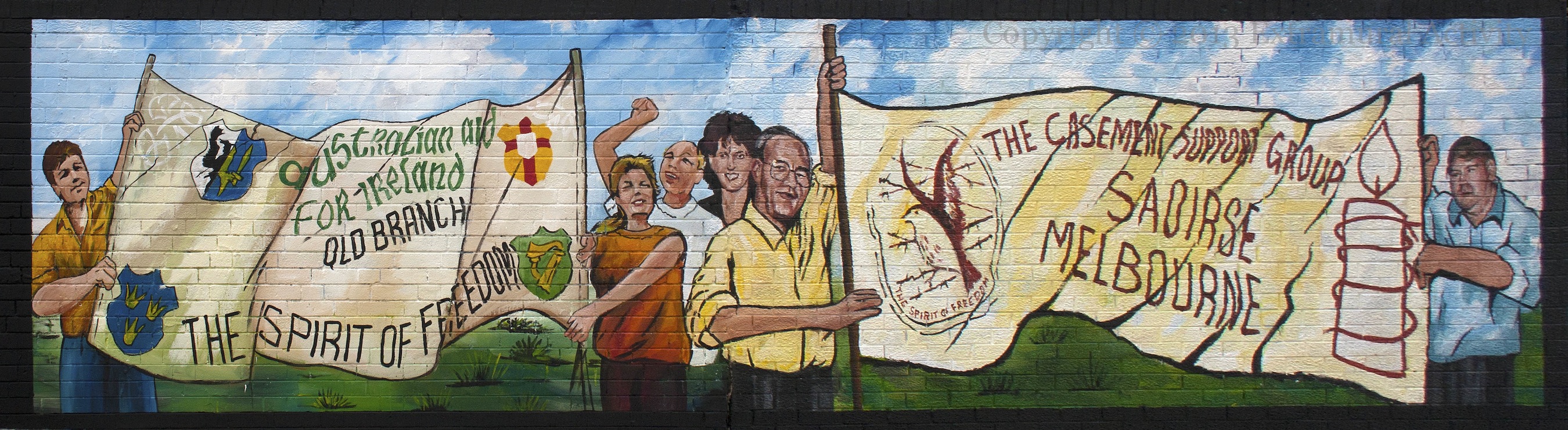
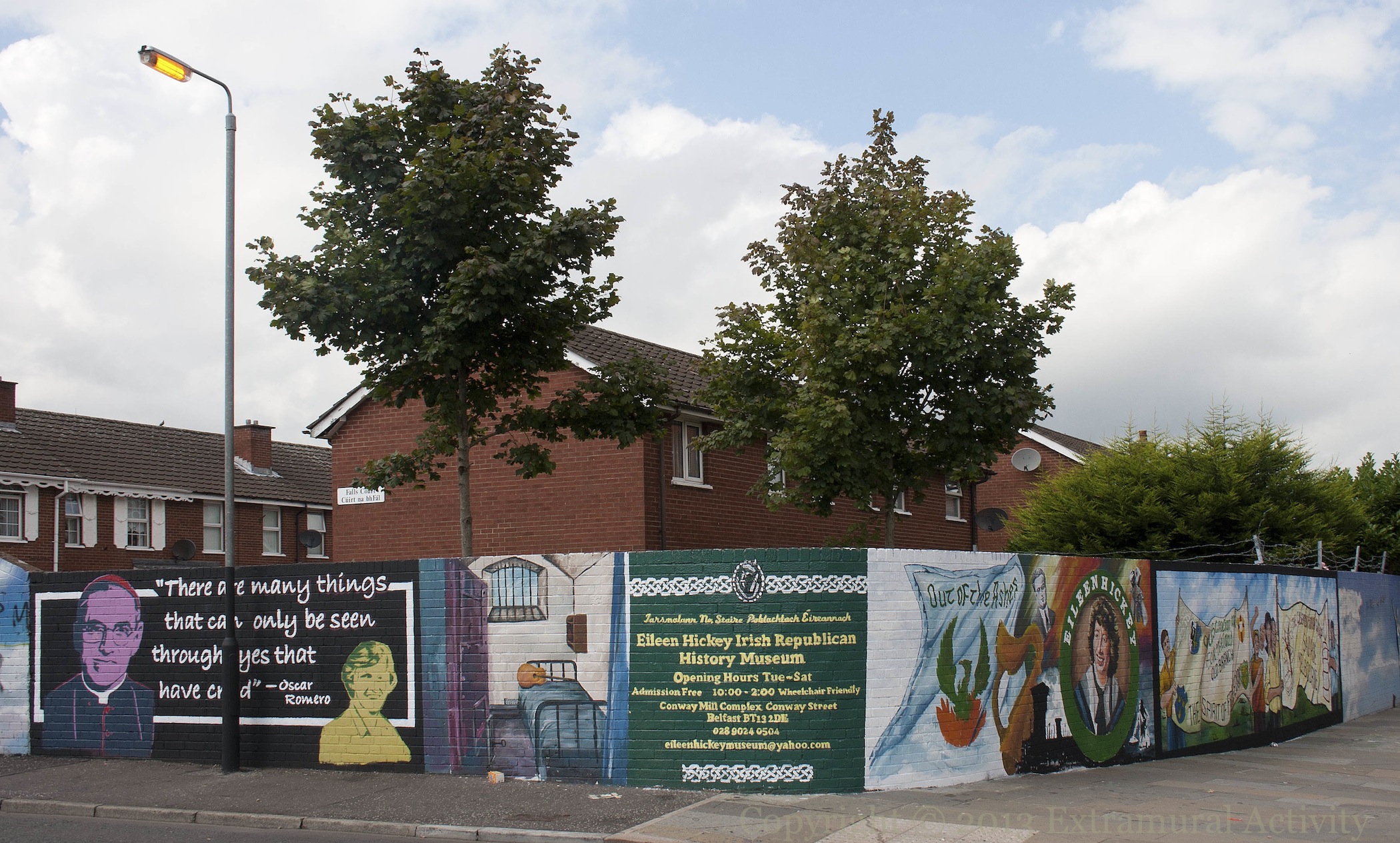
Above is an extra-wide shot (2700 pixels) of another panel from the wall next to the Republican Museum on Conway Street (next to the previously featured Eileen Hickey). The mural features banners of two Australian Republican support-groups, holding banners reading “Australian Aid for Ireland QLD [Queensland] Branch – The Spirit of Freedom” and “The Casement Support Group – Saoirse Melbourne”.
Click image to enlarge
Copyright © 2013 Seosamh Mac Coılle
X01281 lark, fuiseog, old branch hunger strike amnesty
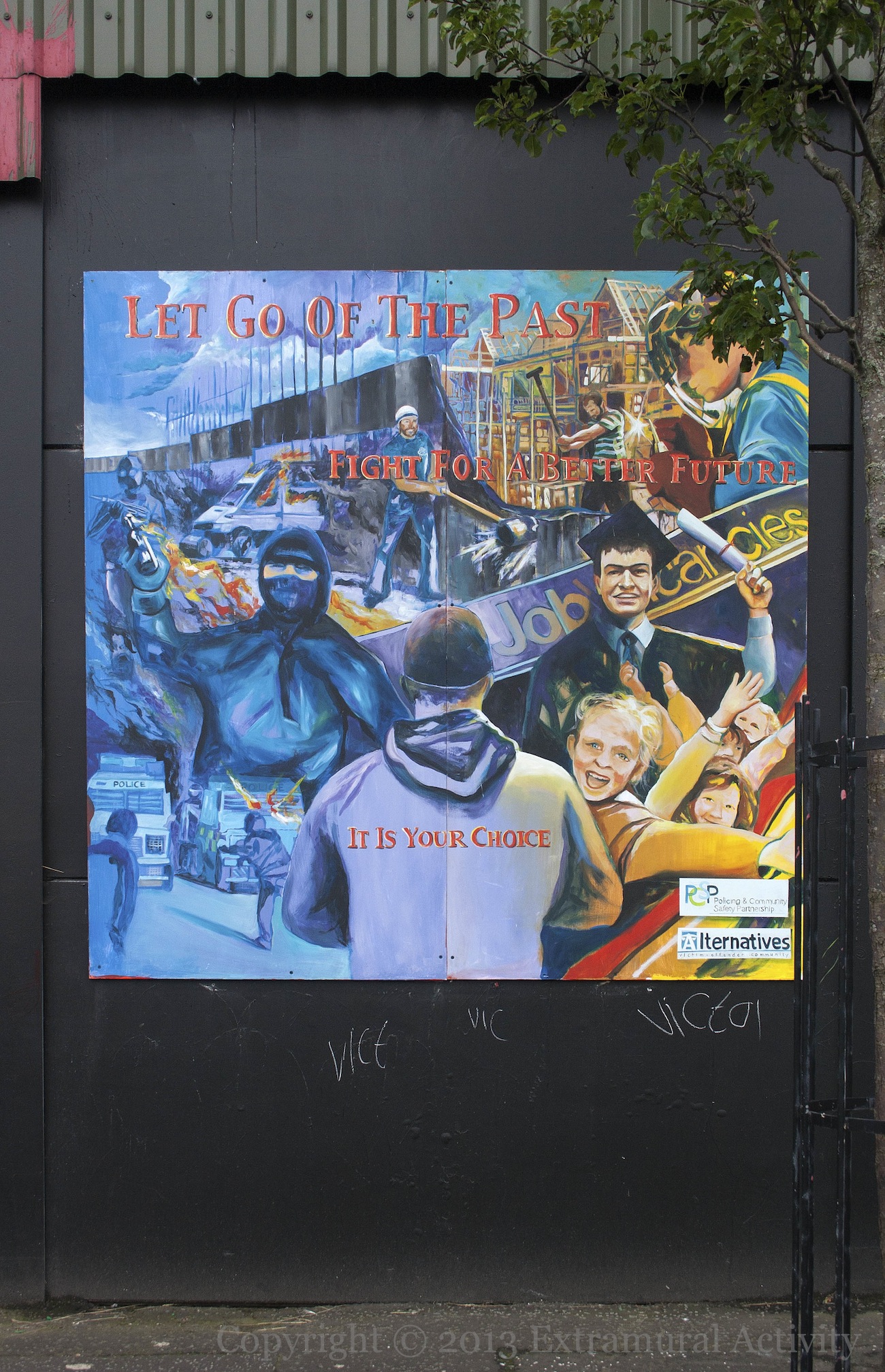
Board on the Cupar Way side of the “peace” line showing, on the left hand side, rioters with petrol bombs attacking the police, the “peace” line, and a burning vehicle, and, on the right, construction workers, university graduates, and happy children. “Fight for a better future. It is your choice.” For more information, see Daniela Balmaverde.
Click image to enlarge
Copyright © 2013 Seosamh Mac Coılle
X01283
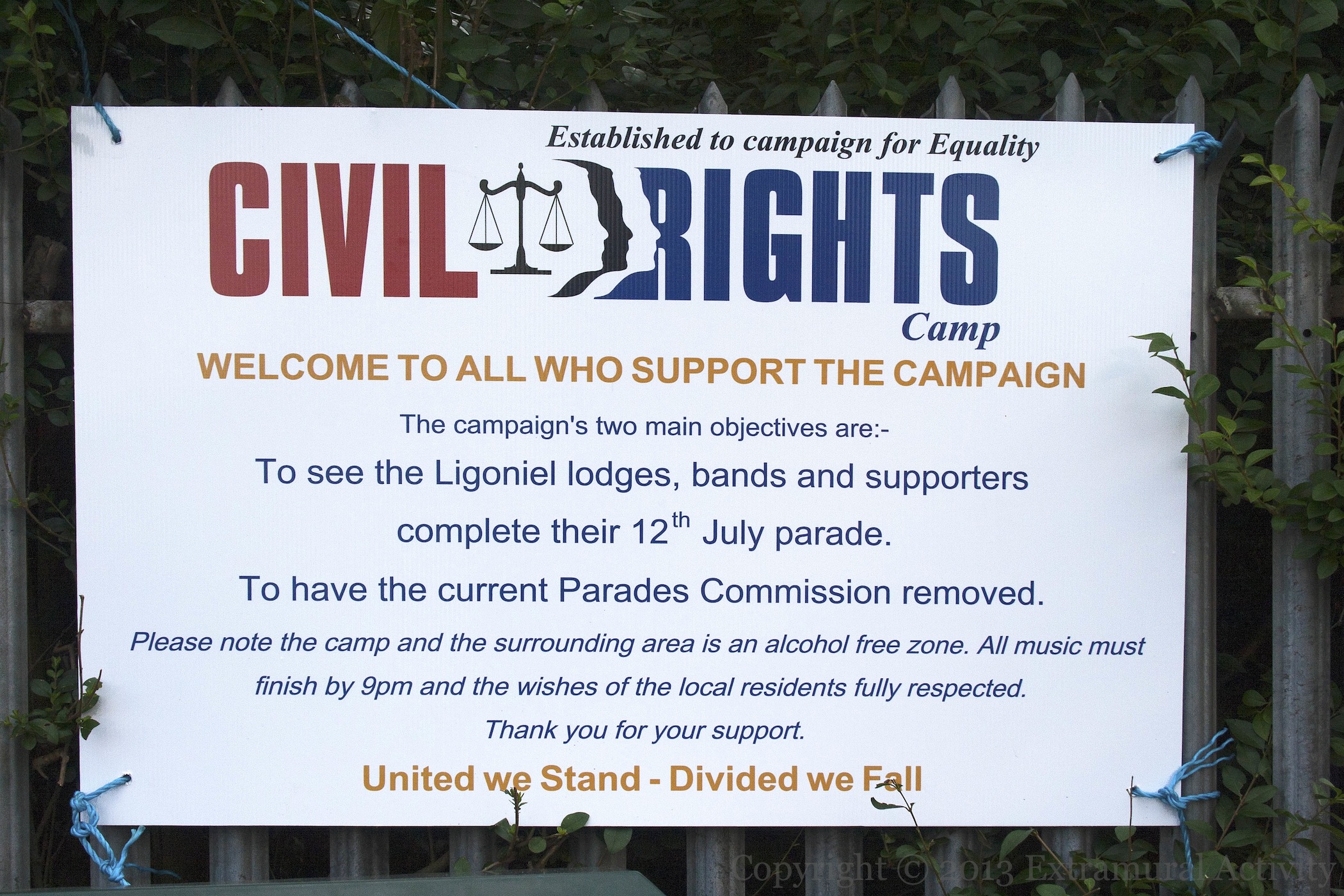
The language of “civil rights” and “equality” is being used at the Twaddell site, as can be seen in the placard shown here there are three copies of this sign: the second image, below, is of one on the north side of the street (visible in the previous set of Twaddell pictures) and the third image shows an additional copy on the electrical box on the south side of the street.
See also: Twaddell Protest Camp | Supporters Club | Let Them Home
“Established to campaign for Equality. Civil Rights. Welcome to all who support the campaign. The two main objectives are to see the Ligoniel lodges, bands and supporters complete their 12th july parade; to have the current parades commission removed. Please note the camp and the surrounding area is an alcohol free zone. All music must finish by 9 p.m. and the wishes of the local residents fully respected. Thank you for your support. United we stand – divided we fall.”
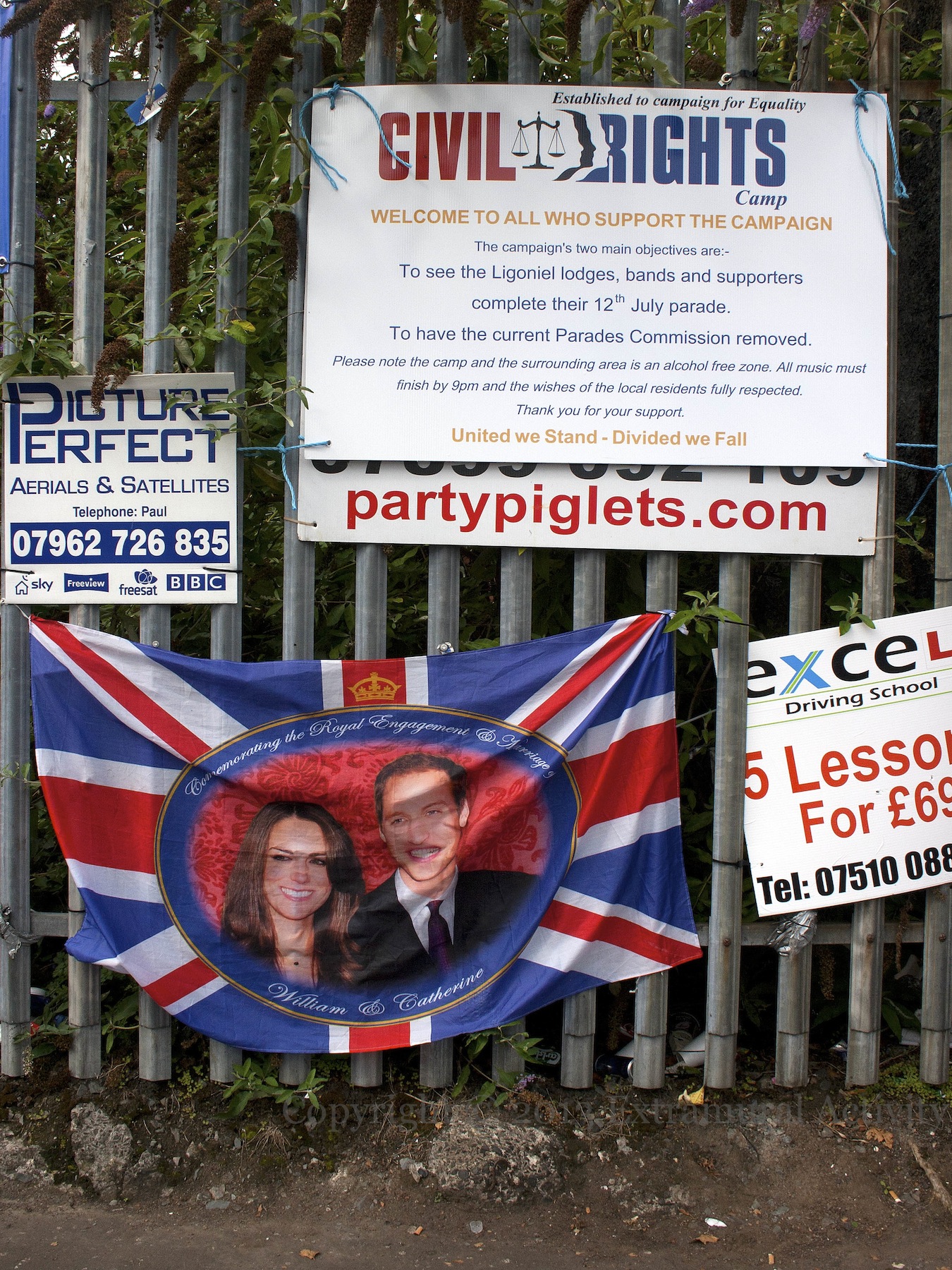

Click image to enlarge
Copyright © 2013 Seosamh Mac Coılle
X01290 X01291 X01292 scales of justice, commemorating the royal engagement and marriage william & catherine; woodvale defenders of the union flag south support loyal orders hatred of orange culture no surrender not now not ever respect our community south londonderry vanguard bears strictly no alcohol to be consumed residential area
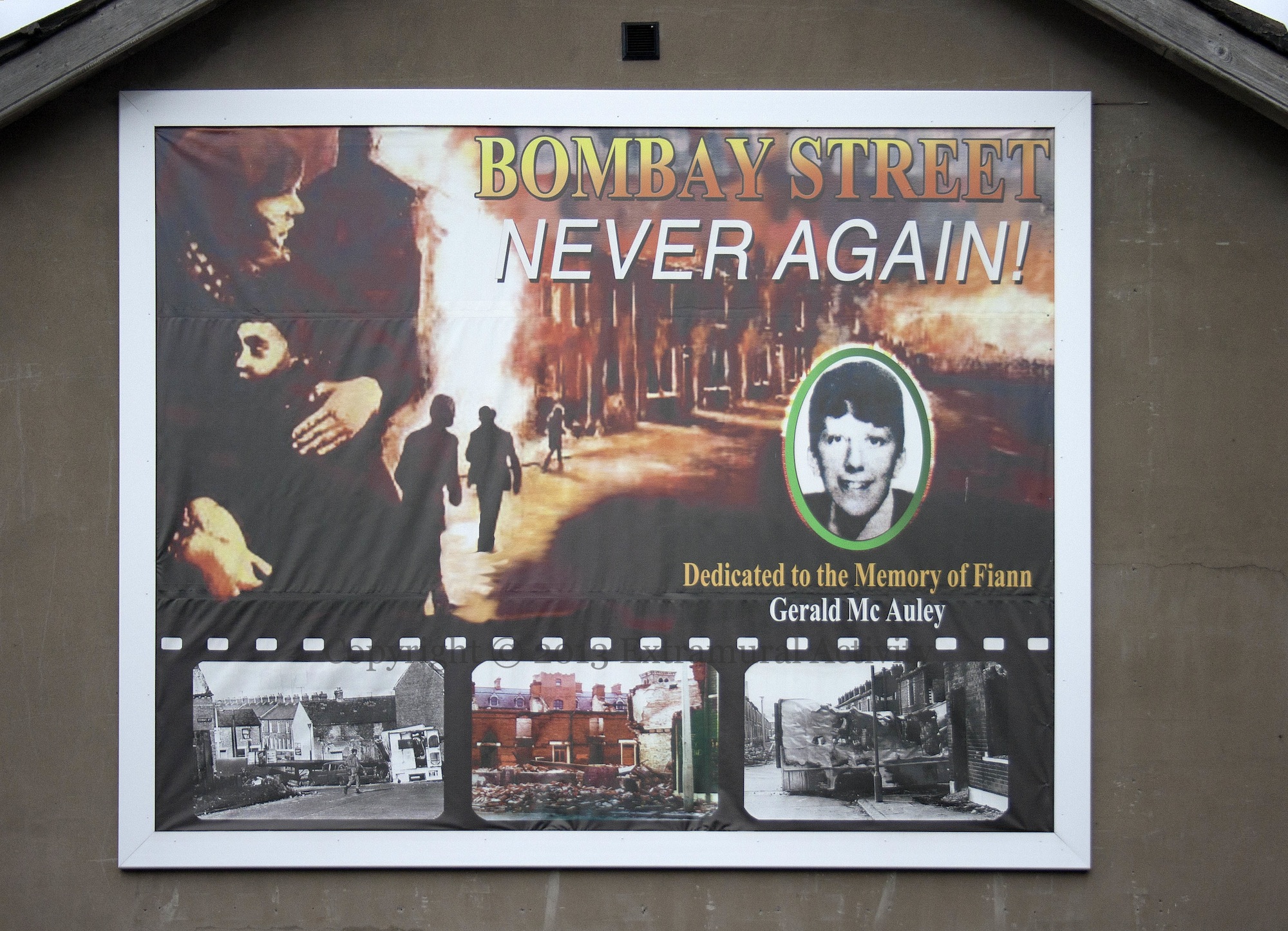
Printed and framed tarp in Bombay Street, commemorating the burning of Bombay Street during the August 1969 Belfast riots and the death Gerald McAuley, a young IRA member (Fian, not “Fiann” as written here) killed by a sniper during the trouble. Three photographs from the street at the time are reproduced in the bottom third of the board.
Ten years ago, an earlier incarnation of this board could be found on the other side of the street, connected to the issue of the day: No (Decom)mission.
RTÉ archival footage of the aftermath and other clips detailing the events in both Belfast and Derry.
Click image to enlarge
Copyright © 2013 Seosamh Mac Coılle
X01272

More images from the Twaddell protest camp, this time from the north side of Twaddell Avenue.
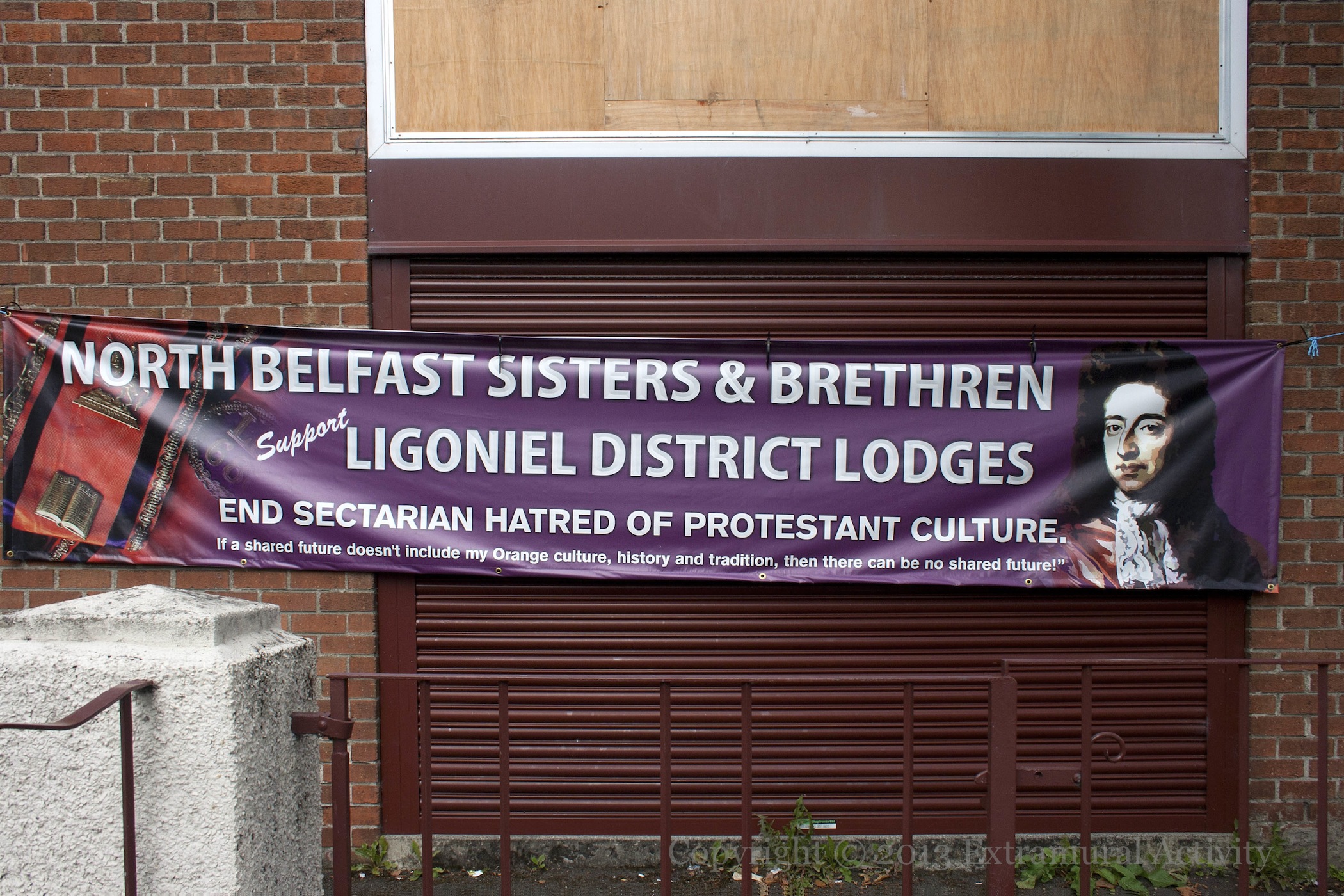
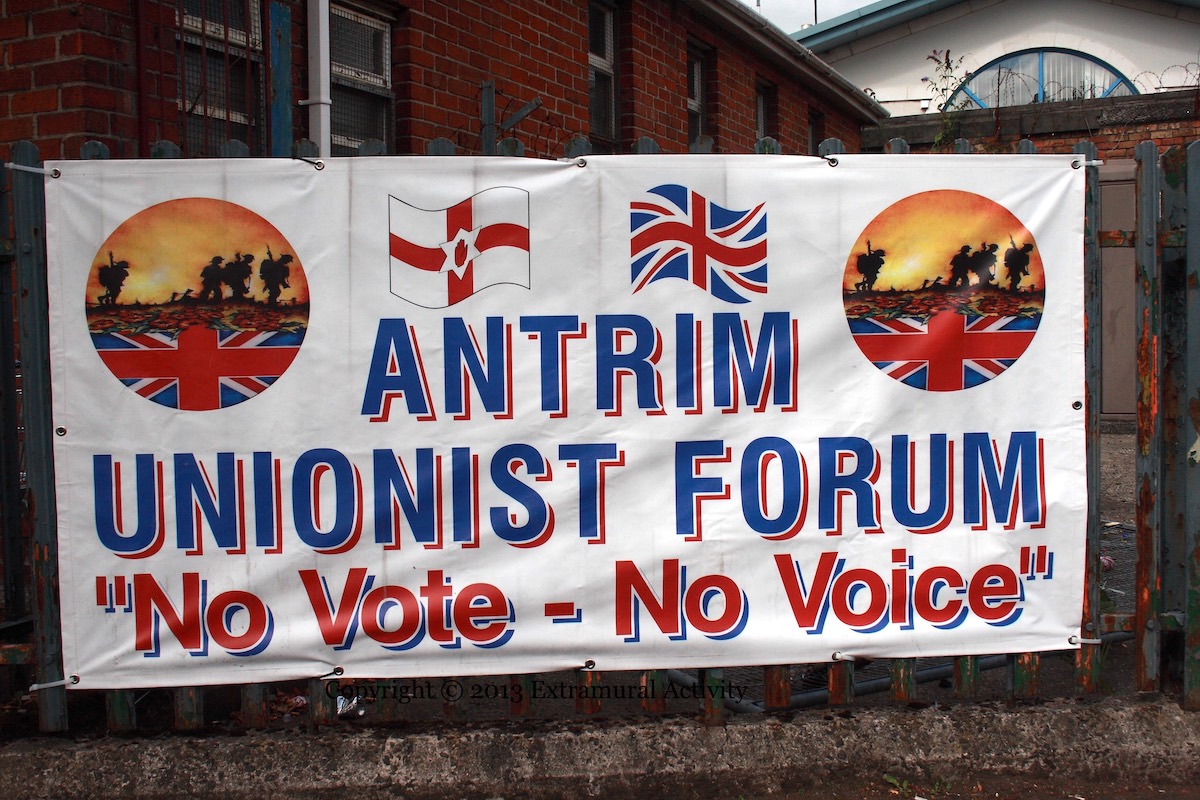

Click image to enlarge
Copyright © 2013 Seosamh Mac Coılle
X01293 X01294 X05291 X01295 ardoyne rangers supporters club supports ligoniel lodges pride of flute band and twaddell residents queenspark british and proud no surrender; north belfast sisters and brethren district end sectarian hatred of protestant culture if a shared future doesn’t include my orange culture history and tradition then there can be no shared future sash king billy antrim unionist forum UPV united protestant voice PUP progressive unionist party mid-ulster association branch youth of northern ireland respect our culture carrickfergus united loyalists civil rights
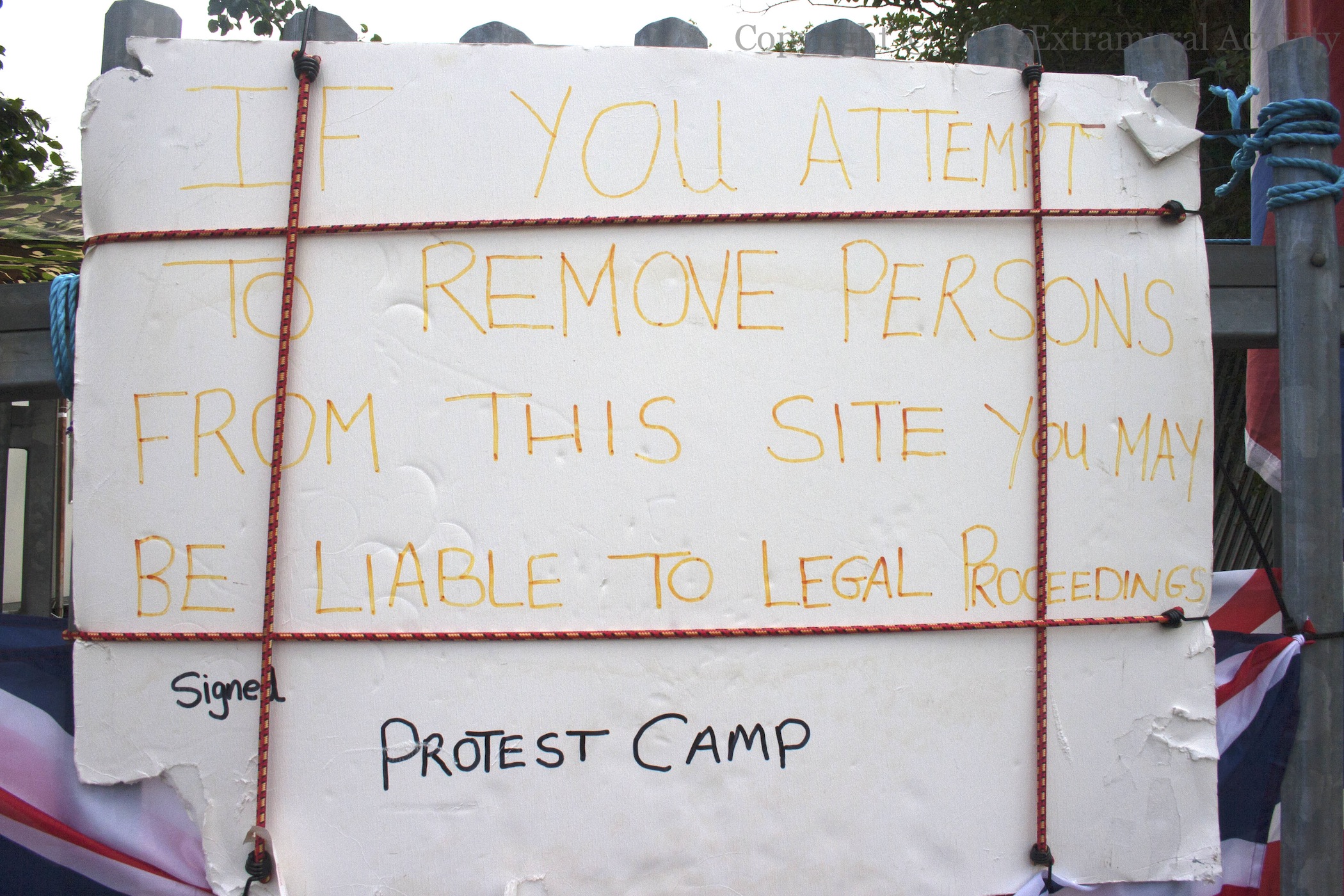
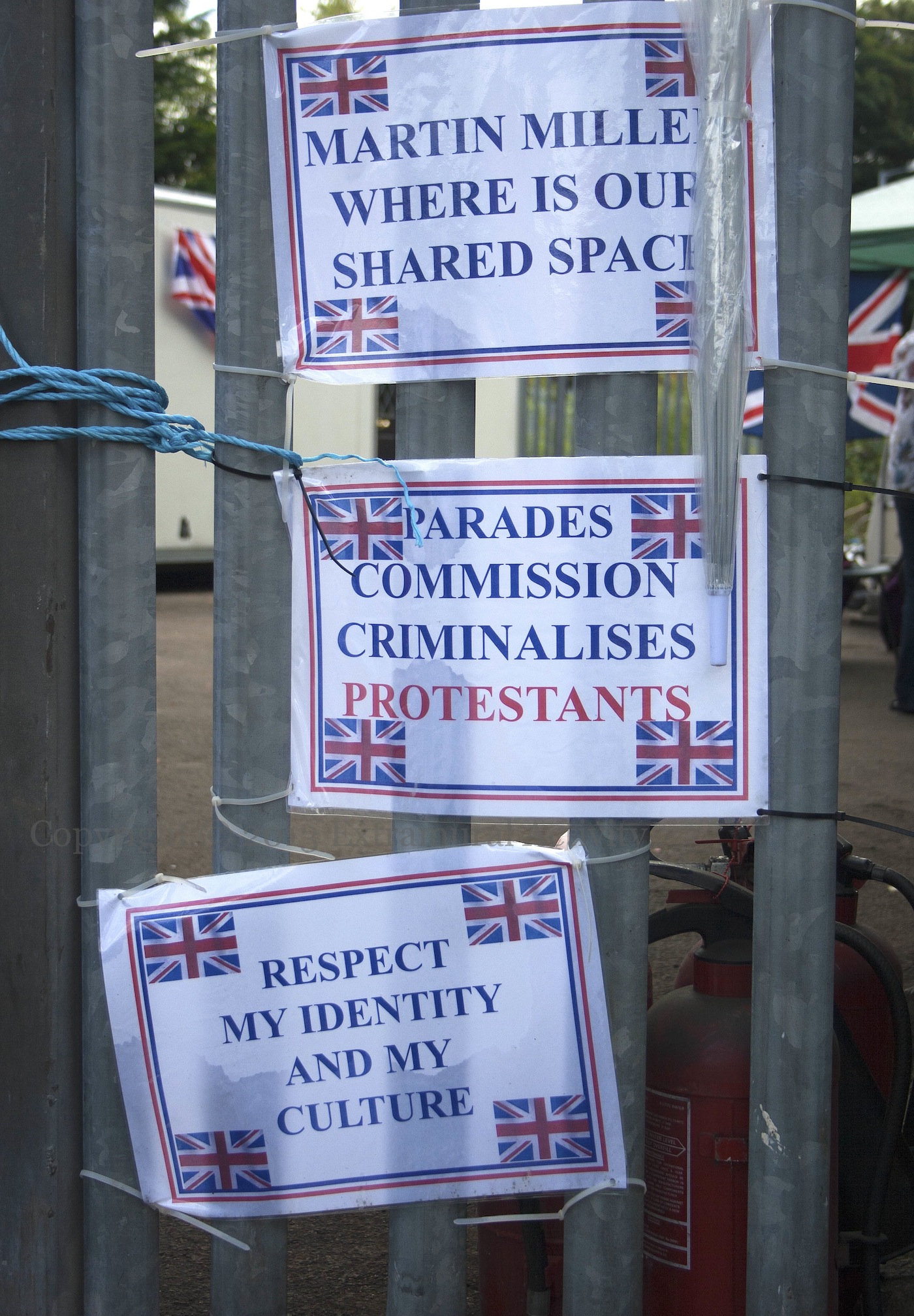
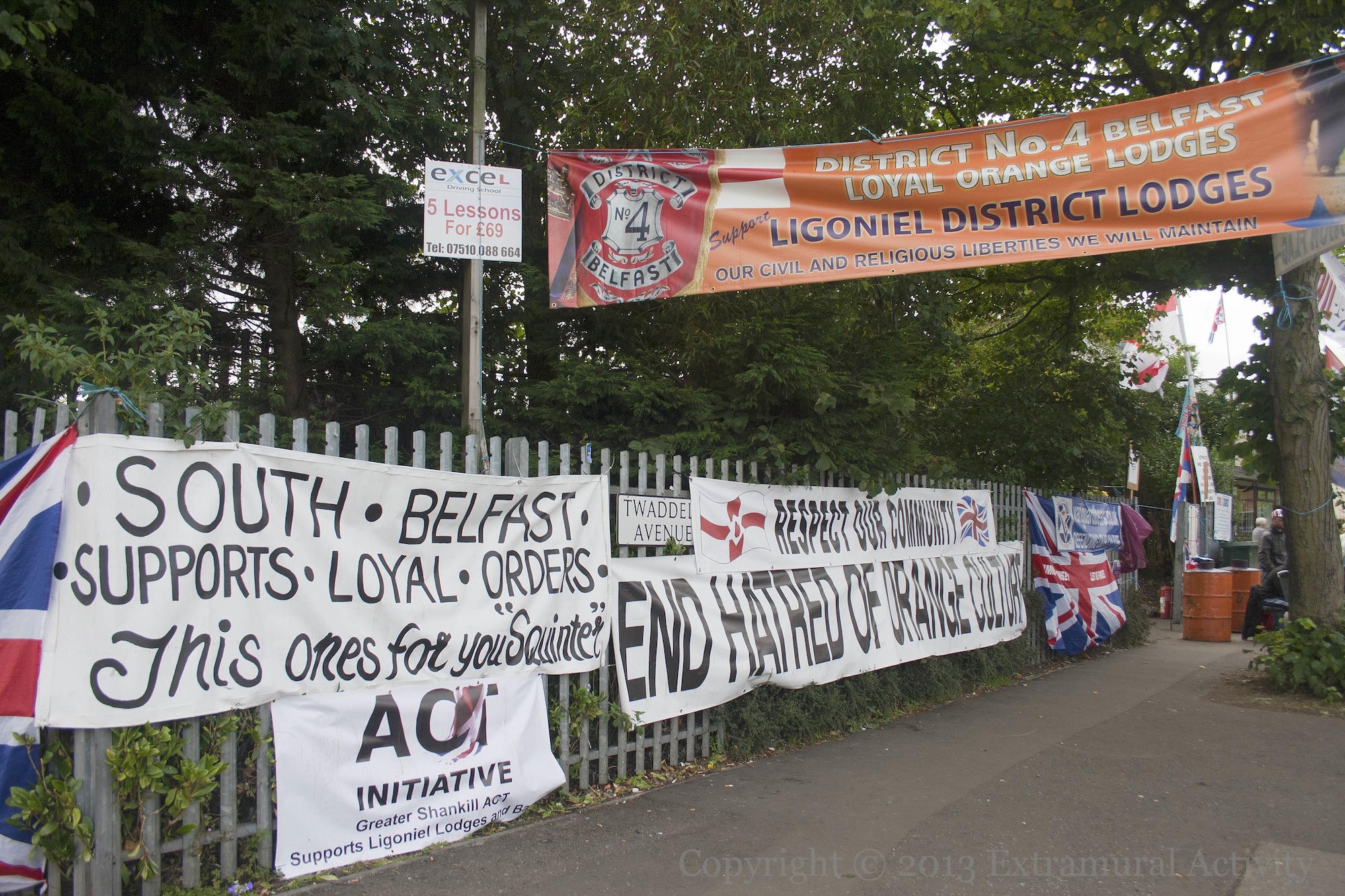
Three images from the protest camp at the top of Twaddell Avenue, at the southern border of Ardoyne. The protest is in response to a parades commission ruling that, on July 12th, Orange marches could only go past the Ardoyne shops in the morning but not return via the same route.
Click image to enlarge
Copyright © 2013 Seosamh Mac Coılle
X01297 X01296 X01298 if you attempt to remove persons from this site you may be liable to legal proceedings signed protest camp; martin miller where is our shared space parades commission criminalises protestants respect my identity and my culture south belfast supports loyal orders, this ones for you “squinter” end hatred of orange culture respect our community district no. 4 belfast loyal orange orders supports ligoniel district lodges our civil and religious liberties we will maintain

Above is a colourful metal-worked piece bolted to the “peace” line on Cupar Way, celebrating “Shankill Ingenuity” while commemorating the lives lost on Titanic.
“1140” p.m. local time, April 14th, 1912, was when the ship hit an iceberg and began sinking. At about 2:20 a.m., in the early hours of the 15th, it went under.
Click image to enlarge
Copyright © 2013 Extramural Activity
X01288 families 1140 1912 harland and wolff
Update from March 2024: here is the piece covered in tourists’ signatures.

X14832

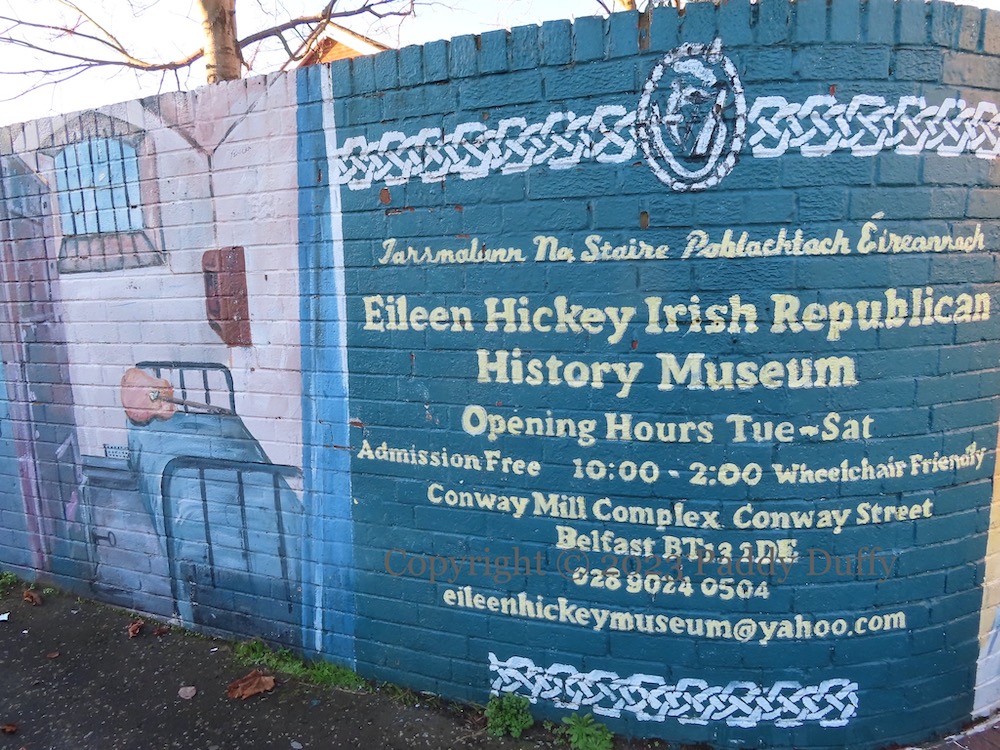
The ‘Eileen Hickey Irish Republican History Museum‘ — which is across the street behind the Conway Mill — is named for Eileen Hickey, a Provisional IRA member who served time in Armagh prison; she died in 2006, one year before the opening of the museum (obituary at An Phoblacht). A close-up of the woman with a bin lid, in the lower right-hand corner, can be found below.
Next to the opening hours is an image of a prison cell in the Armagh women’s prison. The museum itself contains a cell door and a bed from the prison.
For the Oscar Romero mural in the wide shot, see Eyes That Have Cried. On the right is Australian Aid.
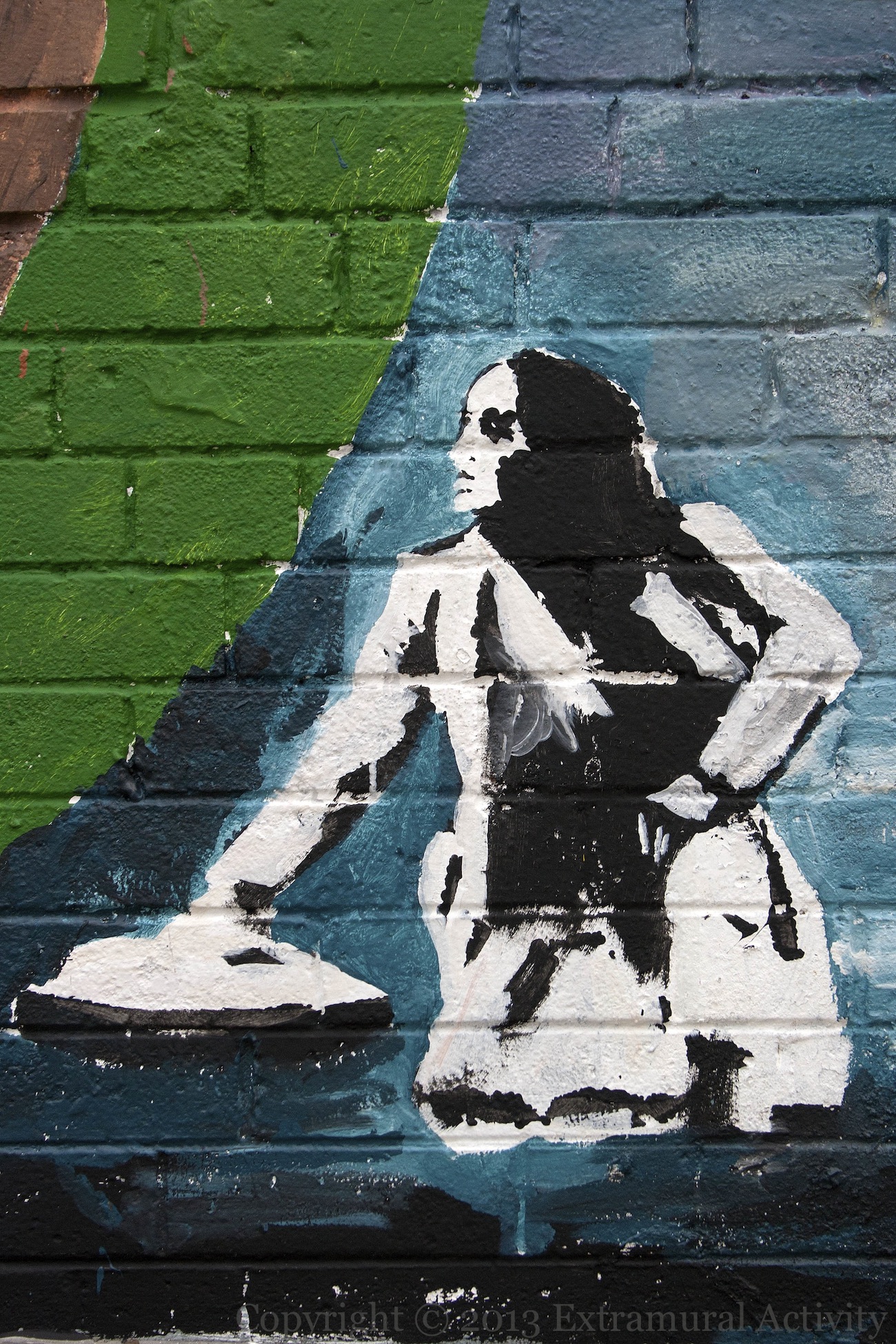

Click image to enlarge
Copyright © 2013 Seosamh Mac Coılle
X01282 X01275 X00635 X01274
T01619 (courtesy of Paddy Duffy 2023)
Conway Link/Street out of the ashes, harp, maze long kesh
 Extramural Activity