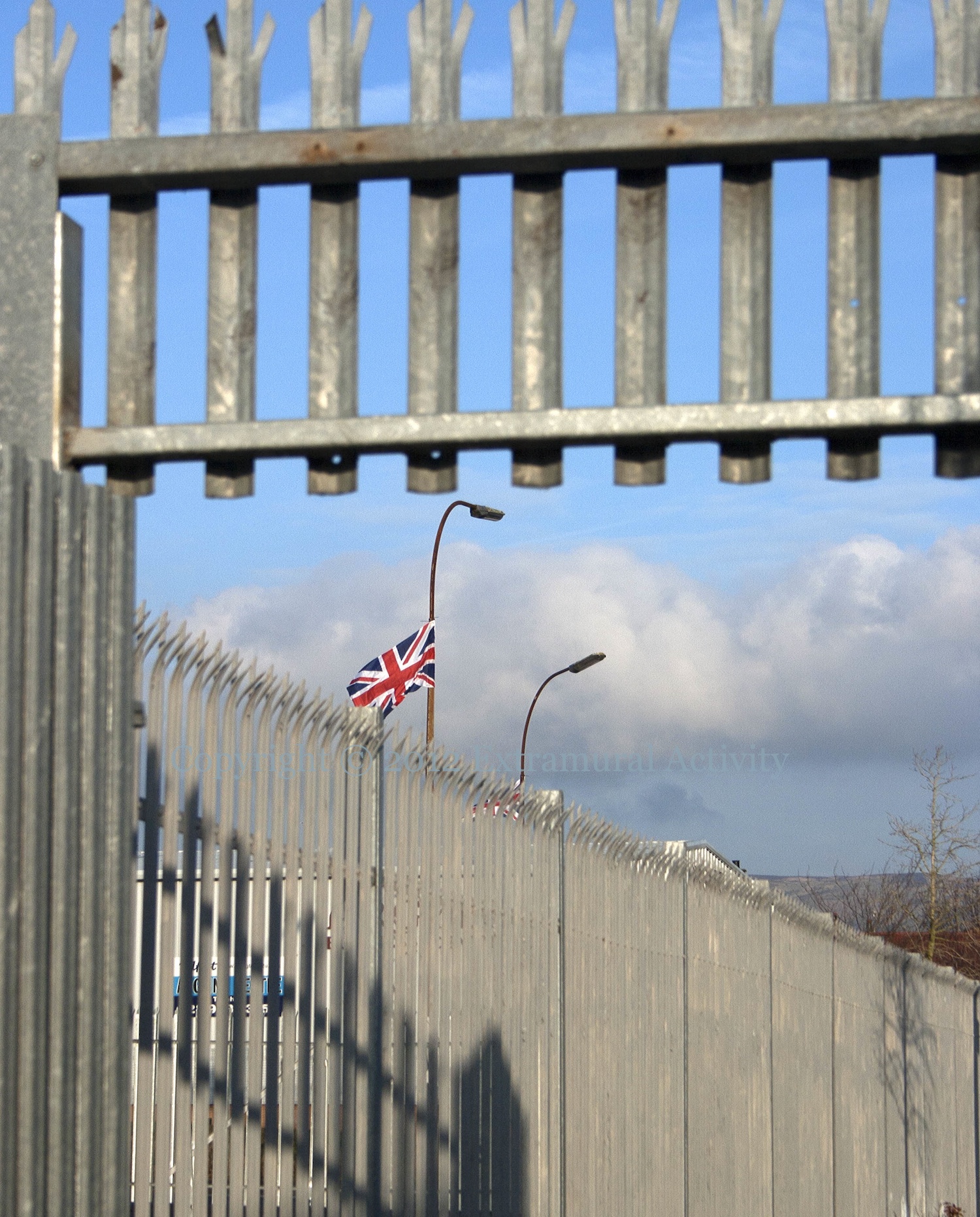
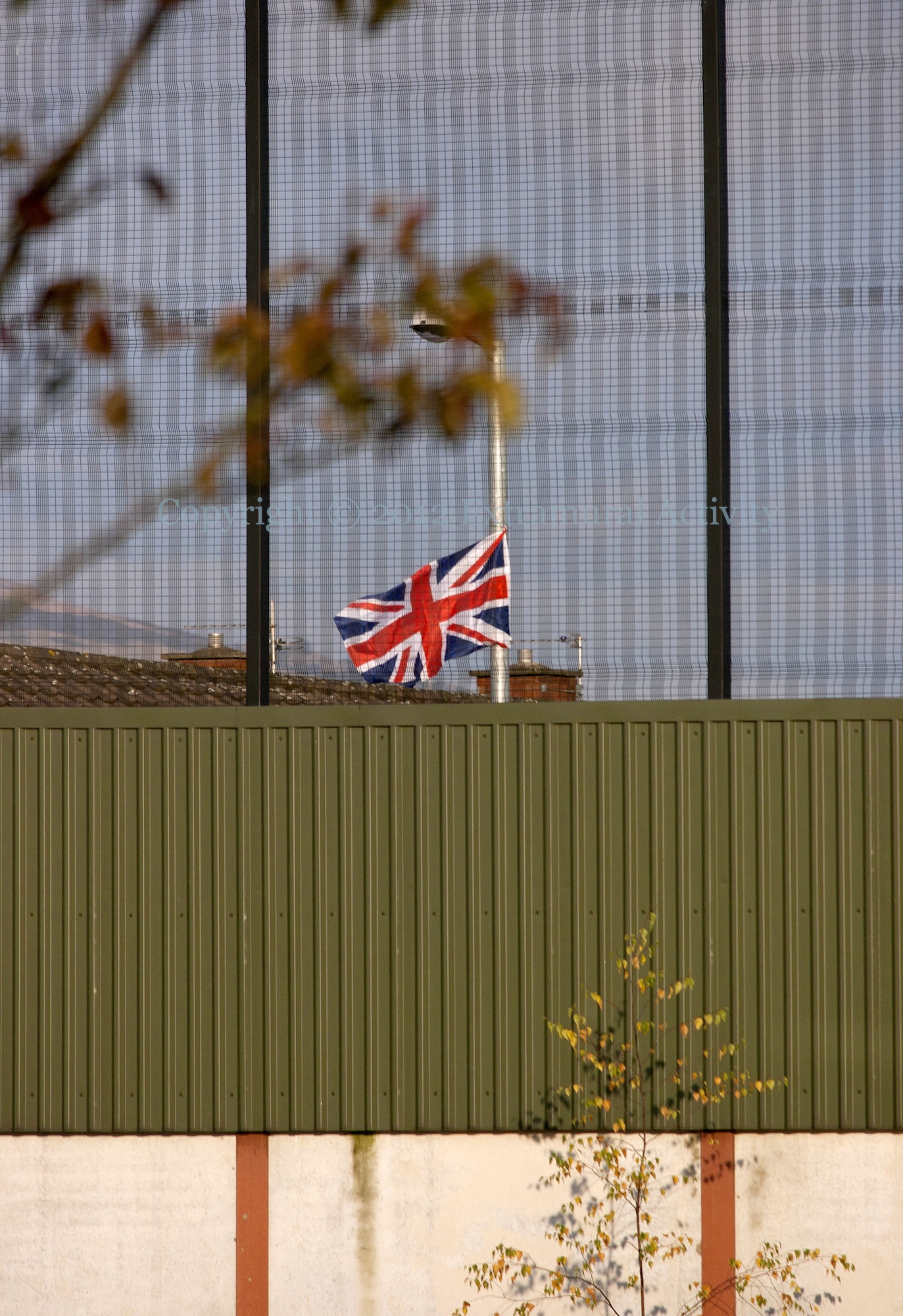
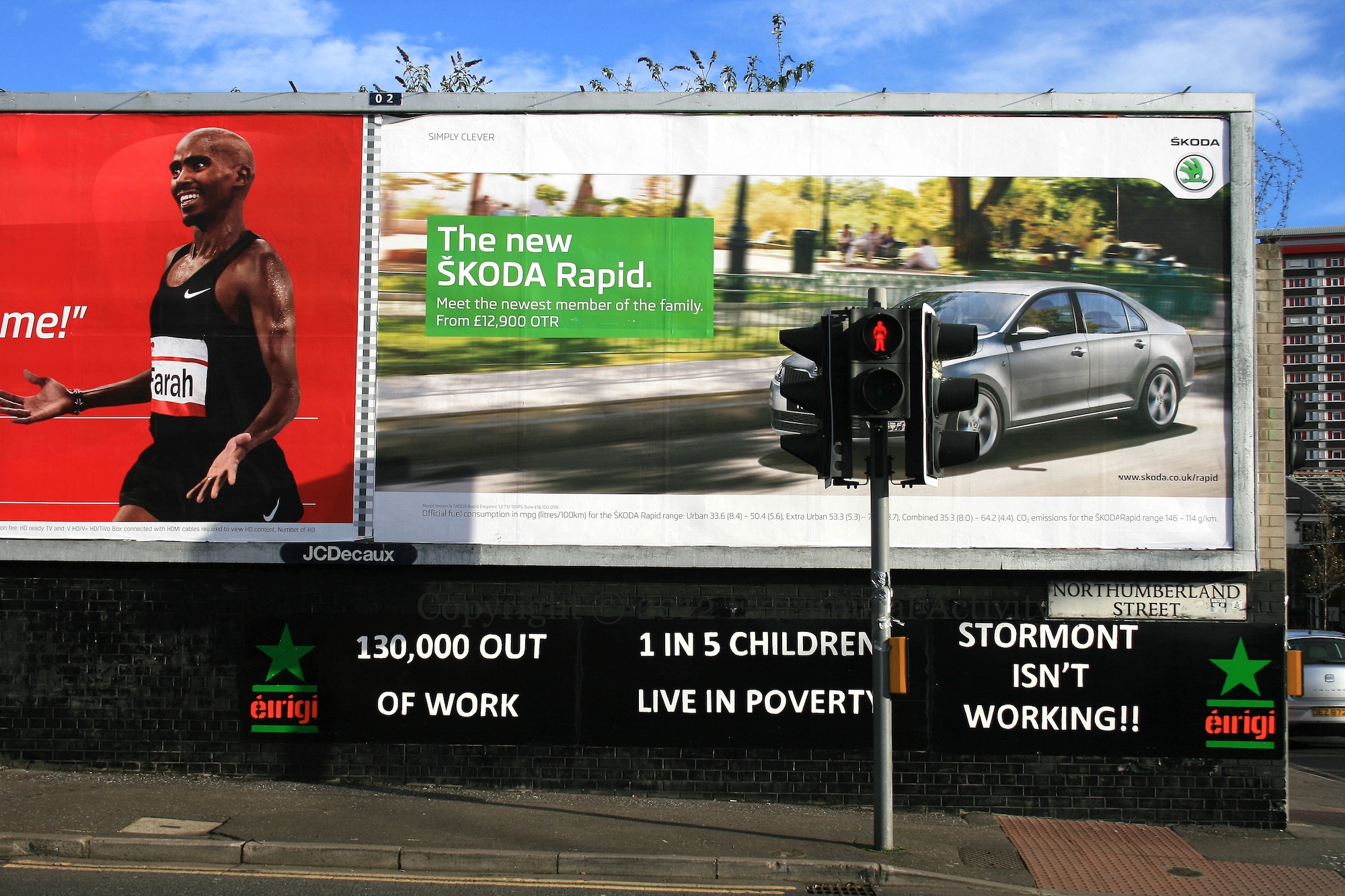
Protests over the December 3rd vote not to fly the union jack every day at Belfast City Hall continued last night (2012-12-17 — video from BBC-NI | U.tv). The image above shows a flag flying on the loyalist side framed by the pedestrian gate on Northumberland Street. The image below shows one shot across the Cupar Way “peace” line, from Conway Street.
“You might easy know a doffer when she comes to town/With her long yellow hair and her pickers hanging down/With her rubber ties [tied] before her and her scraper in her hand. … [the verse concludes: She’ll never get a man]” (Traditional Music). Conway Mill closed in the mid-70s but from 1982 onward has been used for community development; since 2000 it has been a listed building (Conway Mill).
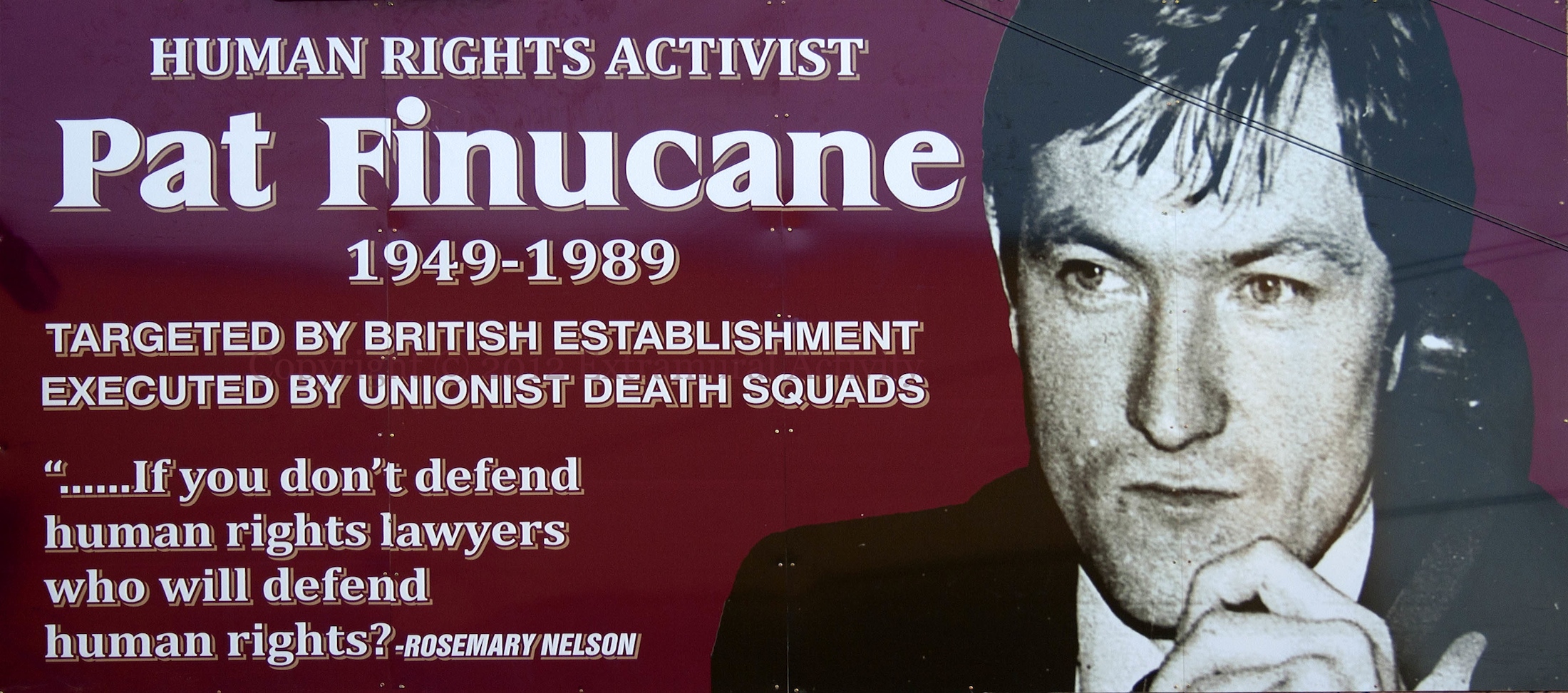
A new board commemorating Pat Finucane (WP), on Beechmount Avenue. A British report into his death was published yesterday, 2012-12-12 (Tele | BBC-NI | Slugger).
The gate and peace line at the eastern end of Cupar Way. The boards are on the republican side, on North Howard Street, encouraging interaction between Catholics and Protestants: “There’s more in common … than what divides us.”
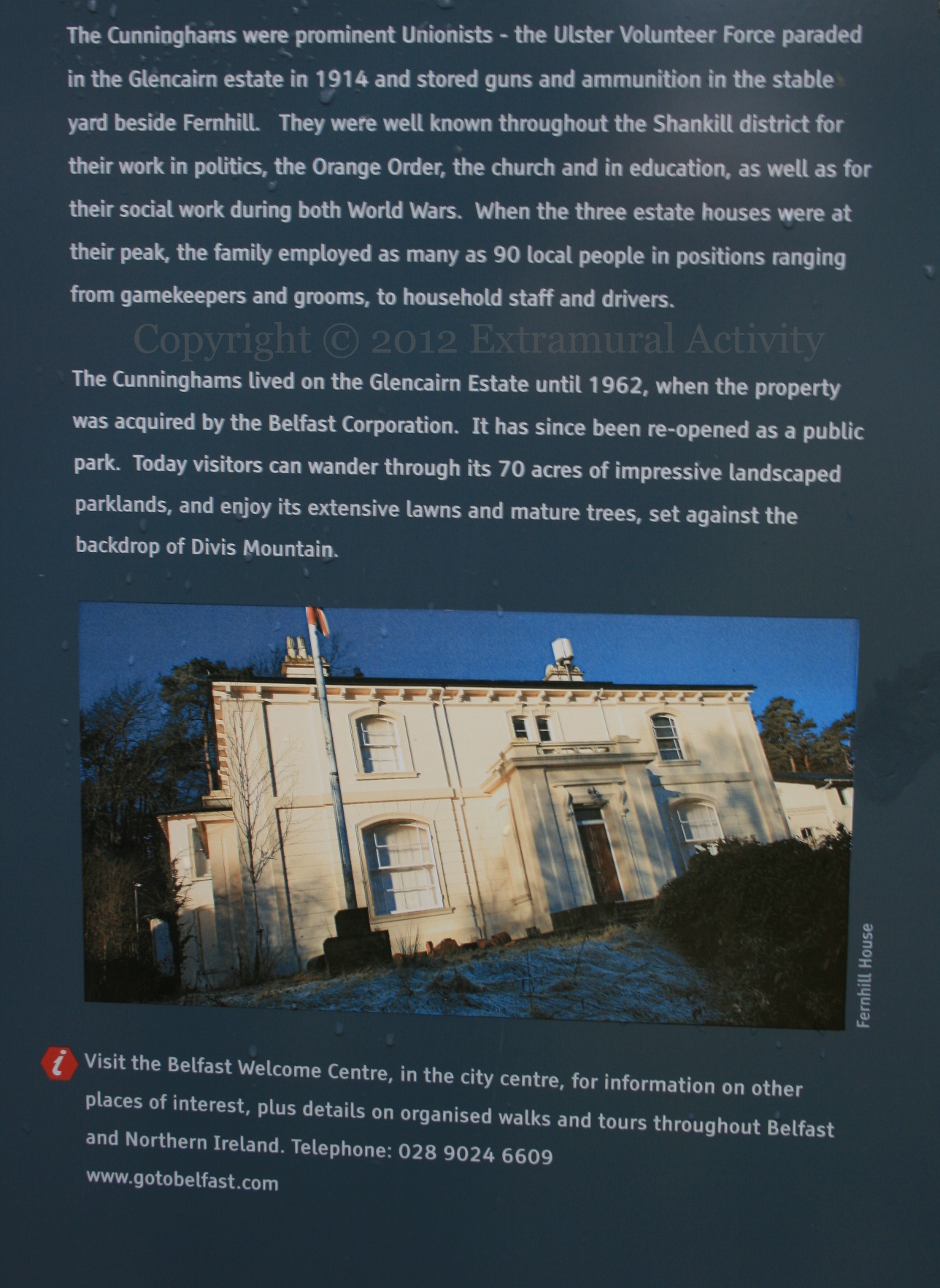
Fernhill House, which features in various loyalist murals/boards, in its present state. In 1996 it was opened as a museum, but has since been shuttered and is gradually falling into disrepair. The house is located off the modern-day Ballygomartin Road, in Glencairn Park.
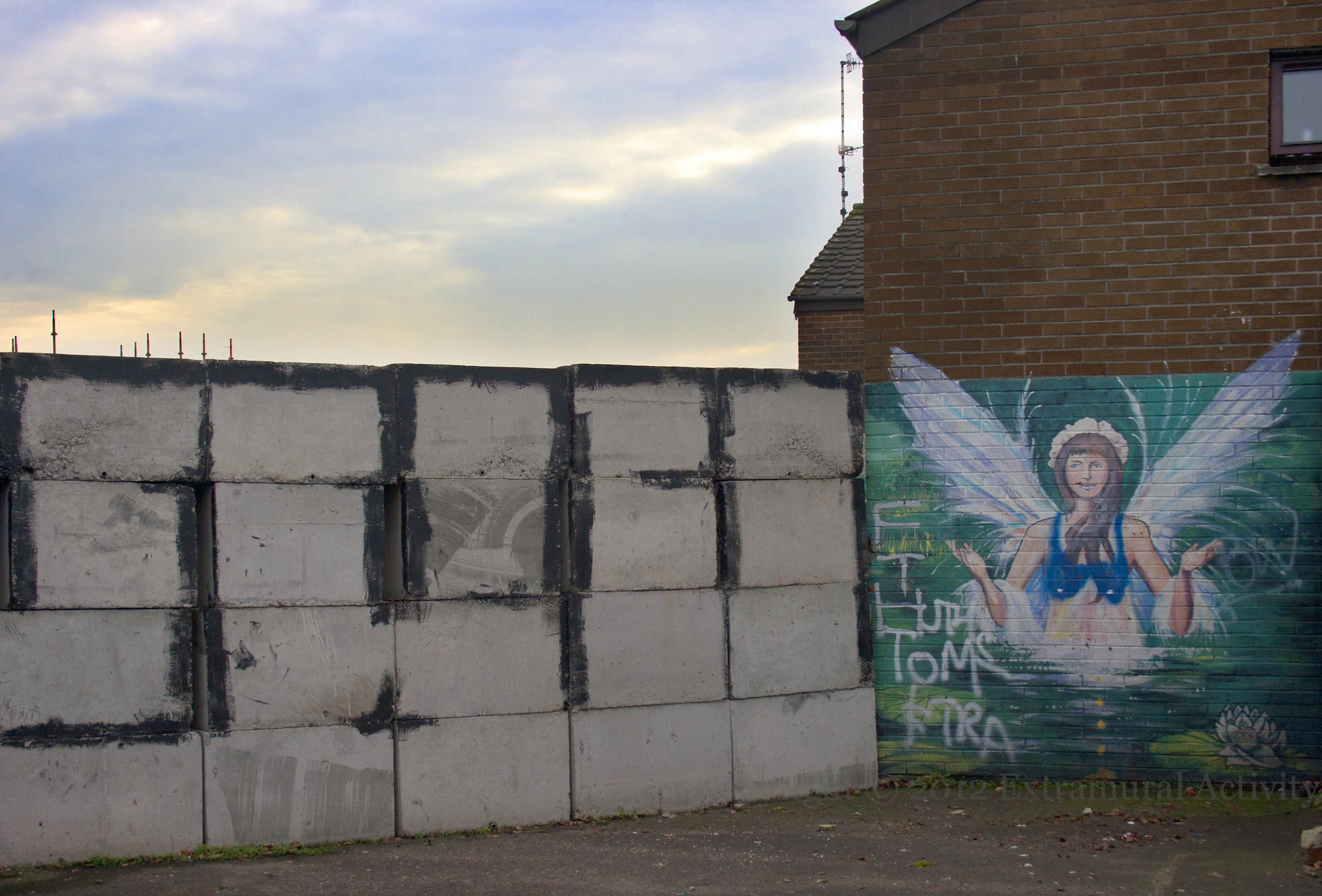
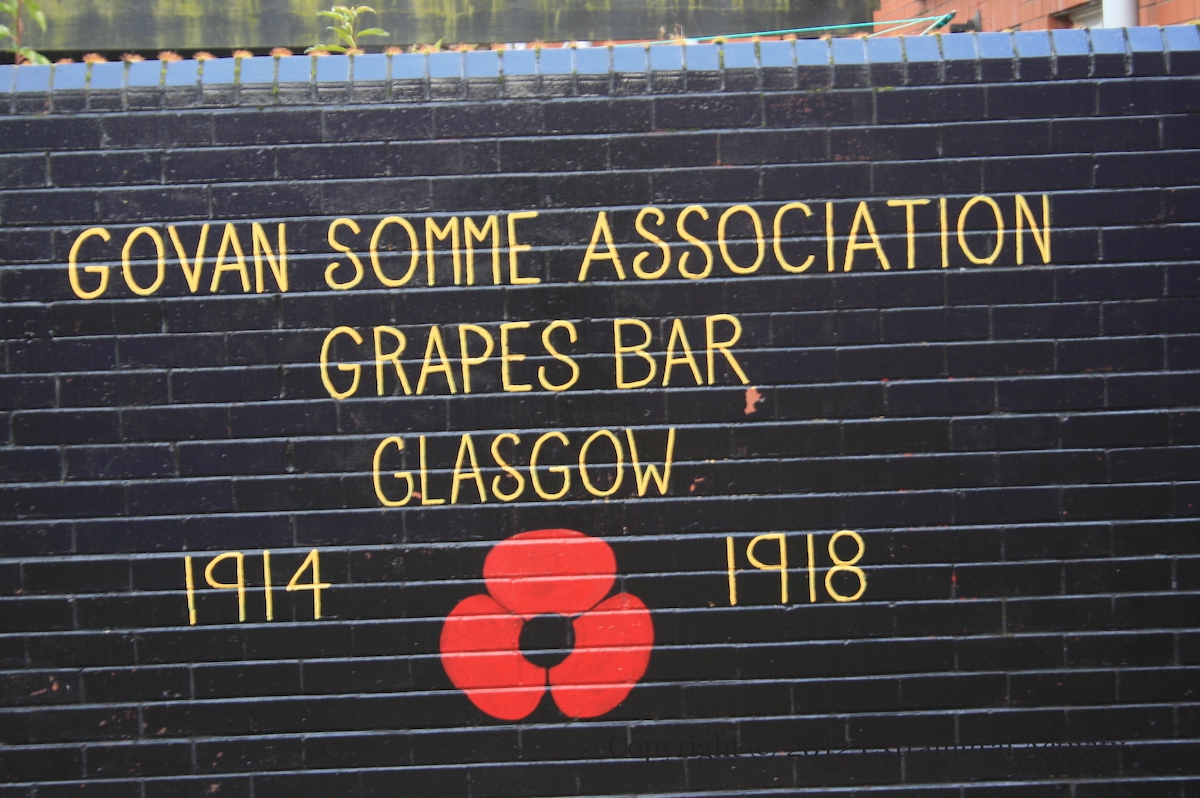
A mural commemorating the Battle of the Somme on the locally-named “Passchendaele Court” (a.k.a. Conway Walk, off Conway St.). See also Thiepval Street. Replaces the Tombo Kinner mural. With support from the Govan Somme Association, Grapes Bar, Glasgow.
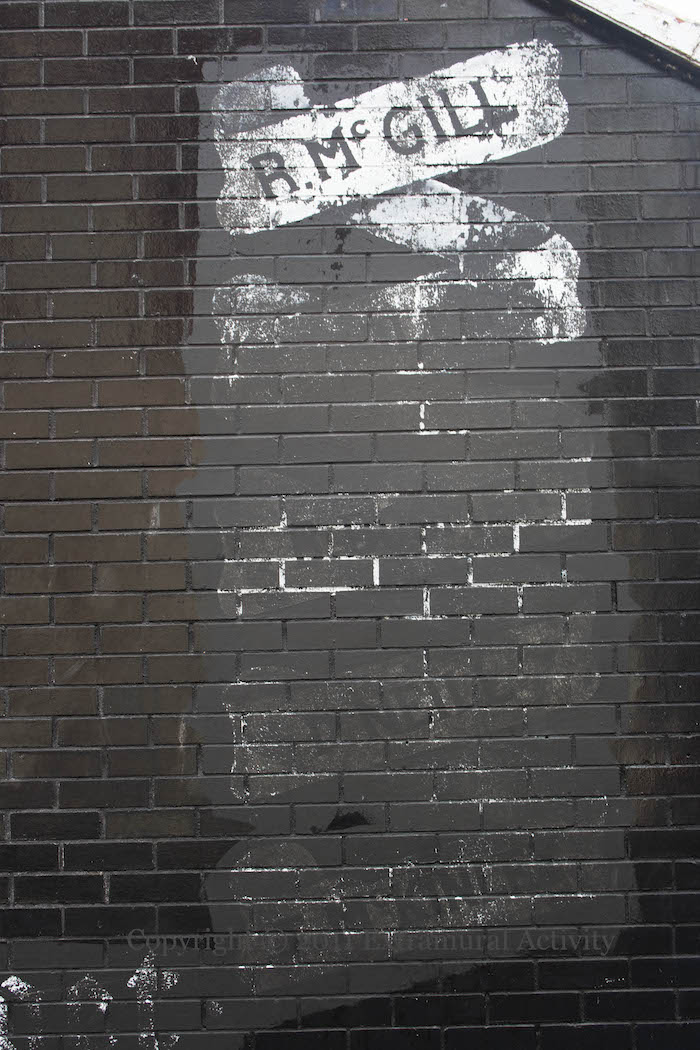
The images below of the previous mural blacked out are from September, 2011. For the mural in its prime, see M05506.
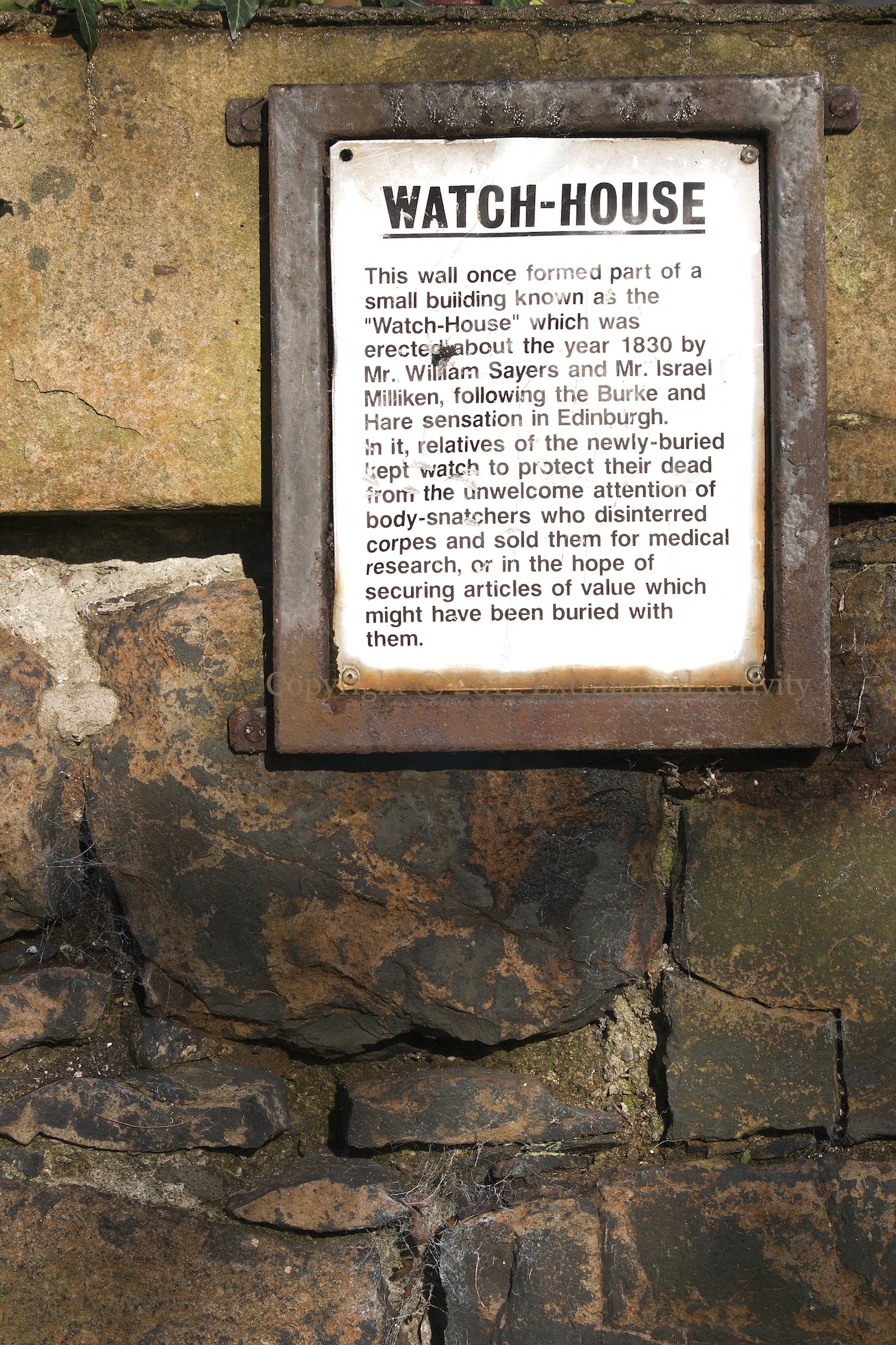
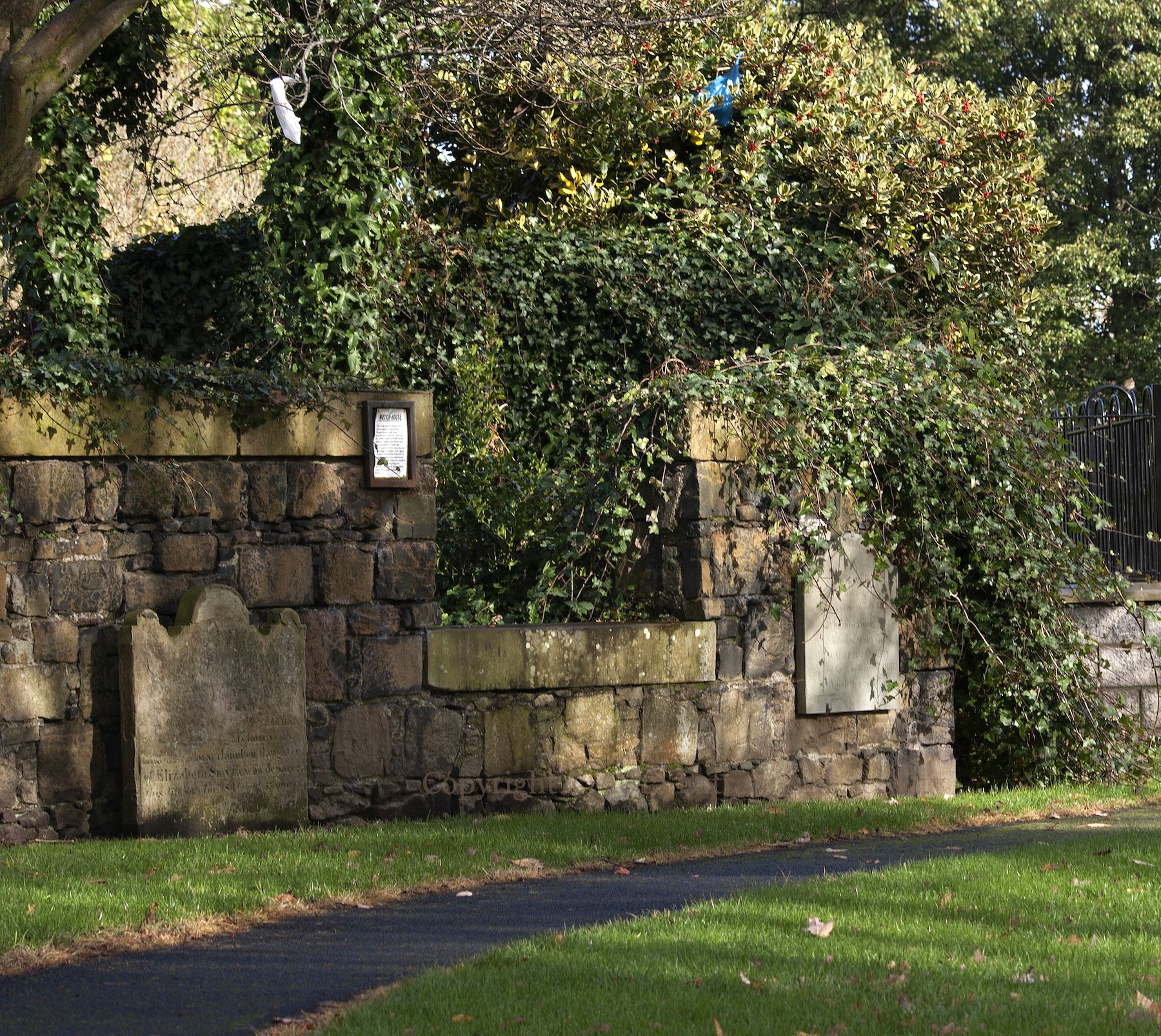
A plaque in the old Shankill graveyard. “Watch-House: This wall once formed part of a small building known as the “Watch-House” which was erected about the year 1830 by Mr. William Sayers and Mr. Israel Milliken, following the Burke and Hare sensation in Edinburgh. In it, relatives of the newly-buried kept watch to protect their dead from the unwelcome attention of body-snatchers who disinterred corpes [corpses] and sold them for medical research, or in the hope of securing articles of value which might have been buried with them.”






 Extramural Activity