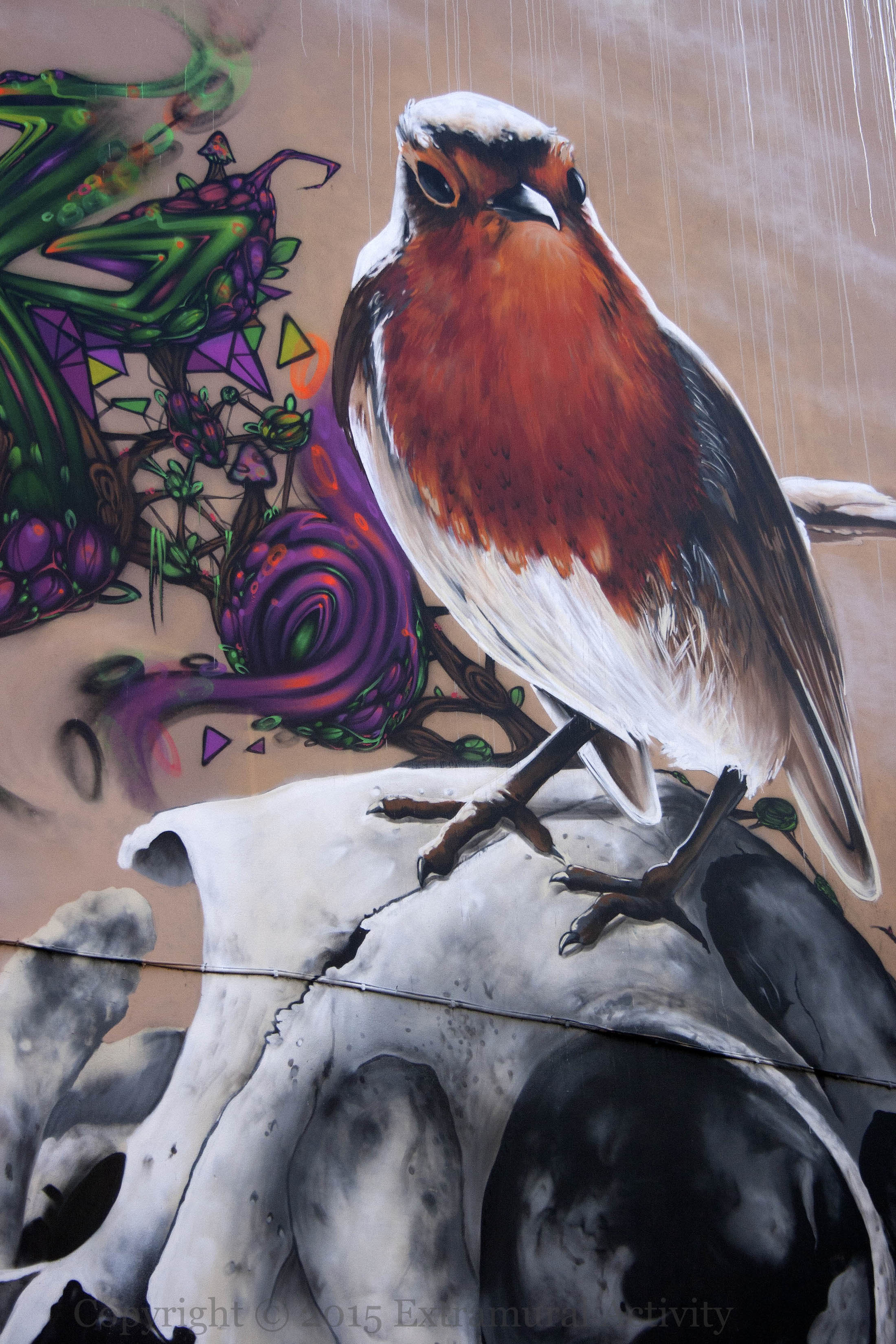
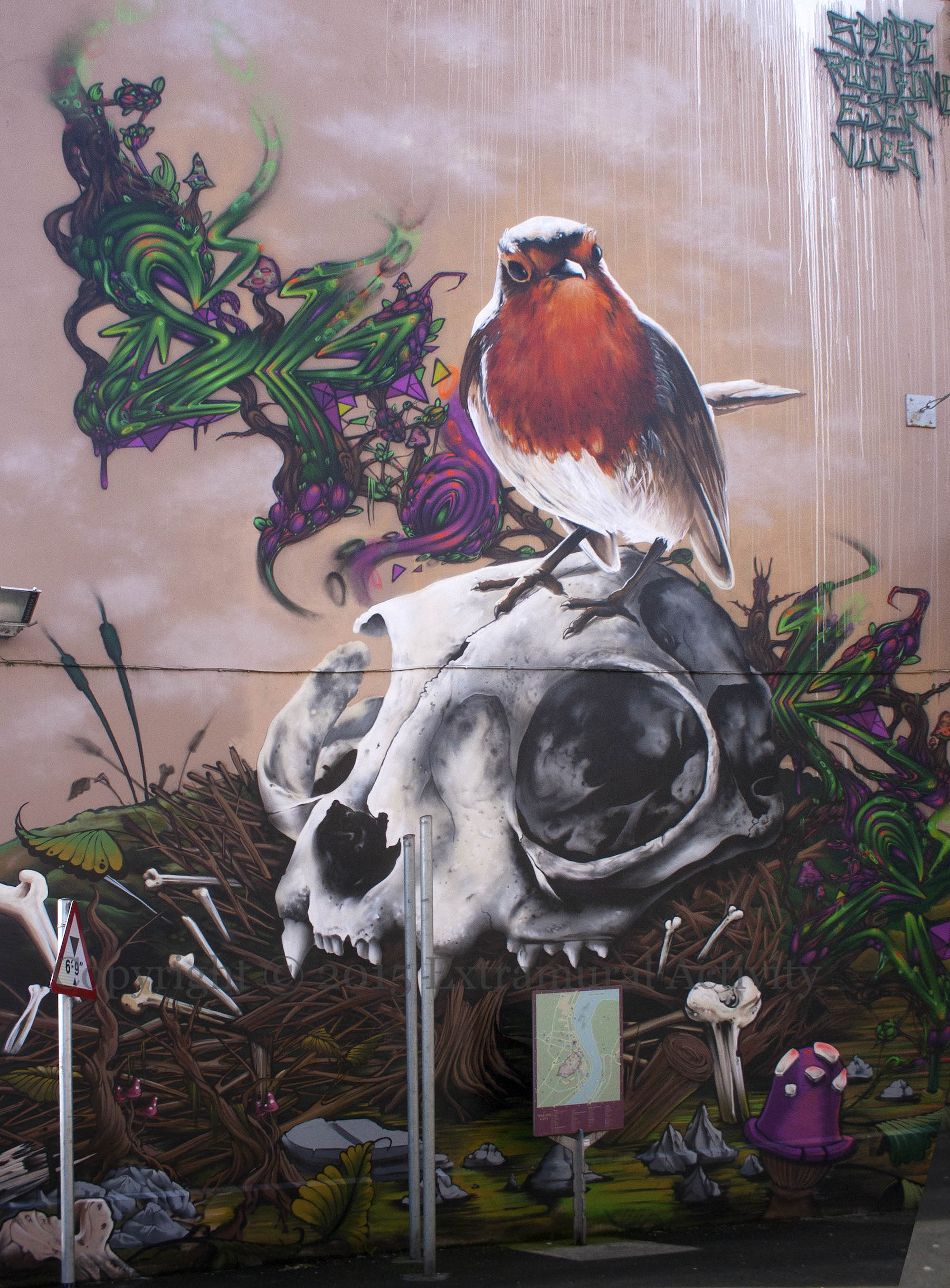
A robin sits atop the skull of a cat. Work by Glaswegian street artists Spore, Ejek, Rogue-One, and Vues Oner for the Release The Pressure festival in London/-Derry/Doire back on July 25-26th. See below for a shot of the whole thing and a video of the piece in production.
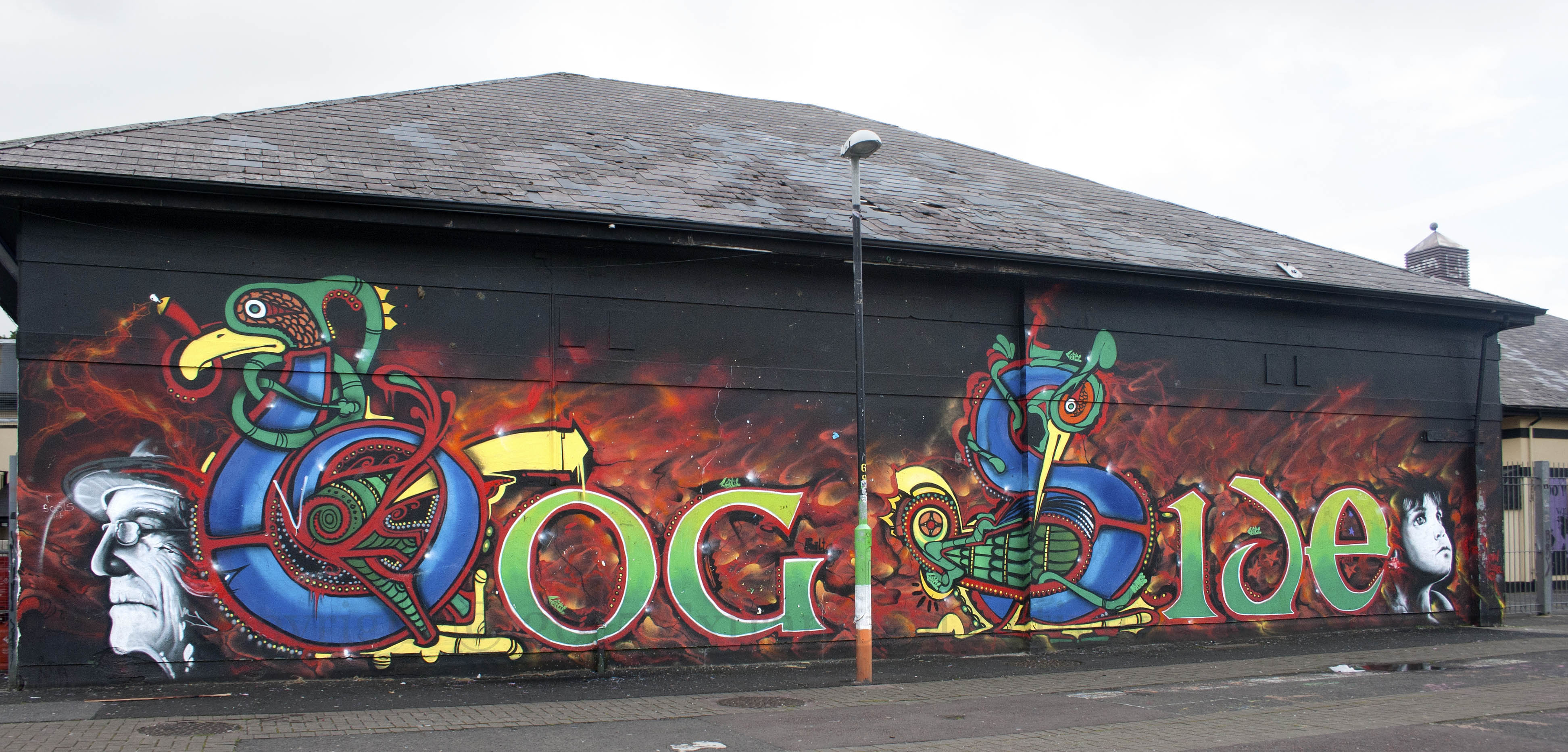
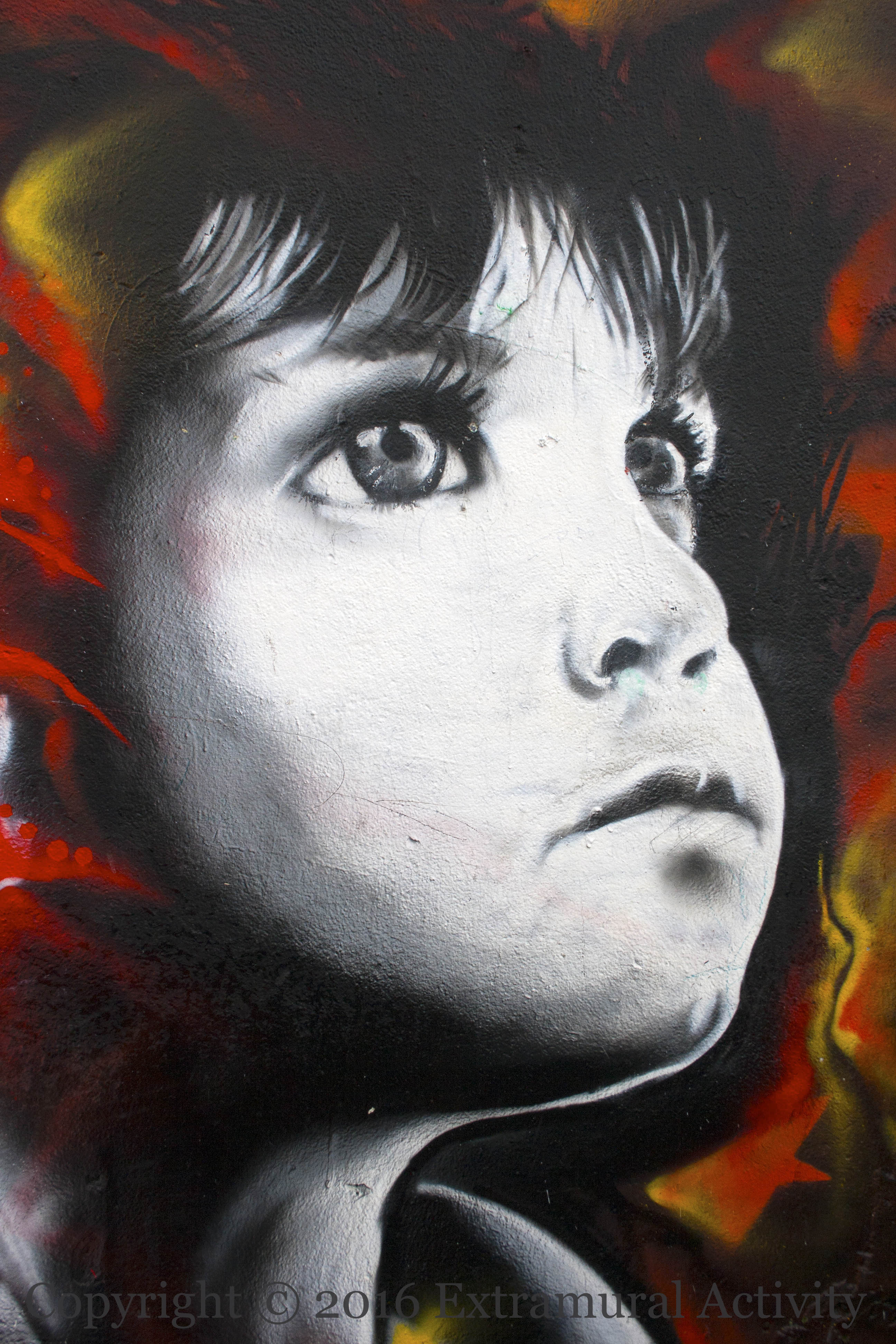
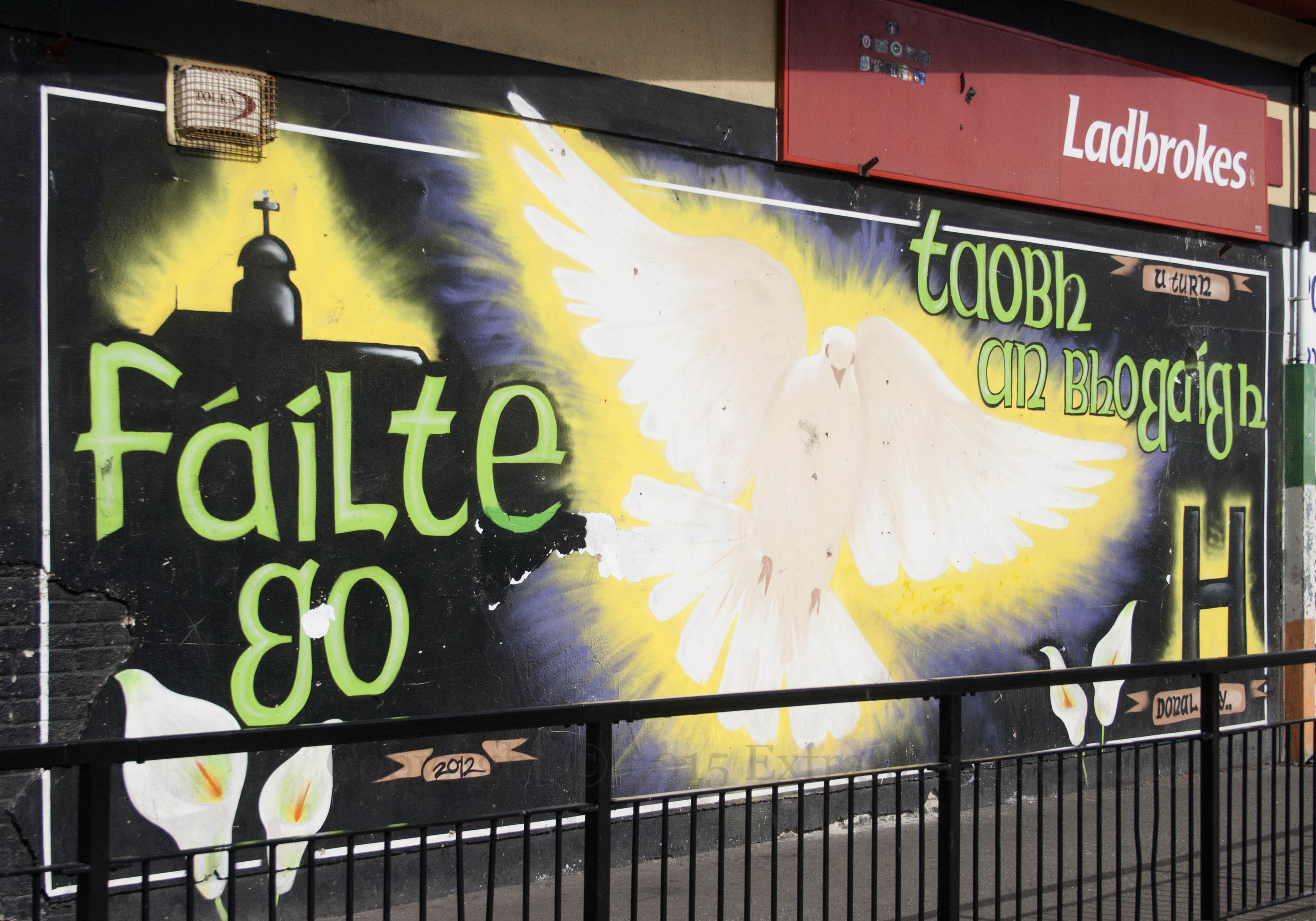
The eastern side of what was the island of Derry is called the Water side and the western side, although originally under water, became the Bog side in about 1600. The two murals shown here are on either side of the shops adjacent to the Bogside Inn. There is an excellent history of the area from 1162 to the construction of Rossville flats in 1966 at the Museum Of Free Derry.
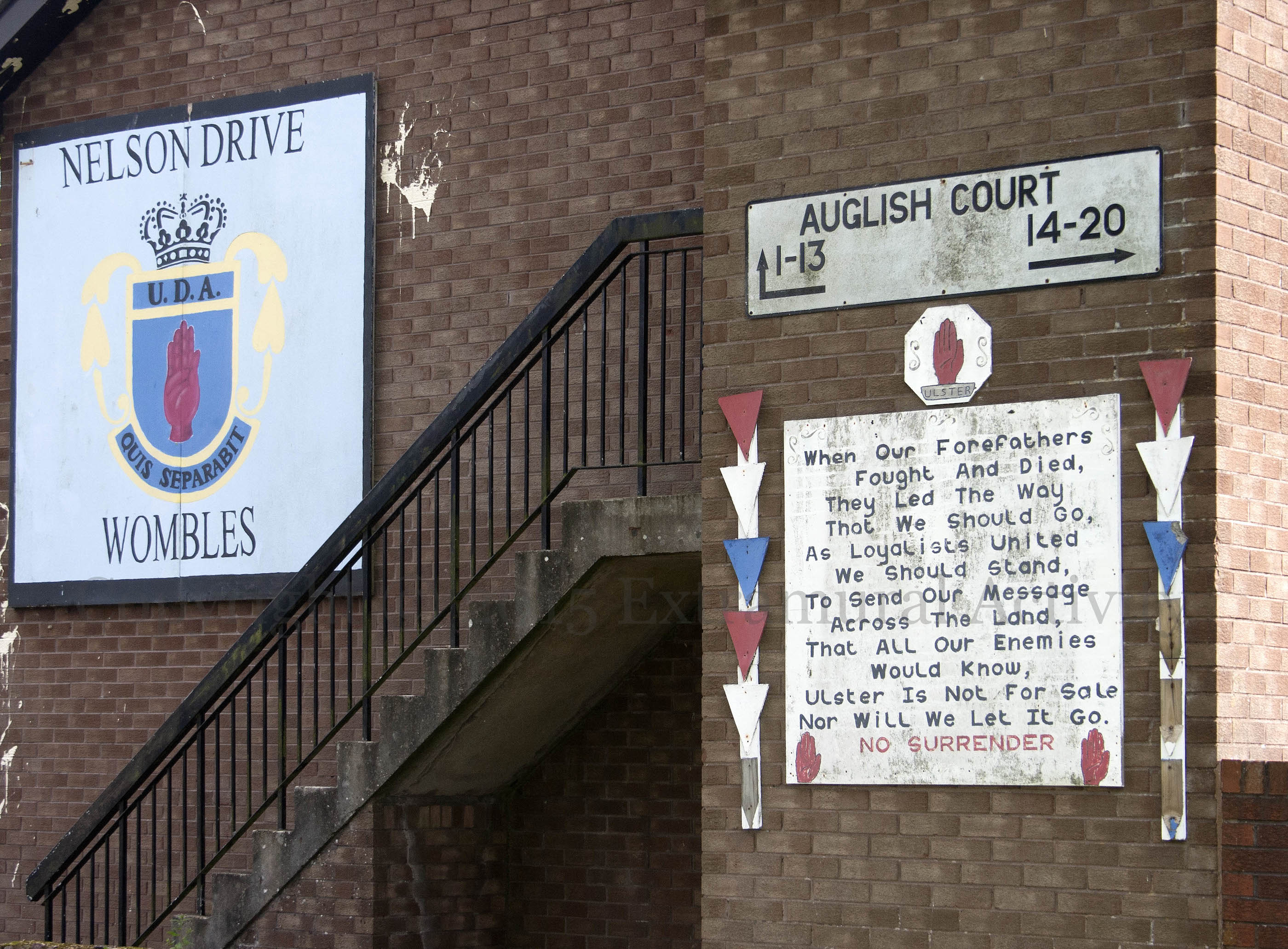
Quiz: The UDA are called “Wombles” because they resemble the stop-motion characters of the BBC children’s show in (a) their fur-lined parkas, (b) their parading, or (c) their ability to acquire anything? You can find all three explanations on-line. Originally the name seems to have been a derogatory one, used by their UVF rivals, but it was adopted by the group itself. A close-up of the text on the right is below.
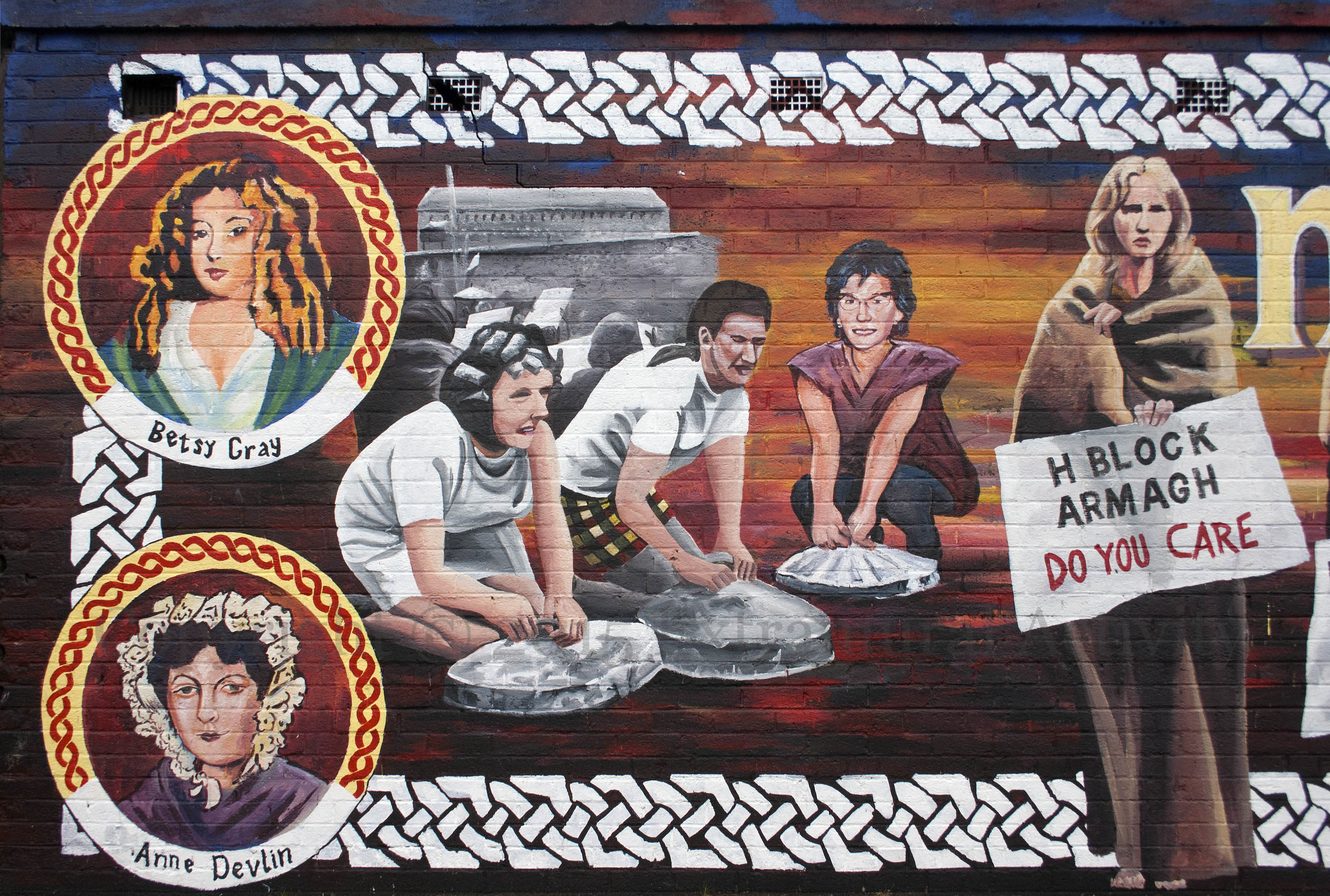
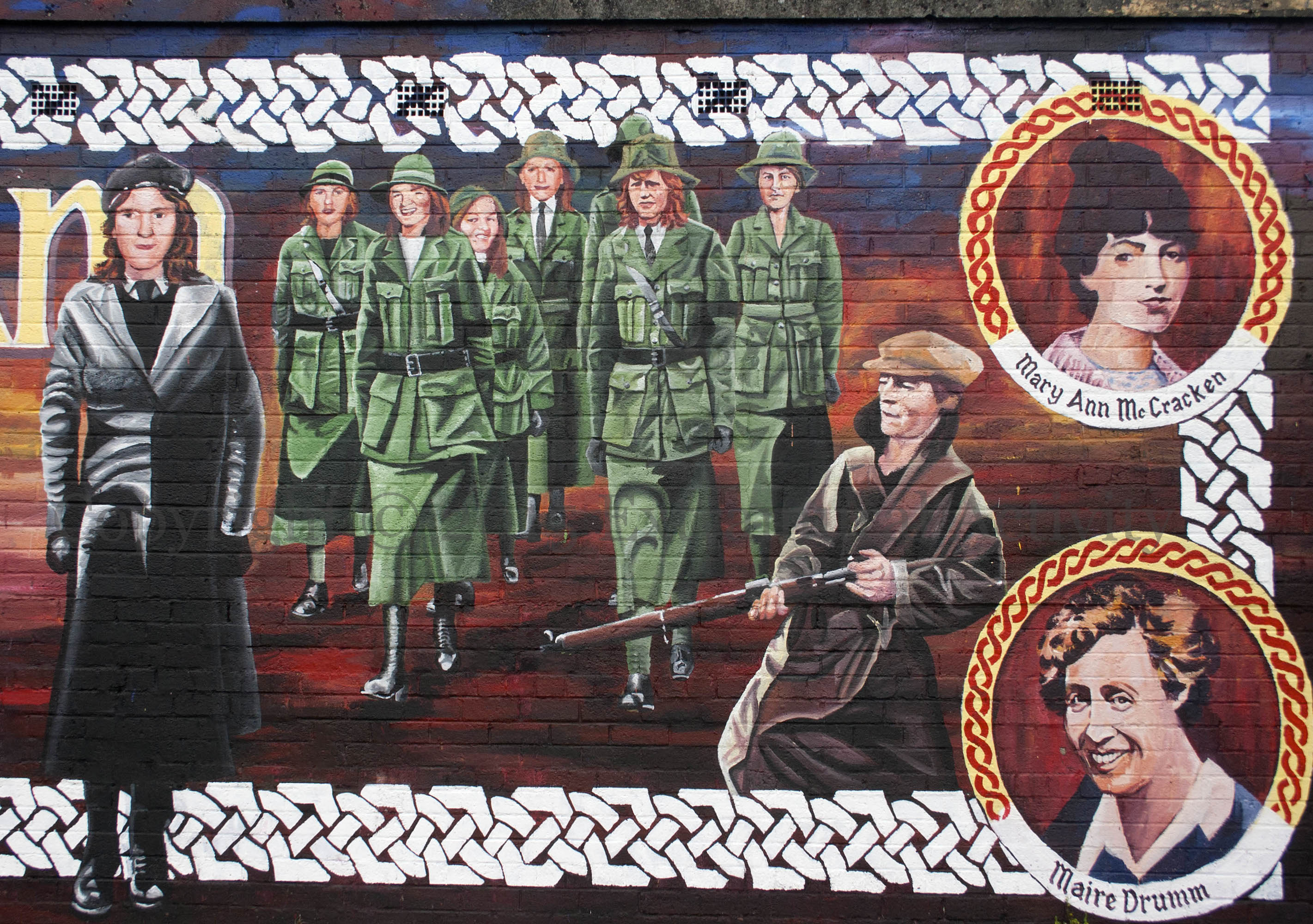
Here are two images of the extremes of the Mná Na hÉıreann mural.
In the four corners are circles of Betsy Gray, Anne Devlin, Mary Ann McCracken, and Máıre Drumm. Gray and McCracken were Presbyterians; Gray fought (or at least, was killed) in the 1798 rebellion, as did McCracken’s brother Henry Joy; Mary Ann went on to work for the poor of Belfast and lobby against slavery. Anne Devlin assisted in Robert Emmet’s 1803 rising. (National Graves Assoc) Máıre Drumm was vice-president of Sınn Féın and commander of Cumann Na mBan, who are shown marching on the right-hand side.
In the cloth cap and holding a rifle is Eithne Coyle, a leader and later president of Cumann Na mBan, imprisoned both by the Black and Tans before the treaty and after it by the Provisional Irish government (WP). For the photograph on which her pose here is based, see An Phoblacht‘s History Of Cumann na mBan, which also includes the photo of marching women (discussed previously in Mothering Sunday In Beechmount) though the faces have been changed here, presumably to those of more contemporary volunteers. The same is probably true of the third woman with a bin lids on the left – leave a comment or send an e-mail if you can put a name to any of these faces.
Here are two details from the Mná Na hÉıreann mural. This one shows three Derry women protesting the conditions in Armagh Women’s Prison and in the H-Blocks. This article on Mary Nelis (the protester on the right, with Kathleen Deeny and Theresa Deery) describes the photograph on which this part of the mural is based. The women in Armagh prison were allowed to wear their own clothes and so were not ‘on the blanket’ as their male counterparts in the H-Blocks of Long Kesh were. However, they did engage in a “no wash” protest, which lasted from February 1980 until March 1981, and three of them – Maıréad Farrell, Mary Doyle, and Margaret Nugent – joined the 1980 hunger strike.
In the second image, below, grieving mothers, wives, and sisters stand over a coffin draped in the Irish tricolour with paramilitary gloves and beret on top.
Countess Markievicz, carrying a flag of Cumann Na mBan, and Ethel Lynch, carrying a flag of the Derry IRA, take centre stage in the Mná Na hÉıreann mural in London-/Derry/Doıre’s bogside. Markievicz is famous for her role in the Easter Rising of 1916 (WP); Lynch died in December 1974 of injuries sustained when a bomb exploded prematurely. (Derry Journal – also contains the photo on which the painting above is based.) Between them, “Liberty leads the people” waving an Irish tricolour.
The Ulster Workers Council (UWC), formed in 1974 with the backing of the UDA, organized a general strike in opposition to the December 1973 Sunningdale Agreement – signed by the British government – which would have shared power with Nationalists in the north and established a cross-border council involving the Dublin government. The strike went on for two weeks in May 1974 (during which the Dublin-Monaghan bombings took place, killing 33 people in the Republic) and concluded with the collapse of the Northern Ireland Executive and rule reverting to Westminster.
The mural was painted for the 30th anniversary of the strike and is now partially covered with ivy (see below). For the mural in better days see M02610. The photograph reproduced can be seen on the Bel Tel.
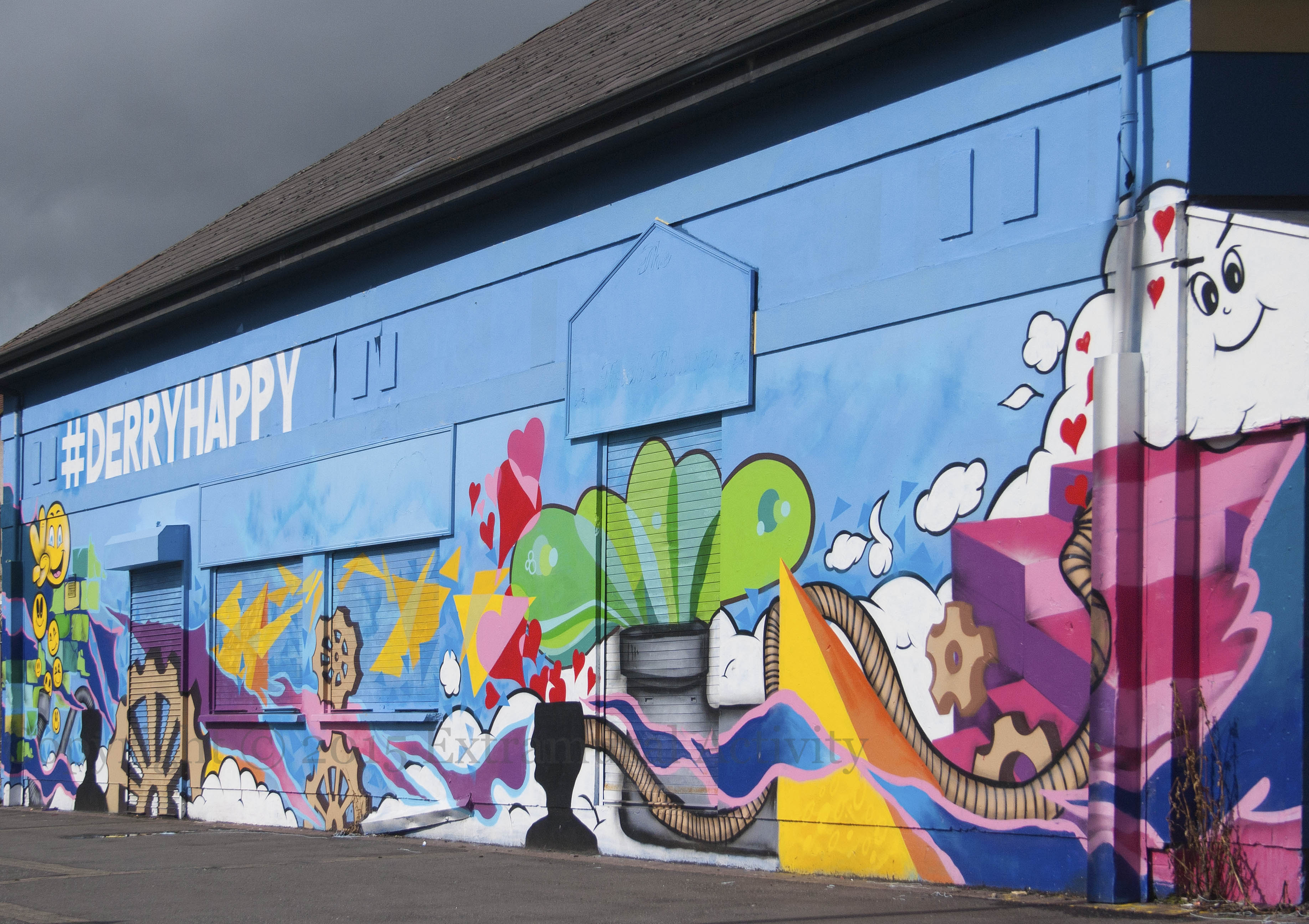
This 2015 mural in the Bogside in support of a Twitter campaign shows a brain giving birth to the idea of love, smiley faces giving the ‘V for victory’ salute and other cheery images and colours.
Update: Here’s Sinn Féin’s Martina Anderson being interviewed in August 2016 in front of the mural after a bonfire was erected and set alight at the bottom of the flyover (Derry Journal).





 Extramural Activity