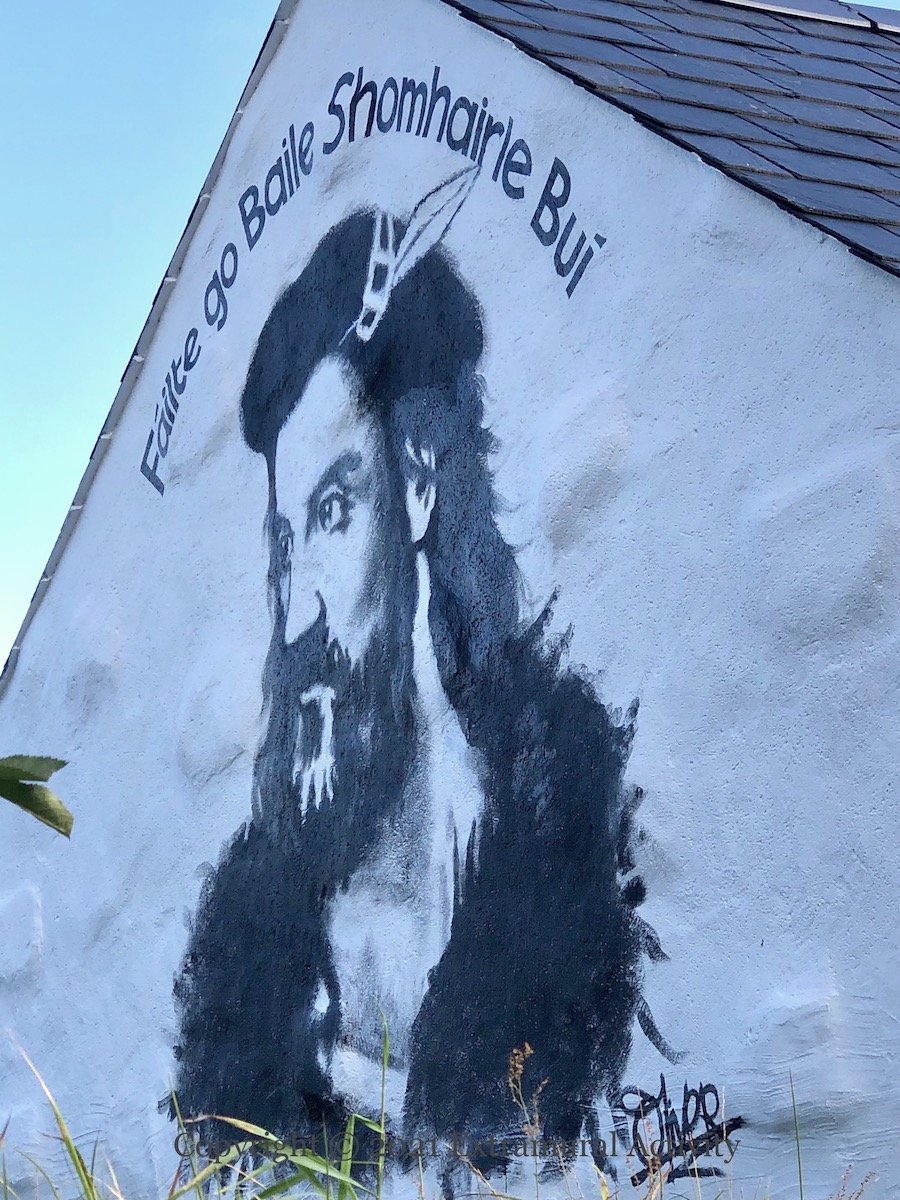
Somhaırle Buí Mac Domhnaıll (Gaeılge) / Somhaırle Buıdhe Mac Domhnaıll (Gàıdhlıg) / Sorley Boy MacDonnell (English) was so-called (Buí/Buıdhe) because of his “yellow” hair. Although his family was from the islands, he was born just outside Ballycastle in 1505 and is known for establishing the Mac Donnells in Antrim and for frustrating the plantation (WP | Tudor & Stuart Perspectives).
The mural was painted by Oliver McParland (web) in North Street, Ballycastle.
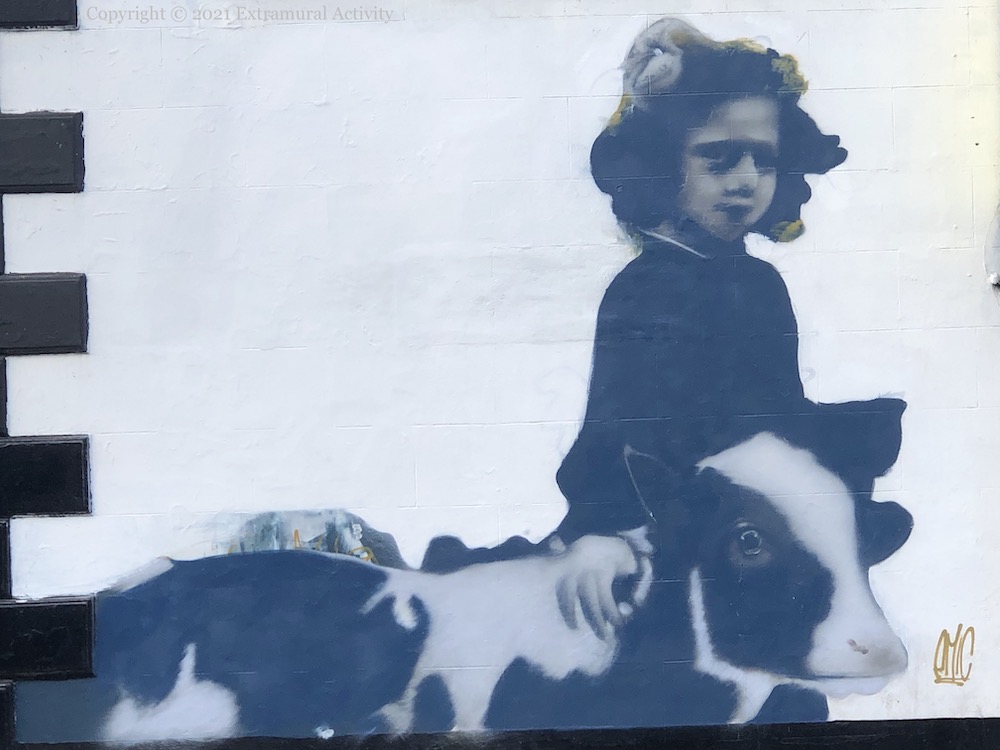
The inspiration for this piece is the Ould Lammas Fair, one of Ireland’s oldest and, some claim, biggest festivals, which is held in Ballycastle on the last Monday and Tuesday of August (Irish Culture & Customs). The piece, by emic (web), is in Castle Street which was perhaps the location of the market within the mediaeval town walls.
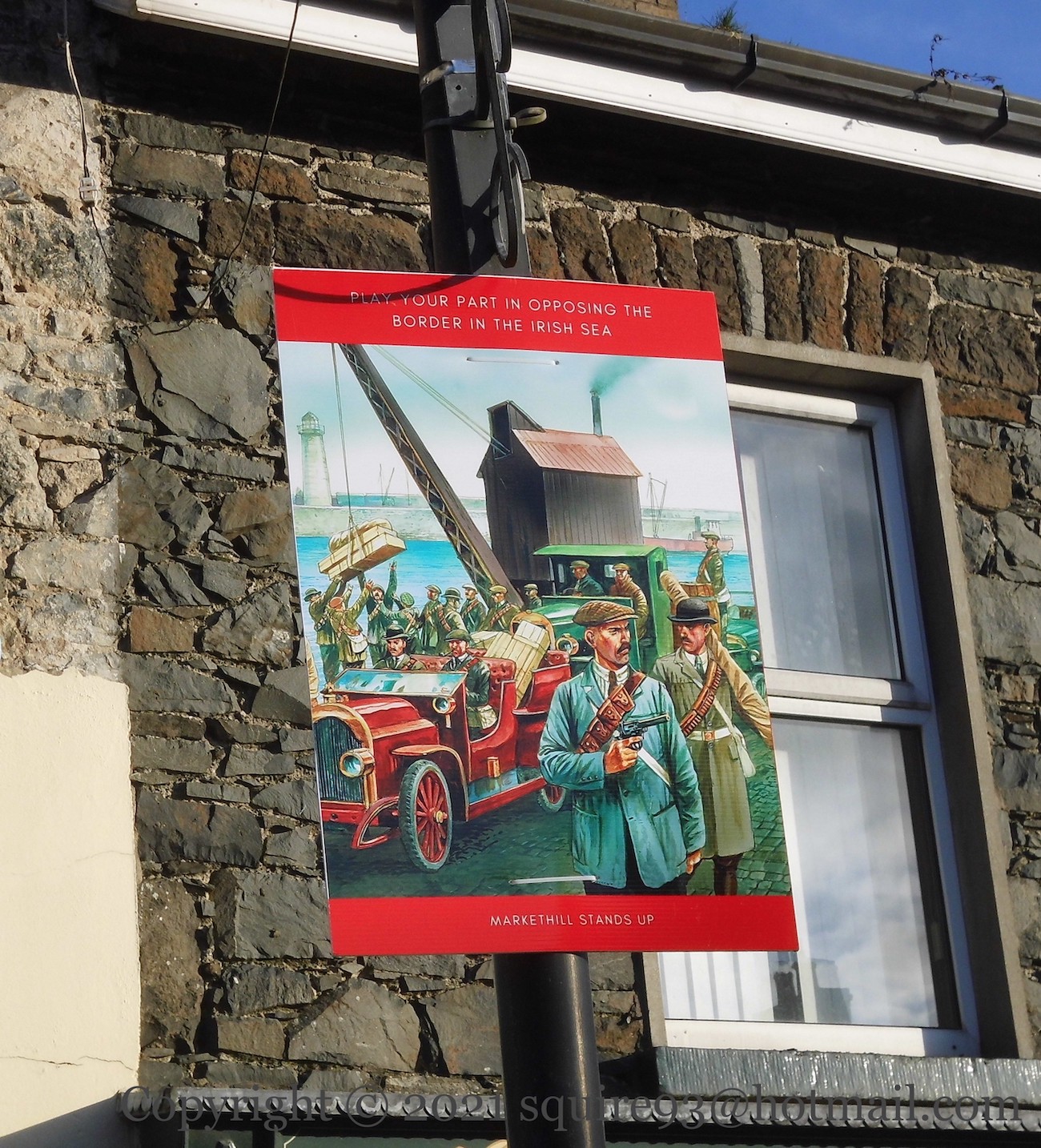
In the gunrunning by the Ulster Volunteers in April 1914, immediately upon docking in Larne weapons and ammunition were offloaded from the SS Clyde Valley onto two motor-boats which then headed for Donaghadee. A drawing of the unloading there, with the lighthouse in the background, was published as a postcard (you can see the b&w original at History Ireland). This time, of course, it’s not Home Rule that threatens unionists but the NI Protocol that is part of Brexit. “Play your part in opposing the border in the Irish Sea – Markethill stands up.”
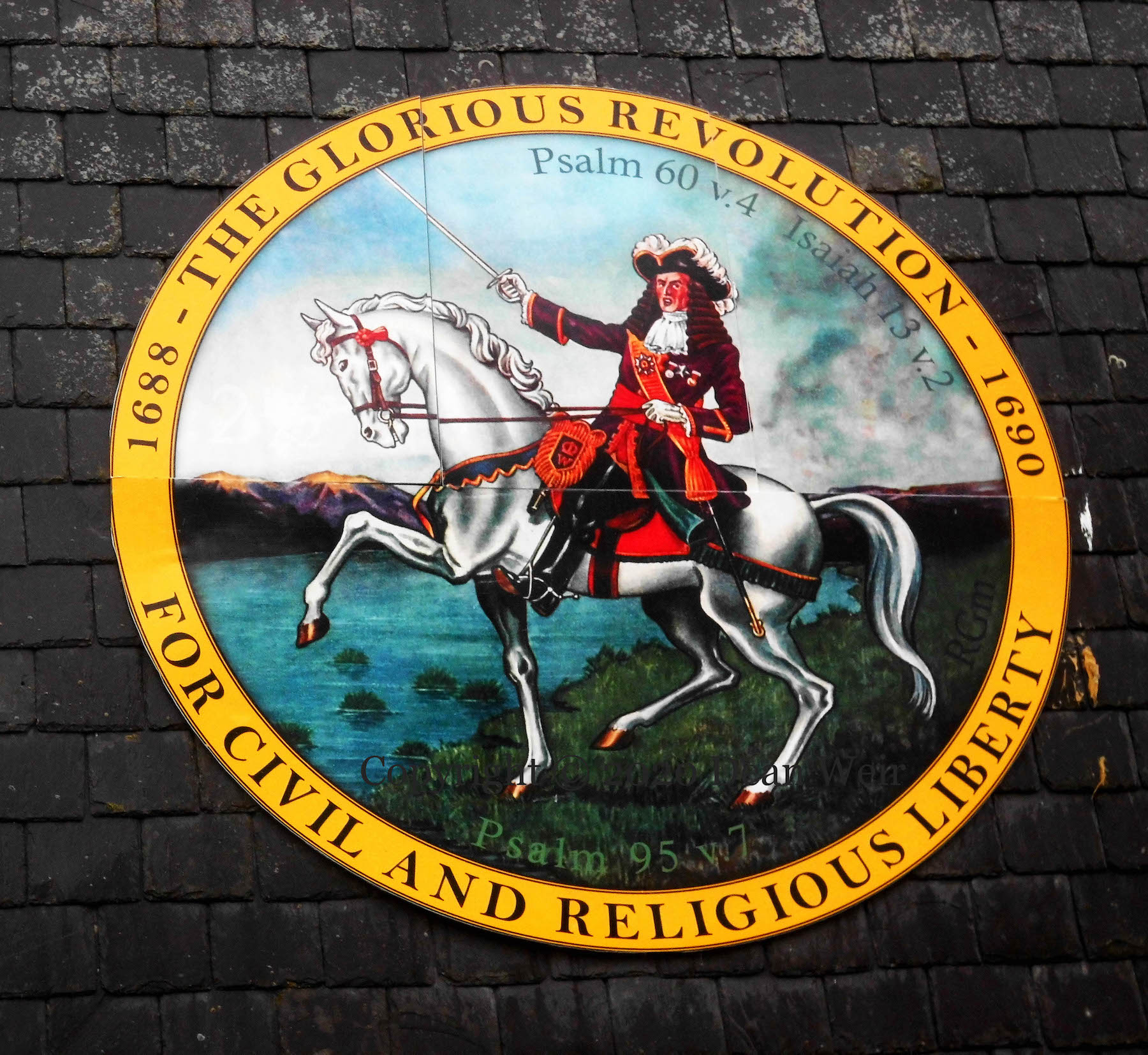
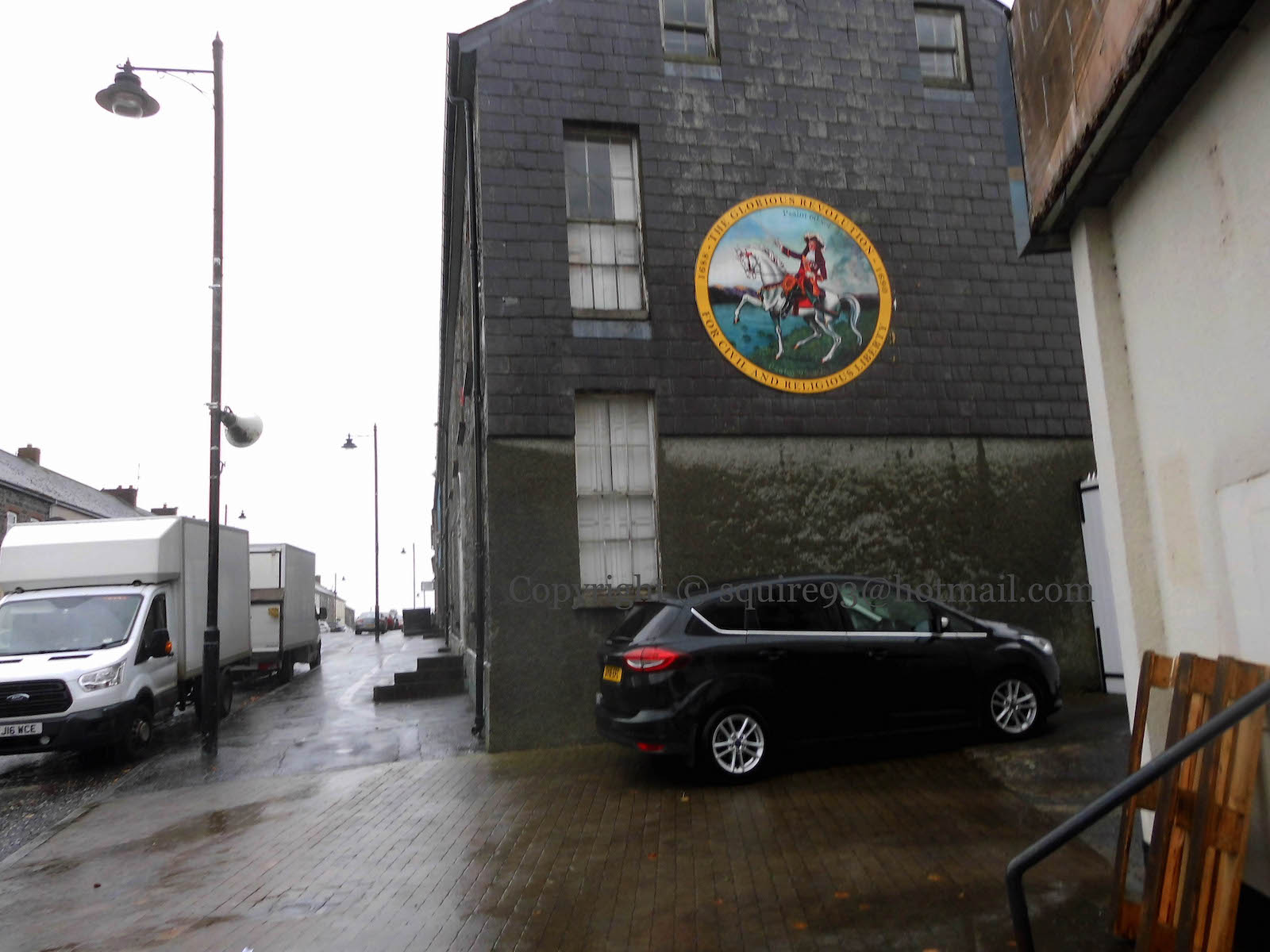
“The Glorious Revolution for civil and religious liberty.” King James II of England – a Catholic convert – had a son in 1688 that replaced his (Protestant) daughter Mary as first in line for the English throne. In order to prevent a Catholic succession, William of Orange, Protestant ruler of Holland and Mary’s cousin and husband set sail in October with 40,000 men in 463 ships (WP). He is shown in this new board in Main Street, Markethill leading his troops across the Boyne in Ireland. His success in deposing James would become known as the “Glorious Revolution.”
There are three Biblical references inside the band: Psalm 60 v.4 “Thou hast given a banner to them that fear thee, that it may be displayed because of the truth”; Isaiah 13 v.2 “Lift ye up a banner upon the high mountain, exalt the voice unto them, shake the hand, that they may go into the gates of the nobles”; Psalm 95 v.7 “For he is our God; and we are the people of his pasture, and the sheep of his hand.” and a possible signature “RGm”
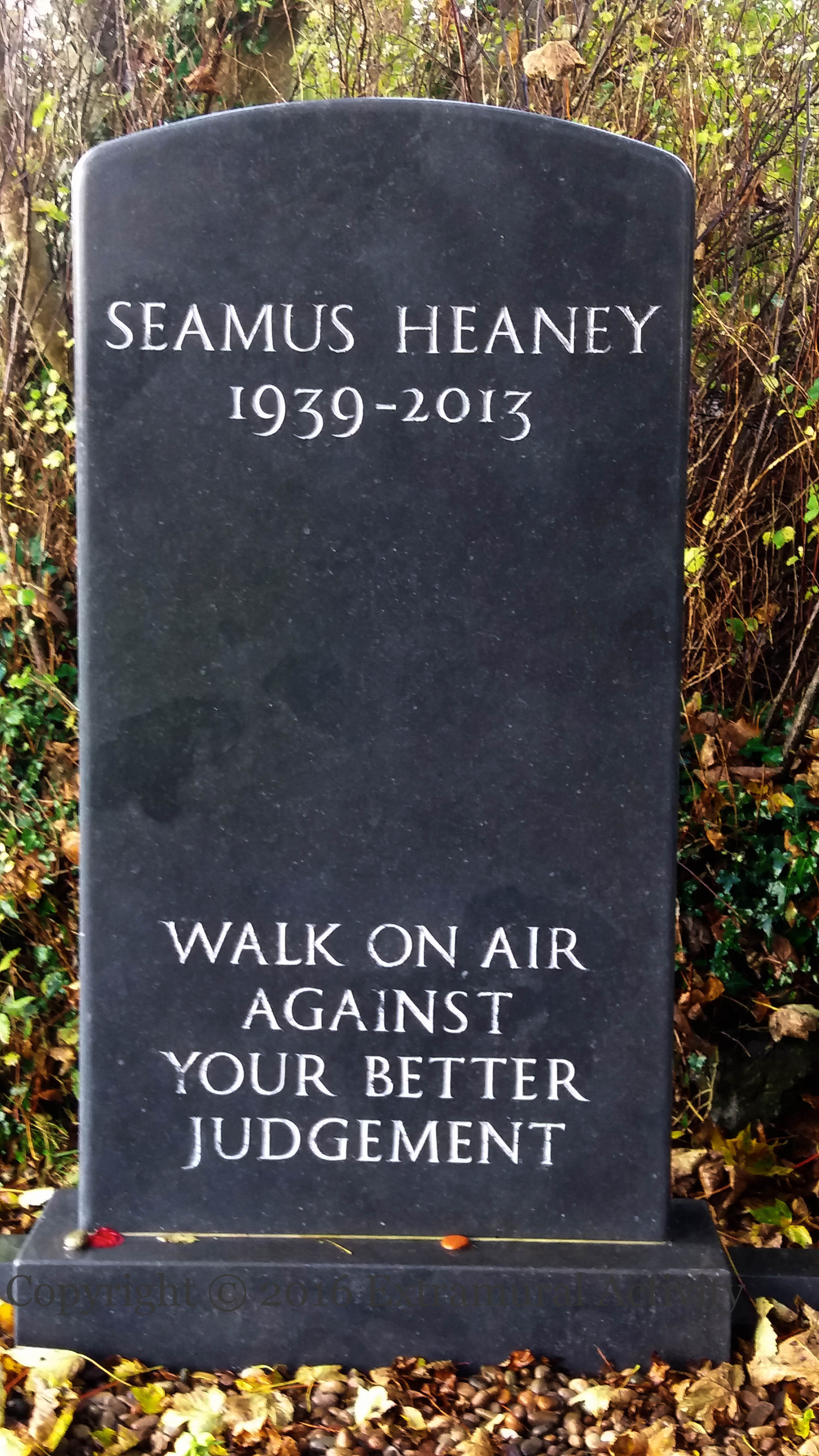
Poet Seamus Heaney died on this day 2013 and the gravestone erected in St Mary’s, Ballaghy, on the same day the following year. The epitaph is “Walk on air against your better judgement” from the poem ‘The Gravel Walks” in The Spirit Level.
Cousins Francis Hughes (Ó hÁodha) and Thomas McElwee (Mac Gıolla Bhuídhe) were the second and ninth of the 1981 hunger strikers to die. They share a grave in St. Mary’s churchyard in their hometown of Bellaghy, Co. London-/Derry. The image above shows their gravestone “erected by the people of Co. Derry and Co. Antrim”.
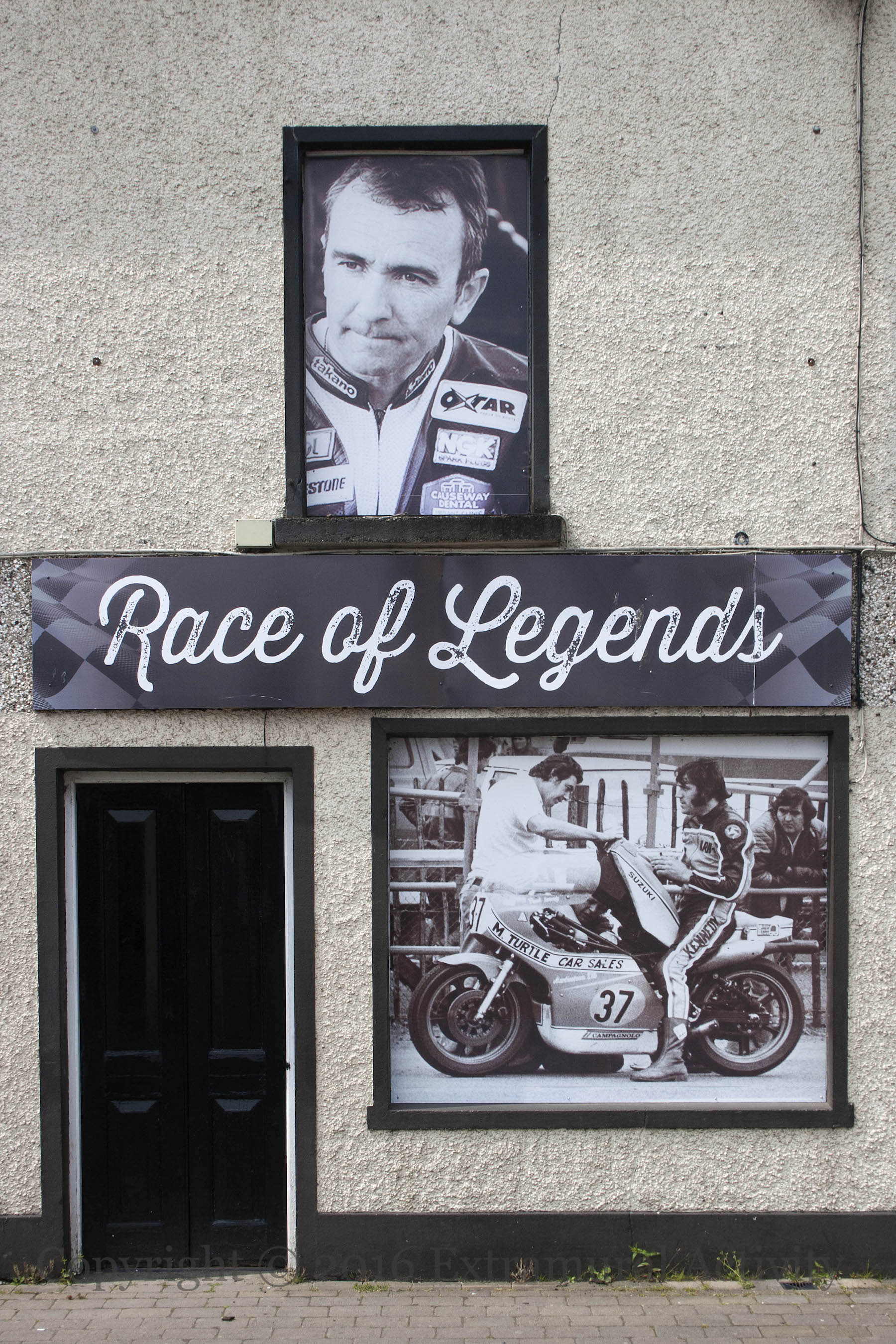
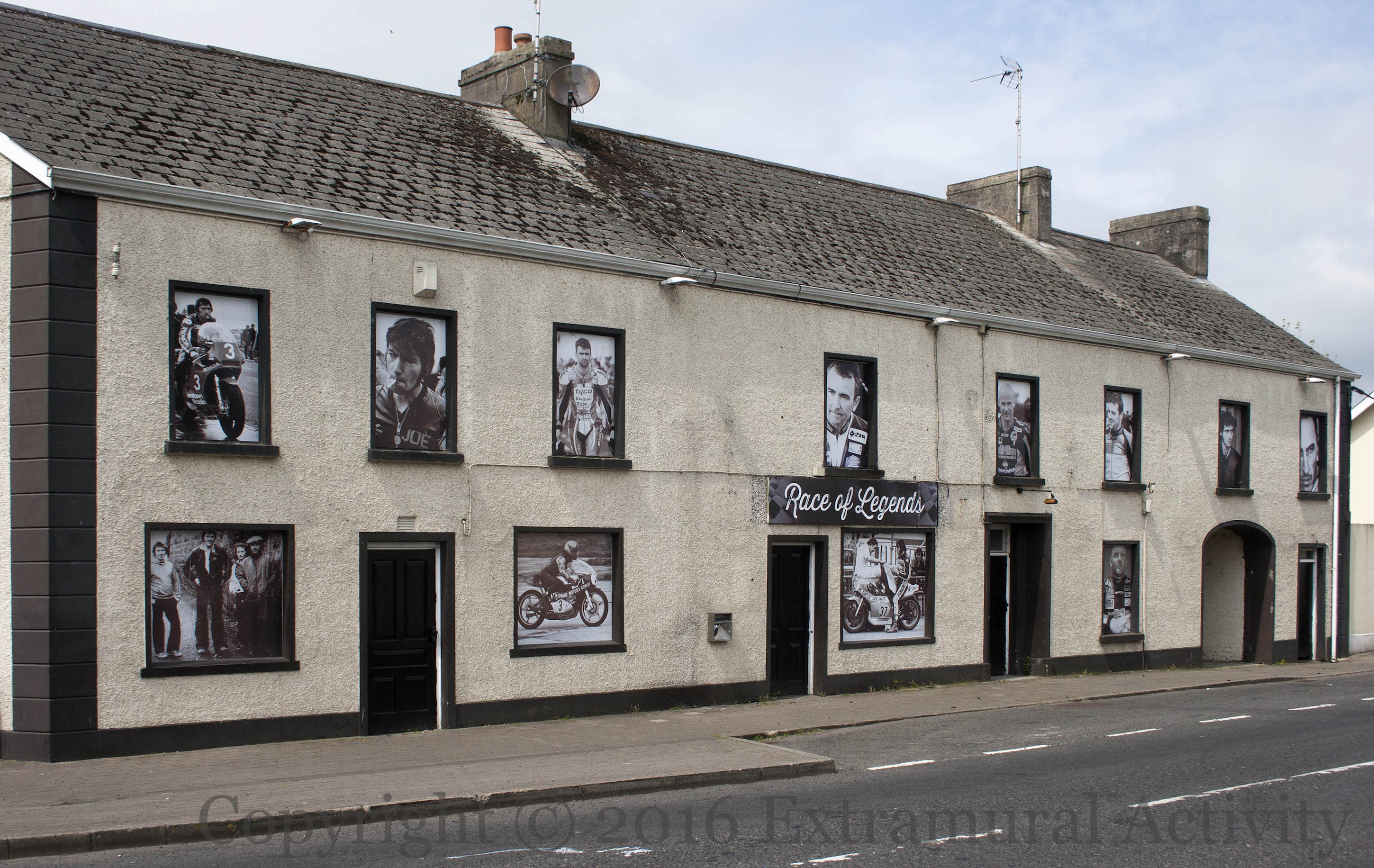
The town of Armoy, County Antrim, hosts an annual motorcycling road race, the Race Of Legends. The windows of the (closed) Victory Bar is filled with images of motorcyclists. Robert Dunlop is shown above and brother Joey is two windows to the left. Both brothers died as a result of racing accidents. Sons William and Michael are also featured.
Above and below are summertime images of the Main Road in Glynn, just south of Larne, County Antrim, marked with the union jack and flags of Scotland, Northern Ireland and England and Orange symbols such as the crown, a key (for the Siege of Derry, rather than the crossed keys?), Jacob’s ladder, along with the six-pointed star.





 Extramural Activity