The big red sign usually says “Road Closed” but has been changed for the exhibition. On this day, however, the exhibition (which is a large satellite-image map of the area, on the ground) was not, in fact, open. The Flax St/Crumlin Road interface, Ardoyne, the day after the 2012 riot.
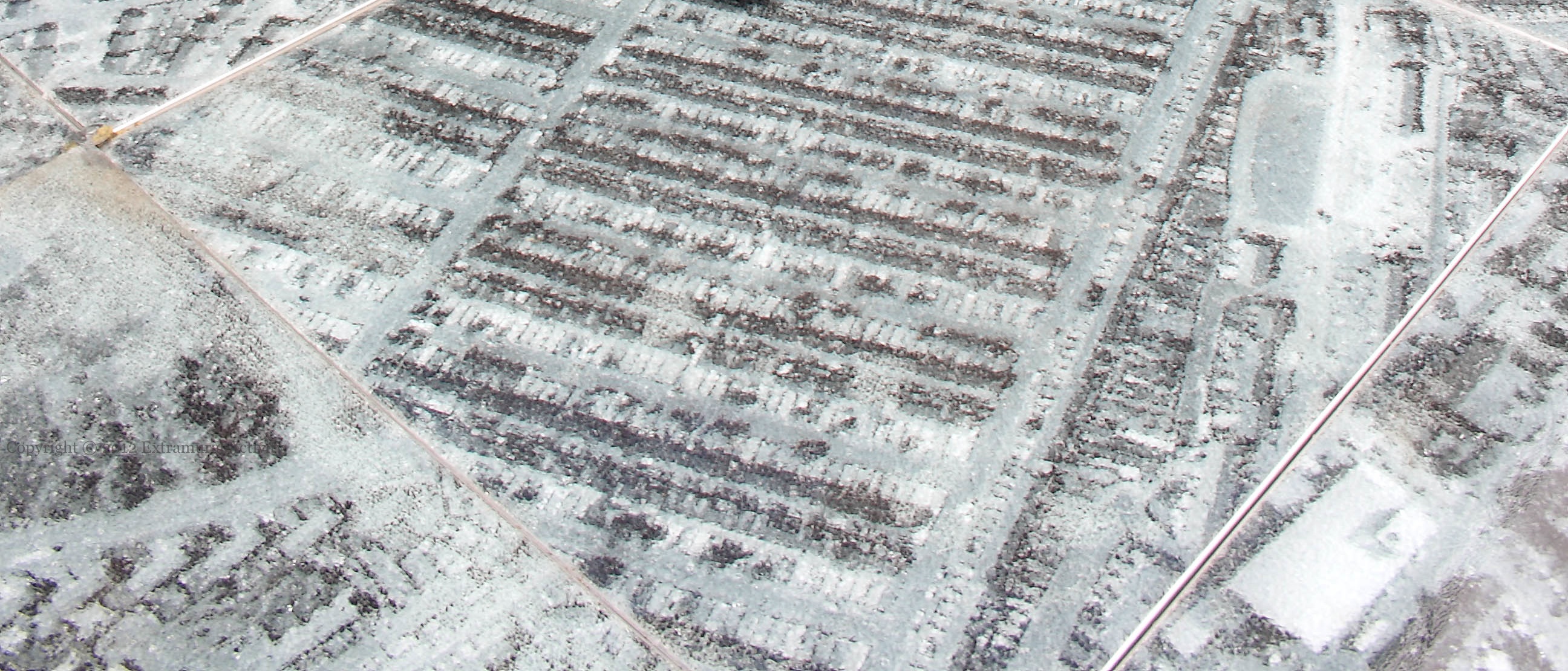
Below, taken later, detail of the exhibition … a very small portion
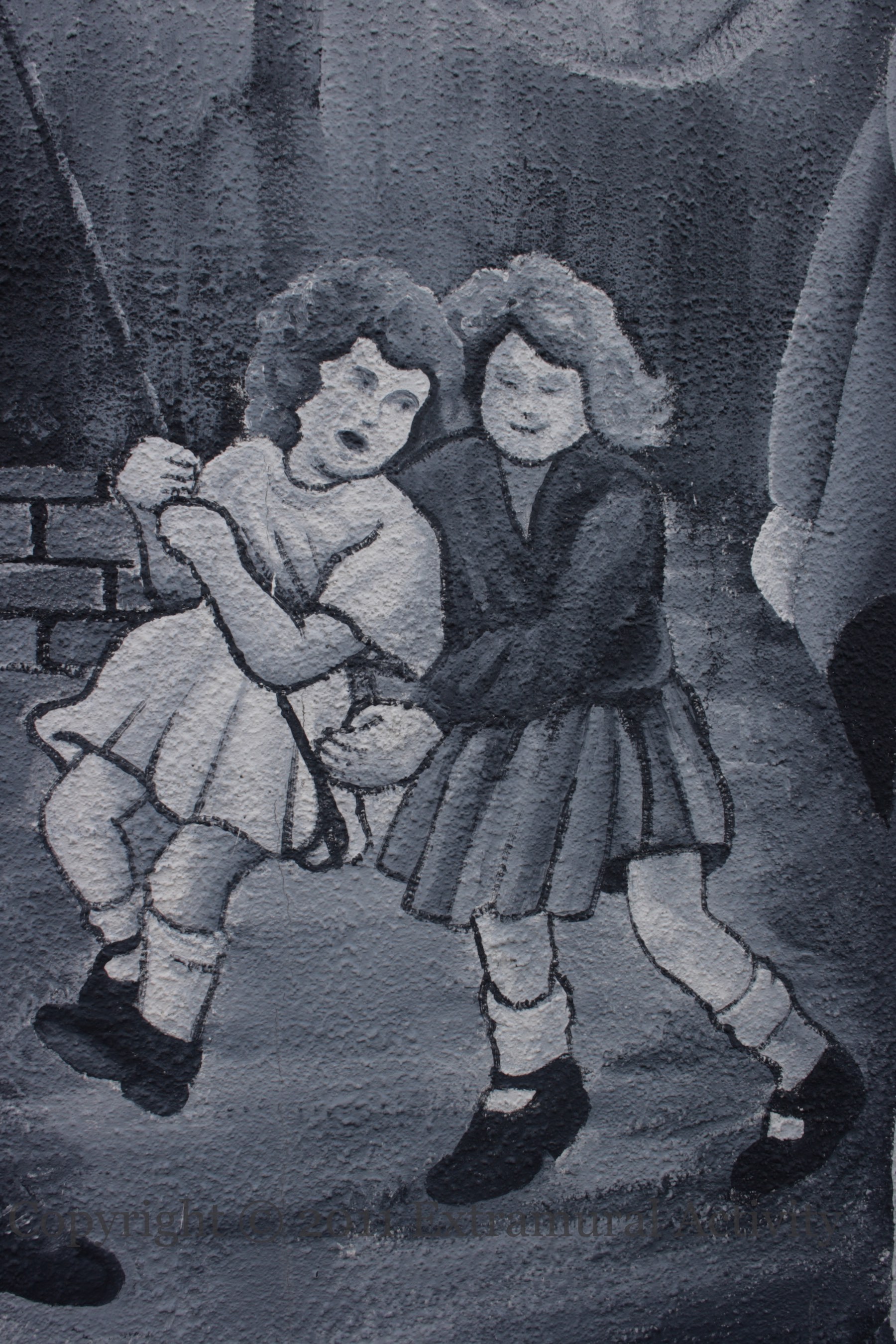
This is a companion piece to New Lodge 1900s. Life is now lived in colour, but suffers from underemployment, alcoholism, and suicide. The German bomber has been replaced by a British Army helicopter.
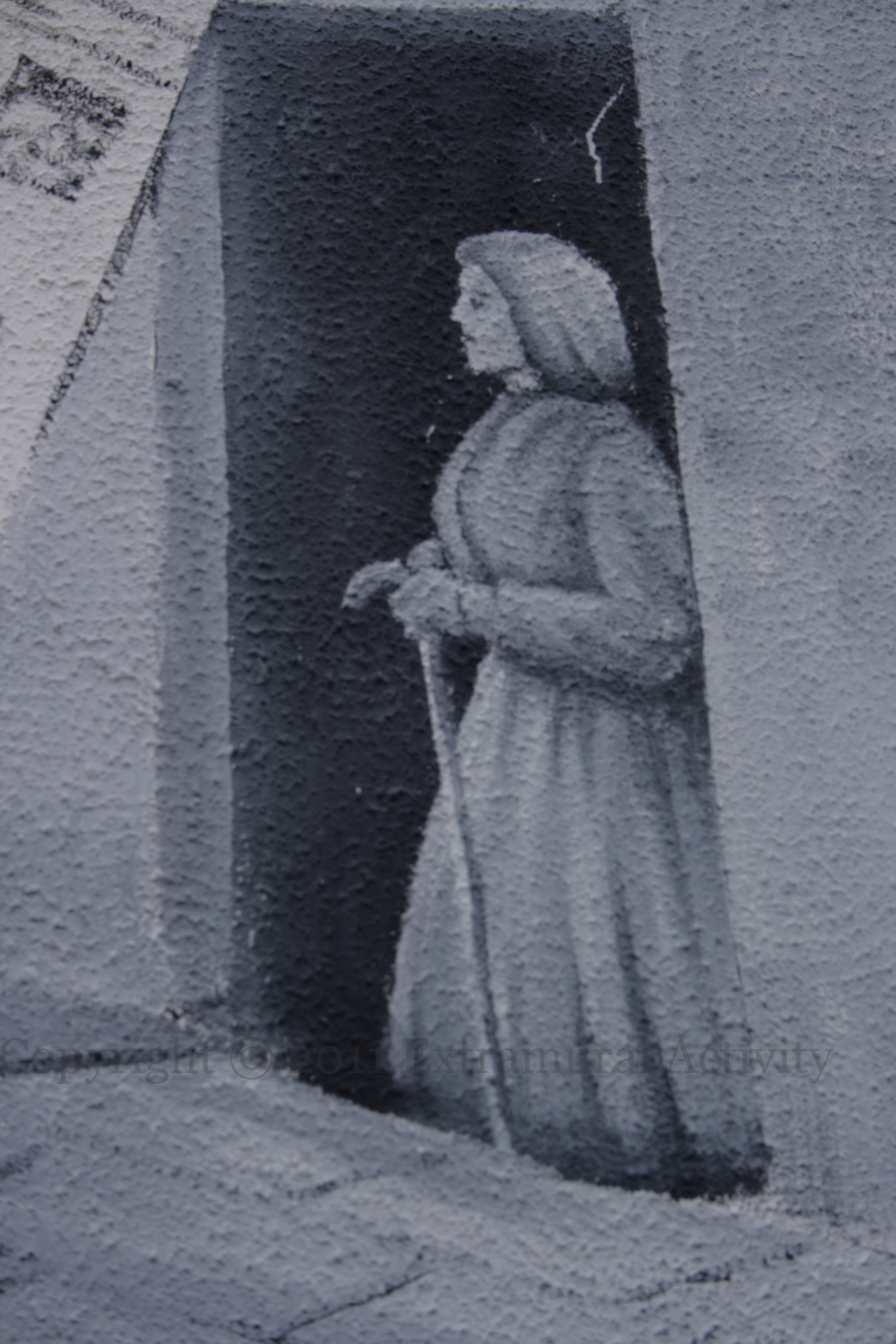
The trials of life in the 1900s are depicted in this New Lodge mural. People work and die in the mills. The Germans drop bombs. Children go barefoot. The black-and-white colouring adds to the depression. The ‘New Lodge 2000‘ mural further down the road is in full colour, though life is still beset with problems.
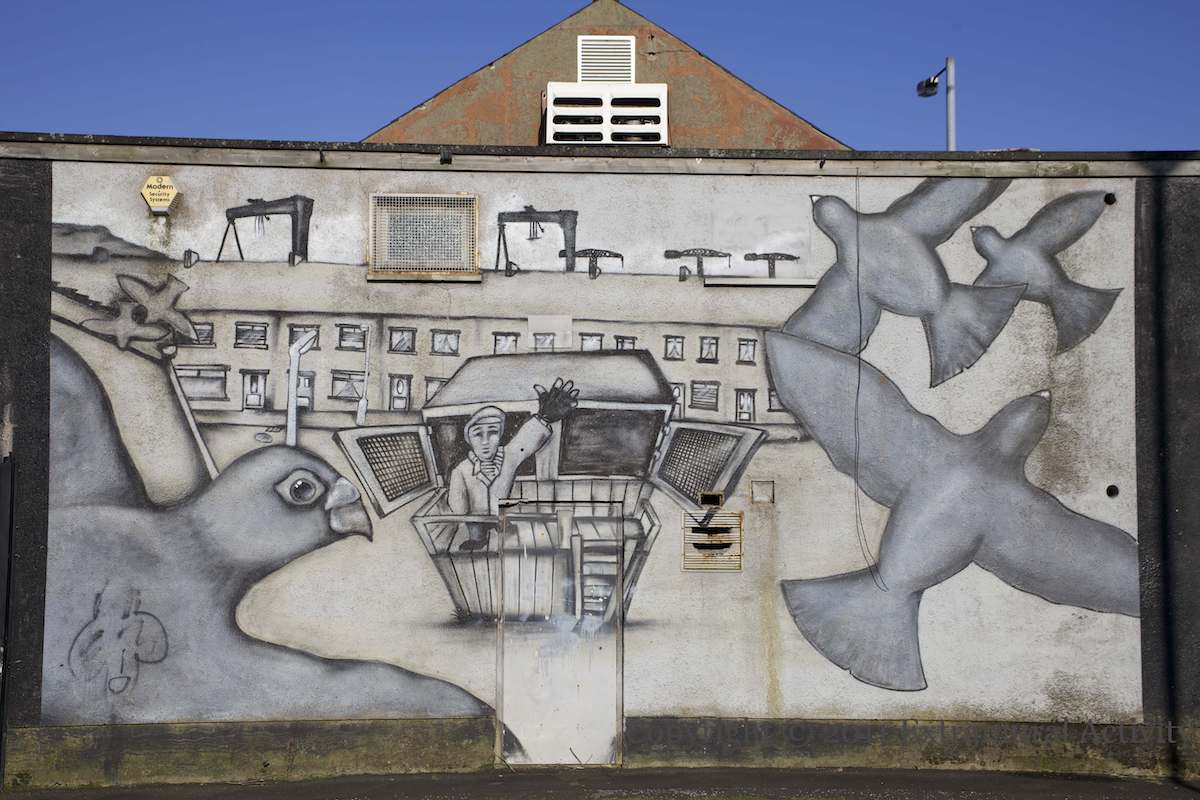
This mural is along the walkway between Tamar and Severn streets in east Belfast. The East End Homing Pigeon club was (is?) at 51 Severn Street (Belfast Forum).
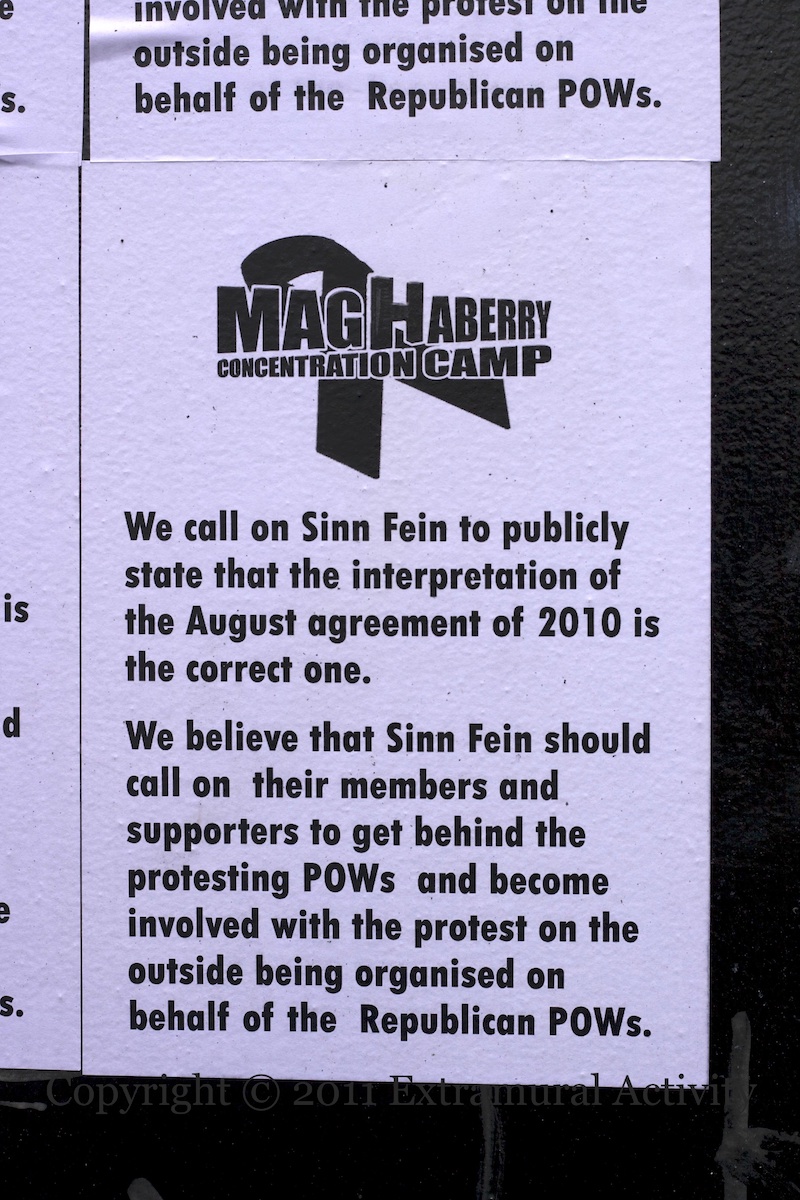
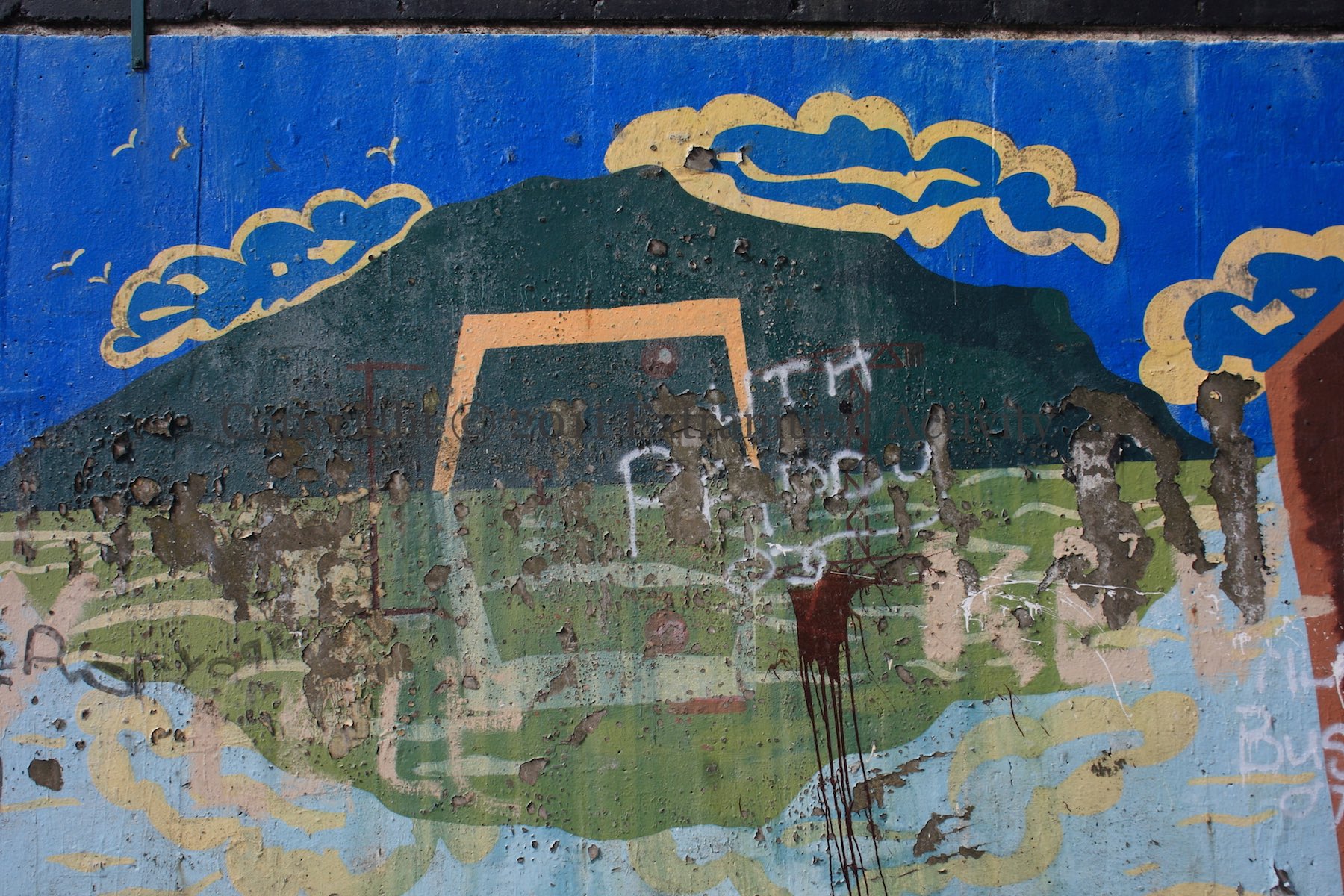
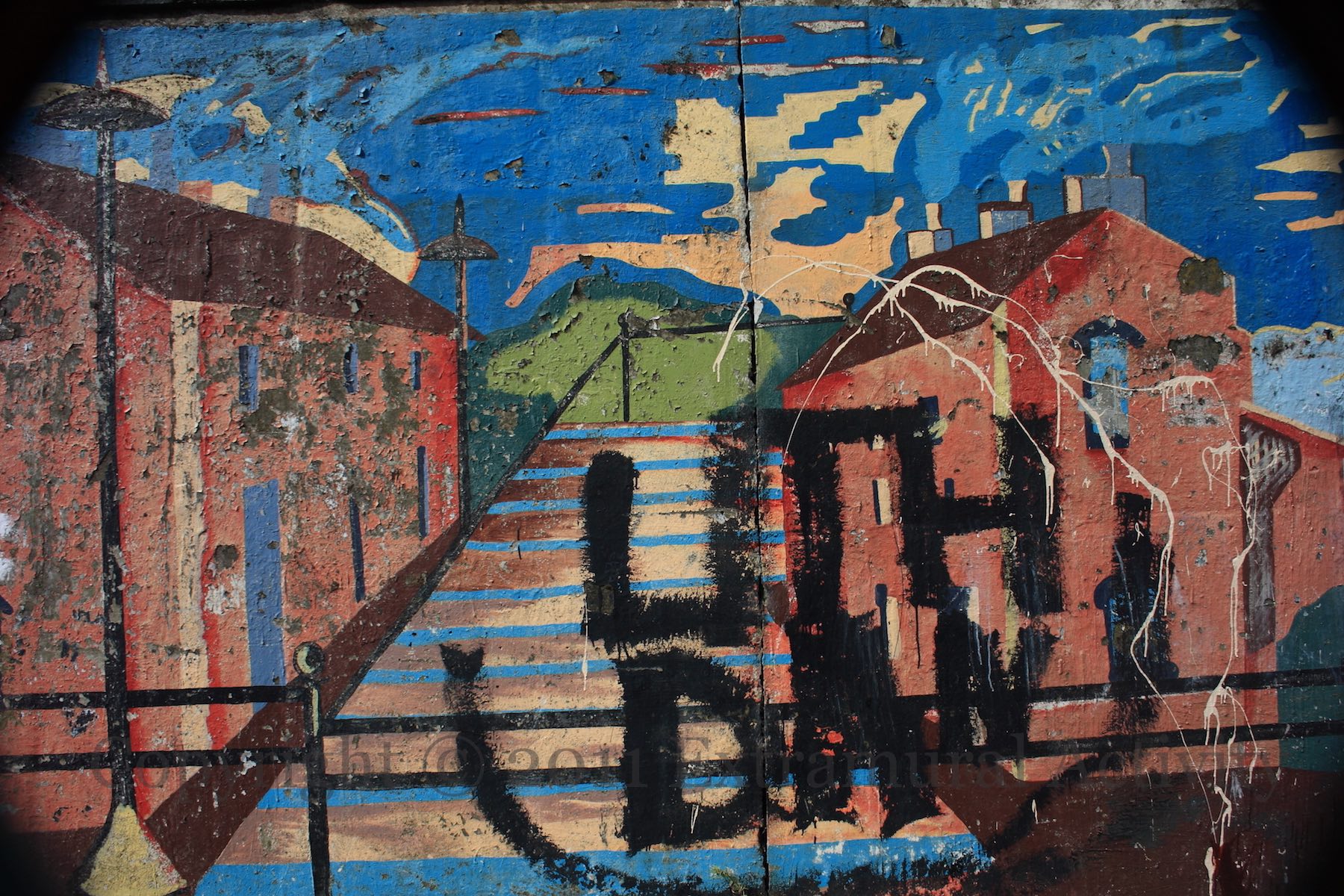
In the summer of 2011, both sides of the Flax St/Crumlin Rd interface were pasted with images of the view from the other side, a city scene on the Flax St side as though looking into Woodvale, a hilly scene on the Crumlin Rd as though looking up Flax Street. You can see the Crumlin Road side on Street View. What remains of the other side can be seen in the image above, along with IRPWA posters (see below) concerning “Maghaberry Concentration Camp”, calling “on Sinn Fein [sic] to publicly state that the interpretation of the August agreement of 2010 is the correct one … [and to] … call on their members and supporters to get behind the protesting POWs.”
Both the type of “MagHaberry” and the arrangement of the posters make the connection to the H Blocks of the 1970s and 80s.
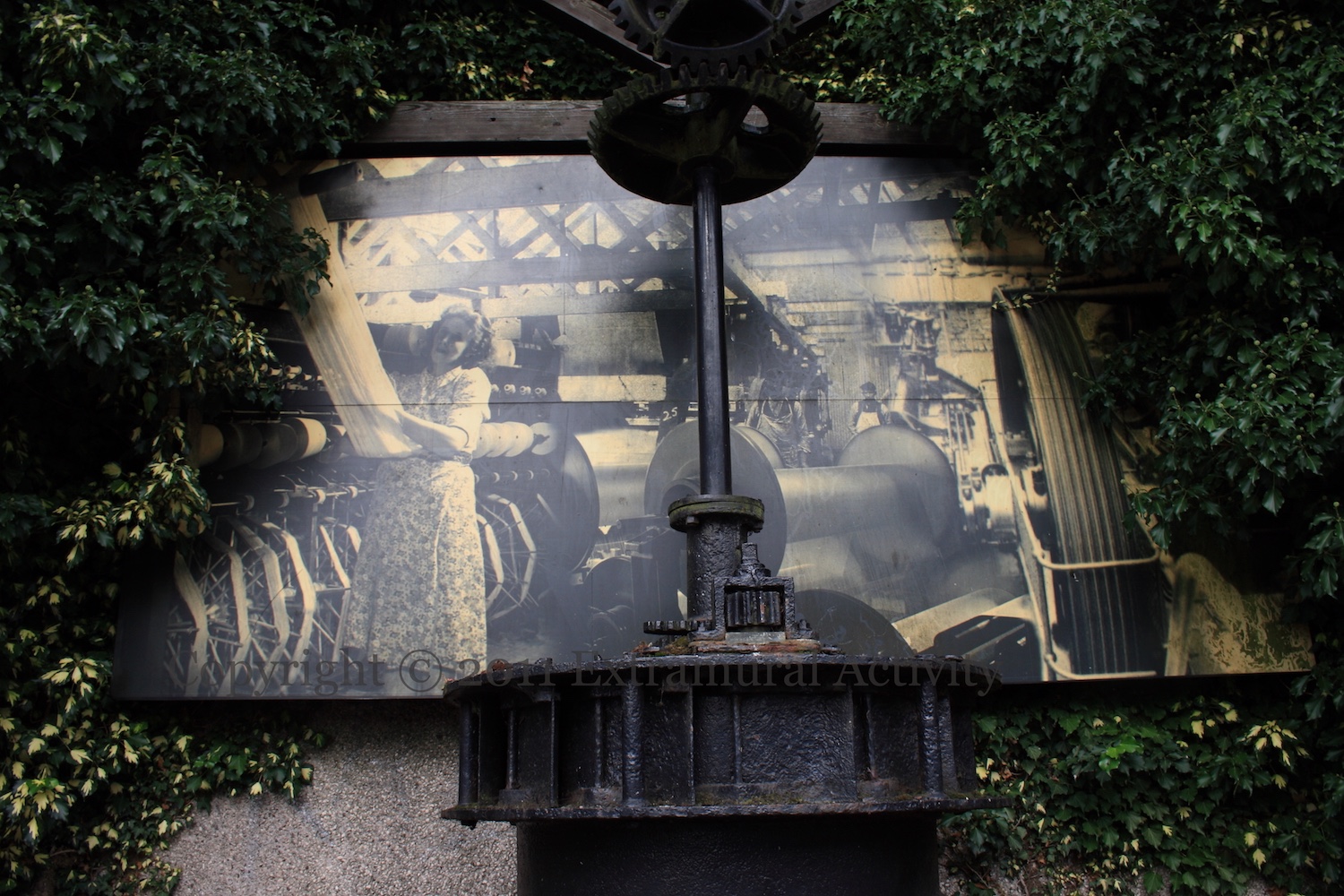
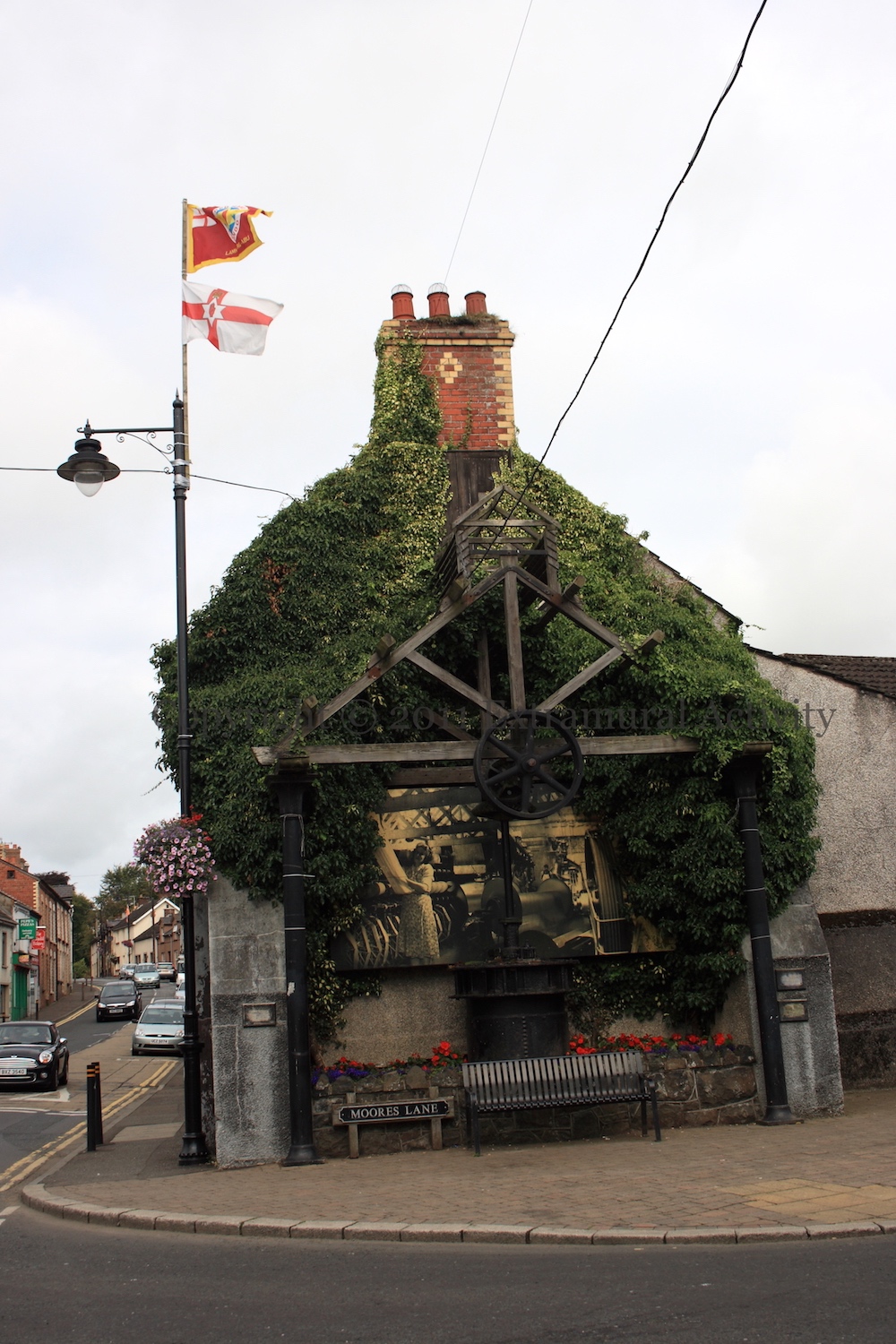
Randalstown remembers its history as an industrial town in the nineteenth and twentieth centuries, with a linen factory that employed a thousand people in the 1930s (BBC). The first Heritage board is in Moore’s Lane; the second is in New Street (at the Market House).
“The new artwork and community garden replace the last UDA mural to be removed in North Belfast. The aim is to remove the negative images of the past and replace them with positive representations of history and identity. GroundworkNI, Tyndale Community Residents Association, the appointed artists and children from Ballysillan Primary School developed the vision for the project, which drew on themes from local history and incorporated them with the community’s aspirations for the future. The ‘Tyndale Dragon’ was designed by Daniela Balmaverde through consultation with children from Ballysillan Primary School and Tyndale Residents Association. The body of the dragon represents the flowing water of the rivers that ran through Ballysillan and the fire like letters signifies the volcanic history of Cave Hill, the visible feature in this area. Artist Alan Cargo designed the aluminium sculpture called ‘Reflect’. Children from P1-P7 in Ballysillan Primary School drew pictures which ‘reflected’ the things that they liked about their community as well as what they hoped for in the future. These images have been laser etched onto the reflective metal sculpture, which is shaped to represent the Napoleon’s Nose of the nearby Cave Hill. The ripple design through the middle signifies the Farset River that used to run through the local area. The ‘Garden of Reflection’ aims to provide a quiet space for residents to interact and reflect on the past. It creates an area where local people can appreciate the artwork and enjoy the stunning view of Belfast City. The materials used in the garden are sensitive to local history. The limestone paving links into the local limestone quarry, which used to be a source of industry in the area. The words cast into the pathways were chosen by the wider Tyndale community as an expression of their needs and hopes for the future.”












 Extramural Activity