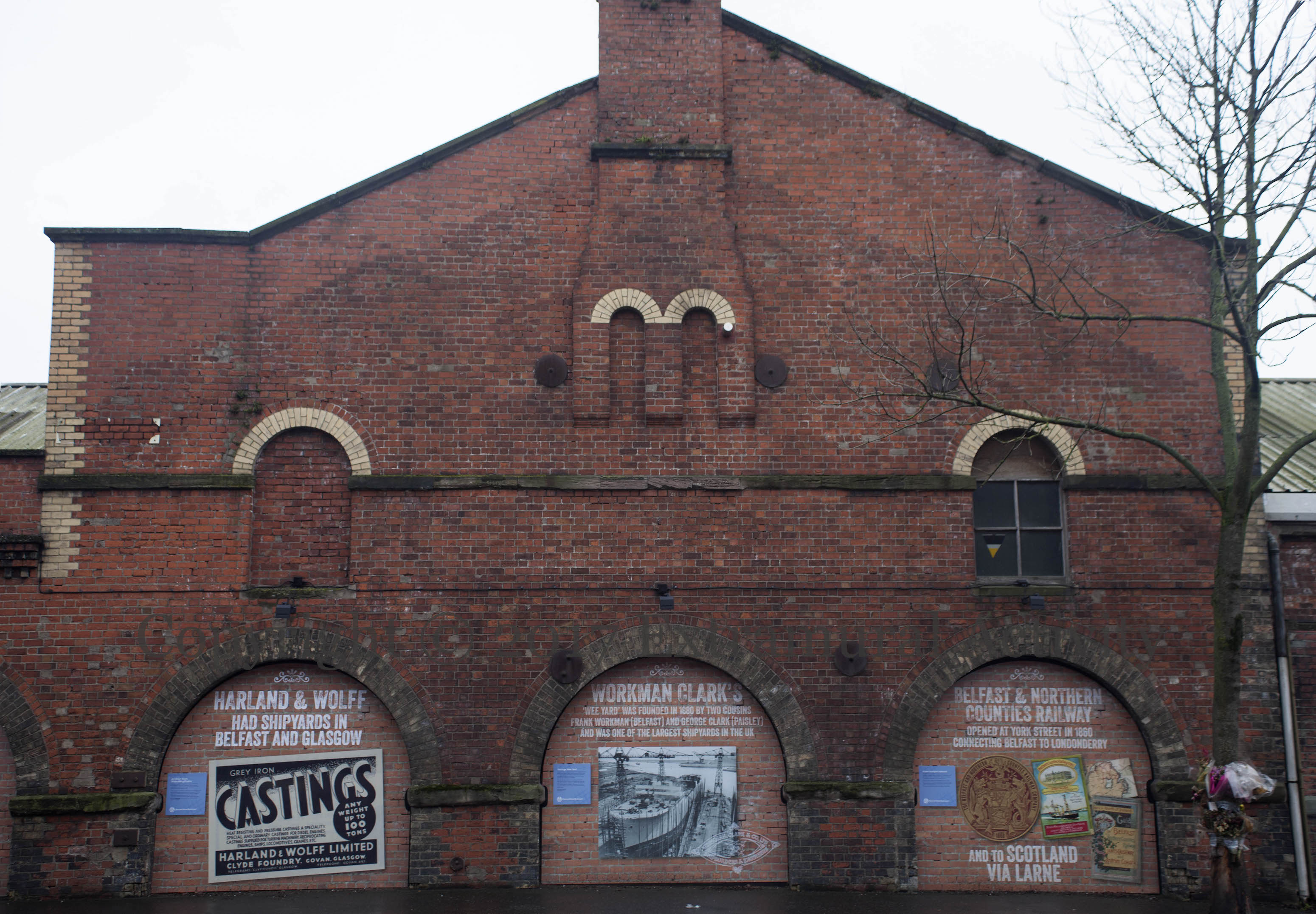
Workman & Clark’s (in the centre panel above) was a Belfast shipyard existing from 1880 to 1935. During the first world war it took over the construction of two monitor ships (specifically, M29 and M31) for the Royal Navy that H&W did not have space to build. For more, see Grace’s Guide | BBC audio on monitor ships and their construction, including a record for number of rivets hammered in by one John Moore at Workman Clark’s.
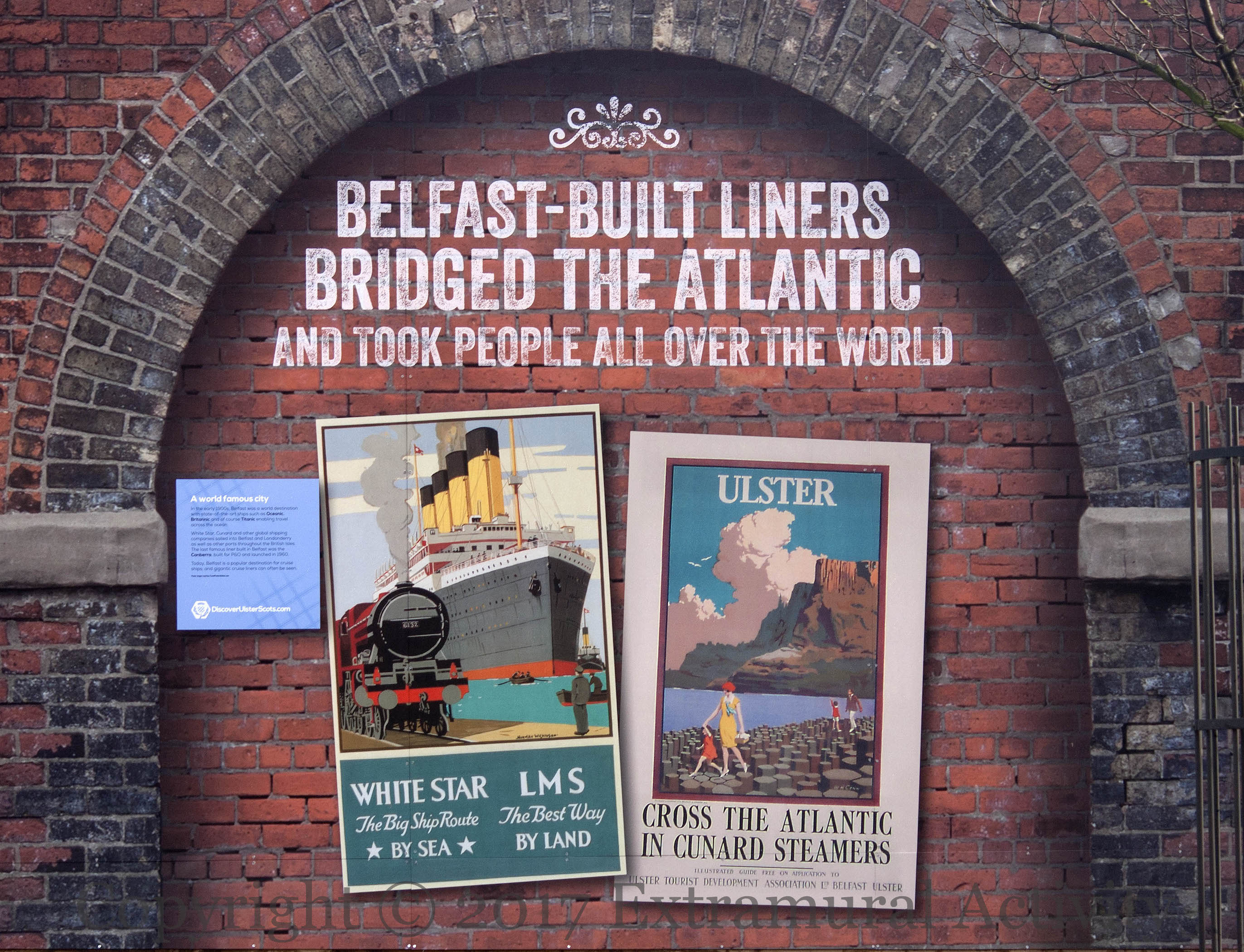
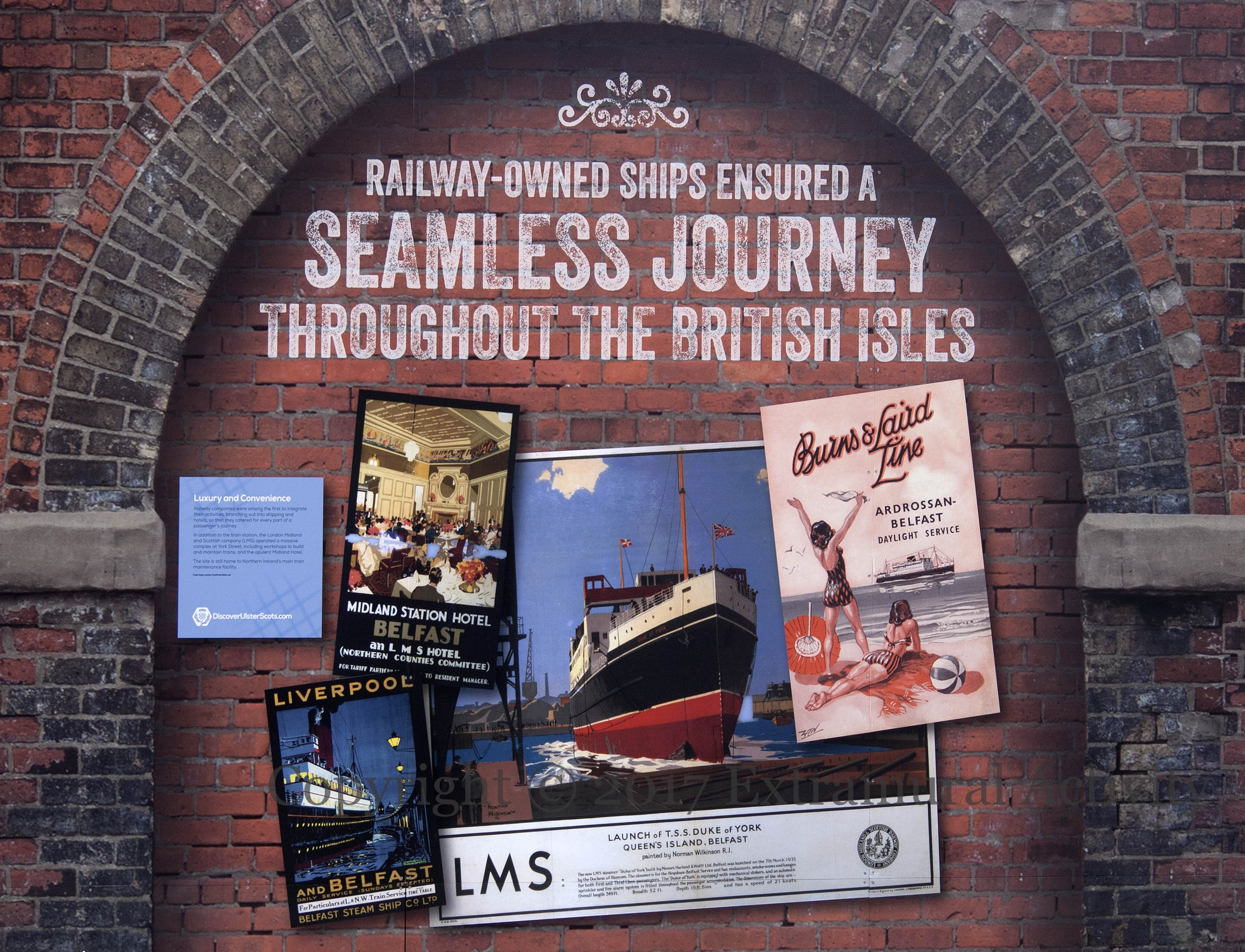
These are panels 6, 7, and 8 from the new boards along York Street on the outer wall of the NI Railways mechanical engineering workshop.
In addition to the famous trans-Atlantic ships (image above), Belfast was part of the travel network in the UK and Ireland (image below). Before there was British Railways, there were the Big 4: the Southern, Great Western, London and Northeastern, and London, Midland, and Scottish (LMS) railways. The latter included the railways in the Northern Counties. In addition to railways, the company owned canals, ships (including the Princess Victoria which sank on the Larne-Stranraer route), and hotels. “Belfast-built liners bridged the Atlantic and took people all over the world.” “Railway-owned ships ensured a seamless journey throughout the British Isles.”
Previously:The history of Shipbuilding in Belfast.
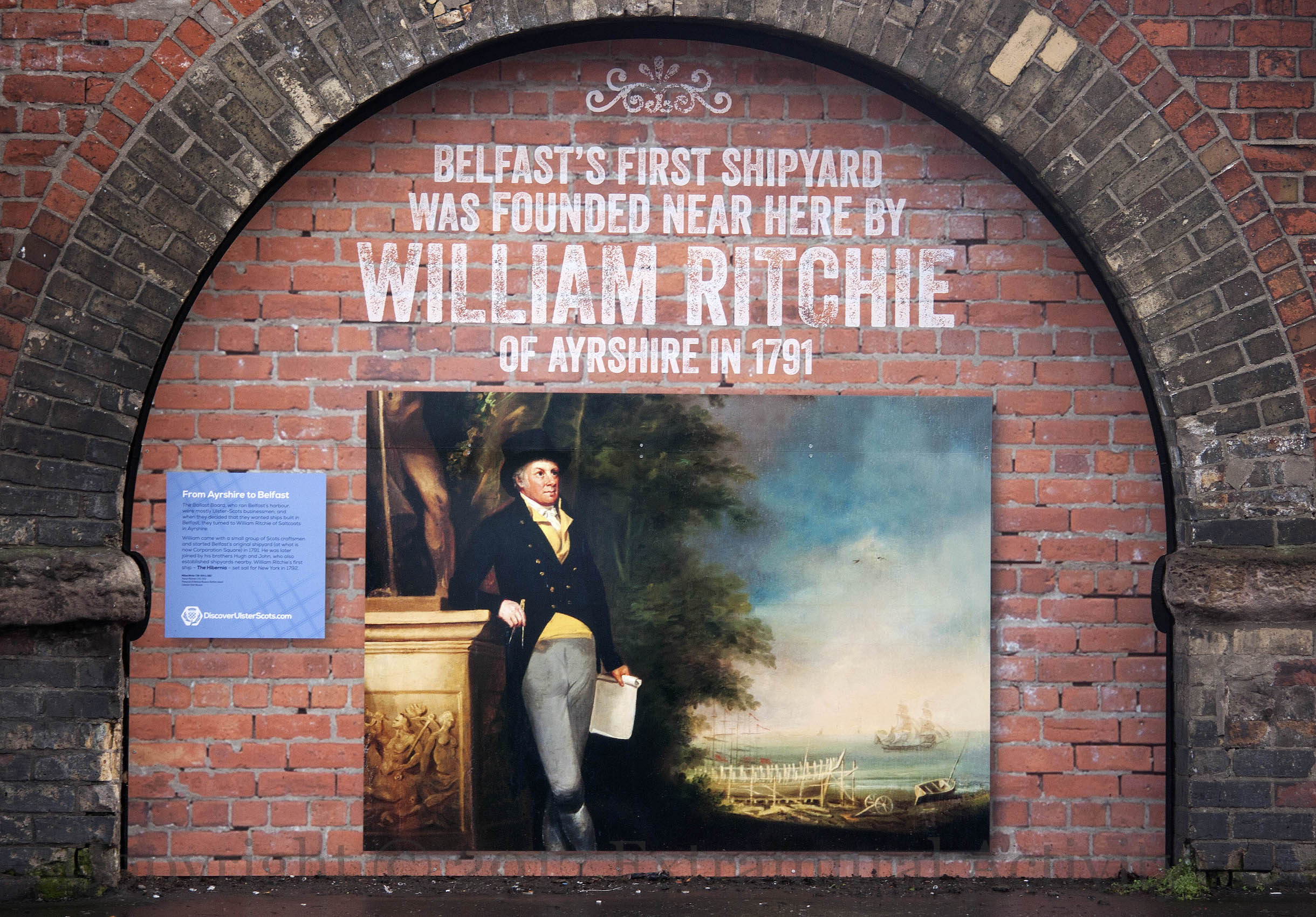
A history of shipbuilding and its role in Belfast’s industrial life is told in the first five panels of a 13-panel installation along York Road (“The harbour made York Street Belfast’s global gateway”) and in particular its connection with Scotland. (It is sponsored by Discover Ulster Scots.) Two Scots, William Ritchie (whose 1802 portrait by Thomas Robinson is shown) and Charles Connell (who oversaw the construction of the first wooden steamboat in Belfast – Aurora, pictured below) along with another Scot, Alexander MacLaine, were the leading shipbuilders in Belfast from 1791 until the 1860s, when Englishman Edward Harland (soon joined by German Gustav Wolff, and then in 1874 by William Pirrie and Wilson brothers Walter and Alexander) took over the rival Hickson yard (which included land on Queen’s Island and on the south side of the Lagan) and became dominant. Their connection to York Street is that all of them except Pirrie lived on or near York Street.
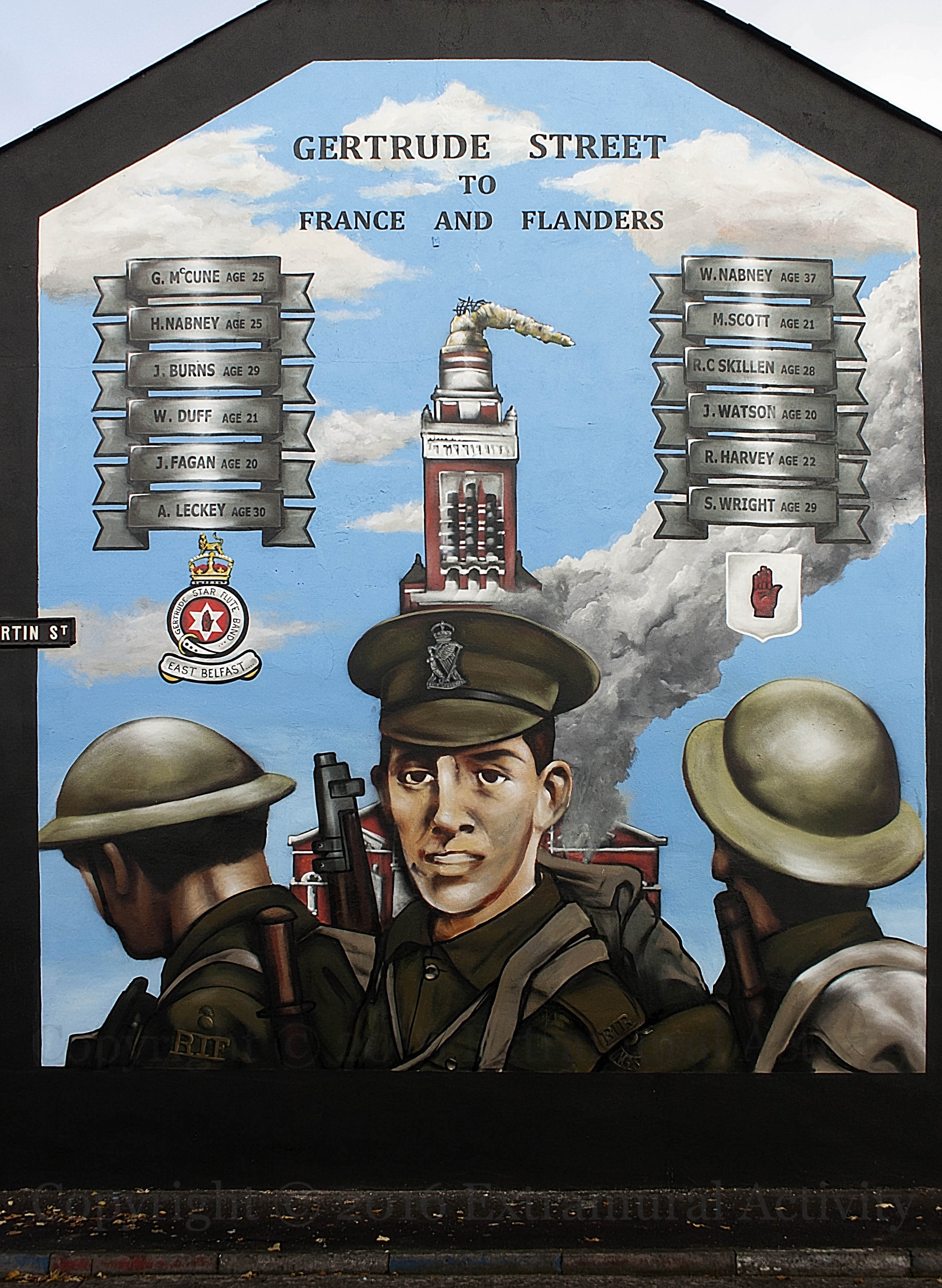
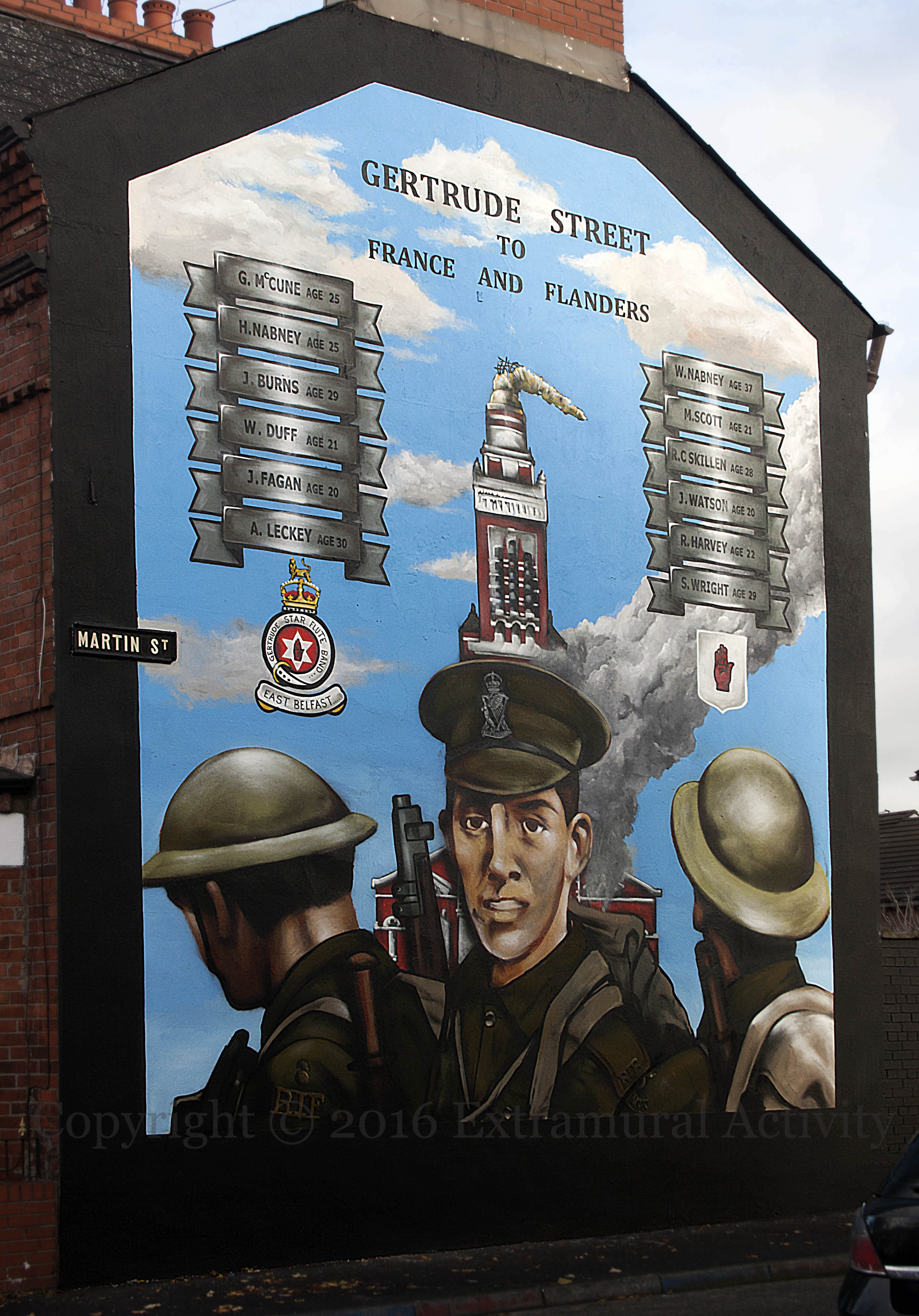
From Gertrude Street to France and Flanders: young men from the local area who fought and died at WWI’s western front are commemorated in a new mural in Martin Street in east Belfast: G McCune, H. Nabney, J. Burns, W. Duff, J. Fagan, A. Leckey, W. Nabney, M. Scott, R. C. Skillen, J. Watson, R. Harvey, S. Wright. Gertrude Street no longer exists; it was on the other side of Newtownards Road, opposite (the current) St Matthew’s church. The mural bears the emblem of the Gertrude Star Flute Band, which was founded there in 1961. CharterNI were also involved in the mural.
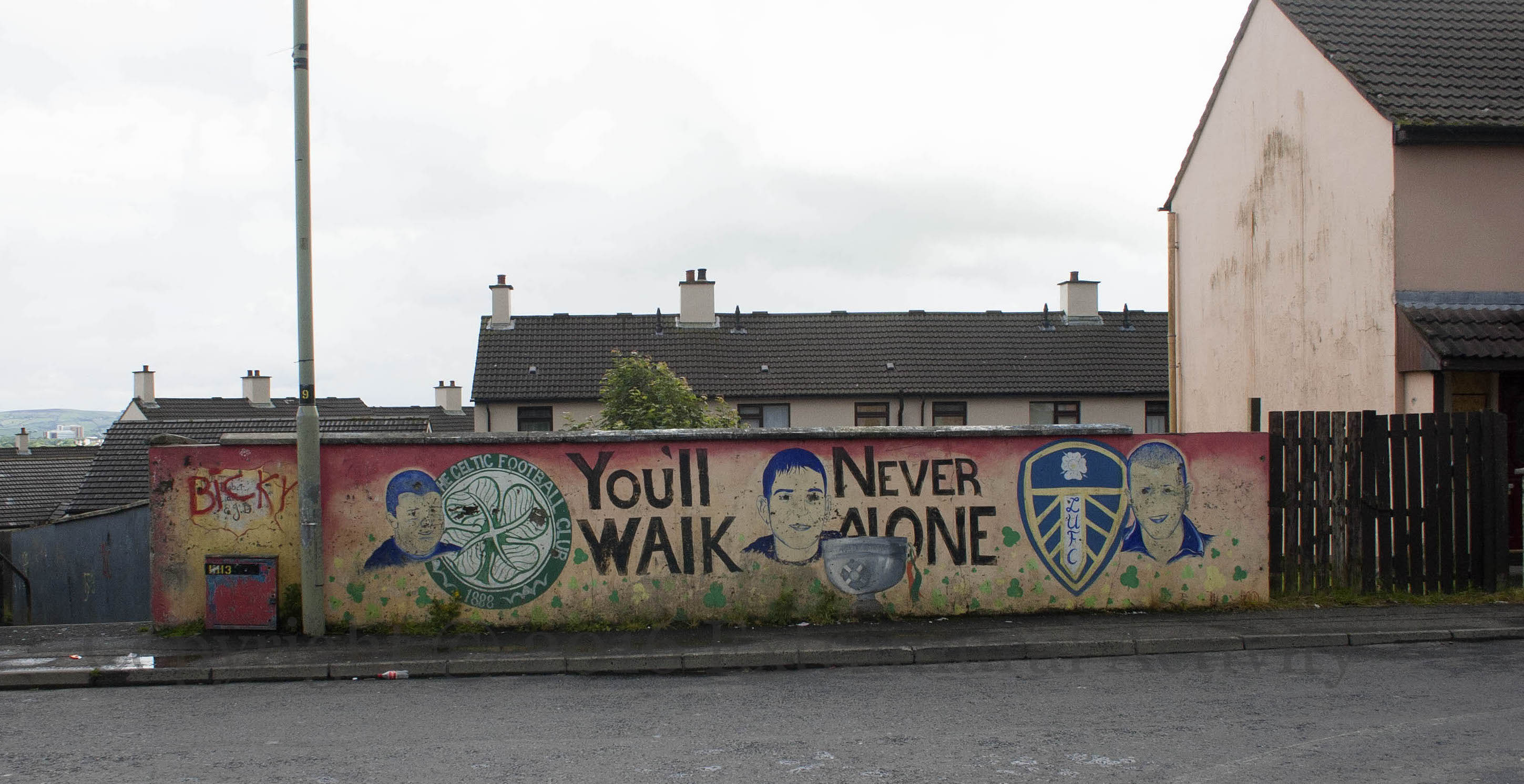
You’ll Never Walk Alone is most famously sung by the fans of Liverpool Football Club, but this Creggan mural draws on the song’s association with Celtic. Leeds United is the other club in the mural, at the right-hand end.
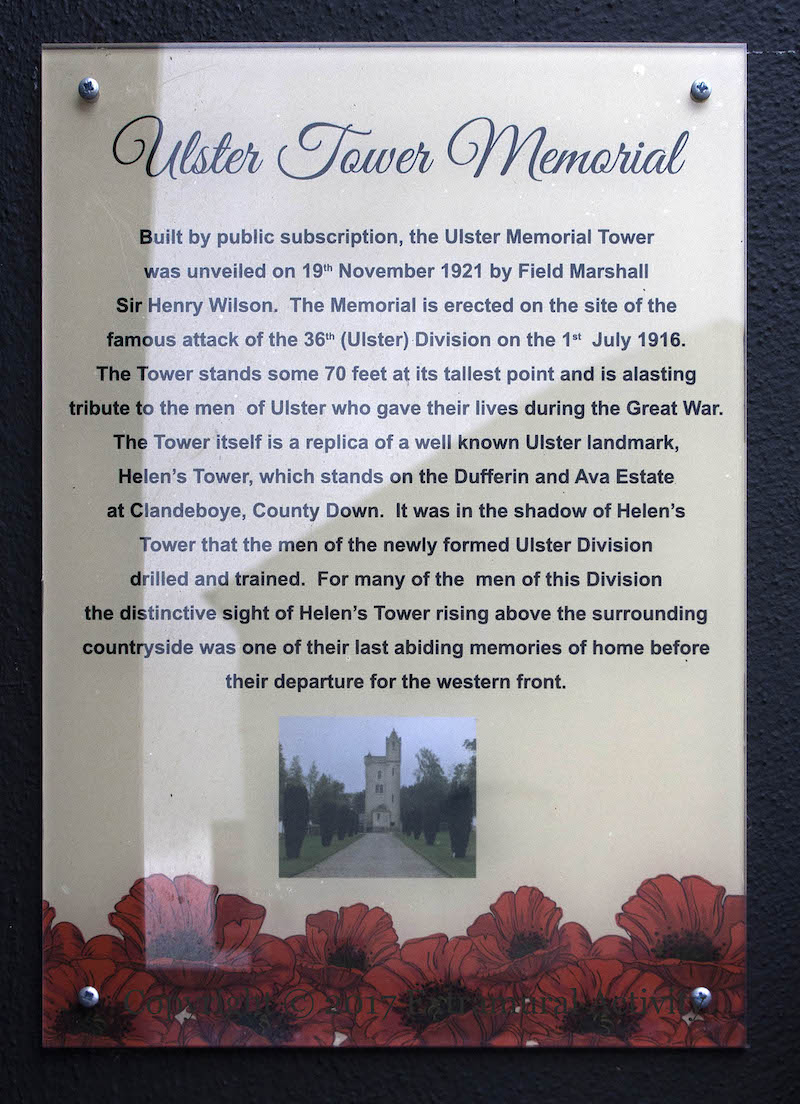
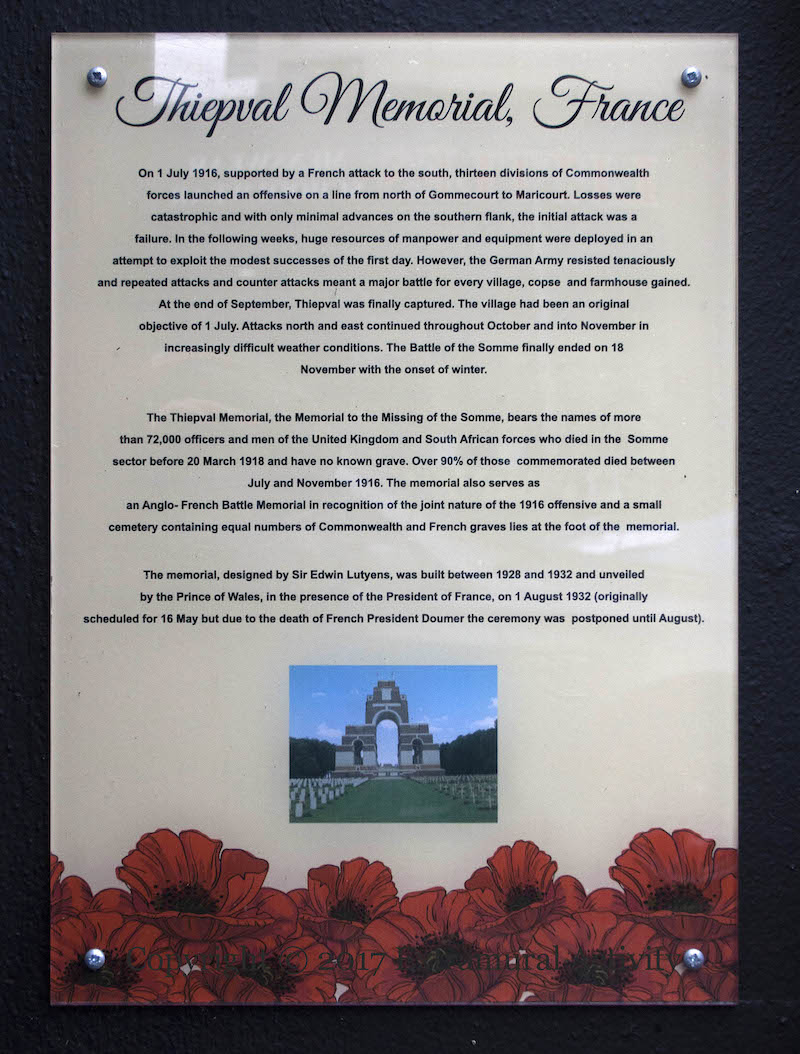
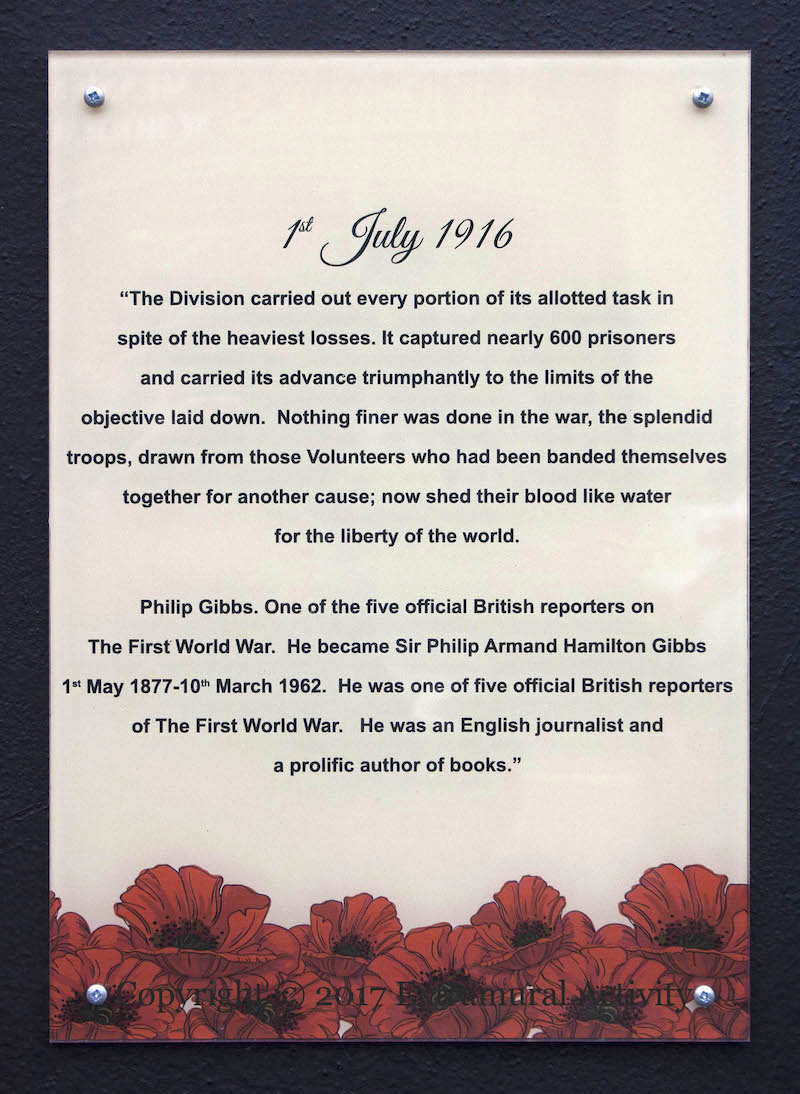
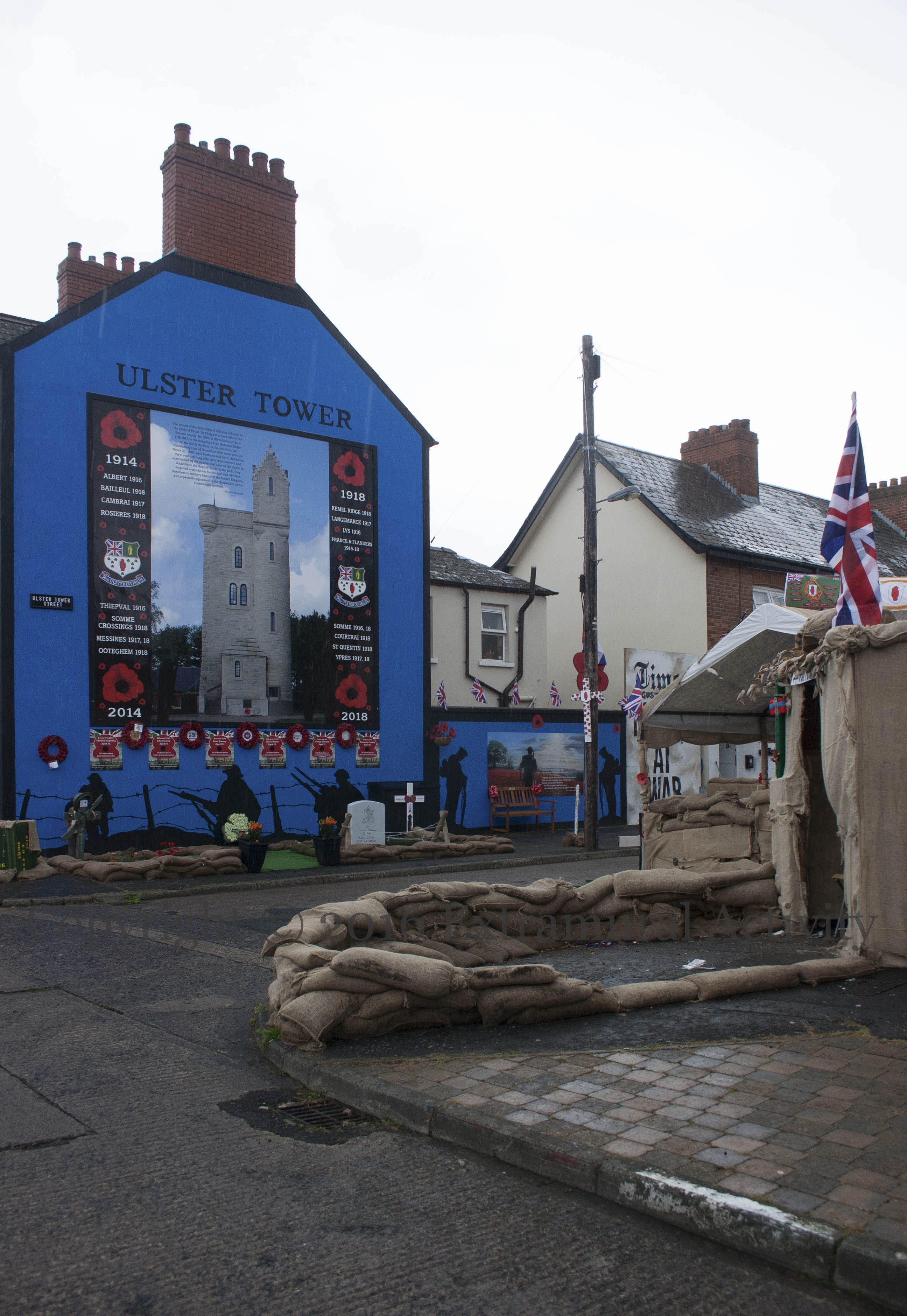
Complementing the images from Ulster Tower Street, here are images of the new commemorative boards and their blue backgrounds. The main board features Ulster Tower at Thiepval with a list of battles that the 36th (Ulster) Division was involved in.
The smaller board on the side-wall features a poem from local children: “The Great War took a lot of Pray/It’s hard to say w[h]ere all these brave men lay/A lot of souls still waiting to be found/Buried deep below the ground.//In the fields w[h]ere the bright red poppies grow/Stood men so brave of fight and foe/Some men so young they just didn’t know/A journey with friends they all wanted to go.// When they got there what a different tail [tale] they did tell/Many letters home describing it as hell/Young men put to front to fight/We can only imagine the awful sight.//Fighting beside their mate to keep Britain great/And we still remember them till this date/Nearly one hundred years on/A lot of these great men have gone/Forget them we will not as a thought is not a lot.”
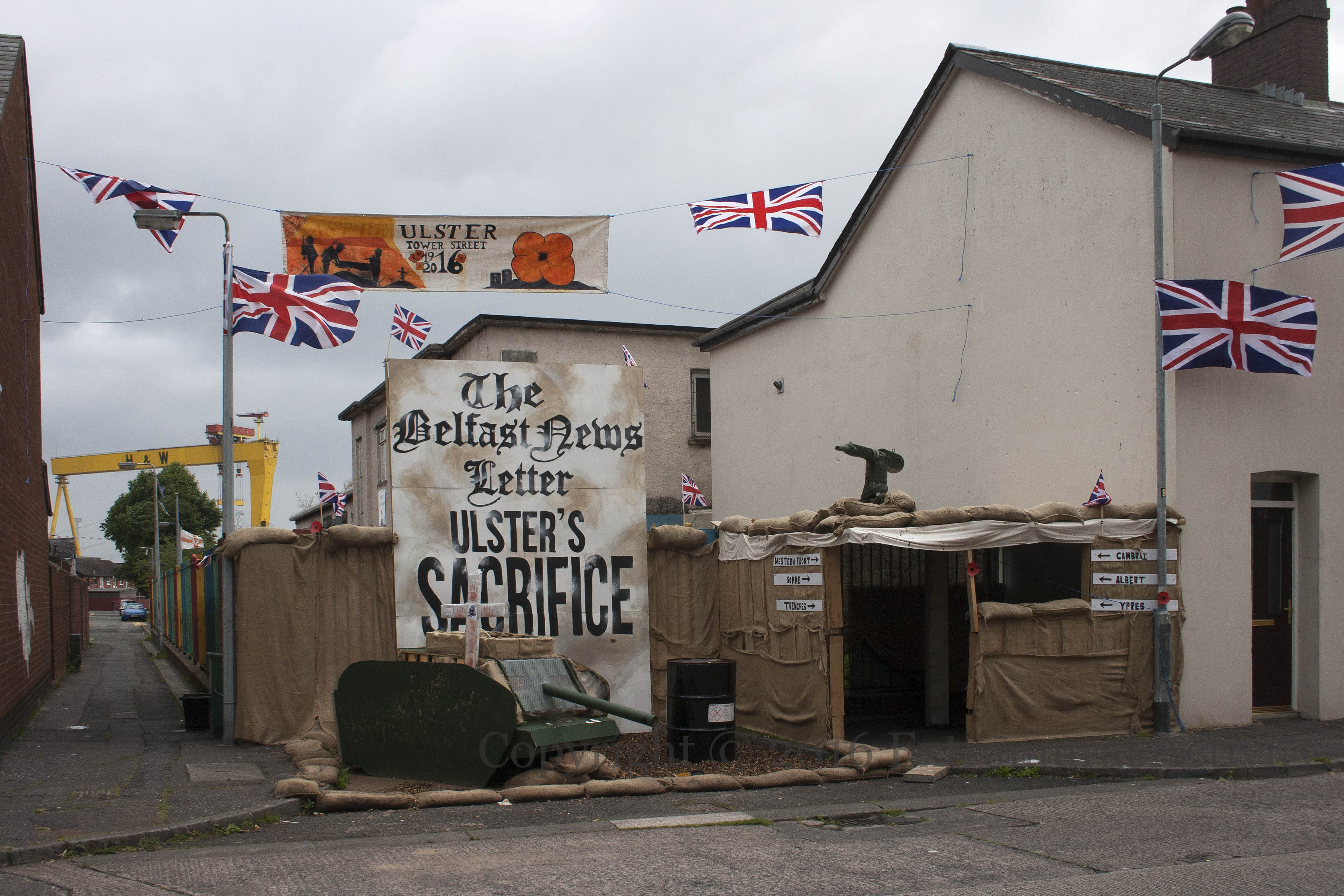
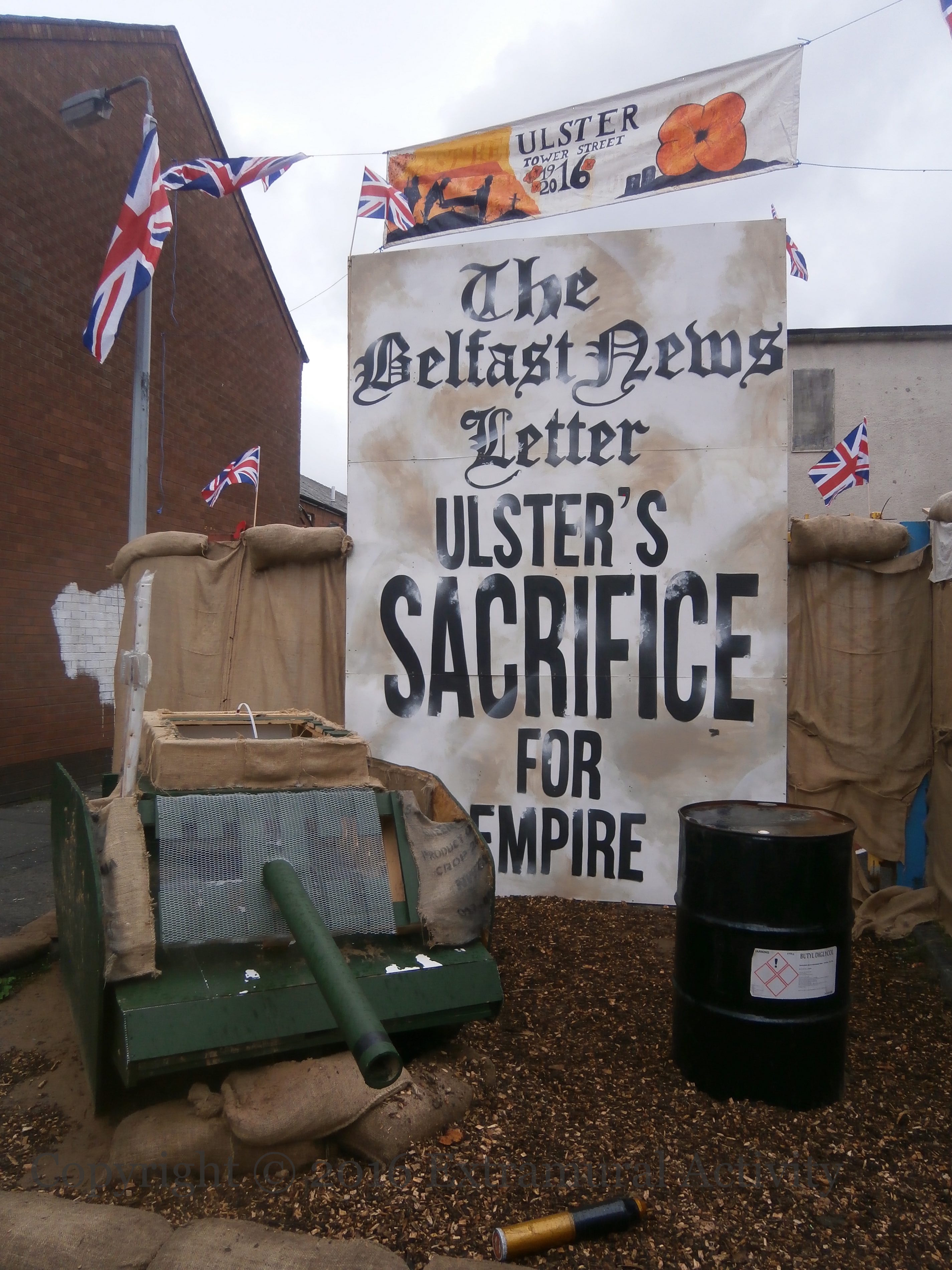
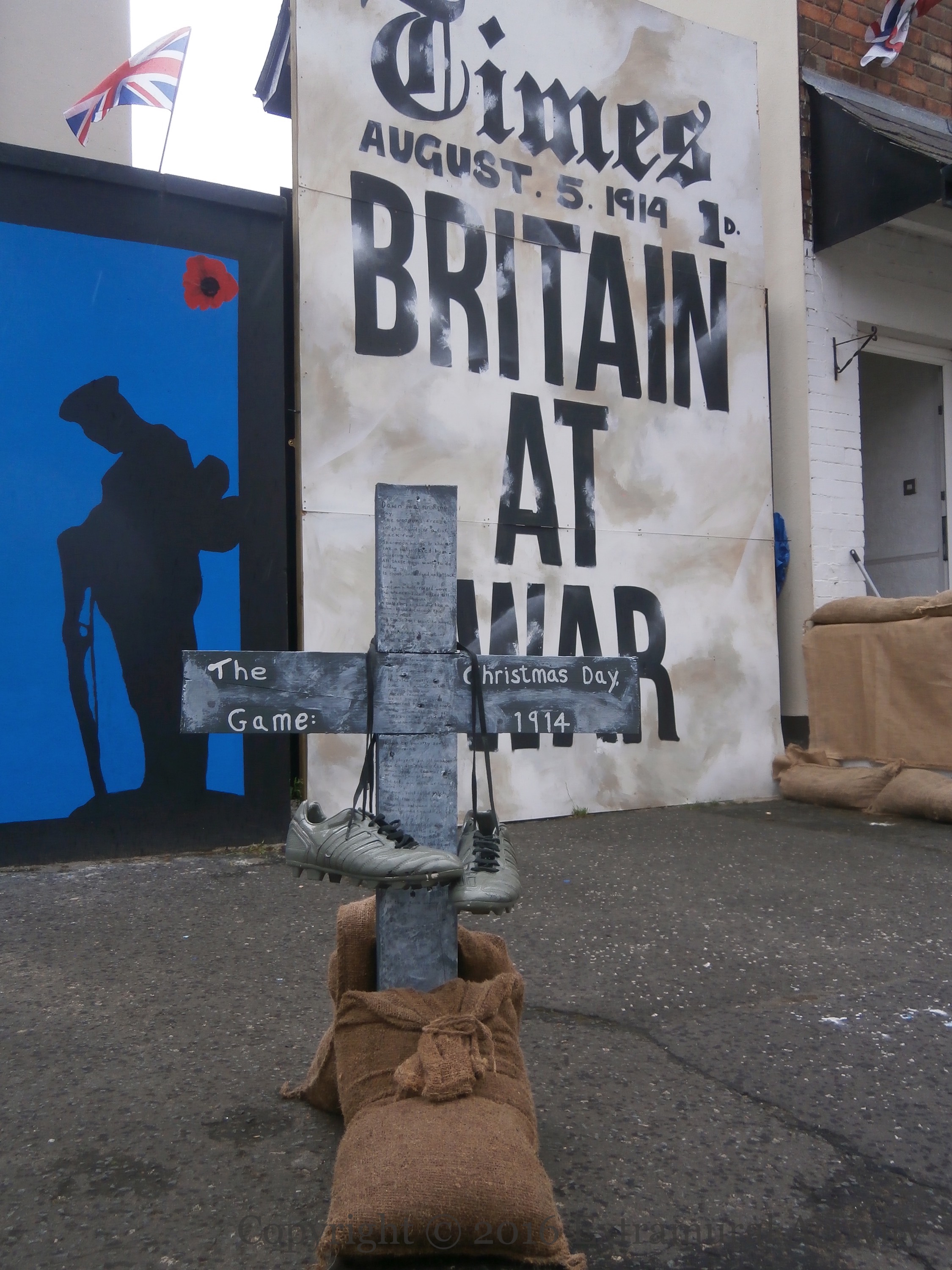
For the anniversary of the Battle Of Albert and the start of the Battle Of The Somme, Tower Street in east Belfast became Ulster Tower Street and residents reproduced the Western Front, with huts of sandbags, canvas coverings for all the front walls, and headlines from the News Letter (“Ulster’s Sacrifice”) and Times (“Britain At War”) of the period. Images of the new murals can be found in A Thought Is Not A Lot.
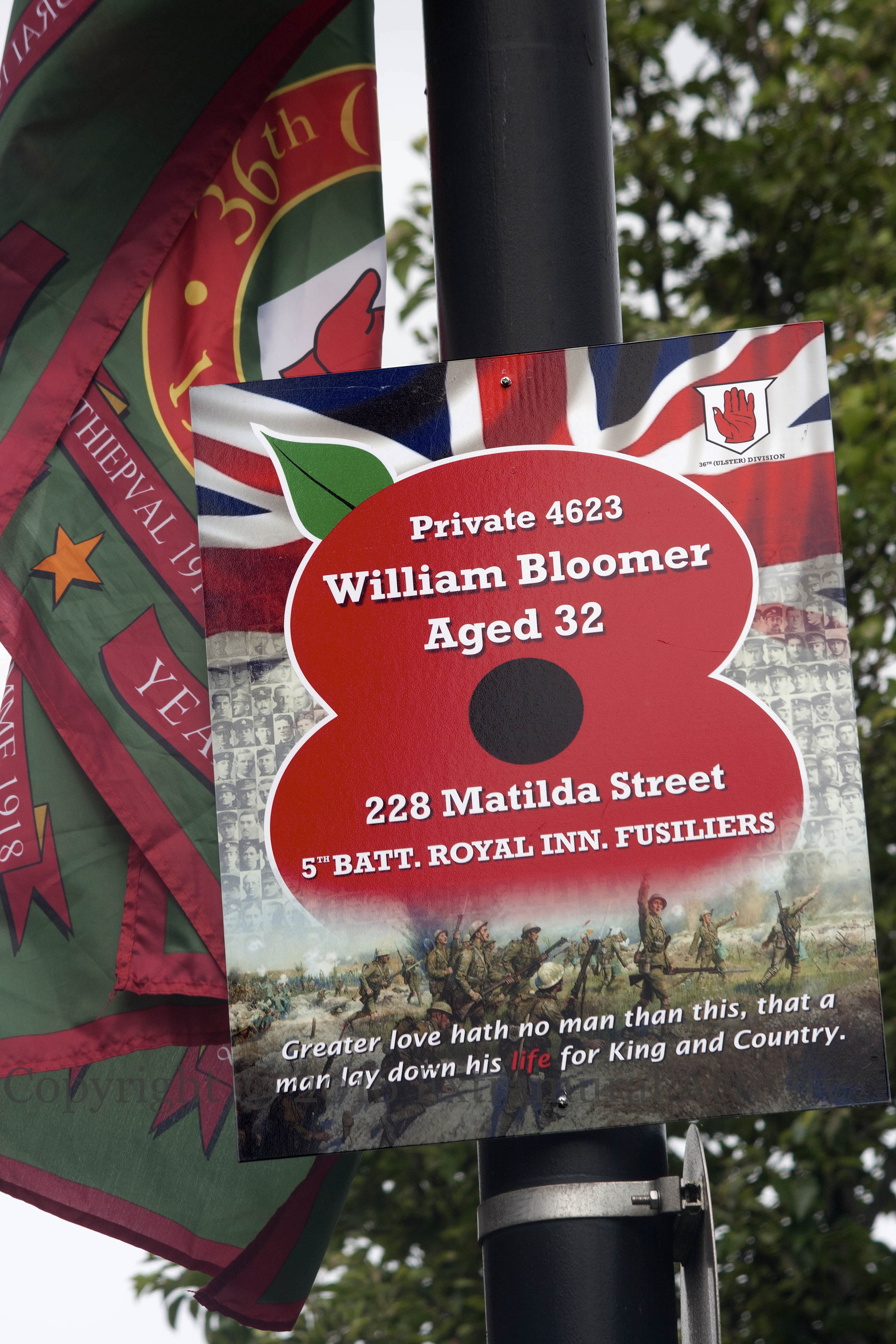
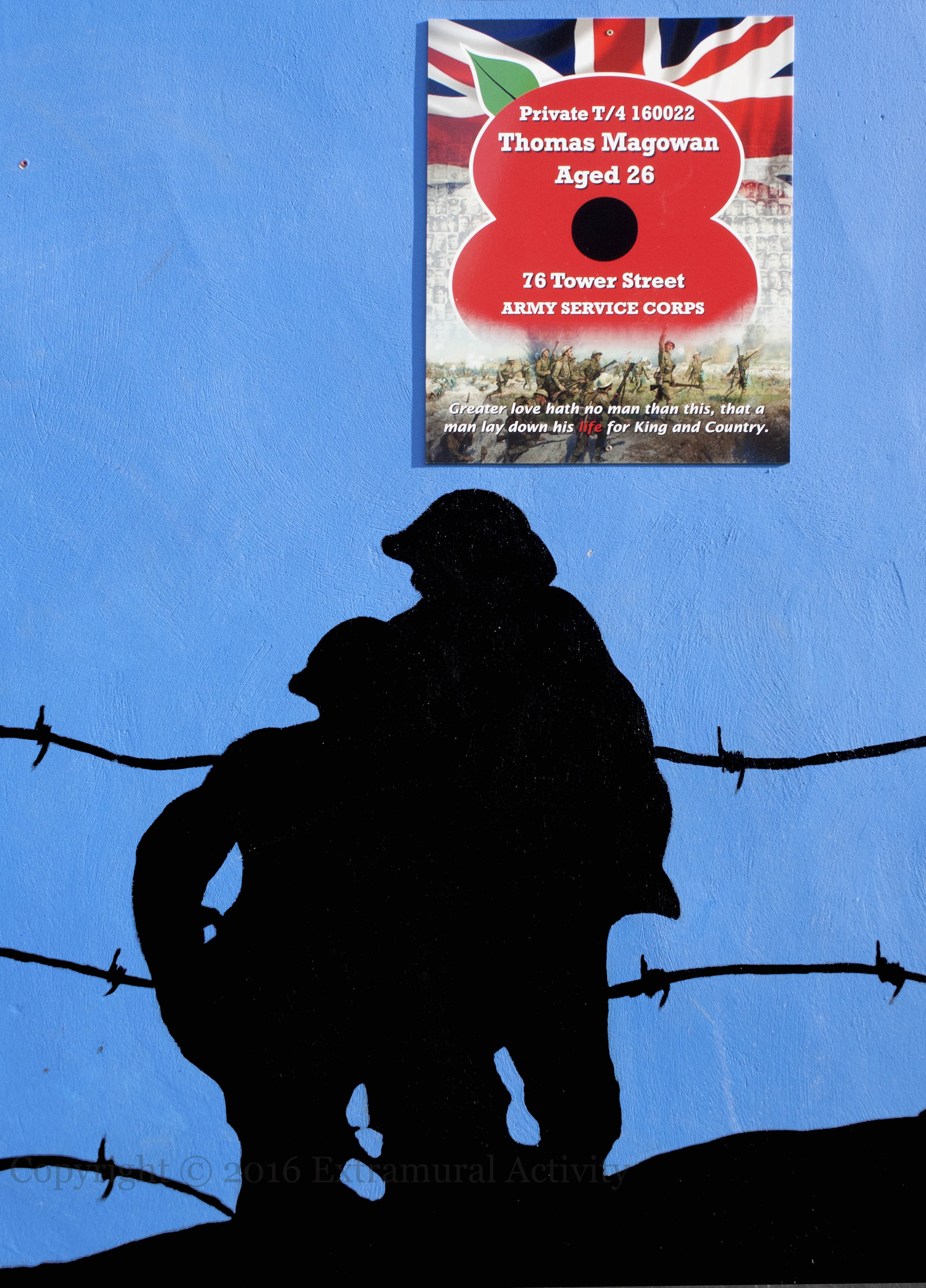
As part of the Poppy Trail, boards bearing the names, ages, addresses, and service units of Belfast casualties during WWI have been erected on walls and lampposts near their homes. Above: William Bloomer from Matilda Street in south Belfast. Below: Thomas Magowan from Tower Street in east Belfast.










 Extramural Activity