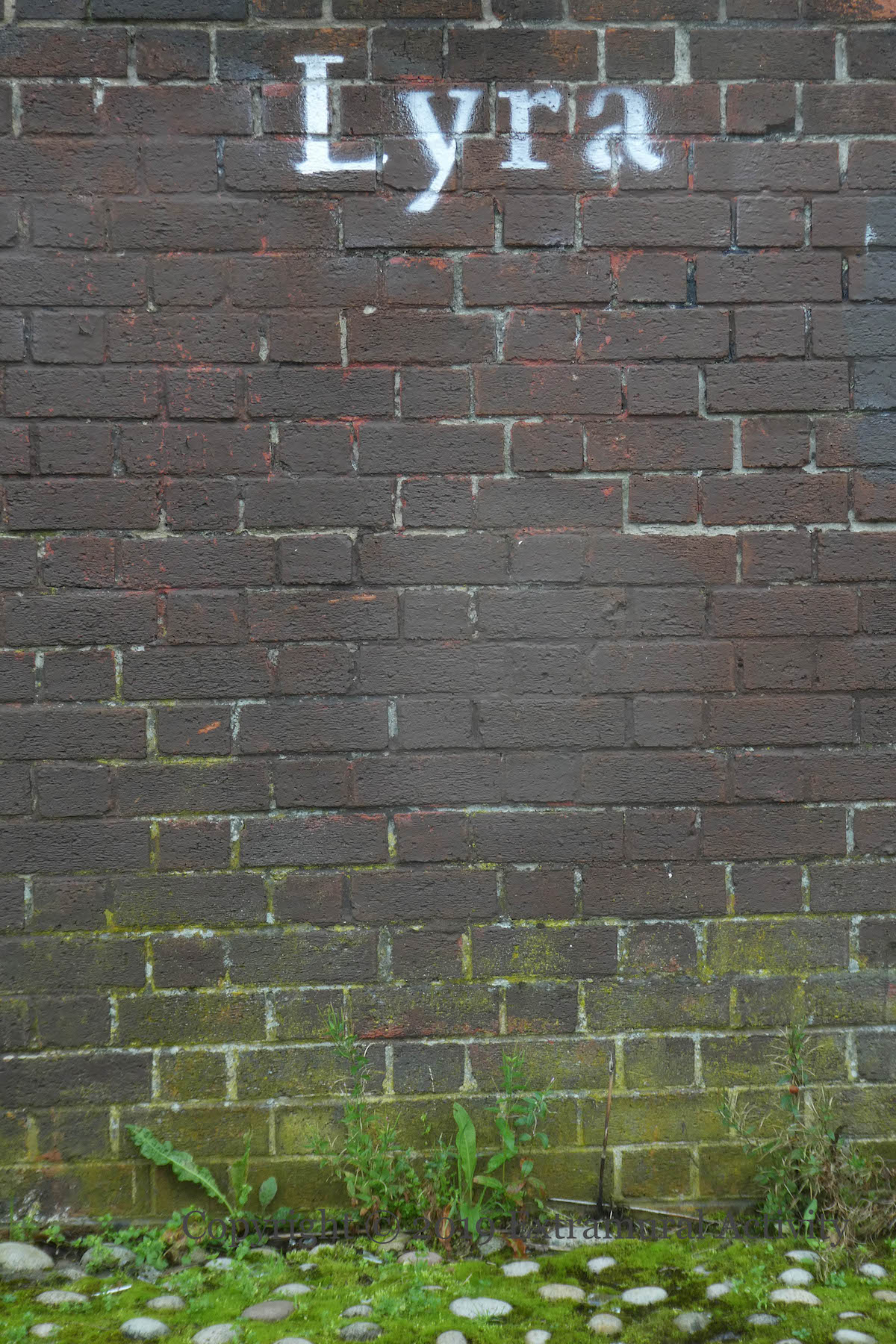
Lyra McKee was killed observing a riot in Creggan, Derry, in April. The (New) IRA apologised for the consequences of the gun attack on police but did not suggest an end to violence (Guardian). The (presumably unfinished) stencil to McKee’s memory on Ardoyne Avenue (below) is now in the shadow of the “IRA” and assault rifle cut-outs (shown above) on the lamp-pole opposite.
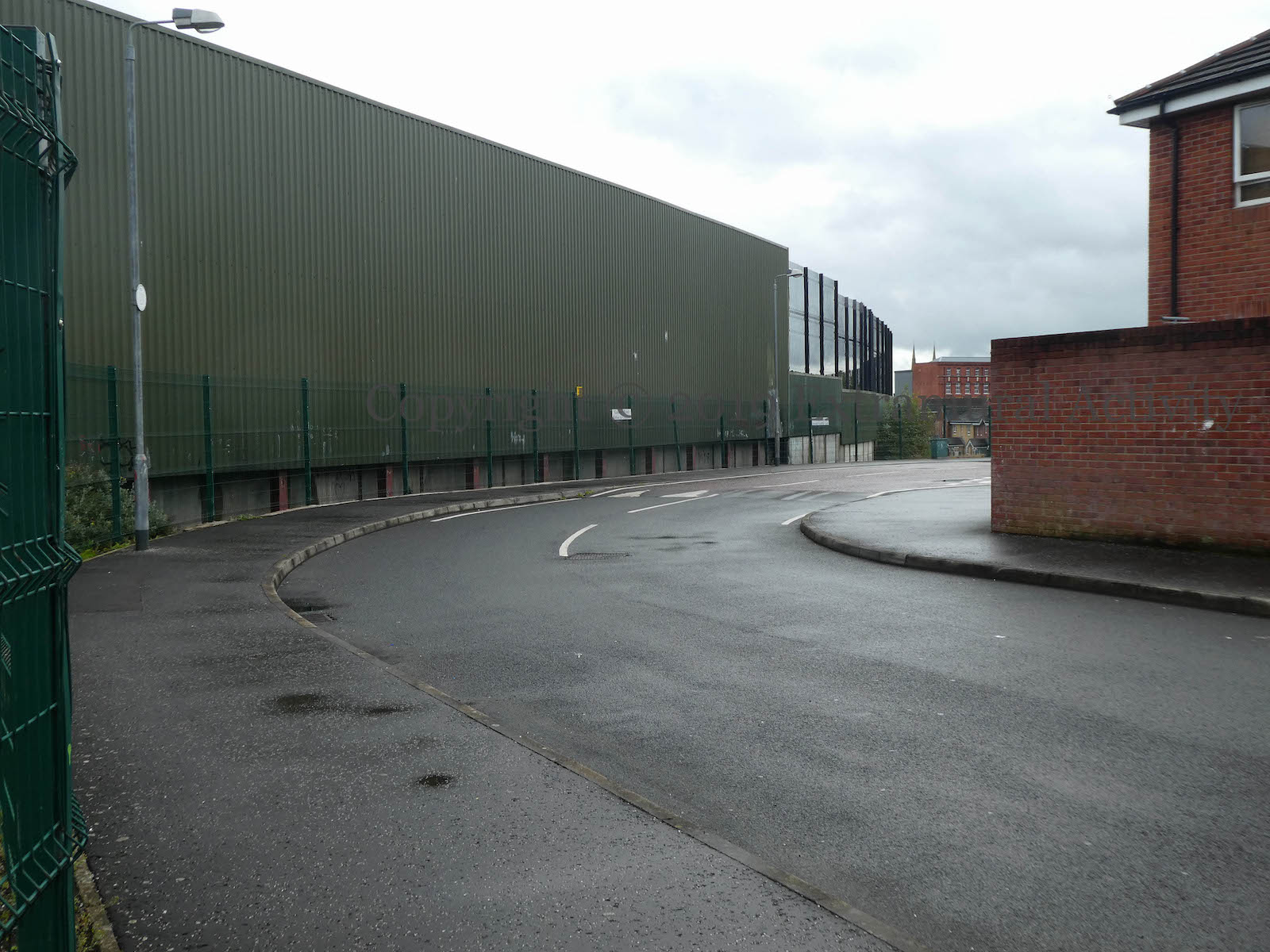
Here are two images of the “peace” line at the middle and eastern end of Bombay Street. If you want more such images, Frankie Quinn’s exhibition of images of the “peace” lines – Cordon Sanitaire – continues at Belfast Exposed in Donegall Street until October 5th.
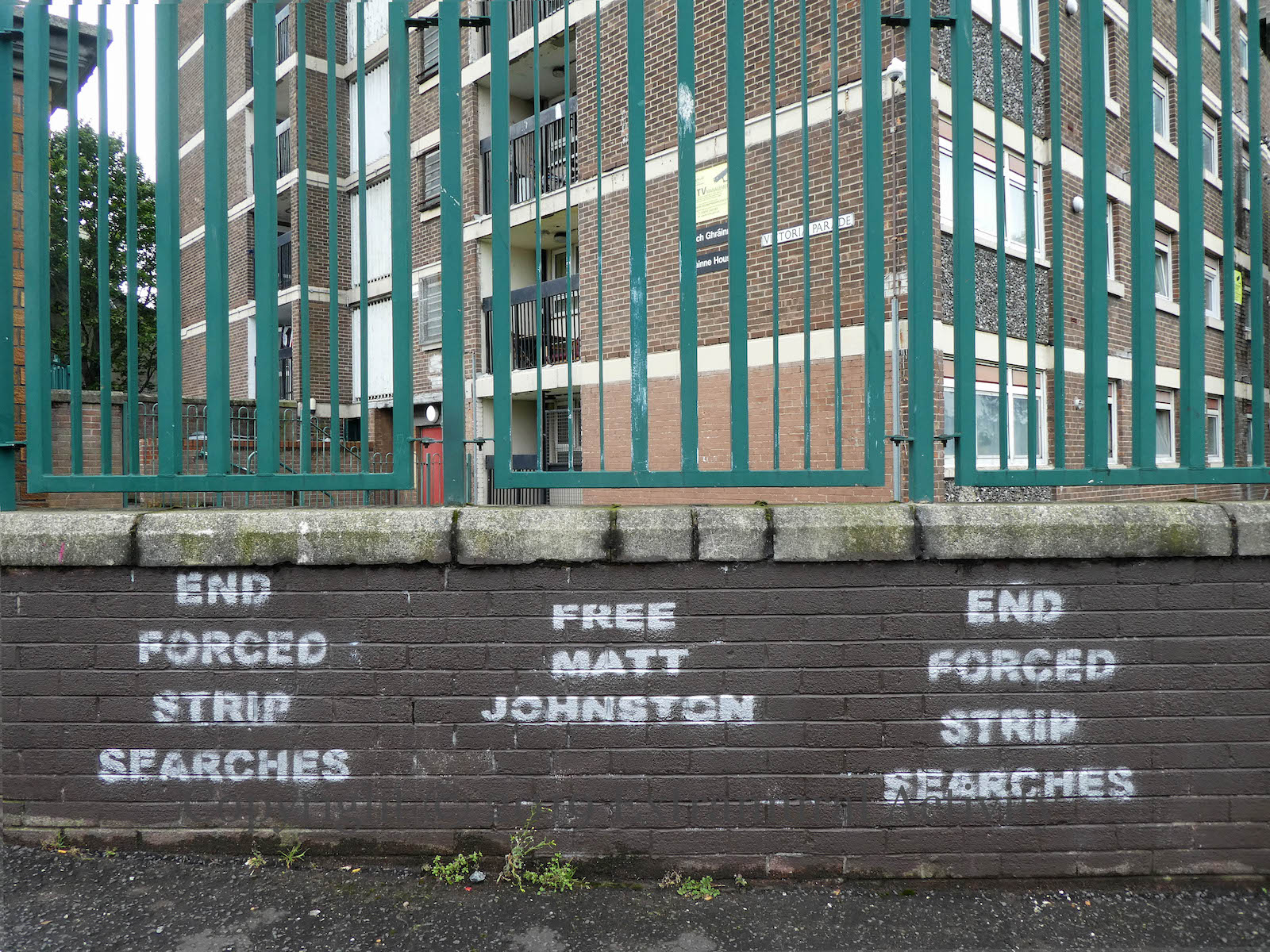
“Free Matt Johnston” IRPWA/Saoradh stencils below Teach Ghráinne in the New Lodge, calling for the release of Maghaberry prisoner (and New Lodge resident) Matt Johnston. Johnston was given four years for his part in a tiger kidnapping in 2008 and appears to have ben re-arrested in late 2017 (Irish News | RN). He was one of the prisoners involved with a “bigoted screw” that led to graffitied threats against Maghaberry prisoner warders (RN | El Norte | Derry Journal).
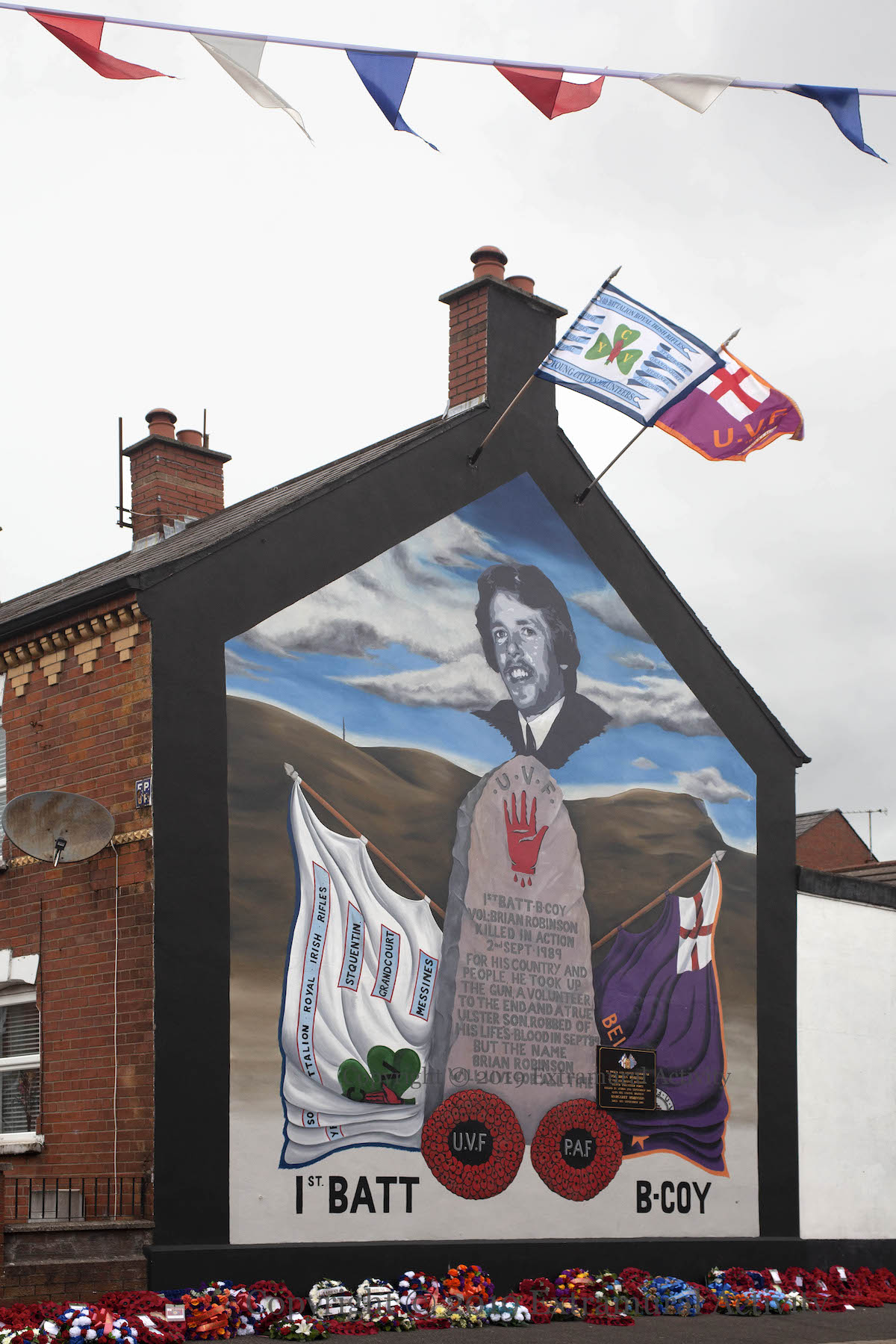
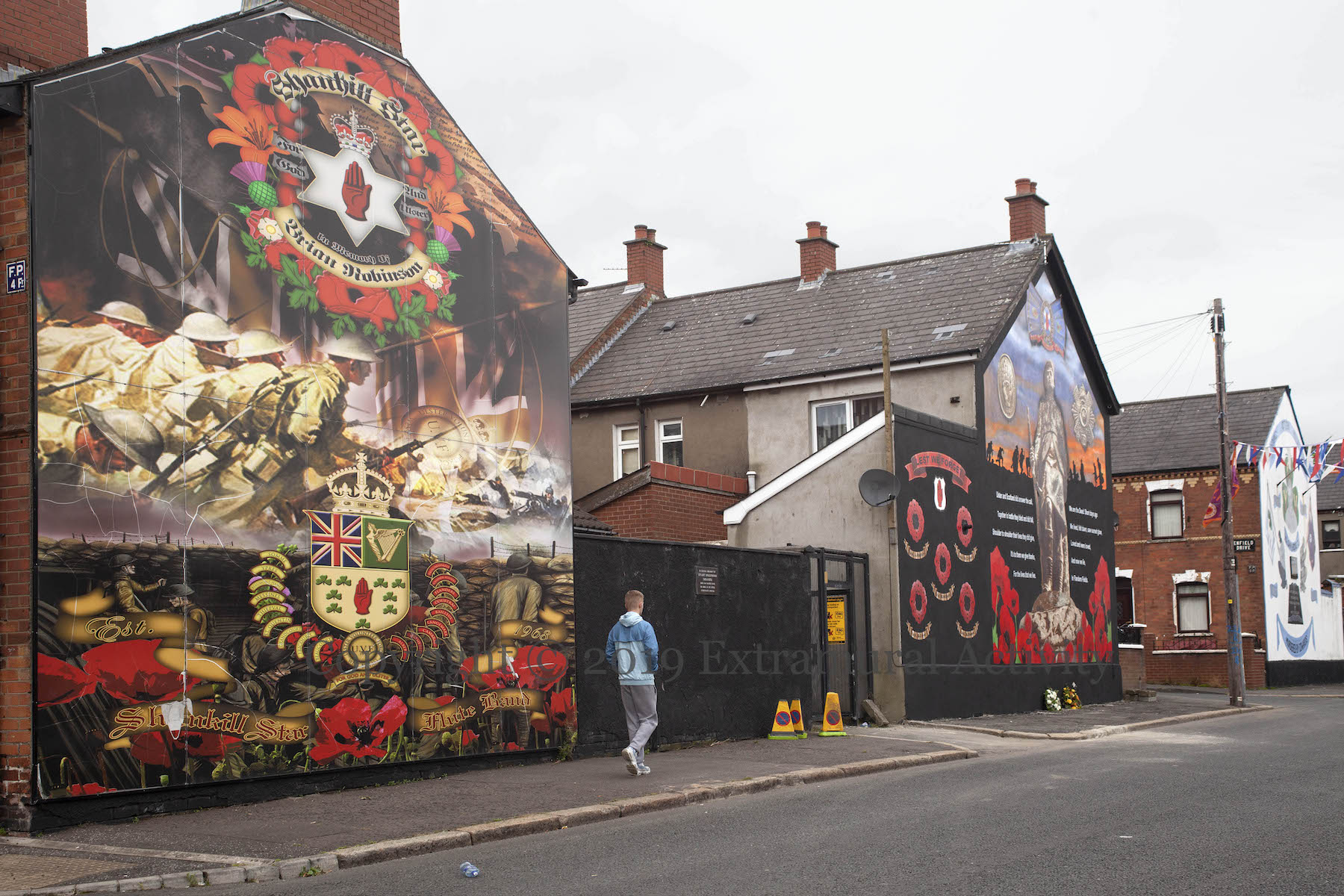
Garlands of flowers rest at the base of the (upper) mural to UVF volunteer Brian Robinson on the thirtieth anniversary of his death, on September 2nd, 1989, by a British Army undercover unit, moments after he had shot and killed a Catholic civilian named Patrick McKenna on the Crumlin Road (WP).
The other (lower) mural to Robinson in Disraeli Street is shown in the image below (and previously in Shankill Star). “1st batt, B coy, Vol Brian Robinson killed in action 2nd Sept 1989. For his country and people he took up the gun, a volunteer to the end, and a true Ulster son. Robbed of his life’s blood in Sept. 89, but the name Brian Robinson will live for all time.”
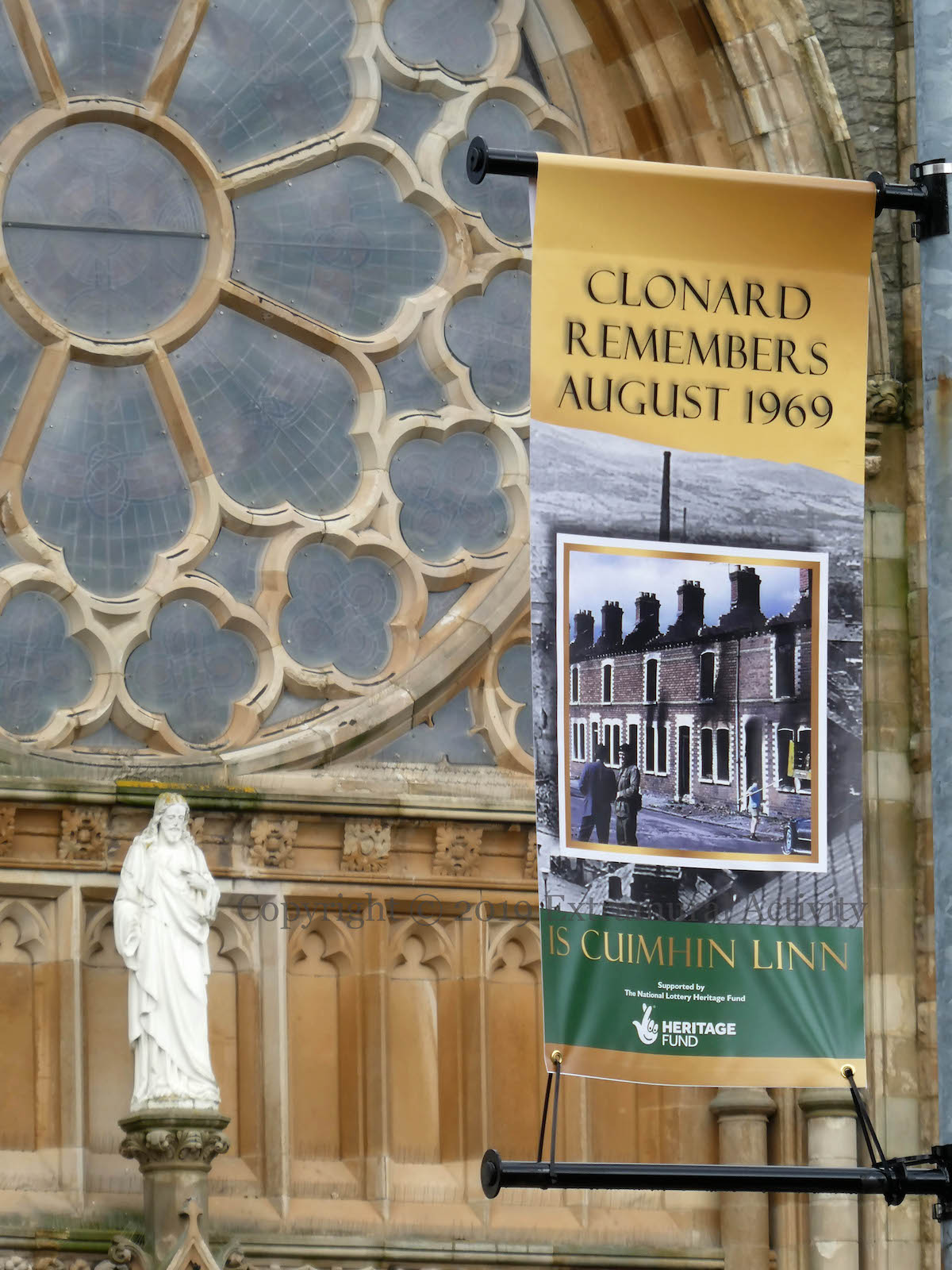
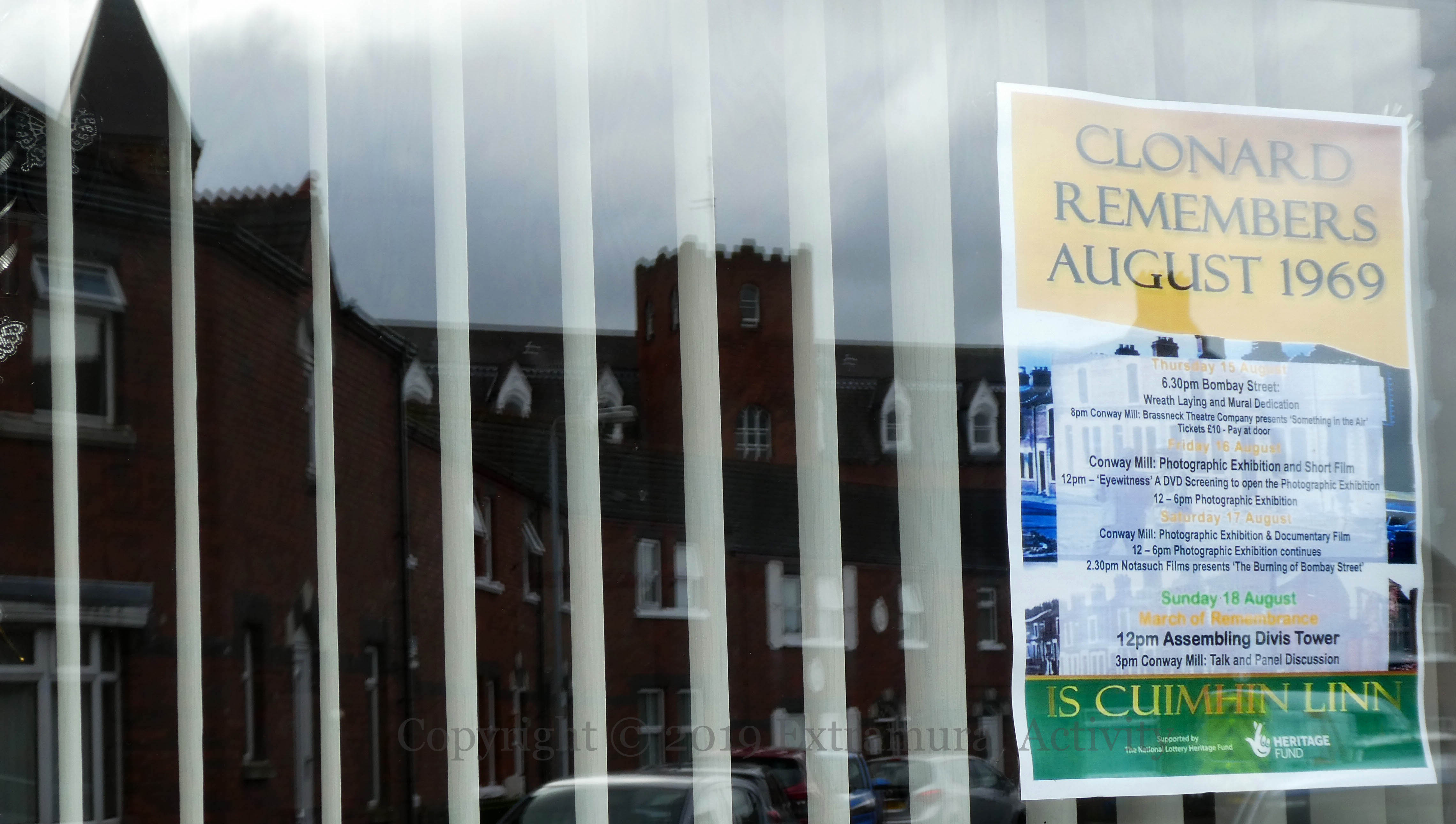
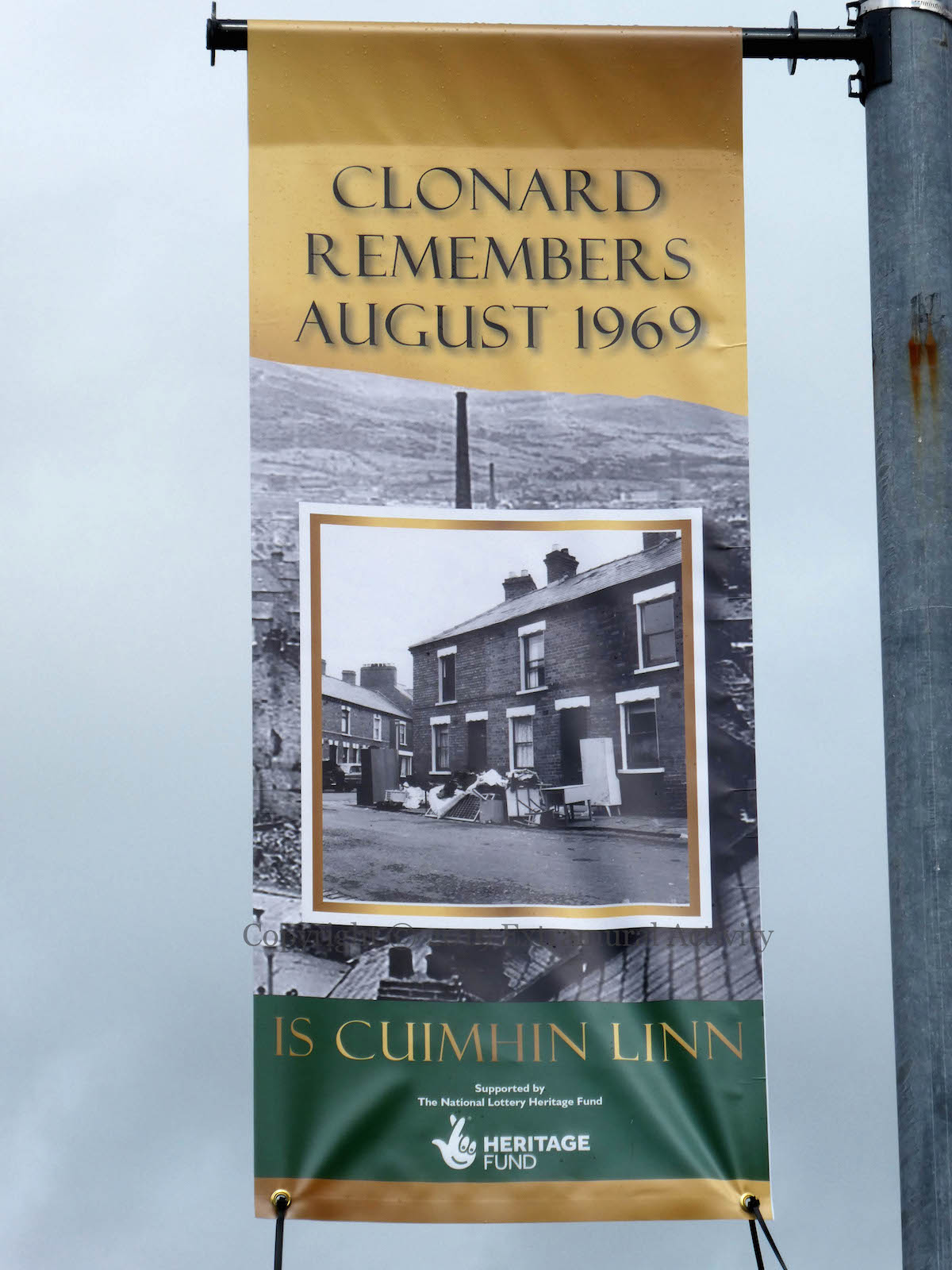
Clonard monastery (and church of the Holy Redeemer) date back to 1897, built on the grounds of Clonard House (1843) and including 3.5 acres to provide spiritual services to the burgeoning Catholic population of west Belfast, about 30,000 in number (Ita | Rafferty). On the night of August 15th, 1969, the complex came perilously close to destruction, like the houses in the streets around it, but became of focal point of locals’ attempts to defend the area (Murray).
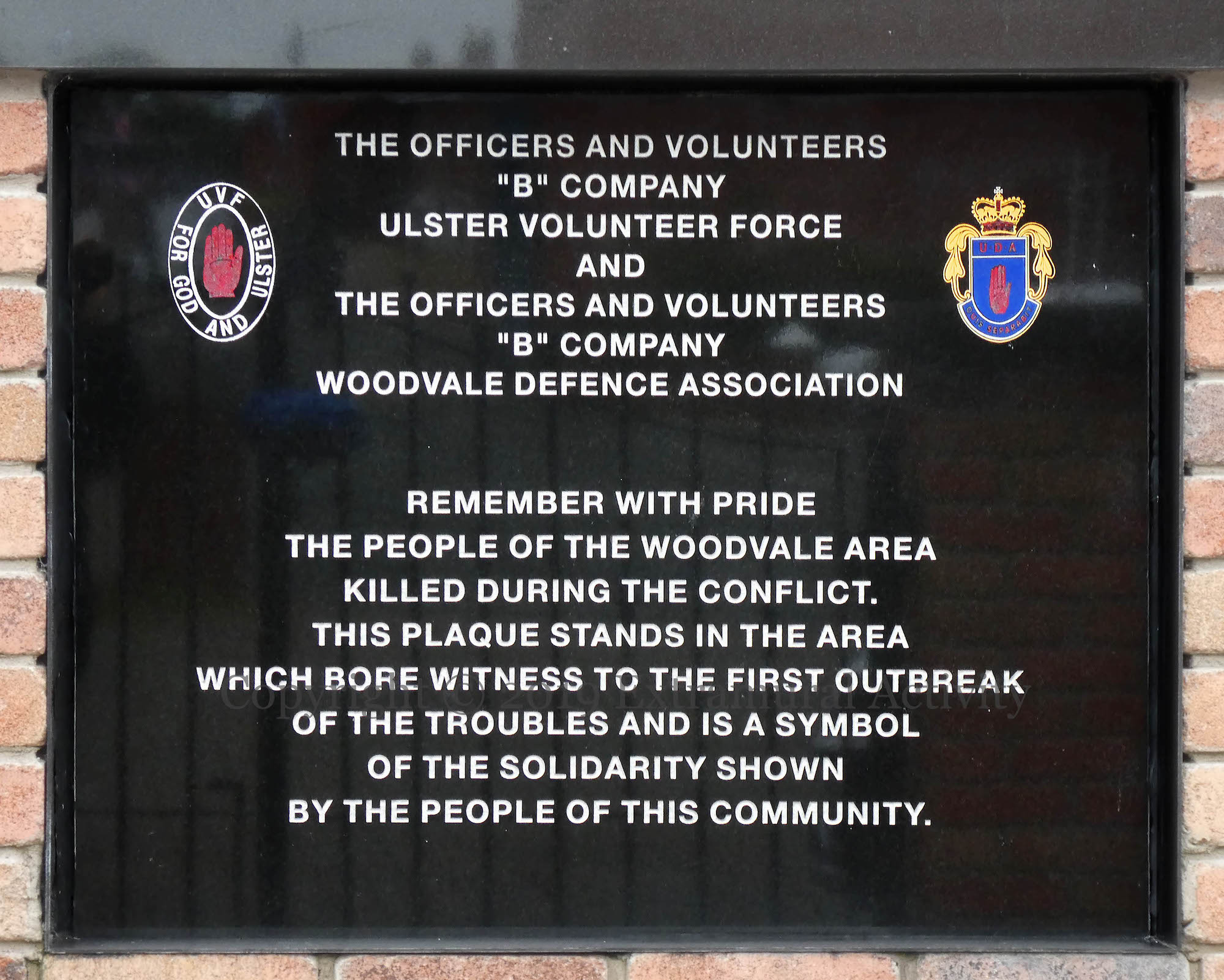
The plaque shown above sits in a memorial garden at the northern end of Disraeli Street, which in 1969 ran out onto the Crumlin Road between Hooker and Brookfield streets on the nationalist side, which saw intense rioting in August 1969 (see 90 Years Of Resistance; also Can It Change? for the lower Shankill). The UVF was founded in 1966 in response to the Civil Rights campaign and an IRA attack on Nelson’s statue in Dublin, and the WDA in June 1970 in response to escalating tensions along the upper Crumlin.
“The officers and volunteers “B” company Ulster Volunteer Force and the officers and volunteers “B” company Woodvale Defence Association remember with pride the people of the Woodvale area killed during the conflict. This plaque stands in the area which bore witness to the first outbreak of the troubles and is a symbol of the solidarity shown by the people of this community.
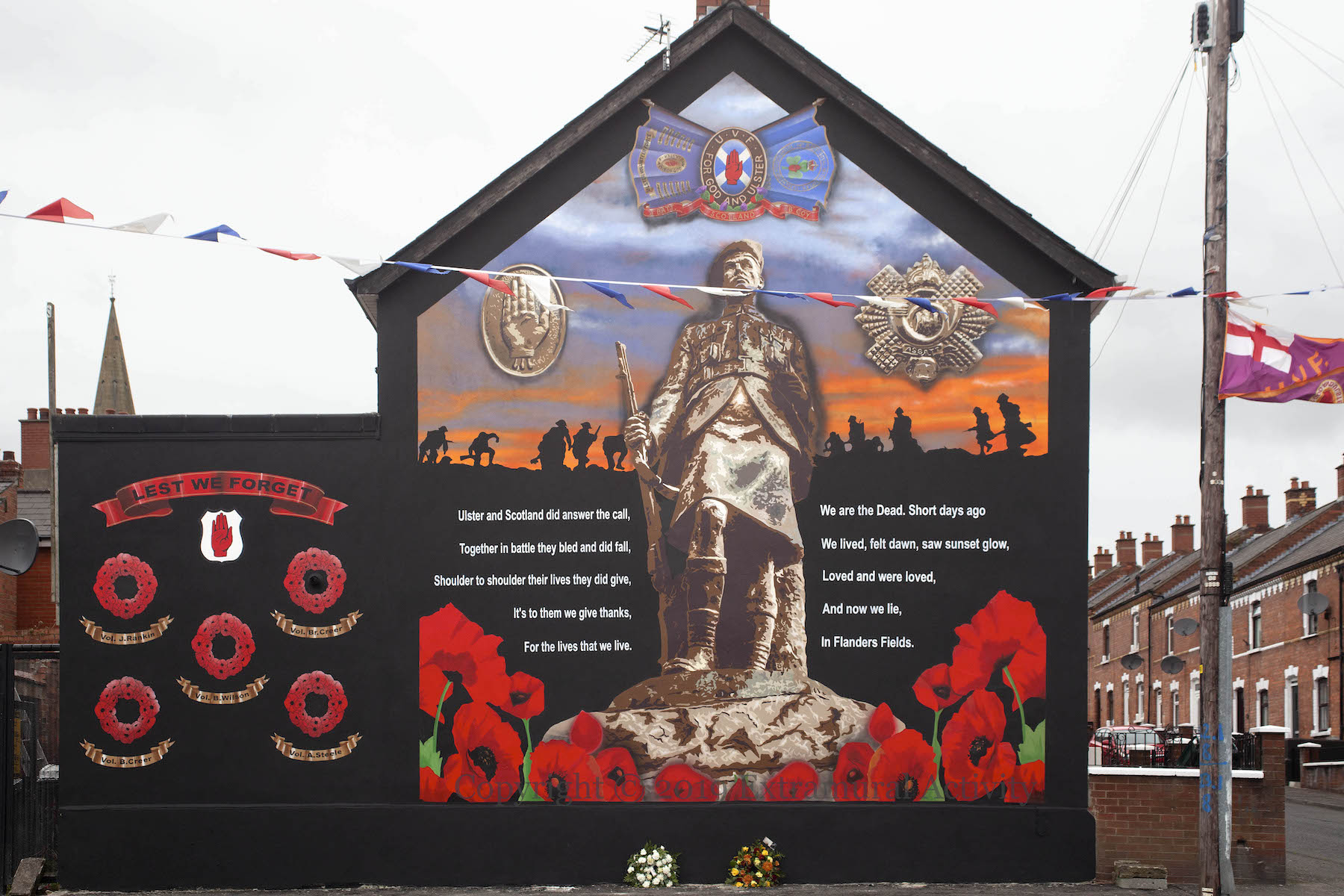
The Battle Of Assaye (India) took place on September 23rd, 1803, and the 74th regiment of the Royal Highland Fusiliers became known as the Assaye regiment in recognition of their performance (WP). By the time of WWI, the regiment had been merged into the Highland Light Infantry, whose 2nd battalion fought at the Somme in 1916 alongside the 36th (Ulster) Division (WP). The Highlanders’ emblem (which still includes the word “Assaye”) is on the right, the Ulster Volunteers’ on the left. In the apex are the flags of the UVF and YCV (14th battalion Royal Irish Rifles). This new mural commemorates the UVF volunteers of both WWI and the Scottish brigade: J. Rankin, Br. Creer, B. Wilson, B. Creer, A. Steele.
“Ulster and Scotland did answer the call/Together in battle they bled and fall/Shoulder to shoulder their lives they did give/It’s to them we give thanks/For the lives that we live.”
“We are the dead. Short days ago/We lived, felt dawn, saw sunset glow/Loved and were loved/And now we lie/In Flanders Fields.”
Although originally from Clonard in west Belfast, at the time he was shot by the SAS in Gibraltar (along with Maıréad Farrell and Sean Savage) IRA volunteer Dan McCann was living in the New Lodge, site of this recently-added plaque in his memory. (He was previously included in a 3rd battalion Belfast Brigade mural on New Lodge Road.)
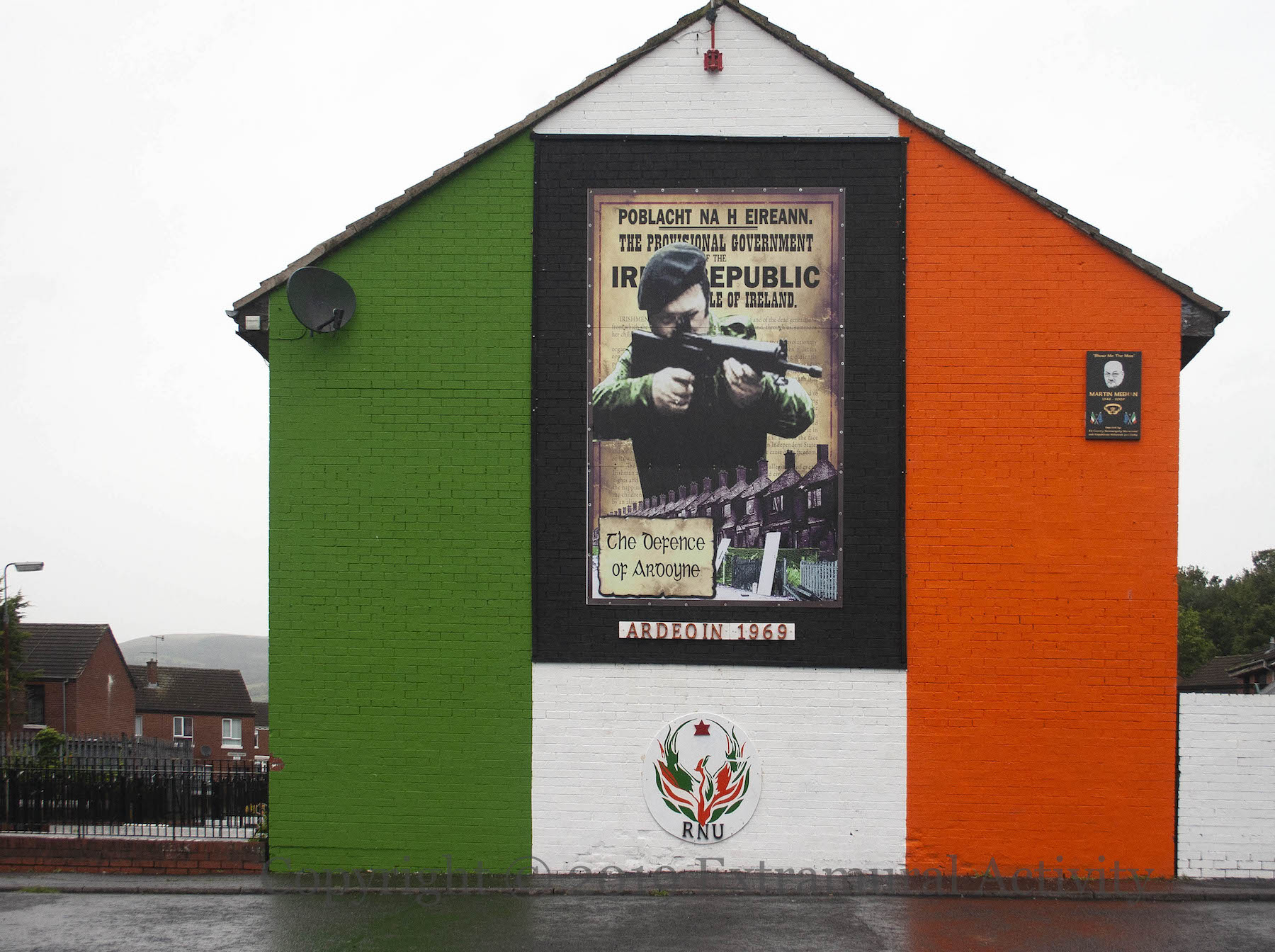
Martin Meehan joined the IRA in 1966 and was one of a few IRA volunteers defending Catholics in Ardoyne (Ard Eoın) in August 1969. Rioting did not cease there until the 16th, when British troops were finally deployed to the Crumlin Road to block mobs coming from the Woodvale and Shankill. Meehan resigned after the failure of the IRA to defend Ardoyne, Clonard, and Divis. This Magill article from the time summarises the IRA’s actions as “late, amateur and uncertain”. (Meehan would later rejoin the IRA and PIRA.)
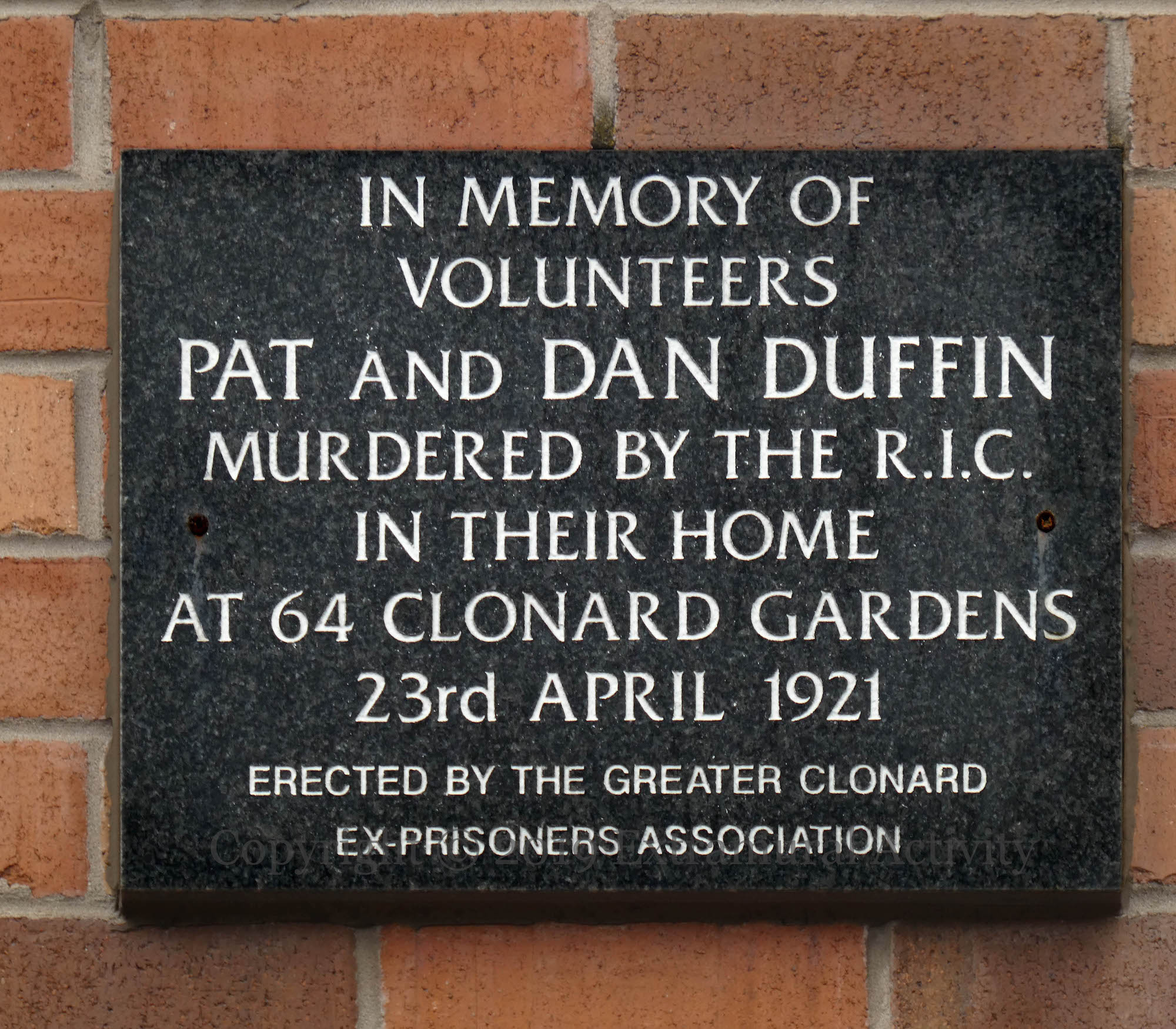
The IRA shot dead two members of the British Auxiliaries, Ernest Bolan and John Bales, in Donegall Street in Belfast city centre on April 23rd, 1921. Just before midnight, Pat and Dan Duffin were shot to death by men who entered their Clonard home.
Another brother, John, was upstairs and not harmed and when he approached the scene he found not only his dead brothers but the station dog of the Springfield Road RIC barracks (“GB Kenna“, real name Fr John Hassan).
DeValera led the funeral cortège along the Falls. Joe Devlin would include the Duffin murders in a Westminster speech in June, following the killings in a single night of Alexander McBride, Malachy Halfpenny, and William Kerr (Hansard). The RIC in west Belfast under CI Harrison, DI Nixon, and in this case DI Ferris (Aiken et al.), would continue their killings into 1922 – see The RIC Murder Gang.
“In memory of volunteers Pat and Dan Duffin, murdered by the RIC in their home at 64 Clonard Gardens 23rd April 1921. Erected the by the Greater Clonard Ex-Prisoners Association.”



 Extramural Activity