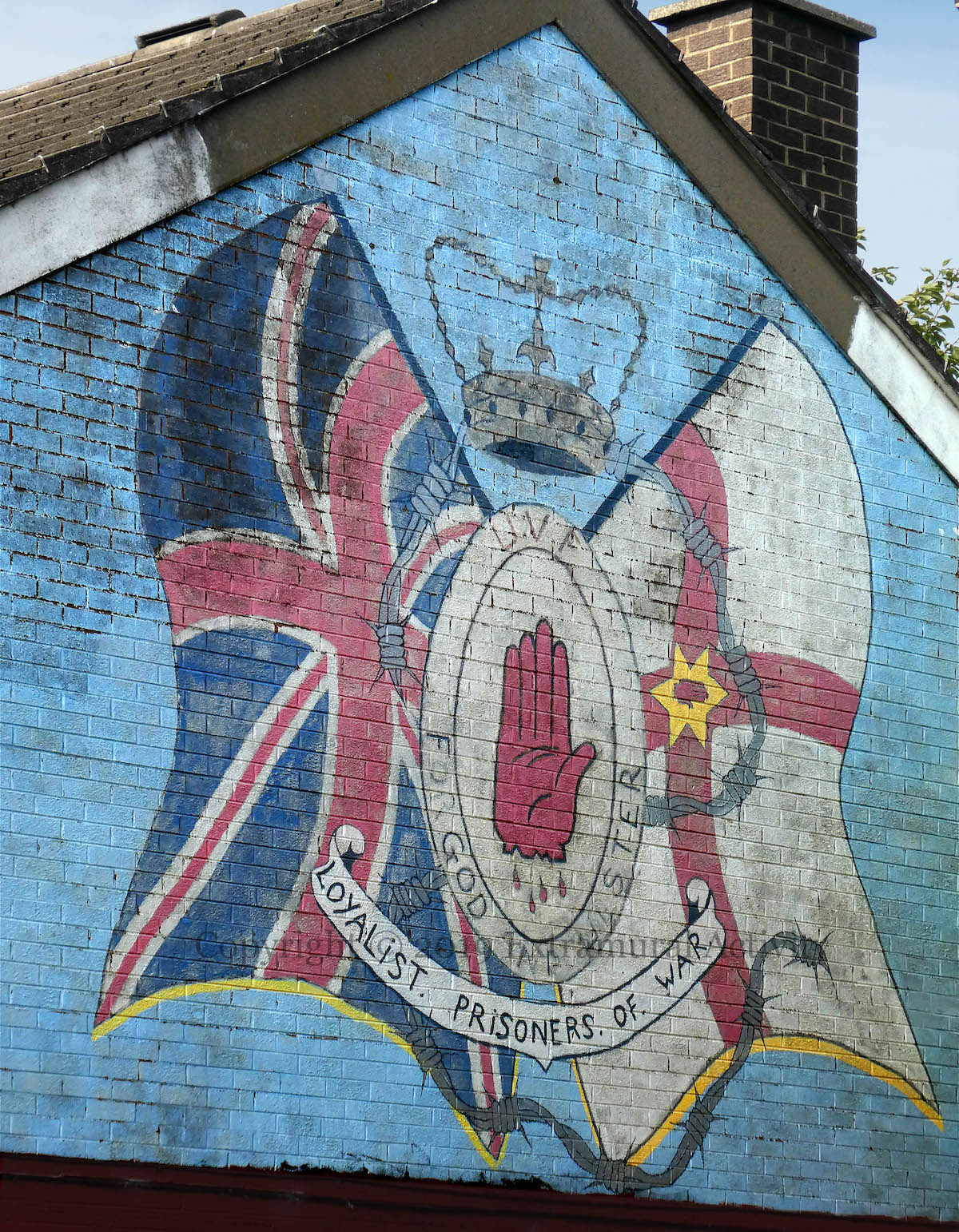
This UVF LPOW mural in Inverary Drive, east Belfast, probably dates back to the years after the Agreement, when the release of prisoners from both sides was being implemented between 1998 and 2000. That would make the mural about 20 years old.
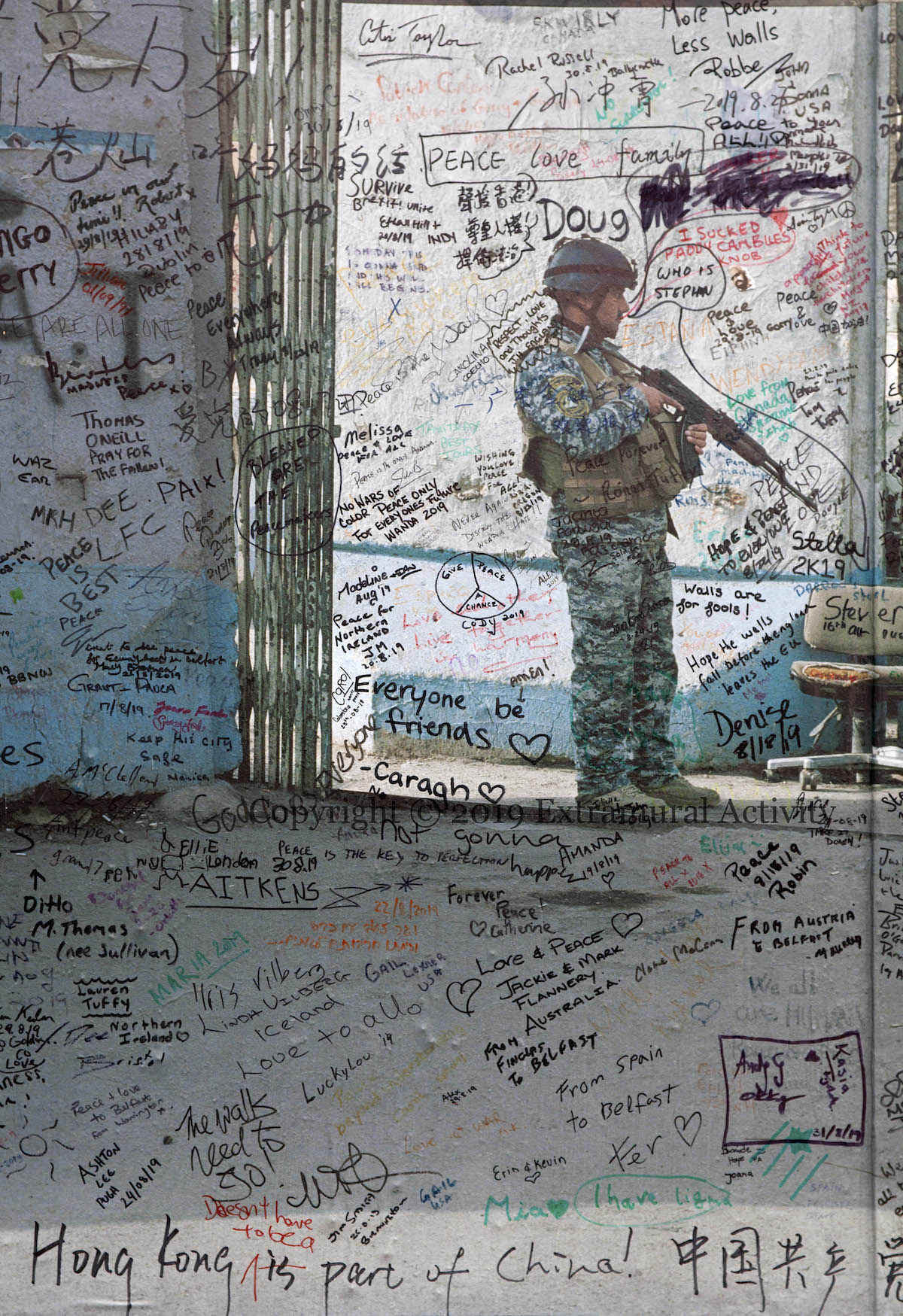
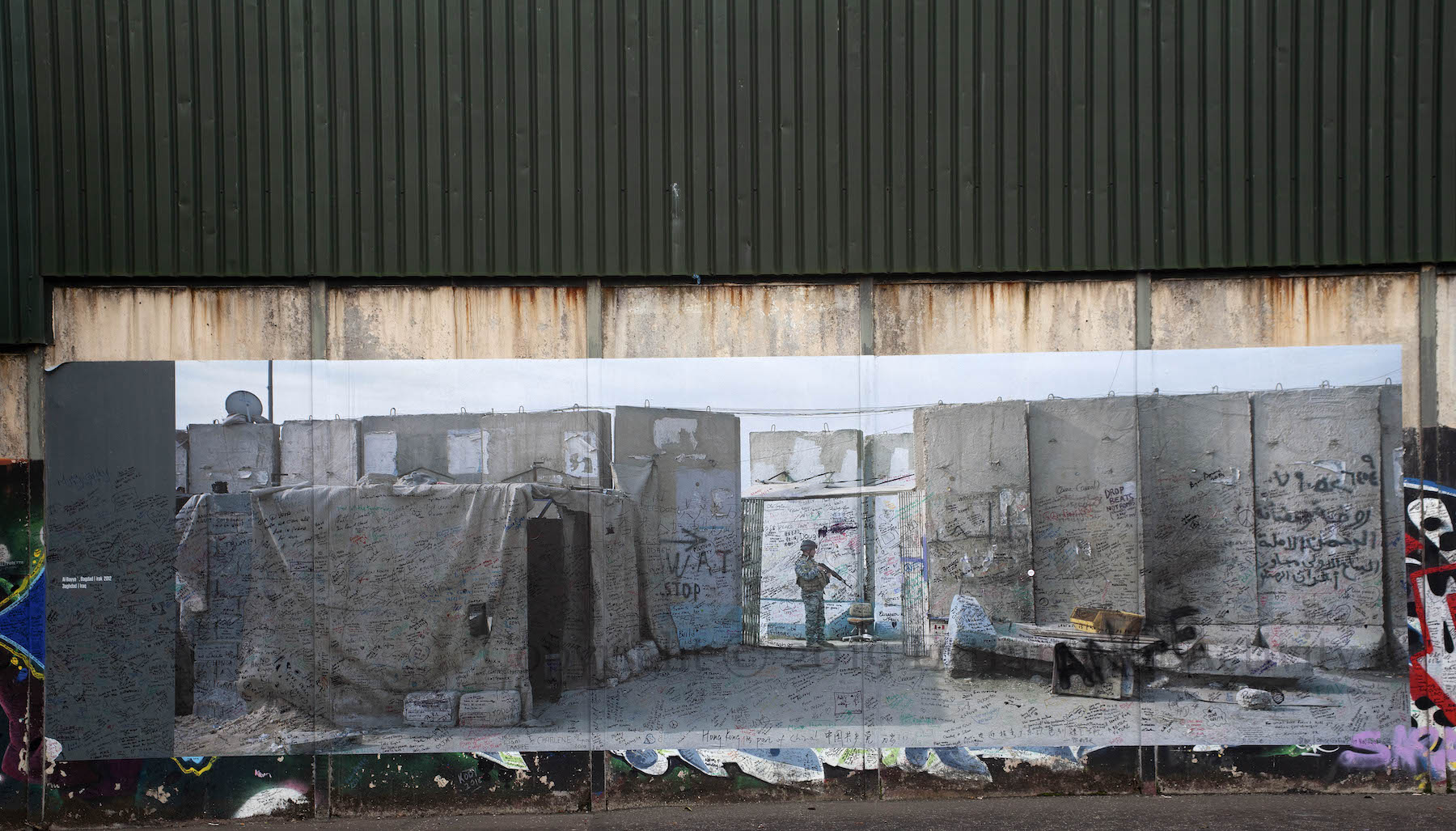
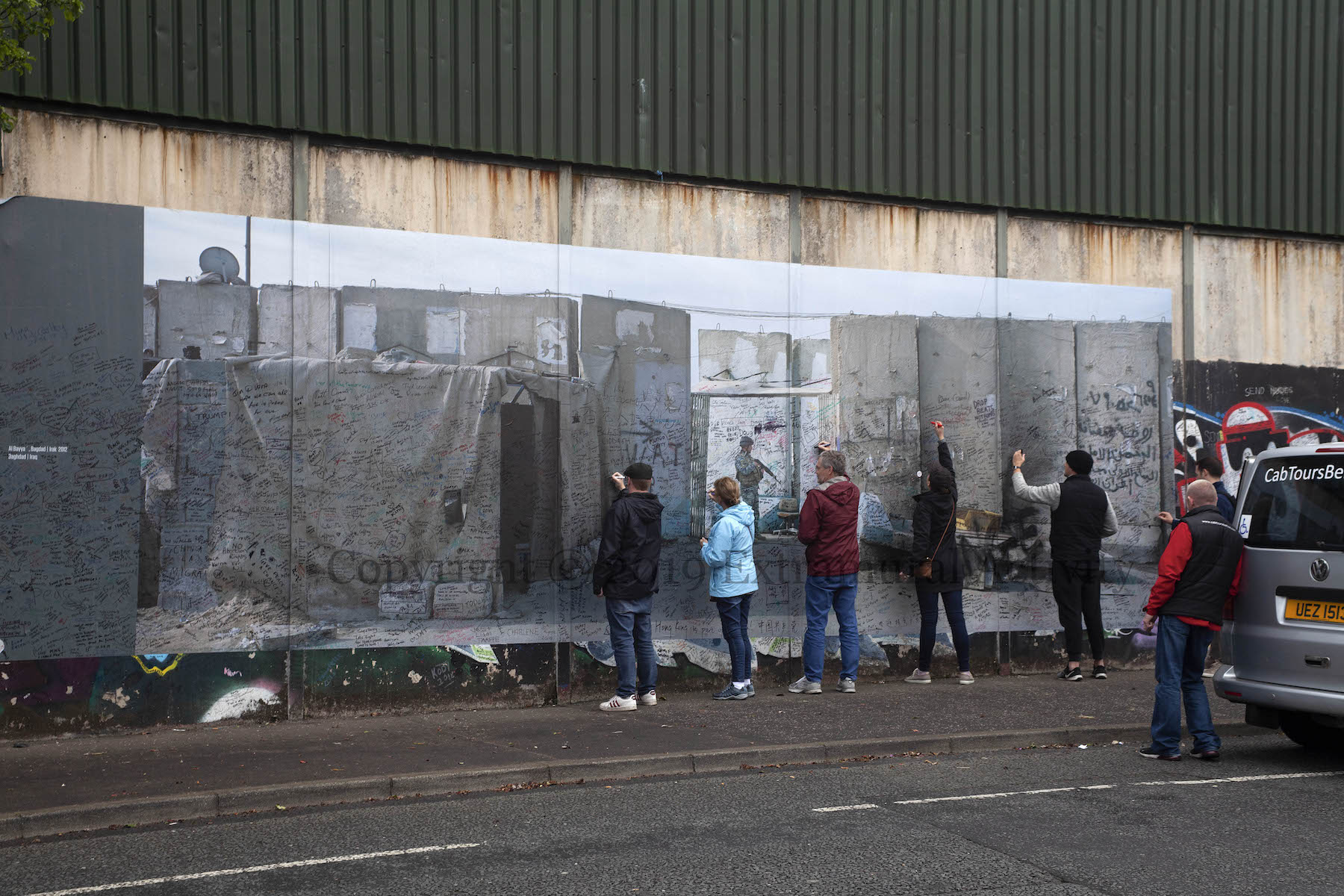
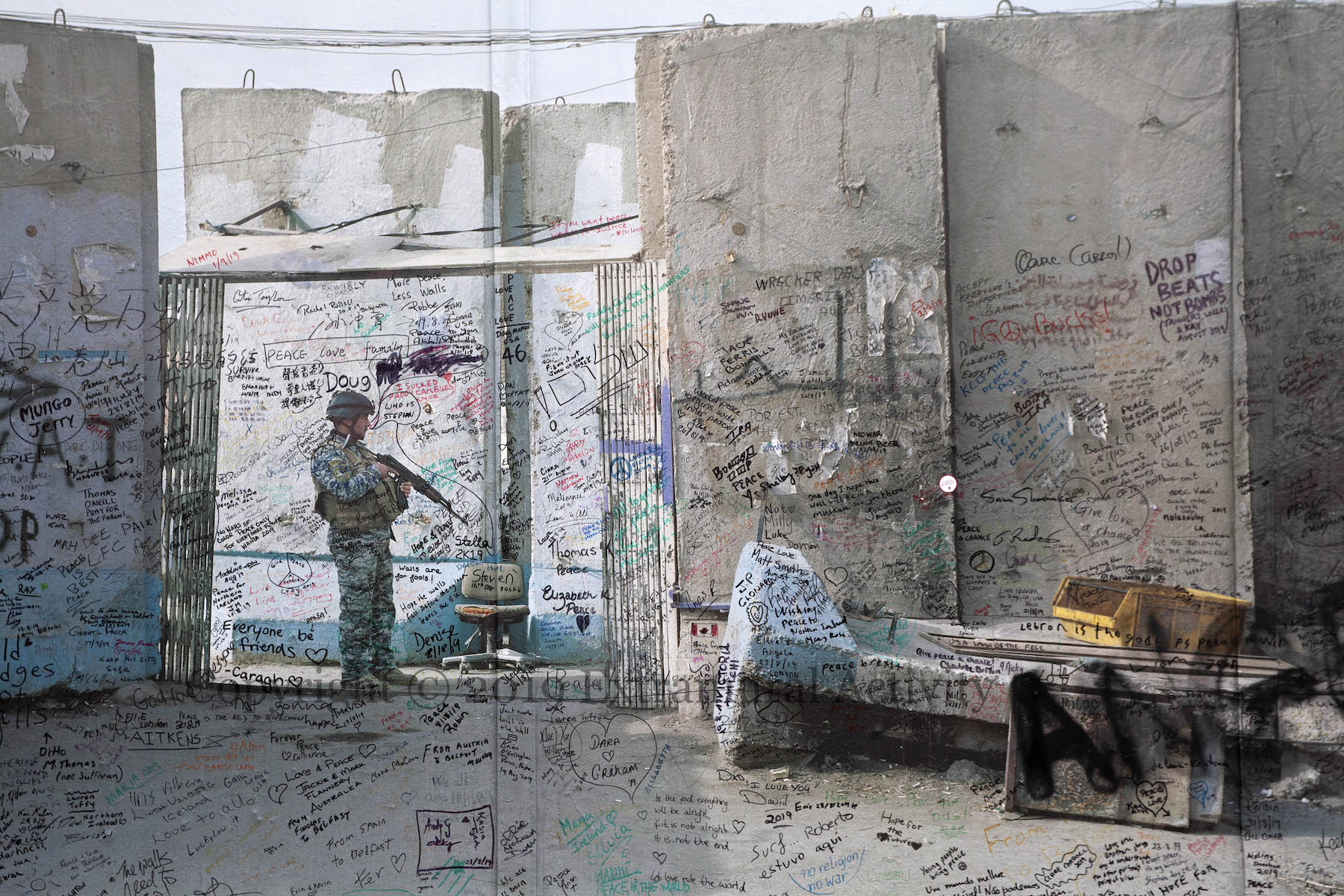
The Berlin Wall fell in 1989 but dividing walls all over the world still stand. Kai Wiedenhöfer’s Wall On Wall exhibition comes to Belfast later in the month (the launch is September 27th at 4 pm), placing images of dividing walls on Belfast’s own dividing wall, the Cupar Way “peace” line. Shown above is the image of the wall in Al Bayya (Baiyya) in the Al Rashid district, part of the 700 km of walls in Baghdad, Iraq (Browse Gallery), which was pasted onto the “peace” line as a trial for the forthcoming exhibition. As usual, it has been vandalised by tourists and their patronising slogans (and political statements: “Hong Kong isdoesn’t have to be a part of China!”). Wiedenhöfer’s image of the Occupied Territories was on Free Derry Corner in 2013 (see Ramallah, Israeli City Of Culture) and three images of Belfast were pasted onto the Berlin Wall in 2013 (Irish Times).
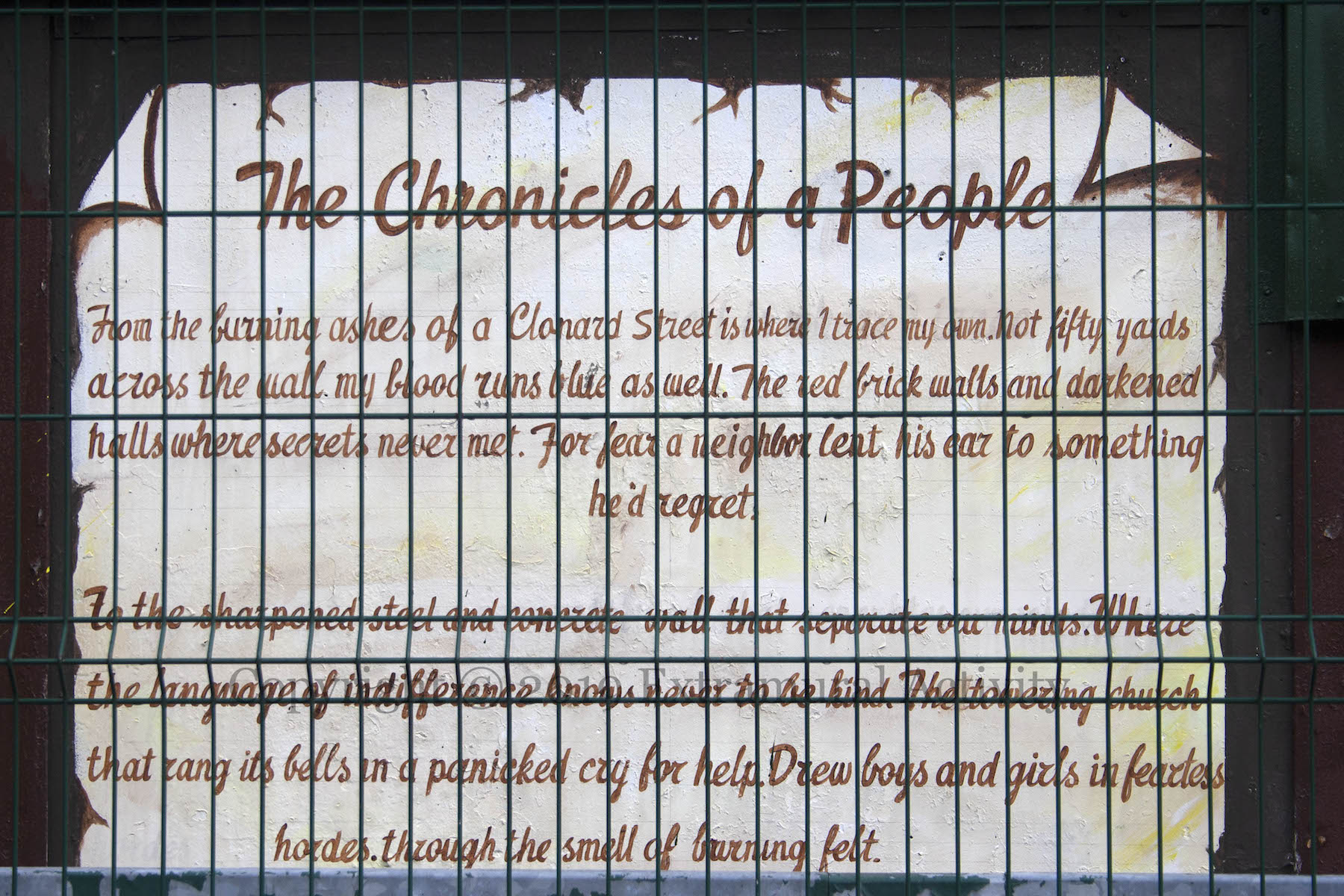
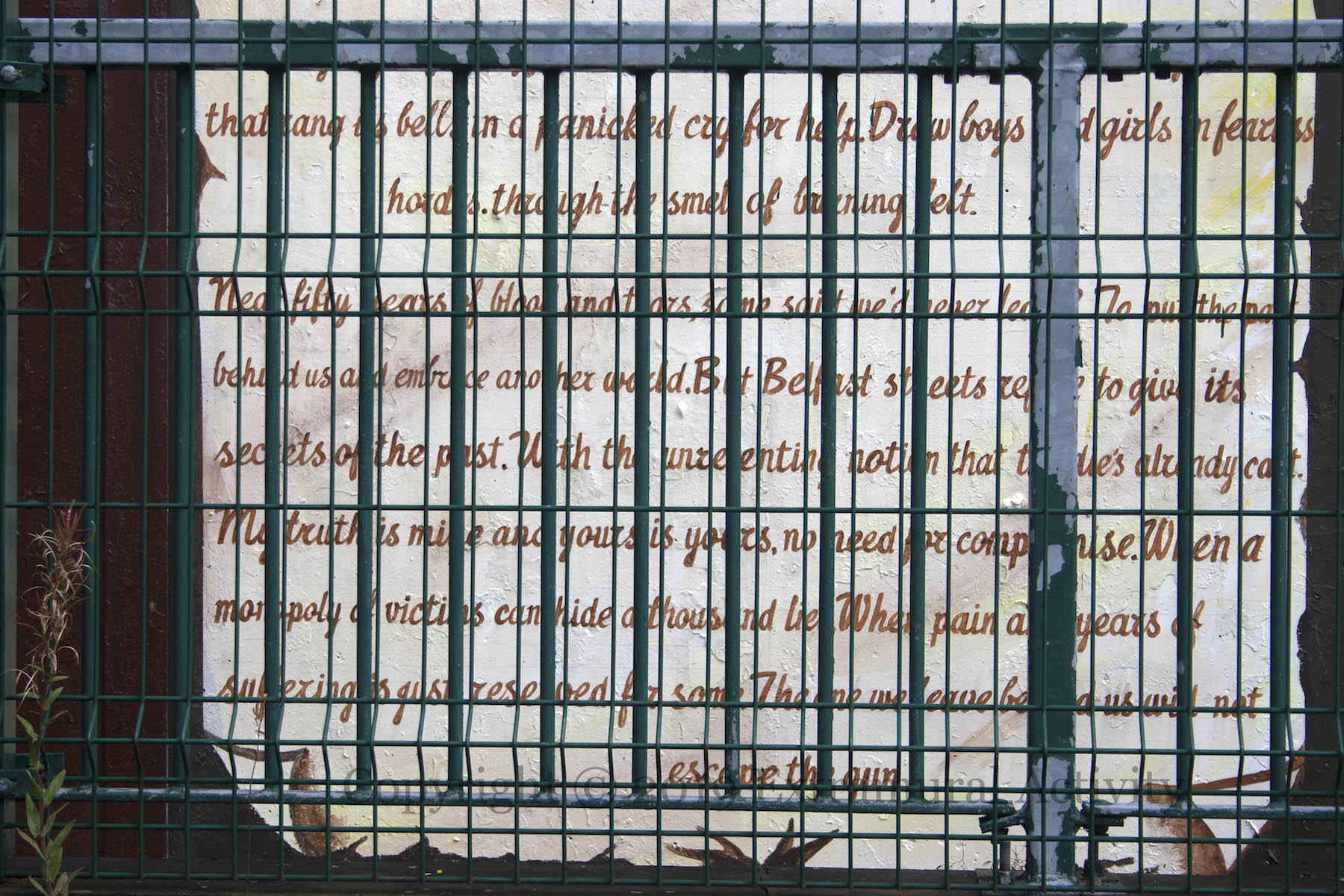
Republican Seán Murry’s great-grandfather was in the British Army and Orange Order and his family lived on the Shankill Road. One of his daughters married a Catholic and converted. The history of the family on both sides of the wall is also depicted Murray’s short video ‘The Wall‘. The poem is next to Clonard Remembers.
“From the burning ashes of a Clonard Street is where I trace my own. Not fifty yards across the wall, my blood runs blue as well. The red brick walls and darkened halls where secrets never met. For fear a neighbor lent his ear to something he’d regret.//
To the sharpened steel and concrete wall that separates our minds. Where the language of indifference knows never to be kind. The towering church that rang its bells in a panicked cry for help. Drew boys and girls in fearless hordes through the smell of burning felt.//
Near fifty years of blood and tears some said we’d never learn? To put the past behind us and embrace another world. But Belfast streets refuse to give its secrets of the past. With the unrelenting notion that the die’s already cast. //
My truth is mine and yours is yours, no need for compromise. When a monopoly of victims can hide a thousand and lies. When pain and years of suffering is just reserved for some. The one we leave behind us will not escape the gun.”
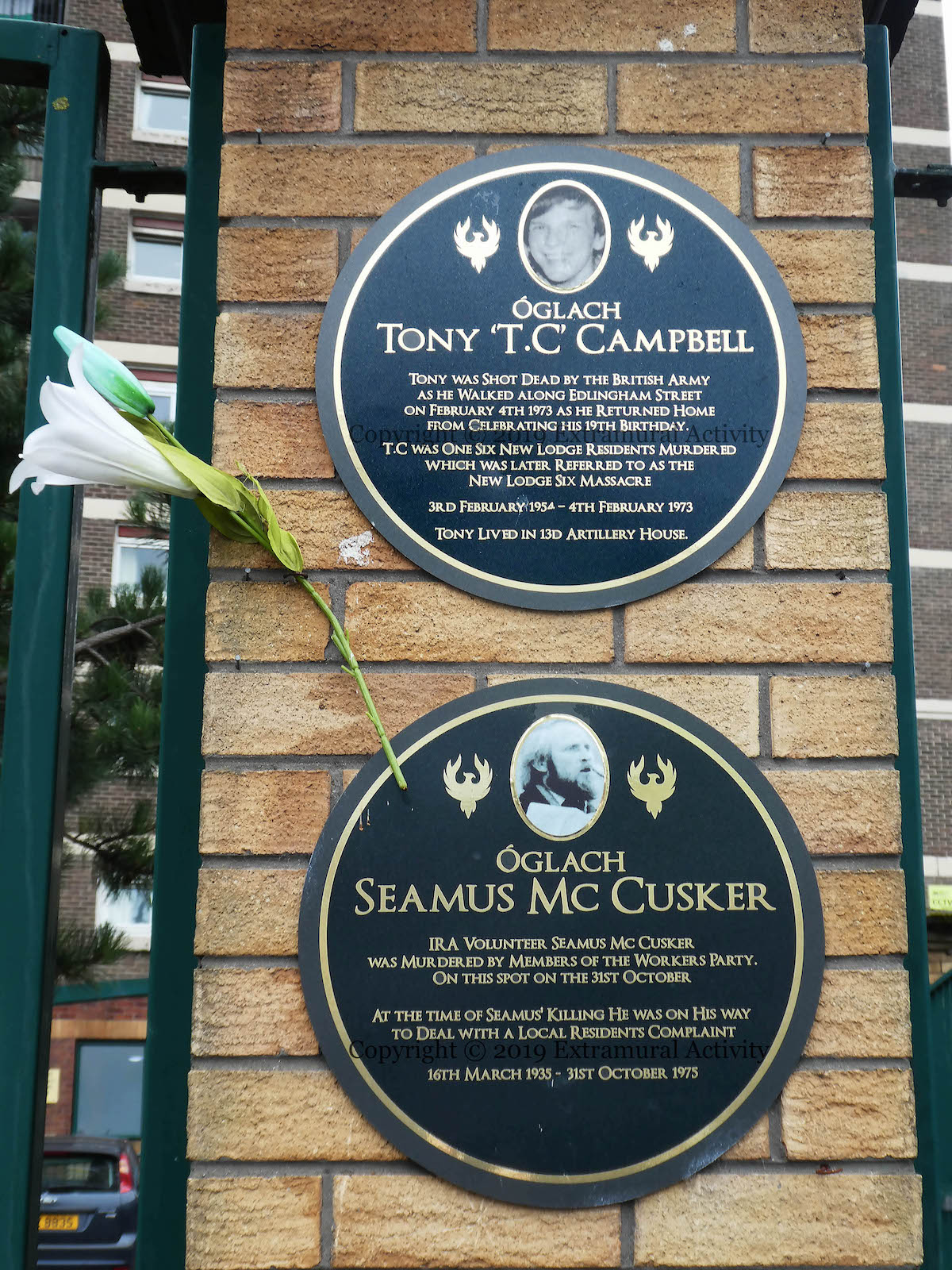
“Óglach Tony ‘TC’ Campbell was shot dead by the British Army as he walked along Edlingham Street on February 4th 1973 as he returned home from celebrating his 19th birthday. TC was one [of] six New Lodge residents murdered which was later referred to as the “New Lodge Six Massacre. … Tony lived in 13D Artillery House [now Teach Ghráınne].” Campbell was hit 17 times (BBC).
“Óglach Seamus McCusker was murdered by members of the Workers Party [as part of the PIRA-OIRA feud] on this spot [New Lodge Road outside Artillery House] on the 31st October [1975]. At the time of Seamus’s killing he was on his way to deal with a local resident’s complaint.” McCusker was killed two days after the PIRA shot Robert Elliman in the Markets; a few hours after McCusker’s death, Tom Berry of the OIRA was killed in Short Strand.
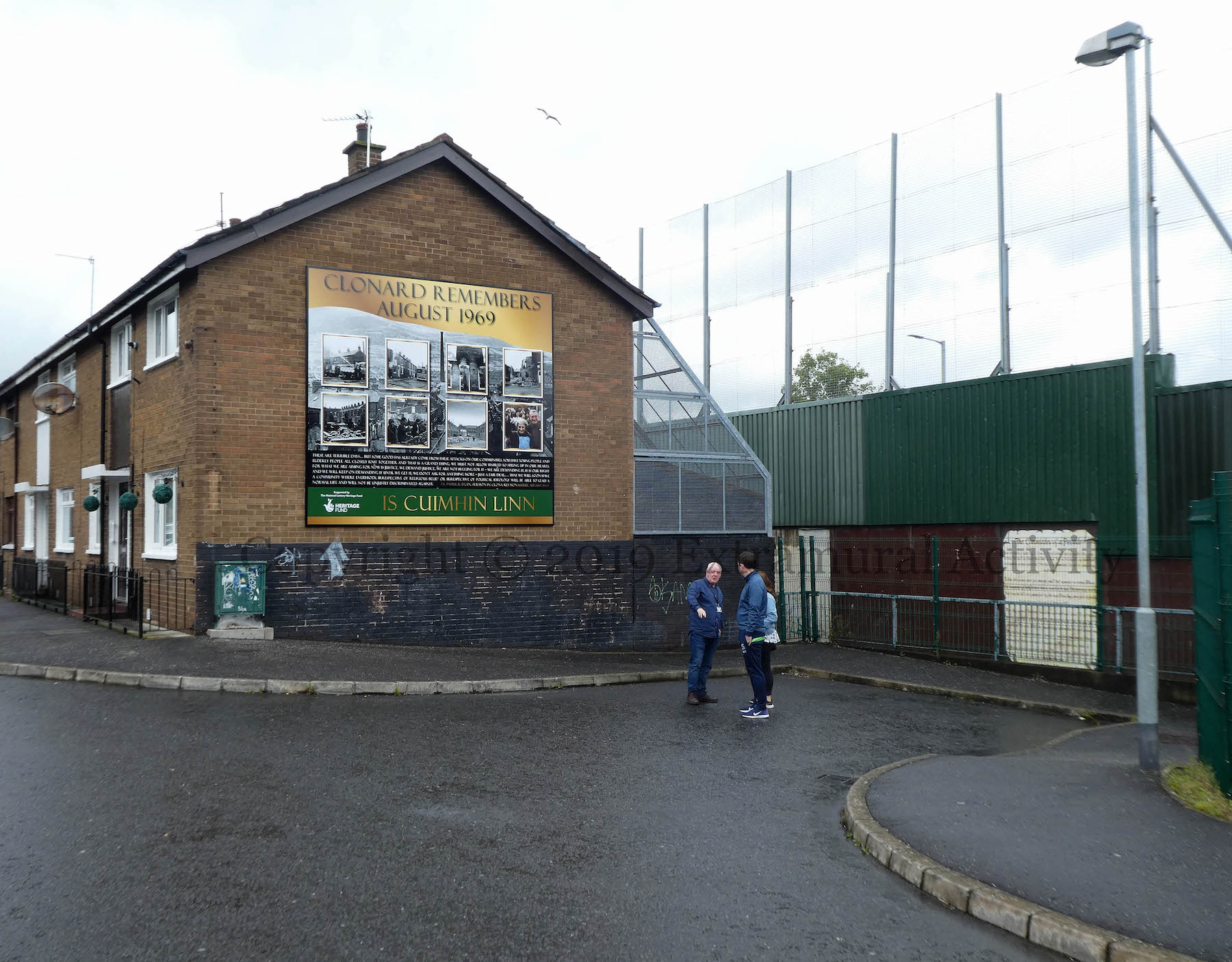
“Is cuimhin linn.” Last week saw a series of events, organised by the Belfast 1969 Pogroms Commemoration Committee, in Clonard, Falls, and Ardoyne, including a photographic exhibition, documentary screenings, panel discussions, a play, a mass, and murals (Irish News), including The Pogrom Of August 1969 and the one above, in Bombay Street, which used to run between the Shankill and Falls but after the riots and burnings of August 1969 was split in two by a so-called “peace” line (see the wide shot, below).
“These are terrible days … but some good has already come from these attacks on our communities. You have young people and elderly people all closely knit together and that is a grand thing. We must not allow hatred to spring up in our hearts. For what we are aiming for now is justice. We demand justice. We are not begging for it – we are demanding it. It is our right and we will keep on demanding it until we get it. We don’t ask for anything more – just a fair deal … that we will soon have a community where everybody, irrespective of religious belief or irrespective of political ideology will be able to lead a normal life and will not be unjustly discriminated against.” – Fr Patrick Egan, sermon in Clonard Monastery, August 1969 (youtube).
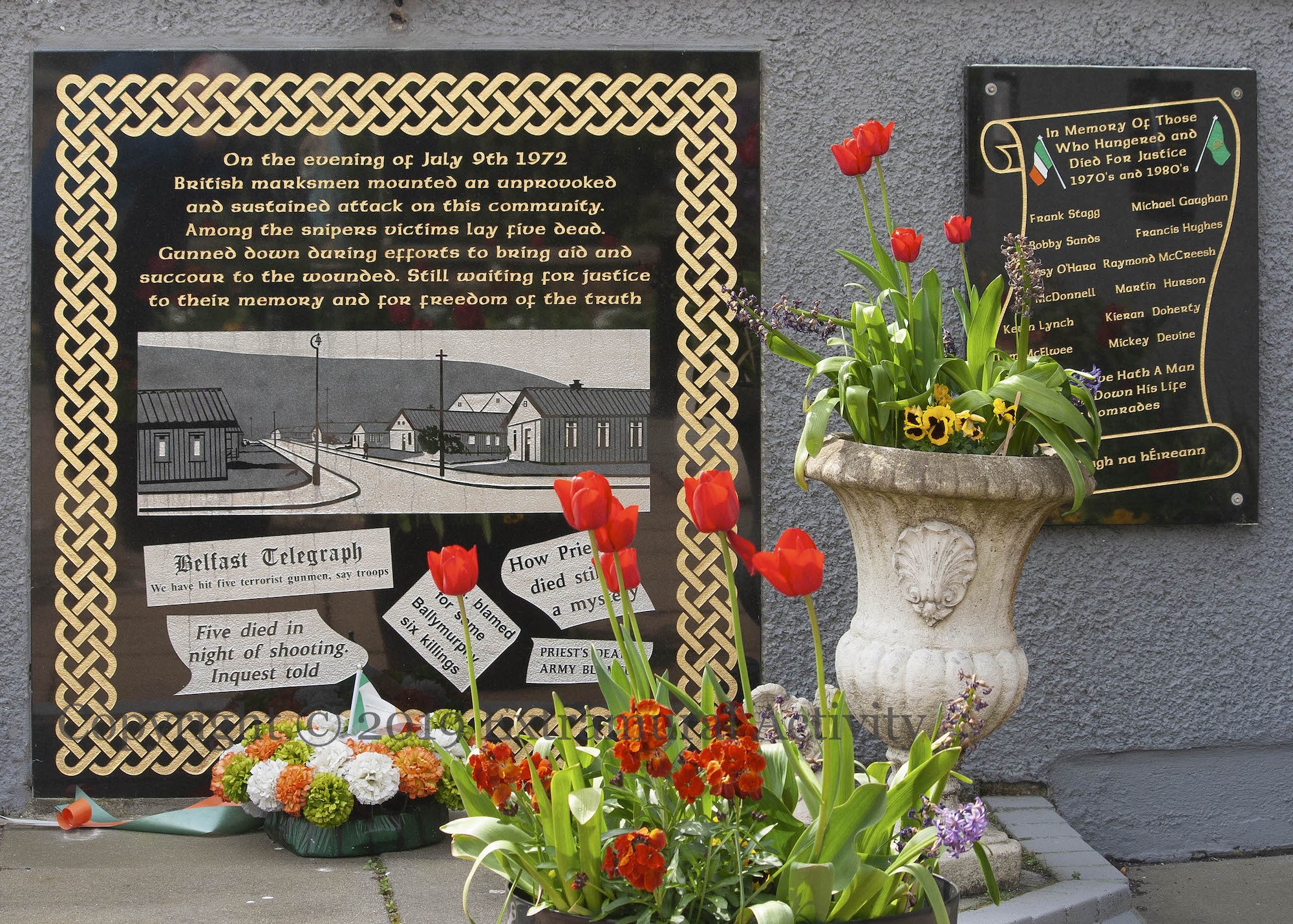
The Westrock bungalows were aluminium prefab houses built in 1949 during the post-war housing shortage next to Springhill and Ballymurphy. British troops fired on the area from the high position of Corry’s timber yard in the summer of 1972; their bullets could go through the walls. Five people were shot dead, including a priest. The plaques shown are new additions to the memorial garden in Westrock Drive.
“On the evening of July 9th 1972 British marksmen mounted an unprovoked and sustained attack on this community. Among the snipers[‘] victims lay five dead. Gunned down during efforts to bring aid an succour to the wounded. Still waiting for justice to their memory and for freedom of the truth.”
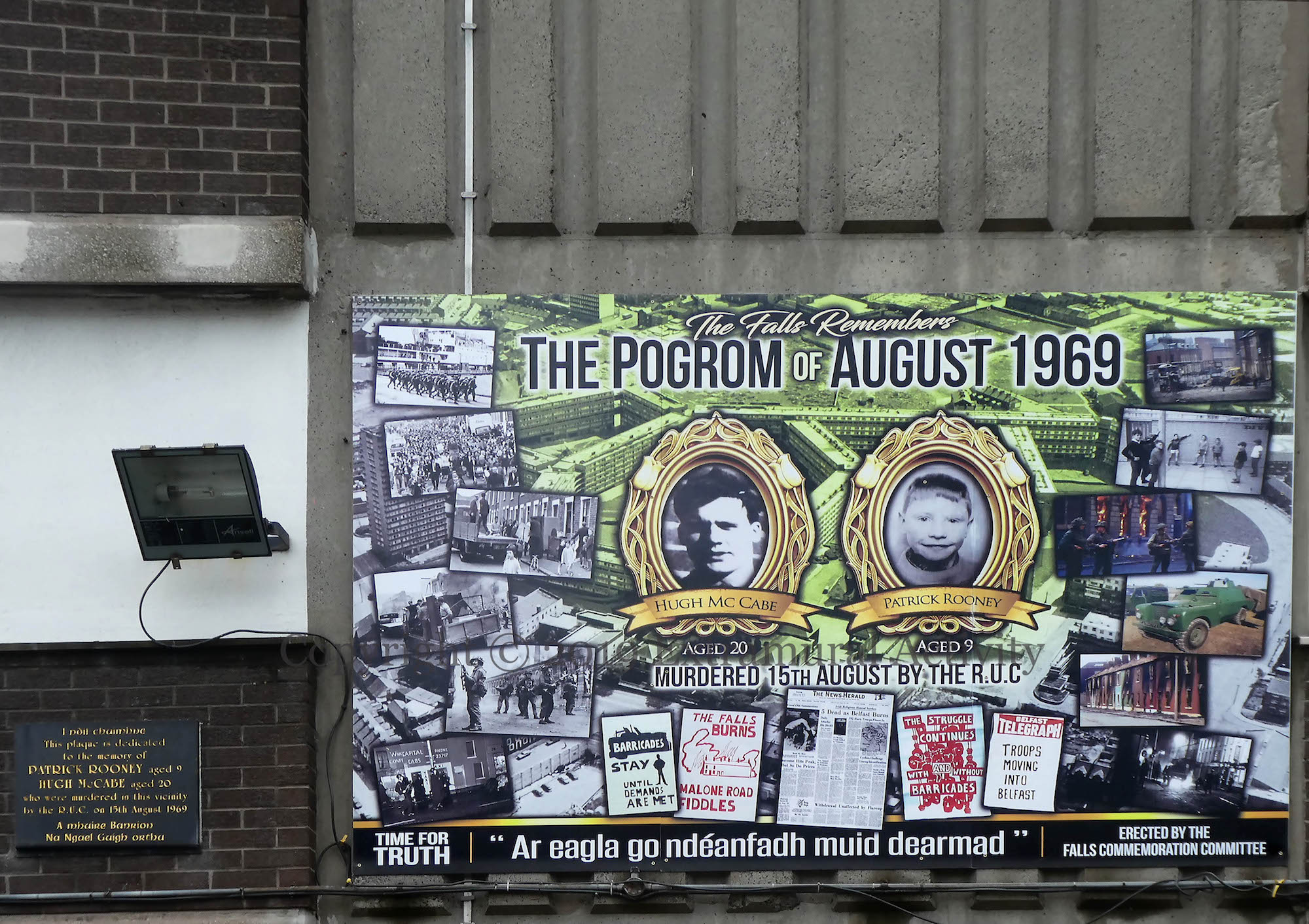
This August marks the 50th anniversary of what are euphemistically called “The Troubles”. The Battle Of The Bogside (Derry) began on August 12th; in Belfast, fighting began on the night of August 14th and before dawn three people in the Divis Street area were dead: Protestant Herbert Roy and Catholics Patrick Rooney and Hugh McCabe, both shot in the Divis flats complex by the RUC’s Shorland armoured cars. (Two other Catholics were killed in rioting in Ardoyne.) This new board is on Divis tower, next to the plaque commemorating Rooney and McCabe.
“In memory of IRA volunteers Gerard Crossan, Tom McCann, Tony Lewis, John [Sean] Johnston, who died while on active service on the 9th March 1972 at 32 Clonard St. Erected by the Greater Clonard Ex-Prisoners Association.” The four died in a premature explosion (“active service”) presumably at the home of Lewis, who lived in Clonard Street. Crossan and Johnston were 19, McCann and Lewis were 20 (The Troubles 11).
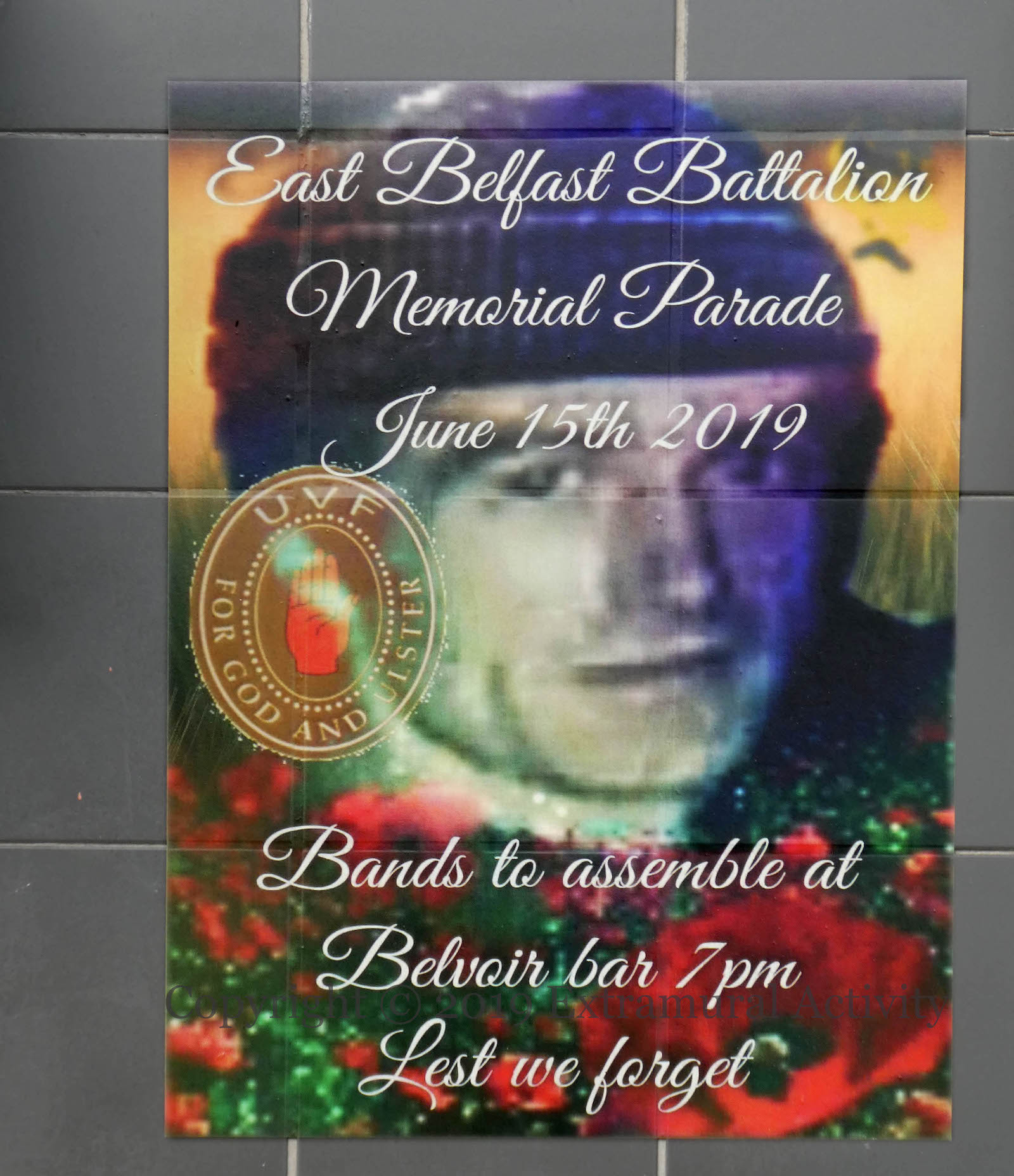
The East Belfast UVF memorial parade primarily commemorates hitman Robert ‘Squeak’ Seymour, who killed the IRA’s James Burns in his own home in 1981. He was killed by the IRA in 1988. Here is video from the 2019 parade. Seymour’s portrait is included in Ballymacarrett (see Standing Guard) and in London Road (Ulster’s Brave).




 Extramural Activity