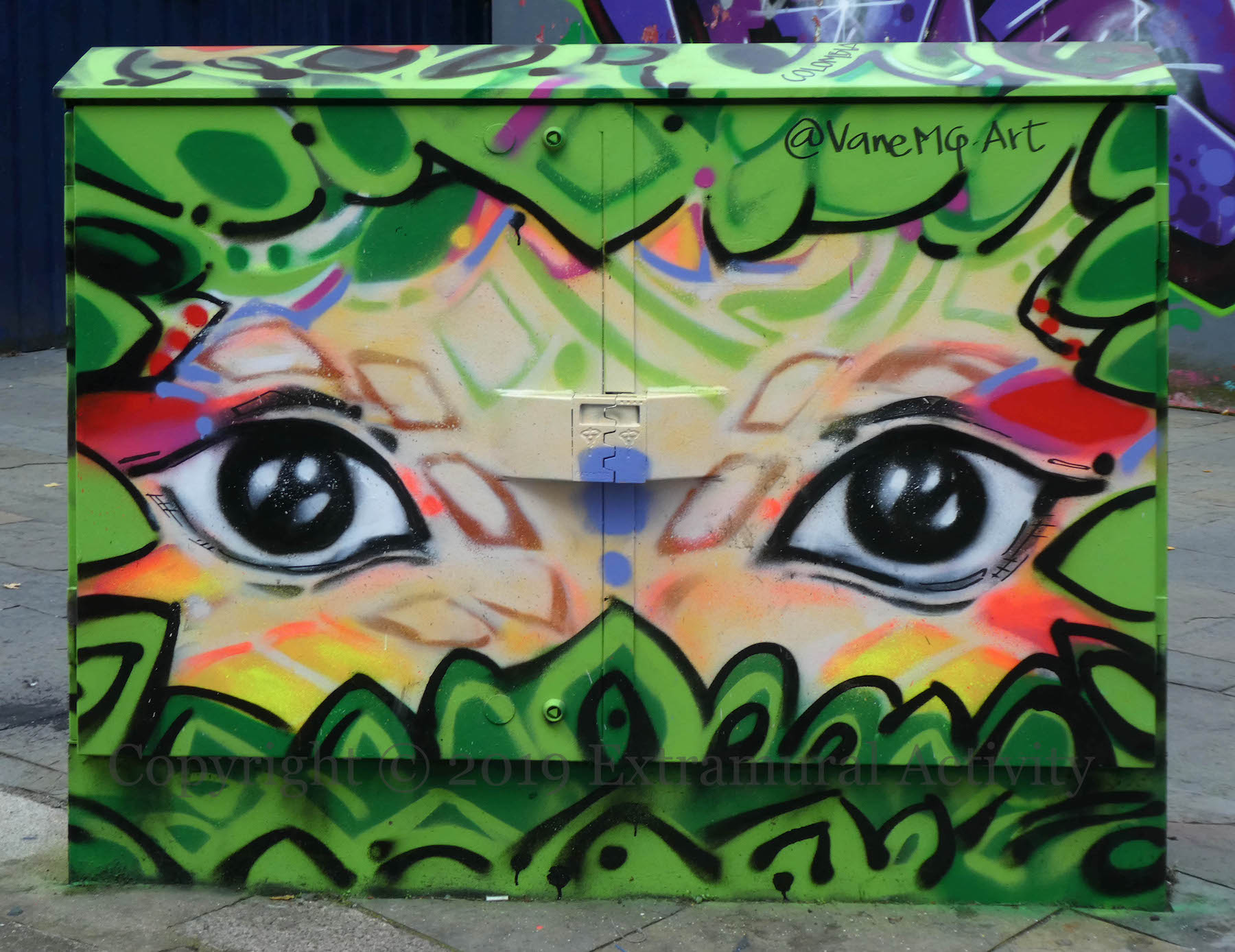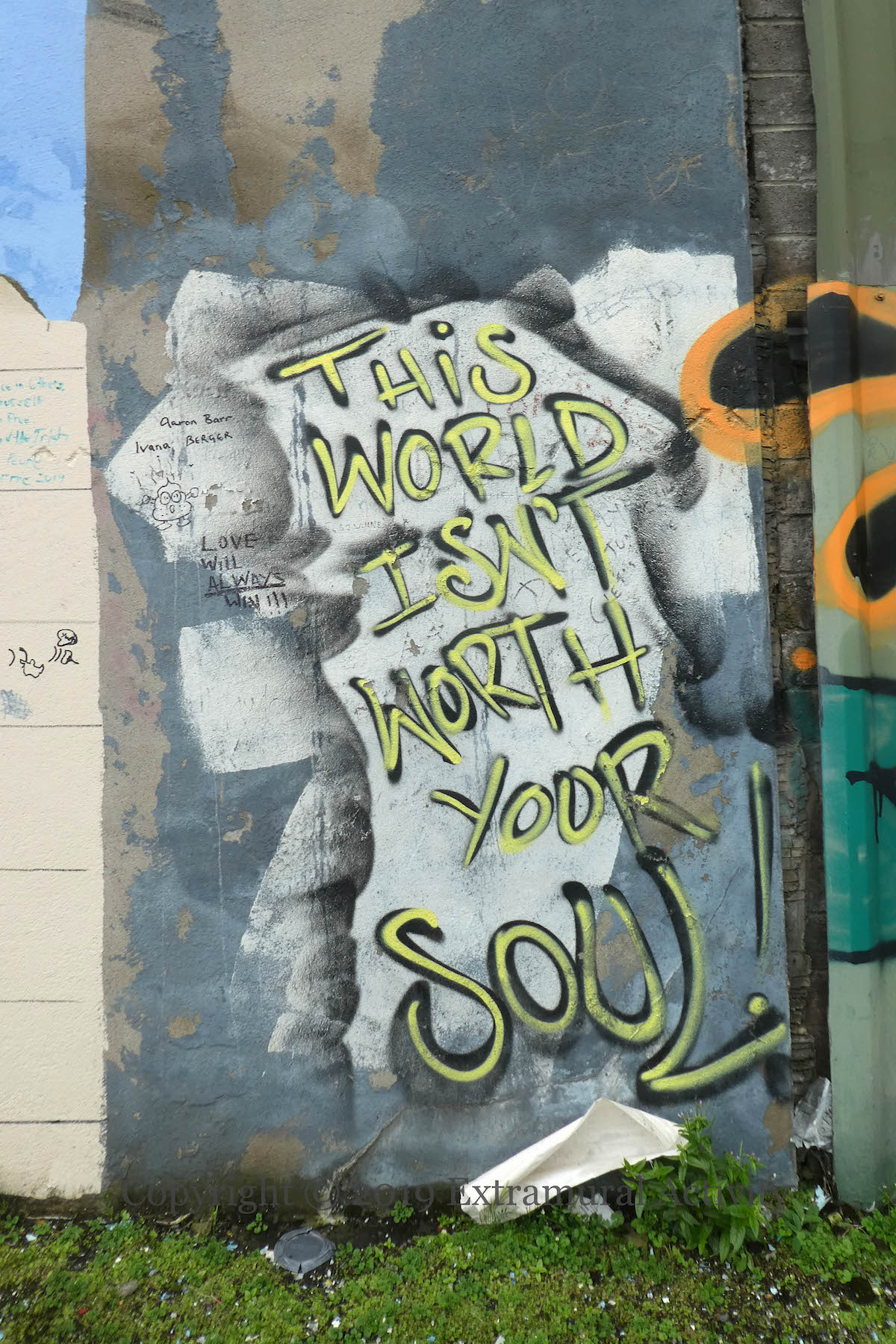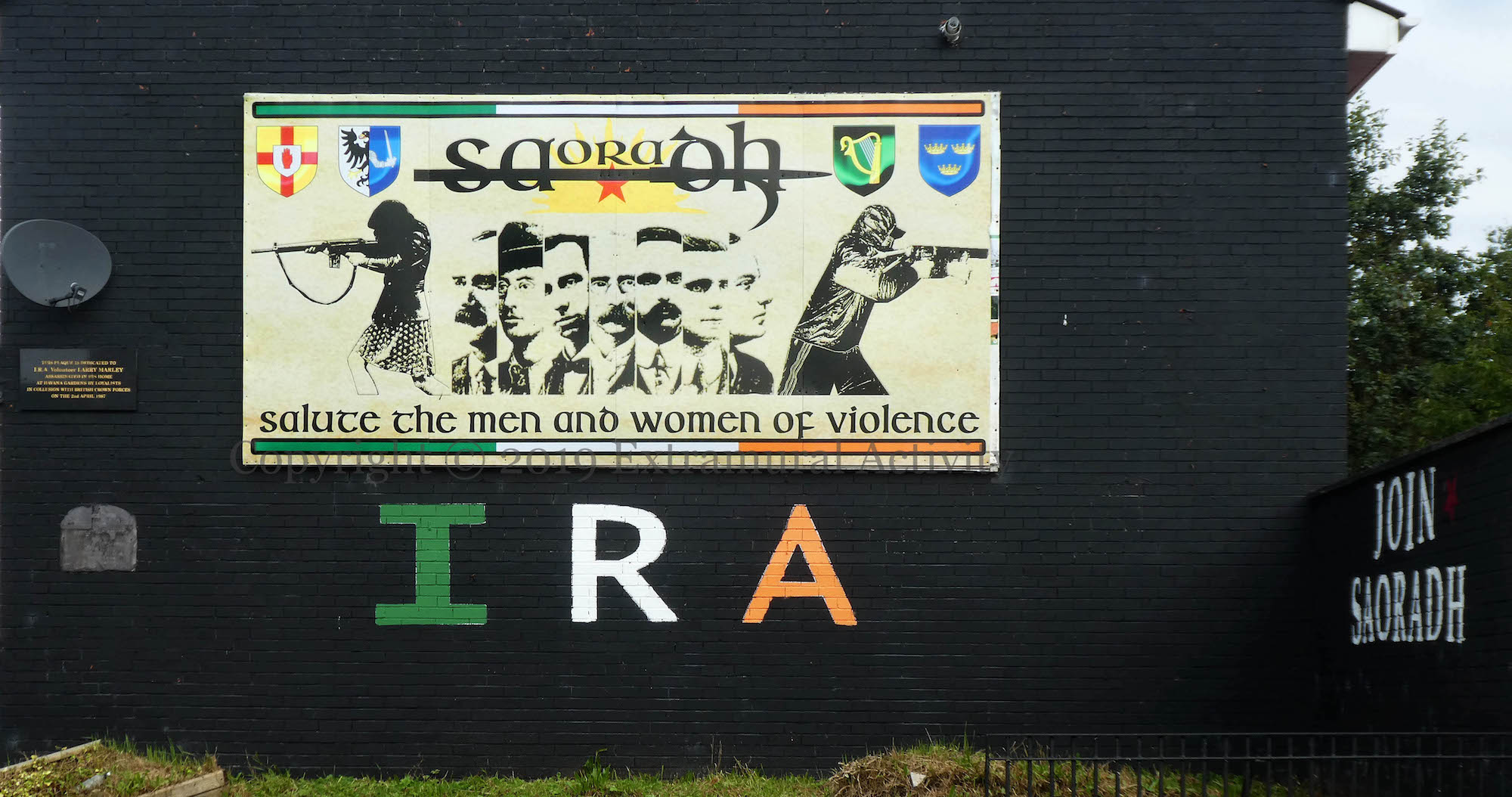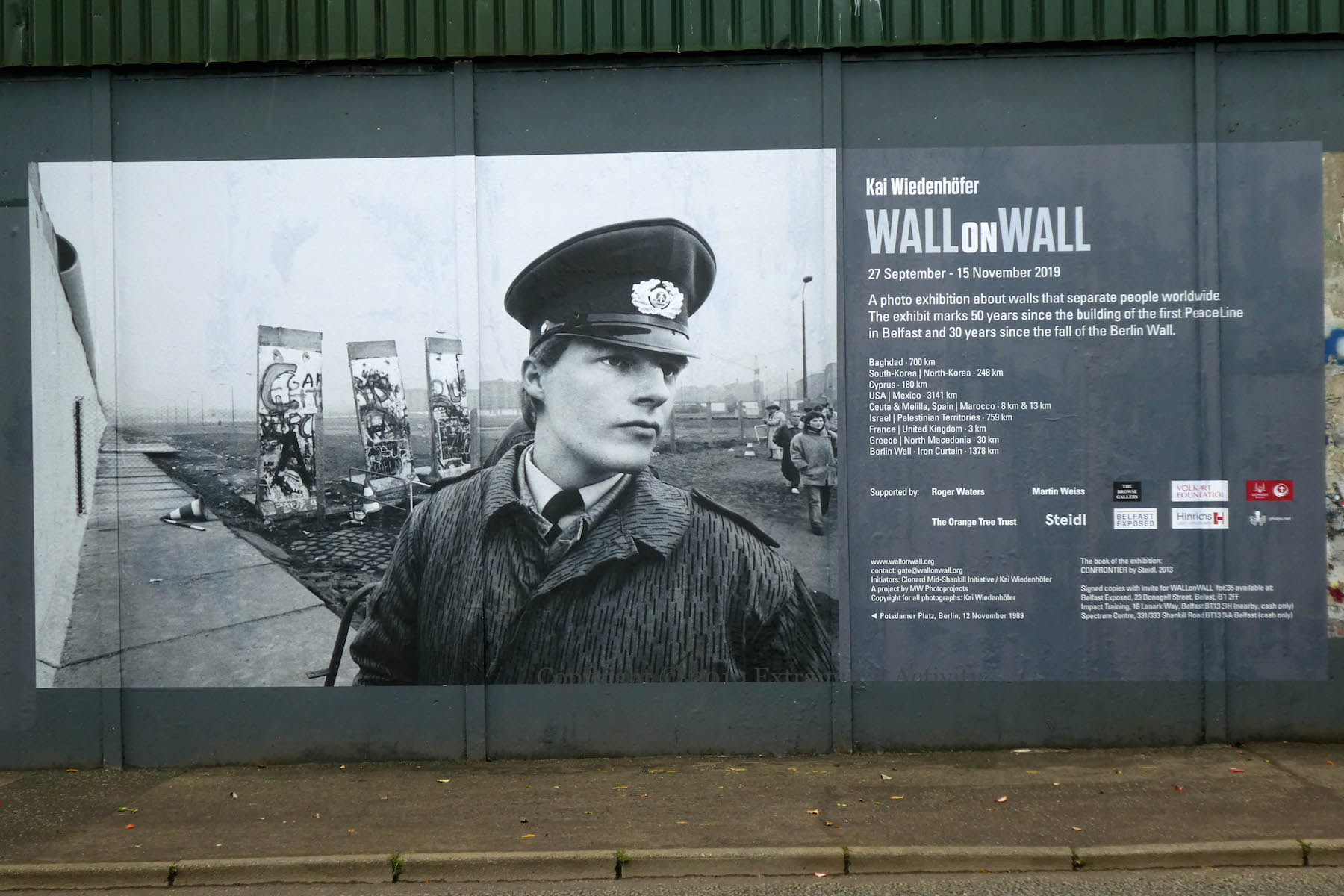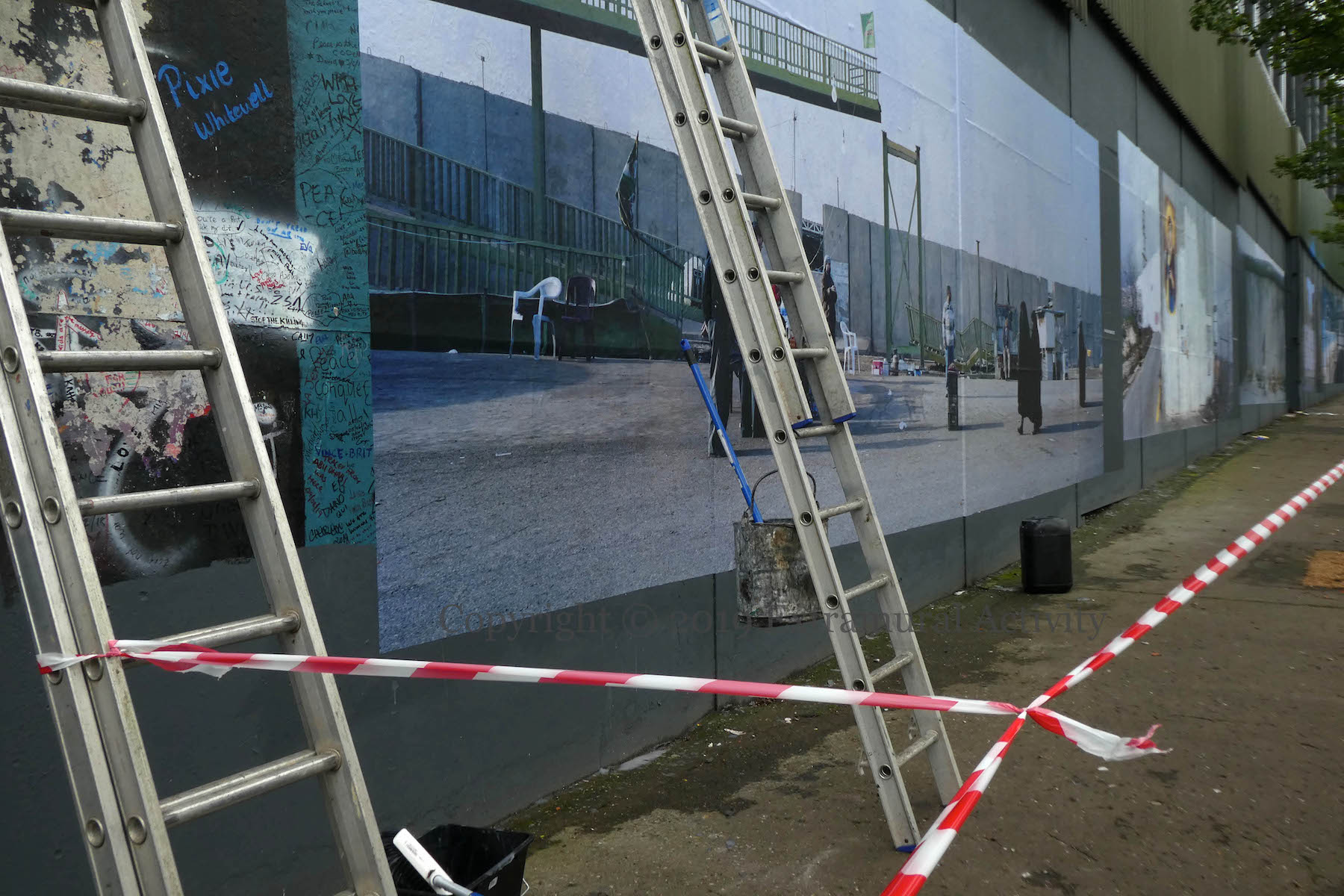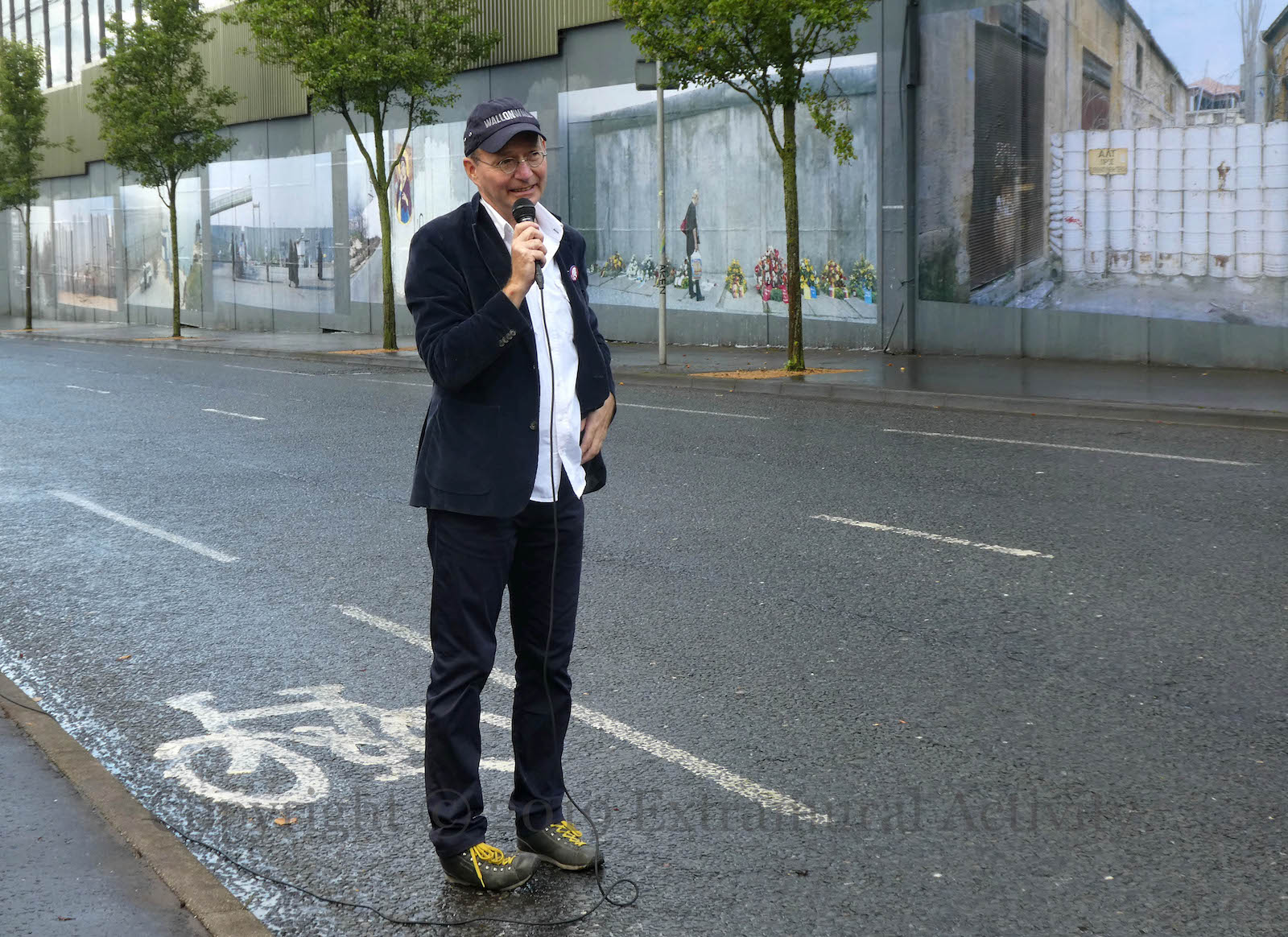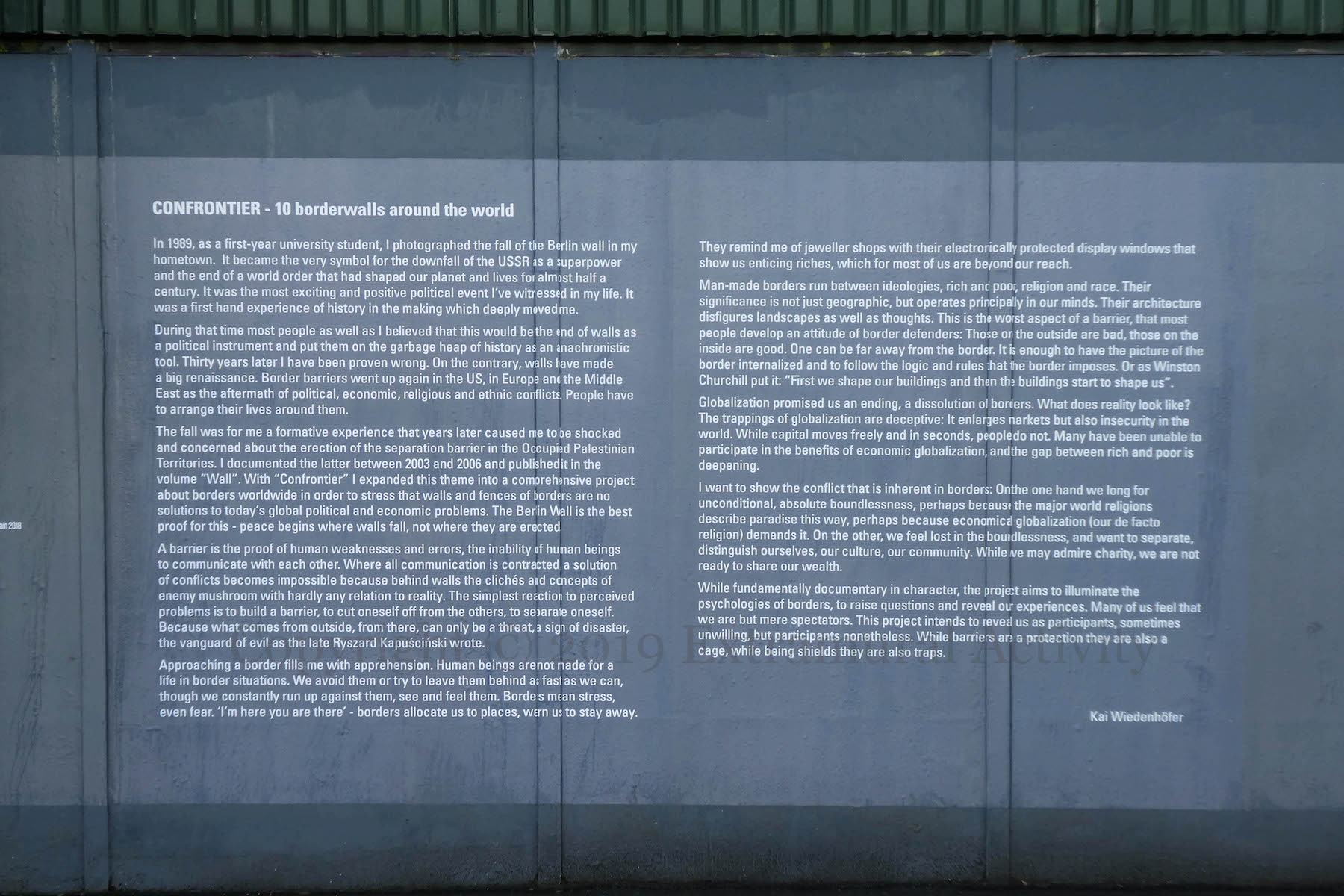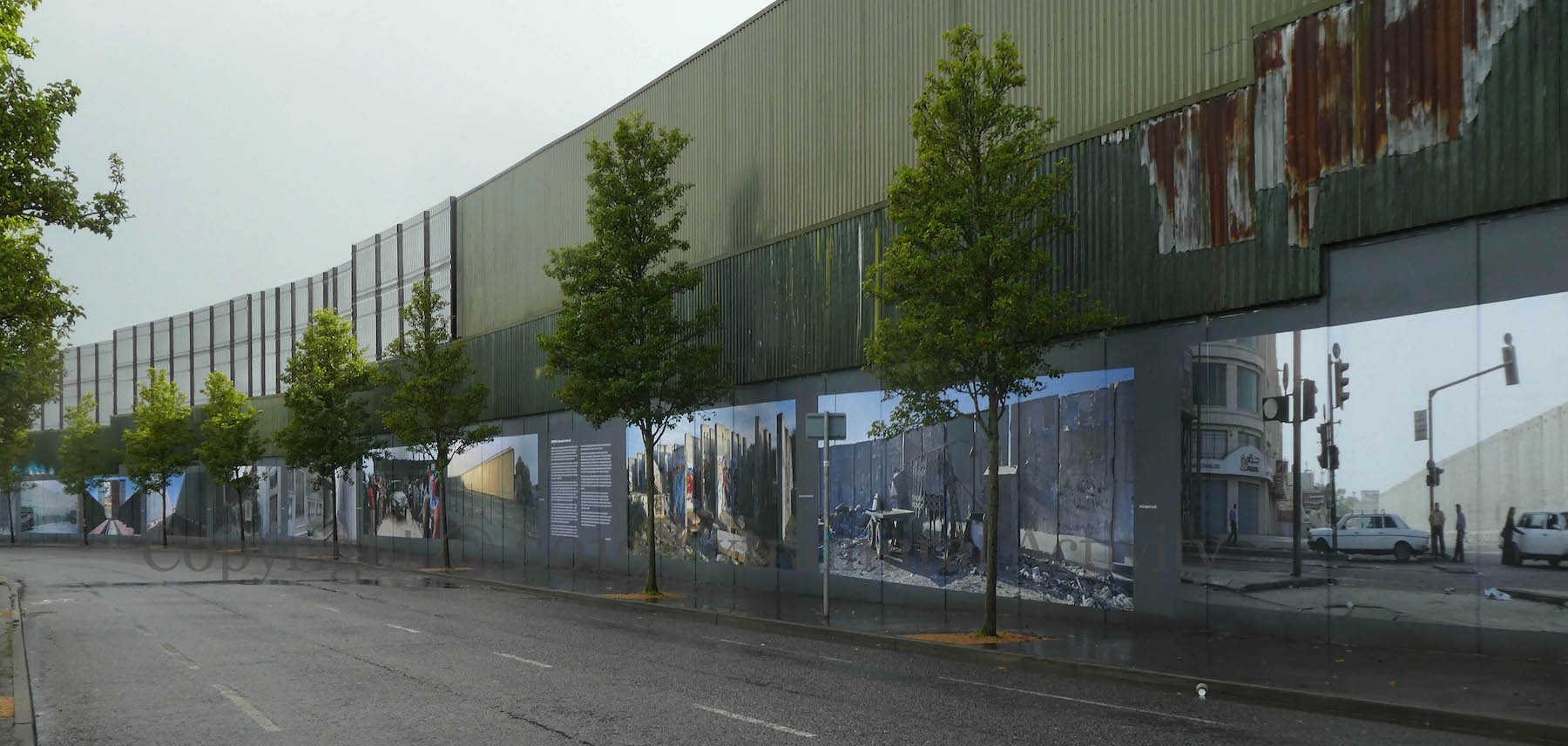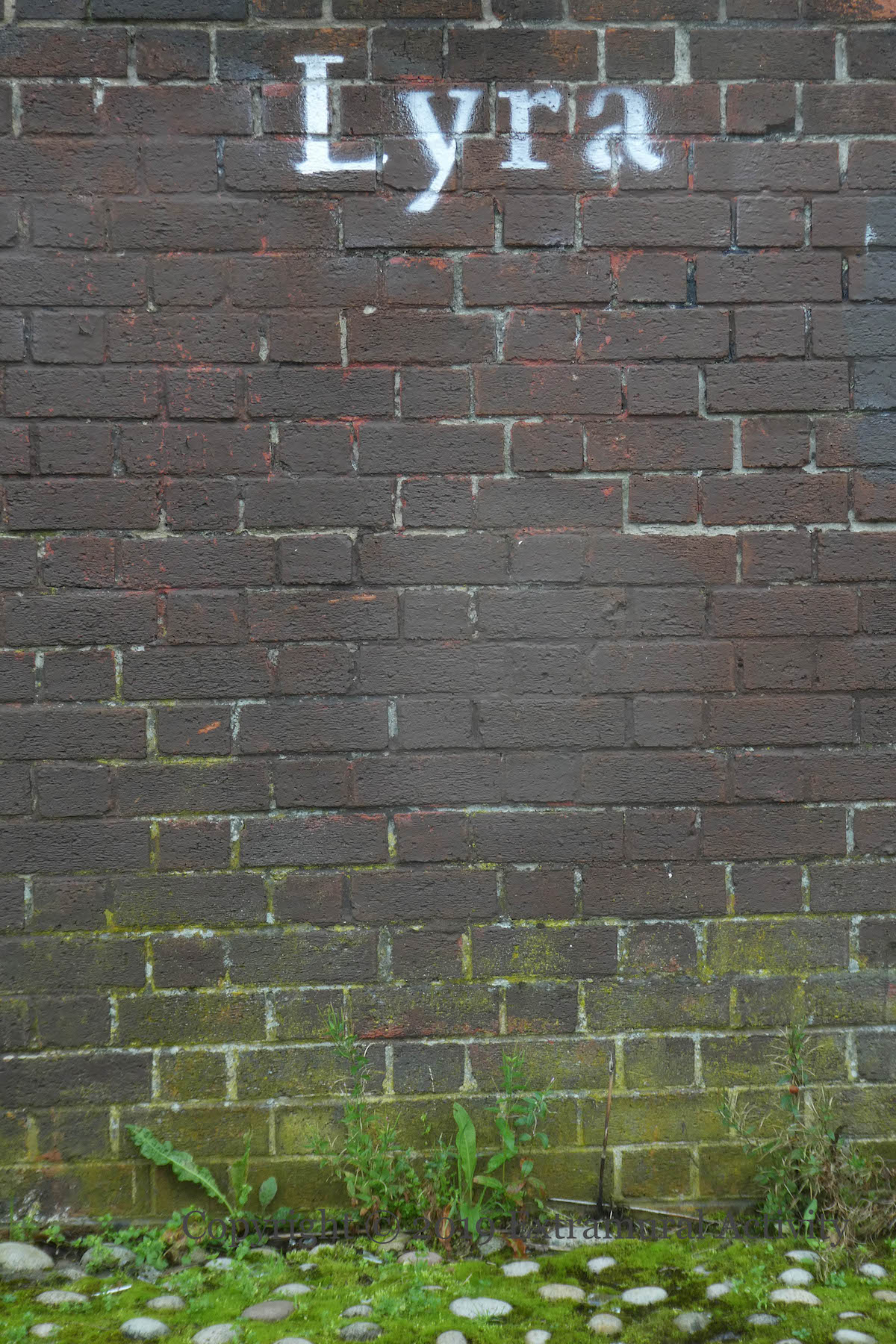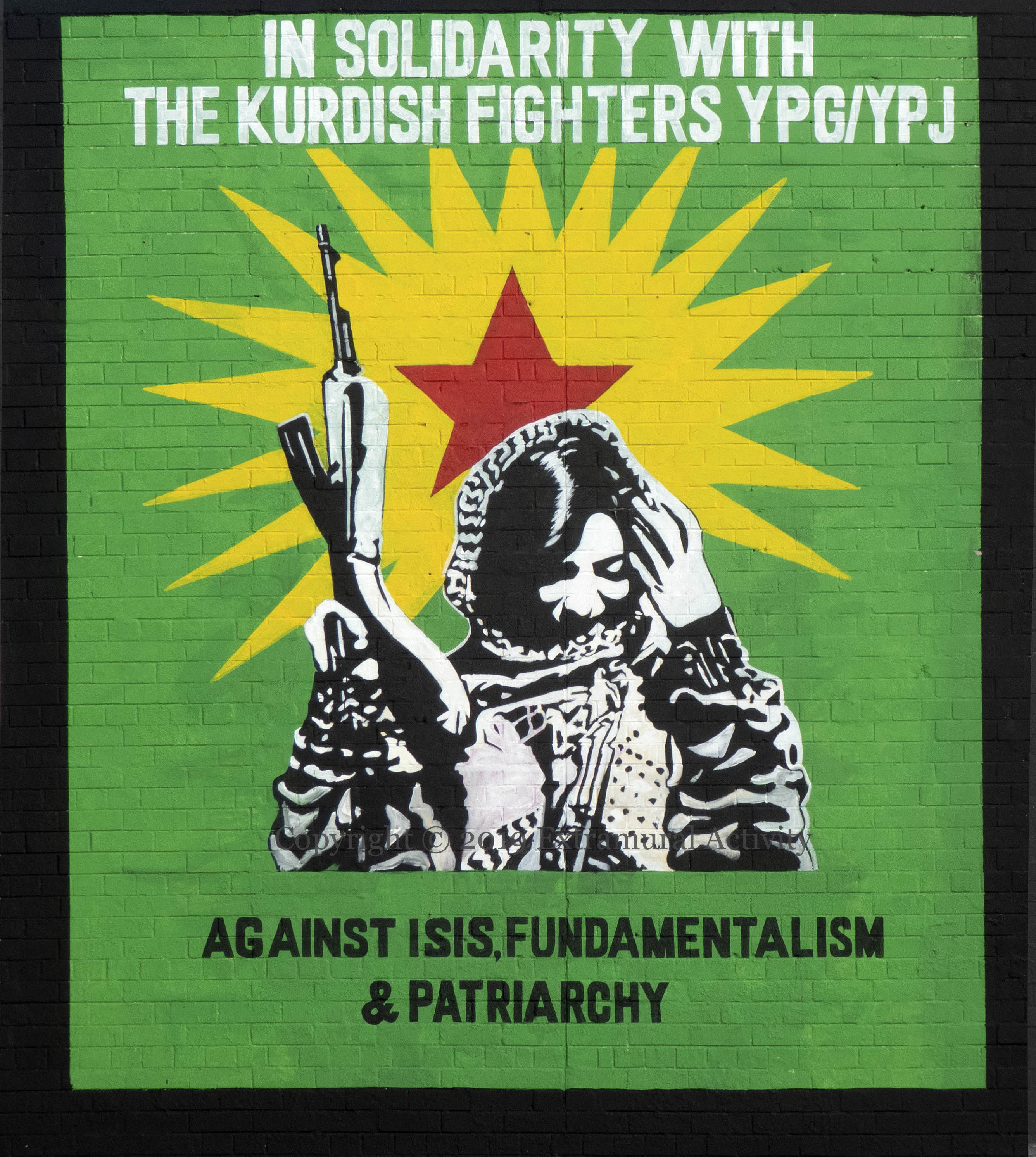
Here are two images of the “peace” line at the middle and eastern end of Bombay Street. If you want more such images, Frankie Quinn’s exhibition of images of the “peace” lines – Cordon Sanitaire – continues at Belfast Exposed in Donegall Street until October 5th.
“Free Matt Johnston” IRPWA/Saoradh stencils below Teach Ghráinne in the New Lodge, calling for the release of Maghaberry prisoner (and New Lodge resident) Matt Johnston. Johnston was given four years for his part in a tiger kidnapping in 2008 and appears to have ben re-arrested in late 2017 (Irish News | RN). He was one of the prisoners involved with a “bigoted screw” that led to graffitied threats against Maghaberry prisoner warders (RN | El Norte | Derry Journal).
Garlands of flowers rest at the base of the (upper) mural to UVF volunteer Brian Robinson on the thirtieth anniversary of his death, on September 2nd, 1989, by a British Army undercover unit, moments after he had shot and killed a Catholic civilian named Patrick McKenna on the Crumlin Road (WP).
The other (lower) mural to Robinson in Disraeli Street is shown in the image below (and previously in Shankill Star). “1st batt, B coy, Vol Brian Robinson killed in action 2nd Sept 1989. For his country and people he took up the gun, a volunteer to the end, and a true Ulster son. Robbed of his life’s blood in Sept. 89, but the name Brian Robinson will live for all time.”
Clonard monastery (and church of the Holy Redeemer) date back to 1897, built on the grounds of Clonard House (1843) and including 3.5 acres to provide spiritual services to the burgeoning Catholic population of west Belfast, about 30,000 in number (Ita | Rafferty). On the night of August 15th, 1969, the complex came perilously close to destruction, like the houses in the streets around it, but became of focal point of locals’ attempts to defend the area (Murray).
The plaque shown above sits in a memorial garden at the northern end of Disraeli Street, which in 1969 ran out onto the Crumlin Road between Hooker and Brookfield streets on the nationalist side, which saw intense rioting in August 1969 (see 90 Years Of Resistance; also Can It Change? for the lower Shankill). The UVF was founded in 1966 in response to the Civil Rights campaign and an IRA attack on Nelson’s statue in Dublin, and the WDA in June 1970 in response to escalating tensions along the upper Crumlin.
“The officers and volunteers “B” company Ulster Volunteer Force and the officers and volunteers “B” company Woodvale Defence Association remember with pride the people of the Woodvale area killed during the conflict. This plaque stands in the area which bore witness to the first outbreak of the troubles and is a symbol of the solidarity shown by the people of this community.
At 28 acres, Belfast’s Botanic Gardens are large enough to contain a variety of attractions: the Ulster Museum; two glass houses: the Palm House, designed by Charles Lanyon, and the Tropical Ravine, opened in 1889 under head gardener Charles McKimm (Ulster Biography) whose portrait appears at the centre of the image just below; a large rose garden.
The large parklands serve as the site of outdoor events such as music concerts by famous 20th century artists such as U2, Van Morrison, and Bob Dylan (see final image) and before that the final public appearance of tightrope walker Charles Blondin in 1896 – “He went up and down and up again, all the way along the rope he did his different moves: handstands, cartwheels, running. He was just like a circus acrobat. Mssr Blondin was up there with another man on his back. Blondin was just walking about easily, the other man felt terrible” – and the launch of Henry Coxwell’s hot air balloon on July 3rd, 1865 – the balloon was exceedingly large: (“You won’t believe what I have witnessed in Botanic Gardens. A monstrous balloon was being launched into the sky”) and it escaped – “She has gone across the sea, but it is not known whither.” concludes the account by the Sydney Empire.
The statue to Belfast-born Lord Kelvin is at the Stranmillis entrance to the park.
This is the second part (up to WWI) of a 27m-long history of Botanic Gardens by artist Peter Strain and poet Emma Must (BelTel).
The Battle Of Assaye (India) took place on September 23rd, 1803, and the 74th regiment of the Royal Highland Fusiliers became known as the Assaye regiment in recognition of their performance (WP). By the time of WWI, the regiment had been merged into the Highland Light Infantry, whose 2nd battalion fought at the Somme in 1916 alongside the 36th (Ulster) Division (WP). The Highlanders’ emblem (which still includes the word “Assaye”) is on the right, the Ulster Volunteers’ on the left. In the apex are the flags of the UVF and YCV (14th battalion Royal Irish Rifles). This new mural commemorates the UVF volunteers of both WWI and the Scottish brigade: J. Rankin, Br. Creer, B. Wilson, B. Creer, A. Steele.
“Ulster and Scotland did answer the call/Together in battle they bled and fall/Shoulder to shoulder their lives they did give/It’s to them we give thanks/For the lives that we live.”
“We are the dead. Short days ago/We lived, felt dawn, saw sunset glow/Loved and were loved/And now we lie/In Flanders Fields.”
Although originally from Clonard in west Belfast, at the time he was shot by the SAS in Gibraltar (along with Maıréad Farrell and Sean Savage) IRA volunteer Dan McCann was living in the New Lodge, site of this recently-added plaque in his memory. (He was previously included in a 3rd battalion Belfast Brigade mural on New Lodge Road.)