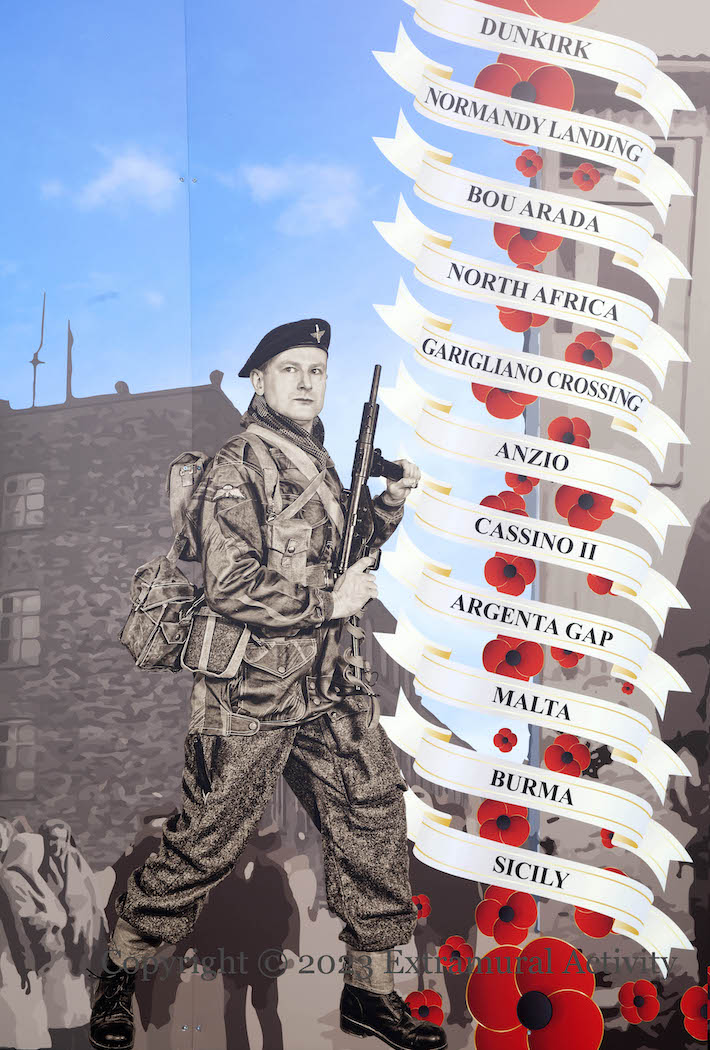
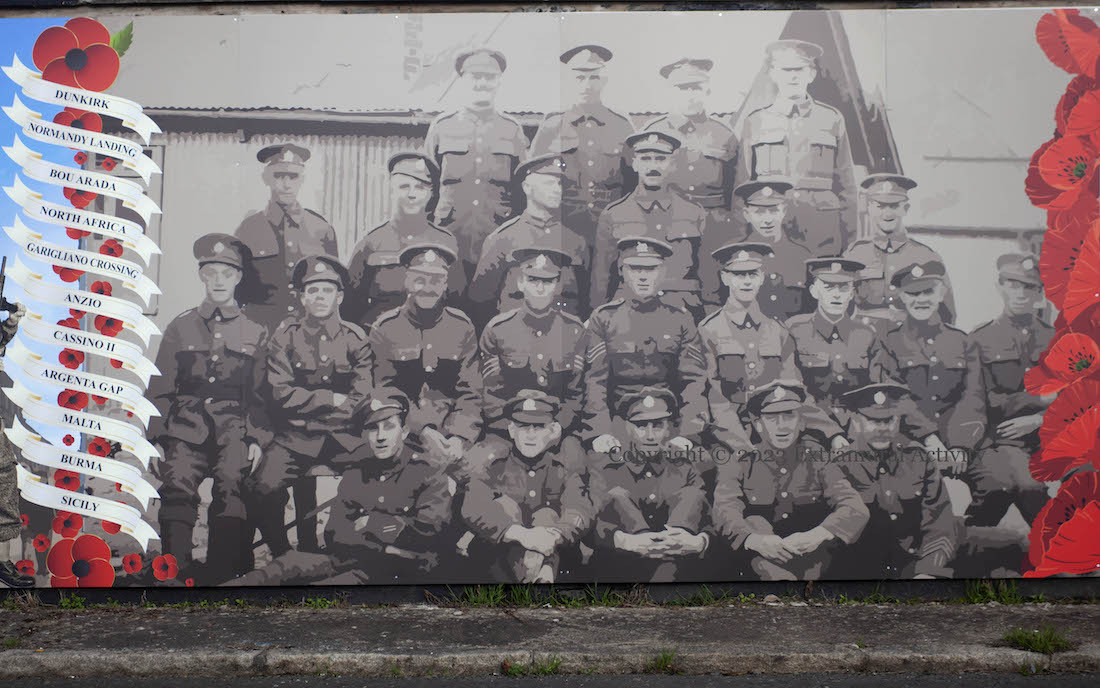
After WWI, the Royal Irish Rifles became the Royal Ulster Rifles (and later became part of the Royal Irish Rangers). This board prioritises WWI as the Rifles were part of the 36th Division. The hero of WWI portrayed in the central panel is William McFadzean, awarded the VC for falling on two live grenades in the trenches on July 1st, 1916. McFadzean is familiar from many previous murals both individually and in the company of other VC winners; for his family home in Cregagh, see Rubicon.
Alongside McFadzean, the hero of WWII is Blair “Paddy” Mayne, who was only briefly in the Ulster Rifles before making his name in the Parachute Unit (later, and better, known as the SAS). His many medals of honour are shown in an old Newtownards mural though he was denied the VC.
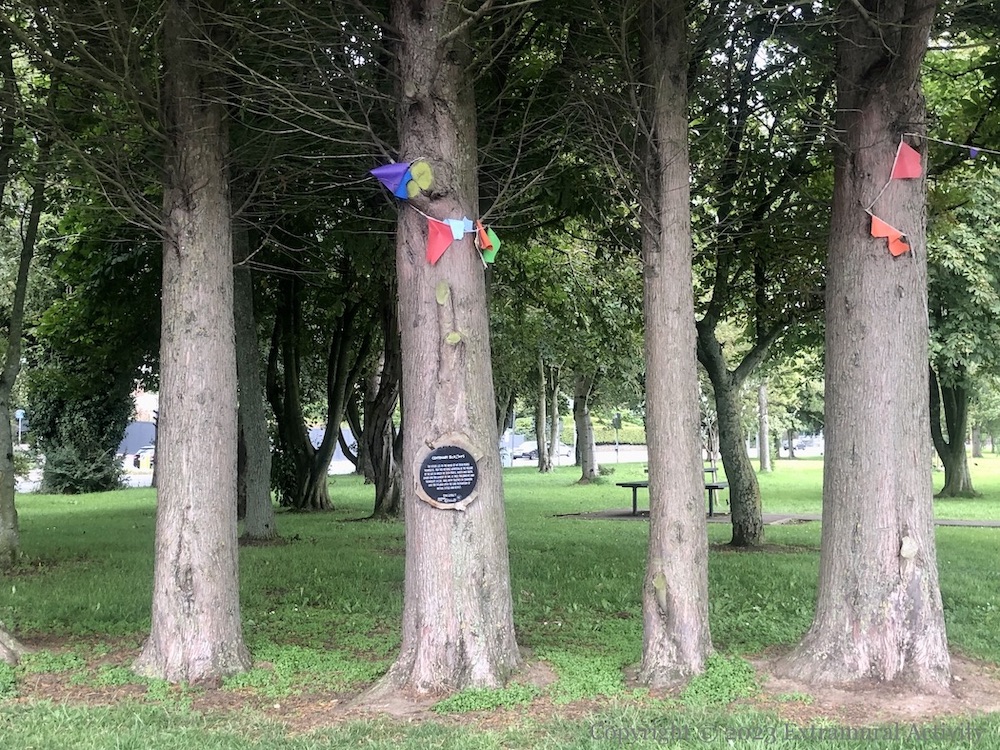
“Centenary Scripts: “The future lies in the hand of my Irish people themselves. May this historic gathering be the prelude of the day in which the Irish people, north and south, under one parliament or two, as those parliaments may decide, shall work together in common love for Ireland upon the sure foundation of mutual justice and respect. King George V.”
After the Northern Ireland parliament was opened, the debate continued as to whether Ireland would yet have a single parliament with Dominion status. The idea that Ireland, in whole or in part, would leave the empire was unimaginable to Britain – hence “my Irish people”.
“Mutual justice and respect”, it turned out, was generally in short supply. Unionists claimed they had accepted Home Rule (for Northern Ireland) as a sacrifice, preferring to be included in the empire parliament at Westminster, though one doubts the sincerity of this claim given their stance in the subsequent negotiations, which made clear that sharing power with nationalists and republicans would be intolerable. Thus, the sentiment that the future of Ireland lay in the hands of Irish people was understood to have limits.
A united Ireland was desired by nationalists and republicans, but as the negotiations continued throughout 1921 and into 1922 we can perhaps see republicans cut their losses – i.e. Northern Ireland – and instead drive towards independence for the Irish Free State. Departure from the empire and the fixity of partition quickly (in a matter of years, though it formally took a few decades) became a reality for Southern Ireland/Irish Free State/(Republic of) Ireland.
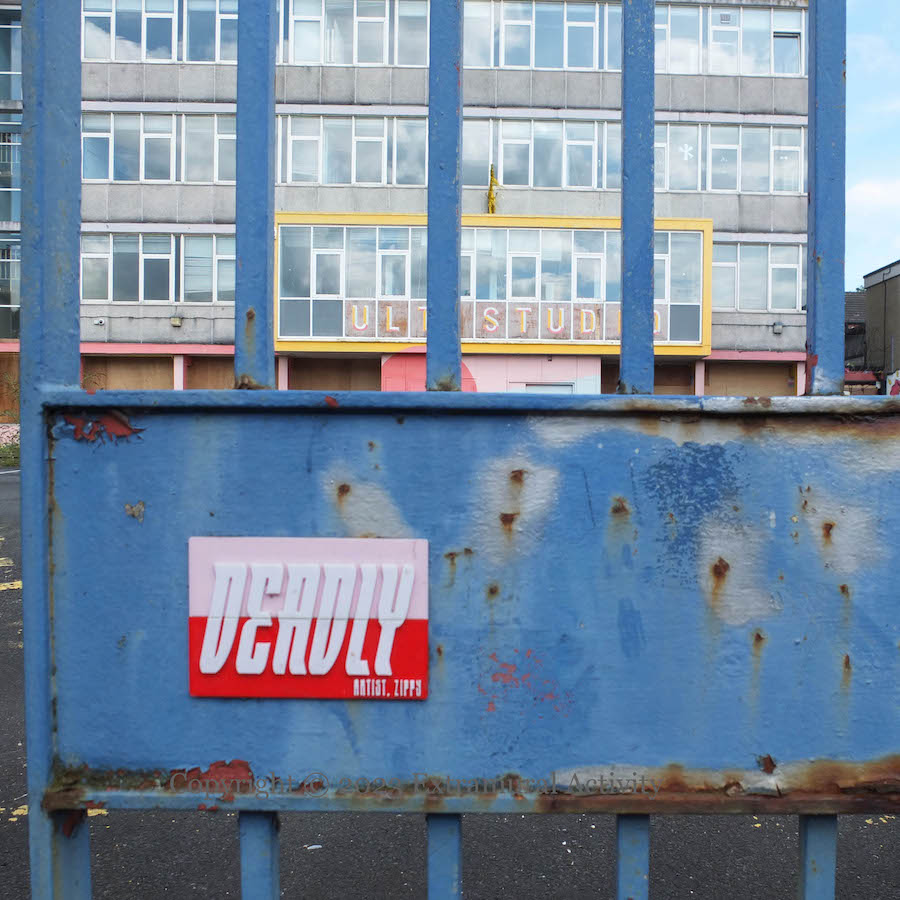
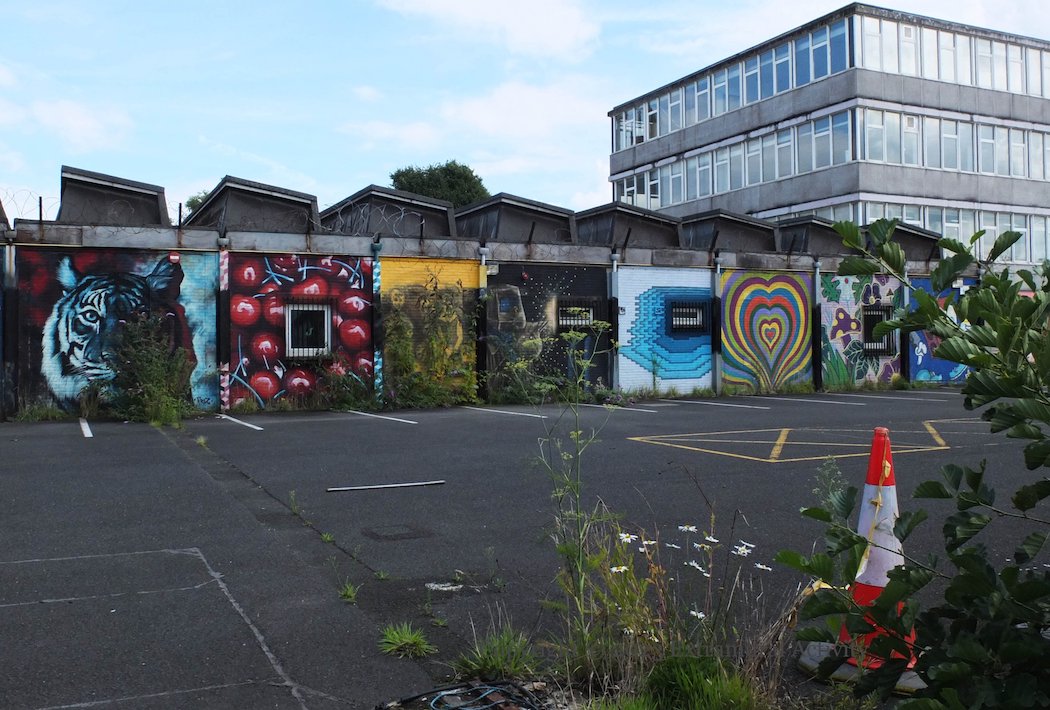
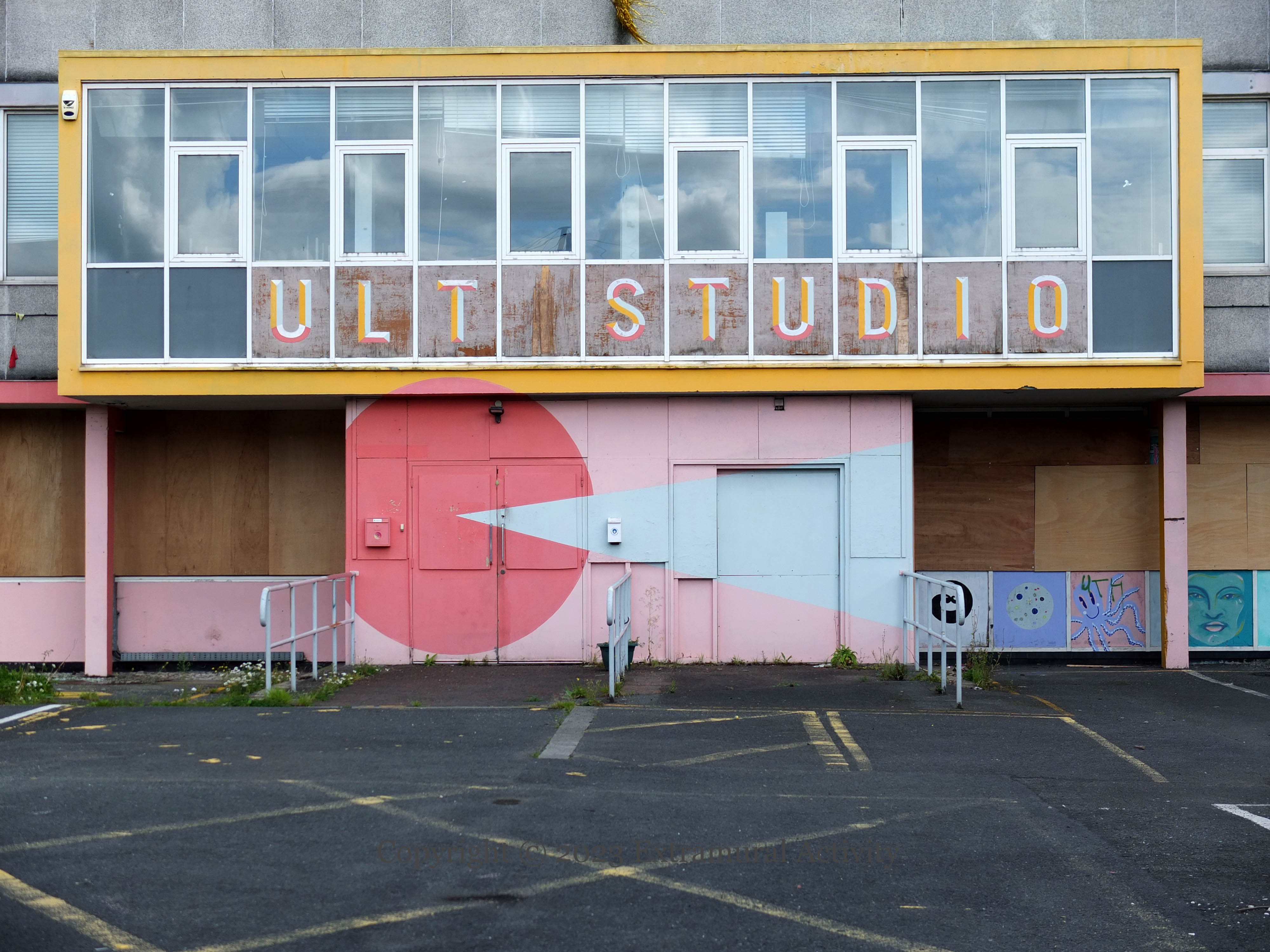
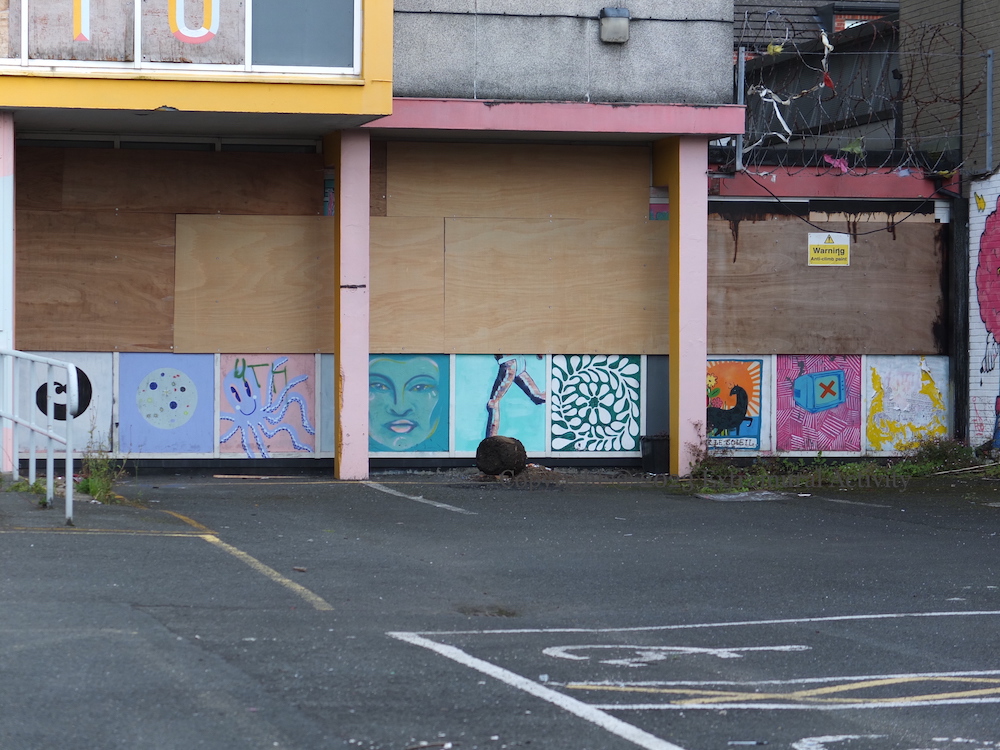
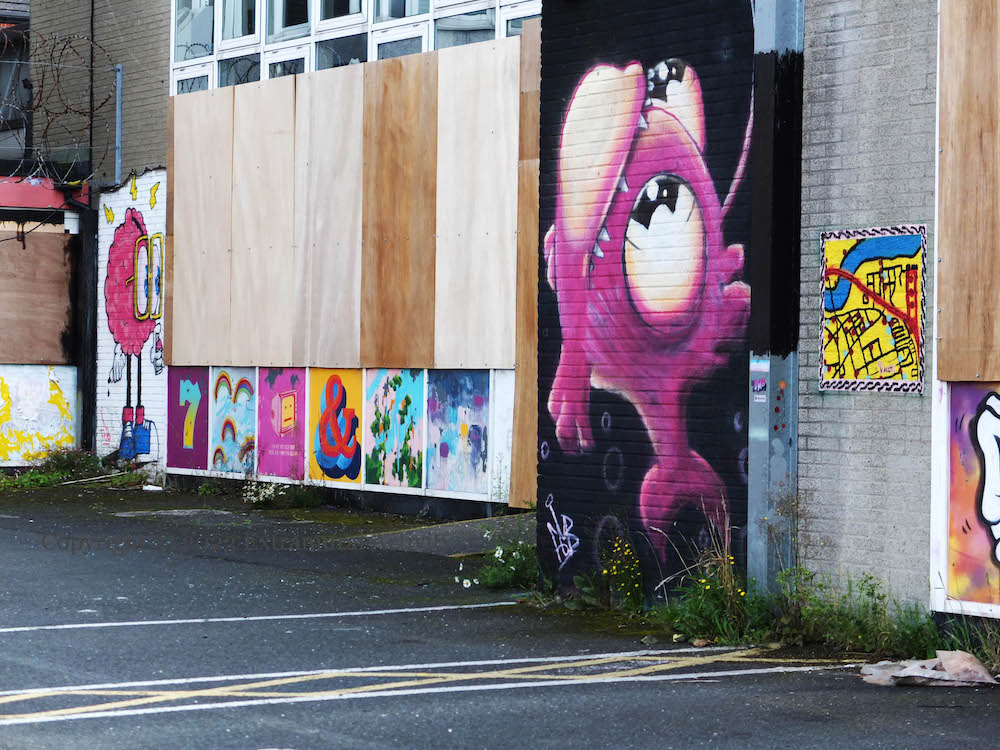
Here is a gallery of images from the now locked-up and boarded-up (and over-grown) Vault building, formerly the Belfast Met, awaiting demolition and redevelopment as housing. The images below move from left to right beginning with a piece that has not been featured before (outlines of human figures, with hearts on their chests); for the others, see Vault Guard Cat | Show Some Love | Build Communities | Vaulty Towers | In Bloom | Bizarre Bazaar .
In the post of the new Sam Rockett mural in Woodvale – Essence And Space – we said that the “peace” line separating Wyndham Street from the rest of Torrens had been taken down as the area was redeveloped from roughly 2008-2012. As can be seen from this gallery of images, however, some of the infrastructure remains, particularly the school building (former site of Naíscoil Bheann Mhadaigáin (Belfast Media profile)) and the adjacent waste-ground in Torrens Crescent, which remain undeveloped. The alley to Cliftonville is gated at both ends.
The Seal Folk or Selkies are shape-shifting creatures in island mythologies from Man to Ireland to the Scottish isles to the Faroes to Iceland. Seals in water, they can take off their skins and become (beautiful) humans on land. Without their skins, they cannot return, and so they can be captured by humans who hide their skins. A few tales can be found at Scotland’s Stories.
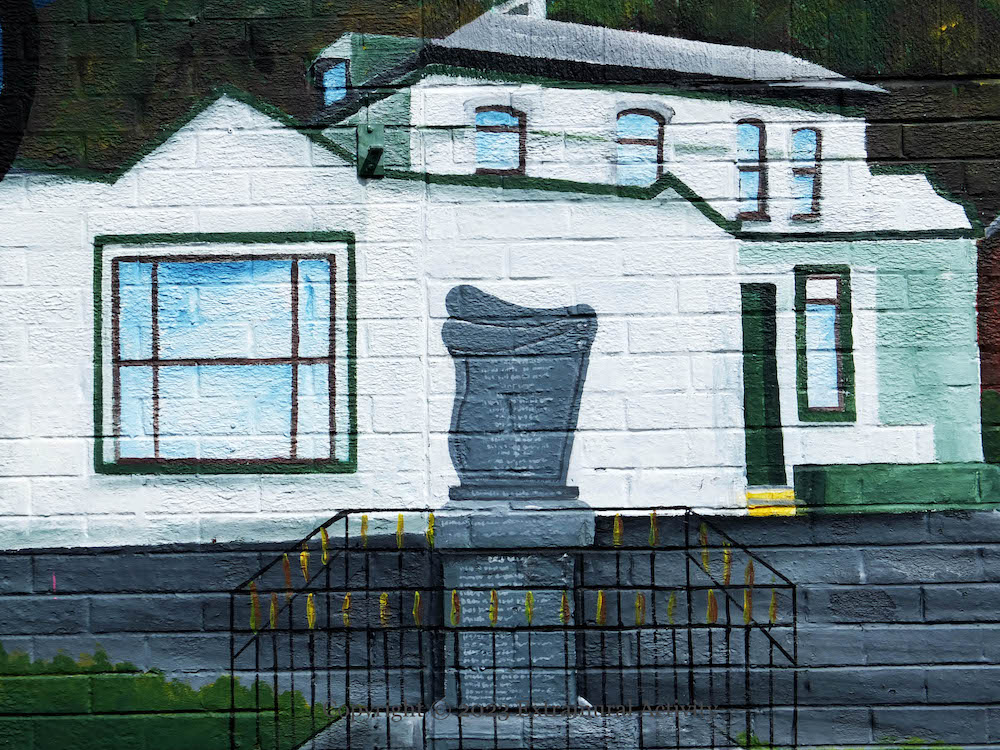
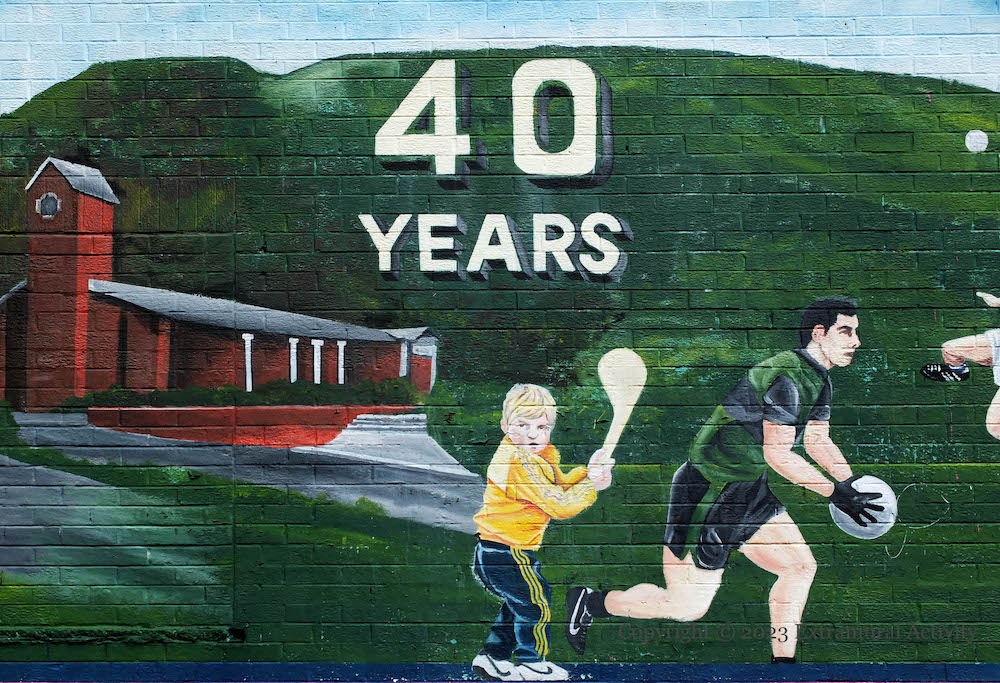
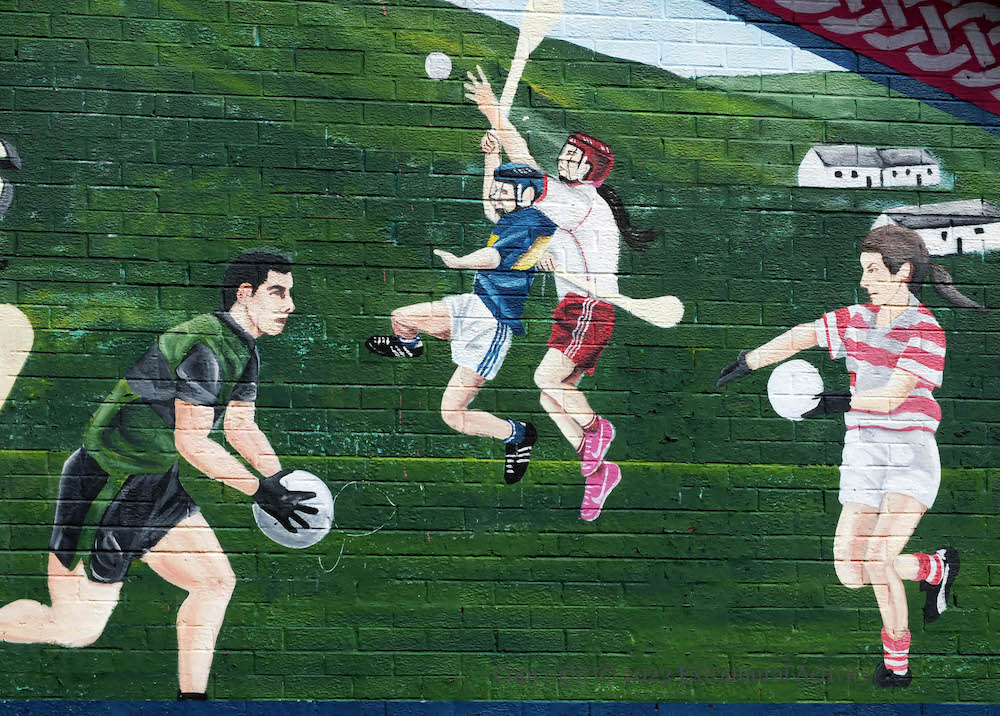
Glencolin estate was built next to Moyard House (which in 1984 became home to the Roddy’s (web), shown in the image directly below) on the Glen Road in 1979 (Belfast Forums). For the fortieth anniversary of “eastát Ghleann Collaınn” the mural at the entrance to the estate was (belatedly) repainted. The composition of the mural remains as in the previous version, with the Roddy’s and Oliver Plunkett church in the shadow of Dubhaıs and Slıabh Dubh; they are now joined by images of Gaelic games. The Bobby Sands quote has been removed.
The 2018 side-wall shows boxer Brendan Irvine — “the wee rooster” — who represented Ireland in the Tokyo (2020) and Rio (2016) Olympics at flyweight (Olympics).
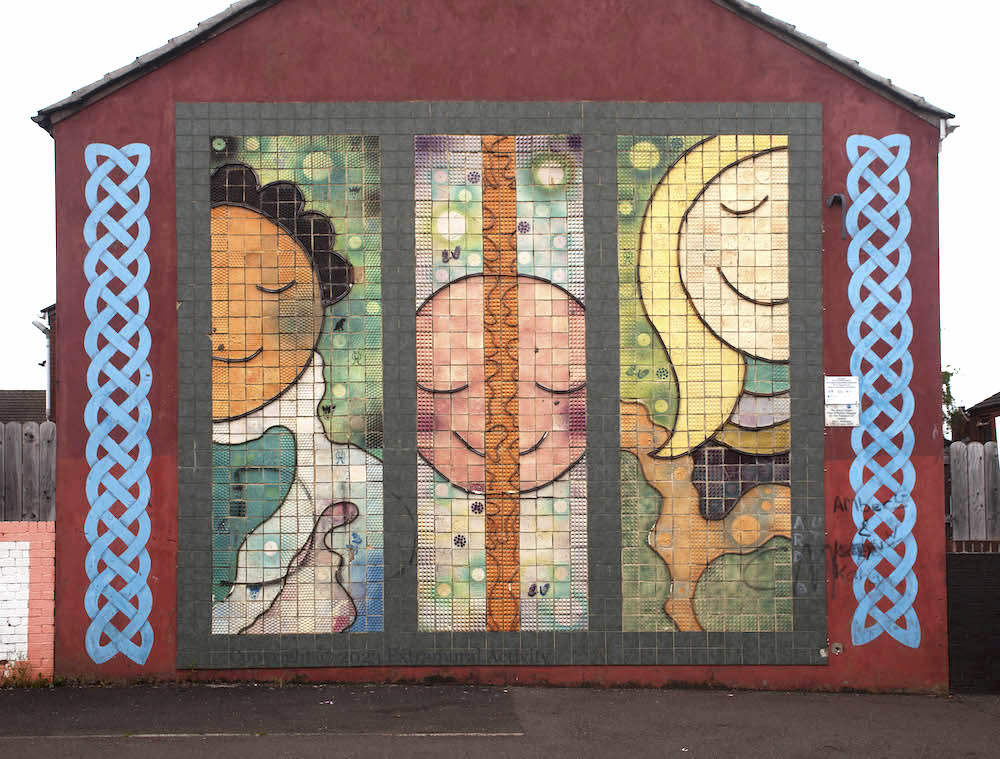
The faces of local children are rendered in ceramic tiles by Clare McComish (web), replacing a Sean McCaughey mural in Brompton Park, Ardoyne, as part of the 2009 Re-Imaging Communities project (see Visual History 10).
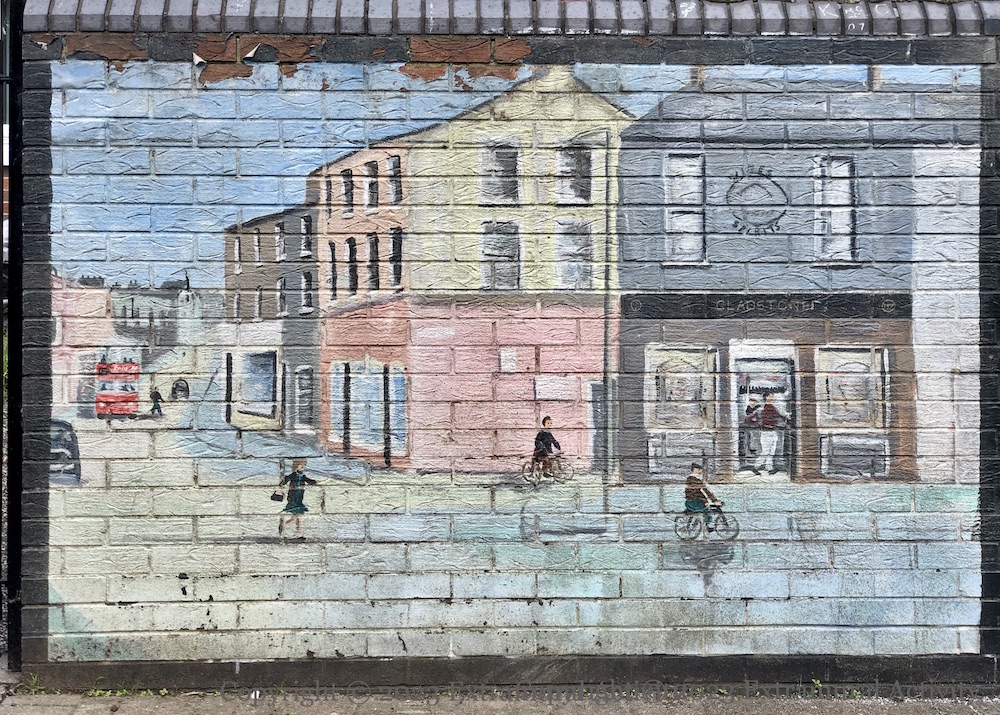
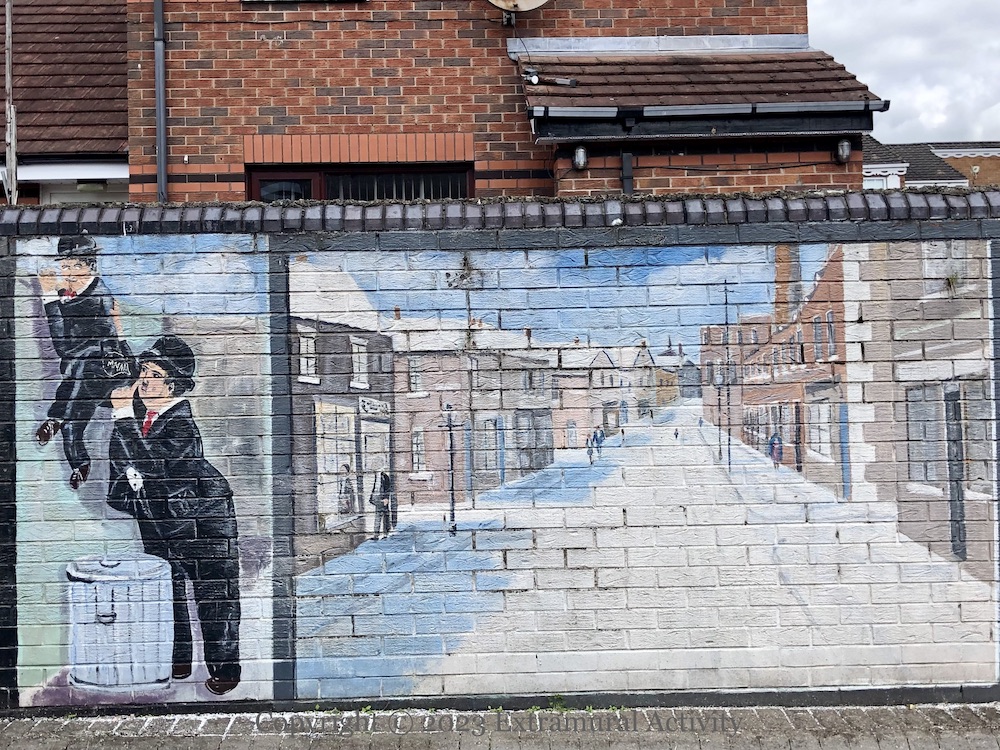
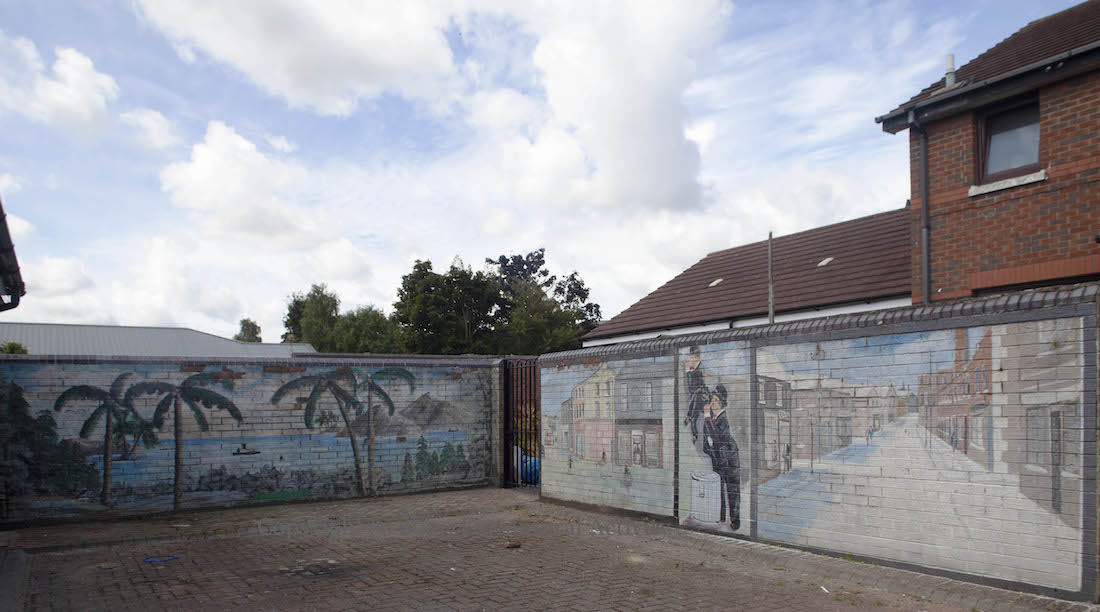
The Gladstone Bar — seen on the right of the image above – was in Gilford Street at the junction with Divis Street, which stretches towards the city on the left. The other street image is perhaps also Divis St/Falls Rd though there are no easily-identifiable landmarks. In between them is a scene from the 1930 Laurel and Hardy film, Night Owls (WP).
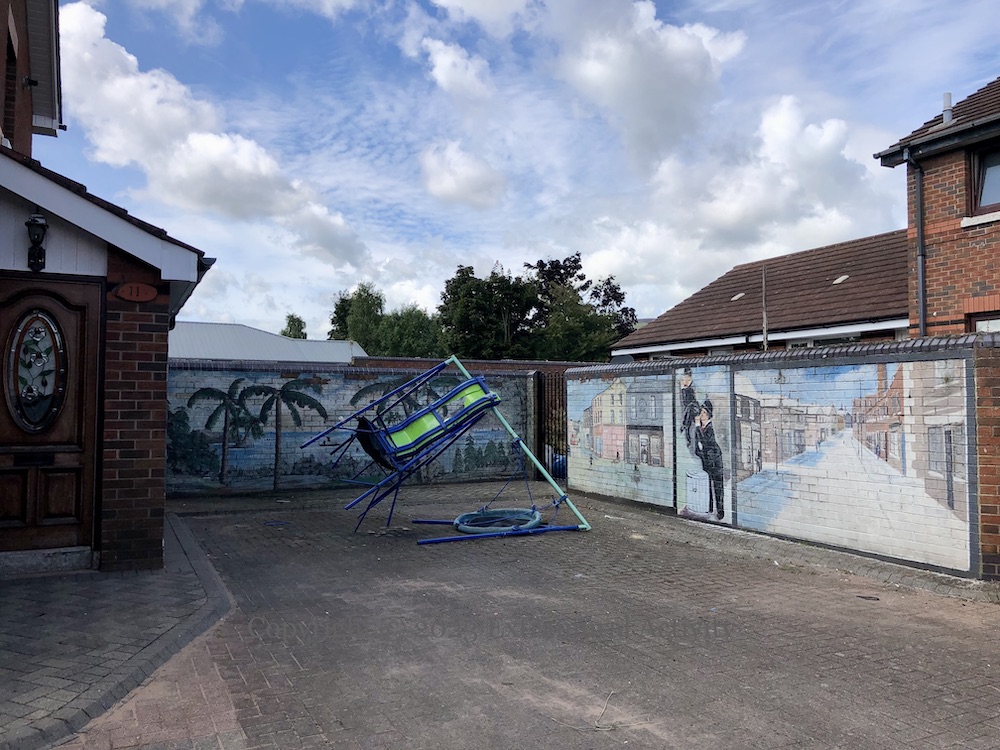
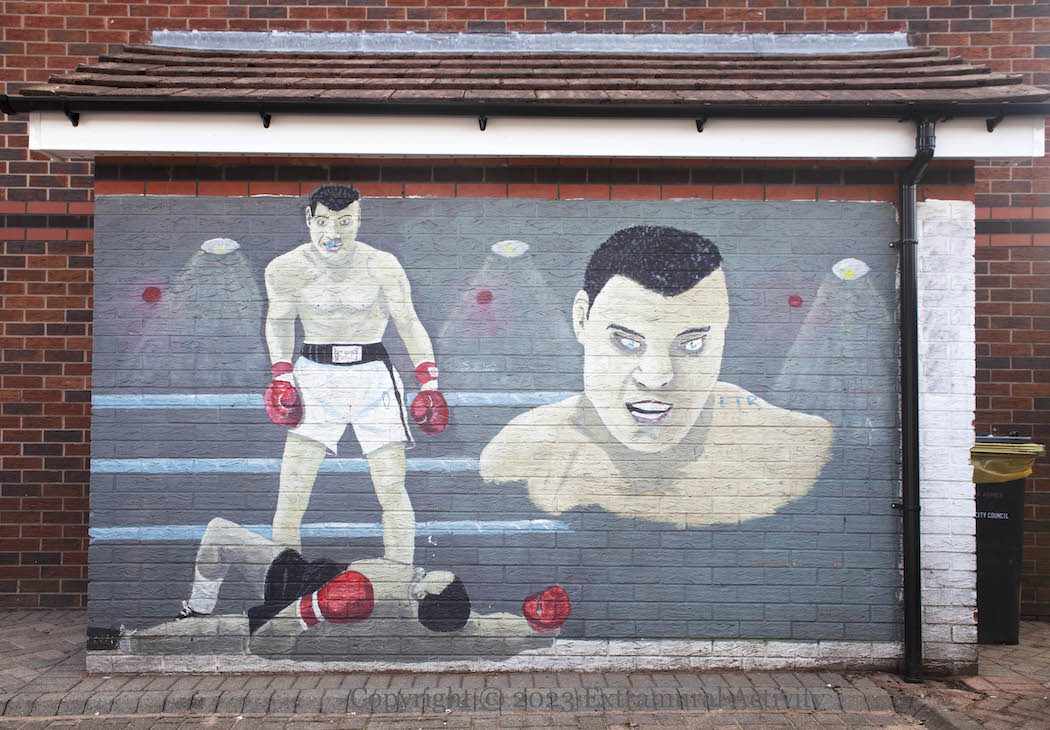
To the left of these three is a mural of an island paradise, and to its left (in the final image) we find Muhammad Ali, based on the famous photo of Ali standing over Sonny Liston in their second encounter.
The murals are in a courtyard off Ross Road and were probably painted at the request of a local resident. The Ali-Liston fight – in 1965 – perhaps gives a date for the consciousness that groups all of these items together – the Gladstone was still standing in the 60s and Laurel and Hardy played on UK televisions into the 1970s. The source for the palm trees is unknown.
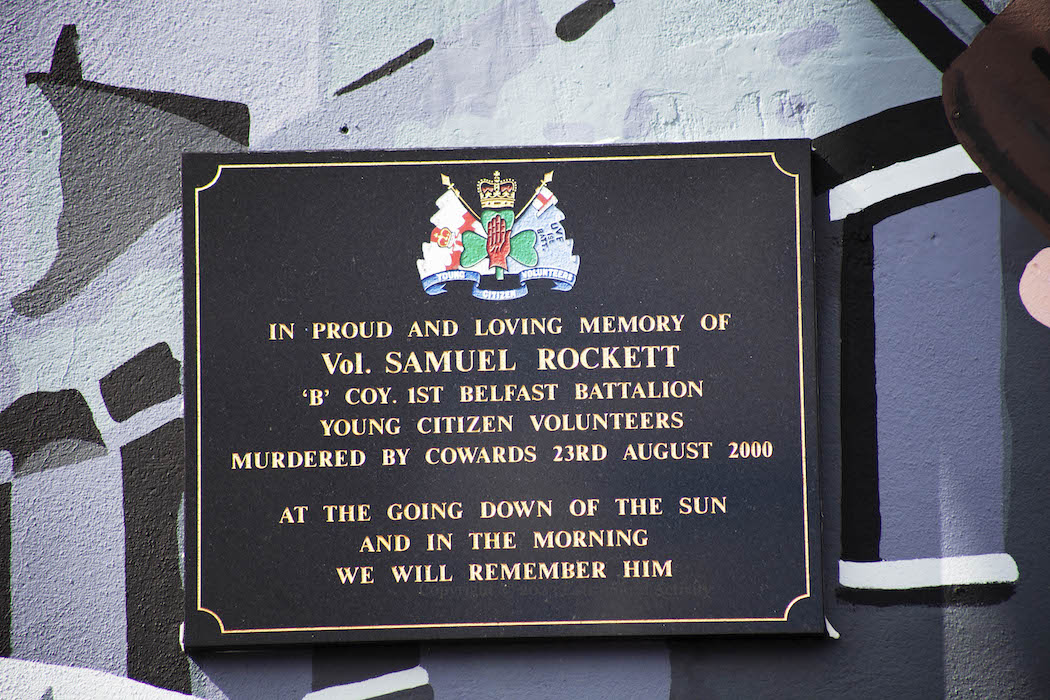
This is the new Sam Rockett mural in the Woodvale, replacing the mural seen in Murdered By Cowards. The old mural just featured Rockett, who died in August, 2000, in the feud between the UVF and lower Shankill UDA. This new mural also features the “ethnic cleansing” of Torrens in 2004.
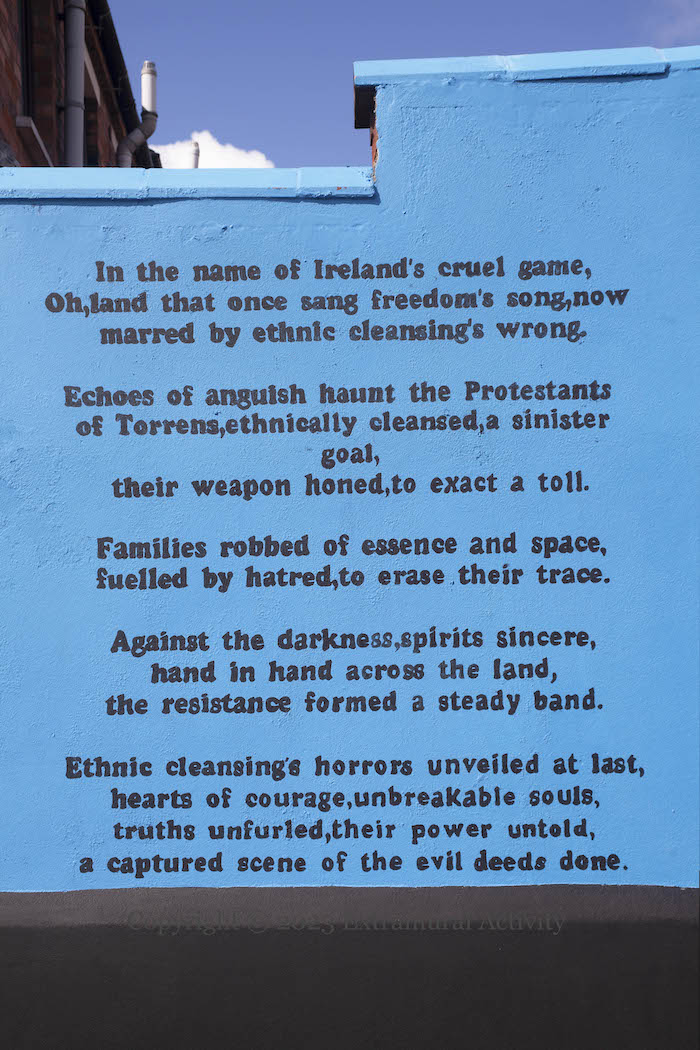
Torrens sits between Cliftonville, Ardoyne, and the lower Oldpark, and was one of the many historically mixed areas in north Belfast that, with the Troubles, became increasingly segregated and separated from neighbouring areas by “peace” lines. Jarman (1996) provides eye-witness testimony of the dispute in Torrens in 1996 which saw Catholic families leave the area. Its proximity to Ardoyne (and Cliftonville), however, meant that over the next few years the houses were gradually abandoned by Protestants, culminating in 2004 when ten of the remaining Protestant families moved out of the area, alleging persistent intimidation and employing the term term “ethnic cleansing” – a term the poem to the right of the mural uses three times.
The area was eventually redeveloped from 2008-2012, with the Wyndham Street “peace” line coming down and Elmgrove Street being opened to the Oldpark Road.
The line in the poem “the resistance formed a steady band” is unclear – it might refer to loyalists being bussed into Torrens in 1996 (see the testimonies in Jarman); if it refers to B Company it would make a connection to Rockett. As it is, the connection between the two elements of the mural (if any is intended) seems to be that Rockett was from the lower Oldpark, near Torrens.
“In the name of Ireland’s cruel game/Oh, land that once sang freedom’s song/Now marred by ethnic cleansing’s wrong.//Echoes of anguish haunt the Protestants of Torrens,/Ethnically cleansed, a sinister goal,/Their weapon honed, to exact a toll.//Families robbed of essence and space,/fuelled by hated, to erase their trace.//Against the darkness, spirits sincere,/Hand in hand across the land,/the resistance formed a steady band.//Ethnic cleansing’s horrors unveiled at last,/Hearts of courage, unbreakable souls,/Truths unfurled, their power untold,/A captured scene of the evil deeds done.”
The mural was completed for the anniversary of Rockett’s death on August 23rd. The source for the central image (of furniture being loaded into a lorry) is unknown.














 Extramural Activity