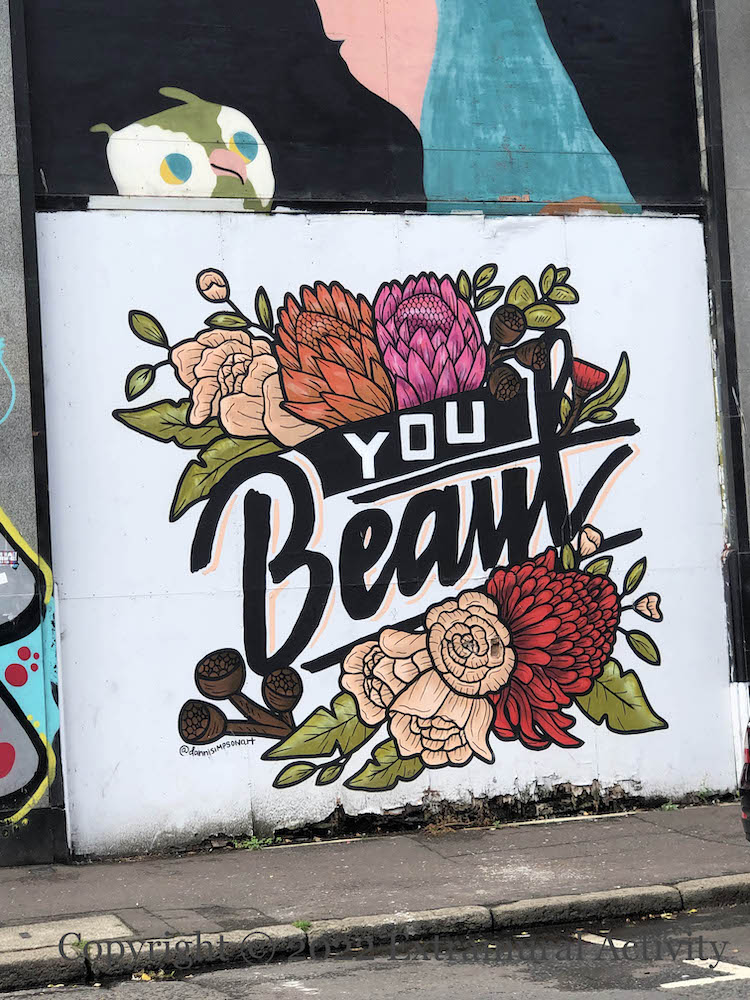
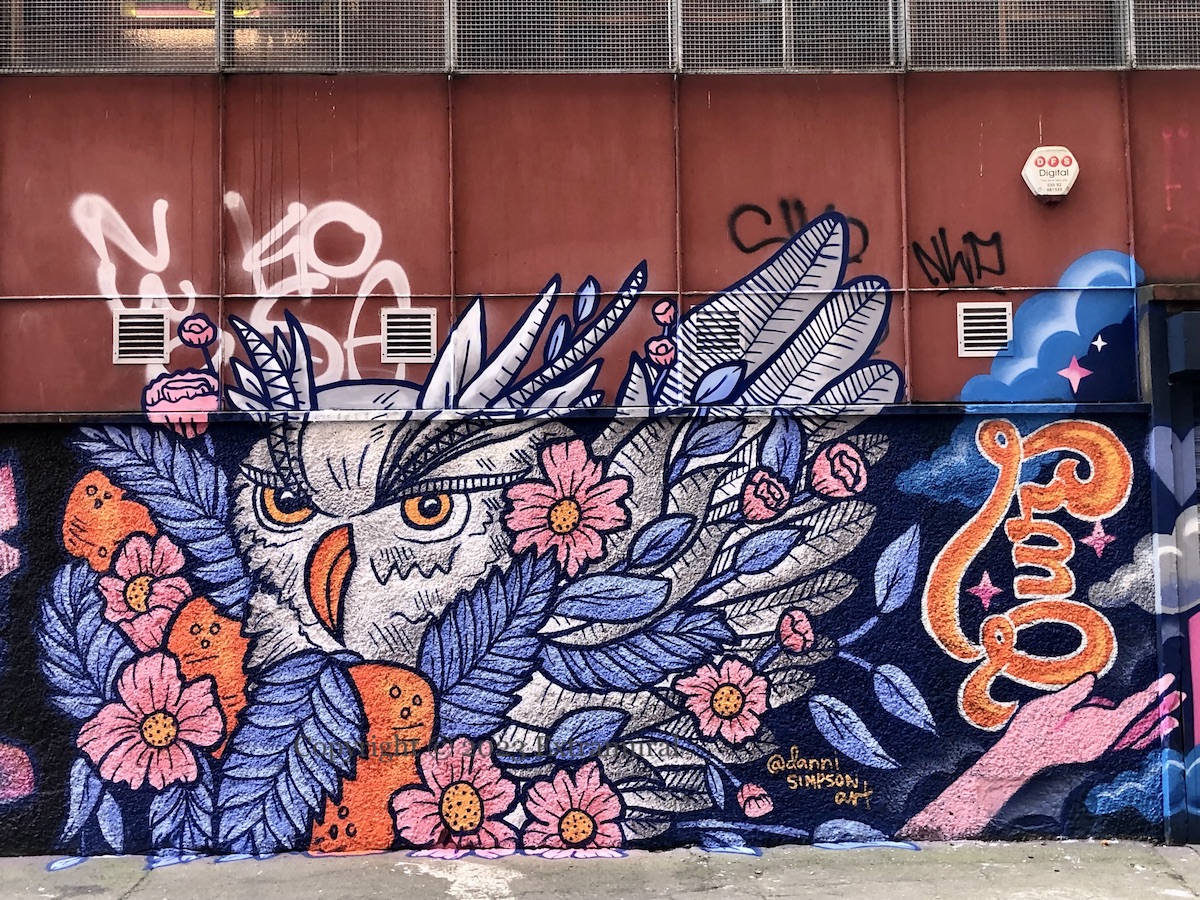
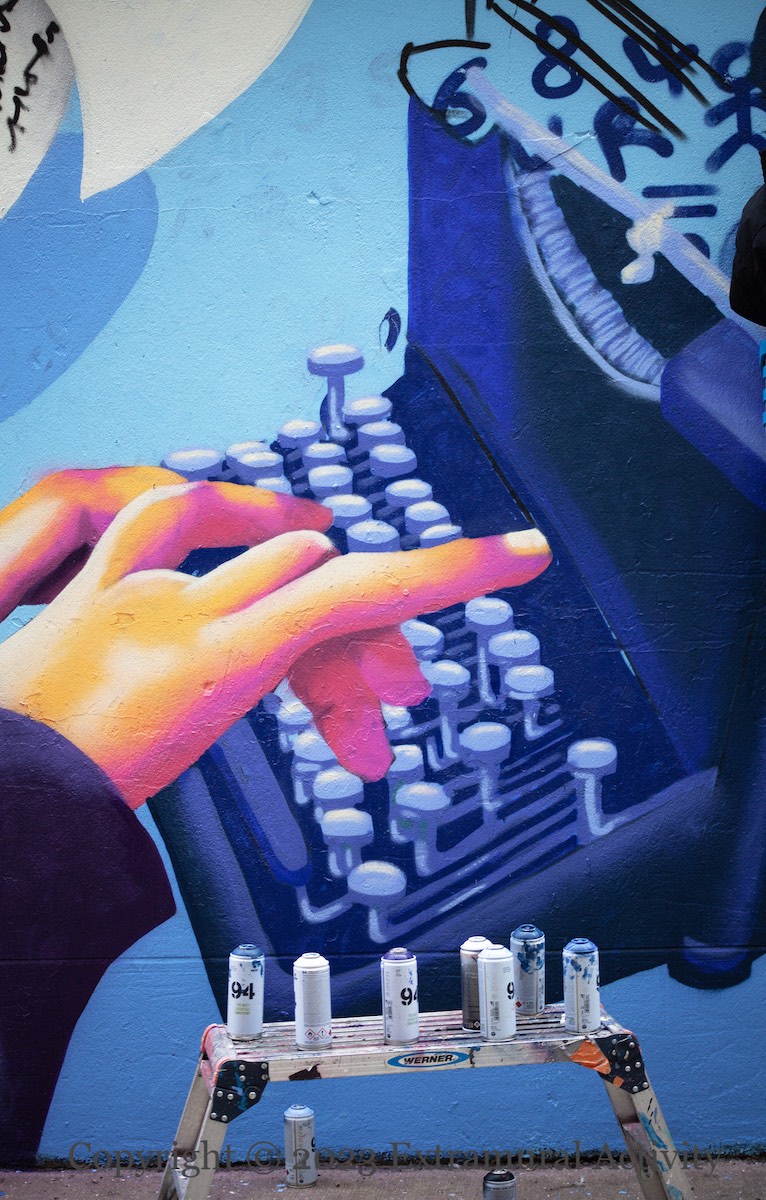
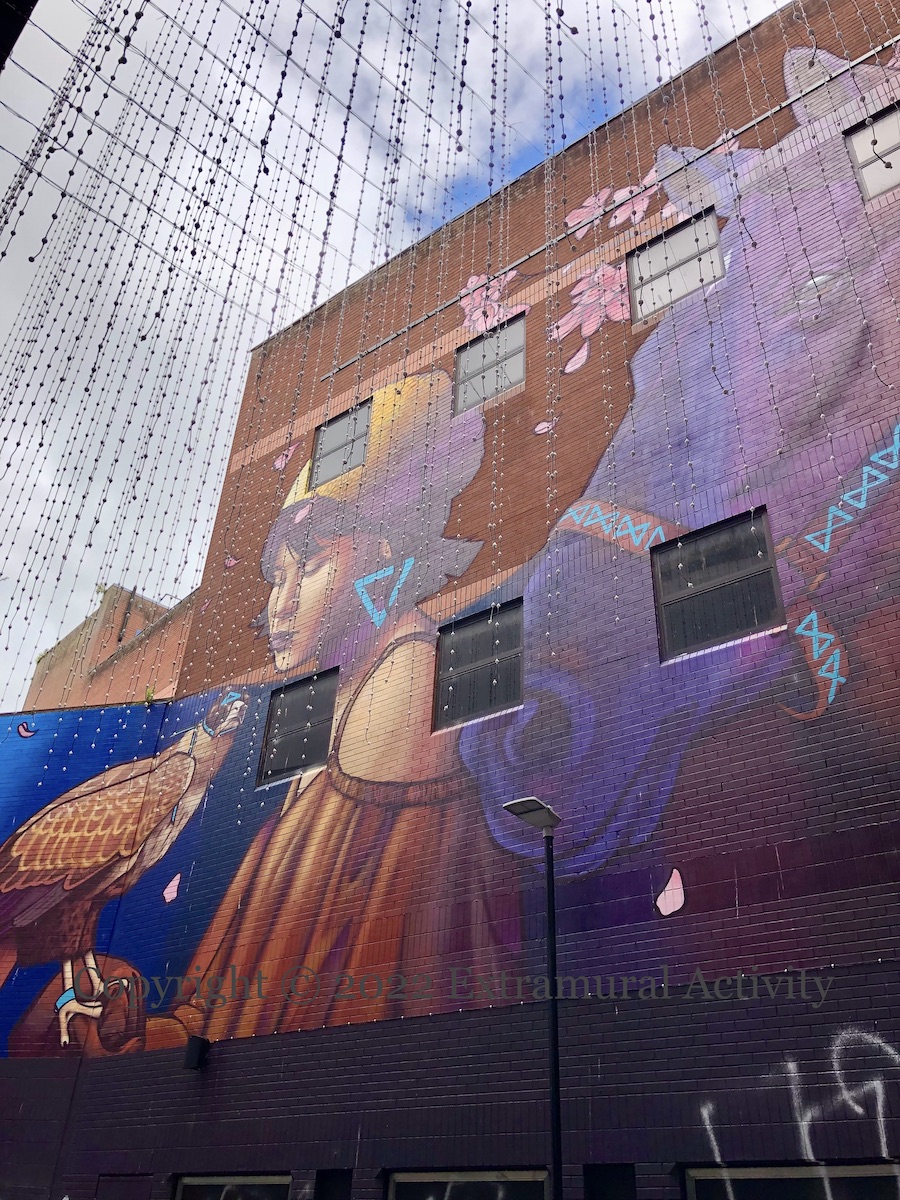
North Street Arcade was burned down in April 2004 – see Who Burnt Us Out?. Since 2012, there has been street art at both its North Street and Donegall Street ends, the latest (from September, 2021) being this piece by Danni Simpson (ig) in Donegall St.
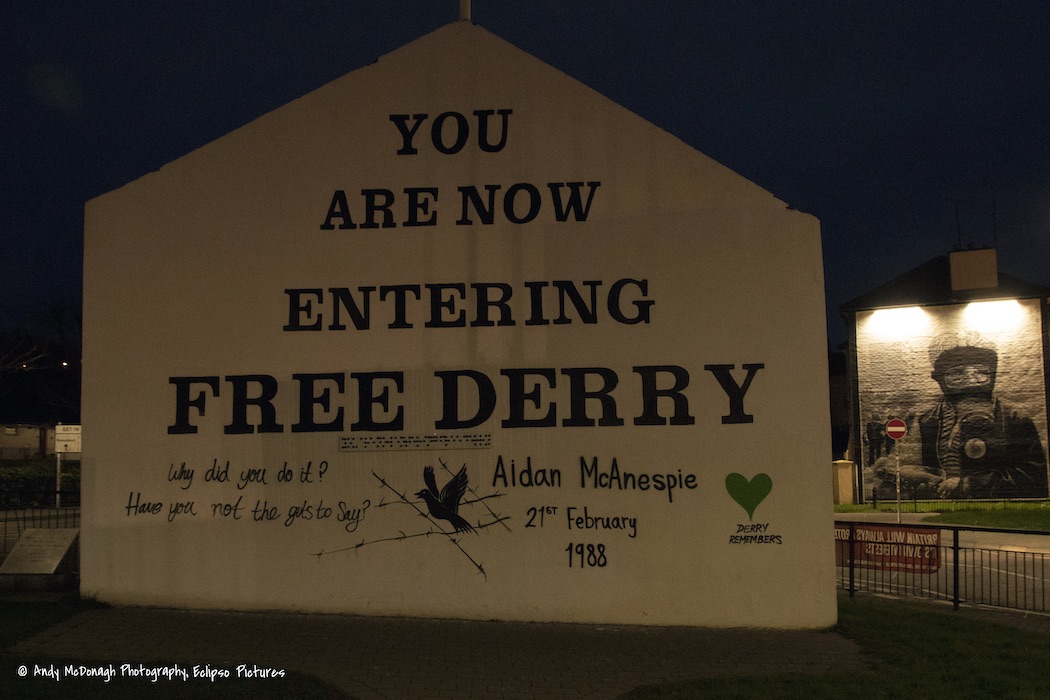
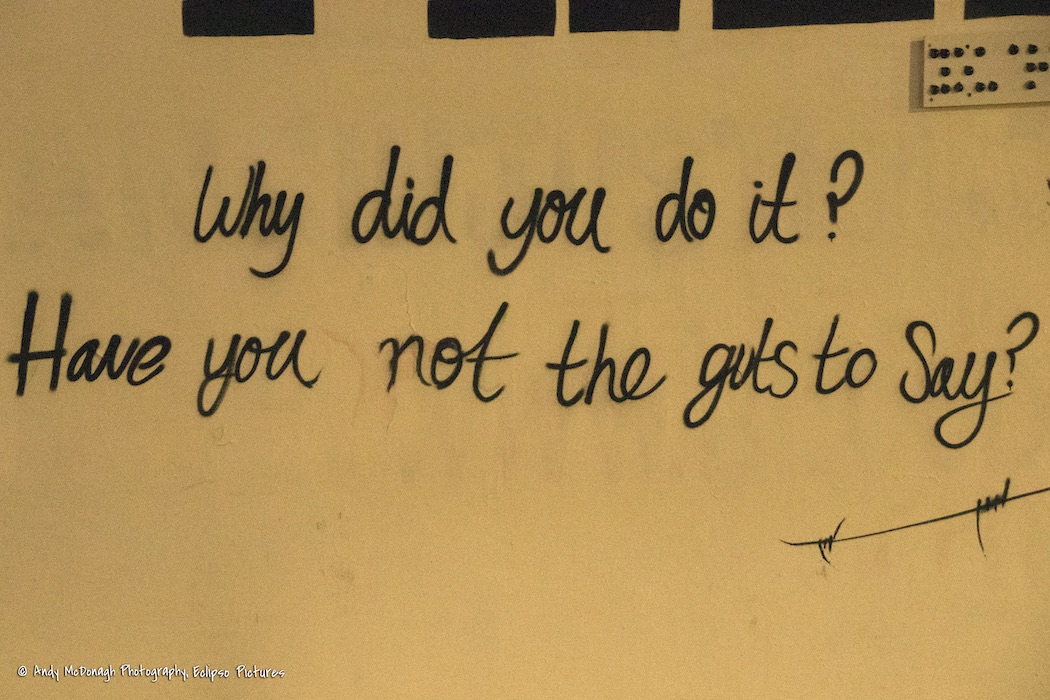
“Why did you do it? Have you not the guts to say?” The question is for David Holden, who in 1988 was an 18-year-old Grenadier Guardsman, manning a checkpoint in Aughnacloy, Co. Tyrone. On February 21st, Holden shot Aidan McAnespie as he was walking to the nearby GAA club. Holden was convicted of manslaughter by gross negligence (BBC | Belfast Live) and was sentenced in February to three years, suspended for three years. The family expressed disappointment, saying that Holden did give a clear account of what happened nor express remorse (Sky News | Journal). Holden has now decided to appeal his conviction (BBC | RTÉ).
The lark in barbed wire is used here not as a symbol of political prisoners but of the struggle for justice in the UK system. (See the Visual History page on the lark and the dove.)
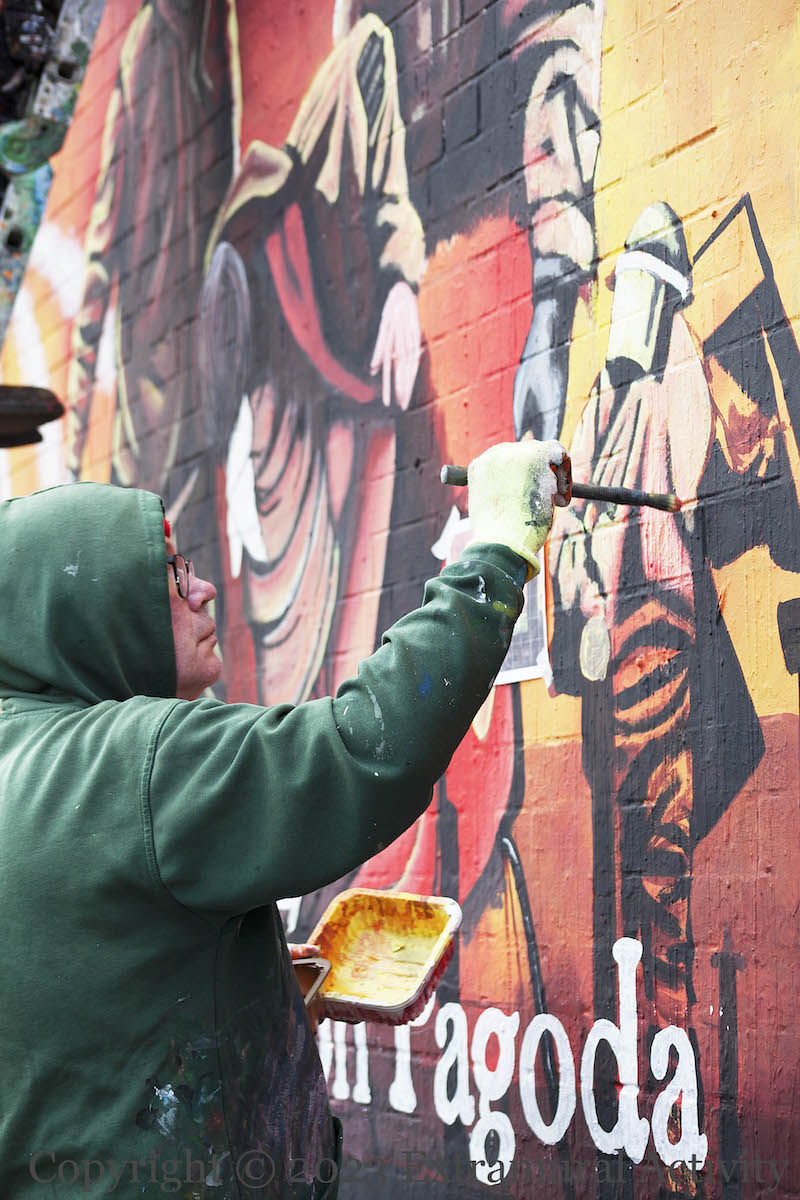
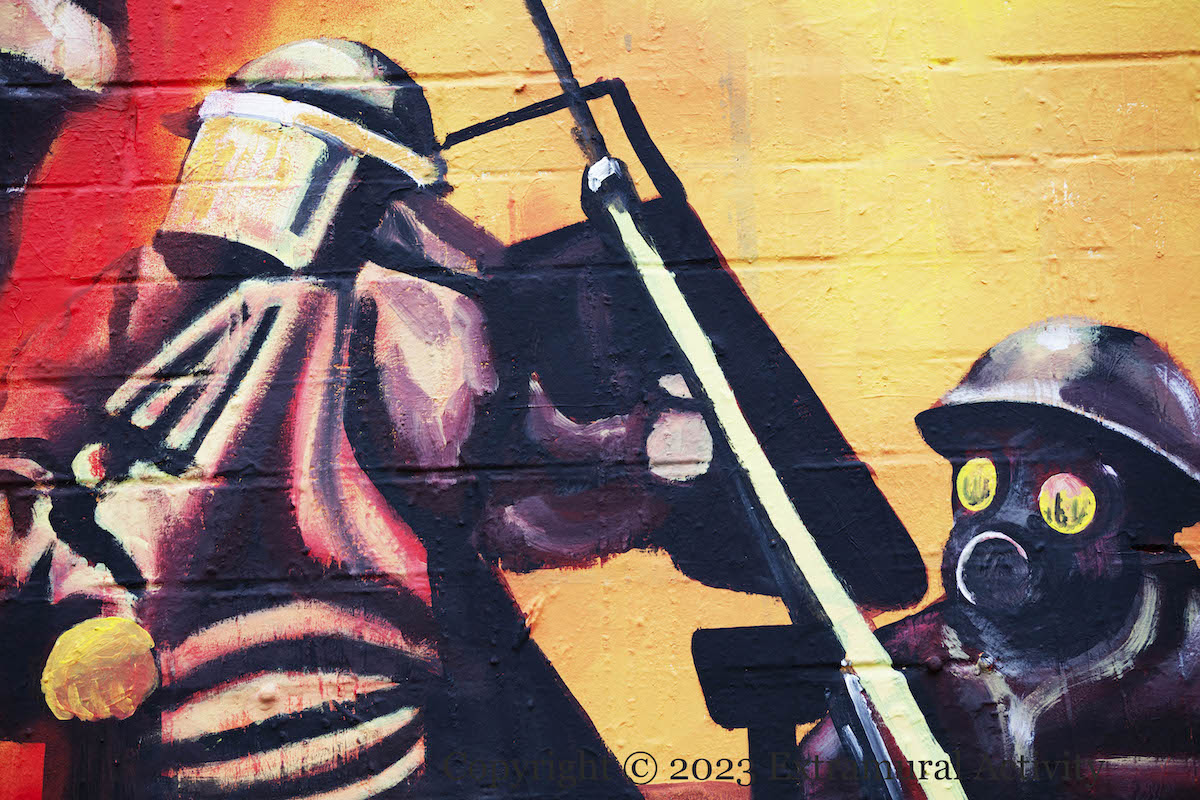
“CR Gas & The Burning Of Long Kesh, 15th-16th October, 1974 in Long Kesh. Operation Pagoda – the British government authorised and sanctioned the use of a chemical weapon against Irish Republican prisoners. Members of the 22nd S.A.S. carried out the attack from a helicopter.”
Operation Pagoda was the name of the SAS’s counter-terrorism programme (WP). Its role in the ‘Battle Of Long Kesh’ in October 1974 and its alleged use of CR (dibenzoxazepine) powder – the successor to CS powder (and before that, CN or “tear” gas) (New Scientist) – remains a classified matter. CR had been authorised for use in 1973 (Guardian).
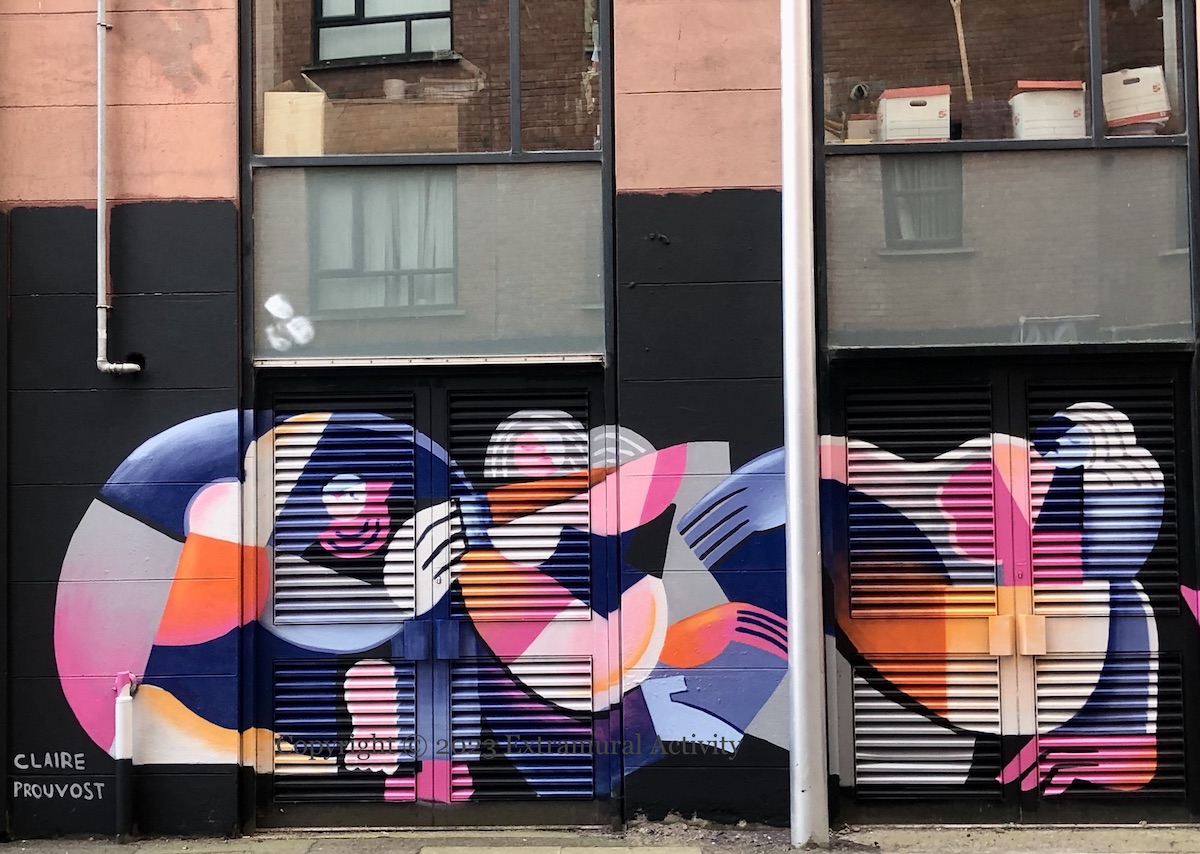
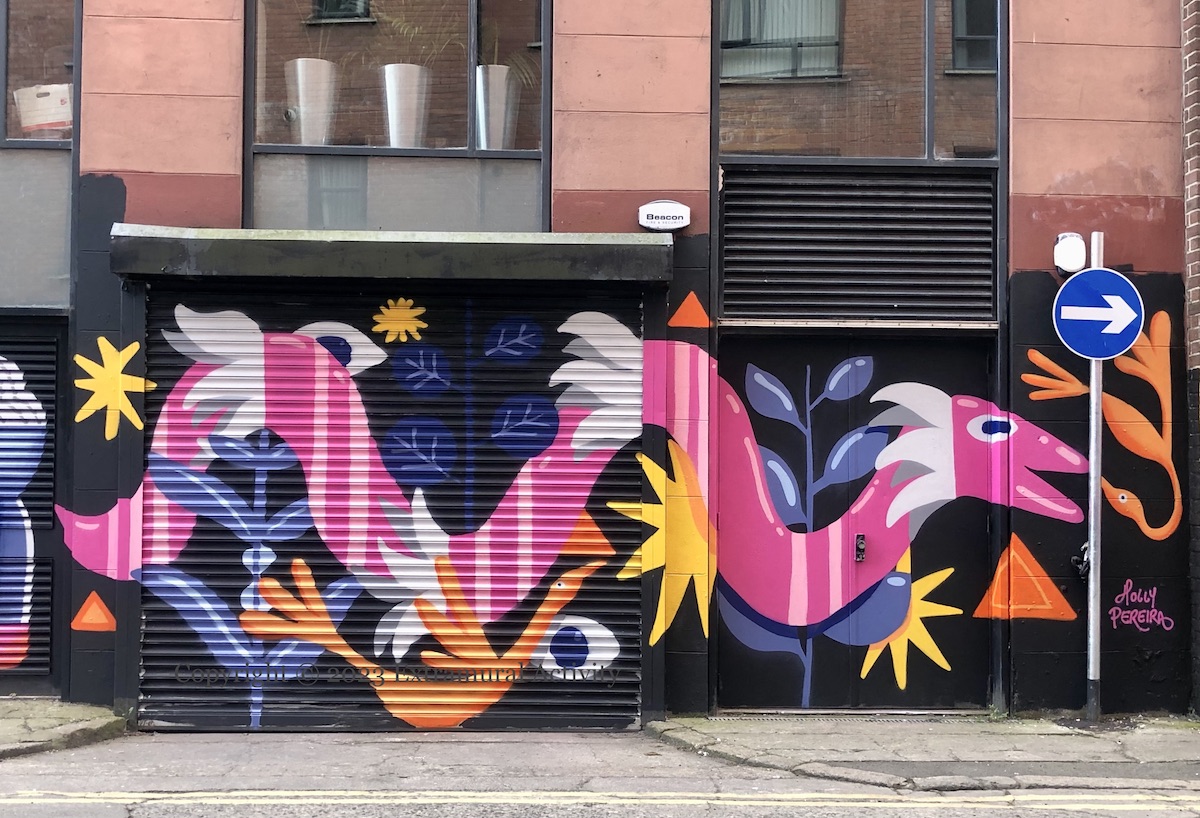
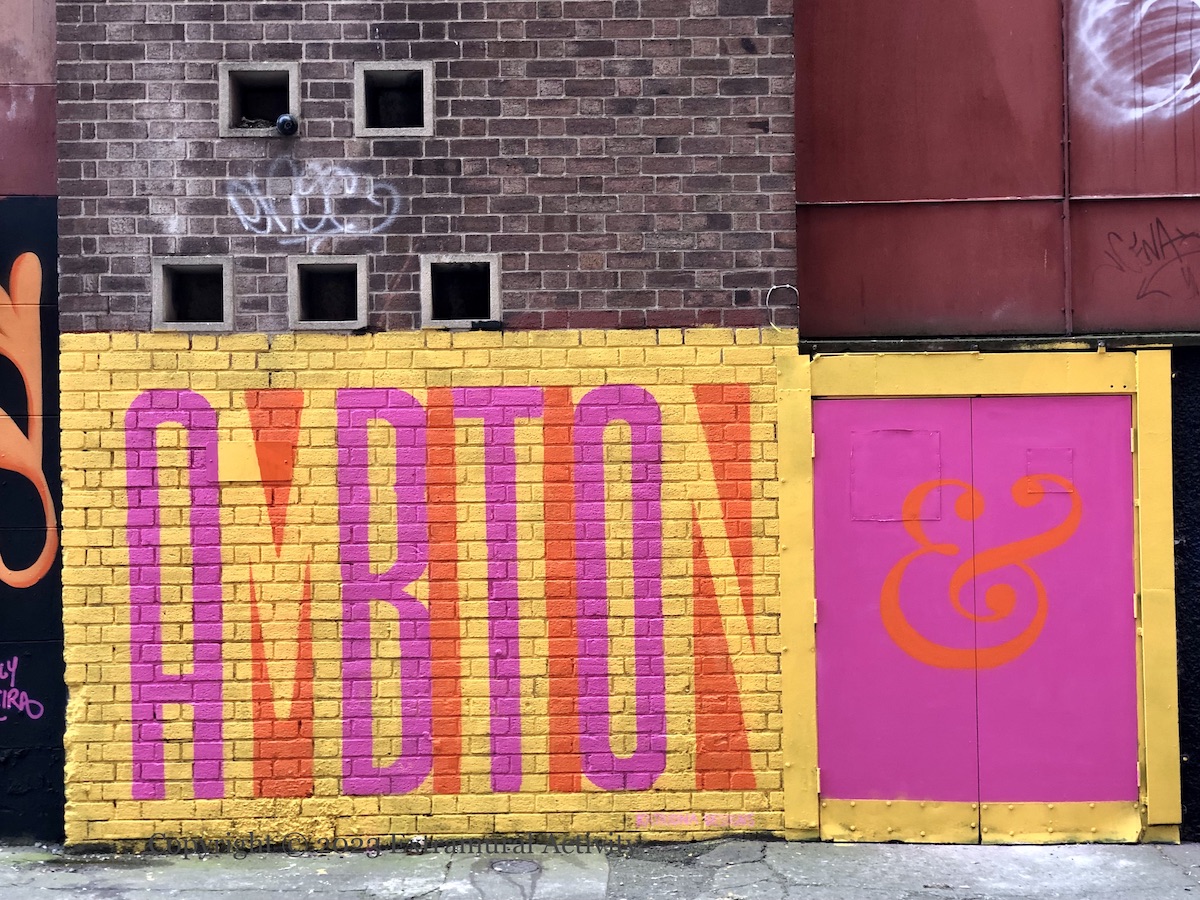
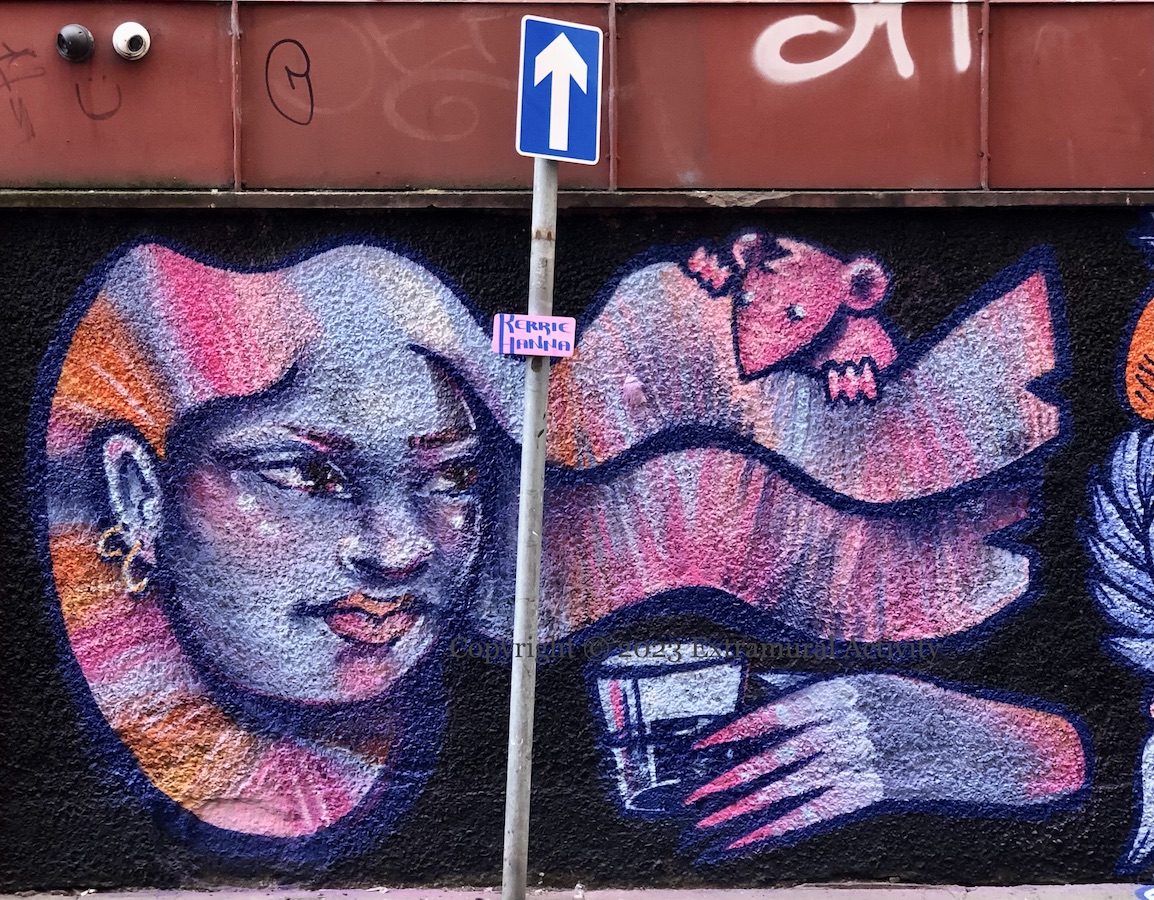
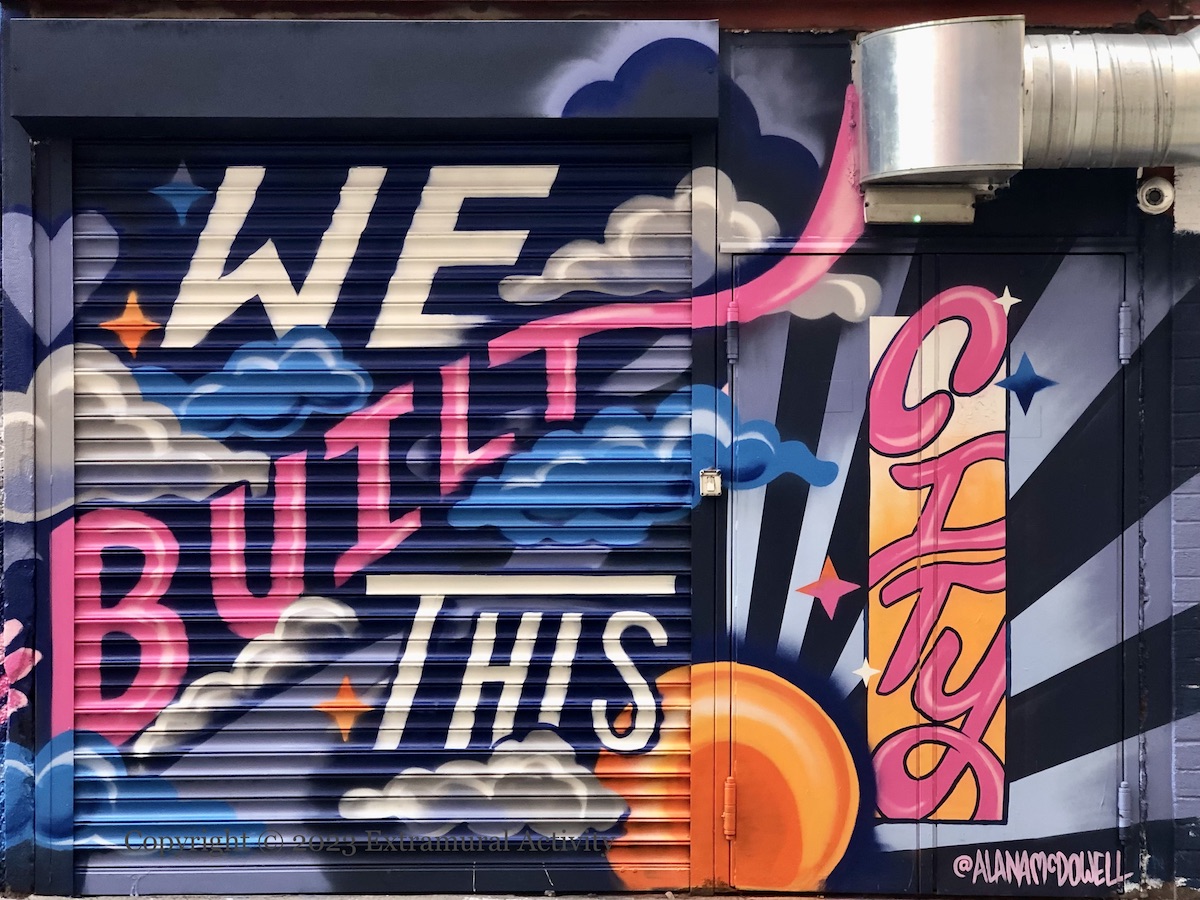
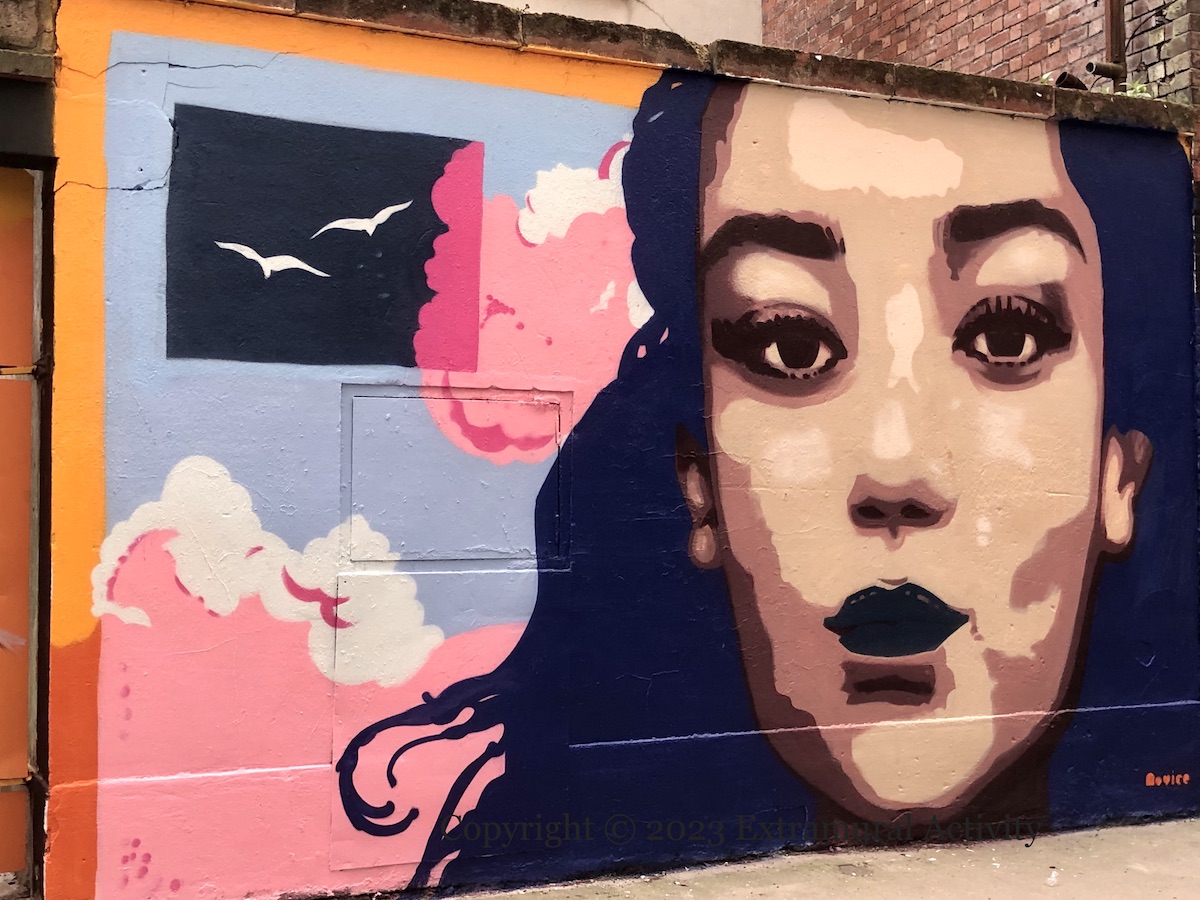
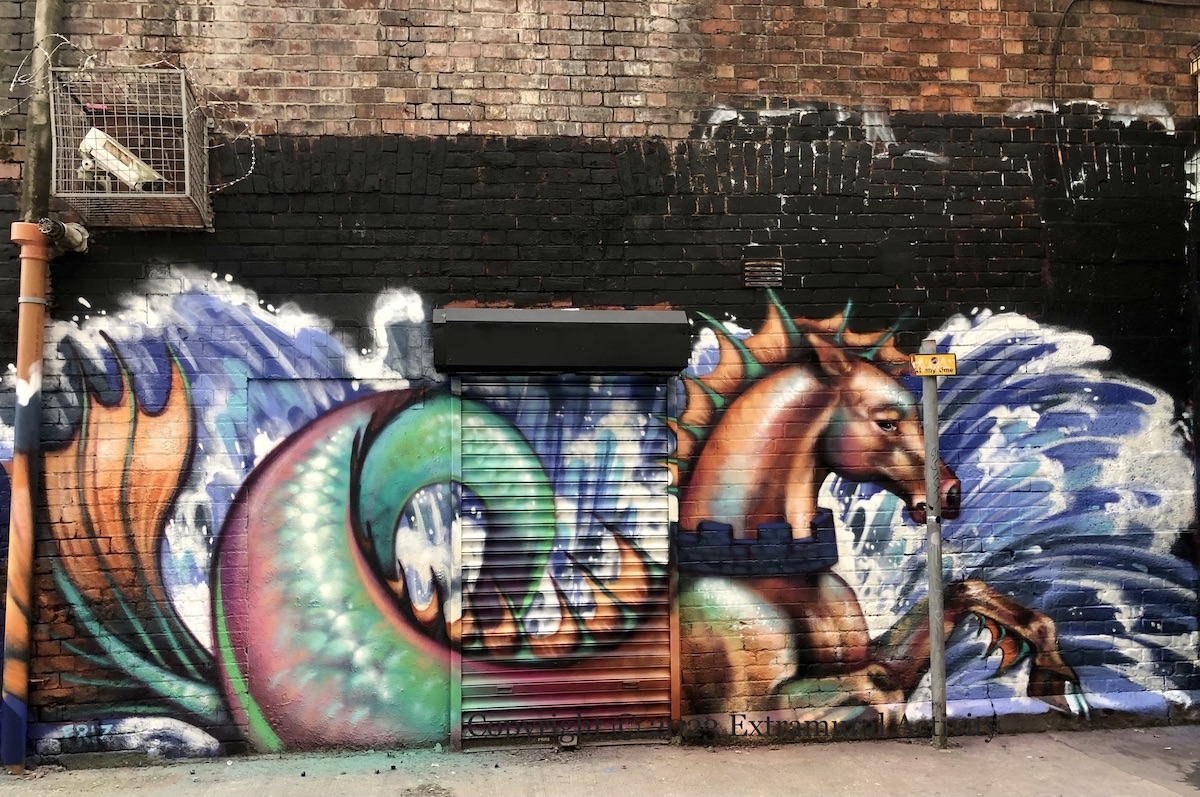
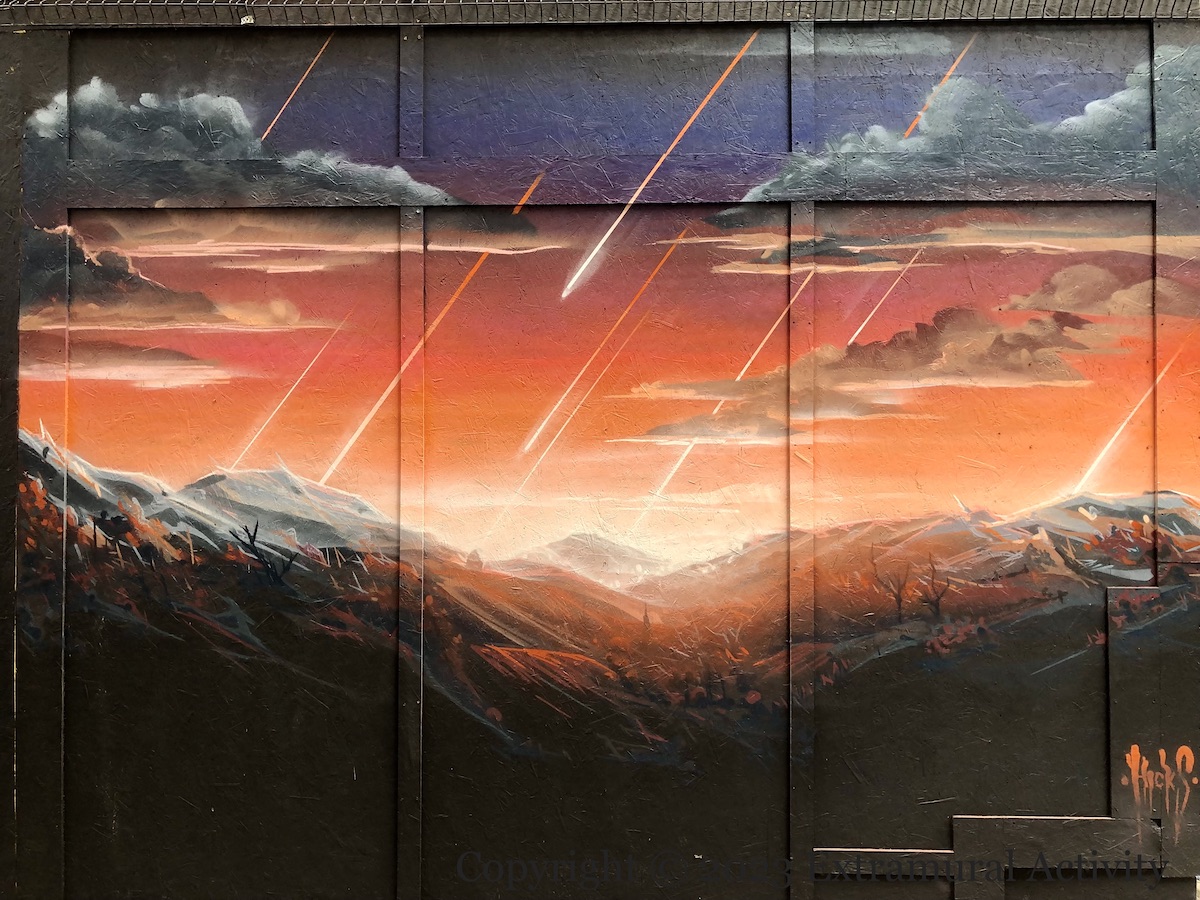
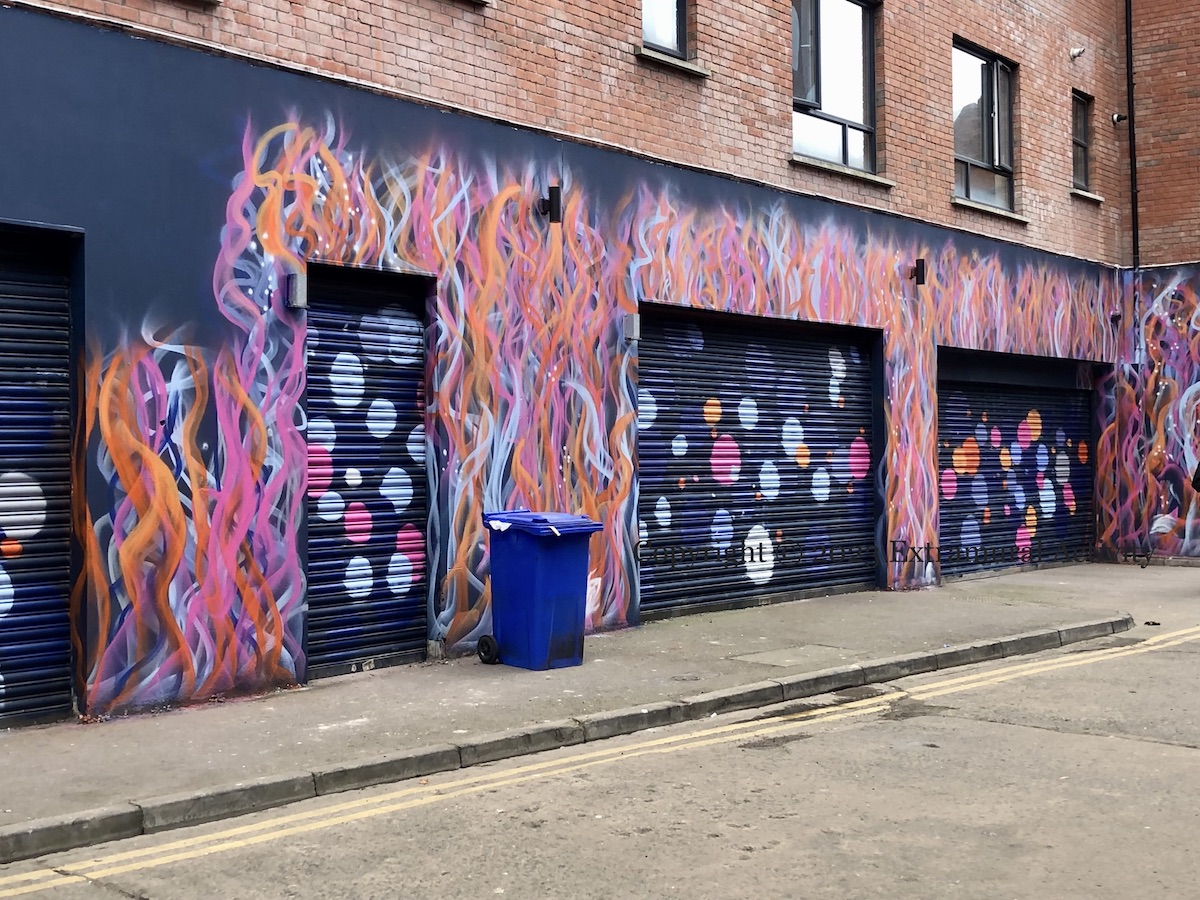
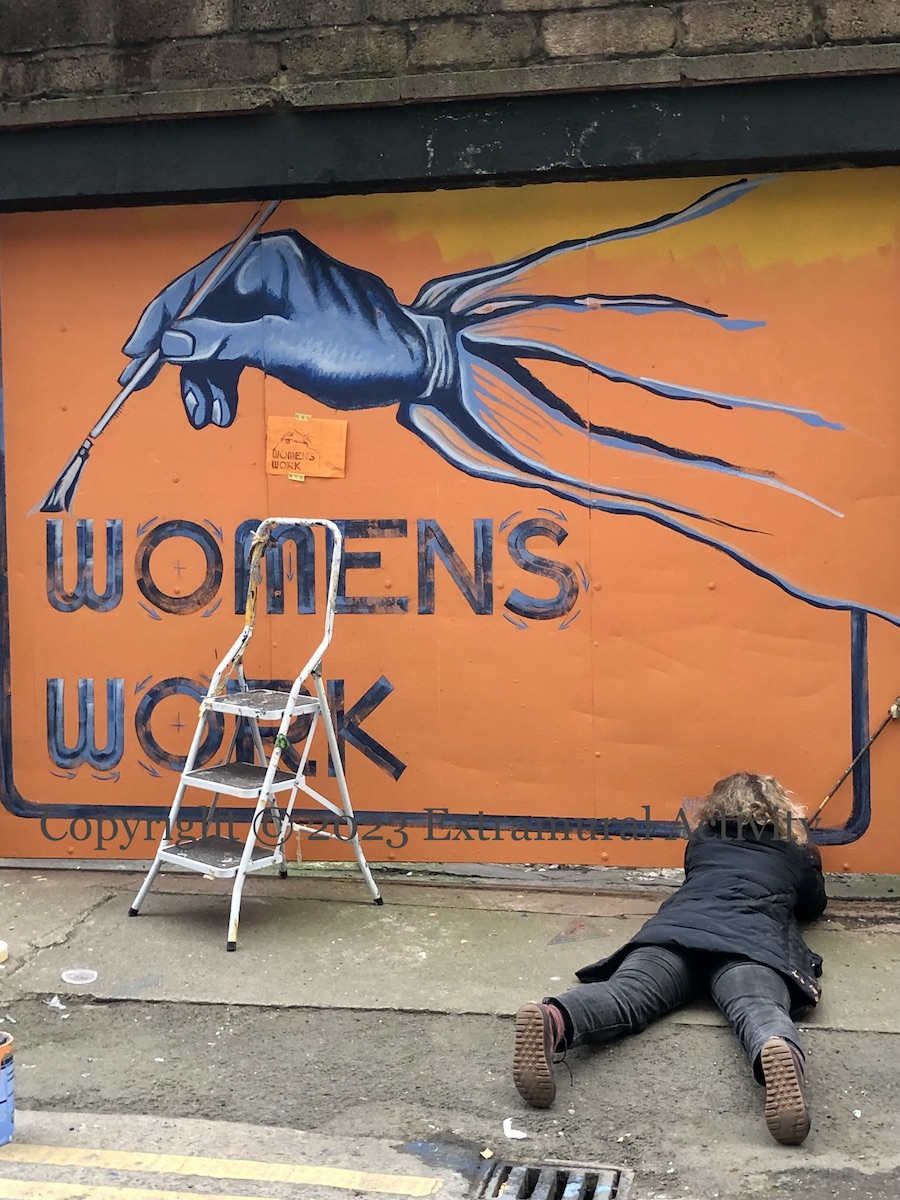
Here is a gallery of completed pieces produced for International Women’s Day 2023 in College Court. The new street art is part of a larger revitalisation project (Belfast City Council).
The works shown are (from Castle Street to College Street) by Claire Prouvost, Holly Pereira, Katriona, Kerri Hanna, Danni Simpson, Alana McDowell, ESTR; Laura Nelson, Novice Jess, Friz, (guest artist Hicks who was in town to repair and extend his piece in College Street Mews (see Cool) – it was damaged by a dumpster fire) and, on the other side of the street, HM Constance [Update: 2023-04 a purple cow was painted on one of the HMC shutters – see the image in the Paddy Duffy collection].
“My piece relates to the history of college court and the coming together of committee in 1807 to raise public subscriptions in co-educational, non denominational education.” (tw)
“This piece took inspiration about the history of College Court, which used to be called Water Street, as it was the first place running water pipes were installed in Belfast.” (ig)
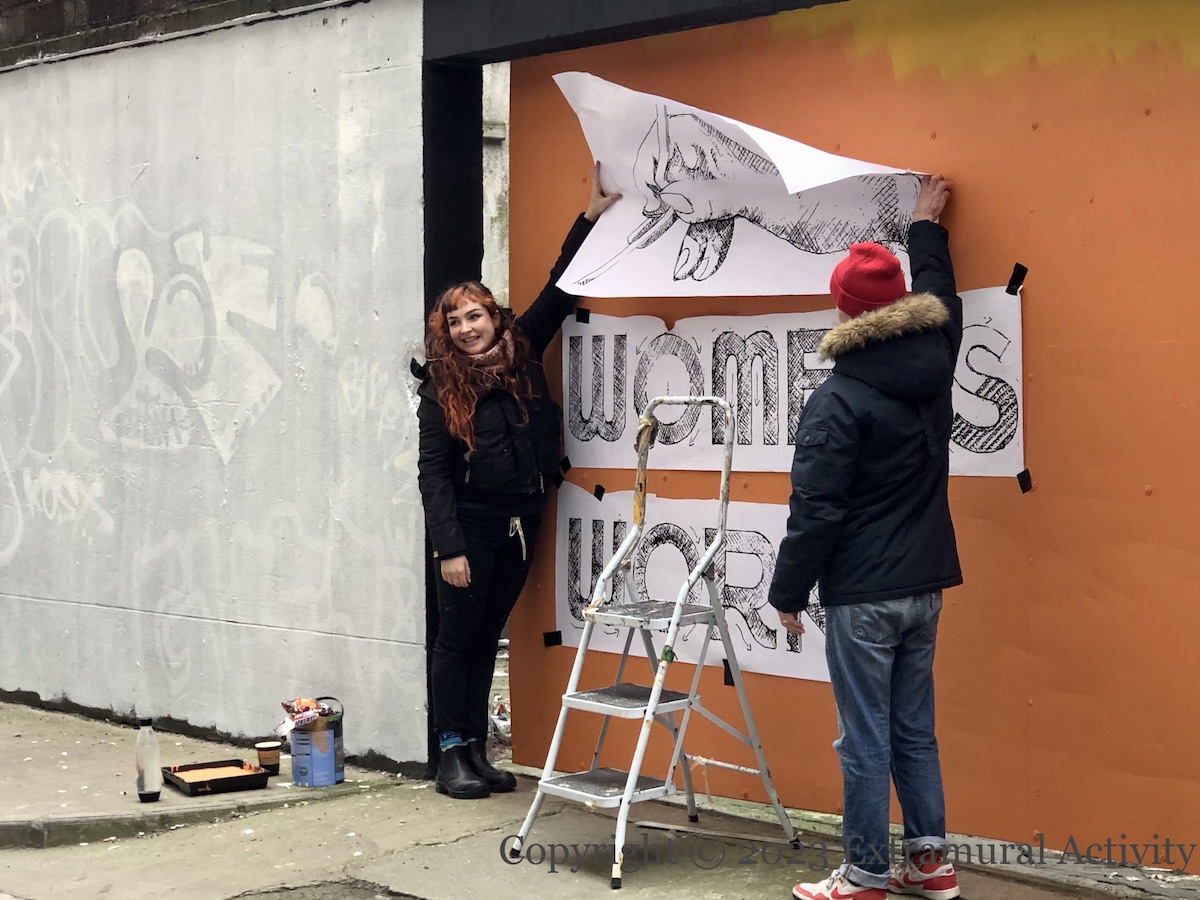
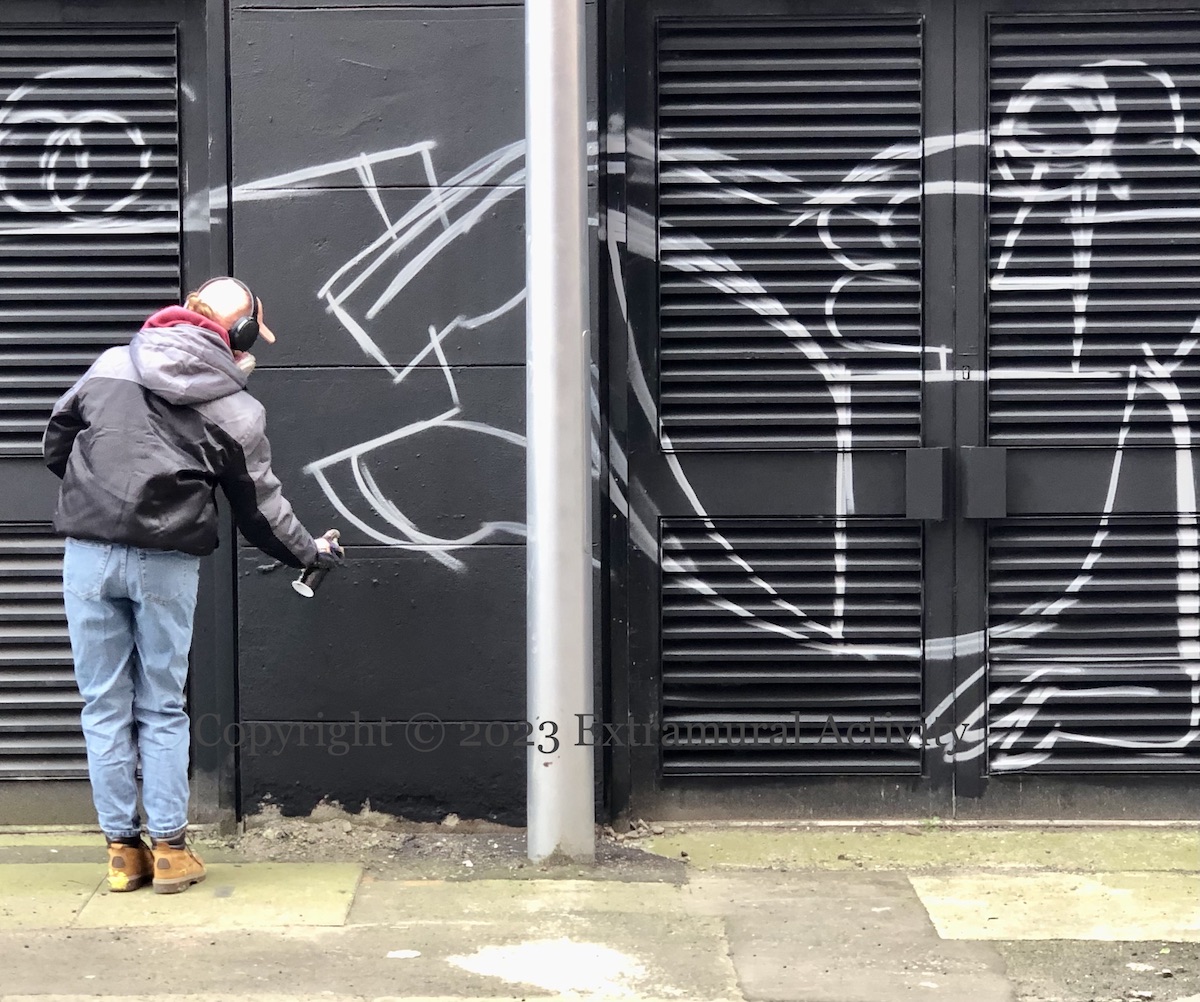
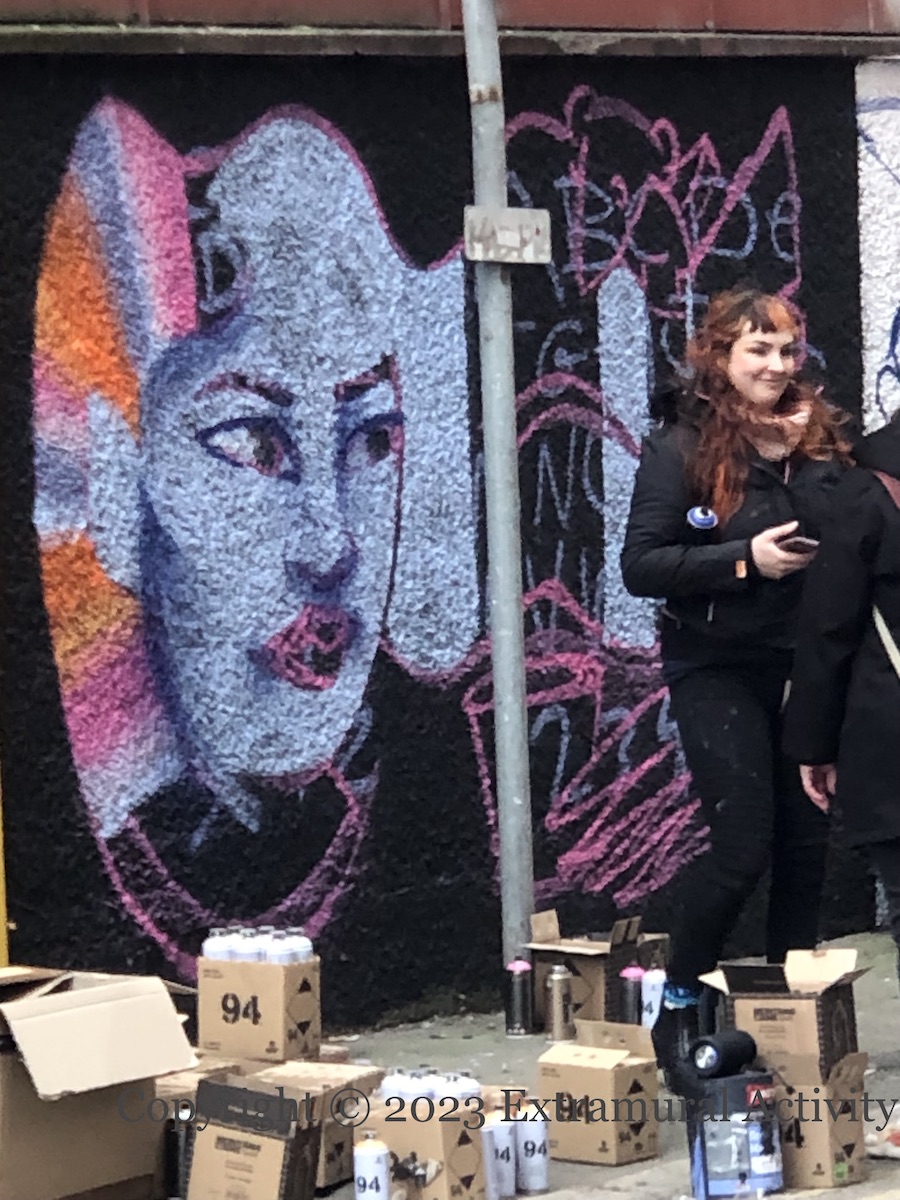
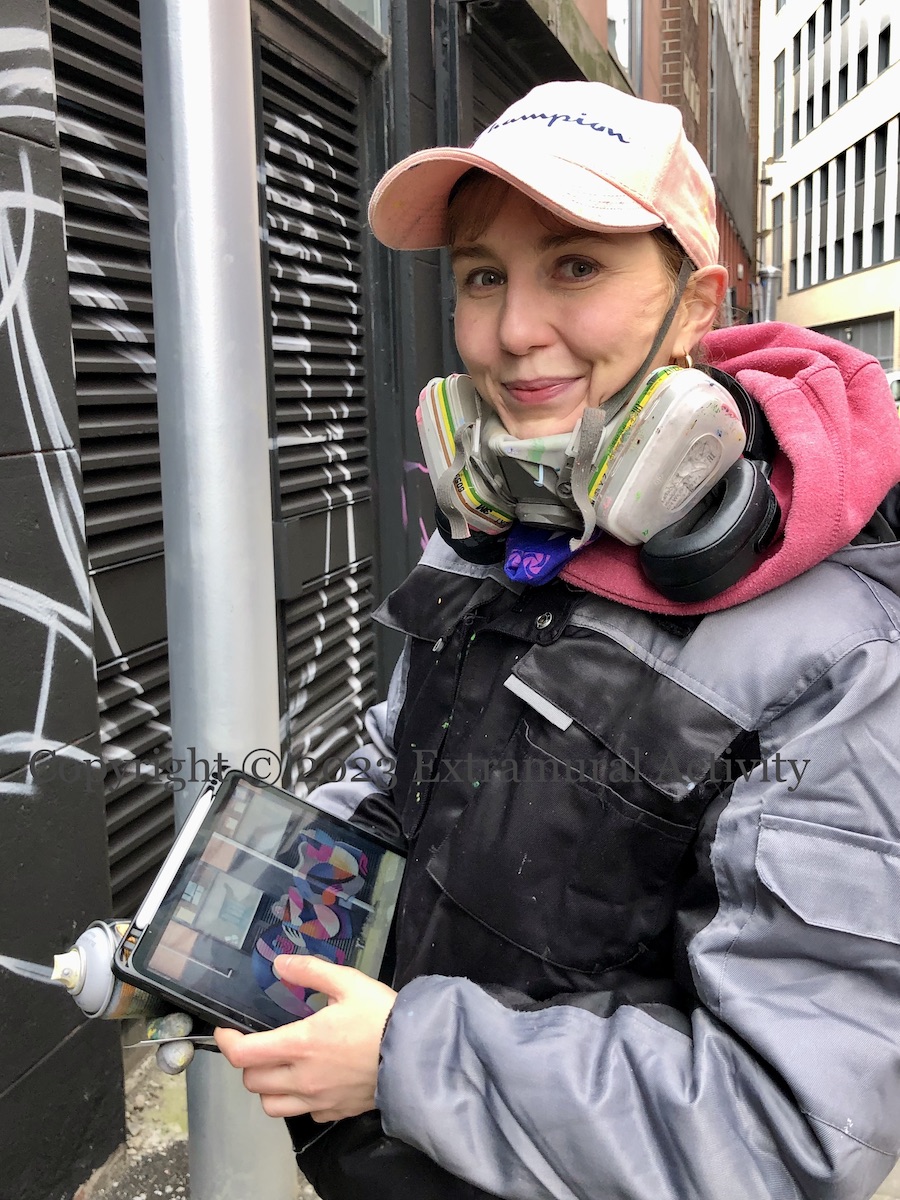
Here is a gallery of “in-progress” images of the street art being painted by female artists for International Women’s Day, all along College Court. (Most of) The completed pieces can be seen in We Built This.
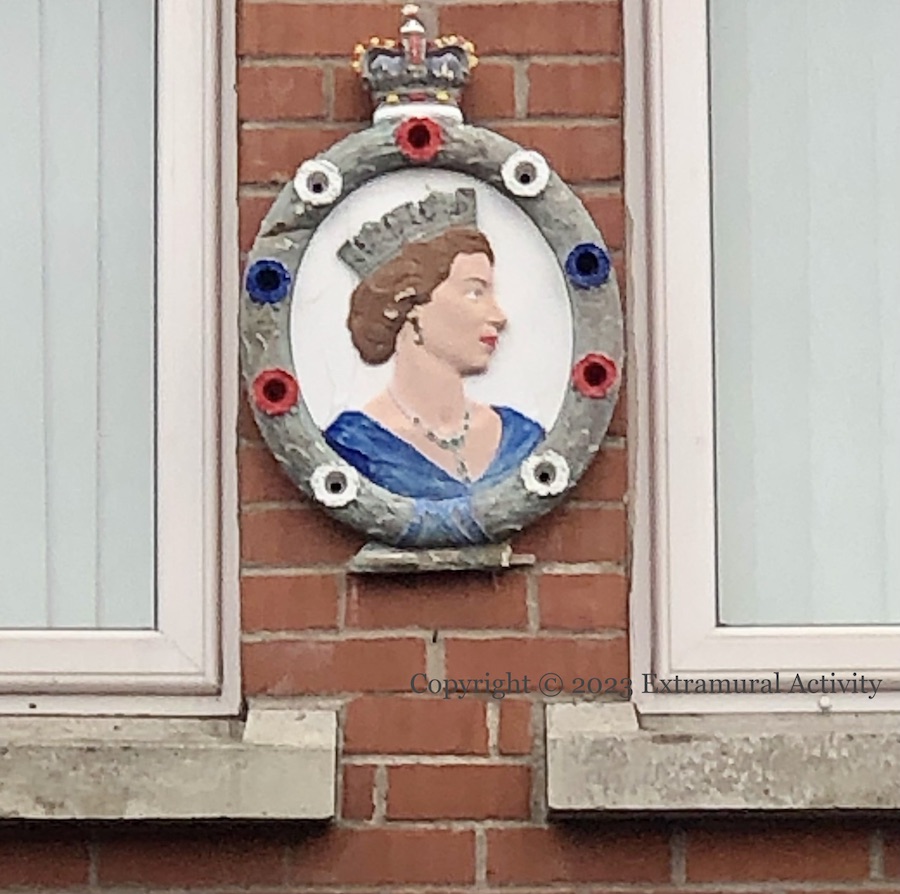
This cast of Queen Elizabeth in profile is mounted on the second storey of a house in Hopewell Crescent, Belfast, prior to her death on September 8th (see e.g. The People’s Queen Is Dead), a few months after her platinum jubilee in June (celebrated with a similar portrait in The Longest Reign).
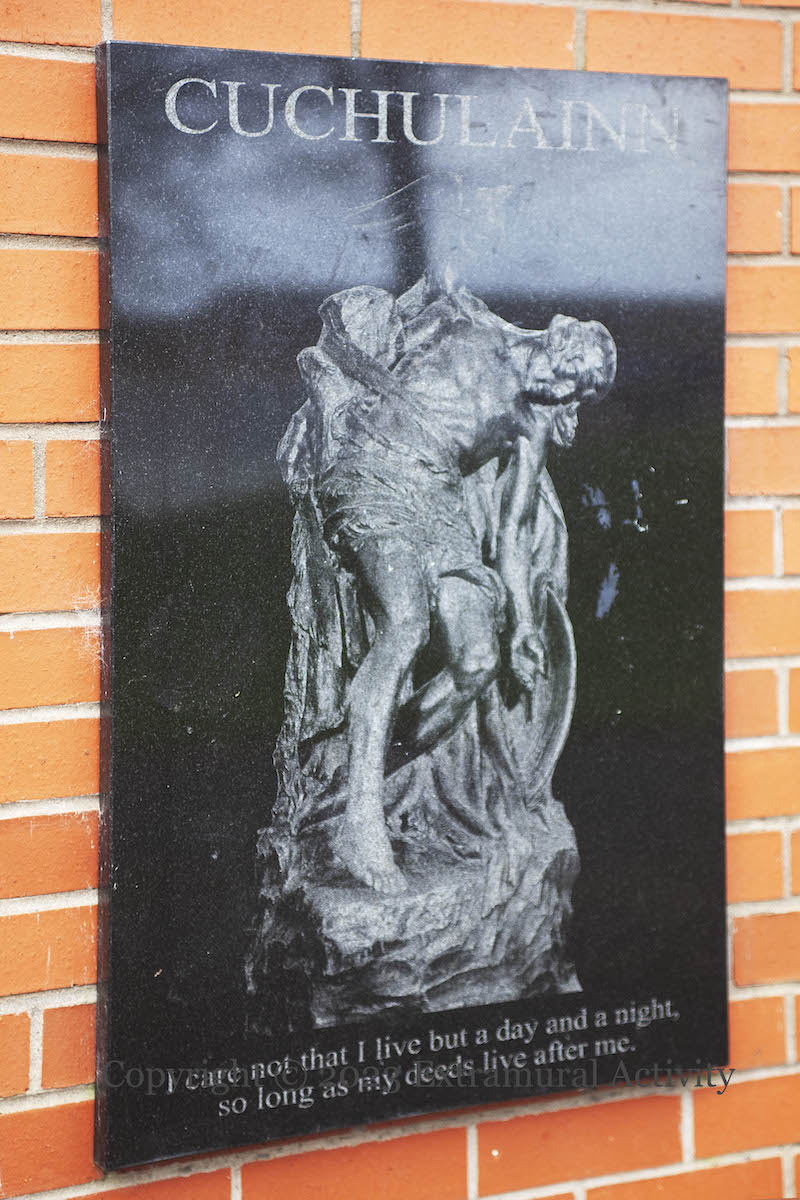
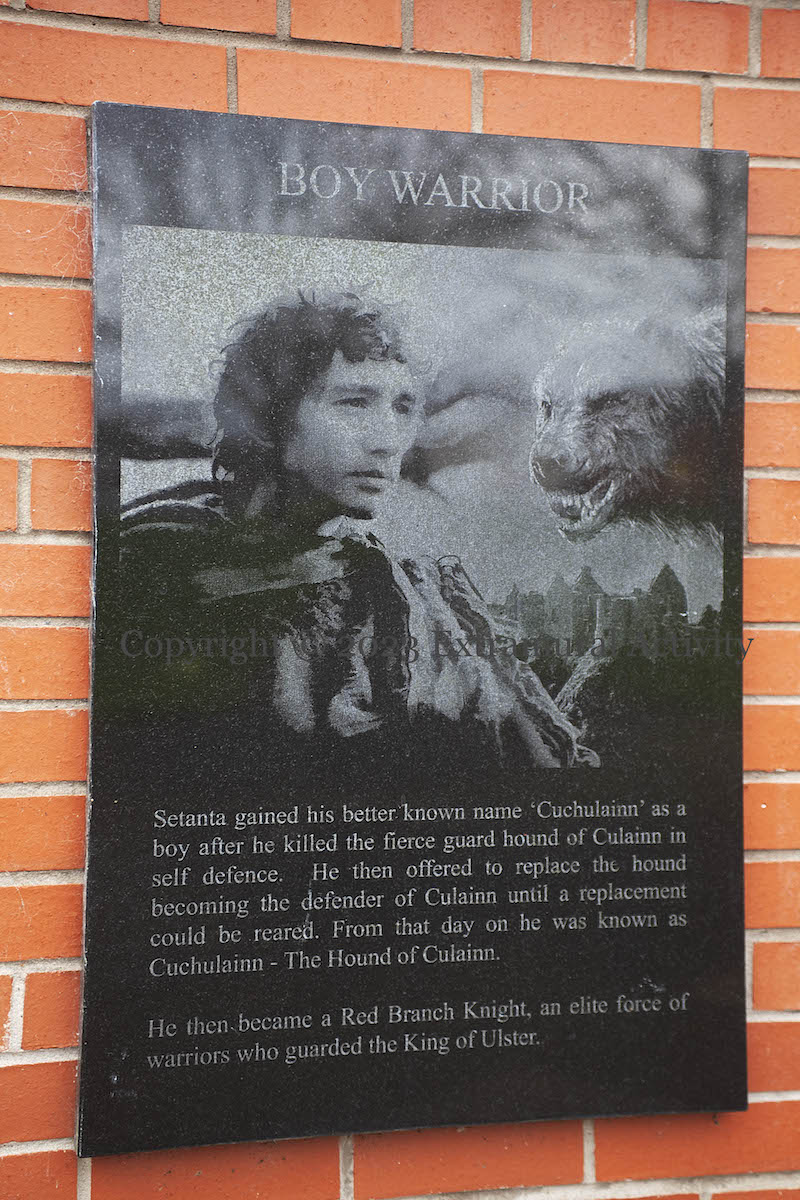
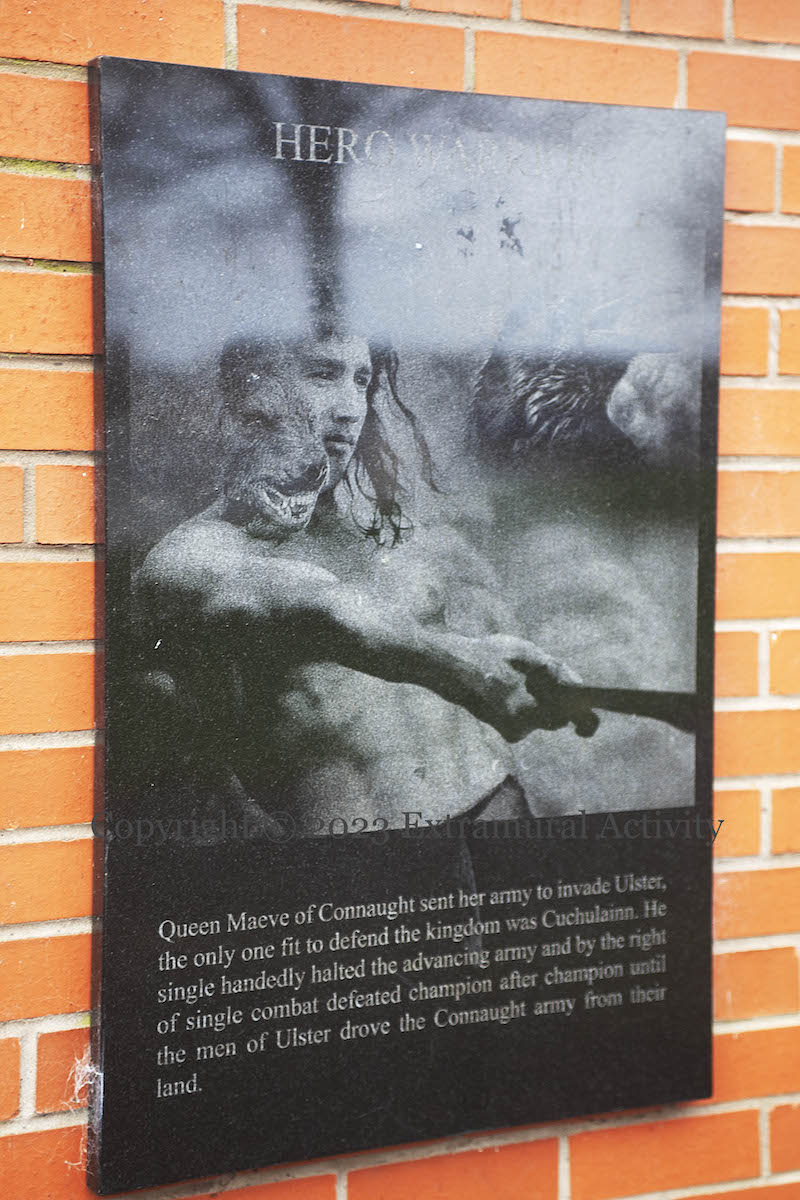
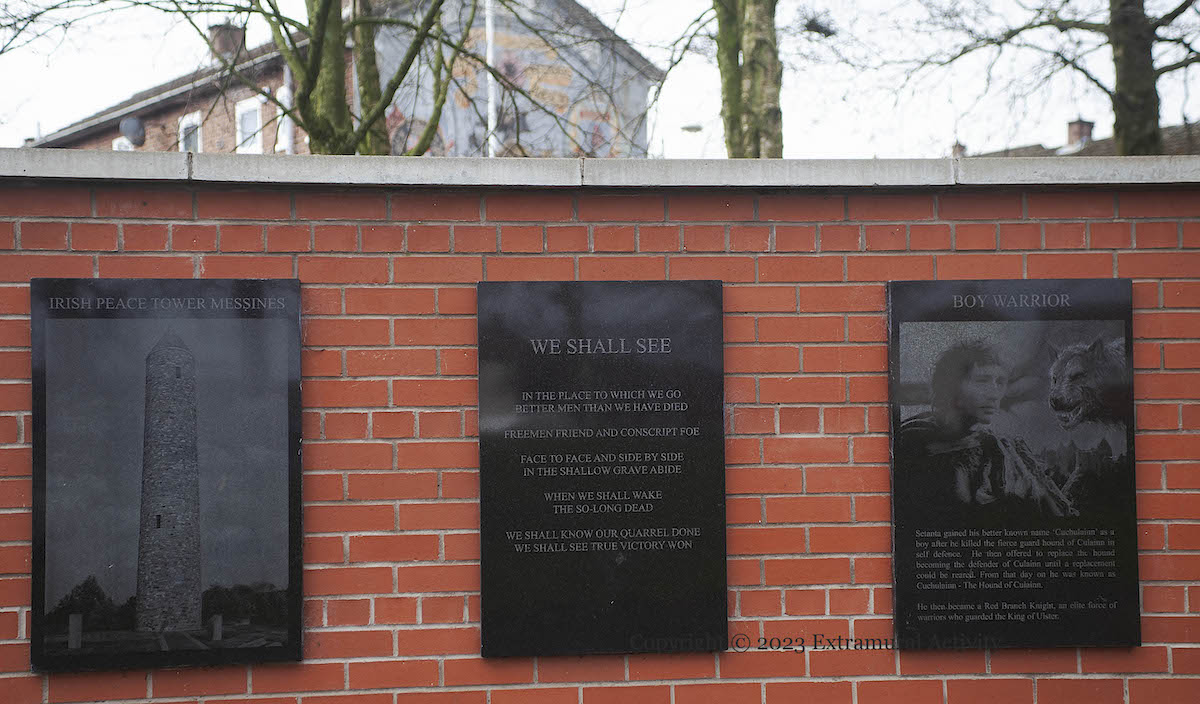
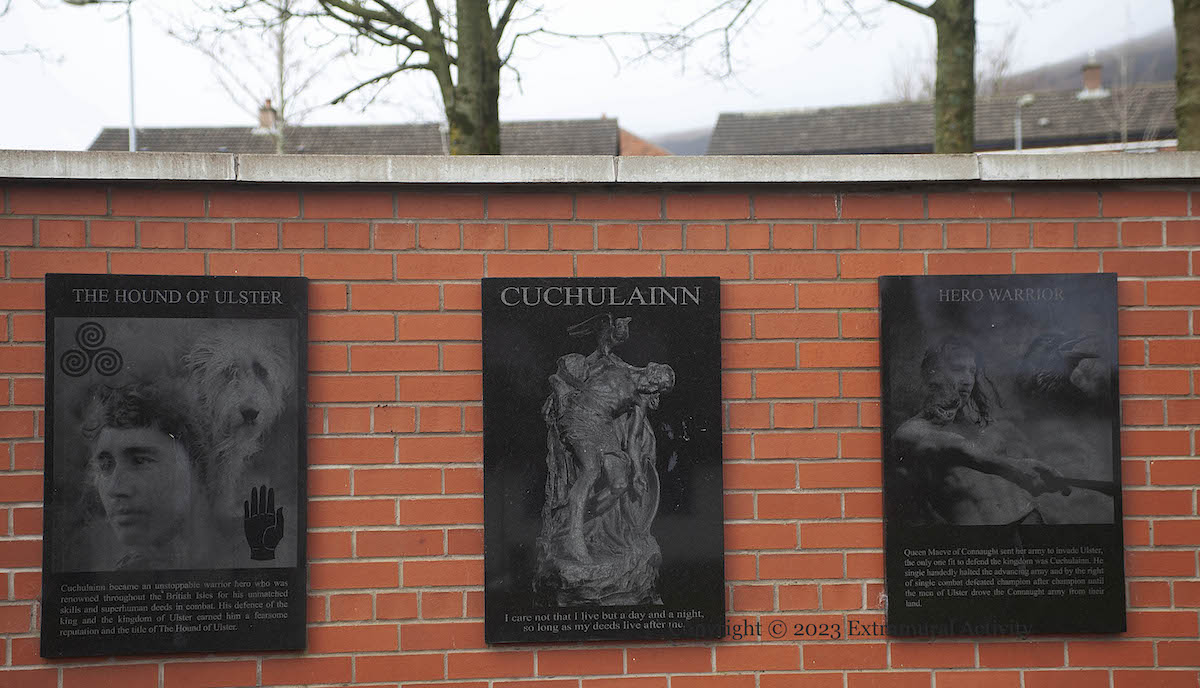
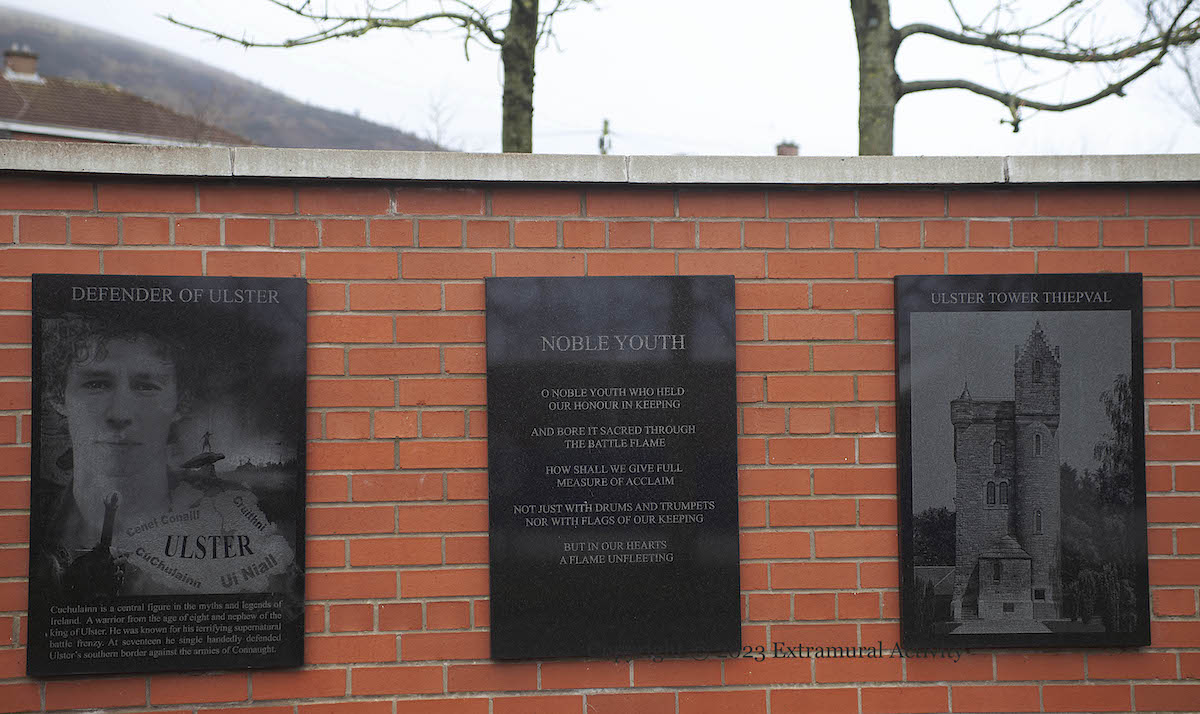
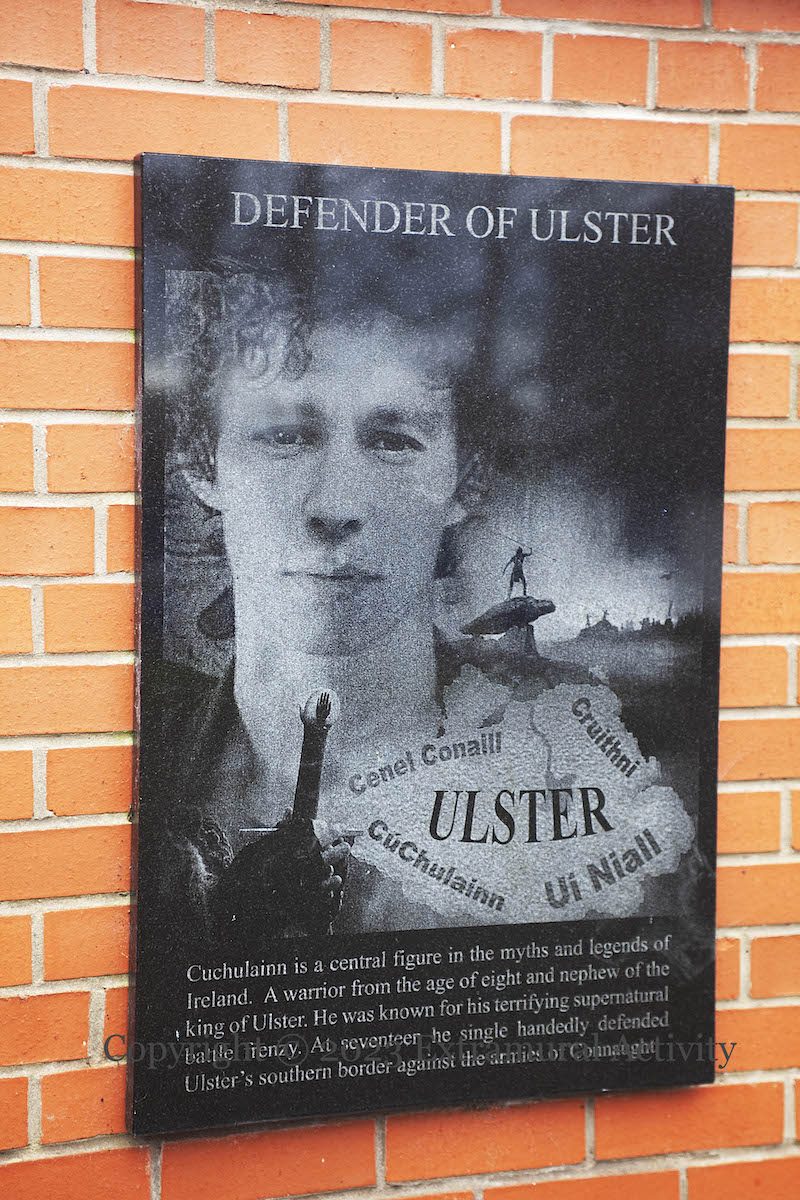
As the Visual History page on the role of Cú Chulaınn makes clear, in PUL muraling and iconography, Cú Chulainn serves as the “ancient defender of Ulster”, and the B Specials, UDR, and loyalist paramilitaries – primarily the UDA but also the UVF – then fit into that tradition. Using Cú Chulaınn as a precursor for service in the Ulster Division of WWI is unique to the panels on Highfield green, five of which are devoted to the hero Cú Chulaınn and four – two on each end – refer to the Great War.
The five Cú Chulaınn panels are (from left to right) Boy Warrior, Hound Of Ulster, Sheppard’s statue, Hero Warrior, and Defender Of Ulster – all shown individually in this post.
On the far left, there are two panels showing Messines tower and a few lines from a Ronald Lewis Carton poem Réveillé (though given a more ‘victorious’ ending) and on the far right, a few lines from Duncan Campbell Scott’s To A Canadian Lad Killed In The War and Thiepval tower. The words to I Vow To Thee My Country (lyrics) are along the bottom (see the wide shot, final image below).
The biographical panels focus on Cú Chulaınn’s age – the sixth panel emphasises that Cú Chulaınn was only 17 when he held off Maeve’s forces – which is perhaps a similarity with those who joined the 36th Division, but how the “defender of Ulster” is connected to the defense of Europe is obscure.
There are three hooded gunmen on the main panel of this new installation along Conway Street, Belfast, and the side panel is a gallery of 14 photographs of hooded gunmen, flanked on either by two more hooded gunmen.
Please note: the photograph above has been photoshopped for colour. The true colour (orange) can be seen in the wide shot, below.
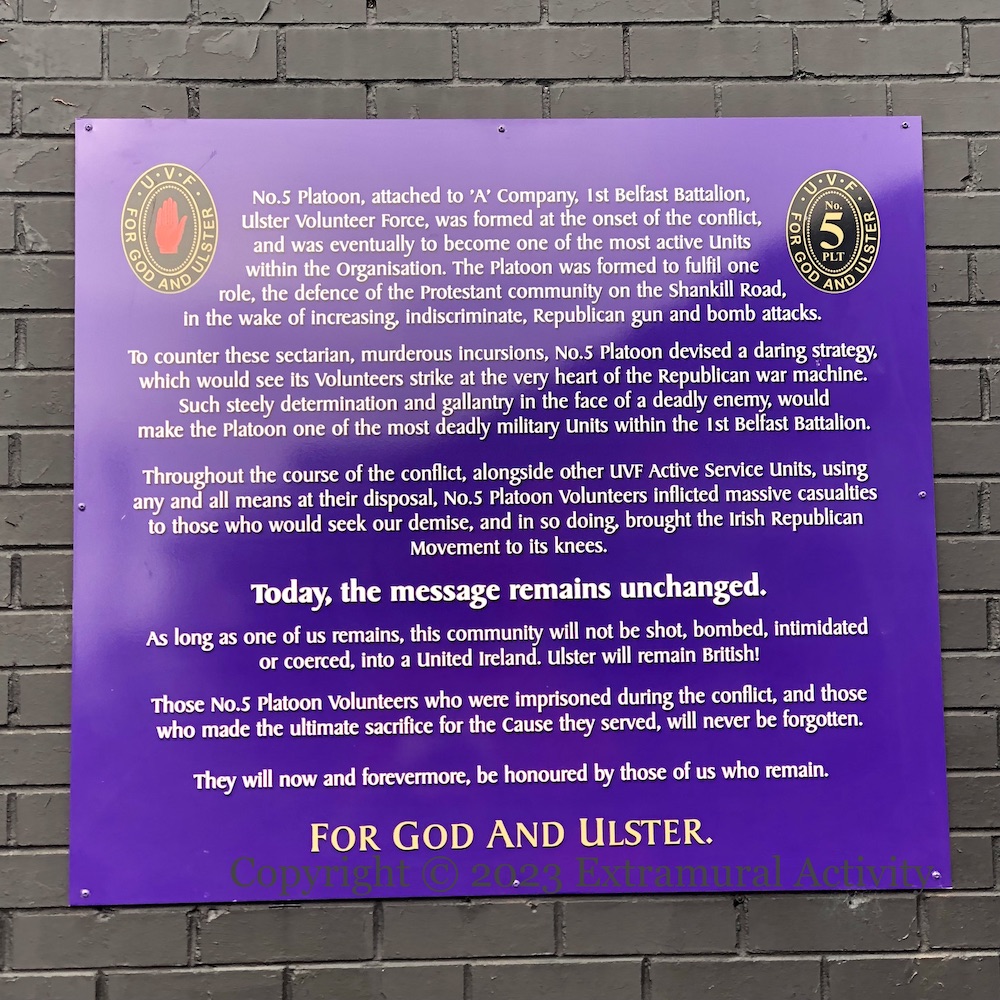
“No. 5 Platoon, attached to ‘A’ Company, 1st Belfast Battalion, Ulster Volunteer Force, was formed at the onset of the conflict, and was eventually to become one of the most active Units with the Organisation. The Platoon was formed to fulfil one role, the defence of the Protestant community on the Shankill Road, in the wake of increasing, indiscriminate, Republican gun and bomb attacks. To counter these sectarian, murderous incursions, No. 5 Platoon devised a daring strategy, which would see its Volunteers strike at the very heart of the Republican war machine. Such steely determination and gallantry in the face of a deadly enemy, would make the Platoon one of the most deadly military Units within the 1st Belfast Battalion. Throughout the course of the conflict, alongside other UVF Active Service Units, using any and all means at their disposal, No. 5 Platoon Volunteers inflicted massive casualties to those who would seek our demise, and in so doing, brought the Irish Republican Movement to its knees. Today the message remains unchanged. As long as one of us remains, this community will not be shot, bombed, intimidated or coerced, into a United Ireland. Ulster will remain British! Those No. 5 Platoon Volunteers who were imprisoned during the conflict, and those who made the ultimate sacrifice for the Cause they served, will never be forgotten. They will now and forevermore, be honoured by those of us who remain. For God and Ulster.”
Castle Arcade is so-called because it is the site of the original castle of Belfast, built by the Normans in the late 12th century and then rebuilt by Arthur Chichester in 1611. Chichester’s castle had “spacious gardens which extended from the river along to Cromac Woods and near Stranmillis” with “orchards, bowling greens and cherry gardens … fish ponds,” for “hunting, hawking, and other sports”. It was destroyed by fire in 1708 after which the area became commercialised as a market (ArchiSeek | Mary Lowry | BBC | Belfast Entries).
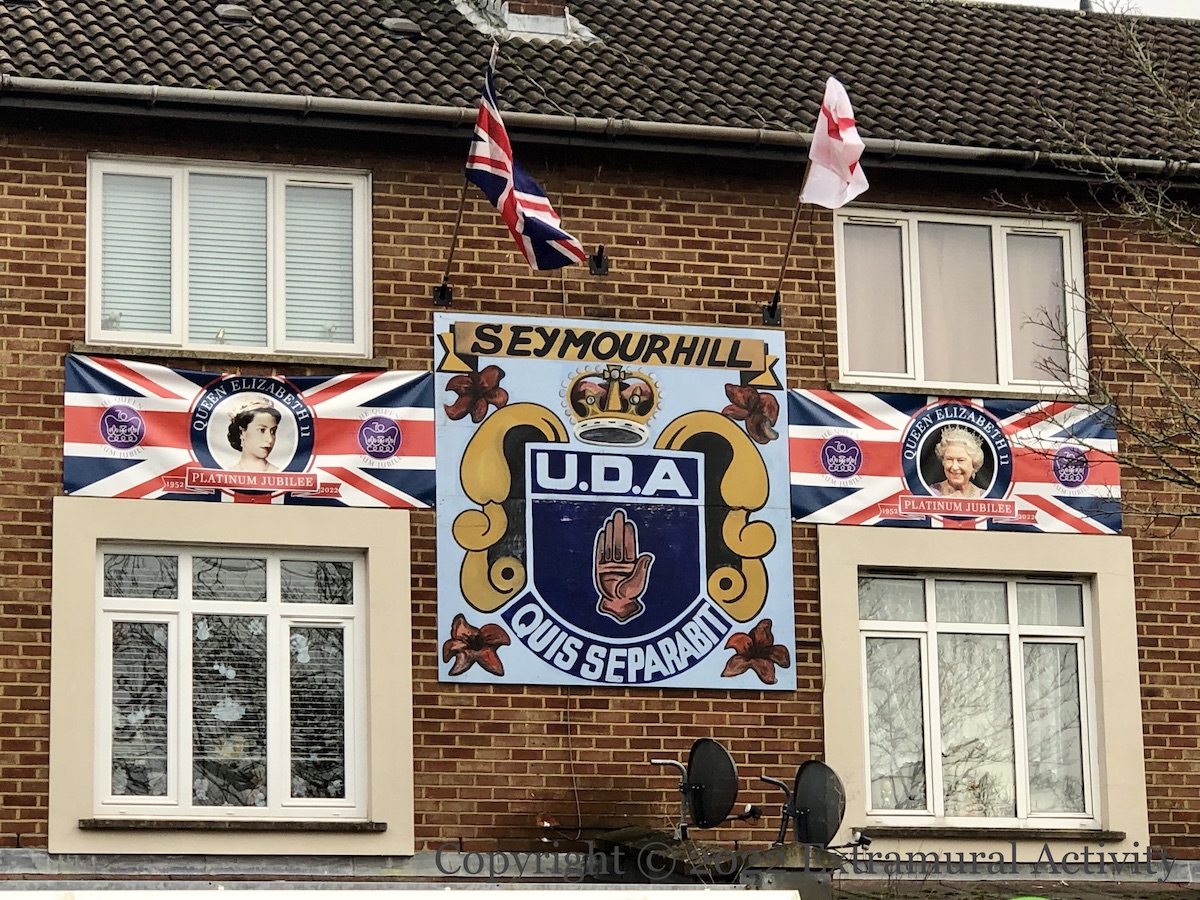
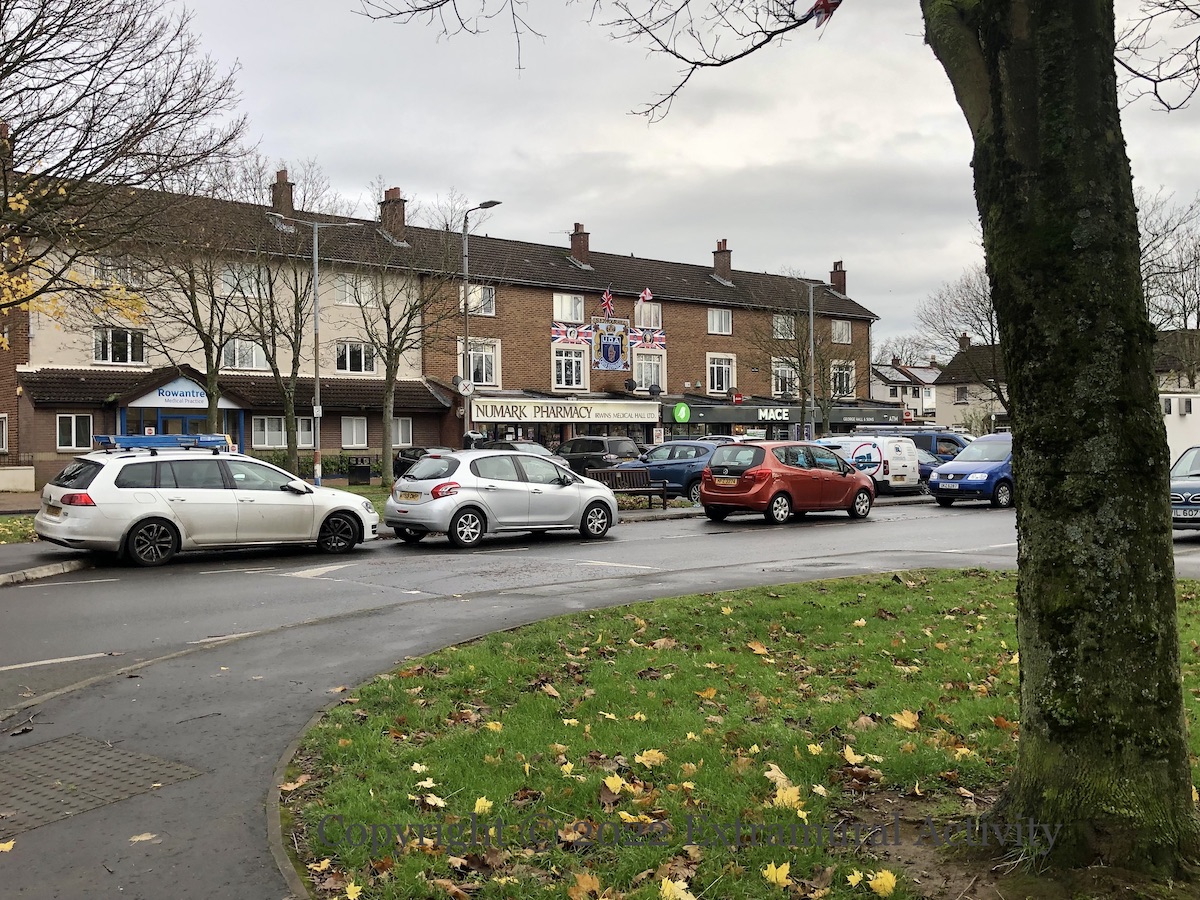
Queen Elizabeth II 70th/platinum Jubilee banners remain on either side of the UDA board above the Seymour Hill shops, even after her death in September (previously there were two NI Centenary banners). There are orange lilies at the four corners of the UDA emblem.




















 Extramural Activity