Here are two final images from the memorial garden in Kilcooley. As mentioned in Tuesday’s post (To Keep Our Ulster Free), it seems that the combination of WWI imagery (today’s post and Across The Wire) and paramilitary memorials was not the plan approved by the Department of Social Development, which contributed funds to the project (Belfast Telegraph). A wide shot of the whole is included below.
According to an article in the Tele last Friday (2017-04-21), the Housing Executive has a list of over 100 memorial on Executive-owned land that it considers illegal. The list itself does not seem to be available and so it is not not known if the Kilcooley garden is one of these.
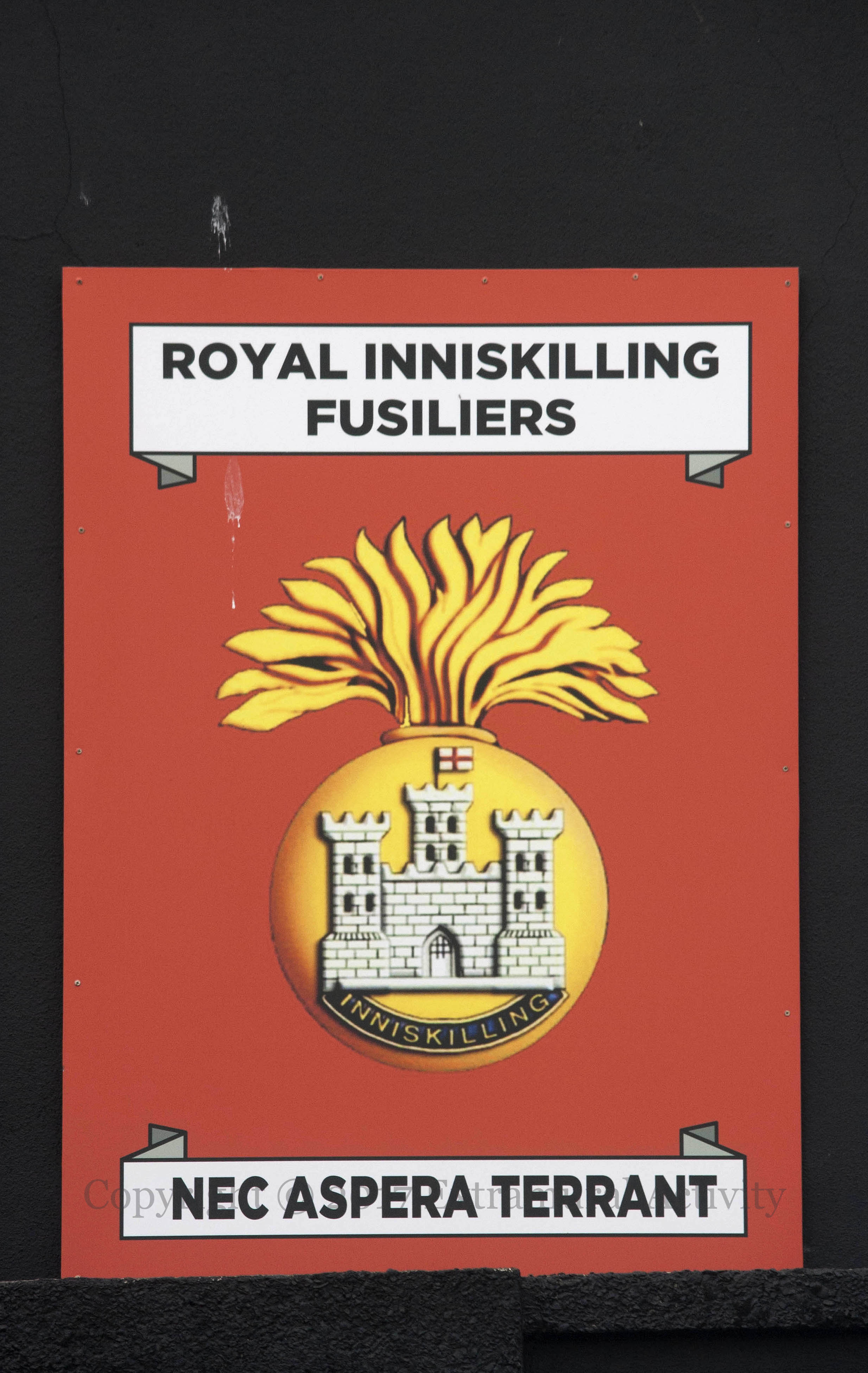
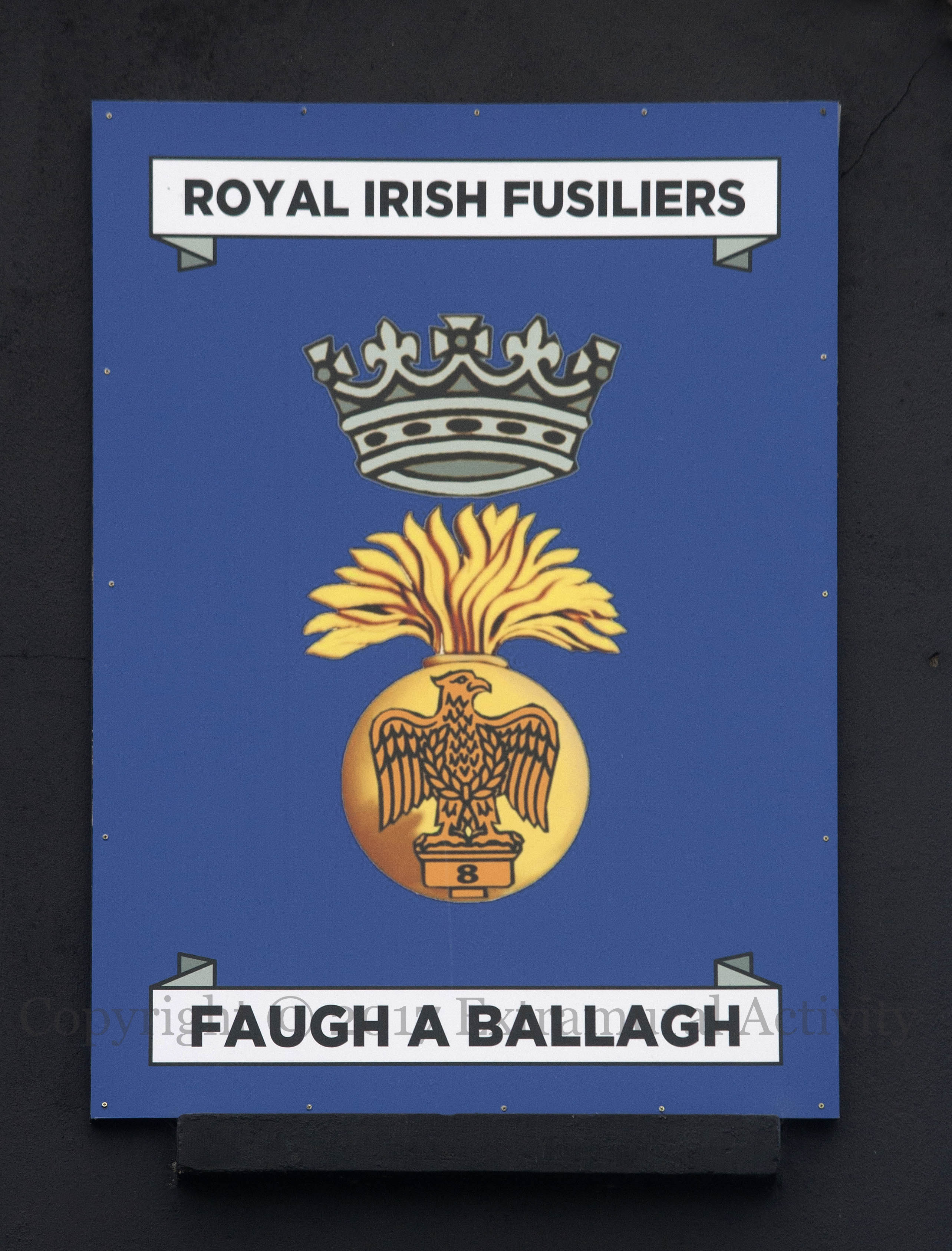
“Faugh a ballagh” (Clear the way) was the motto of the Royal Irish Fusiliers (and then of the Royal Irish Rangers and currently of the Royal Irish Regiment). The Fusiliers served on the western front during WWI – the first and ninth battalions serving in the 36th (Ulster) Division – and the 3rd battalion helped put down the Easter Rising in 1916. Its coat of arm are one of four panels along with the 36th, the Royal Irish Rifles, and the Royal Inniskilling Fusiliers.
The Thiepval Memorial, the Cross of Sacrifice, and the Ulster Tower are pictured in the bottom left.
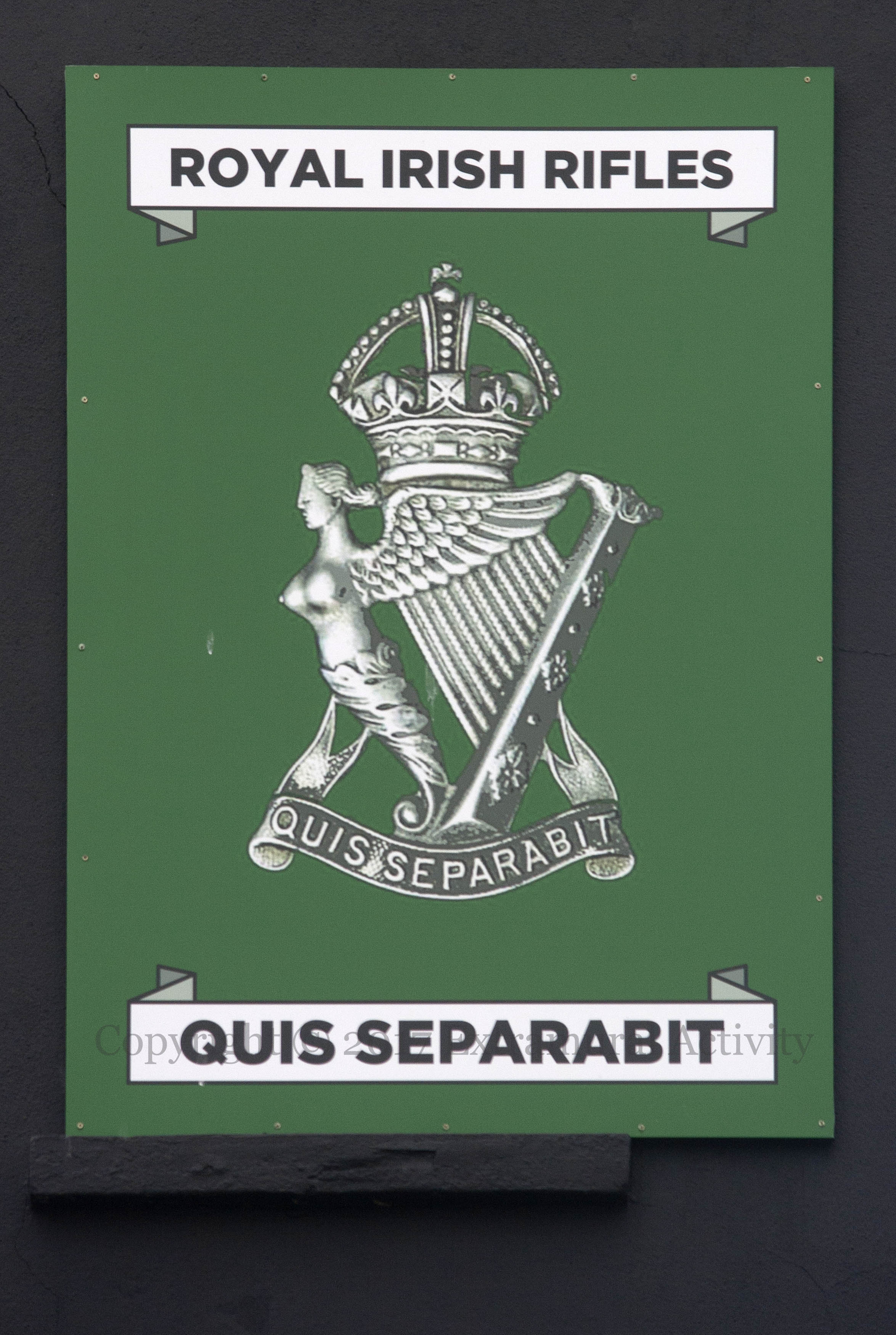
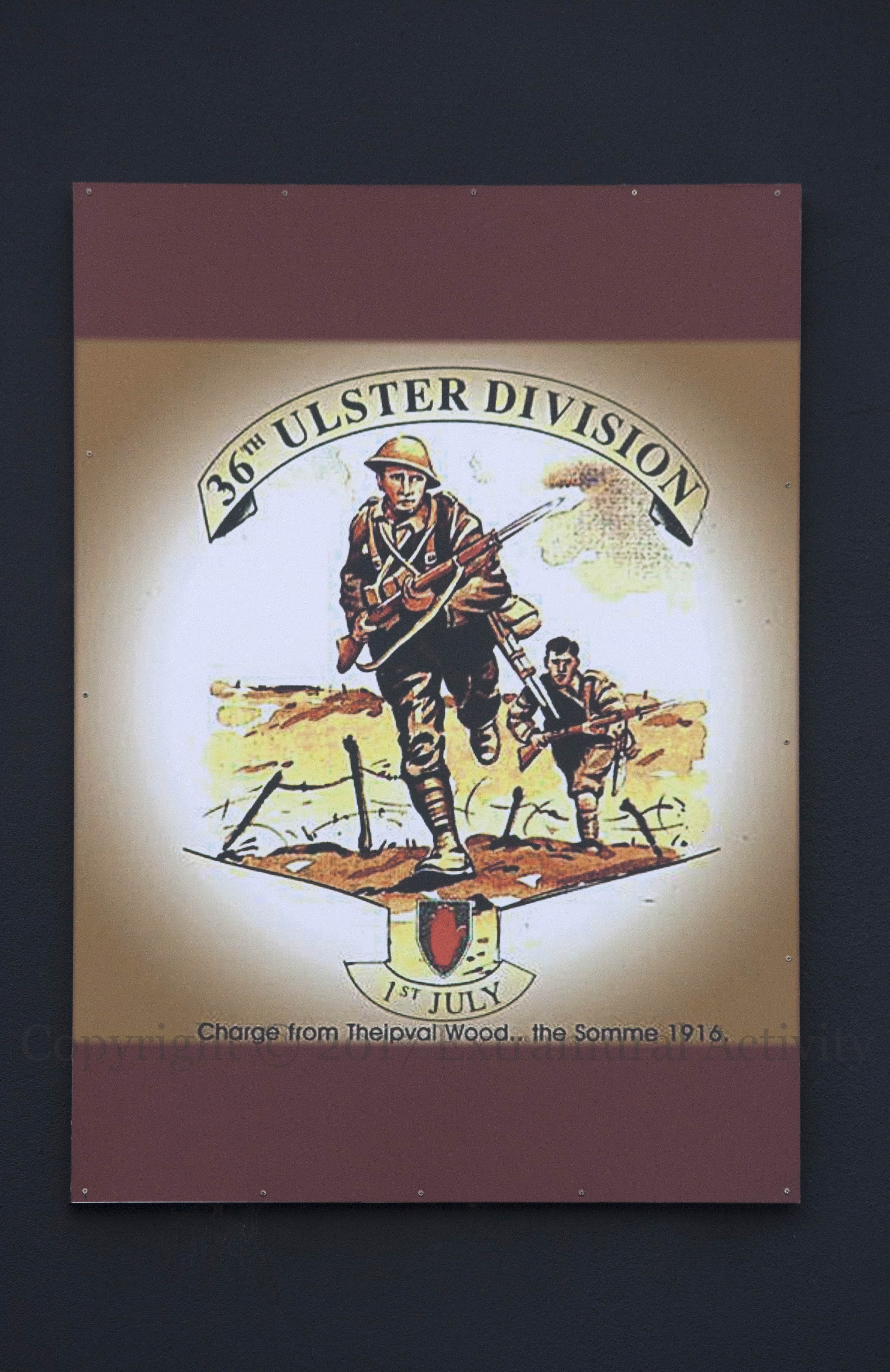
Close-ups of the four regimental insignia are included below. “Nec Aspera Terrant [sic, for “terrent”]”, meaning “frightened by no difficulties”, was the motto of the Inniskilling Fusiliers, who fought in both Boer Wars and both World Wars – its battalions saw action at Gallipoli and on the Western front – before being amalgamated in the Royal Irish Rangers in 1968, along with the Royal Ulster Rifles and the troop featured in the third image, the Royal Irish Fusiliers. Their arms are shown along with those of the Royal Irish Rifles and a board commemorating the charge from Thiepval Wood during the Somme
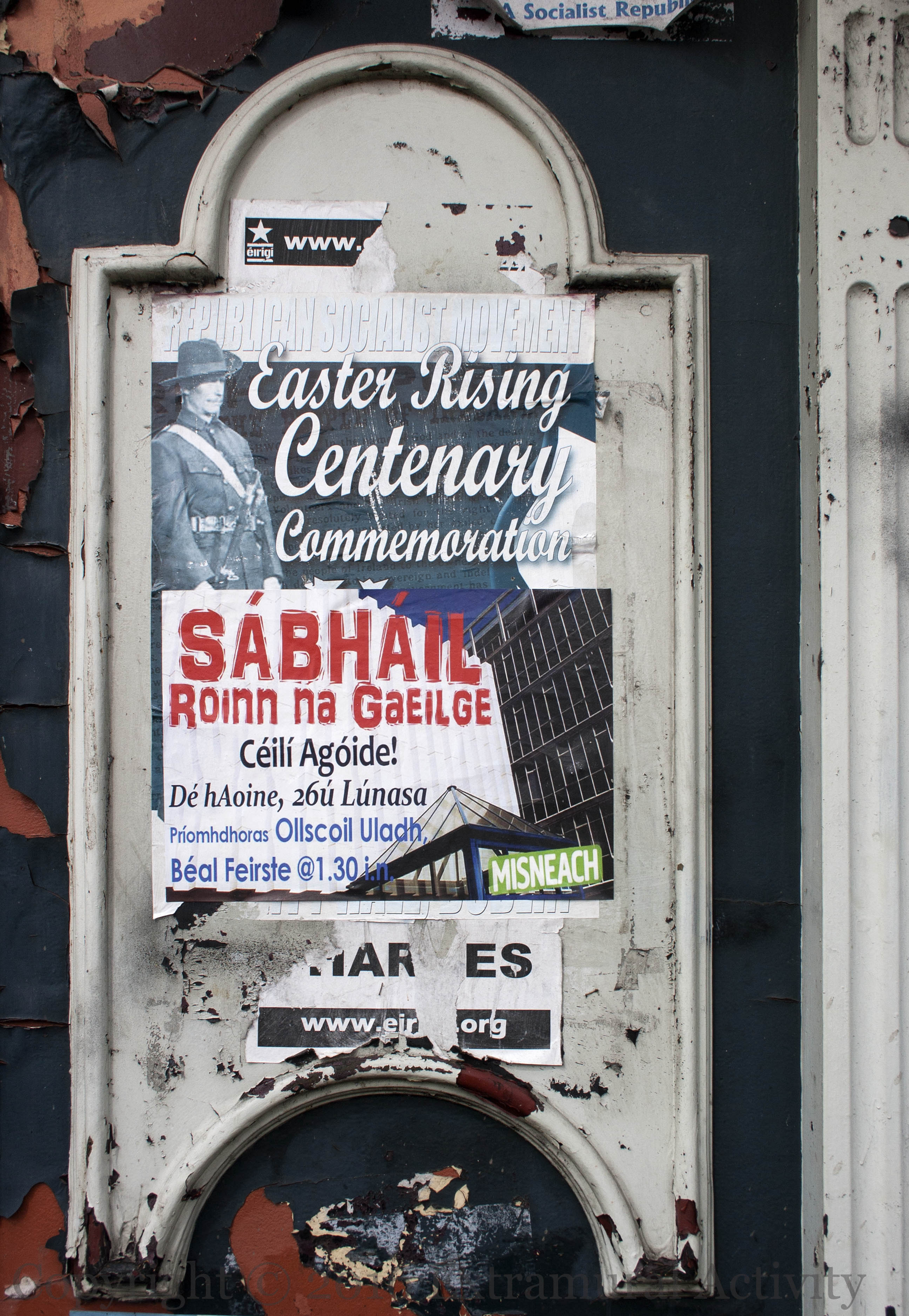
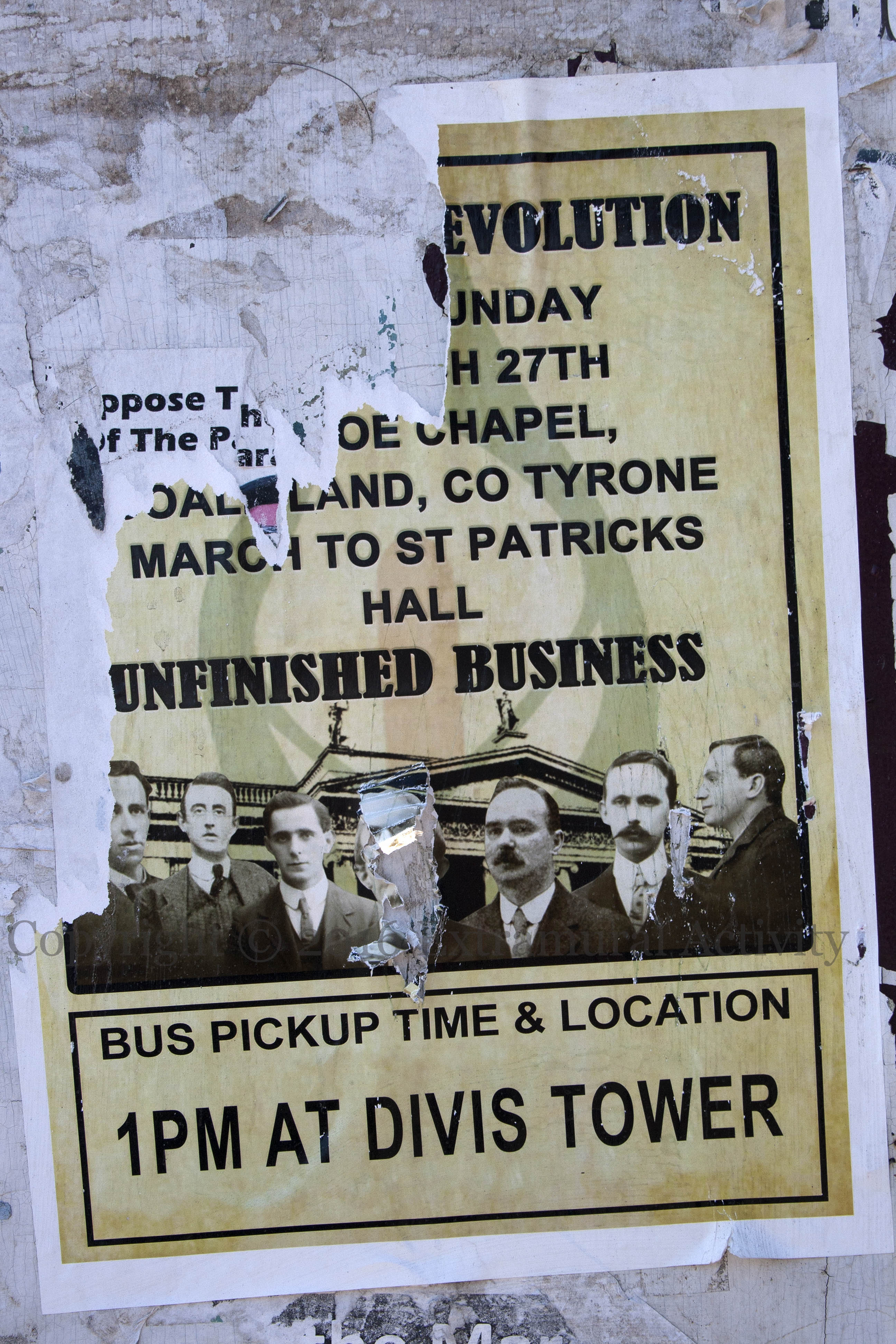
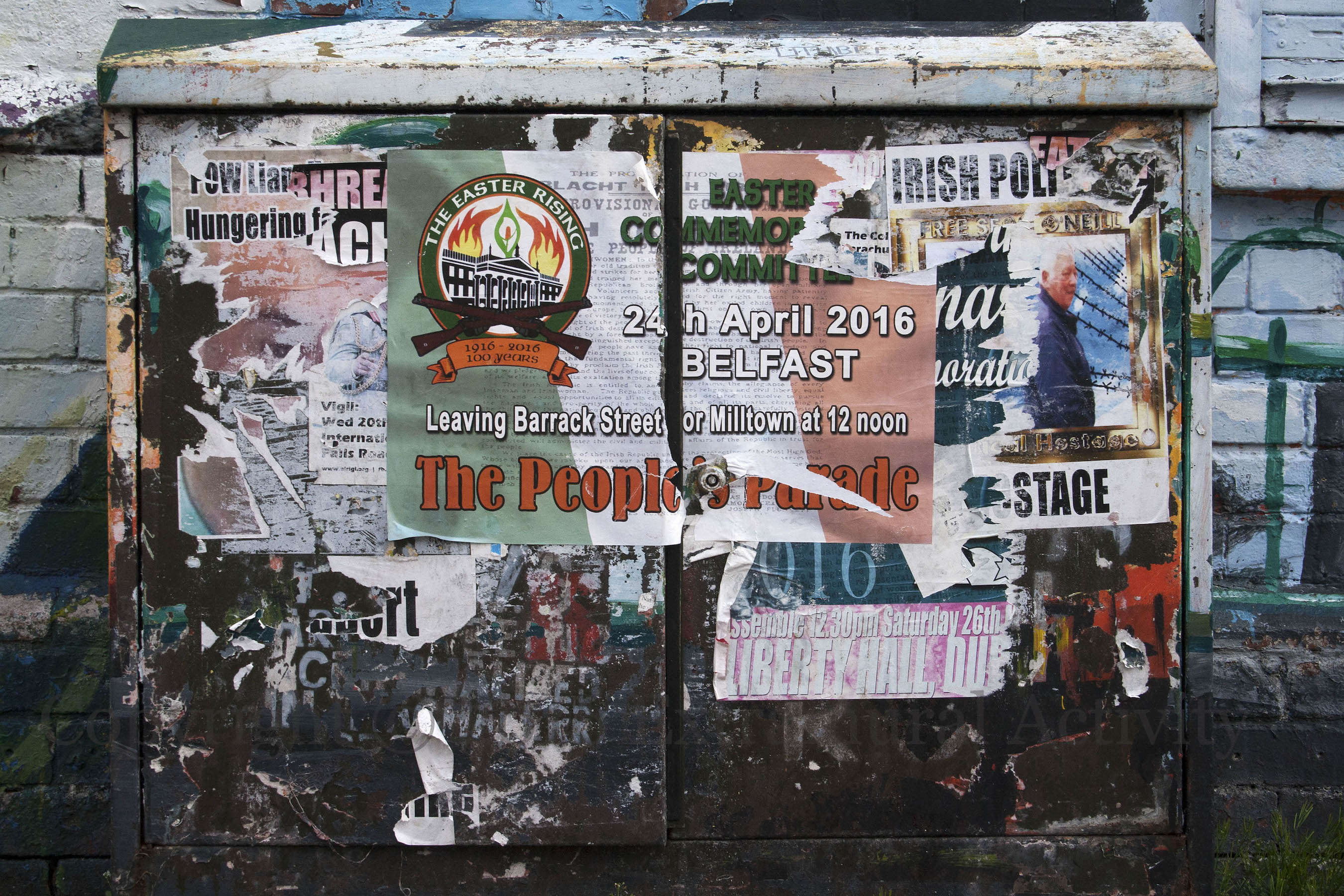
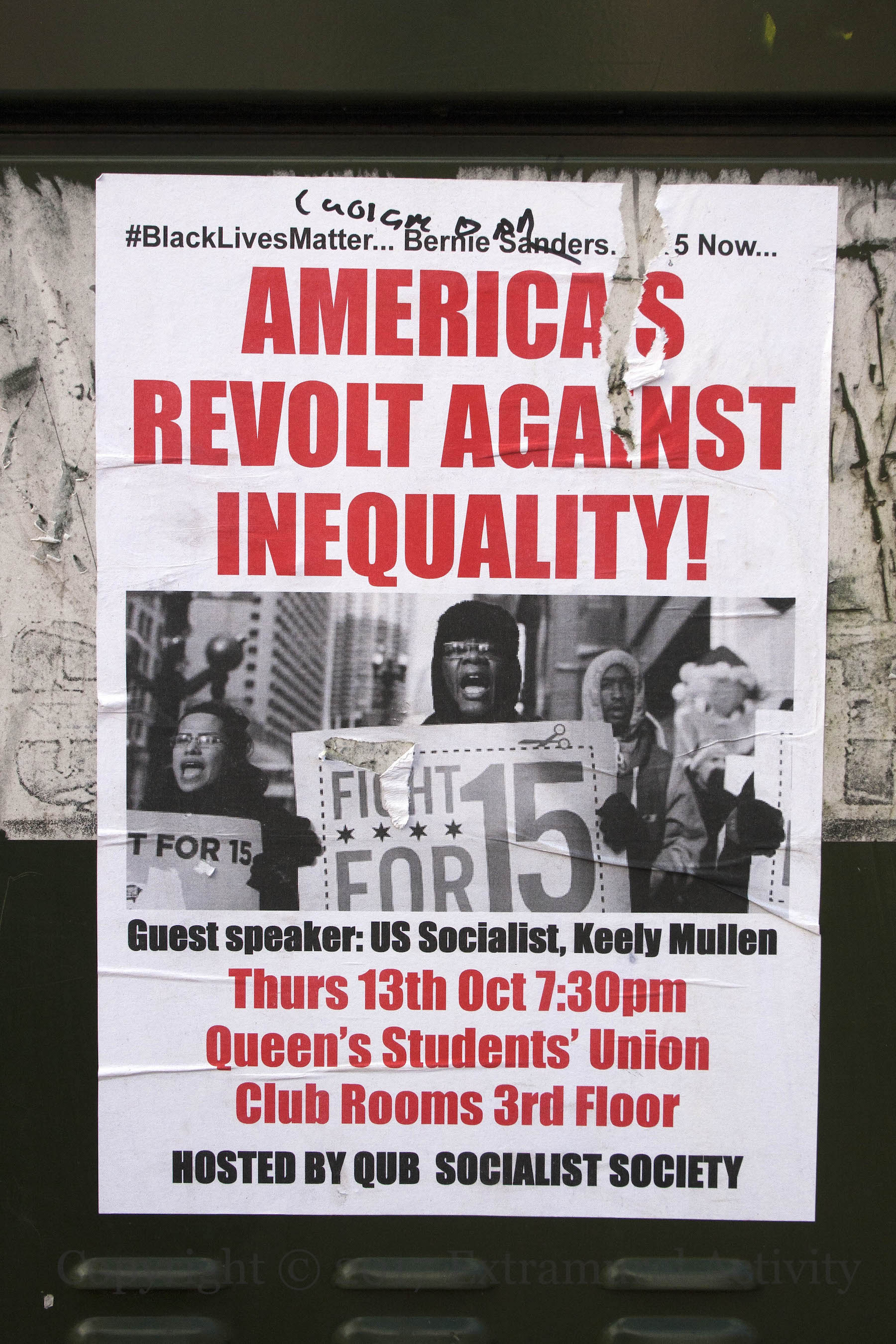
Another selection of distressed posters, torn to reveal … more posters. The electrical box in the third image was included in last year’s collection: We Had Our Distresses.
“We have slain him but we fear him/As we stand in silence now/For the hero light still lingers/Like a lantern on his brow. And the wiles of witchcraft jeer him/With the phantoms of our dead/As they moil like may mosquitoes/Round his torn and bleeding head.” Cuchulainn is invoked as a “defender of Ulster” on the UDA memorial stone in the Kilcooley estate. The Red Hand Commando and UVF stones are shown below. The three paramilitary stones were added independently of the WWI garden (BelTel).
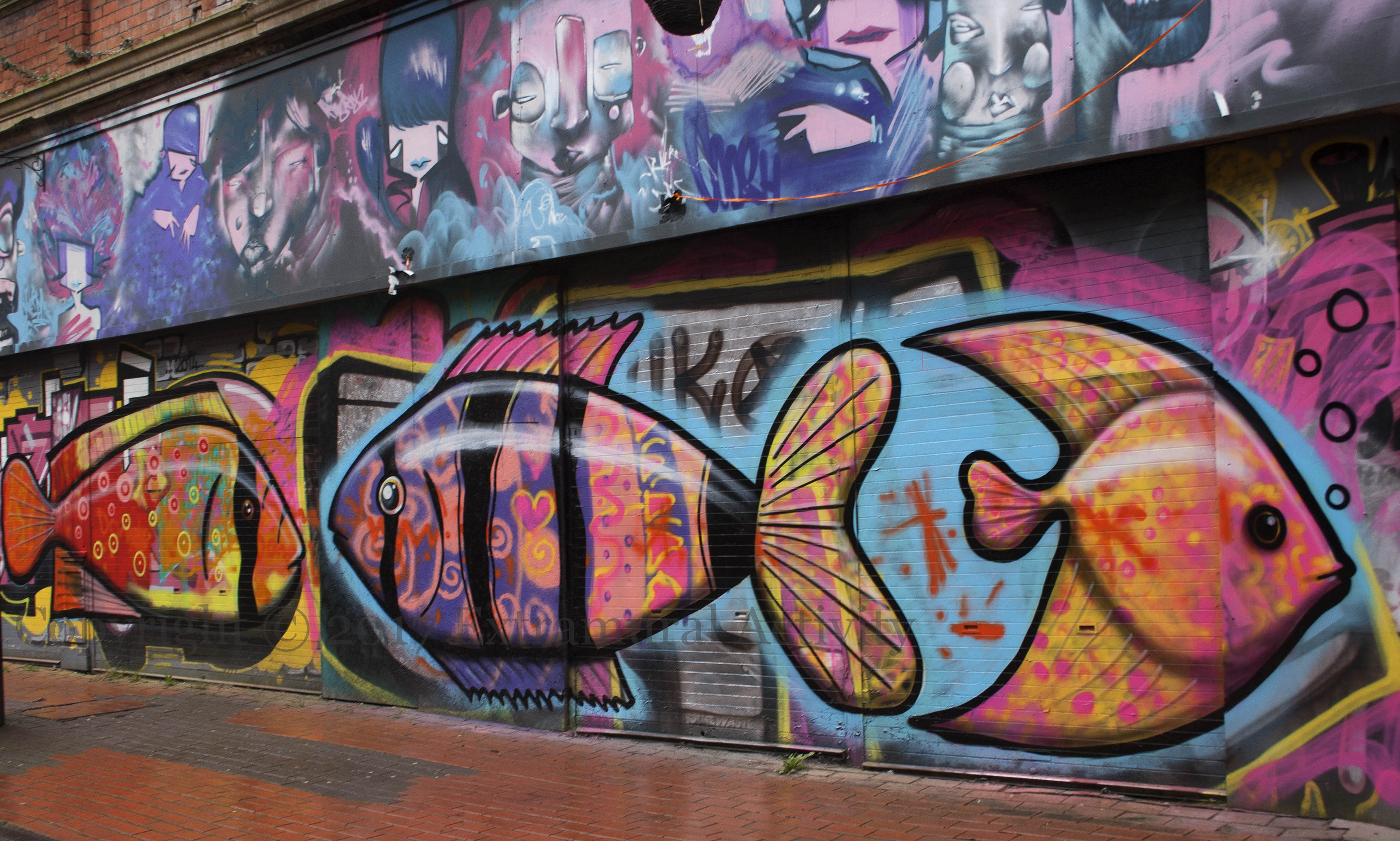
Two fish going one way, the third going against the flow, created by VERZ (Tim McCarthy) with young people from the Young At Art Festival. Street art in Belfast city centre.
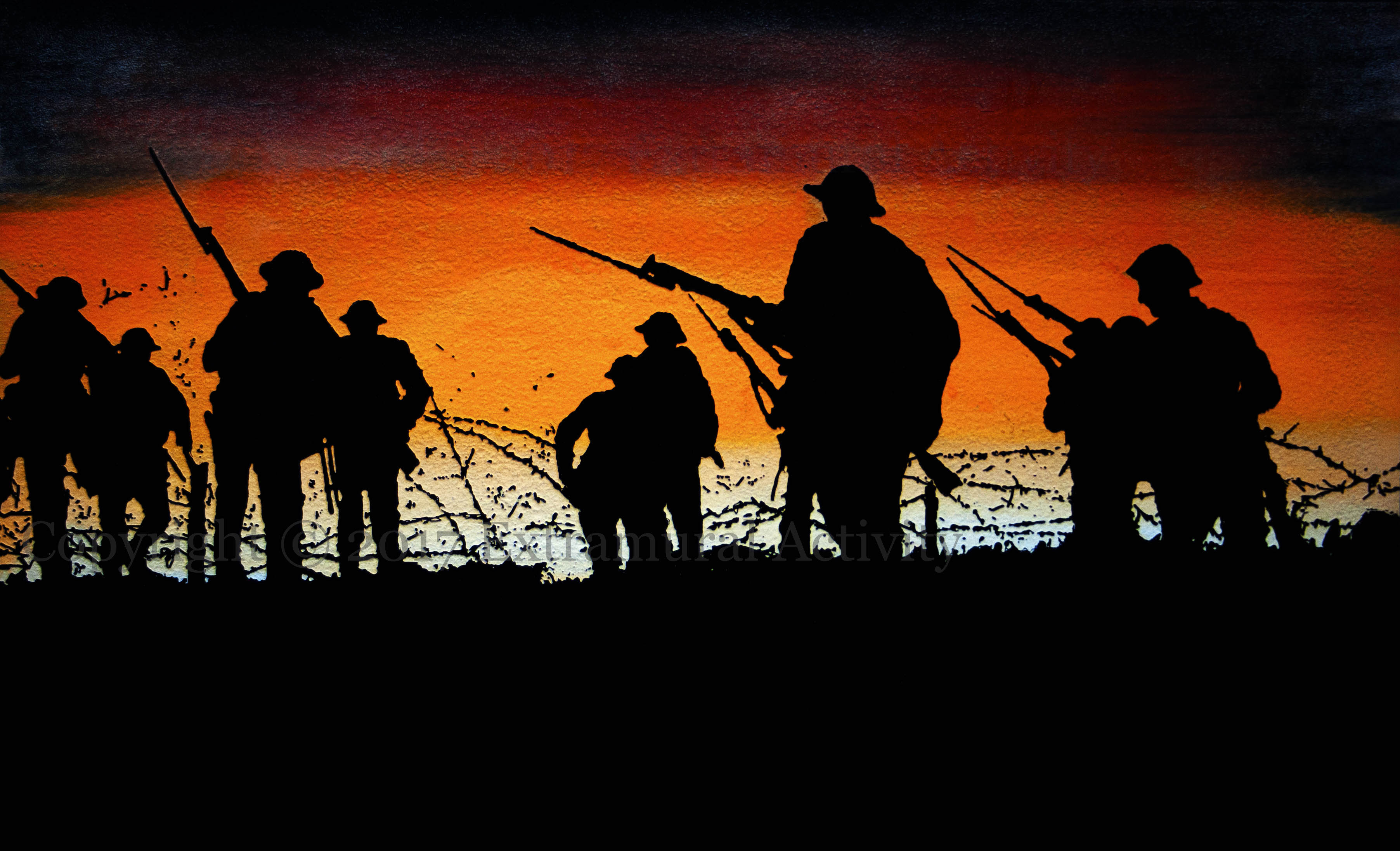
WWI soldiers from the 36th (Ulster) Division go over the top and make their way through the barbed wire. Not a mural but a painted sky on a memorial stone. Part of the Owenroe memorial garden in Bangor.
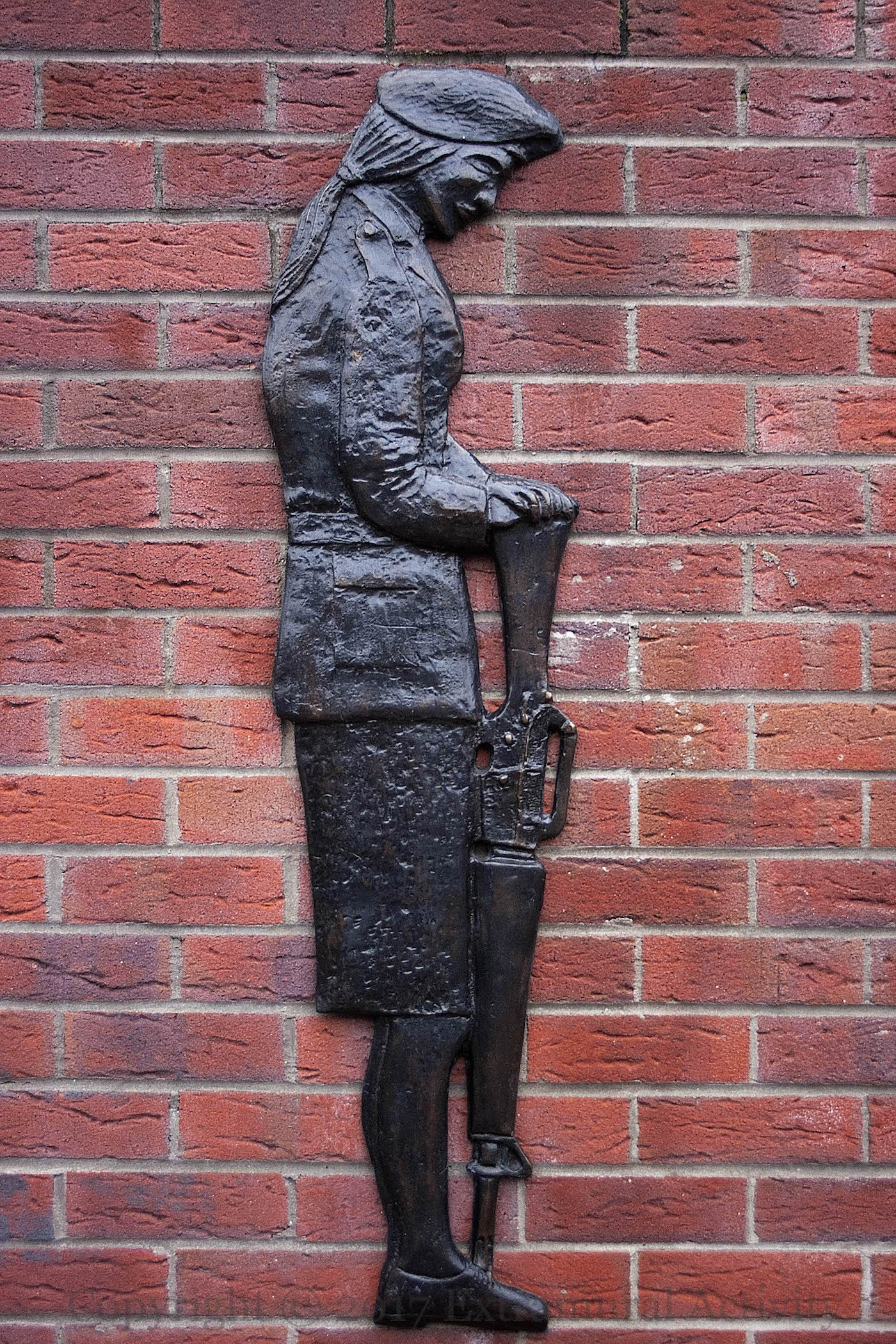
Here, from left to right, are all of the metalworks in the memorial garden on Ascaıll Ard Na bhFeá by sculptor and painter Hugh Clawson. On the stone (above) an IRA volunteer – with the emblem of the Easter lily on his beret – rests in the arms of Mother Ireland and her harp. Then two featuring the lark as the ‘spirit of freedom’ (from The Lark And The Freedom Fighter). In the first, the lark breaks through the bars of a prison cell, and in the image below, it flies in front of an “H” made of bricks, carrying a bin lid. (For a lark carrying a rifle, see Lark Of War and Armed Resistance.) Clawson’s name can be seen on the bars. In the second, a lark carries a binlid, used by locals to signal the presence of British Army troops. “In memory of all Irish martyrs who have died on hunger strike in the fight for Irish freedom. Their inspiration and courage will always be remembered by the republican movement and republican family (mid Falls).” One female and one male volunteer stand with bowed heads. A pair of hands joined in prayer in the Beechmount memorial garden: “in memory of those innocent people from this area who have died in this struggle for Irish freedom”. Finally, a scene of protest, in front of the Free Ireland mural at the bottom of the street. “In memory of the all the unsung heroes off [sic] this area who’s [sic] hardship, sacrifice and support during this struggle for Irish freedom will never be forgotten by the Belfast Brigade óglaıgh na h-éıreann.” The plaque depicts the work of print-makers (“Smash H-Block Armagh”), marchers carrying portraits of hunger strikers (“Mid Falls supports the women of Armagh”), bin-lid rattlers, and muralists. The tarp above reads “Cuımhníonn Lár na bhFál – Mid Falls remembers” Out of picture to the right of the wide shot is Bobby Sands’s quote “Our revenge will be the laughter of our children.” See M04415.
Here are two wide shots of a long wall from the Bangor Protestant Boys Flute Band (Fb). Many of the panels are related to WWI. For the Somme panel on the left, see Ulster Volunteers; for three of the flags on the right, see North Down Battalion. Right of centre is an emblem for the band itself: the lion and the unicorn on either side of cross rifles and the red hand of Ulster on an oval.








 Extramural Activity