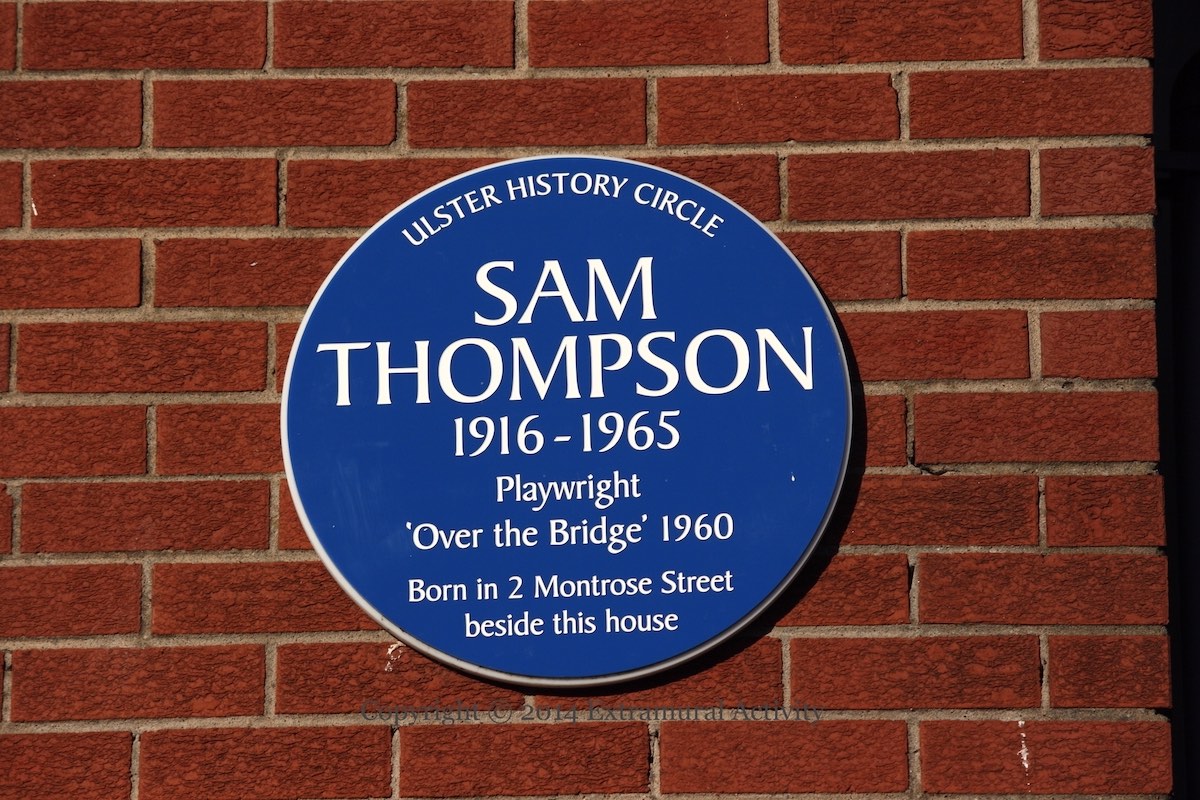
“Sam Thompson 1916-1965 Playwright ‘Over The Bridge’ 1960. Born in 2 Montrose Street beside this house.” In addition to his written works, Thompson was a painter for H&W and the Corporation, a trade unionist and Labour candidate (WP).
The background, at least, has been repainted on this UFF mural in Monkstown with three hooded gunmen in balaclavas, black jackets, and blue jeans posing with assault rifles on an outline of the north coast in the colours of the Northern Irish flag. For the original, see Monkstown UFF 1st Batt.
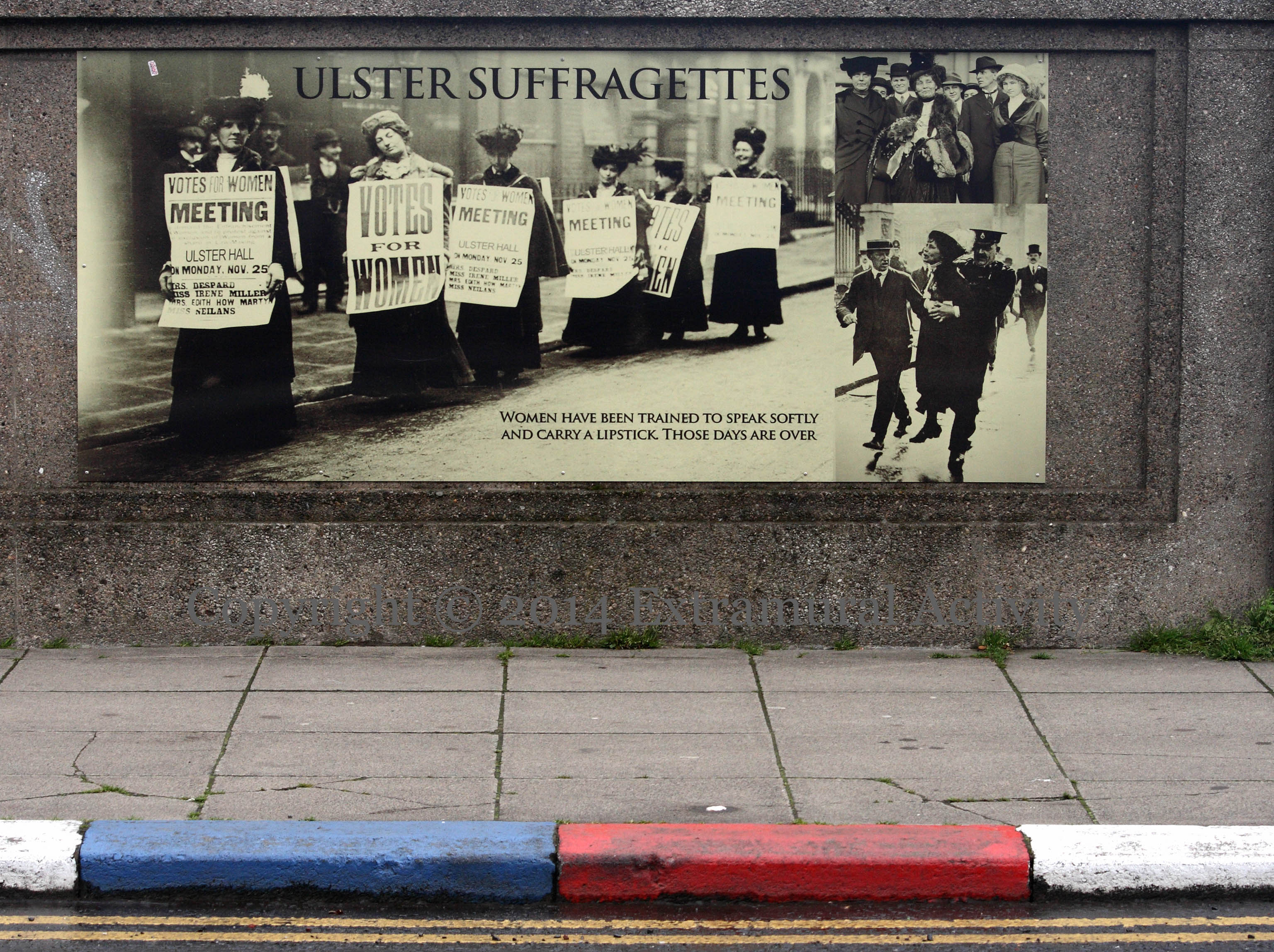
“Women have been trained to speak softly and carry a lipstick. Those days are over.” (Bella Abzug).
Above is a board on the Donegall Road bridge showing women drumming up an audience for a suffragette meeting in the Ulster Hall in November 1912. The image in the bottom right is of Emmeline Pankhurst being arrested in London in 1914; the top image is of Pankhurst on tour in the US in 1913 (LoC; see Pieces Of History for a description of the tour; she gave a speech entitled ‘Freedom Or Death’). Pankhurst spoke in Belfast at the 1912 meeting, though the speakers advertised on the placards are “Mrs Charlotte Despard, Miss Irene Miller, Mrs Edith How-Martyn, Miss Alison Neilans“.
The first suffrage group in Ireland was the North Of Ireland Women’s Suffrage Society, founded in Belfast in 1872 by Isabella Tod.
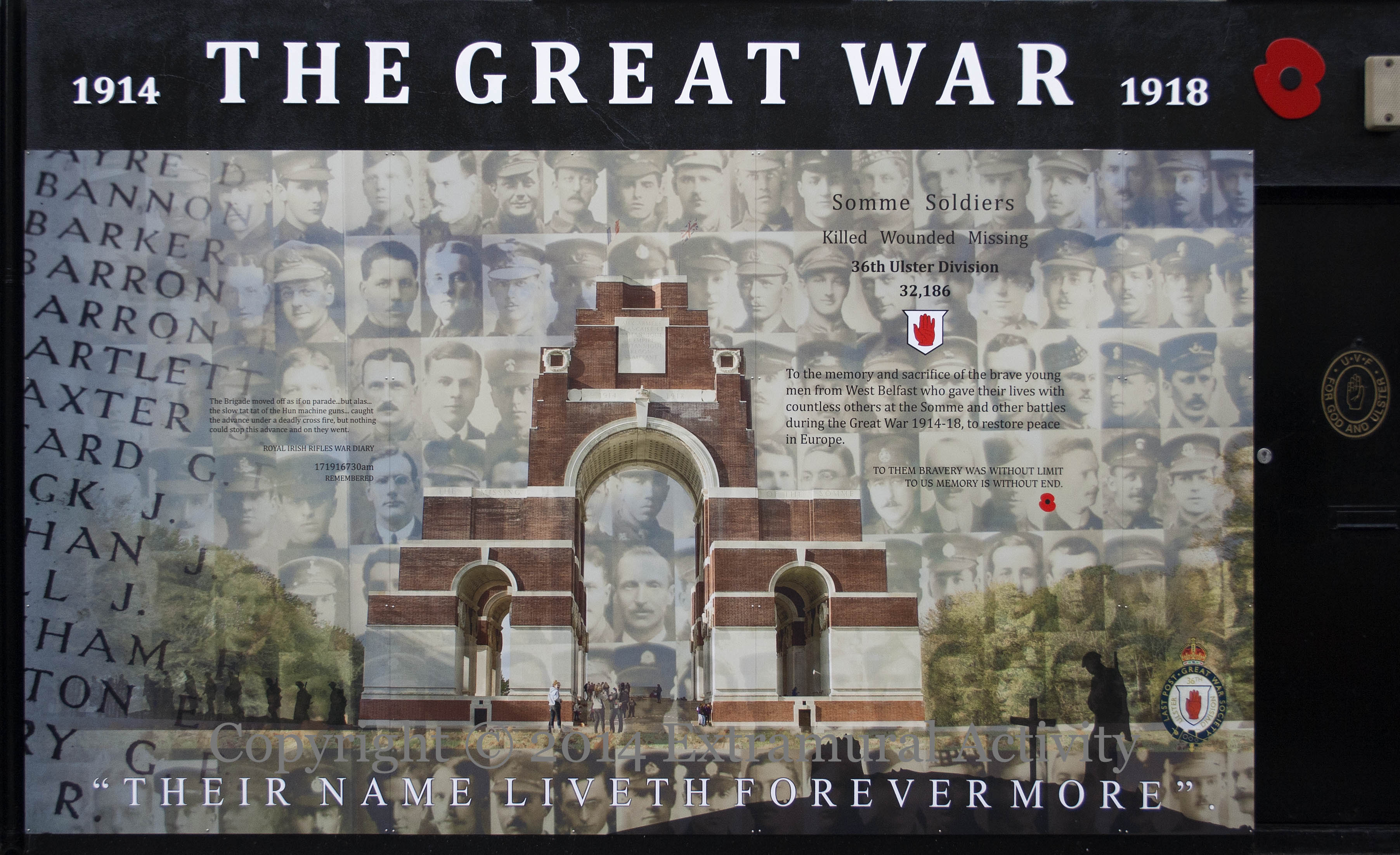
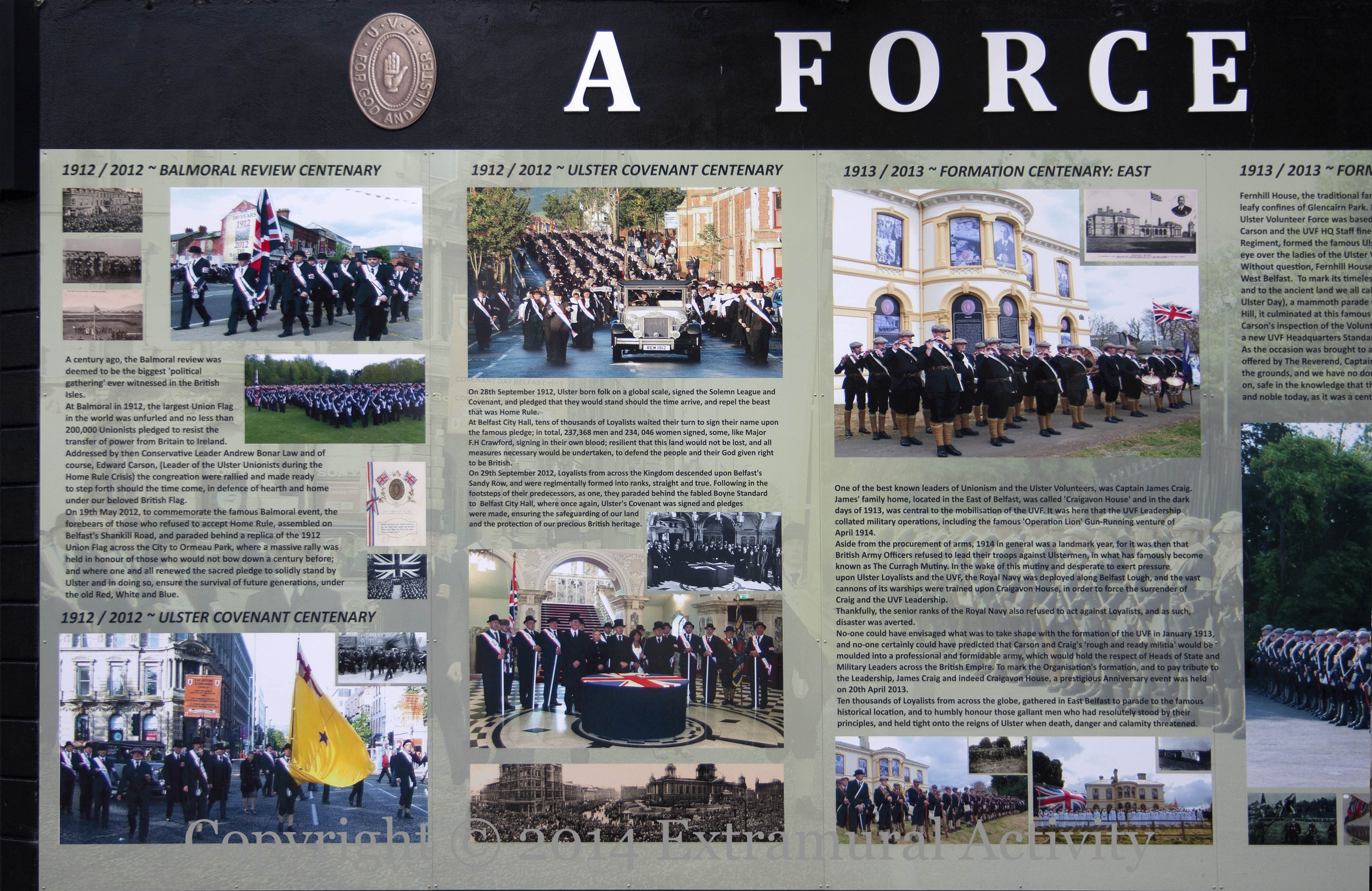
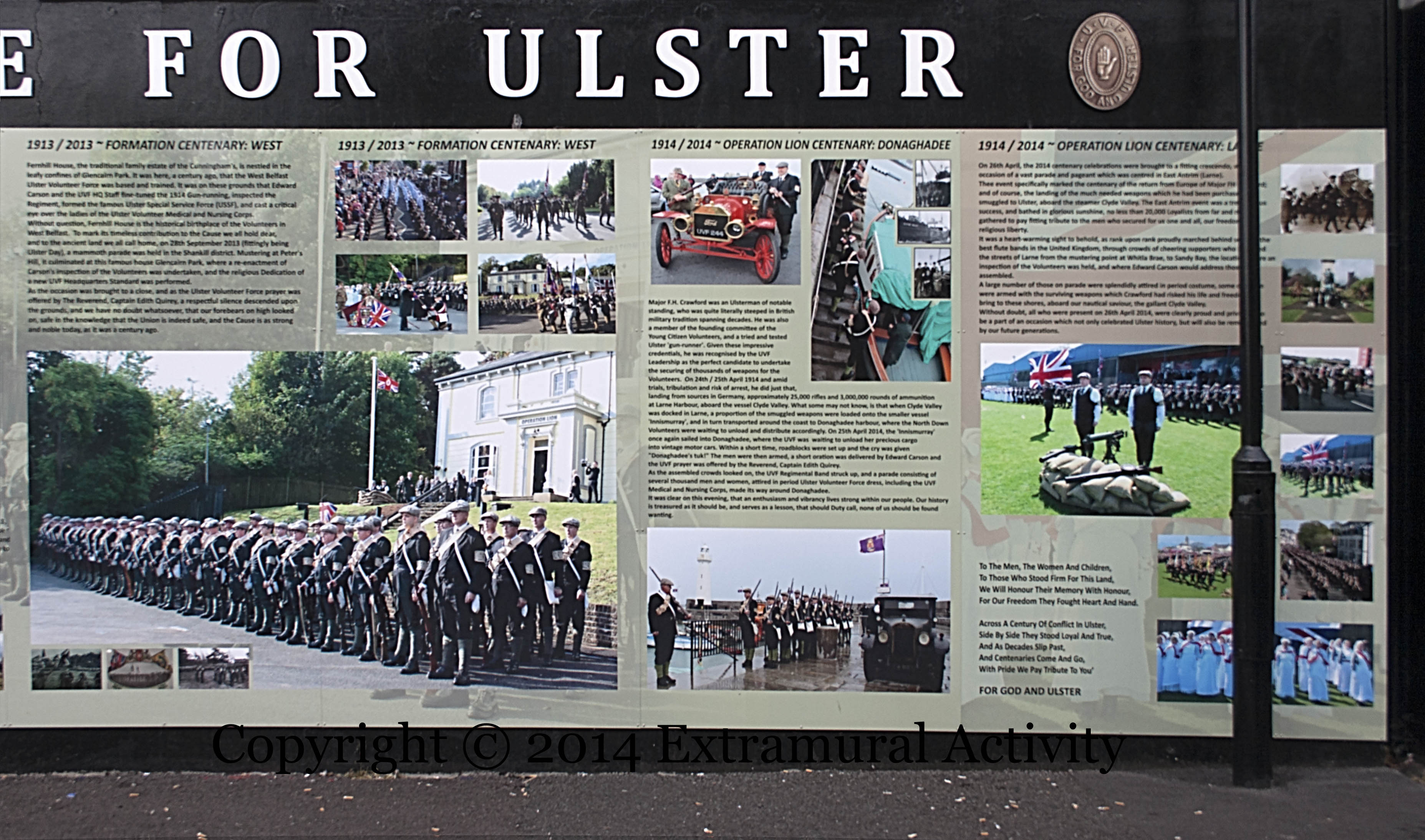
Here are two new boards in the courtyard of the Rex Bar on the Shankill Road, describing the formation of the Ulster Volunteers (‘A Force For Ulster’) and commemorating the losses suffered by the 36th (Ulster) Division of the British Army, which the Volunteers became, at the Somme and in other battles, mowed down by “the Hun machine guns” (‘The Great War’).
‘A Force For Ulster’ includes photographs of the recent centenary re-enactments of the Balmoral Review, the Ulster Covenant, the formation of the Volunteers (“east” and “west”) and “Operation Lion” – more commonly known as the Larne Gun-Running.
According to the ‘The Great War’ board, 32,186 men from west Belfast were killed, wounded, or missing. “To them bravery was without limit, to us memory is without end”. The board shows the Thiepval Memorial To The Missing Of The Somme against a background of portraits.
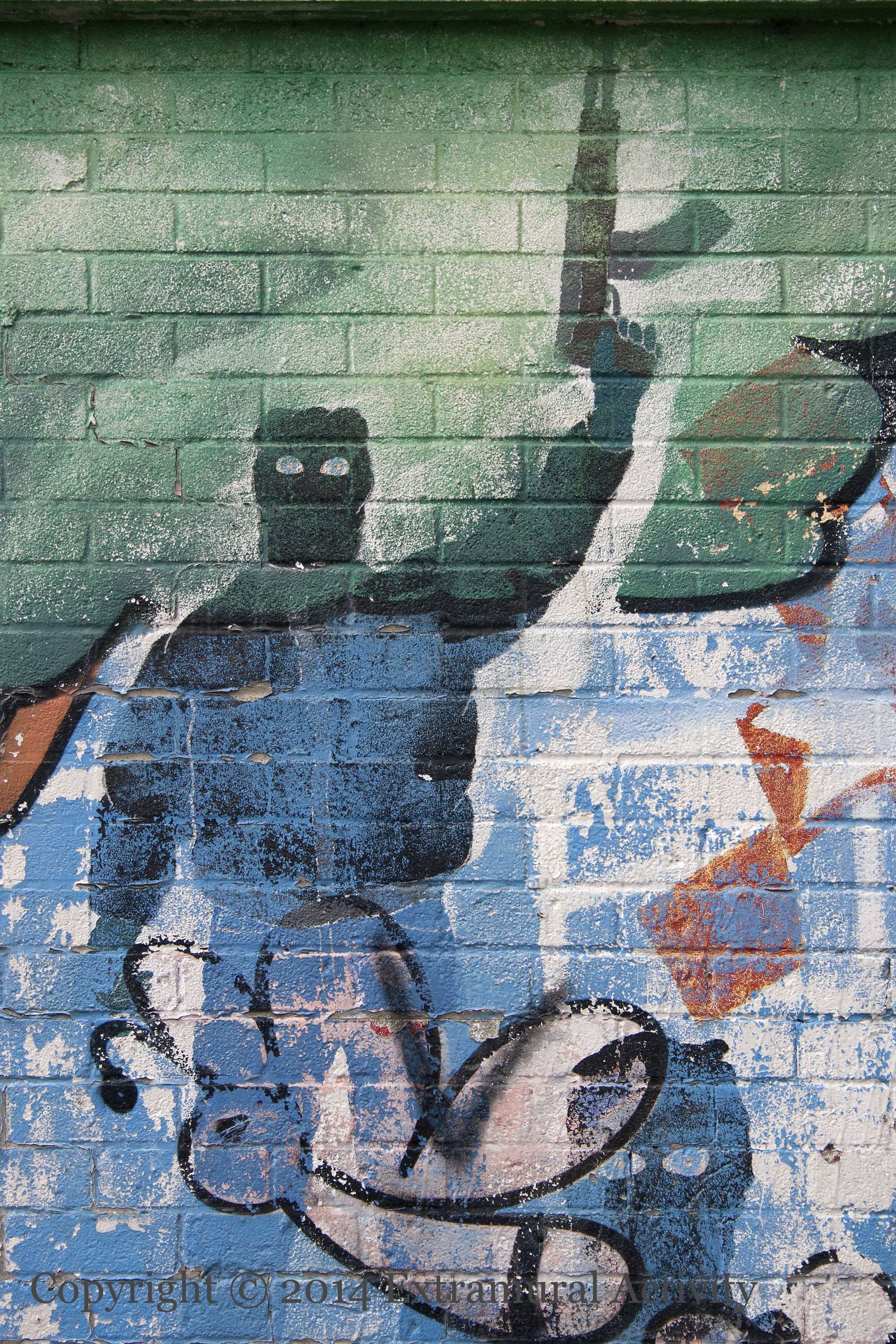
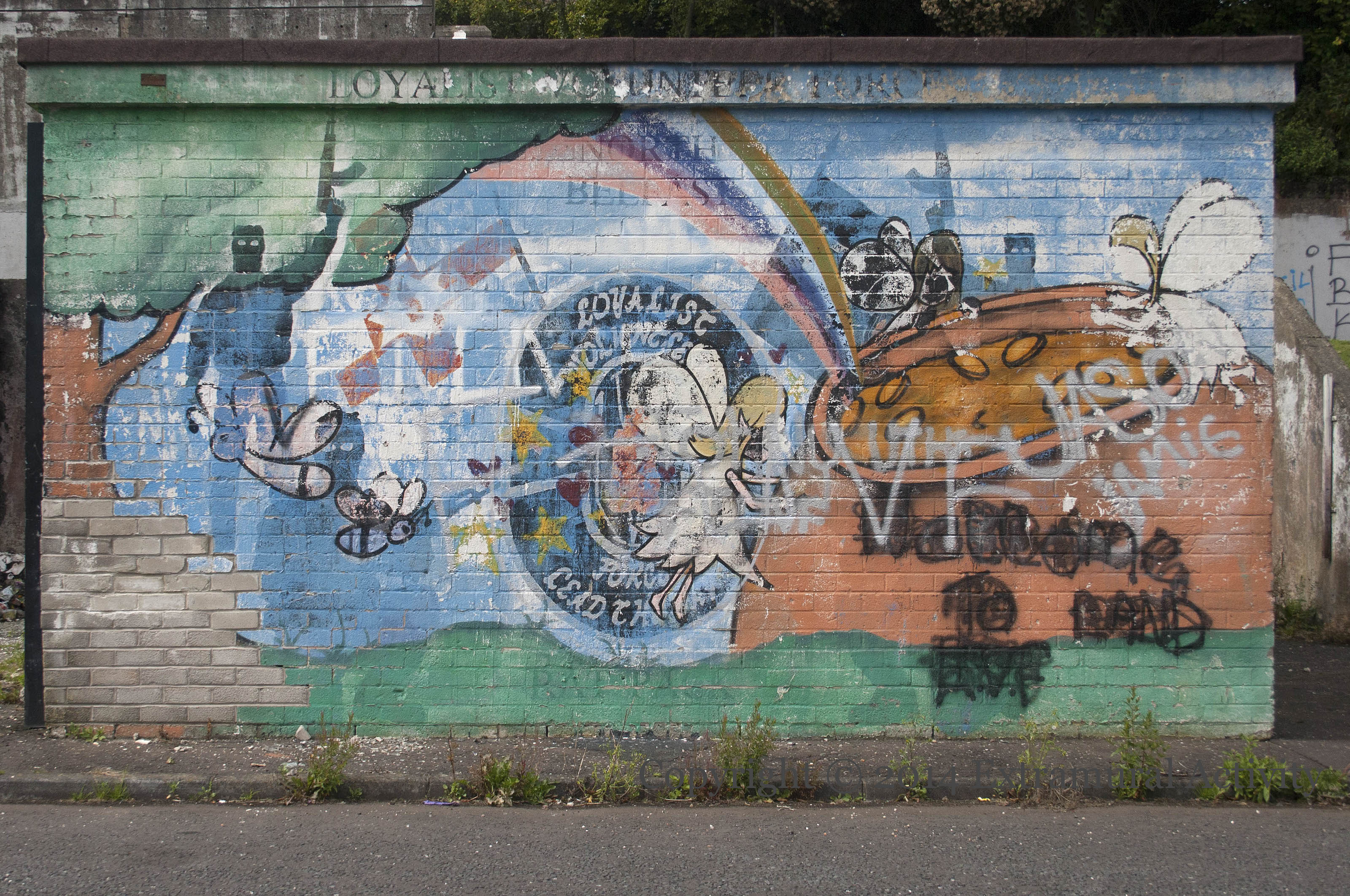
The fairy-tale covering painted over an LVF “North Belfast Rat Pack” mural is fading away to reveal the previous work. For the original LVF mural, see D01199.
The graffiti on the wall (see the third image, below, of the whole wall) – Welcome to LVF Land – has itself been scored out. There is also anti-LVF graffiti in the street.
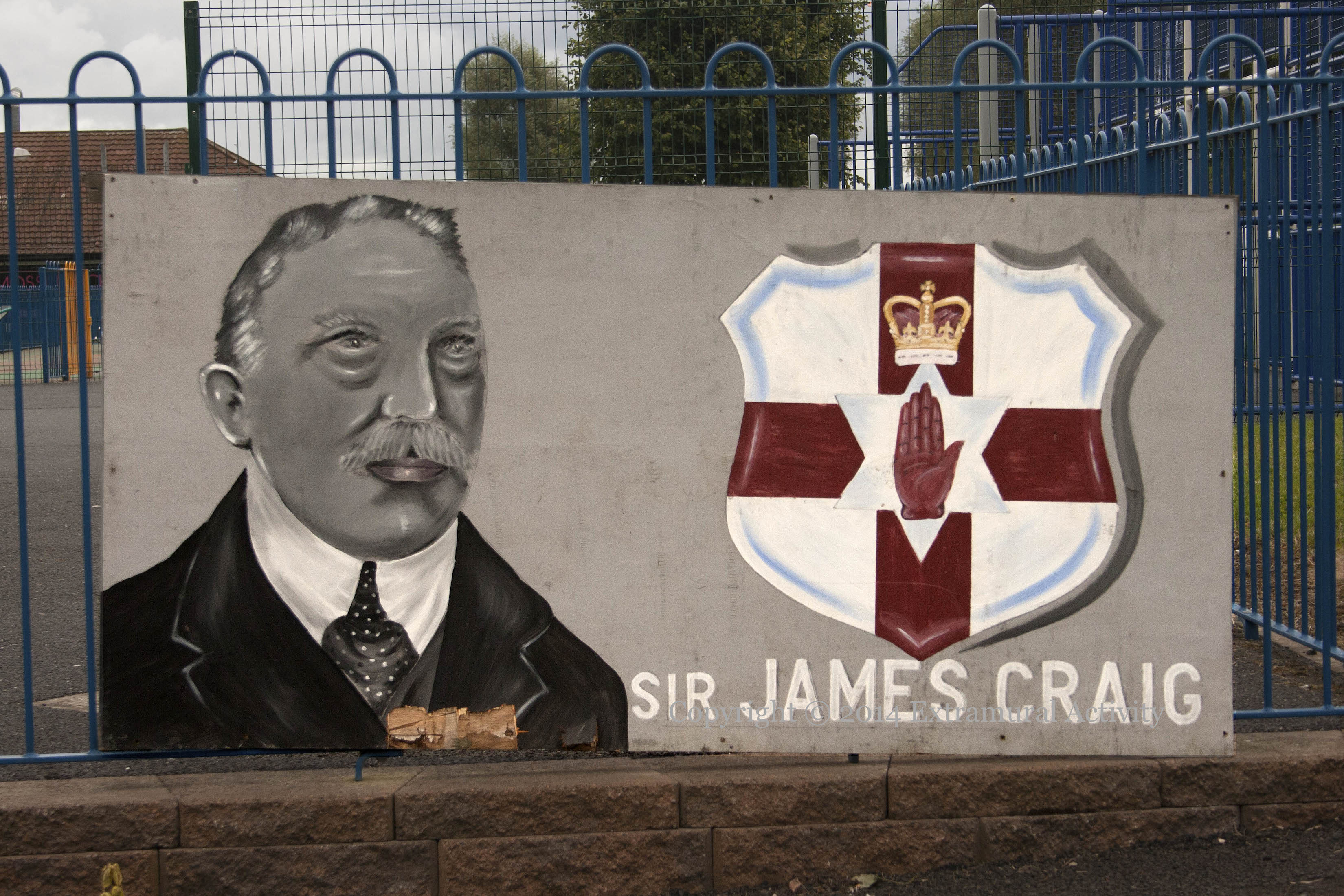
Carson (above) and Craig (below), founders of the Ulster Volunteers and the first two leaders of the Ulster Unionist Party, stand watch at the edge of an outdoor pitch and children’s playground in New Mossley, beneath a flag of the 36th (Ulster) division (see wide shot below). Carson’s profile is shown next to the emblem of the 36th division; Craig is shown next to the flag of Northern Ireland.
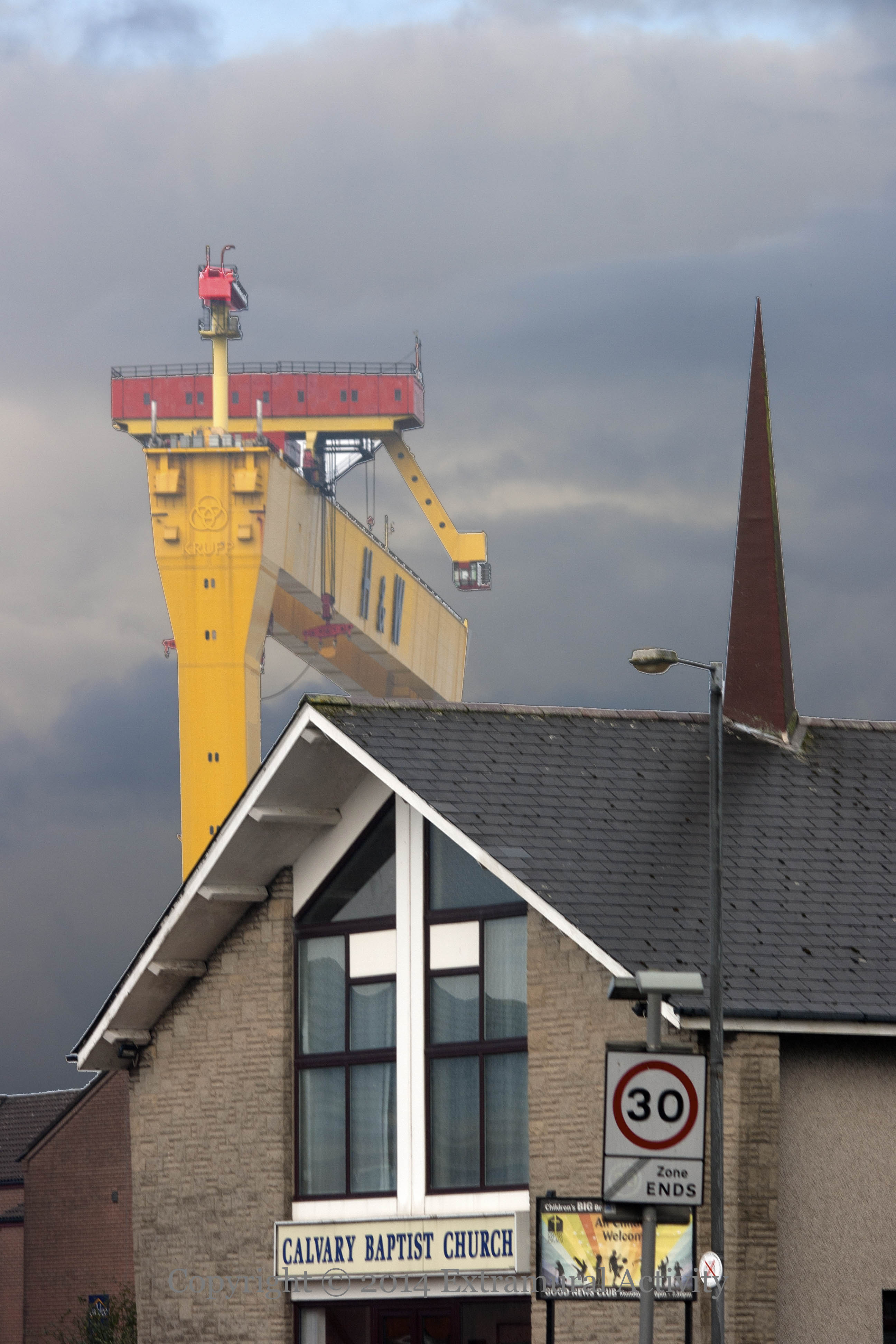
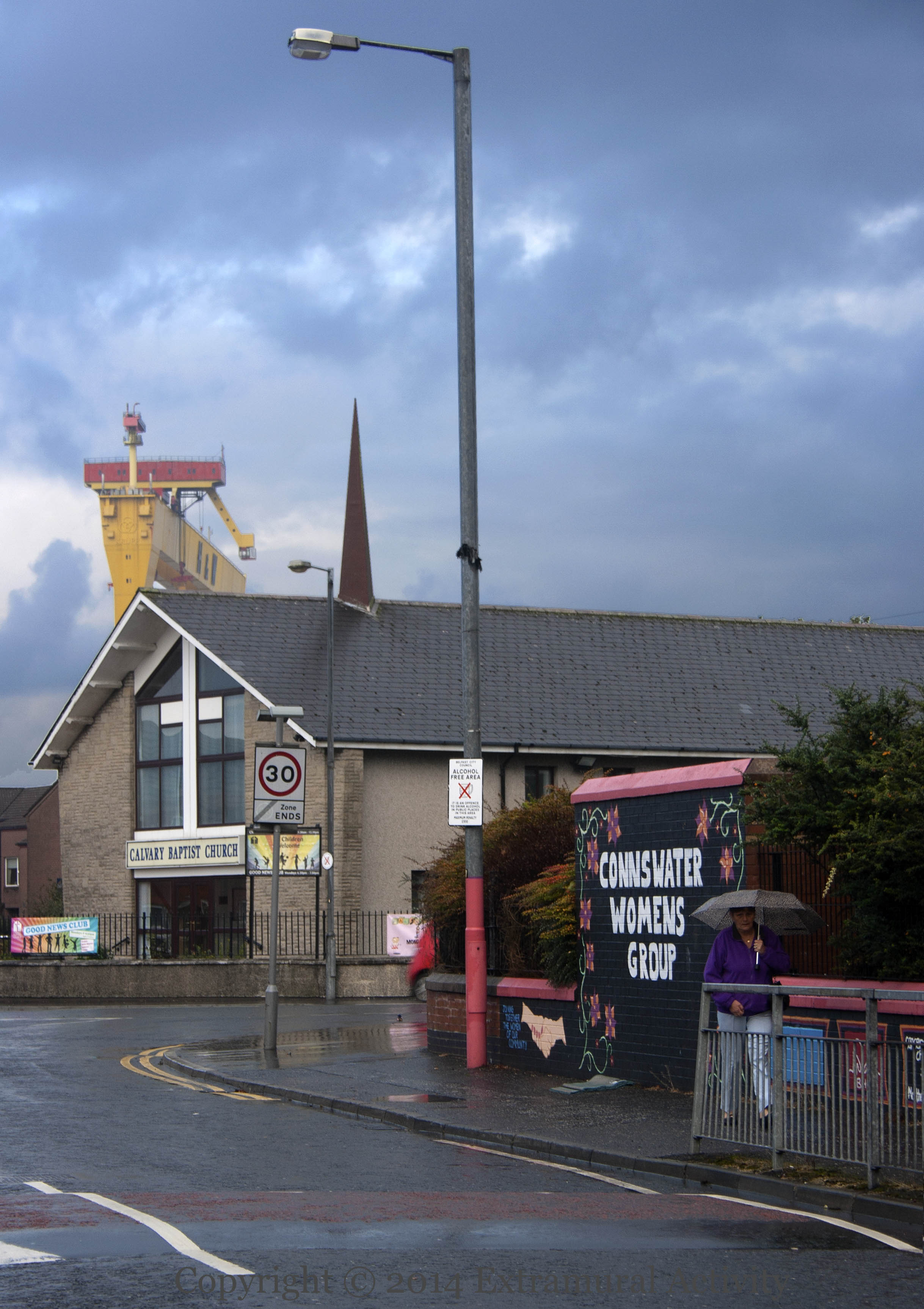
One of the H&W cranes and the spire of Calvary Baptist church (and a street-light) reach to the heavens over the junction of Dee Street and Severn Street and (as the wider shot, below, shows) a “Connswater Women’s Group” mural.
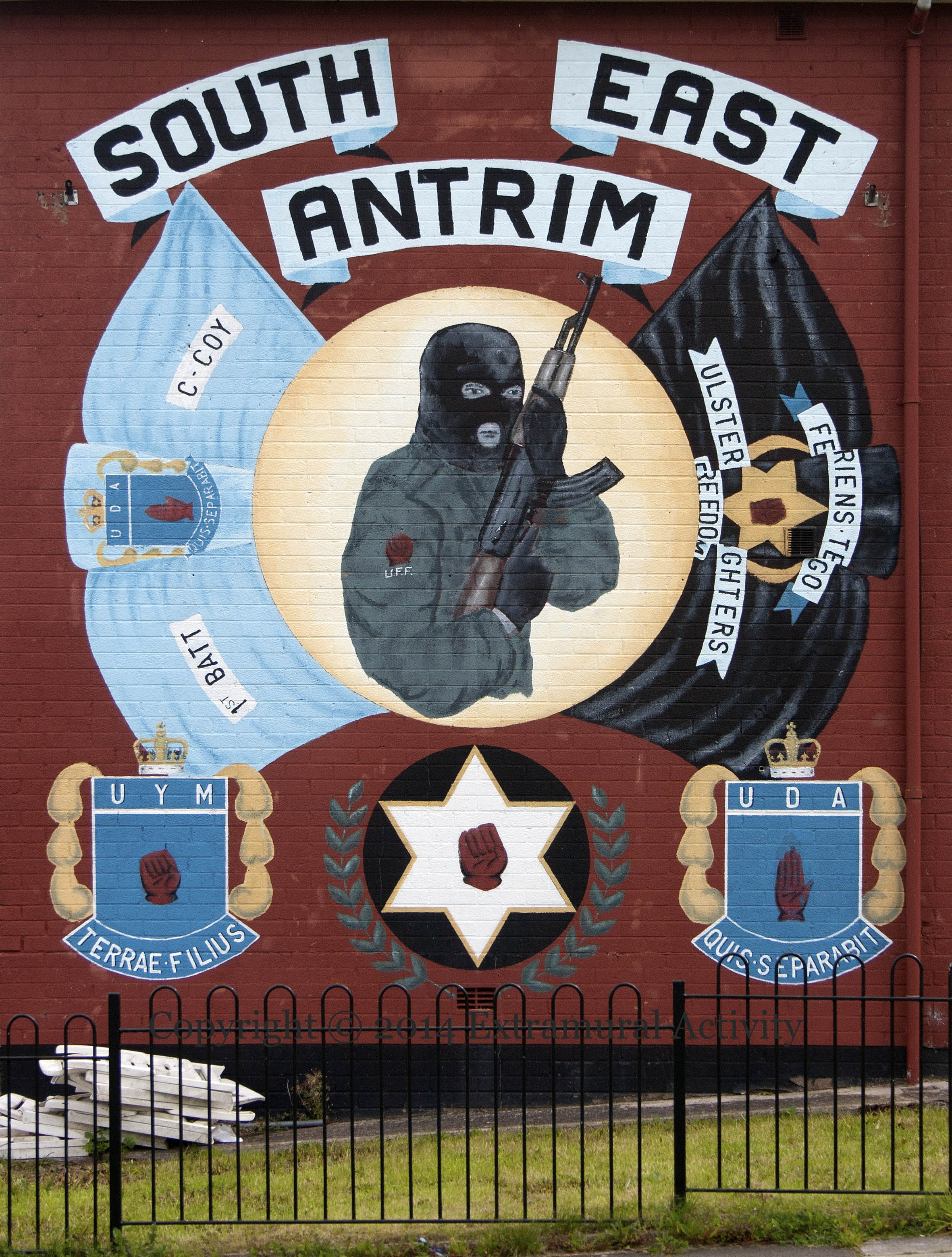
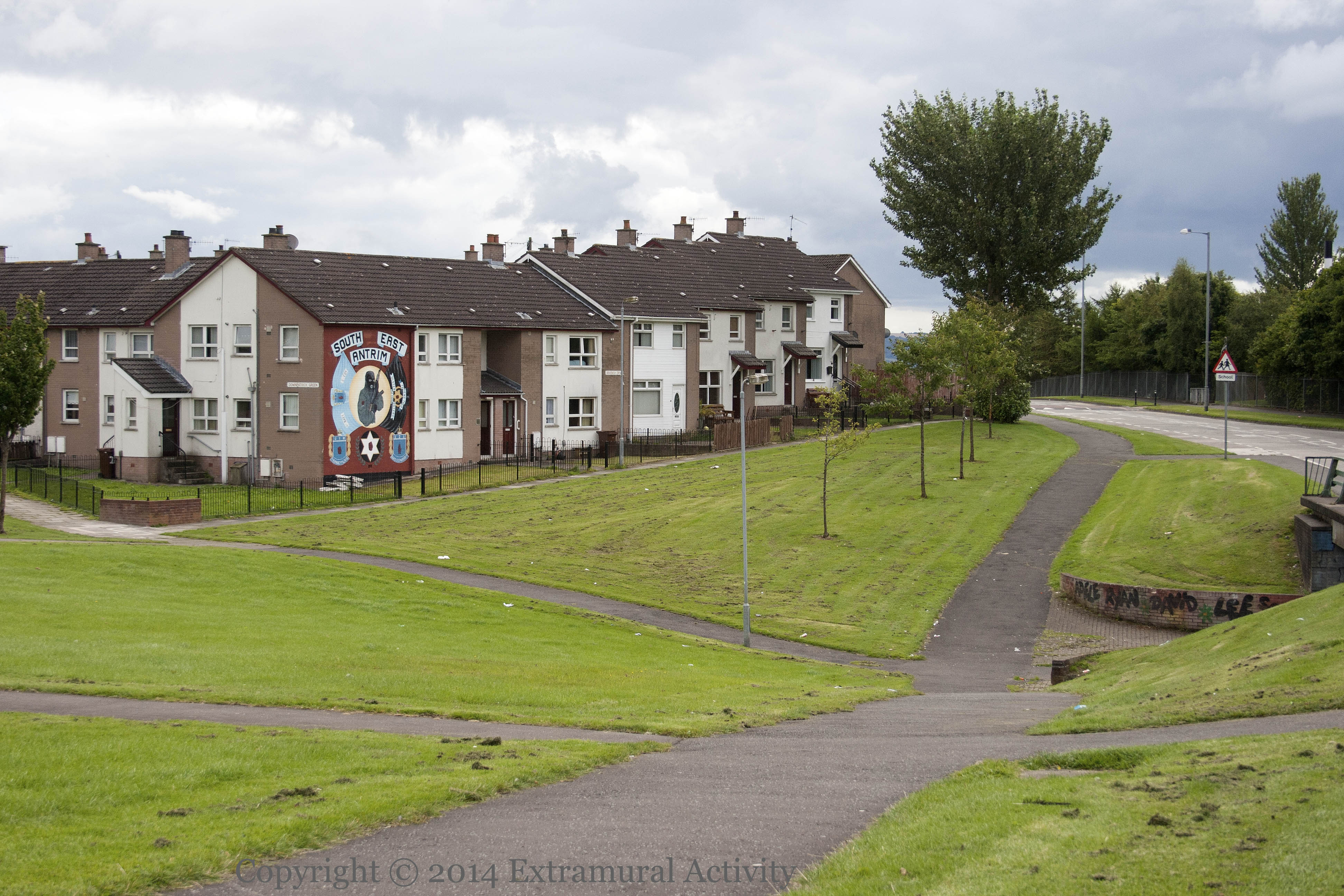
There are both UDA and UVF murals along Devenish Drive in Monkstown. Here we have a UDA hooded gunman, along with insignia and mottoes of the UFF/UDA/UYM. The UFF/UYM with a red hand closed into a fist, the open palm of the UDA; UFF – Feriens Tego; UYM – Terrae Filius; UDA – Quis Separabit.
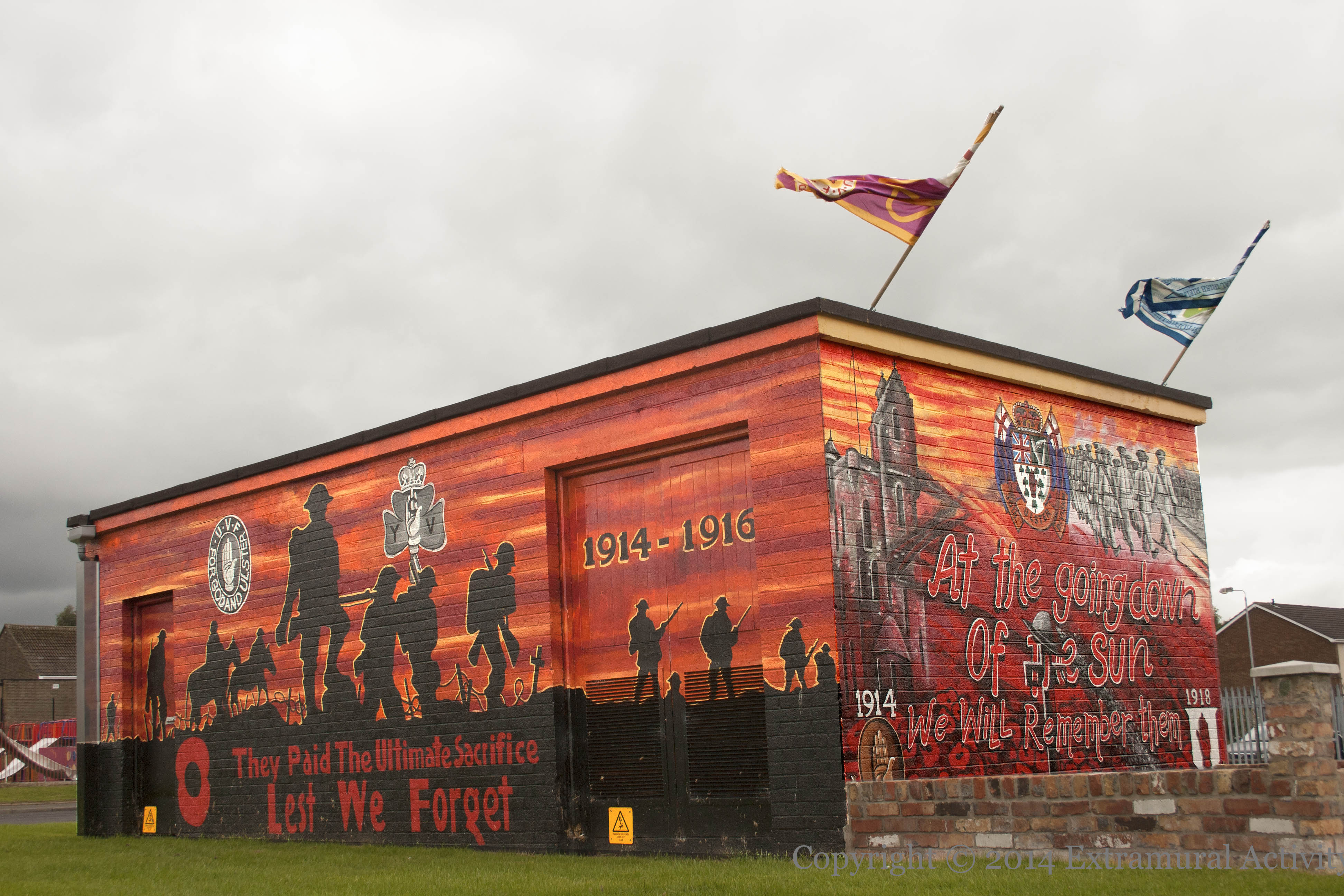
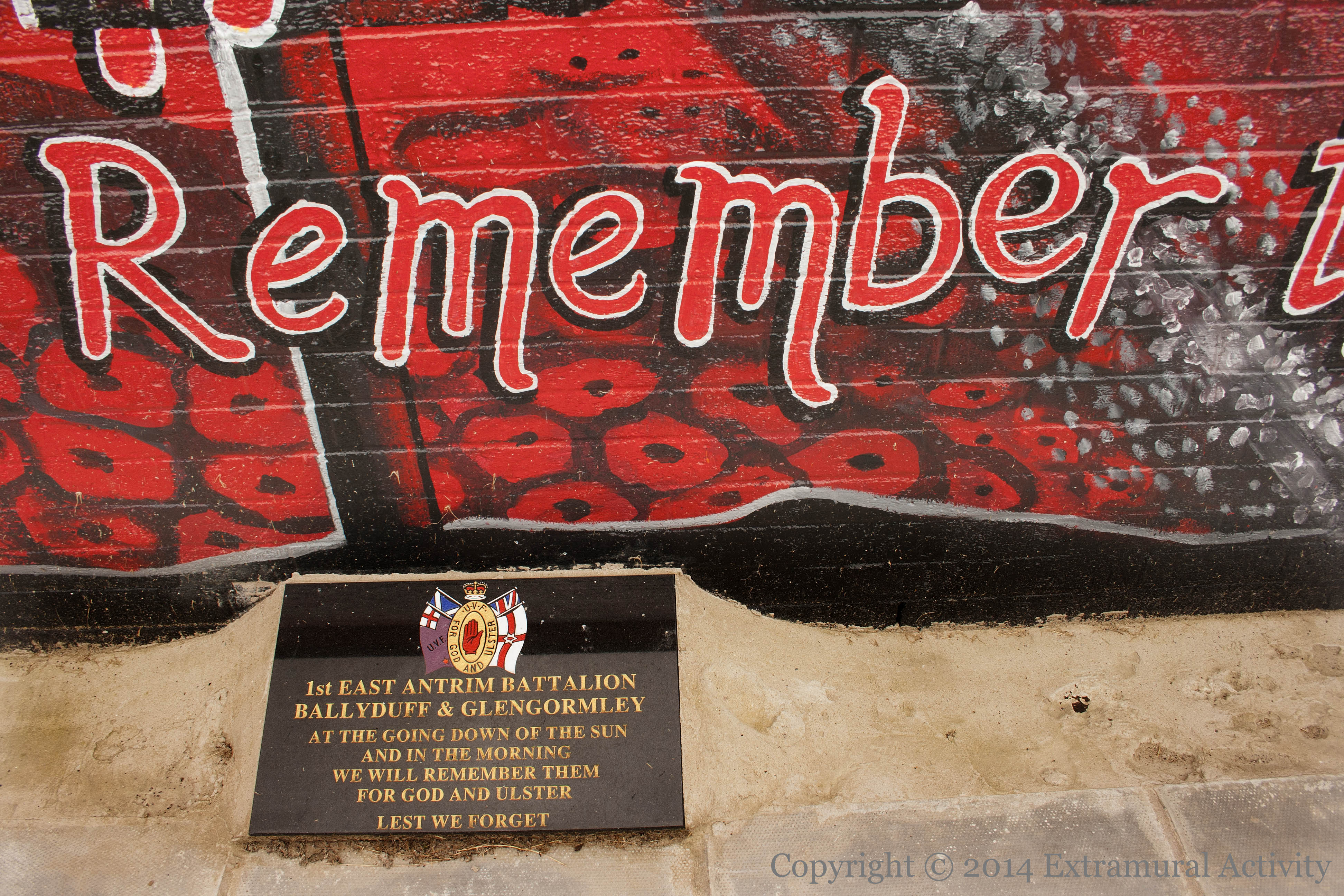
“They paid the ultimate sacrifice”. The UVF/YCV mural above on a Ballyduff electrical station shows WWI soldiers from the 36th (Ulster) Division in relief against an orange sky (perhaps “at the going down of the sun”), picking their way across the battlefields of Flanders. The Ulster Memorial at Thiepval, which commemorates the 5,000 lost lives and more specifically the role of Orange Order members, is shown in the top left corner of the smaller wall. A plaque, hidden behind the low wall to the right but shown below in close-up, indicates sponsorship from the UVF “1st East Antrim Battalion, Ballyduff & Glengormley”.







 Extramural Activity