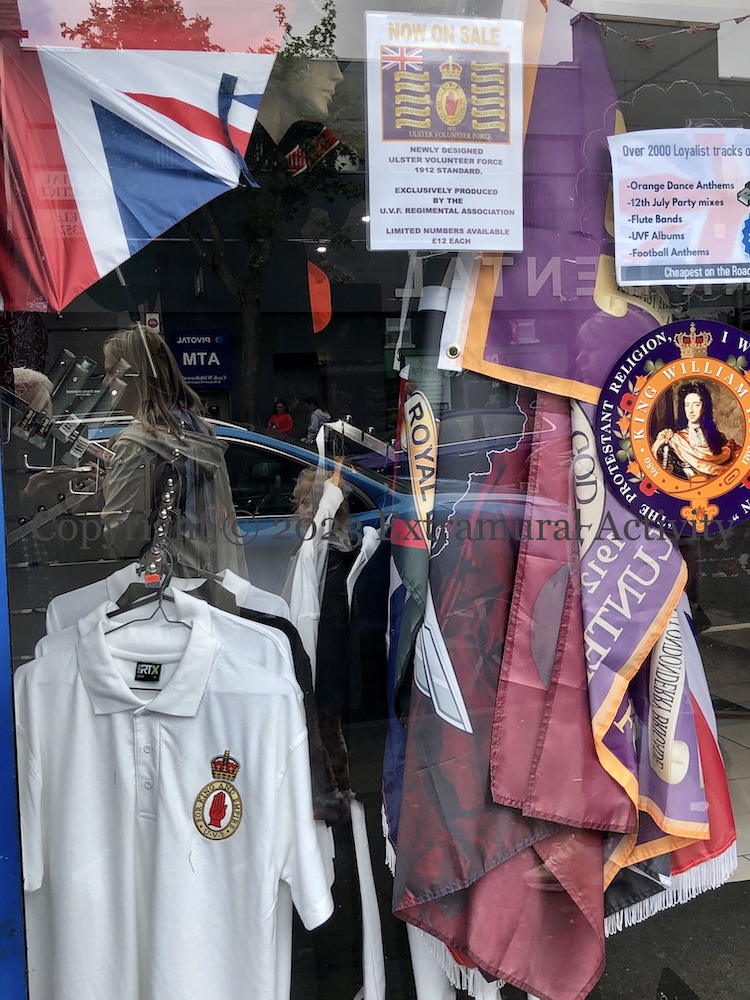
“For God and Ulster” (as seen on the bucket hat) is the more common slogan of the of the Ulster Volunteers, but “For King and Empire” (as seen on the shirt) was occasionally used, as on the colours of Central Antrim’s 3rd battalion (Sam’s Flags | see also The Central Antrim Regiment). The phrase also appears on a plaque outside Carrickfergus Orange hall – see On Foreign Fields.
The items are for sale in the Shankill Historical Society in the middle Shankill. The shop is at least 25 years old.
19 towns and cities will hold gatherings for the Twelfth, with the longest parade being the six miles from Carlisle Circus to the field at Barnett Demesne (near Shaw’s Bridge) in Belfast. Today’s images come from a Shankill parade at the end of June, with (above) the (Shankill) Sons Of Ulster (Fb) and (below) the Billy Boys (Rathcoole) (Fb).
For a complete list of gatherings, see Belfast Live
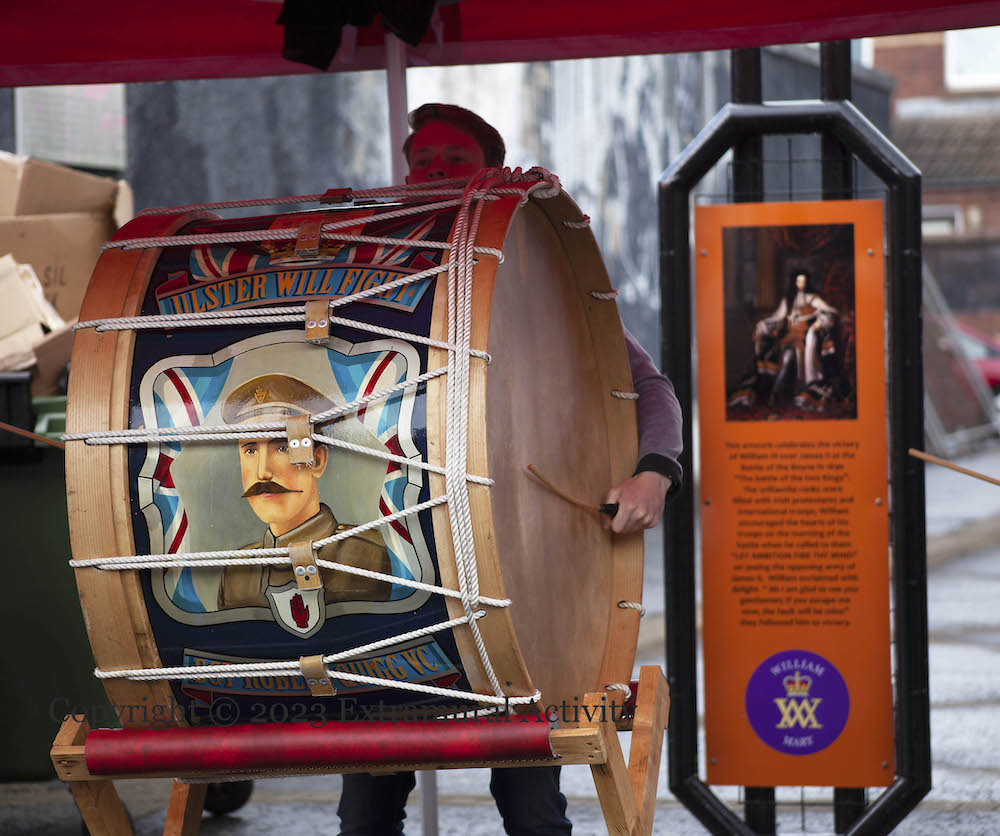
The “Lambeg drum” is named for the village near Lisburn, perhaps invented there to celebrate a visit by King Billy (LAD), or perhaps because it was there that the (already existing) drum was played with canes (WP).
As can be seen from these images, the drums are extemely large – three feet in diameter – which makes them difficult to use in parades, as does their immense noise (up to 120 dB); they are more frequently seen on their own at drumming displays such as this one on the Shankill yesterday (July 11th).
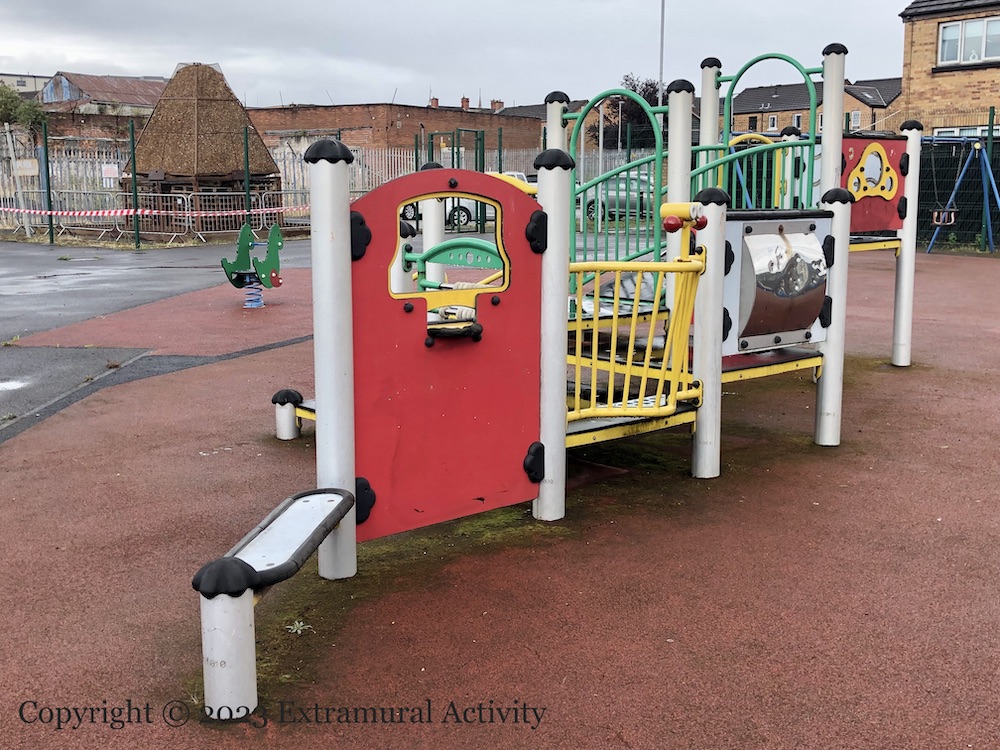
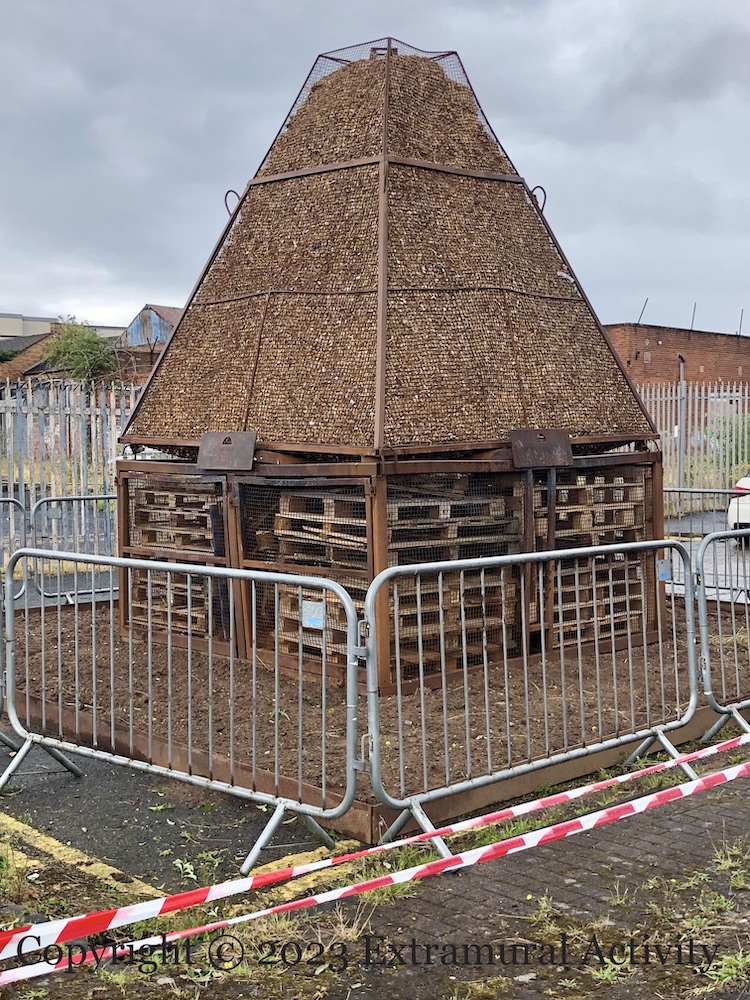
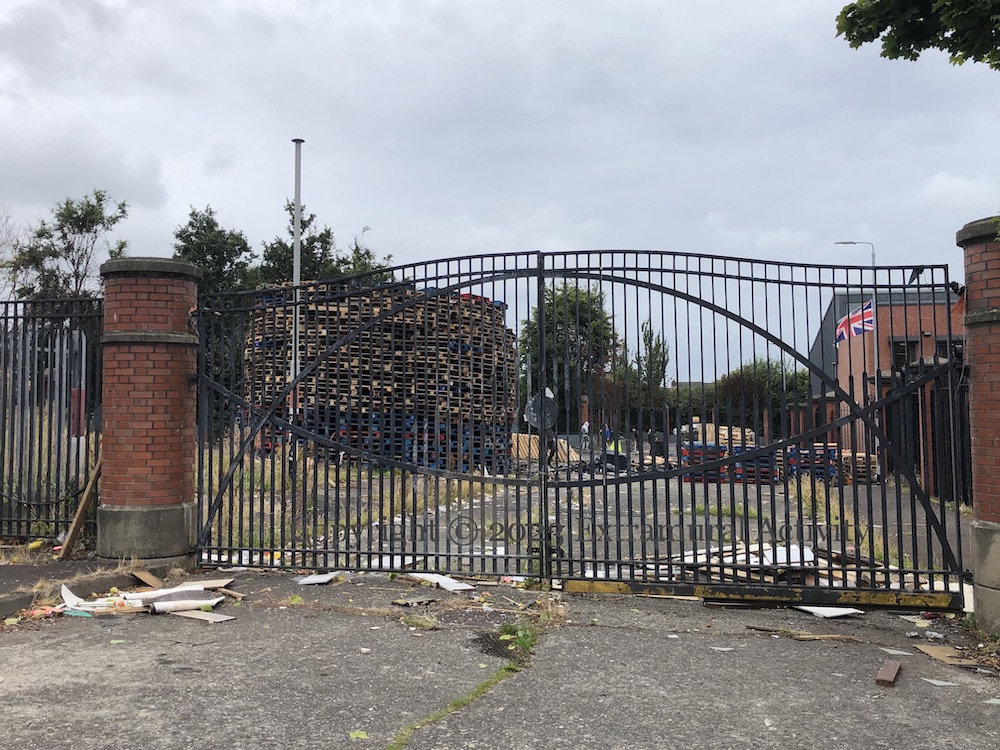
11 “beacons” are being lit across Belfast this evening, an increase over the eight from last year (Belfast Live). They are re-usable metal frames filled with willow wood (above a base of pallets) and sit on a bed of sand in order to avoid scarring the ground (BBC). The name evokes the beacons lit in the hills of Antrim and Down that allowed King William’s forces to land at Carrickfergus in 1690; the practice of lighting bonfires for festivals goes back to pagan times (Gailey).
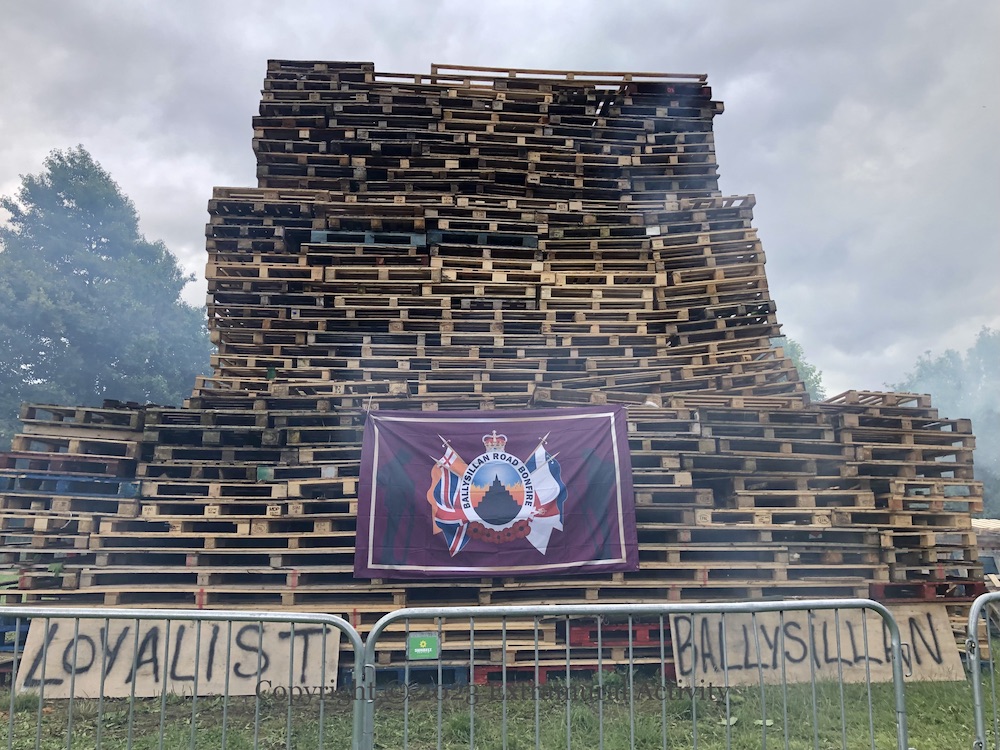
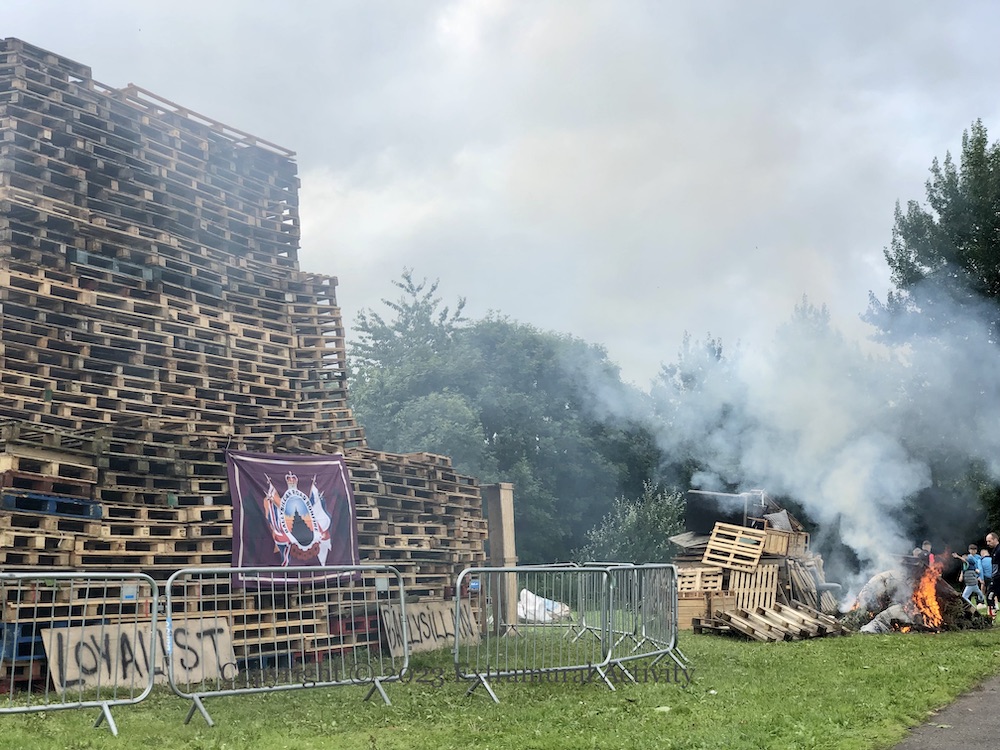
Rather than being collected by the local commuinity, the materials are provided by a City Council programme now in its fifteen year of operation; the cost of the beacons this year is 81,000 pounds (BelTel). For discussion of the beacons (and the wider bonfire programme), see this Slugger article.
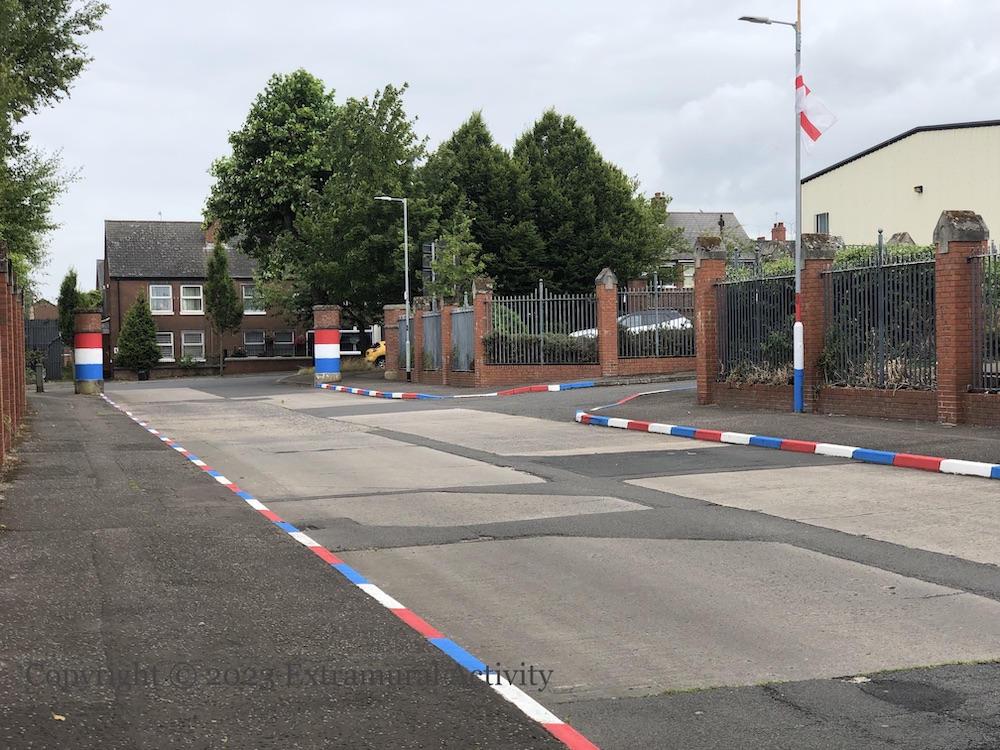
The kerb-stones along the Edlingham Street (Duncairn Avenue) entrance into Tiger’s Bay have been repainted in preparation for this year’s Twelfth and the two pillars given bands of red, white, and blue.
The bonfire is on the waste-ground at Adam Street. The fact that the land is owned by the Department Of Infrastructure made the bonfire controversial in 2021 (see Move At Your Own Risk).
For the mural in the community garden, which now appears defunct, see Seek And You Shall Find.
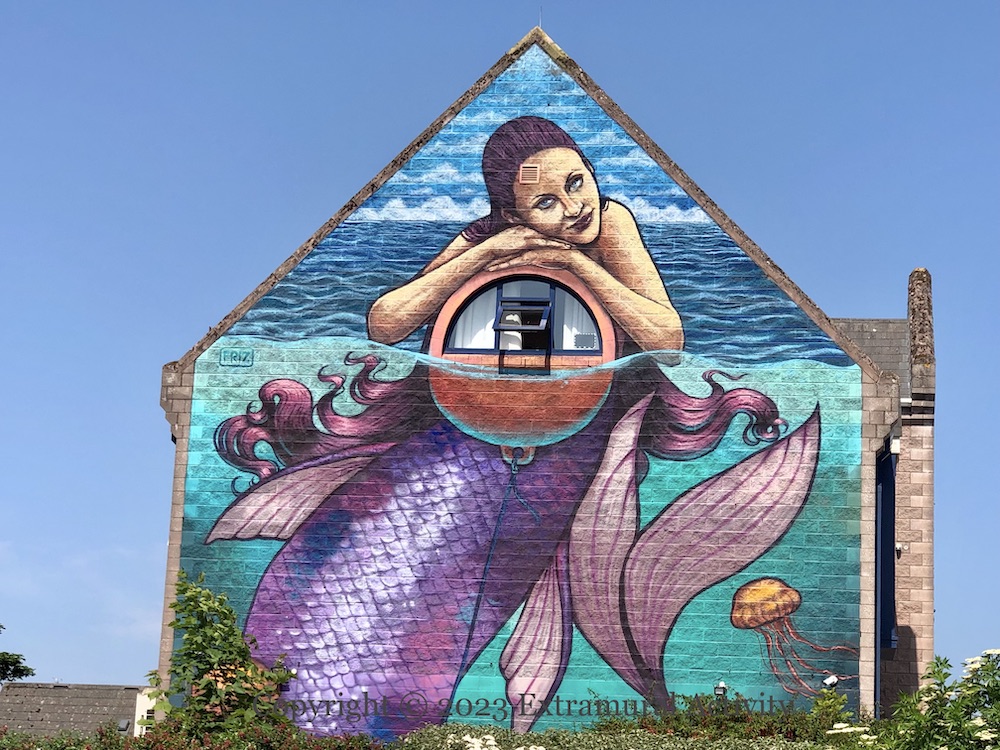
Lí Ban became a mermaid – half-human, half-salmon – after a year spent living in an underwater bower, taking shelter from the family’s uncovered spring that overnight formed Lough Neagh. Three hundred years later (circa 558 A.D.) she told an envoy of Saint Comgall’s who was on his way to Rome, that she would come ashore at Larne a year later. She forwent another 300 years of sea life in favour of being baptised and dying immediately. She was baptised by Comgall, the abbot of Bangor, and christened “Muirgen” (sea-born) and was buried in the Lough Derg (Donegal) abbey (O’Grady | WP). Muirgen’s feast-day is January 27th (Sacred Sisters).
Painted by Friz (ig) for the Bangor Seaside Revival Festival, with support from Seedhead Arts (ig).
For a different style of presentation of Lí Ban, see Shaped By Sea And Stone in Larne. The end of the story is similar to the fate of the children of Lear, who spend 900 years as swans before a monk hears their song, puts them (willingly) in chains, but in protecting them from others touches them, which restores them to human form only for (baptism and) death to follow immediately. (See The Children Of Lear.)
“Say ‘No’ to Irish Sea border.” The graffiti and placards have tapered off as the DUP’s rejection of Brexit’s NI Protocol – and the later Windsor Framework and its “Stormont brake” – and refusal to take their seats in Stormont approaches 18 months (Bel Tel | Reuters | Belfast Live). A poll from Queen’s last week found 61% in favor of the trading agreements (BelTel).
This piece of anti-Protocol graffiti is still rolling in New Mossley.
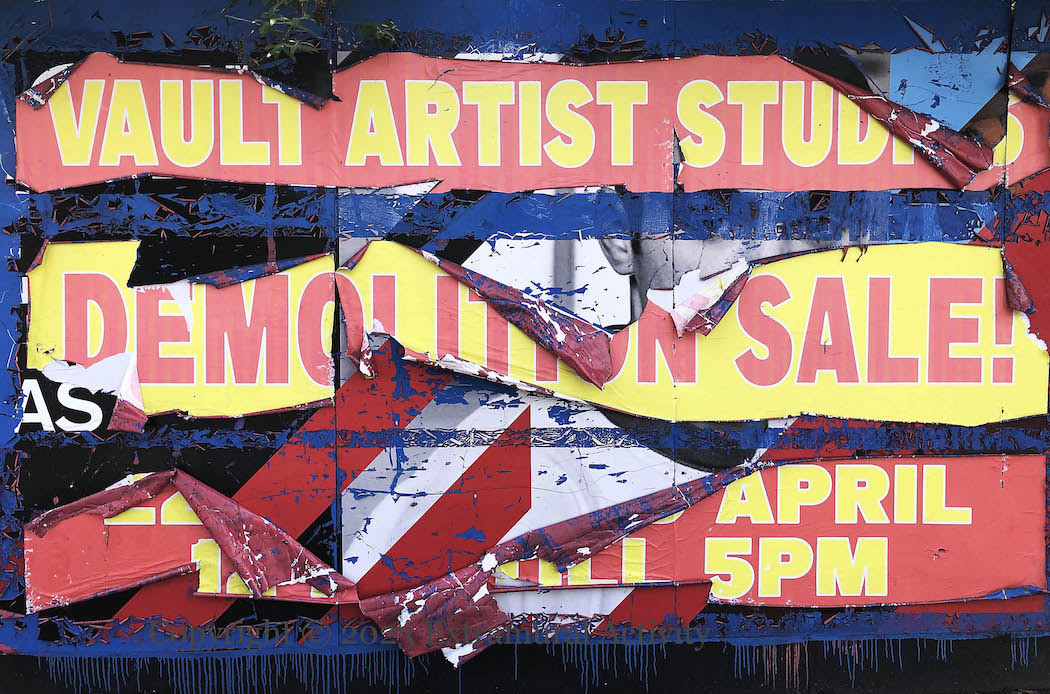
The Vault artists have cleared out of the old Met building in Tower Street and have been preparing their two new digs, in the Shankill Mission (Vault ig | FGB ig) and Marlbourough House in Victoria Street. The vestiges of their time in east Belfast linger on.
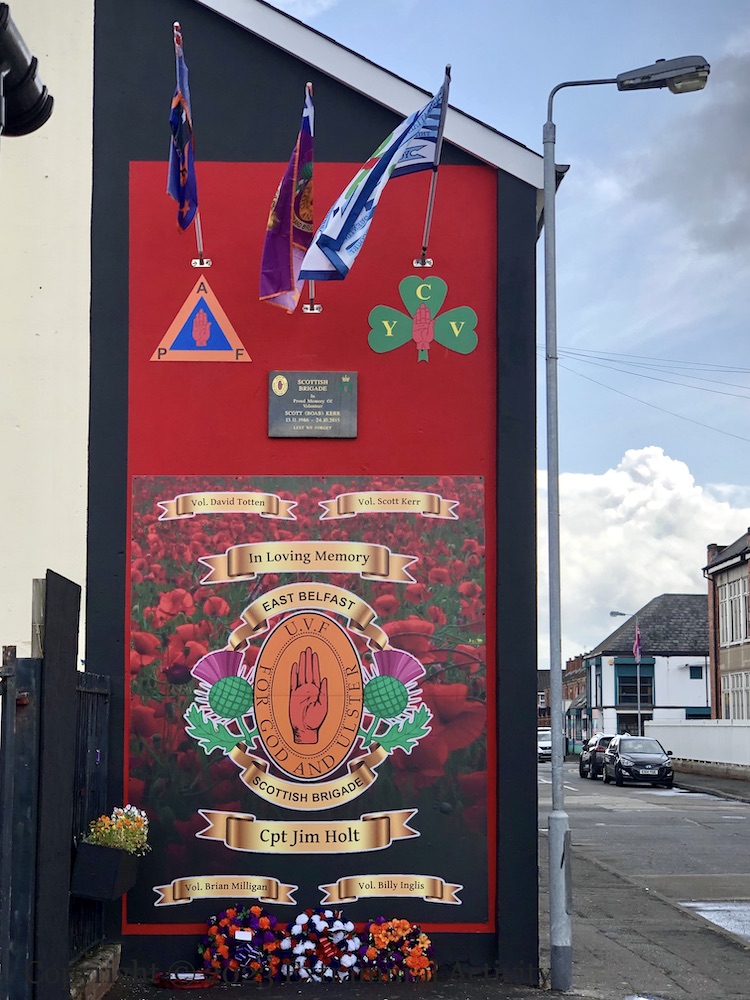
The hand-painted UVF Scottish Brigade mural (see Boab Kerr) in Beechfield Street/Tower Street has been replaced by this new printed board. The plaque to Kerr has been retained, but four names have been added – David Totten, Brian Milligan, Billy Inglis, and Jim Holt, who is now the most prominent. Holt died in February 2021 (ACT Fb).















 Extramural Activity