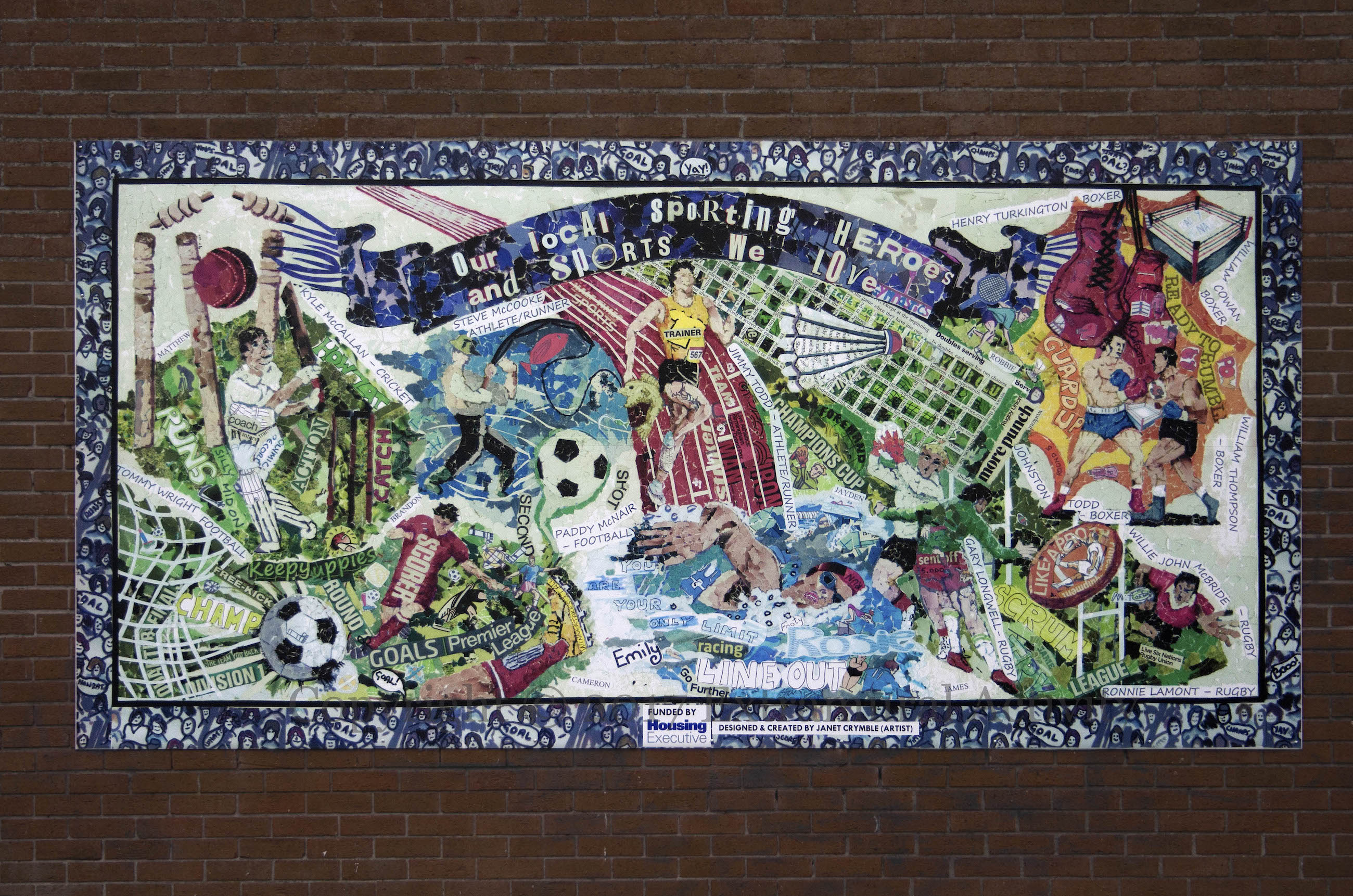
Whitehead artist Janet Crymble “designed & created this new collage in Ballyclare, featuring south Antrim sporting heroes past and present: Kyle McCallan, Steve McCooke, Paddy McNair, Jimmy Todd, Gary Longwell, Ronnie Lamont, Henry Turkington, William Cowan, William Thompson, Johnston Todd, Willie John McBride. John Reid from the NIHE – which sponsored the mural – has an image from the launch of local children posing with the piece.
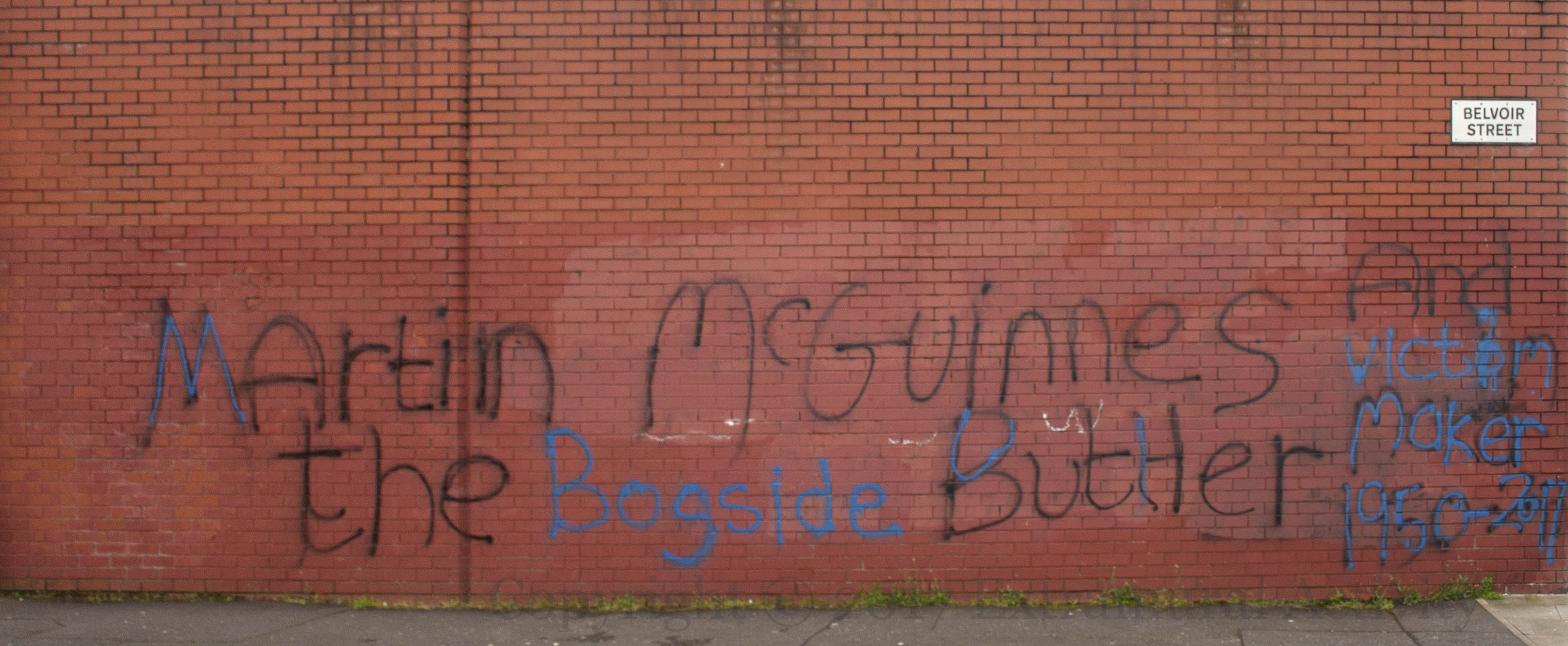
“Martin McGuinnes [sic], the Bogside buther [sic] and victim maker 1950-2017” – commentary on IRA volunteer and Sinn Féin politician Martin McGuinness’s recent (March 2017) death from amyloidosis, in Belvoir Street.
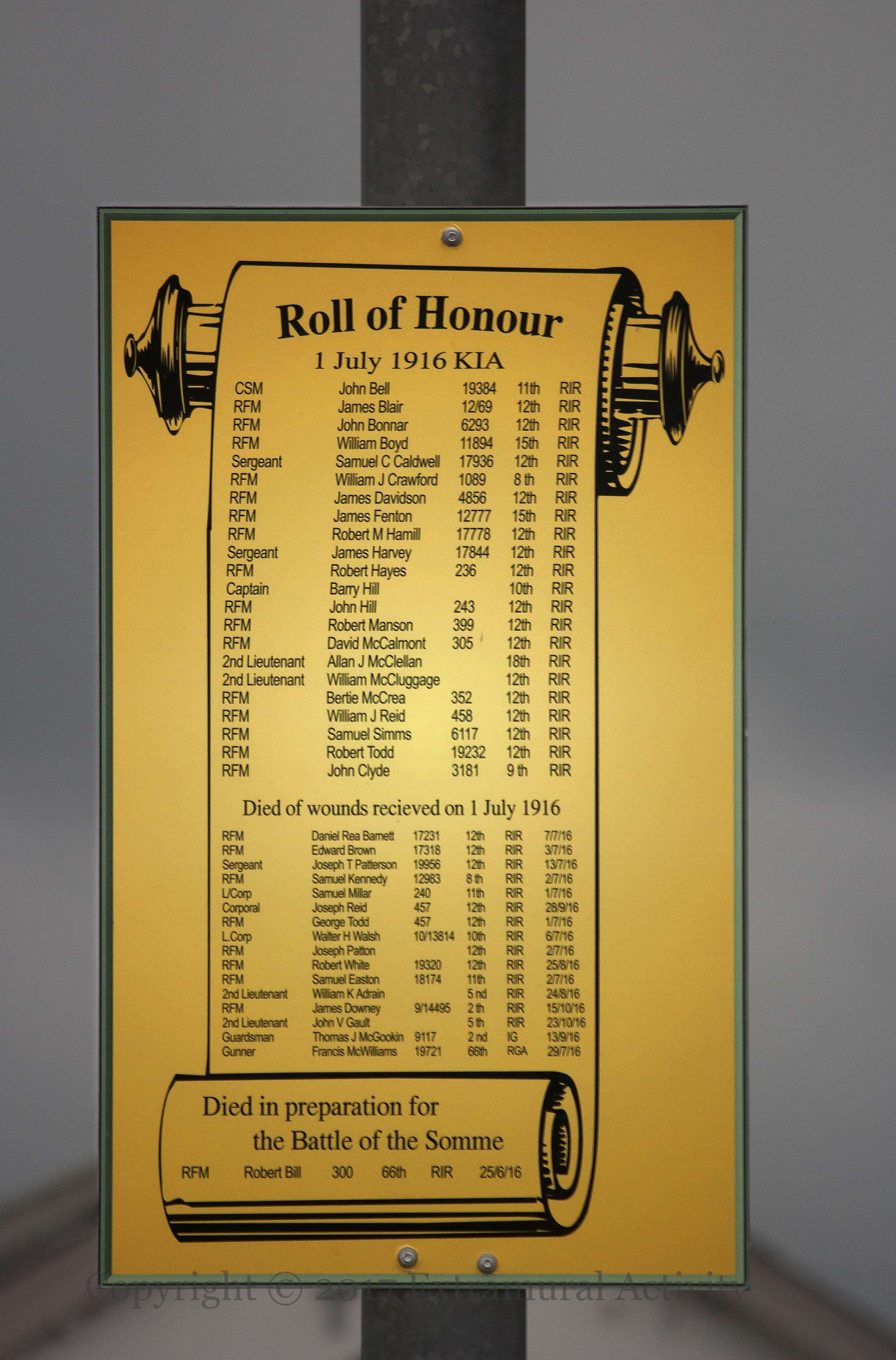
The 12th battalion of the Royal Irish Rifles was drawn from central Antrim towns such as Ballymena and Ballyclare. There is a web site and a Facebook page dedicated to the battalion. For more pictures of the Ballymena arch, see Cross And Crown.
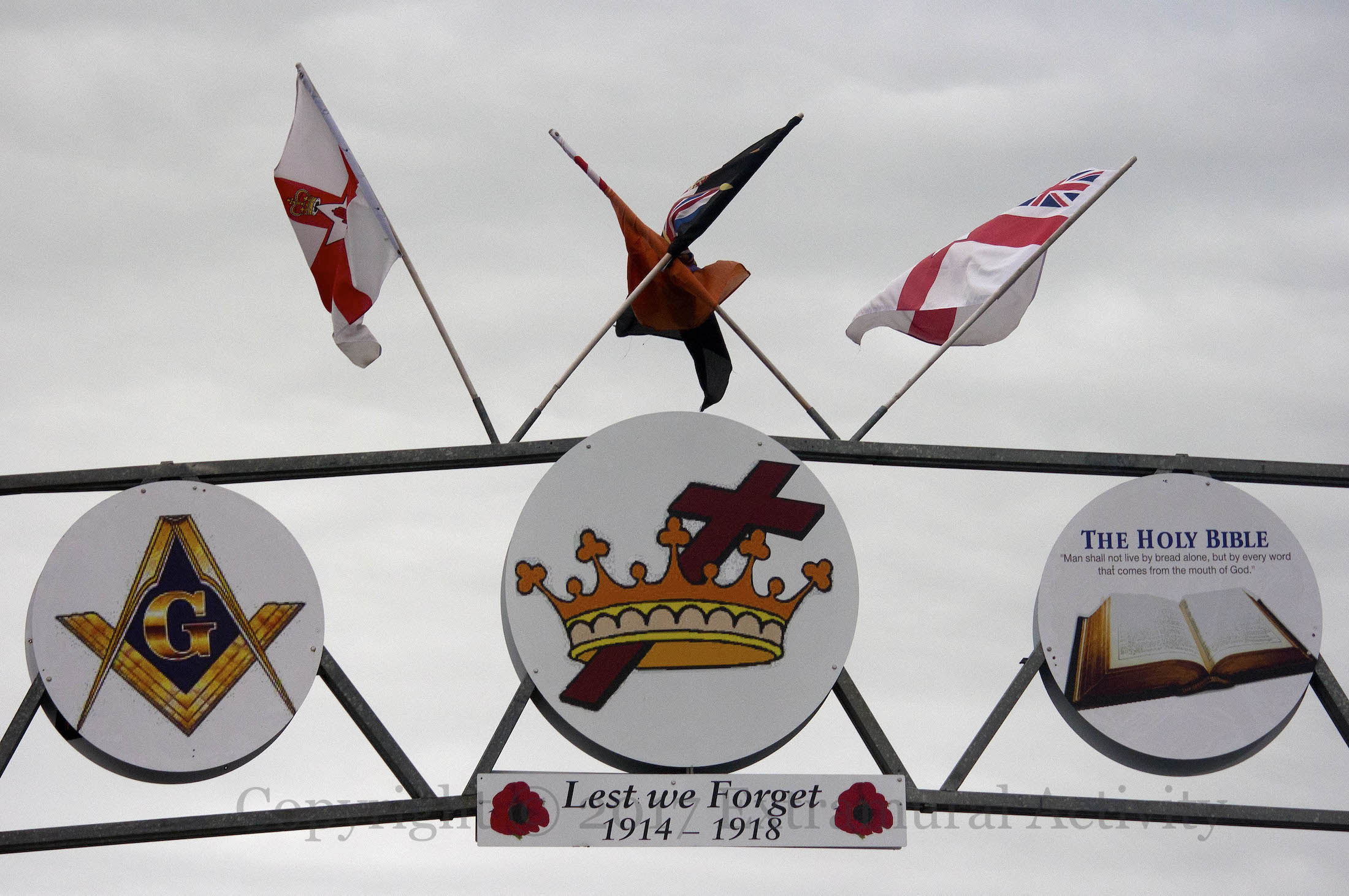
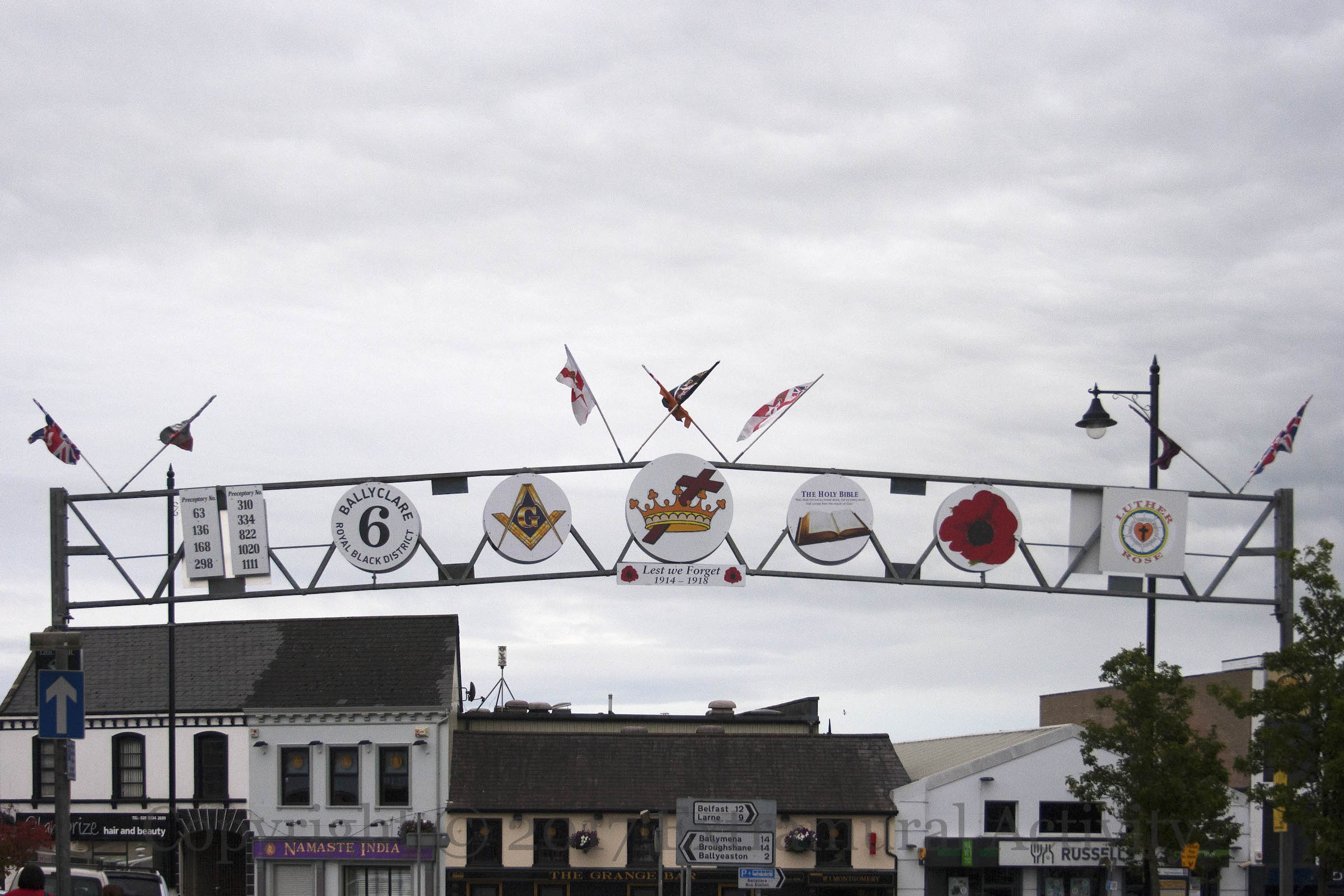
The ‘cross and crown’ is the emblem of the Royal Black Institution, an institution two years younger than the Orange Order; a list of local preceptories in District 6 (Ballyclare) is given in the first image below. To the left (in the image above) is the Square And Compasses, the symbol of the Freemasons. This is a newer arch than seen previously in 2009.
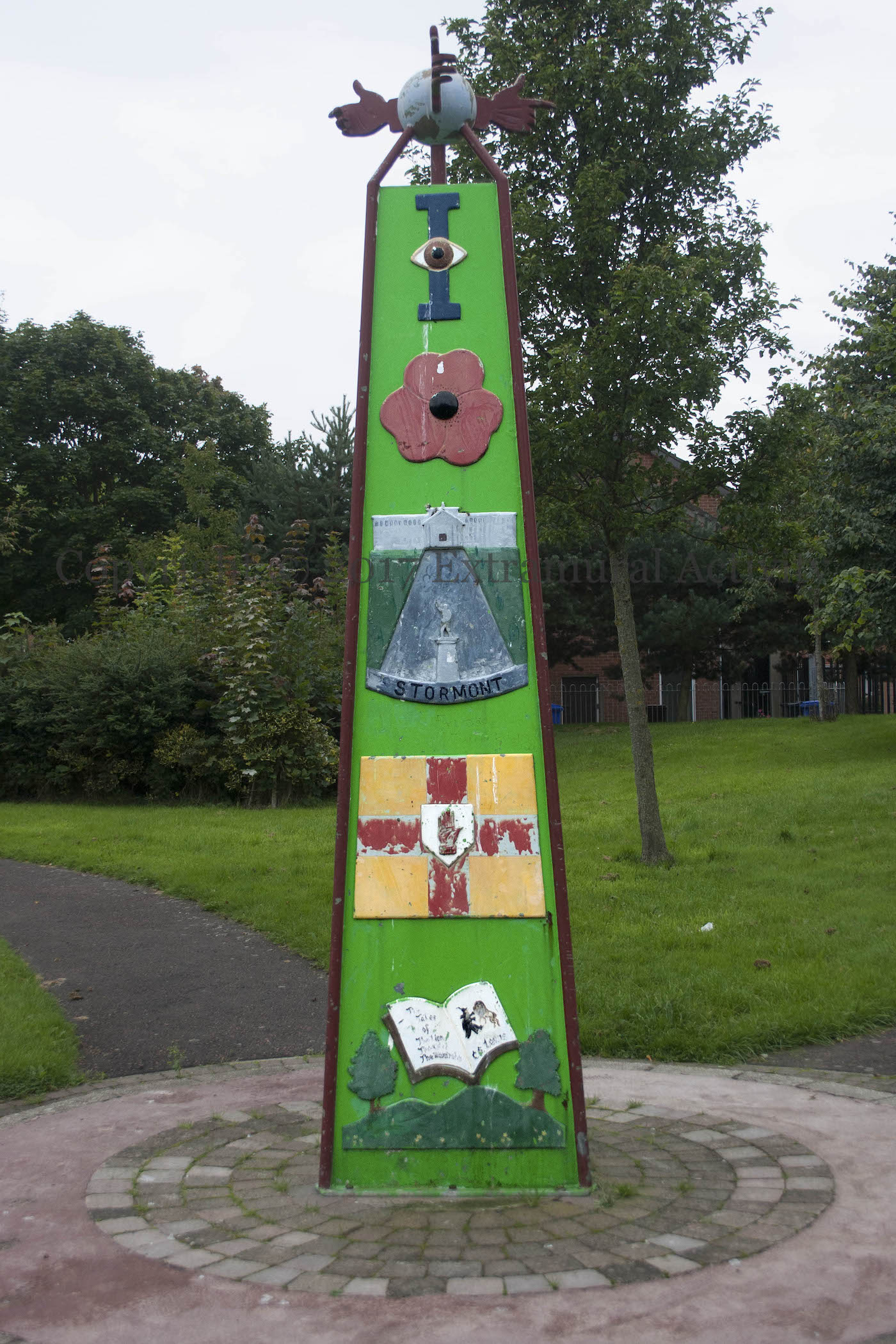
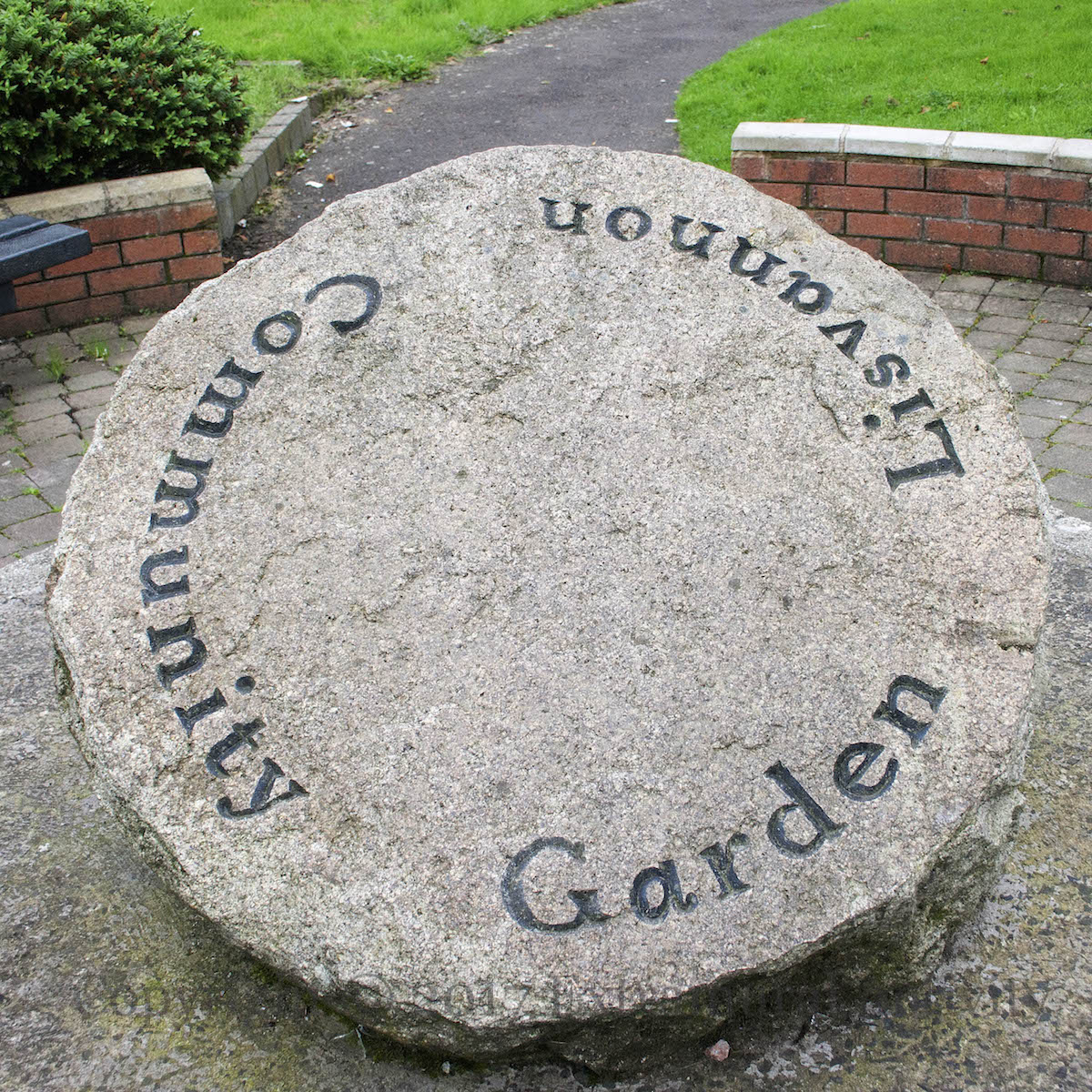
You can see (or imagine) all of east Belfast with the help of the guide-post in the middle of Lisvannon Community Garden: Stormont to the east, factories to the south-west, and Harland & Wolff to the north-west.
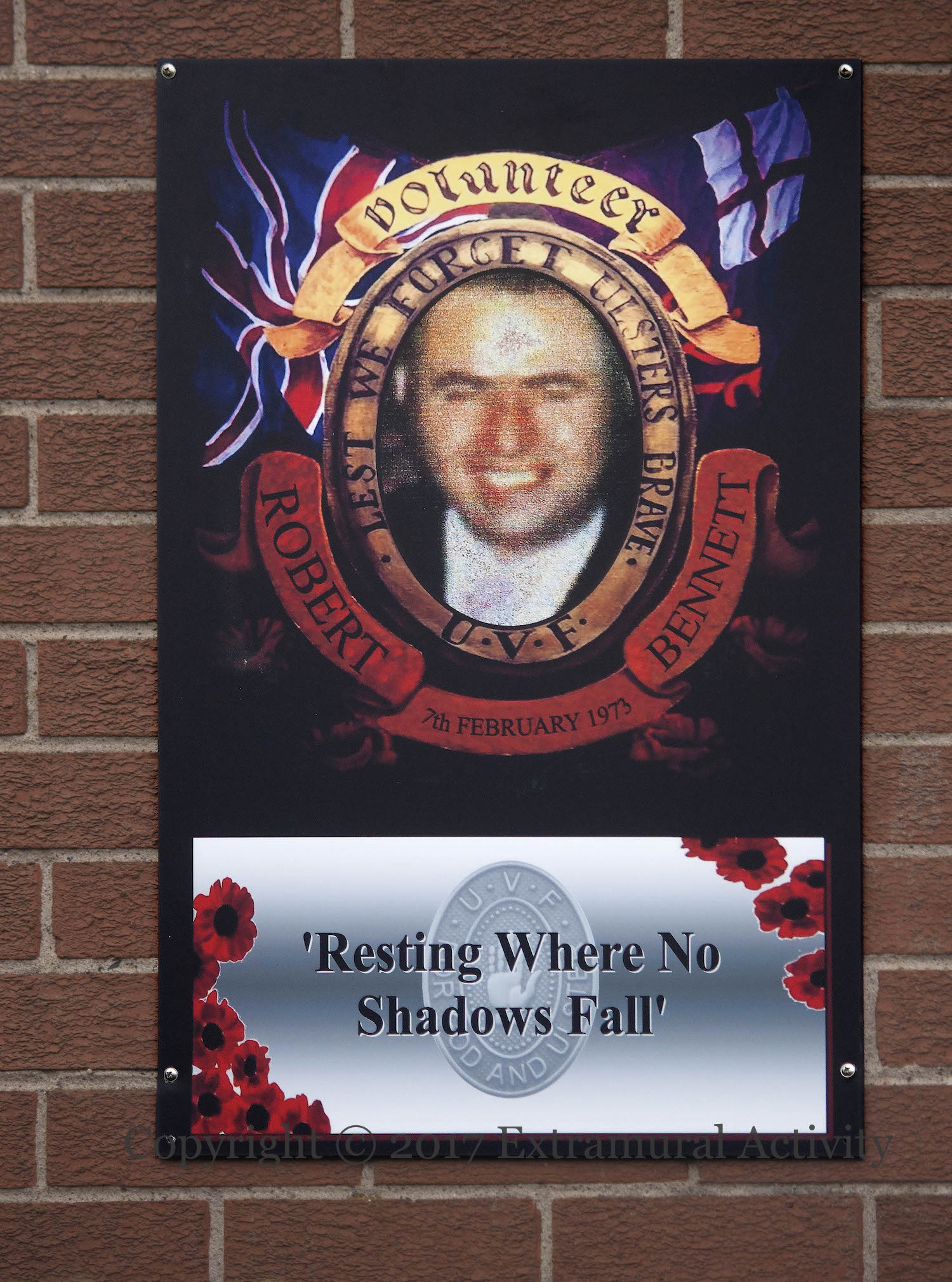
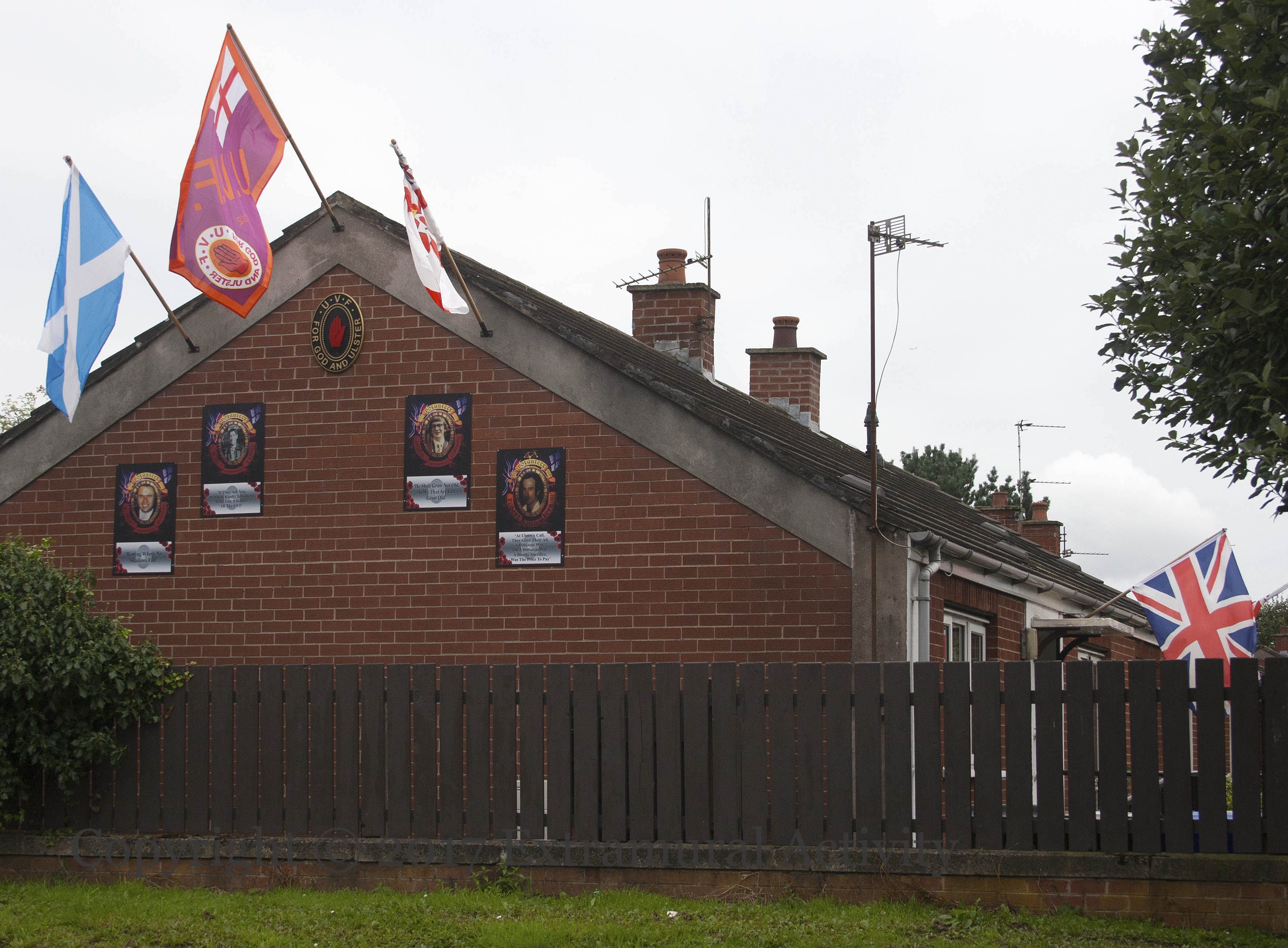
Here is another set of four portraits of Robert Bennett, Joe Long, James Cordner, and Robert “Squeak” Seymour, all members of the UVF killed in the 1970s (Bennet, Long, Cordner) and 1980s (Seymour).
King Billy’s sword is tipped in blood, and he rides below a shamrock, rose, and thistle, uniting the kingdoms. Ballyclare Orange Hall is named after Hugh McCalmont, a major-general in the British Army Ulster Unionist MP for North Antrim in 1895 (and East Antrim in 1918?). His Whiteabbey house was burned down by suffragettes in 1914 because it was used as a training ground by the UVF of the anti-franchise Carson.
Strandtown and District Unionist Club used to be at 4 Belmont Road (Strandtown Hall) and it erected this memorial to local casualties in the Great War in Portland stone on the adjacent wall,(Lord Belmont in NI) which is now part of a Christian Fellowship church. “Hereon are recorded the names of those men and women who in serving voluntarily their King and country, laid down their lives. Pass not this stone sorrow but in pride and may you live as nobly as they died.” The building currently houses Bennett’s On Belmont, a UUP headquarters, and the Victoria Ulster Unionist Association upstairs.
On 20 August 1943, second pilot Sergeant John Erskine and the Liberator crew of seven others failed to return from a convoy patrol of the west of Ireland (59 Squadron). Erksine and 28 others from WWII (and one from the Korean War) are commemorated in a new mural in Erskine Park, Ballyclare. It’s not known if the street name is connected to Sergeant John.
The left-hand portrait is of Edward Girvan, from Ballynure, who was killed on the H.M.S. Repulse, when it was attacked by Japanese aircraft and struck by torpedo bombs in the South China Sea on December 10th, 1941 (WP).
The soldier in the centre of the mural wears the emblem of the Royal Ulster Rifles, Parachute Regiment on his cap. William Johnston 7018189 and George Williamson 7022501 are listed (on the right) as riflemen in airborne battalions of the RUR, but this appears to be a reproduction of an original painting of an RUR major.
UVF volunteer John Hanna was 19 years old when he was killed by “the enemies of Ulster” (the IRA) at his home on Donegall Road in the Village. This new board is in Prince Andrew Park, just off Donegall Road. “Always remembered by the officers and volunteers South Belfast [2nd Batt Sandy Row] UVF”.