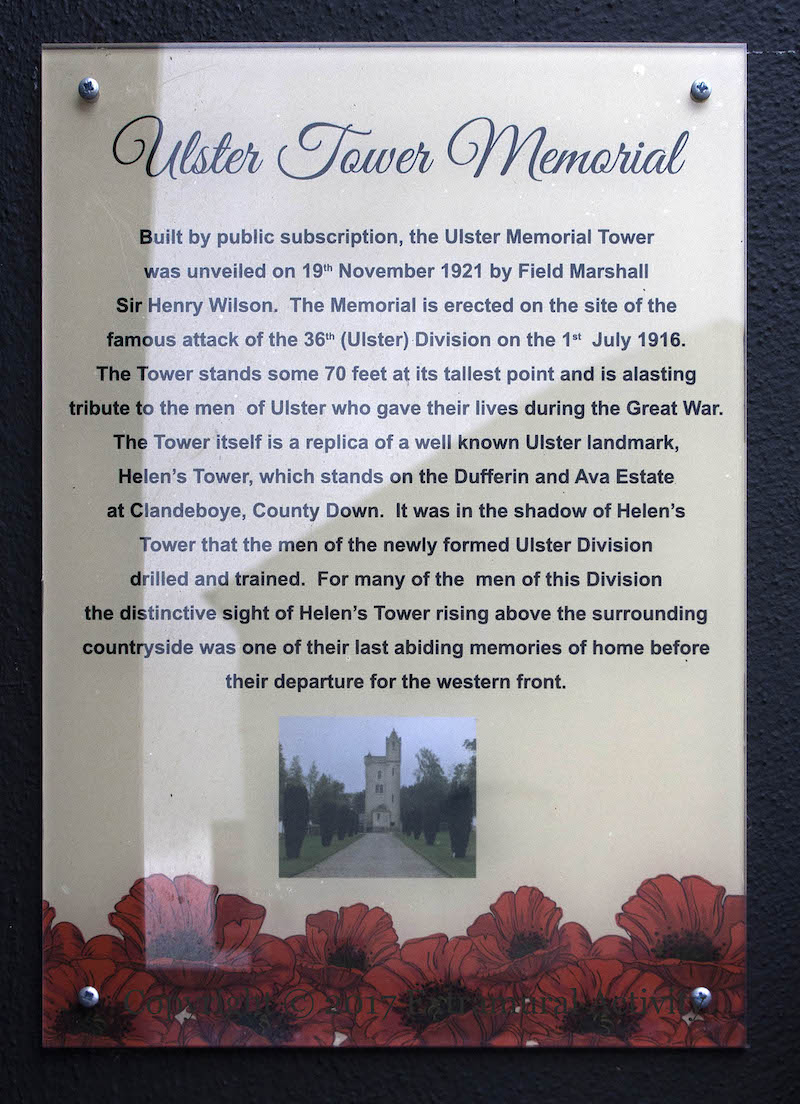
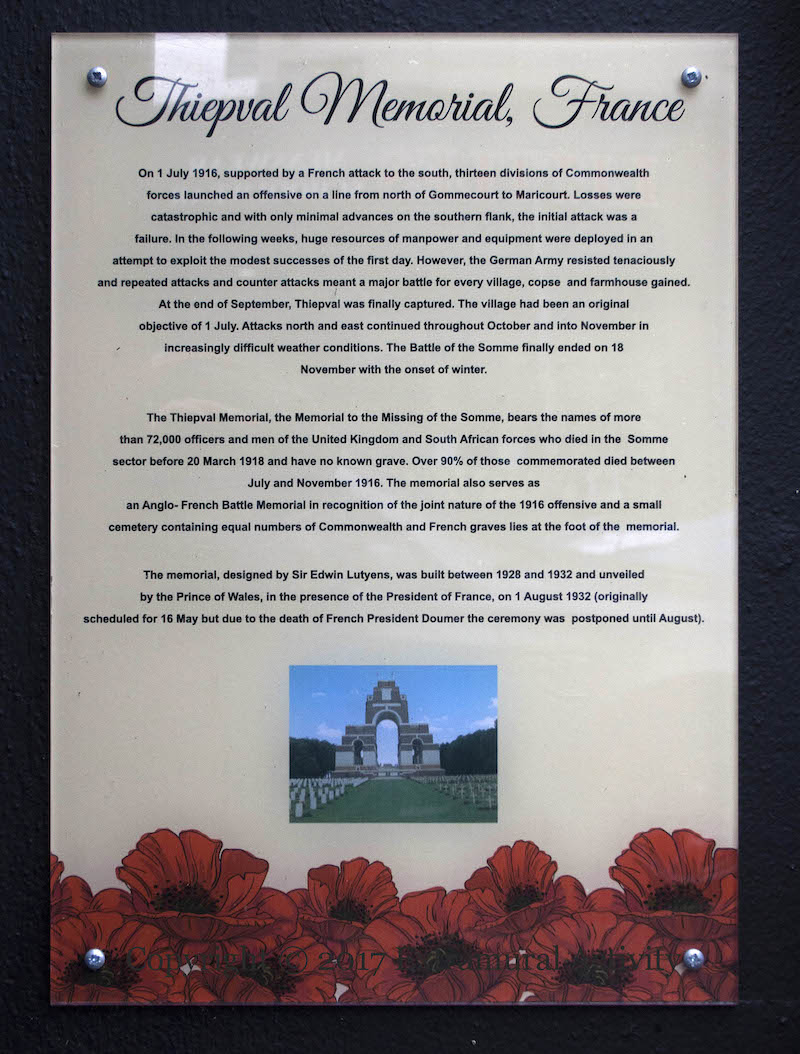
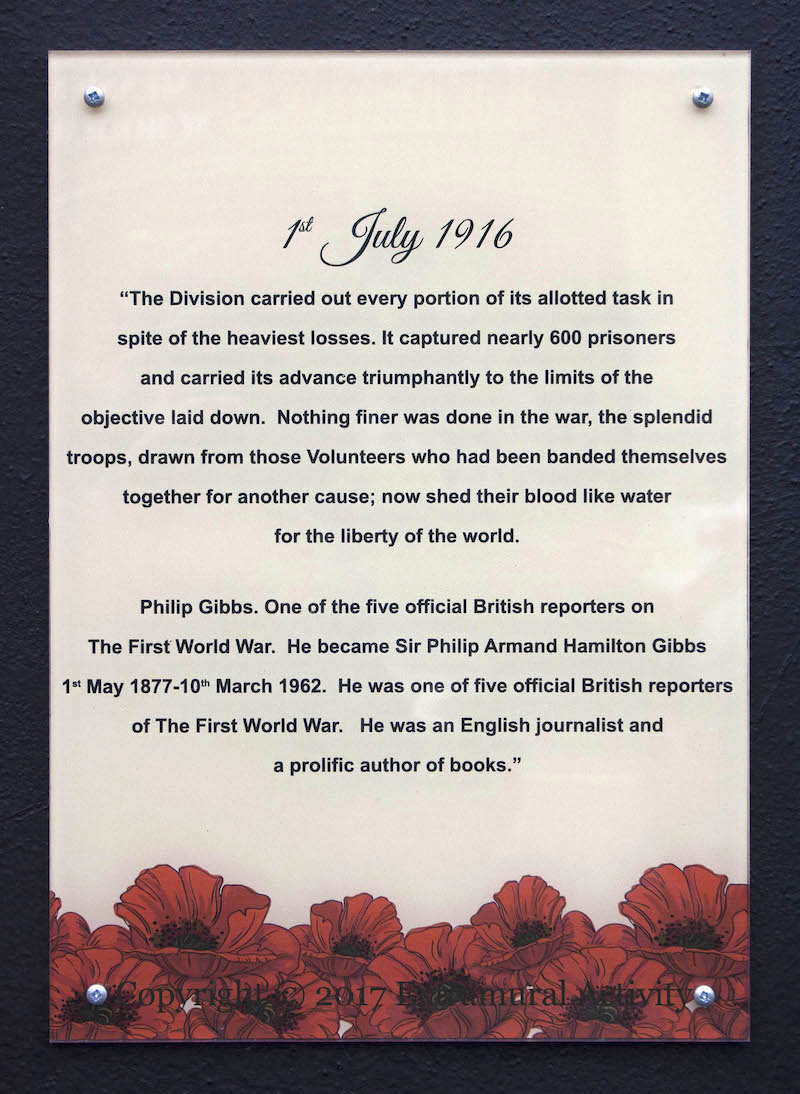
Winston Churchill’s line about the British Air Force in WWII, that “Never in the field of human conflict was so much owed by so many to so few“, is echoed in this WWI board about the battles at the Somme between July 1st and November 18th, 1916. “The few” in this case, however, number nearly half a million dead and more than 72,000 missing. “Never before was a debt owed to so few by so many. Generation after generation owe them everything. Lest we forget.”
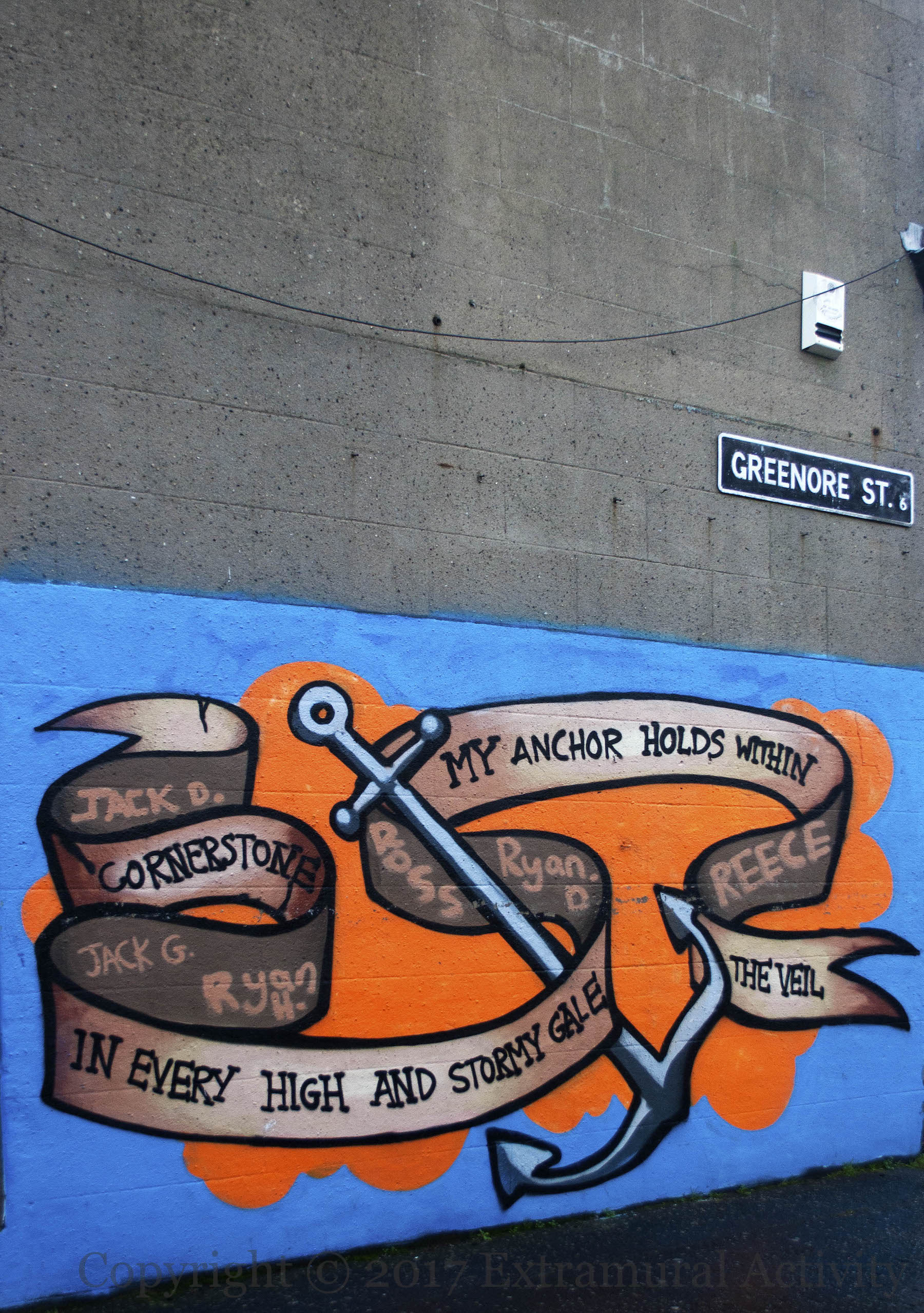
Words (by Edward Mote in 1836) from a Christian hymn ‘My Hope Is Built On Nothing Less’, commonly sung to the 1863 tune by William Bradbury ‘The Solid Rock’ (WP) but also used with a different melody for the song Cornerstone (which is the name of the east Belfast community group) written on a ribbon wrapped around an anchor in east Belfast: “In every high and stormy gale, my anchor holds within the veil.”
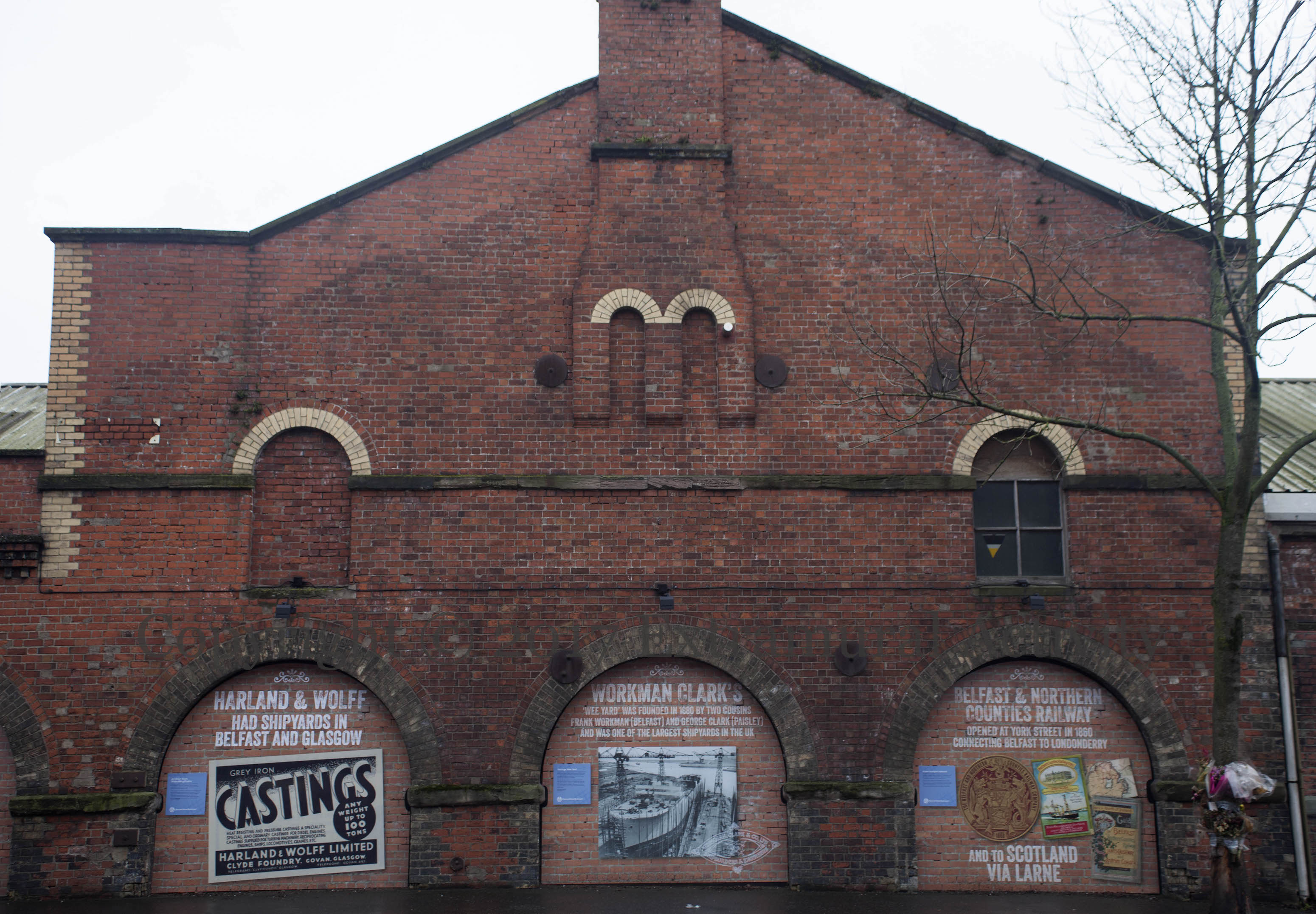
Workman & Clark’s (in the centre panel above) was a Belfast shipyard existing from 1880 to 1935. During the first world war it took over the construction of two monitor ships (specifically, M29 and M31) for the Royal Navy that H&W did not have space to build. For more, see Grace’s Guide | BBC audio on monitor ships and their construction, including a record for number of rivets hammered in by one John Moore at Workman Clark’s.
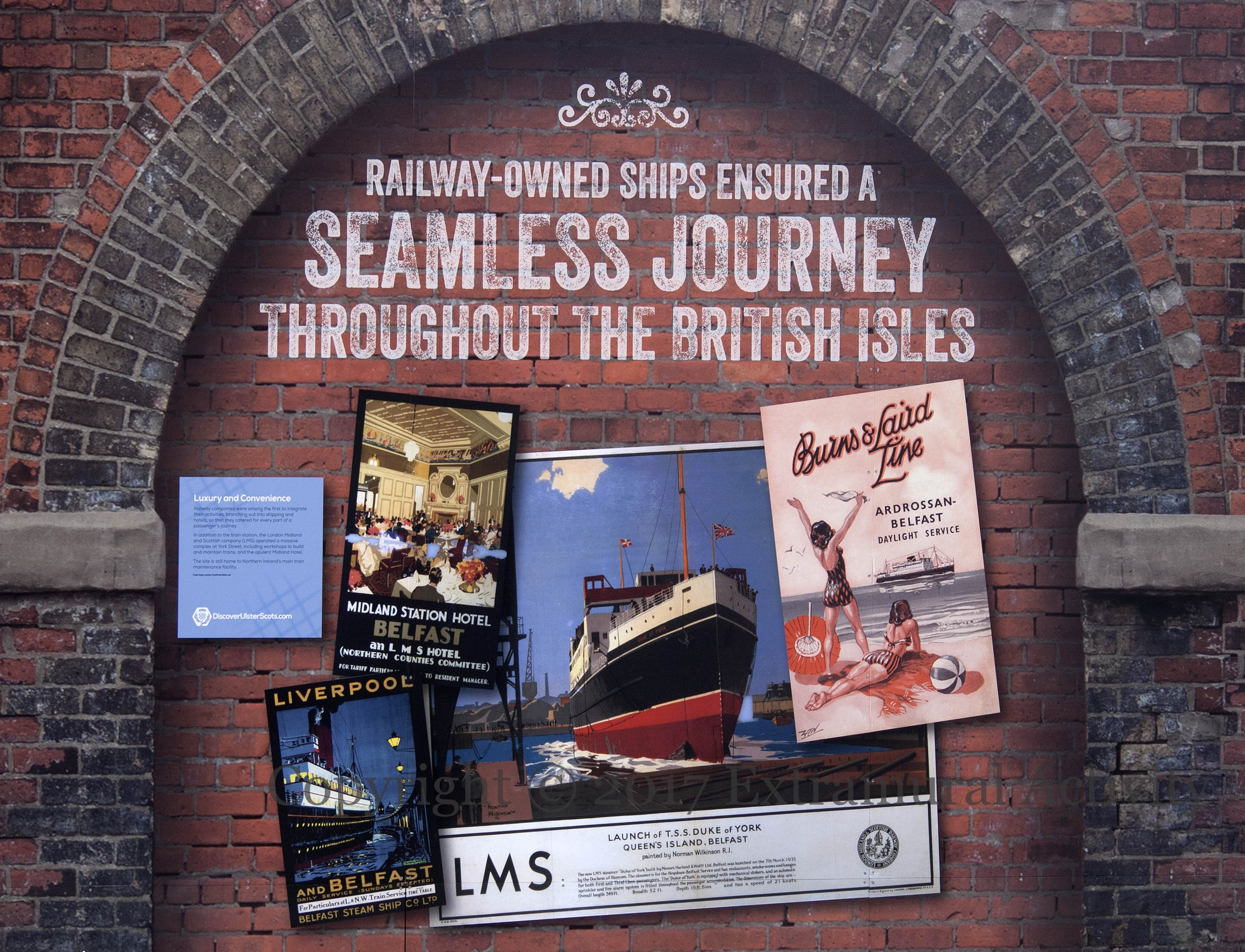
These are panels 6, 7, and 8 from the new boards along York Street on the outer wall of the NI Railways mechanical engineering workshop.
UDU (Ulster Defence Union) mural in Pine Street, Londonderry, vandalised with “IRA” graffiti. The mural has since been repaired. For the original, see Union Shield.
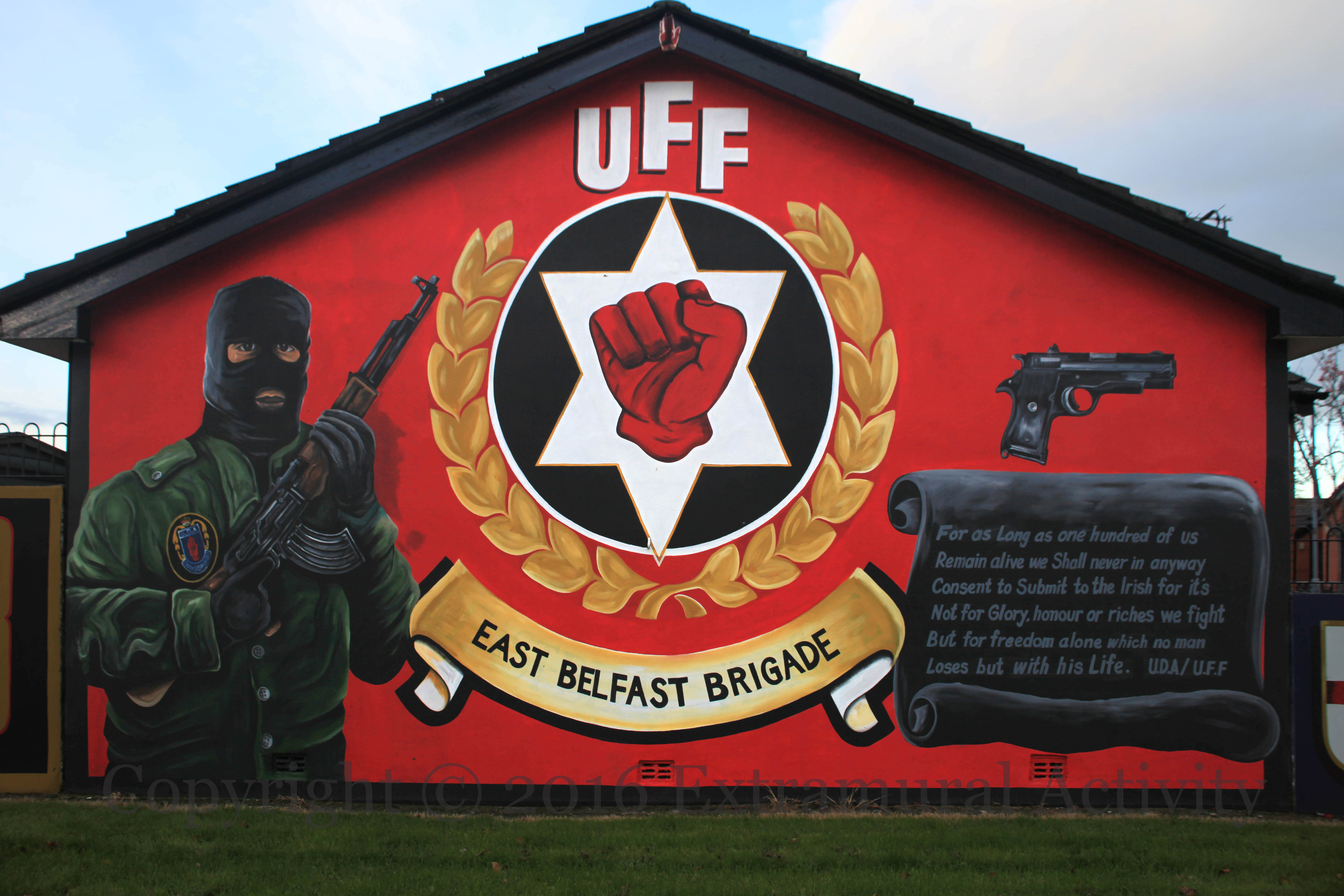
Here is the UDA/UFF mural on the left-hand gable of “Freedom Corner”. The mural is a 2015 repaint of the previous mural, which had to be replaced when it disintegrated. (See Freedom Corner for speculation as to the cause.) At the time, there was some disappointment that it was not repainted in a non-paramilitaristic fashion but defenders described the mural as “historical” (Tele).
The mural shows a UDA-jacketed volunteer with assault rifle and a modified version of the Declaration of Arbroath: “For as long as one hundred of us remain alive we shall never in anyway consent to submit to the Irish for it’s not for glory, honour or riches we fight but for freedom alone which no man loses but with his life – U.D.A./U.F.F”
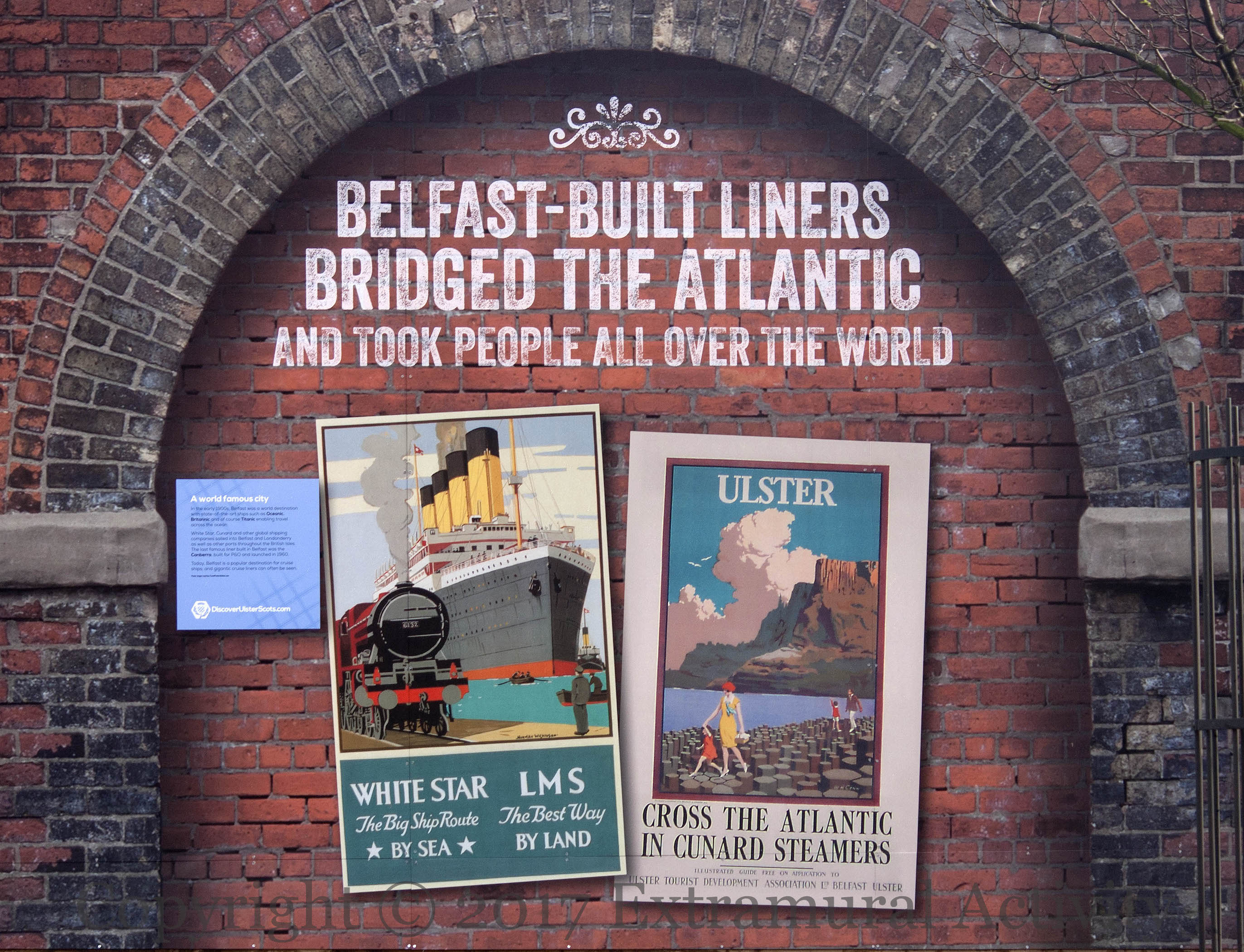
In addition to the famous trans-Atlantic ships (image above), Belfast was part of the travel network in the UK and Ireland (image below). Before there was British Railways, there were the Big 4: the Southern, Great Western, London and Northeastern, and London, Midland, and Scottish (LMS) railways. The latter included the railways in the Northern Counties. In addition to railways, the company owned canals, ships (including the Princess Victoria which sank on the Larne-Stranraer route), and hotels. “Belfast-built liners bridged the Atlantic and took people all over the world.” “Railway-owned ships ensured a seamless journey throughout the British Isles.”
Previously:The history of Shipbuilding in Belfast.
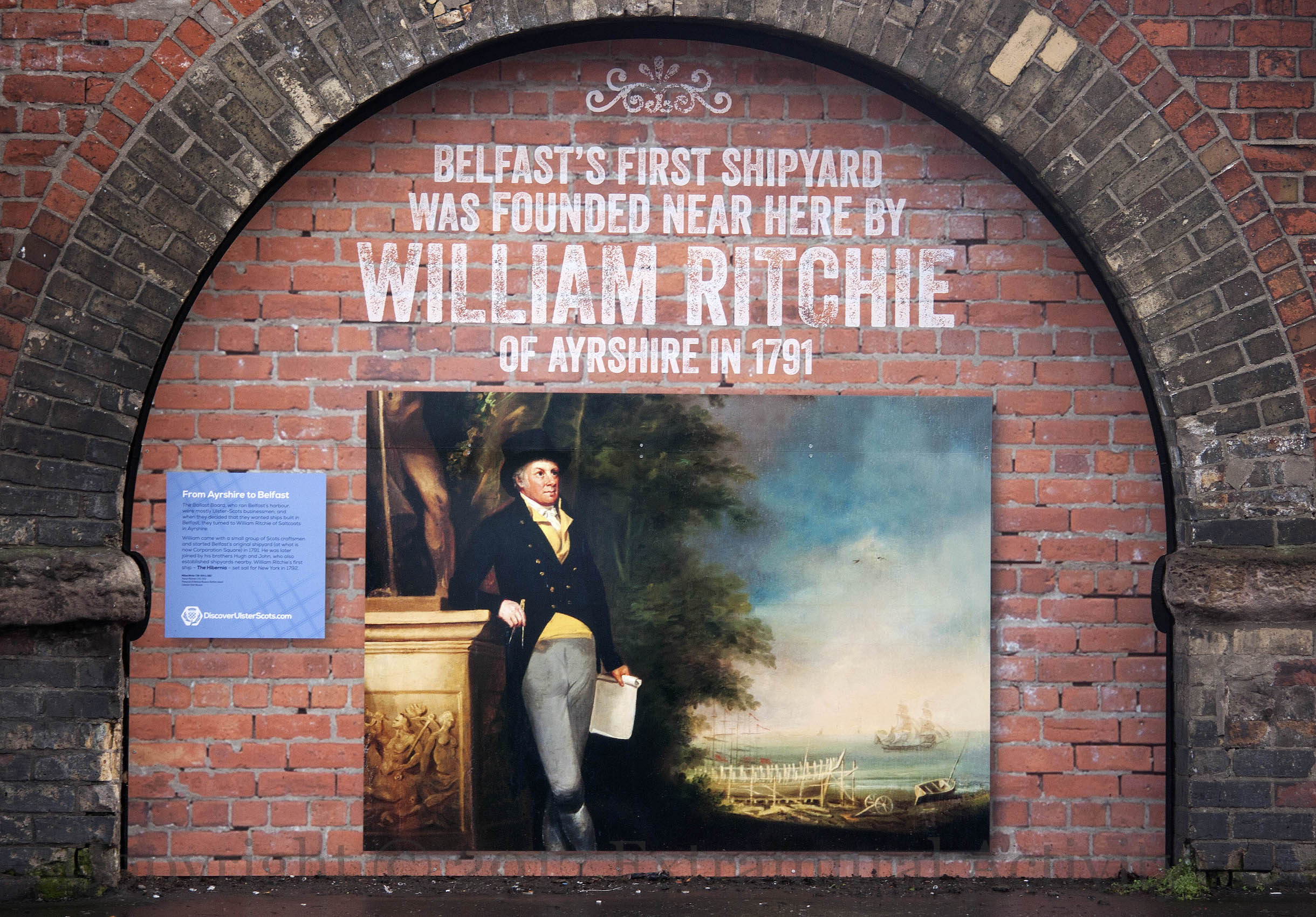
A history of shipbuilding and its role in Belfast’s industrial life is told in the first five panels of a 13-panel installation along York Road (“The harbour made York Street Belfast’s global gateway”) and in particular its connection with Scotland. (It is sponsored by Discover Ulster Scots.) Two Scots, William Ritchie (whose 1802 portrait by Thomas Robinson is shown) and Charles Connell (who oversaw the construction of the first wooden steamboat in Belfast – Aurora, pictured below) along with another Scot, Alexander MacLaine, were the leading shipbuilders in Belfast from 1791 until the 1860s, when Englishman Edward Harland (soon joined by German Gustav Wolff, and then in 1874 by William Pirrie and Wilson brothers Walter and Alexander) took over the rival Hickson yard (which included land on Queen’s Island and on the south side of the Lagan) and became dominant. Their connection to York Street is that all of them except Pirrie lived on or near York Street.
Despite the “Work in progress!” tag, this Glen Molloy (ig) mural to the recently deceased Carrie Fisher (in the guise of Princess Leia from Star Wars) didn’t go any further. Fisher died two days after George Michael, to whom Molly also painted a tribute.
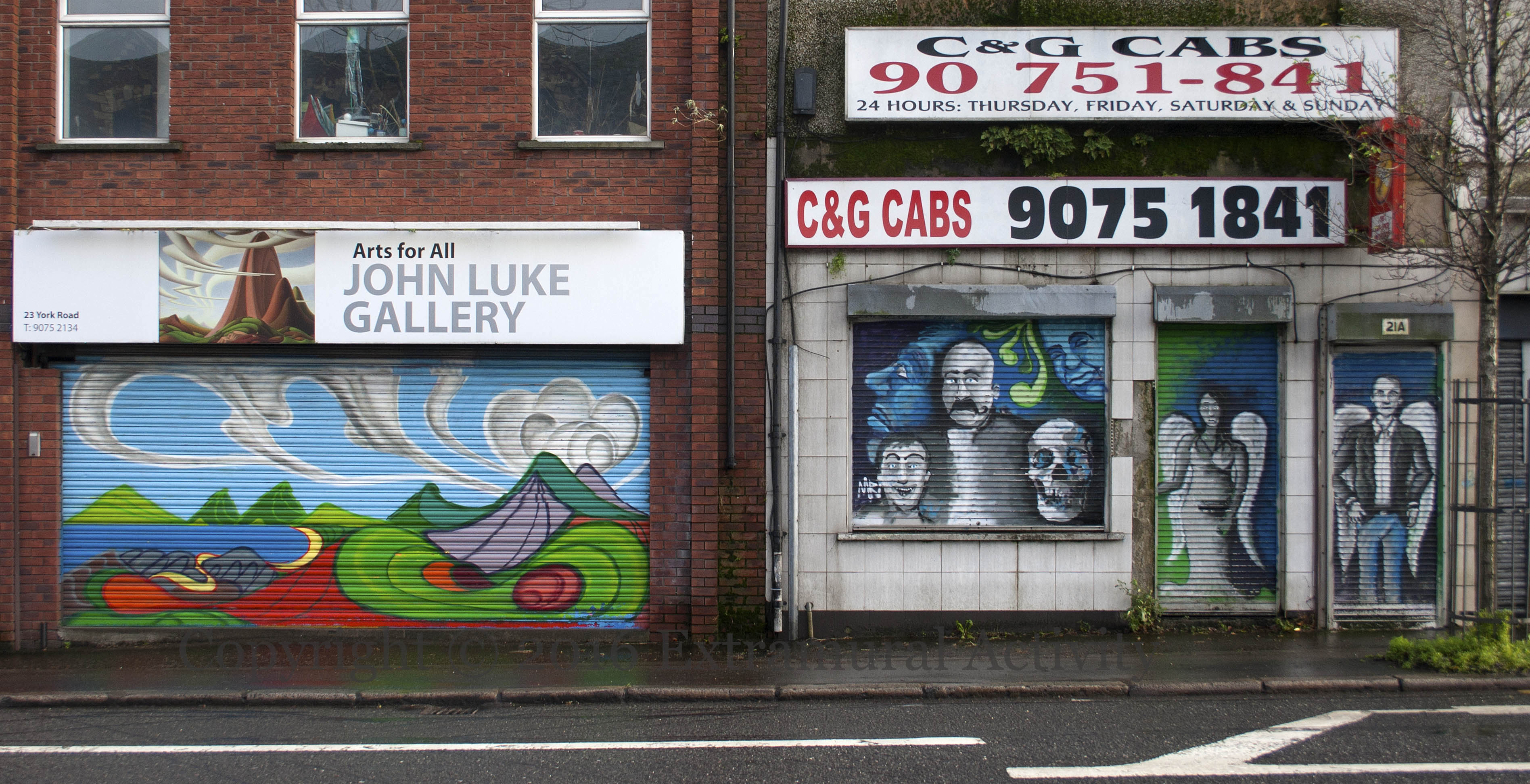
In addition to many paintings in a distinctive style, Belfast artist John Luke’s (one | two) work included a few murals, most famously an image of Belfast’s Charter painted in the City Hall. He lends his name to the gallery in north Belfast’s Arts For All centre which is now fronted by a mural in his style.
For the undead in the windows of the taxi office, see Haunted.







 Extramural Activity