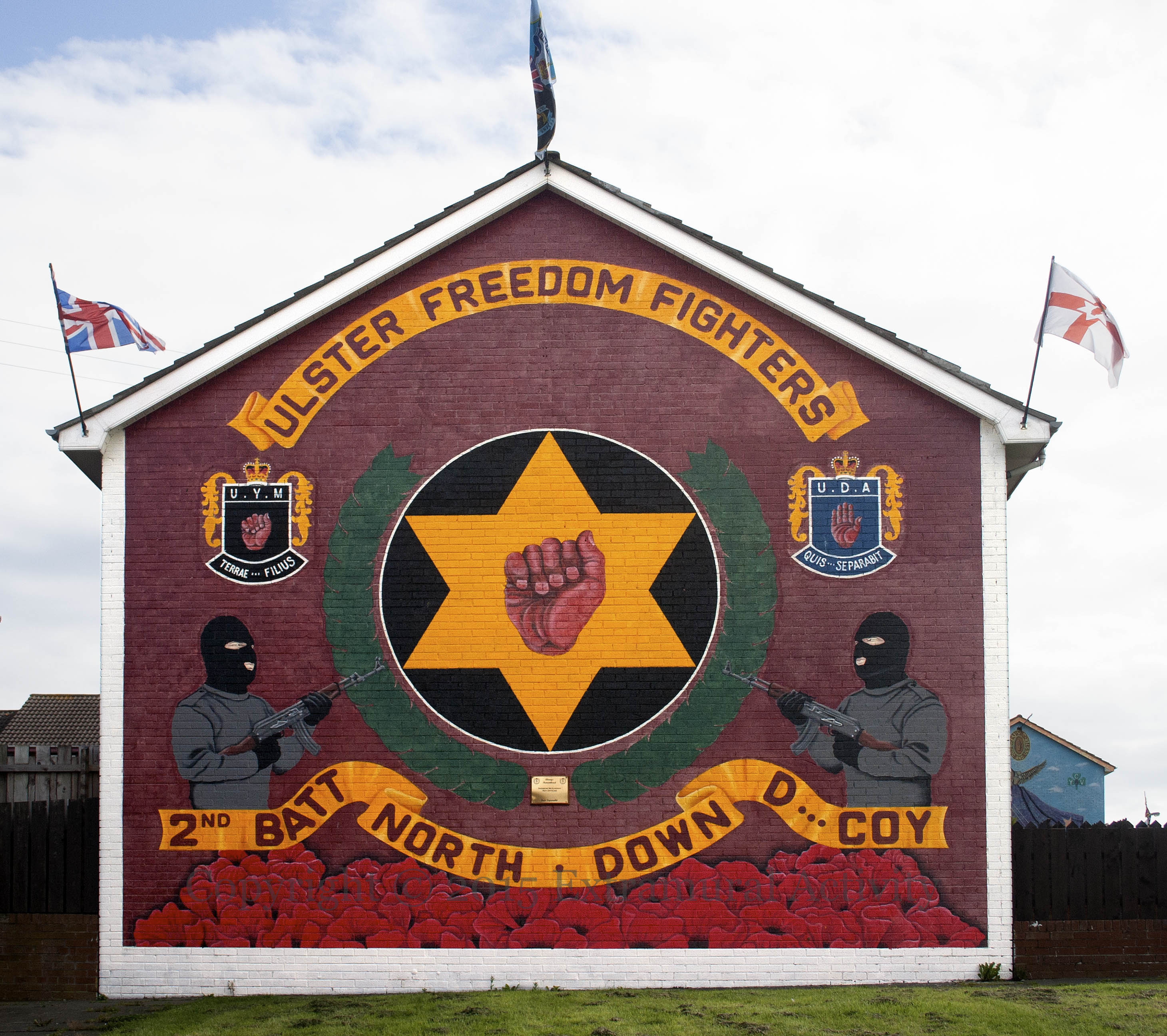
UFF/UDA/UYM (North Down, 2nd battalion, D company) memorial mural in Bloomfield estate, Bangor, to Andrew McIlvenny and Roy Officer, with hooded gunmen on a bed of poppies flanking the UFF clenched fist.
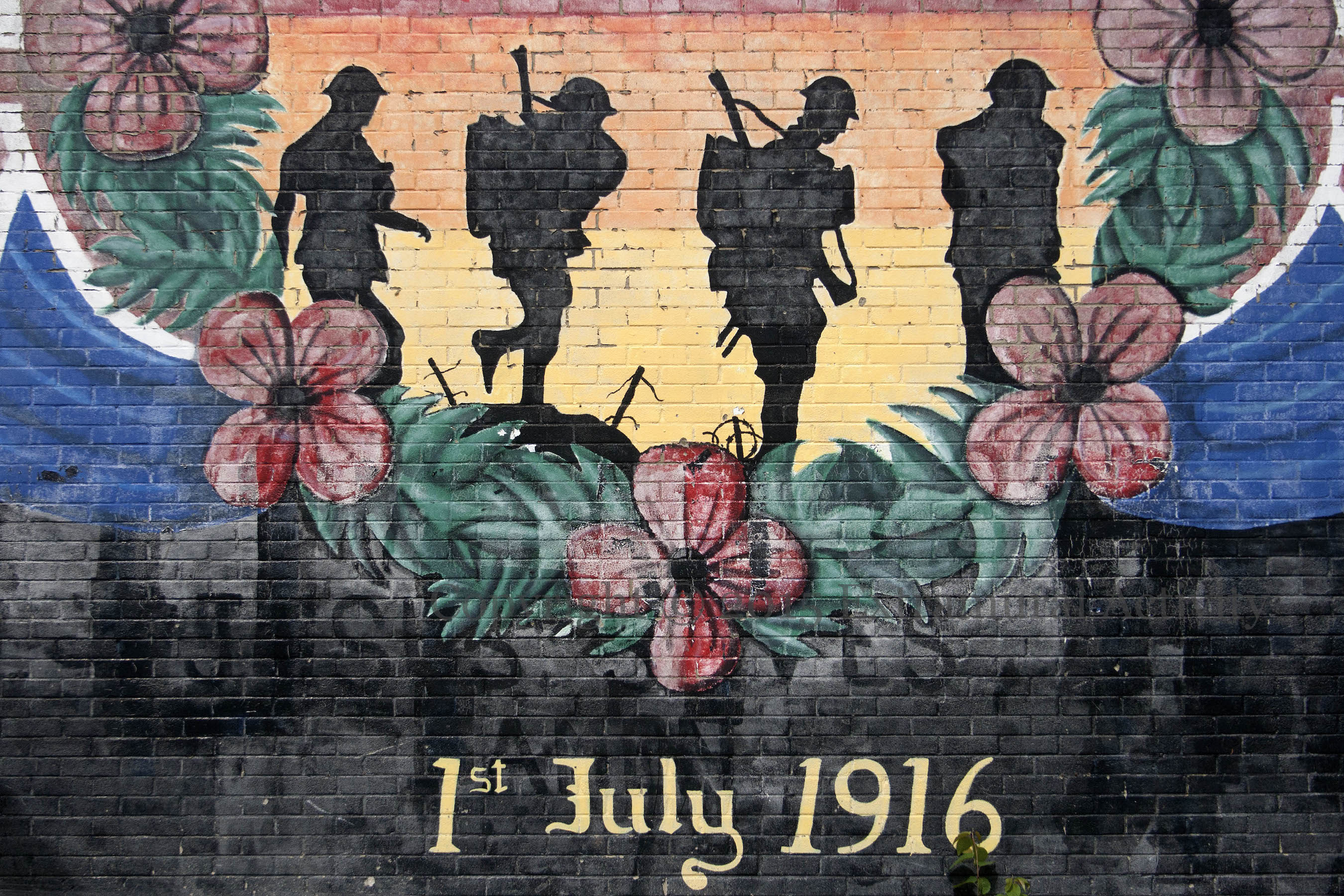
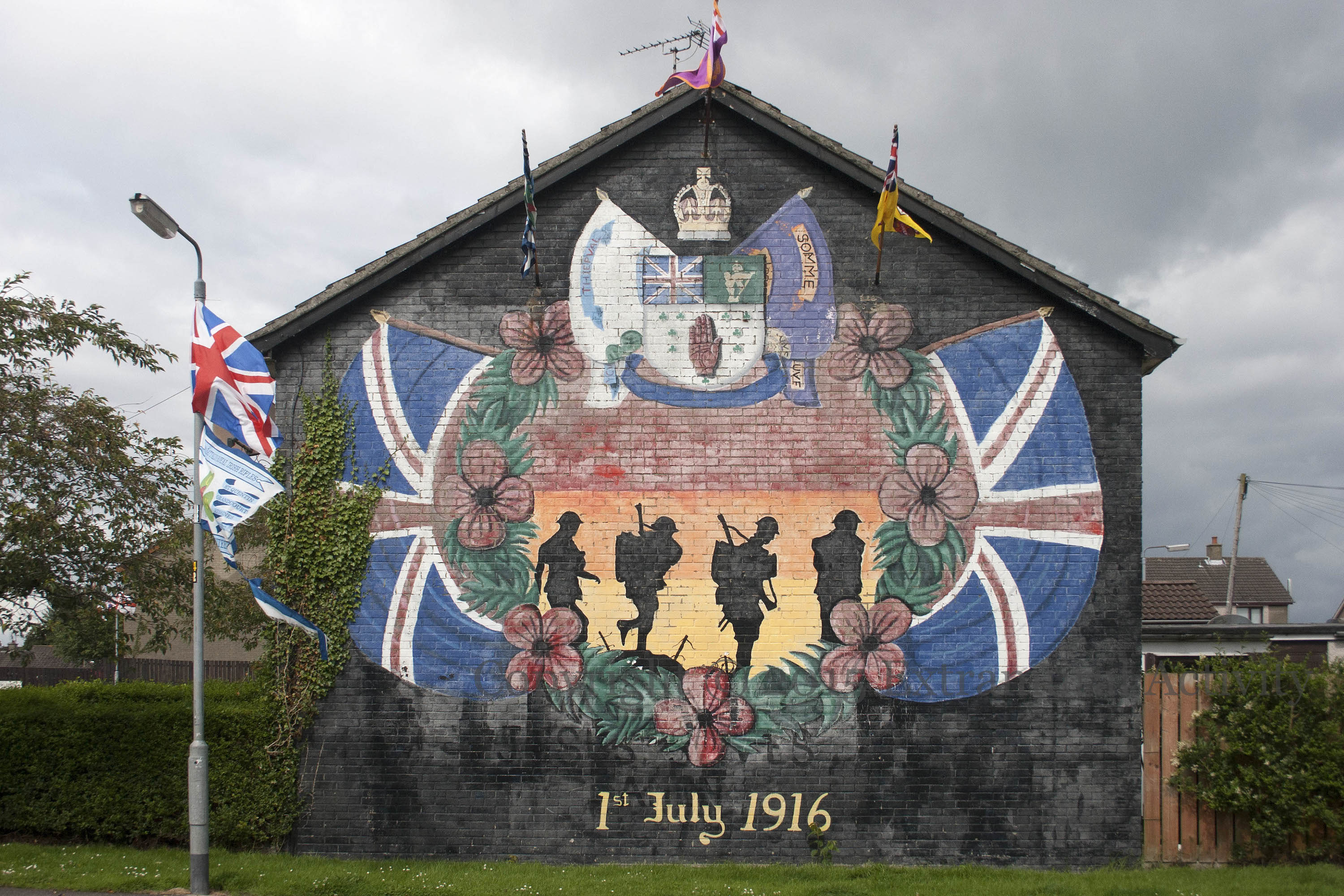
The Battle Of The Somme – named after a French river – began on July 1st, 1916 and went on until the 18th of November. In those four and half months more than one million soldiers were killed or wounded, including, on July 1st alone, about 60,000 British troops. The 36th (Ulster) Division, on the left flank, pushed ahead of other units and found itself unsupported; 5,240 of its soldiers died.
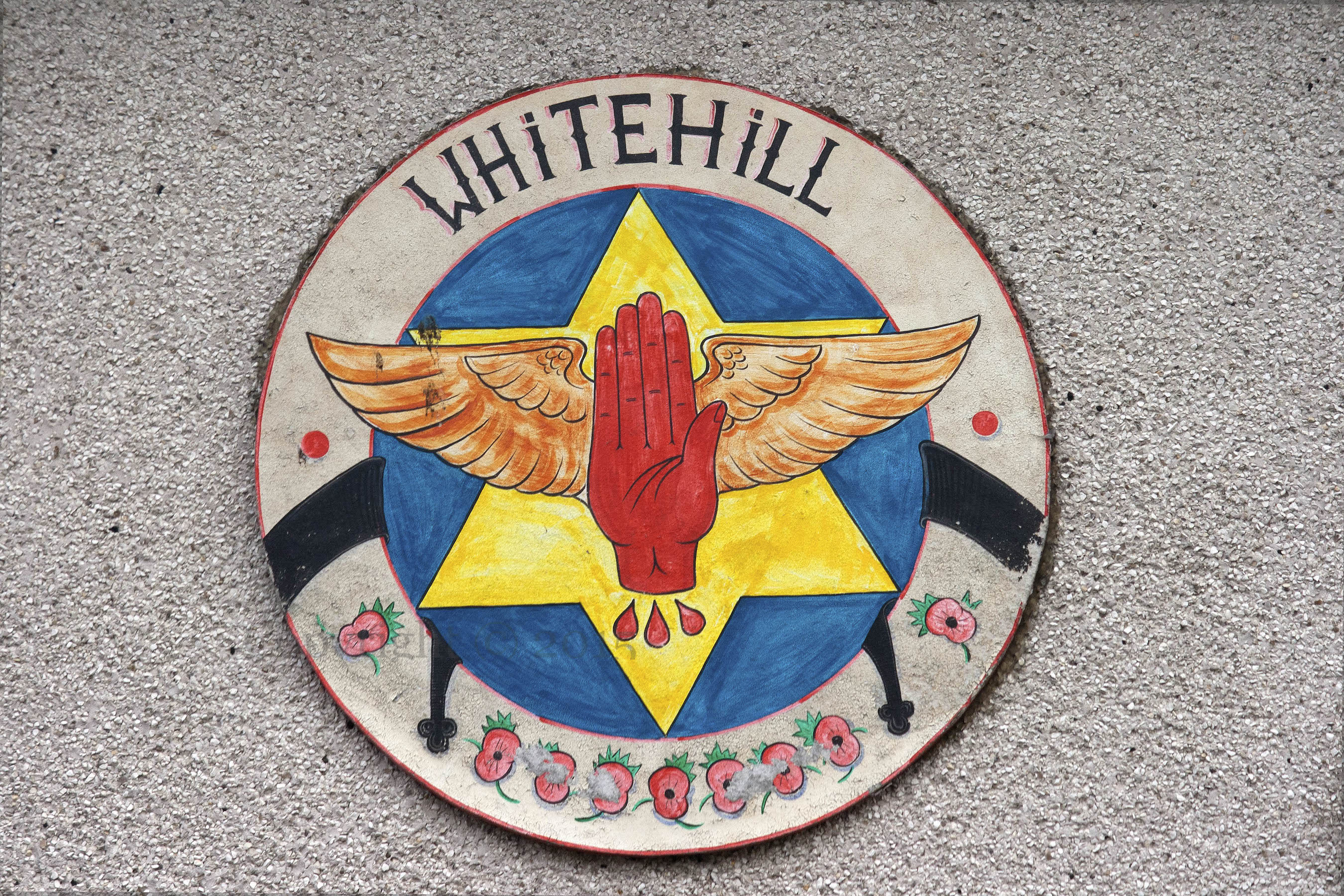
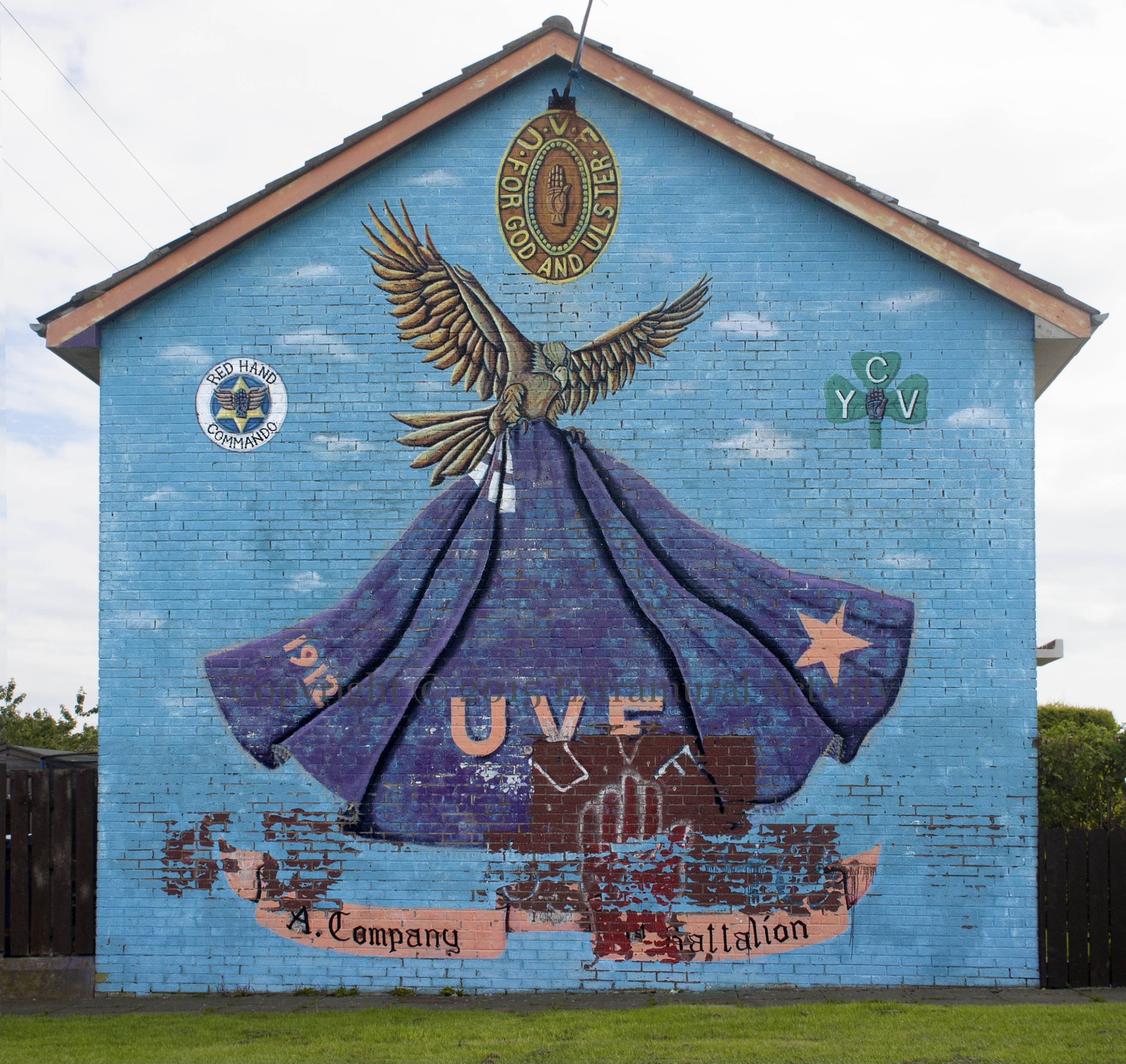
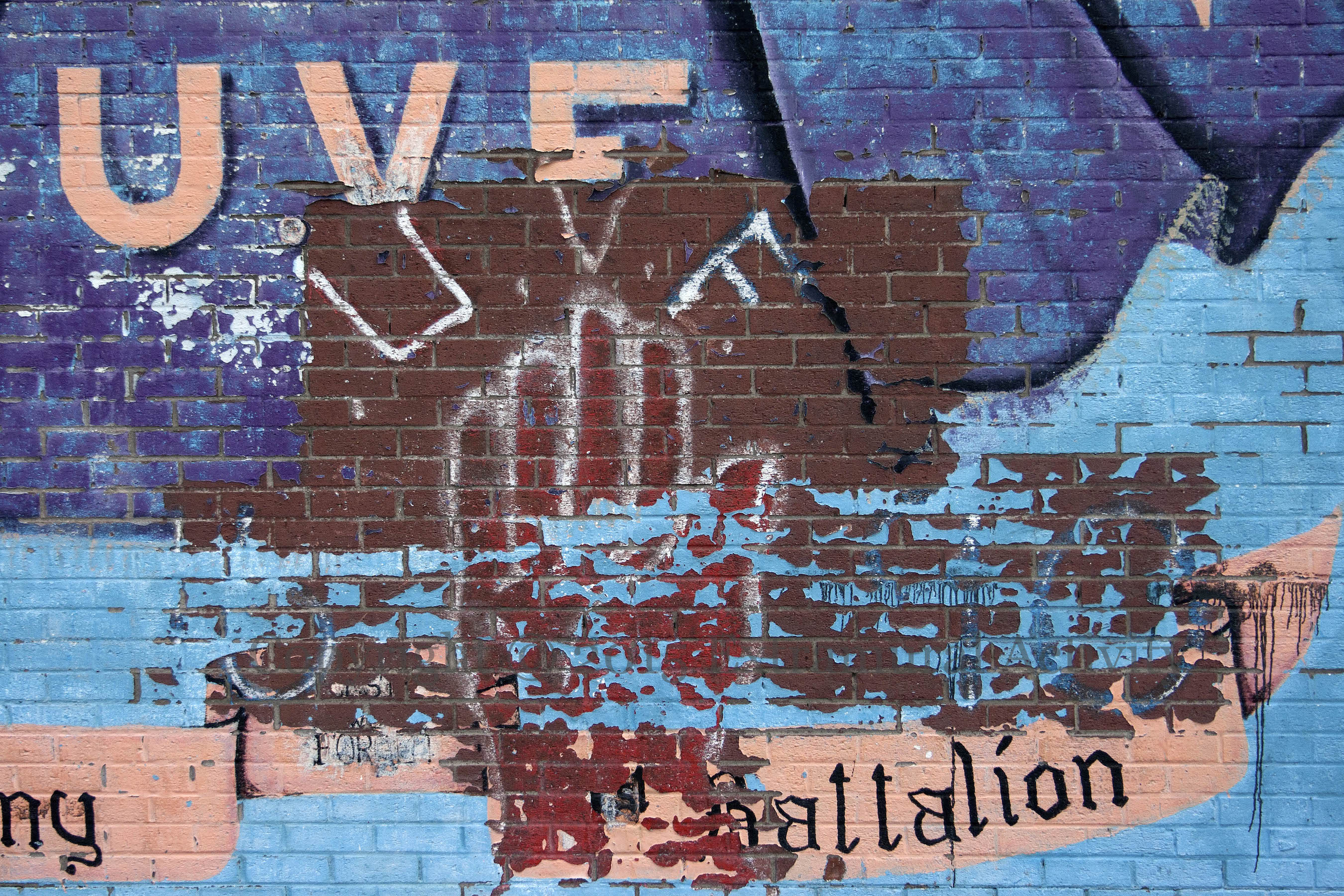
Here are three images of small boards in the Bloomfield and Whitehill estates in Bangor, Co. Down: above, one from the Ulster Freedom Fighters (UFF); below, from the Red Hand Commandos (RHC); and finally, the Ulster Volunteer Force and Young Citizen Volunteers.
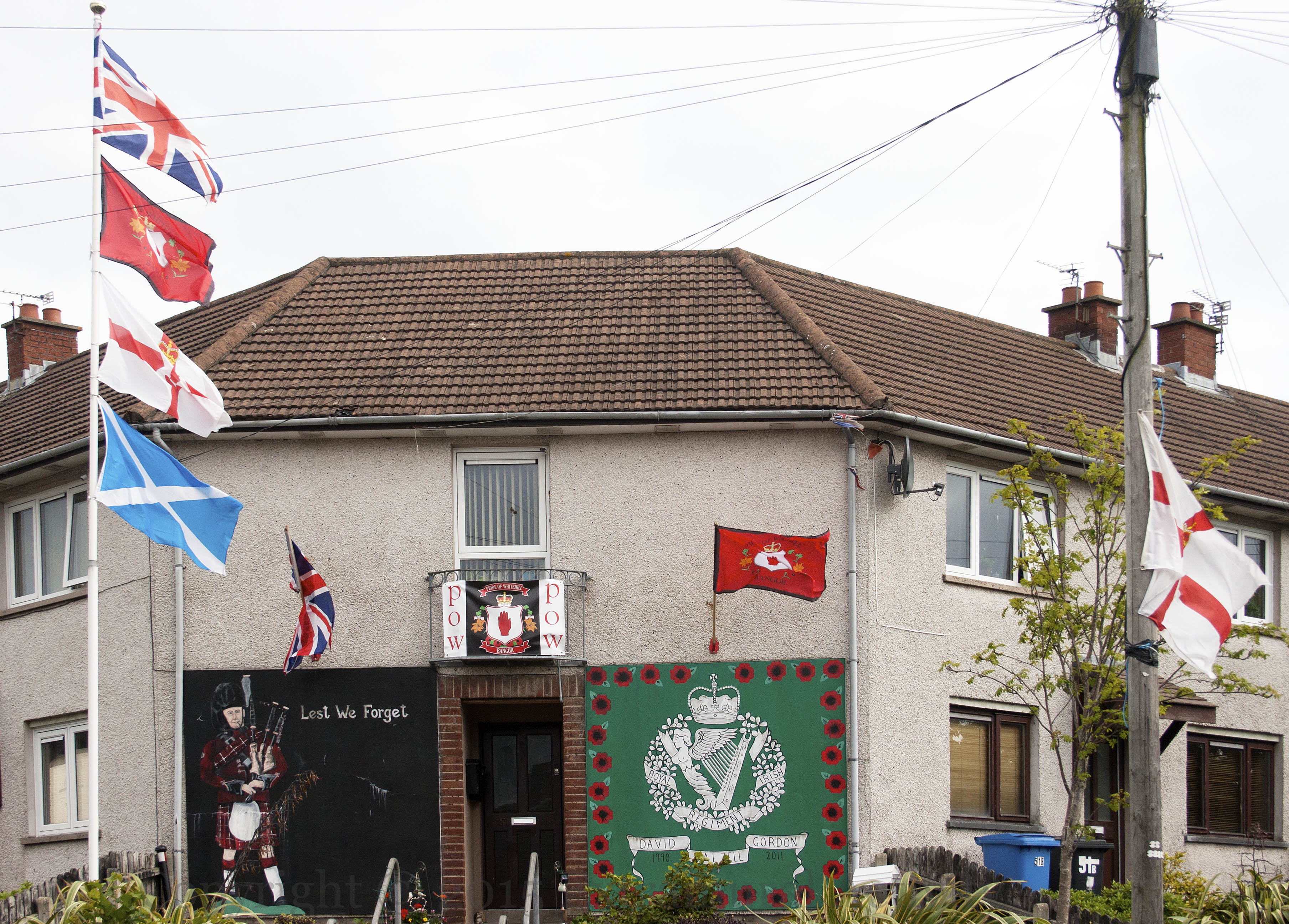
Bangor native David Gordon Dalzell was killed at age 20 in Helmland Province, Afghanistan, in 2011, shot accidentally by one of his comrades as he was cleaning his weapon. For an account of his death, see BBC-NI. Dalzell’s ‘fatality’ notice can be read at the MOD. In the image above (and detailed below), the front of this Whitehill house carries the emblem of Dalzell’s Royal Irish regiment and a funeral piper.
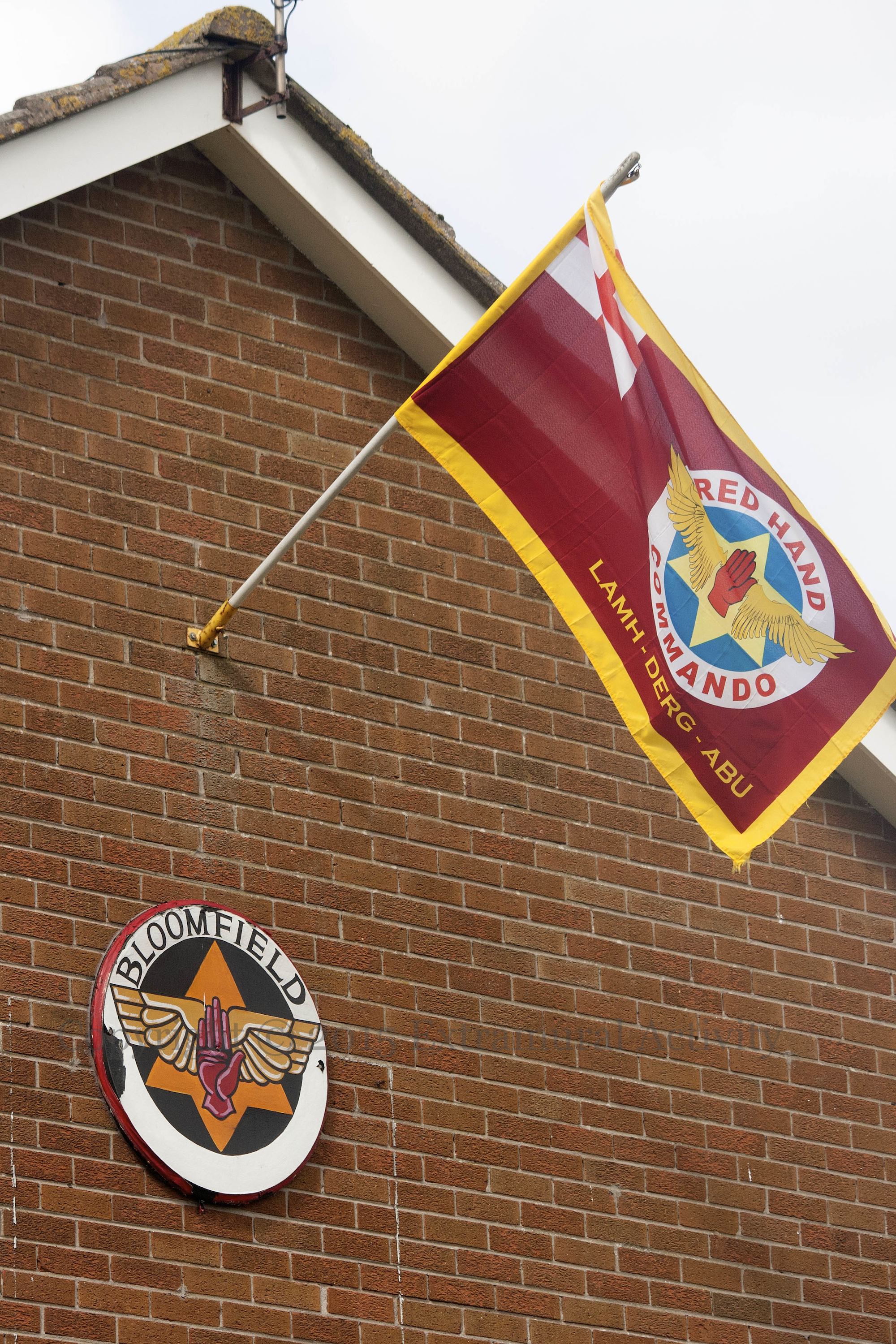
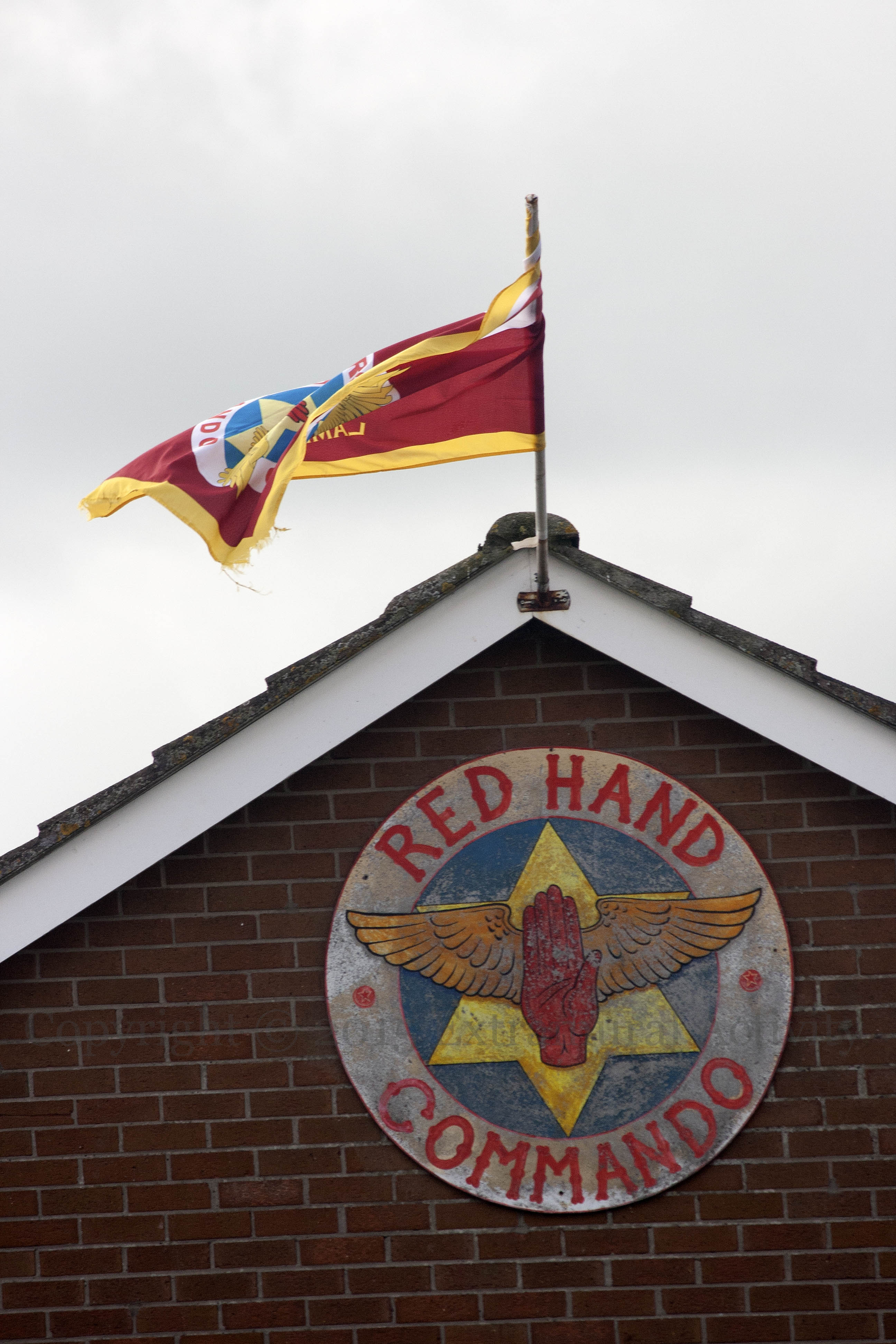
Here are three images of Red Hand Commando boards and flags in the Bloomfield estate. They both feature a red hand with eagle’s wings over a six-pointed star and on the flag, the motto (in crude Gaelic) “Lamh Derg Abu” – “Onward, Red Hand” or “Red Hand To Victory”. The loyalist paramilitary group declared an official end to activities in 2007 (BBC-NI) and decommissioned its weapons by 2009.
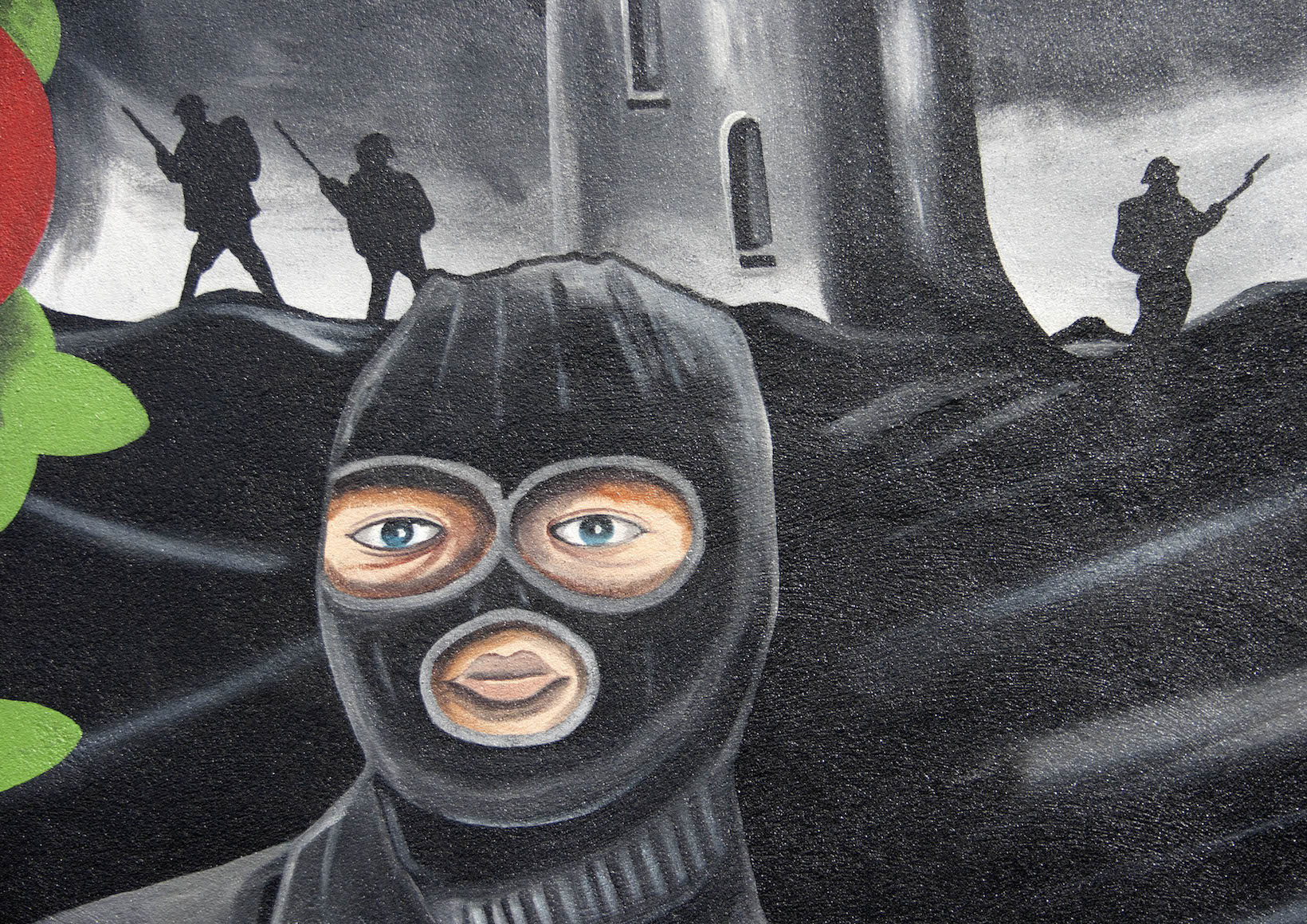
“For he today that sheds his blood with me shall be my brother. We few, we happy few, we band of brothers.” This is a new (July 2014) Red Hand Commando mural in Bangor with RHC Youth and Red Hand Comrades Association insignia against a backdrop of Thiepval Tower and the Somme, with masked gunmen in the foreground and a border of poppies.
The quote is from Shakespeare’s Henry V, act 4, though the lines are reversed (Folger).
This is a mural in his home town to rear admiral Sir Edward (“Barry”) Bingham, OBE, born in Bangor and recipient of the Victoria Cross (featured in the apex of the roof) for service in WWI.
“Rear Admiral Edward Bingham VC OBE, son of Lord Clanmorris, was born in Bangor and served in the Royal Navy during the First World War. He was awarded the Victoria Cross for his actions in engaging the German fleet during the battle of Jutland. The Bingham family name adorns various settings in the town where he is remembered with pride. Rear Admiral Bingham’s Victoria Cross was purchased by North Down borough council and is on display at the North Down museum.”
The context shot, below, shows the two together, as viewed through the uprights of a community monument just across the road, featuring old photographs and documenting the history of the local community.
An Ulster Freedom Fighters mural in Bangor, to the northeast of Belfast. The mural is at the edge of a Loyalist estate which is on high ground; it (and its companion) overlook and dominate a major junction on a network of roads around the town.






 Extramural Activity