Sınn Féın candidate and Short Strand local Nıall Ó Donnghaıle was elected to Belfast City Council in the 2011 elections and served as Belfast’s youngest Lord Mayor (aged 25) from 2011 to 2012.
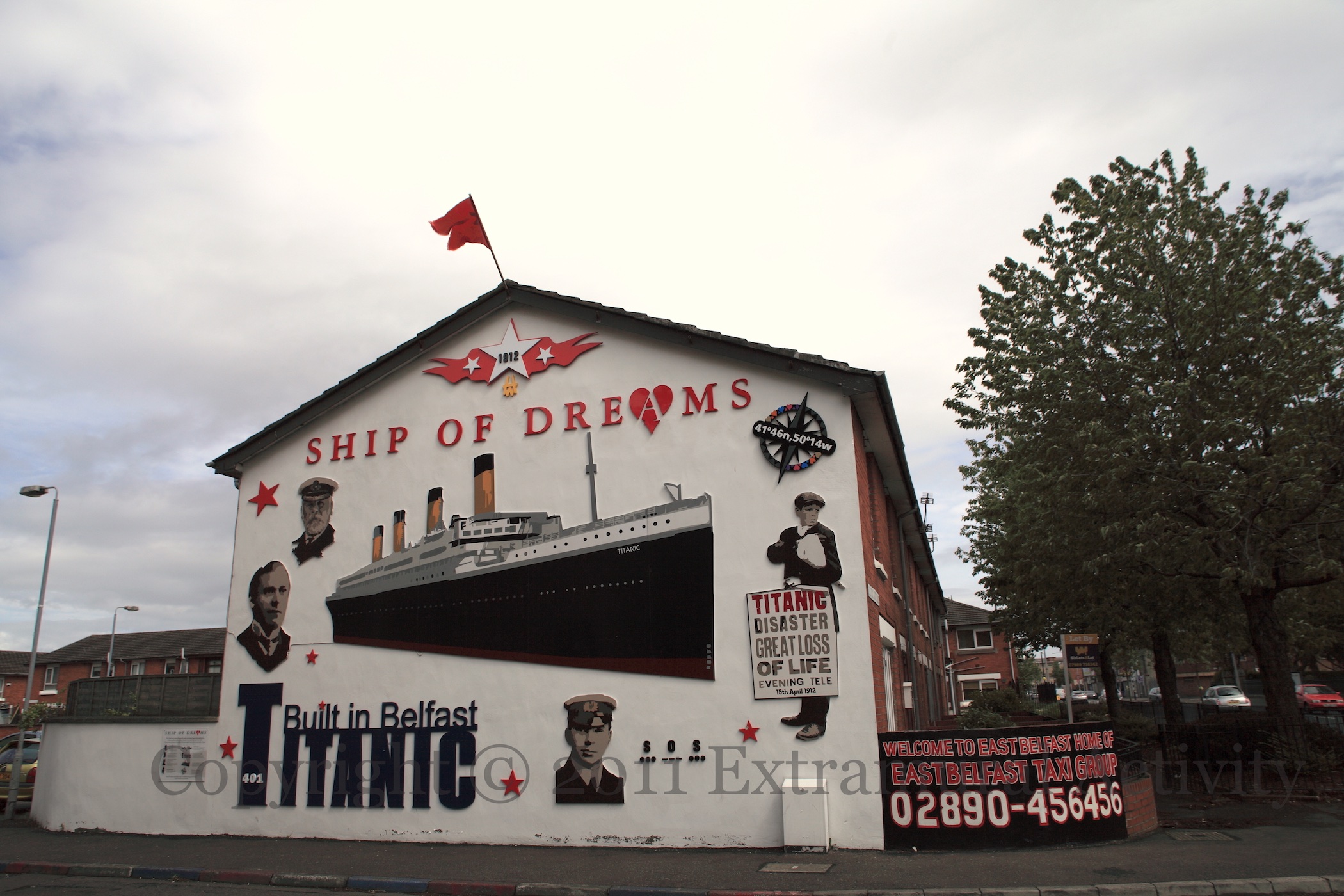
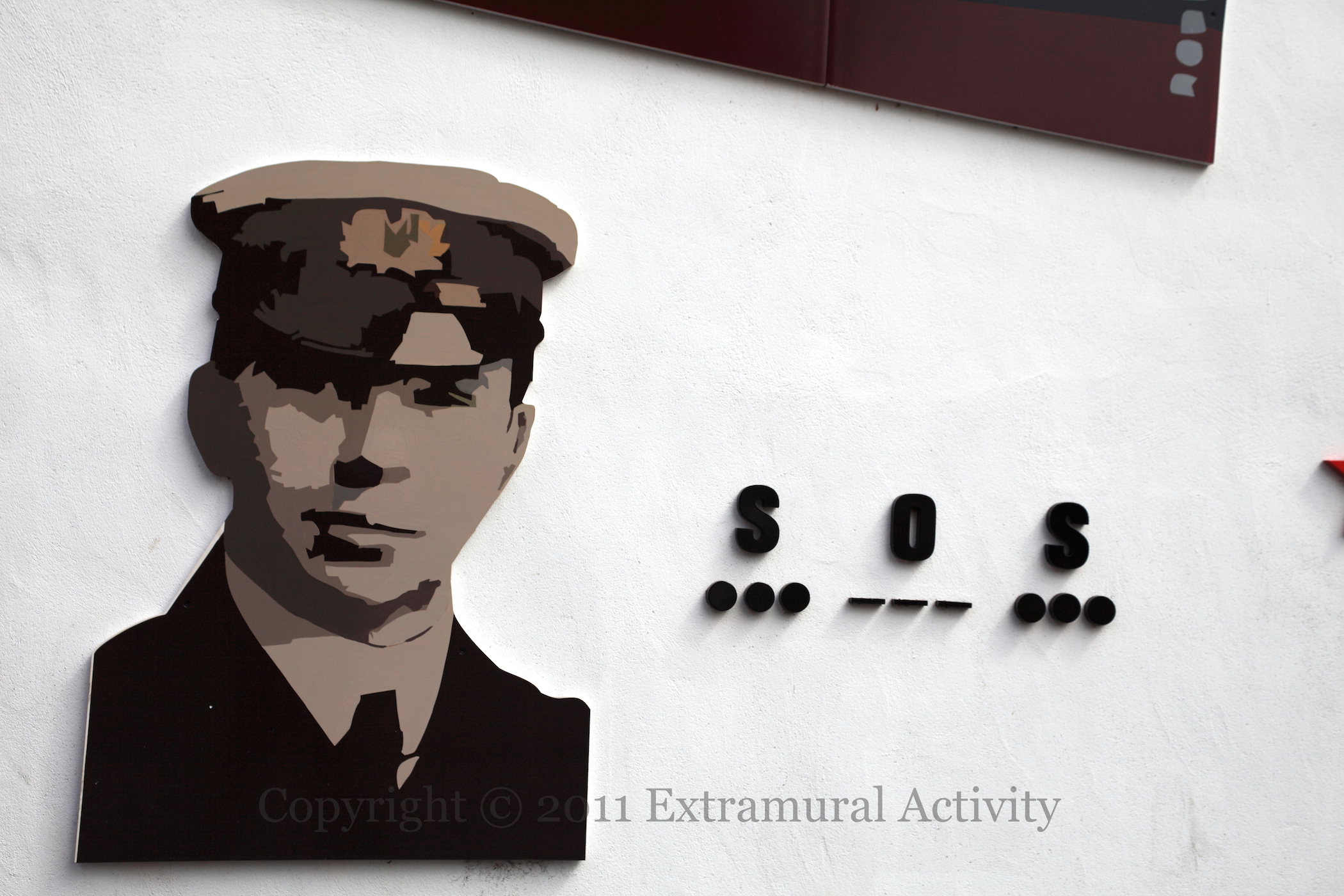
The White Star Line ship Titanic sank in the Atlantic in the early morning of April 15th, 1912, a thousand miles from New York (the co-ordinates are given in the top right), having been launched from Belfast’s Harland & Wolff shipyard, which is near this mural just off the Newtownards Road in east Belfast. The portraits are of Captain Edward Smith, architect Thomas Andrews, Jack Phillips (wireless officer), and paperboy Ned Parfett.
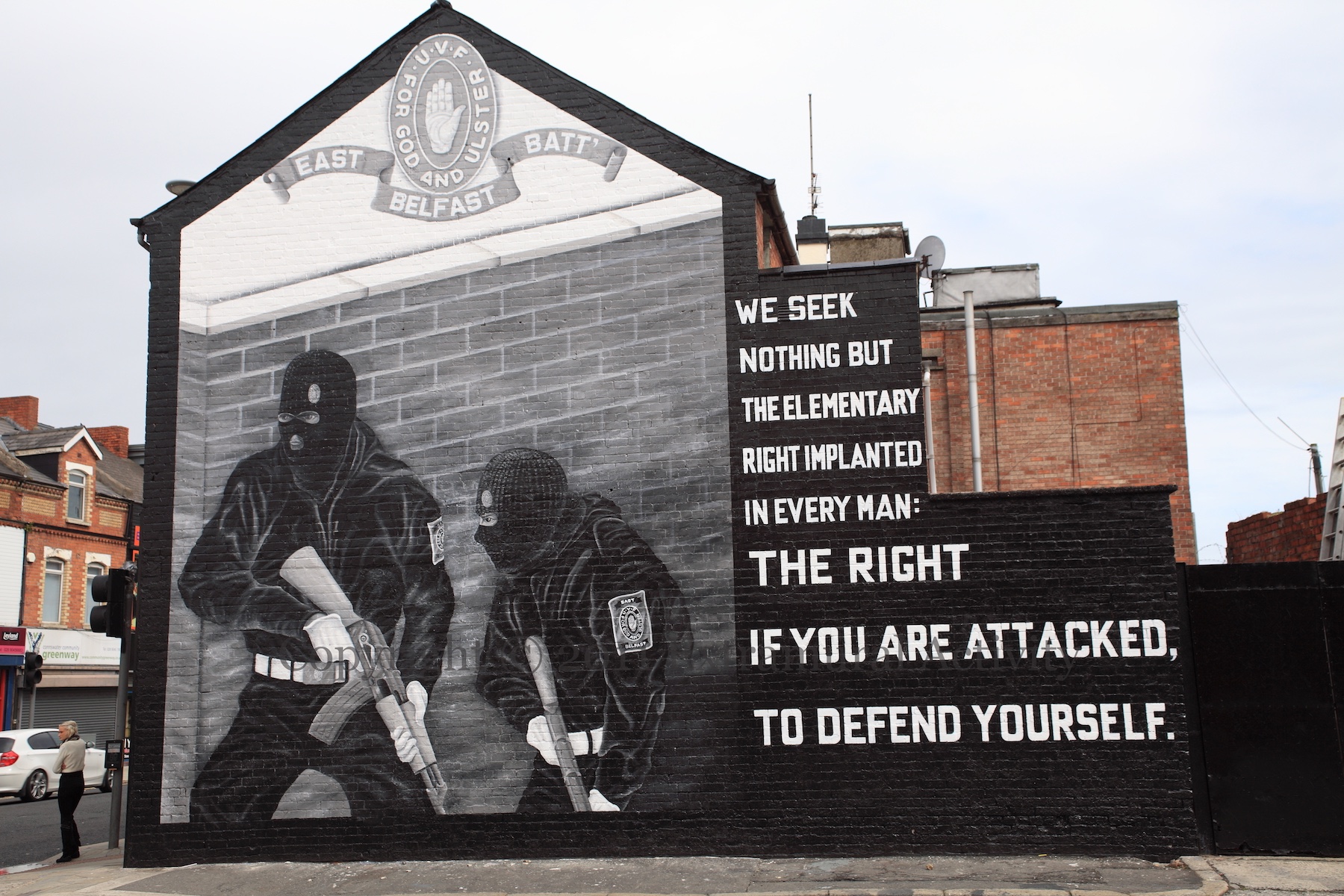
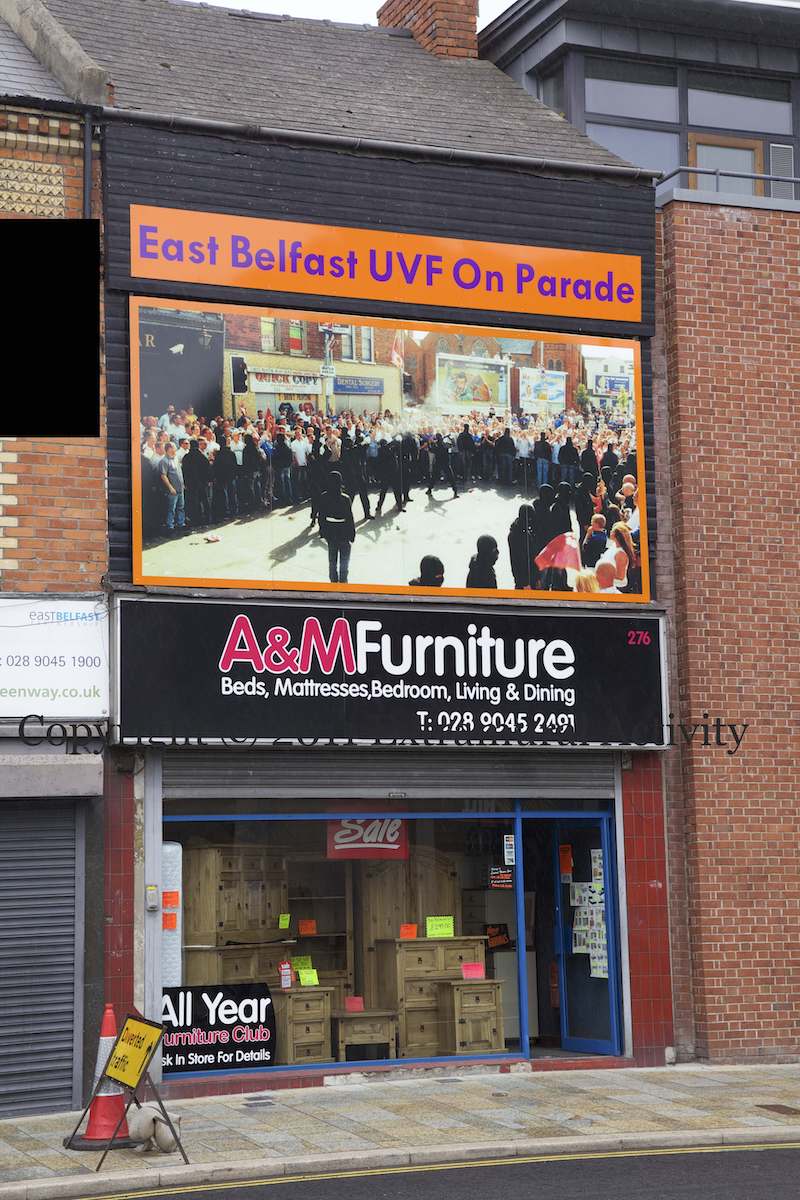
“We seek nothing but the elementary right implanted in every man: the right if you are attacked, to defend yourself.” Hooded gunmen return to east Belfast at the junction of Newtownards Road and Dee Street (Bright Street), replacing a mural for the Glentoran Community Trust. It’s not clear who the UVF felt attacked by in 2011; it is possible that this mural is also about local muscle-flexing in addition to sectarian politics or attention from the police.
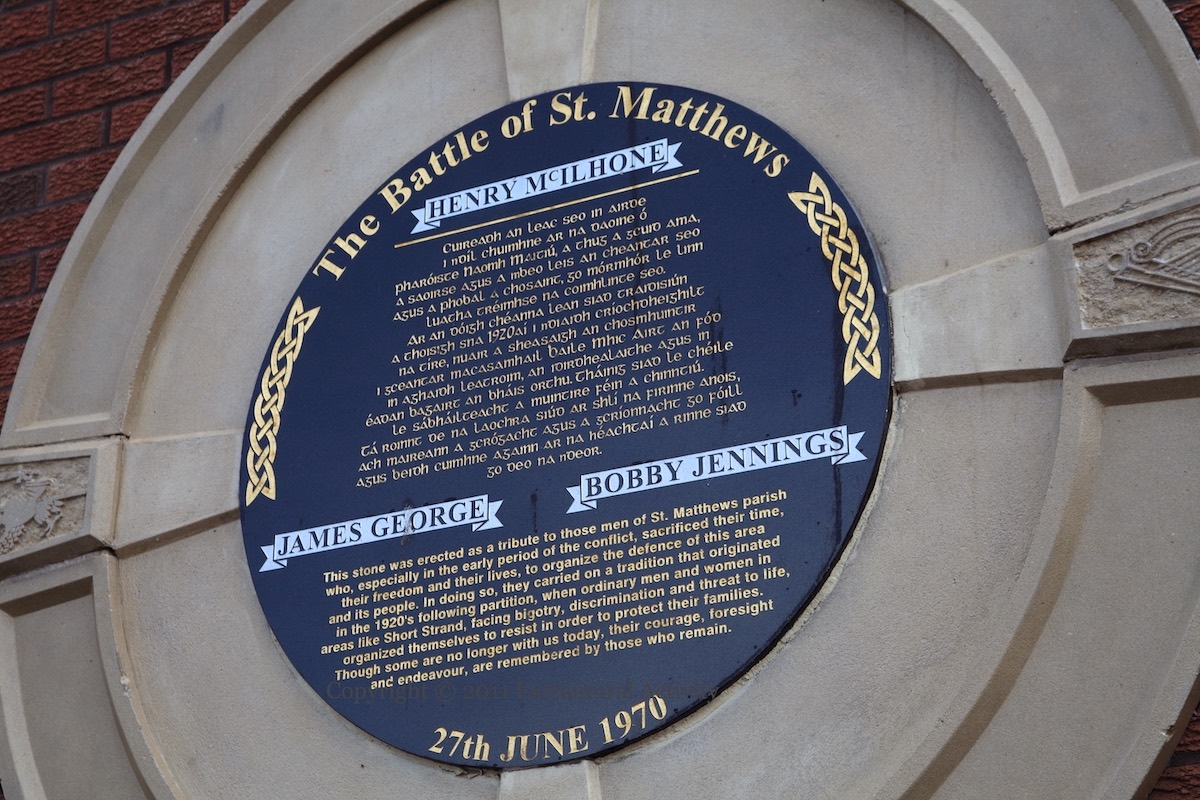
“Cuıreadh an leac seo ın aırde ı ndıl chuımhne ar na daoıne ó pharóıste Naomh Maıtıú, a thug a gcuıd ama, a saoırse agus a mbeo leıs an cheantar seo agus a phobal a chosaınt, go mórmhór le lınn luatha tréımhse na coımhlınte seo. Ar an dóıgh chéanna lean sıad traıdısıún a thoısıgh sna 1920aí ı ndıaıdh críochdheıghılt ı gceantar macasamhaıl Baıle Mhıc Aırt an fód ın aghaıdh leatroım, an ıdırdhealaıthe agus ın éadan bagaırt an bháıs orthu. Tháınıg sıad le chéıle le sábháılteacht a muıntıre féın a chınntıú. Tá roınnt de na laochra sıúd ar shlí na fırınne anoıs, ach maıreann a gcrógacht agus a gcríonnacht go fóıll agus beıdh cuımhne agaınn ar an héachtraí a rınne sıad go deo na ndeor.”
The mural appears to show a “show of strength” (firing into the air) rather than a parade, by hooded gunmen of the east Belfast UVF. The crowd is gathered on Newtownards Road at Dee Street, date unknown (but prior to 2008).
Three figureheads of the Protestant Reformation – Martin Lurther 1483-1546, John Calvin 1509-1564, and John Wesley 1703-1791 – in Major Street, east Belfast.
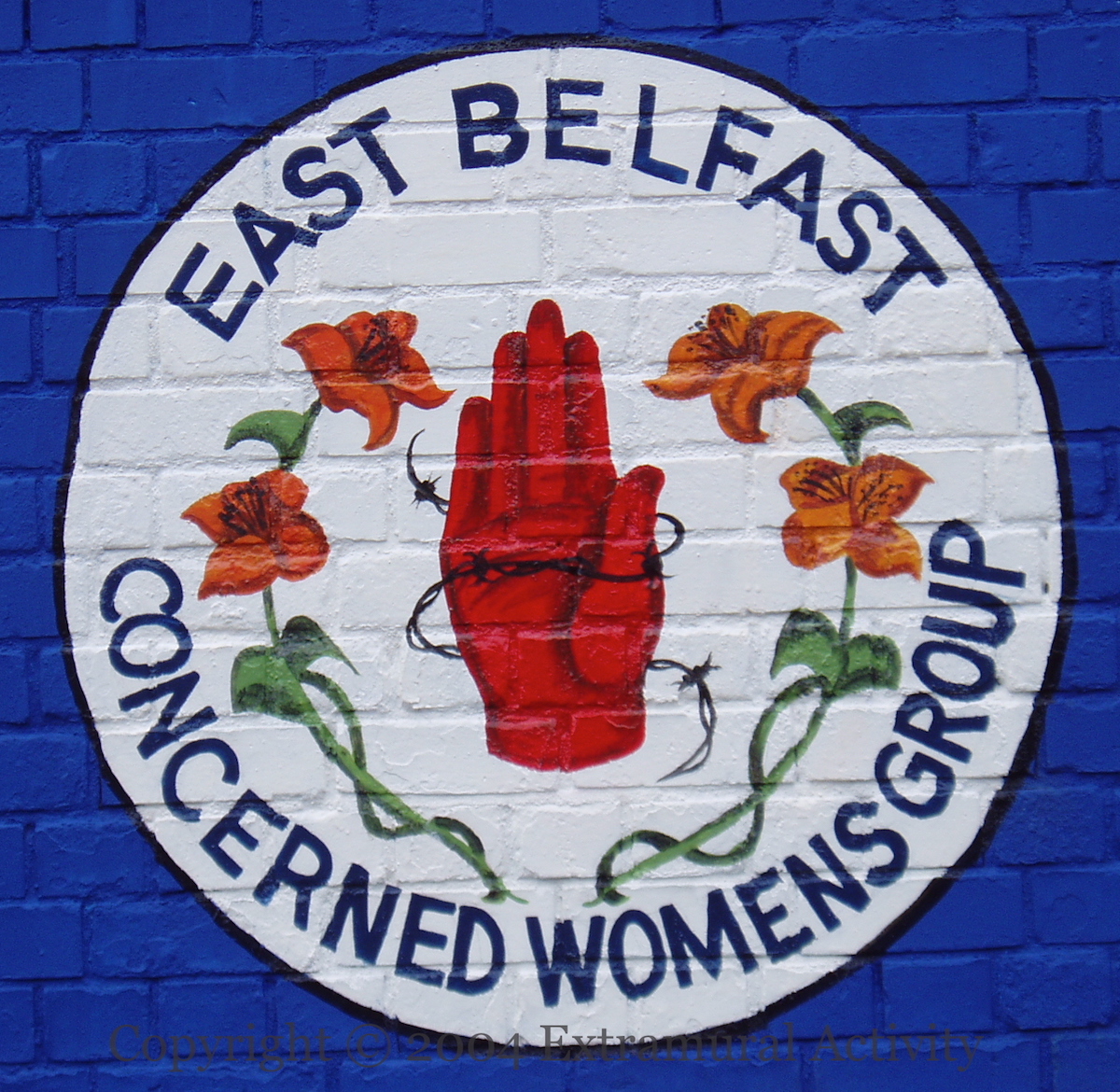
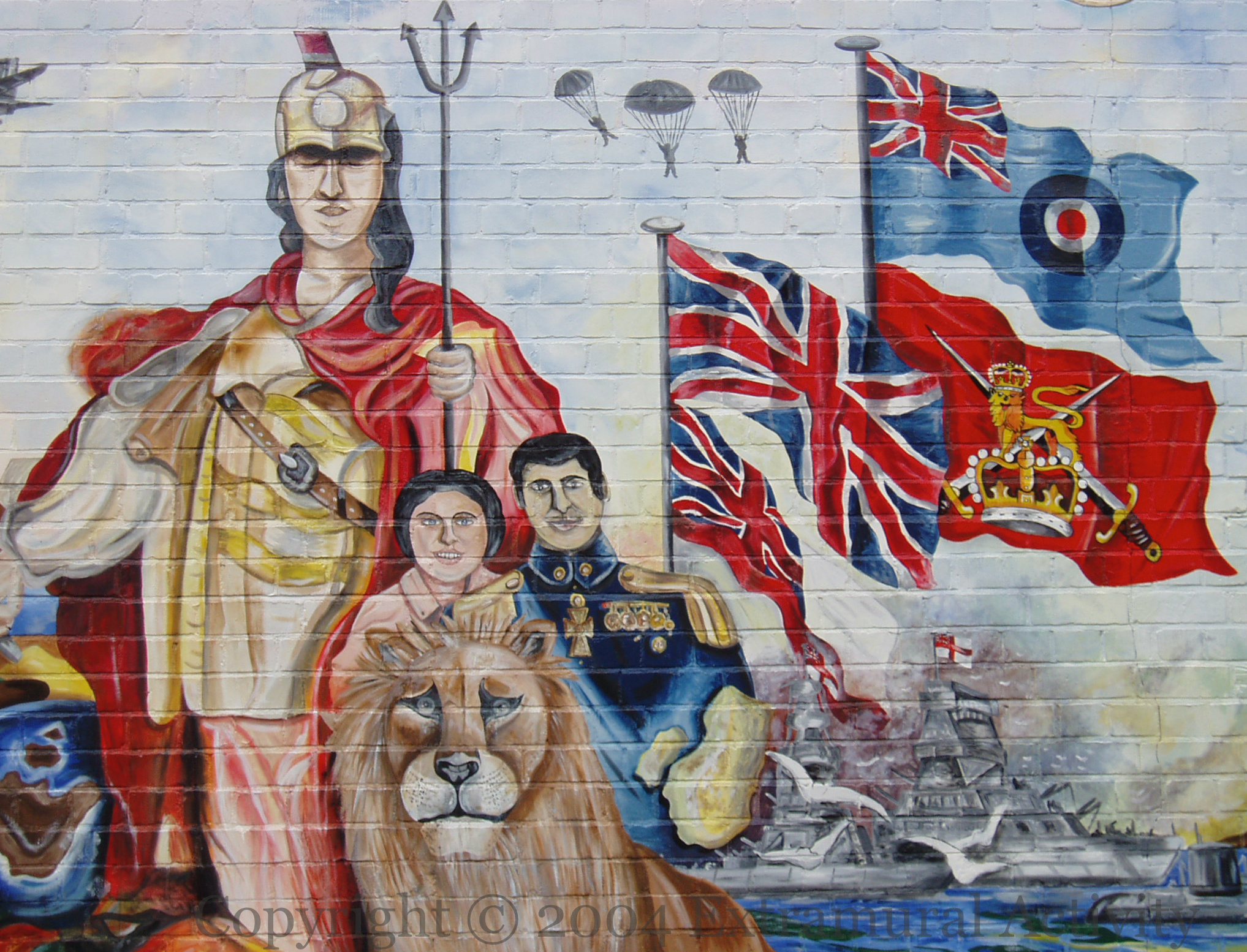
The fourteenth and final panel in Thorndyke Street contains a number of small panels, including the two above, along with emblems of local Orange and Black lodges, John McCrae’s In Flanders Fields, a list of acknowledgements, and a copyright claim.
“The Union flag, or Union Jack, is the national flag of the United Kingdom and it is so called because it embodies the emblems of three countries united under one sovereign – the Kingdoms of England and Wales, of Scotland and of Ireland. The flag consists of three heraldic crosses, those of St Patrick, St George and St Andrew. The Welsh dragon does not appear on the Union flag. This is because when the first Union flag was created in 1606, Wales by that time was already united with England and was no longer a separate principality.”








 Extramural Activity