Cogús [conscience] is the POW-support organisation of the RNU (web). On the left is a blanketman, on the right is a contemporary POW being beaten by a prison guard in riot gear. “Make a difference – Join RNU – Be committed, stand as one – Implement 12th August Agreement – End strip searches – End controlled movement.”
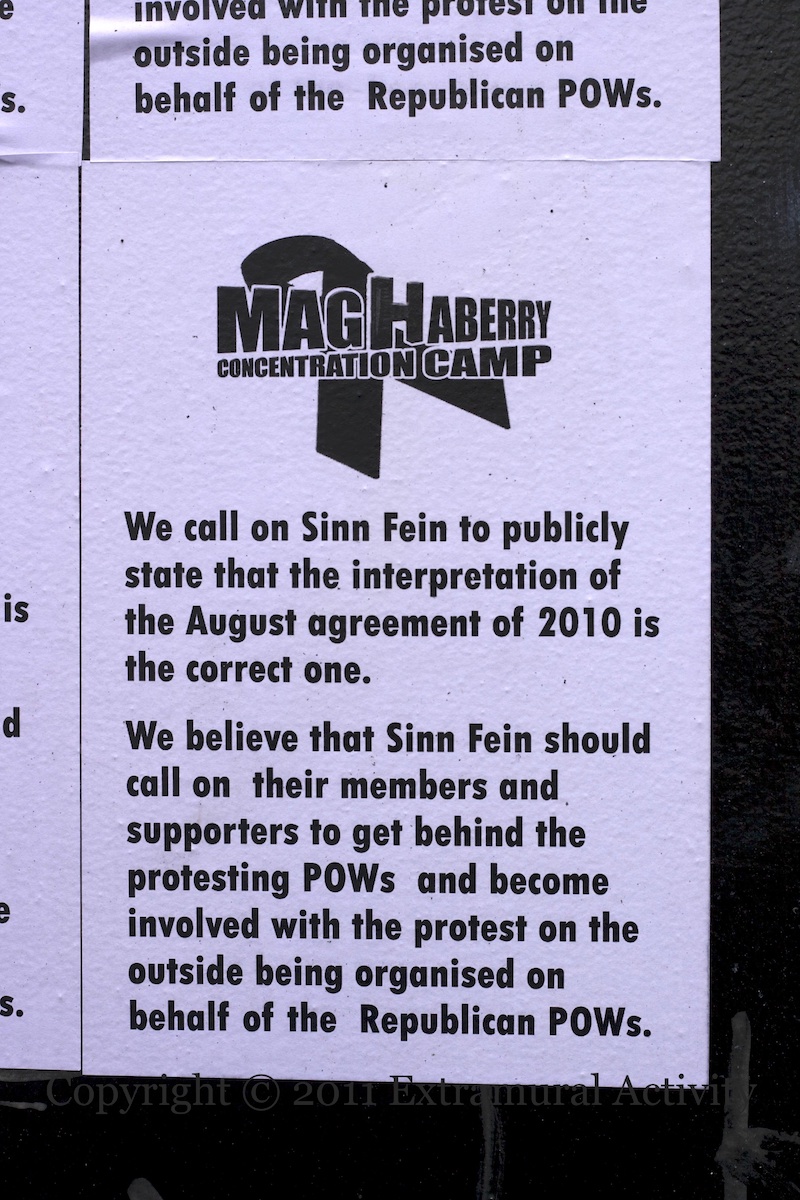
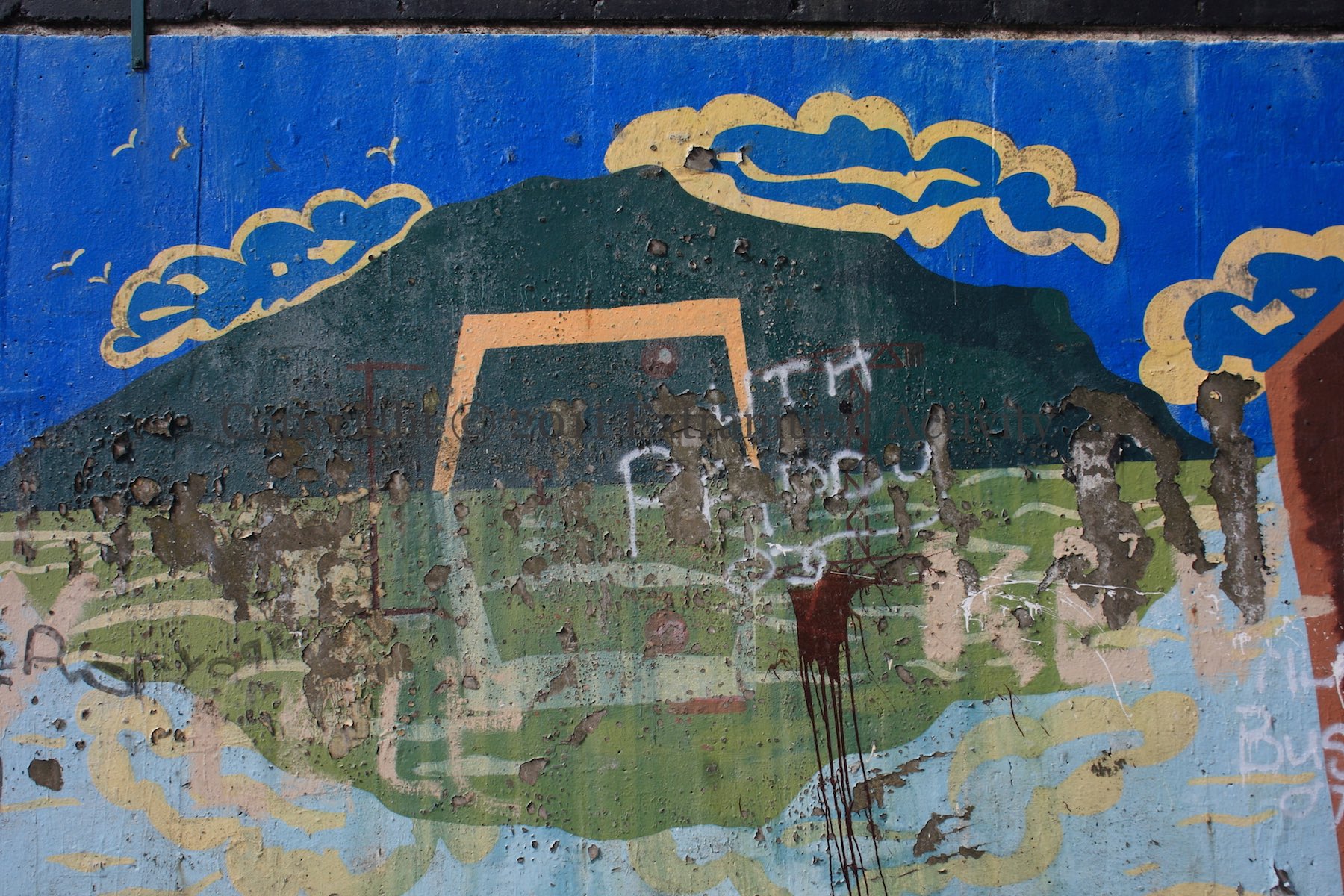
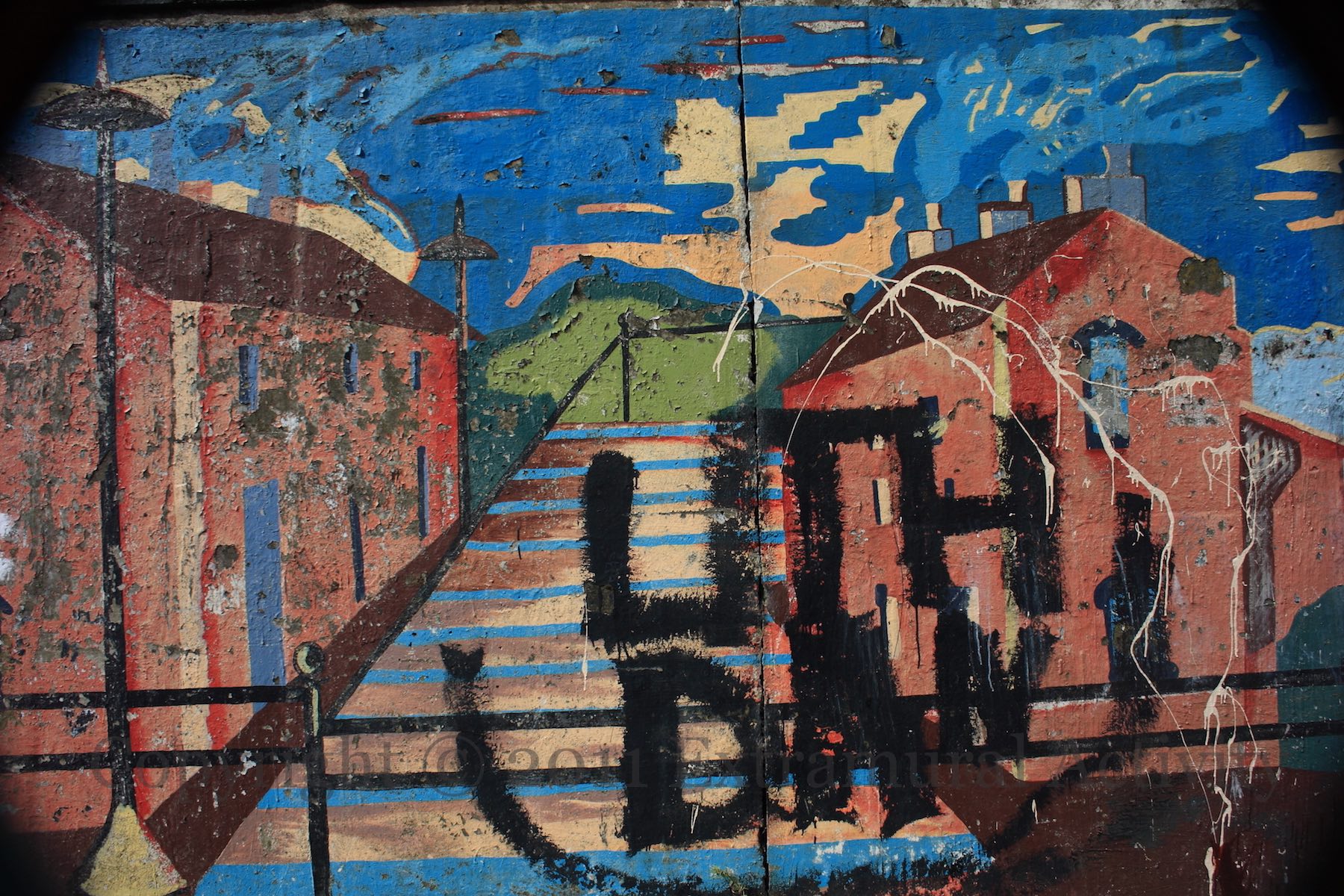
In the summer of 2011, both sides of the Flax St/Crumlin Rd interface were pasted with images of the view from the other side, a city scene on the Flax St side as though looking into Woodvale, a hilly scene on the Crumlin Rd as though looking up Flax Street. You can see the Crumlin Road side on Street View. What remains of the other side can be seen in the image above, along with IRPWA posters (see below) concerning “Maghaberry Concentration Camp”, calling “on Sinn Fein [sic] to publicly state that the interpretation of the August agreement of 2010 is the correct one … [and to] … call on their members and supporters to get behind the protesting POWs.”
Both the type of “MagHaberry” and the arrangement of the posters make the connection to the H Blocks of the 1970s and 80s.
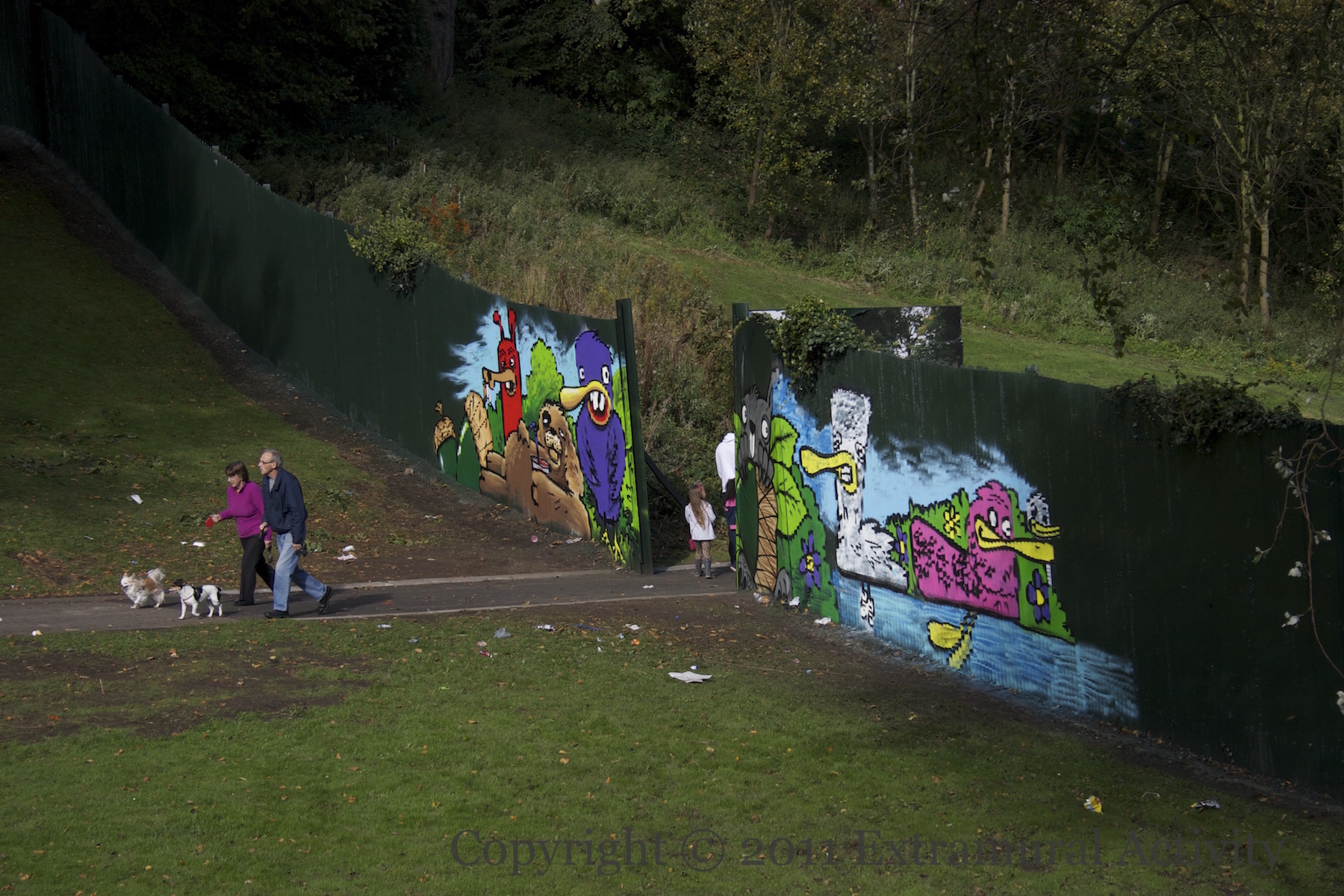
A new gate has been installed in the Alexandra Park “peace” line, first erected in 1994, in order to separate the loyalist Mountcollyer and republican Newington neighbourhoods. It will be open during the day for a trial period of three months (BBC).
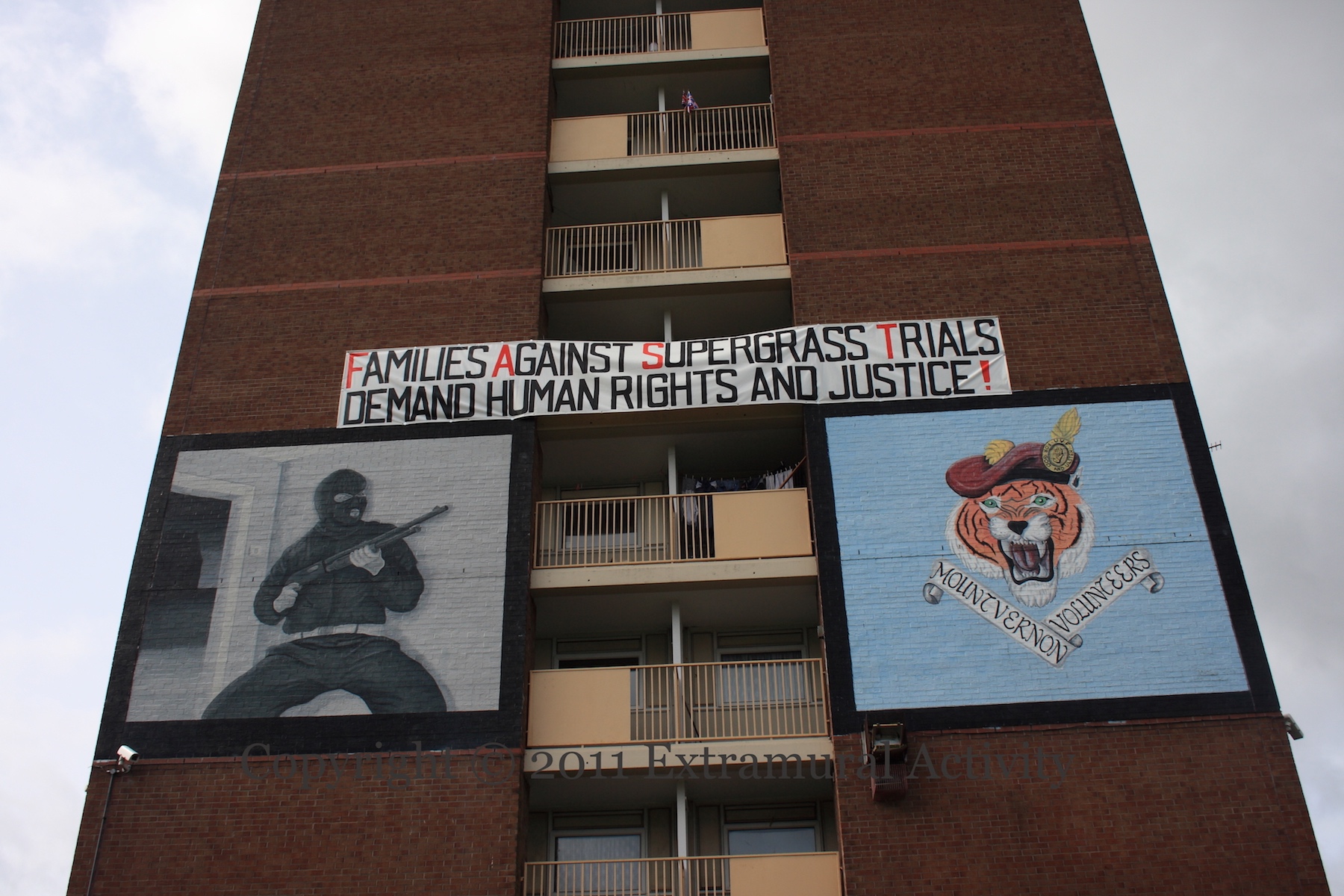
Families Against Supergrass Trials was formed to protest the first supergrass trial in 26 years (after the system collapsed during the trial), to begin on September 8th, related to the killing of Tommy English (Belfast Telegraph | BBC | BBC). The banner above is in Donegall Pass, the one below is on the Mount Vernon flats. There was another in Newtownards Road (Irish News). (And in 2012, one in Spier’s Place/Shankill Rd.)
Muraling gets meta, just off the Cliftonville Road. A mural is such a familiar mode of expression in Belfast that one is expected on every wall, and even more so in the post-Agreement years when the state enters as a third source of murals. The pixelated hourglass and font of the text hearken back to computers of the 1990s.
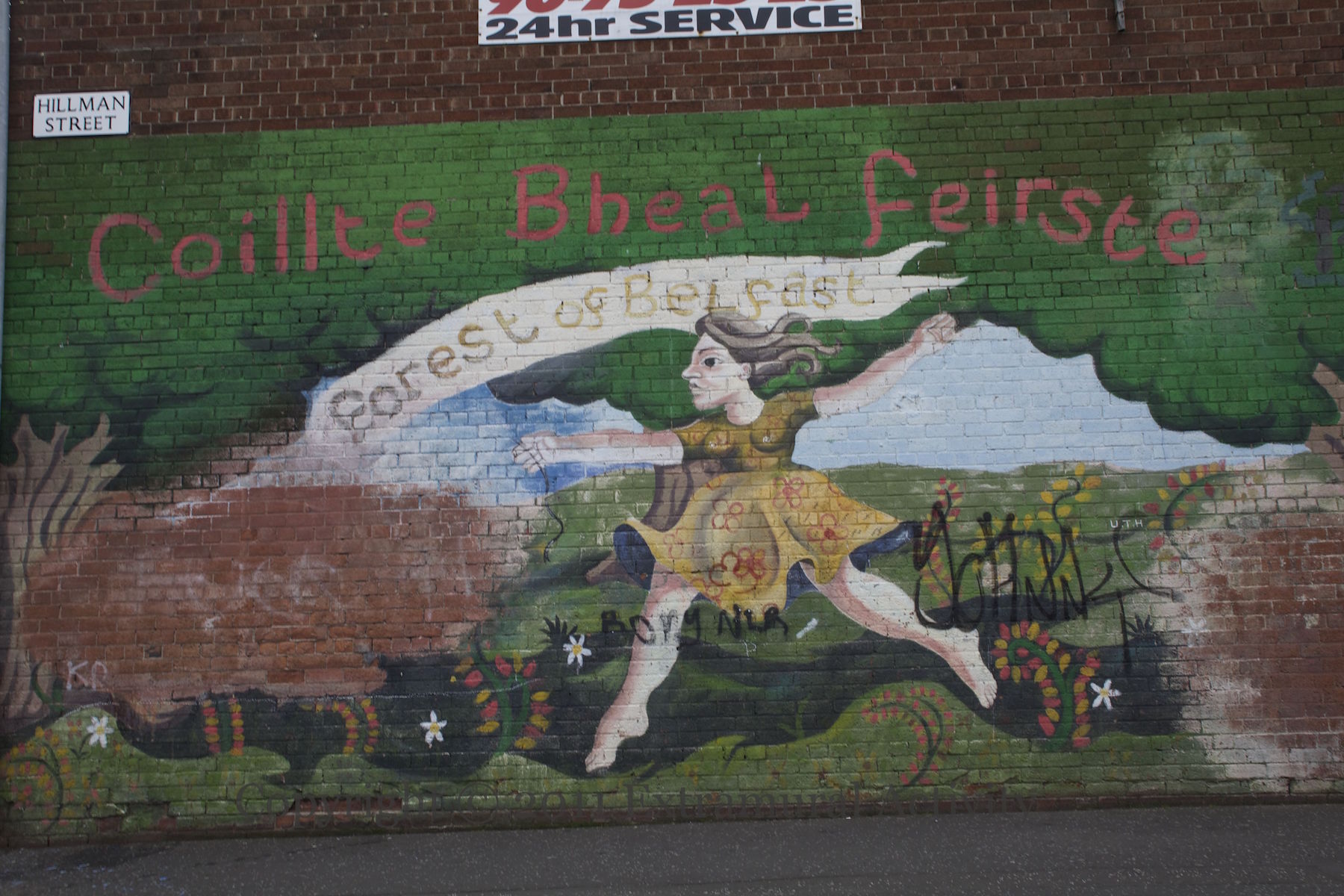
In 1992, the Forest Of Belfast project was started, a public-private to preserve old trees and encourage tree-planting. Above is one of the murals painted to publicise the effort, on Hillman Street at the Antrim Road. (Another was painted on the Falls Road.)
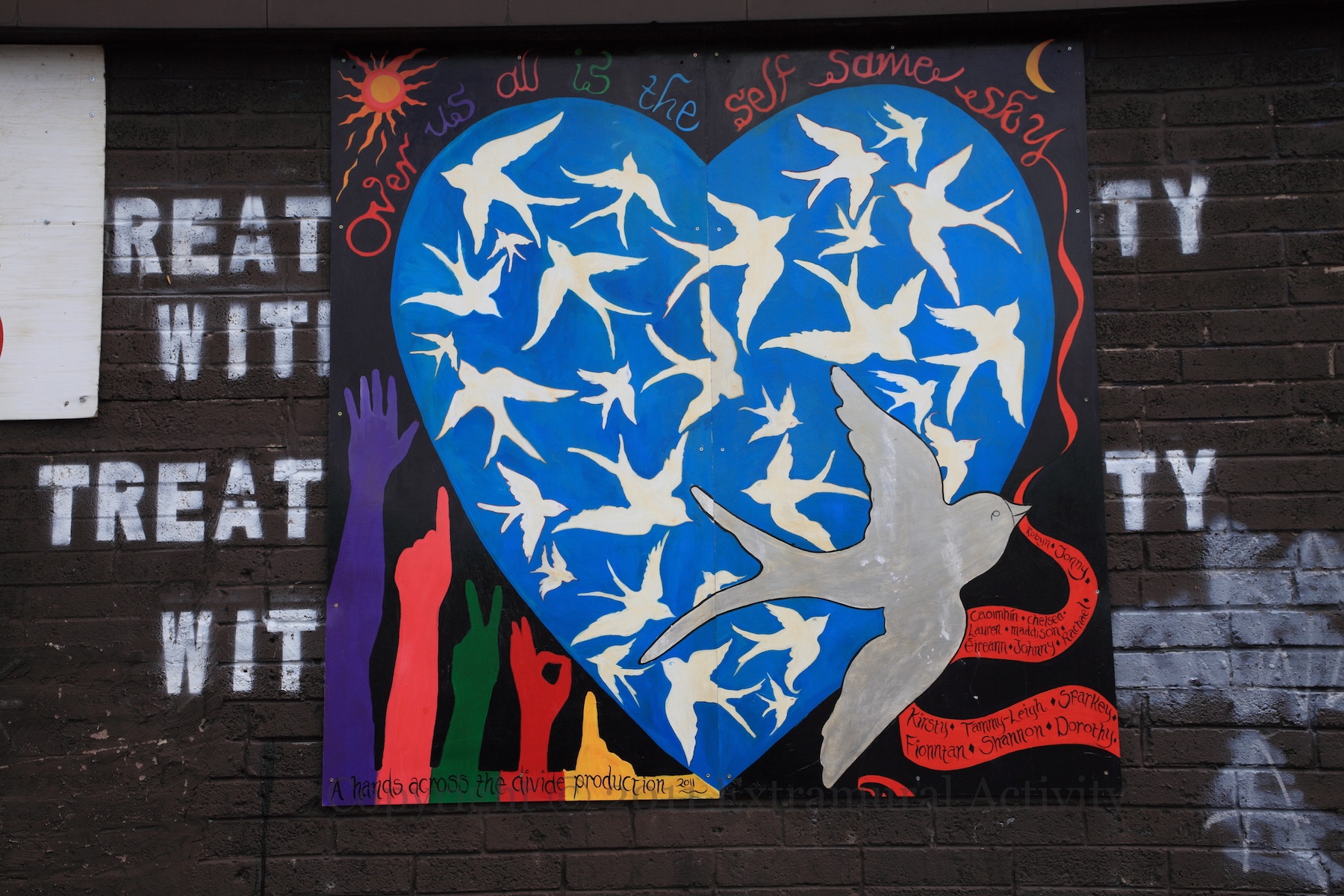
“Over us all is the self same sky”. “A hands across the divide production, 2011”. A heart filled with swallows and a ribbon with the names of the various participants.
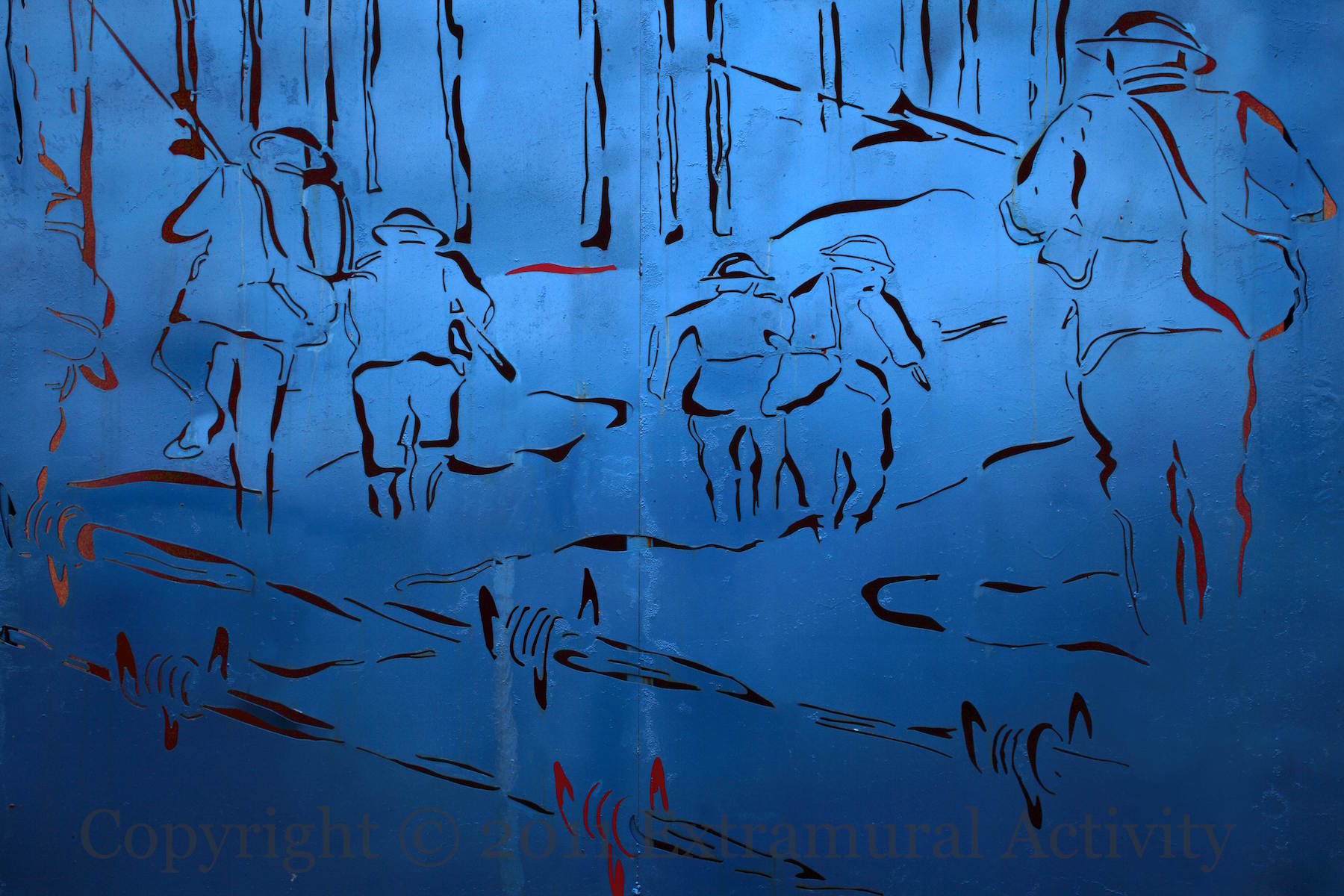
Here are three details from the metalworks in the Mount Vernon WWI memorial garden, showing scenes from the conflict and a map of the area around Messines (photoshopped in red). For more, including the panels to John Cordon and William McFadzean, see M07770.
Update: As the images below from 2017 and 2018 show, the metalworks themselves have also been repainted (and replaced in a slightly different configuration), a new gate has been installed and the boards on the surrounding wall have been restored, against a freshly-painted background of green. The boards have verses from Laurence Binyon’s For The Fallen. “They mingle not with their laughing comrades again/They sit no more at familiar tables of home/They have no lot in our labour of the day-time/They sleep beyond Ulster’s [originally, England’s] foam.”










 Extramural Activity