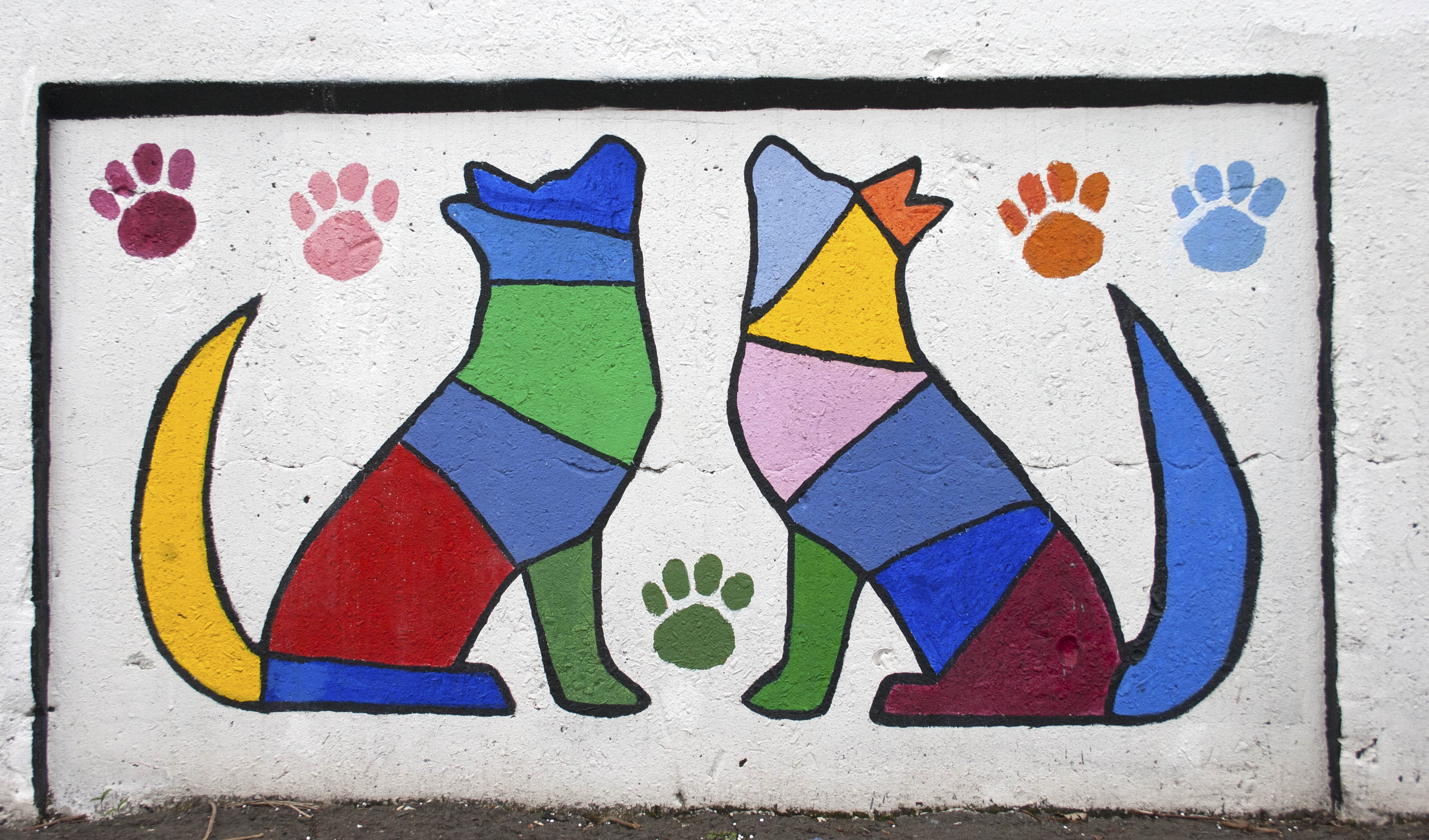
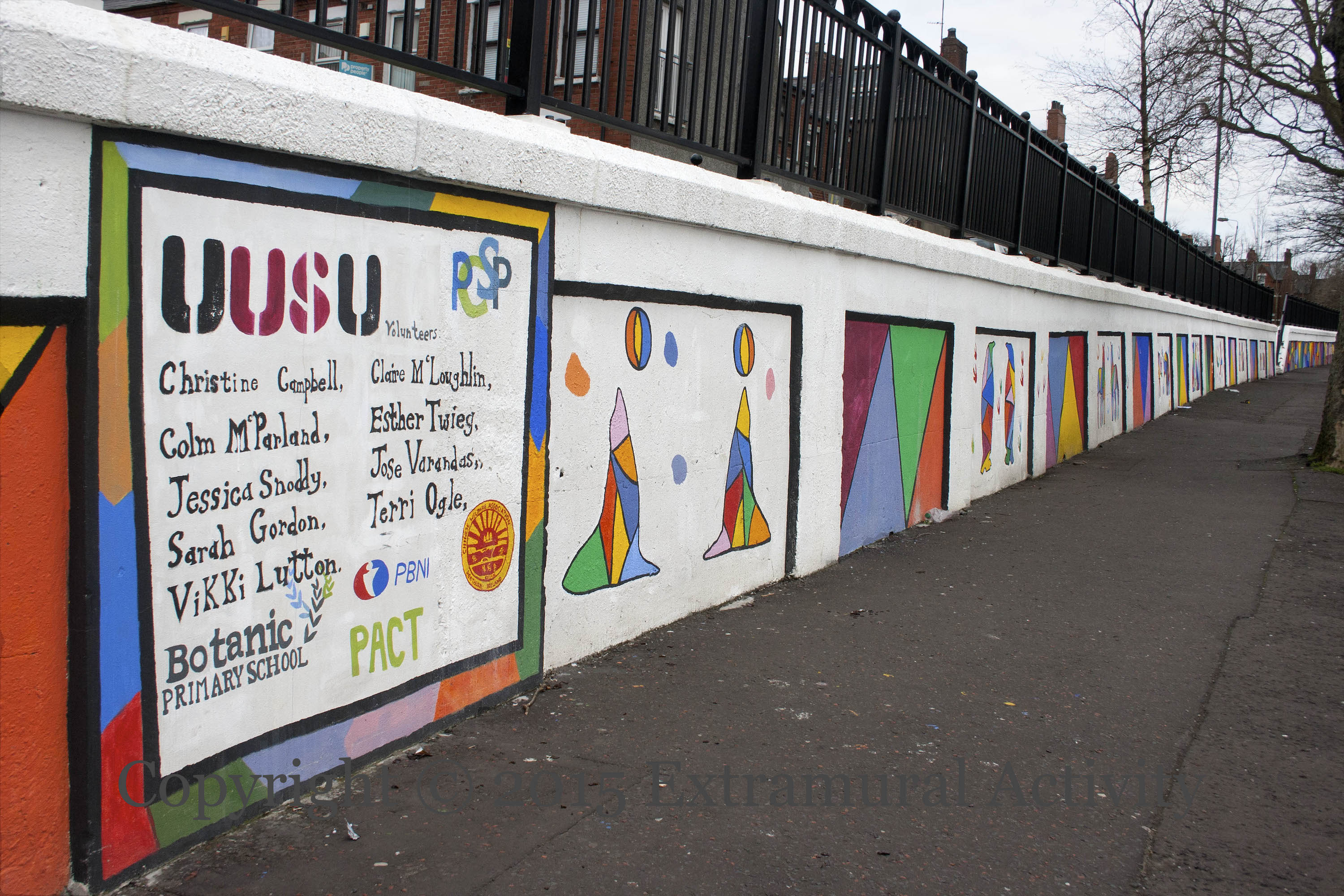
Children from Botanic Primary school and art students from University of Ulster Student Union painted a series of animal pairs (created by Vikki Lutton) and geometric panels on the wall of the Stranmillis embankment. Above we have wolves, below there are elephants, and in the wide shot, sea lions. ‘In progress’ images from UUSU | P4 schoolchildren.
UUSU was also responsible for the Seamus Heaney mural (The Hunting Heart).
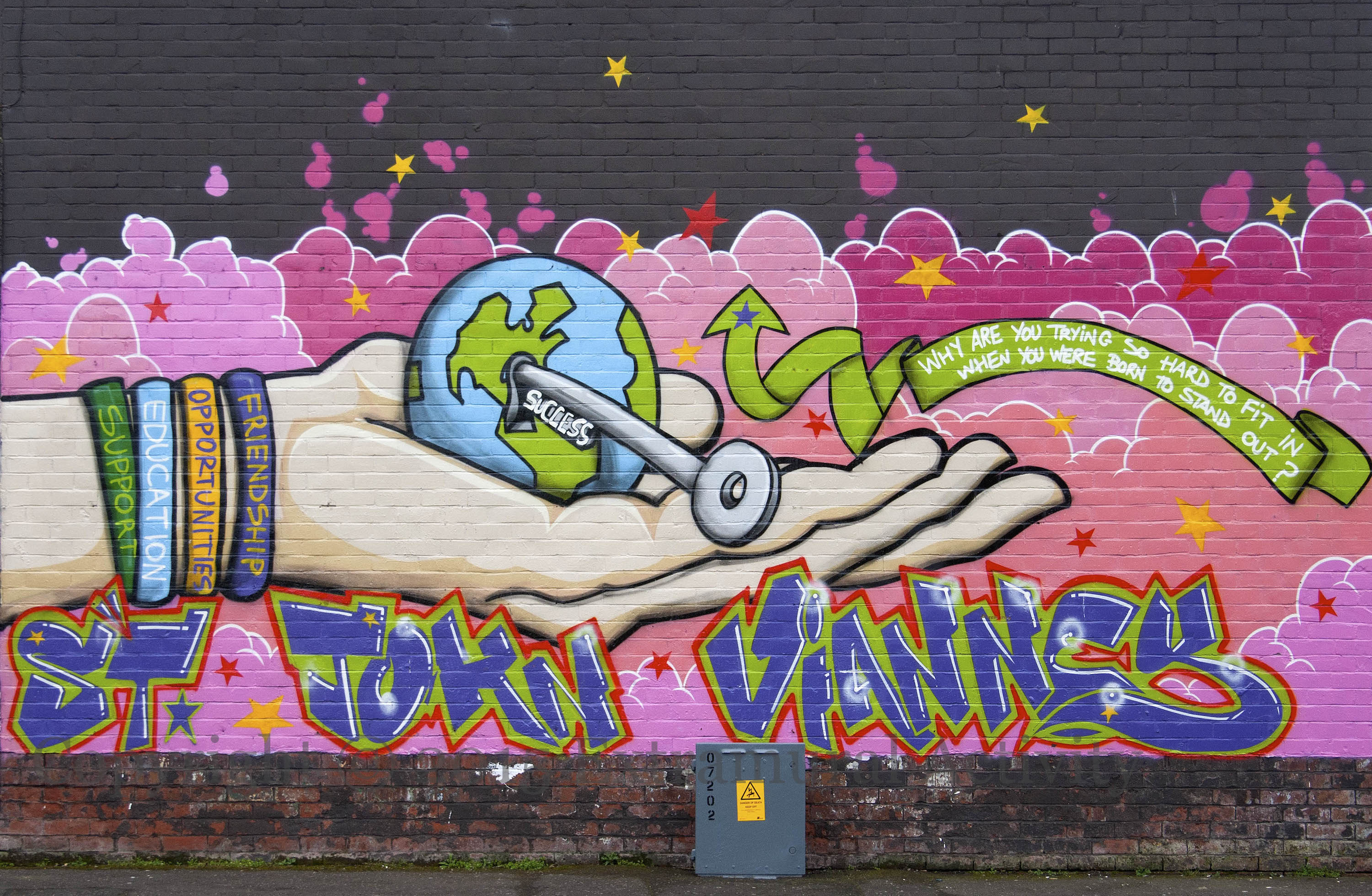
The St. John Vianney youth club board in Cooke Street has been replaced with a mural. The elements are the same – the ‘success’ key still unlocks the world in the palm of a hand and the message is “Why are you trying so hard to fit in when you were born to stand out?” – but the colour-scheme is now various pinks.
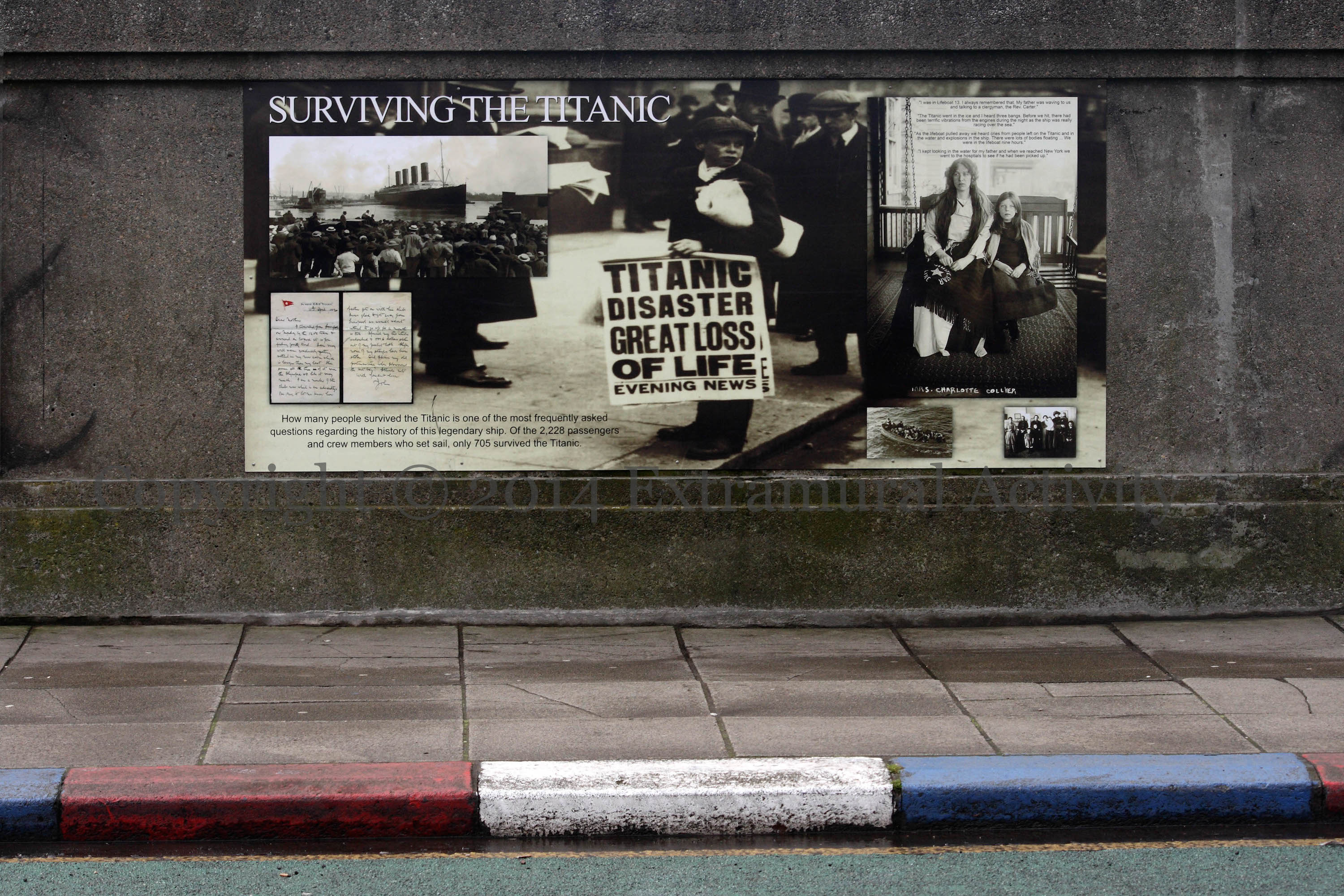
Here are two final images from the south side of the Donegall Road bridge over the Victoria Street line, one about Titanic and the other about locals awarded the MBE.
“I was in Lifeboat 13. I always remember that. My father was waving to us and talking to a clergyman, the Rev. Carter. The Titanic went in the ice and I heard three bangs. Before we hit, there had been terrific vibrations from the engines during the night as the ship was really racing over the sea. As the lifeboat pulled away we heard cries from the people left on the Titanic and in the water and explosions in the ship. There were lots of bodies floating … We were in the lifeboat nine hours. I kept looking in the water for my father and when we reached New York we went to the hospitals to see if he had been picked up.” Mrs. Charlotte Collier
How many people survived the Titanic is one of the most frequently asked questions regarding the history of this legendary ship. Of the 2,228 passengers and crew members who set sail, only 705 survived the Titanic.
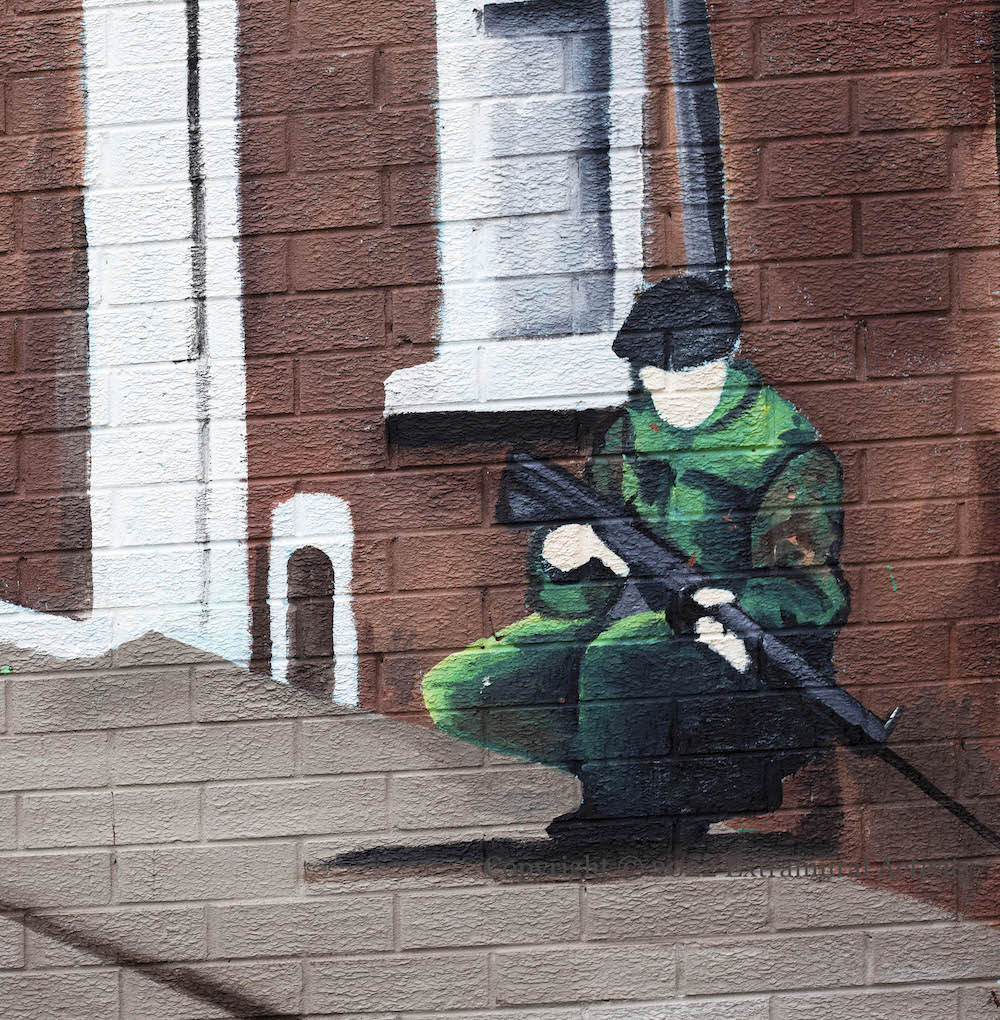
Patrick O’Connor was born on this day in 1924 on the lower Falls but after his father emigrated he spent his early years – until age 5 – with his grandparents in East Street in the Markets. It was as a high-schooler in New York that he adopted the name Pádraıc Fıacc (“fıach dubh” is “raven”) and began writing poetry. He settled in Glengormley upon his second and final return; it is not clear that he ever saw East Street lined with British Army soldiers, as shown in the mural above. He wrote of his early life in ‘First Movement’:
Low clouds, yellow in a mist wind Sift on far-off Ards Drift hazily … I was born on such a morning Smelling of the bone yards The smoking chimneys over the slate top roofs The wayward storm birds And to the east where morning is, the sea And to the west where evening is, the sea Threatening with danger And it would always darken suddenly
Some of Fıacc’s poems are in the TroublesArchive. There are two videos below. The first is an interview with NVTv’s Bernard Conlon; the second is of a reception in Belfast City Hall.
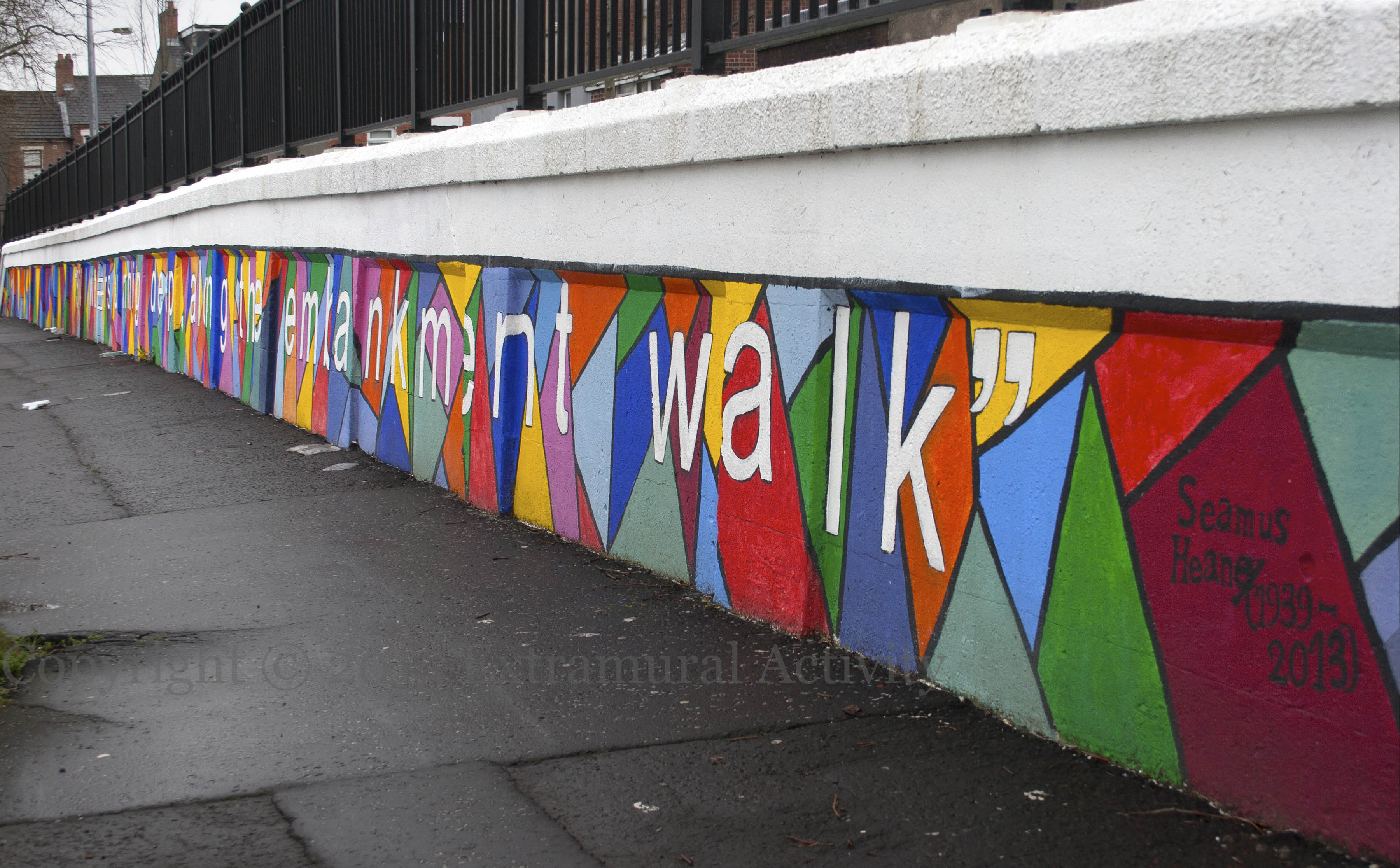
Seamus Heaney was born on this date in 1939 on a farm in County London-/Derry. His first (full) collection was Death Of A Naturalist in 1966 and it included the poem Twice Shy, the concluding lines of which are painted on Stranmillis embankment: Still waters running deep along the embankment walk.
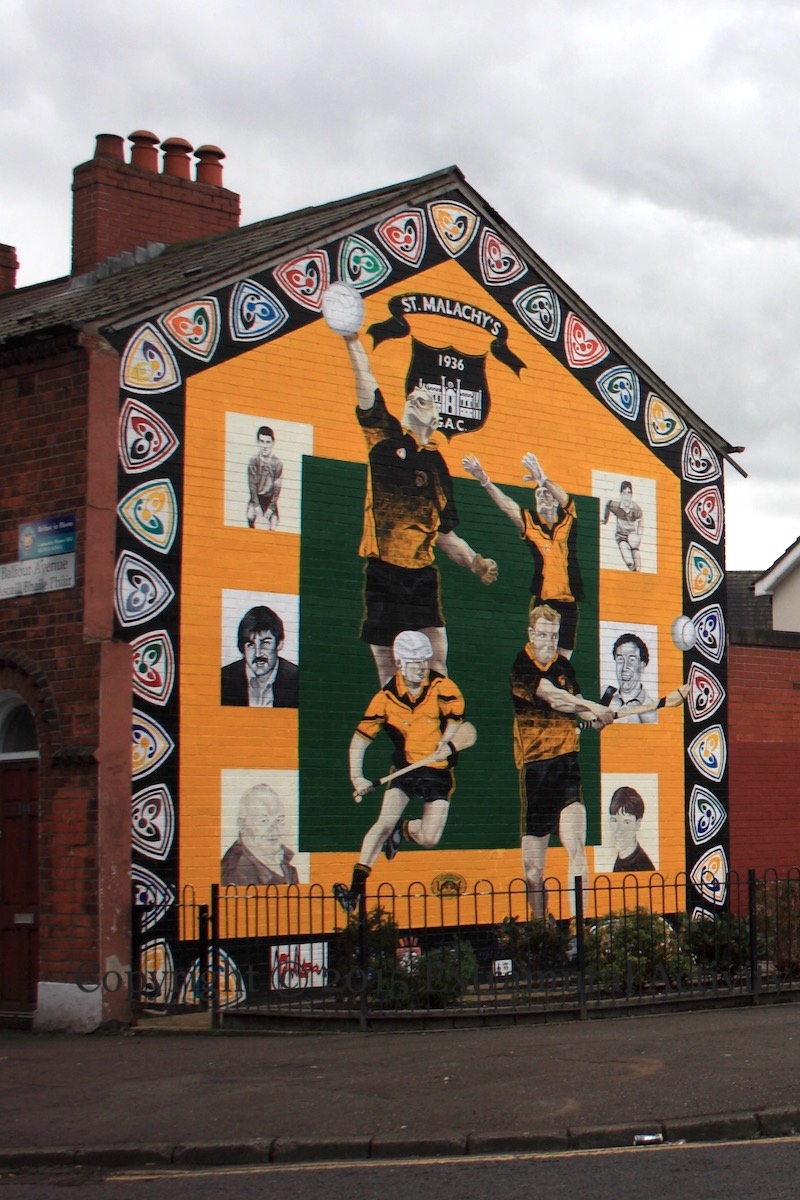
St Malachy’s (tw | Fb) is a junior (i.e. 2nd division/B-tier) GAA club established 1936 in the Markets area of south Belfast. It is not known who the six portraits are of (there were originally only the four at the corners – see M08137) or who the four players are. Get in touch if you have any information.
With sponsorship from Pulse, Belfast City Council, New Belfast Community Arts Initiative, the Housing Executive, and ?Brighten Belfast?
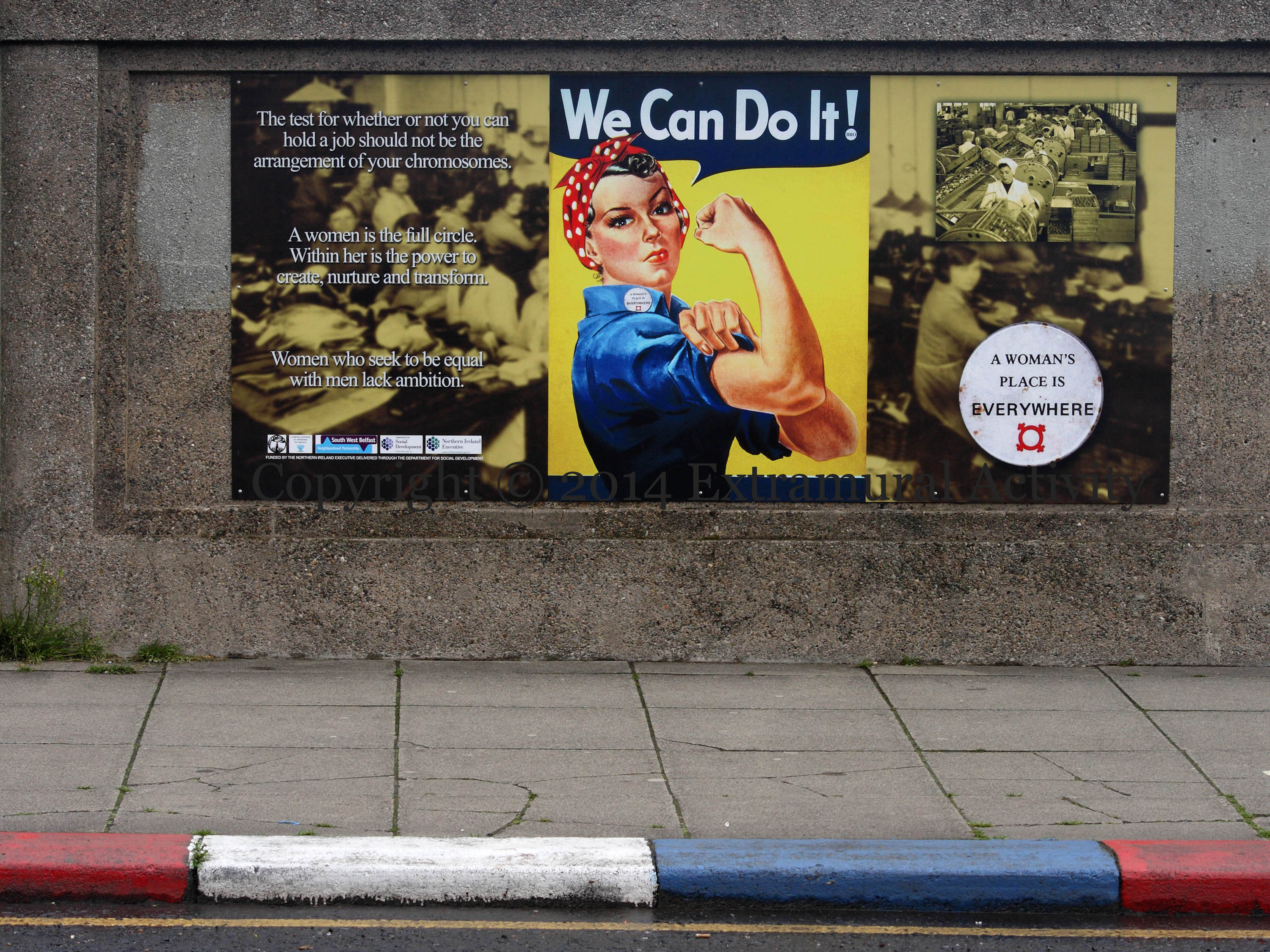
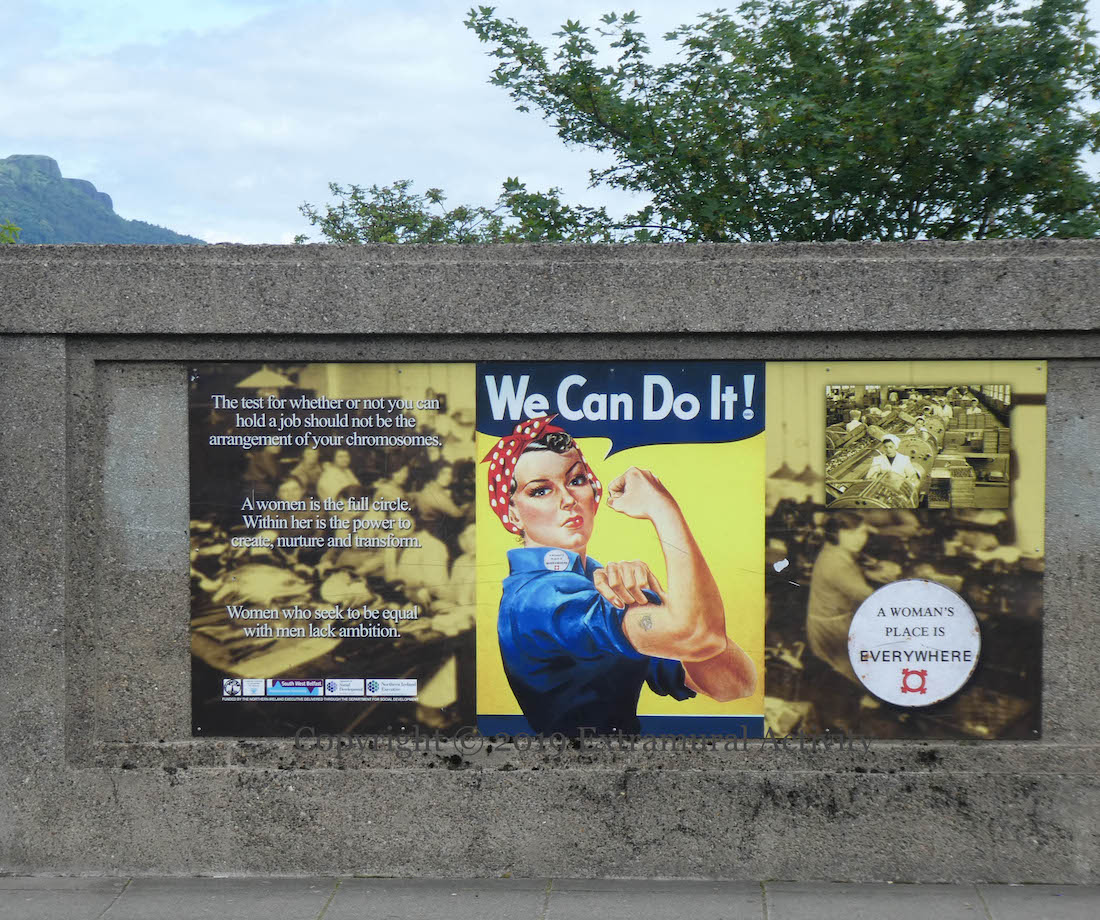
“The test for whether or not you can hold a job should not be the arrangement of your chromosomes. A women is the full circle. Within her is the power to create, nurture and transform. Women who seek to be equal with men lack ambition.” This past Saturday (2015-03-08) was International Women’s Day. The board above (on one of the Donegall Road bridges) features the Westinghouse ‘We Can Do It!’ poster (often mistaken for Rosie The Riveter) (WP) though here with a women’s liberation badge on her collar (shown in large size on the right). She is between images of women at work. See also: The Home Front.
South Belfast Ulster Volunteer Force 2nd Battalion “A” Company Donegall Pass, with the flag of England (St. George’s Cross) in one corner and in the other an orange star with “1912” written below, the year the Ulster Volunteers were founded. The colour-scheme is the reverse of the Orange Order’s: its flag has the purple star of the Williamites on an orange field.
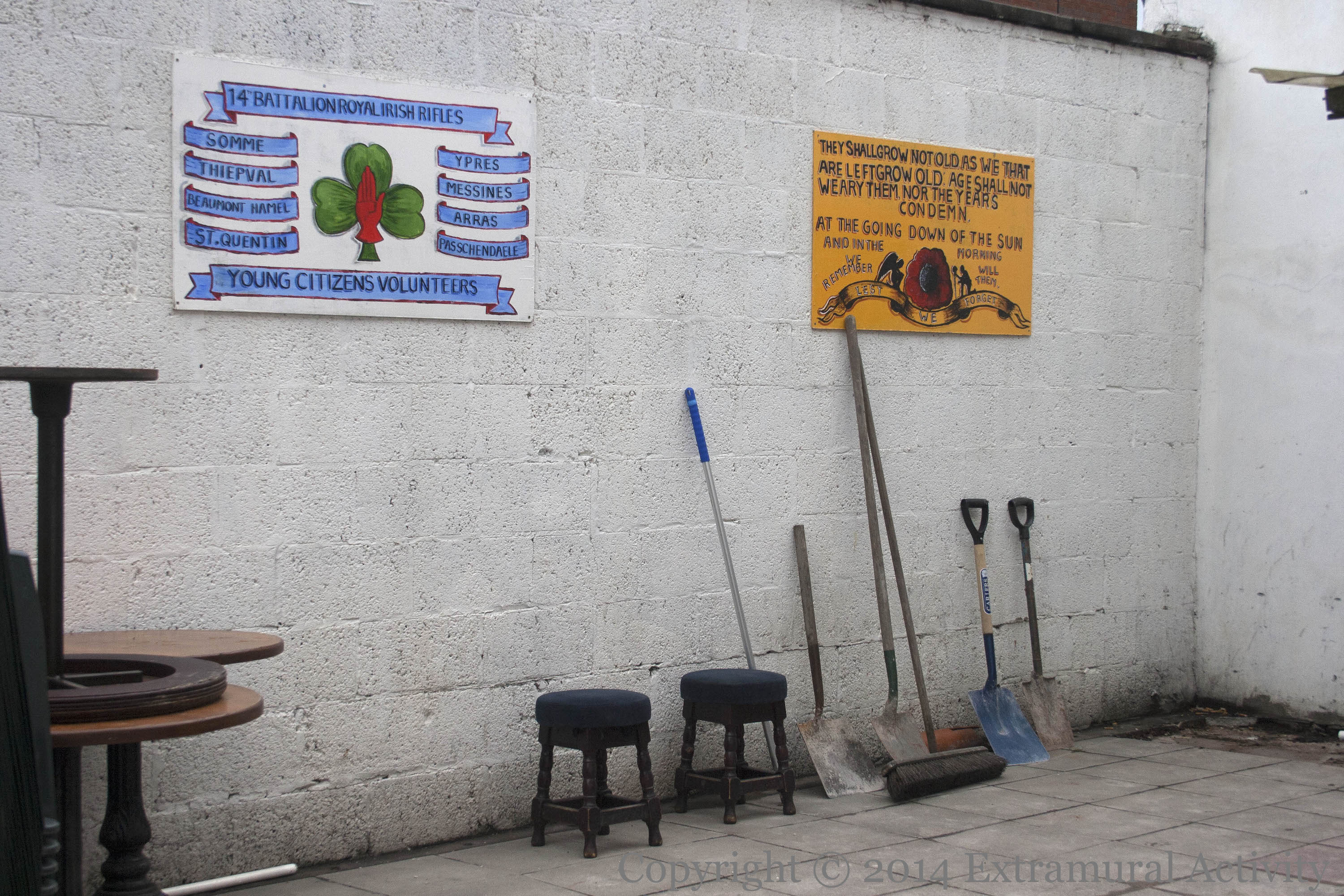
A selection of shovels and brooms stand to attention in the courtyard of The Hideout bar, in Donegall Pass, beneath boards to the 14th battalion of the Royal Irish Rifles and soldiers in WWI.
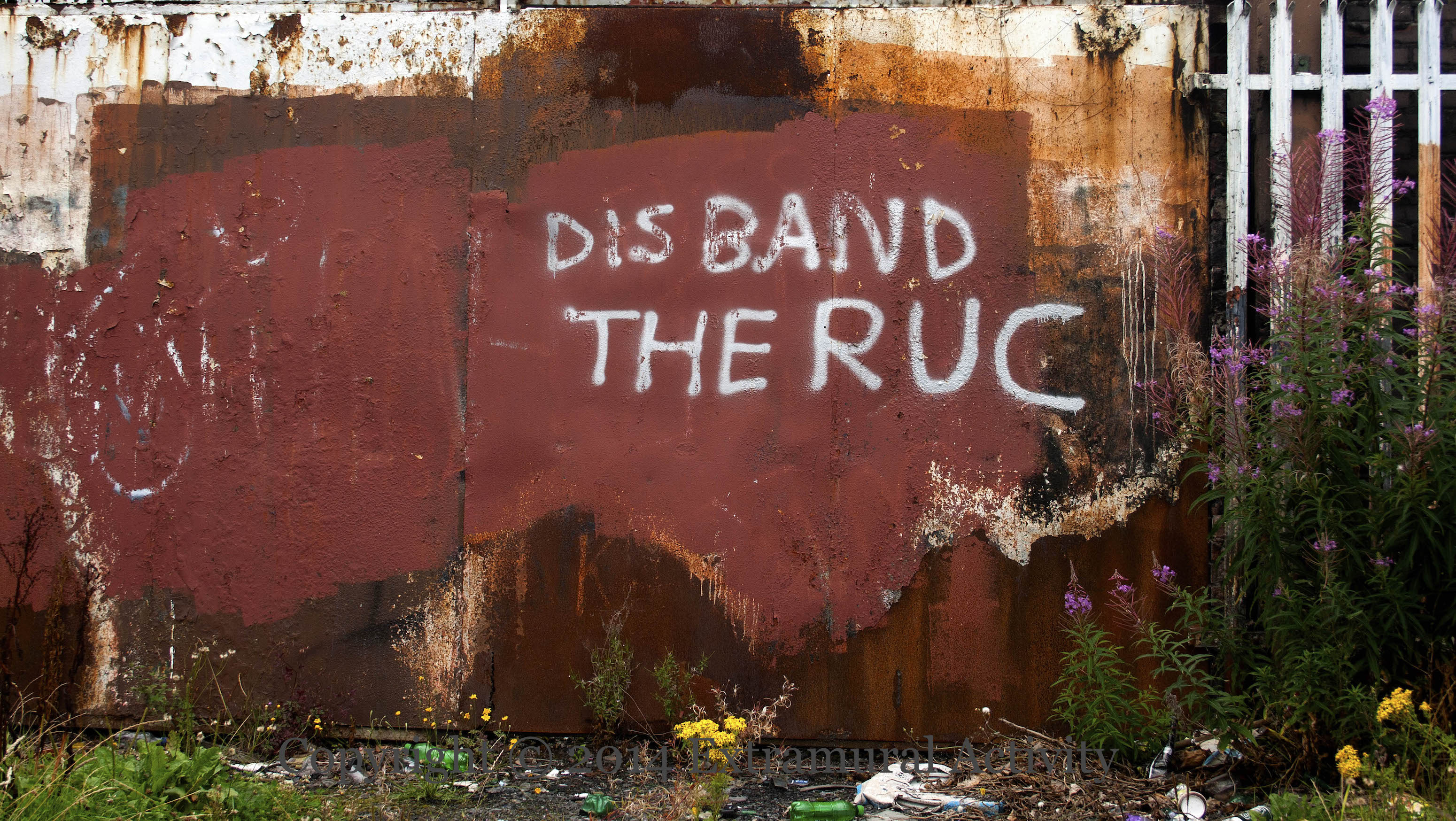
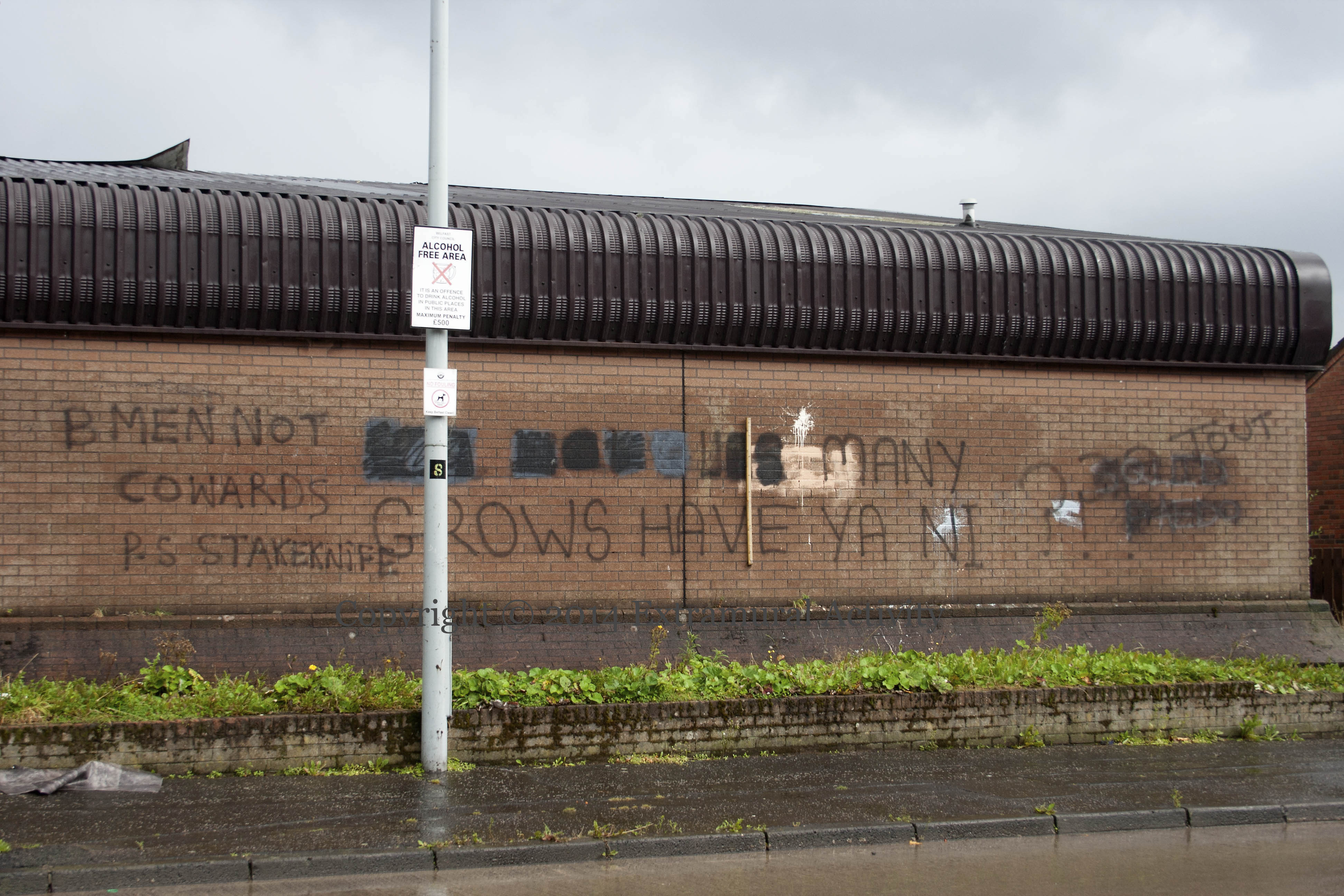
Old graffiti doesn’t go away. It persists, witness to the aspirations and angers of years past.
Above, “Disband the RUC” in Bóthar Chaıtríona/St. Katharine’s, republican west Belfast. Below, “If the leaders are impotent… only the people can rise” – anarchist graffiti in Melrose Street and “B-Men not cowards” in Agnes St, Loyalist west Belfast. These are all late-2014 pictures of graffiti that are at least three years old.








 Extramural Activity