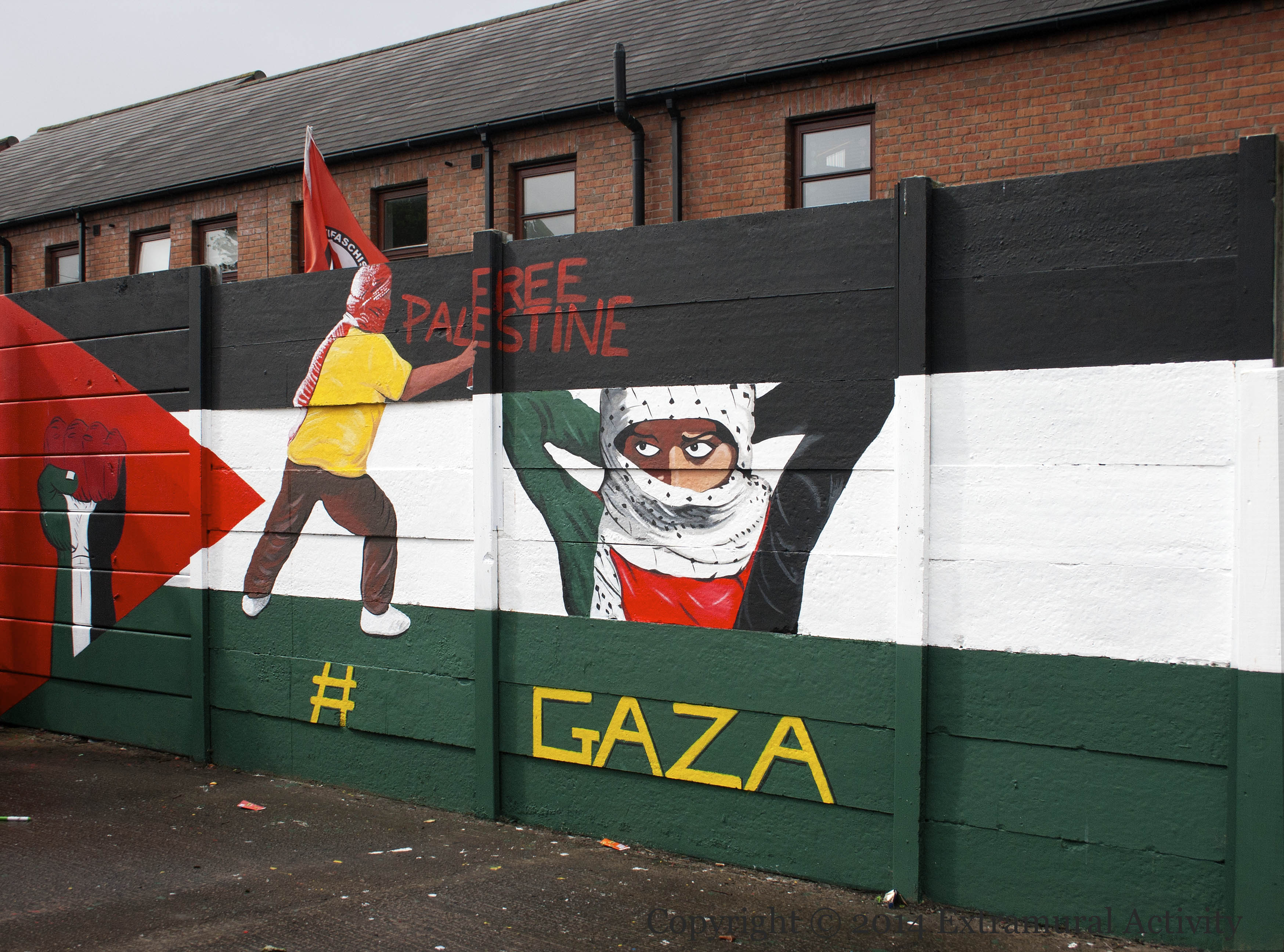
A young woman dressed in the red, black, and green of Palestine secures her keffiyeh, preparing for defiance rather than expressing her modesty – a detail from a new mural in Balfour Avenue (shown below) with a graffitist in a red-and-white keffiyeh (the colours of the PFLP – see previously: The Popular Front) writing “Free Palestine”. An ‘anti-fascist action’ flag flies in the background.
Previously: Leila Khaled wearing a keffiyeh – traditionally a male garment – in the style of a hijab – a woman’s garment (WP).
“But in their eyes shall shine the holy glimmers of goodbyes … Their flower the tenderness of patient minds, and each slow dusk a drawing down of blinds.” Lines from Wilfred Owens’ (1893-1918) ‘Anthem For Doomed Youth‘ on a new board in Lindsay Street.
The text at the bottom reads: “The last three month of WWI became known as the hundred days. Realising they were defeated an armistice was signed by the Germans. Germany finally surrendered and WWI ended on November 11th 1918. The terms of the agreement called for the end of fighting along the entire Western Front to begin a precisely 11 am that morning. Records show that the last British soldier killed in WWI was Private George Edwin Allison of the 5th Royal Irish Lancers. He was killed at Mons at 09:30 am, just 90 minutes before the ceasefire.”
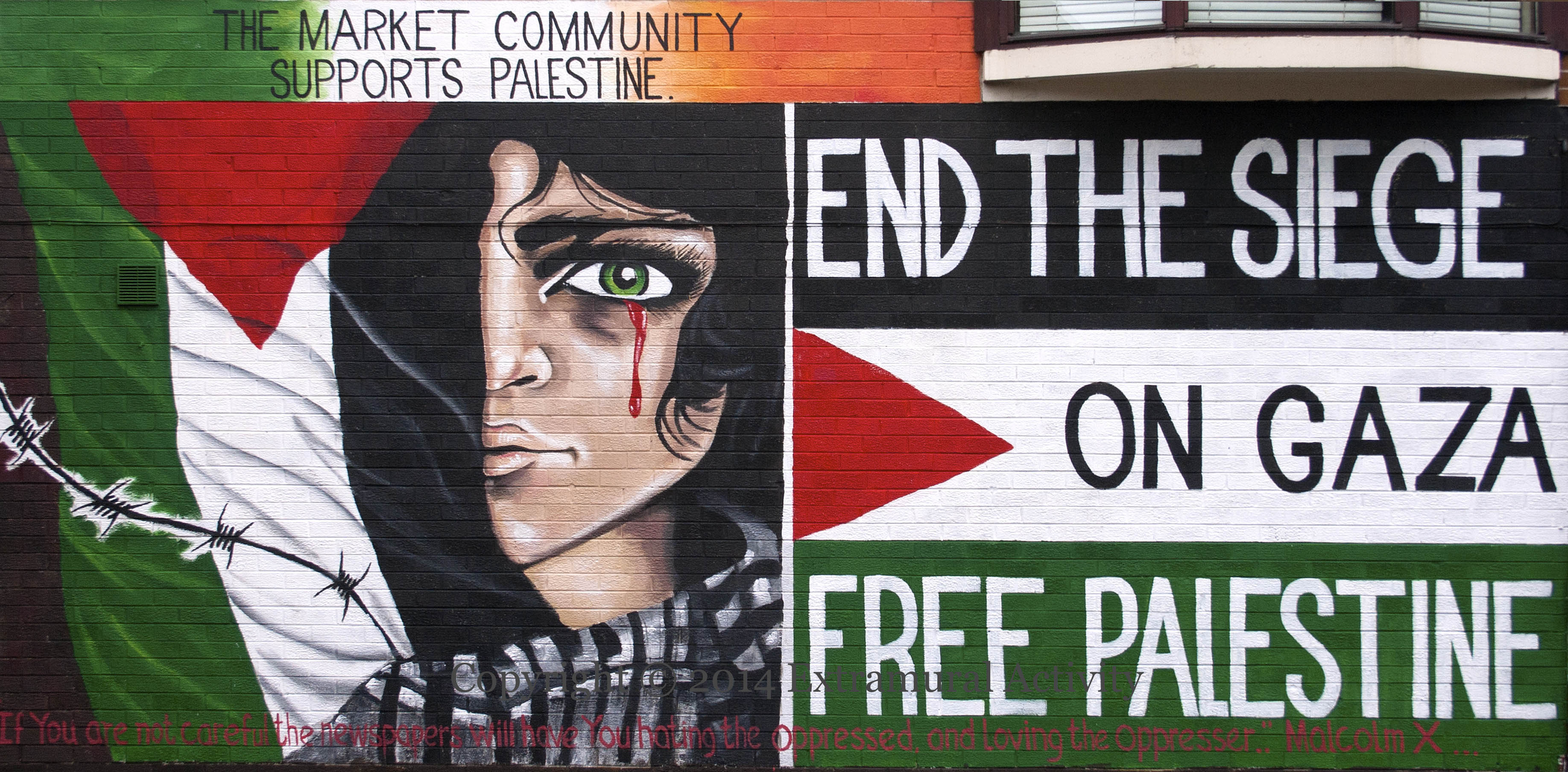
Tears of blood flow from a boy’s face, shrouded by a Palestinian flag and behind barbed wire. The shot below of the full mural (launched 2014-07-29) includes a quote from Malcolm X: “If you’re not careful, the newspapers will have you hating the oppressed and loving the oppressor.”
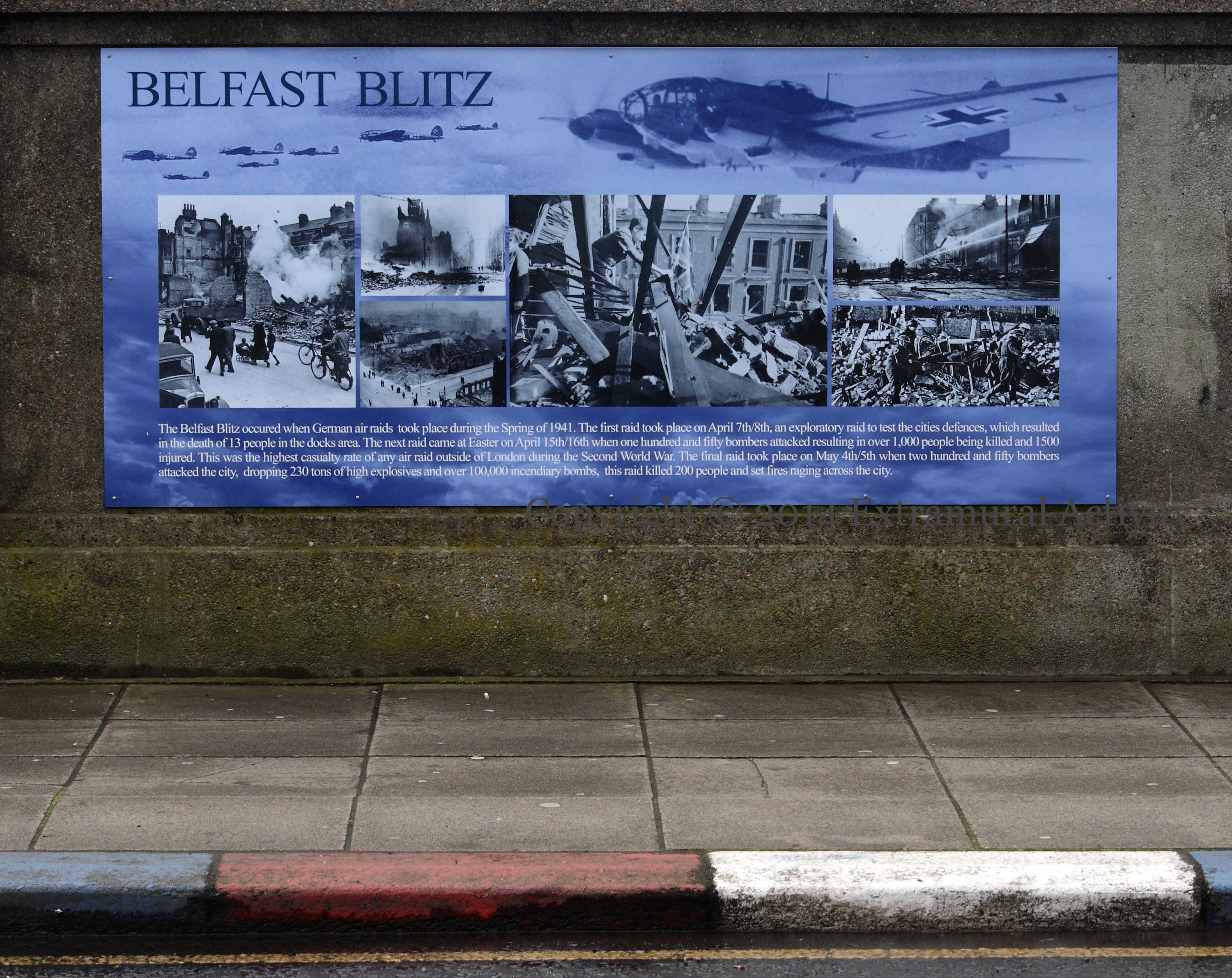
“The Belfast blitz occur[r]ed when German air raids took place during the spring of 1941. The first raid took place on April 7th/8th, an exploratory raid to test the cities [sic] defences, which resulted in the death of 13 people in the docks area. The next raid came at Easter on April 15th/16th when one hundred and fifty bombers attacked resulting in over 1,000 people being killed and 1,500 injured. This was the highest casualty rate of any air raid outside of London during the Second World War. The final raid took place on May 4th/5th when two hundred and fifty bombers attacked the city, dropping 230 tons of high explosives and over 100,000 incendiary bombs, this raid killed 200 people and set fires raging across the city.”
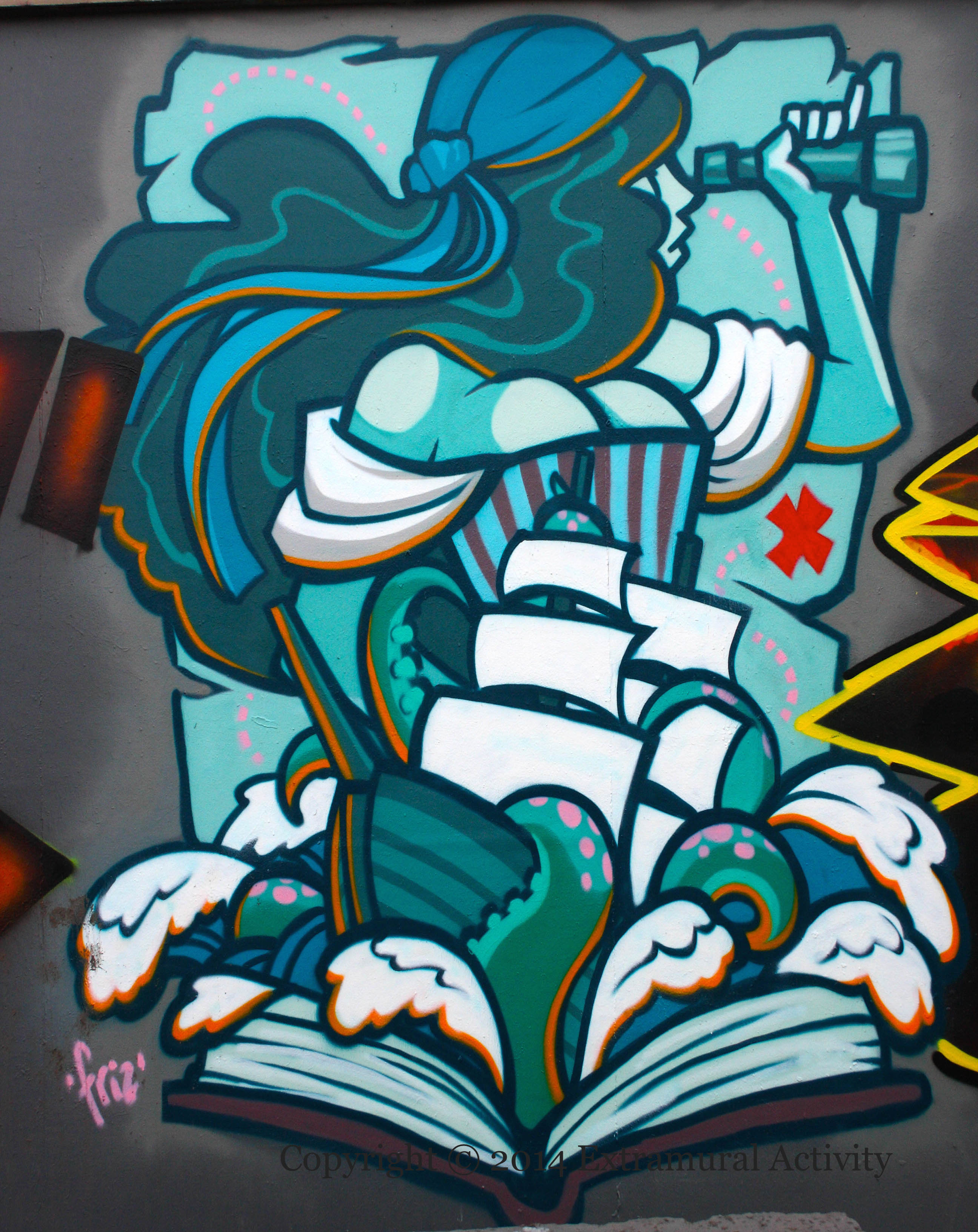
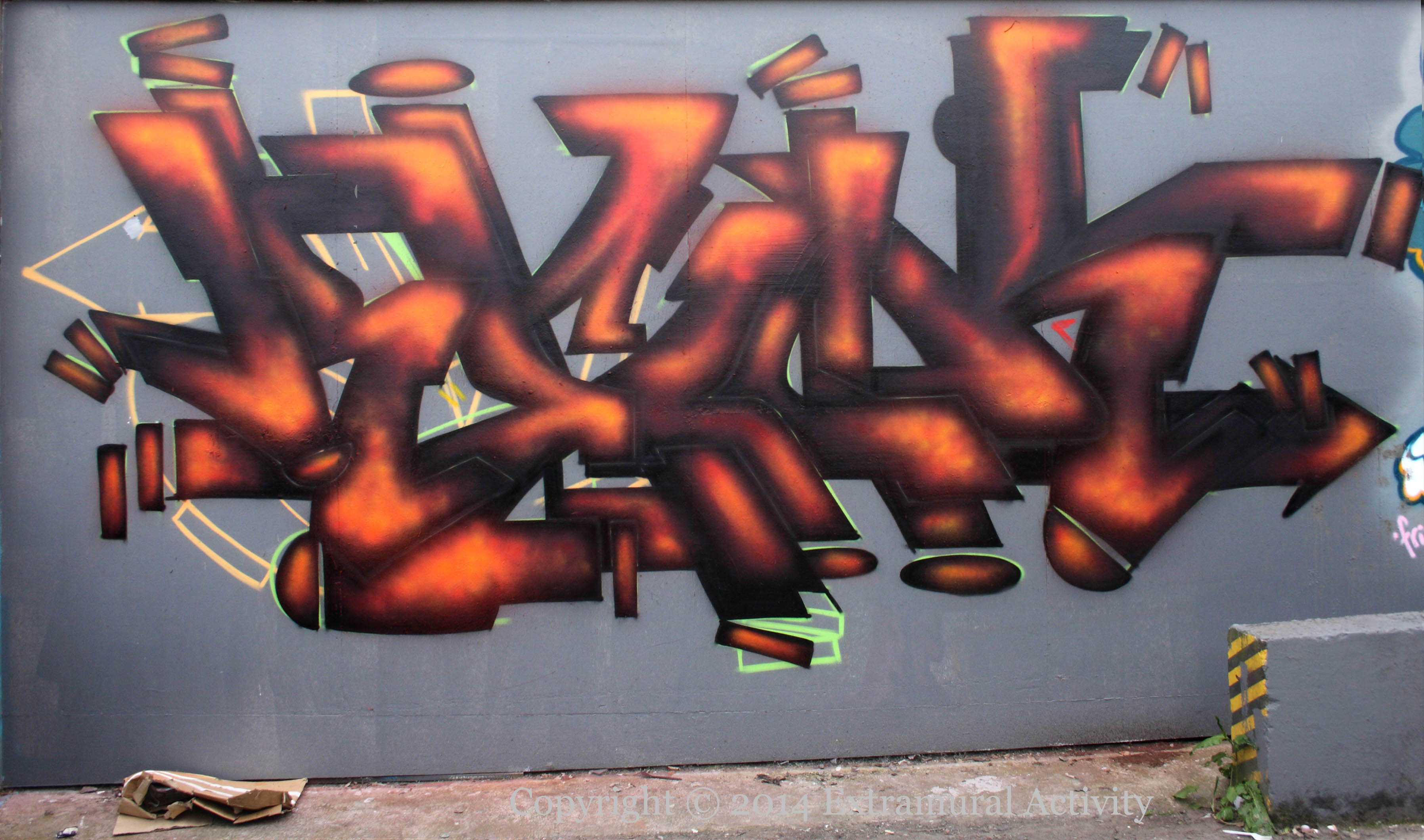
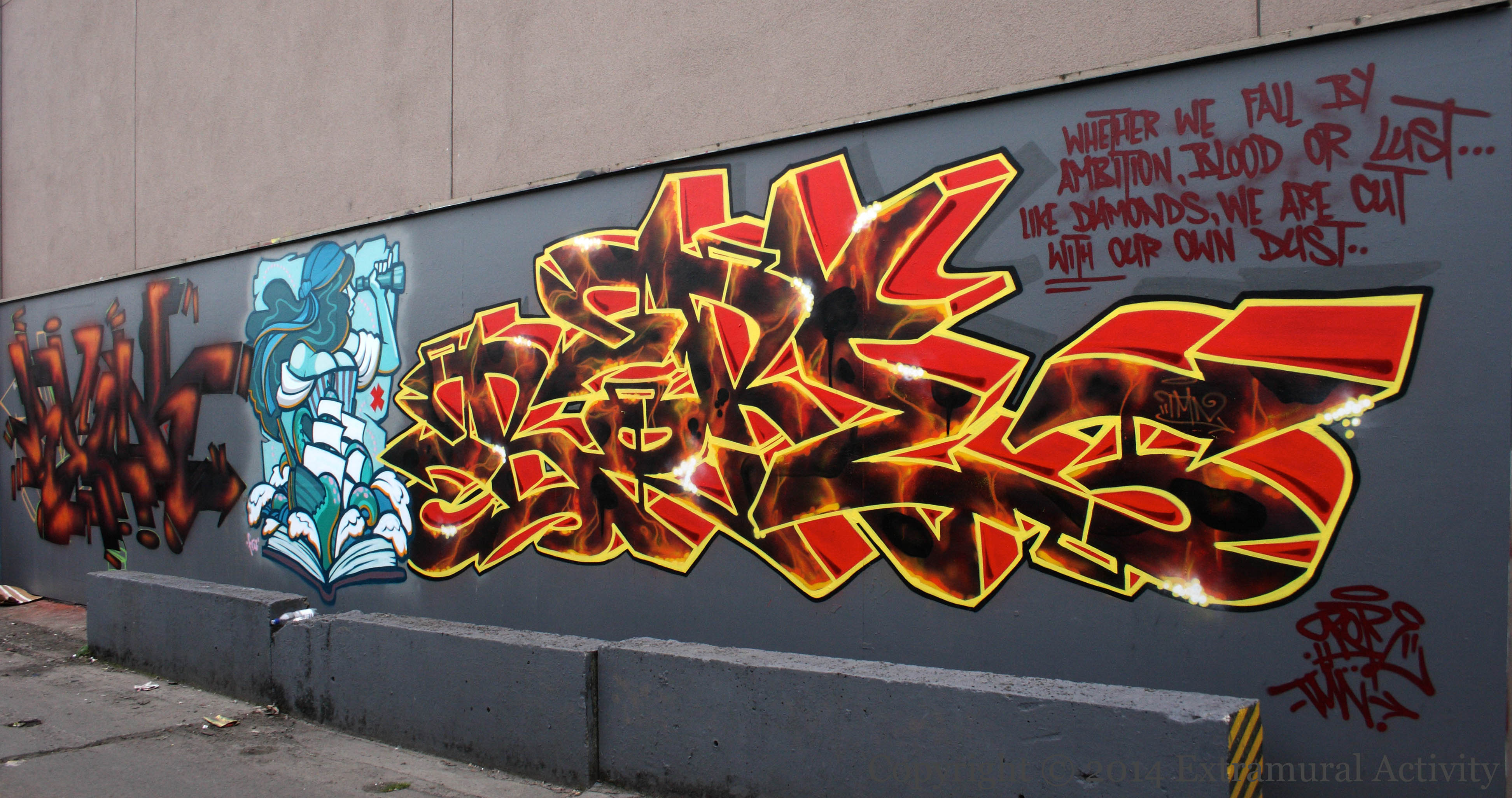
From the pages of a book spring a world of adventure: a sailor lass looks through a spyglass for landmarks that will lead to buried treasure, where “X” marks the spot, while the ship is assailed by a tentacled monster from the deep. Work by friz (Twitter | Web) outside the Crescent Arts Centre on University Road, with shots of the writing to the left and right (by some the TMN crew), and a quote from John Webster’s Duchess Of Malfi, below: “Whether we fall by ambition, blood or lust, like diamonds we are cut with our own dust.”
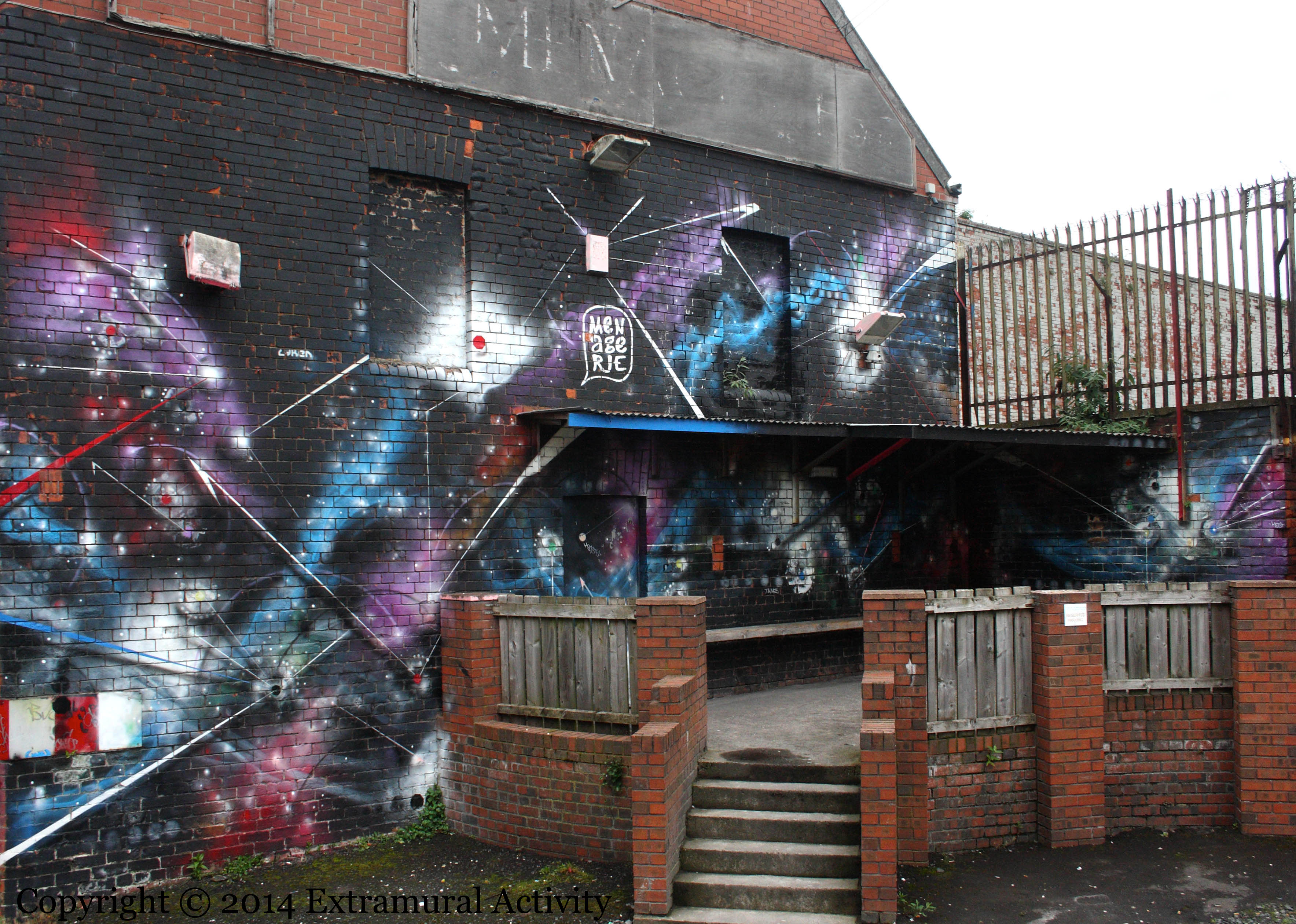
Out-of-this-world work by Scottish artist (Mark) Lyken (Twitter | Fb) – signature at the top, in the middle – on the front of Menagerie (Tumblr) on University Street. Wide shot below.
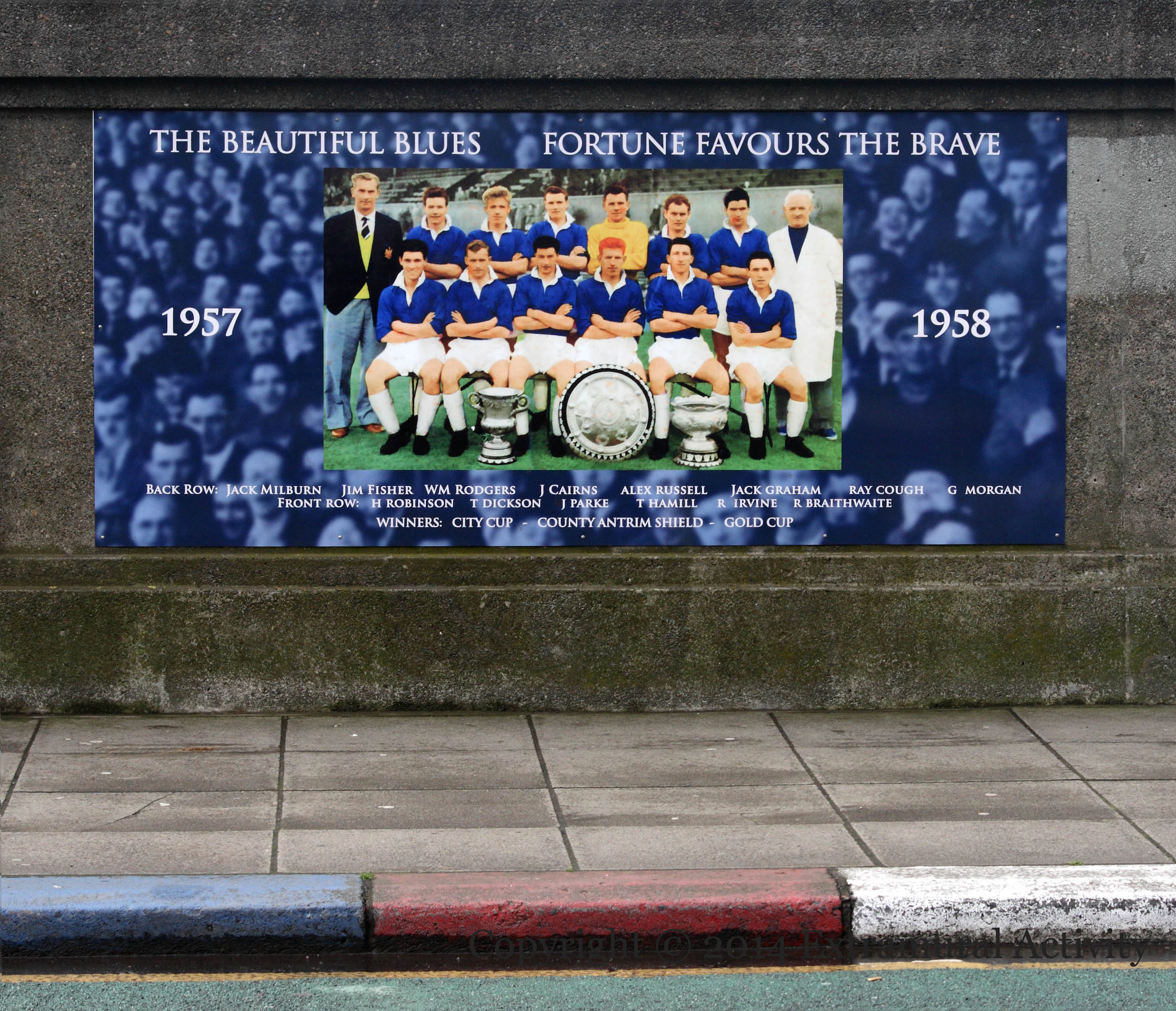
Two boards on the Donegall Road feature Linfield football club. The one above (at the bridge near Roden Street) features the 1957-1958 team; the one below (near the City Hospital station) has the founding team of 1886 and champions in 1890-1891 in the background (shown in Fortune Favours The Brave) “with Sandy Row former Linfield players Daryl Fordyce and Albert Watson, with the modern day youth of Sandy Row” (linfieldfc.com).
“Today is yesterday’s tomorrow”. Vintage images of Sandy Row, including the Ulster Spinning Company and the Royal Bar, make up this “Heritage – Culture – Identity” board on Donegall Road. The central image is part of this photo montage.








 Extramural Activity