Play

05031 2008 Play d+.jpg

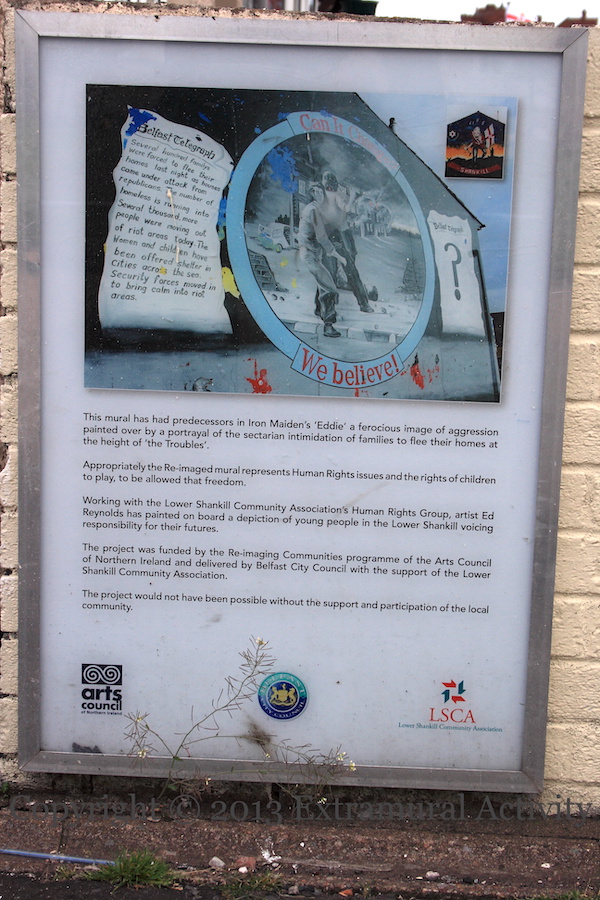
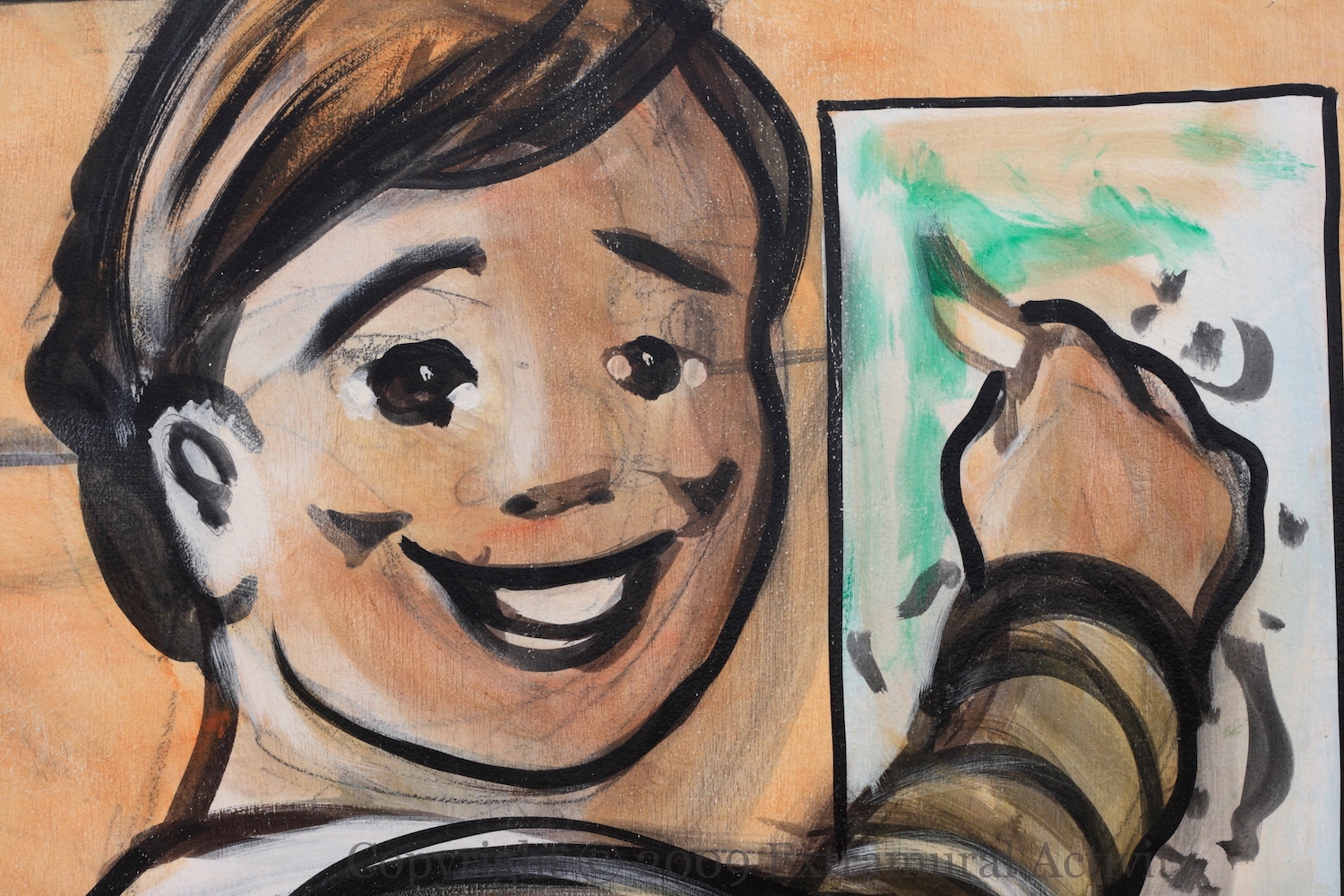
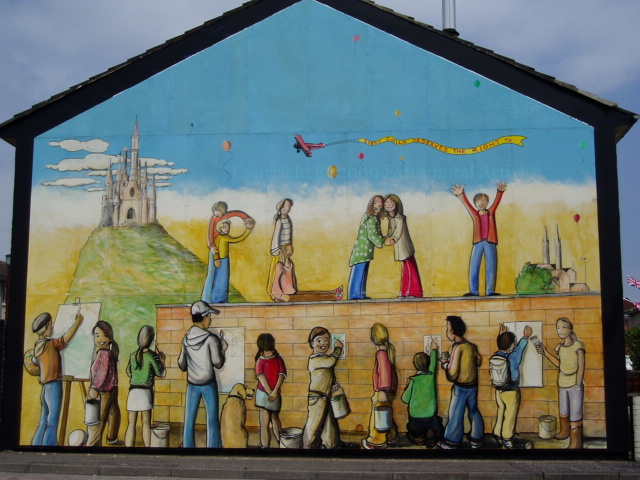
New ‘Play’ mural on Hopewell Crescent, painted by Ed Reynolds (steadyhanded.com), replacing the Can It Change? mural.

Two panels of text on the left-hand side-wall read “‘The young do not know enough to be prudent and therefore they attempt the impossible and achieve it … generation after generation’ – Pearl S Buck” and “‘Adults do not perceive children as a minority group but as helpless, inexperienced, defenseless young people who need protection … This attitude must be confronted, challenged and refuted if young people are to secure their political rights’ – Bob Franklin”
Copyright © 2009
X05031 X00308 Seosamh Mac Coılle
X00321 Cathal Woods
Copyright © 2013
X01569 Seosamh Mac Coılle
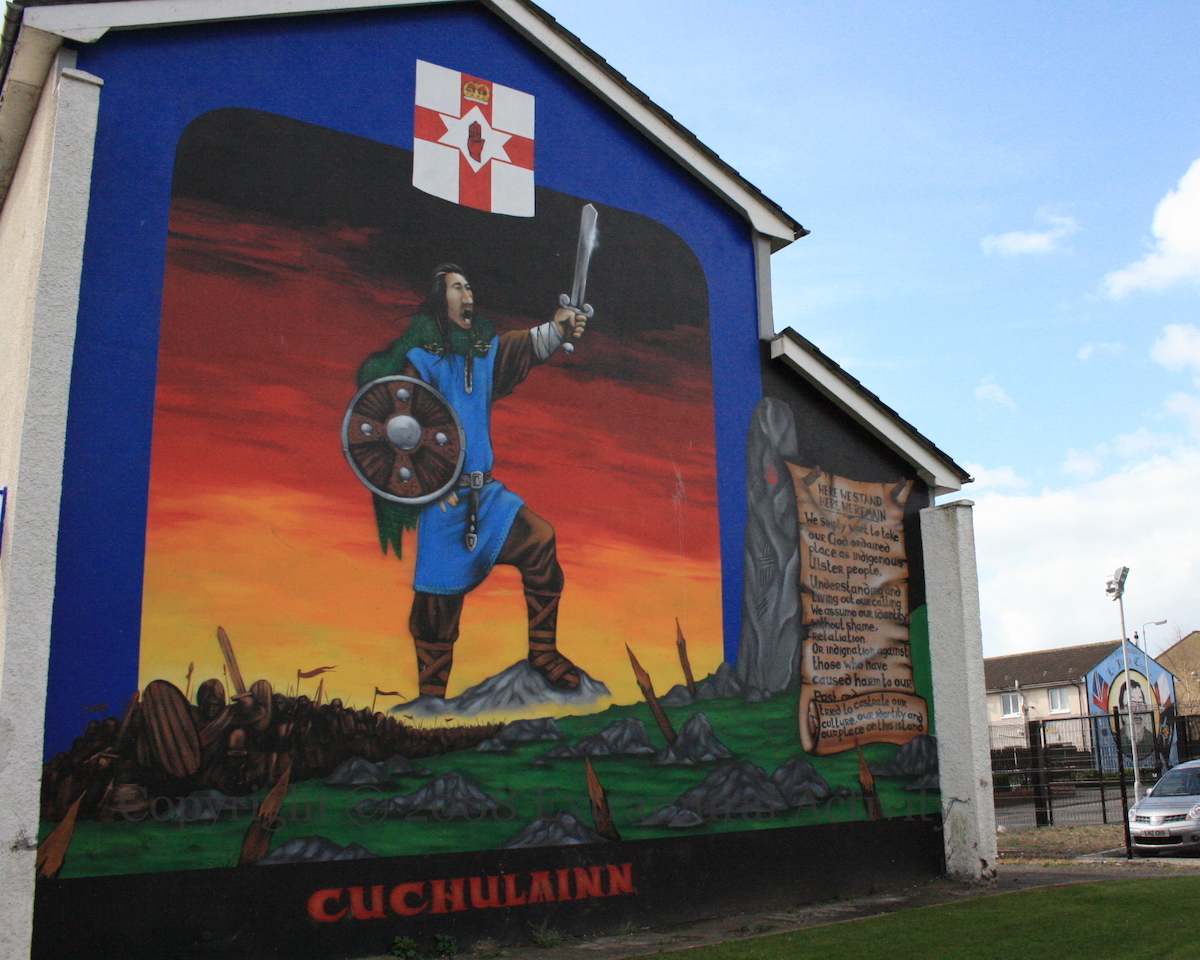
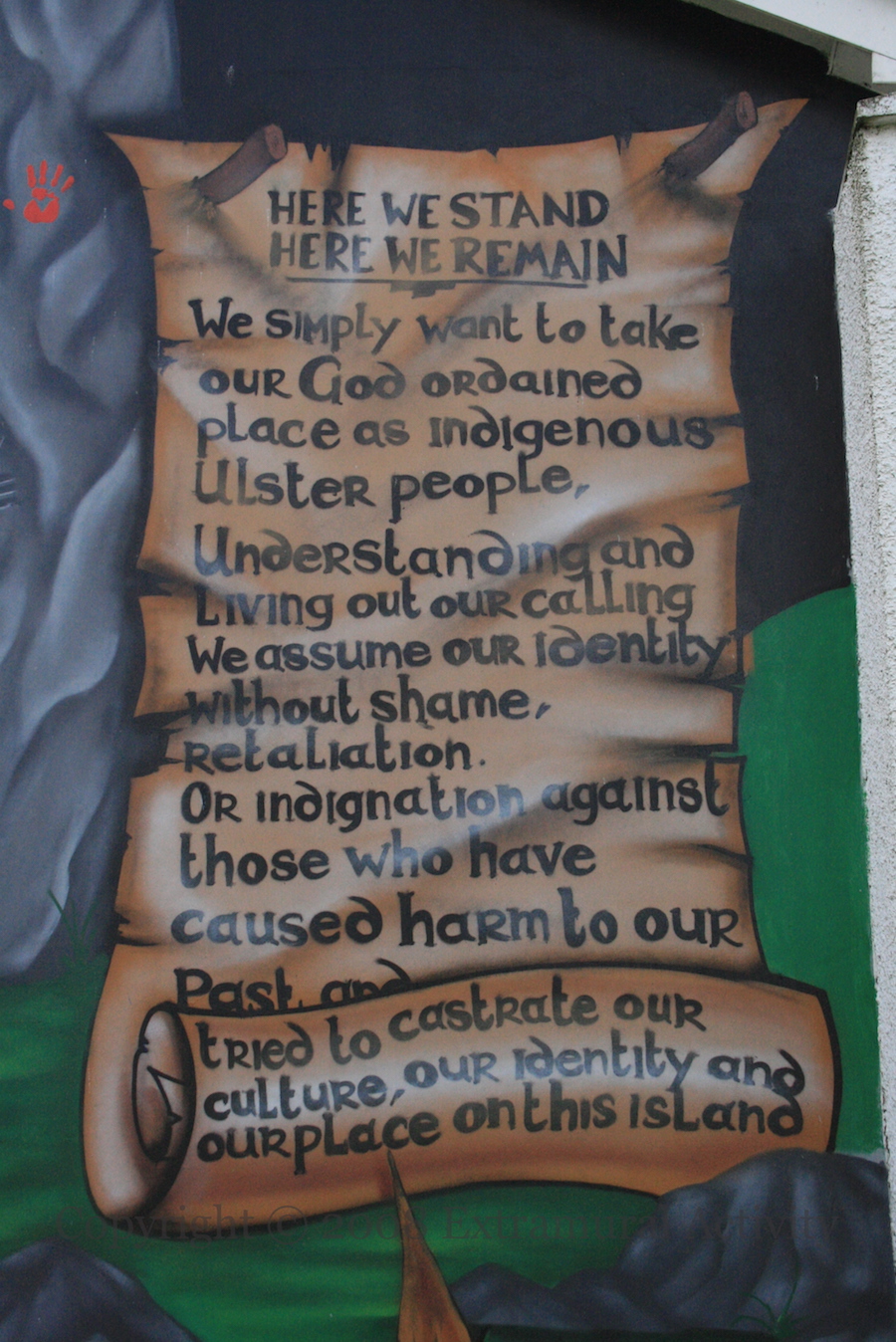
Indigenous Ulster People

The mythological hero Cuchulainn, defender of Ulster against the forces of Queen Medb of Connacht, is placed below the flag of Northern Ireland. “Here we stand, here we remain. We simply want to take our God ordained place as indigenous Ulster people, understanding and living out our calling. We assume our identity without shame, retaliation or indignation against those who have caused harm to our past and tried to castrate our culture, our identity and our place on this island.”

Cú Chulaınn has his own Visual History page. This is the most active depiction of the hero; he is usually depicted in his death throes.

Shankill Parade, lower Shankill, west Belfast.

Click image to enlarge
Copyright © 2008 Seosamh Mac Coılle
X00273 X00272 [X01565]

Drumcree

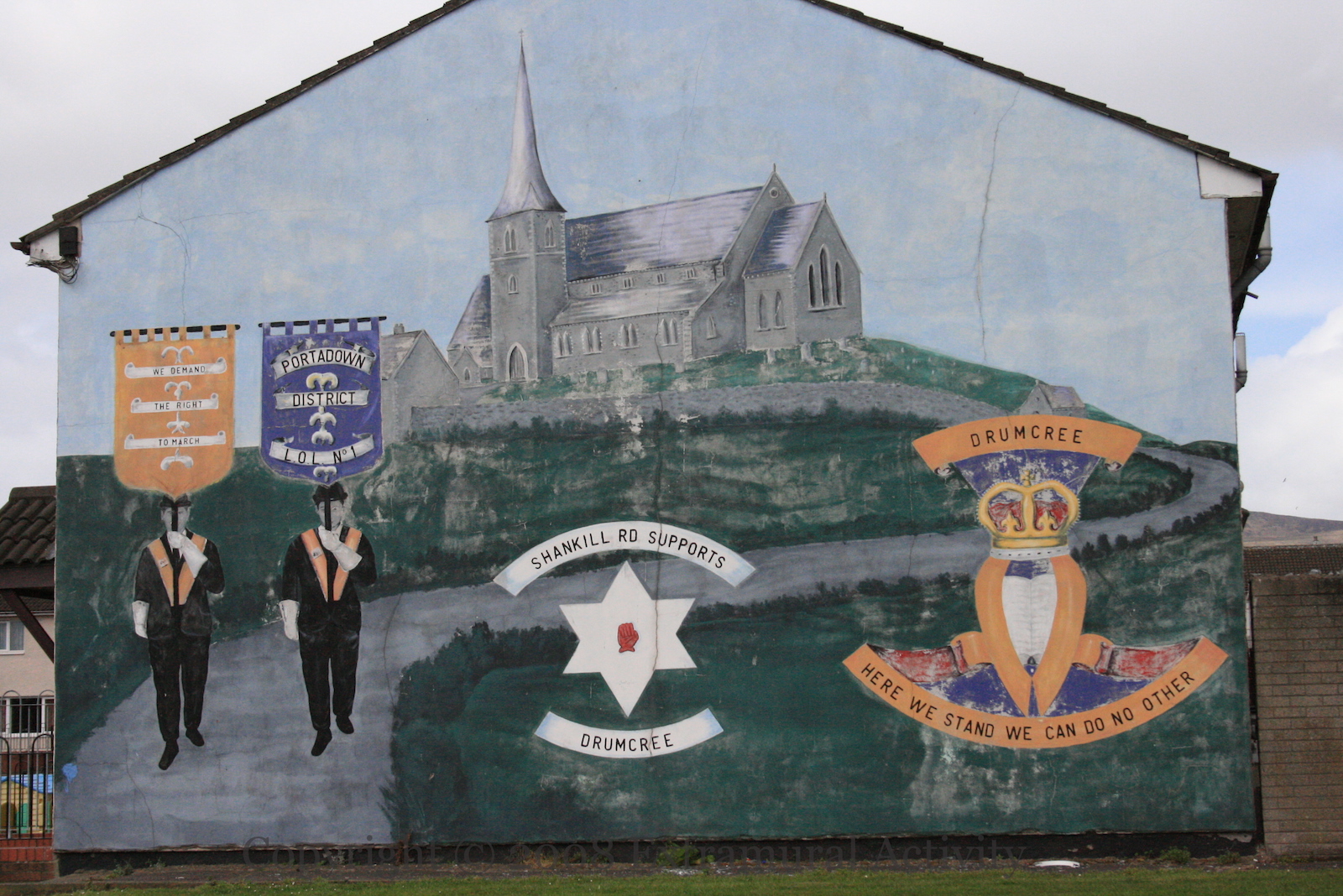
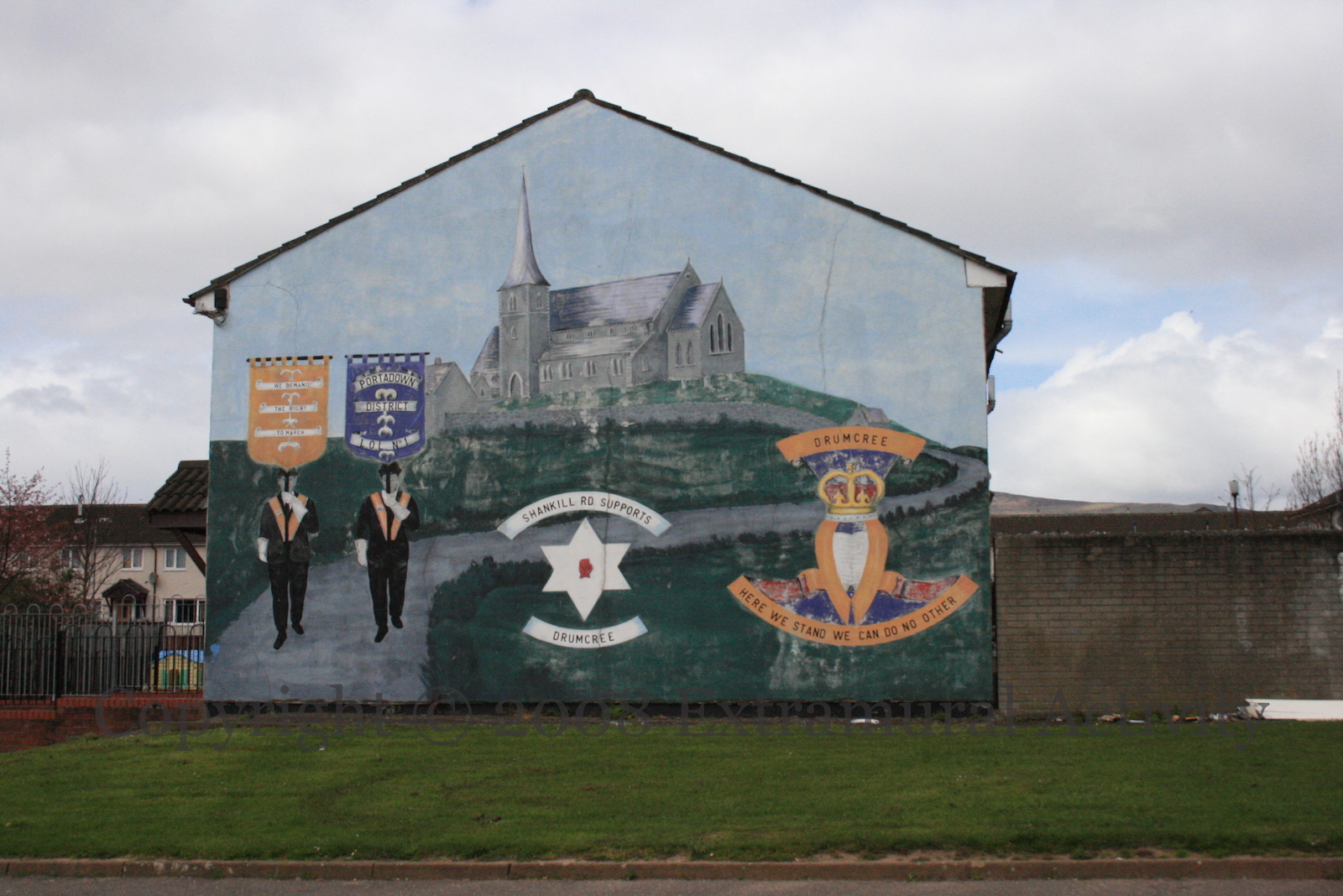
These are 2008 images of the Drumcree mural in the lower Shankill estate, seen previously in 2004. The mural would be “re-imaged” in 2009.

“Here we stand, we can do no other” adapts Luther’s saying at Worms to the standoff in Portadown between the Orange Order and Catholics on the Garvaghy Road, which links the church at Drumcree (shown in the mural) with the town centre.

Click image to enlarge
Copyright © 2008 Seosamh Mac Coılle
X00239 X00240

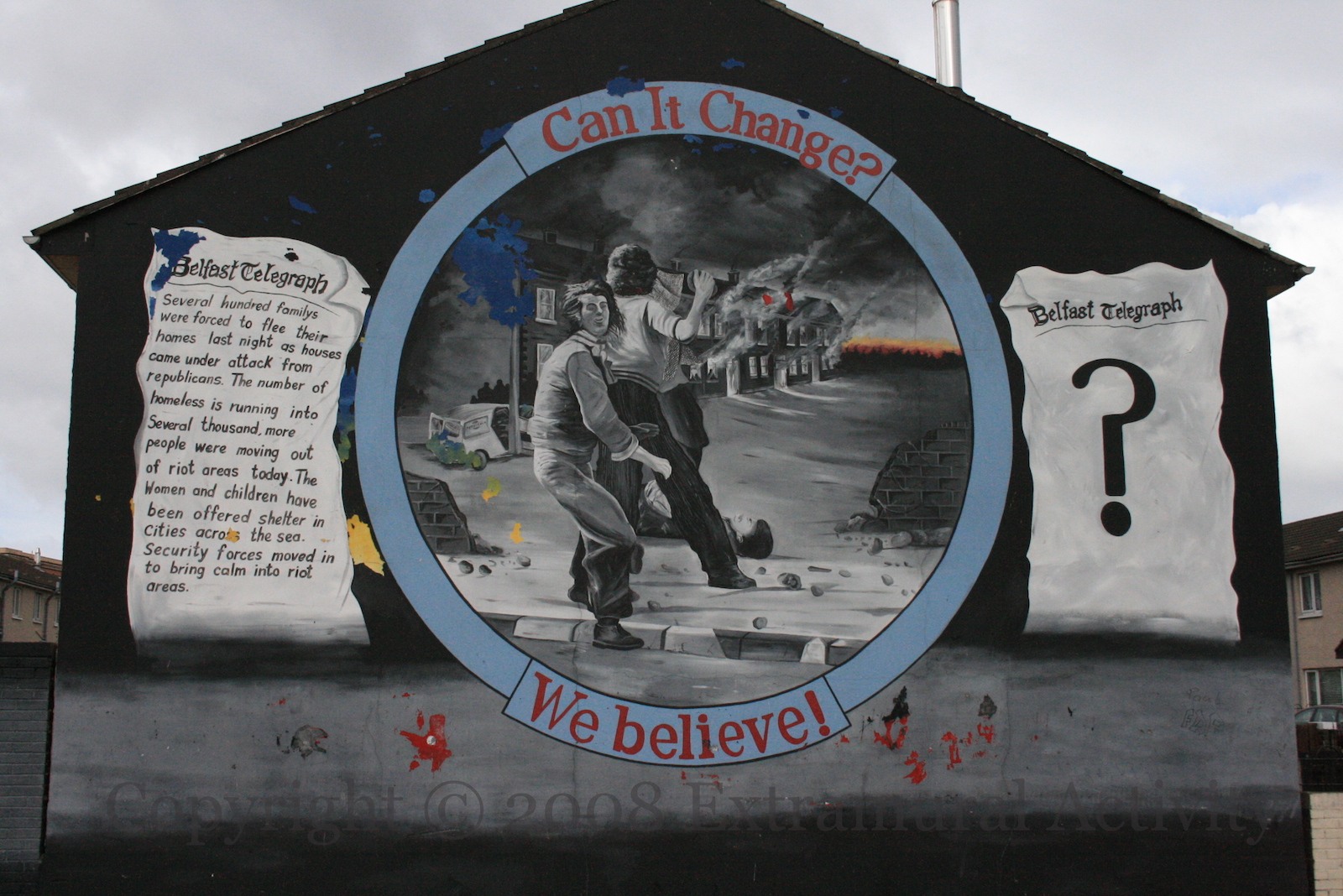
Can It Change?

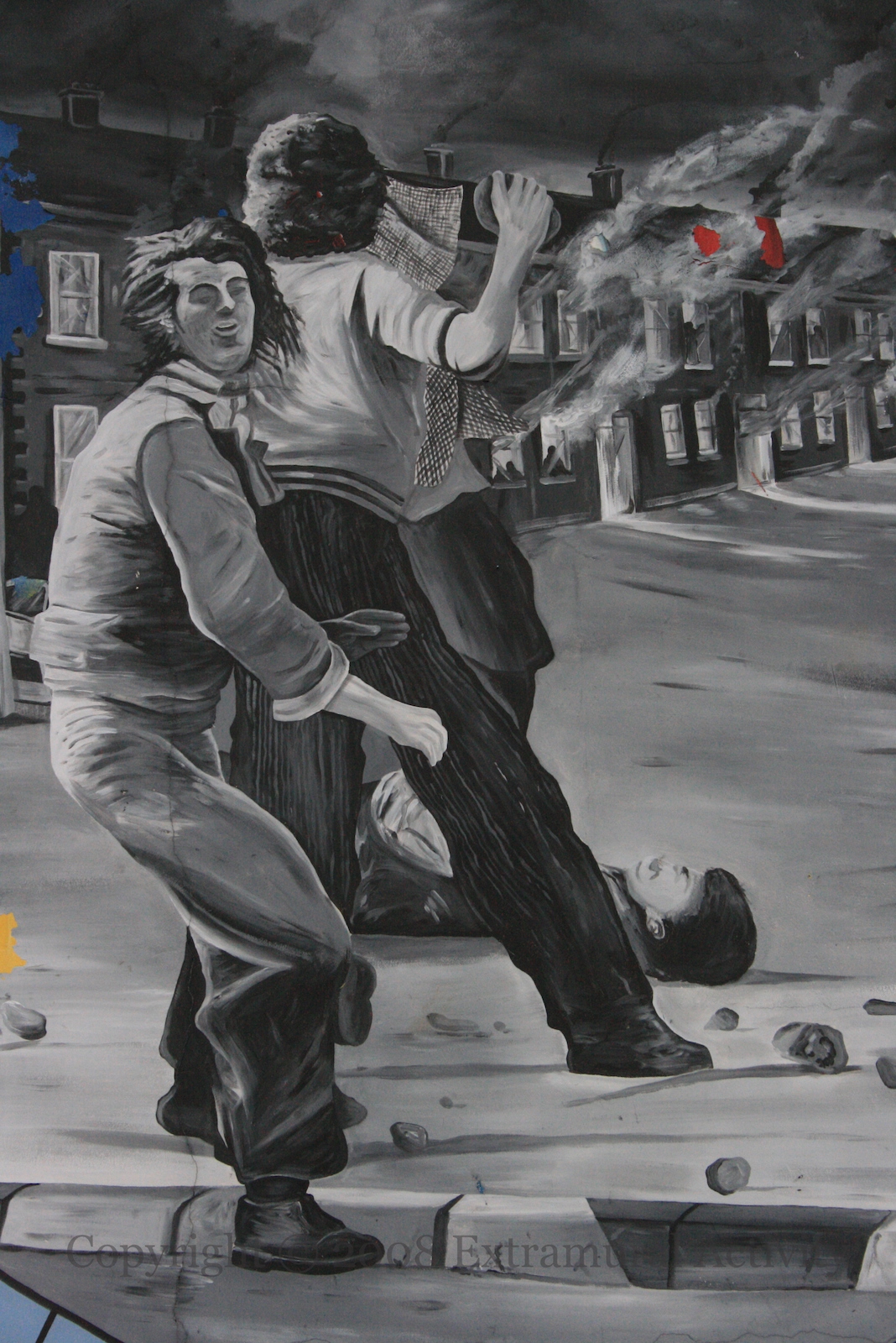
“This mural portrays Protestant men defending their community which was subjected to constant attempts of ethnic cleansing with petrol bombing attacks of their homes on a day to day basis. Eventually vigillanty [sic] groups were formed to secure these areas.” “Several hundred familys [sic] were forced to flee their homes last night as homes came under attack from republicans. The number homeless is running into several thousand, more people were moving out of riot areas today. The women and children have been offered shelter in cities across the sea. Security forces moved in to bring calm into riot areas.” The event referred to is the rioting in Bombay Street in 1969.

Hopewell Crescent, lower Shankill, west Belfast

Click image to enlarge
Copyright © 2008 Seosamh Mac Coılle
X00252 X00238 X00253 X00254

William Bucky McCullough

“In loving memory of all our fallen comrades from A Coy, B Coy, C Coy, 2nd Batt UFF West Belfast Brigade. Murdered by the enemies of Ulster.” UDA Lieutenant-Colonel McCullough was killed by the INLA on October 16th, 1981, outside his home in Denmark Street (out of frame to the right), on information supplied by fellow UDA member James Craig, who feared that McCullough would expose his embezzling of UDA funds.

Click image to enlarge
Copyright © 2008 Seosamh Mac Coılle
X00241

Meet Our Need

“Meet our need – not developers greed”, “Local needs ignored over profit”, “Regeneration not gentification [sic]”, “We need social housing not yuppy apartments” (not shown). Graffiti on the hoarding around the (proposed) construction site on the lower Shankill Road.

Click image to enlarge
Copyright © 2008 Seosamh Mac Coılle
X05023 X05024 X05022

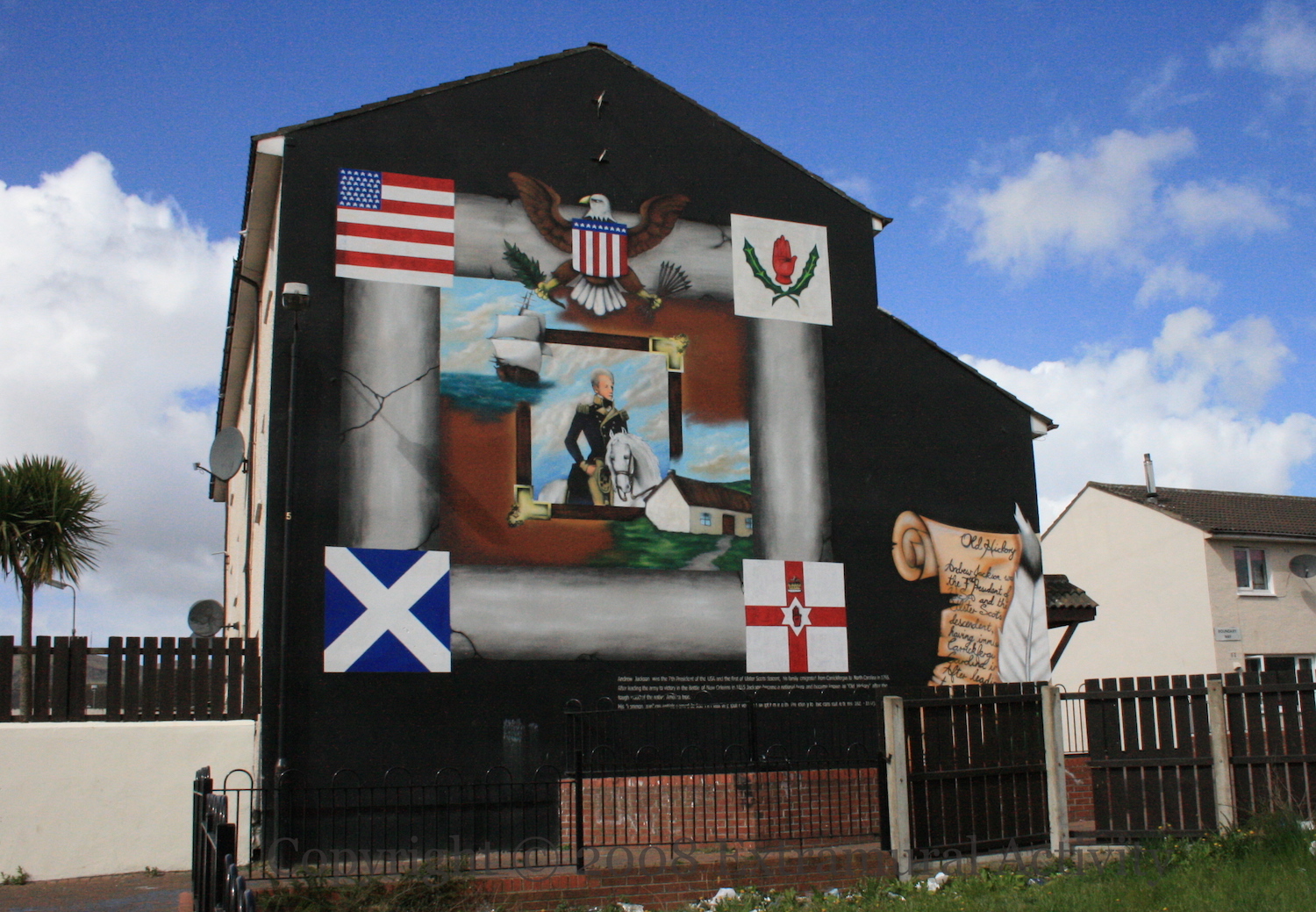
Andrew Jackson

“Andrew Jackson was the 7th President of the USA and the first of Ulster-Scots descent, his family emigrated from Carrickfergus to North Carolina in 1765. After leading the army to victory in the Battle Of New Orleans in 1815 Jackson became a national hero and became known as “Old Hickory” after the tough wood of the native American tree. His “common man” credentials earned Jackson a massive popular vote and swept him into the Presidency for two consecutive terms (1829-1837).” He also hated the British, owned slaves, and signed the Indian Removal Act of 1830, which led to the infamous “Trail of Tears” (Irish Times).

See also the Visual History page on Ulster-Scots murals.

Click image to enlarge
Copyright © 2008 Seosamh Mac Coılle
X00285

Stevie McKeag

“In loving memory of military commander Stevie ‘Top Gun’ McKeag – sleeping where no shadows fall. Born 1970, died 2000.” McKeag’s portrait (now a head-and-shoulders shot rather than just the face – see M03803) is on a board at the centre of a mural of flags – UFF, Ulster Banner, St Andrew’s Saltire, and UDA .

A previous McKeag mural (on Shankill Parade) had been re-imaged in 2004 (into a Cuchulainn mural). This one was painted in 2006 across the green in Hopewell Crescent.

Lower Shankill, west Belfast.

Click image to enlarge
Copyright © 2008 Seosamh Mac Coılle
X00276

Freedom 2000

This lower Shankill mural commemorates prisoners kept in Long Kesh and the H-Blocks during the Troubles (and prior to the Agreement).

Previously, the left flank bore the letters UDA and the right flank UFF, with LPOW at the bottom of each.

Hopewell Crescent, lower Shankill, west Belfast

Click image to enlarge
Copyright © 2008 Seosamh Mac Coılle
X00266

C-18

“Kill all taigs [Catholics]”. C-18 is ‘Combat 18’, a neo-Nazi movement in the UK, hence the swastika.

Glenvale Street, west Belfast.

Click image to enlarge
Copyright © 2008 Seosamh Mac Coılle
X00251