92 events were originally scheduled for the Navigating The Future Festival at the end of March, but the coronavirus intervened and 40 events were held virtually. The hoarding, showing Belfast City Hall under threat from rising seas, is in Clifton Street, Belfast.
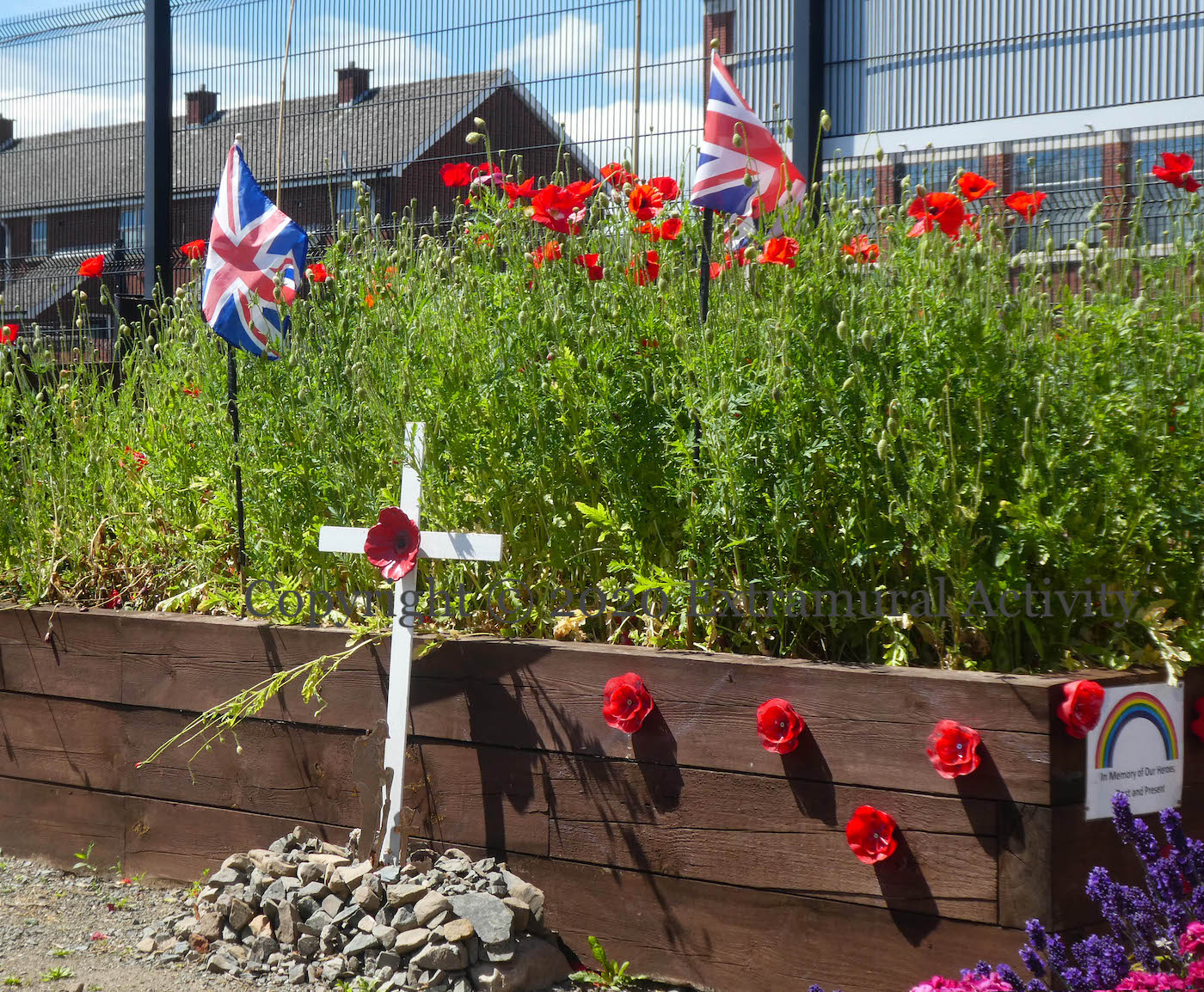
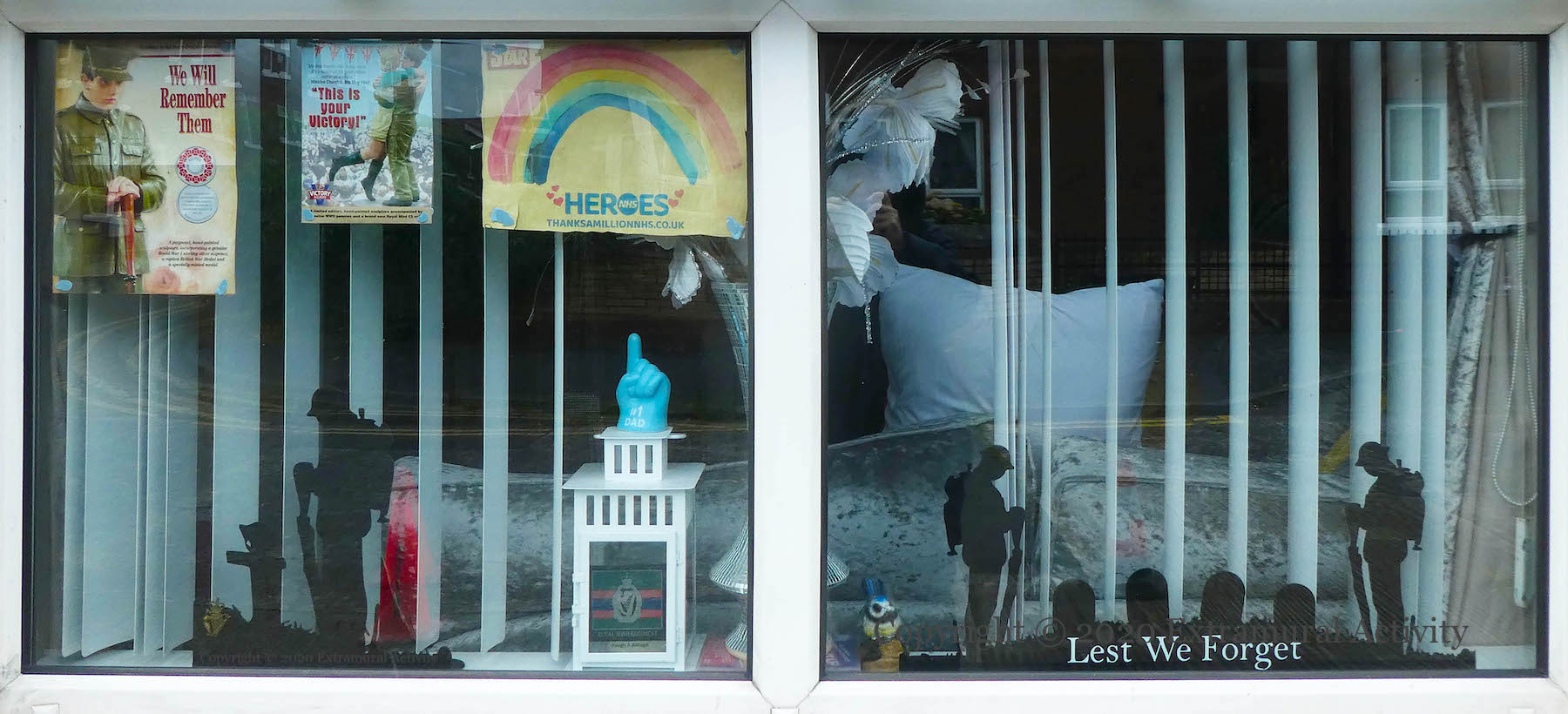
The heroes of the past are the soldiers of WWI and WWII (commemorated by the poppies growing in ACT Initiative‘s Shankill Road Community Garden, above, and in the 75th anniversary VE Day posters in Madrid Street, east Belfast, below); the present-day heroes are the doctors, nurses, and staff of the NHS, symbolised by the rainbow in both images.
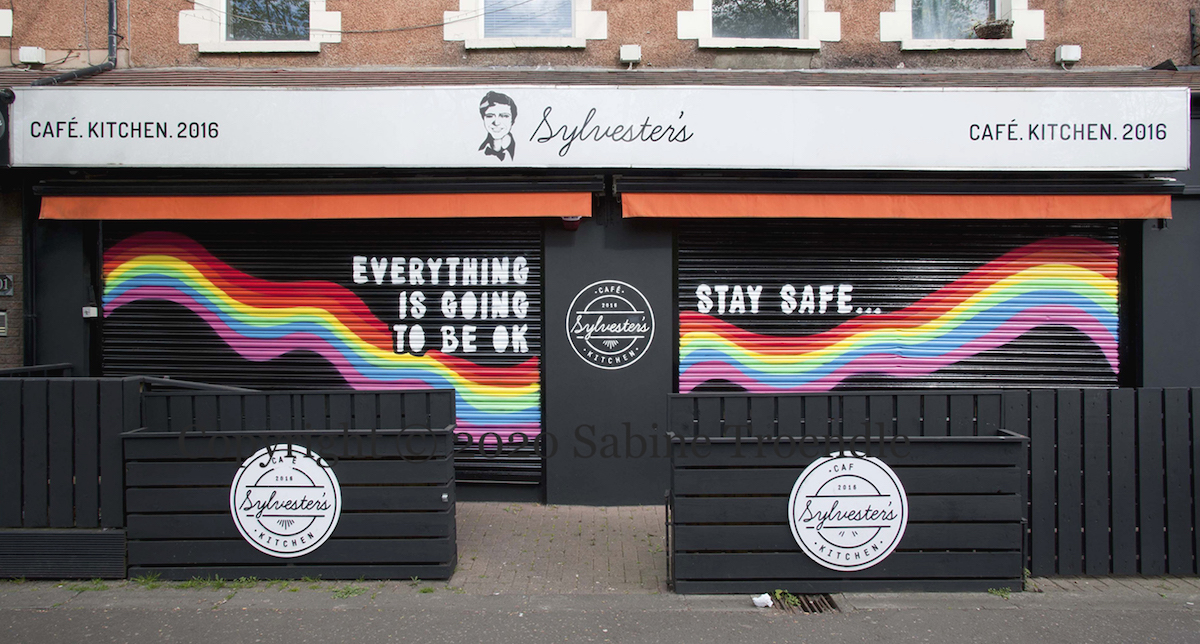
Sylvester’s (Fb | tw) on the Antrim Road at the Waterworks had its shutters painted with a positive message during the Coronavirus epidemic. “Stay safe”. (Update: Sylvester’s closed down in this location and took over half of the space at Manny’s in November.)
“Parasite drug dealers – leave our kids alone”. Saoradh (web | Fb) has a new board on Ardoyne Avenue, Belfast, trying to combat drug dealing in north Belfast (A list of alleged dealers was distributed last July (BelTel) | arrests for dealing cocaine were made in 2019-10 (BelTel) and 2020-02 (BelfastLive).
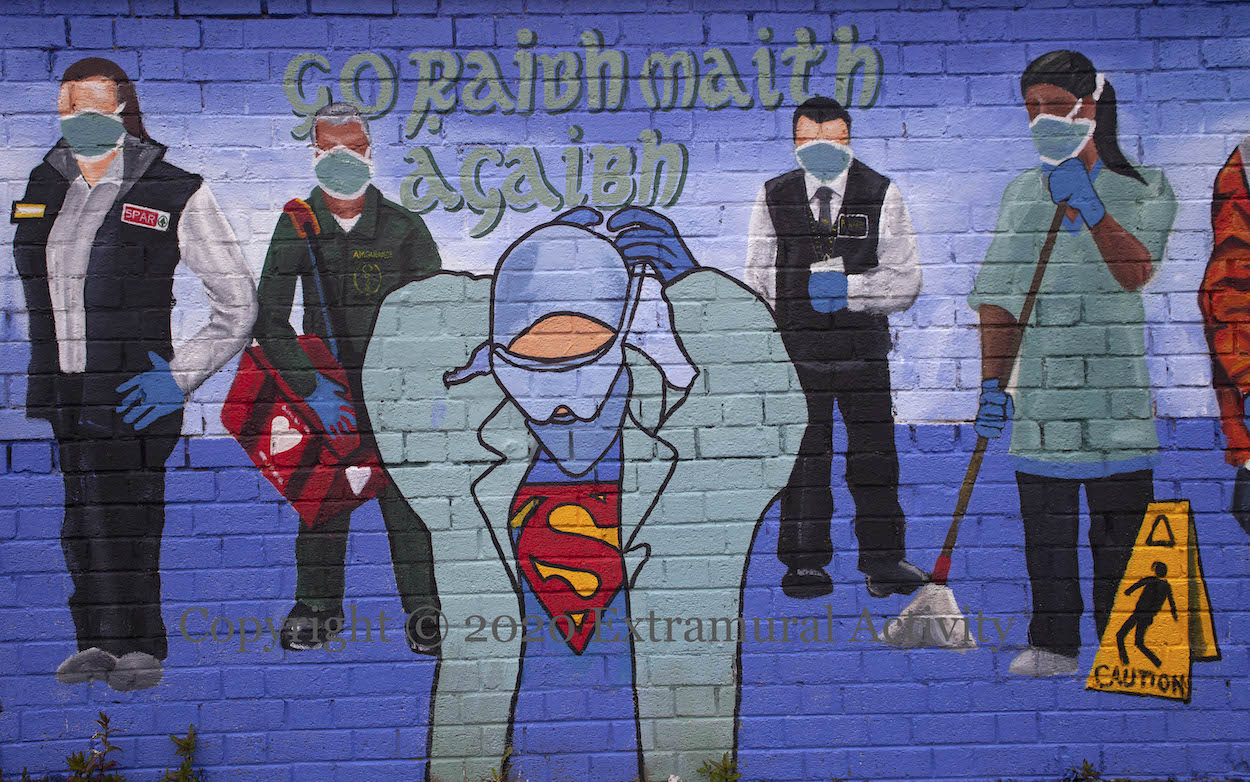
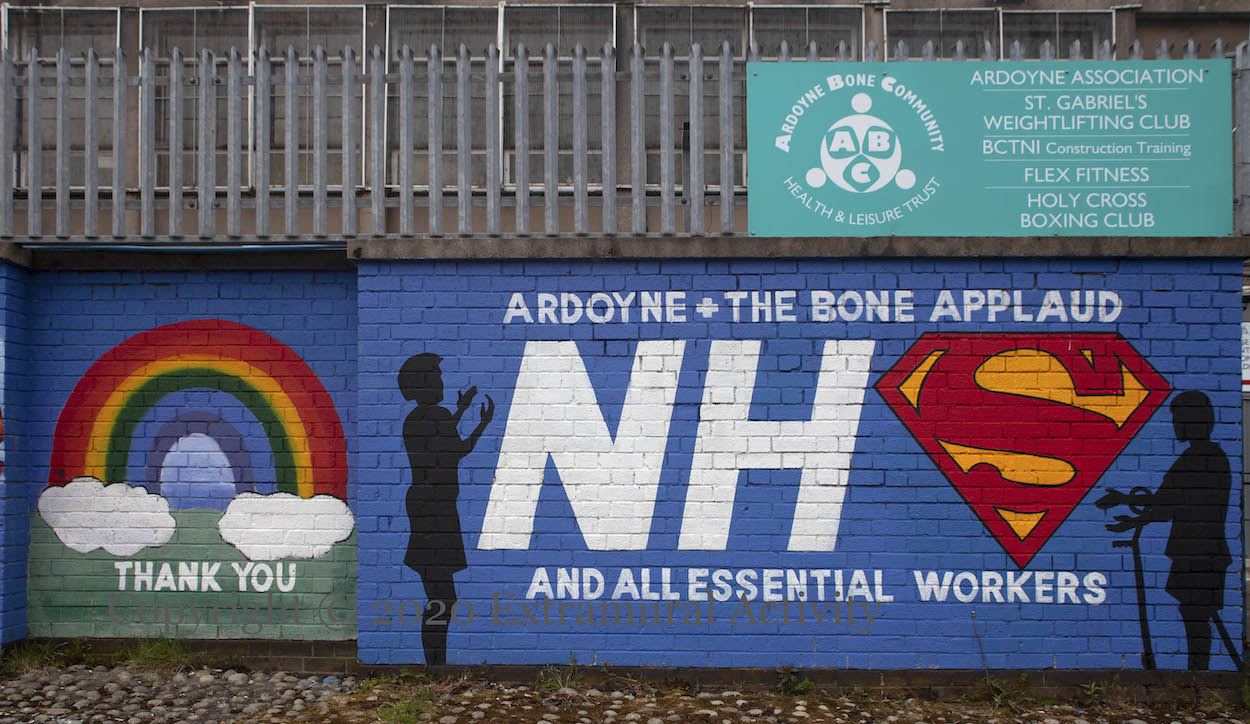
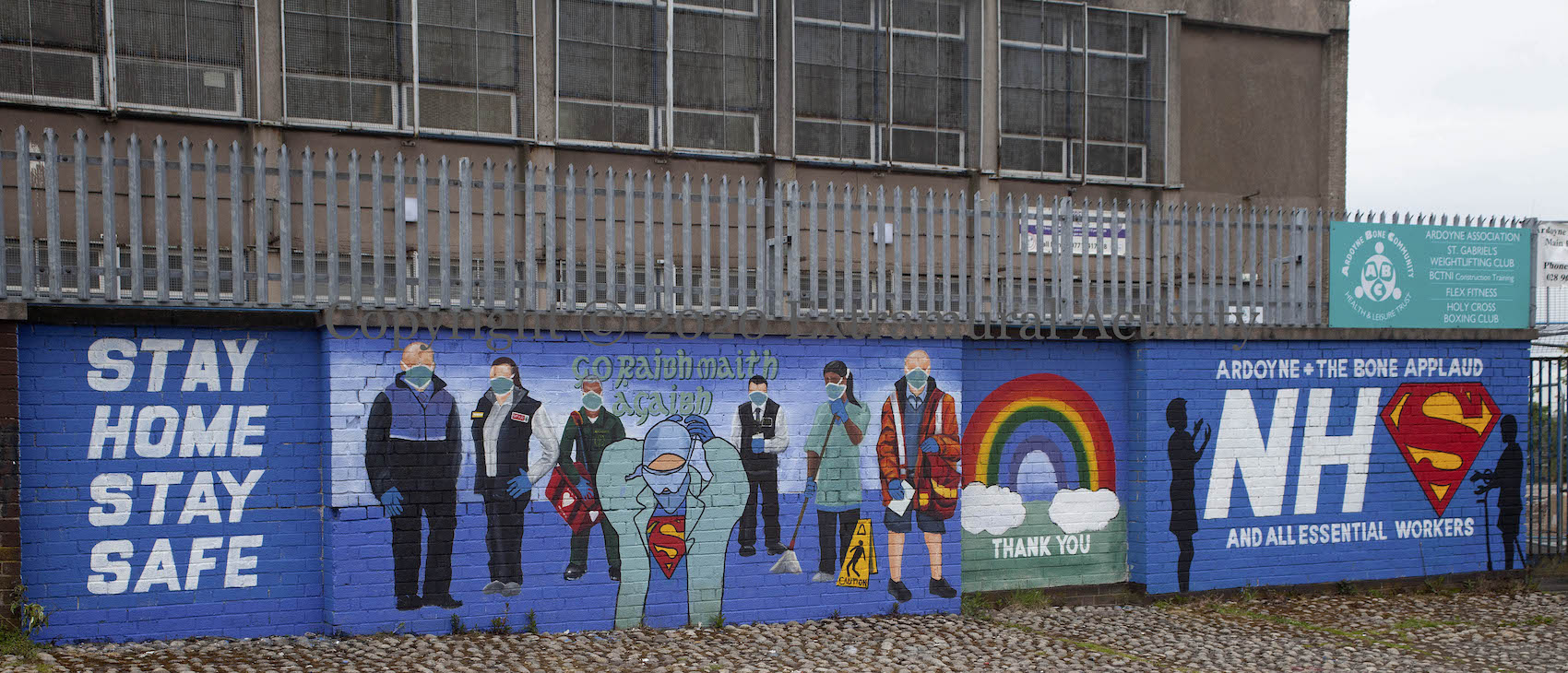
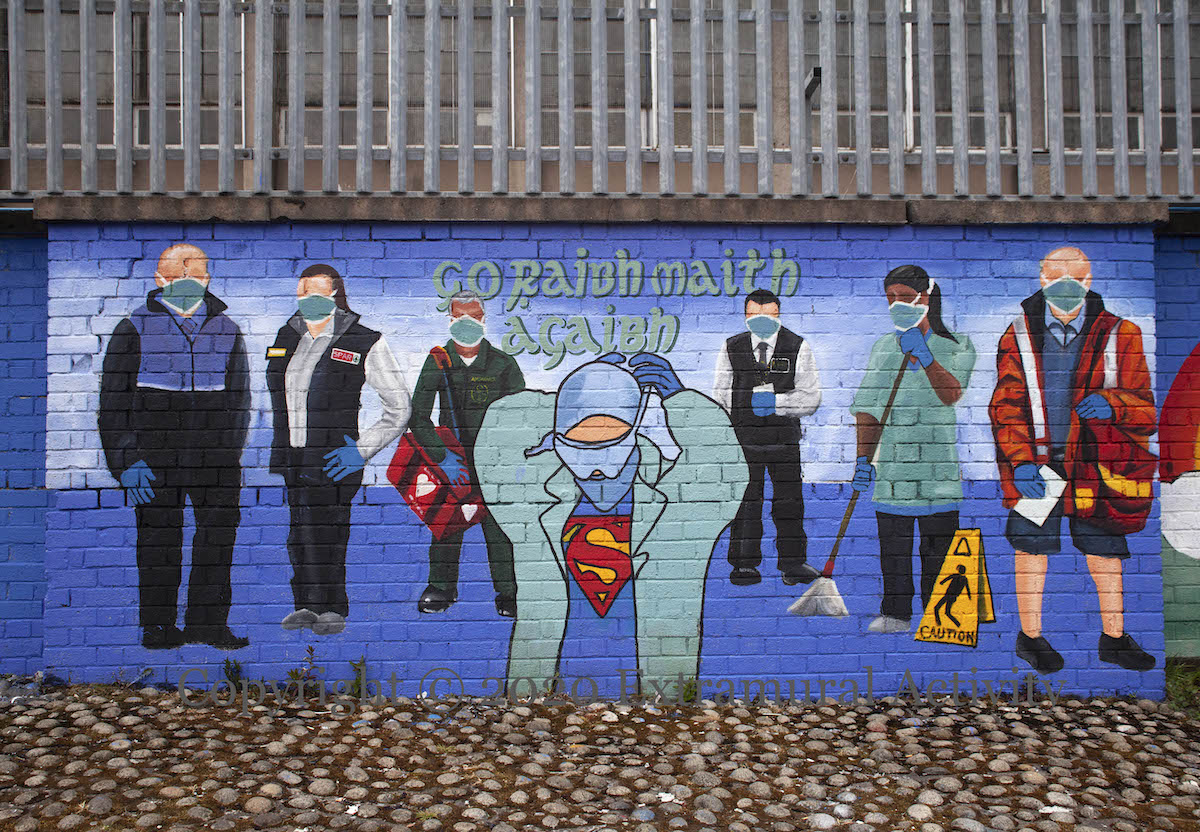
“Go raıbh maıth agaıbh/Thank you – Ardoyne + The Bone applaud NHS and all essential keyworkers”, “Stay home, stay safe”. The keyworkers (including shop servers and hospital janitors) all wear masks and gloves.
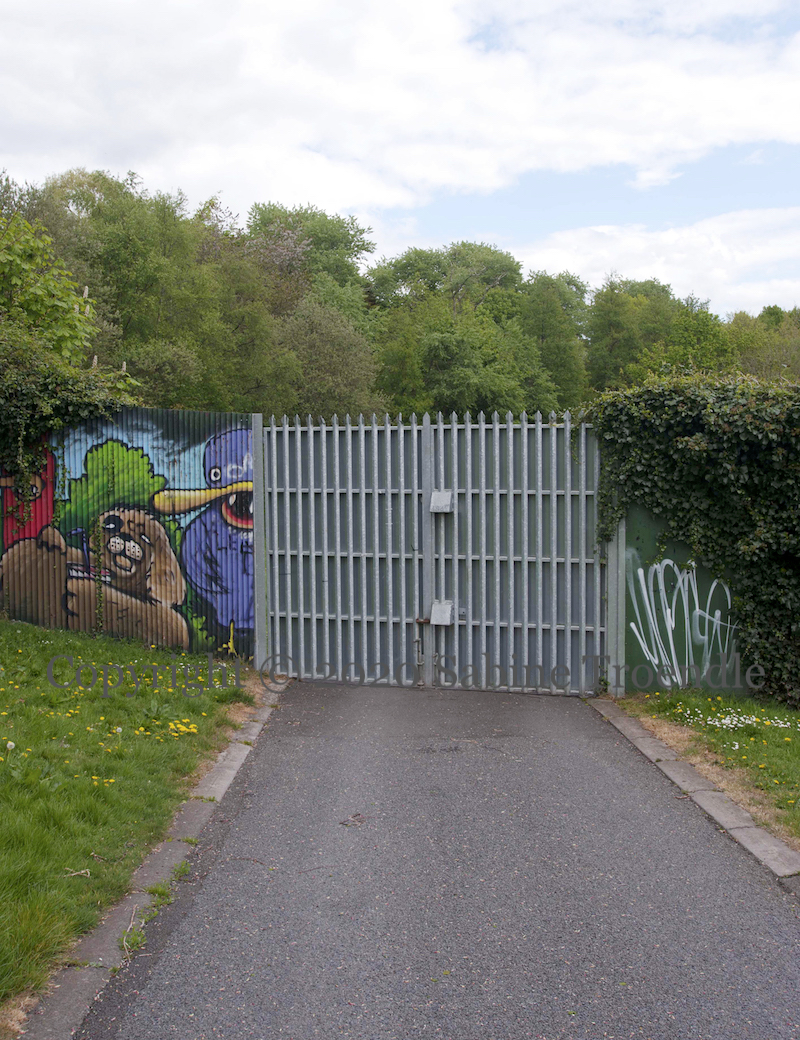
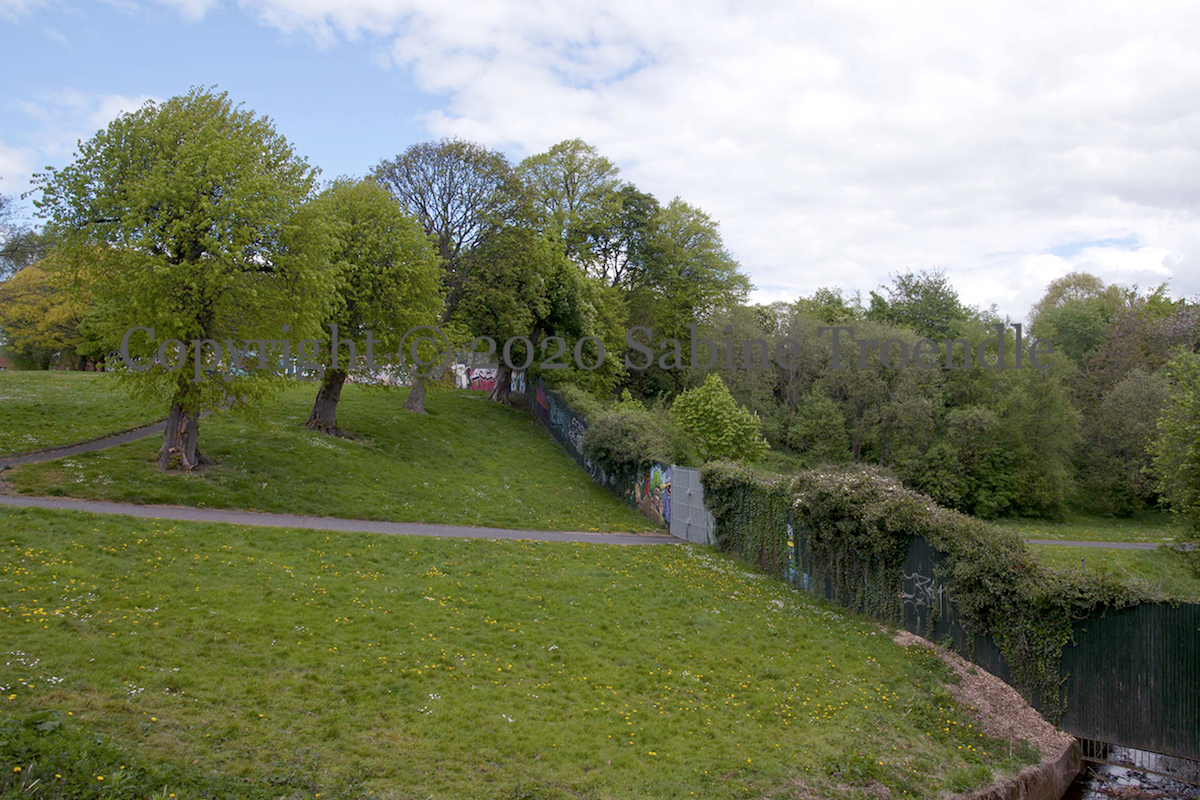
A gate was installed in the Alexandra Park “peace” line in 2011 (see this image from that year) which is opened daily to allow pedestrian traffic between Mountcollyer and Newington. During the pandemic, however, the gate has been closed for weeks and there is confusion over the reason – originally it was said to be due to staffing issues but anti-social behaviour has also been mentioned (Irish News).
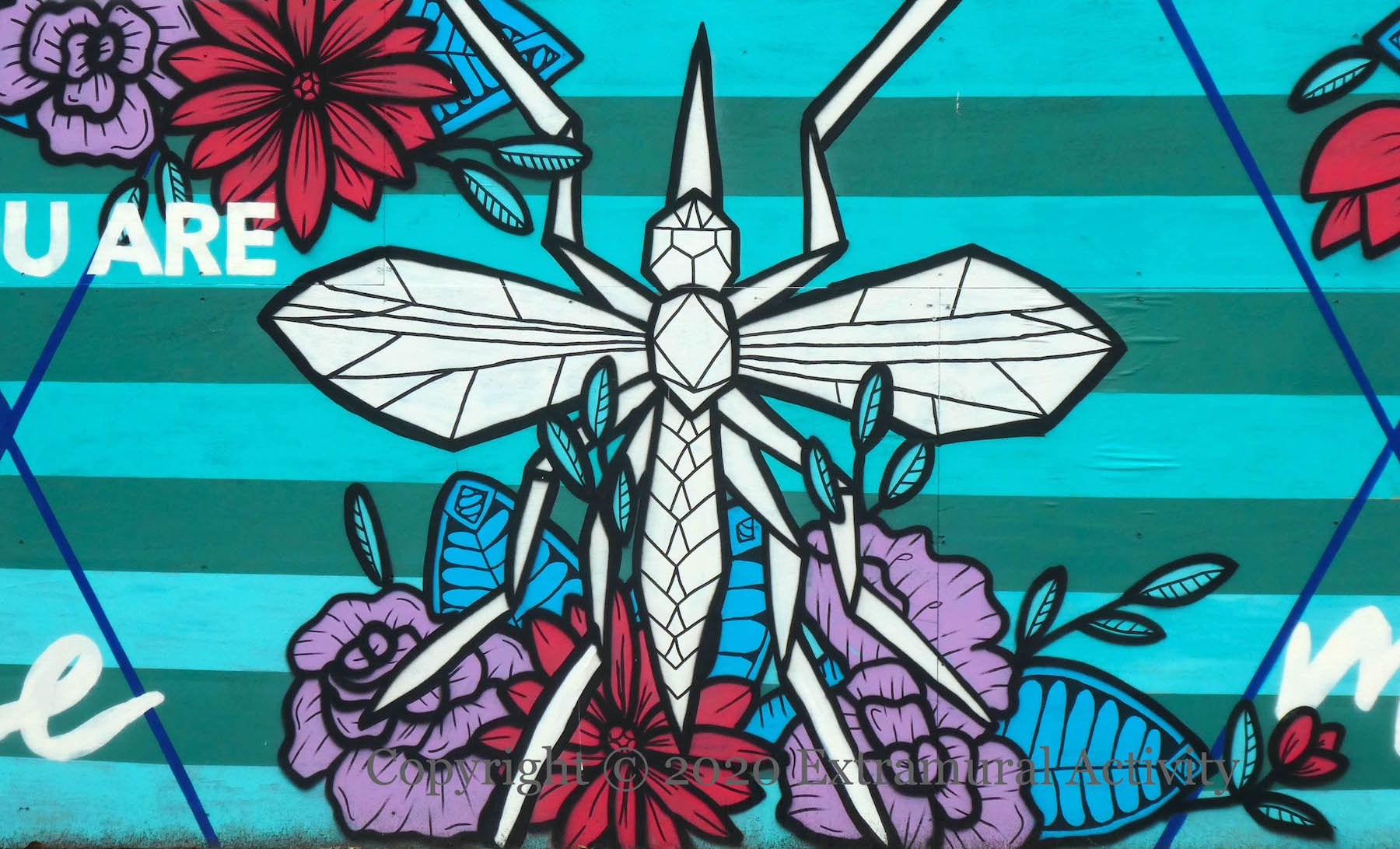
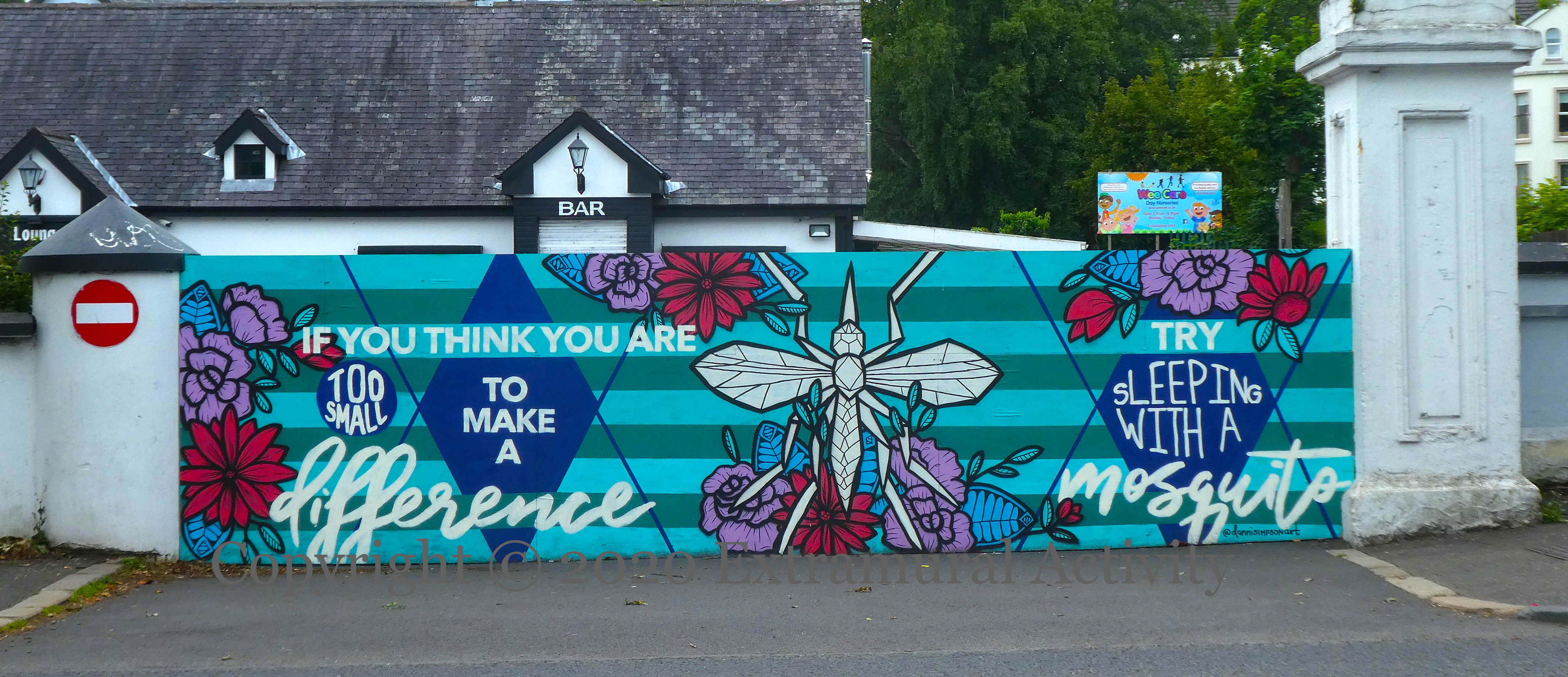
“If you think you are too small to make a difference, try sleeping with a mosquito.” The saying is said to be an African proverb, used by the current (14th) Dalai Lama. The mural is by Danni Simpson (web | ig) at the Chester.
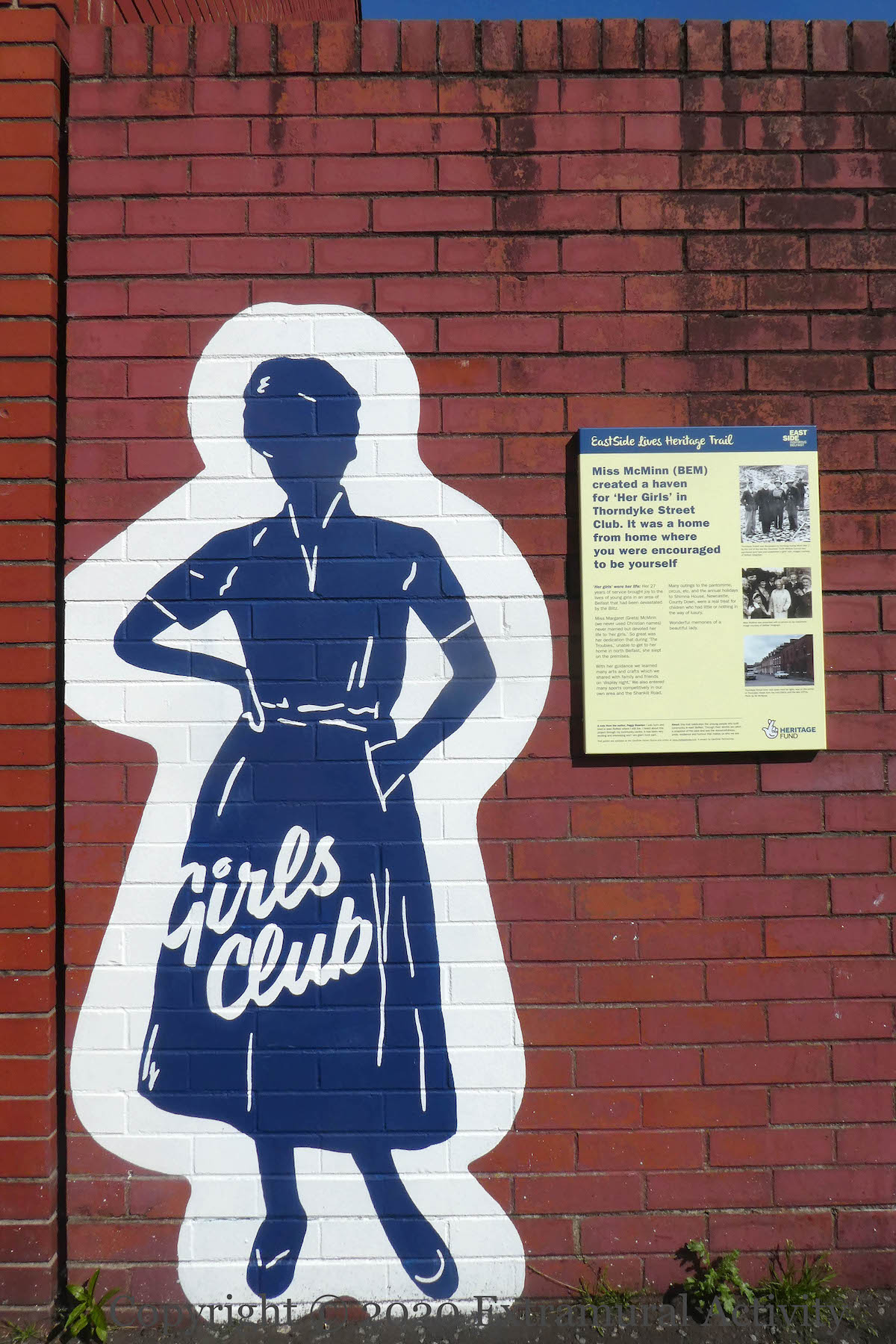
“Miss McMinn (BEM) created a haven for “Her Girls” in Thorndyke Street Club. It was a home from home where you were encouraged to be yourself. ‘Her girls’ were here life: Her 27 years of service brought joy to the lives of young girls in an area of Belfast that had been devastated by the Blitz. Miss Margaret (Greta) McMinn (we never used Christian names) never married but devoted her life to ‘her girls’. So great was her dedication that during ‘The Troubles’, unable to get to her home in north Belfast, she slept on the premises. With her guidance we learned many arts and crafts which we shared with our family and friends on ‘display night’. We also entered many sports competitively in our own area and the Shankill Road. Many outings to the pantomime, circus, etc. and the annual holidays to Shimna House, Newcastle, County Down, were a real treat for children who had little or nothing in the way of luxury. Wonderful memories of a beautiful lady. – Peggy Bowden”. Part of the “East Side Lives Heritage Trail” which “celebrates the unsung people who built community in east Belfast.
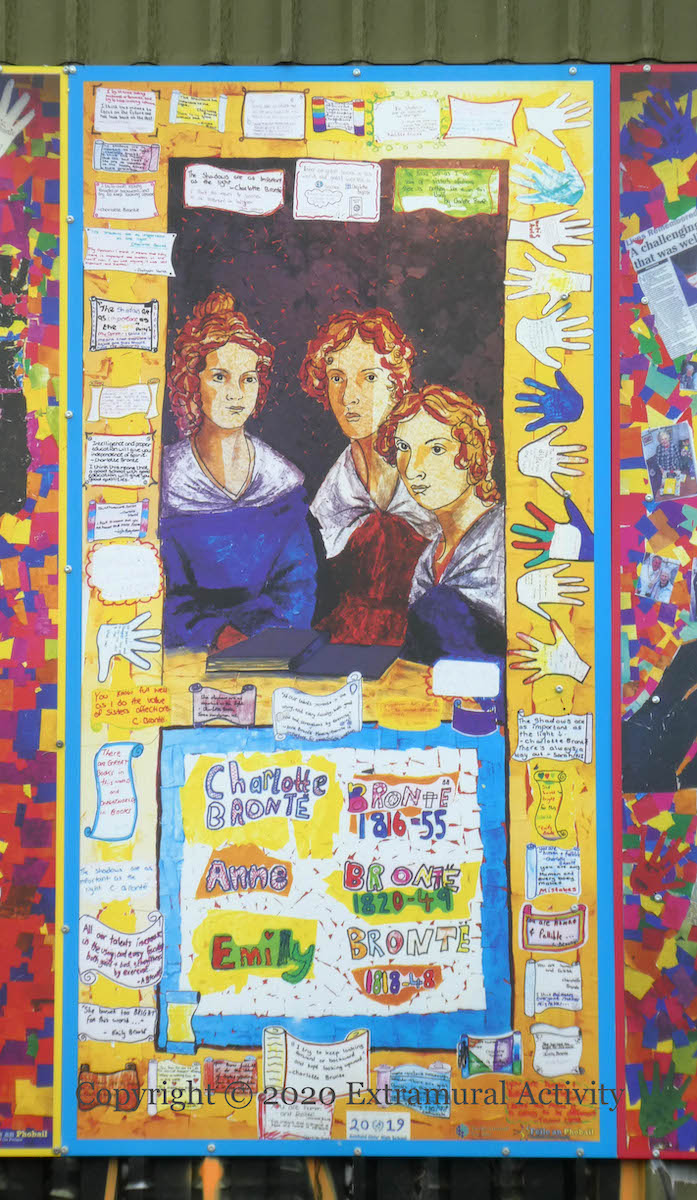
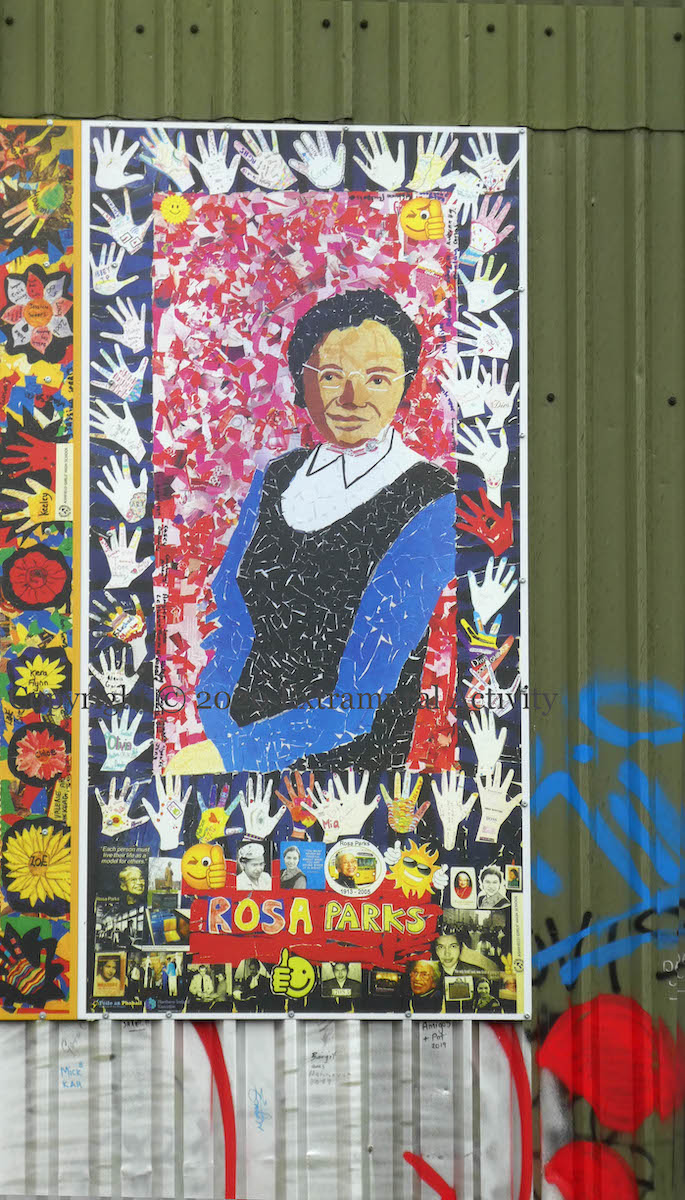
Students from Coláıste Feırste, from Beechmount, west Belfast (tw), and Ashfield Girls’ High School, from Sydenham, east Belfast (tw) were involved in the exhibition Idır Dhá Aıgne in Cultúrlann in 2014 and the two schools again combined their artistic talents to produce these five collages of inspirational women: Katie Taylor and Noelle Ryan (by students from Coláıste Feırste), and the Brontë sisters, Ellen Degeneres, and Rosa Parks (by students from Ashfield Girls’).
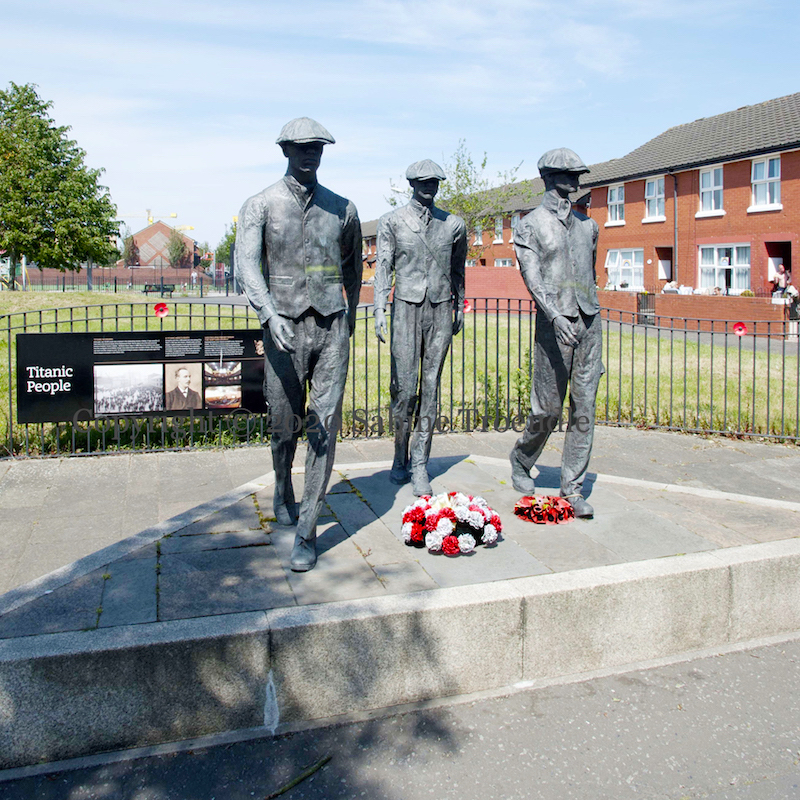
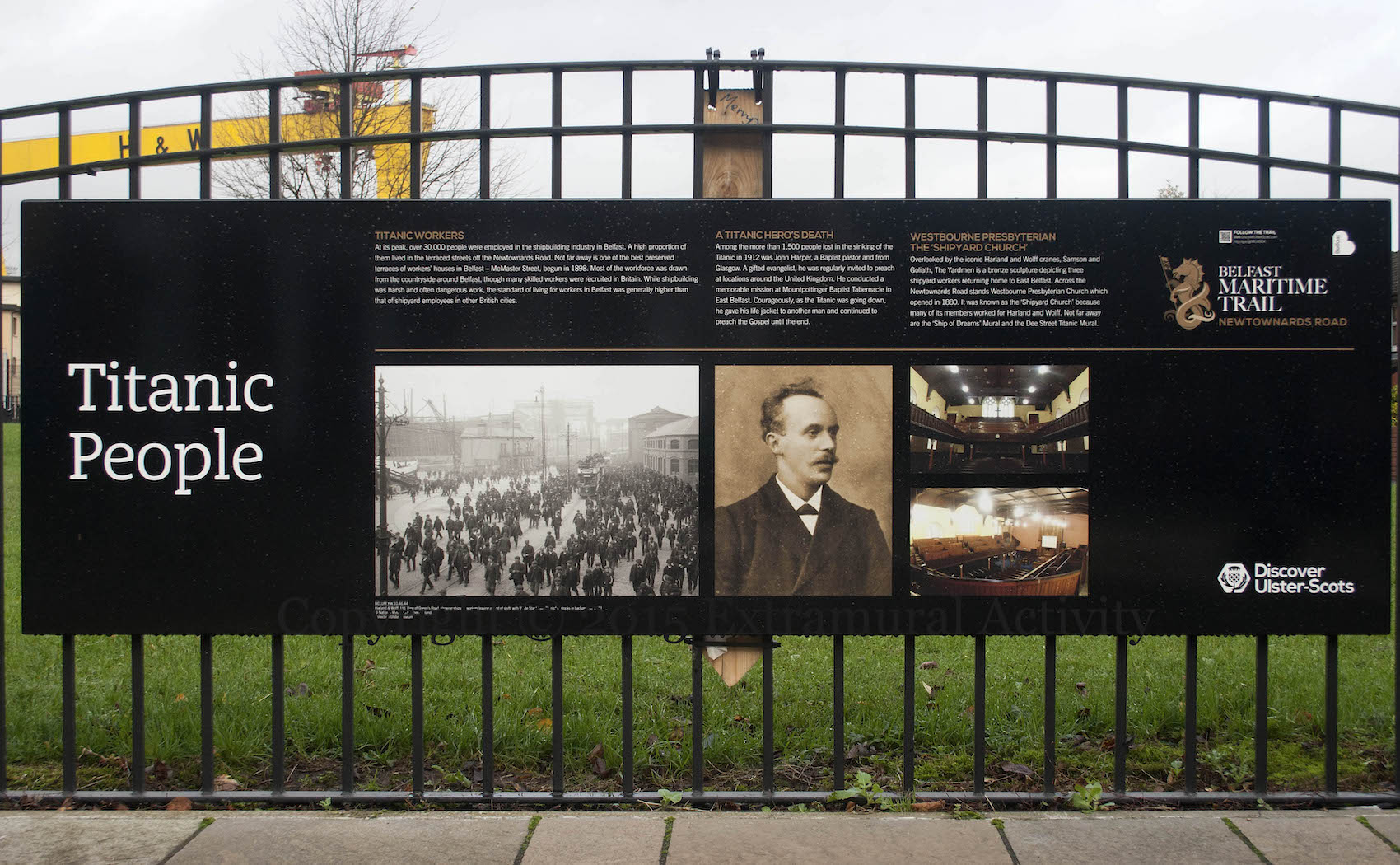
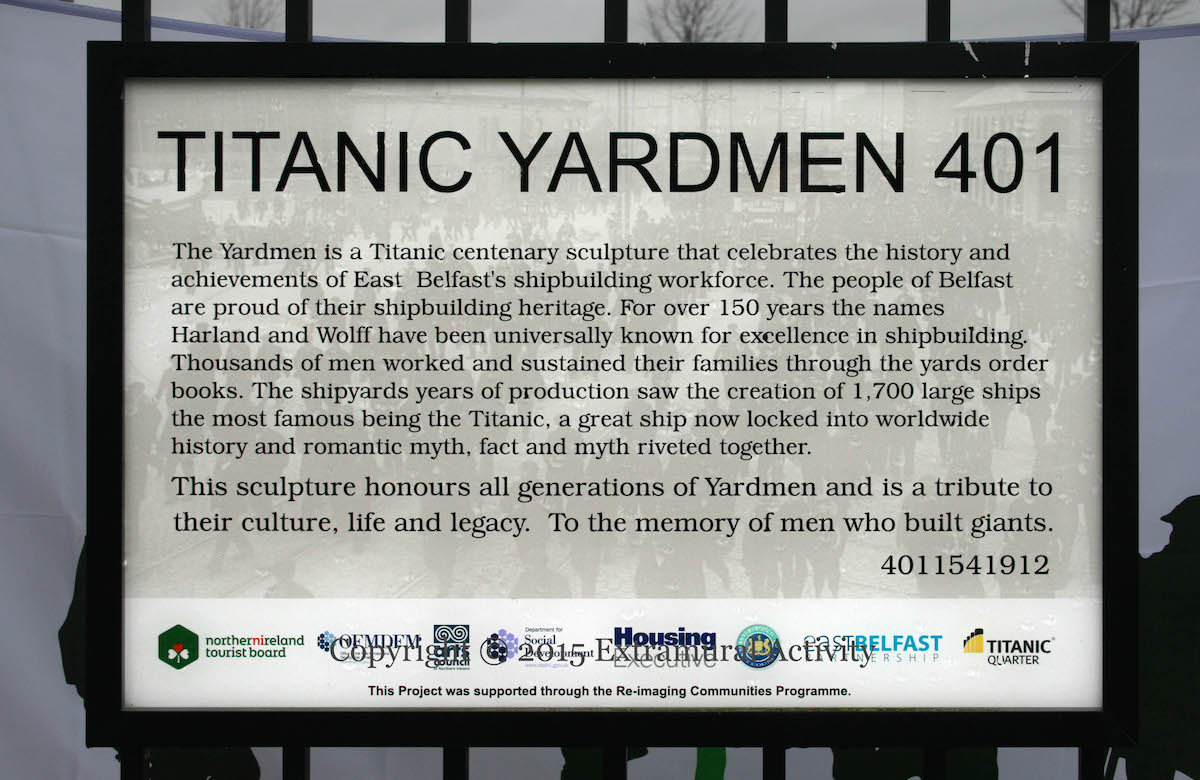
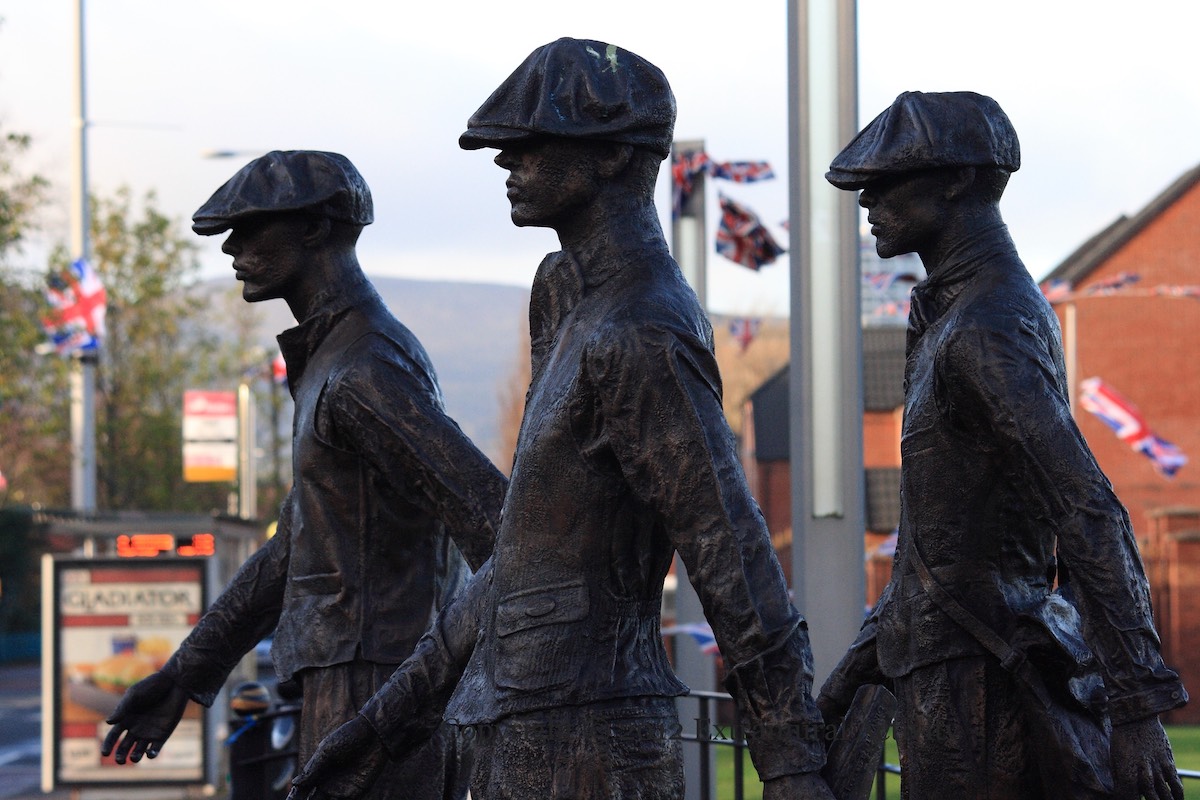
“Overlooked by the iconic Harland and Wolff cranes, Samson and Goliath, The Yardmen is a bronze sculpture depicting three shipyard workers returning home to East Belfast.” “At its peak 30,000 people were employed in the shipbuilding industry in Belfast. A high proportion of them lived in the terraced streets off the Newtownards Road. Not far away is one of the best preserved terraces of workers’ houses in Belfast – McMaster Street, begun in 1898. Most of the workforce was drawn from the countryside around Belfast, though many skilled workers were recruited in Britain. While shipbuilding was harsh and often dangerous work, the standard of living for workers was generally higher than that of shipyard employees in other British cities.”





 Extramural Activity