
This is Shane O’Driscoll’s (ig) abstract take on the distinctively Antrim-coast foods dulse (a seaweed) and yellowman (a honeycomb confection) on Castle Street, Ballycastle.

Click image to enlarge
Copyright © 2023 Seosamh Mac Coılle
X14009 X14008
This is Shane O’Driscoll’s (ig) abstract take on the distinctively Antrim-coast foods dulse (a seaweed) and yellowman (a honeycomb confection) on Castle Street, Ballycastle.
Click image to enlarge
Copyright © 2023 Seosamh Mac Coılle
X14009 X14008

The war memorial in Redburn Square, Holywood, was removed in 2017 while the square was redeveloped (Belfast Live). It returned that November (County Down Spectator Fb) with a new base and several additions have been made since then, including the bench above (with art deco styling), a NI Centenary stone (below), and reproduction photographs from the period covering the utility box (final image), including one of the statue many years previously – it was sculpted by Leonard Merrifield and unveiled January, 1922, with the dedication a few months later (History Hub Ulster video | Wartime NI). In addition to the names of 110 locals who perished in the Great War, there are 28 names from WWII (Ulster War Memorials) and one from the Korean War (Traces Of War).


Click image to enlarge
Copyright © 2022 Seosamh Mac Coılle
X11447 X11448 X11446 X11449

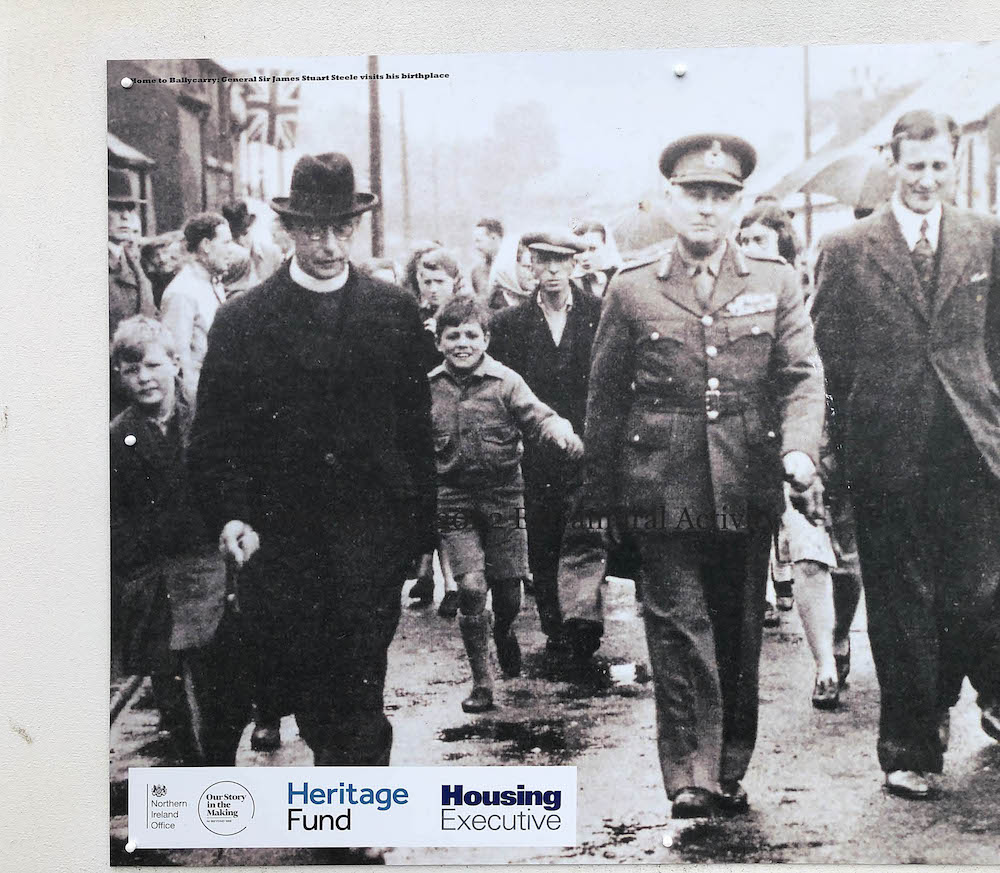
Our Story In The Making – NI Beyond 100 is a NI Office programme collecting stories showcasing Northern Ireland “on the world stage”. It has lent its brand to the Ballycarry centenary boards shown in today’s post, which have black-and-white photographs on the left (beginning with “Home to Ballycarry – General Sir James Stuart Steele visits his birthplace”) and colour photographs on the right (beginning with children visiting the Steele monument).
A ‘Stand With Ukraine’ flag and Ulster Banner fly above the walls; a bonfire is being hastily erected in the background.
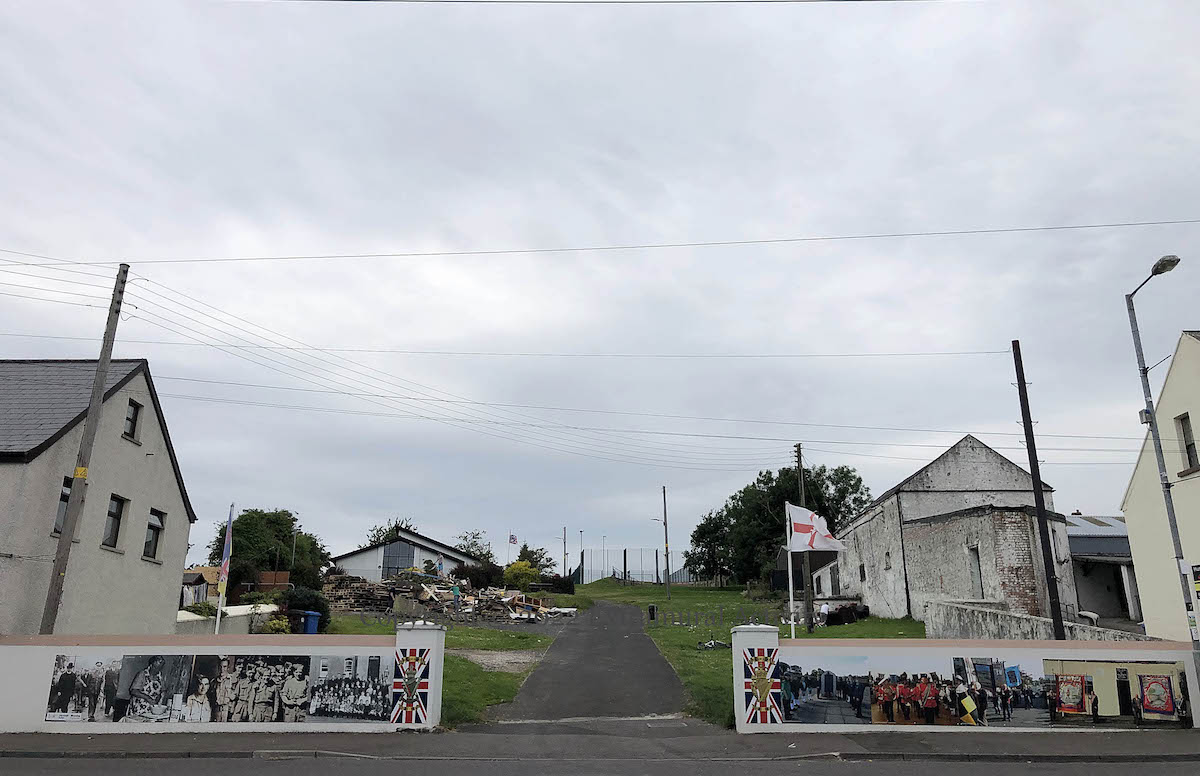
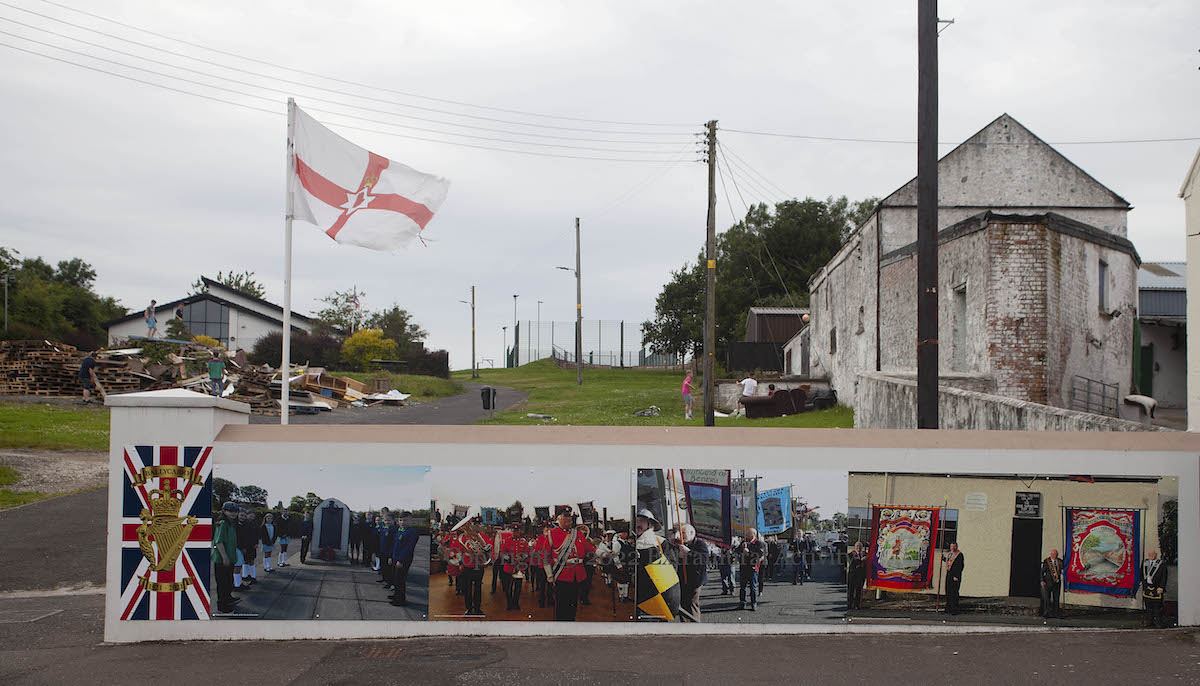
Click image to enlarge
Copyright © 2022 Seosamh Mac Coılle
X10630 X10632 X10629 X10631

Ballykinlar barracks in County Down was originally Abercorn barracks, used by the British to intern IRA prisoners during the War Of Independence, and the use continued under the new Northern Irish government (WP); the camp held about 2,000 prisoners (McGuffin, ch. 5). The prisoners attempted to maintain their military structure and perform drills; they created a currency using cardboard discs (images can be seen at Old Currency Exchange) – and, as a way to keep up morale, worked on “autograph books” in which prisoners would write dedications and verses for one another and occasionally draw pictures. The pages shown here are from books currently exhibited in Monaghan County Museum; Offaly Archives has digitised an autograph book; a few more images from a book in the Kilmainham collection can be seen at the BBC.


Click image to enlarge
Copyright © 2022 Seosamh Mac Coılle
X10190 X10189 X10188 X10187 X10186

Benjamin West painted The Battle Of The Boyne in 1778 and his composition – with William moving from left to right on a white horse and Marshal Schomberg dying in the bottom-right corner – has become the standard representation in loyalist culture, perhaps due to versions of it appearing on the covers of songbooks for the Orange Order and the Apprentice Boys soon after (Belinda Loftus 1982 Images In Conflict). It appears here on the wall of Whitehead Orange Hall, along with a board connecting service by Irish soldiers in British forces in WWI and Afghanistan (see previously: Time Changes in east Belfast).


Click image to enlarge
Copyright © 2022 Seosamh Mac Coılle
X08958 X08955 X08956 [X08957]

Ballycastle harbour is home to the Rathlin Island ferry and a memorial plaque to Marconi for an 1898 transmission between the town and Rathlin, and Morton’s Fresh Fish and Fish ‘n’ Chips. The mural above includes Ballycastle fishermen Sean Morton Snr, Phillip Morton, Jack Coyles, Will Henry, and Jimmy Black.
The mural is by Oliver McParland (web).
Click image to enlarge
Copyright © 2021 Seosamh Mac Coılle
X08552

Glentaisie Drive – site of this mural by Friz (web) – is named for Glentaisie, the glen – one of the nine Glens Of Antrim, at the foot of which lies Ballycastle – and Glentaisie is named for Taise Taobhgheal (Taise the bright-cheeked), daughter of King Donn of Rathlin island, renowned for her beauty, and who lived in the glen with her husband Congal, who had to kill the Norwegian king Nabghdon to prevent her being carried off (Archaeology Ireland). Or so they say. She also inspired the name “Fair Head” for the local cliffs. Or so they say.
In later years (1565), Sorley Boy MacDonnell was taken prisoner by the O’Neill’s after a battle in Glentaisie (WP).

Click image to enlarge
Copyright © 2021 Seosamh Mac Coılle
X08630 X08631

A blur of a hurler (or camóg) by Dublin artist Aches (web) in Ballycastle, where the local GAA club is Mac Uilín/MacQuillan’s (web).
Previously by Aches in Belfast: Disruption | A Closer Look | Headaches
Click image to enlarge
Copyright © 2021 Seosamh Mac Coılle
X08553

Feıs Na nGleann is an annual festival of Irish language, arts, and crafts, begun in Glenariffe in 1904. The website has not been updated since 2019, presumably due to COVID putting a stop to activity.
The “F” makes reference to the local “Irish (Peasant) Home Industries“, while the “E” shows the harebell (bluebell) in flower. The “I” might be St Brigid as an oak or a reference to Princess Taisie/Taobhgheal of Rathlin.
Laura Nelson of Szu Szu Signs (ig).

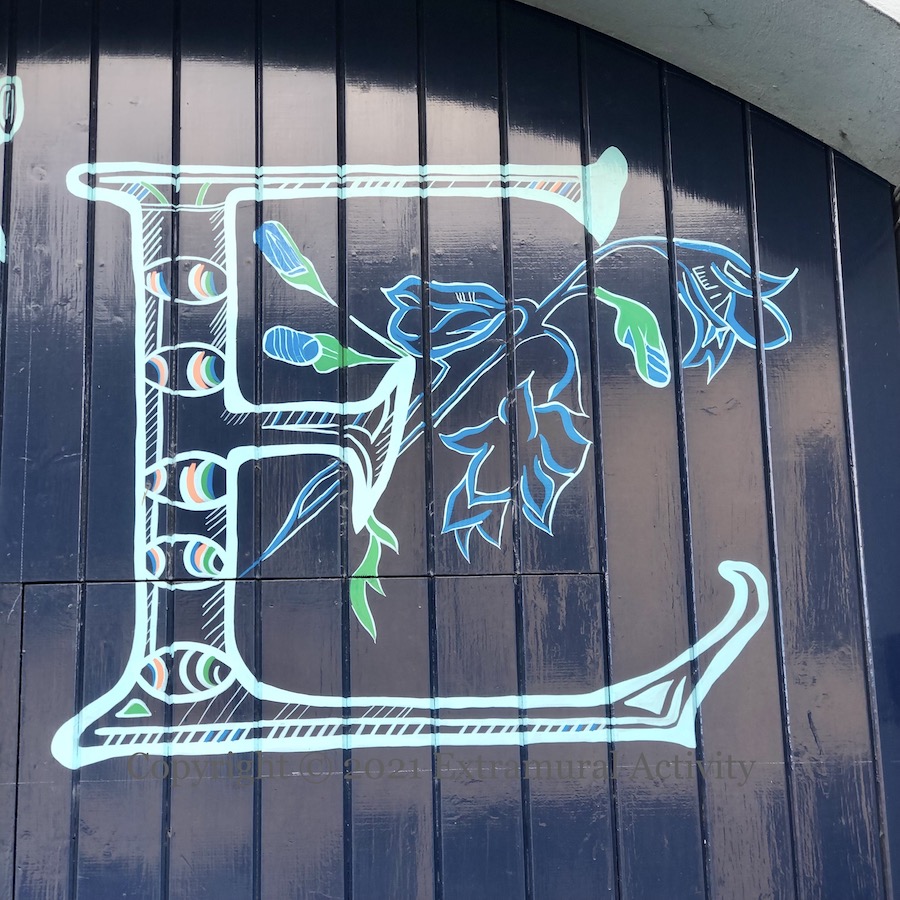


Click image to enlarge
Copyright © 2021 Seosamh Mac Coılle
X08554 X08555 X08556 X08557 X08558

Local storyteller Hugh Dillon in Castle Street, Ballycastle, by JMK (Jonny McKerr). The original photograph, of Dillon in Leyland Road, Ballycastle, in 1956 and is available at Dúchas.

Click image to enlarge
Copyright © 2021 Seosamh Mac Coılle
X08562 X08561
 Extramural Activity