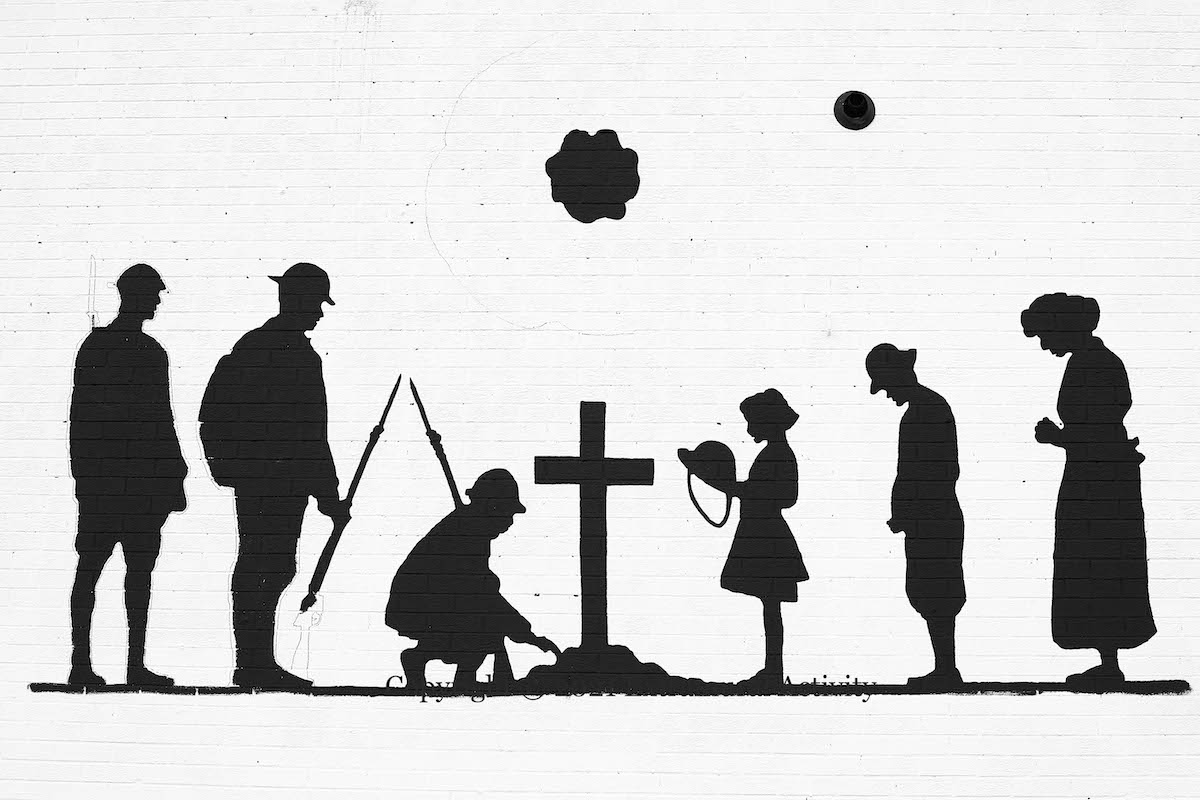
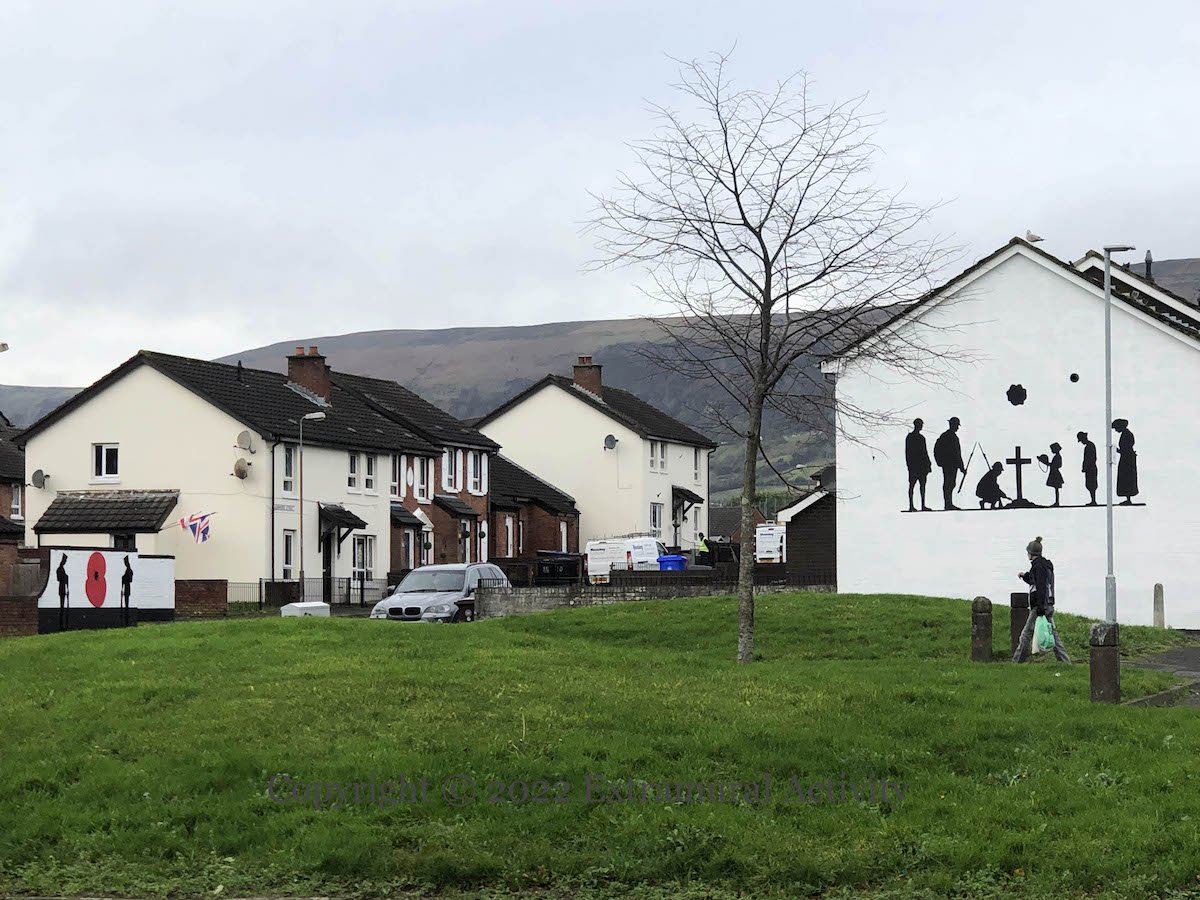
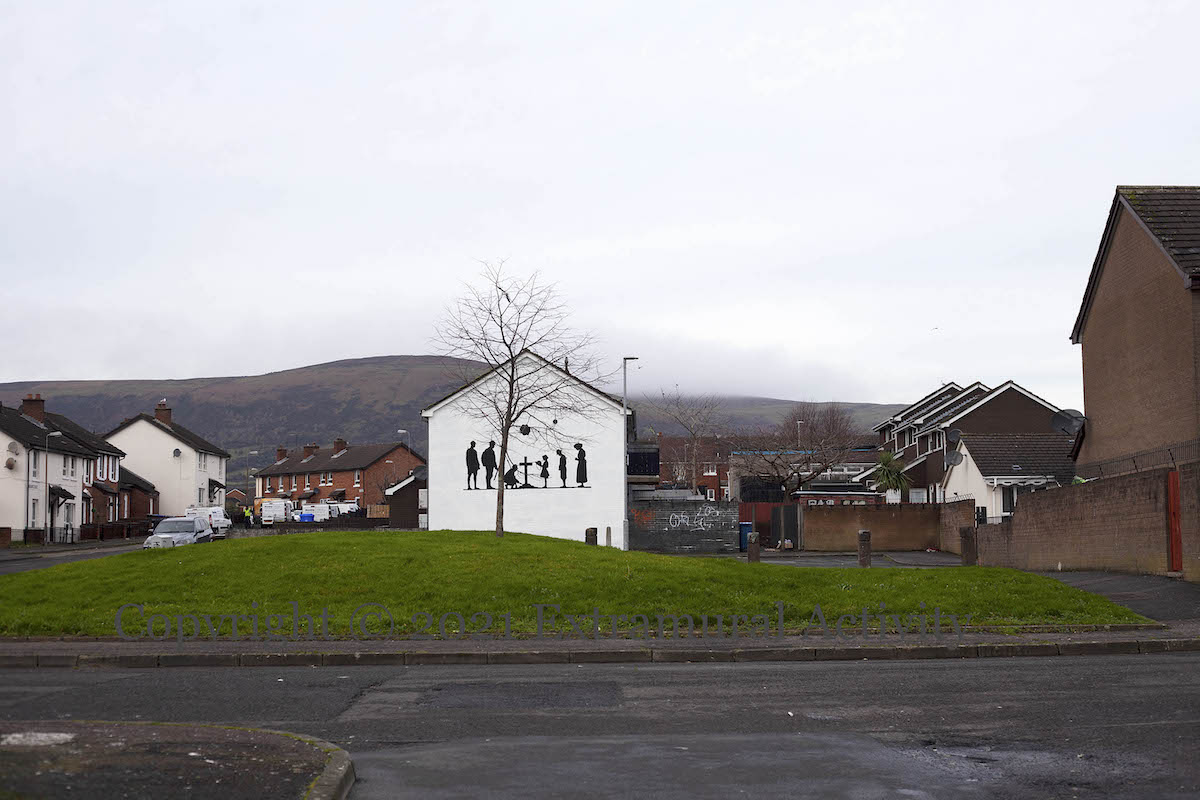
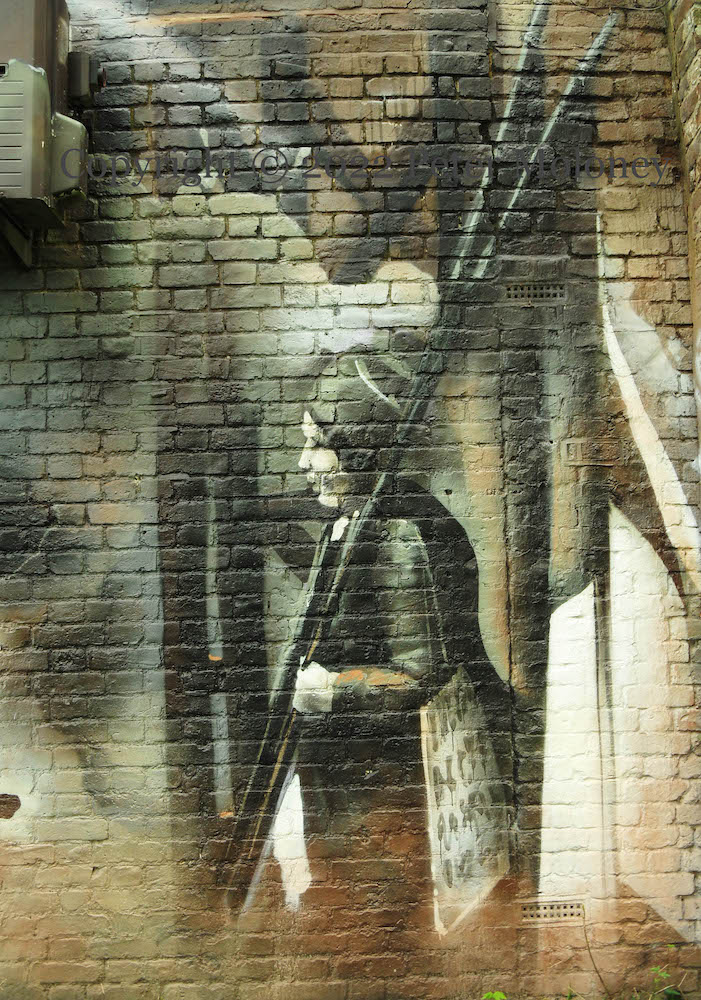
Two types of mourner at the grave of a fallen WWI soldier: on the left, comrades in arms; on the right, members of the family they left behind.
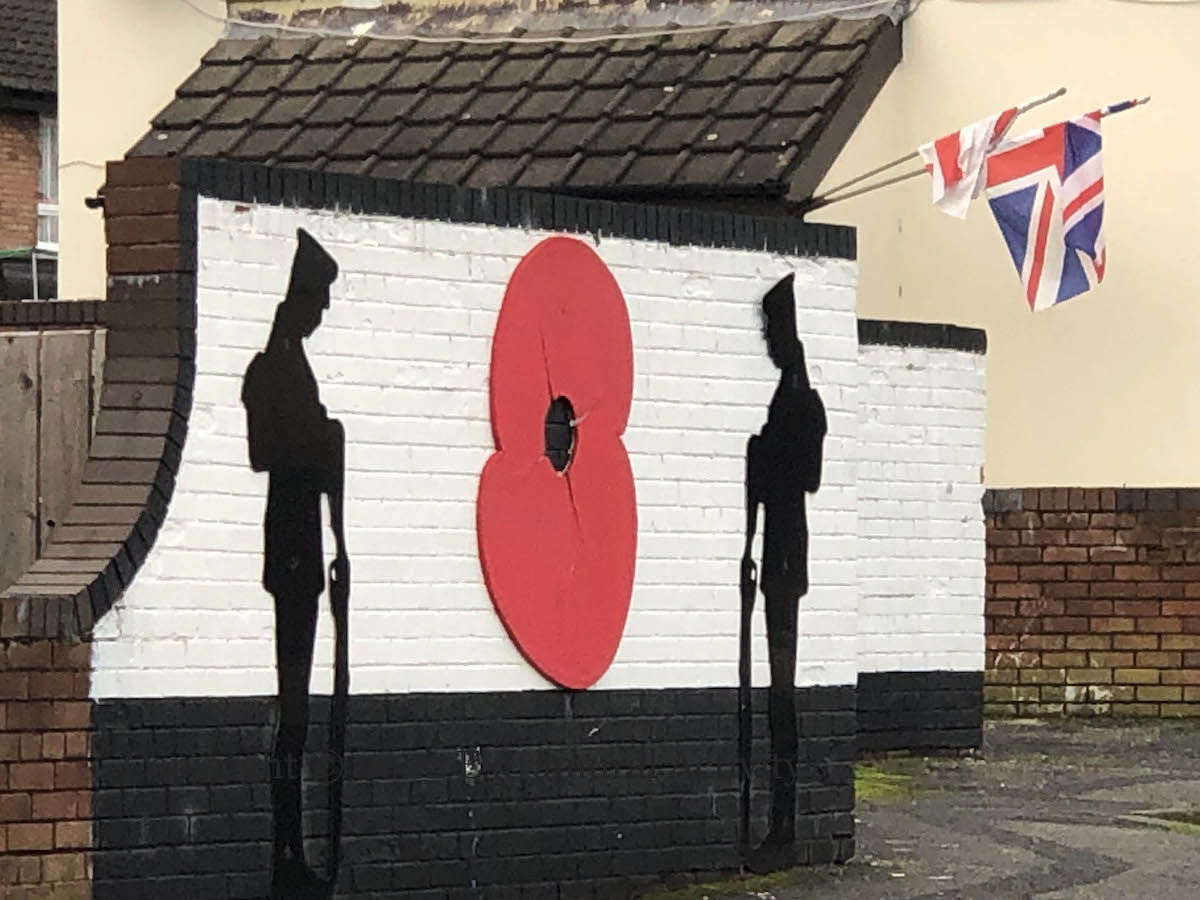
Work on the mural began in December, 2021, but progress seems to have stalled. One of the bayonets is in outline as is the giant poppy overheard. The effect is that the scene seems to be taking place under the stars.
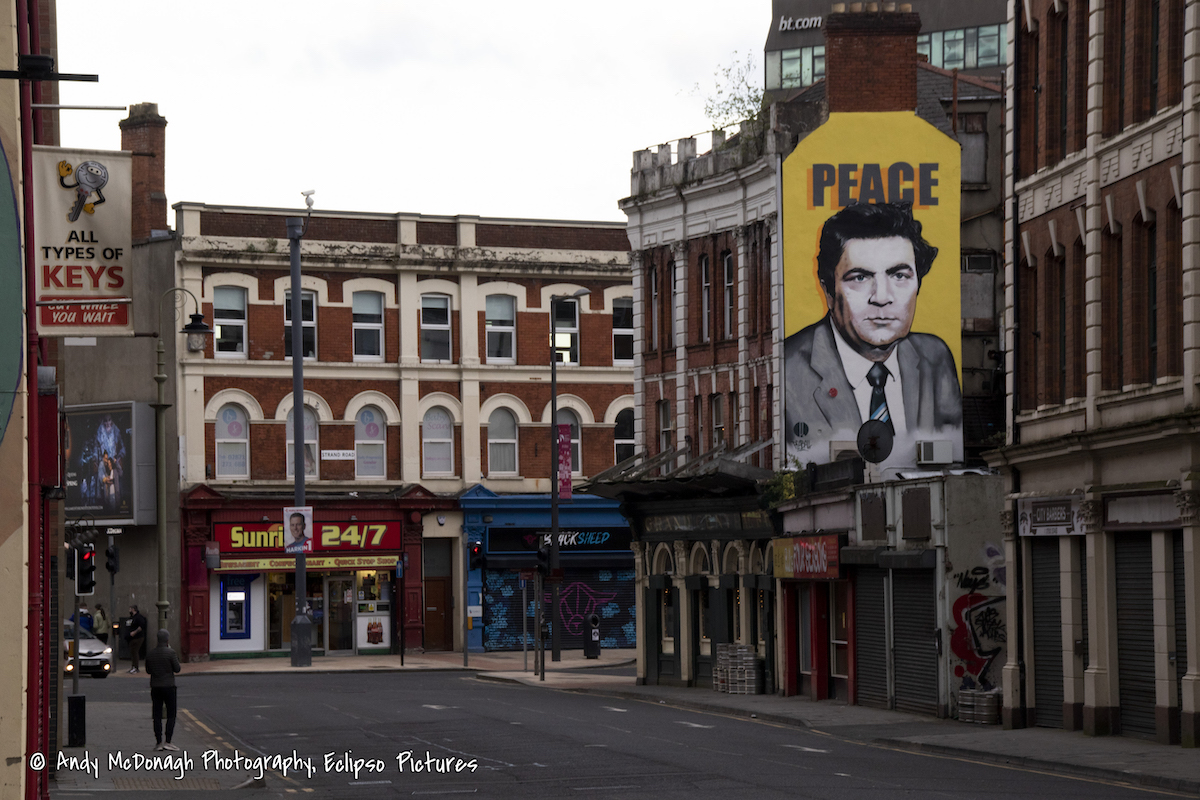
In his statement in response to the news of the Belfast (Good Friday) Agreement (11 April, 1998), John Hume said, “This process is not about the victory or defeat of nationalism or unionism. It is about something much greater. Today, as Fergal Keane said in relation to South Africa, we can take collective breath and begin to blow away the cobwebs of the past. We can begin to break the bondage of fear which has so damaged our people and our country, difficult and demanding though this will be in the coming days and weeks.” (CAIN)
Commissioned by the Grand Central bar (Derry Journal) in Great James Street (whose side-wall the mural is on) and painted by Peaball (ig) an art group (including Donal O’Doherty, formerly of UVArts – Belfast Live).
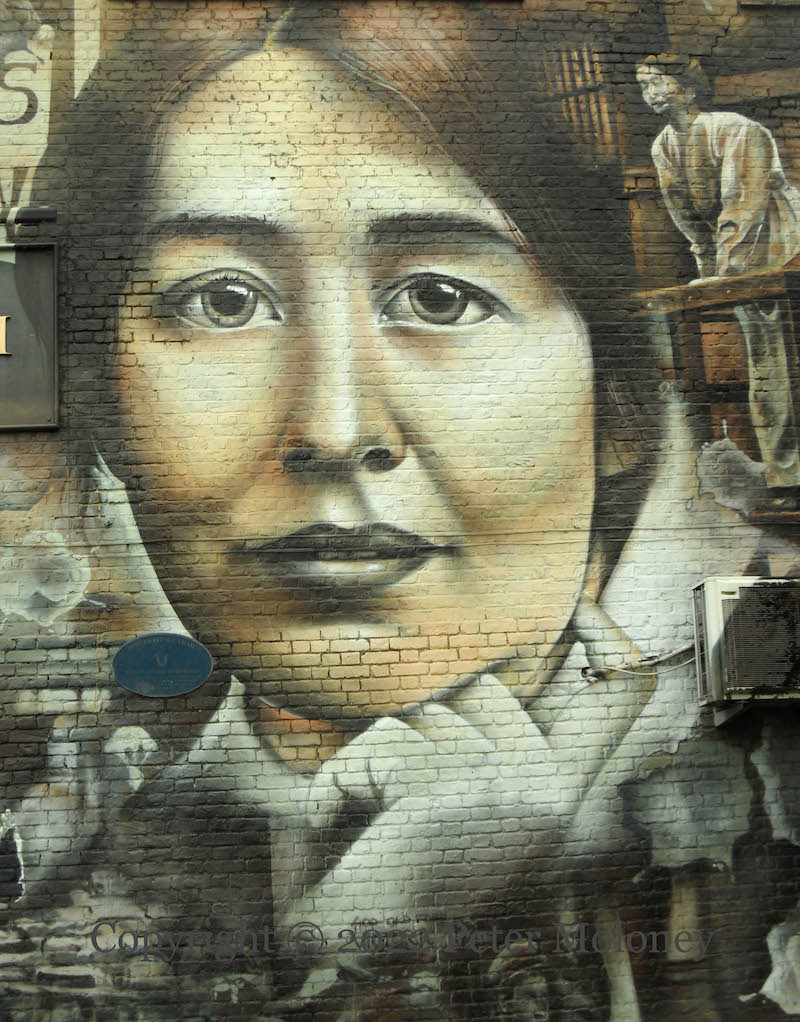
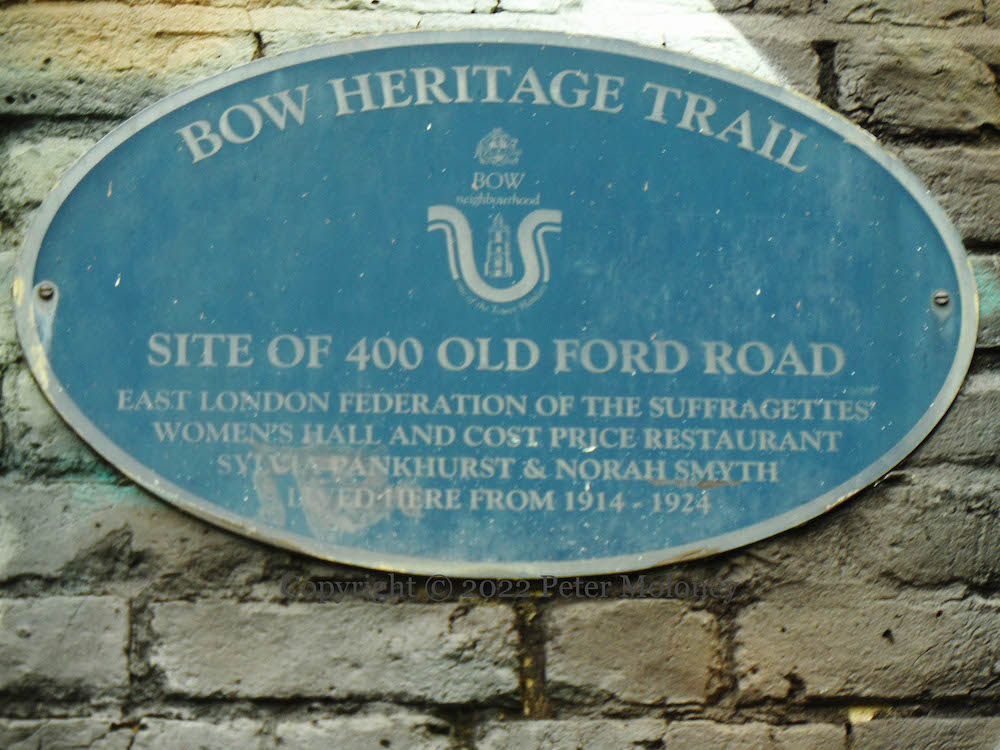
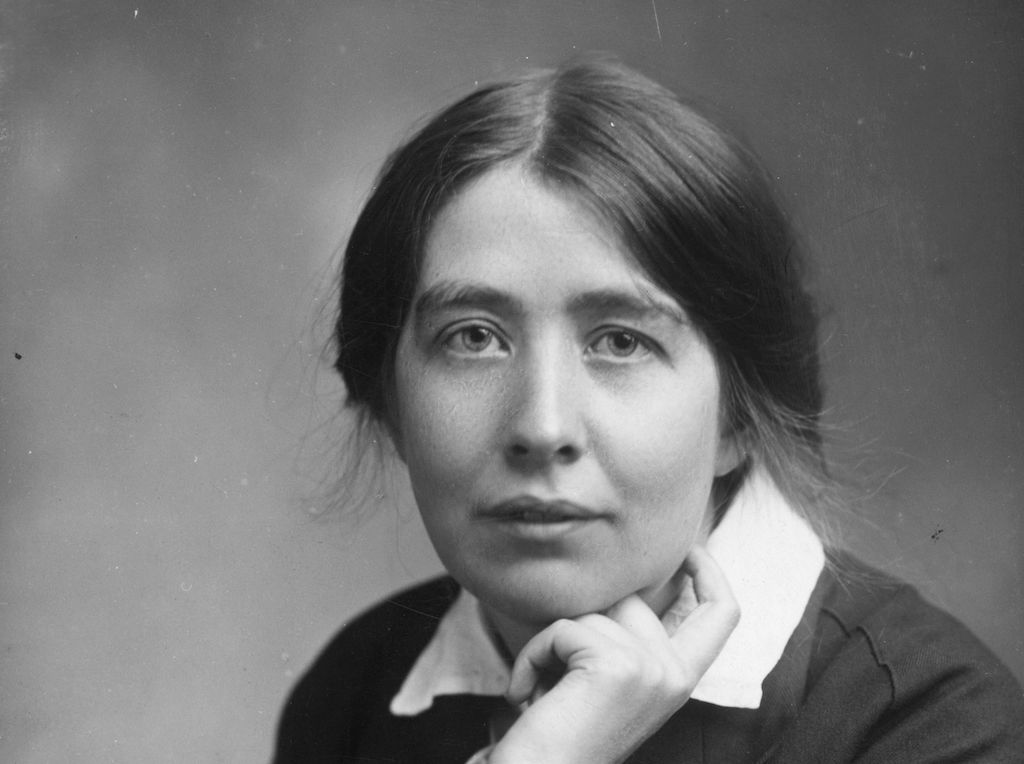
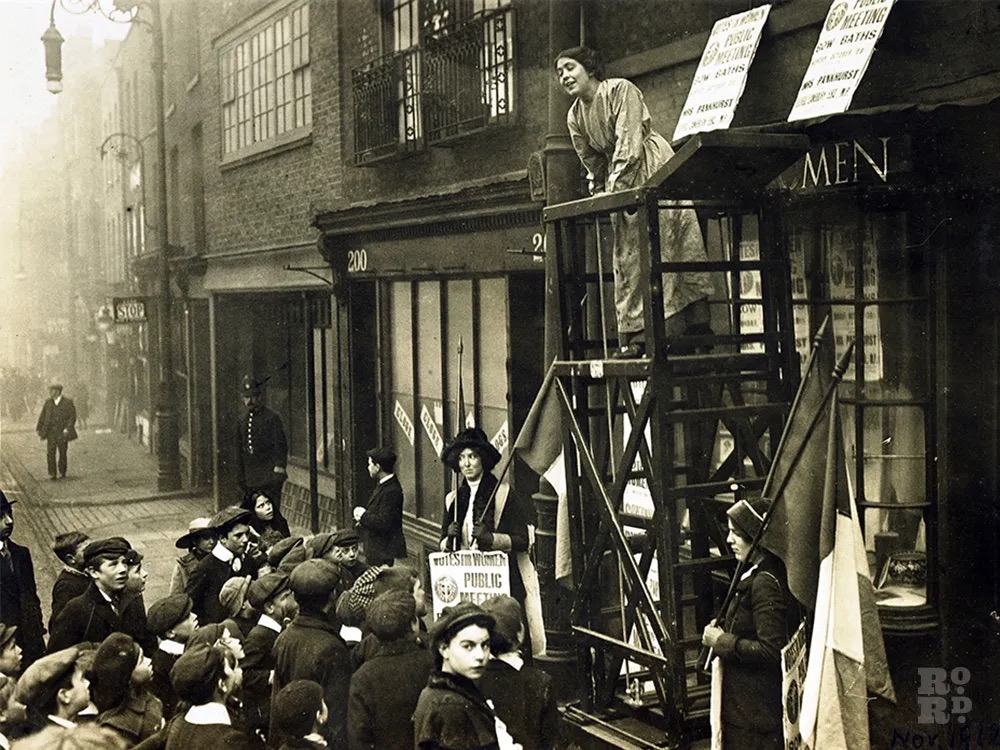
Eight-time hunger-striker Sylvia Pankhurst and the East London Federation Of The Suffragettes [ELFS] provided a cost-price restaurant to provide meals to the poor in the “Women’s Hall” at the back of the house at 400 Old Ford Road in response to the inflation in food prices at the onset of WWI (Inspiring City | East End Women’s Museum).
In the top left, with the “Votes For Women” sign, is Christabel Pankhurst, one of Sylvia’s sisters, a co-founder of the Women’s Social And Political Union – motto “Deeds, not words” – and editor of The Suffragette. (Charlotte Despard – featured previously – was also a member of the WSPU.)
(The third sister, Adela, was founder of the WSPU’s yet more radical sub-group the ‘Young Hot Bloods’ (WP). Their mother was Emmeline Pankhurst, who had founded the WSPU in 1903 (WP); she is featured in a mural on Belfast’s Donegall Road bridge – see Those Days Are Over.)
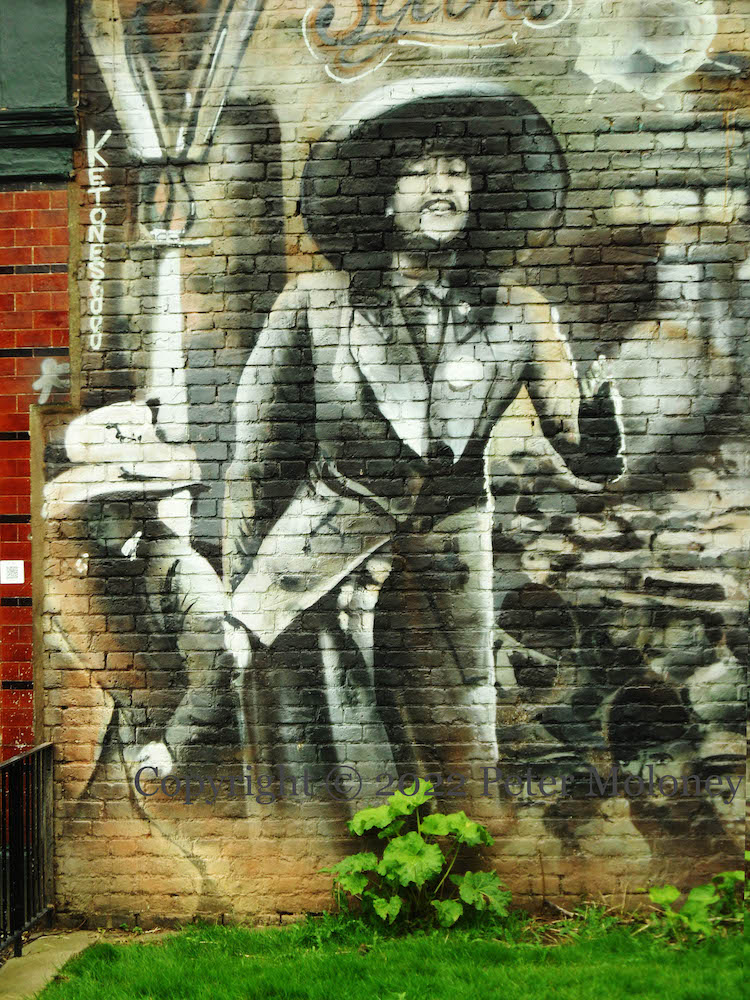
In the top right (shown in close-up in the third image), Sylvia speaks in 1912 from a small platform outside the WPSU office in Bow Road, before the WSPU and ELFS split in 1914.
The mural is by Ketones6000 (ig) in 2018 on the side of the Lord Morpeth pub which was frequented by Pankhurst and the east London suffragettes (web). The pub is at 402 Old Ford Road and the mural thus overlooks the site of the women’s hall.
The Military Medal (“MM”) “for gallantry in the field” was awarded to Rifleman Robert King of the 12th Royal Irish Rifles in the dispatches of July 12th for his actions on July 1st, the first day of the Battle Of The Somme. King was from Ronald Street in Larne (RIR 12th Fb; there is also a 12th batt RIR memorial association).
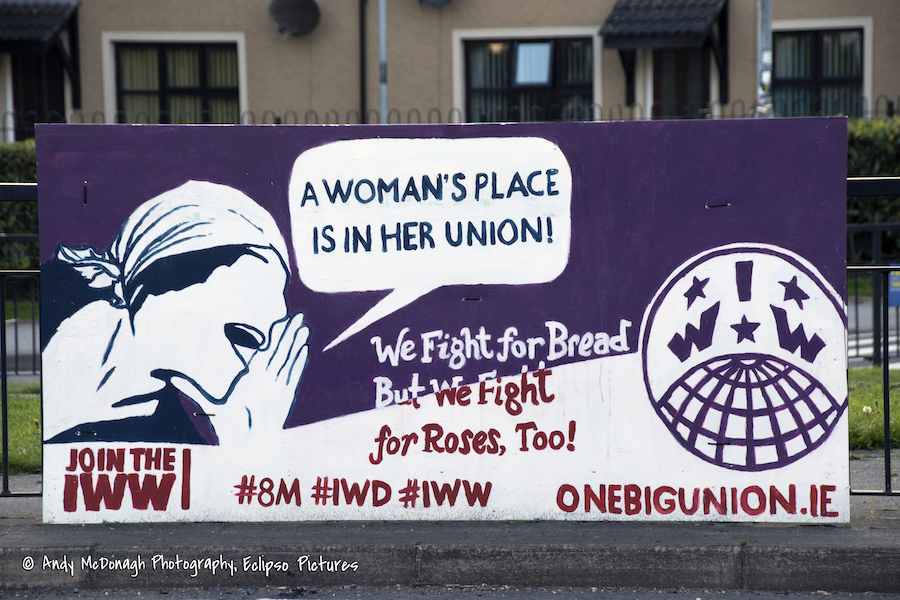
“A woman’s place is in her union! We fight for bread but we fight for roses, too. Join the IWW [Industrial Workers Of The World (web)] OneBigUnion.ie.” The titular phrase comes from a 1910 speech by American suffragist Helen Todd, who later explained that votes for women would mean “helping forward the time when life’s Bread, which is home, shelter and security, and the Roses of life, music, education, nature and books, shall be the heritage of every child that is born in the country” (American Magazine LXXII p. 611)
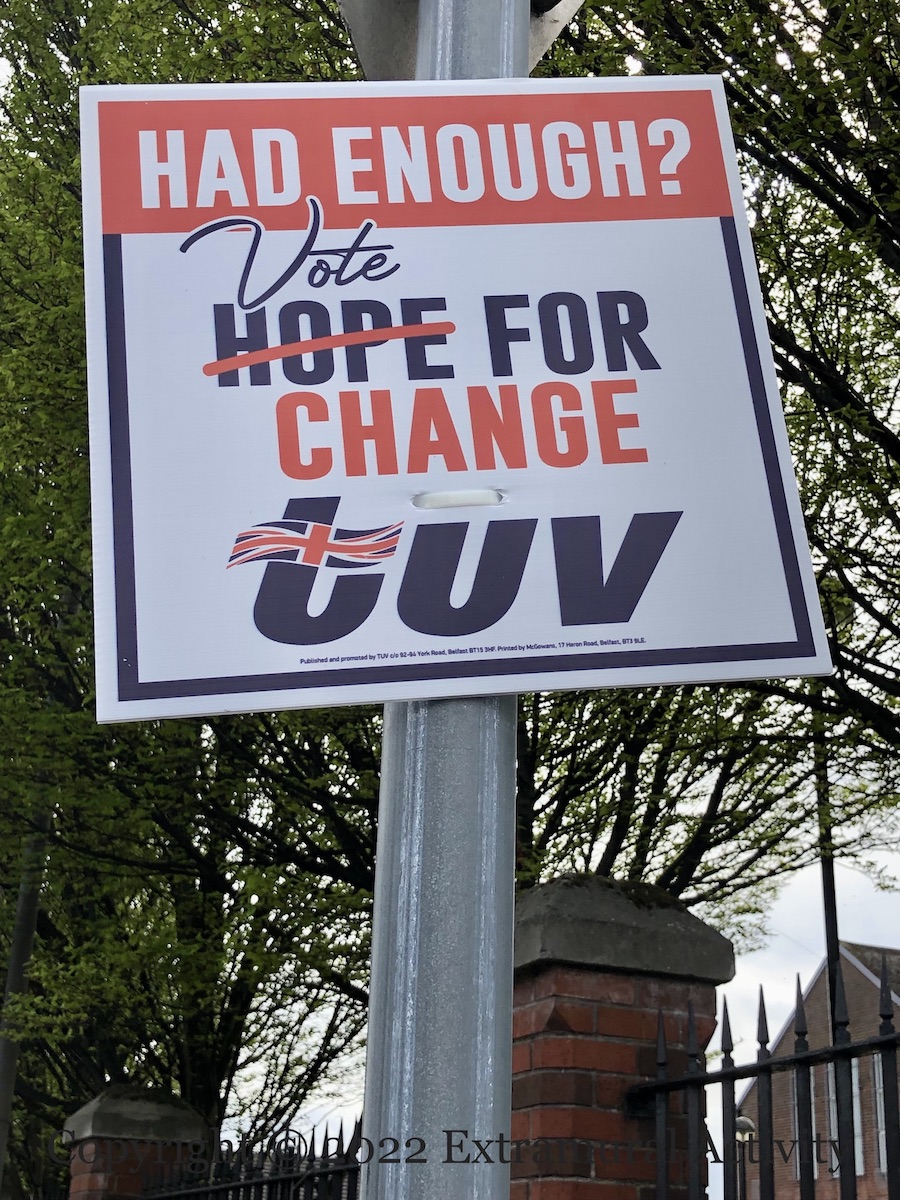
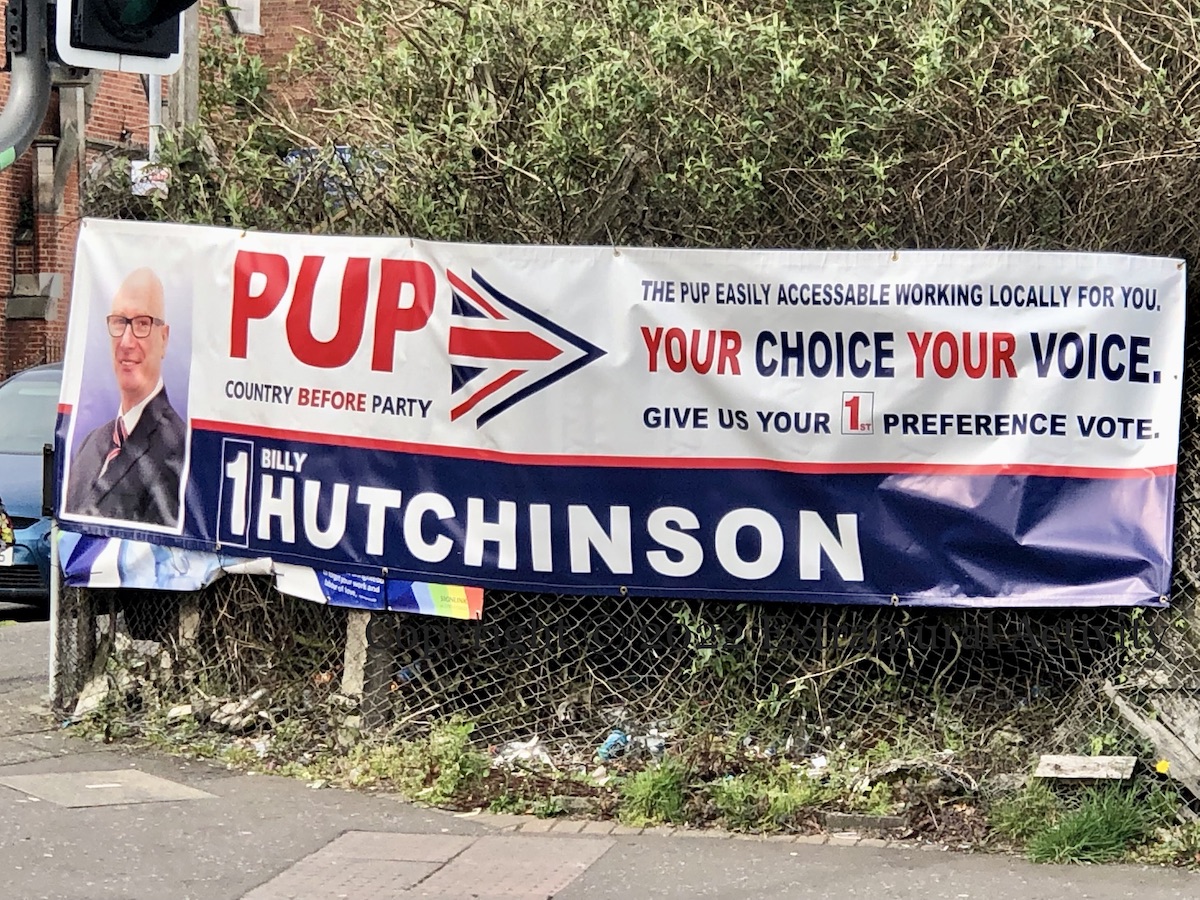
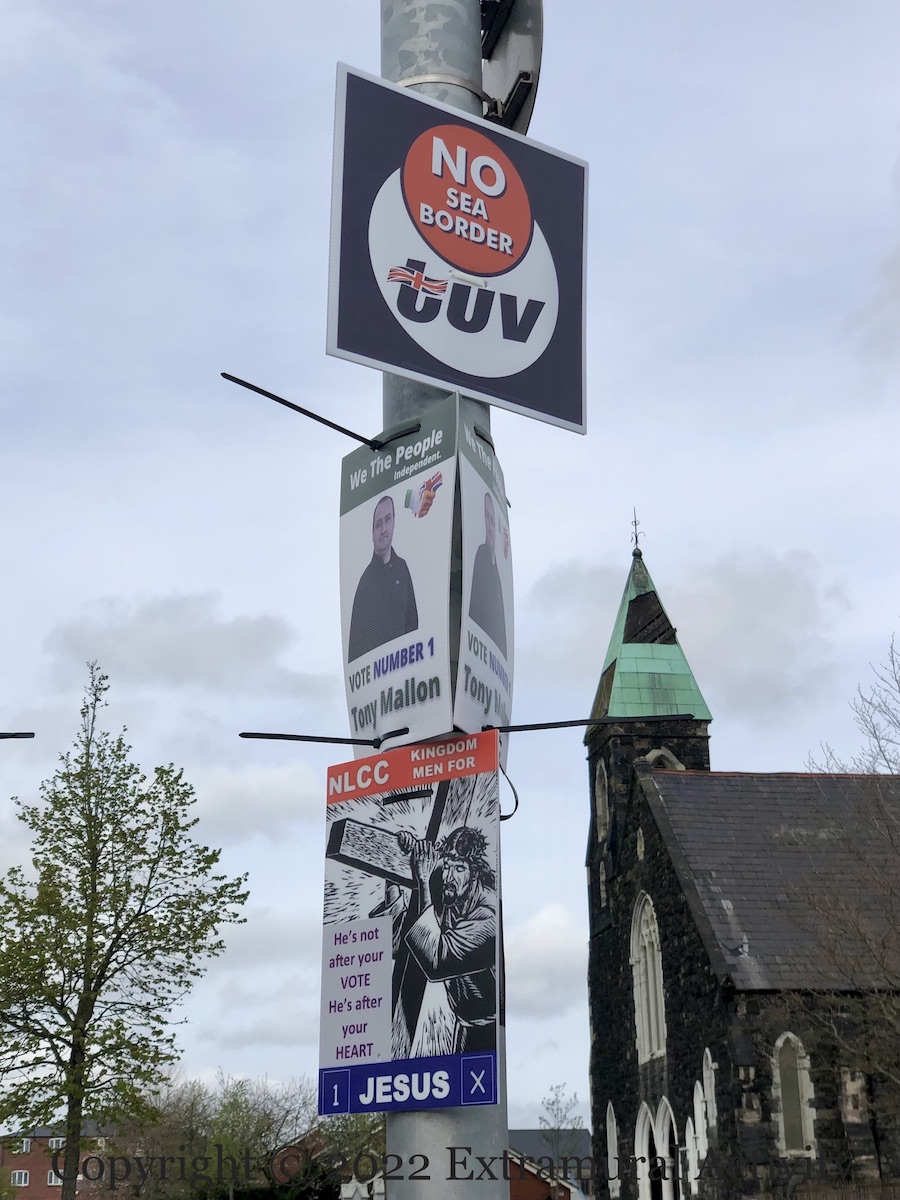
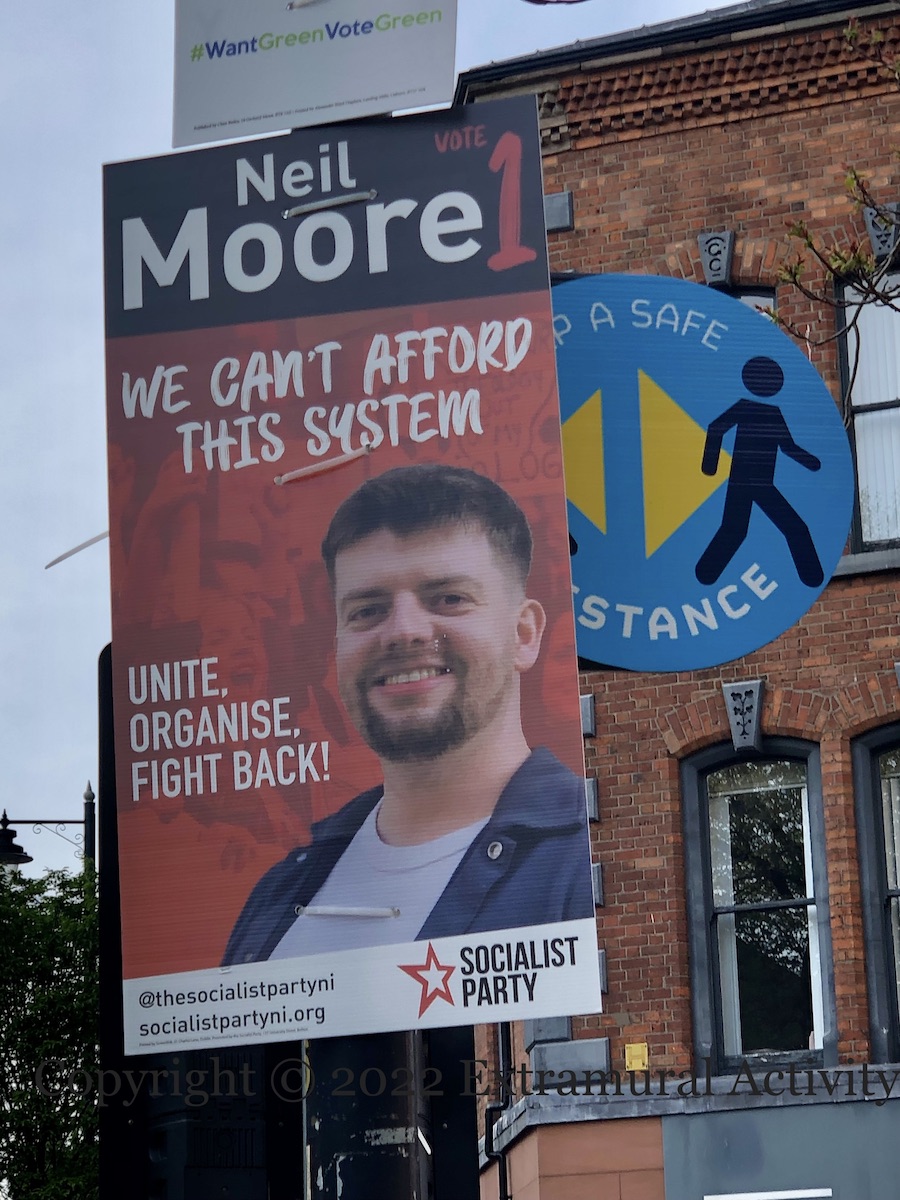
The NI Assembly election is this day week (Thursday May 5th). Here is another gallery of electoral posters. Where last week’s selection included a Noah Donahoe placard in electoral style, this weeks’ includes one for New Life City Church (ig), again in the style of an electoral candidate: “He’s not after your vote, he’s after your heart.” Also shown are: (above) TUV’s ‘don’t hope; vote’; Sinn Féin’s “Time for real change” on top of a “spoil your vote” stencil; the PUP’s “country before party” with anti-woke independent Tony Mallon’s “We the people”; and last, Neil Moore of the Socialist Party “We can’t afford this system” (namely, capitalism).
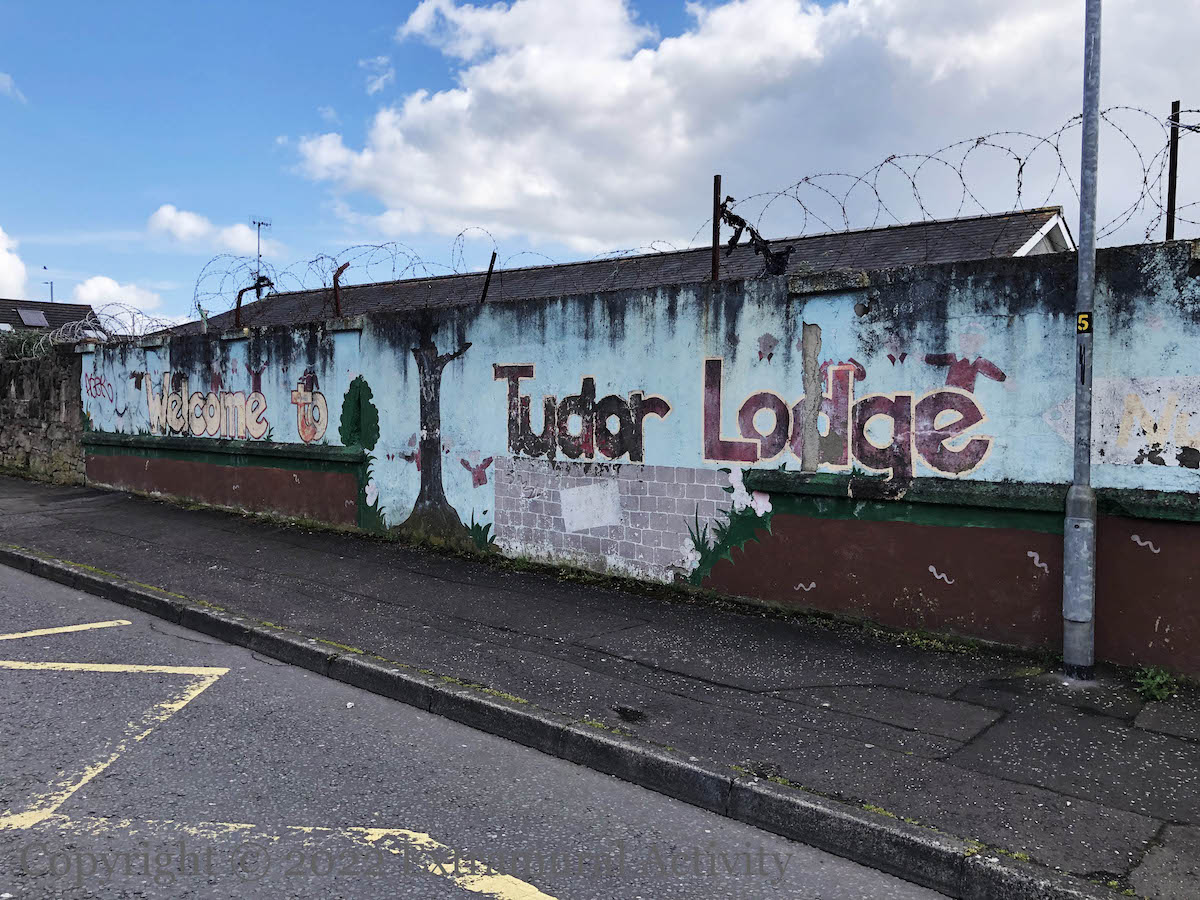
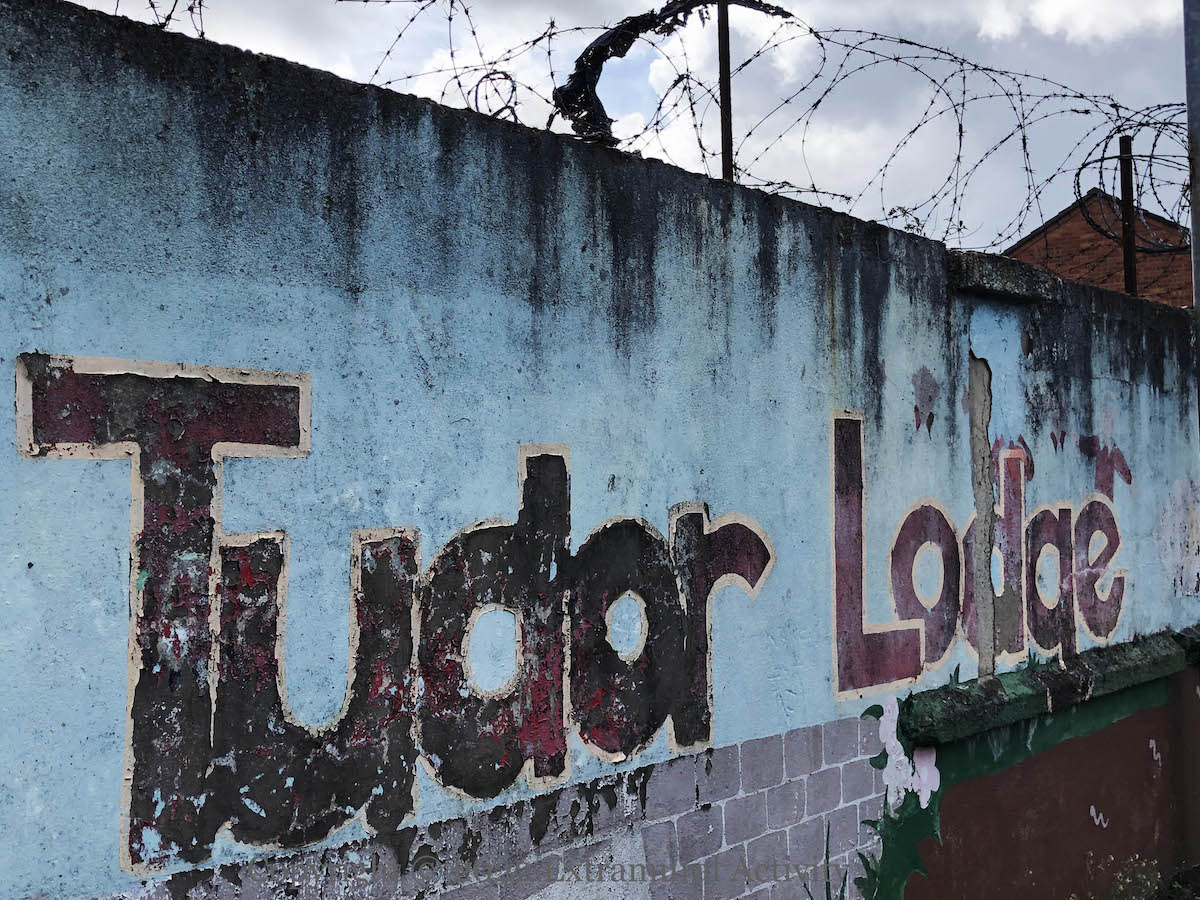
Tudor Place (the street) is now simply the top end of Crimea Street, but in years past it was physically separated and accessible only from the Crumlin Road. The reason for that seems to be that in the 1800s it was the grounds of a lodge, called Tudor Lodge. The nursery school is on the site of the old lodge (which is not the lodge known as Old Lodge) and takes its name.
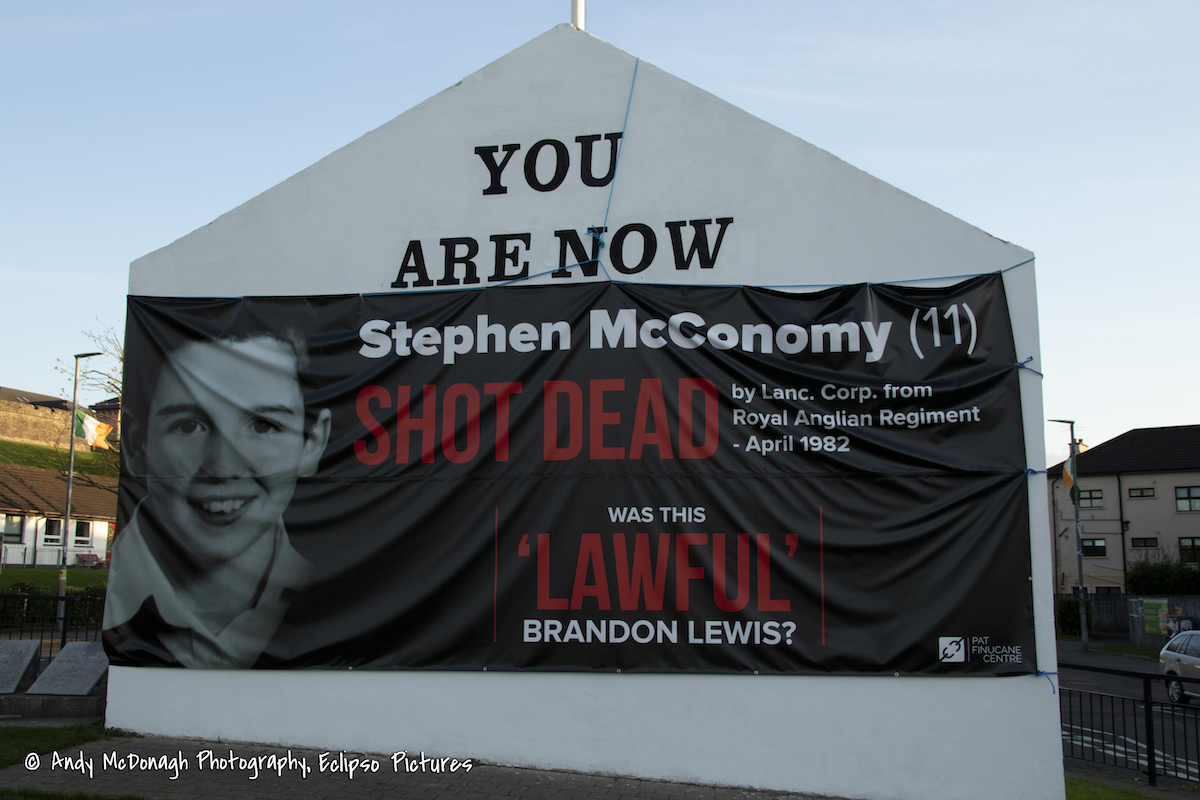
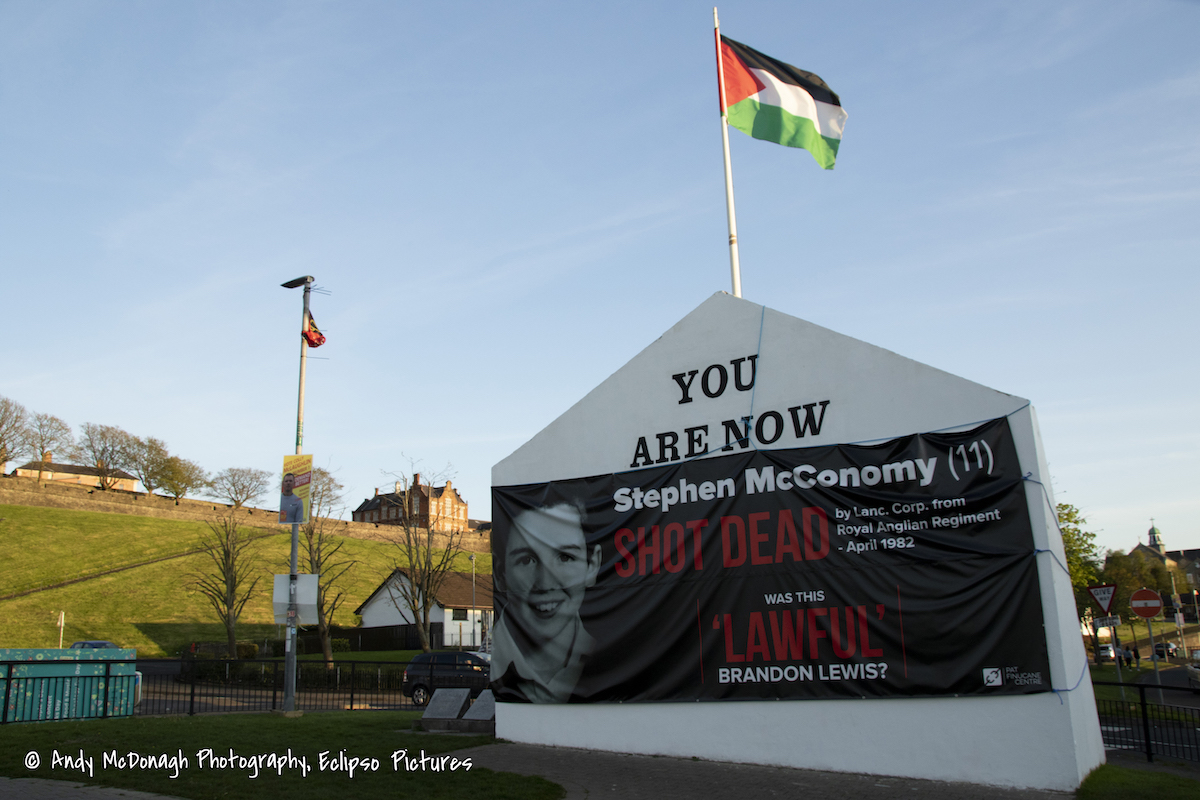
A 2021 command paper that proposed a statue of limitations and amnesty for so-called “legacy” killings included the claim that ‘the vast majority of security force killings were lawful’ (BelTel) and the comment has been attributed to NI Secretary Brandon Lewis (Pat Finucane Centre). (For background see e.g. this eamonnmallie.com piece.) The claim is used against him in this tarp commemorating Stephen McConomy was hit by a plastic bullet forty years ago this month, on April 16th, and died three days later: “Stephen McConomy (11) shot dead by Lanc. Corp. from Royal Anglian Regiment – April 1982. Was this ‘lawful’, Brandon Lewis?” Speaking at the memorial service, surviving family-members vowed to continue resisting the proposed limitations (Derry Journal).
This mural – which perhaps memorialises the RUC in particular – has evidently been rolling since 1984 and the two different styles of house and brick (in the image below) explain its longevity – it’s in a narrow alley between two different stages of construction on Sydney Street West, initially to where the old Harrybrook Street used to be and then extended out to Snugville Street.














 Extramural Activity