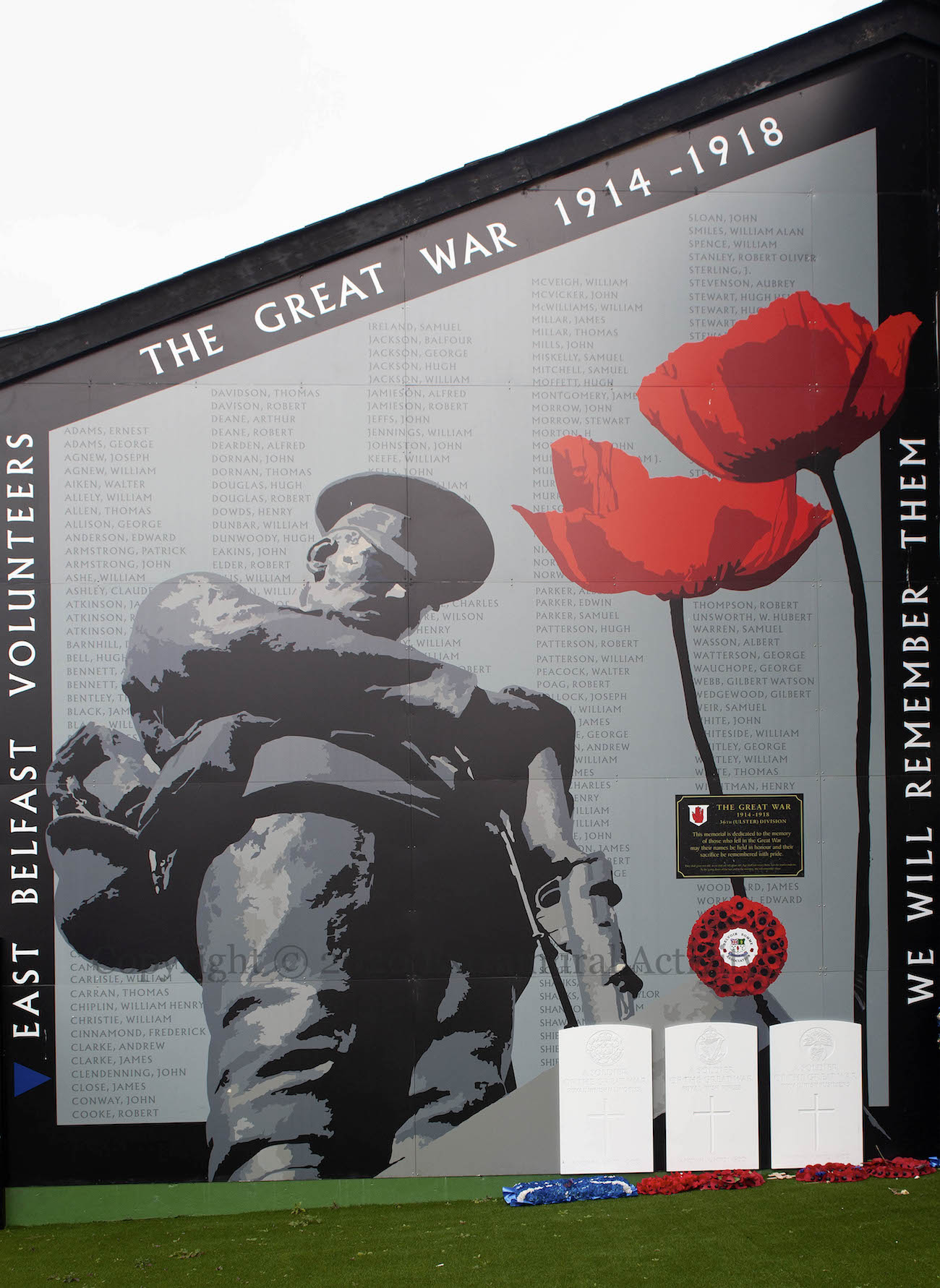
“The Great War (1914-1918) 36th (Ulster) Division. This memorial is dedicated to the memory of those who fell in the Great War. May their names be held in honour and their sacrifice be remembered with pride.”
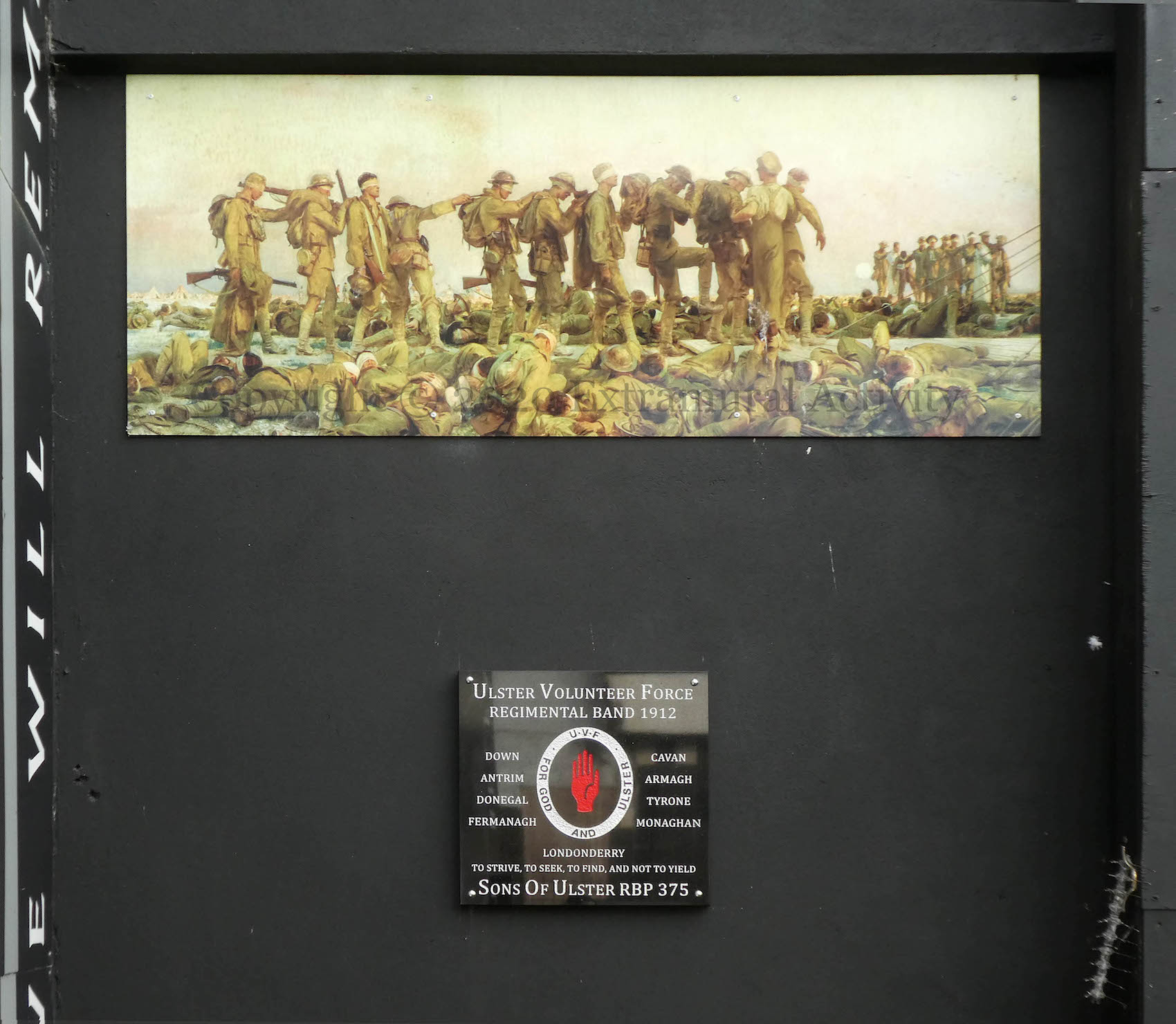
The 62 year-old painter John Singer Sergeant went to the western front in 1918 to find a scene suitable for painting on the theme of Anglo-American co-operation during the war. On the 21st of August, however, he witnessed at Arras British soldiers blinded by a German mustard gas attack, one following behind the other in a human chain, each group being directed by an orderly towards a dressing station. The War Memorials Committee agreed to change its commission and Sergeant received 600 pounds (about 34,000 in today’s money) for his painting, Gassed (WP).
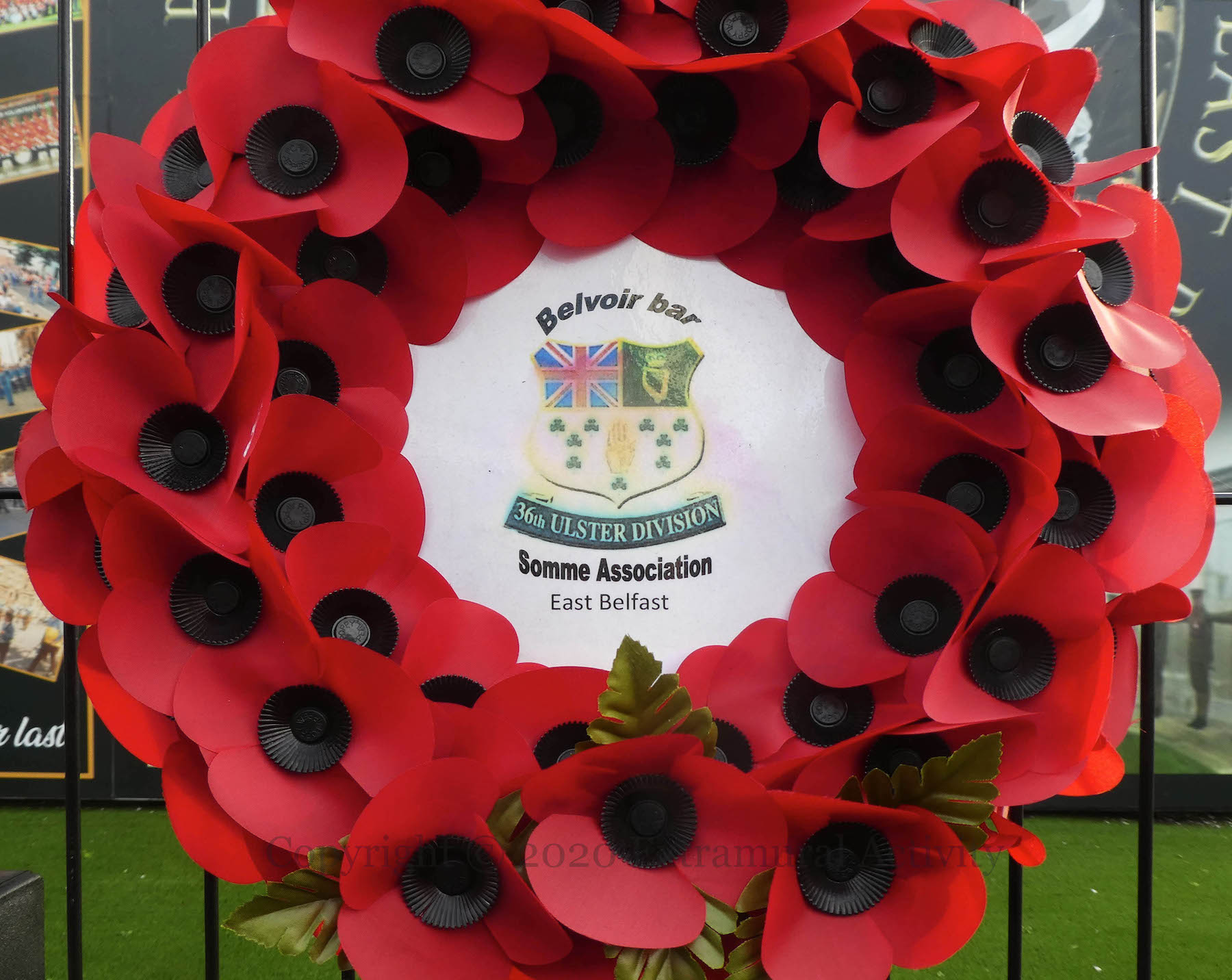
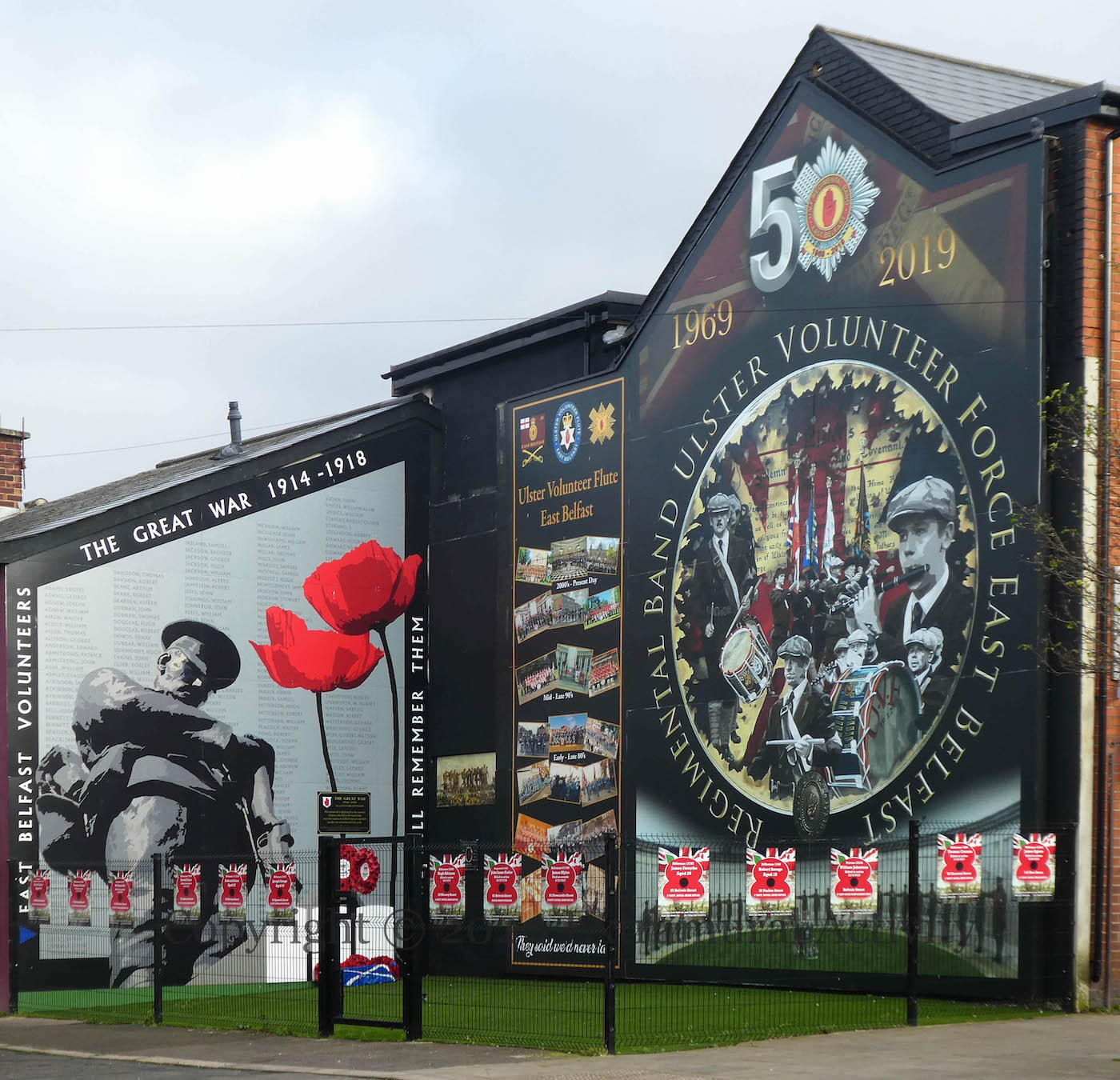
This copy is in St Leonard’s Crescent (or the old Newcastle Street), part of the 50th anniversary garden and mural for the UVF regimental band and memorial for east Belfast volunteers who joined the 36th Division (which did not fight at Arras as it had been disbanded in May, 1918). The plaque below list the nine counties of Ulster and reads “To strive, to seek, to find and not to yield. Sons Of Ulster RBP 375.”
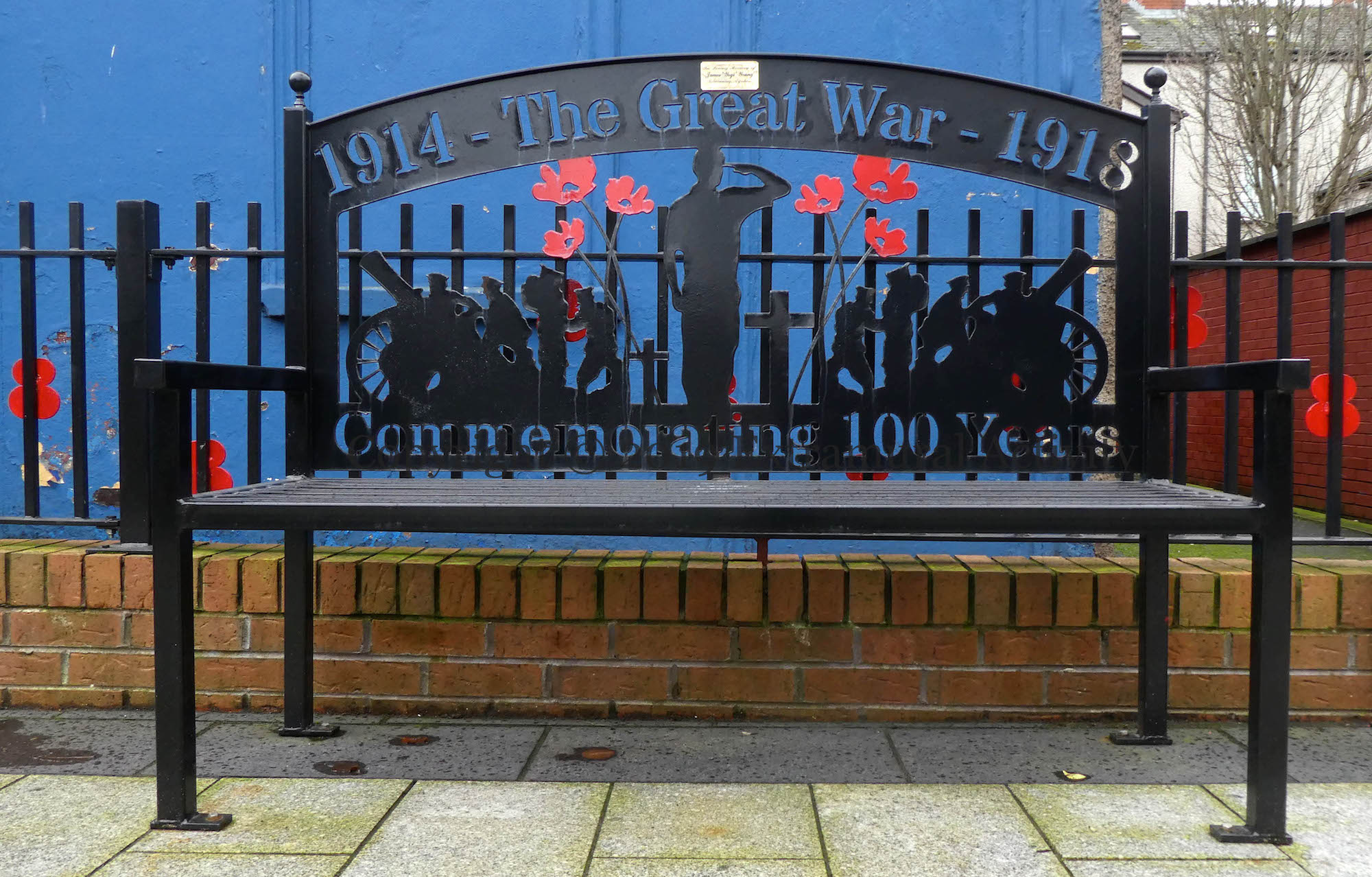
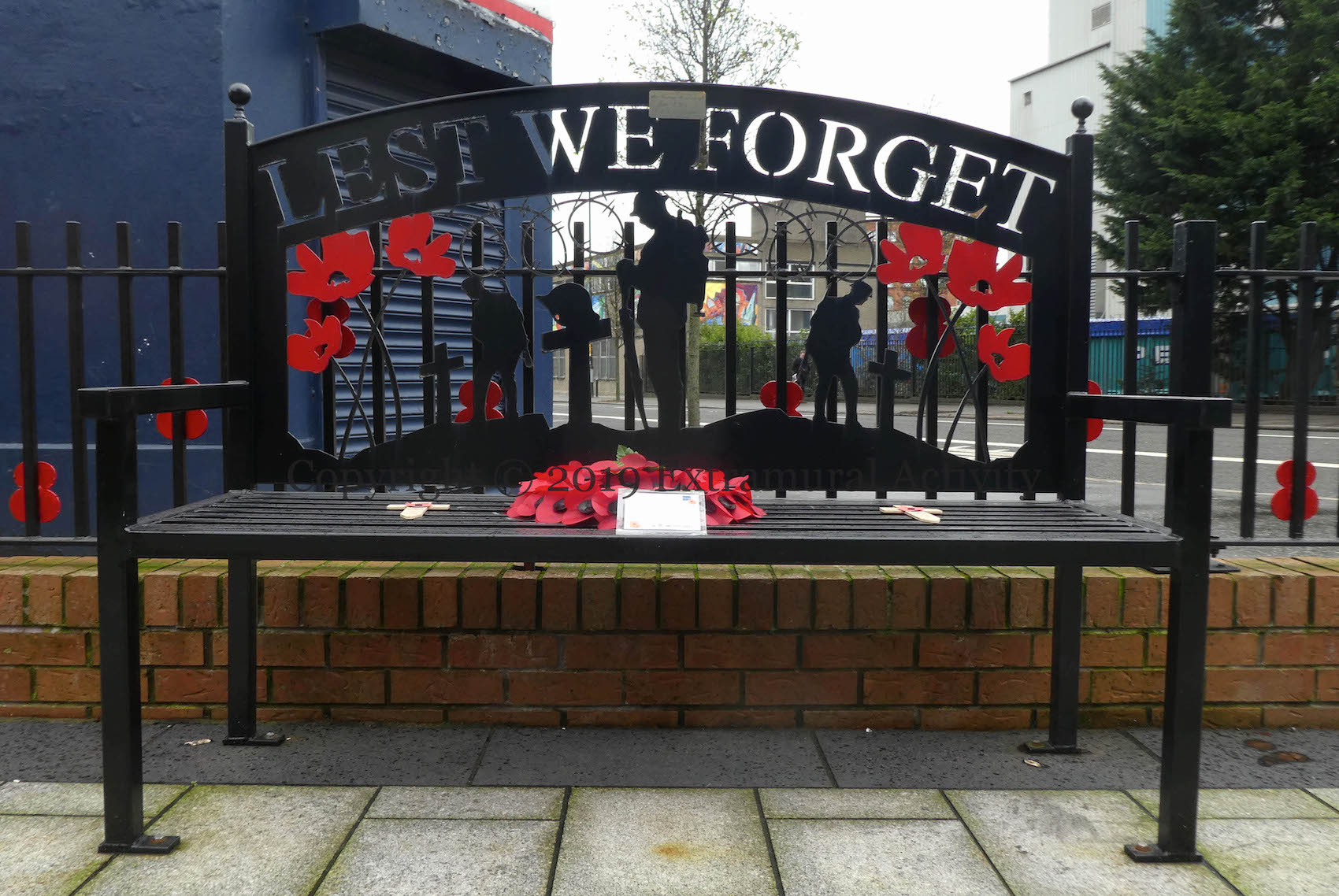
James “Yogi” Young of Kilwinning Ayrshire was a Scottish supporter of Belfast flute bands. He died in 2016(?). This memorial bench, which also commemorates the centenary of the Great War, is in the York Road Historical Society’s memorial garden. (See previously: Joint Forces | Pride Of The Shore)
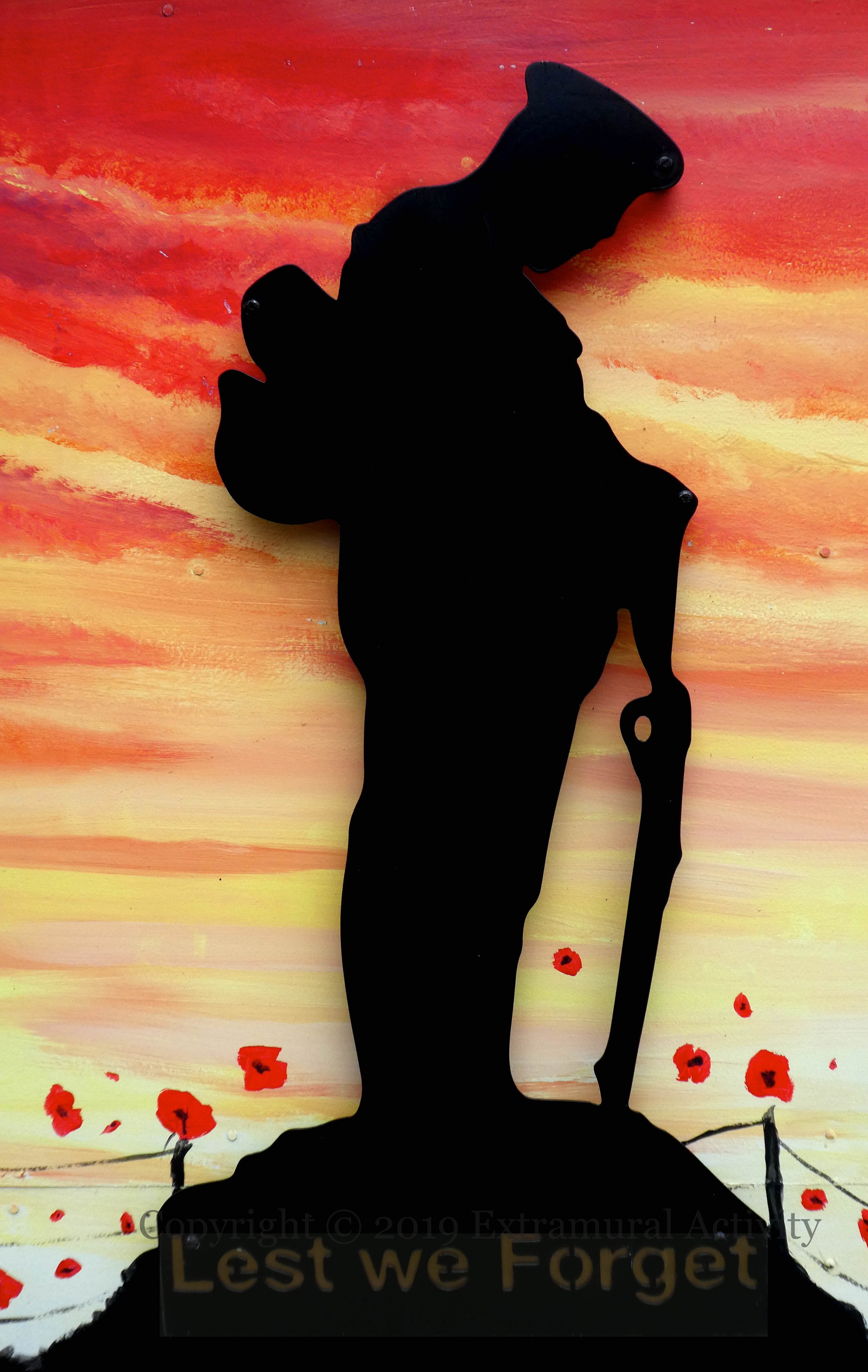
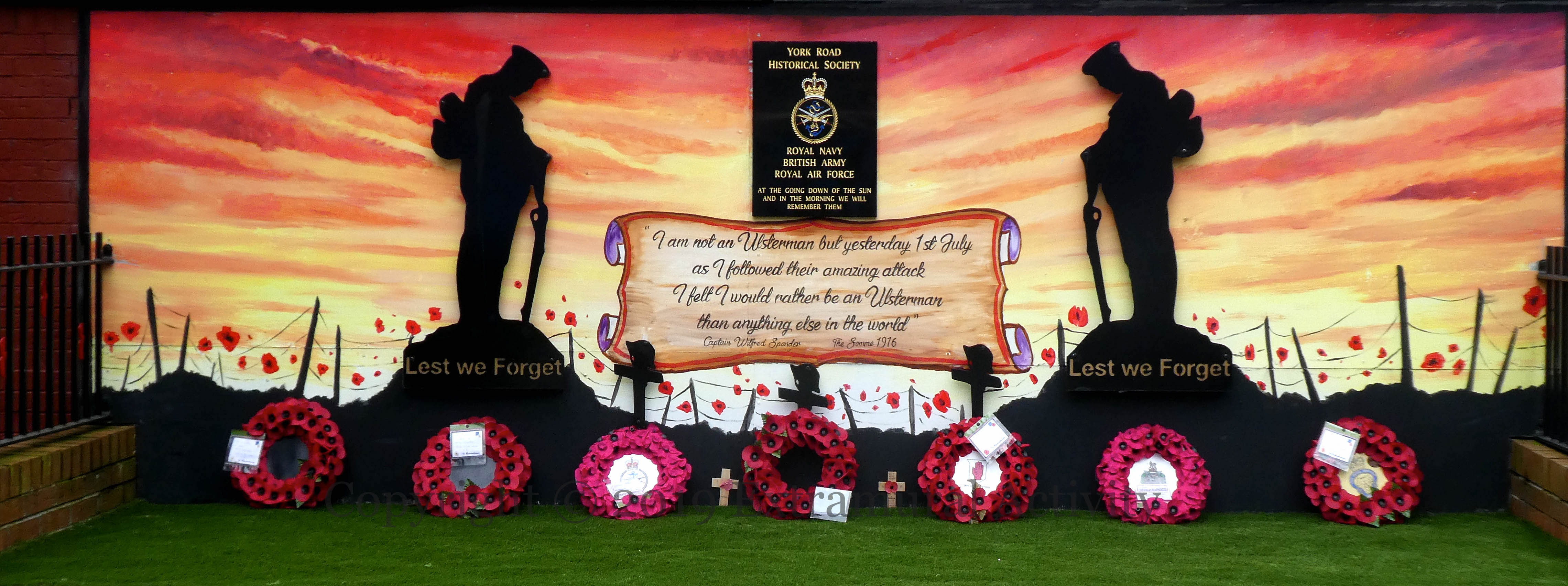
At the end of September, York Road Historical Society (which does not appear to have an on-line presence) launched a new garden of remembrance to British WWI service-members in the “Royal Navy, British Army, and Royal Air Force”, symbolised by the crest of Strategic Command (formerly the Joint Forces Command).
The garden is next to the Times Bar (one | two | three | four | five) and opposite Arts For All/John Luke Gallery (one | two | three).
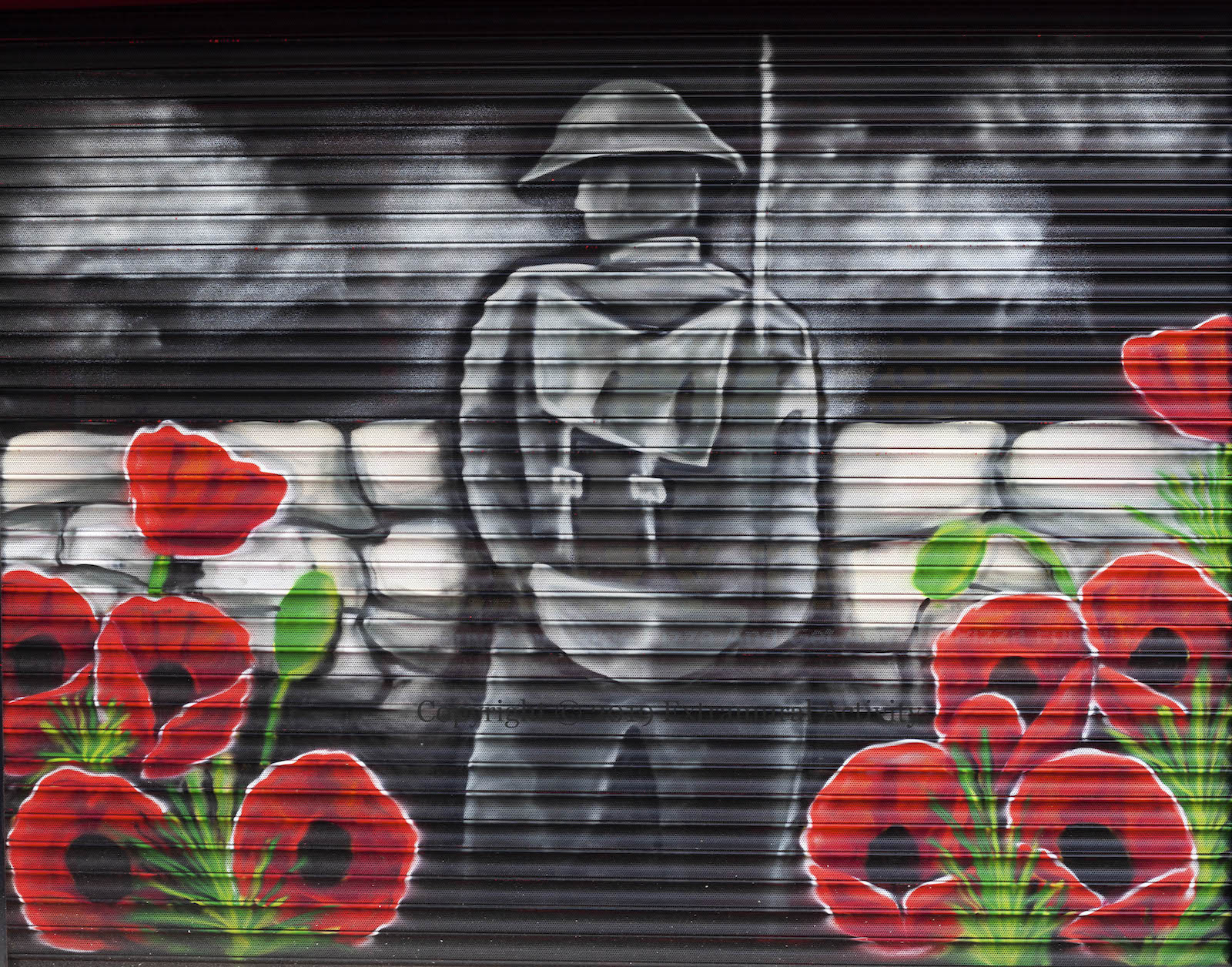
This contemplative WWI soldier is the mural part of a new memorial commemorating fallen UVF volunteers from Scotland. On the shutters of the Pizza Cabin on the Shankill.
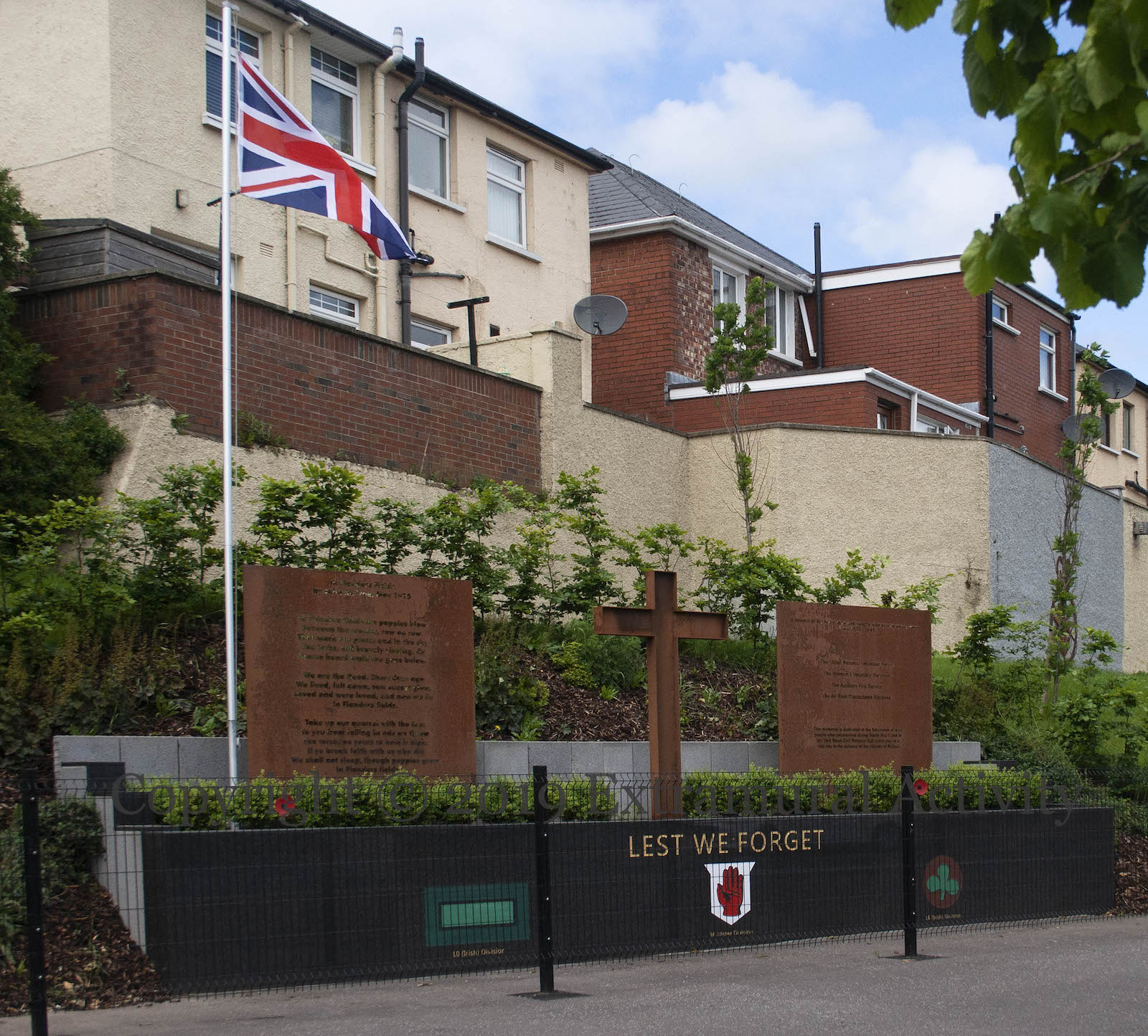
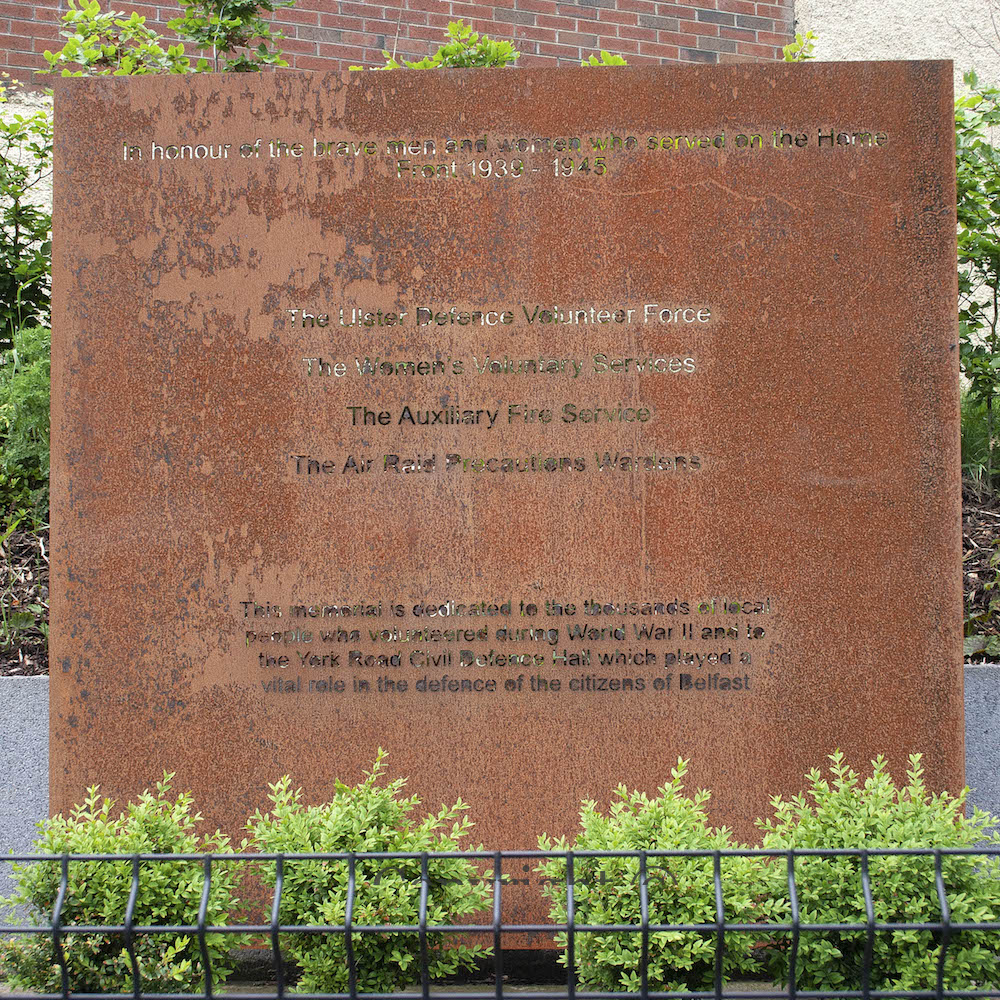
The re-developed memorial to the 36th (Ulster) Division along the Shore Road (see previously) now includes the emblems of the 10th and 16th Divisions, as well as a large metal plate “in honour of the brave men and women who served on the Home Front 1939-1945: the Ulster Defence Volunteer Force, the Women’s Voluntary Services, the Auxiliary Fire Service, the Air Raid Precautions Wardens. This memorial is dedicated to the thousands of local people who volunteered during World War II and to the York Road Civil Defence Hall which played a vital role in the defence of the citizens of Belfast.”
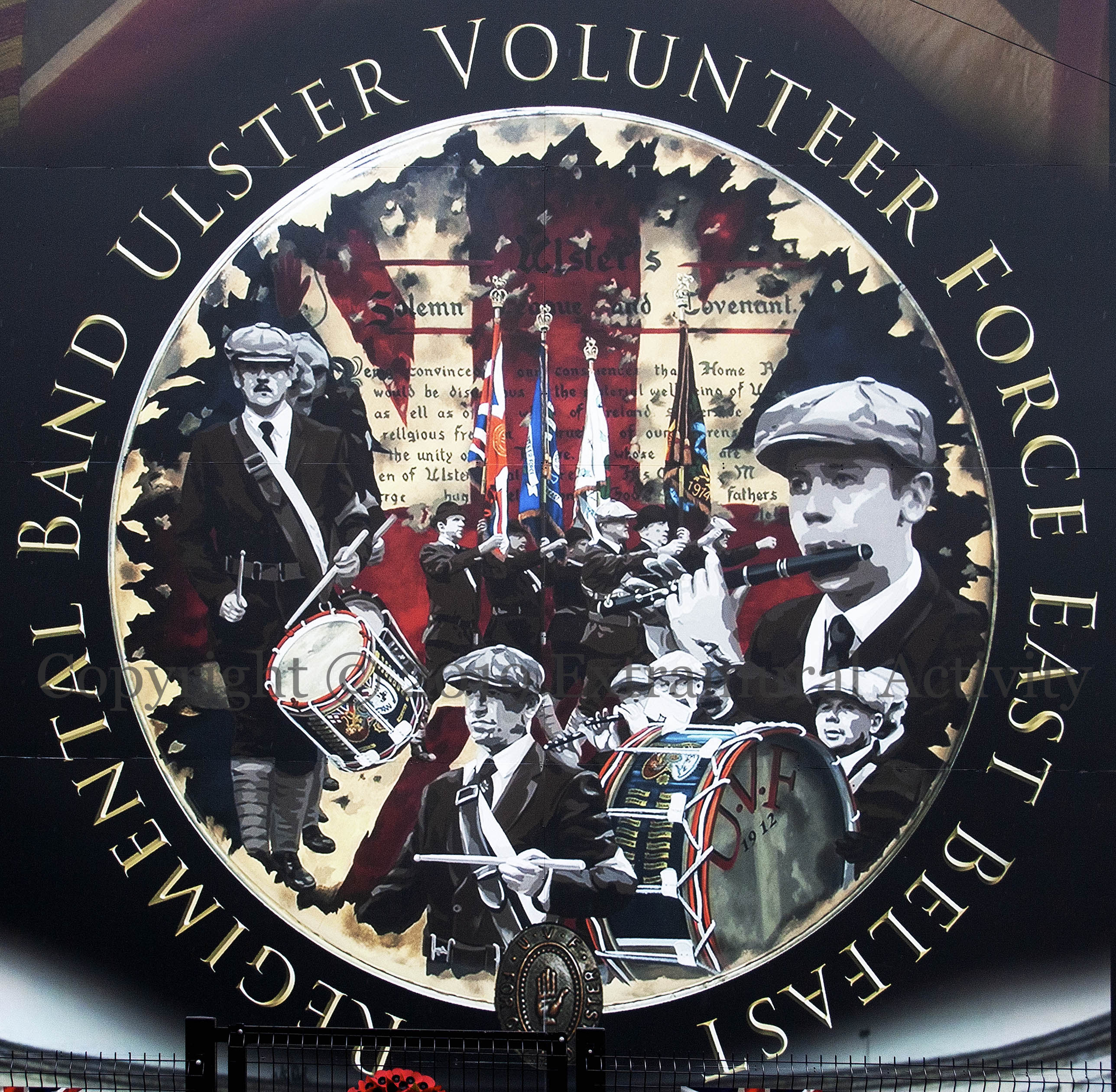
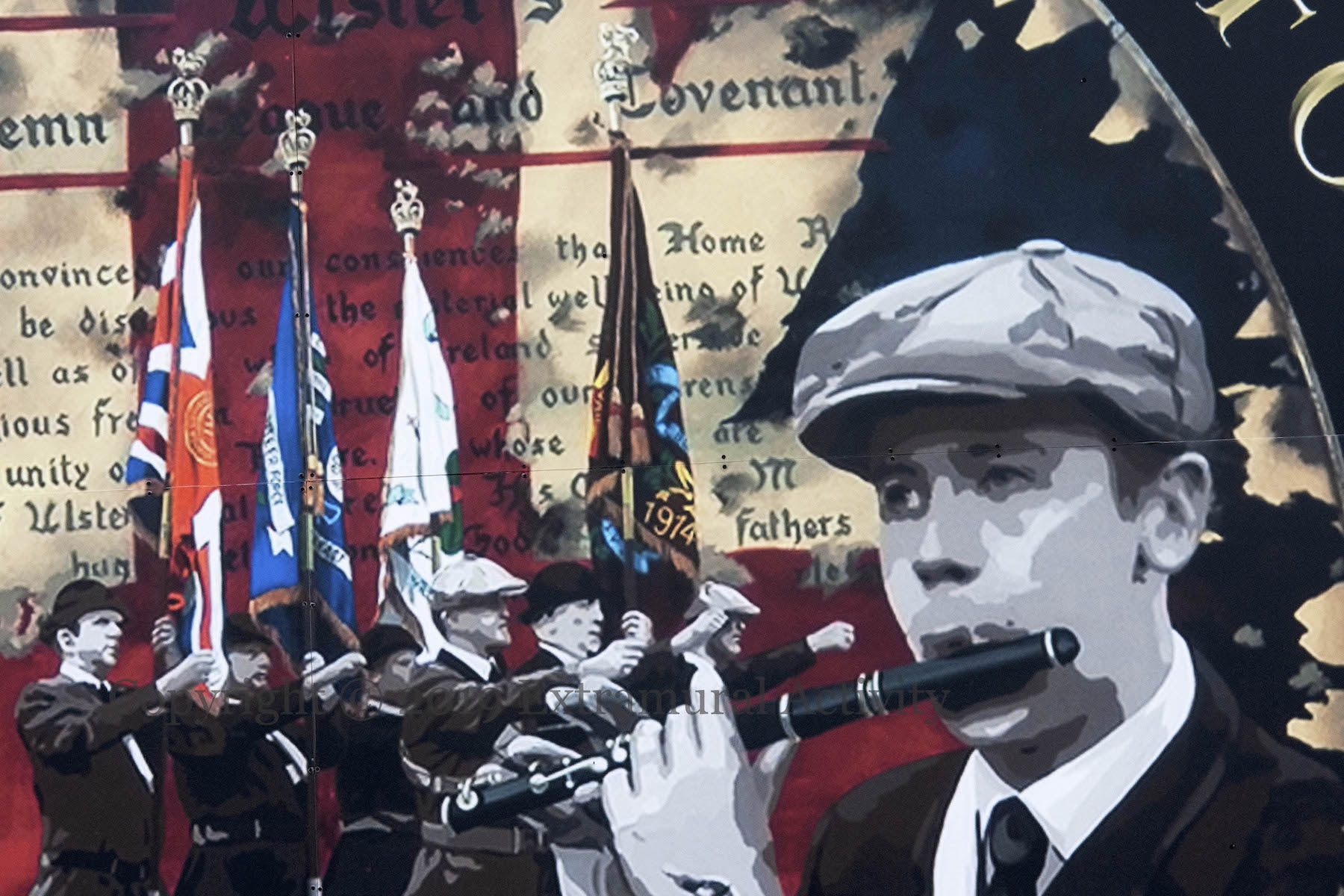
Ronnie’s hardware shop in east Belfast, vacant for many years and the site of Our Brave Defenders, was finally torn down last year and a pocket park created with murals commemorating east Belfast volunteers who died in the Great War and the UVF Regimental Band (tw), this year celebrating its 50 anniversary (video of the launch).
See previously: 40th anniversary banner at the same spot (next to the Belvoir Bar at the old Newcastle Street in east Belfast).
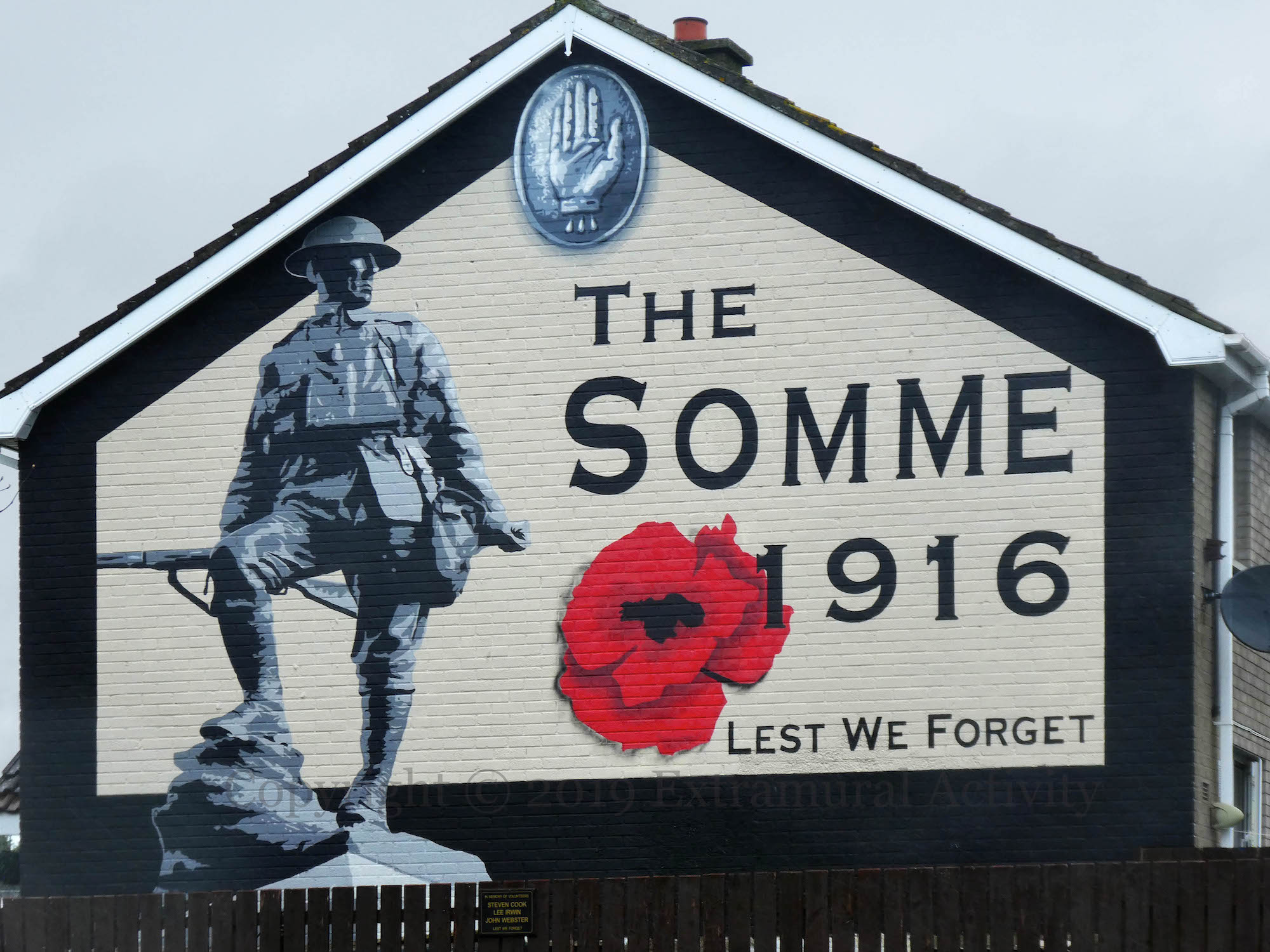
The ‘Liverpool No. 4 battalion’ UVF mural in Tynan Drive, Monkstown, (seen previously) has been replaced by a Dee Craig (Fb) mural to the soldiers of the Ulster Volunteers (see the ‘bleeding hand’ symbol in the apex) at the Somme. The small plaque on the fence to John Webster (a.k.a. Webber), Lee Irwin & Steven Cook, remains.
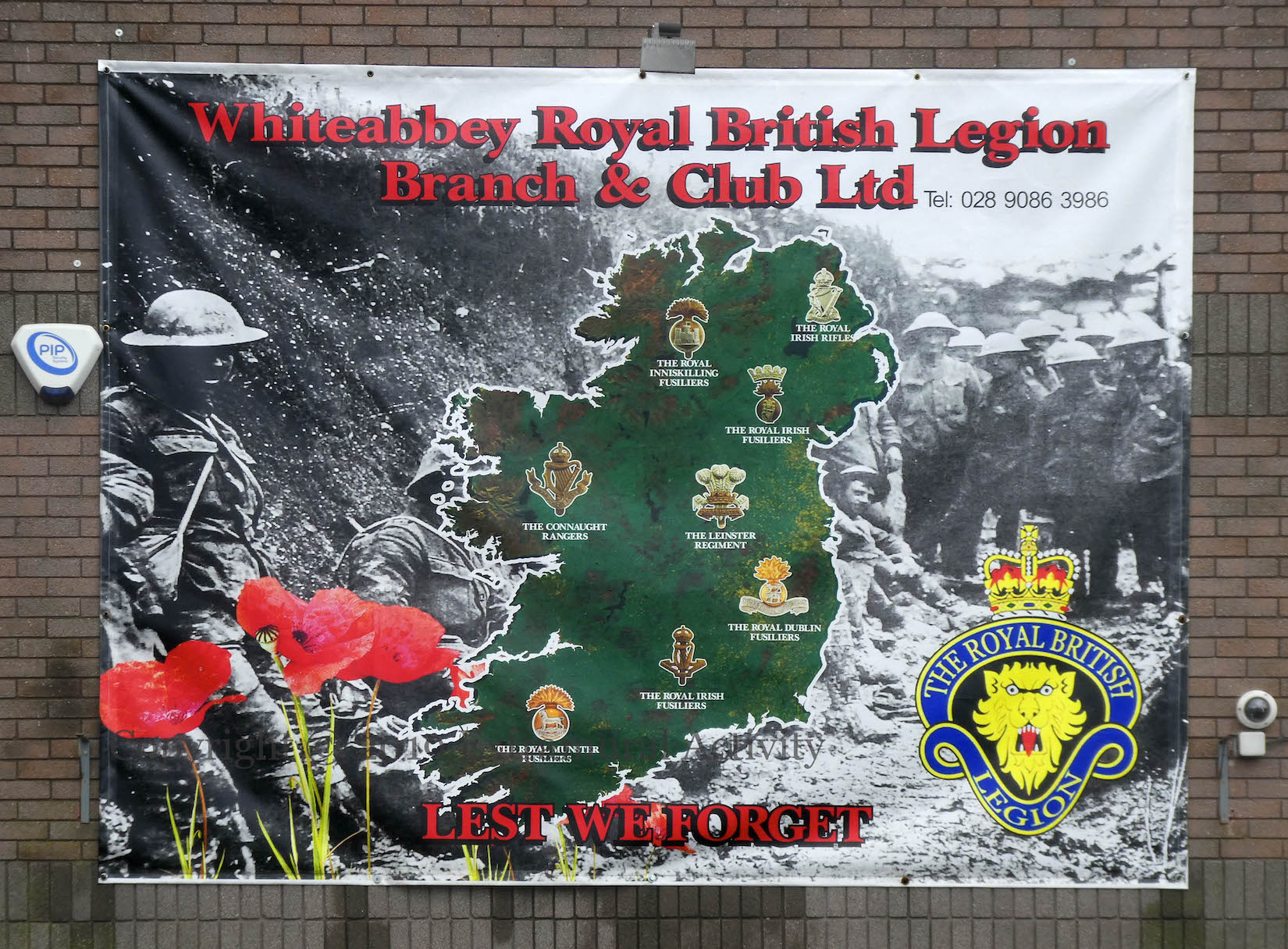
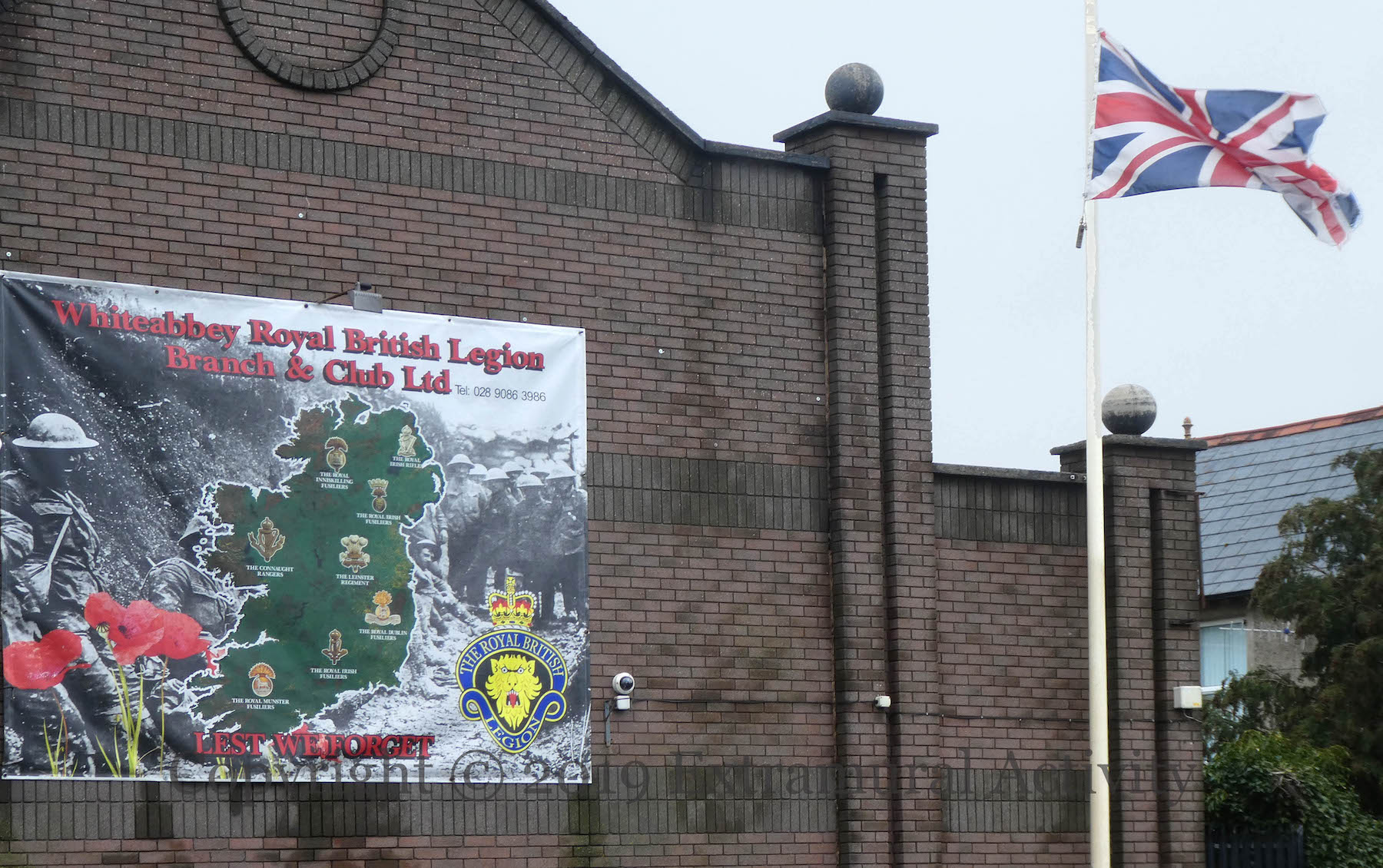
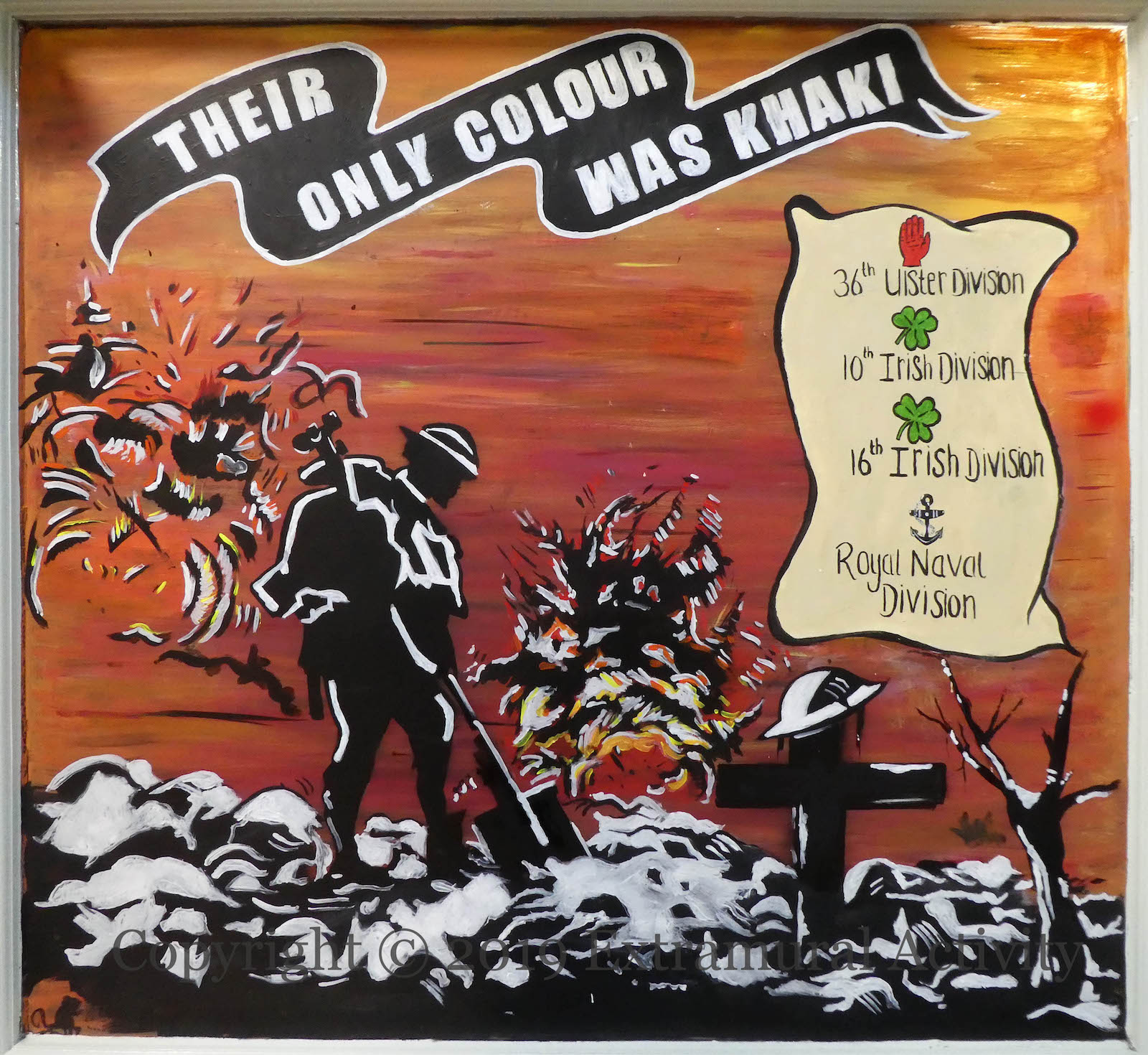
Various other murals pay tribute to the 10th and 16th Irish divisions alongside the 36th division (see, e.g., We Are The DeadBrothers In Arms | Killed Wounded Missing | Their Only Colour Was Khaki) but this tarp outside the Whiteabbey British Legion (Fb) shows instead the eight regiments raised in Ireland, whose battalions served not only these three but many other divisions: Royal Irish Rifles, Royal Inniskilling Fusiliers, Royal Irish Fusiliers, Connaught Rangers, Leinster Regiment, Royal Dublin Fusiliers, Royal Irish Fusiliers [should be Royal Irish Regiment], Royal Munster Fusiliers. The geographical distribution of the regiments (royal-irish.com has a map of the recruiting districts in Ireland; for battalions, divisions served, and regimental headquarters, see WP.) The background image is of the 36th in their trenches at the Battle Of The Somme.
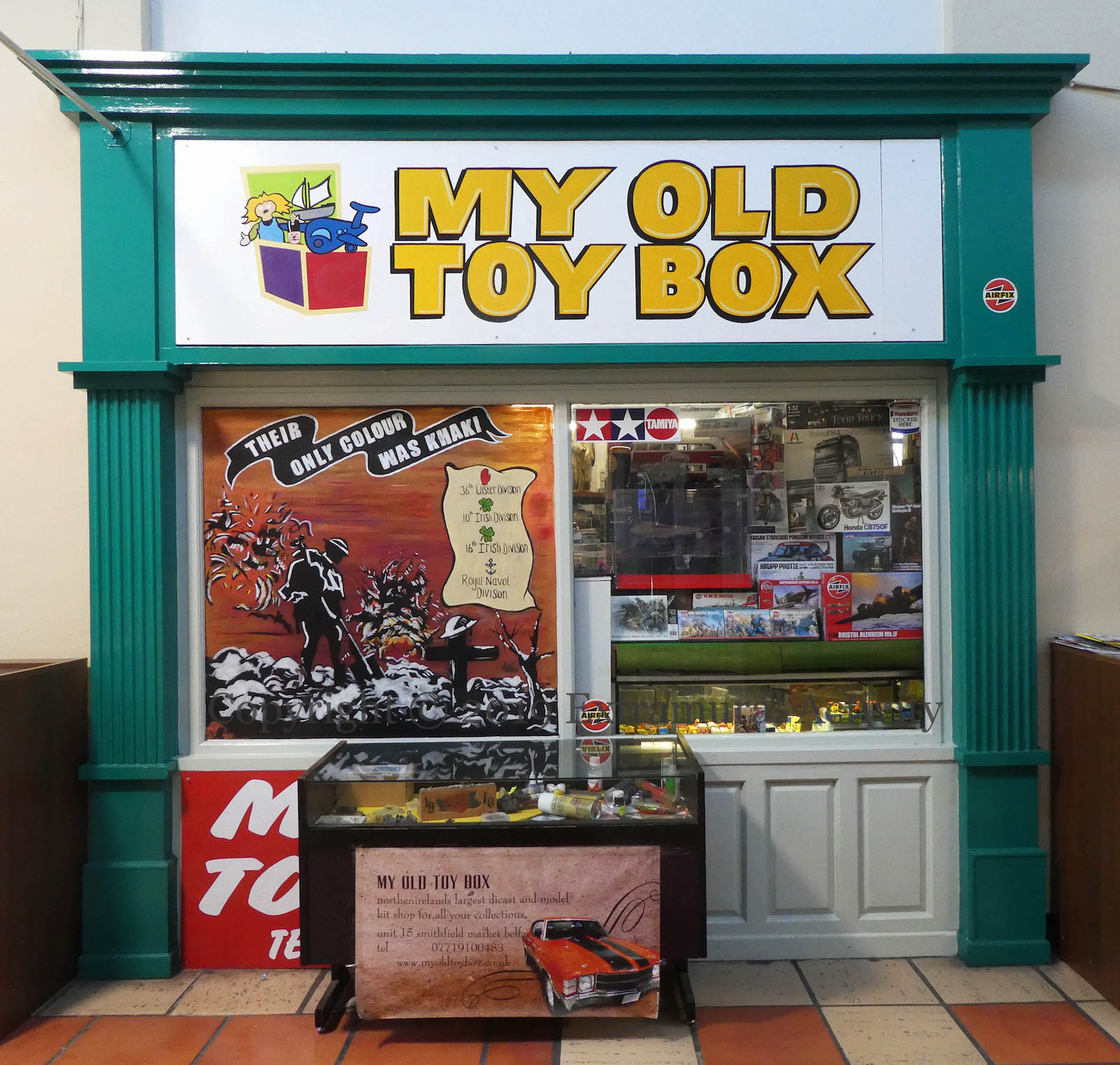
This is a close-up of the painting in the window of My Old Toy Box (Fb) in Smithfield Market (BelfastCity). It includes the 36th (Ulster) Division, and 10th and 16th (Irish) Divisions. It is not clear why the 63rd (Royal Naval) Division (WP) is included as it does not appear to have any connection to Ireland. Please leave a comment if you can explain the connection.





 Extramural Activity