In the old style of calendar (prior to 1752), the Battle Of The Boyne took place on July 1st, the same date as the Battle Of The Somme (in the new style of calendar). It is reported that some soldiers from the 36th Division wore their Orange Order collarettes into battle. In the image above, which reproduces a painting by Carol Graham, they defend their trench from a German assault.
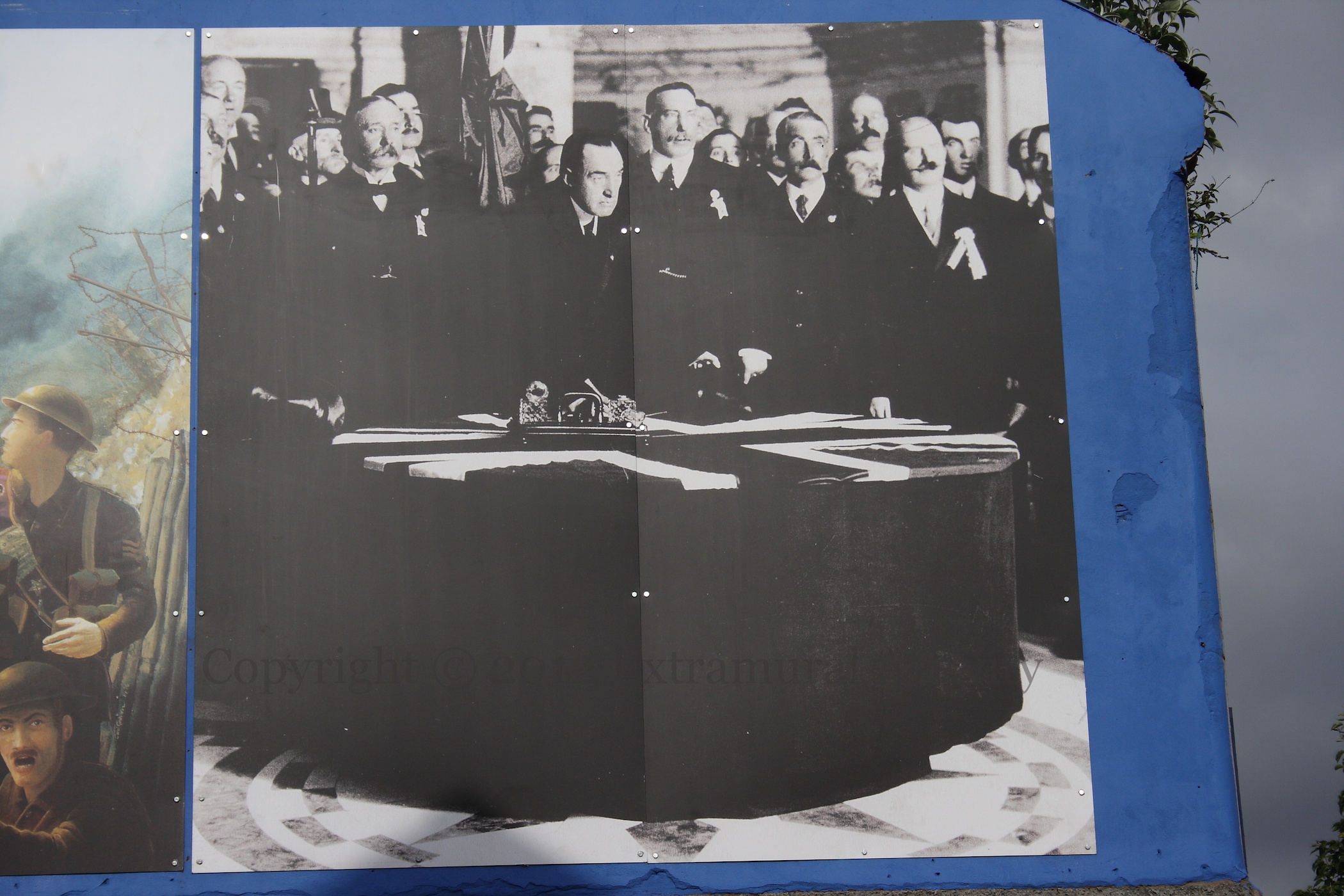
Carson signing the 1912 Covenant is the second of the pair.
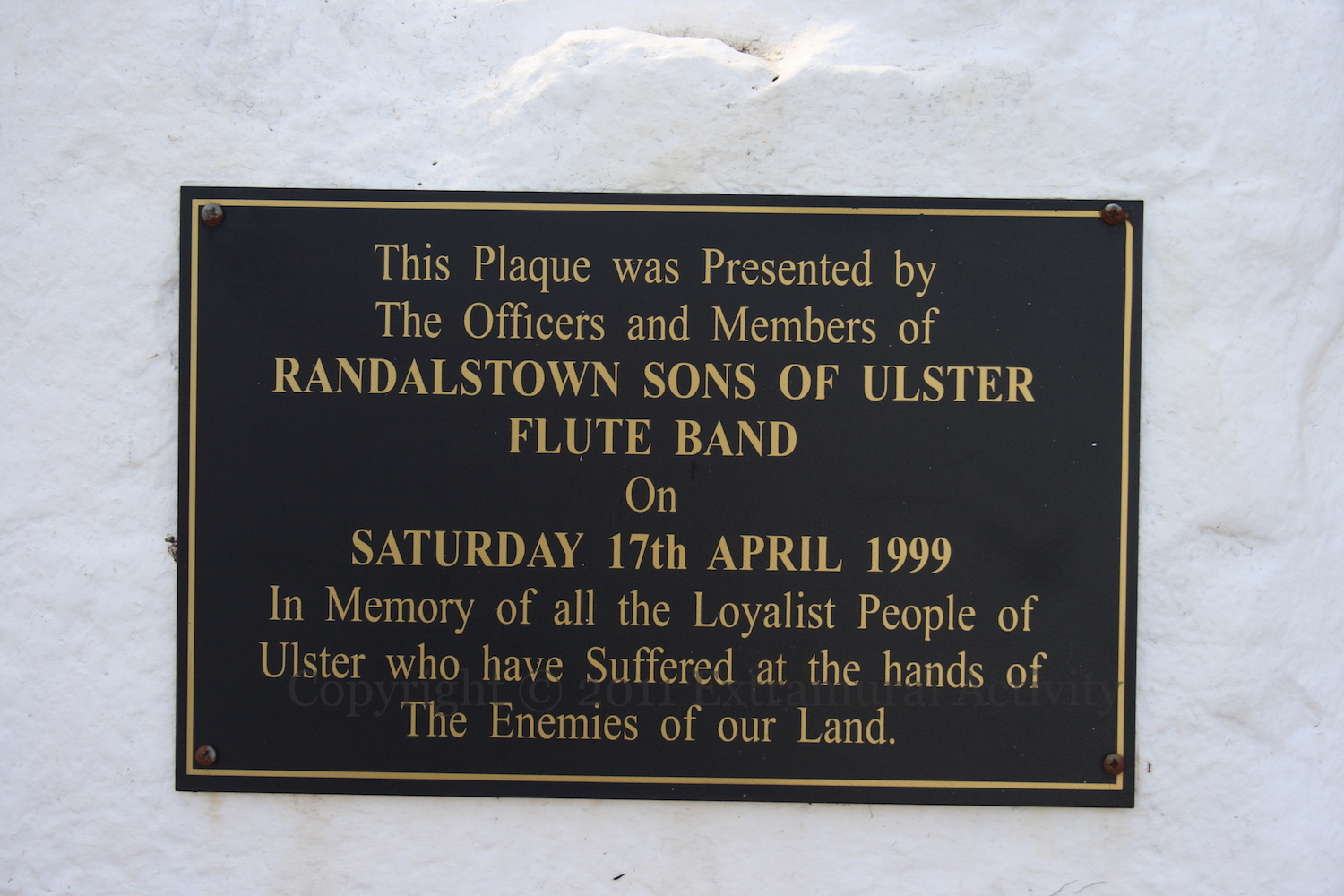
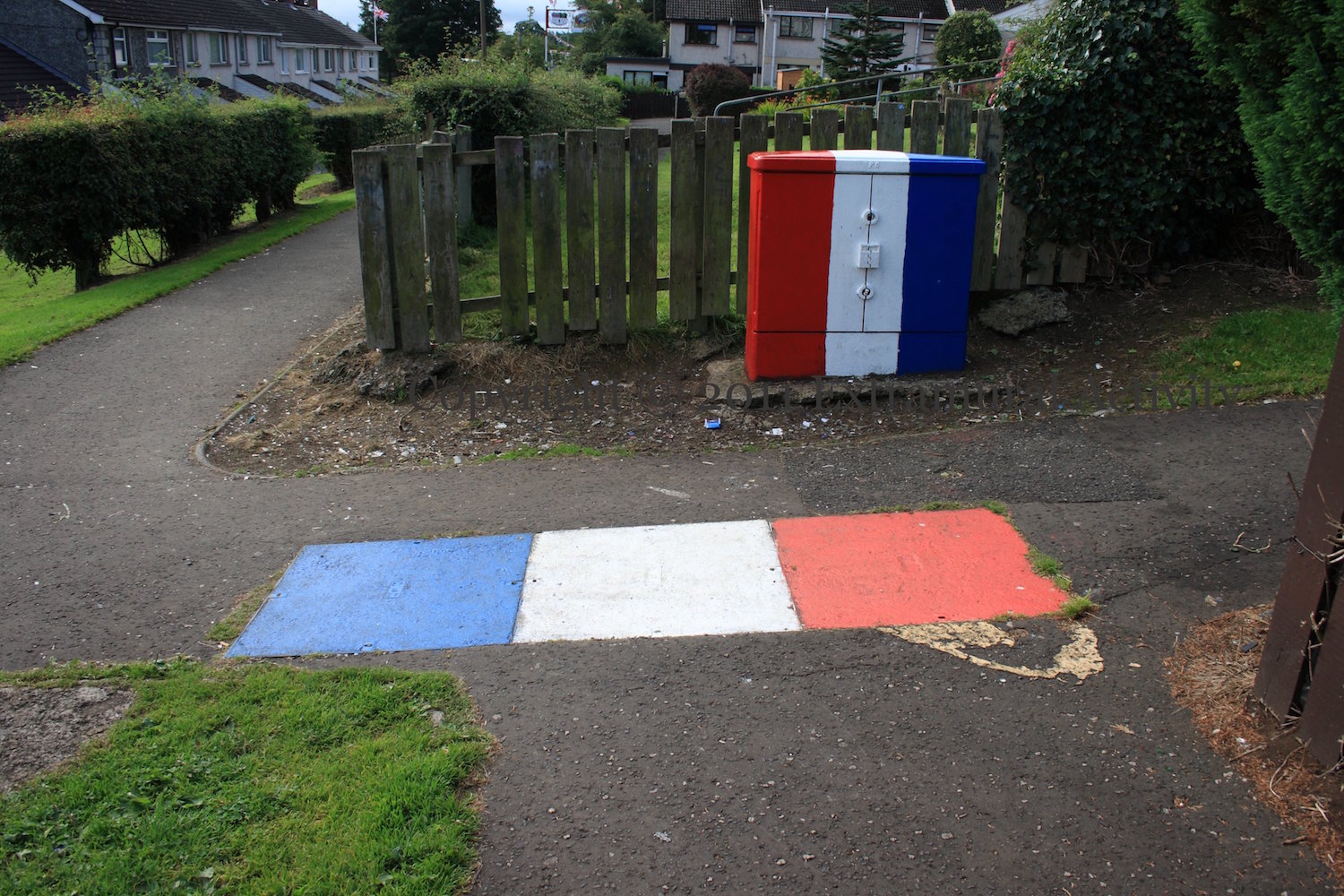
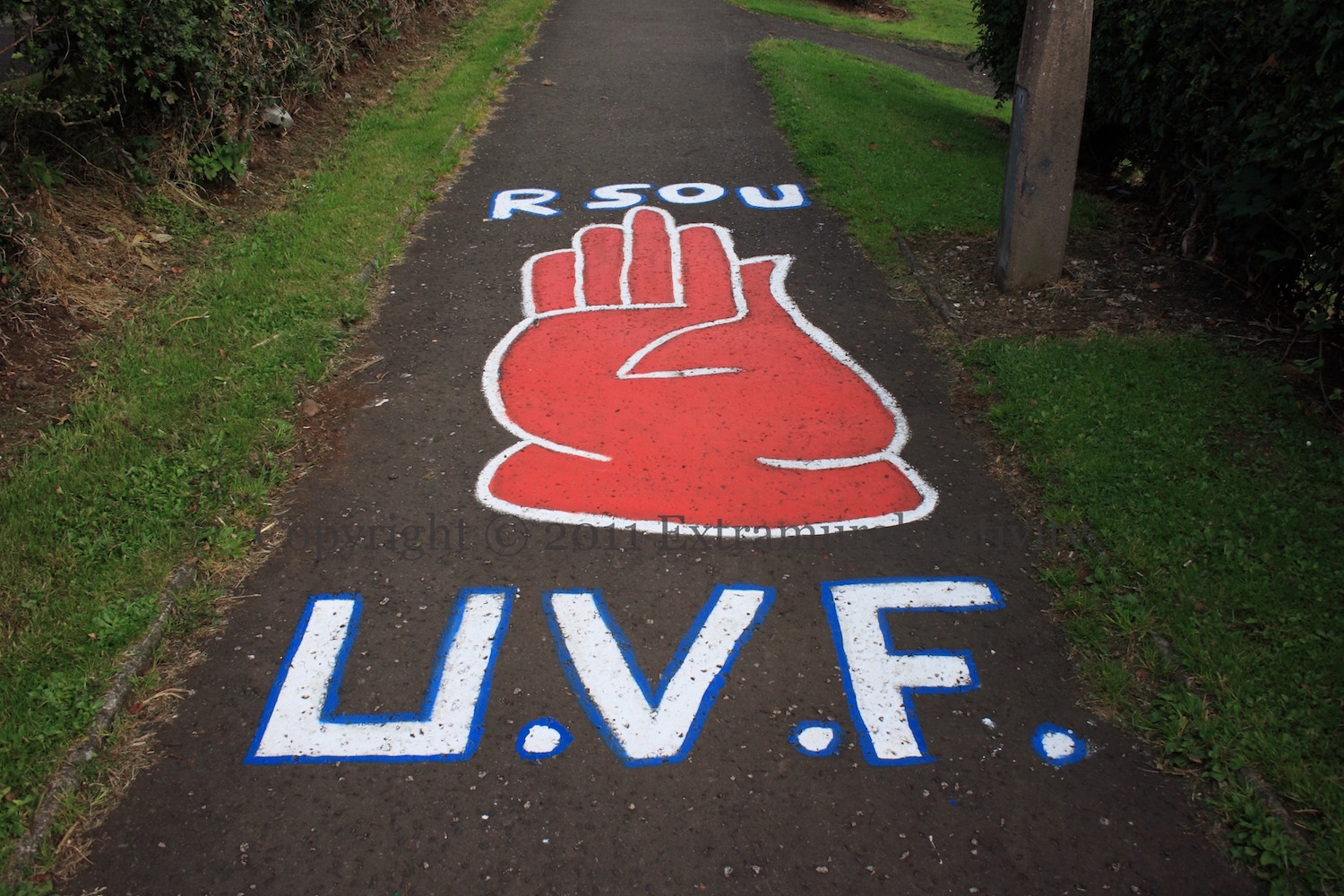
“This plaque was presented by the officers and members of the Randalstown Sons Of Ulster flute band on Saturday 17th April 1999 in memory of all the loyalist people of Ulster who have suffered at the hands of the enemies of our land.” All of the plaque, the arch, the ground painting, and the 36th Division board are sponsored by the Randalstown Sons Of Ulster flute band (tw). Neilsbrook Road, Neilsbrook Park, and Blackthorn Way, Randalstown. For more images from the estate, see Loyalist Neilsbrook.
This series of boards, painted by Caroline Jeffrey, presents life in Larne from the early 20th century. As part of the 2009 Re-Imaging Project, it is largely non-sectarian, and begins with the derivation of the name “Tullygarley” from the Irish for “Hillock of the Grey Calf”, but includes the emblem of the 36th (Ulster) Division and the gunrunning ship Clyde Valley. It replaces a “God save the queen”/1690 mural, visible here.
Info board: “Tullygarley” means “Hillock of the Grey Calf” – thus the grey calf grazing with the cows.
The 36th Ulster Division – In September 1914 the Ulster Division was formed from the Ulster Volunteer Force which raised thirteen battalions for the three Irish regiments in Ulster.
Bleaching Green – Linen laid out in fields to bleach. The Bleaching Factory interior depicts the Bleaching process. (The building is currently derelict.) Blue Flax Flowers are the national floral emblem of Northern Ireland.
Local Primary School, Inver and Larne, known locally as “the Bridge”, as it looked in the 1930’s with the Inver River running through it. The bridge that the school was named after no longer exists.
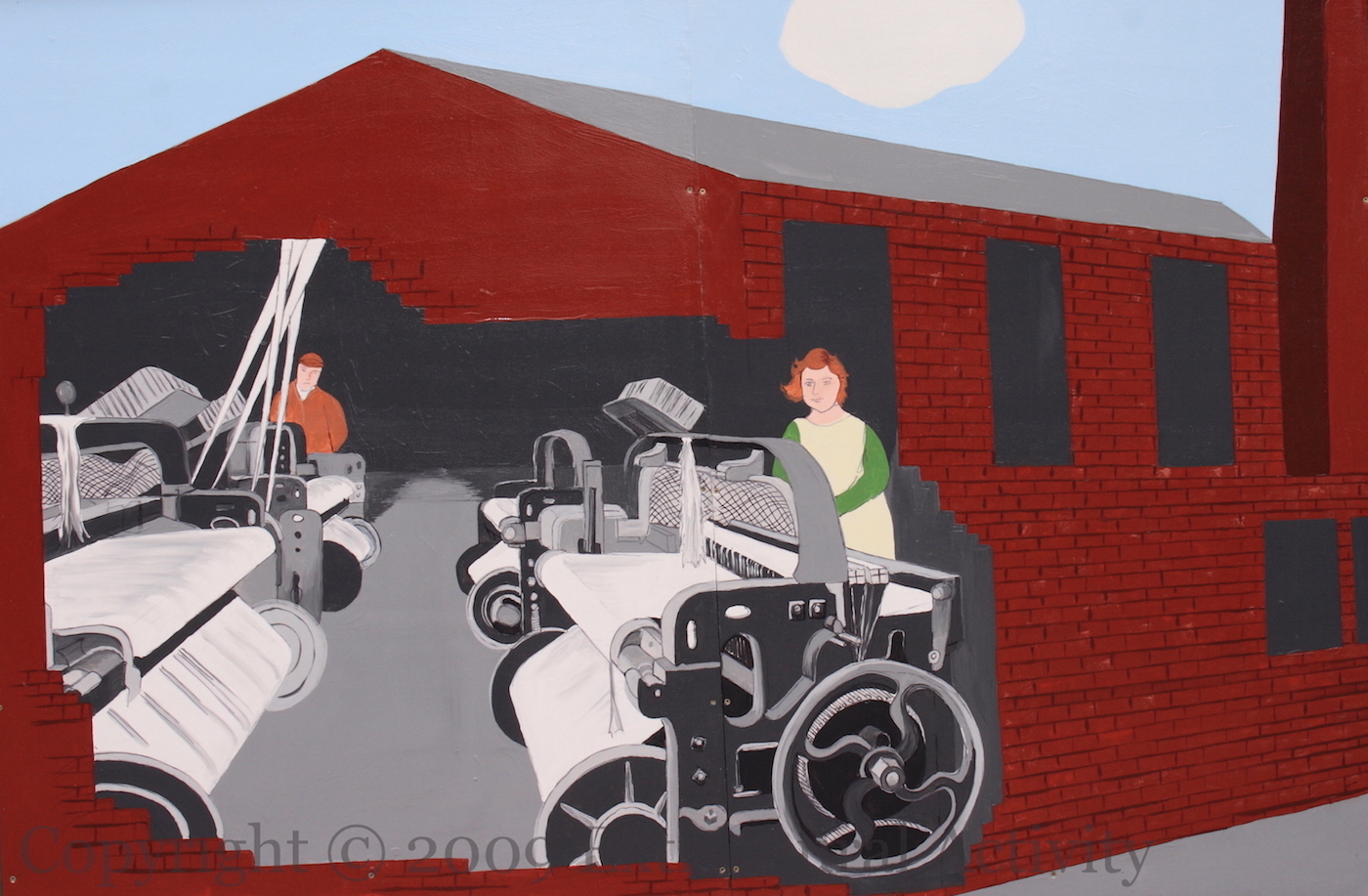
Linen Factory of Glyn [Glynn] Road (no longer exists, site of abandoned garage) with inset depicting workers with weaving machines (circa 1924).
The old Tullygarley playground (mural site) with the Fountain in the foreground, and rows of houses on either side (Glynn Road and South Circular Road).
Sun Laundry Van. Sun Laundry showing people working inside (now Rea’s Furnishings, Bank Road).
Larne Lough – it is an area of special interest, a special protection area and a Ramsar site in order to protect the wetland environment.
SS Clyde Valley – launched in July 1886. Was used in 1914 to transport arms from Hamburg to Larne.
Roseate Tern – Larne Lough is the only breeding colony in Northern Ireland for the Roseate Tern, one of the UK’s rarest birds.








 Extramural Activity