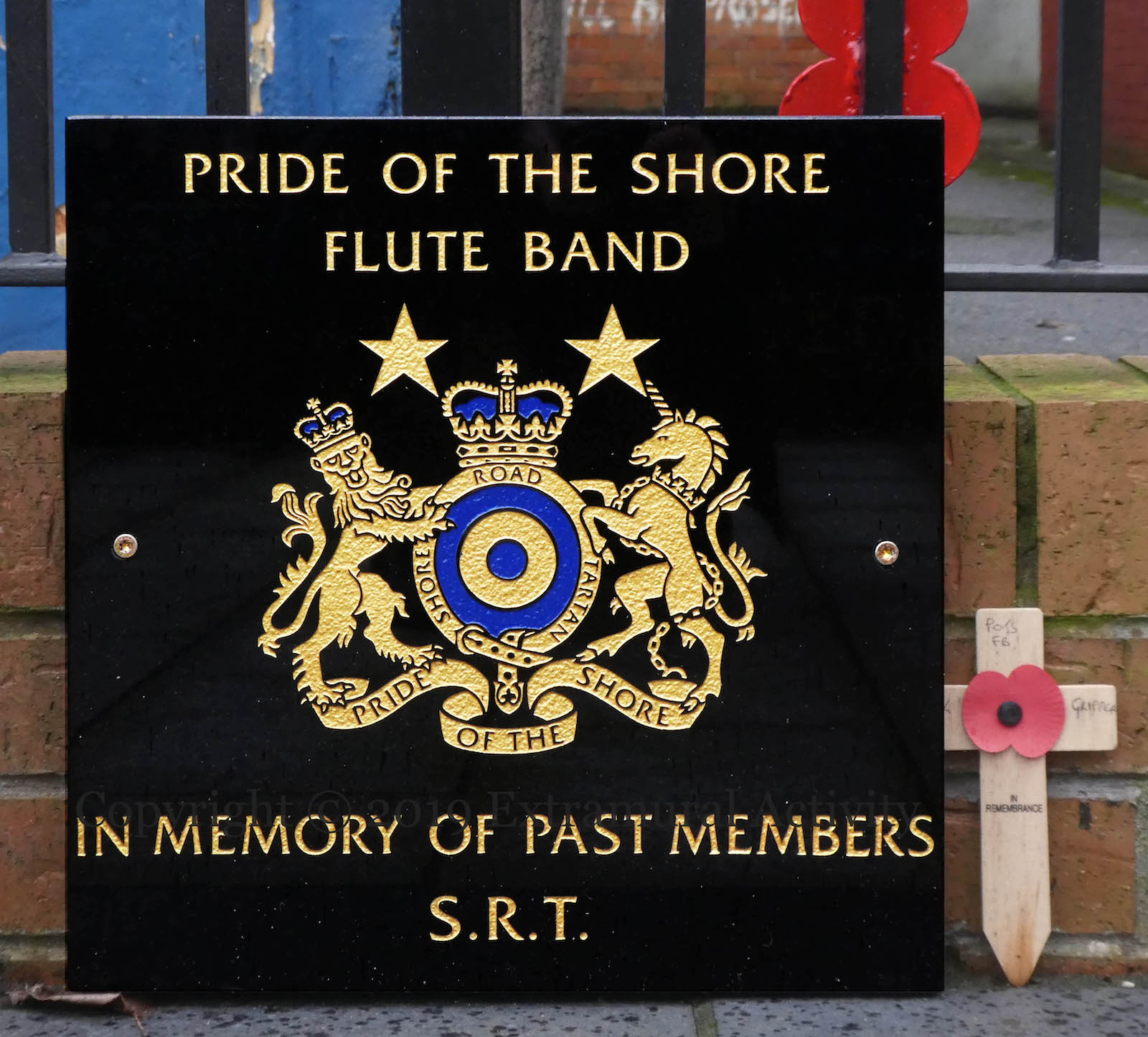
“Pride of the Shore flute band [Fb]. In memory of past members. SRT [Shore Road Tartan].” Part of the Joint Forces memorial on York Road.
Click image to enlarge
Copyright © 2019 Seosamh Mac Coılle
X06951
“Pride of the Shore flute band [Fb]. In memory of past members. SRT [Shore Road Tartan].” Part of the Joint Forces memorial on York Road.
Click image to enlarge
Copyright © 2019 Seosamh Mac Coılle
X06951

Ballyclare Comrades football club – motto is ‘Nihil nisi optimi’ [nothing but the best] – was founded in 1919 by members of the local Great War ‘comrades’ association. That heritage is used here for the Ballyclare Protestant Boys flute band. In the centre, between images from WWI, the flowers of the four ‘home nations’ are joined by orange lilies, and in the shield are the lion and the unicorn from the coat of arms of the UK.
“To Flanders fields some men in our town were sent and along their way many would repent their priority goal to keep Ulster free that we may have freedom both you and me as part of Great Britain they fought and died and their names we will remember and remember with pride. Lest we forget. Comrades from Ballyclare. Nihil nisi optimi. The Comrades.” “Ballyclare Protestant Boys Est. 2004”

Click image to enlarge
Copyright © 2019 Seosamh Mac Coılle
X06941 X06942 [X06943] main st

“William ‘Billy’ Hanna” murdered 21/6/1978. We will remember. Pride Of Ardoyne FB.” On the 40th anniversary of his death, a memorial plaque and cross were mounted at the top of Ardoyne Road to Billy Hanna, founder member of the Pride Of Ardoyne flute band. The word “murdered” is notable: Hanna was shot by the SAS as they ambushed a PIRA attempt to bomb the Ballysillan post office depot. It is alleged that the SAS snipers opened fire without warning and discharged 170 rounds (An Phoblacht); alternative interpretations of the event put the focus instead on Hanna being caught in the crossfire (BBC-NI) or mistaken for an IRA member (Sutton).


Click image to enlarge
Copyright © 2019 Seosamh Mac Coılle
X06614 X06612 X06613 h/t Tony Crowley
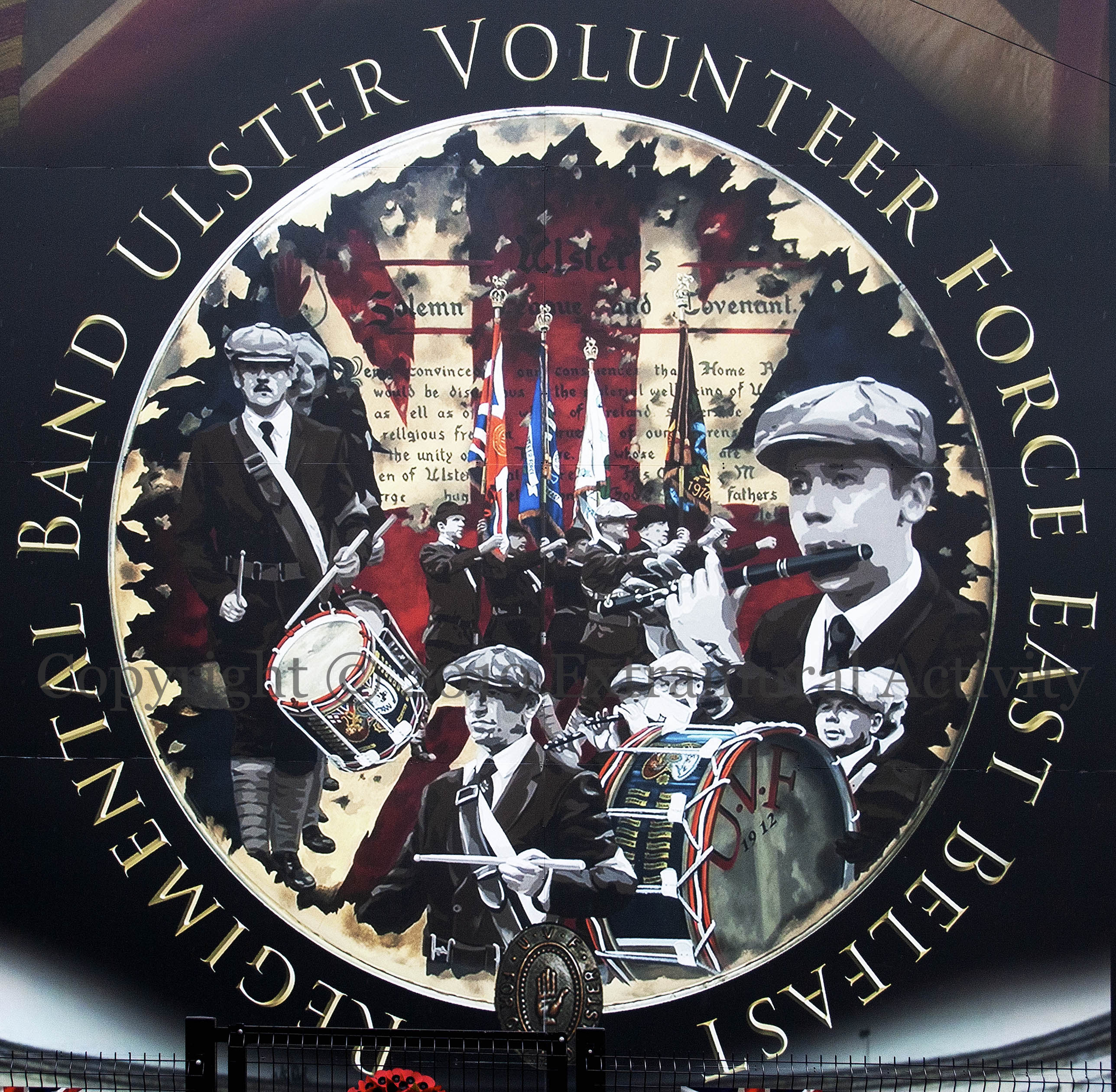
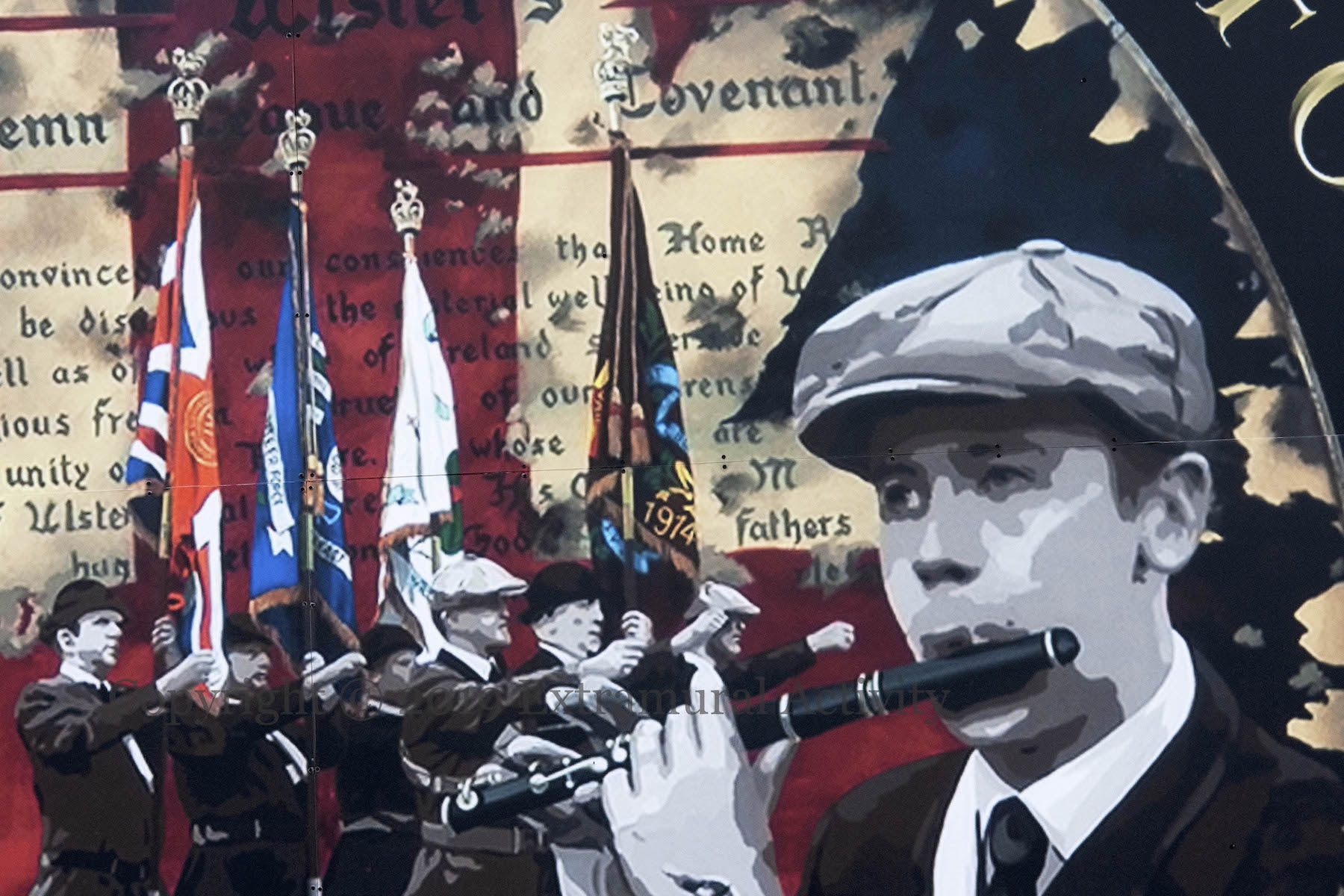
Ronnie’s hardware shop in east Belfast, vacant for many years and the site of Our Brave Defenders, was finally torn down last year and a pocket park created with murals commemorating east Belfast volunteers who died in the Great War and the UVF Regimental Band (tw), this year celebrating its 50 anniversary (video of the launch). See previously: 40th anniversary banner at the same spot (Belvoir Bar).


Click image to enlarge
Copyright © 2019 Seosamh Mac Coılle
X06573 X06574 X06571 X06572 St Leonard’s Cr/old Newcastle St
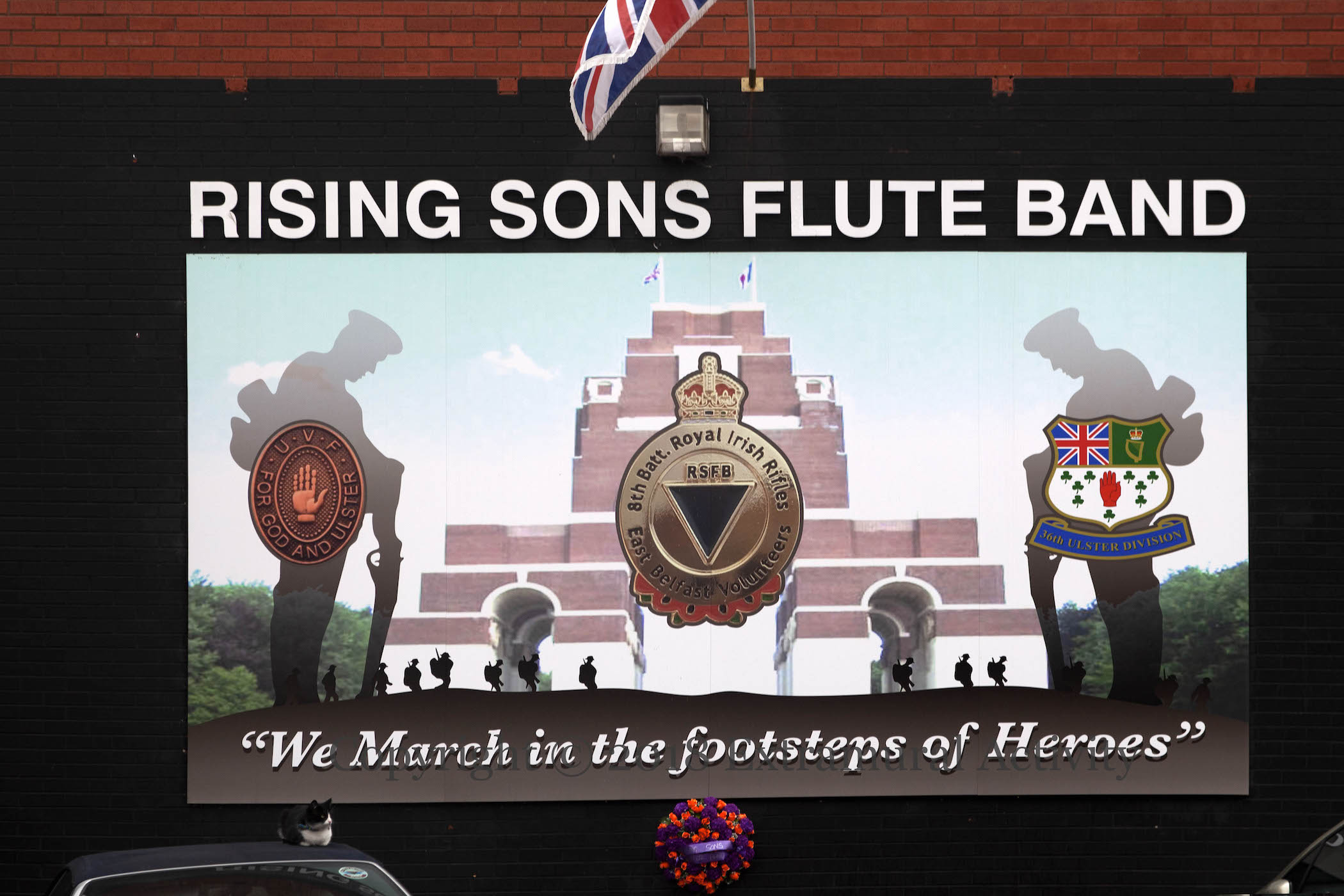
The 8th battalion of the RIR was drawn from east Belfast’s Ulster Volunteers in 1914. The board shown above, on the practice hall of Rising Sons Flute Band (Fb), shows the Thiepval Memorial to the missing of the Somme – the heroes that in whose footsteps the band claim to march.
The board replaces the tarp saying “Loyalists welcome“.
Click image to enlarge
Copyright © 2018 Seosamh Mac Coılle
X06398 [X05378]
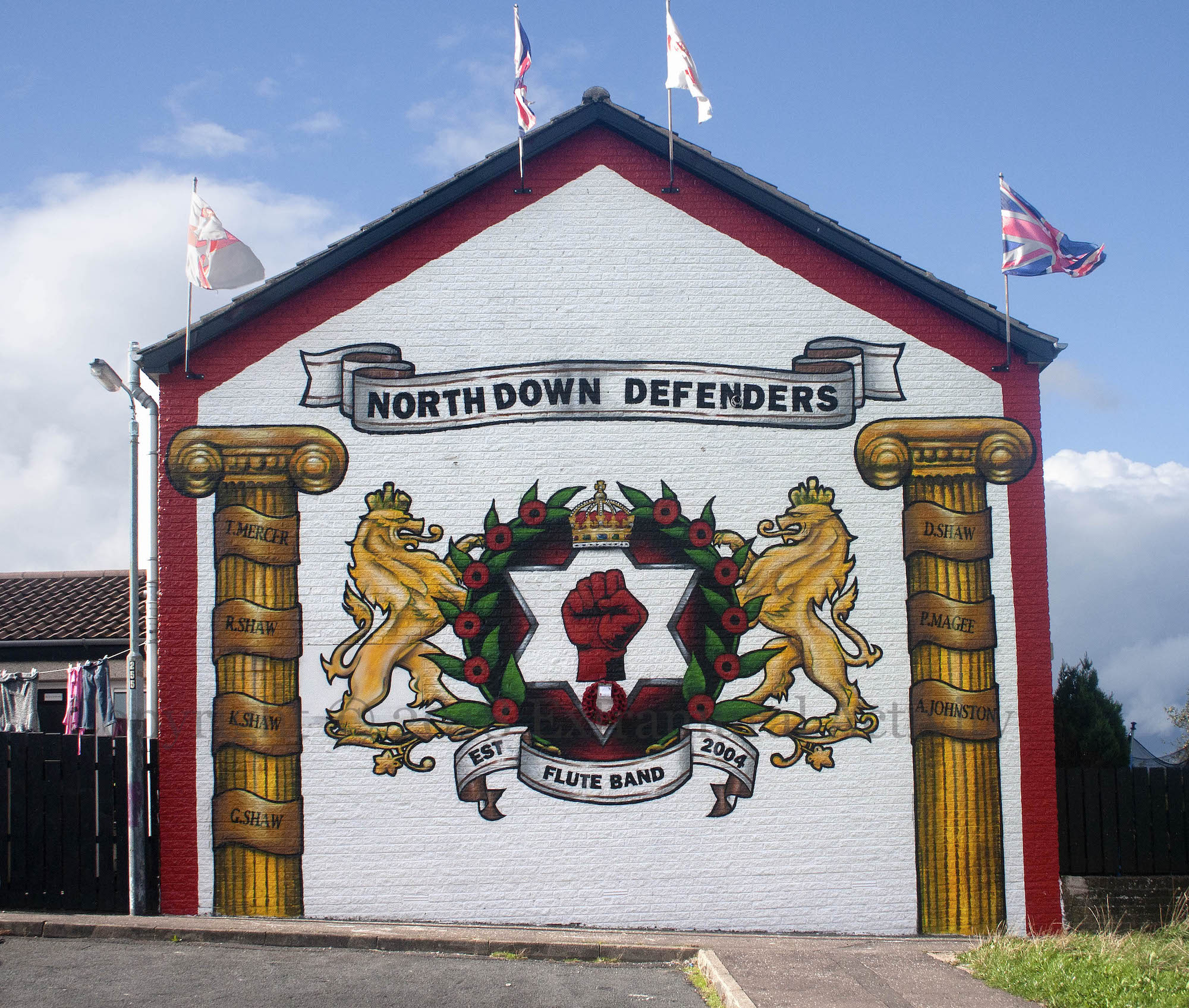
Dee Stitt of the UDA resigned last week as chair of Charter NI citing the strain on his family caused by negative media attention (BBC-NI | Irish News). At the end of 2016, Stitt was criticised for remarks describing his North Down Defenders (tw | Fb) as the “homeland security” of the area and describing working-class estates as “jungles” in which there is always a “big guy” (Guardian video 8 min mark ff.| BelTel | ITV) . The mural above does not directly indicate ties to the UDA/UFF, except for the red fist. For a more explicit NDD board further down the estate, with UDA, UFF, UYM, and LPA flags, see North Down Defenders.
For the recent tension between UDA factions in north Down, see Ulster Defence Unions.
Replaces the mural to VC winner Sir Edward Bingham.
Click image to enlarge
Copyright © 2018 Seosamh Mac Coılle
X06076

This vintage piece is next to Linfield Gardens, off Sandy Row. (For the mural all the way back in 1997, see M01330.) Ulster First Flute (Fb) shares the emblem of the other UFF – the Ulster Freedom Fighters – a red first (with or without the drops of blood). See also: Gareth ‘Big Henry’ Morrison on Loyalist Avenue.
Click image to enlarge
Copyright © 2018 Seosamh Mac Coılle
X04856
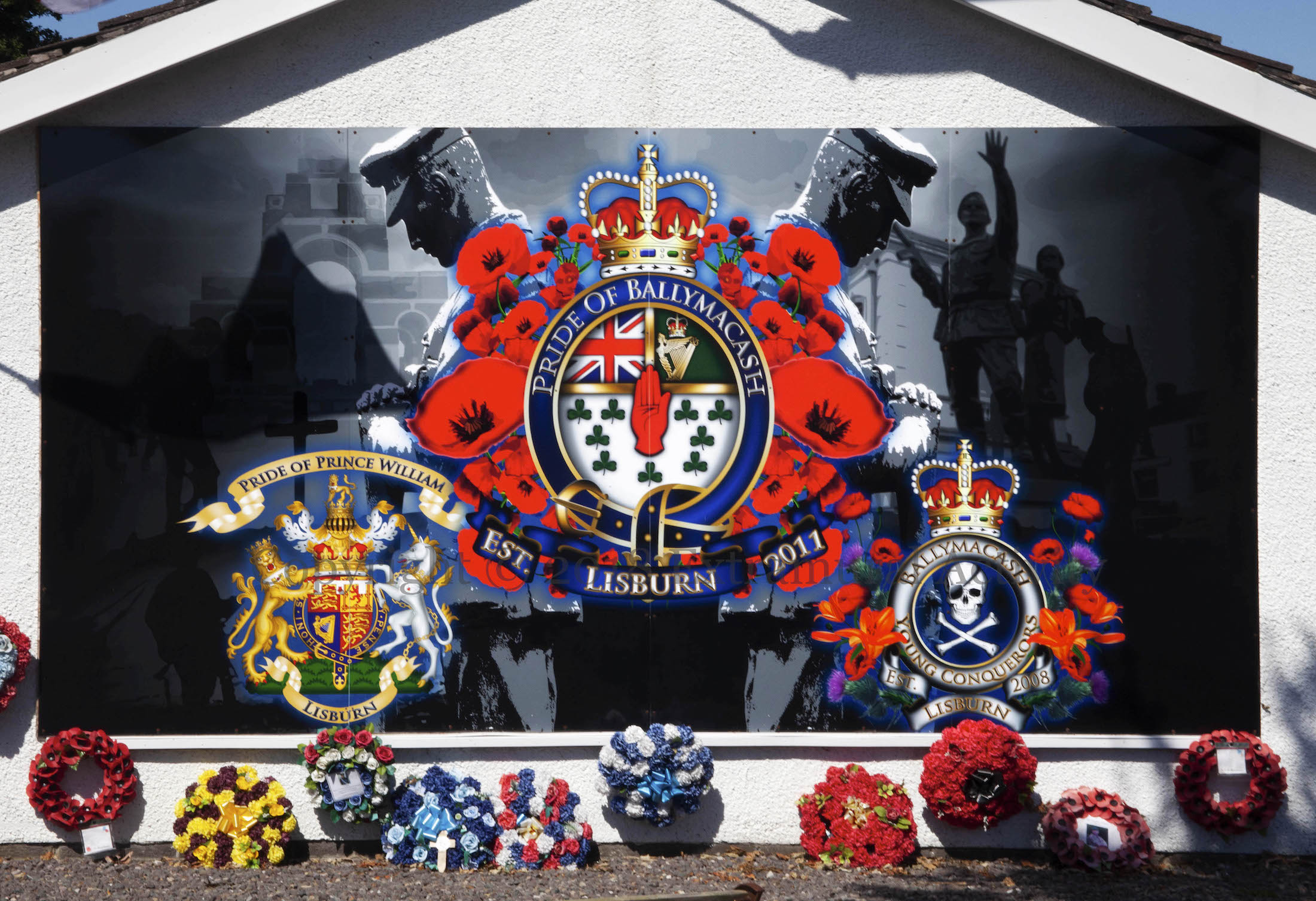
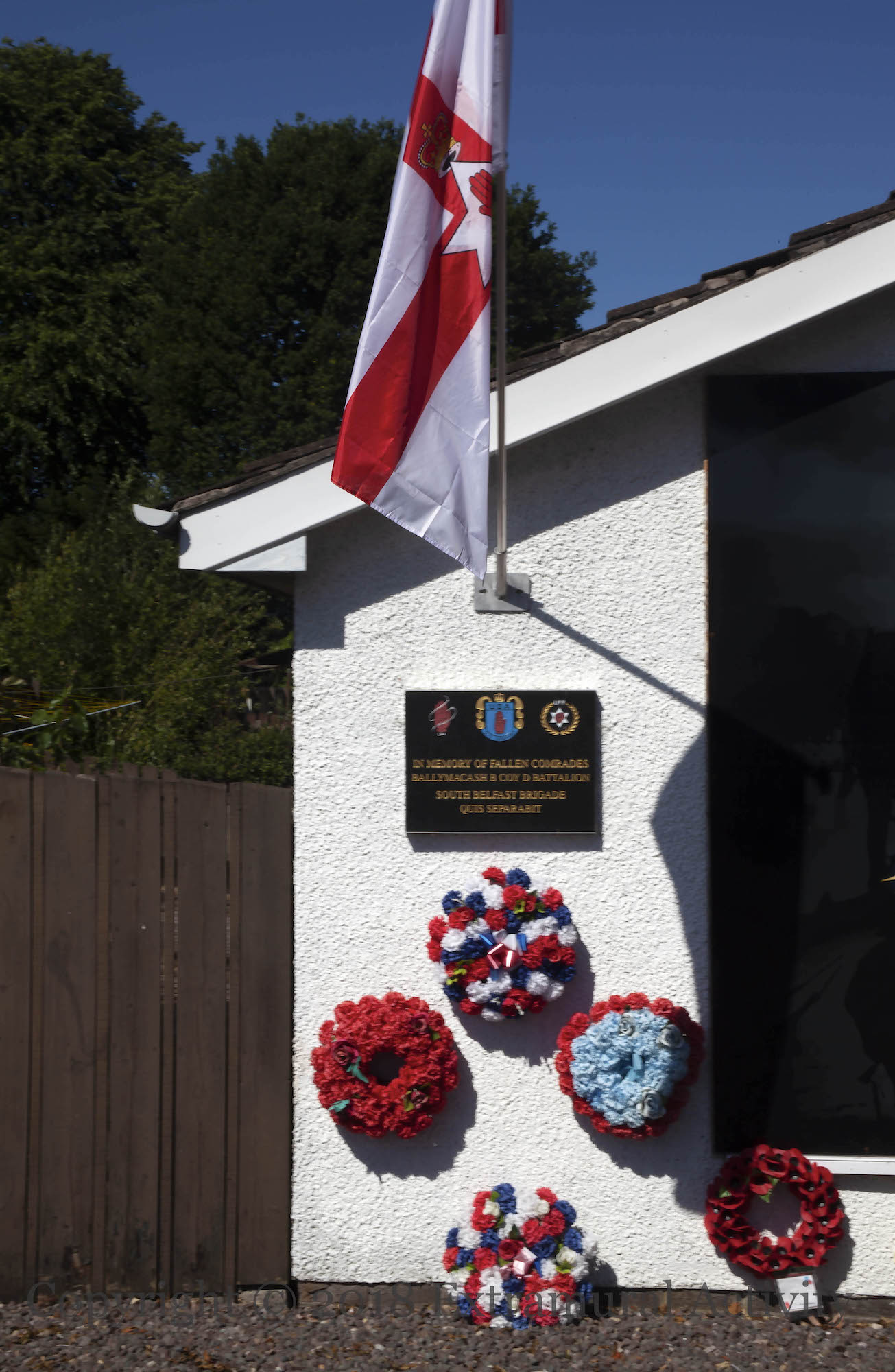
The Pride Of Ballymacash flute band, formed in 2011 from the Pride Of Prince William (bottom left) and Ballymacash Young Conquerors (bottom right), uses the emblem of the 36th (Ulster) Division, in the centre of the mural. In the background on the left is the Thiepval Memorial and, on the right, the UDR memorial statue in Market Square, Lisburn. To the left (in the second image) is a UDA plaque “In memory of fallen comrades Ballymacash B coy D battaltion, South Belfast Brigade. Quis separabit.” For a close-up of the memorial on the ground, see Death & Life.

Click image to enlarge
Copyright © 2018 Seosamh Mac Coılle
X04999 X06001 X04998
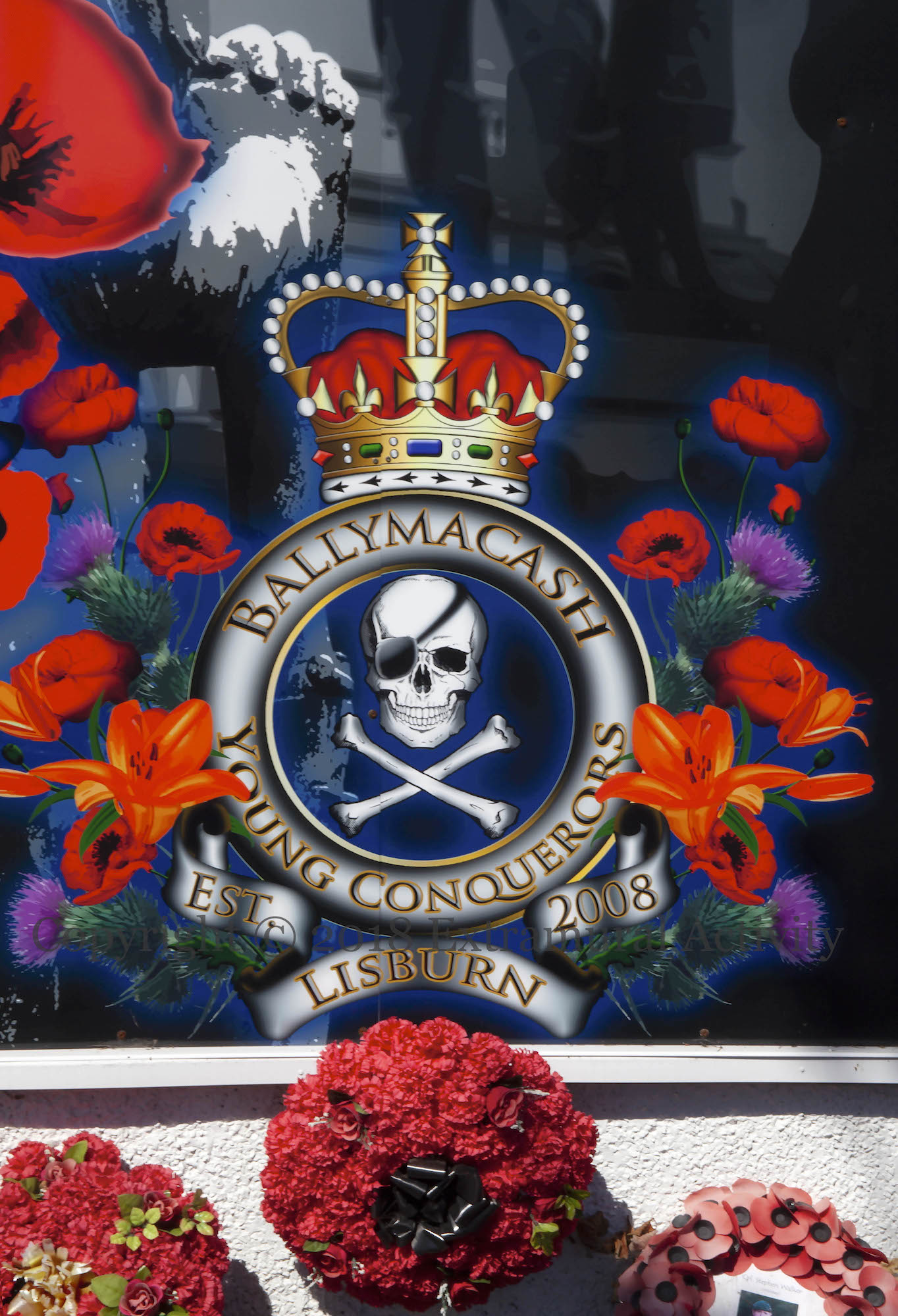
The skull-and-crossbones is the emblem of the Ballymacash Young Conquerors, which merged with the Pride Of Prince William in 2011 to form the Pride Of Ballymacash. (Fb) The symbol is a potent one, however, and still used by the new band in addition to its own. In the mural in its memorial garden, it is surrounded by poppies, thistles, and orange lilies. If you know the name of the young man in the memorial display (second image), please comment/get in touch.

Click image to enlarge
Copyright © 2018 Seosamh Mac Coılle
X06003 X06002
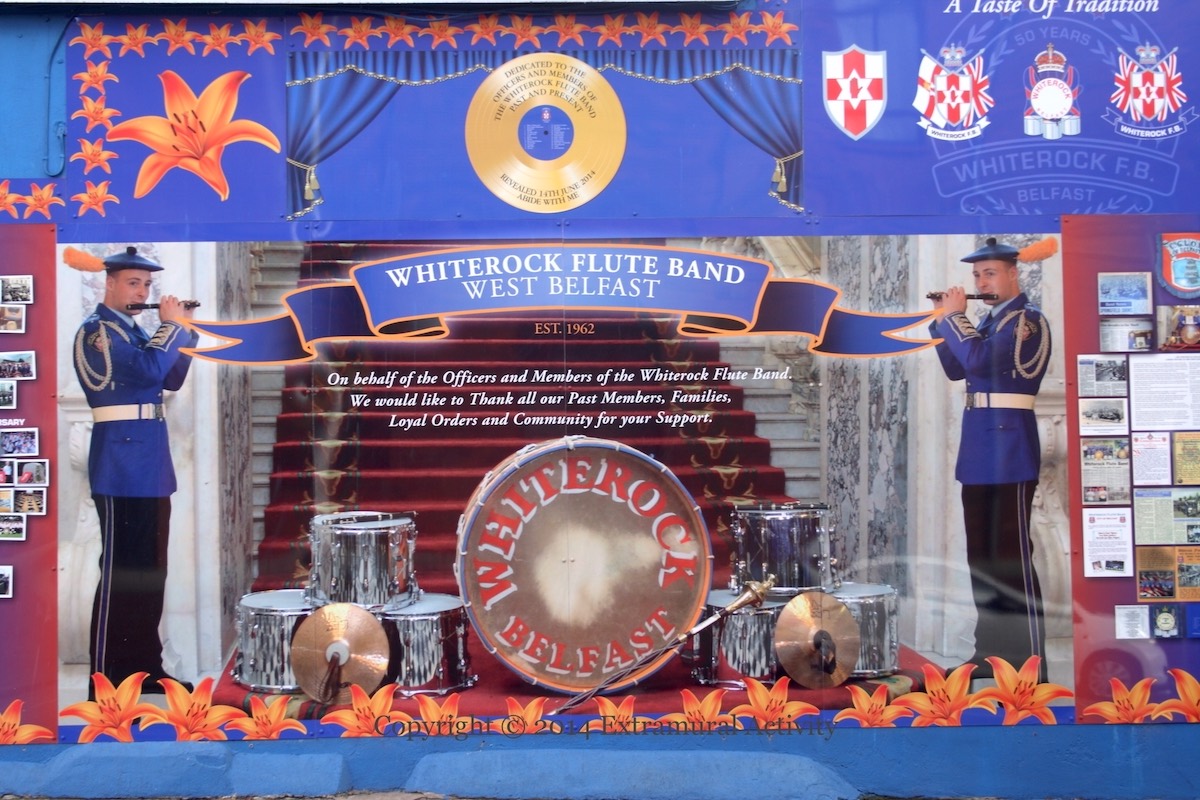
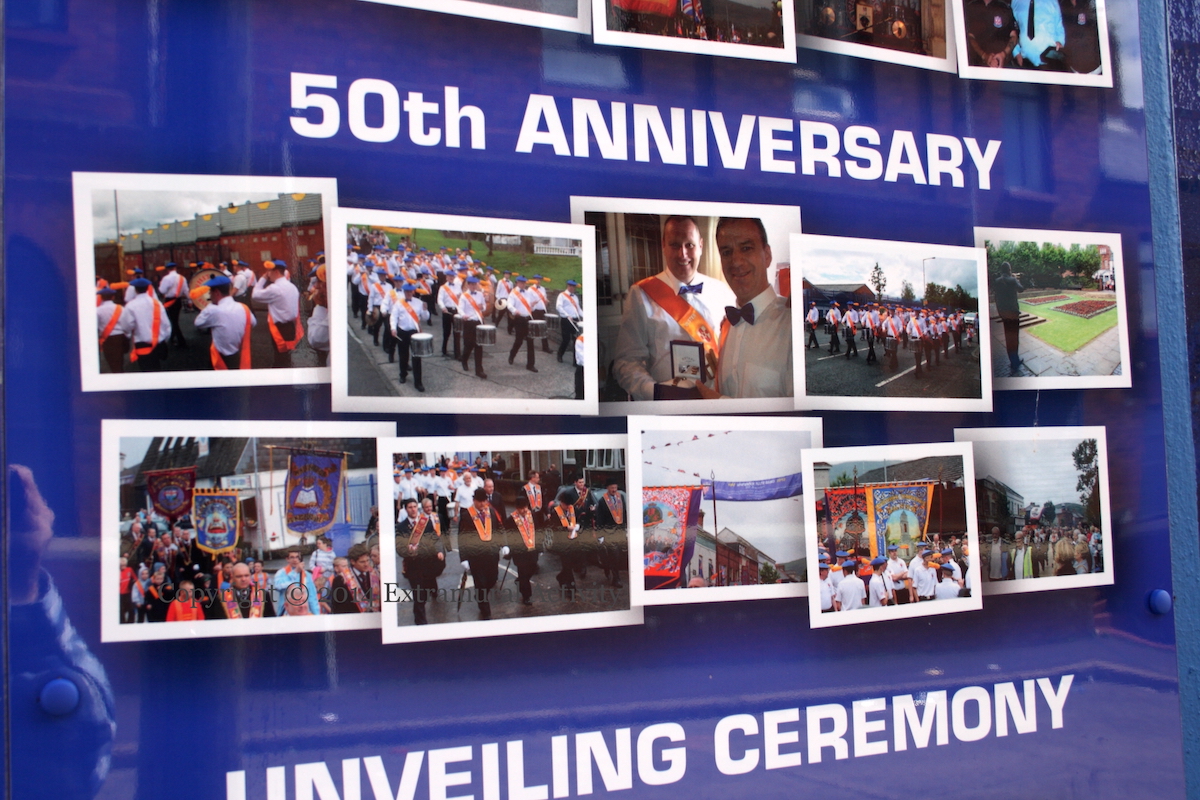
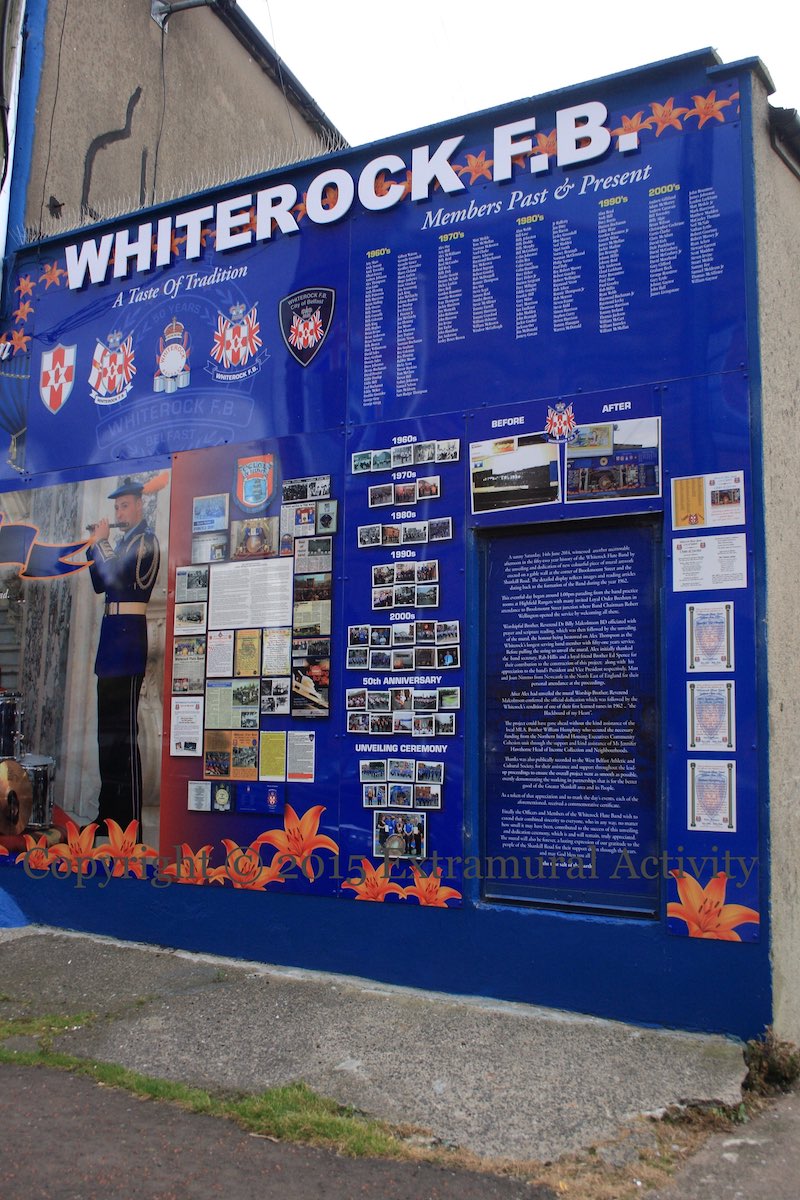
A pre-launch version (from May) of the Whiterock Flute Band mural in Brookmount Street can be seen in the Peter Moloney collection; this includes the main panel and the ‘brief history’ on the left. Since then a golden disc has been mounted above the main panel, and to the right have been added another panel of photographs, a list of members past and present, and an updated history panel. [The final image, from 2015, shows the addition of “Whiterock F.B.” in bold, white, lettering along the top right
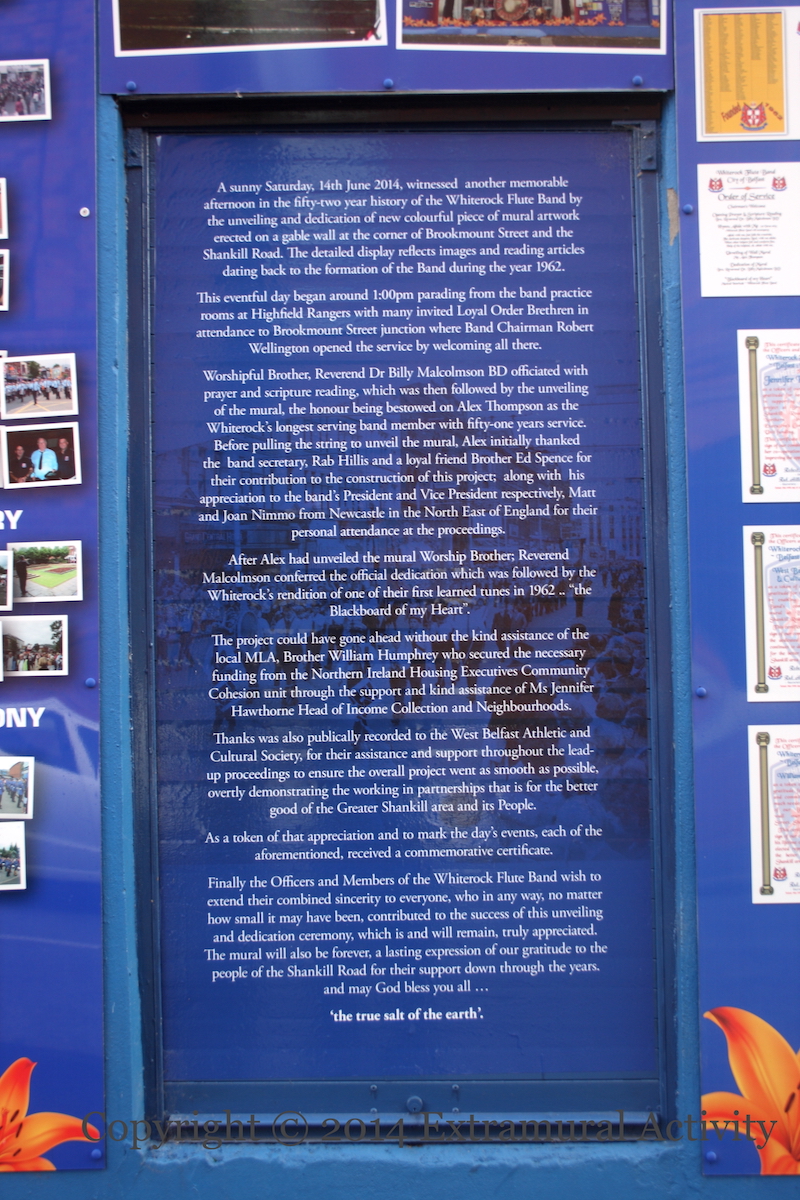
“A sunny Saturday, 14th June 2014, witnessed another memorable afternoon in the fifty-two year history of the Whiterock flute band by the unveiling and dedication of new colourful piece of mural artwork erected on the gable wall at the corner of Brookmount Street and the Shankill Road. The detailed display reflects images and reading articles dating back to the foundation of the band during the year 1962.
This eventful day began around 1:00 pm parading from the and practice rooms at Highfield Rangers with many invited Loyal Order Brethren in attendance to Brookmount Street junction where Band Chairman Robert Wellington opened the service by welcoming all there.
Worshipful Brother, Reverend Dr Billy Malcolmson BD officiated with prayer and scripture reading, which was then followed by the unveiling of the mural, the honour being bestowed on Alex Thompson as the Whiterock’s longest serving band member with fifty-one years of service. Before pulling the string to unveil the mural, Alex initially thanks the band secretary, Rab Hillis and a loyal friend Brother Ed Spence for their contribution to the construction of this project; along with his appreciation to the band’s President and Vice President respectively, Matt and Joan Nimmo from Newcastle in the North East of England for their personal attendance at the proceedings.
After Alex had unveiled the mural Worship Brother; Reverend Malcolmson conferred the official dedication which was followed by the Whiterock’s rendition of one of their first learned tunes in 1962 .. “the Blackboard of my Heart”.
The project could have gone ahead without the kind assistance of the local MLA, Btother William Humphrey who secured the necessary funding from the Northern Ireland Housing Executive’s Community Cohesion unit through the support and kind assistance of Ms Jennifer Hawthorne head of Income Collection and Neighbourhoods.
Thanks was also publically recorded to the West Belfast Athletic and Cultural Society, for their assistance and support throughout the lead-up proceedings to ensure the overall project went as smooth as possible, overtly demonstrating the working in partnership that is for the better good of the Greater Shankill area and its people.
As a token of that appreciation and to mark the day’s events, each of the aforementioned, received a commemorative certificate.
Finally the officers and members of the Whiterock flute band wish to extend their combined sincerity to everyone, who in any way, no matter how small it may have been, contributed to the success of this unveiling and dedication ceremony, which is and will remain, truly appreciated. The mural will also be forever, a lasting expression of our gratitude to the people of the Shankill Road for their support down through the years, and may God bless you all … ‘the true salt of the earth’.”
Update: further additions were made to the display in 2021.
Click image to enlarge
Copyright © 2014 Seosamh Mac Coılle
X05326 [X05327] X05328 [X05323] [X05325] X05324
Copyright © 2015 Seosamh Mac Coılle
X05340
 Extramural Activity