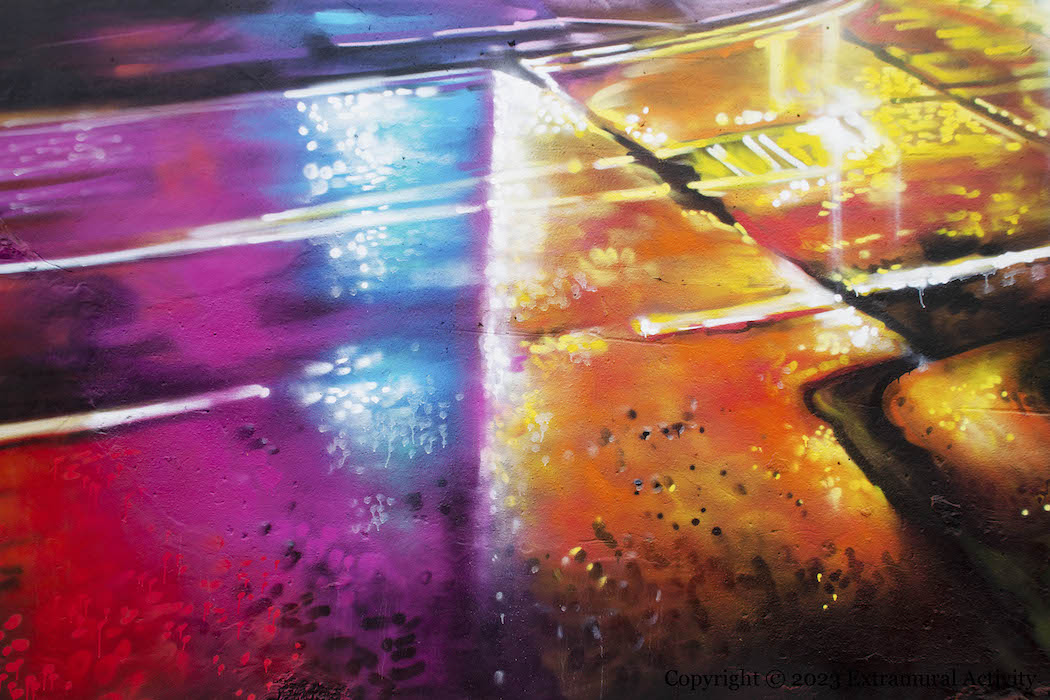
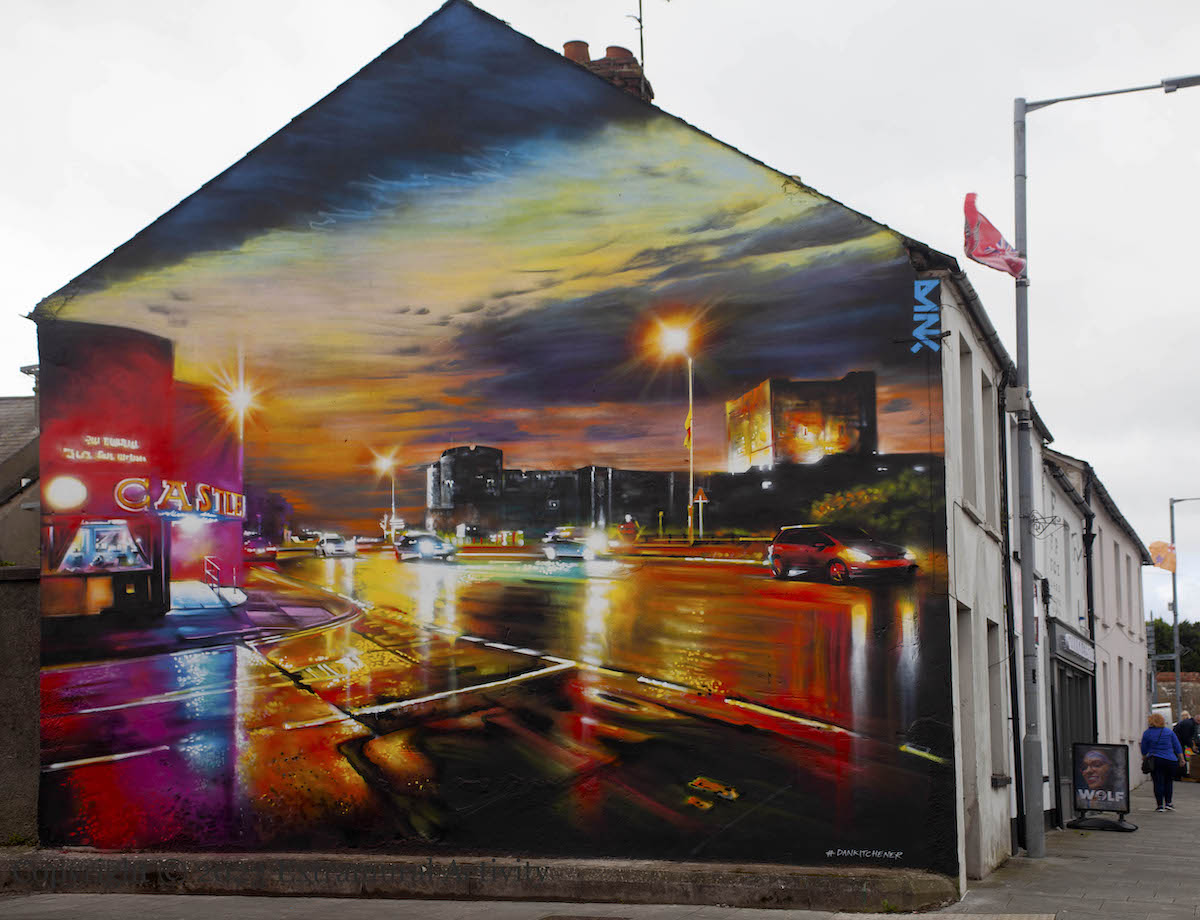
Here is Carrickfergus castle by Dan Kitcherner (ig), painted on a wall in the town centre that had a piece of “RIP GFA protocol” graffiti on it (Street View). The mural is based on the actual scene, though the shopfront marked “castle” is actually Mayur Indian restaurant.
Funded by the International Fund for Ireland’s Peace Impact Programme (BelTel).
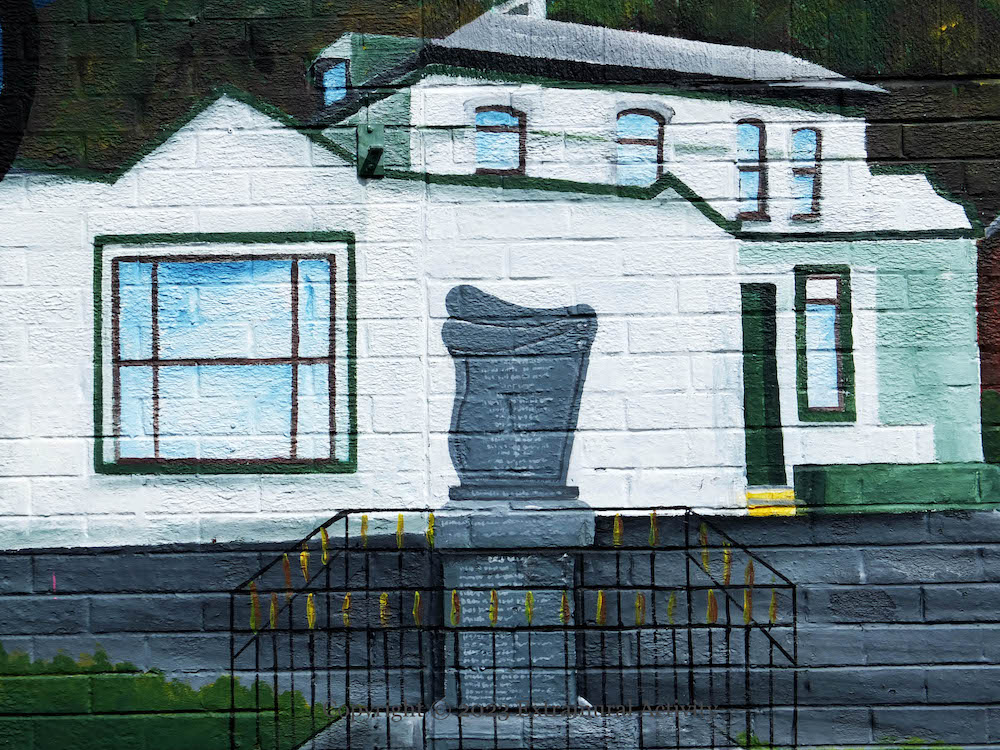
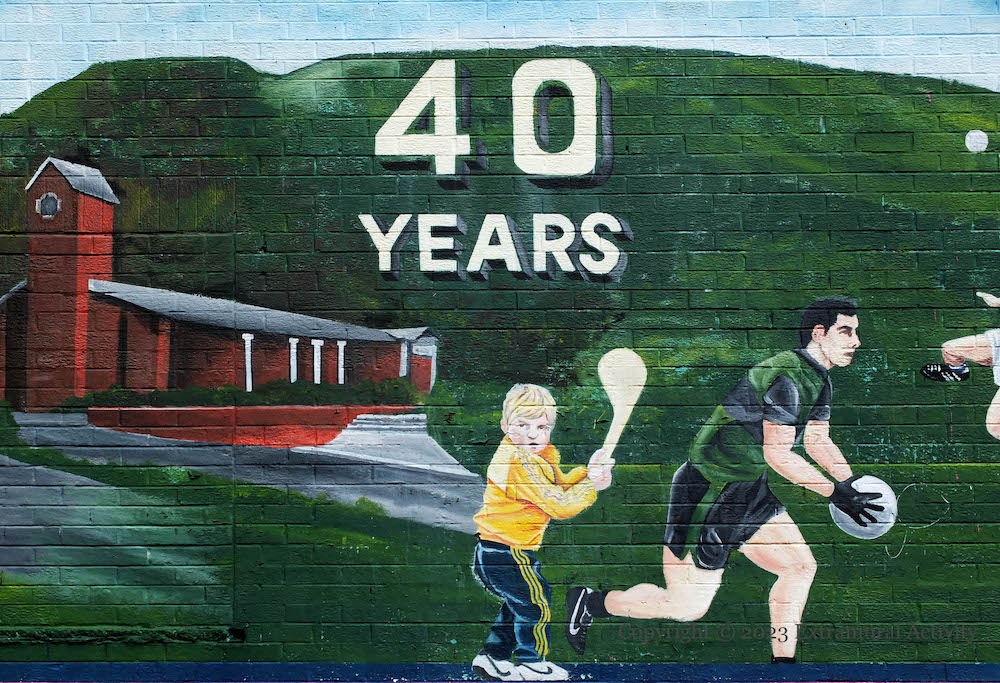
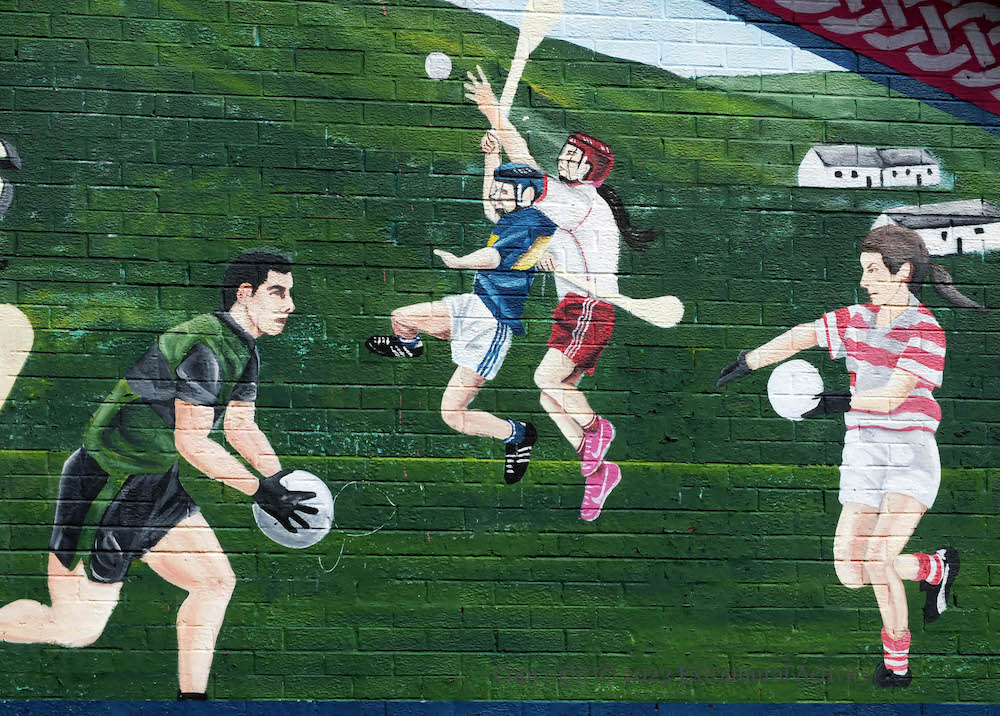
Glencolin estate was built next to Moyard House (which in 1984 became home to the Roddy’s (web), shown in the image directly below) on the Glen Road in 1979 (Belfast Forums). For the fortieth anniversary of “eastát Ghleann Collaınn” the mural at the entrance to the estate was (belatedly) repainted. The composition of the mural remains as in the previous version, with the Roddy’s and Oliver Plunkett church in the shadow of Dubhaıs and Slıabh Dubh; they are now joined by images of Gaelic games. The Bobby Sands quote has been removed.
The 2018 side-wall shows boxer Brendan Irvine — “the wee rooster” — who represented Ireland in the Tokyo (2020) and Rio (2016) Olympics at flyweight (Olympics).
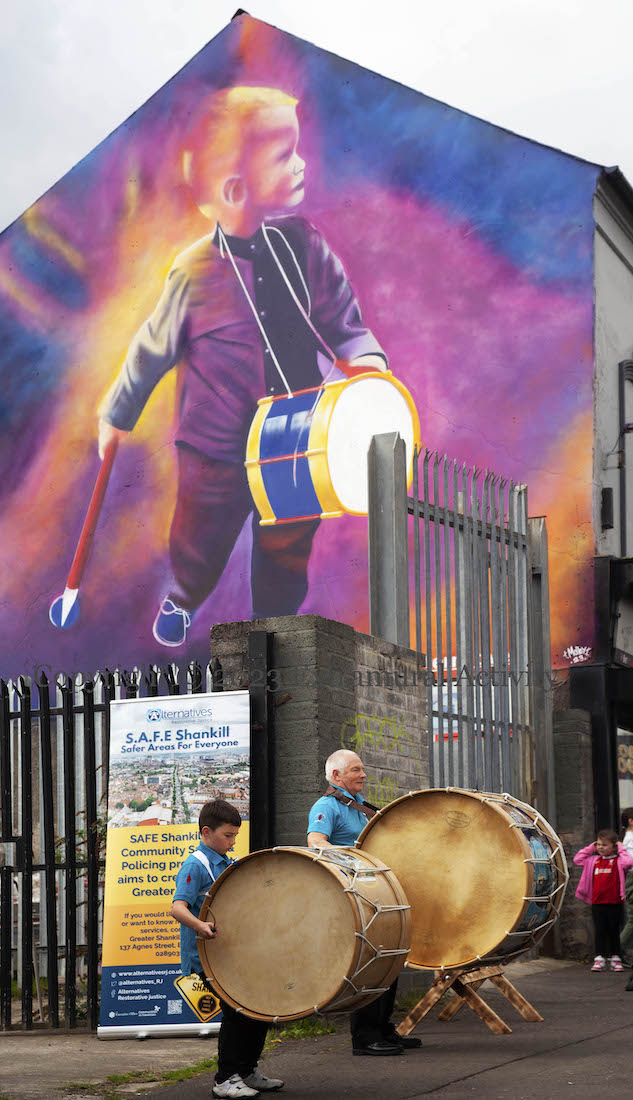
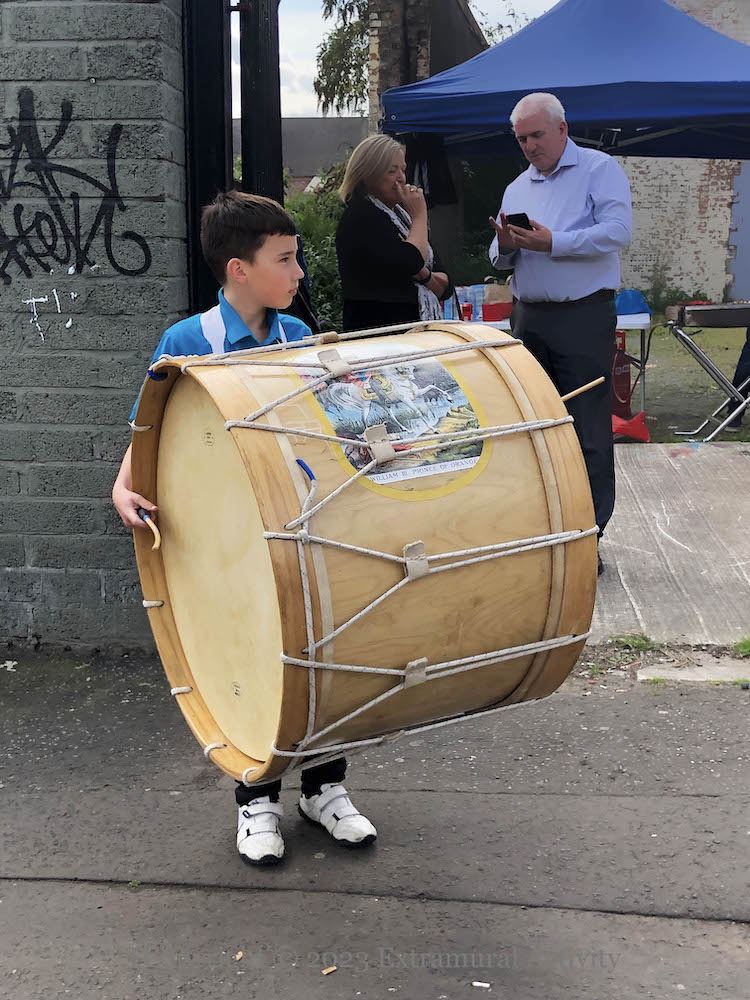
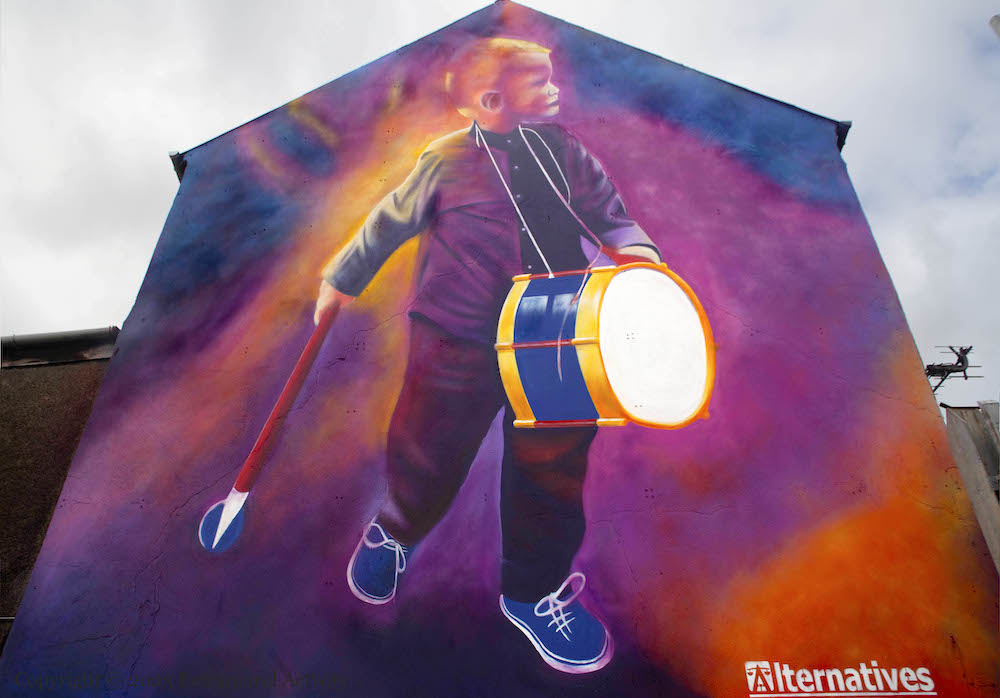
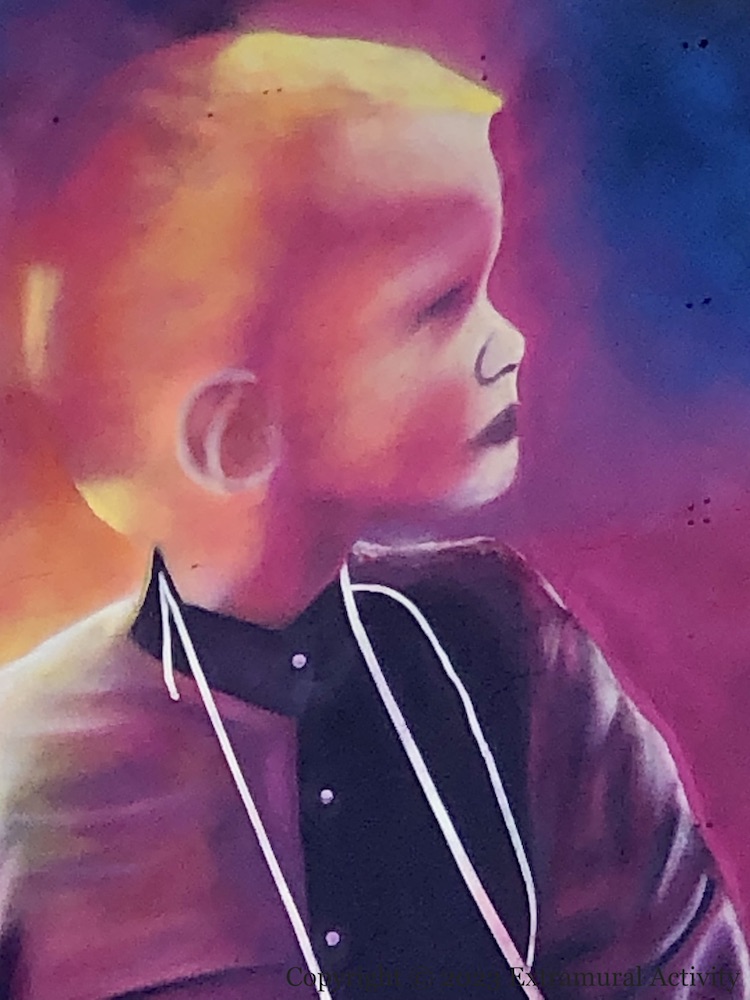
Members of Bannside Drumming Club (Fb) and Shankill Road Defenders (Fb) were on hand for the official launch of the Drummer Boy mural at the entrance to the Shankill on Peter’s Hill.
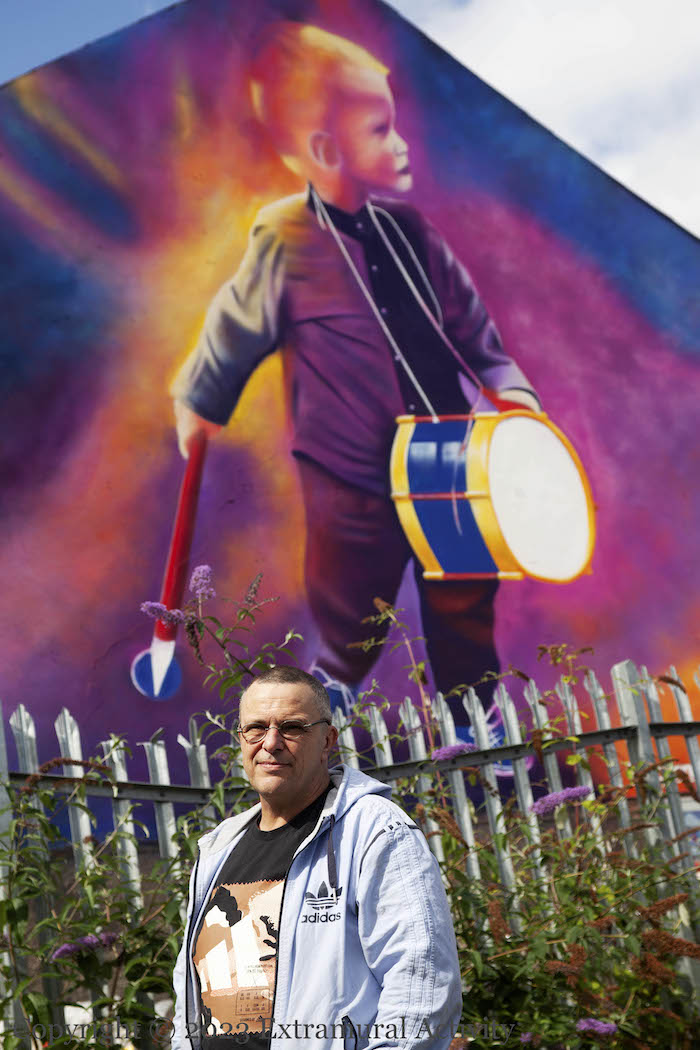
Stacey Graham from Alternatives (Fb) introduced DUP councillor (for Court) Ian McLaughlin, who said that the mural — painted by Glen Molloy (ig, pictured below) — would create “a welcoming, positive atmosphere here at the gateway to the Shankill area”.
Tomorrow (August 30th, at 12:30) there will be a family fun-day and the launch of a new mural of a colourful drummer boy. The mural is on Peter’s Hill; it takes the place of the “Original Belfast” murals (2009 and 2020) and before that a UDA emblem (M02480).
Painted by Glen Molloy (ig) with support from SAFE Shankill (see Woodvale OK), Alternatives (web), Executive Office, Communities In Transition.
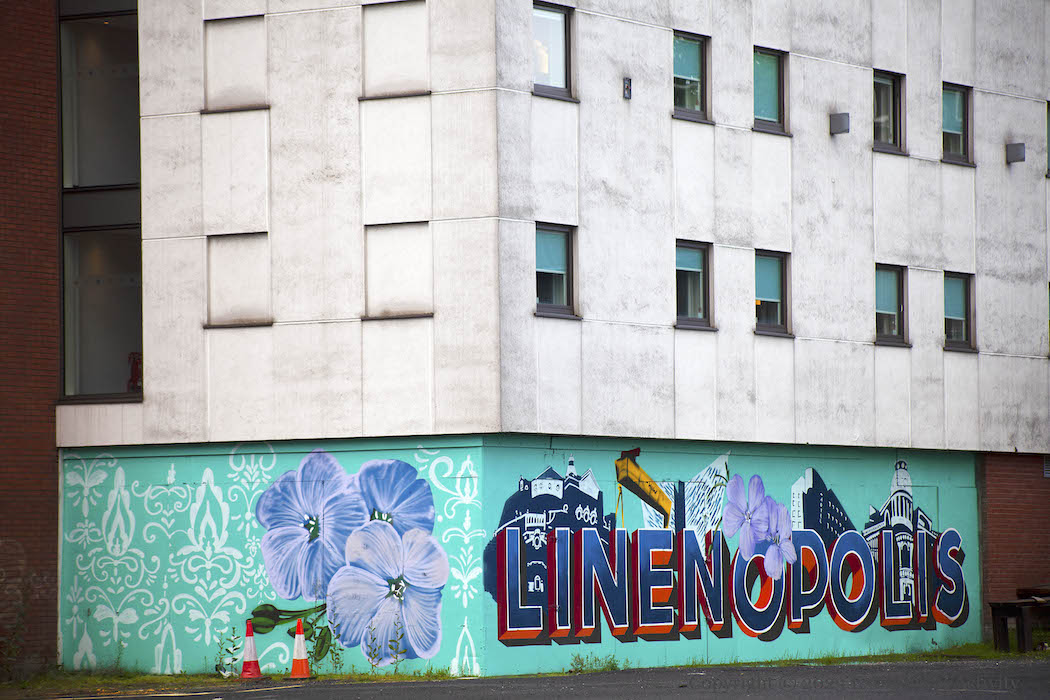
A celebration and exploration of Belfast’s most famous textile, the “linen biennale”, runs until October (web). The Linen Hall library also runs a tour of the “linen quarter” on Thursdays.
Visual Waste’s (ig) Great Victoria Street mural includes various linen quarter buildings: the Grand Opera House, the Europa hotel, and Inst., alongside the H&W cranes and the Titanic museum.
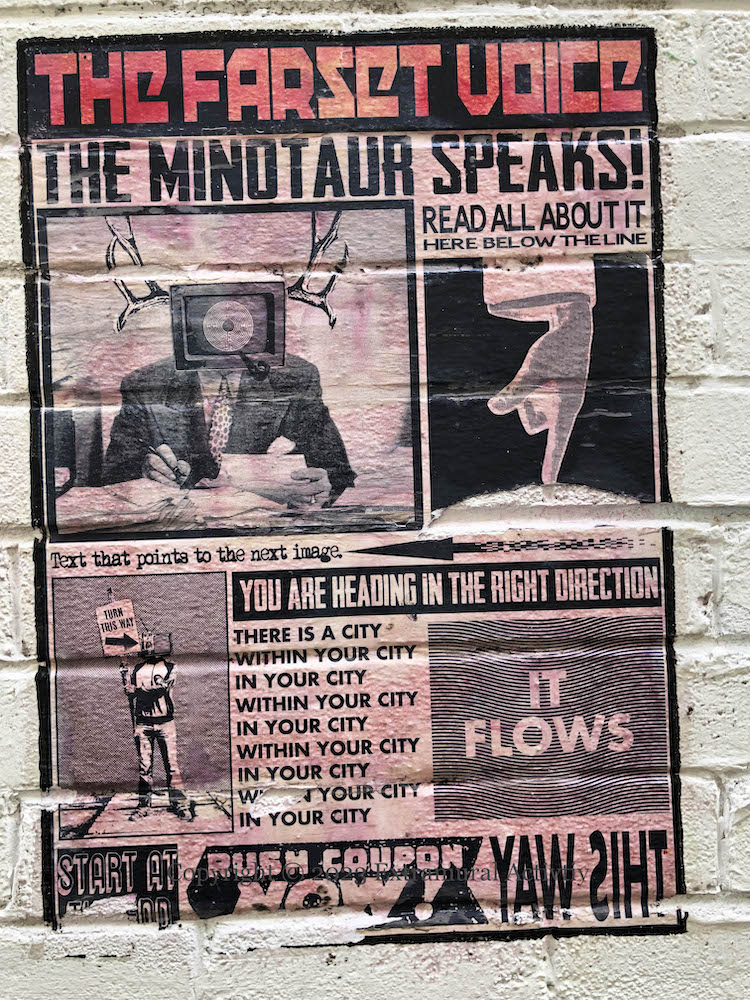
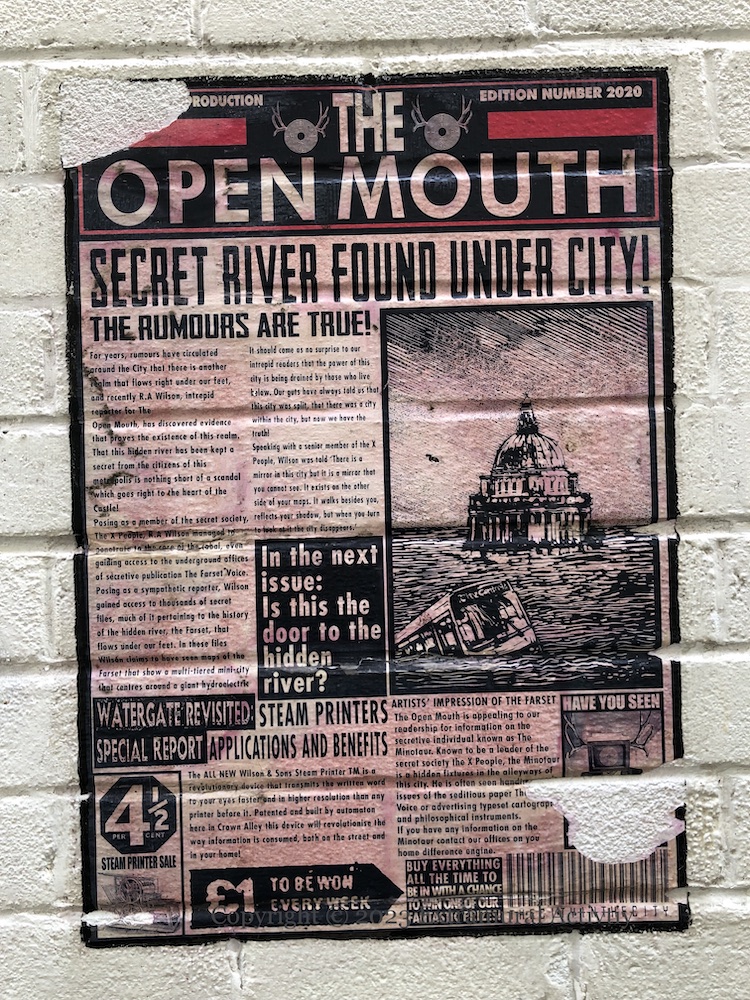
These two fake newspapers allude to the fact that the river Farset, after which Belfast is named, still runs below the city, invisible since it was covered over in 1804. (You can read George Benn’s A History Of The Town Of Belfastat archive.org.)
Wilson’s Court; presumably by Leo Boyd (compare with New Weird Order).
A shawlie is a working-class woman wearing a shawl to serve as a coat and hat. In Belfast they are particularly associated with the workers in the linen mills, such as the Brookfield Mill on the Crumlin Road. This statue, designed by Ross Wilson, was inspired by William Conor’s painting of mill workers (and pehaps specifically “Going to the mills, Crumlin Road, 1914” which is included in the info board, below) and installed at the top of Cambrai Street in 2010 (BelTel | BBC).
“The Mill Worker. Belfast was one of the fastest growing urban centres in Europe in the nineteenth-century, with the linen industry a major driver. The city’s status as the world’s biggest linen producer came about partly as a result of the cotton shortages in the 1860s caused by the American Civil War. In 1896, 96,000 people worked in linen in Belfast, making it the city’s biggest employer. The profits enabled other industries to grow, including engineering, shipbuilding, tobacco, whiskey and rope-making. Belfast became a world leader in all of these industries. The recession between the world wars led to a dramatic reduction in the demand for linen, reinforced by changes in fashion, so the industry went into almost terminal decline and nearly disappeared. Today, however, the supreme quality of linen is valued once again – not least on the Milan, Paris and London catwalks.”
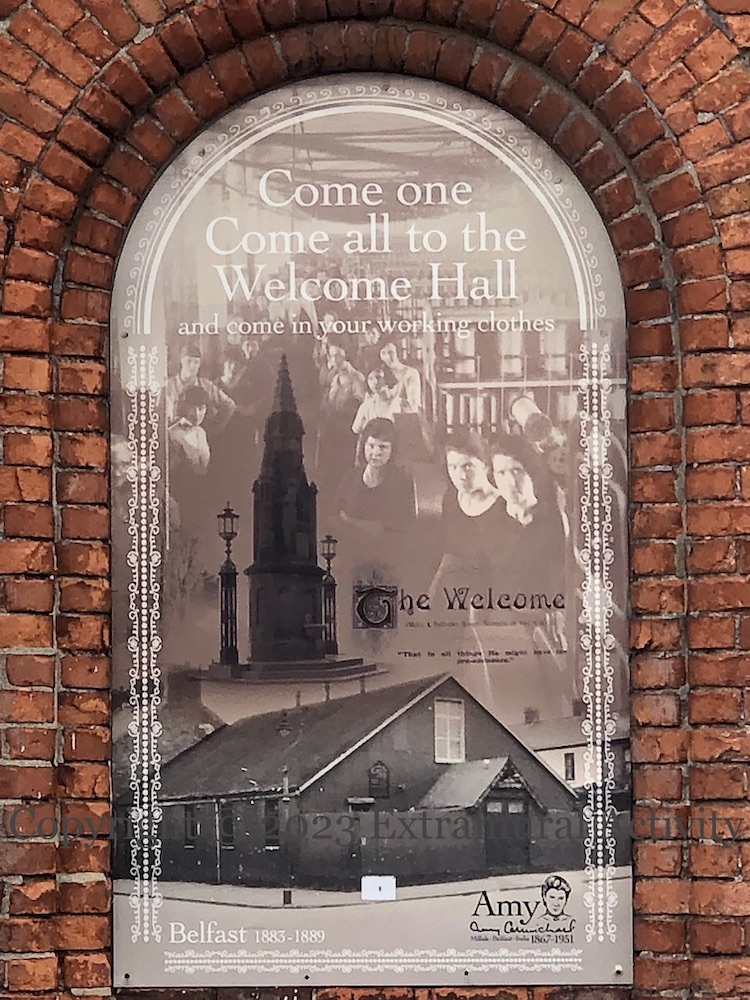
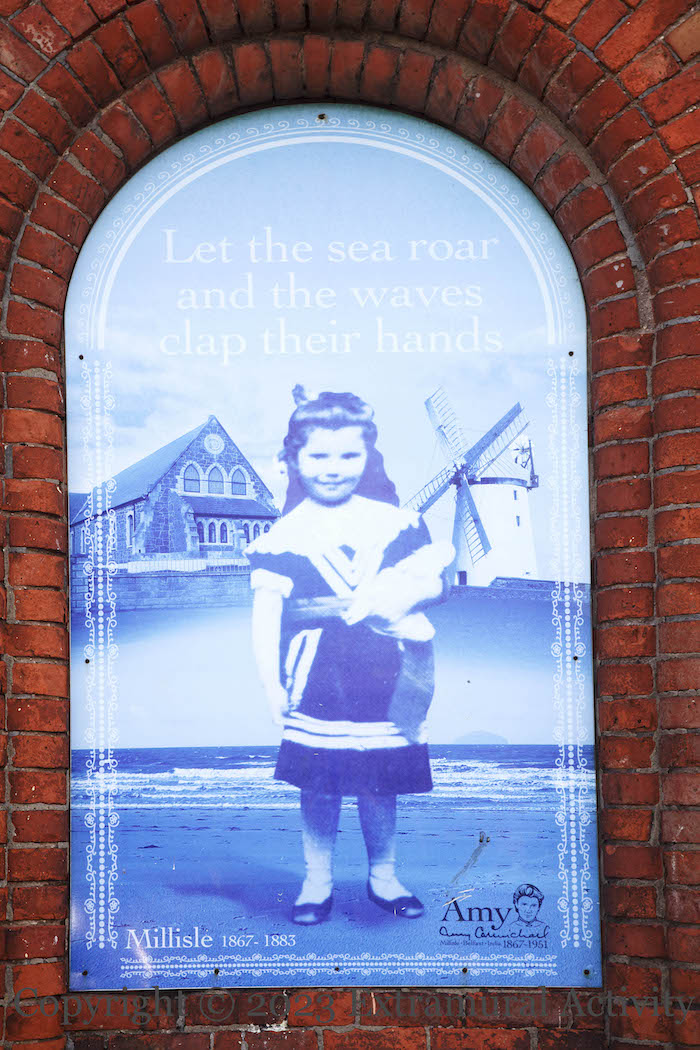
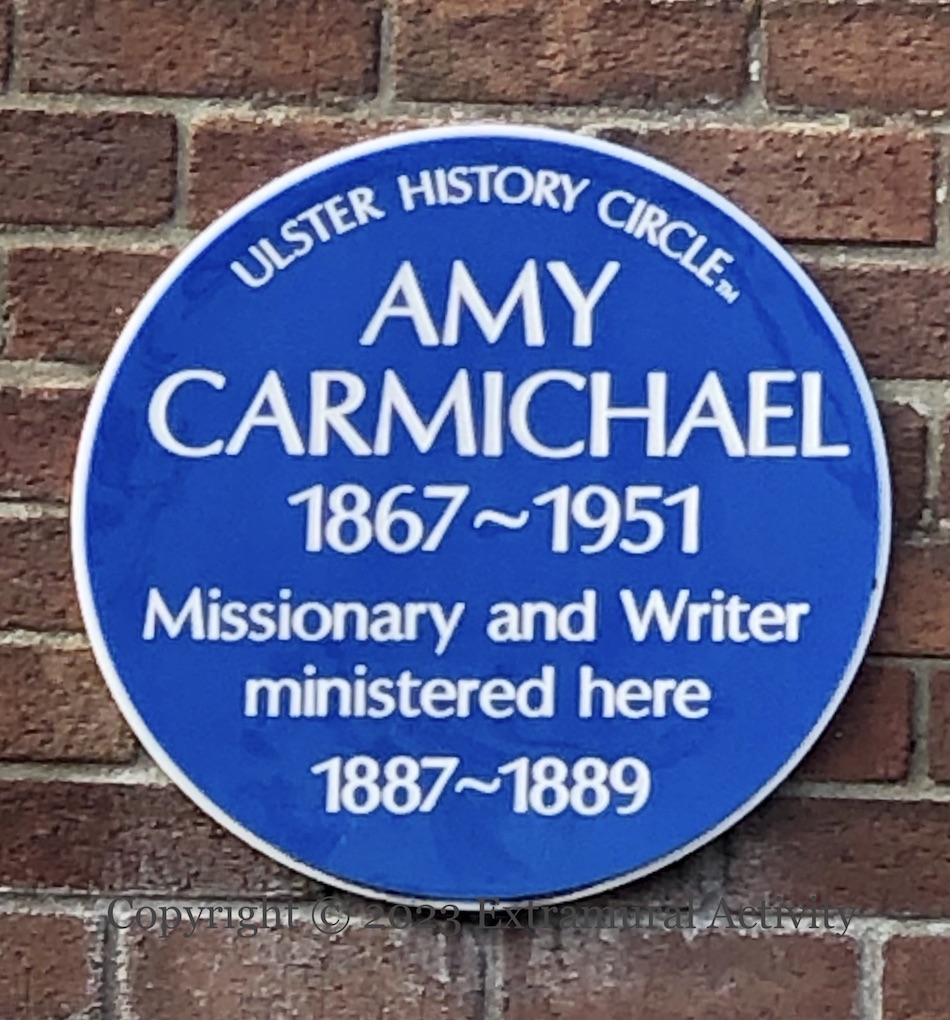
“Come one, come all, to the Welcome Hall, and come in your working clothes.” Amy Carmichael was born in Millisle, Co. Down, in 1867. In 1884 the family moved to Belfast, where Amy started Sunday classes in Rosemary Street Presbyterian for “shawlies” who worked in the mills. These were successful enough that a larger venue was required, and so, in 1887, the Welcome Hall, with seating for 500, opened in Cambrai Street (this subsequently became the Welcome Evangelical Church, where the blue plaque shown below is mounted). Carmichael then went to England (Manchester), Japan, Sri Lanka, and India (Bangalore). (Welcome Church | WP)
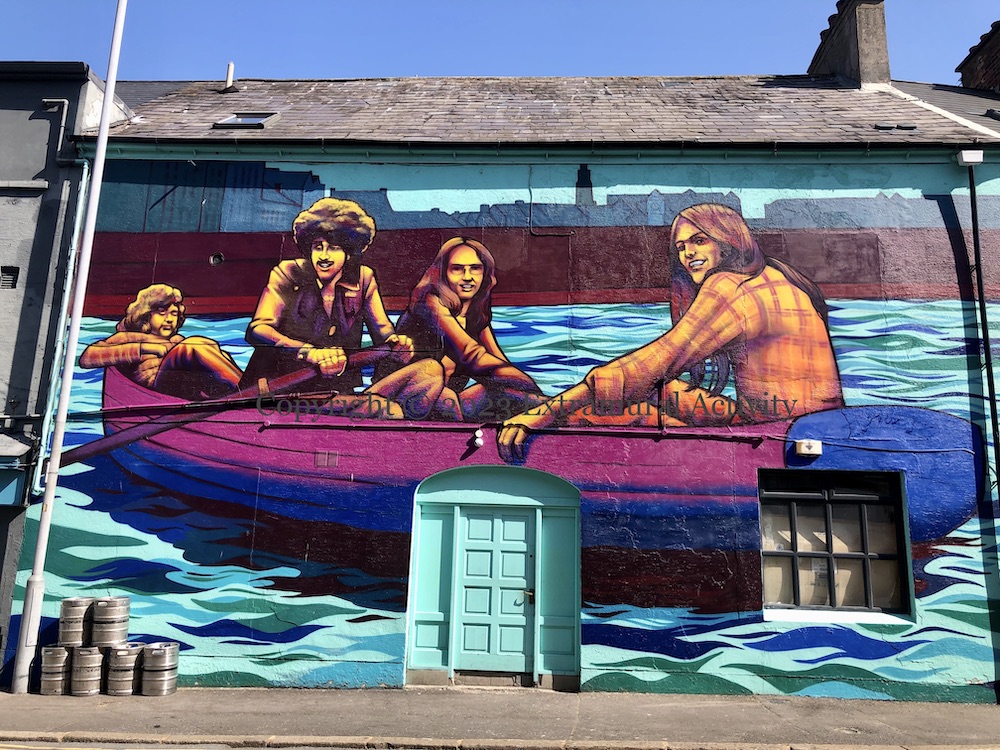
Before rock band Thin Lizzy played the King’s Club at the Queen’s Court hotel in Bangor on July 27th, 1974 (Thin Lizzy Guide), they took to the water in order to take in the town. They were photographed in the act by Dublin photographer Liam Quigley (Indo profile), and the picture (see it at Thin Lizzy Guide) was turned into a mural by Friz (ig) in Crosby Street, Bangor, last year.
Original guitarist Eric Bell (who was also a member of Them) is featured in a mural of famous faces in east Belfast – see Inspiring Belfast.













 Extramural Activity