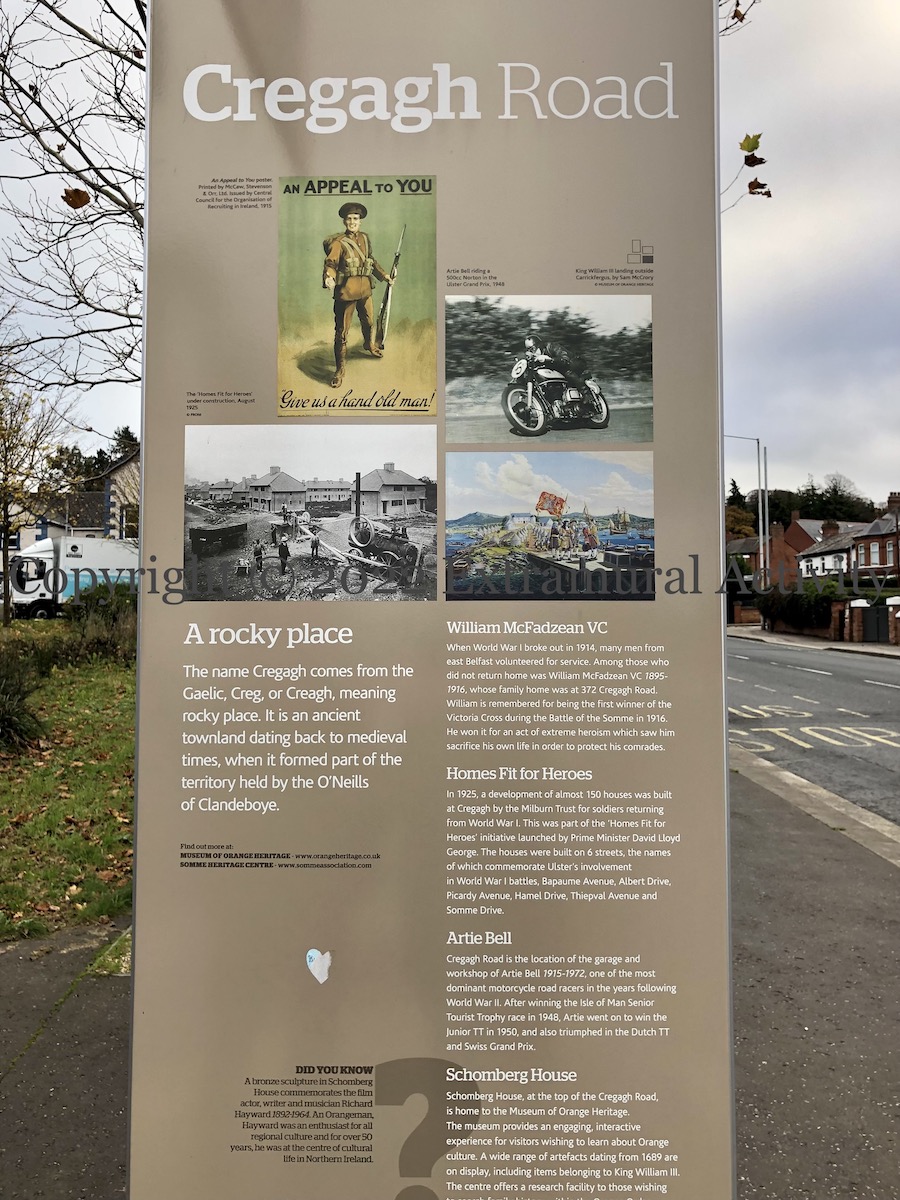
“‘Rubicon’ – the family home of Pte. William F. McFadzean, Victoria Cross, who gave his life to save his comrades at Thiepval Wood on 1st July 1916 immediately prior to the Battle Of The Somme.” McFadzean died when he threw himself on a fallen box of grenades; for this action he was awarded the VC (WP).
The plaque is on Cregagh Road at Cregagh Park. There’s a picture of McFadzean standing outside the house at Royal Irish.
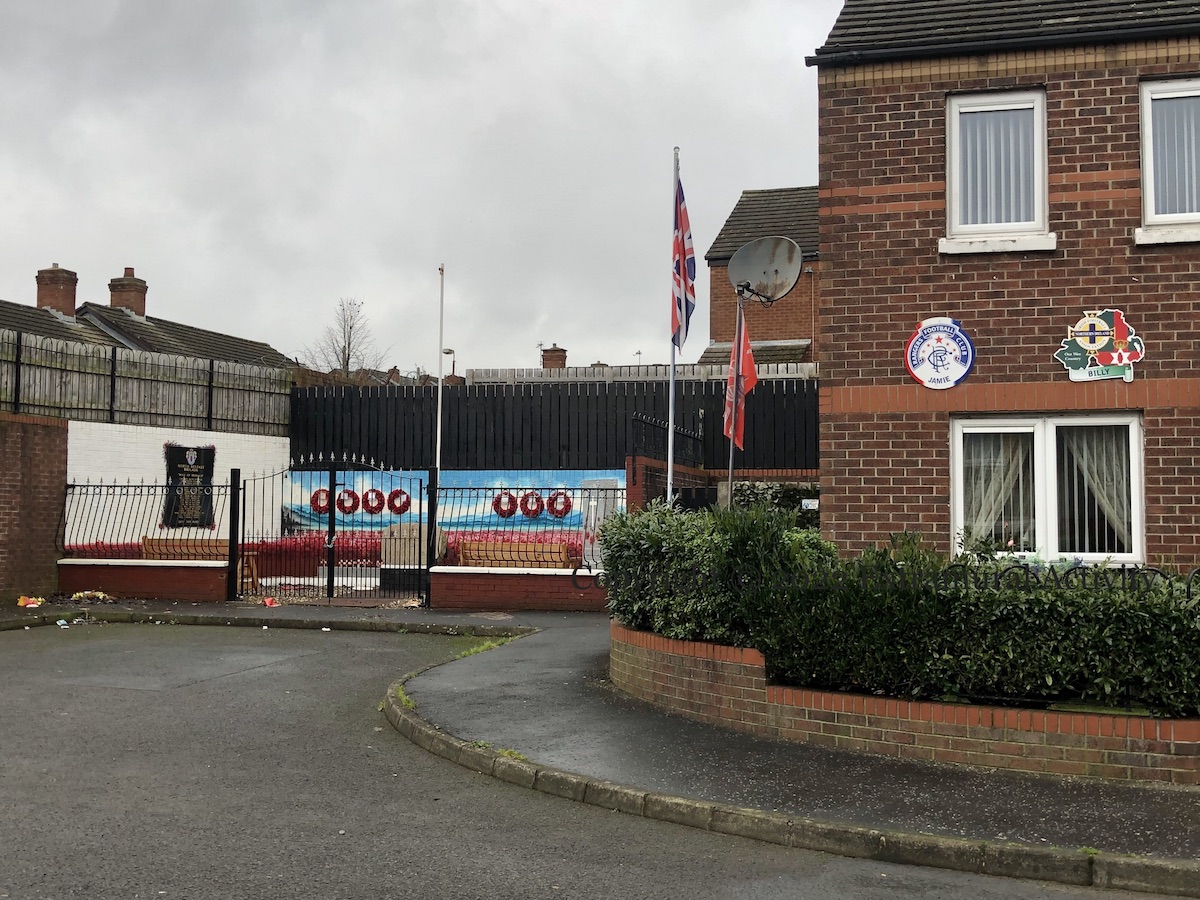
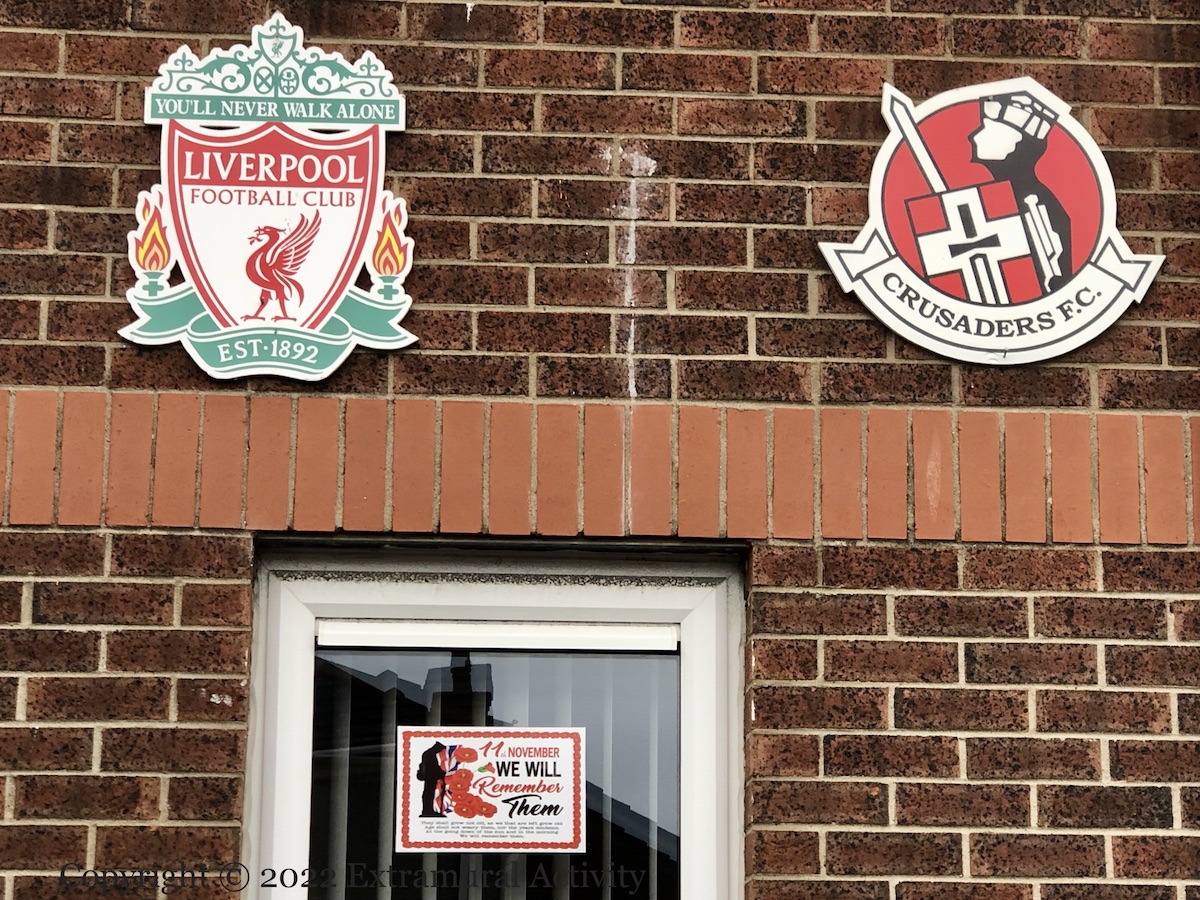
This Tigers Bay house is showing its support for soccer teams in all territories and at all levels: Rangers from Glasgow, Scotland; Northern Ireland internationally; Liverpool from England; and local team Crusaders.
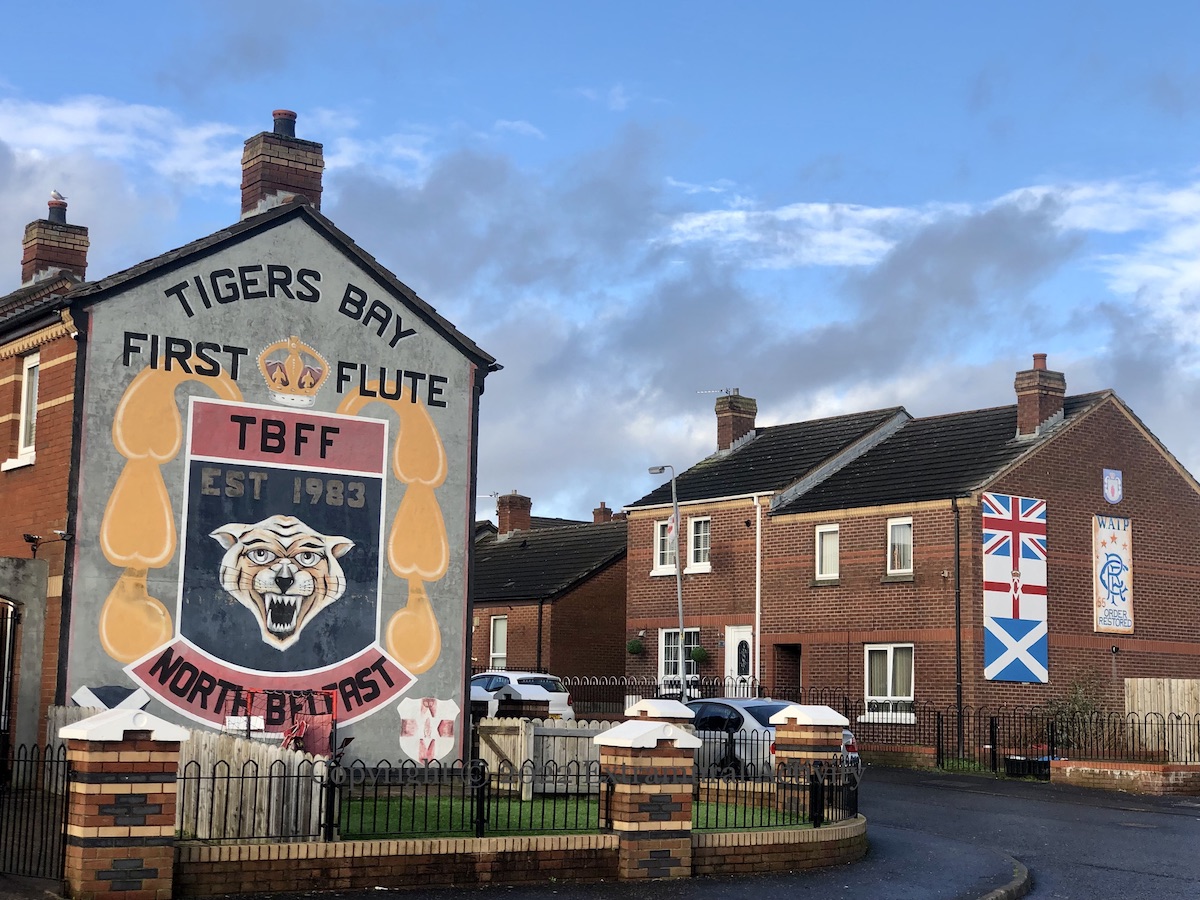
Rangers went into administration in 2012 and the “new” club played in the 4th tier of Scottish football. After four years, they had played themselves back into premiership football. Ten years after their previous league championship, they topped the table at the end of the 2020-2021 season, prompting the board shown above “order restored”. See also: 55 | F*ck Your Ten In A Row | Blues Brothers | We’re Back (and Legends Never Die).
The area in front of the Tiger’s Bay Flute Band mural bears an “Anfield Road’ street sign; and there is a Chelsea FC crest on the house across the street (not shown).
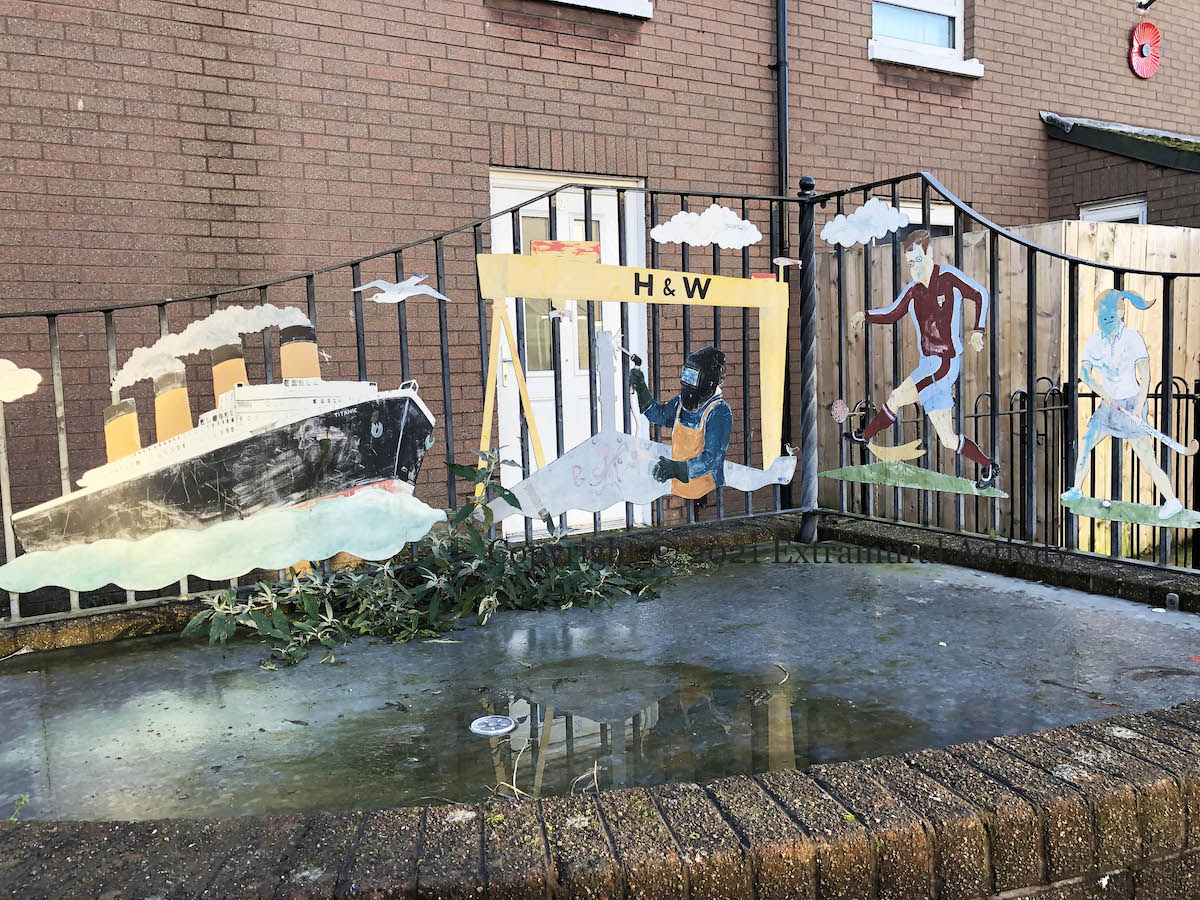
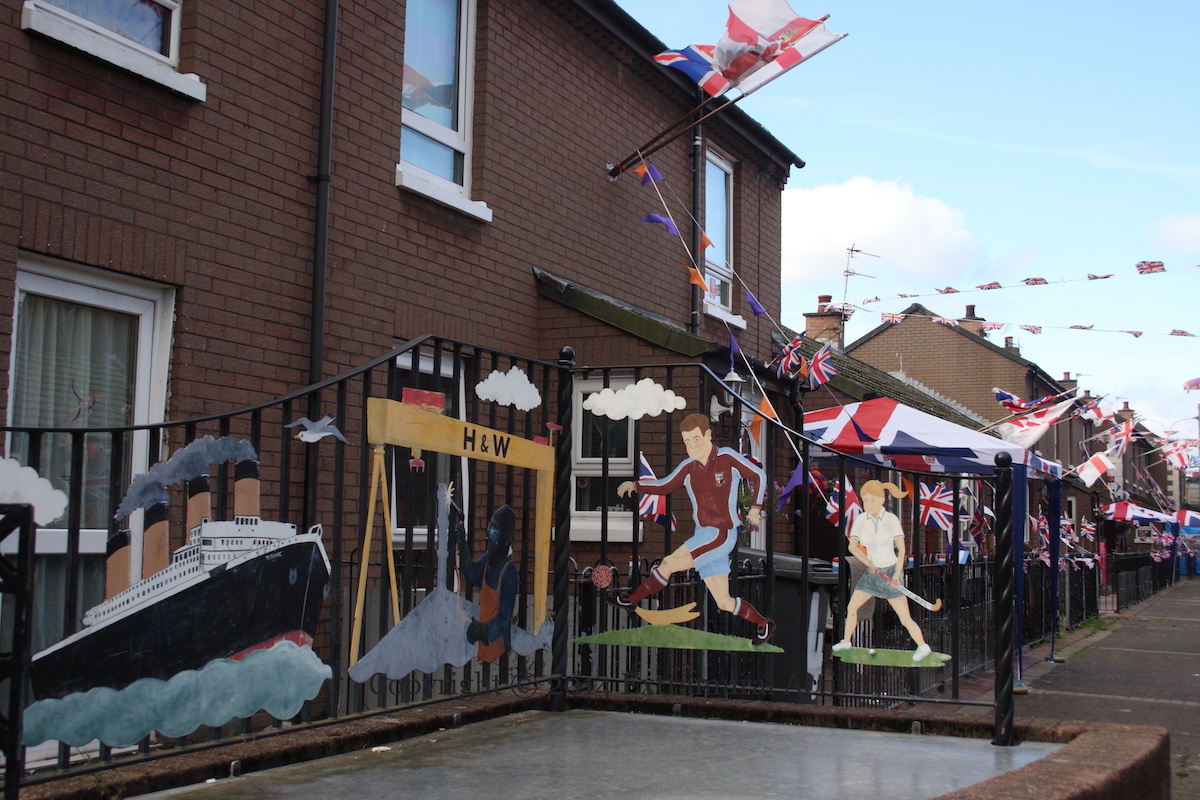
Titanic was built at Harland & Wolff shipyard in east Belfast; it took more than three years to build but was in service for only five days, as it famously hit an iceberg and sank in the North Atlantic ocean. The welders formed their own football club, in 1965. The football and hockey players on the right are perhaps associated with Ledley Hall.
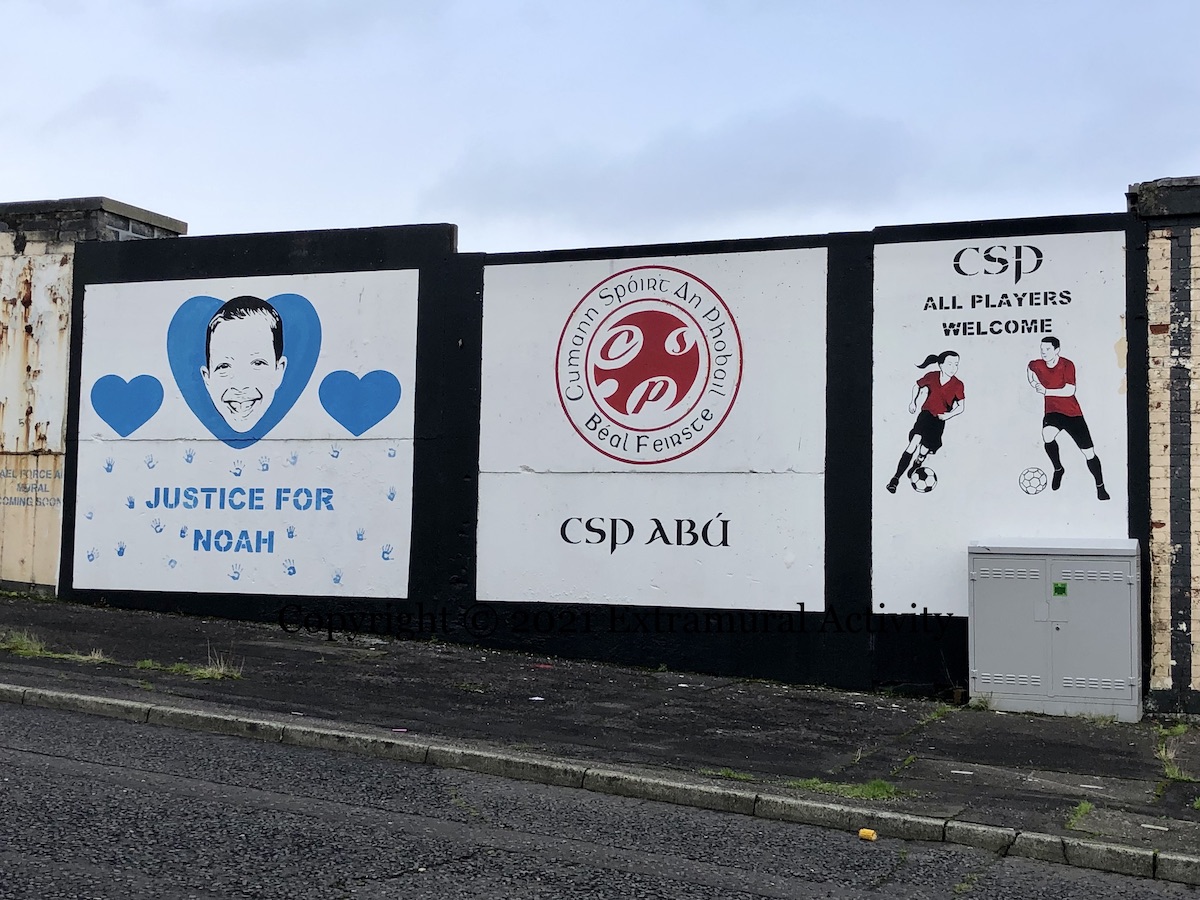
Cumann Spóırt An Phobaıl (Fb | ig) is an all-abilities (and all-ages – starting at age 5) soccer club based on the Ballymurphy Road in west Belfast. The club was profiled in the Irish News in late 2020. “CSP Abú”
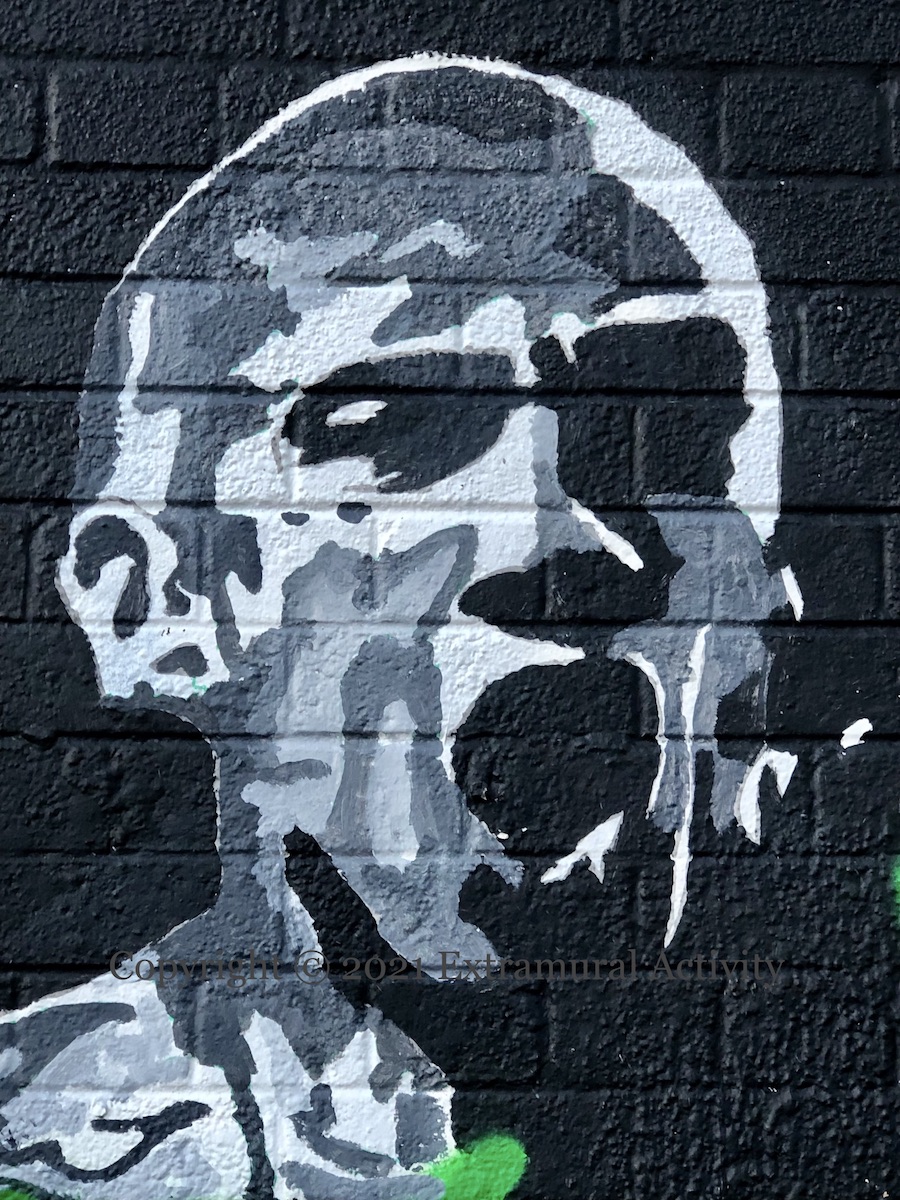
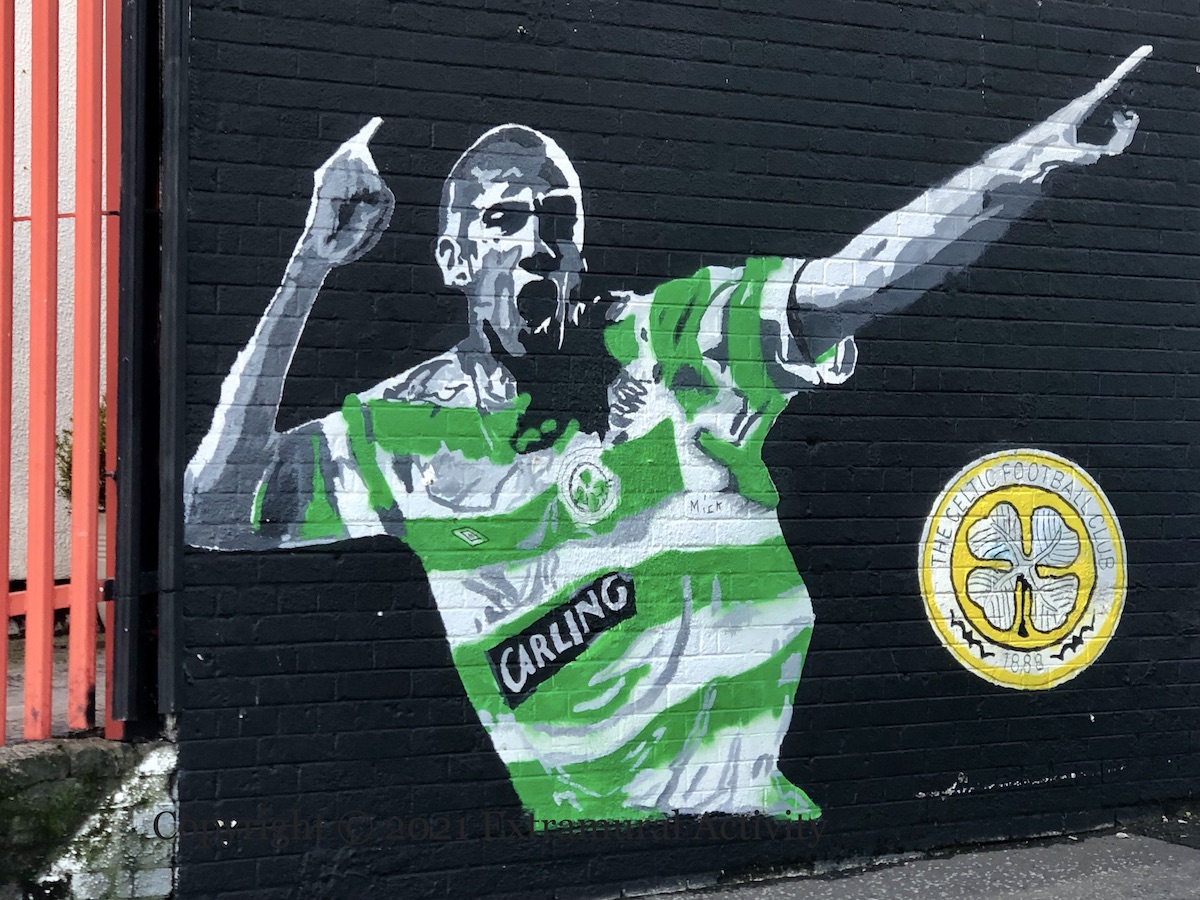
Henrik Larsson left Glasgow Celtic for Barcelona in 2004, after scoring 174 goals in 221 appearances (WP), but he replaced Katie Taylor as an inspiration to the kids at Victoria Nursery in the New Lodge. (Her faded right shoulder is still visible in the bottom left corner of the image below; for the whole thing, see School Of Champions.)
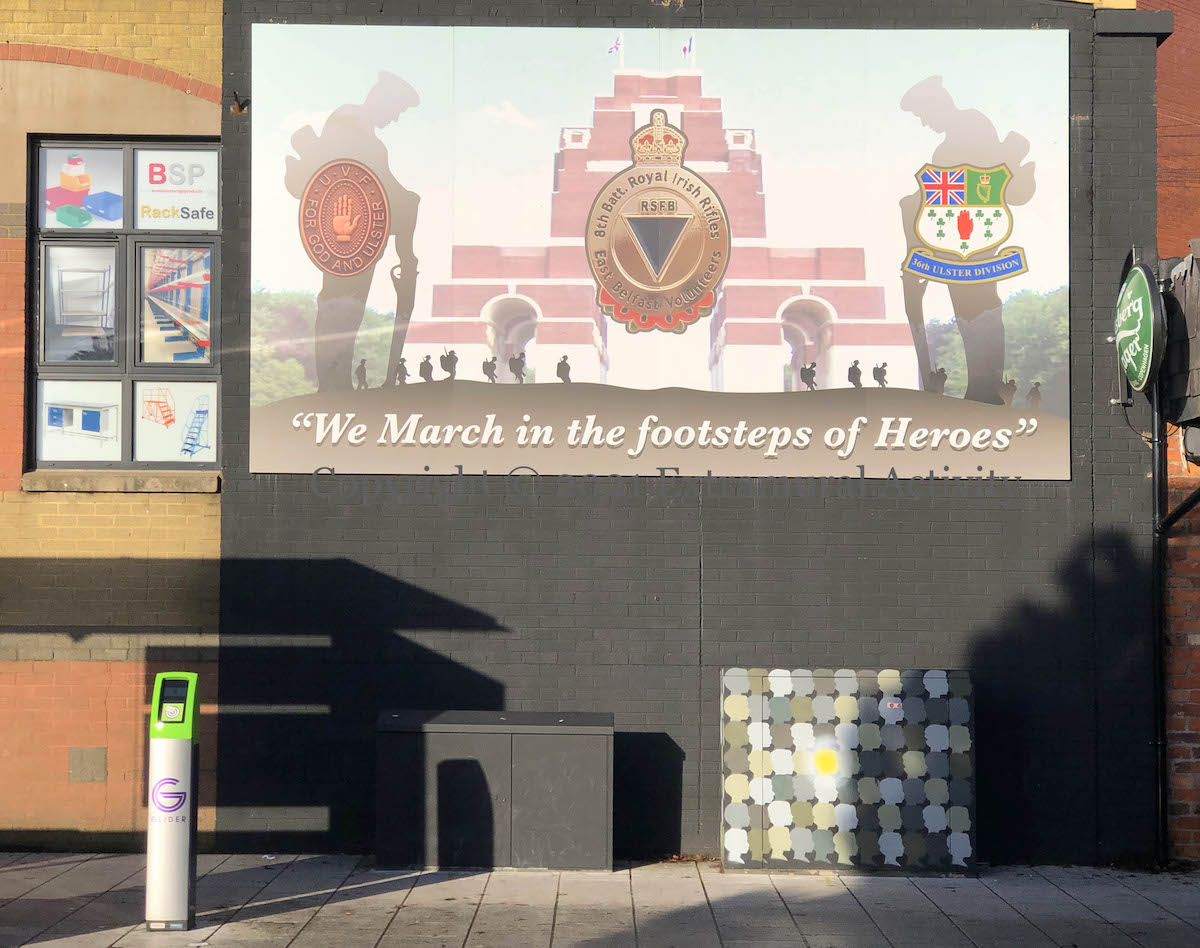
In this board the Rising Sons Flute Band (“RSFB”) portrays itself as following in the footsteps of the Ulster Volunteers who joined the British Army and specifically the 8th battalion of the Royal Irish Rifles in the 36th (Ulster) Division, which was drawn from east Belfast’s Ulster Volunteers in 1914. The insignia for the battalion is usually shown as dark blue rather than the black shown here – see the mural of 36th Division insignia in Canada Street. There is a similar board outside the band’s practice hall in Castlereagh Street.
The Whiterock flute band (Fb | spotify) was founded in 1962 and the band’s display in Brookmount Street (originally mounted in 2014 – see M10195) contains a ‘brief history’ and photographs from different decades, to which was added (on the right) an updated history and a list of members past and present. The most recent addition to the wall was a memorial – shown below – to band-member Alex Thompson, who died in May 2019 after 56 years in the band – he is mentioned in both the ‘brief history’ of the band and the updated history.
(Also, the advertising hoarding above the mural has come off.)
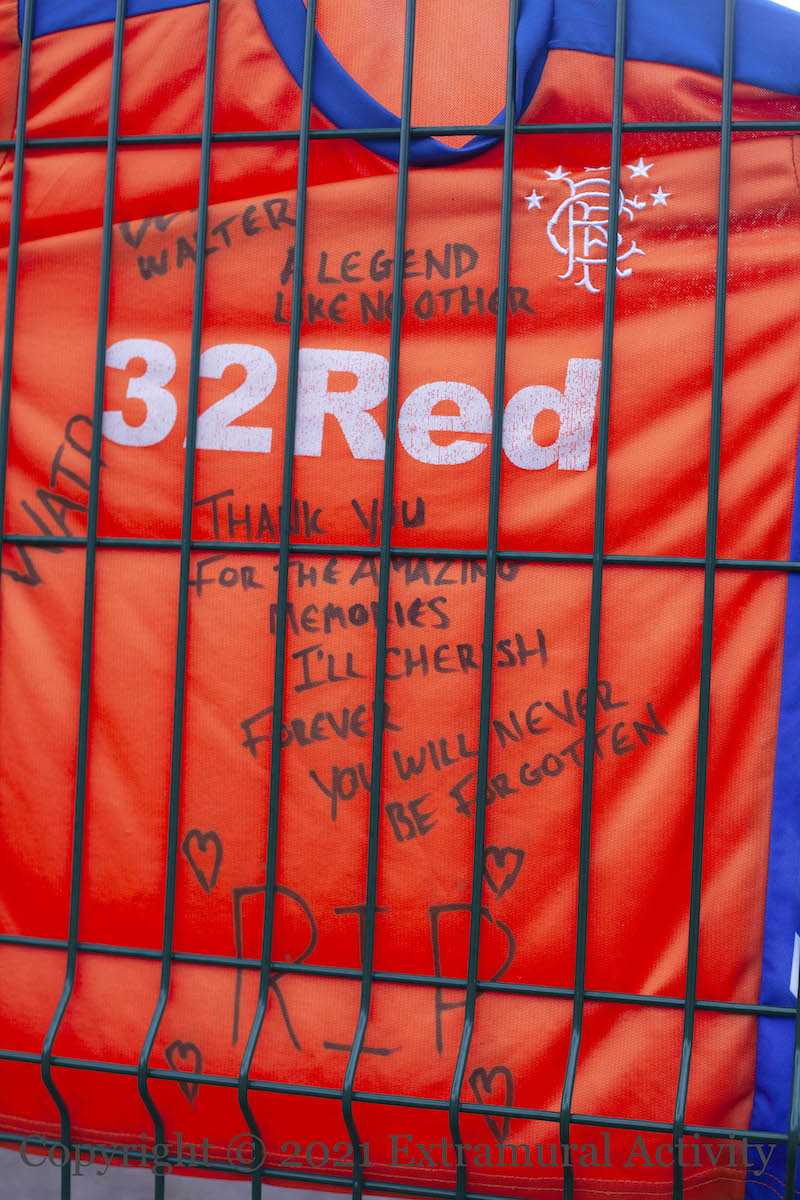
This is an update to the post Legends Never Die, which showed the original tribute to Rangers manager Walter Smith in the form of a tarp below the celebration of Rangers’ 2020-2021 league title. Since then, fans have left wreaths and attached their tops to the railings, with messages written on them in marker: “True Blue”, “Our knight”, “Legend like no other”, “Mr Rangers”.
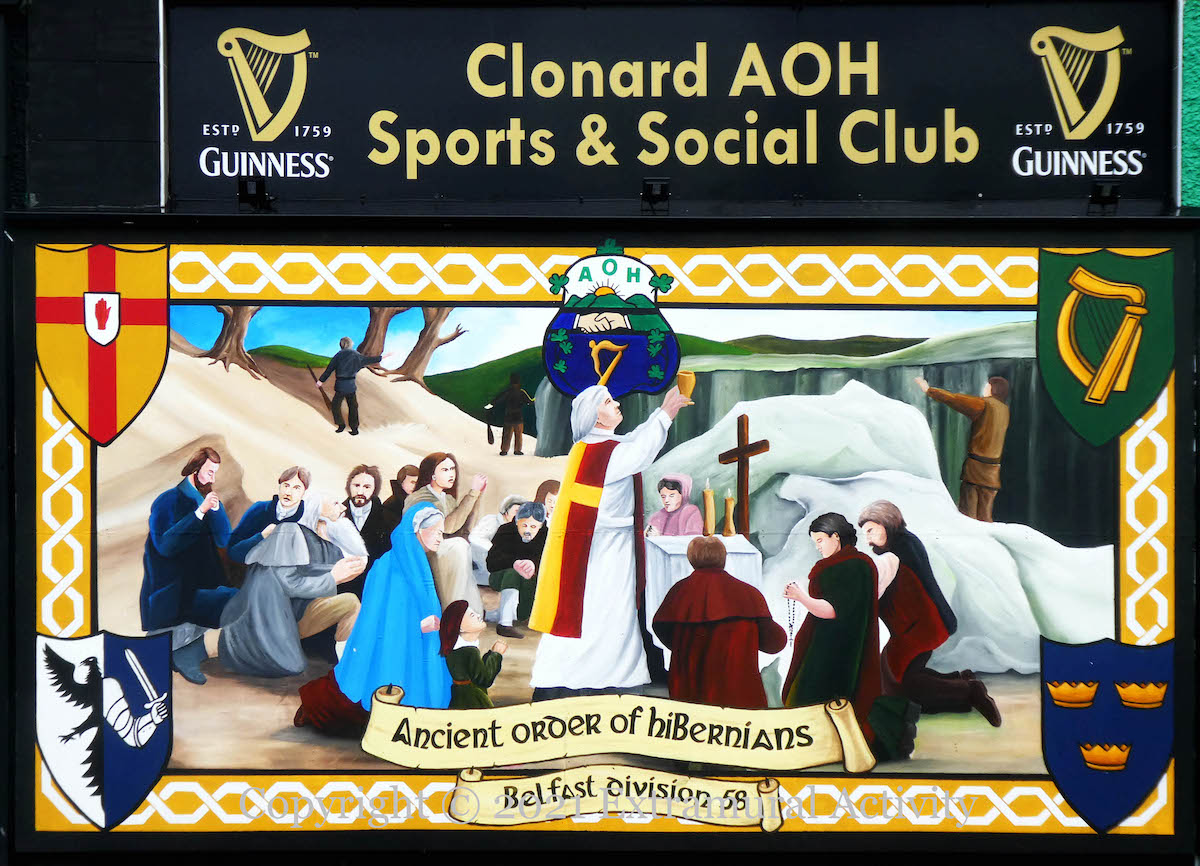
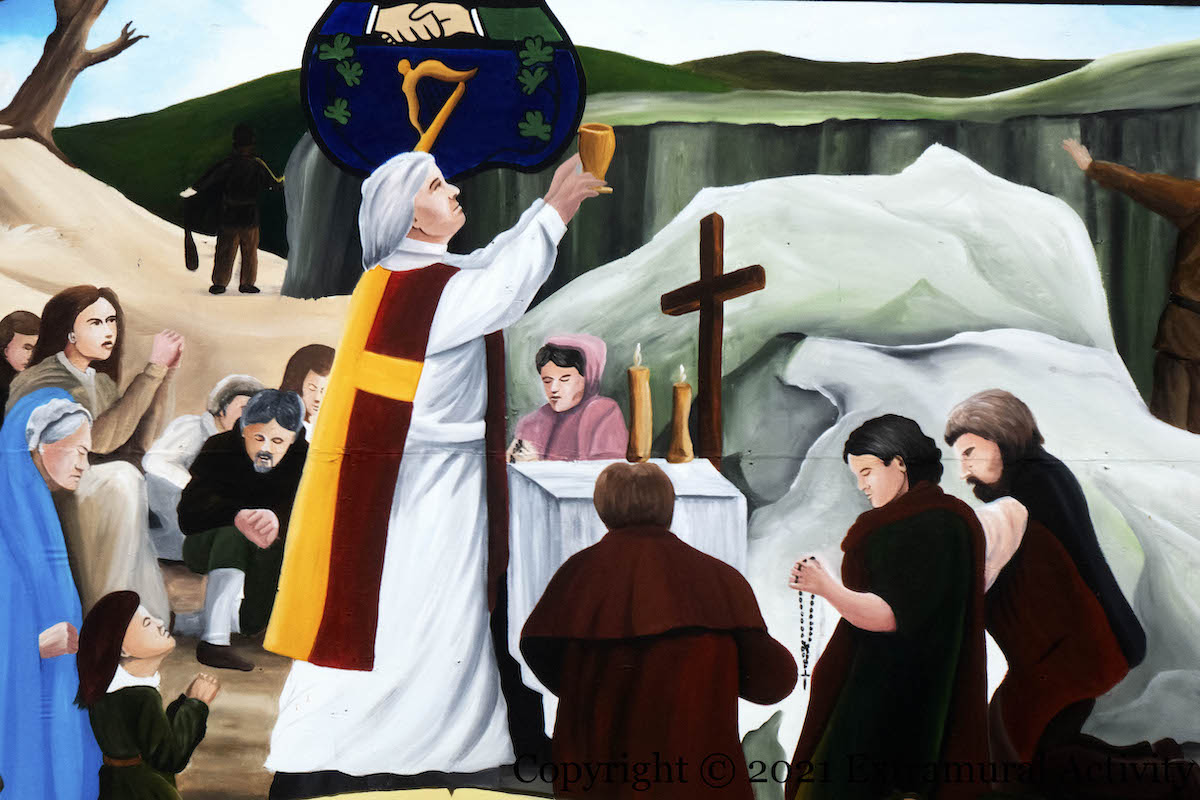
A Penal law of 1695 forbade the practice of Catholicism and “dissenter” forms of Protestantism –anything other than Anglicism, forcing people and priests to worship in secret. Although the precise date of the founding of the Ancient Order Of Hibernians is shrouded by the existence of various other Catholic fraternal and defensive organisations such as St Patrick’s Fraternal Society and the Ribbonmen – the AOH history page gives 1838 in Pennsylvania – the order traces its roots back to Penal times and in particular to the Defenders in 1784, which arose to protect Catholics from the (Protestant) Peep-O-Day Boys and in defiance of Penal laws forbidding Catholics to bear arms (WP). The Belfast division (58) of the AOH is in Clonard Street.










 Extramural Activity