Soldiers from the 36th (Ulster) division in the trenches of WWI prepare to go ‘over the top’. One waits for the precise moment according to his watch, ready to fire a shot, while the other prepares to blow a whistle and launch a flare. “‘Throughout the long years of struggle, the men of Ulster have proved how nobly they fight and die.’ King George V”. The quote also appears on the Ulster Tower in Thiepval (Ulster Tower) and on the Cenotaph in Belfast (WP).
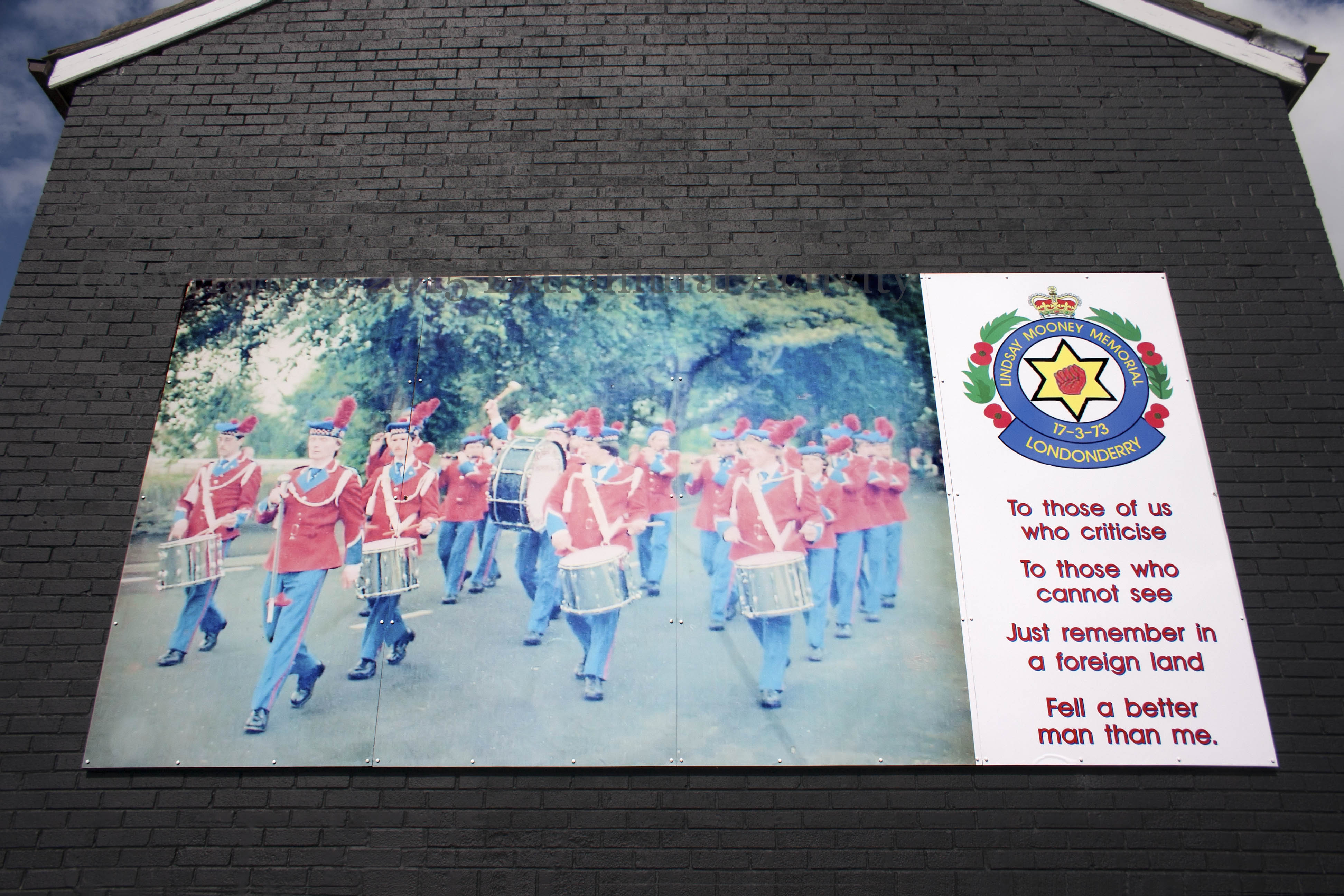
The [Sergeant] Lindsay Mooney Memorial Flute Band was formed in 1973 after the St. Patrick’s day death of Lindsay Mooney, a UDA member killed by the premature explosion of a bomb near Lifford, County Donegal (Sutton). The band dissolved in 1993 but commemorative nights are still held (NI World).
The board above is in the Lincoln Court area of Londonderry, from where Mooney and the band both hailed. “To those of us who criticise, to those who cannot see, just remember in a foreign land fell a better man than me.”
Culture Night Belfast is on tonight (2015-09-18) and will include about 30 pieces of street art under the heading Hit The North. Above is a piece of London-/Derry/Doire street art by artists RTM and TDA representing (we think!) St. Brigid’s ‘Church of the Oak’ (Kildare) and the coming of Spring (after her feast day of February 1st).
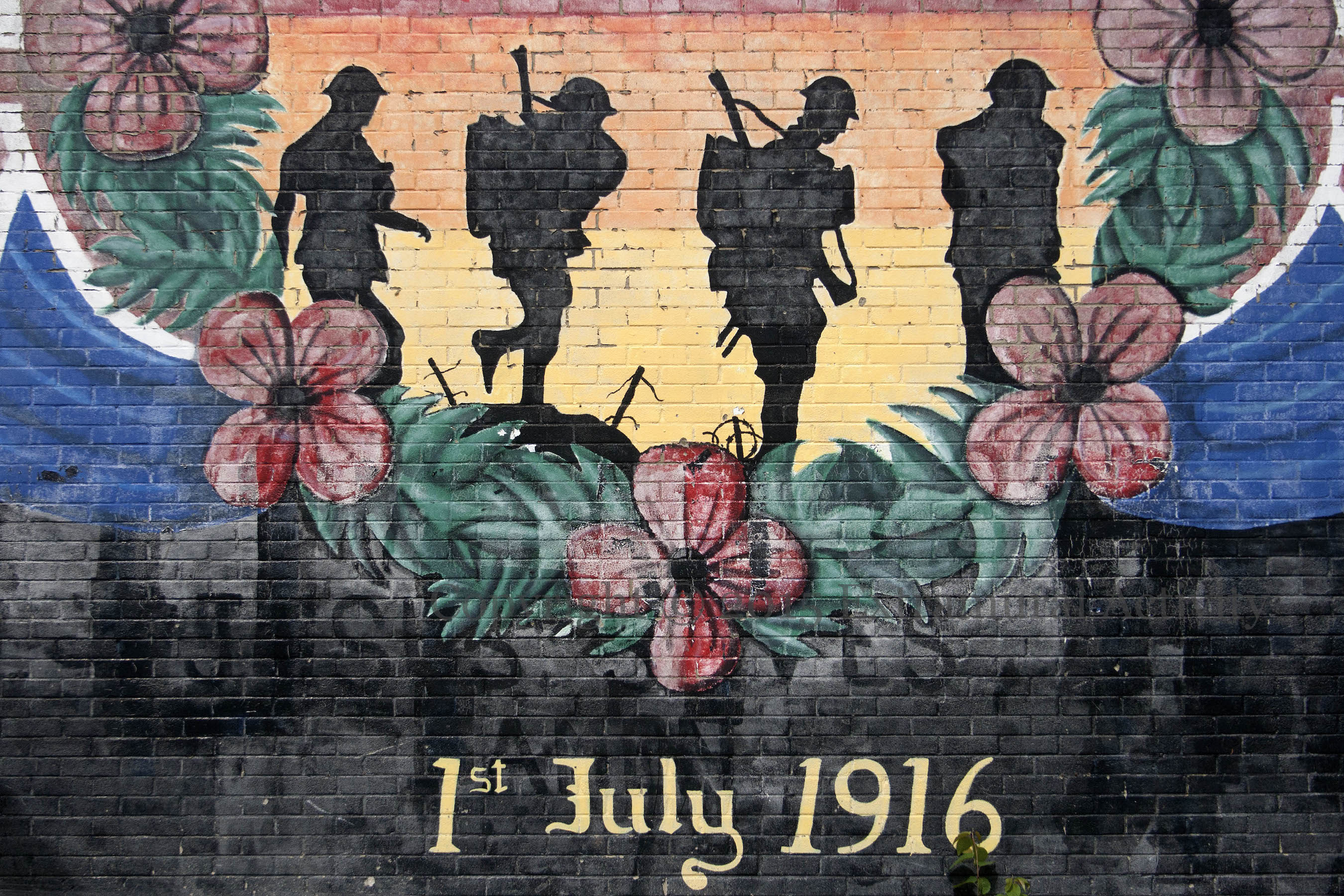
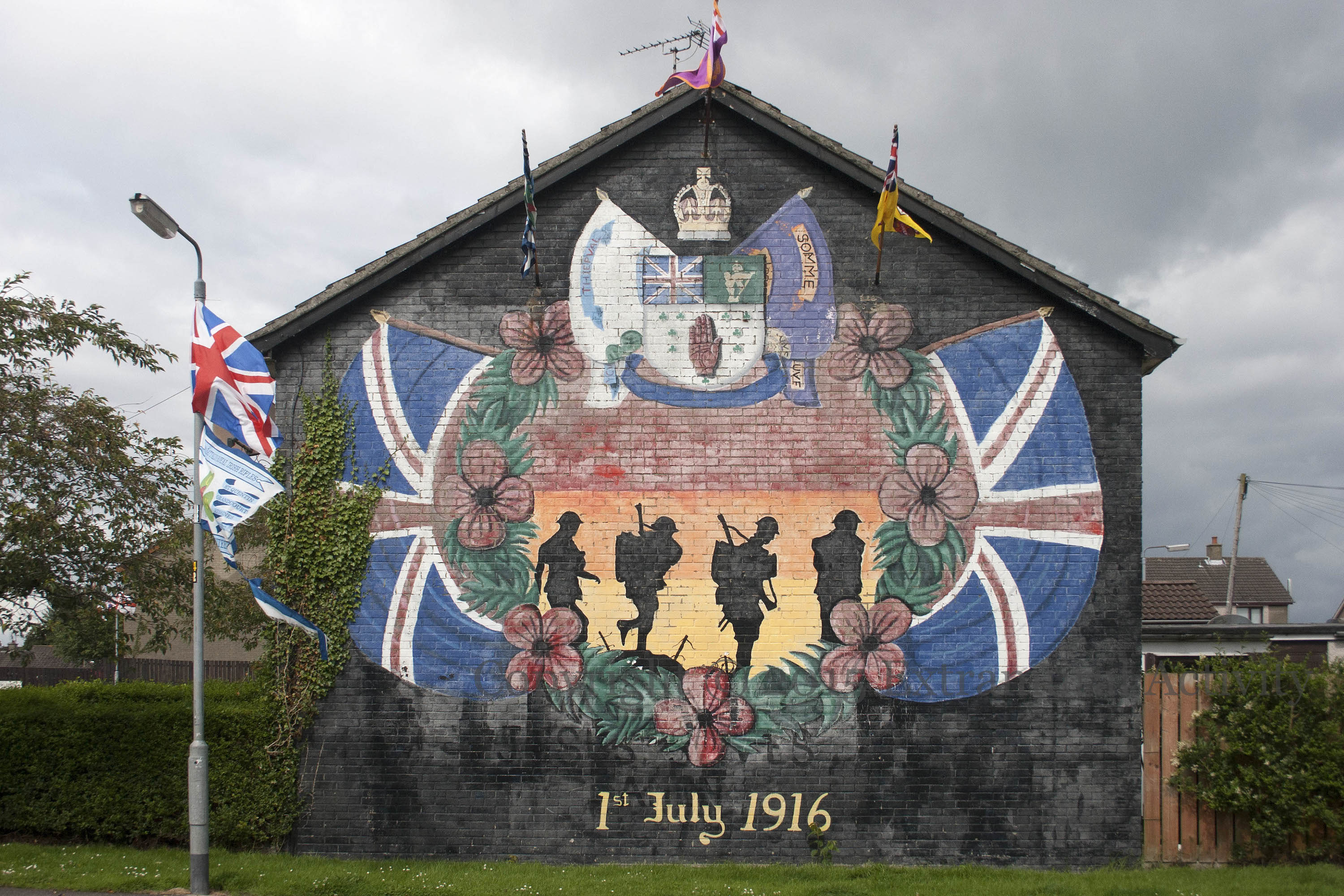
The Battle Of The Somme – named after a French river – began on July 1st, 1916 and went on until the 18th of November. In those four and half months more than one million soldiers were killed or wounded, including, on July 1st alone, about 60,000 British troops. The 36th (Ulster) Division, on the left flank, pushed ahead of other units and found itself unsupported; 5,240 of its soldiers died.
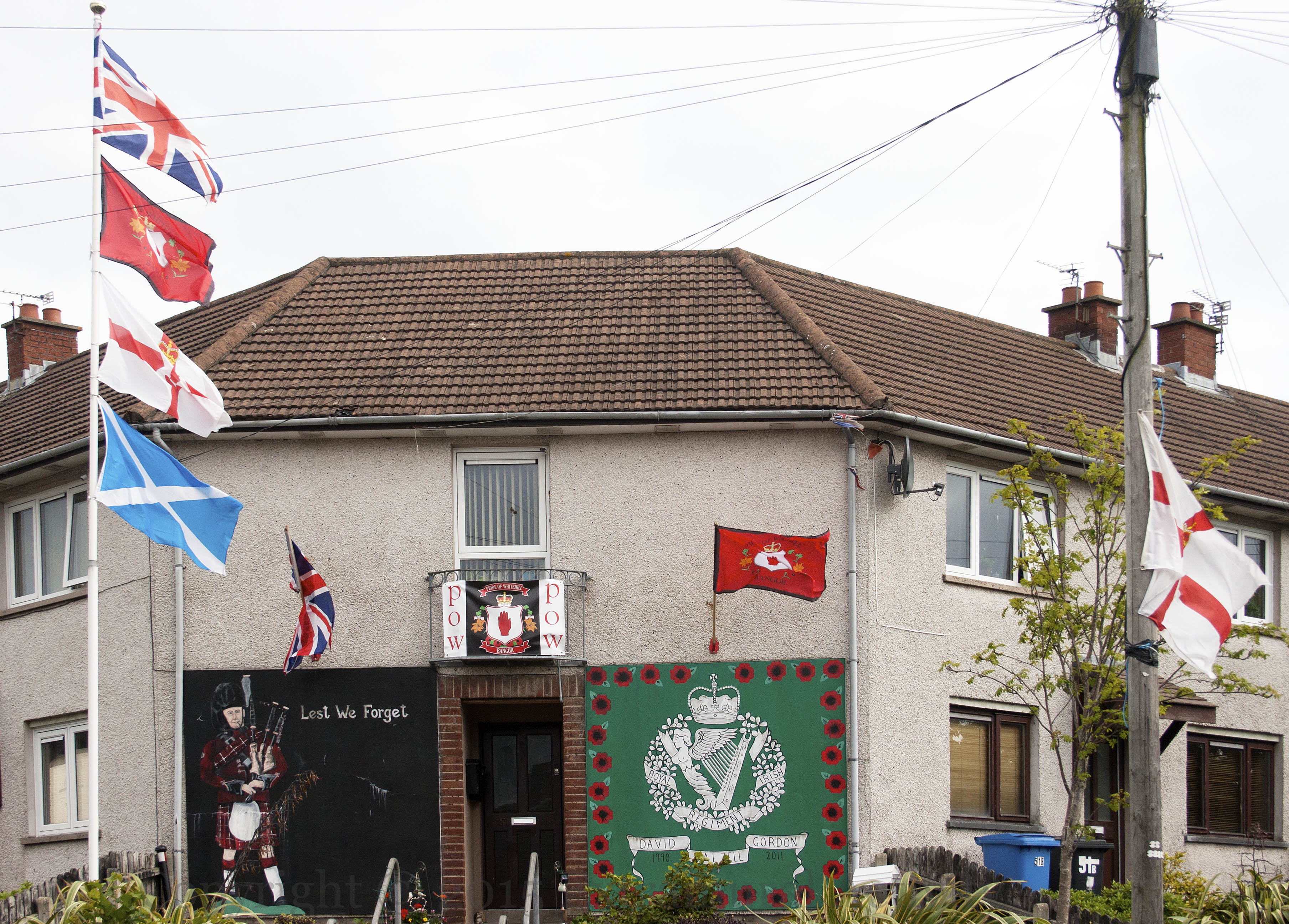
Bangor native David Gordon Dalzell was killed at age 20 in Helmland Province, Afghanistan, in 2011, shot accidentally by one of his comrades as he was cleaning his weapon. For an account of his death, see BBC-NI. Dalzell’s ‘fatality’ notice can be read at the MOD. In the image above (and detailed below), the front of this Whitehill house carries the emblem of Dalzell’s Royal Irish regiment and a funeral piper.
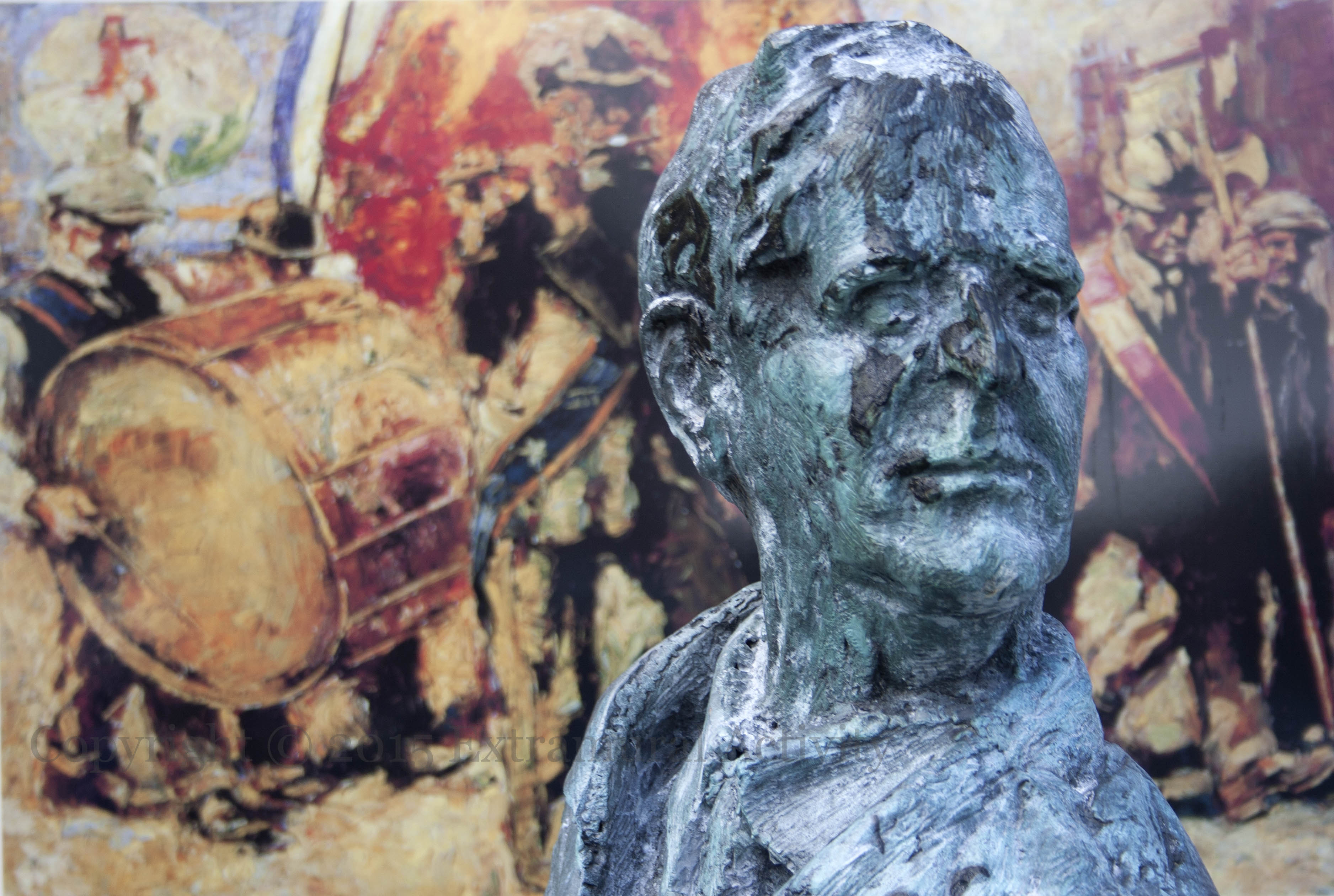
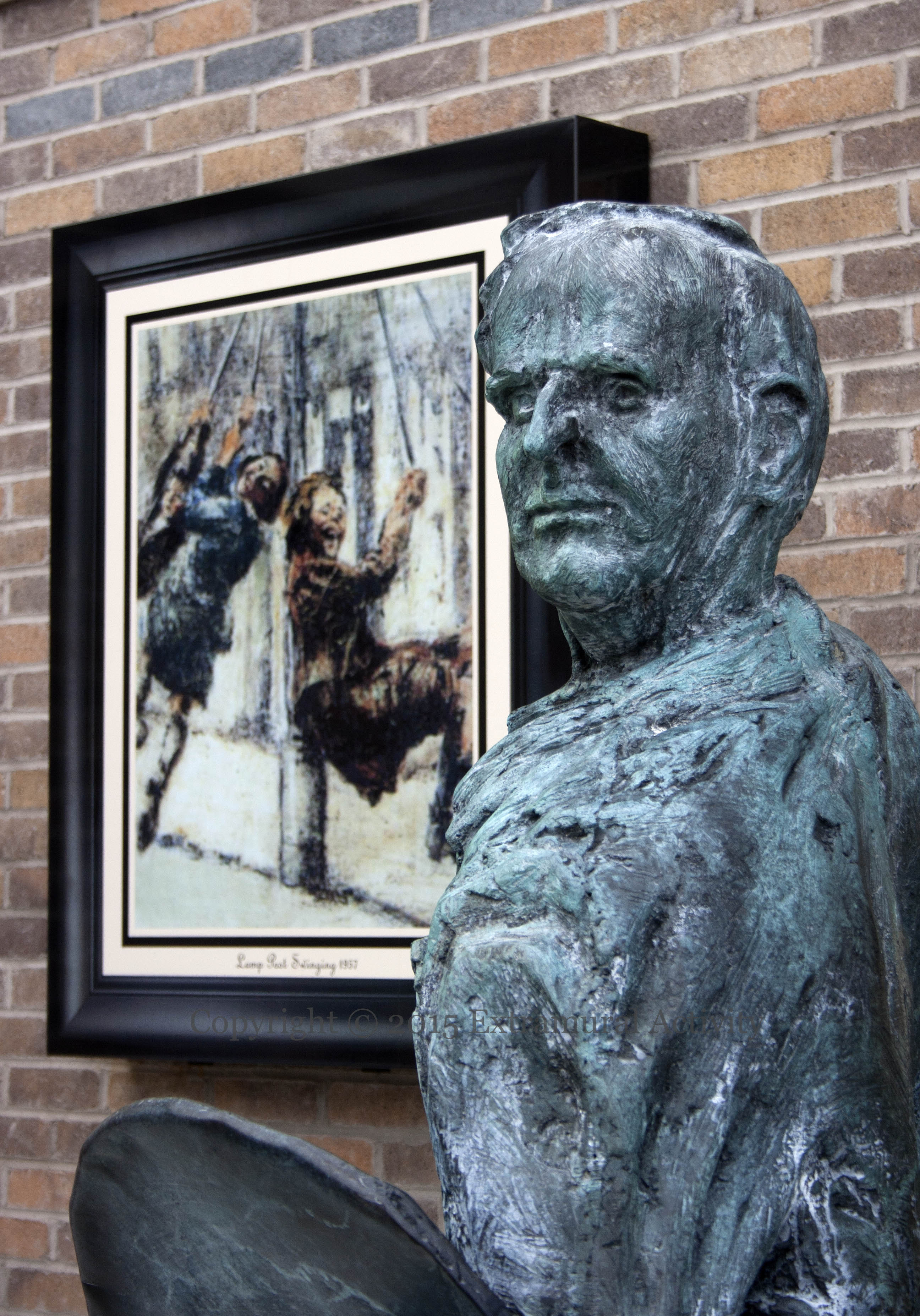
William Connor (later William Conor) was born in the Old Lodge area of Belfast (in 1881) close to the location of the new bronze statue shown in today’s images, which is at the corner of Northumberland Street and Shankill Road, replacing the UVF/Shankill Protestant Boys (see M02457). The info board (shown below) describes his methods in capturing the Belfast street scenes for which he is most famous: “Conor was developing a spontaneous drawing technique by recording quick impressions, and it soon became a habit for him to go out into the streets with a newspaper, which contained loose leaves from his sketchbook. When he saw anything of interest he leant against a lap post or wall, took out his newspaper as though he were simply reading the sports results and sketched away.”
Black taxis were first brought from England to Belfast in 1970 by locals who wanted to provide an alternative, and locally-based, transport system to augment the Citybuses which were sometimes cancelled and sometimes burned out. The board above commemorates eight drivers who were killed during the troubles: Michael Duggan, Jim Green, Harry Muldoon, Paddy McAllister, Caoimhín Mac Brádaigh, Thomas Hughes, Hugh Magee, and Paddy Clarke.
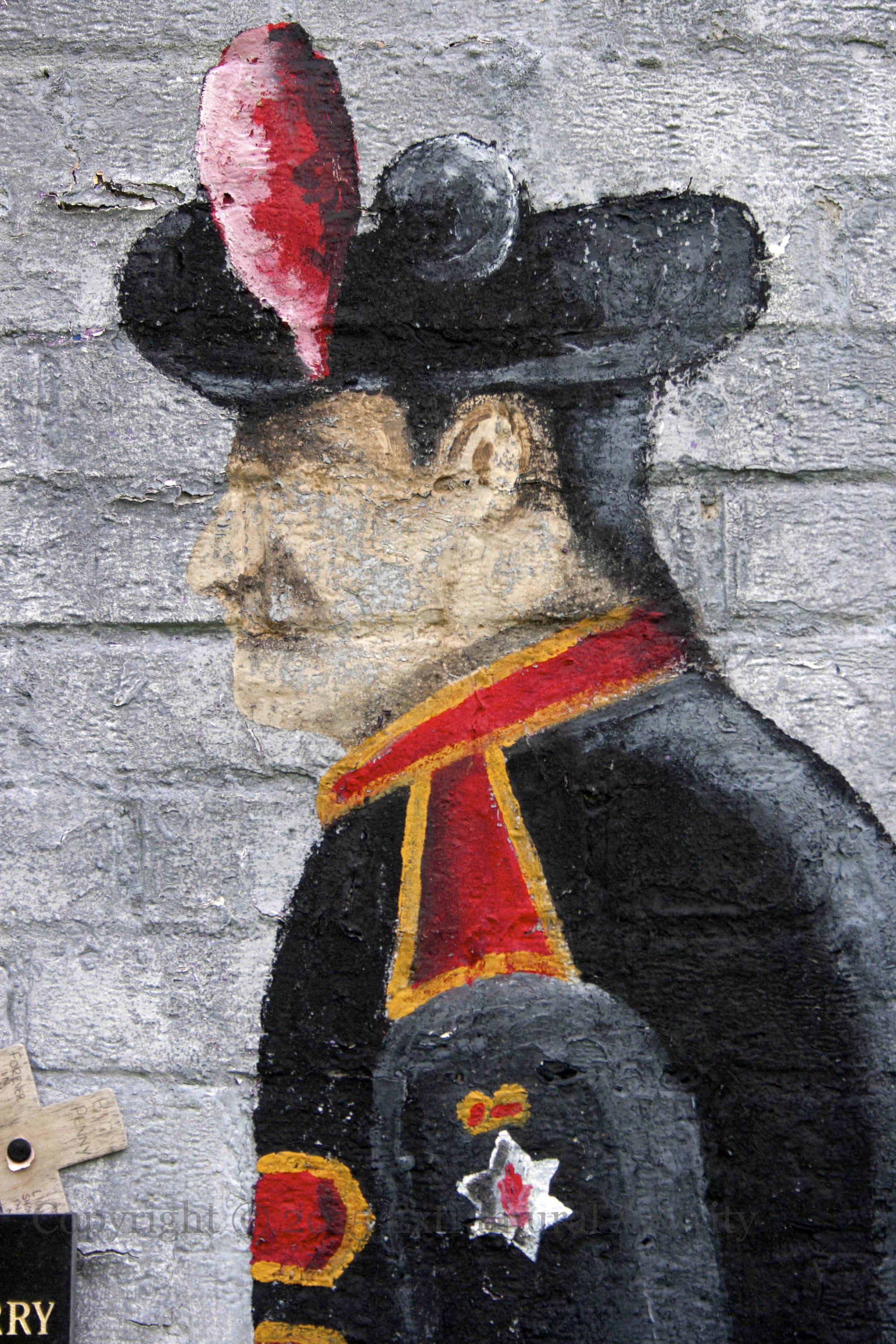
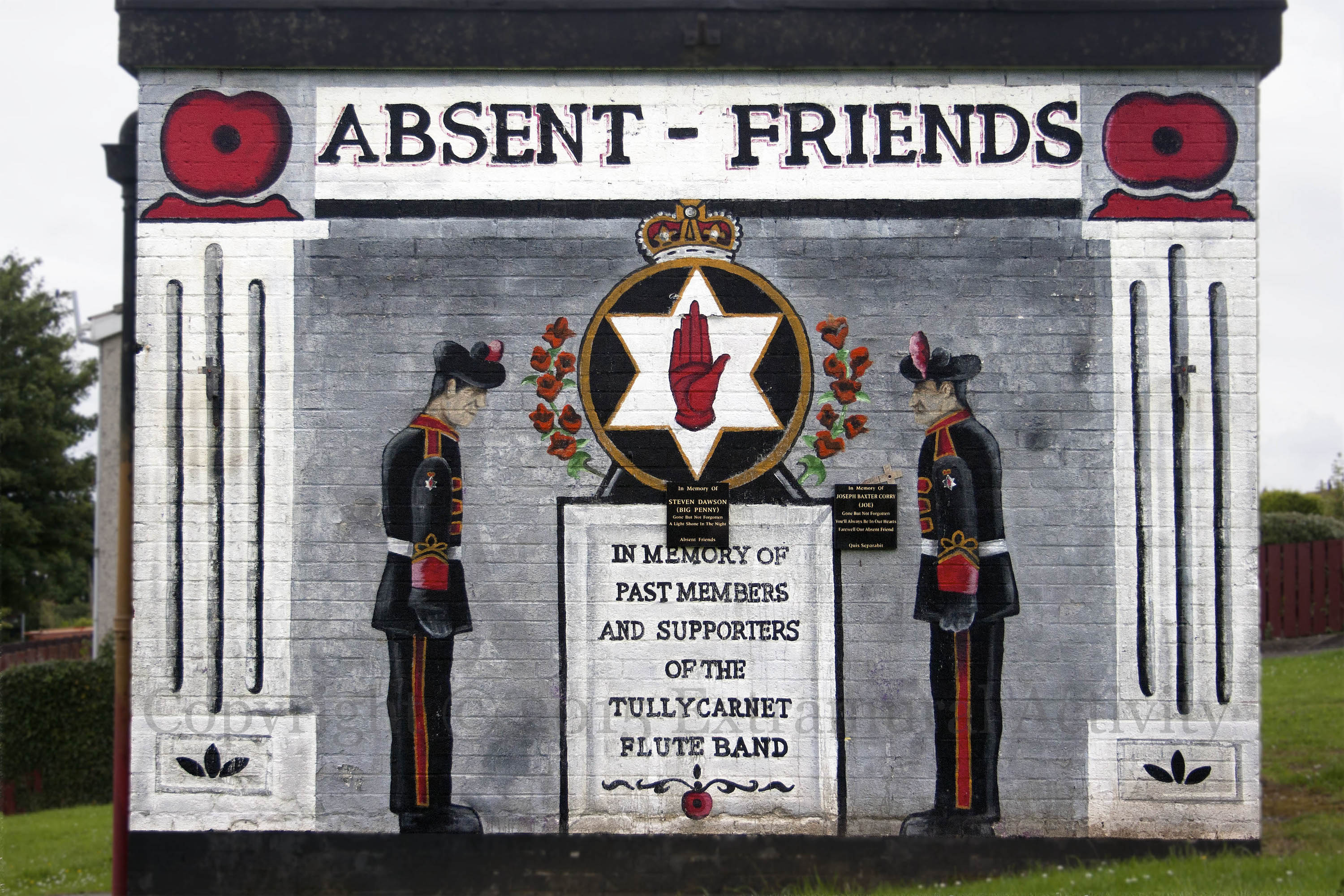
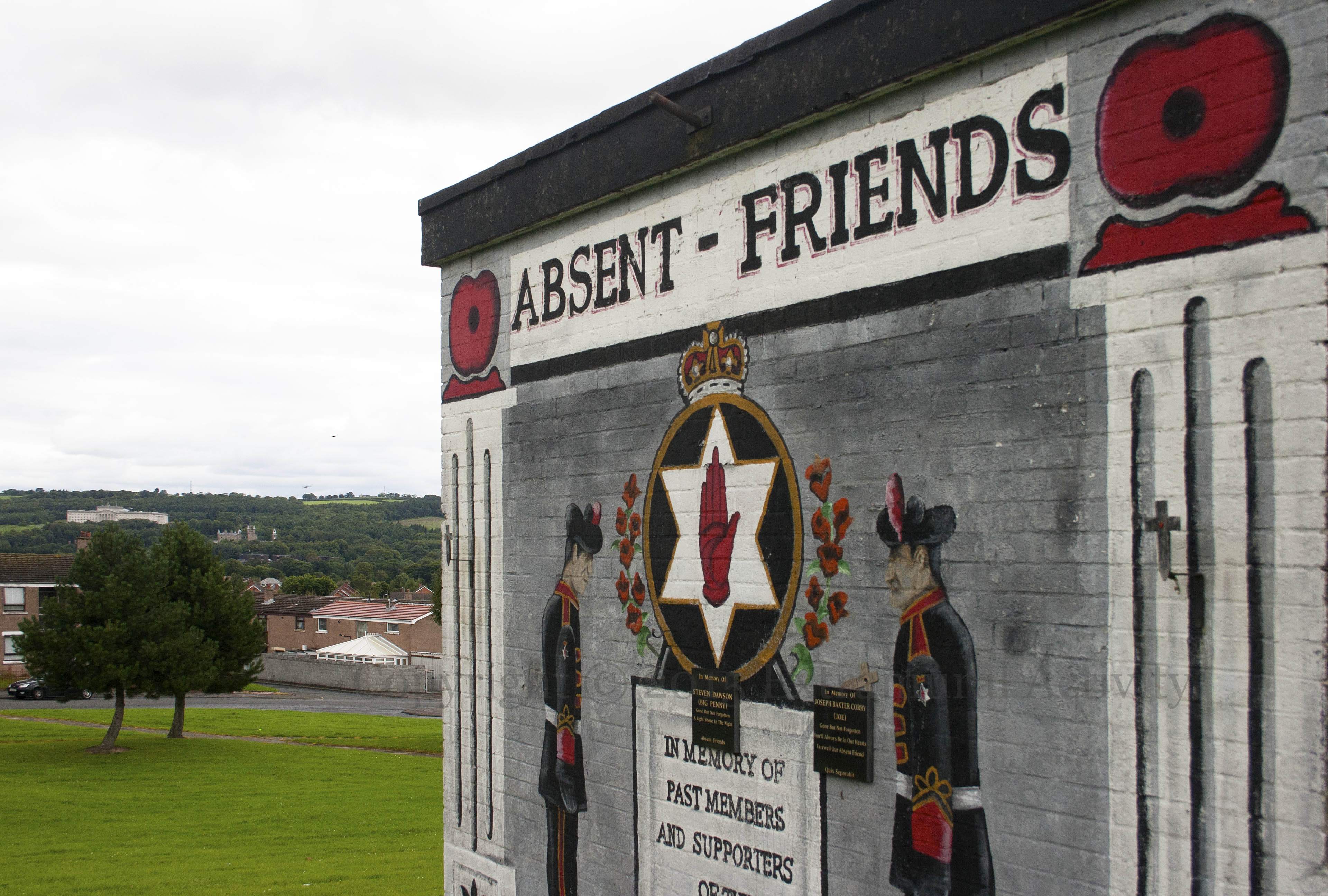
Three images from the Tullycarnet Flute Band’s (Tw | Fb) memorial mural for members who have died. The mural is in Lochinver Drive, due south of Stormont, as can be seen in the third image, below. The mural shows two band-members in uniform “In memory of past members and supporters of the Tullycarnet Flute Band. In memory of Steven Dawson (Big Penny). Gone by not forgotten. A light shone in the night. In memory of Joseph Baxter Corry (Joe). Gone but not forgotten. You’ll always be in our hearts. Farewell our absent friend.”
The Pride Of The Hill’s memorial mural was previously featured in a previous Absent Friends
“Ardoyne-Bone boxers have punched well above their weight. As professional we have won … British, Commonwealth, European & W.B.U. titles. As amateurs we have won 3 olympic bronze, European Gold, Commonwealth Gold, World Junior silver, 17 Irish senior titles & an A.B.A senior title. Nor forgetting all our boxing coaches, who put in their time and effort for all our young boxers. Truly amazing for such a small area.” The wide shot below shows the whole of this new Ardoyne/Ard Eoın mural celebrating local boxers; the boxers named are Darren Corbett (WP), John Kelly (FightsRec), Paddy Barnes (WP), Harry McAuley (BoxRec), Anthony Maguire, Hugh Gilhooley (BoxRec), Eamonn McAuley (BoxRec), Freddie Gilroy (WP), Terry Magee (WP), Sean Brown, Noel Magee (WP), Barney Burns, Pat Kelly, Eamonn Magee (WP).
A mural celebrating Paddy Barnes’s 2014 Commonwealth gold medal: Oh, Paddy Boy
Pathé video of John Kelly being knocked out in 1954
Students from Coláıste Feırste took part in a Forbaırt Feırste (Fb) “pop-up art” project, designing plastic wrap for the installation of blocks at the old entrance to Beechmount leisure centre (see the wide shot immediately below). Taking its lead from a Ciarán Carson poem, the design features “a million wind-blown buttercups”, as well as the front page of Edward O’Reilly’s English-Irish dictionary (image #4, below). The piece was officially opened by Caral Ní Chuılín during Féıle An Phobaıl. Press release from NI Executive. Sponsored by the Arts Council and Feırste Thıar.









 Extramural Activity