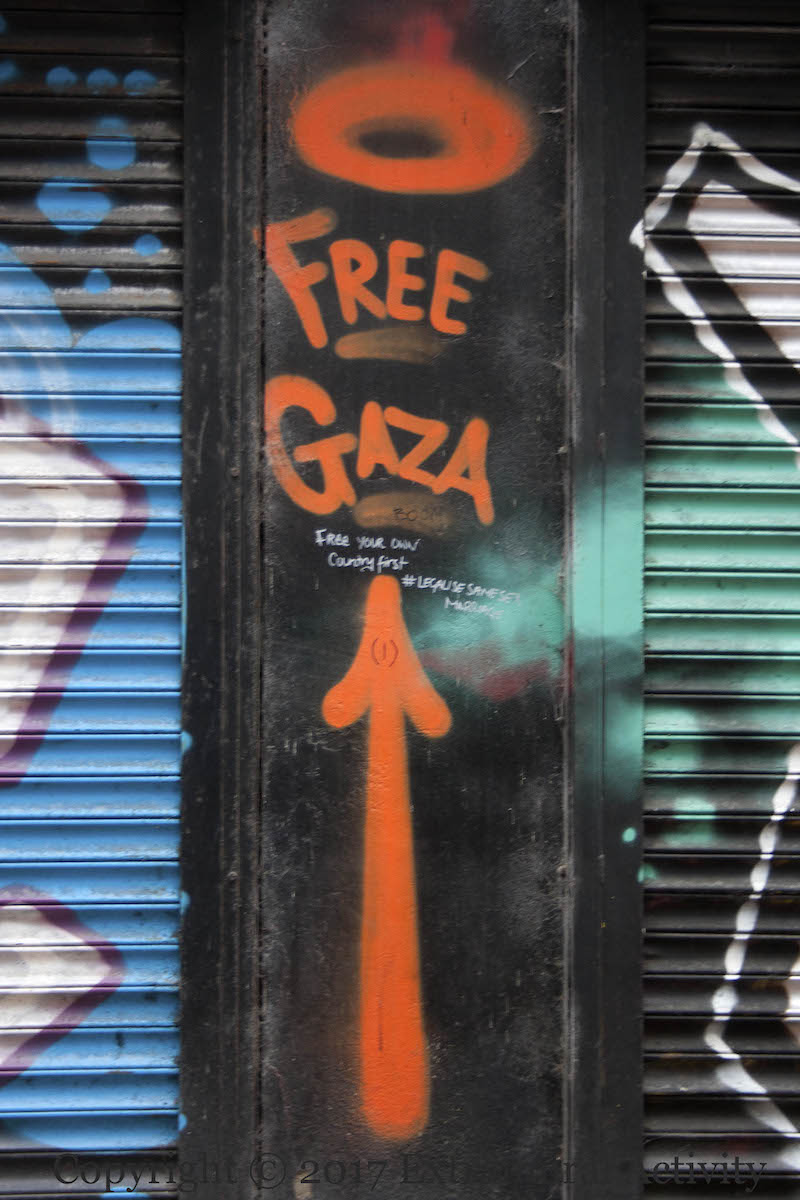
A clash of priorities in Lower Garfield Street: “Free Gaza” – “Free your own country first #LegaliseSameSexMarriage”
Click image to enlarge
Copyright © 2017 Seosamh Mac Coılle
X04482
A clash of priorities in Lower Garfield Street: “Free Gaza” – “Free your own country first #LegaliseSameSexMarriage”
Click image to enlarge
Copyright © 2017 Seosamh Mac Coılle
X04482
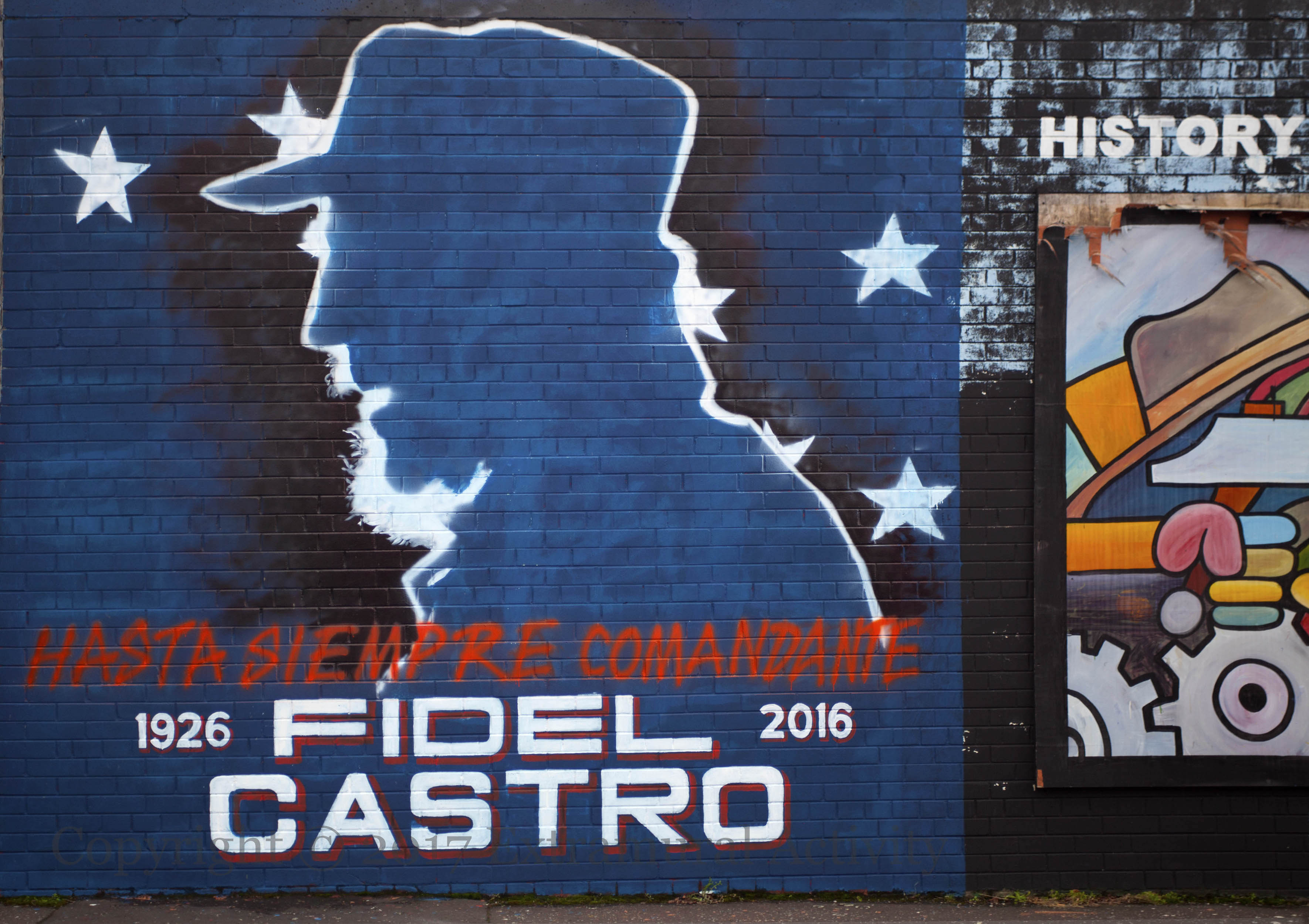
“Hasta siempre, Comandante” is a 1956 song celebrating the life of Che Guevara, with Fidel Castro appearing in the final verse to join the Cuban people in saying “Hasta siempre, Comandante” to Che as he departs Cuba for the Simba Rebellion in Congo. The slogan is here applied to Fidel himself on the occasion of his death in November 2016 at the age of 90.
Here is French singer Nathalie Cardone’s version on the song, which reached #2 in France and #1 in Belgium in 1997:
The Castro mural is next to one for fellow Marxist Salvadore Allende of Chile: see La Historia Es Nuestra.
See also Hasta La Victoria Siempre.
Click image to enlarge
Copyright © 2017 Seosamh Mac Coılle
X03997 1926-2016
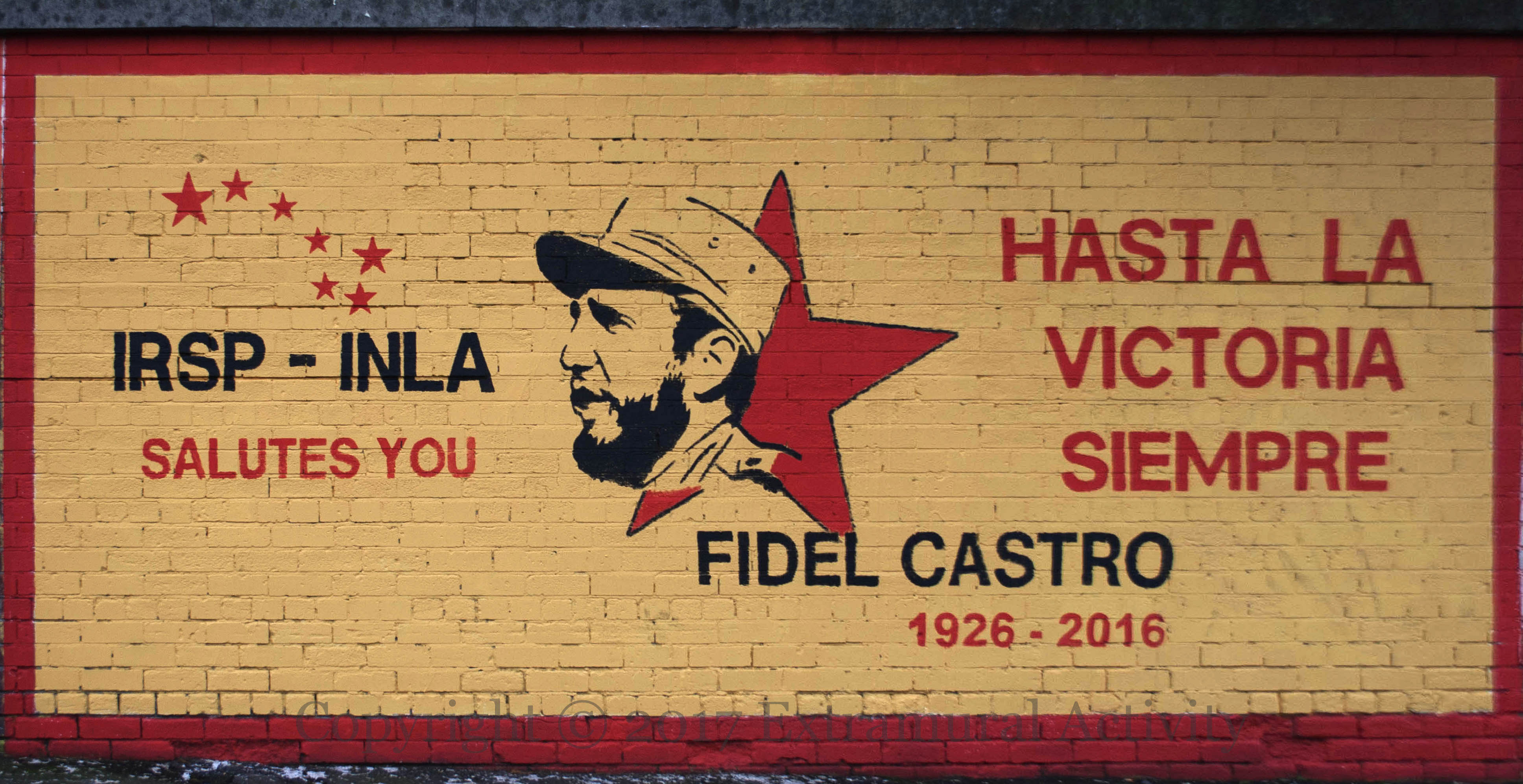
“¡Hasta la victoria siempre!” (“Ever onward to victory!”) was a saying of Che Guevara’s. It is used in this mural as a valediction to Che comrade and long-time Cuban leader Fidel Castro, who died at the end of November (2016). The portrait of Castro is perhaps this Korda image of Castro entering Havana after the deposition of Batista in 1959.
Click image to enlarge
Copyright © 2017 Seosamh Mac Coılle
X03998 Beechmount Ave
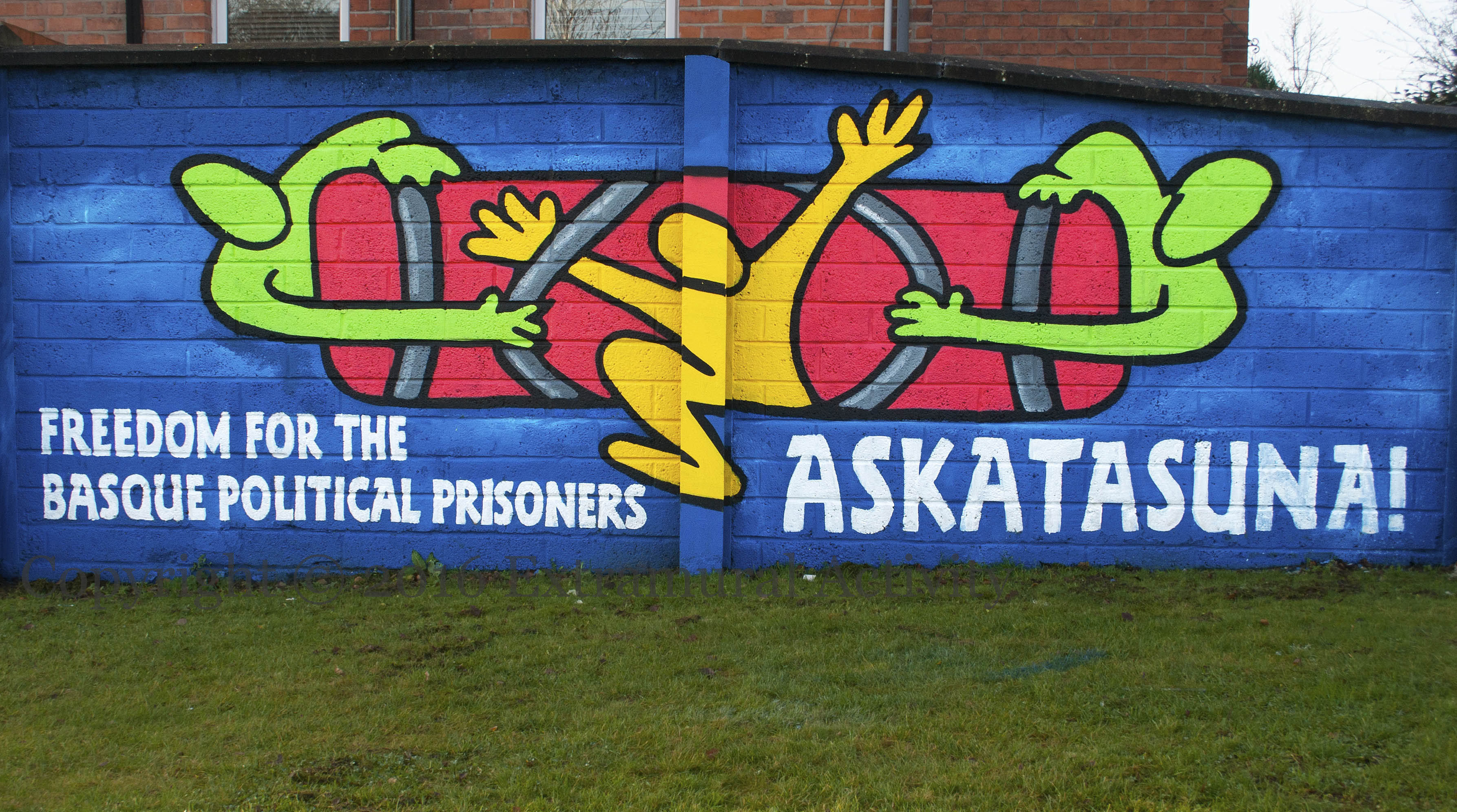
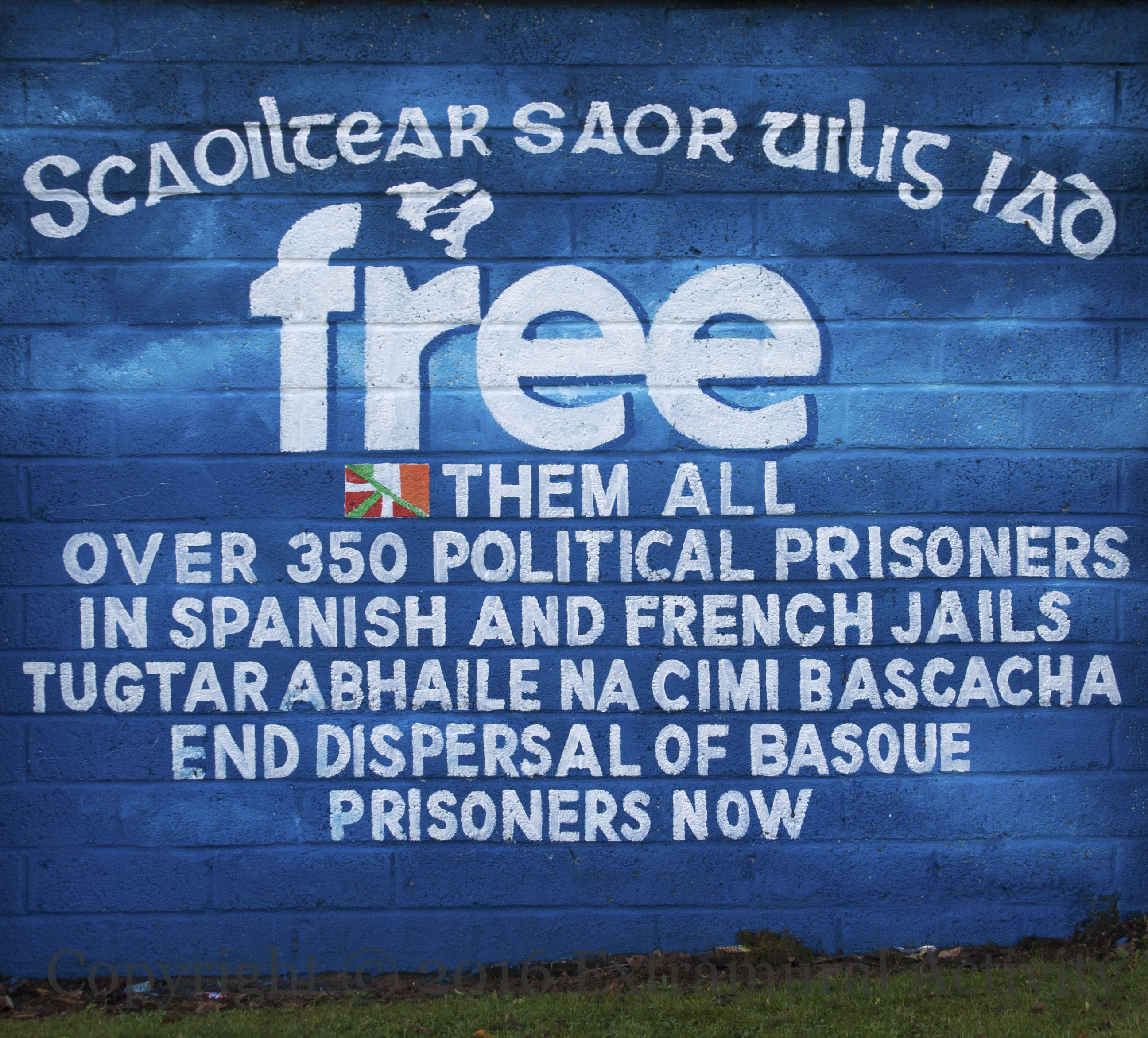
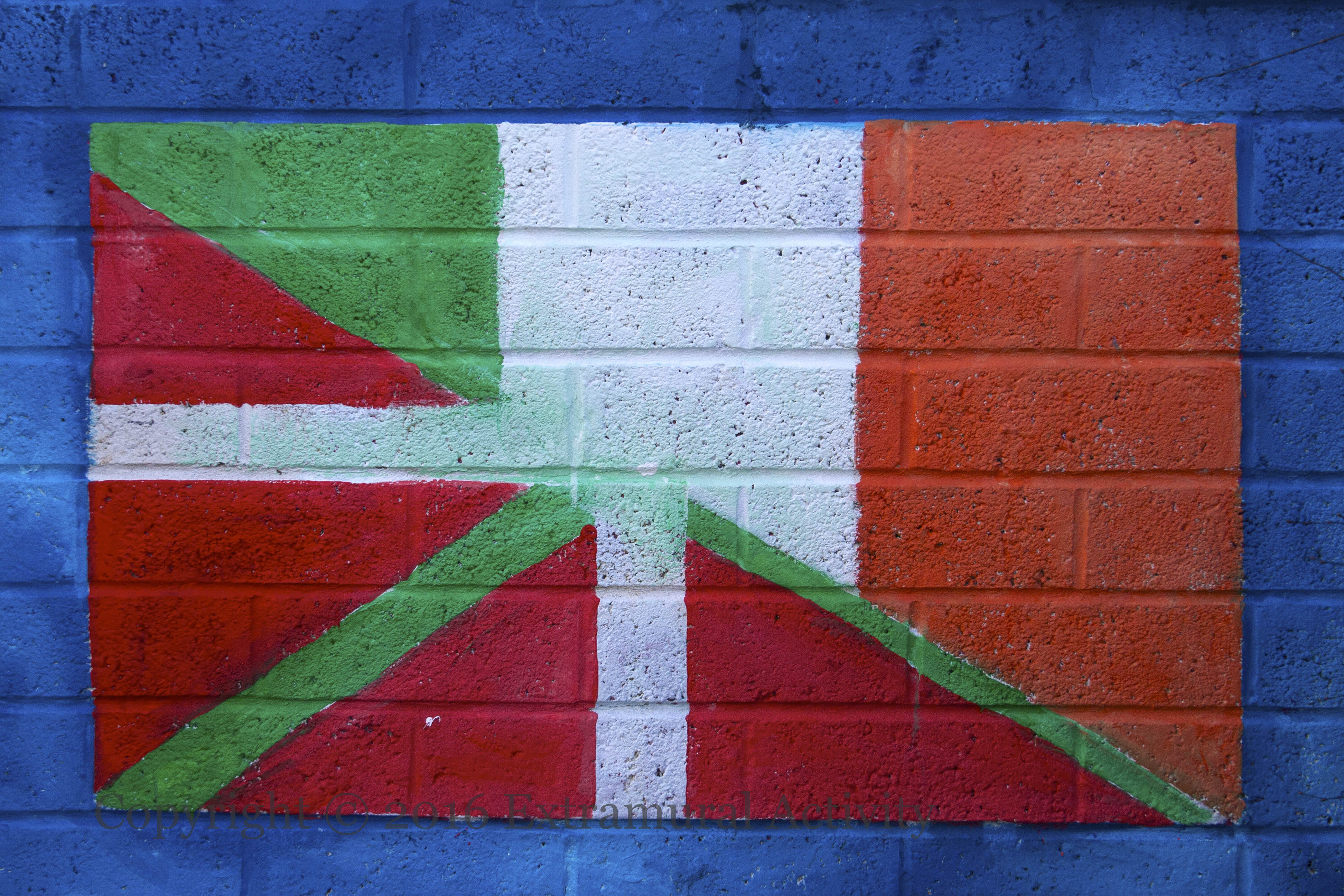
The solidarity mural for the outlawed Basque Askatasuna (Freedom) party at the junction of the Falls and Glen Road has been repainted and extended with the Irish and Basque flags on one side and various calls for justice on the other: “Scaoıltear saor uılıg ıad – Free them all”, “Over 350 political prisoners in Spanish and French jails.” “Tugtar abhaıle na cımı Bascacha”, “End dispersal of Basque prisoners now”.

Click image to enlarge
Copyright © 2016 Seosamh Mac Coılle
X03968 X03967 X03969 X03966
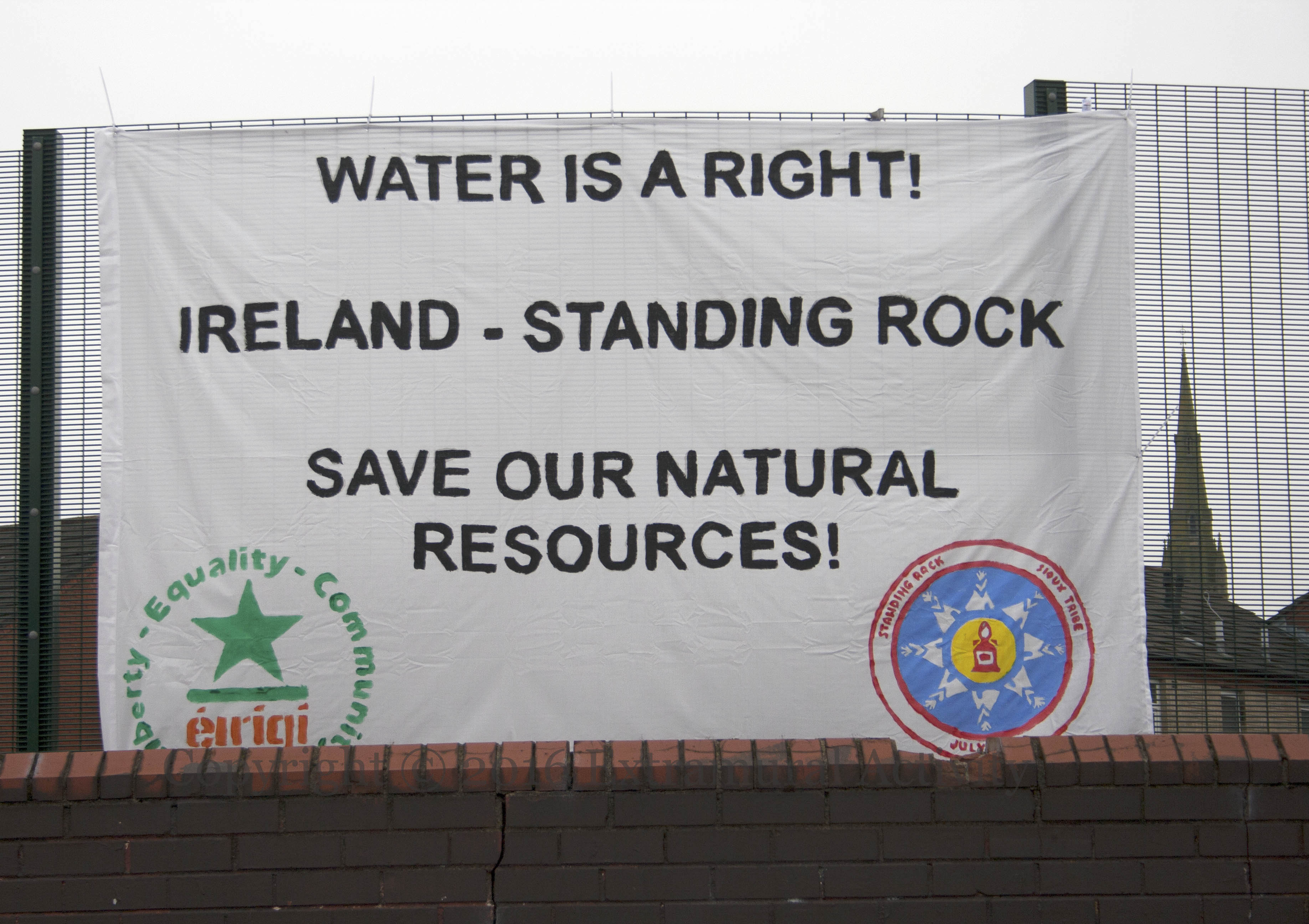
A proposed pipeline between North Dakota and southern Illinois would go under the Missouri river on the Standing Rock Reservation of the Sioux tribe, who have filed suit against the (US) Corps Of Engineers. Protests against the pipeline hit the mainstream news on September 3rd when security personnel used dogs to drive off protesters. The éirígí sheet shown above is hanging on the fencing below Divis tower.
Click image to enlarge
Copyright © 2016 Seosamh Mac Coılle
X03934 july 1873 sioux nation liberty equality community save our natural resources ireland
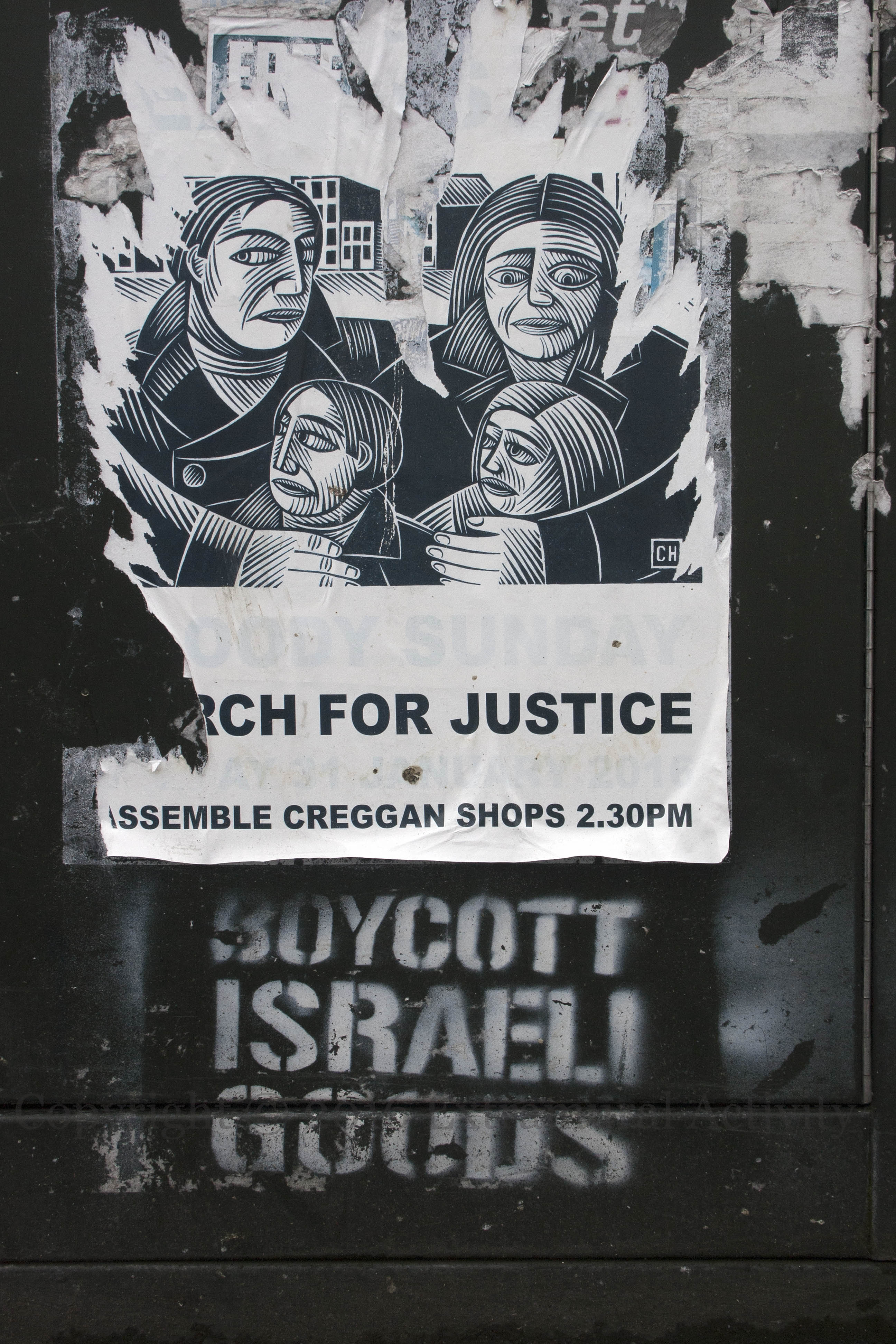
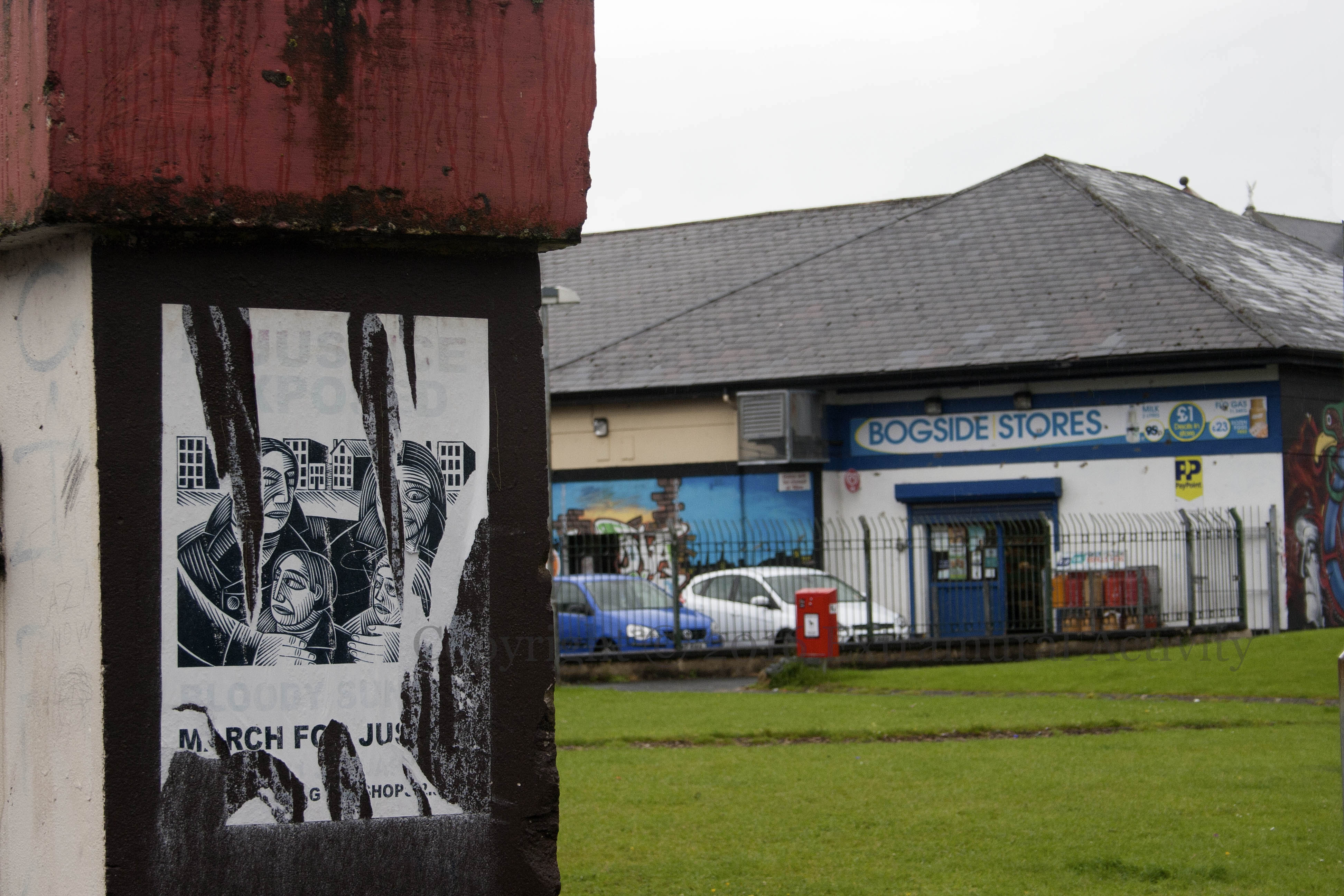
Here are two images of the remnants of a poster left over from January’s Bloody Sunday March, one from Creggan with a “Boycott Israeli goods” stencil, the second from the Bogside.
The artist is given as “CH”.
Click image to enlarge
Copyright © 2016 Seosamh Mac Coılle
X03608 X03549 X03609
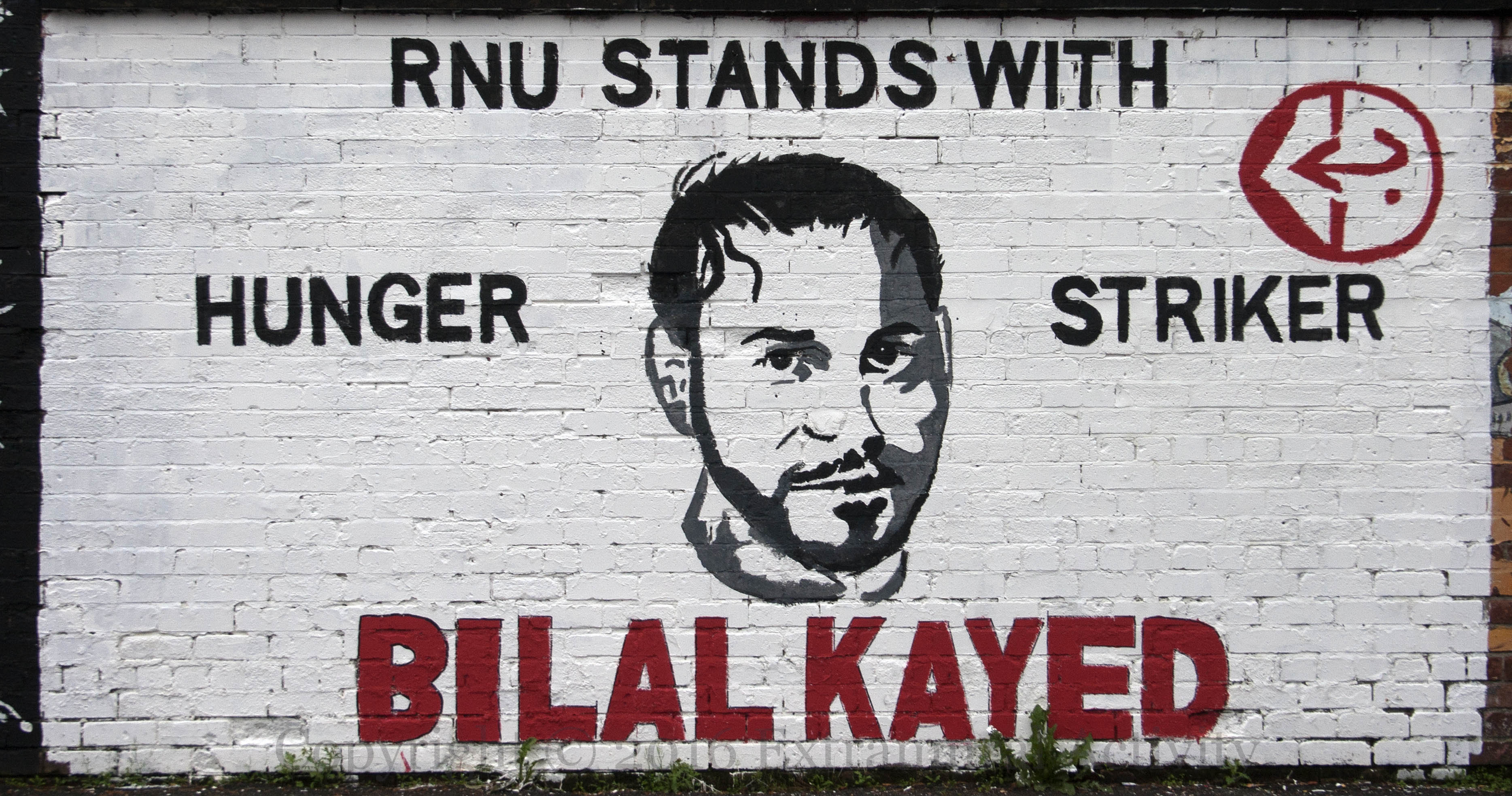
“RNU stands with hunger striker Bilal Kayed”. For more information on this Palestinian prisoner who recently ended his hunger strike, see Administrative Detention. Update: released 2016-12-12.
Click image to enlarge
Copyright © 2016 Seosamh Mac Coılle
X03797 beechmount ave

Shown above is the first of three new boards at Casement Park in west Belfast, named for Roger Casement. Working for the British Colonial Services, Roger Casement wrote extensive reports on the abuse of indigenous people in Congo Free State (1904) and in Peru (1910).
In Congo Free State, King Leopold II of Belgium was using a private force to suppress the locals while extracting rubber; Casement’s report (archive.org) led to the Belgian government taking over Leopold’s operation and creating the Belgian Congo.
In Peru, Casement investigated abuses against the Putumayo indians at the hands of the Peruvian Amazon Company. As a result of his report, the PAC gradually lost business and folded. (WP) Casement was knighted in 1911 for his human rights work, though this title would be stripped shortly before his execution.
Click image to enlarge
Copyright © 2016 Seosamh Mac Coılle
X03723 Andersonstown Rd

A fire was lit at the base of the John Henry Patterson mural (see Operation Lion | Godfather Of The Israeli Army) on Beverley Street, prompting the notice on the railings above: “Where is the equality? This historically significant artwork, was attacked & defaced by Irish Republican racists? Where is the reconciliation?”
Click image to enlarge
Copyright © 2016 Seosamh Mac Coılle
X03690

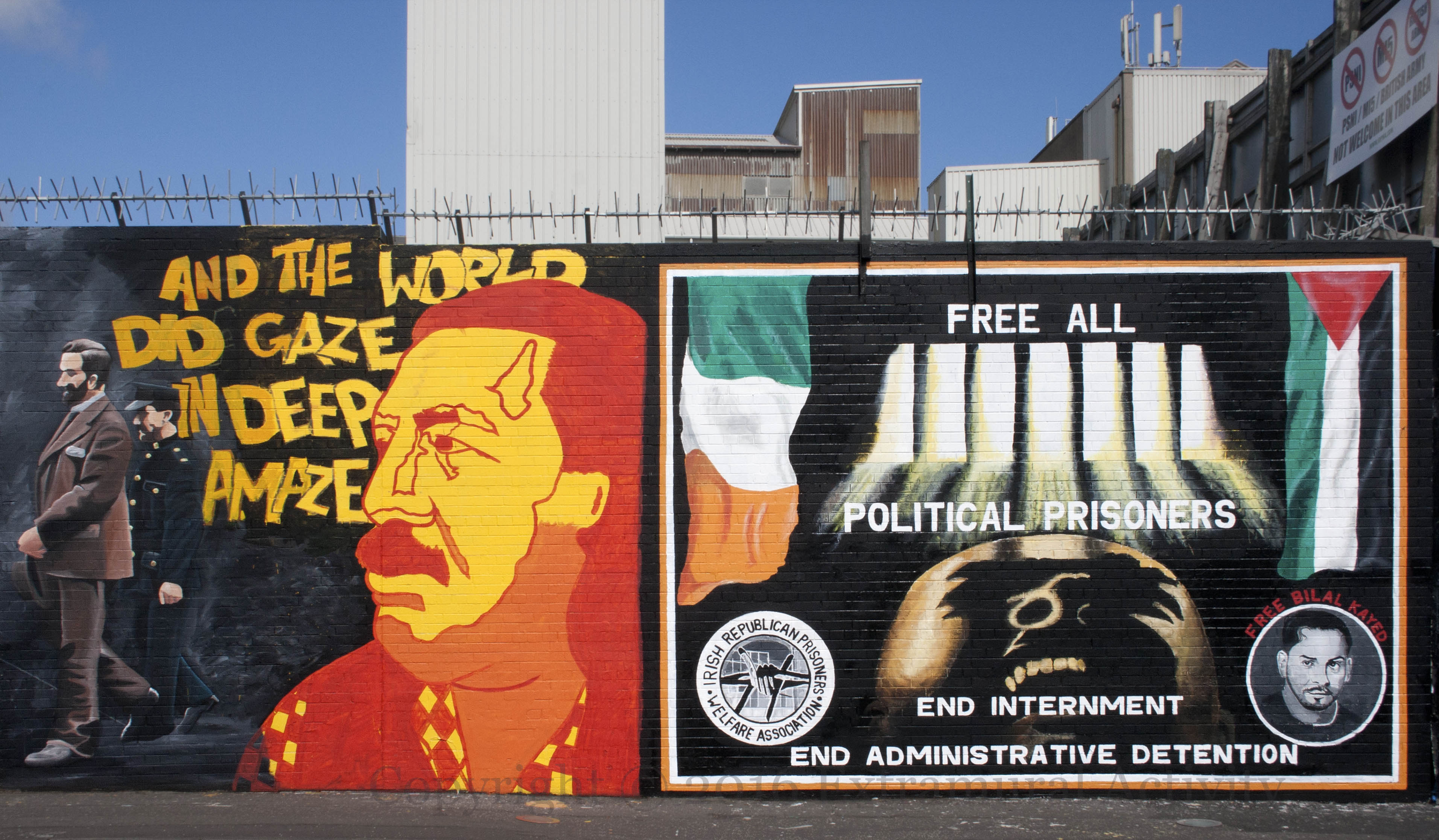
Palestinian prisoner and hunger striker Bilal Kayed last week called off his hunger strike after 71 days of fasting, after reaching an agreement with his Israeli captors for his release in December, after a six-month “administrative’ extension to his original 14.5 year sentence (Alternative News). Hence the slogan “End internment, end administrative detention” (alongside “Free all political prisoners” and the IRPWA emblem). Update: Kayed released 2016-12-12.
The mural is at the right-hand end of the so-called International Wall in west Belfast. For the controversy over the painting of the mural adjacent to the historical panels on the rest of the wall, see The World Did Gaze In Deep Amaze.
Click image to enlarge
Copyright © 2016 Seosamh Mac Coılle
X03743 X03742 Divis St
 Extramural Activity