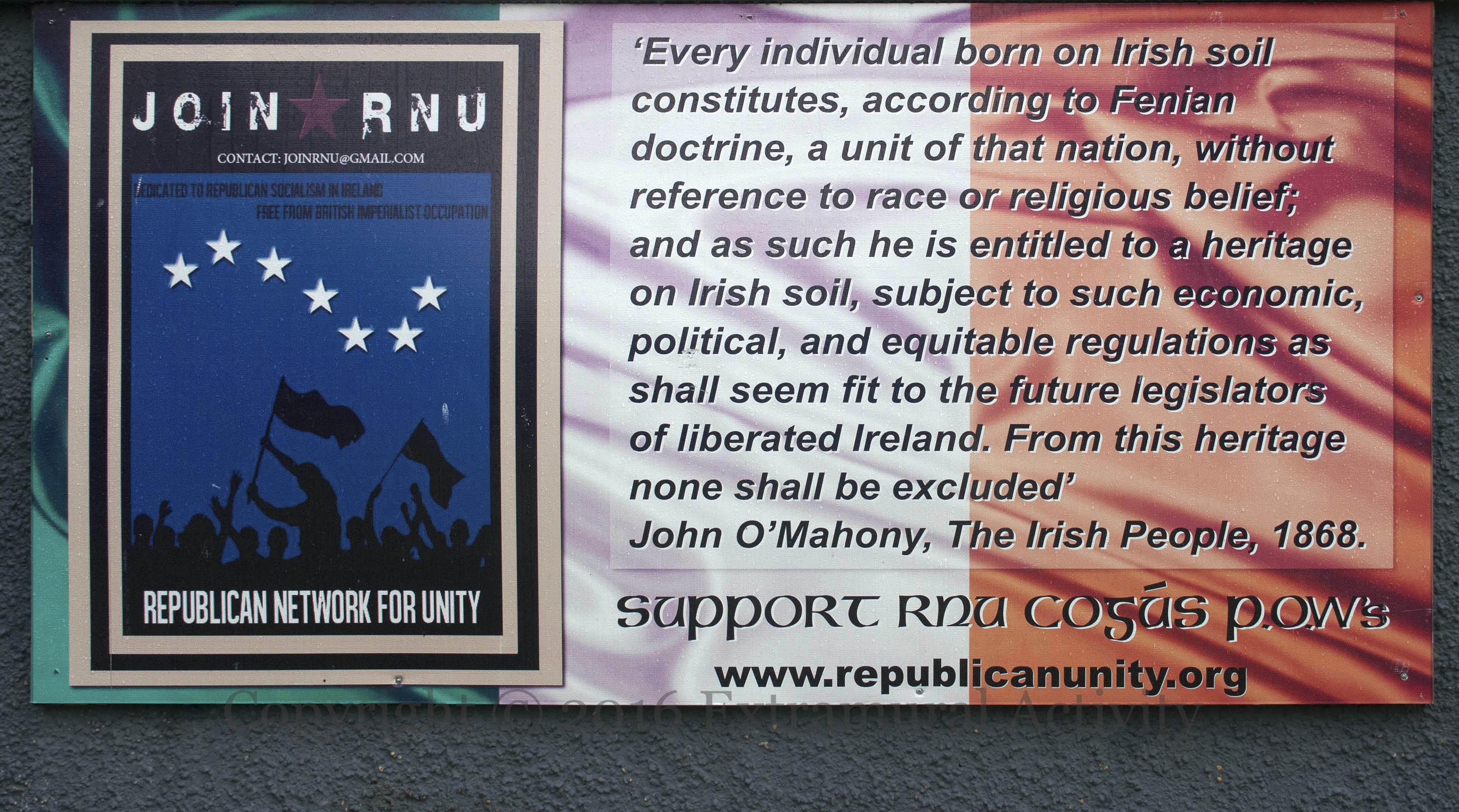
Here are four republican boards from Derry/Doıre and Dungiven/Dún Geımhın, from Cogús (republican prisoners’ welfare), 1916 Societies, IRSP, and the campaign for Justice For The Craigavon Two (Brendan McConville and John-Paul Wootton). The title comes from the last image: “There may be times when we are powerless to prevent injustice, but there must never be a time when we fail to protest.”
John O’Mahony was an Irish-born but American-based republican who founded the Fenian Brotherhood, whose goal was to send arms and financial support to the Irish Republican Brotherhood in Ireland (Brittanica).
His words from the IRB newspaper The Irish People are used in this RNU [“www.republicanunity.org“] board in Derry: “Every individual born on Irish soil constitutes, according to Fenian doctrine, a unit of that nation, without reference to race or religious belief; and as such he is entitled to a heritage on Irish soil, subject to such economic, political and equitable regulations as shall seem fit to the future legislators of liberated Ireland. From this heritage none shall be excluded.”
The date given is 1868, but the paper closed in 1865 when its offices were raided and its executives, including manager O’Donovan Rossa, were arrested.
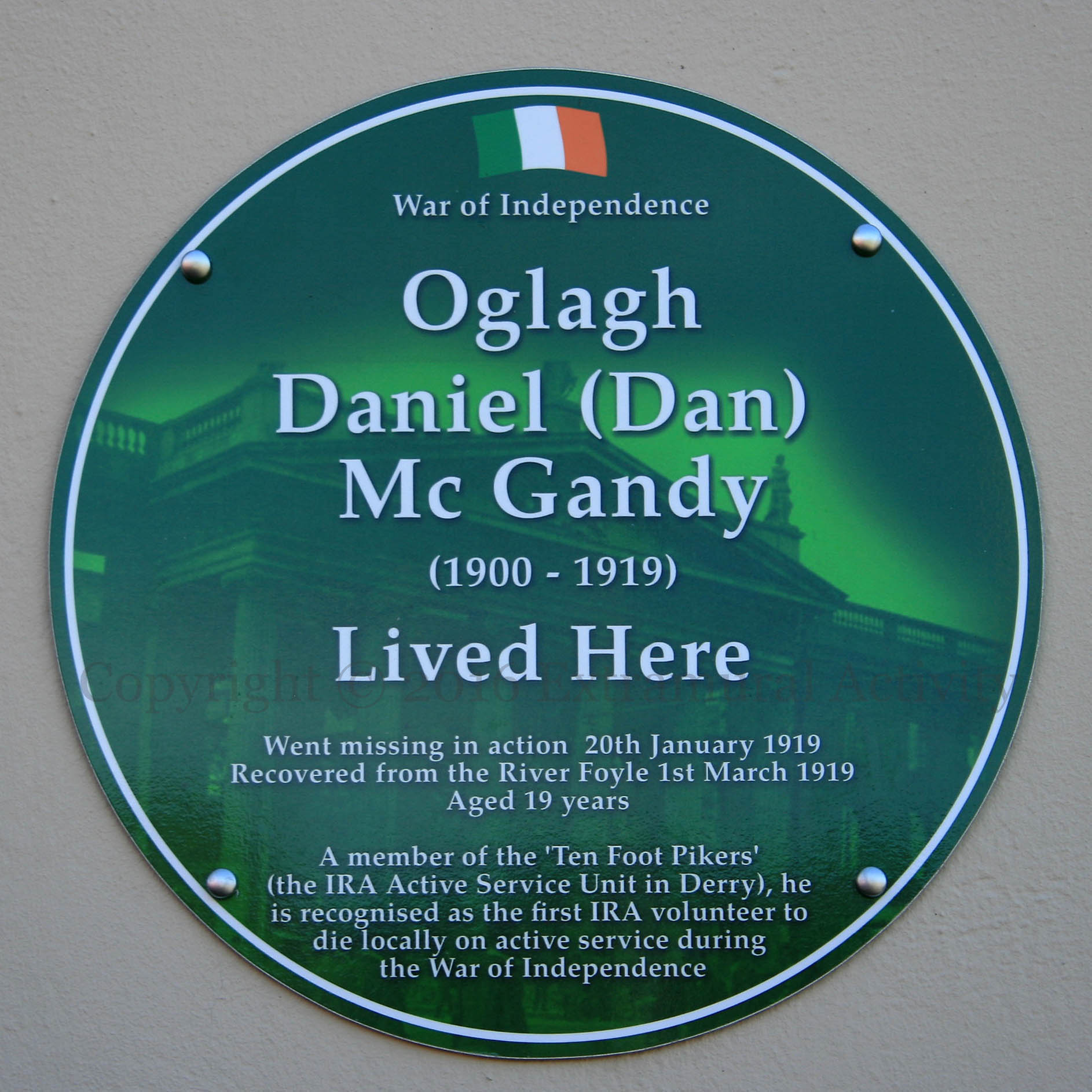
The first few pages of Commandant Michael Sheer’s testimony to the Bureau of Military History describe the activities of the elite squad called the “Ten Foot Pikers”, including how postal officer Dan McGandy stole election ballots sent by mail during the general election of 1918. As described in the plaque above, McGandy went missing in January 1919 and was found in the Foyle six weeks later. This article suggests that he fell in after a struggle with British soldiers who had intercepted him while stealing grenades; this Derry Now article suggests he was thrown in by the soldiers, who then arranged his things to make it appear a suicide.
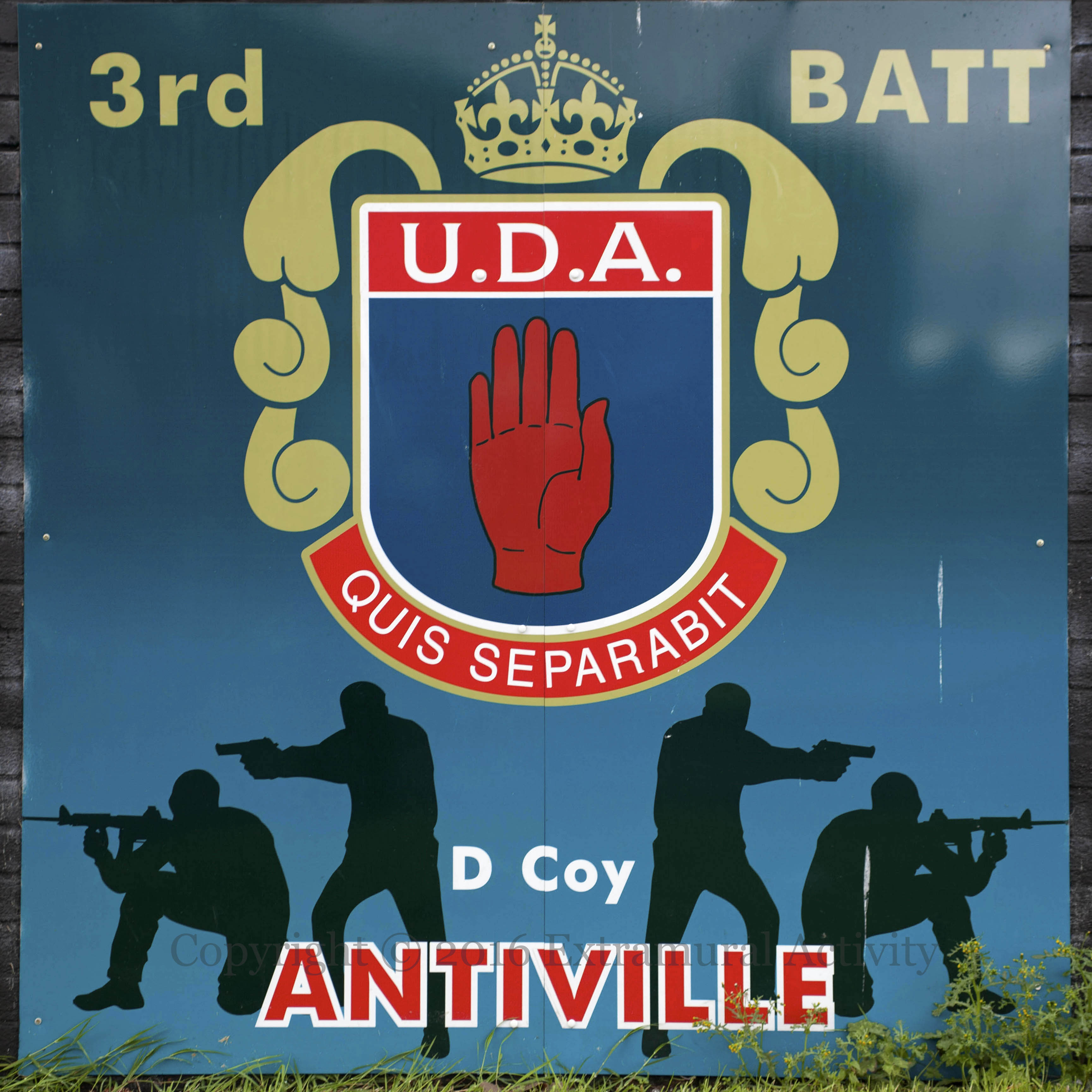
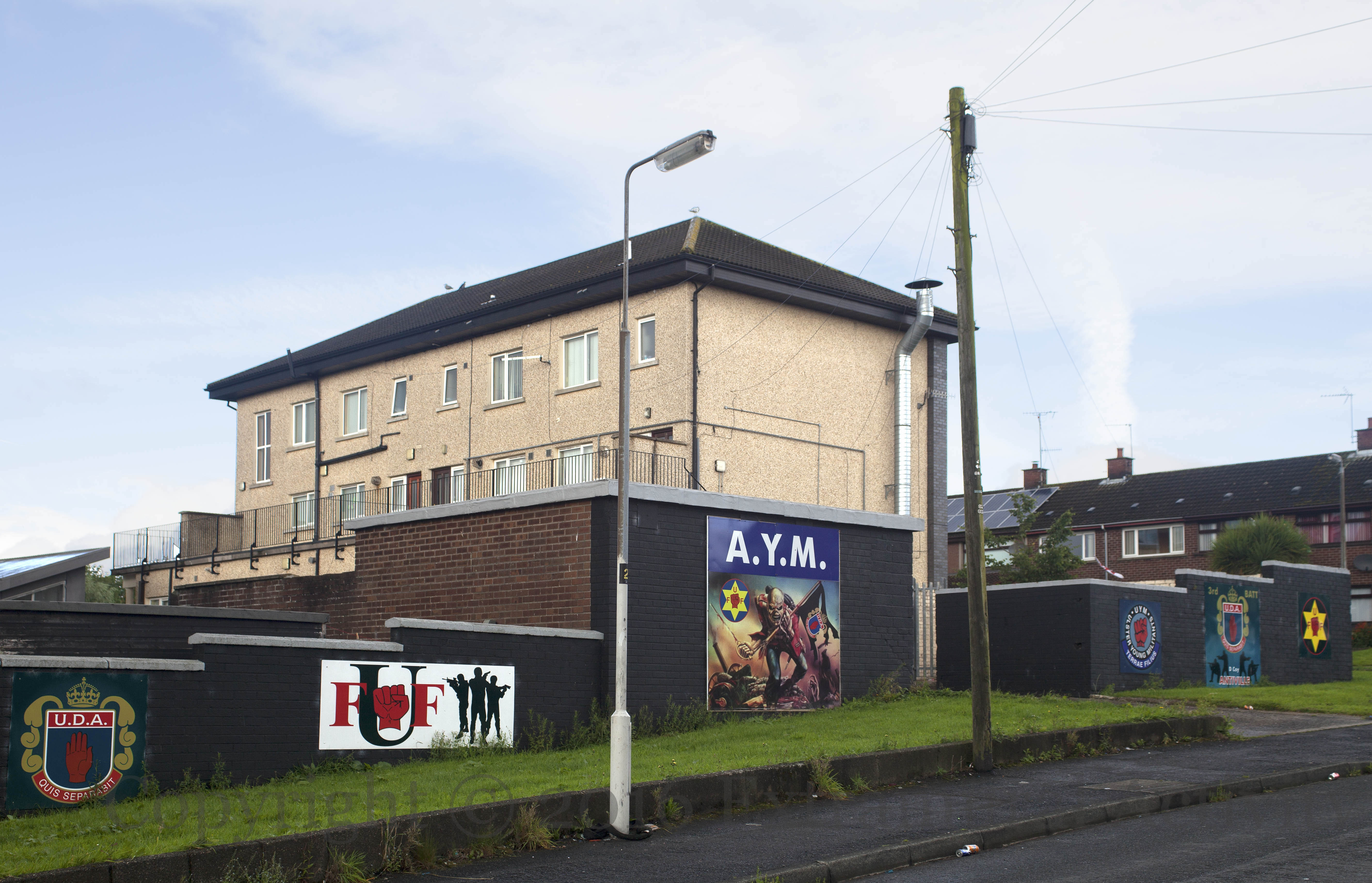
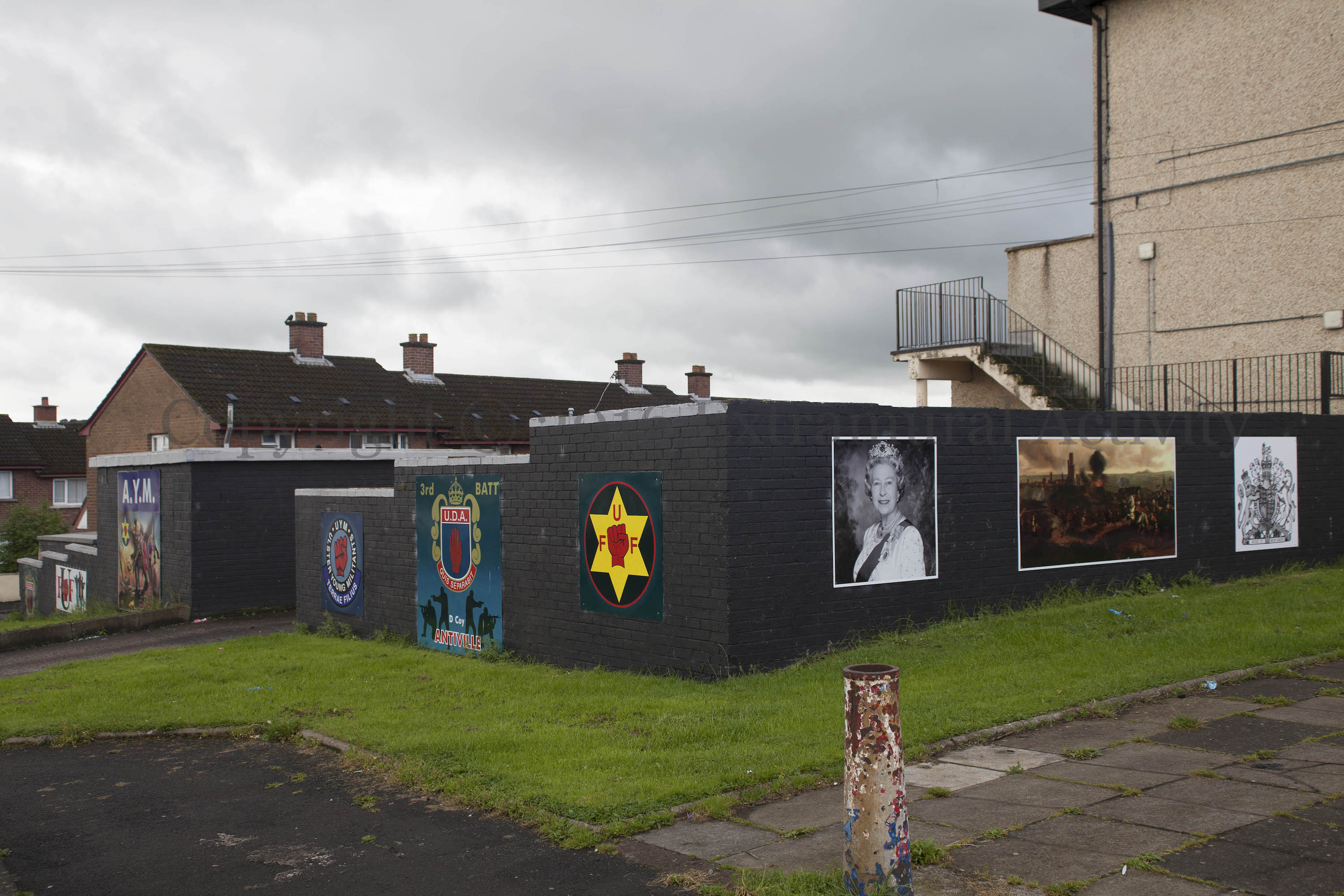
Writing has appeared alongside the “Show No Mercy Expect None Back” mural in Ballyclare. On one side : “We will never accept [was originally “except” but this was quickly changed] a united Ireland – Feriens Tego [the UFF motto]” and “Now entering loyalist Erskine/Rashee Park – Quis separabit [the UDA motto]” and on the other: “Ballyclare heartland of south east Antrim – Simply the best [used with both UDA and UFF]”
The final image is from July, when the wall had been ‘booked’ for the UDA.
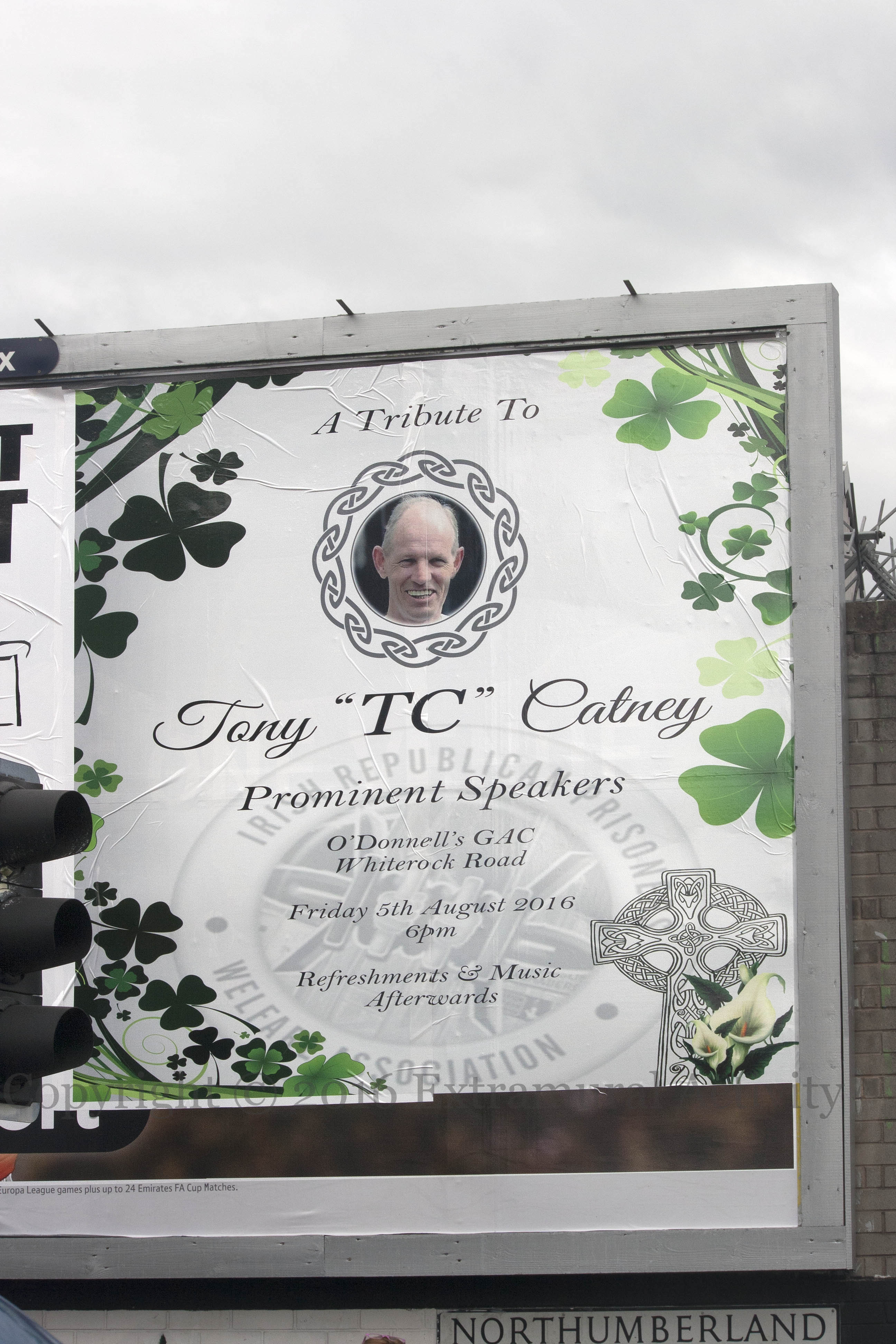
IRA volunteer Tony “TC” Catney died in August 2014 and a volley of shots was fired over his coffin (Tele), but a memorial event was held in August 2016. To advertise the event, the IRPWA has commandeered the hoarding at corner of Divis and Northumberland streets. Catney was imprisoned at the age of 16 for the 1974 killing of Maurice Knowles. In recent times he was an RNU and JFTC2 supporter.
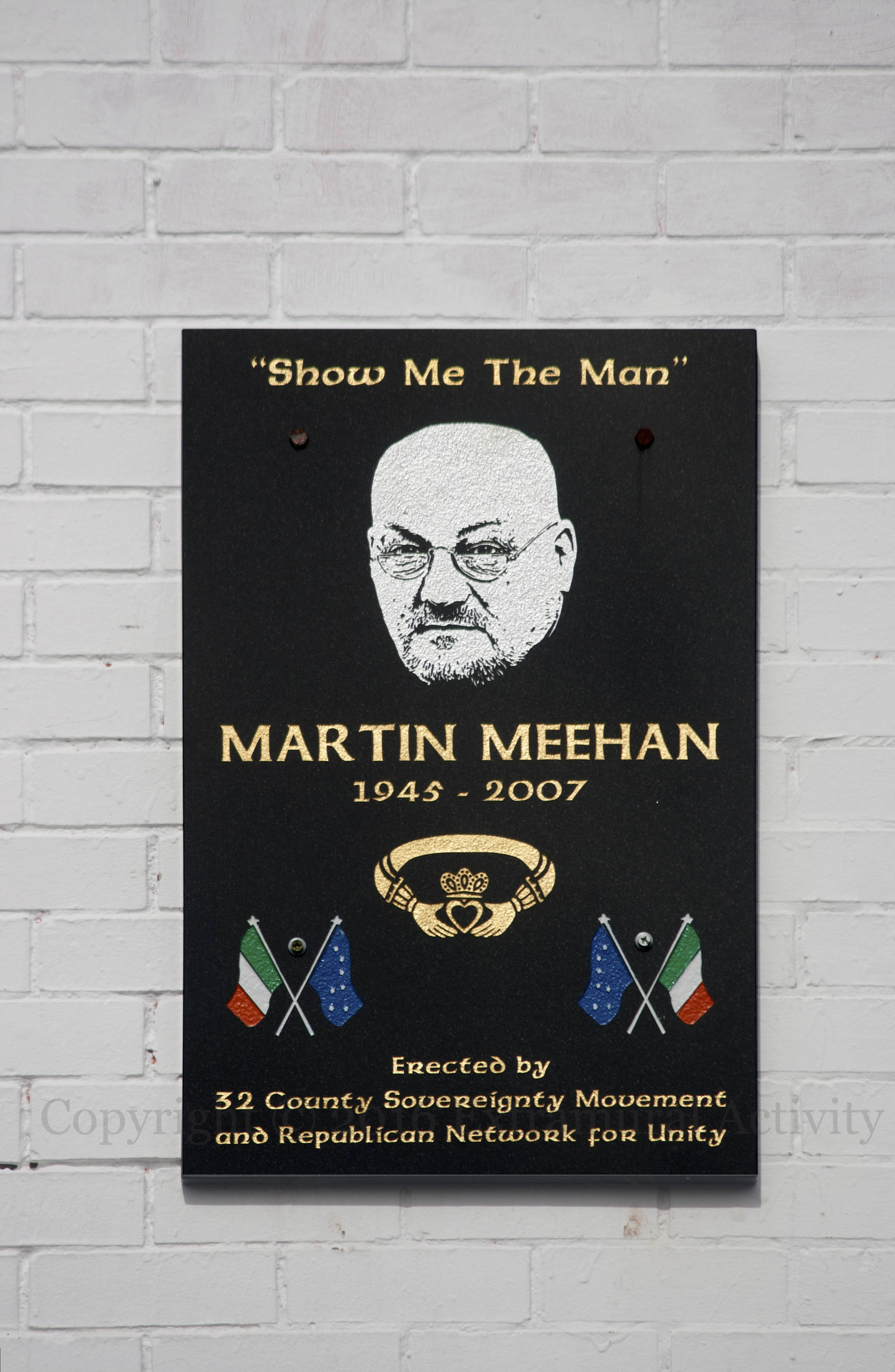
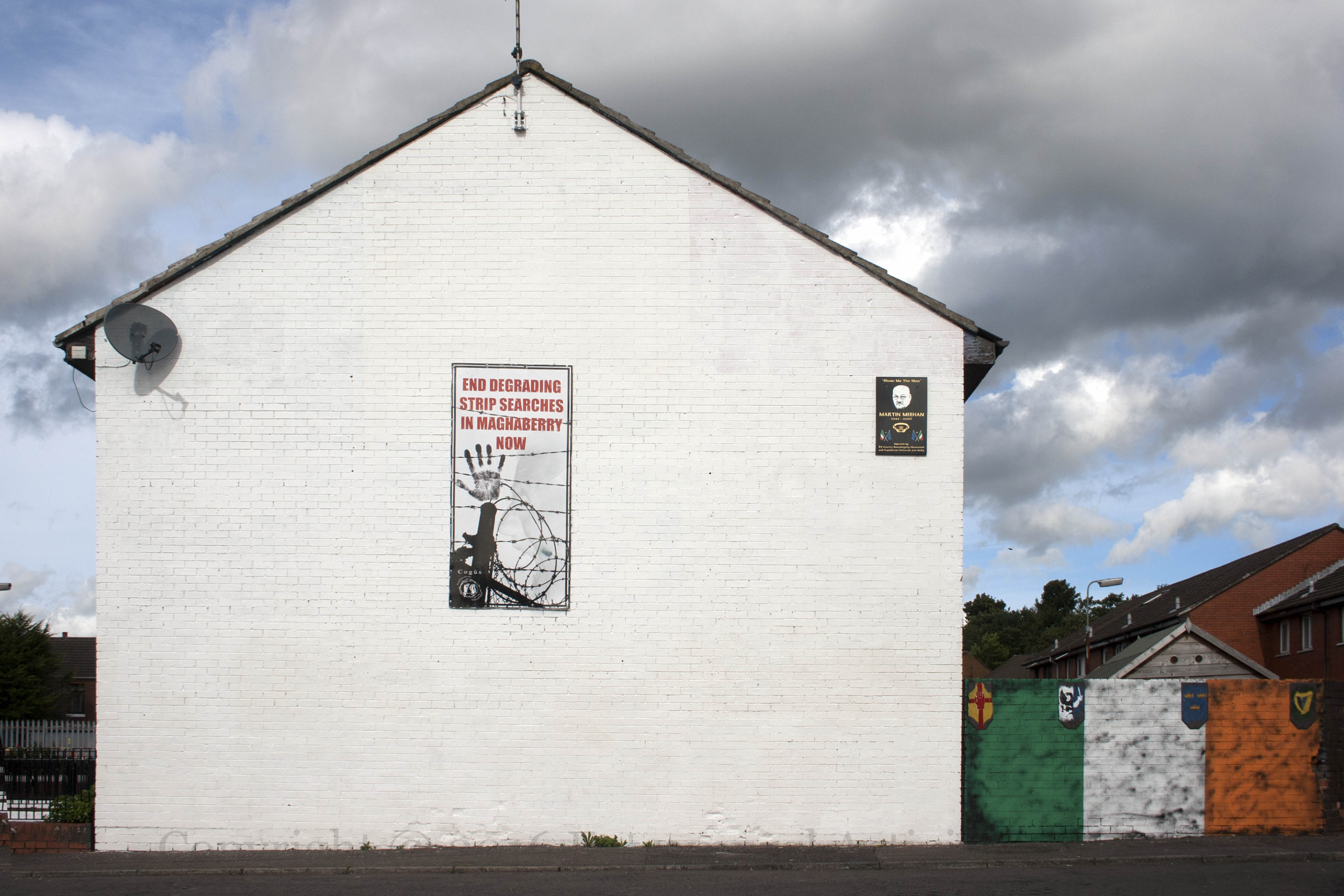
The Martin Meehan tarp in Ardoyne Avenue has been removed and the wall whitewashed. At the moment, all there is to be seen is the plaque shown above – Show Me The Man, Martin Meehan 1945 – 2007 – and a Cogús board – “End strip searching in Maghaberry now”.
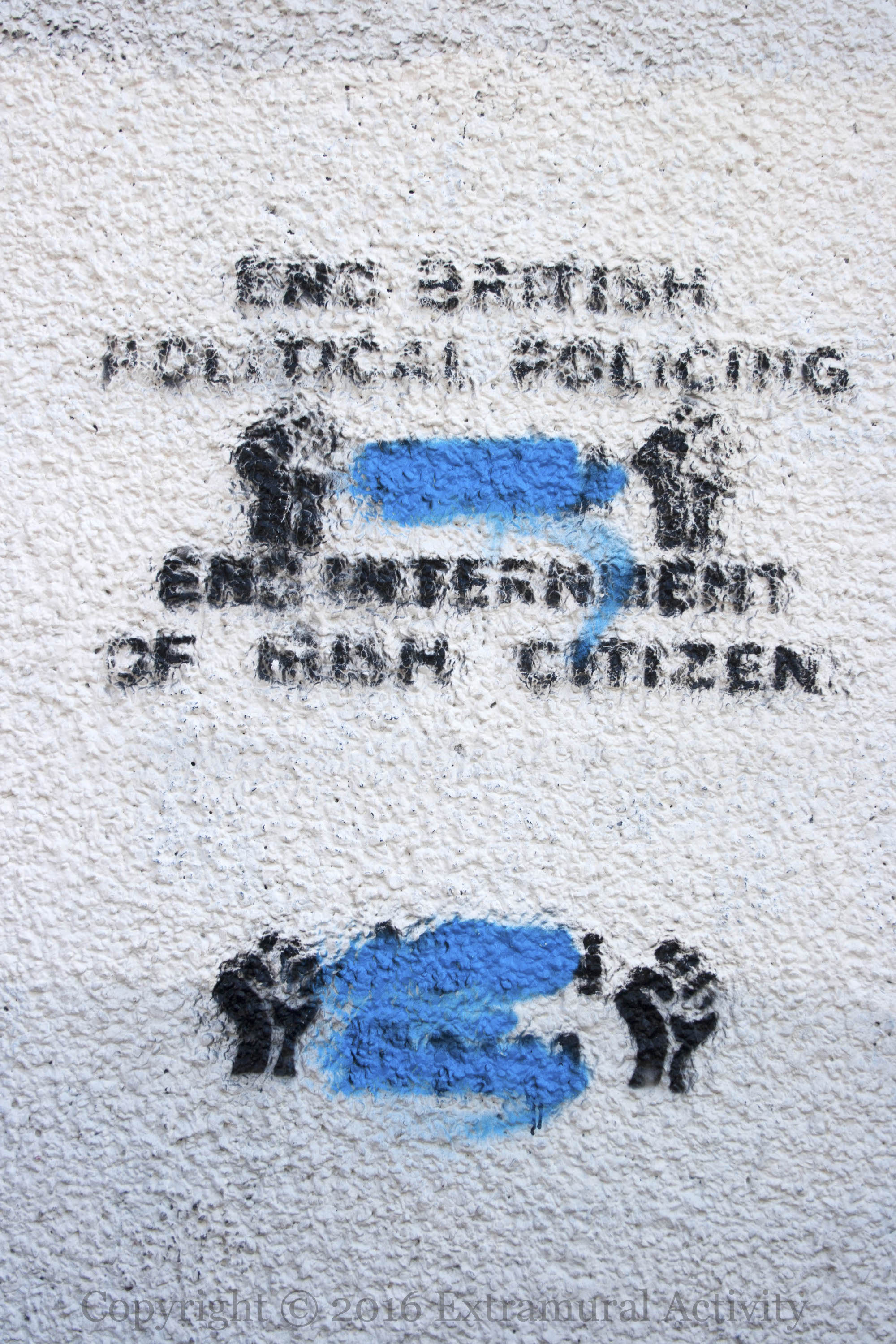
IRPWA board (and stencil) in Shantallow, Derry, articulating the forms of torture of Irish republicans in “British gaols in Ireland”: isolation, internment, strip searching, and controlled movement.
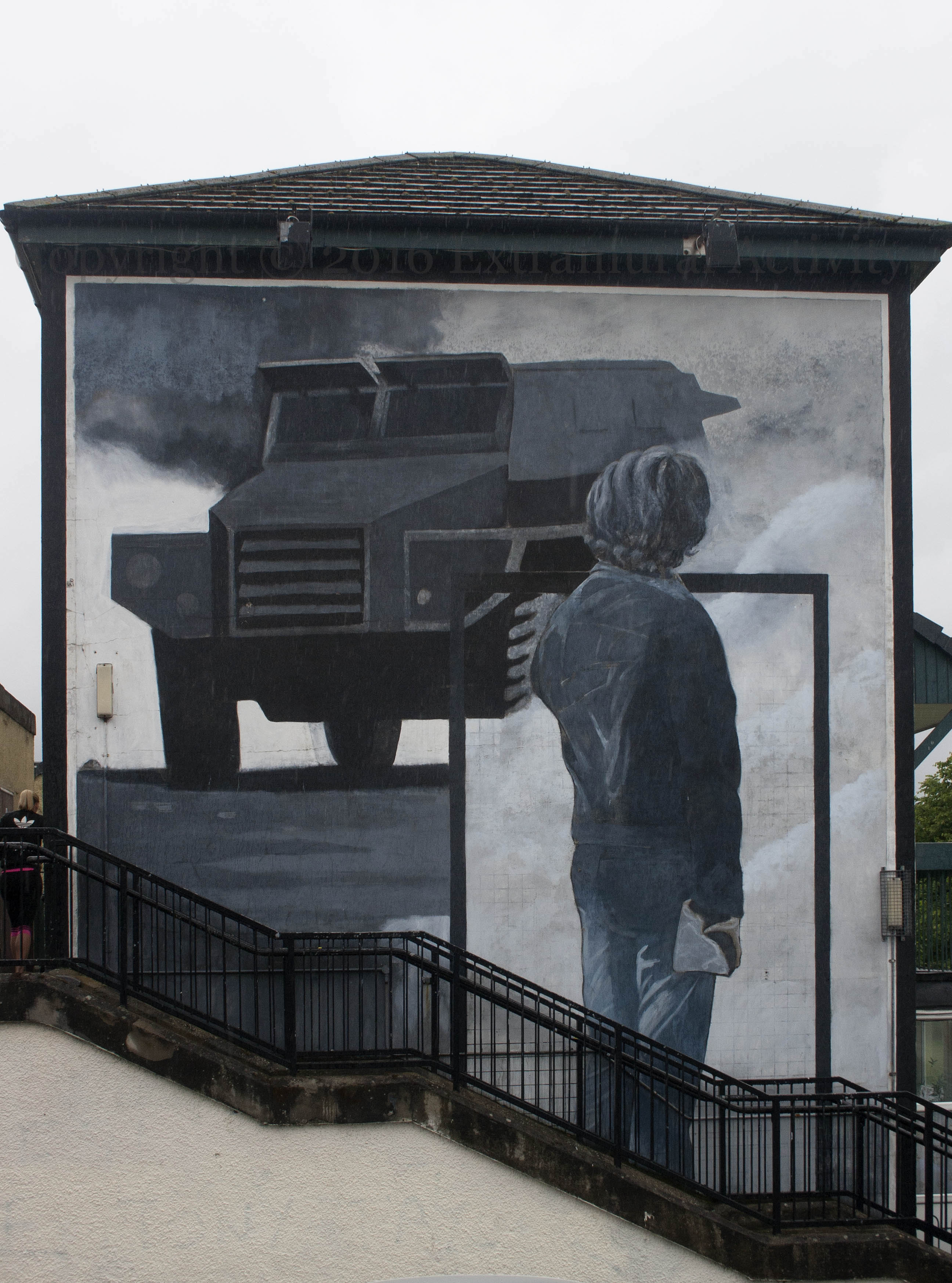
Young people in Derry would spend Saturdays (and many other days) rioting against the British Army presence in the city, which began in August 1969 after the Battle Of The Bogside. Thus, the popular name for this Bogside Artists mural ‘Saturday Matinee’; the official title is “The Rioter”. Part of The People’s Gallery.
The original photograph on which the mural is based is by Clive Limpkin. The rioter himself is perhaps Billy McVeigh.
“Amazing night at Larne – Wholesale gun-running — Thousands of rifles landed — Three-and-a-half million cartidges – Motors from far and near – Astounding achievement — Special To Telegraph”.
The weapons on board the Clyde Valley began their journey on a different ship, the Fanny. However, Fanny’s papers were siezed by Danish authorities, as they thought the weapons were destined for home-rulers in Iceland! The ship escaped in bad weather and Clyde Valley sailed from Glasgow to the Irish sea off Wexford where it met Fanny, took the materiel on board, and temporarily renamed itself Mountjoy II using canvas sheets. From there, it sailed to Larne and then Bangor, off-loading weapons in both places for use by the Ulster Volunteers.








 Extramural Activity